










About Fly Fishing
Fly fishing is a casting method that uses a weighted fly line to deliver a nearly weightless artificial fly. Unlike spinning or casting gear—where the lure carries the line—in fly fishing the line itself carries the fly and leader, creating a slower, more controlled casting motion and enabling precise, natural presentations.
At its core, fly fishing is about imitation and presentation. Flies mimic insects, baitfish, or other prey, and how they are presented—dead-drifted, stripped, or popped—often matters more than the pattern itself. Anglers rely on line control, timing, and subtle movement rather than lure weight or constant retrieval to trigger strikes.
In freshwater, fly fishing is commonly used in rivers, lakes, and ponds for species like trout, bass, and panfish, with presentations focused on natural drifts or slow retrieves through structure, while in saltwater the approach becomes more visual and active, with casts to moving fish, wind challenges, and faster retrieves that imitate fleeing baitfish. Despite the change in environment, the core principles of presentation and control remain the same.
Not every off-the-shelf setup matches how anglers actually fish. That’s why many choose to build their own custom fly rod, dialing in length, action, and components to match specific applications, target species, and personal casting preferences.
Introduction
What is Build a Fly Fishing Rod?
About Fly Fishing
Fly fishing is a casting method that uses a weighted fly line to deliver a nearly weightless artificial fly. Unlike spinning or casting gear—where the lure carries the line—in fly fishing the line itself carries the fly and leader, creating a slower, more controlled casting motion and enabling precise, natural presentations.
At its core, fly fishing is about imitation and presentation. Flies mimic insects, baitfish, or other prey, and how they are presented—dead-drifted, stripped, or popped—often matters more than the pattern itself. Anglers rely on line control, timing, and subtle movement rather than lure weight or constant retrieval to trigger strikes.
In freshwater, fly fishing is commonly used in rivers, lakes, and ponds for species like trout, bass, and panfish, with presentations focused on natural drifts or slow retrieves through structure, while in saltwater the approach becomes more visual and active, with casts to moving fish, wind challenges, and faster retrieves that imitate fleeing baitfish. Despite the change in environment, the core principles of presentation and control remain the same.
Not every off-the-shelf setup matches how anglers actually fish. That’s why many choose to build their own custom fly rod, dialing in length, action, and components to match specific applications, target species, and personal casting preferences.
Fly Fishing Applications
Freshwater anglers commonly use lighter 3–7 wt single-hand rods for trout, panfish, and bass in streams, rivers, and small lakes. In saltwater and heavy freshwater, anglers often step up to 7–10+ wt single-hand rods for species like redfish, striped bass, bonefish, and other inshore fish that require longer casts, larger flies, and more stopping power. Their simplicity, versatility, and wide range of applications make single-hand rods the standard starting point for new fly anglers.
Most beginners start with standard single-hand fly rods, but there are several styles of fly fishing setups designed for different water conditions, casting distances, and presentation techniques. Understanding the differences helps new anglers choose gear that matches where they fish most often and how they want to fish.
Single-Hand (Standard) Fly Fishing
Single-hand fly rods are the most common and beginner-friendly setup. These rods are designed for traditional overhead casting and are used in everything from small creeks and trout streams to ponds, lakes, and light saltwater flats. Most beginner fly rod and reel combos fall into this category because they’re versatile, easy to learn, and effective across a wide range of fishing situations.
Freshwater anglers commonly use lighter 3–5 wt single-hand rods for trout, panfish, and bass in streams, rivers, and small lakes. In saltwater, anglers often step up to 7–9 wt single-hand rods for species like redfish, striped bass, bonefish, and other inshore fish that require longer casts, larger flies, and more stopping power. Their simplicity, versatility, and wide range of applications make single-hand rods the standard starting point for new fly anglers.
Spey (Two-Hand) Fly Fishing
Spey rods are long two-handed fly rods designed for making long-distance casts in large rivers where backcast space is limited. Instead of traditional overhead casting, Spey anglers use water-loaded casting techniques—like the Spey cast—to launch line efficiently while keeping the fly moving through current.
These setups are popular for salmon, steelhead, and large river trout fishing because they allow anglers to cover wide stretches of water with less physical effort. Spey fishing is highly specialized and typically requires heavier rods, larger reels, and dedicated lines, making it more advanced than most beginner fly fishing setups.
Switch Rods
Switch rods blend characteristics of single-hand and Spey rods, giving anglers the flexibility to cast with one or two hands depending on the situation. They’re shorter and lighter than full Spey rods but offer more reach and line control than traditional single-hand setups.
Switch rods are useful for larger rivers, fishing from elevated banks, or situations with limited casting room where extra control and distance are helpful. Anglers often use them for trout, steelhead, light salmon fishing, and indicator rigs. While versatile, switch rods still require more technique and line management than standard beginner combos.
Key Takeaways
- Single-hand rods are the most versatile and beginner-friendly option
- Spey rods excel in large rivers with limited backcast space
- Switch rods offer flexibility for anglers fishing larger water or tight casting conditions
Fly Fishing Applications
Freshwater anglers commonly use lighter 3–7 wt single-hand rods for trout, panfish, and bass in streams, rivers, and small lakes. In saltwater and heavy freshwater, anglers often step up to 7–10+ wt single-hand rods for species like redfish, striped bass, bonefish, and other inshore fish that require longer casts, larger flies, and more stopping power. Their simplicity, versatility, and wide range of applications make single-hand rods the standard starting point for new fly anglers.
Most beginners start with standard single-hand fly rods, but there are several styles of fly fishing setups designed for different water conditions, casting distances, and presentation techniques. Understanding the differences helps new anglers choose gear that matches where they fish most often and how they want to fish.
Single-Hand (Standard) Fly Fishing
Single-hand fly rods are the most common and beginner-friendly setup. These rods are designed for traditional overhead casting and are used in everything from small creeks and trout streams to ponds, lakes, and light saltwater flats. Most beginner fly rod and reel combos fall into this category because they’re versatile, easy to learn, and effective across a wide range of fishing situations.
Freshwater anglers commonly use lighter 3–5 wt single-hand rods for trout, panfish, and bass in streams, rivers, and small lakes. In saltwater, anglers often step up to 7–9 wt single-hand rods for species like redfish, striped bass, bonefish, and other inshore fish that require longer casts, larger flies, and more stopping power. Their simplicity, versatility, and wide range of applications make single-hand rods the standard starting point for new fly anglers.
Spey (Two-Hand) Fly Fishing
Spey rods are long two-handed fly rods designed for making long-distance casts in large rivers where backcast space is limited. Instead of traditional overhead casting, Spey anglers use water-loaded casting techniques—like the Spey cast—to launch line efficiently while keeping the fly moving through current.
These setups are popular for salmon, steelhead, and large river trout fishing because they allow anglers to cover wide stretches of water with less physical effort. Spey fishing is highly specialized and typically requires heavier rods, larger reels, and dedicated lines, making it more advanced than most beginner fly fishing setups.
Switch Rods
Switch rods blend characteristics of single-hand and Spey rods, giving anglers the flexibility to cast with one or two hands depending on the situation. They’re shorter and lighter than full Spey rods but offer more reach and line control than traditional single-hand setups.
Switch rods are useful for larger rivers, fishing from elevated banks, or situations with limited casting room where extra control and distance are helpful. Anglers often use them for trout, steelhead, light salmon fishing, and indicator rigs. While versatile, switch rods still require more technique and line management than standard beginner combos.
Key Takeaways
- Single-hand rods are the most versatile and beginner-friendly option
- Spey rods excel in large rivers with limited backcast space
- Switch rods offer flexibility for anglers fishing larger water or tight casting conditions
Fly Rod & Line Weight Classifications
Fly fishing gear is built around a “weight” system that refers to the size and mass of the fly line—not the rod itself. Because the line is what gets cast, matching the correct line weight to your rod is critical. For example, a 5-weight rod is designed to cast a 5-weight line, a 9-weight rod matches a 9-weight line, and so on. When these are properly paired, the rod loads correctly, casts efficiently, and delivers the fly with control.
For beginners, this system can feel confusing at first, but it’s actually what makes fly fishing easier to dial in. Instead of guessing based on lure size or vague “power” ratings, fly rod weights directly tell you what size fish, flies, and conditions the setup is designed for. Lighter weights are built for finesse and small fish, while heavier weights are designed to handle wind, larger flies, and stronger species.
It’s also important to understand that “weight” impacts more than just fish size—it affects casting distance, accuracy, and how the fly lands on the water. A lighter setup allows for softer, more delicate presentations, while heavier setups generate more power to push casts through wind and turn over bulky flies.
Key Takeaways
- Fly rod “weight” refers to the line it’s designed to cast—not the rod itself
Matching rod and line weight is critical for proper casting performance - 5-weight setups are the most versatile starting point for beginners
- Lighter weights prioritize finesse; heavier weights prioritize power and distance
1–3 Weight (Light)
Ultra-light setups are designed for maximum finesse in small, technical water. These rods excel on small creeks and tight streams where short, accurate casts and delicate presentations are critical. They shine when targeting smaller species like brook trout and panfish, where subtlety matters more than power. However, they lack the strength for larger fish, wind, or heavier flies, making them a niche but rewarding choice.
4–6 Weight (All-Purpose)
This is the most versatile and beginner-friendly range in fly fishing. A 5-weight, in particular, is widely considered the standard “do-it-all” rod for freshwater. These setups balance casting ease, accuracy, and enough power to handle a wide range of flies and conditions. They’re ideal for trout in rivers and lakes, but can also handle bass, panfish, and light wind. If you’re starting with one setup, this is where you want to be.
7–9 Weight (Heavy)
Heavier rods step into larger fish and more demanding conditions. These setups are built to cast bigger flies, manage wind, and fight stronger species like bass, carp, salmon, and steelhead. They also cross into light saltwater and inshore use, where species like bonefish and redfish require longer casts and more line control. The added power comes at the cost of finesse, but it’s necessary when conditions or fish demand it.
10–14 Weight (Saltwater / Big Game)
These are specialized, high-power setups designed for large, fast, and powerful fish. Think tarpon, tuna, and other saltwater game species, with some crossover use for pike and musky in freshwater. These rods generate the line speed needed for long casts in heavy wind and have the backbone to apply serious pressure during fights. This category is far beyond beginner needs, but defines the upper end of the fly fishing spectrum.
Fly Rod & Line Weight Classifications
Fly fishing gear is built around a “weight” system that refers to the size and mass of the fly line—not the rod itself. Because the line is what gets cast, matching the correct line weight to your rod is critical. For example, a 5-weight rod is designed to cast a 5-weight line, a 9-weight rod matches a 9-weight line, and so on. When these are properly paired, the rod loads correctly, casts efficiently, and delivers the fly with control.
For beginners, this system can feel confusing at first, but it’s actually what makes fly fishing easier to dial in. Instead of guessing based on lure size or vague “power” ratings, fly rod weights directly tell you what size fish, flies, and conditions the setup is designed for. Lighter weights are built for finesse and small fish, while heavier weights are designed to handle wind, larger flies, and stronger species.
It’s also important to understand that “weight” impacts more than just fish size—it affects casting distance, accuracy, and how the fly lands on the water. A lighter setup allows for softer, more delicate presentations, while heavier setups generate more power to push casts through wind and turn over bulky flies.
Key Takeaways
- Fly rod “weight” refers to the line it’s designed to cast—not the rod itself
Matching rod and line weight is critical for proper casting performance - 5-weight setups are the most versatile starting point for beginners
- Lighter weights prioritize finesse; heavier weights prioritize power and distance
1–3 Weight (Light)
Ultra-light setups are designed for maximum finesse in small, technical water. These rods excel on small creeks and tight streams where short, accurate casts and delicate presentations are critical. They shine when targeting smaller species like brook trout and panfish, where subtlety matters more than power. However, they lack the strength for larger fish, wind, or heavier flies, making them a niche but rewarding choice.
4–6 Weight (All-Purpose)
This is the most versatile and beginner-friendly range in fly fishing. A 5-weight, in particular, is widely considered the standard “do-it-all” rod for freshwater. These setups balance casting ease, accuracy, and enough power to handle a wide range of flies and conditions. They’re ideal for trout in rivers and lakes, but can also handle bass, panfish, and light wind. If you’re starting with one setup, this is where you want to be.
7–9 Weight (Heavy)
Heavier rods step into larger fish and more demanding conditions. These setups are built to cast bigger flies, manage wind, and fight stronger species like bass, carp, salmon, and steelhead. They also cross into light saltwater and inshore use, where species like bonefish and redfish require longer casts and more line control. The added power comes at the cost of finesse, but it’s necessary when conditions or fish demand it.
10–14 Weight (Saltwater / Big Game)
These are specialized, high-power setups designed for large, fast, and powerful fish. Think tarpon, tuna, and other saltwater game species, with some crossover use for pike and musky in freshwater. These rods generate the line speed needed for long casts in heavy wind and have the backbone to apply serious pressure during fights. This category is far beyond beginner needs, but defines the upper end of the fly fishing spectrum.
Choosing a Fly Fishing Rod Blank
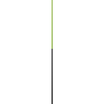
When building a custom fly rod, the blank is the foundation that defines how the finished rod will perform. Instead of relying on a pre-matched setup, selecting your own blank allows you to control the rod’s weight, action, length, and overall feel from the start. This gives you the ability to match the build to your specific fishing style, target species, and the conditions you fish most often.
A properly chosen blank ensures the rod loads correctly with the intended fly line, recovers efficiently during the cast, and delivers consistent performance on the water. Rather than eliminating decisions like a combo would, building from a blank lets you fine-tune those decisions so every component works together as a complete system.
Understanding a blank’s key characteristics—length, line weight, action, and material—makes it easier to build a rod that casts cleanly, tracks accurately, and performs the way you expect on the water. Here’s what to look for.
Length
Blank length directly affects casting range, line control, and how the rod handles different environments. Shorter blanks (6–7 ft) are easier to manage in tight quarters like small creeks or overgrown streams, where accuracy matters more than distance. Mid-length blanks (7–9 ft) offer the most versatility, balancing control and casting range, with 9 ft being the standard for general freshwater and light saltwater use. Longer blanks (9 ft and up) improve line mending, extend casting distance, and help manage faster currents or larger flies, but can feel less maneuverable in confined spaces. Most modern blanks are designed in multiple sections—commonly 4-piece—for easier transport without sacrificing performance.
Line Weight
The blank’s line rating determines how much power it has and what size flies it can cast effectively. Lighter blanks (1–3 weight) are built for finesse applications, where small flies and subtle presentations are key. Mid-range blanks (4–6 weight) offer a balance of control, casting ease, and versatility, making them the most common choice for general freshwater builds. Heavier blanks (7–9 weight and above) are designed to handle larger flies, longer casts, and stronger fish in more demanding conditions. Matching the blank to the intended fly line weight is critical for proper loading, smooth energy transfer, and consistent casting performance.
Action
Action describes where the blank flexes and how quickly it recovers during the cast, which directly impacts feel, timing, and line speed.
- Slow-action blanks bend deeply through most of their length, creating a smooth, forgiving casting stroke. They are well-suited for short distances, delicate presentations, and smaller water, but lack the power needed for long casts or heavier flies.
- Moderate-action blanks flex further into the mid-section, offering a balance between control and power. They provide a more versatile casting range and are easier to manage across a variety of conditions and fly sizes.
- Fast-action blanks concentrate flex closer to the tip, allowing them to store and release energy quickly. This produces higher line speed for longer casts, improved performance in wind, and better turnover of larger flies, but requires more precise timing.
- Extra-fast (X-Fast) action blanks flex primarily at the tip, delivering maximum power and line speed. These are typically used for long-distance casting, heavy flies, or demanding saltwater applications, but are less forgiving and more technique-dependent.
Fly Rod Materials
Blank material plays a major role in weight, sensitivity, durability, and overall casting feel. Here are a few popular choices:
Graphite
Lightweight, strong, and highly sensitive, graphite blanks are the standard choice for most beginner setups. They allow anglers to detect subtle strikes, feel the line, and cast efficiently with minimal effort. Graphite blanks are versatile, performing well for both freshwater species like trout and bass, and lighter inshore saltwater species such as redfish or bonefish. They are especially useful for learning proper casting technique because their responsiveness gives immediate feedback.
Fiberglass
Fiberglass blanks are heavier than graphite, with a deeper, more uniform bend along the blank and slower recovery. This produces a smooth, forgiving casting feel that is easier on beginners for short-range casts and delicate presentations. The added mass makes them less efficient for long-distance casting or rapid line turnover, but their durability and soft, springy action help absorb sudden fish runs. Fiberglass blanks are often preferred for small streams, classic-style trout fishing, or anglers who enjoy a relaxed, traditional casting experience.
Fly Rod Blanks by Weight Ranges
Here’s how different blank weights translate into real-world performance and what to look for when selecting a blank for each category. We’ve also included MHX part numbers to help with your selection.
1–3 Weight (Ultra-Light)
Blanks in this range are built for finesse and precision in small, technical water. Look for shorter to mid-length blanks with slower to moderate actions that allow for controlled, delicate presentations. These blanks excel when casting small flies at short distances, where accuracy and a soft landing are more important than power.
MHX Part Numbers: F763-4, ICF903-4
4–6 Weight (All-Purpose)
This is the most versatile category for custom builds. Blanks in this range are typically around 9 ft with moderate to fast actions, providing a balance of casting ease, accuracy, and enough power to handle a variety of flies and conditions. A 5-weight blank is a reliable starting point for a do-it-all freshwater rod.
MHX Part Numbers: F865-4, ICF905-4
7–9 Weight (Heavy)
Heavier blanks are designed for increased line speed and lifting power. Look for fast to extra-fast actions that can turn over larger flies and maintain control in wind. These blanks are ideal for targeting stronger freshwater species or transitioning into inshore saltwater applications where distance and power become more important.
MHX Part Numbers: F908-4, ICF908-4
10–14 Weight (Saltwater / Big Game)
Blanks in this range are built for maximum strength and performance in demanding environments. They are typically longer with fast or extra-fast actions to generate high line speed and handle large, wind-resistant flies. These blanks are intended for targeting powerful fish and require components that can support heavy loads and sustained pressure.
MHX Part Numbers: F912-4, F910-4
Choosing a Fly Fishing Rod Blank
When building a custom fly rod, the blank is the foundation that defines how the finished rod will perform. Instead of relying on a pre-matched setup, selecting your own blank allows you to control the rod’s weight, action, length, and overall feel from the start. This gives you the ability to match the build to your specific fishing style, target species, and the conditions you fish most often.
A properly chosen blank ensures the rod loads correctly with the intended fly line, recovers efficiently during the cast, and delivers consistent performance on the water. Rather than eliminating decisions like a combo would, building from a blank lets you fine-tune those decisions so every component works together as a complete system.
Understanding a blank’s key characteristics—length, line weight, action, and material—makes it easier to build a rod that casts cleanly, tracks accurately, and performs the way you expect on the water. Here’s what to look for.
Length
Blank length directly affects casting range, line control, and how the rod handles different environments. Shorter blanks (6–7 ft) are easier to manage in tight quarters like small creeks or overgrown streams, where accuracy matters more than distance. Mid-length blanks (7–9 ft) offer the most versatility, balancing control and casting range, with 9 ft being the standard for general freshwater and light saltwater use. Longer blanks (9 ft and up) improve line mending, extend casting distance, and help manage faster currents or larger flies, but can feel less maneuverable in confined spaces. Most modern blanks are designed in multiple sections—commonly 4-piece—for easier transport without sacrificing performance.
Line Weight
The blank’s line rating determines how much power it has and what size flies it can cast effectively. Lighter blanks (1–3 weight) are built for finesse applications, where small flies and subtle presentations are key. Mid-range blanks (4–6 weight) offer a balance of control, casting ease, and versatility, making them the most common choice for general freshwater builds. Heavier blanks (7–9 weight and above) are designed to handle larger flies, longer casts, and stronger fish in more demanding conditions. Matching the blank to the intended fly line weight is critical for proper loading, smooth energy transfer, and consistent casting performance.
Action
Action describes where the blank flexes and how quickly it recovers during the cast, which directly impacts feel, timing, and line speed.
- Slow-action blanks bend deeply through most of their length, creating a smooth, forgiving casting stroke. They are well-suited for short distances, delicate presentations, and smaller water, but lack the power needed for long casts or heavier flies.
- Moderate-action blanks flex further into the mid-section, offering a balance between control and power. They provide a more versatile casting range and are easier to manage across a variety of conditions and fly sizes.
- Fast-action blanks concentrate flex closer to the tip, allowing them to store and release energy quickly. This produces higher line speed for longer casts, improved performance in wind, and better turnover of larger flies, but requires more precise timing.
- Extra-fast (X-Fast) action blanks flex primarily at the tip, delivering maximum power and line speed. These are typically used for long-distance casting, heavy flies, or demanding saltwater applications, but are less forgiving and more technique-dependent.
Fly Rod Materials
Blank material plays a major role in weight, sensitivity, durability, and overall casting feel. Here are a few popular choices:
Graphite
Lightweight, strong, and highly sensitive, graphite blanks are the standard choice for most beginner setups. They allow anglers to detect subtle strikes, feel the line, and cast efficiently with minimal effort. Graphite blanks are versatile, performing well for both freshwater species like trout and bass, and lighter inshore saltwater species such as redfish or bonefish. They are especially useful for learning proper casting technique because their responsiveness gives immediate feedback.
Fiberglass
Fiberglass blanks are heavier than graphite, with a deeper, more uniform bend along the blank and slower recovery. This produces a smooth, forgiving casting feel that is easier on beginners for short-range casts and delicate presentations. The added mass makes them less efficient for long-distance casting or rapid line turnover, but their durability and soft, springy action help absorb sudden fish runs. Fiberglass blanks are often preferred for small streams, classic-style trout fishing, or anglers who enjoy a relaxed, traditional casting experience.
Fly Rod Blanks by Weight Ranges
Here’s how different blank weights translate into real-world performance and what to look for when selecting a blank for each category. We’ve also included MHX part numbers to help with your selection.
1–3 Weight (Ultra-Light)
Blanks in this range are built for finesse and precision in small, technical water. Look for shorter to mid-length blanks with slower to moderate actions that allow for controlled, delicate presentations. These blanks excel when casting small flies at short distances, where accuracy and a soft landing are more important than power.
MHX Part Numbers: F763-4, ICF903-4
4–6 Weight (All-Purpose)
This is the most versatile category for custom builds. Blanks in this range are typically around 9 ft with moderate to fast actions, providing a balance of casting ease, accuracy, and enough power to handle a variety of flies and conditions. A 5-weight blank is a reliable starting point for a do-it-all freshwater rod.
MHX Part Numbers: F865-4, ICF905-4
7–9 Weight (Heavy)
Heavier blanks are designed for increased line speed and lifting power. Look for fast to extra-fast actions that can turn over larger flies and maintain control in wind. These blanks are ideal for targeting stronger freshwater species or transitioning into inshore saltwater applications where distance and power become more important.
MHX Part Numbers: F908-4, ICF908-4
10–14 Weight (Saltwater / Big Game)
Blanks in this range are built for maximum strength and performance in demanding environments. They are typically longer with fast or extra-fast actions to generate high line speed and handle large, wind-resistant flies. These blanks are intended for targeting powerful fish and require components that can support heavy loads and sustained pressure.
MHX Part Numbers: F912-4, F910-4
Fly Rod Blanks


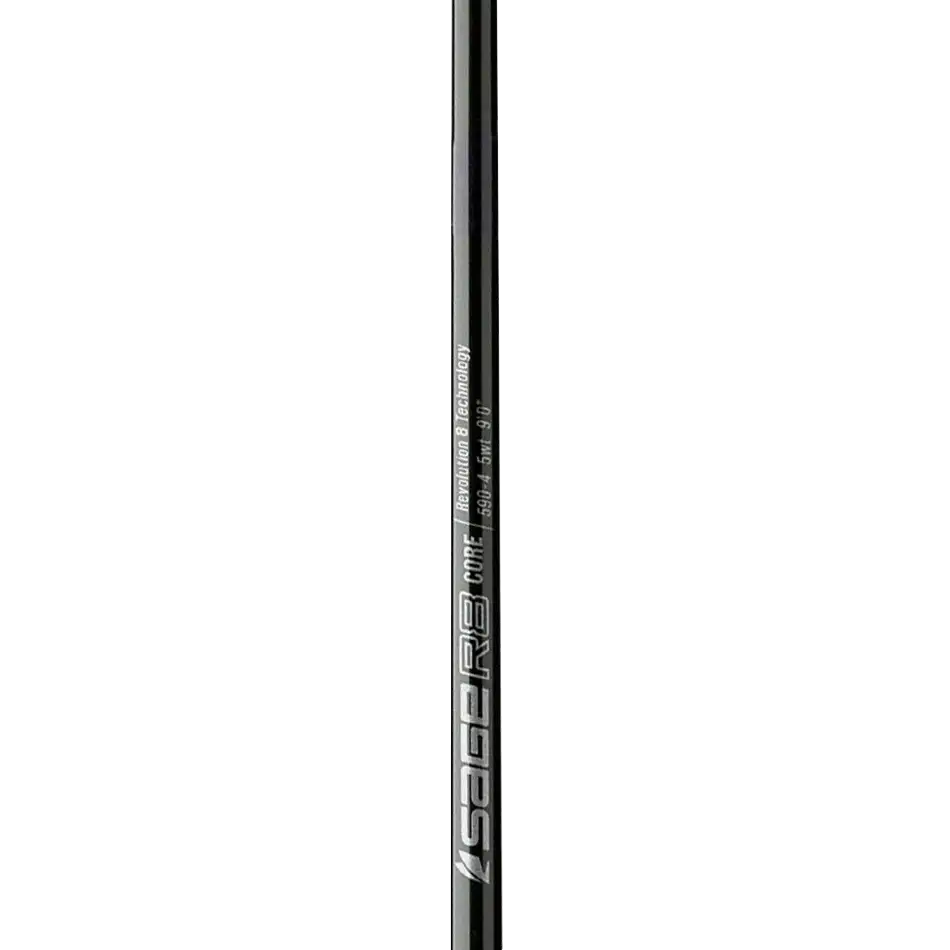
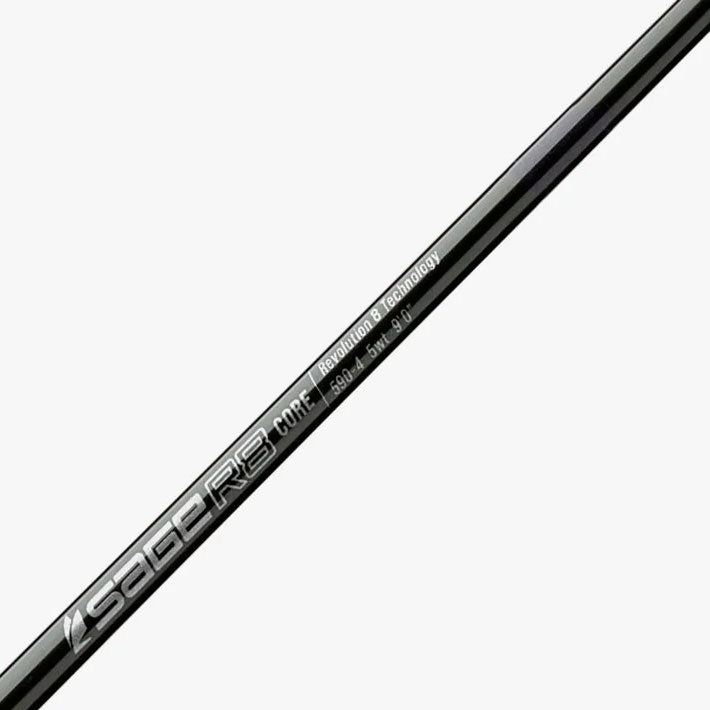
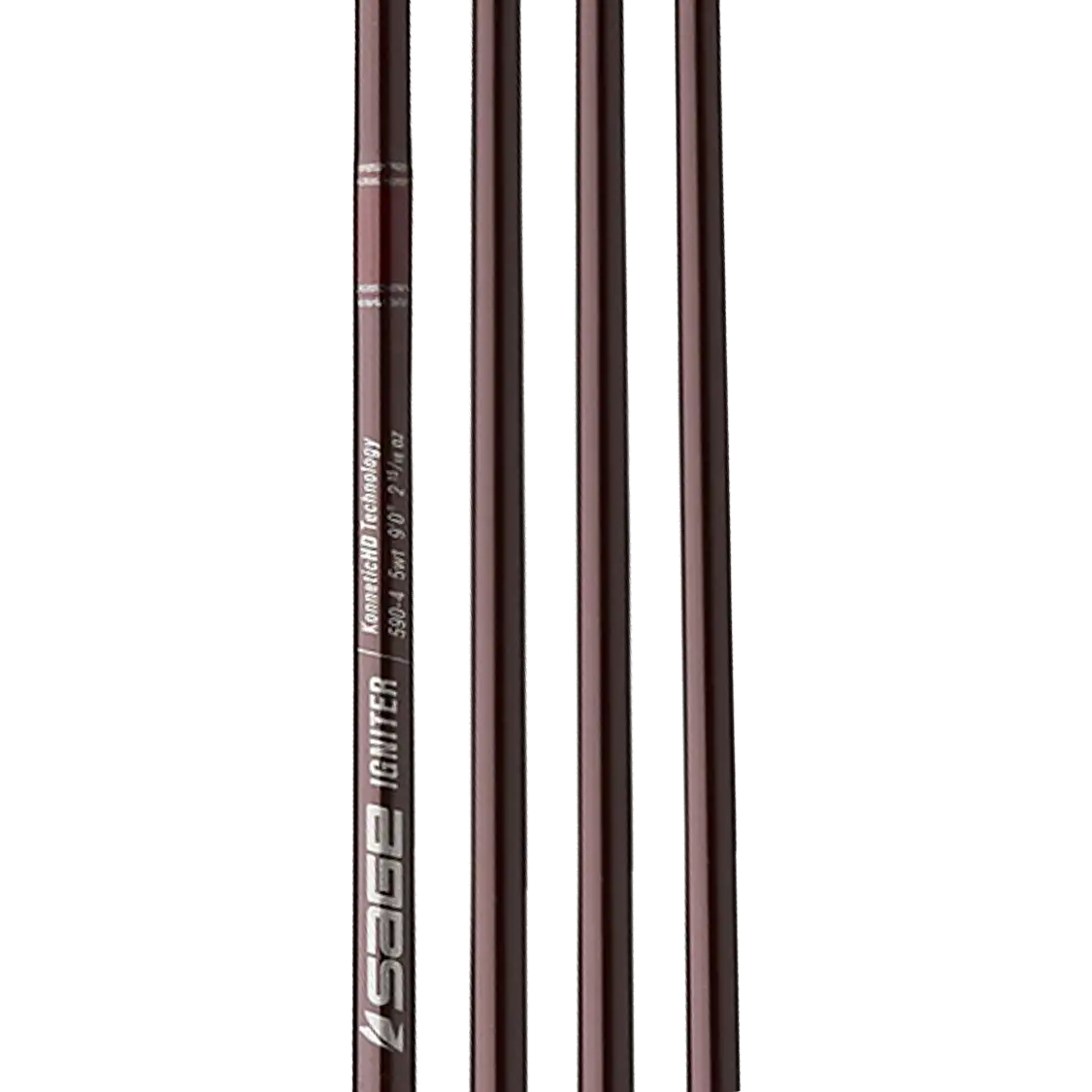
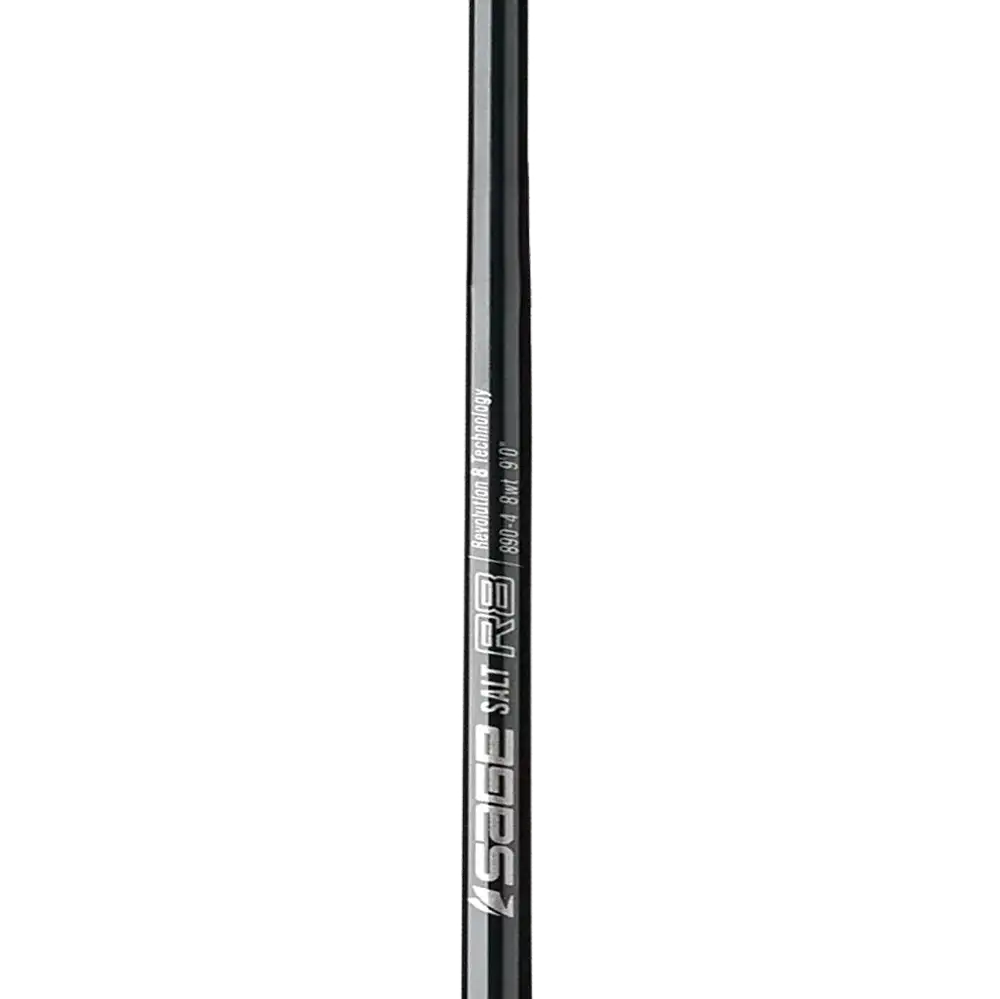
4 models available
Fly Rod Guide Kits
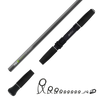
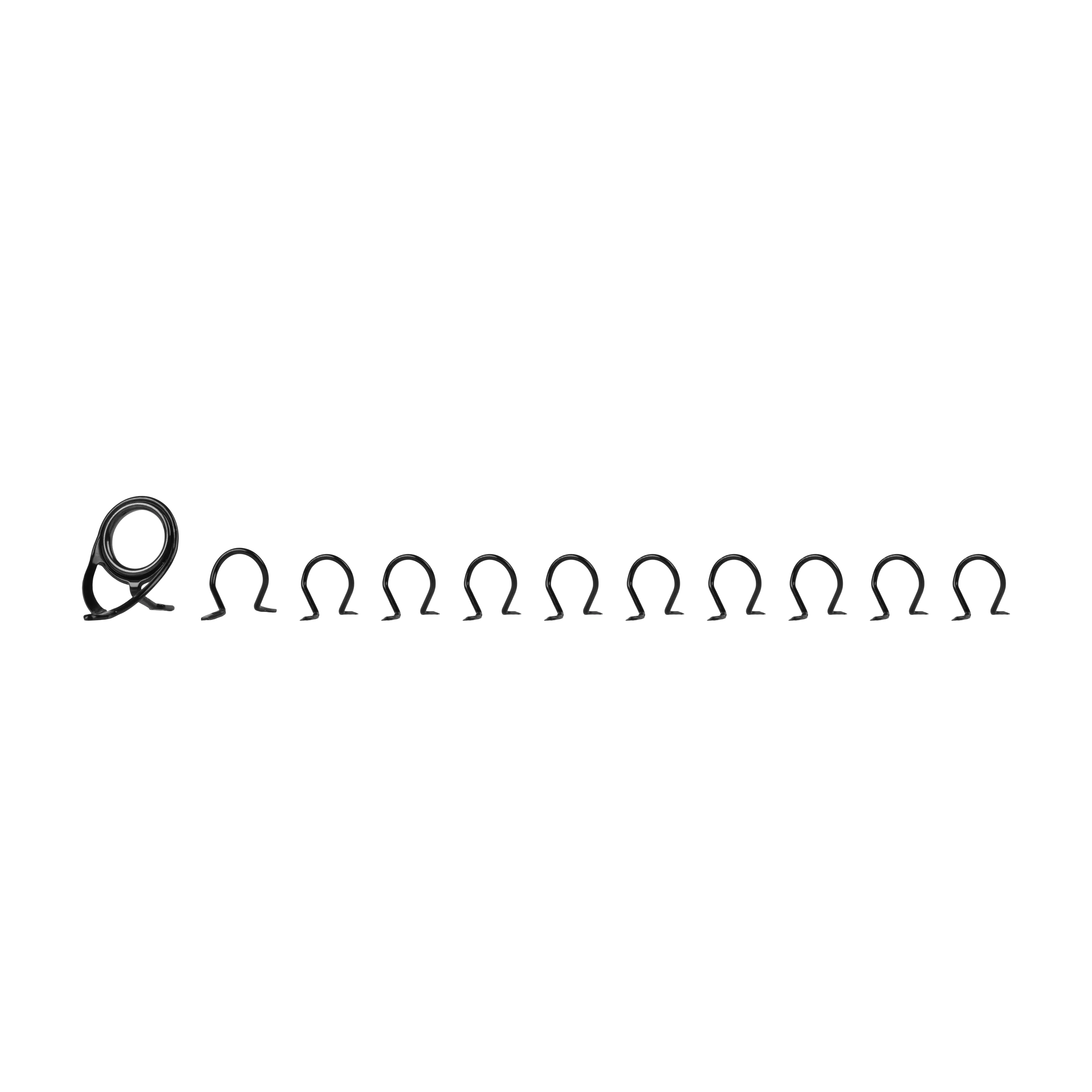
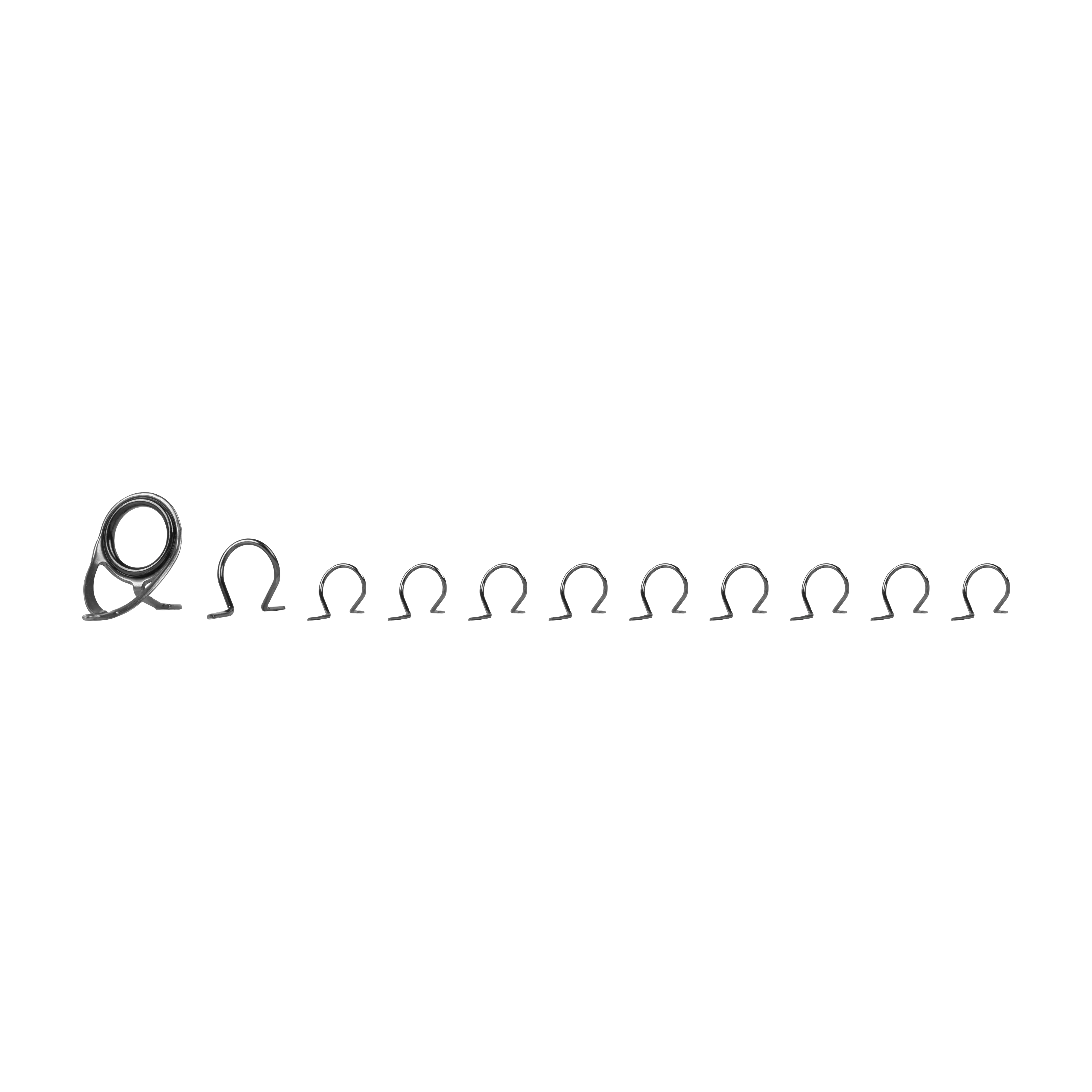
When building a custom fly rod, the guide system plays a key role in how efficiently line moves and how smoothly the rod performs during casting and line control. Fly fishing relies on clean line flow, consistent energy transfer, and smooth tracking from reel to tip, and a properly selected guide kit helps the blank load and unload correctly while minimizing resistance.
Guide kits simplify the process by providing correctly sized guides and spacing matched to the blank’s length and action. This reduces guesswork and ensures smooth line movement during casting, shooting line, and retrieving. A properly tuned guide train improves casting efficiency, reduces friction, and allows the blank to perform at its intended level.
Proper guide placement supports smooth line flow, reduces friction for better line speed, maintains consistent blank performance under load, and improves control for mending, drifting, and stripping.
On fly rods, the guide layout typically begins with a stripper guide near the handle to control line coming off the reel, followed by lightweight running guides that carry the line cleanly to the tip.
Stripper Guides
Fly rod builds use one or more larger double-foot stripper guides, positioned closest to the handle, depending on the blank’s length and weight. These guides help control the fly line as it leaves the reel, managing the wide loops that form during casting. Because fly line is thicker and more flexible than fluorocarbon or braid, the stripper guides must be sized to handle these larger loops without creating drag or interfering with the blank’s natural action. On longer or heavier rods, a second or third double-foot stripper guide is often added to further smooth line flow before the running guides.
Running Guides
Beyond the stripper guides, fly rods typically incorporate a series of lightweight running guides that carry the line to the tip. Traditional builds often use wire loop snake guides, either single foot or double foot, which are durable, flexible, and allow the line to pass smoothly with minimal added weight. These running guides support the blank’s natural flex and help maintain consistent energy transfer throughout the cast.
Some fly rod builds employ single-foot running guides with ceramic or metal inserts, similar to those found on spinning or casting rods. These guides can reduce friction and improve line shooting, particularly when using heavier fly lines or fishing in saltwater, though they add slightly more weight than traditional wire guides.
Frame vs Ring Size
Choosing the right guide style and sizing helps balance weight, durability, and line performance in a fly rod build.
Frame Style
Guide frame design influences the rod’s weight, balance, and how it flexes during casting. Stripper guides on fly rods are typically double-foot with metal frames—similar in style to the casting stripper guides seen on spinning rods—which provides extra strength and durability while managing large line loops.
Traditional snake guides used for running guides are extremely lightweight and flexible, preserving the blank’s natural action. Single-foot running guides with ceramic or metal inserts can also be used to reduce friction and improve line flow, but they add slightly more weight, which can affect rod feel if overused.
Ring Size
Guide ring size affects how smoothly the fly line moves through the system. Larger rings are generally placed at the stripper position to handle the wide loops of line coming off the reel, while smaller running guides keep weight down and maintain efficiency along the blank. The goal is to select the smallest, lightest guides that still perform their function, allowing smooth line flow without adding unnecessary mass. This helps ensure the rod stays responsive, balanced, and preserves the blank’s natural action.
Key Takeaways
- Guide kits help match guide sizing and spacing to the blank for consistent performance
- Stripper guides control fly line as it leaves the reel and enters the guide train
- Running guides—typically snake guides—support smooth line flow and blank flex
- Some builds use ceramic single-foot guides for reduced friction and added durability
- Proper guide selection and placement improve casting efficiency, line control, and overall rod performance
Fly Rod Guide Kits
When building a custom fly rod, the guide system plays a key role in how efficiently line moves and how smoothly the rod performs during casting and line control. Fly fishing relies on clean line flow, consistent energy transfer, and smooth tracking from reel to tip, and a properly selected guide kit helps the blank load and unload correctly while minimizing resistance.
Guide kits simplify the process by providing correctly sized guides and spacing matched to the blank’s length and action. This reduces guesswork and ensures smooth line movement during casting, shooting line, and retrieving. A properly tuned guide train improves casting efficiency, reduces friction, and allows the blank to perform at its intended level.
Proper guide placement supports smooth line flow, reduces friction for better line speed, maintains consistent blank performance under load, and improves control for mending, drifting, and stripping.
On fly rods, the guide layout typically begins with a stripper guide near the handle to control line coming off the reel, followed by lightweight running guides that carry the line cleanly to the tip.
Stripper Guides
Fly rod builds use one or more larger double-foot stripper guides, positioned closest to the handle, depending on the blank’s length and weight. These guides help control the fly line as it leaves the reel, managing the wide loops that form during casting. Because fly line is thicker and more flexible than fluorocarbon or braid, the stripper guides must be sized to handle these larger loops without creating drag or interfering with the blank’s natural action. On longer or heavier rods, a second or third double-foot stripper guide is often added to further smooth line flow before the running guides.
Running Guides
Beyond the stripper guides, fly rods typically incorporate a series of lightweight running guides that carry the line to the tip. Traditional builds often use wire loop snake guides, either single foot or double foot, which are durable, flexible, and allow the line to pass smoothly with minimal added weight. These running guides support the blank’s natural flex and help maintain consistent energy transfer throughout the cast.
Some fly rod builds employ single-foot running guides with ceramic or metal inserts, similar to those found on spinning or casting rods. These guides can reduce friction and improve line shooting, particularly when using heavier fly lines or fishing in saltwater, though they add slightly more weight than traditional wire guides.
Frame vs Ring Size
Choosing the right guide style and sizing helps balance weight, durability, and line performance in a fly rod build.
Frame Style
Guide frame design influences the rod’s weight, balance, and how it flexes during casting. Stripper guides on fly rods are typically double-foot with metal frames—similar in style to the casting stripper guides seen on spinning rods—which provides extra strength and durability while managing large line loops.
Traditional snake guides used for running guides are extremely lightweight and flexible, preserving the blank’s natural action. Single-foot running guides with ceramic or metal inserts can also be used to reduce friction and improve line flow, but they add slightly more weight, which can affect rod feel if overused.
Ring Size
Guide ring size affects how smoothly the fly line moves through the system. Larger rings are generally placed at the stripper position to handle the wide loops of line coming off the reel, while smaller running guides keep weight down and maintain efficiency along the blank. The goal is to select the smallest, lightest guides that still perform their function, allowing smooth line flow without adding unnecessary mass. This helps ensure the rod stays responsive, balanced, and preserves the blank’s natural action.
Key Takeaways
- Guide kits help match guide sizing and spacing to the blank for consistent performance
- Stripper guides control fly line as it leaves the reel and enters the guide train
- Running guides—typically snake guides—support smooth line flow and blank flex
- Some builds use ceramic single-foot guides for reduced friction and added durability
- Proper guide selection and placement improve casting efficiency, line control, and overall rod performance
Fly Guide Kits


Fly Rod Tip Tops
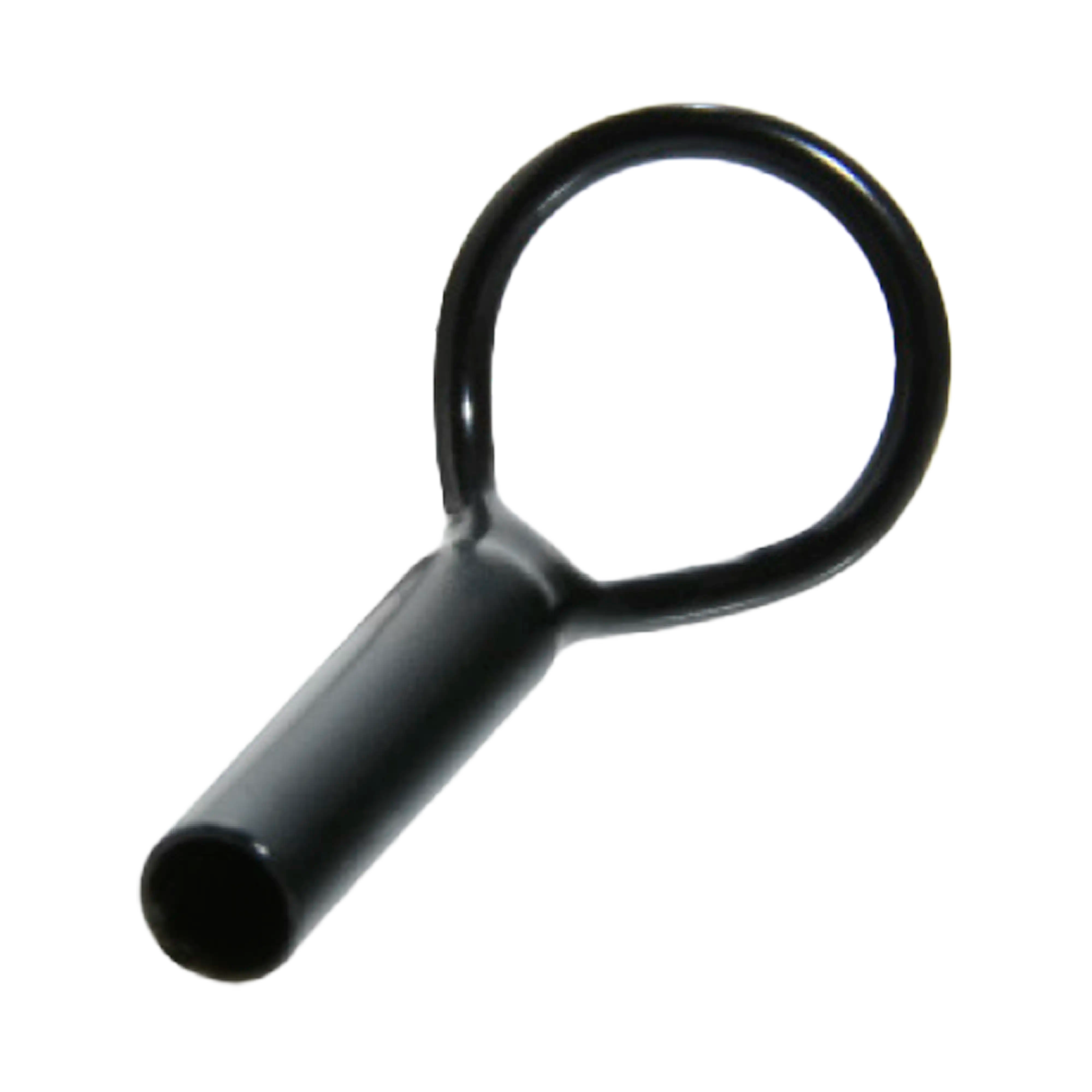
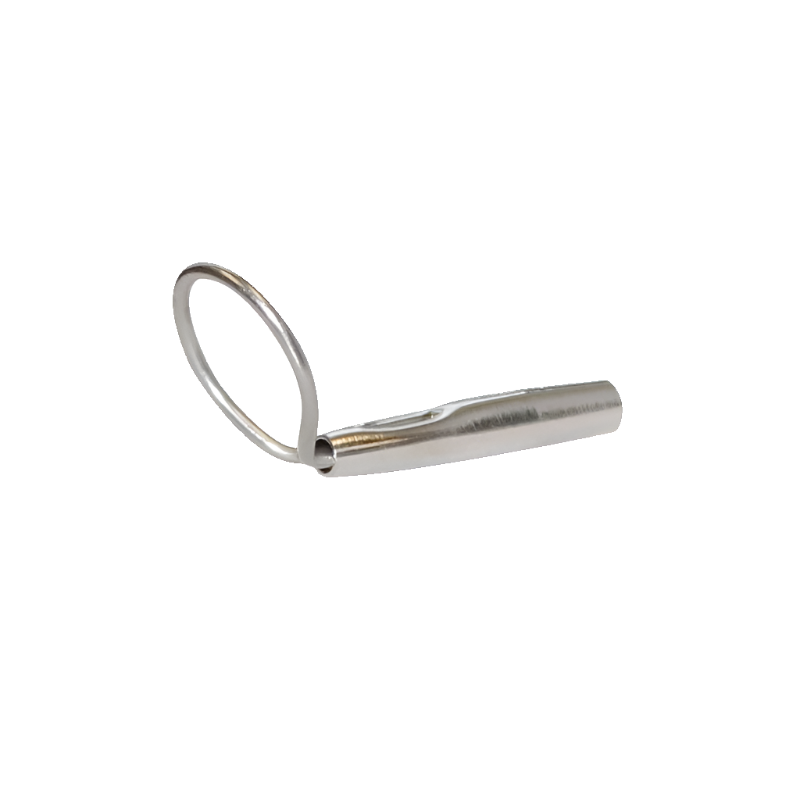
The tip-top is the final guide on a fly rod and plays a crucial role in how the rod performs and how smoothly the line moves. It guides the fly line off the rod with minimal friction while protecting the delicate tip section of the blank from wear caused by repeated casting, stripping, or mending. A properly selected tip-top helps maintain consistent line tracking, preserves the blank’s sensitivity, and ensures the rod responds accurately to subtle movements during delicate presentations. Even small mismatches at the tip can disrupt line flow or reduce the rod’s responsiveness, so careful selection is important.
When choosing a tip-top, consider these key factors:
Tube Size
The tube should match the diameter of the rod blank’s tip for a secure, precise fit. A properly fitted tip-top stays aligned under load, allowing the blank to flex naturally while maintaining action and sensitivity.
Ring Size
The ring determines how easily the fly line exits the rod. Most fly rod builds use a ring size that corresponds with the final running guide to ensure smooth, consistent line flow. Slightly larger rings may be helpful when using heavy fly lines, braided backing, or passing knots through the tip. The goal is to minimize friction while maintaining performance.
Tip Material
Fly rod tip-tops are typically either wire-frame or ceramic. Wire-frame tips are strong and flexible, matching traditional wire snake guides, while ceramic tips reduce friction and improve line shooting, especially with heavier fly lines or saltwater setups. The material you choose for the tip-top should generally match the type of running guides used on your rod to maintain consistent line behavior and a uniform feel.
A well-chosen tip-top completes the guide system, protecting the blank, supporting smooth line movement, and ensuring that every delicate strip, drift, or subtle tug is transmitted precisely through the rod.
Fly Rod Tip Tops
The tip-top is the final guide on a fly rod and plays a crucial role in how the rod performs and how smoothly the line moves. It guides the fly line off the rod with minimal friction while protecting the delicate tip section of the blank from wear caused by repeated casting, stripping, or mending. A properly selected tip-top helps maintain consistent line tracking, preserves the blank’s sensitivity, and ensures the rod responds accurately to subtle movements during delicate presentations. Even small mismatches at the tip can disrupt line flow or reduce the rod’s responsiveness, so careful selection is important.
When choosing a tip-top, consider these key factors:
Tube Size
The tube should match the diameter of the rod blank’s tip for a secure, precise fit. A properly fitted tip-top stays aligned under load, allowing the blank to flex naturally while maintaining action and sensitivity.
Ring Size
The ring determines how easily the fly line exits the rod. Most fly rod builds use a ring size that corresponds with the final running guide to ensure smooth, consistent line flow. Slightly larger rings may be helpful when using heavy fly lines, braided backing, or passing knots through the tip. The goal is to minimize friction while maintaining performance.
Tip Material
Fly rod tip-tops are typically either wire-frame or ceramic. Wire-frame tips are strong and flexible, matching traditional wire snake guides, while ceramic tips reduce friction and improve line shooting, especially with heavier fly lines or saltwater setups. The material you choose for the tip-top should generally match the type of running guides used on your rod to maintain consistent line behavior and a uniform feel.
A well-chosen tip-top completes the guide system, protecting the blank, supporting smooth line movement, and ensuring that every delicate strip, drift, or subtle tug is transmitted precisely through the rod.
Fly Tip Tops





Fly Rod Grips
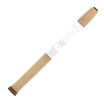
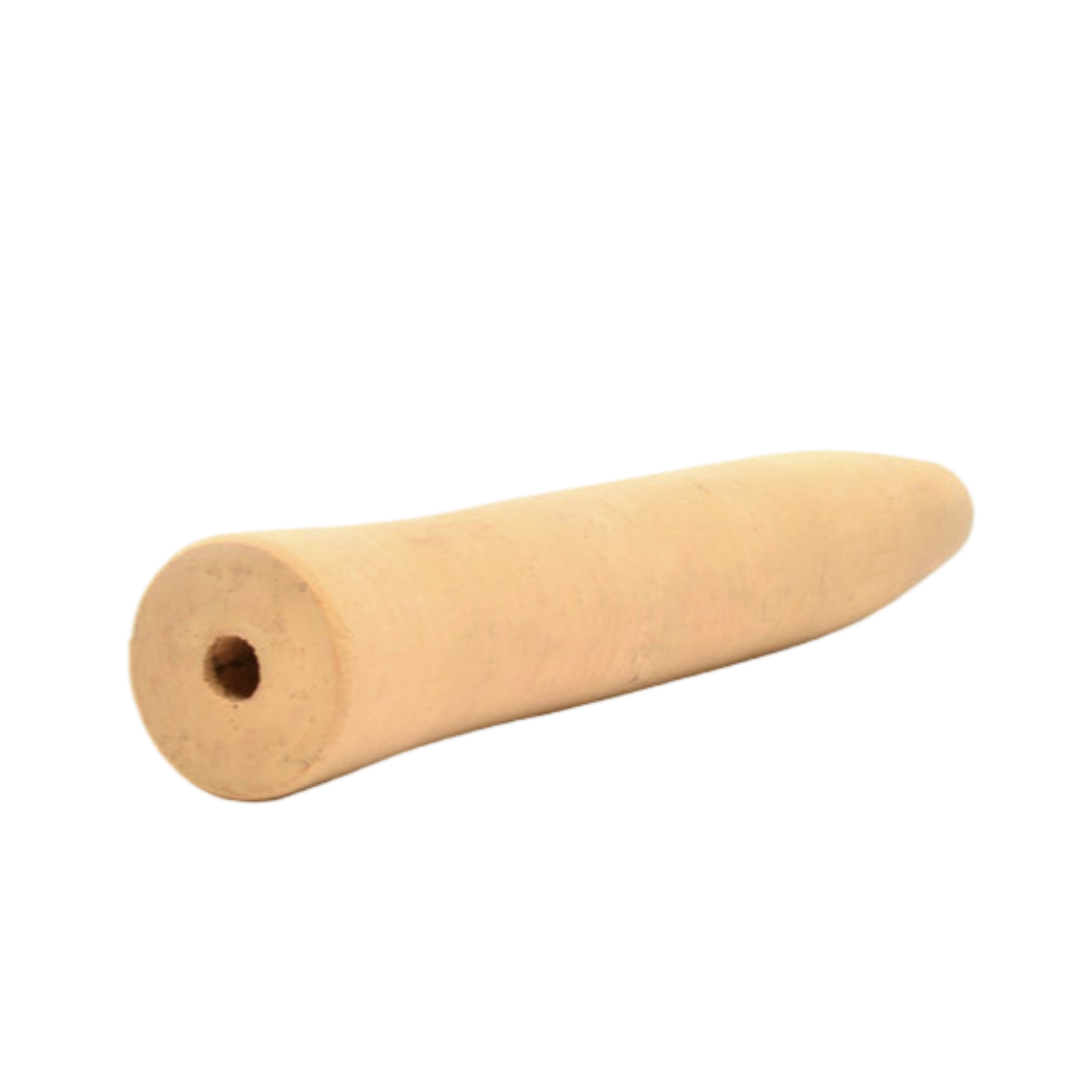
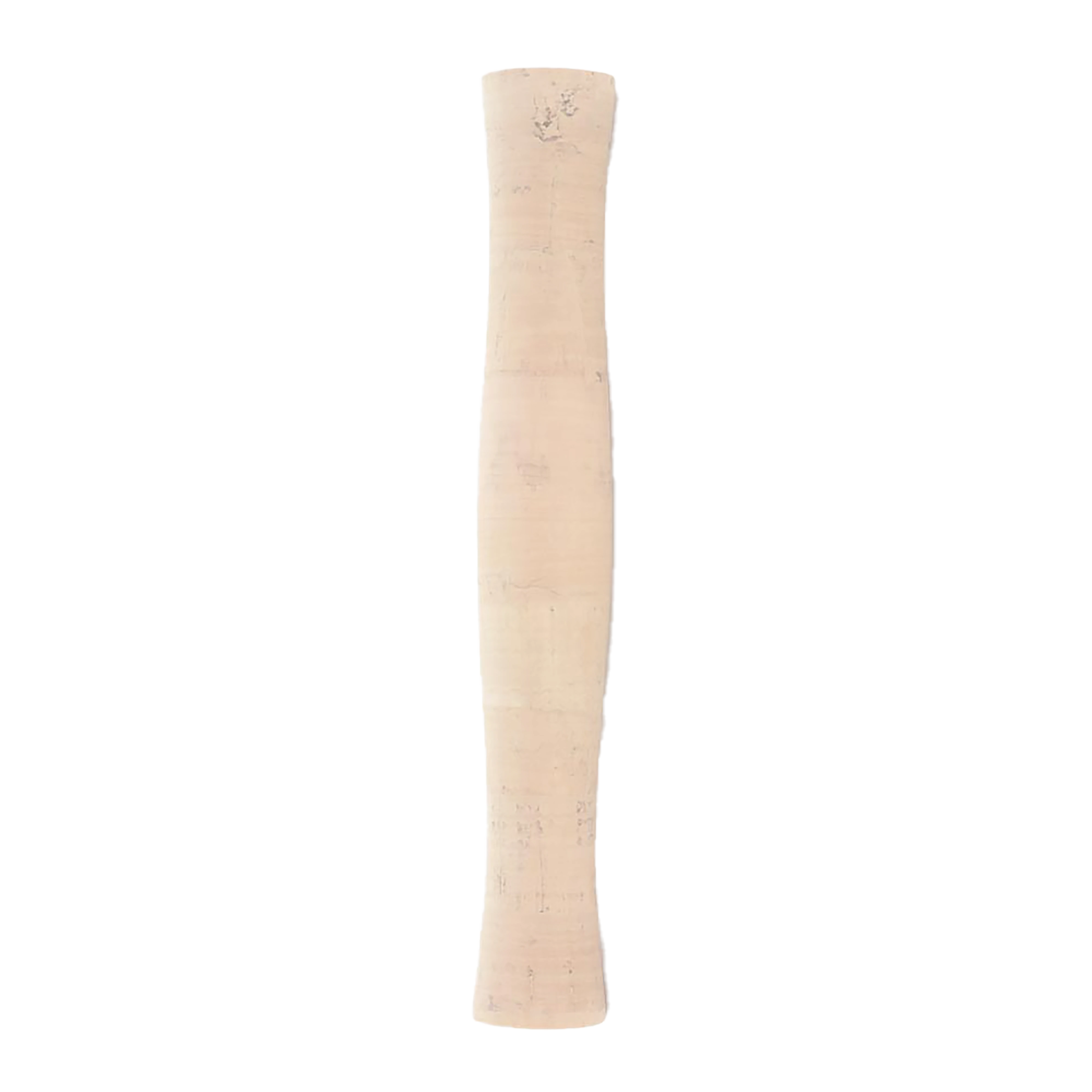
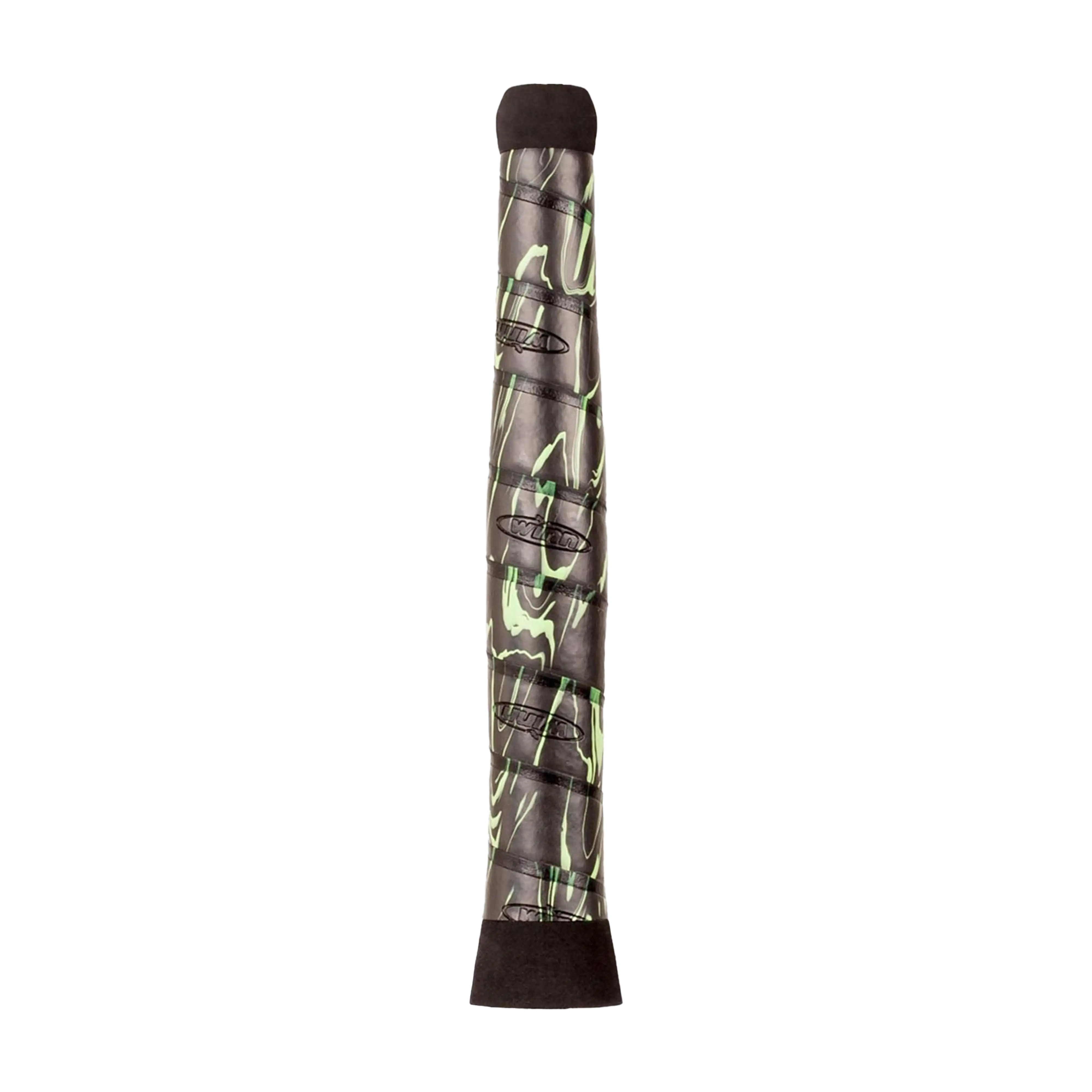
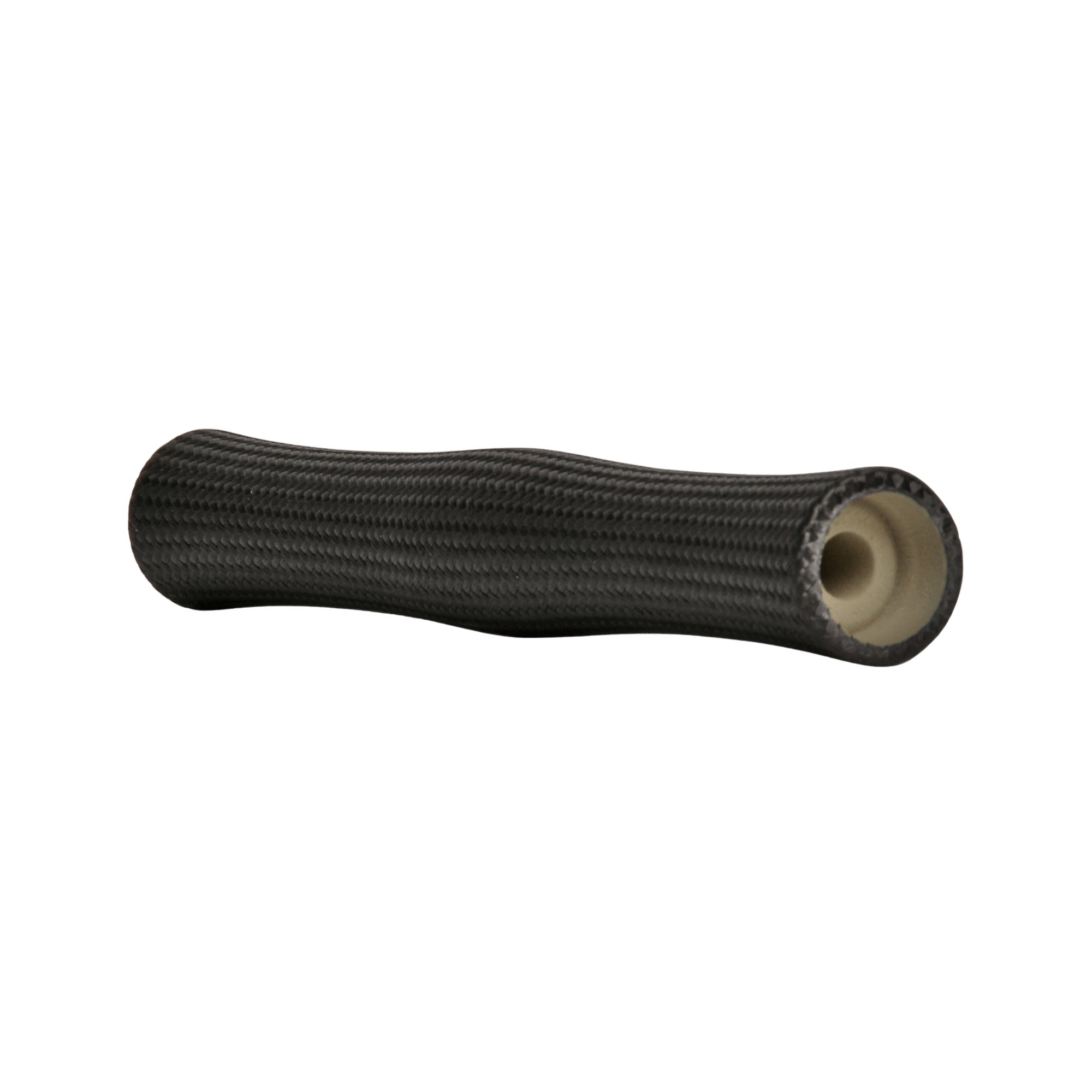
The handle, or grip, of a fly rod greatly affects comfort, control, and casting performance. Choosing the right shape and material can reduce fatigue, improve leverage, and make casts smoother and more precise, even during long days on the water. The grip also influences how the rod feels in your hand, how vibrations from the line and fish are transmitted, and the overall balance of the rod. Fly rod grips are generally available in two main styles: half-wells and full-wells.
Half-Wells Grips
Half-wells grips are smaller and lighter, making them popular on 3–5 weight freshwater rods. They provide a natural hand placement for short to moderate casts and delicate presentations. Half-wells grips are ideal for anglers who fish small streams, tight rivers, or require quick adjustments without added bulk in the hand.
Full-Wells Grips
Full-wells grips are larger and more substantial, offering extra leverage and control for heavier freshwater or saltwater rods. They help turn over larger flies, cast longer distances, and fight bigger fish with less effort. Full-wells grips provide a secure, balanced feel for anglers who spend extended periods on the water or fish in windy or fast-current conditions.
Key Takeaways
- Half-wells grips are lighter and suited for small to medium freshwater rods and delicate presentations
- Full-wells grips provide more leverage for heavier rods, long casts, and larger fish
- EVA foam grips improve durability and reduce fatigue in tough conditions
- Carbon or composite grips deliver maximum vibration transfer and long-term durability
Fly Handle Materials
The material of the grip affects comfort, vibration transfer, and durability. Common options include:
Cork
Lightweight with a natural texture that transmits subtle vibrations well. Comfortable for long sessions, though it may show wear over time. Ideal for anglers who prioritize sensitivity and a classic feel.
EVA Foam
Durable and resistant to water and abrasion, with a slightly softer feel that reduces hand fatigue. Slightly less sensitive than cork but holds up well in tough conditions, making it suitable for saltwater or heavy-use applications.
Carbon / Composite
Extremely light and rigid, offering excellent vibration transfer and long-term durability. Provides a direct feel, though it can be firmer in the hand during extended use.
Cut-Out Handles
Handles with a recessed section to fit the reel seat while reducing overall weight. This design improves rod balance, keeps the reel positioned securely, and helps maintain proper hand placement. Choosing the right grip material ensures comfort, control, and durability without compromising rod feel.
Choosing the right grip depends on your preferred casting style, the weight of the rod, and the species or water you plan to fish. Half-wells and cork might be best for finesse freshwater presentations, while full-wells with EVA or composite grips provide more leverage for heavier rods and long casting sessions. Matching the handle to your blank ensures the rod feels balanced and responsive.
Fly Rod Grips
The handle, or grip, of a fly rod greatly affects comfort, control, and casting performance. Choosing the right shape and material can reduce fatigue, improve leverage, and make casts smoother and more precise, even during long days on the water. The grip also influences how the rod feels in your hand, how vibrations from the line and fish are transmitted, and the overall balance of the rod. Fly rod grips are generally available in two main styles: half-wells and full-wells.
Half-Wells Grips
Half-wells grips are smaller and lighter, making them popular on 3–5 weight freshwater rods. They provide a natural hand placement for short to moderate casts and delicate presentations. Half-wells grips are ideal for anglers who fish small streams, tight rivers, or require quick adjustments without added bulk in the hand.
Full-Wells Grips
Full-wells grips are larger and more substantial, offering extra leverage and control for heavier freshwater or saltwater rods. They help turn over larger flies, cast longer distances, and fight bigger fish with less effort. Full-wells grips provide a secure, balanced feel for anglers who spend extended periods on the water or fish in windy or fast-current conditions.
Key Takeaways
- Half-wells grips are lighter and suited for small to medium freshwater rods and delicate presentations
- Full-wells grips provide more leverage for heavier rods, long casts, and larger fish
- EVA foam grips improve durability and reduce fatigue in tough conditions
- Carbon or composite grips deliver maximum vibration transfer and long-term durability
Fly Handle Materials
The material of the grip affects comfort, vibration transfer, and durability. Common options include:
Cork
Lightweight with a natural texture that transmits subtle vibrations well. Comfortable for long sessions, though it may show wear over time. Ideal for anglers who prioritize sensitivity and a classic feel.
EVA Foam
Durable and resistant to water and abrasion, with a slightly softer feel that reduces hand fatigue. Slightly less sensitive than cork but holds up well in tough conditions, making it suitable for saltwater or heavy-use applications.
Carbon / Composite
Extremely light and rigid, offering excellent vibration transfer and long-term durability. Provides a direct feel, though it can be firmer in the hand during extended use.
Cut-Out Handles
Handles with a recessed section to fit the reel seat while reducing overall weight. This design improves rod balance, keeps the reel positioned securely, and helps maintain proper hand placement. Choosing the right grip material ensures comfort, control, and durability without compromising rod feel.
Choosing the right grip depends on your preferred casting style, the weight of the rod, and the species or water you plan to fish. Half-wells and cork might be best for finesse freshwater presentations, while full-wells with EVA or composite grips provide more leverage for heavier rods and long casting sessions. Matching the handle to your blank ensures the rod feels balanced and responsive.
Fly Rod Grips



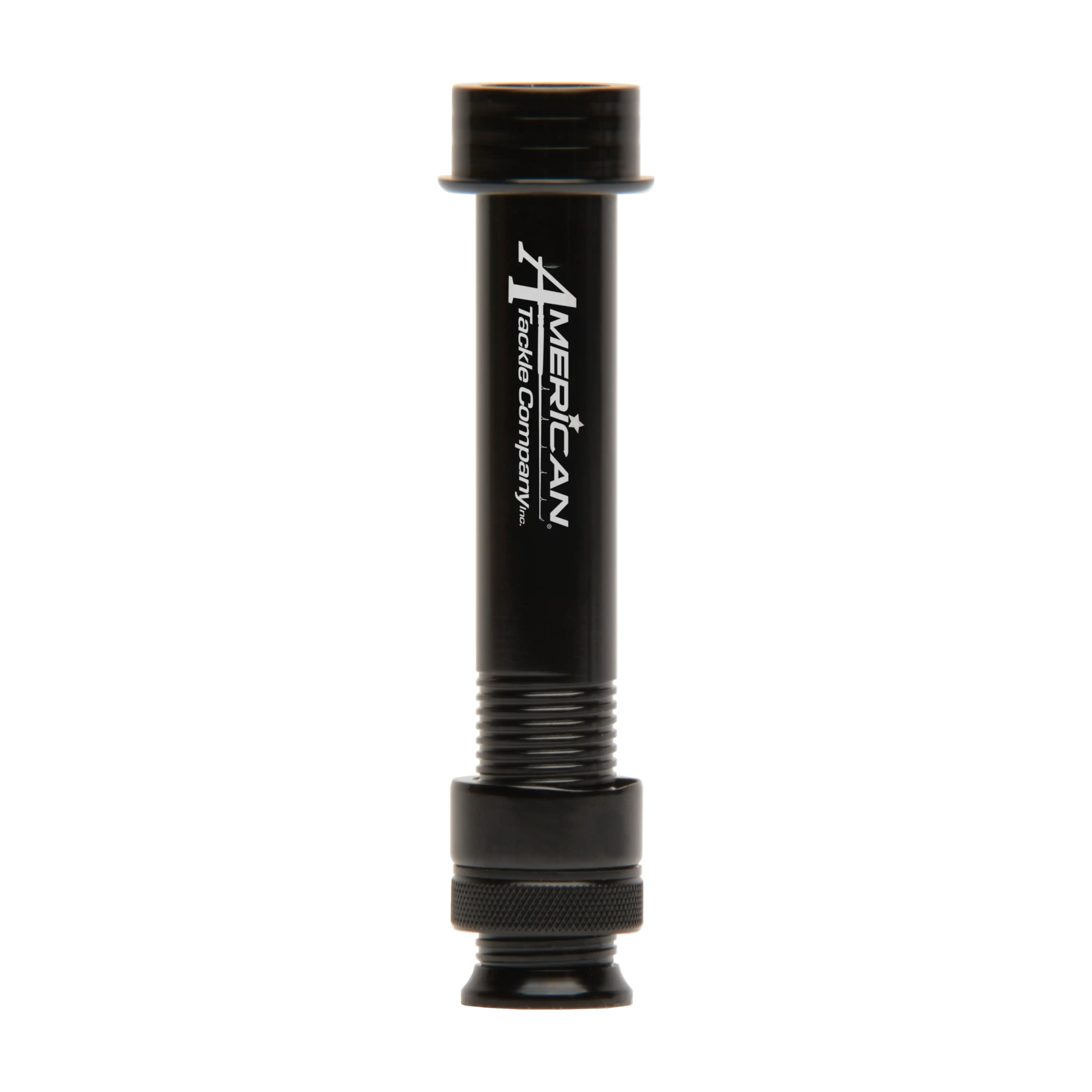
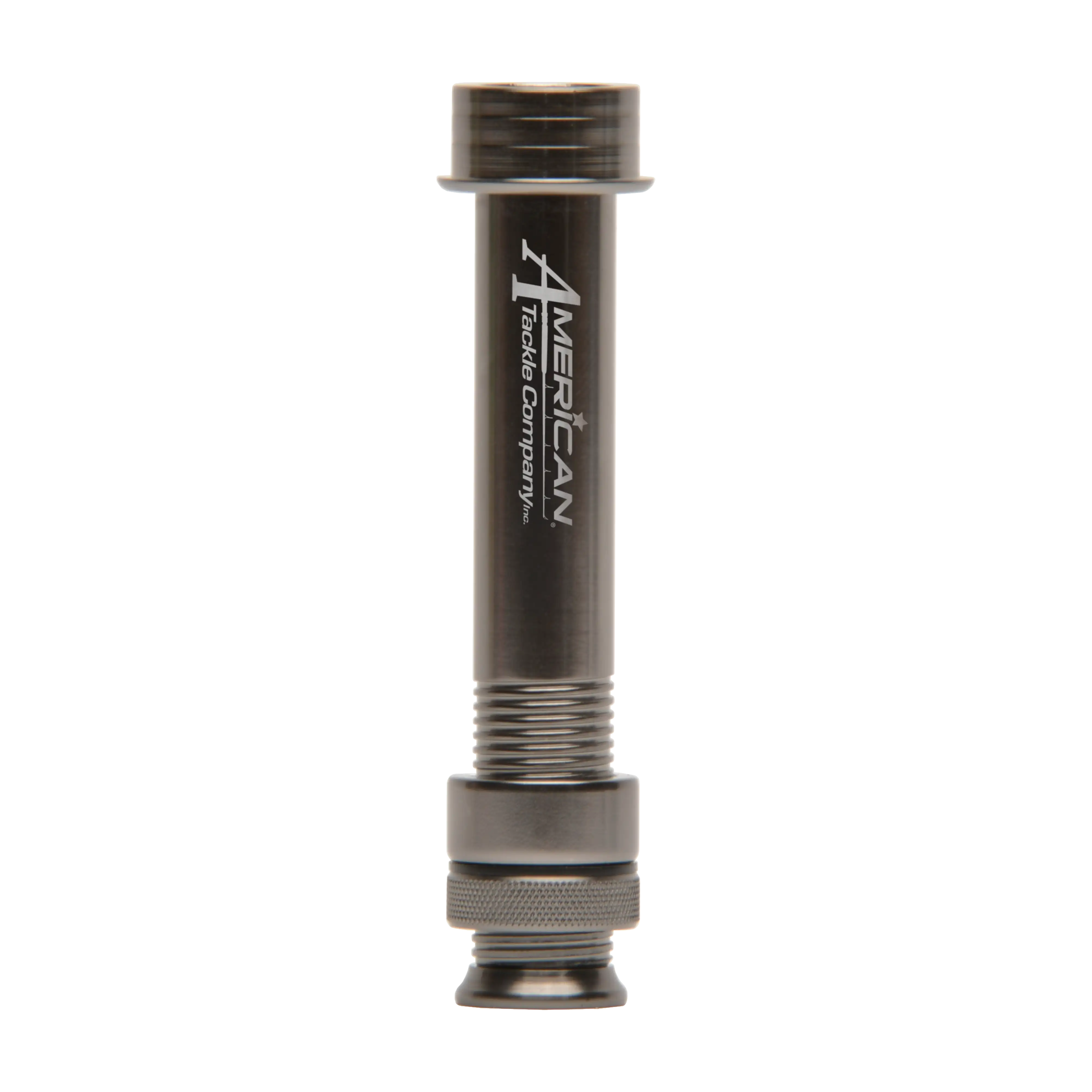
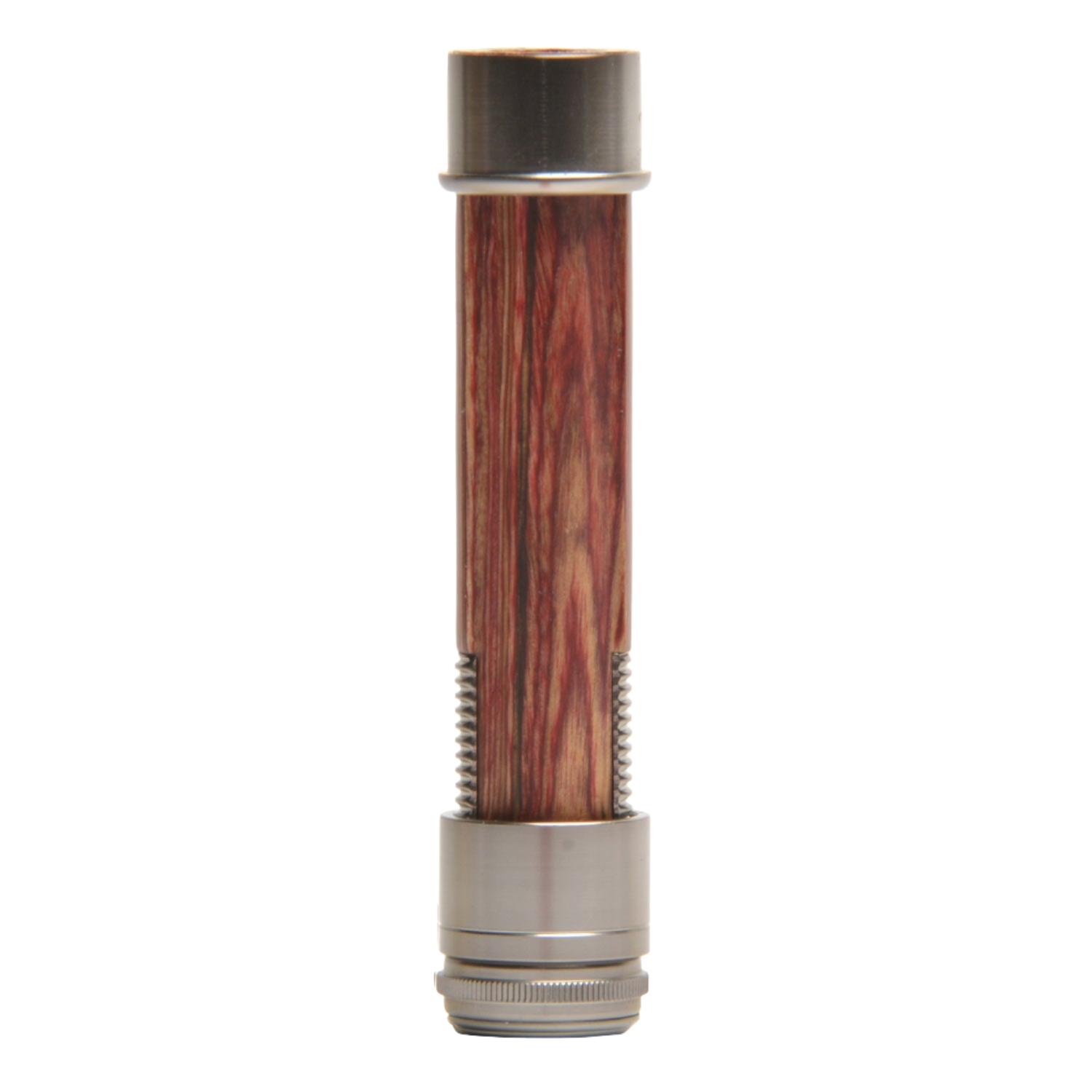
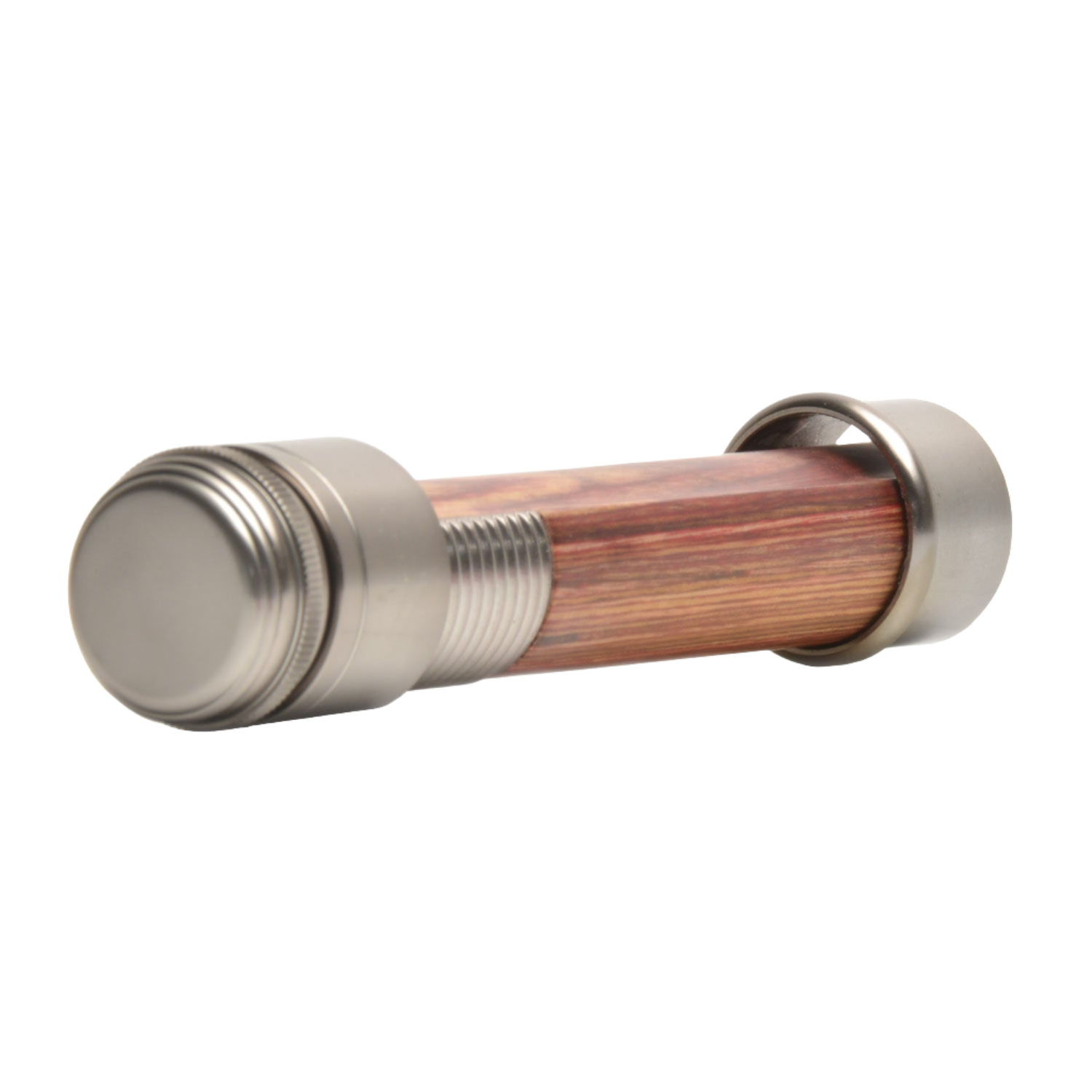
Fly Rod Reel Seats
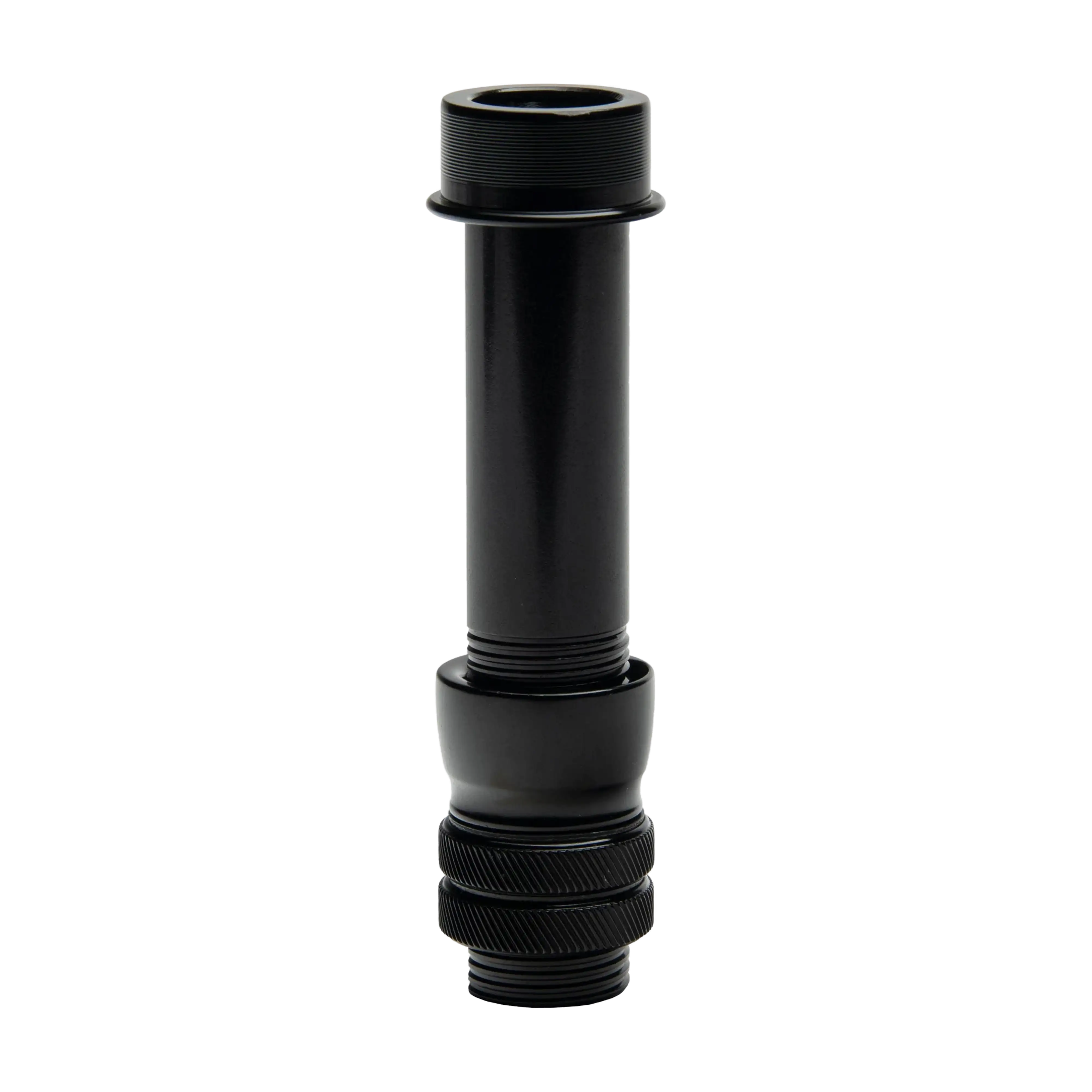
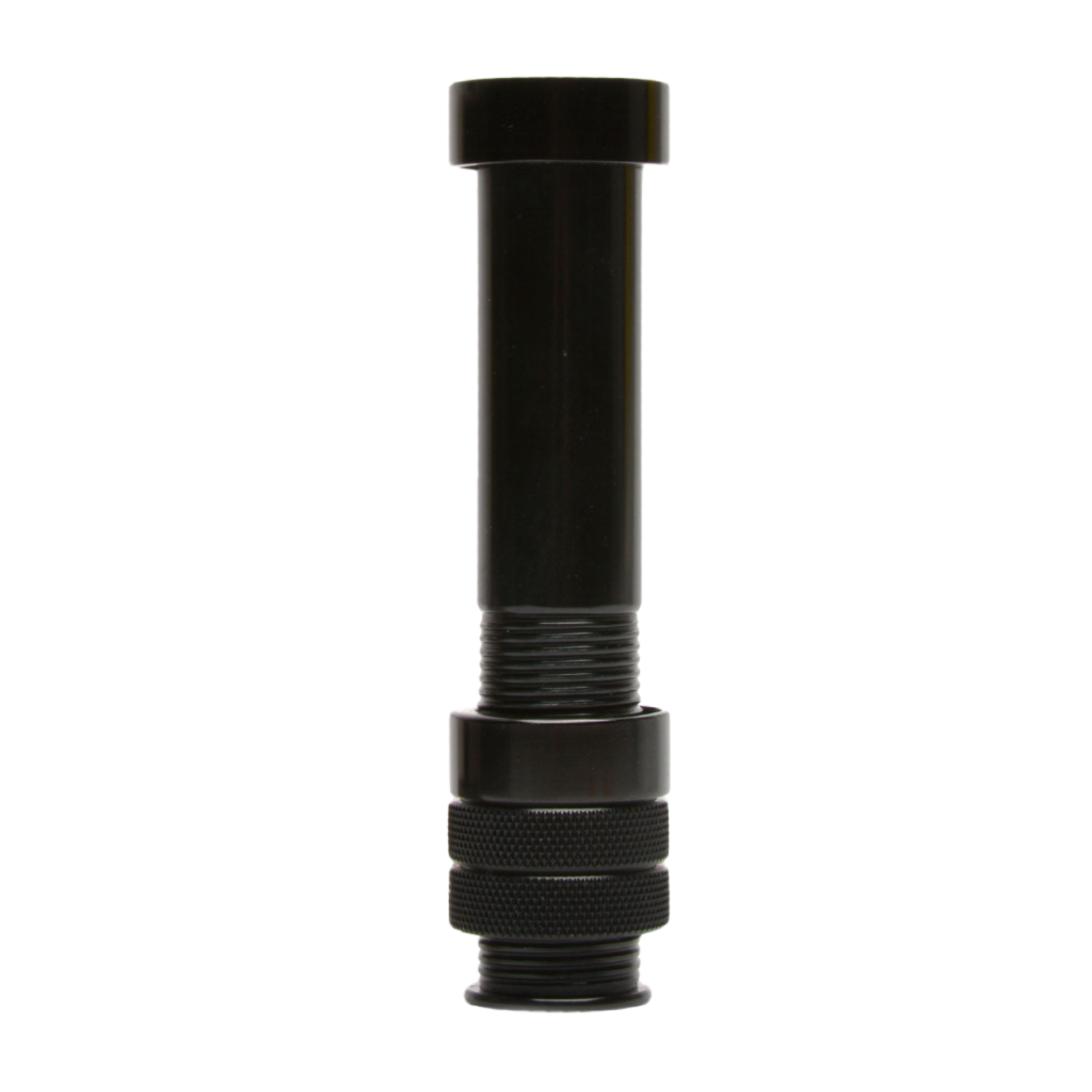
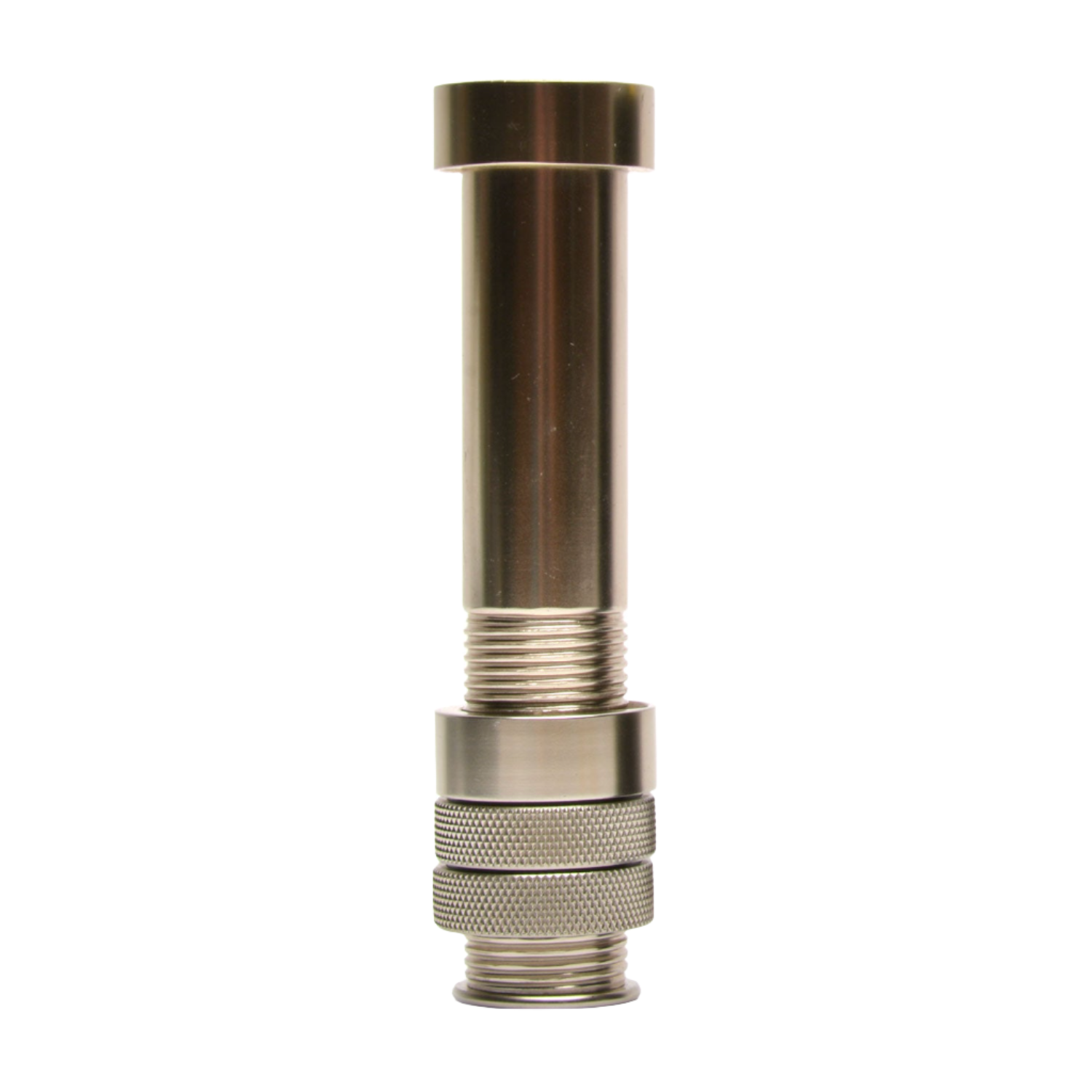
The reel seat secures the fly reel to the rod and plays an important role in balance, casting comfort, and overall performance. A good reel seat should hold the reel securely while keeping the rod lightweight, balanced, and comfortable during long casting sessions.
When selecting a reel seat for a custom fly rod, consider these key factors:
Material & Durability
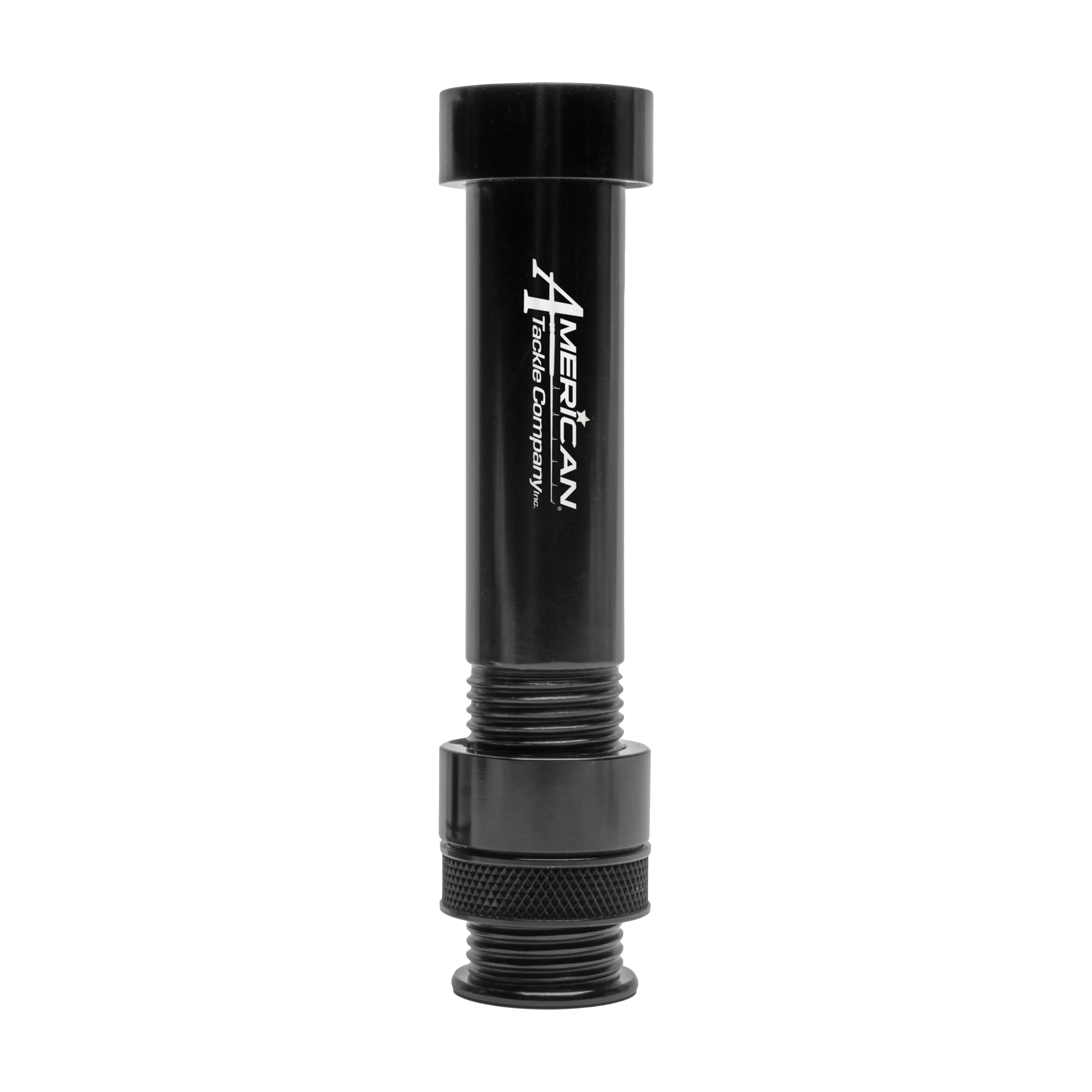
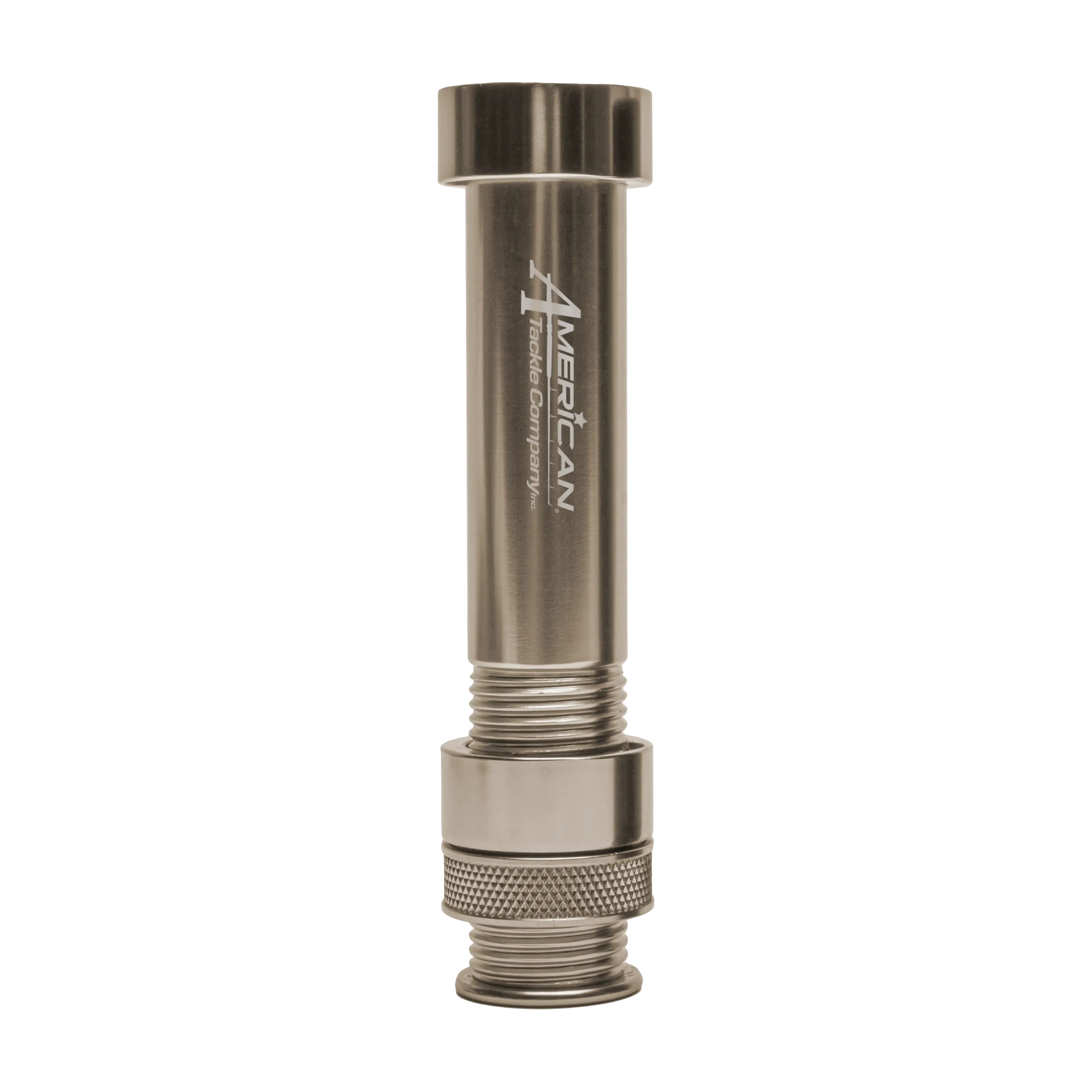
Anodized Aluminum
The most common choice for fly rods due to its strength, light weight, and corrosion resistance. Aluminum seats provide a rigid, secure connection while helping maintain overall rod balance for both freshwater and saltwater applications.
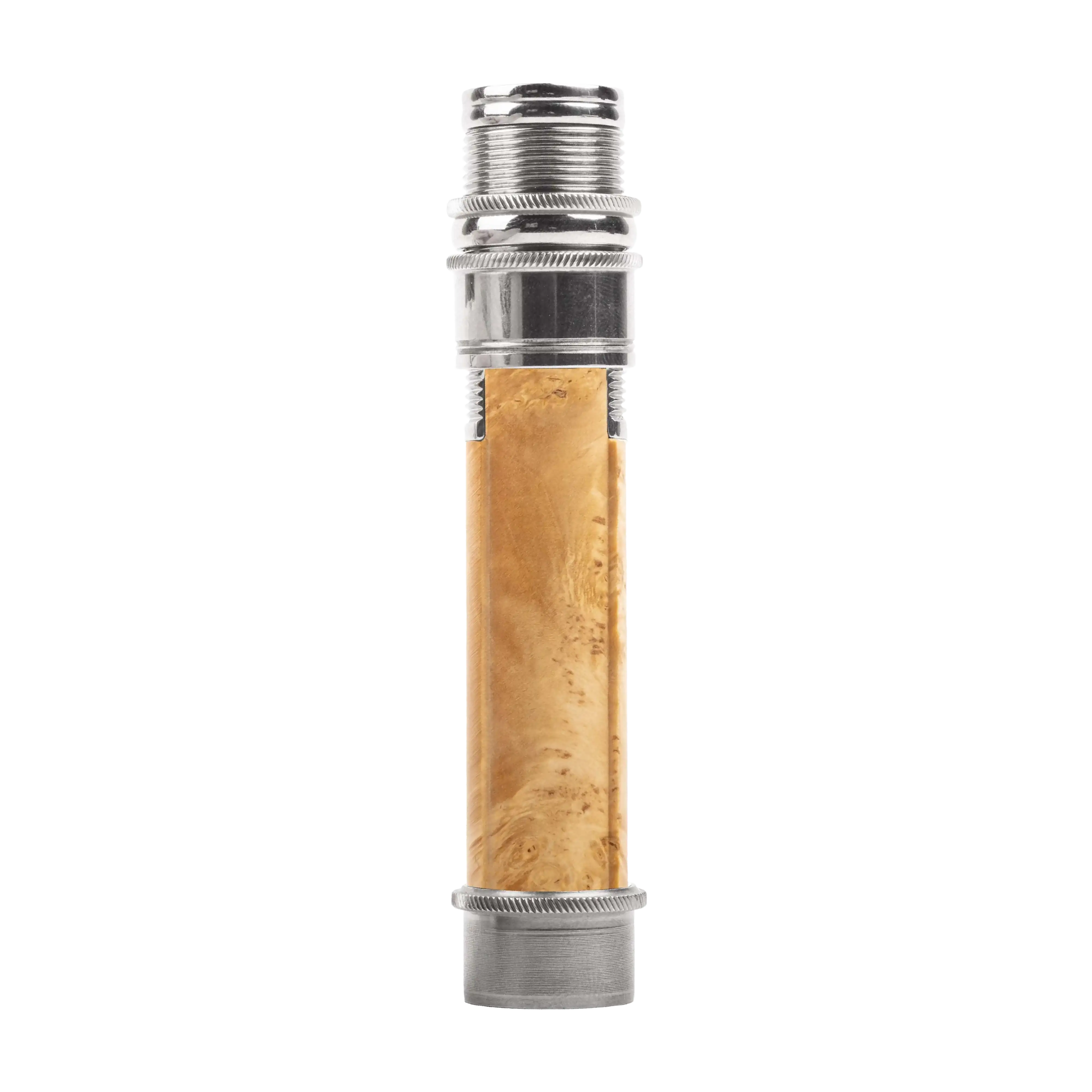
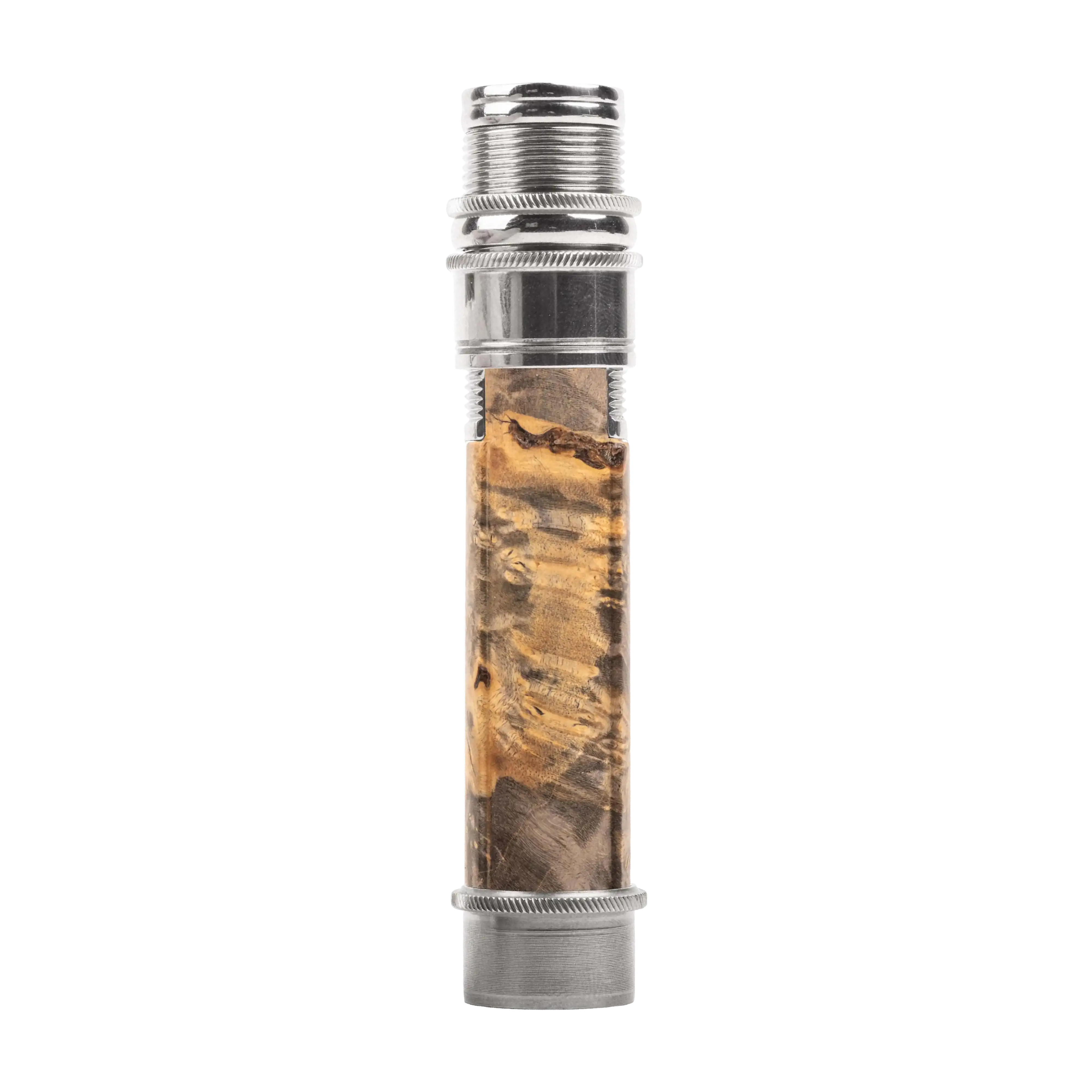
Wood or Exotic Inserts
Common on lighter freshwater rods, especially 3–5 weights, wood inserts add a classic, handcrafted appearance when paired with cork grips and traditional builds. Stabilized wood is preferred for improved durability and moisture resistance.
Composite or Carbon
Modern composite or carbon inserts reduce overall weight while maintaining a rigid, secure connection between the reel and blank. These designs help improve balance and casting efficiency without adding excess bulk.
Locking Styles
Uplock
Uplocking seats position the reel closer to the grip, improving overall balance and casting feel. This is the most traditional and widely used style on standard freshwater fly rods and also leaves room for fighting butts on heavier freshwater or saltwater builds.
Down-Lock
Down-locking seats position the reel farther back toward the end of the rod to shift balance rearward and reduce swing weight. They are commonly used on rods over 10 feet, including Euro nymphing, Spey, and switch rod builds.
Slide-Band
Slide-band seats use a sliding ring to secure the reel foot with minimal added weight. They offer a clean, traditional appearance and are commonly found on lightweight or high-end custom builds.
Fit, Balance & Performance
Blank Diameter
The reel seat’s inner diameter should closely match the blank’s butt diameter and be fitted securely using an arbor or shim with epoxy or adhesive. Proper fit prevents wobble, maintains alignment, and preserves casting consistency and rod balance.
Reel Foot Size
Check that the seat properly fits your reel foot length and width so the reel sits securely without rocking or misalignment. Most freshwater seats use a single locking nut, while heavier freshwater and saltwater builds often use double-locking nuts for added security.
Weight & Balance
Lightweight seats and minimal inserts help maintain proper rod balance and reduce casting fatigue. Overly heavy seats can make the rod feel butt-heavy and affect casting efficiency.
Saltwater Readiness
For saltwater or inshore builds, prioritize corrosion-resistant materials like anodized aluminum and stabilized inserts that can withstand moisture, humidity, and salt exposure.
Design and Style
A reel seat should visually complement the blank and handle while maintaining proper balance and function. Matching materials, colors, and finishes creates a cleaner, more professional appearance, especially when paired with cork, composite grips, or cut-out handle designs.
Key Takeaways
- Reel seats affect balance, casting comfort, and overall rod performance
- Anodized aluminum is the most common choice for strength and corrosion resistance
- Wood inserts are popular on lighter freshwater rods for a traditional appearance
- Uplock seats are standard on most fly rods, while down-lock seats are common on long Euro, Spey, and switch builds
- Proper fit prevents wobble and maintains casting consistency and balance
- Lightweight, corrosion-resistant seats improve long-term performance and comfort
- Taking the time to coordinate the reel seat with the grip and blank creates a clean, professional build
Fly Rod Reel Seats
The reel seat secures the fly reel to the rod and plays an important role in balance, casting comfort, and overall performance. A good reel seat should hold the reel securely while keeping the rod lightweight, balanced, and comfortable during long casting sessions.
When selecting a reel seat for a custom fly rod, consider these key factors:
Material & Durability
Anodized Aluminum
The most common choice for fly rods due to its strength, light weight, and corrosion resistance. Aluminum seats provide a rigid, secure connection while helping maintain overall rod balance for both freshwater and saltwater applications.
Wood or Exotic Inserts
Common on lighter freshwater rods, especially 3–5 weights, wood inserts add a classic, handcrafted appearance when paired with cork grips and traditional builds. Stabilized wood is preferred for improved durability and moisture resistance.
Composite or Carbon
Modern composite or carbon inserts reduce overall weight while maintaining a rigid, secure connection between the reel and blank. These designs help improve balance and casting efficiency without adding excess bulk.
Locking Styles
Uplock
Uplocking seats position the reel closer to the grip, improving overall balance and casting feel. This is the most traditional and widely used style on standard freshwater fly rods and also leaves room for fighting butts on heavier freshwater or saltwater builds.
Down-Lock
Down-locking seats position the reel farther back toward the end of the rod to shift balance rearward and reduce swing weight. They are commonly used on rods over 10 feet, including Euro nymphing, Spey, and switch rod builds.
Slide-Band
Slide-band seats use a sliding ring to secure the reel foot with minimal added weight. They offer a clean, traditional appearance and are commonly found on lightweight or high-end custom builds.
Fit, Balance & Performance
Blank Diameter
The reel seat’s inner diameter should closely match the blank’s butt diameter and be fitted securely using an arbor or shim with epoxy or adhesive. Proper fit prevents wobble, maintains alignment, and preserves casting consistency and rod balance.
Reel Foot Size
Check that the seat properly fits your reel foot length and width so the reel sits securely without rocking or misalignment. Most freshwater seats use a single locking nut, while heavier freshwater and saltwater builds often use double-locking nuts for added security.
Weight & Balance
Lightweight seats and minimal inserts help maintain proper rod balance and reduce casting fatigue. Overly heavy seats can make the rod feel butt-heavy and affect casting efficiency.
Saltwater Readiness
For saltwater or inshore builds, prioritize corrosion-resistant materials like anodized aluminum and stabilized inserts that can withstand moisture, humidity, and salt exposure.
Design and Style
A reel seat should visually complement the blank and handle while maintaining proper balance and function. Matching materials, colors, and finishes creates a cleaner, more professional appearance, especially when paired with cork, composite grips, or cut-out handle designs.
Key Takeaways
- Reel seats affect balance, casting comfort, and overall rod performance
- Anodized aluminum is the most common choice for strength and corrosion resistance
- Wood inserts are popular on lighter freshwater rods for a traditional appearance
- Uplock seats are standard on most fly rods, while down-lock seats are common on long Euro, Spey, and switch builds
- Proper fit prevents wobble and maintains casting consistency and balance
- Lightweight, corrosion-resistant seats improve long-term performance and comfort
- Taking the time to coordinate the reel seat with the grip and blank creates a clean, professional build
Fly Reel Seats

Choose Your Supply Kits
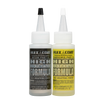
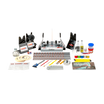
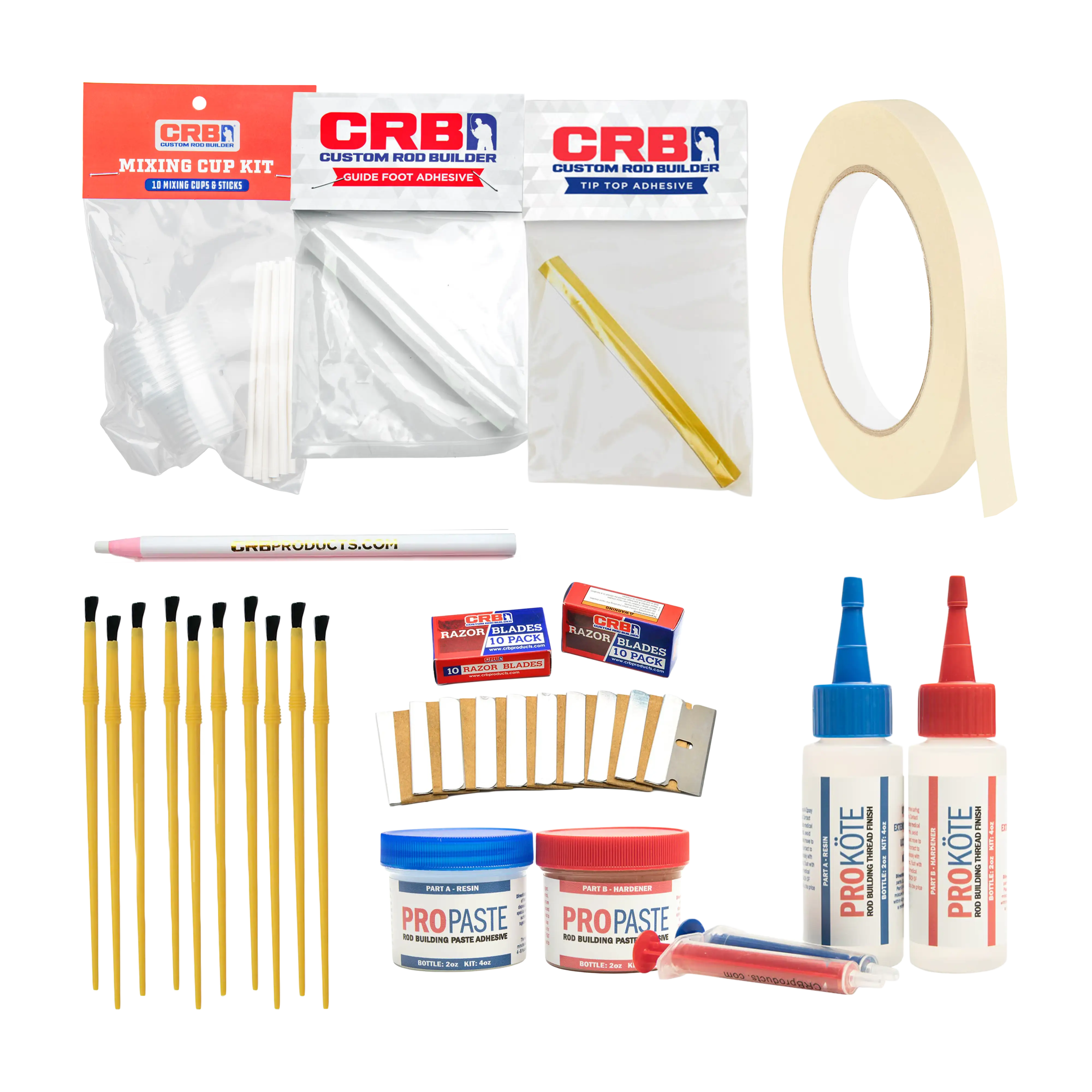
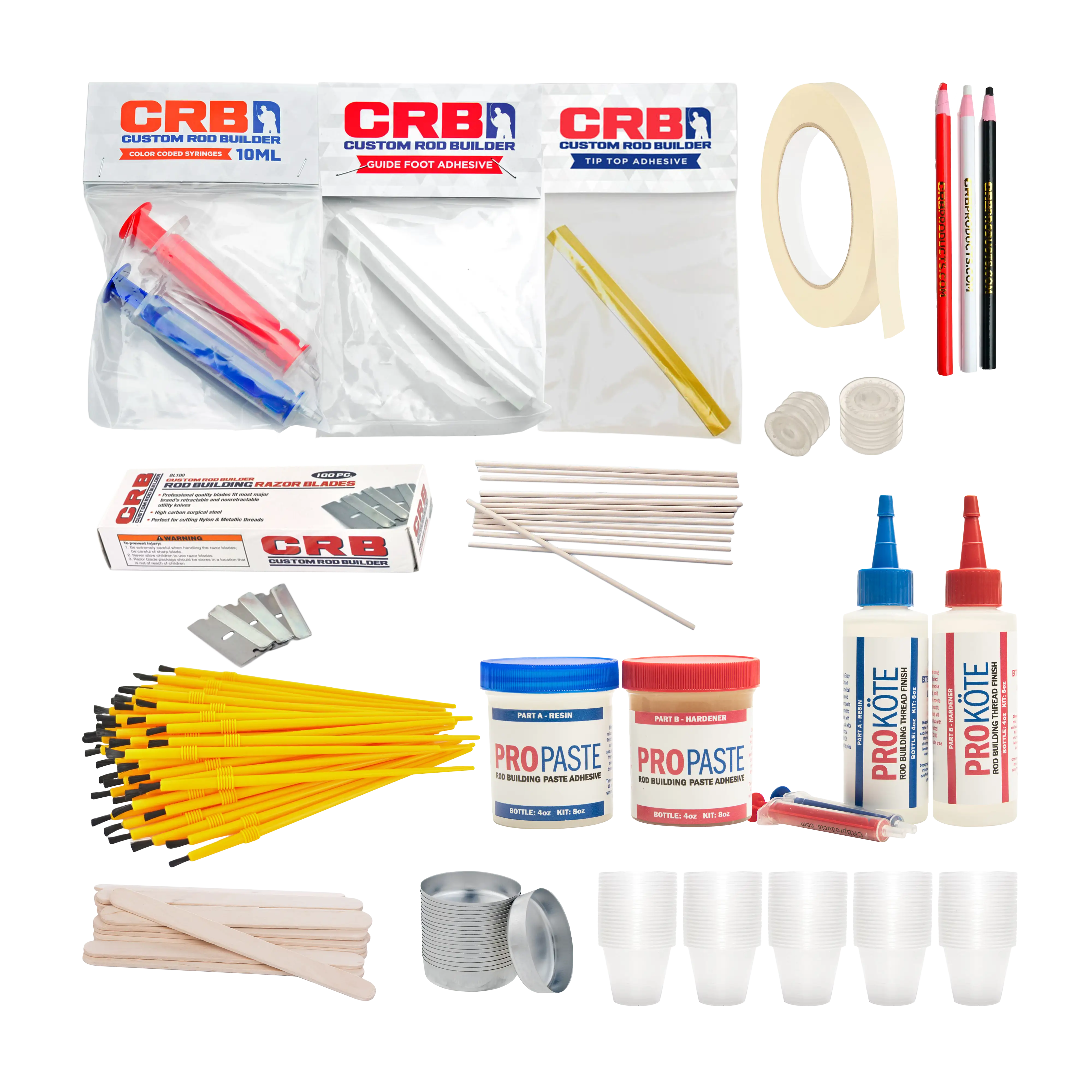
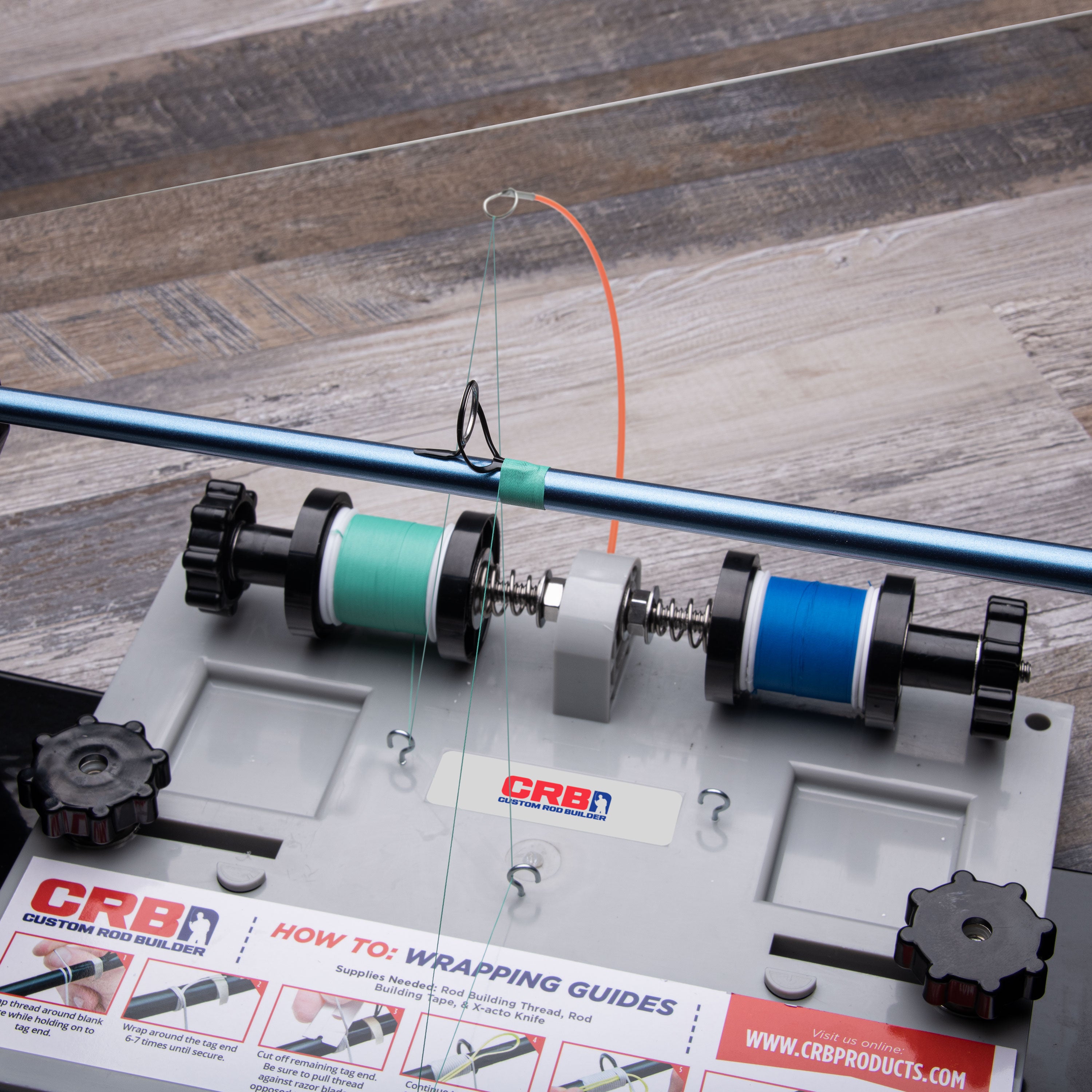
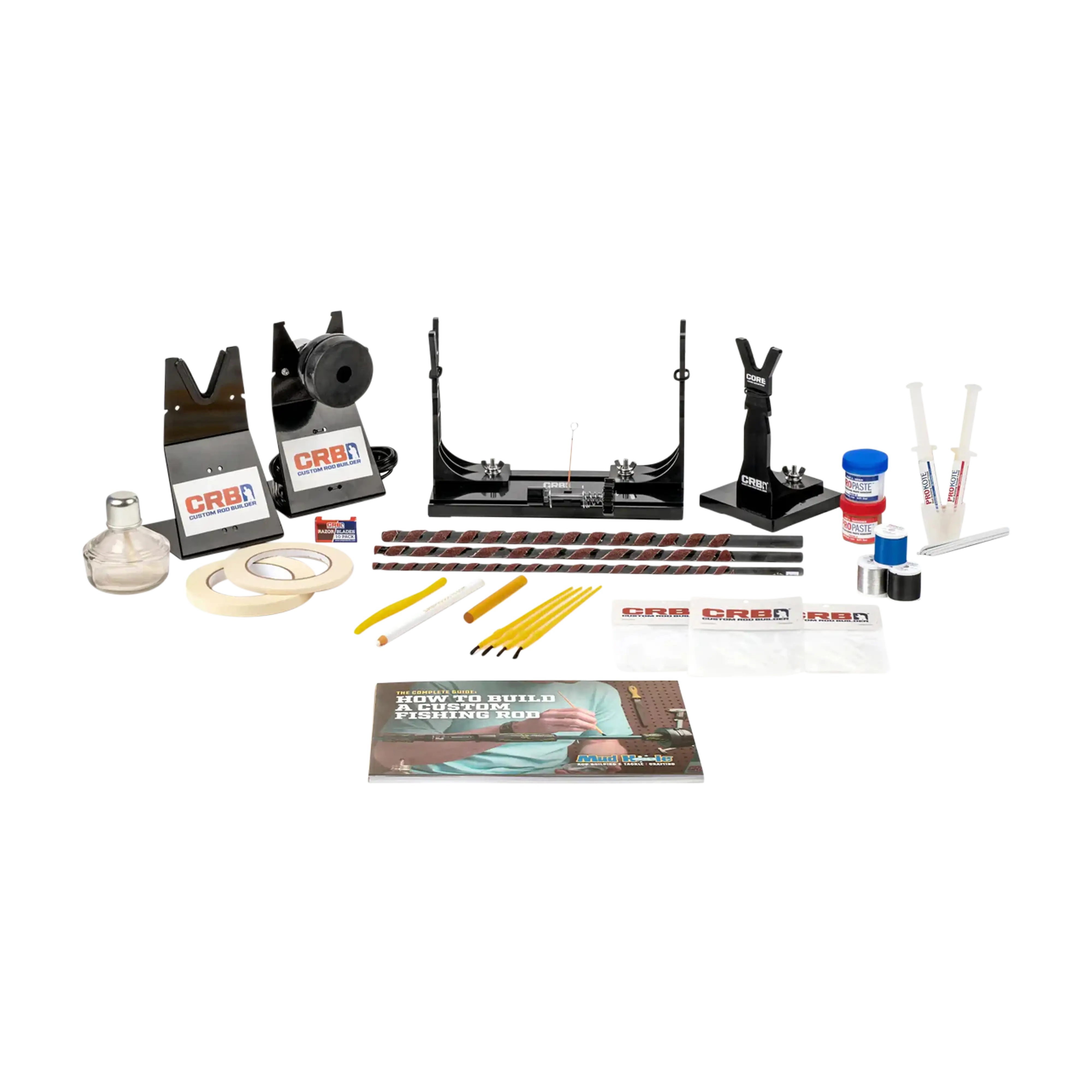
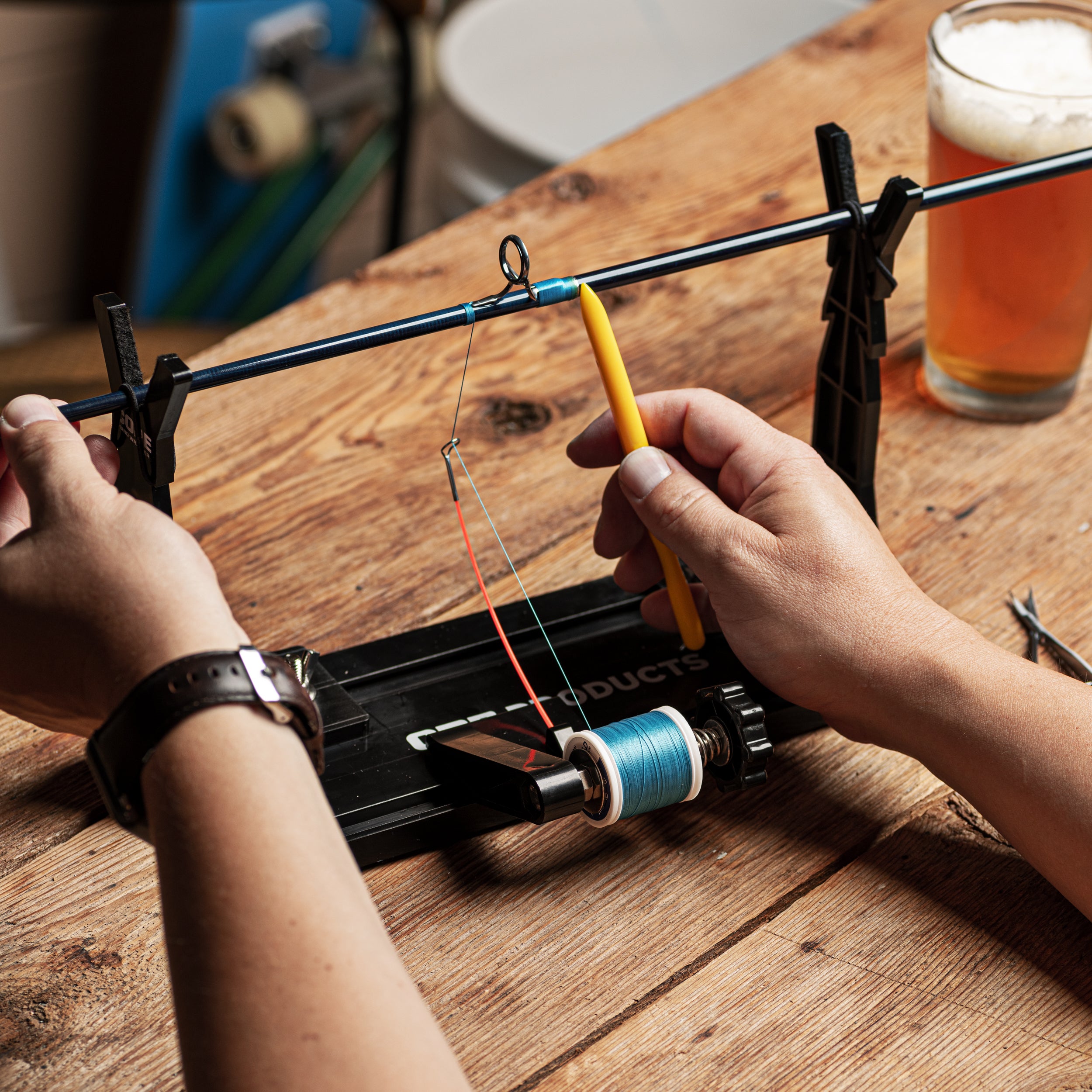
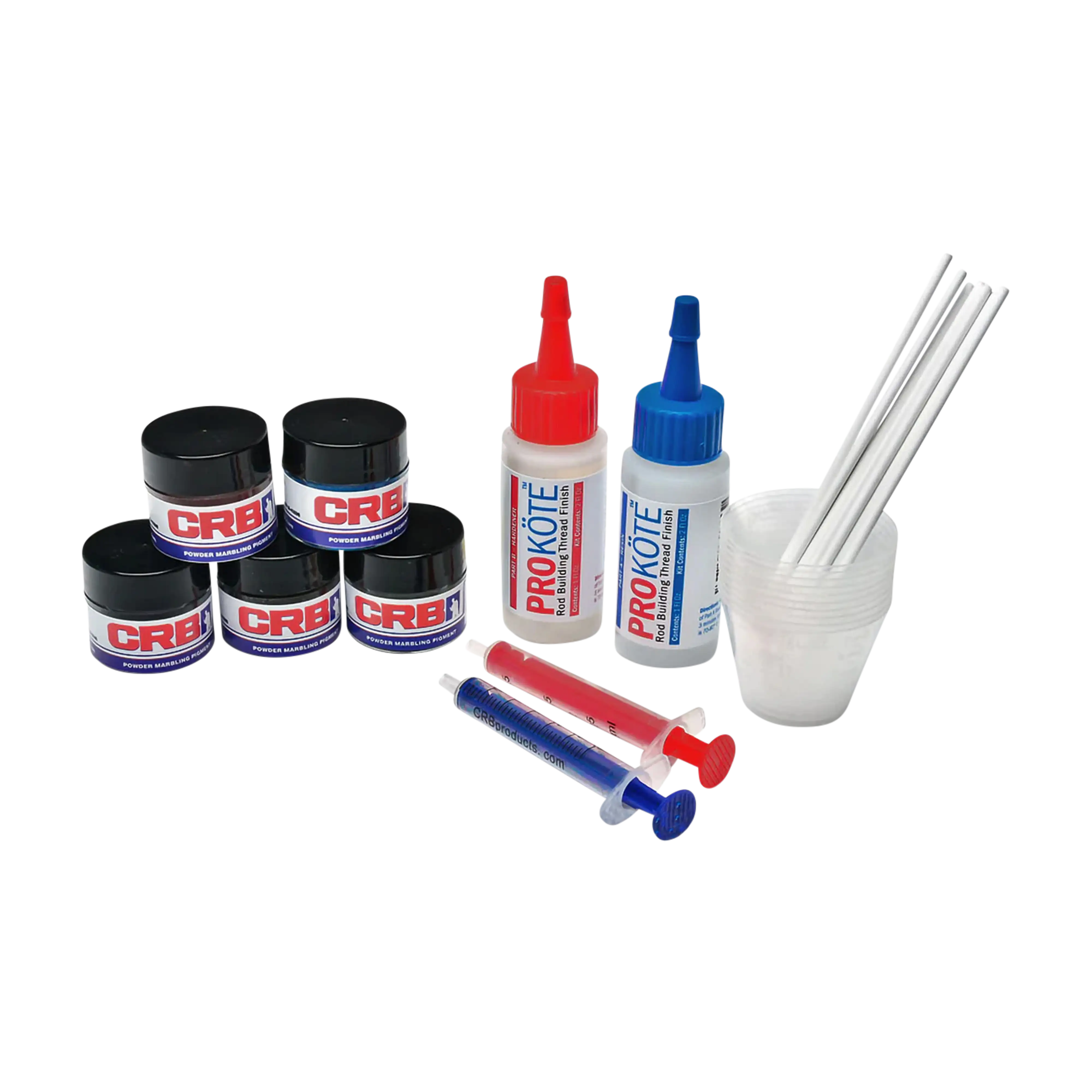
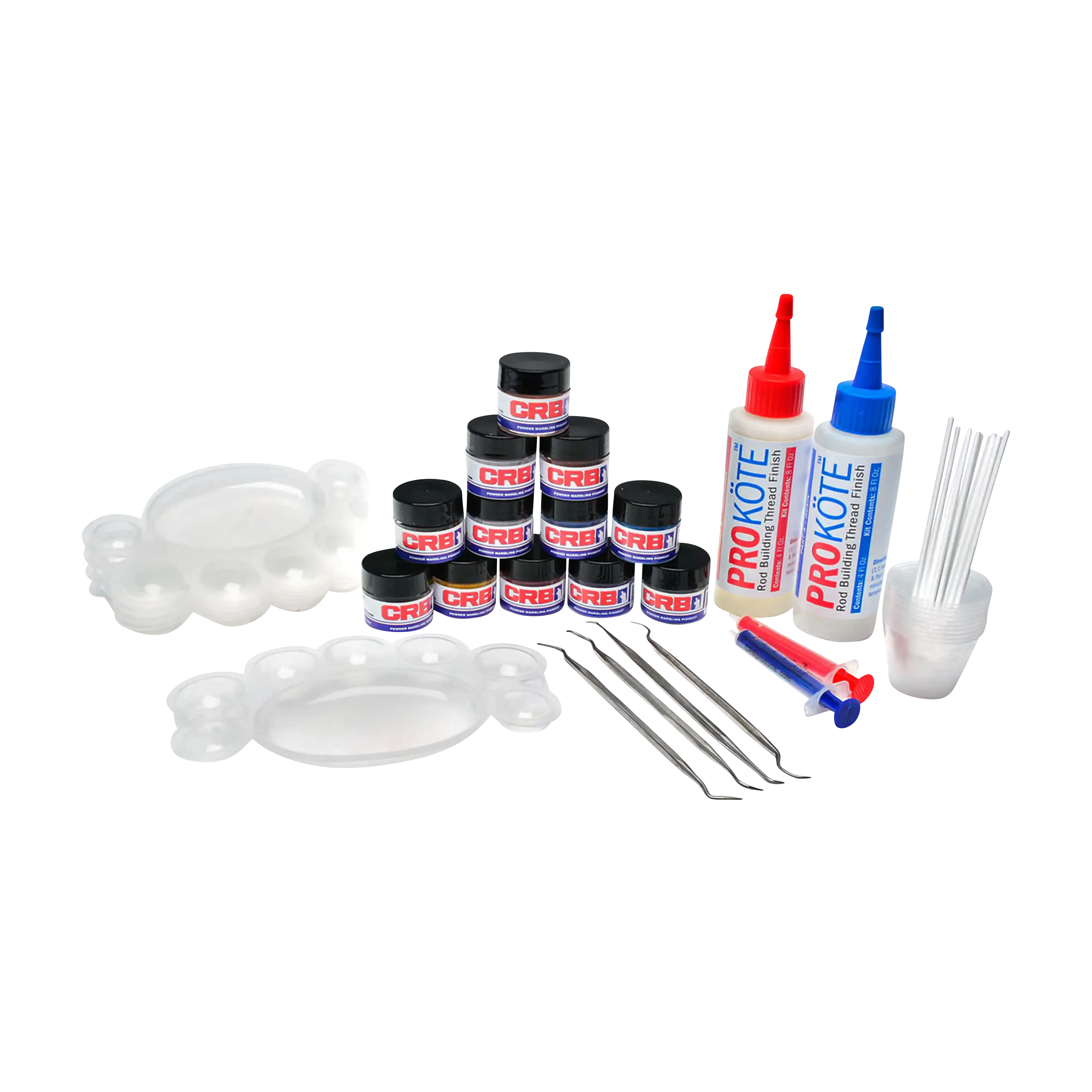
Everything you need to build a custom fly rod is right at your fingertips with a rod building supply kit. These kits include essential tools and materials like rod dryers, thread, hand wrappers, epoxy, brushes, and reamers so you can focus on the build instead of sourcing components individually. Using a kit helps simplify the process, improve consistency, and create cleaner, more precise fly rod builds for both freshwater and saltwater applications. Perfect for beginners learning the process or experienced builders looking to keep supplies organized and ready to go.
For Beginners
All-in-one kits provide the core tools and materials needed to start building without the hassle of buying everything separately. This allows new builders to focus on learning guide wrapping, handle assembly, tip-top installation, and epoxy finishing techniques.
For Experienced Builders
Supply kits are useful for replenishing consumables like thread, epoxy, brushes, and mixing supplies while keeping commonly used tools organized and accessible. Having everything ready in one place helps maintain an efficient workflow and consistent build quality.
Key Takeaways
- Supply kits include the essential tools and materials needed for custom fly rod builds
- Beginners benefit from simplified setup and a more organized learning process
- Experienced builders can restock consumables and maintain an efficient workflow
- Using the proper tools helps improve assembly precision and finishing consistency
Choose Your Supply Kits
Everything you need to build a custom fly rod is right at your fingertips with a rod building supply kit. These kits include essential tools and materials like rod dryers, thread, hand wrappers, epoxy, brushes, and reamers so you can focus on the build instead of sourcing components individually. Using a kit helps simplify the process, improve consistency, and create cleaner, more precise fly rod builds for both freshwater and saltwater applications. Perfect for beginners learning the process or experienced builders looking to keep supplies organized and ready to go.
For Beginners
All-in-one kits provide the core tools and materials needed to start building without the hassle of buying everything separately. This allows new builders to focus on learning guide wrapping, handle assembly, tip-top installation, and epoxy finishing techniques.
For Experienced Builders
Supply kits are useful for replenishing consumables like thread, epoxy, brushes, and mixing supplies while keeping commonly used tools organized and accessible. Having everything ready in one place helps maintain an efficient workflow and consistent build quality.
Key Takeaways
- Supply kits include the essential tools and materials needed for custom fly rod builds
- Beginners benefit from simplified setup and a more organized learning process
- Experienced builders can restock consumables and maintain an efficient workflow
- Using the proper tools helps improve assembly precision and finishing consistency
Supply Kits

Build a Fly Fishing Rod
FAQ - Custom Fly Fishing Rods
What fly rod blank weight should I choose?
For beginners, select a blank that matches your target species and line weight. For freshwater, 5-weight blanks are versatile and easy to cast, while 8-weight blanks handle heavier flies and inshore saltwater species.
How do I pick the right blank length?
Shorter blanks (6–7 ft) are ideal for tight streams and precise, accurate casts. Medium lengths (7–9 ft) work for most freshwater fishing, and longer blanks (9+ ft) excel at long-distance casts or heavier saltwater applications.
When should I use half-wells vs. full-wells grips?
There’s no strict rule, but generally, half-wells grips are compact, lightweight, and perfect for finesse freshwater builds or small streams where subtle presentations matter. Full-wells grips offer extra leverage and control, making them ideal for heavier freshwater or saltwater blanks, long casts, and handling larger fish.
How do I choose a fly reel seat?
Pick a reel seat that fits the blank’s butt diameter, accommodates your reel foot, and balances with the handle. Aluminum is standard, and lighter rods sometimes feature wood inserts for style and feel.
What locking style should I use?
Uplock seats are the most common on fly rods, positioning the reel closer to the grip to improve balance and casting feel, and allowing room for fighting butts on heavier builds. Down-lock seats shift the reel farther back, helping adjust balance and reduce swing weight on longer rods like Euro nymphing and Spey or switch setups. Slide-band seats offer a clean, traditional look while evenly securing the reel foot with minimal added weight.
How do I pick the fly rod tip-top size?
The tip-top should fit snugly on the blank’s tip and at least match the size of the running guides. Choose a wire-frame tip for durability or a ceramic insert for reduced friction and smooth line movement.
Do I need special tools or supply kits to build a fly rod?
Yes, but supply kits make building a fly rod easier by providing essentials like thread, epoxy, reamers, brushes, and hand tools. They help both beginners and experienced builders stay organized, work more efficiently, and achieve consistent, professional results
How long does it take to build a fly rod?
For beginners, a basic freshwater build can often be completed over a weekend. First-time builders should take their time, focus on learning each step, and remember that the most important part is to have fun.
From the Mud Hole Journal
Further Reading
Spring on the Fly: Building a Trout Fly Rod
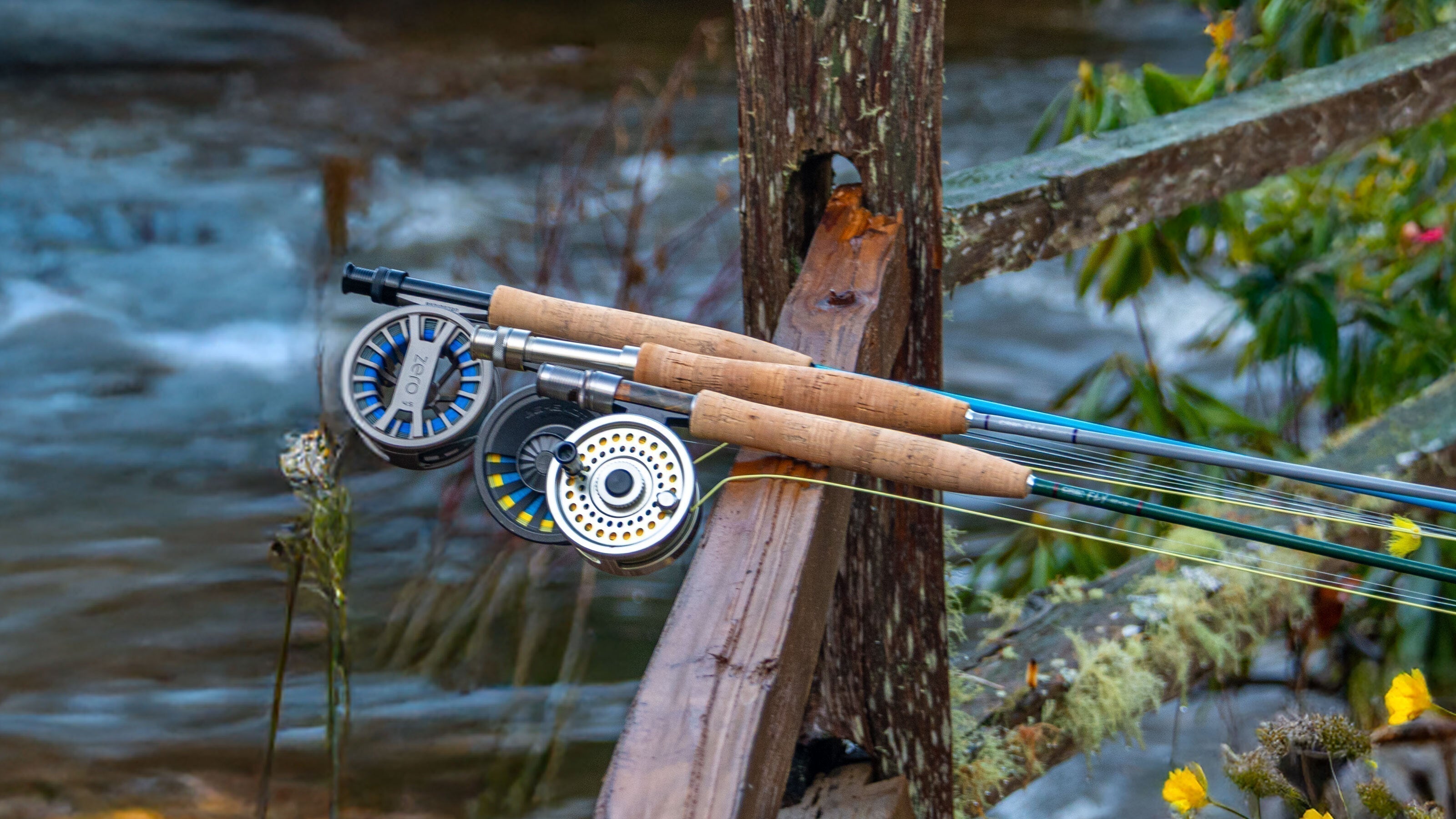
There’s something truly special about standing in a trout stream during spring. With trout rising, wildflowers blooming, and the wilderness waking up after winter, it feels like pure magic. For fly...