
















What is Finesse Swimbait Fishing?
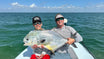
Finesse swimbait fishing is a subtle, presentation-driven technique built around small baitfish imitations and natural movement. Rather than triggering reaction strikes, it focuses on matching the size and behavior of real forage so the bait moves freely and looks convincing in the water. It’s especially effective when fish are pressured, conditioned to artificial lures, or feeding selectively on smaller prey.
Small-profile swimbaits excel in clear water, pressured fisheries, and situations where larger or more aggressive presentations stop producing. Their compact size and subtle action allow anglers to cover water efficiently while still maintaining a finesse approach.
This style is most commonly fished on spinning setups with lighter line to improve casting control, bait tracking, and overall presentation. The goal is to maintain a smooth, natural retrieve—whether slow-rolling through open water, counting the bait down to suspended fish, or working around grass, docks, and structure.
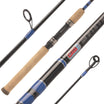
That’s a big reason more anglers are building custom finesse swimbait rods. A purpose-built setup allows you to fine-tune length, power, and responsiveness for lighter presentations, resulting in better control, increased sensitivity, and more consistent hookups.
Introduction
What is Build a Finesse Swimbait Rod?
What is Finesse Swimbait Fishing?
Finesse swimbait fishing is a subtle, presentation-driven technique built around small baitfish imitations and natural movement. Rather than triggering reaction strikes, it focuses on matching the size and behavior of real forage so the bait moves freely and looks convincing in the water. It’s especially effective when fish are pressured, conditioned to artificial lures, or feeding selectively on smaller prey.
Small-profile swimbaits excel in clear water, pressured fisheries, and situations where larger or more aggressive presentations stop producing. Their compact size and subtle action allow anglers to cover water efficiently while still maintaining a finesse approach.
This style is most commonly fished on spinning setups with lighter line to improve casting control, bait tracking, and overall presentation. The goal is to maintain a smooth, natural retrieve—whether slow-rolling through open water, counting the bait down to suspended fish, or working around grass, docks, and structure.
That’s a big reason more anglers are building custom finesse swimbait rods. A purpose-built setup allows you to fine-tune length, power, and responsiveness for lighter presentations, resulting in better control, increased sensitivity, and more consistent hookups.
Finesse Swimbait Fishing Applications
Finesse swimbait fishing includes a few core presentation styles, each defined by how the bait is rigged, how deep it’s fished, and how much structure or cover it’s used around. While all versions rely on small, natural baitfish imitations, the differences in weight, hook style, and retrieve method create distinct techniques. Understanding these categories helps you match your setup to the conditions and choose the right rod, line, and presentation for consistent results.
Open Water
Targets: Roaming largemouth, smallmouth, and spotted bass, plus walleye, trout, and striped bass in open-water systems
This is the foundation of finesse swimbait fishing, built around small paddle tails rigged on light jigheads or weighted hooks and fished in open water or above structure. The bait is typically retrieved at a steady pace or counted down to a target depth, allowing it to swim naturally through the water column. The focus is on maintaining a smooth, consistent action that closely matches baitfish behavior. This presentation is especially effective for suspended or roaming fish and is one of the most efficient ways to cover water with a finesse approach.
Bottom Contact / Depth-Control
Targets: Largemouth and smallmouth bass (primary), plus walleye and trout on deeper structures
This presentation uses slightly heavier jigheads to keep the swimbait in contact with deeper zones or bottom-oriented structure. The bait is slow-rolled, counted down, or lightly dragged to maintain depth control while still producing a natural swimming motion. The goal is to keep the bait in the strike zone longer, particularly when fish are holding tight to structure or positioned deeper in the water column. This approach prioritizes control and depth precision over open-water coverage.
Weedless / Structure
Targets: Primarily largemouth bass, especially around grass, wood, docks, and shallow cover
Weedless finesse swimbaits are rigged on unweighted or weighted hooks to allow fishing through cover where exposed jigheads would snag. The bait is cast tight to structure and retrieved steadily, with subtle speed changes or pauses used to trigger reaction bites. Because the hook is typically buried or lightly exposed, hooksets require more deliberate force and strong line control. This setup is ideal for presenting a subtle swimbait profile directly in grass, wood, docks, and other cover where fish are holding tight.
Hover / Mid-Strolling
Targets: Smallmouth, spotted, and largemouth bass, plus walleye and striped bass in clear, suspended baitfish systems
This is a highly controlled presentation focused on keeping the swimbait in the strike zone for extended periods rather than covering water. Typically using very light jigheads, the bait is subtly worked to maintain a hovering or gliding motion through the mid-column. The action is minimal and precise, designed to imitate an injured or struggling baitfish. It is especially effective in clear water and when fish are suspended, inactive, or heavily pressured.
Key Takeaways
- Finesse swimbait styles are defined by depth, cover, and presentation control
- Open water and hover techniques focus on suspended fish and natural mid-column movement
- Bottom/depth-control setups prioritize staying in the strike zone with added weight
- Weedless rigs enable fishing in cover but require more deliberate hooksets
- Each category directly influences rod choice, line setup, and retrieve style
Finesse Swimbait Fishing Applications
Finesse swimbait fishing includes a few core presentation styles, each defined by how the bait is rigged, how deep it’s fished, and how much structure or cover it’s used around. While all versions rely on small, natural baitfish imitations, the differences in weight, hook style, and retrieve method create distinct techniques. Understanding these categories helps you match your setup to the conditions and choose the right rod, line, and presentation for consistent results.
Open Water
Targets: Roaming largemouth, smallmouth, and spotted bass, plus walleye, trout, and striped bass in open-water systems
This is the foundation of finesse swimbait fishing, built around small paddle tails rigged on light jigheads or weighted hooks and fished in open water or above structure. The bait is typically retrieved at a steady pace or counted down to a target depth, allowing it to swim naturally through the water column. The focus is on maintaining a smooth, consistent action that closely matches baitfish behavior. This presentation is especially effective for suspended or roaming fish and is one of the most efficient ways to cover water with a finesse approach.
Bottom Contact / Depth-Control
Targets: Largemouth and smallmouth bass (primary), plus walleye and trout on deeper structures
This presentation uses slightly heavier jigheads to keep the swimbait in contact with deeper zones or bottom-oriented structure. The bait is slow-rolled, counted down, or lightly dragged to maintain depth control while still producing a natural swimming motion. The goal is to keep the bait in the strike zone longer, particularly when fish are holding tight to structure or positioned deeper in the water column. This approach prioritizes control and depth precision over open-water coverage.
Weedless / Structure
Targets: Primarily largemouth bass, especially around grass, wood, docks, and shallow cover
Weedless finesse swimbaits are rigged on unweighted or weighted hooks to allow fishing through cover where exposed jigheads would snag. The bait is cast tight to structure and retrieved steadily, with subtle speed changes or pauses used to trigger reaction bites. Because the hook is typically buried or lightly exposed, hooksets require more deliberate force and strong line control. This setup is ideal for presenting a subtle swimbait profile directly in grass, wood, docks, and other cover where fish are holding tight.
Hover / Mid-Strolling
Targets: Smallmouth, spotted, and largemouth bass, plus walleye and striped bass in clear, suspended baitfish systems
This is a highly controlled presentation focused on keeping the swimbait in the strike zone for extended periods rather than covering water. Typically using very light jigheads, the bait is subtly worked to maintain a hovering or gliding motion through the mid-column. The action is minimal and precise, designed to imitate an injured or struggling baitfish. It is especially effective in clear water and when fish are suspended, inactive, or heavily pressured.
Key Takeaways
- Finesse swimbait styles are defined by depth, cover, and presentation control
- Open water and hover techniques focus on suspended fish and natural mid-column movement
- Bottom/depth-control setups prioritize staying in the strike zone with added weight
- Weedless rigs enable fishing in cover but require more deliberate hooksets
- Each category directly influences rod choice, line setup, and retrieve style
How to Choose a Finesse Swimbait Rod Blank
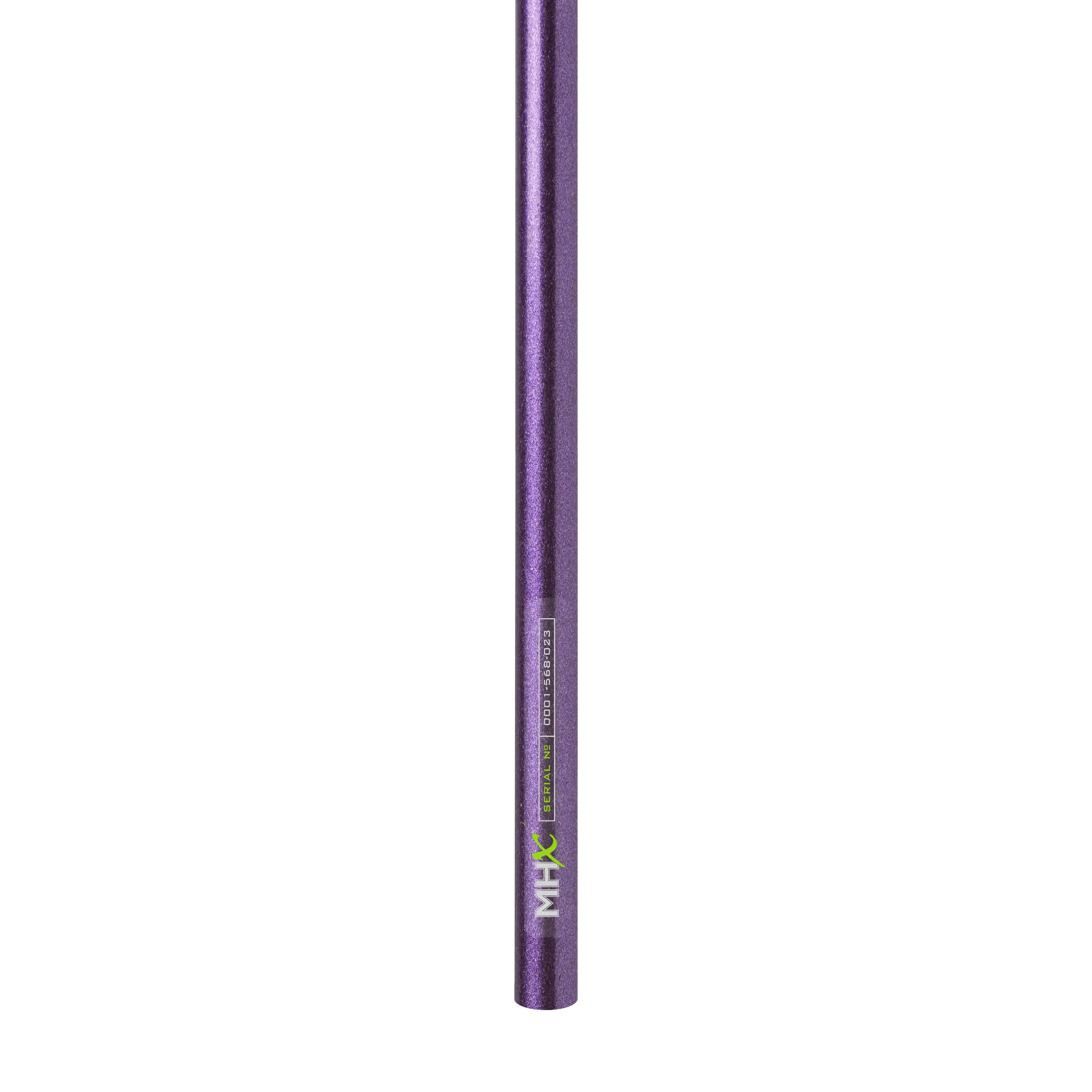
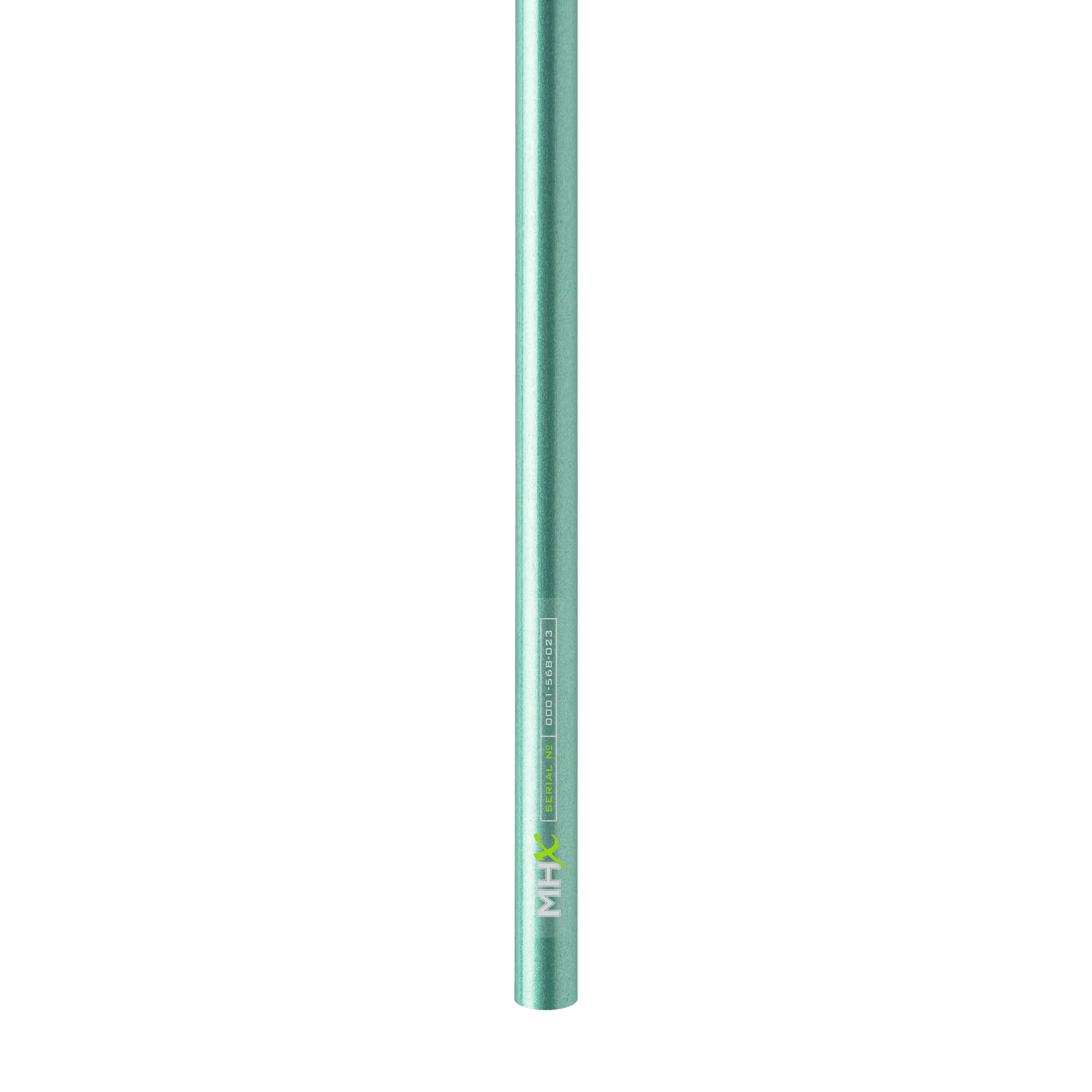
A finesse swimbait rod blank should prioritize casting efficiency, bait control, and sensitivity for detecting subtle strikes during a moving presentation. Finesse swimbait techniques are about maintaining a natural swimming cadence, feeling how the bait tracks through the water column, and detecting soft bites on the retrieve or pause. Spinning rods are most commonly used because they handle light line, small paddletails, and unweighted or lightly weighted rigs more effectively than baitcasting setups.
While many blanks can technically handle finesse swimbaits, the best setups balance a responsive tip with a smooth, controlled load that keeps the bait swimming naturally and helps keep light hooks pinned during rolling or lateral strikes. The right combination of power, action, length, and line setup allows anglers to cast light baits efficiently, maintain depth control, and keep a consistent retrieve without overpowering the bait’s action.
When choosing a rod blank, consider these key specs:
Power
Power refers to how much force is needed to bend the rod blank. Finesse swimbait rods typically fall in the medium-light to medium range, depending on bait size, hook style, and cover. Medium-light power is ideal for unweighted or lightly weighted swimbaits, maximizing natural swimming action and sensitivity to subtle bites. Medium power provides added control when using slightly heavier swimbaits, fishing around light cover, or dealing with wind and current. The goal is to match power to keep the bait swimming freely while still maintaining enough backbone to control fish at distance.
Action
Action describes where the rod blank bends under load. For finesse swimbaits with single hooks, moderate-fast to fast actions are most common. This provides a controlled tip for natural bait tracking while still maintaining enough backbone for long casts and solid hook-ups on light-wire hooks. Faster actions offer more direct power and improved hook control at distance, especially in wind, current, or when using slightly heavier swimbaits. However, the rod should still retain enough tip flex to absorb surging fish and prevent pulling hooks during rolling bites or sudden direction changes.
Length
Finesse swimbait rod blanks typically range from 6’10″ to 7’8″, with 7’0″–7’6″ being the core and most versatile range. Rod length plays a major role in casting distance, bait control, and fish-fighting leverage. Shorter rods (6’10″–7’2″) are best for precise casting in tight quarters such as docks, laydowns, and shallow cover. Mid-length rods (7’0″–7’6″) are the standard choice for most applications, offering the best balance of casting distance, bait tracking, and control during steady retrieves. Longer rods (7’6″–7’8″+) are primarily used in open-water situations where maximum casting distance and extended line control are critical for keeping baits in the strike zone longer.
Line Rating
Line choice directly influences bait action, depth control, and overall presentation. Most finesse swimbait anglers run 6–10 lb fluorocarbon, with 8 lb being the most common all-around choice. Fluorocarbon offers a natural sink rate, low visibility, and consistent feedback, helping maintain a realistic swimming action throughout the retrieve. Mome anglers prefer 10–15 lb braid for its direct connection and sensitivity, either as a straight mainline or paired with a fluorocarbon leader depending on structure, water clarity and presentation needs. Fluorocarbon remains a popular choice when a more natural, uninterrupted bait movement is the priority.
Lure / Weight Rating
Finesse swimbaits typically range from 1/16 oz to 3/8 oz, depending on hook style, body size, and target depth. The lighter rigs (1/16–1/8 oz) are ideal for shallow, clear water or slow hovering presentations where a subtle, natural fall is critical. Mid-range weights (1/8–1/4 oz) are the most versatile, offering a balanced sink rate and steady control across flats, points, and open-water structure. Heavier finesse swimbaits (1/4–3/8 oz) improve casting distance, depth control, and stability in wind or current while still maintaining a natural swimming action.
Open Water
This setup is designed for covering water and maintaining a natural swimming cadence on long casts. A moderate-fast tip keeps the bait tracking smoothly while still allowing solid hooksets on rolling or chasing fish. The 7’0″–7’6″ range provides the best balance of casting distance and control in open systems.
Targets: Roaming largemouth, smallmouth, and spotted bass, plus walleye, trout, and striped bass in open-water systems
Rod Length: 7’0″–7’6″
Power: Medium-Light to Medium
Action: Moderate-Fast or Fast
Line: 6–10 lb fluorocarbon (or 10–15 lb braid + leader)
Weights Used: 1/8 – 1/4 oz
MHX Models: SJ8600, NEPS86MLF
Bottom Contact / Depth-Control
This setup focuses on maintaining depth and tracking consistency through deeper water and structure transitions. A longer rod improves casting distance and line control, while moderate-fast action keeps the bait swimming naturally while still delivering reliable hooksets at range.
Targets: Largemouth and smallmouth bass (primary), plus walleye and trout on deeper structures
Rod Length: 7’3″–7’6″
Power: Medium
Action: Moderate-Fast or Fast
Line: 6–10 lb fluorocarbon (or 10–15 lb braid + leader)
Weights Used: 1/4 – 3/8 oz
MHX Models: NSJ902, NEPS86MF
Weedless / Structure
This setup is built for fishing swimbaits through cover without losing bait stability or control. A faster action helps steer fish out of cover while maintaining enough sensitivity to detect bites on a moving presentation.
Targets: Primarily largemouth bass, especially around grass, wood, docks, and shallow cover
Rod Length: 6’10″–7’3″
Power: Medium
Action: Fast
Line: 6–10 lb fluorocarbon (or 10–15 lb braid + leader)
Weights Used: 1/8 – 3/8 oz
MHX Models: NEPS86MF, MB842
Hover / Mid-Strolling
This is a highly cadence-sensitive presentation that depends on smooth, consistent retrieves and line control to maintain a natural track in the water column. Rod action mainly influences hookset speed and forgiveness, with moderate-fast actions offering a balance of control and tip flex for open-water fighting.
Targets: Smallmouth, spotted, and largemouth bass, plus walleye and striped bass in clear, suspended baitfish systems
Rod Length: 7’0″–7’6″
Power: Medium-Light to Medium
Action: Moderate-Fast
Line: 6–10 lb fluorocarbon (or 10–15 lb braid + leader)
Weights Used: 1/8 – 1/4 oz finesse swimbaits
MHX Models: SJ9000, CB843
Key Takeaways
- Spinning rods are the most effective platform for finesse swimbaits due to casting efficiency and line control.
- The core rod range is 7’0″–7’6″, with shorter rods used for precision and longer rods for open-water distance.
- Medium-Light to Medium power covers most applications depending on bait size and cover.
- Moderate-fast to fast actions provide the best balance of natural swimming motion and reliable hooksets.
- Braid and leader is the standard for most finesse swimbait setups.
How to Choose a Finesse Swimbait Rod Blank
A finesse swimbait rod blank should prioritize casting efficiency, bait control, and sensitivity for detecting subtle strikes during a moving presentation. Finesse swimbait techniques are about maintaining a natural swimming cadence, feeling how the bait tracks through the water column, and detecting soft bites on the retrieve or pause. Spinning rods are most commonly used because they handle light line, small paddletails, and unweighted or lightly weighted rigs more effectively than baitcasting setups.
While many blanks can technically handle finesse swimbaits, the best setups balance a responsive tip with a smooth, controlled load that keeps the bait swimming naturally and helps keep light hooks pinned during rolling or lateral strikes. The right combination of power, action, length, and line setup allows anglers to cast light baits efficiently, maintain depth control, and keep a consistent retrieve without overpowering the bait’s action.
When choosing a rod blank, consider these key specs:
Power
Power refers to how much force is needed to bend the rod blank. Finesse swimbait rods typically fall in the medium-light to medium range, depending on bait size, hook style, and cover. Medium-light power is ideal for unweighted or lightly weighted swimbaits, maximizing natural swimming action and sensitivity to subtle bites. Medium power provides added control when using slightly heavier swimbaits, fishing around light cover, or dealing with wind and current. The goal is to match power to keep the bait swimming freely while still maintaining enough backbone to control fish at distance.
Action
Action describes where the rod blank bends under load. For finesse swimbaits with single hooks, moderate-fast to fast actions are most common. This provides a controlled tip for natural bait tracking while still maintaining enough backbone for long casts and solid hook-ups on light-wire hooks. Faster actions offer more direct power and improved hook control at distance, especially in wind, current, or when using slightly heavier swimbaits. However, the rod should still retain enough tip flex to absorb surging fish and prevent pulling hooks during rolling bites or sudden direction changes.
Length
Finesse swimbait rod blanks typically range from 6’10″ to 7’8″, with 7’0″–7’6″ being the core and most versatile range. Rod length plays a major role in casting distance, bait control, and fish-fighting leverage. Shorter rods (6’10″–7’2″) are best for precise casting in tight quarters such as docks, laydowns, and shallow cover. Mid-length rods (7’0″–7’6″) are the standard choice for most applications, offering the best balance of casting distance, bait tracking, and control during steady retrieves. Longer rods (7’6″–7’8″+) are primarily used in open-water situations where maximum casting distance and extended line control are critical for keeping baits in the strike zone longer.
Line Rating
Line choice directly influences bait action, depth control, and overall presentation. Most finesse swimbait anglers run 6–10 lb fluorocarbon, with 8 lb being the most common all-around choice. Fluorocarbon offers a natural sink rate, low visibility, and consistent feedback, helping maintain a realistic swimming action throughout the retrieve. Mome anglers prefer 10–15 lb braid for its direct connection and sensitivity, either as a straight mainline or paired with a fluorocarbon leader depending on structure, water clarity and presentation needs. Fluorocarbon remains a popular choice when a more natural, uninterrupted bait movement is the priority.
Lure / Weight Rating
Finesse swimbaits typically range from 1/16 oz to 3/8 oz, depending on hook style, body size, and target depth. The lighter rigs (1/16–1/8 oz) are ideal for shallow, clear water or slow hovering presentations where a subtle, natural fall is critical. Mid-range weights (1/8–1/4 oz) are the most versatile, offering a balanced sink rate and steady control across flats, points, and open-water structure. Heavier finesse swimbaits (1/4–3/8 oz) improve casting distance, depth control, and stability in wind or current while still maintaining a natural swimming action.
Open Water
This setup is designed for covering water and maintaining a natural swimming cadence on long casts. A moderate-fast tip keeps the bait tracking smoothly while still allowing solid hooksets on rolling or chasing fish. The 7’0″–7’6″ range provides the best balance of casting distance and control in open systems.
Targets: Roaming largemouth, smallmouth, and spotted bass, plus walleye, trout, and striped bass in open-water systems
Rod Length: 7’0″–7’6″
Power: Medium-Light to Medium
Action: Moderate-Fast or Fast
Line: 6–10 lb fluorocarbon (or 10–15 lb braid + leader)
Weights Used: 1/8 – 1/4 oz
MHX Models: SJ8600, NEPS86MLF
Bottom Contact / Depth-Control
This setup focuses on maintaining depth and tracking consistency through deeper water and structure transitions. A longer rod improves casting distance and line control, while moderate-fast action keeps the bait swimming naturally while still delivering reliable hooksets at range.
Targets: Largemouth and smallmouth bass (primary), plus walleye and trout on deeper structures
Rod Length: 7’3″–7’6″
Power: Medium
Action: Moderate-Fast or Fast
Line: 6–10 lb fluorocarbon (or 10–15 lb braid + leader)
Weights Used: 1/4 – 3/8 oz
MHX Models: NSJ902, NEPS86MF
Weedless / Structure
This setup is built for fishing swimbaits through cover without losing bait stability or control. A faster action helps steer fish out of cover while maintaining enough sensitivity to detect bites on a moving presentation.
Targets: Primarily largemouth bass, especially around grass, wood, docks, and shallow cover
Rod Length: 6’10″–7’3″
Power: Medium
Action: Fast
Line: 6–10 lb fluorocarbon (or 10–15 lb braid + leader)
Weights Used: 1/8 – 3/8 oz
MHX Models: NEPS86MF, MB842
Hover / Mid-Strolling
This is a highly cadence-sensitive presentation that depends on smooth, consistent retrieves and line control to maintain a natural track in the water column. Rod action mainly influences hookset speed and forgiveness, with moderate-fast actions offering a balance of control and tip flex for open-water fighting.
Targets: Smallmouth, spotted, and largemouth bass, plus walleye and striped bass in clear, suspended baitfish systems
Rod Length: 7’0″–7’6″
Power: Medium-Light to Medium
Action: Moderate-Fast
Line: 6–10 lb fluorocarbon (or 10–15 lb braid + leader)
Weights Used: 1/8 – 1/4 oz finesse swimbaits
MHX Models: SJ9000, CB843
Key Takeaways
- Spinning rods are the most effective platform for finesse swimbaits due to casting efficiency and line control.
- The core rod range is 7’0″–7’6″, with shorter rods used for precision and longer rods for open-water distance.
- Medium-Light to Medium power covers most applications depending on bait size and cover.
- Moderate-fast to fast actions provide the best balance of natural swimming motion and reliable hooksets.
- Braid and leader is the standard for most finesse swimbait setups.
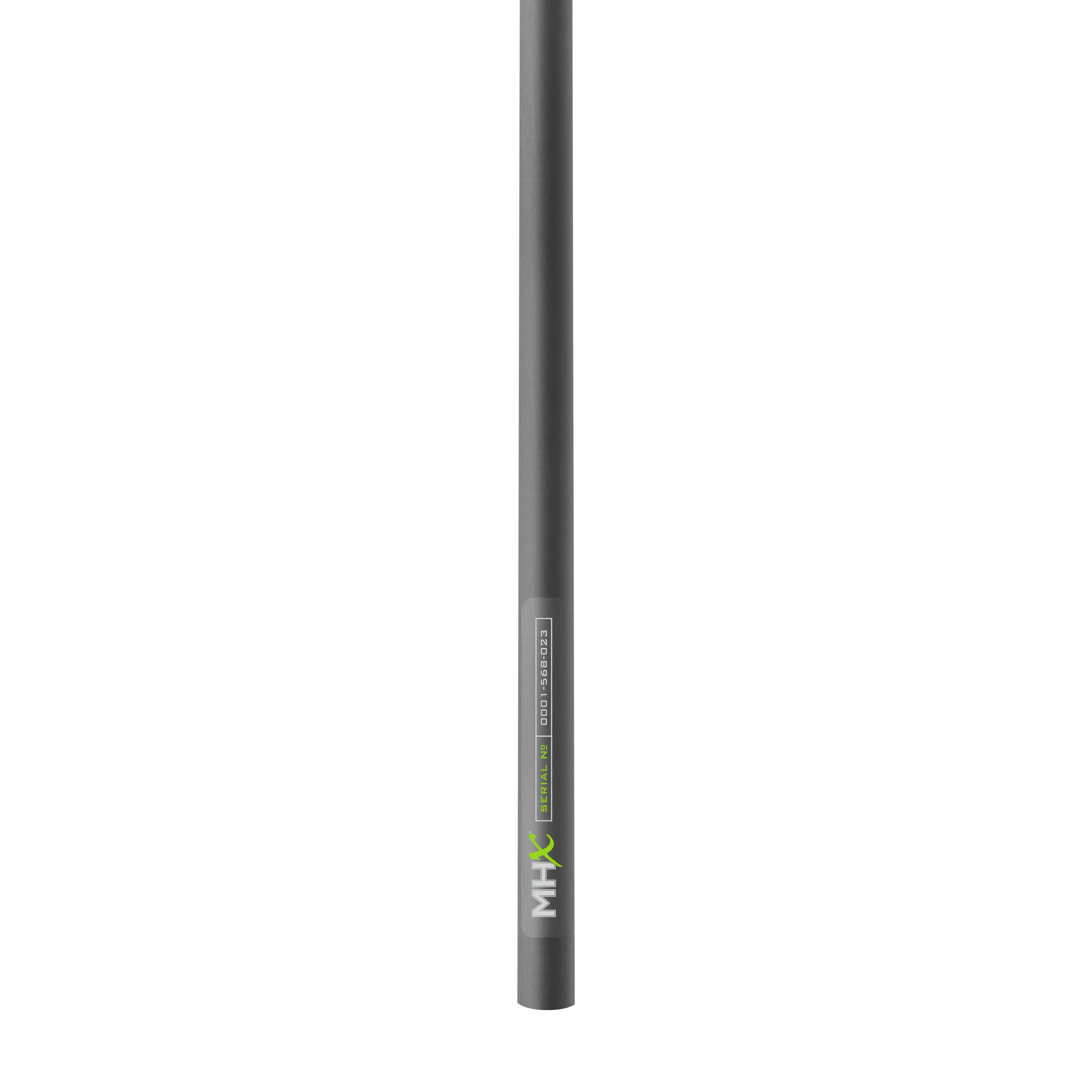
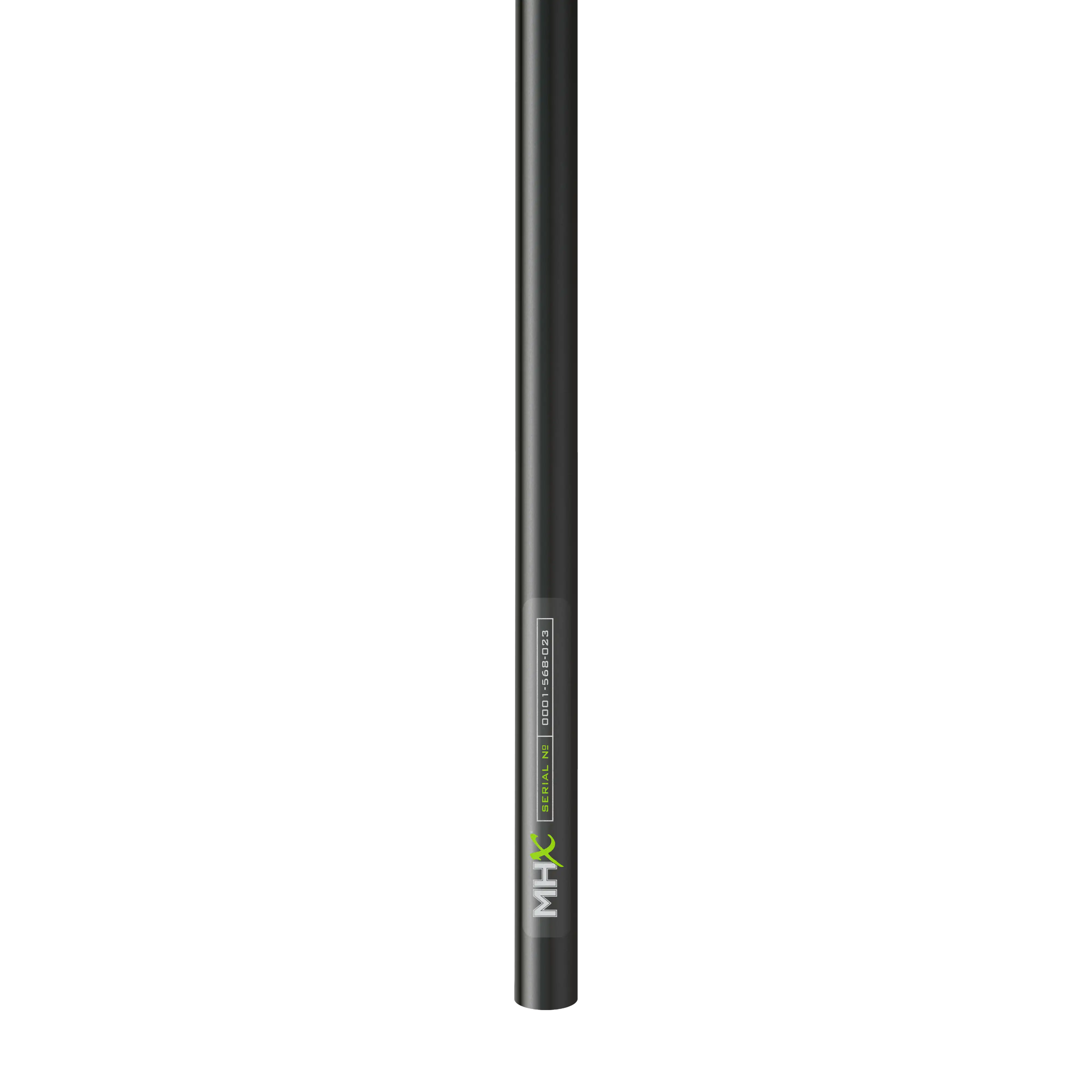
Finesse Swimbait Rod Blanks

Finesse Swimbait Rod Guide Kits
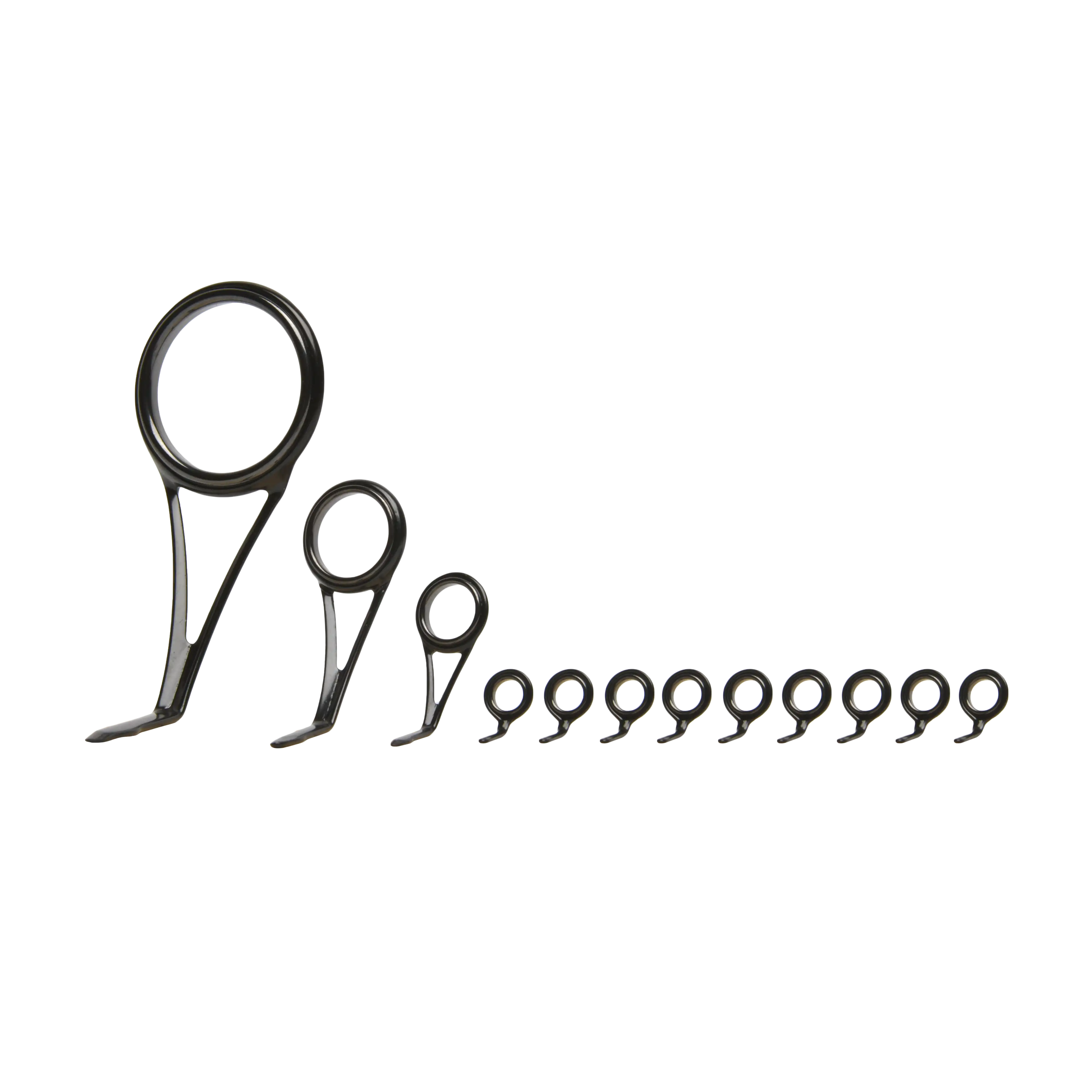
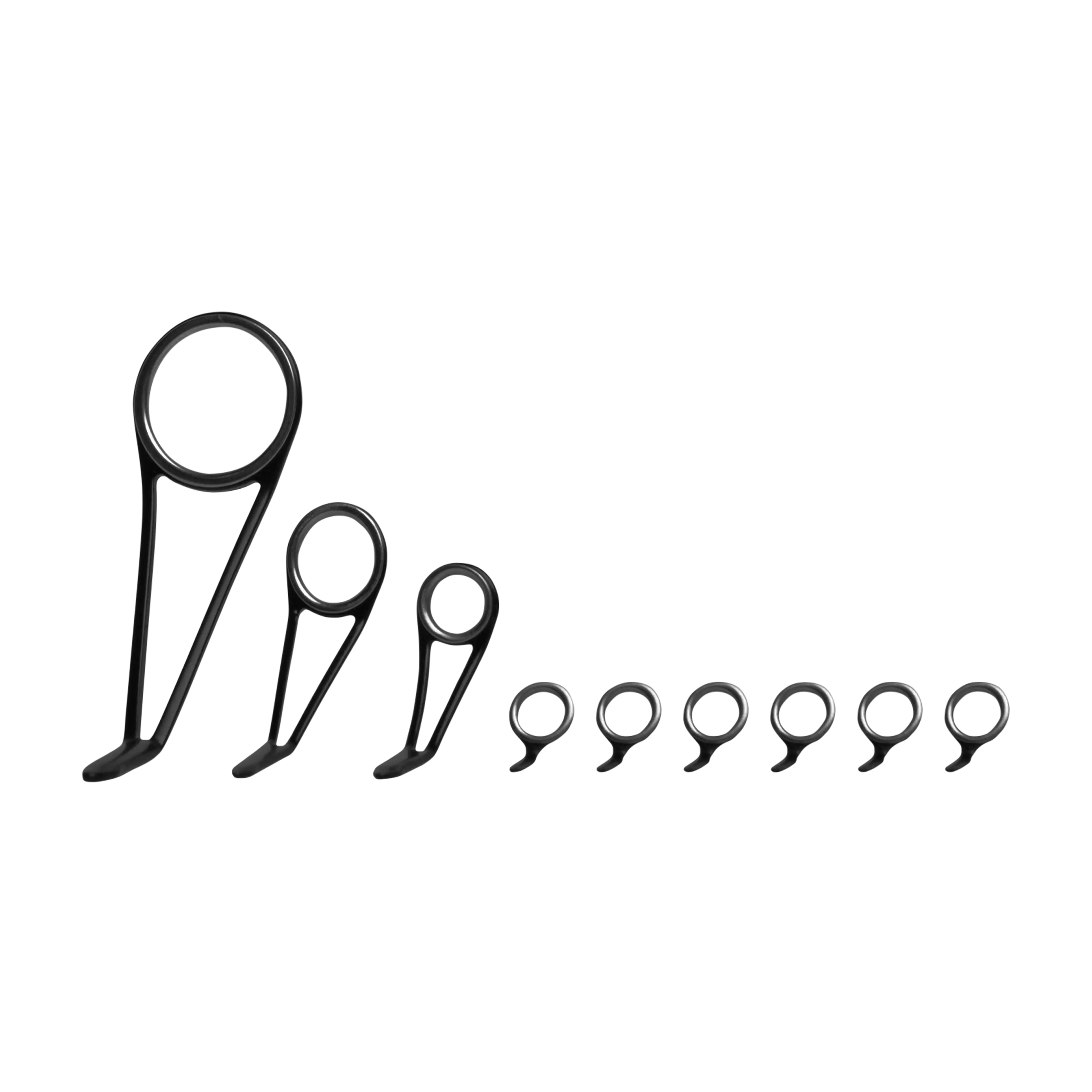
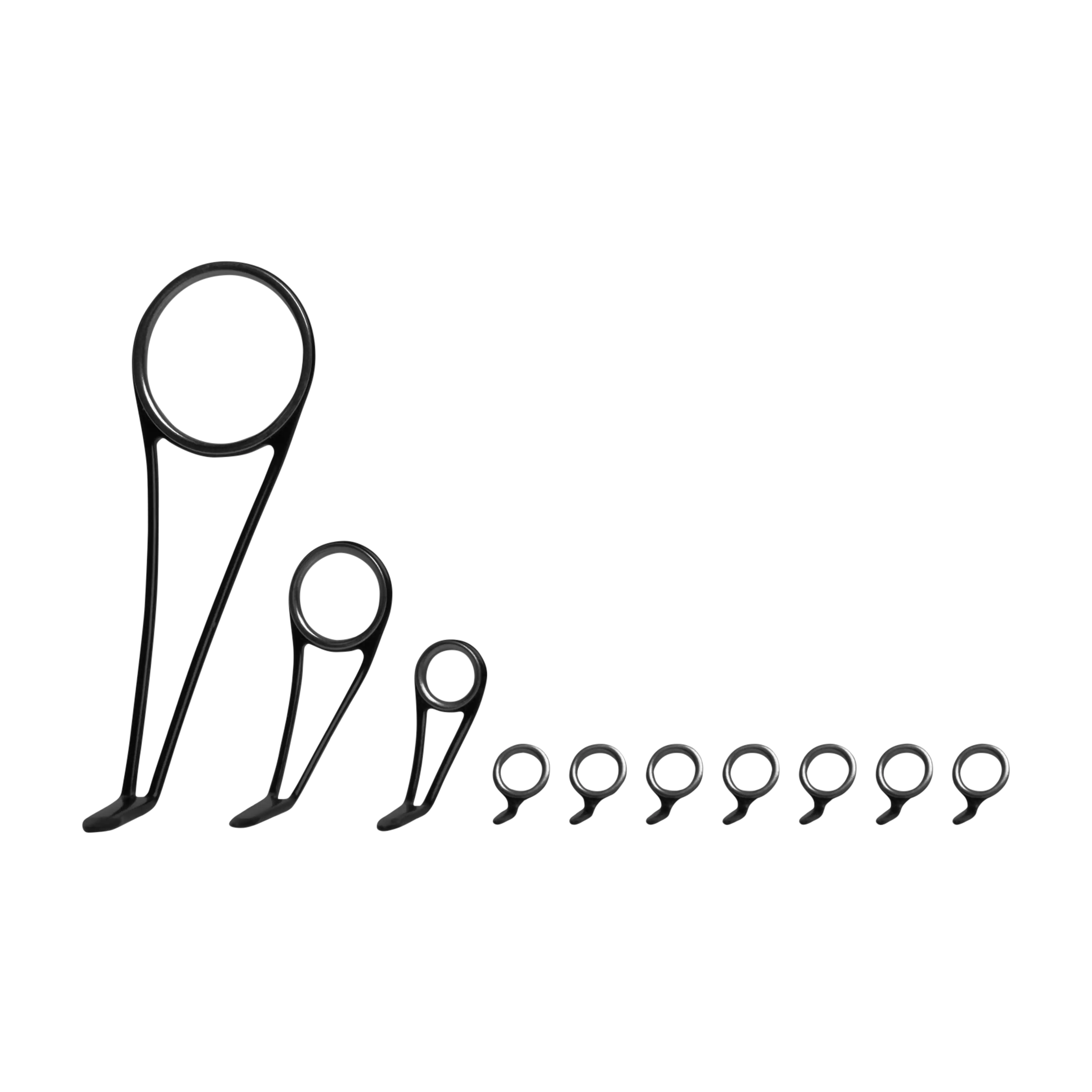
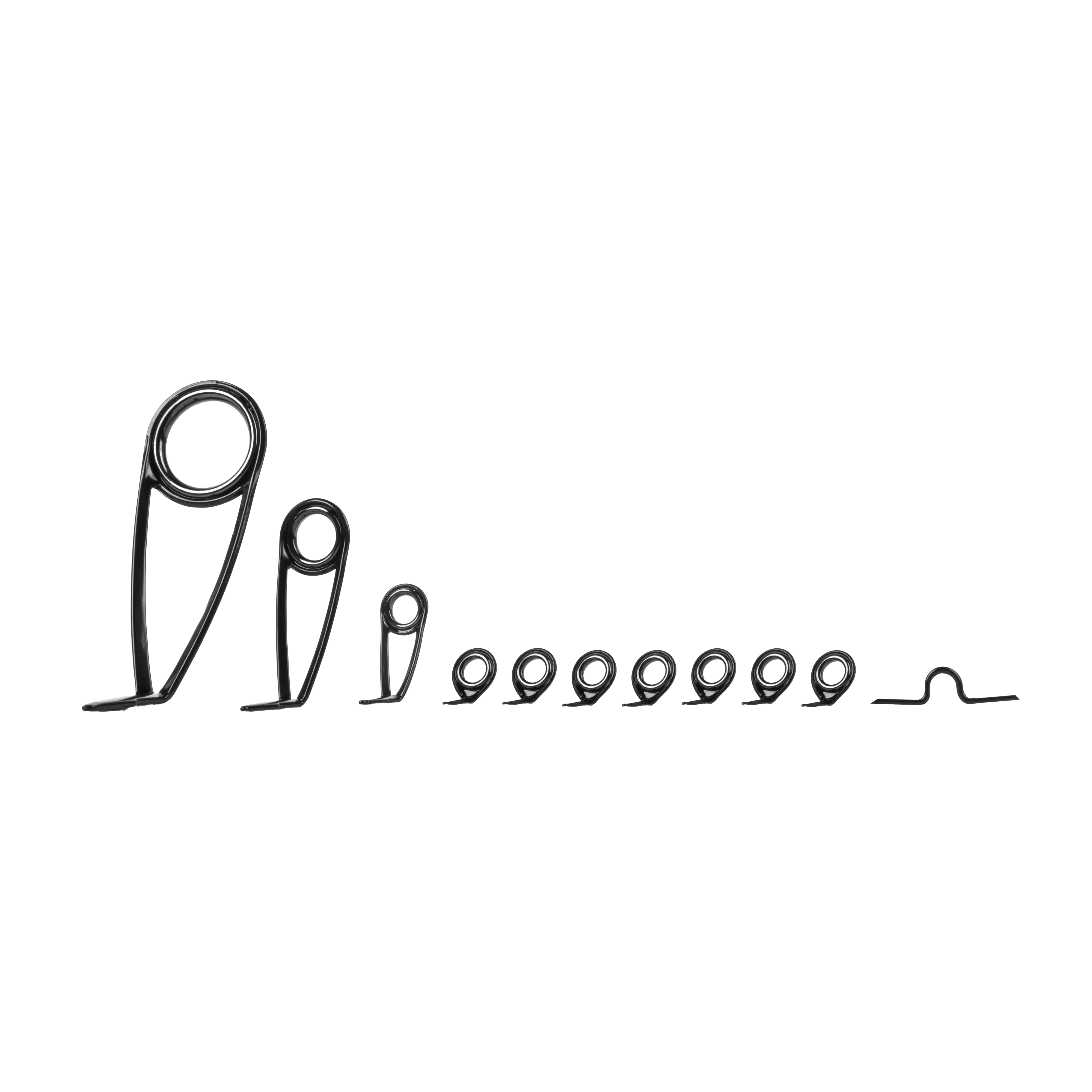
When building a custom finesse swimbait rod, the guide kit plays a major role in how efficiently the blank manages line during long casts, steady retrieves, and subtle moving presentations. Because finesse swimbait fishing relies on light line, smaller swimbaits, and controlled bait movement, the guide train needs to maintain smooth line flow while preserving blank sensitivity and responsiveness.
Guide kits simplify the process by pairing properly sized guides with layouts matched to specific blank lengths and actions. This helps ensure clean line tracking during casts, retrieves, and hooksets while reducing friction and improving overall efficiency. A properly configured guide system also allows the blank to load and recover naturally across a variety of finesse swimbait techniques.
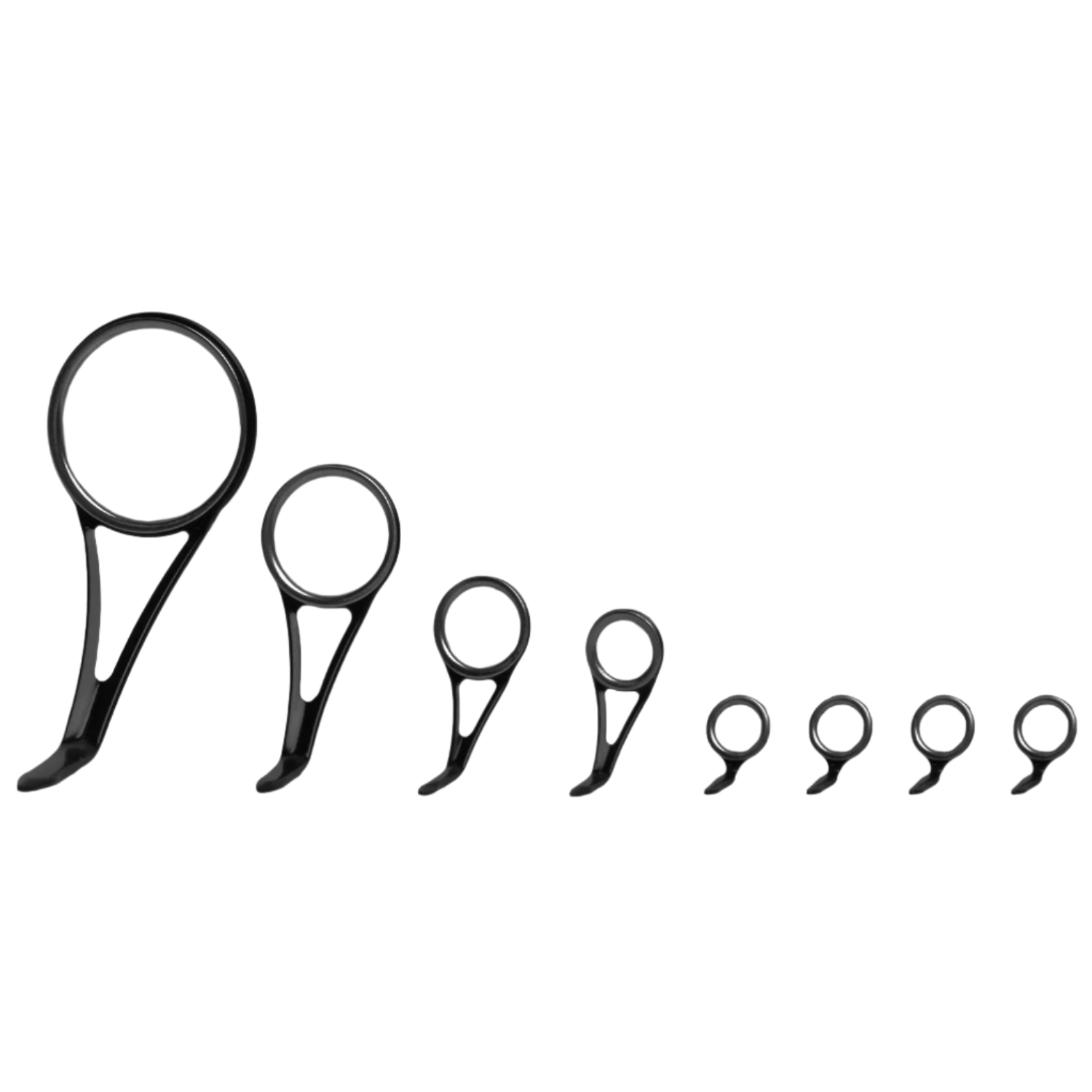
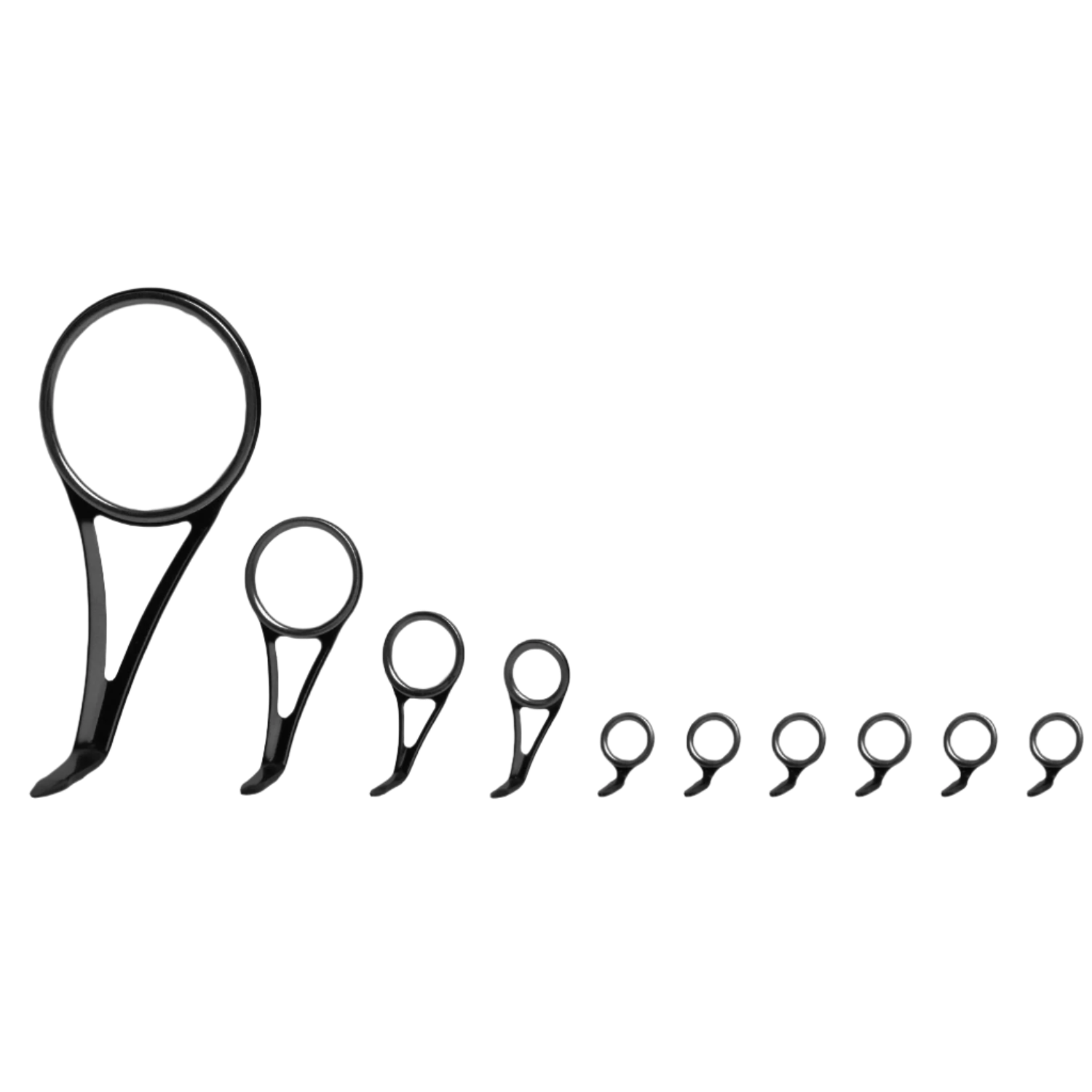
For finesse swimbait rods, guide layouts are typically built around spinning setups using lighter lines and compact moving baits. The system starts with stripper guides near the reel to control line coming off the spool, followed by running guides that carry the line cleanly along the blank while supporting its natural flex and recovery.
Stripper Guides
Stripper guides control line as it leaves the spinning reel spool and enters the guide train. Because spinning reels release line in expanding coils, the reduction section is designed to gradually organize and tighten that line path before it transitions into the running guides. The first guide handles the widest coils, while each guide after it progressively aligns the line closer to the blank.
This reduction process is especially important in finesse swimbait fishing because it improves casting efficiency with lighter swimbaits, reduces excess line movement during retrieves, and helps maintain consistent line control at varying depths and speeds. Proper sizing and spacing also minimize line slap and allow the blank to load more efficiently during casts. Exact layout will vary depending on blank length, power, and reel size.
Running Guides
Running guides continue from the reduction section and are usually uniform in size along the upper half of the blank. Their purpose is to maintain smooth line tracking while allowing the blank to flex and recover naturally under load.
Correct spacing is especially important for finesse swimbait builds because much of the technique depends on maintaining consistent bait movement and detecting subtle pressure changes during the retrieve. A properly configured running guide section supports even load distribution during casting and fish fighting while preserving blank sensitivity and responsiveness.
Frame vs Ring Size
Choosing the right frame style and ring diameter is important in a finesse swimbait build because the guide system must manage light line efficiently without sacrificing balance or sensitivity. Since these techniques rely on controlled movement and long, smooth retrieves, each guide contributes to how cleanly the rod performs overall.
Frame Size
The frame controls how the guide positions and manages line through the system. Frame height should align properly with the reel to maintain a smooth transition from spool to blank without excessive resistance or sharp line angles. Because finesse swimbait rods prioritize balance and responsiveness, lightweight single-foot frames are commonly used to reduce excess weight while maintaining durability and alignment.
Ring Size
The ring is the inner surface the line travels through during the cast and retrieve. Ring size and material should match the finesse line systems commonly used for swimbaits, including fluorocarbon and braid-to-leader setups. The goal is to keep the rings compact enough to reduce overall weight while still allowing leader knots and light line connections to pass smoothly.
Materials such as Duralite, Nanolite, and Alconite are commonly used because they provide smooth line flow and long-term durability with fine-diameter lines. Proper ring sizing helps maintain sensitivity, improve casting consistency, and support overall blank performance.
Key Takeaways
- Stripper guides organize line coming off the reel before it transitions into the running section
- Guide reduction improves casting efficiency and line control with lightweight swimbaits
- Running guides maintain consistent line tracking and support natural blank flex
- Guide spacing varies depending on blank length, power, and reel size
- Frame style and ring size affect balance, sensitivity, and overall line management
- Guide kits simplify the build process by pairing matched components with spacing guidance
Finesse Swimbait Rod Guide Kits
When building a custom finesse swimbait rod, the guide kit plays a major role in how efficiently the blank manages line during long casts, steady retrieves, and subtle moving presentations. Because finesse swimbait fishing relies on light line, smaller swimbaits, and controlled bait movement, the guide train needs to maintain smooth line flow while preserving blank sensitivity and responsiveness.
Guide kits simplify the process by pairing properly sized guides with layouts matched to specific blank lengths and actions. This helps ensure clean line tracking during casts, retrieves, and hooksets while reducing friction and improving overall efficiency. A properly configured guide system also allows the blank to load and recover naturally across a variety of finesse swimbait techniques.
For finesse swimbait rods, guide layouts are typically built around spinning setups using lighter lines and compact moving baits. The system starts with stripper guides near the reel to control line coming off the spool, followed by running guides that carry the line cleanly along the blank while supporting its natural flex and recovery.
Stripper Guides
Stripper guides control line as it leaves the spinning reel spool and enters the guide train. Because spinning reels release line in expanding coils, the reduction section is designed to gradually organize and tighten that line path before it transitions into the running guides. The first guide handles the widest coils, while each guide after it progressively aligns the line closer to the blank.
This reduction process is especially important in finesse swimbait fishing because it improves casting efficiency with lighter swimbaits, reduces excess line movement during retrieves, and helps maintain consistent line control at varying depths and speeds. Proper sizing and spacing also minimize line slap and allow the blank to load more efficiently during casts. Exact layout will vary depending on blank length, power, and reel size.
Running Guides
Running guides continue from the reduction section and are usually uniform in size along the upper half of the blank. Their purpose is to maintain smooth line tracking while allowing the blank to flex and recover naturally under load.
Correct spacing is especially important for finesse swimbait builds because much of the technique depends on maintaining consistent bait movement and detecting subtle pressure changes during the retrieve. A properly configured running guide section supports even load distribution during casting and fish fighting while preserving blank sensitivity and responsiveness.
Frame vs Ring Size
Choosing the right frame style and ring diameter is important in a finesse swimbait build because the guide system must manage light line efficiently without sacrificing balance or sensitivity. Since these techniques rely on controlled movement and long, smooth retrieves, each guide contributes to how cleanly the rod performs overall.
Frame Size
The frame controls how the guide positions and manages line through the system. Frame height should align properly with the reel to maintain a smooth transition from spool to blank without excessive resistance or sharp line angles. Because finesse swimbait rods prioritize balance and responsiveness, lightweight single-foot frames are commonly used to reduce excess weight while maintaining durability and alignment.
Ring Size
The ring is the inner surface the line travels through during the cast and retrieve. Ring size and material should match the finesse line systems commonly used for swimbaits, including fluorocarbon and braid-to-leader setups. The goal is to keep the rings compact enough to reduce overall weight while still allowing leader knots and light line connections to pass smoothly.
Materials such as Duralite, Nanolite, and Alconite are commonly used because they provide smooth line flow and long-term durability with fine-diameter lines. Proper ring sizing helps maintain sensitivity, improve casting consistency, and support overall blank performance.
Key Takeaways
- Stripper guides organize line coming off the reel before it transitions into the running section
- Guide reduction improves casting efficiency and line control with lightweight swimbaits
- Running guides maintain consistent line tracking and support natural blank flex
- Guide spacing varies depending on blank length, power, and reel size
- Frame style and ring size affect balance, sensitivity, and overall line management
- Guide kits simplify the build process by pairing matched components with spacing guidance
Finesse Swimbait Guide Kits



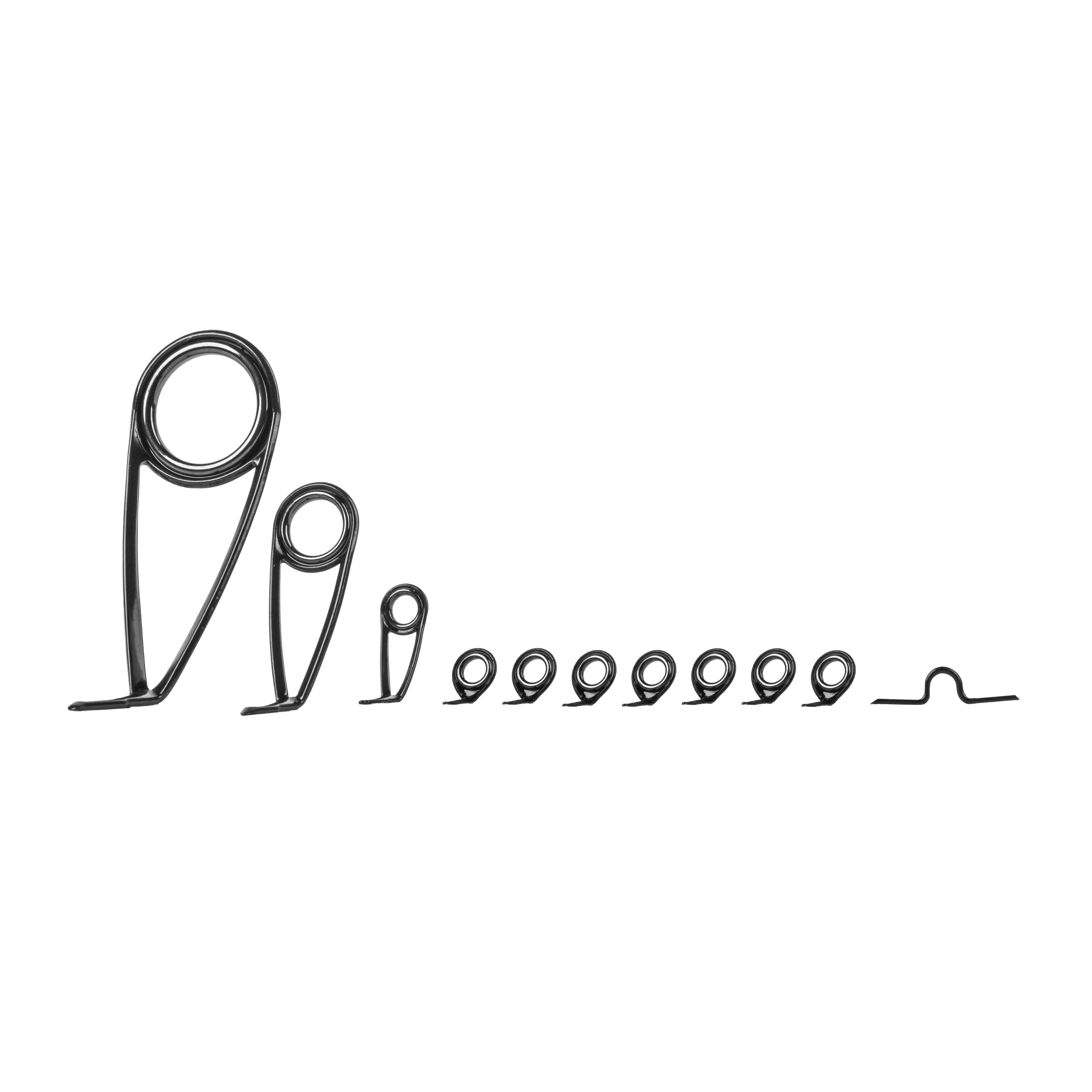


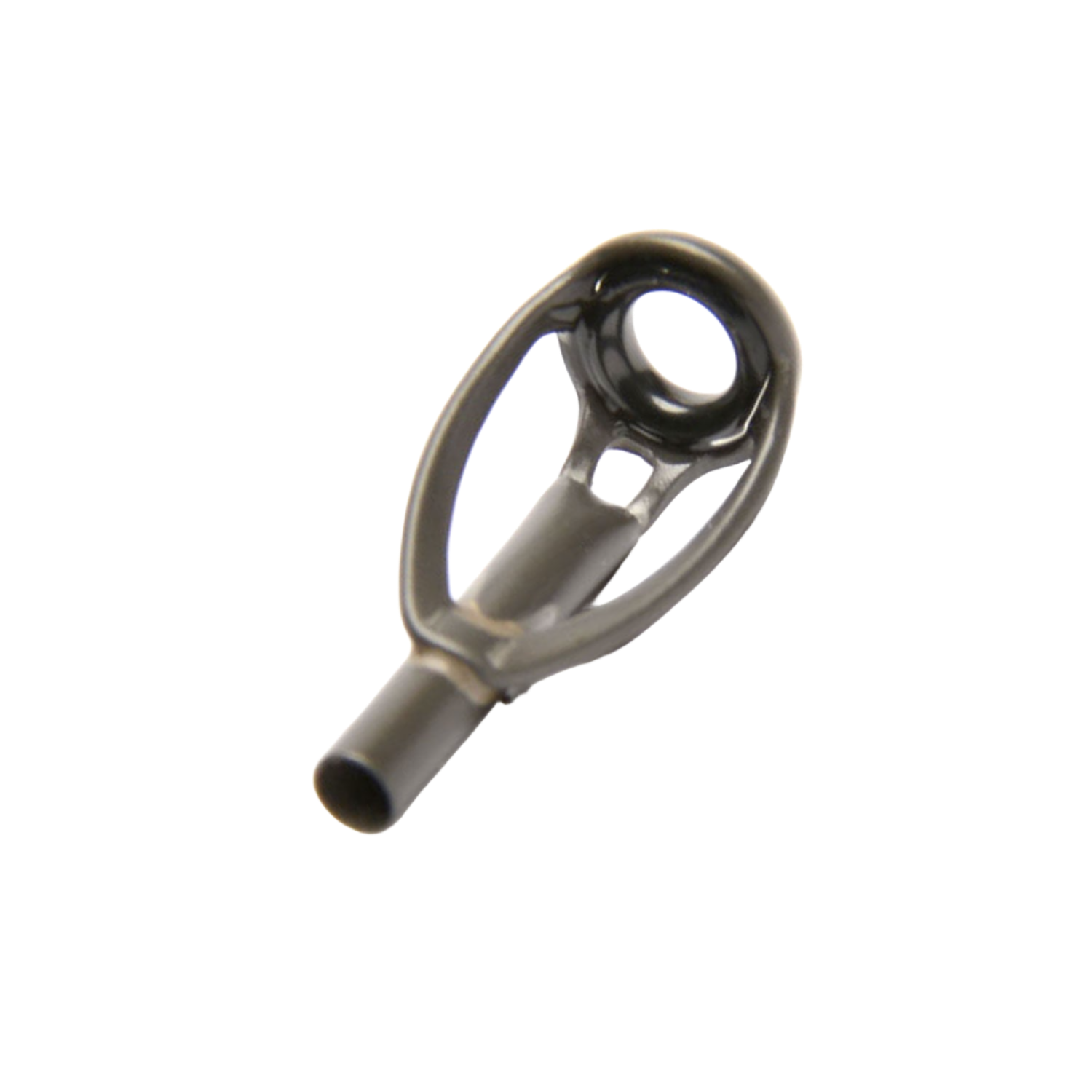
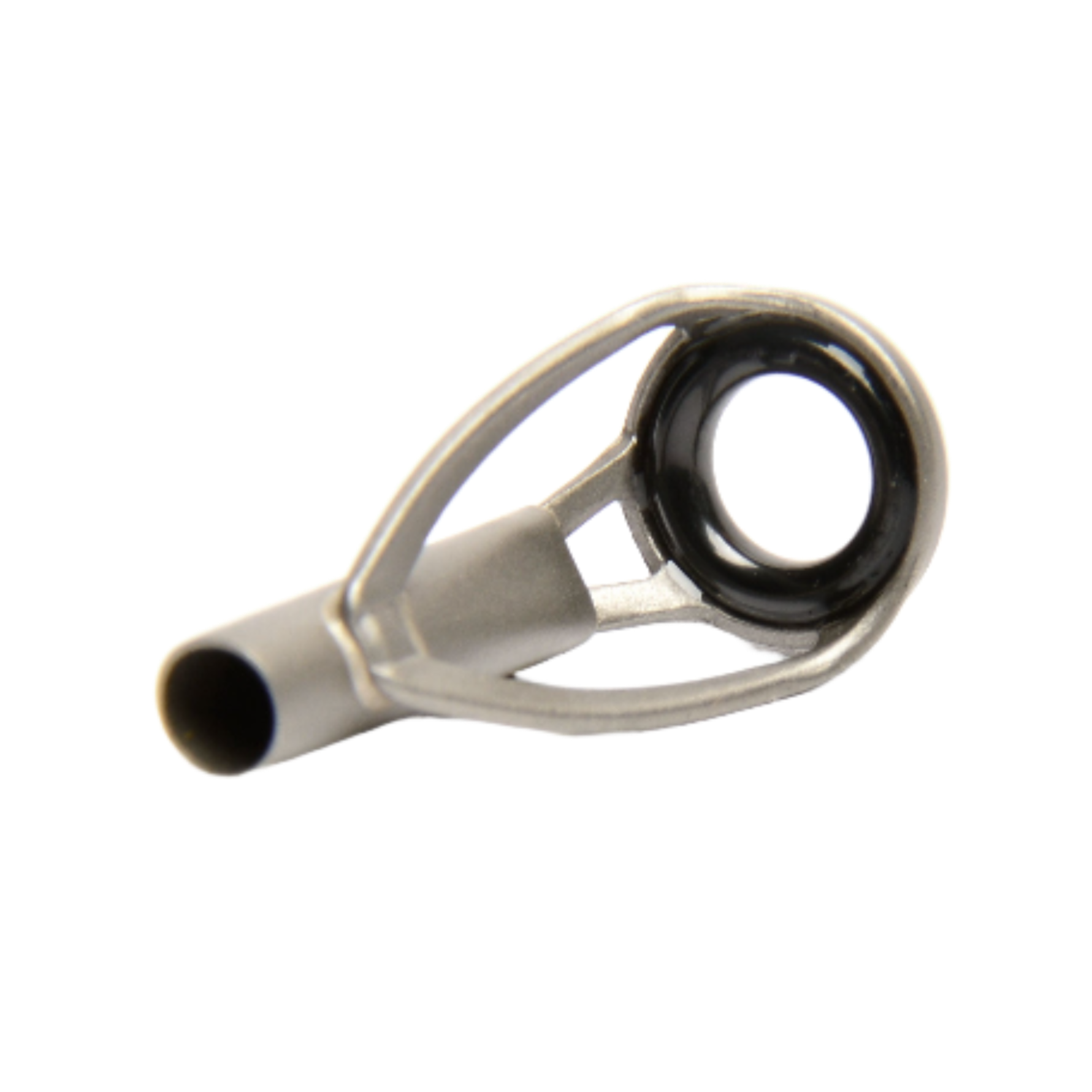
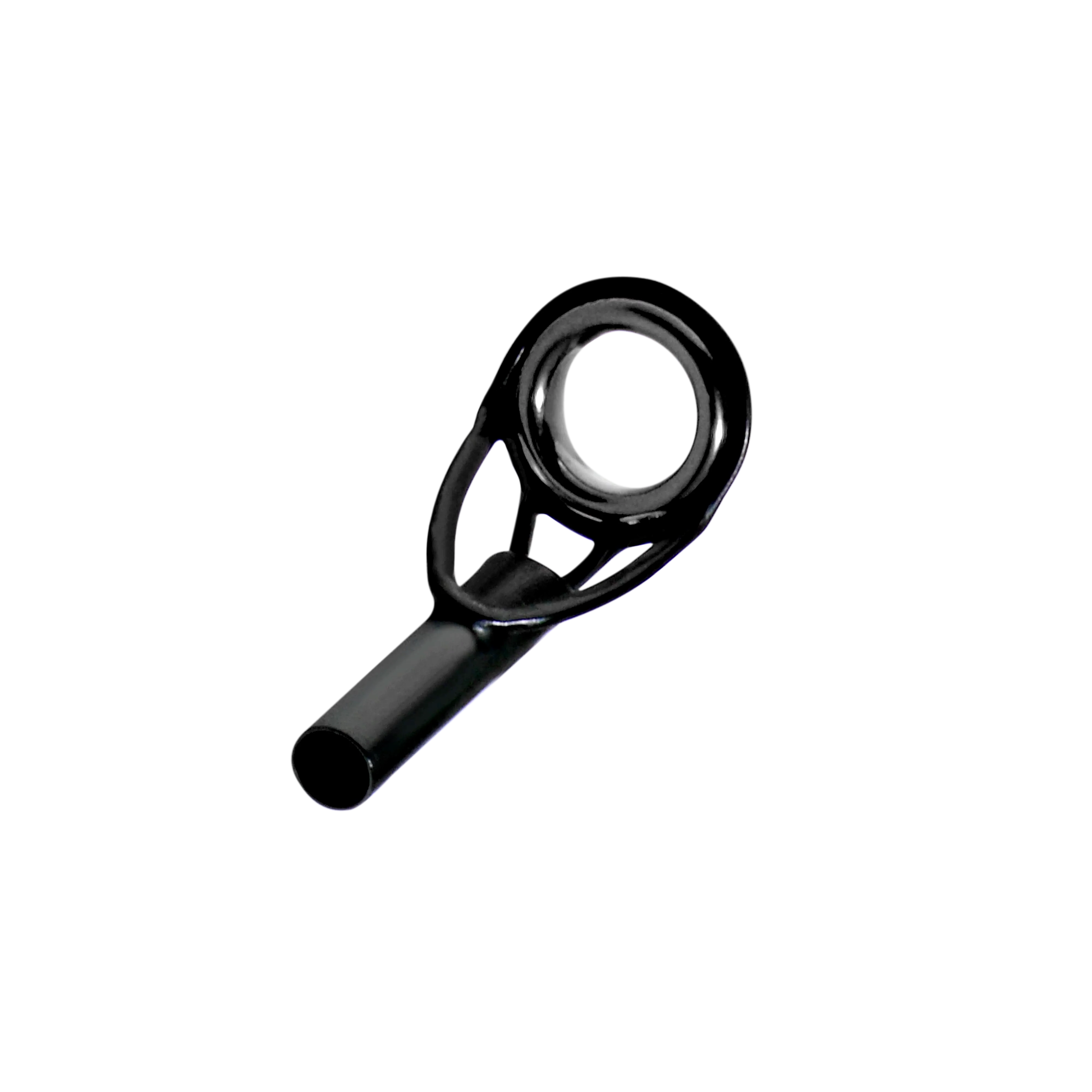
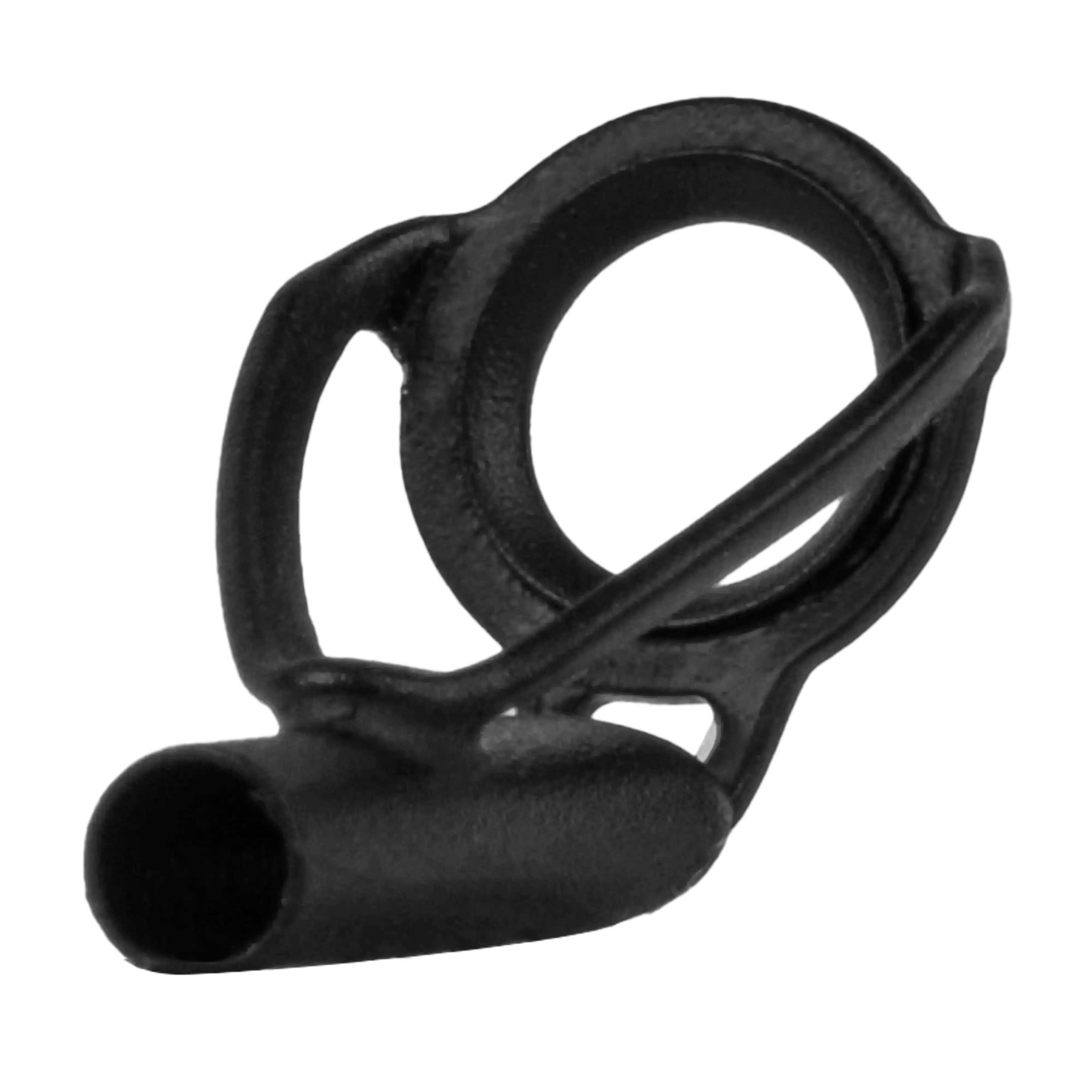
Finesse Swimbait Tip Top Guides
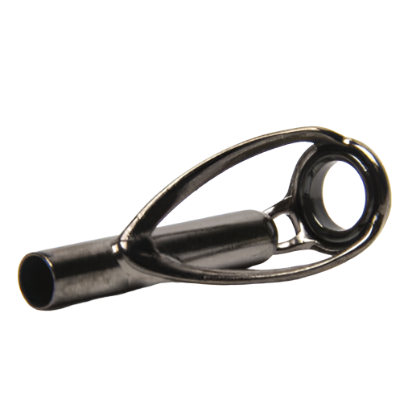
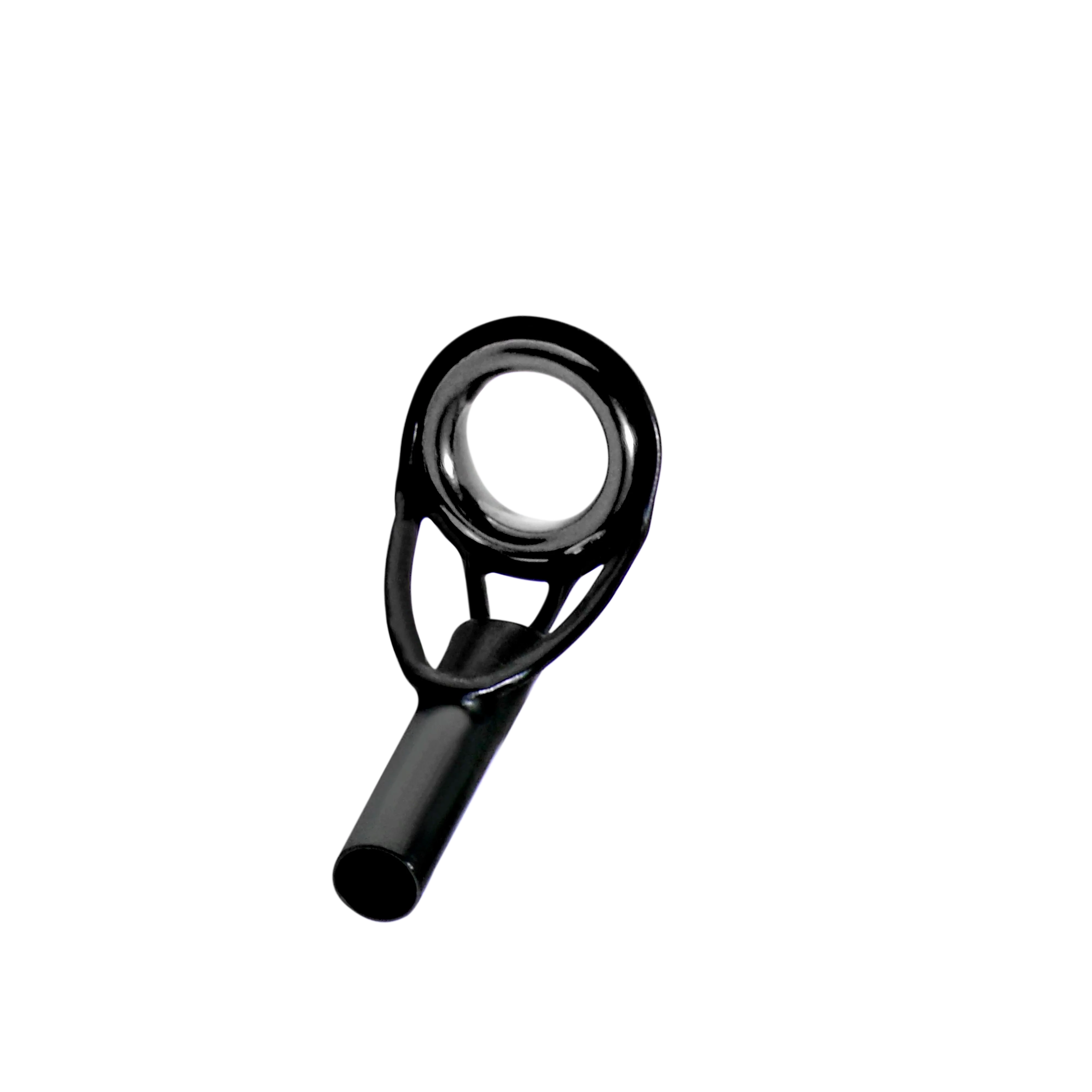
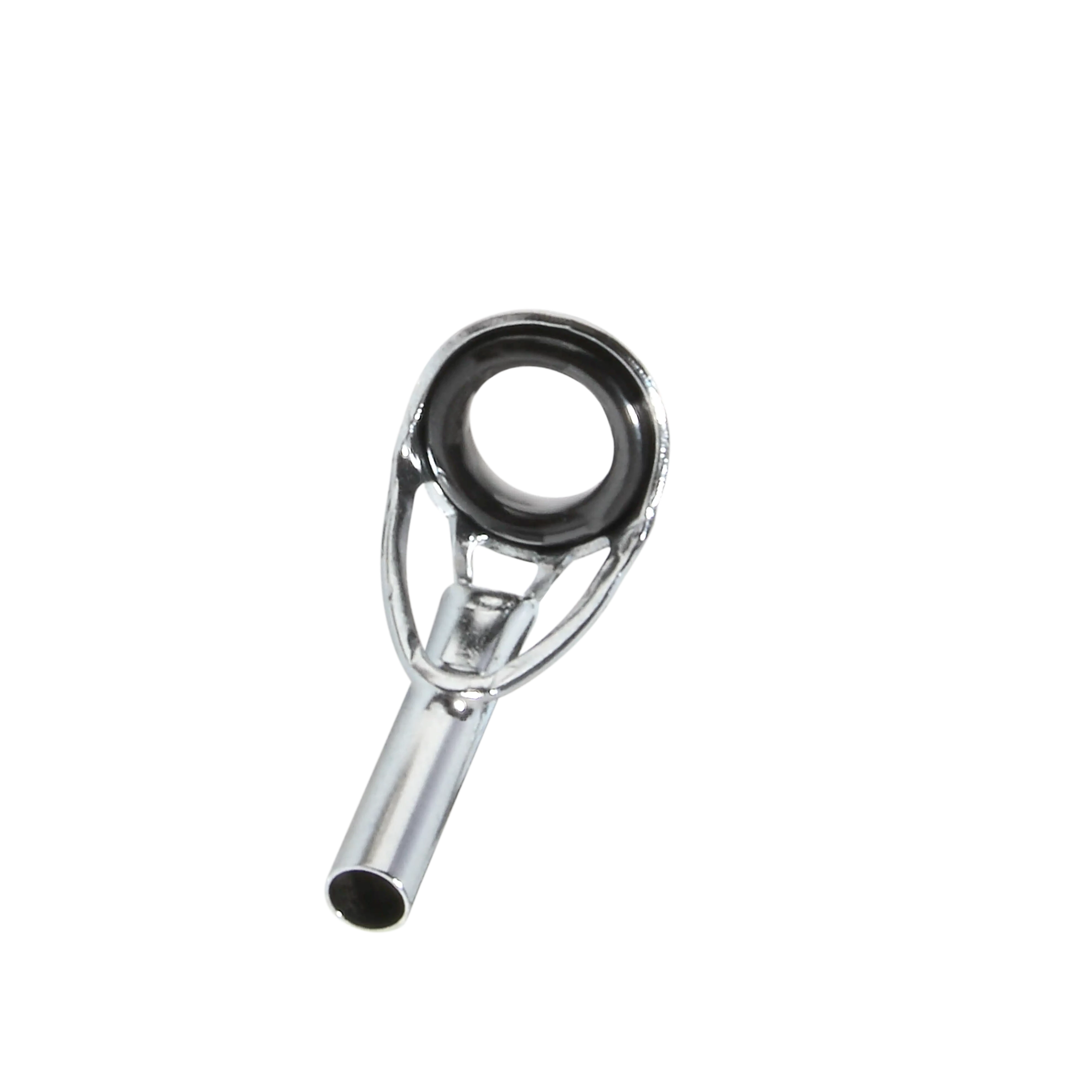
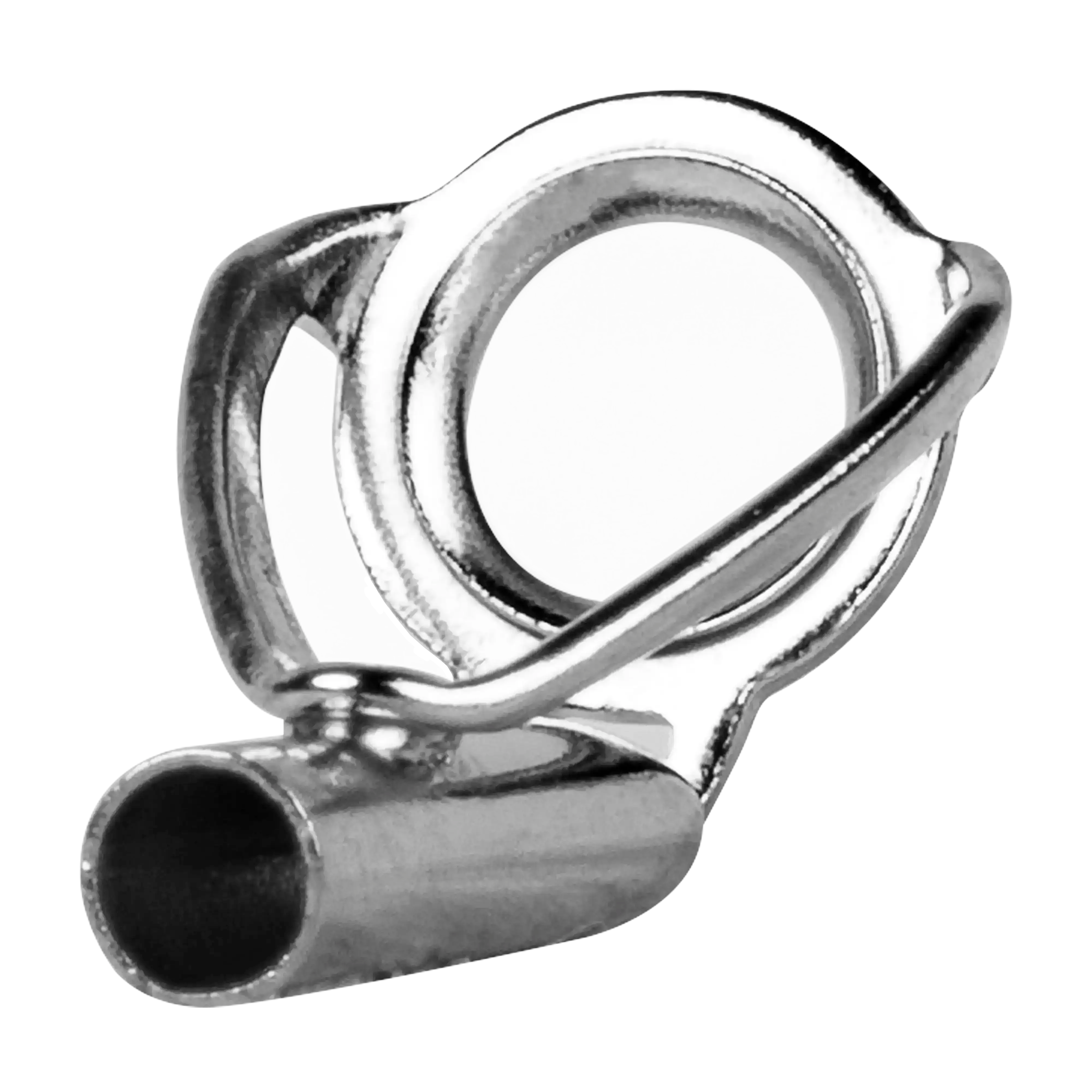
The tip-top plays an important role in the overall performance and durability of a finesse swimbait rod. As the final guide in the system, it helps maintain smooth line flow during long casts and steady retrieves while protecting the blank tip from wear caused by repeated casting and line movement. Because finesse swimbait fishing relies on light line, controlled bait tracking, and detecting subtle pressure changes, the right tip-top helps preserve sensitivity and overall blank responsiveness.
When selecting a tip-top, two key factors matter:
Ring Size
Ring size affects how efficiently line passes through the tip during casting, retrieves, and hooksets. Most builders match the tip-top ring size to the final running guide to maintain a smooth, consistent line path through the guide train. This helps preserve casting efficiency, balance, and clean line tracking throughout the retrieve.
Some builders prefer a slightly larger ring when using braid-to-leader setups, especially when leader knots regularly pass through the tip. A larger ring can improve knot clearance and reduce friction at the transition point while still maintaining efficient line flow without adding unnecessary weight to the tip section.
Tube Size
Tube size refers to the inside diameter of the tip-top tube that fits over the blank tip. Proper sizing is important because the tip-top must fit securely without excess adhesive or movement. A properly fitted tube allows the blank to flex naturally while maintaining long-term durability and sensitivity.
A correctly selected tip-top completes the guide system by supporting smooth line transition, protecting the blank tip, and preserving the rod’s intended action and balance. Even though it’s a small component, an improperly sized tip-top can negatively affect line control, knot clearance, and overall rod performance over time.
Matching Your Tip-Top
While exact matching is not required for performance, many builders choose a tip-top that visually complements the rest of the guide train for a cleaner, more unified build. This is commonly done by matching frame style, finish, ring material, and manufacturer to the running guides for a more refined custom appearance.
Key Takeaways
- Tip-tops protect the blank tip while maintaining smooth line flow
- Ring size should match your line setup and leader knot requirements
- Tube size must fit the blank tip correctly for proper alignment and durability
- A properly selected tip-top helps preserve sensitivity, balance, and consistent performance
Finesse Swimbait Tip Top Guides
The tip-top plays an important role in the overall performance and durability of a finesse swimbait rod. As the final guide in the system, it helps maintain smooth line flow during long casts and steady retrieves while protecting the blank tip from wear caused by repeated casting and line movement. Because finesse swimbait fishing relies on light line, controlled bait tracking, and detecting subtle pressure changes, the right tip-top helps preserve sensitivity and overall blank responsiveness.
When selecting a tip-top, two key factors matter:
Ring Size
Ring size affects how efficiently line passes through the tip during casting, retrieves, and hooksets. Most builders match the tip-top ring size to the final running guide to maintain a smooth, consistent line path through the guide train. This helps preserve casting efficiency, balance, and clean line tracking throughout the retrieve.
Some builders prefer a slightly larger ring when using braid-to-leader setups, especially when leader knots regularly pass through the tip. A larger ring can improve knot clearance and reduce friction at the transition point while still maintaining efficient line flow without adding unnecessary weight to the tip section.
Tube Size
Tube size refers to the inside diameter of the tip-top tube that fits over the blank tip. Proper sizing is important because the tip-top must fit securely without excess adhesive or movement. A properly fitted tube allows the blank to flex naturally while maintaining long-term durability and sensitivity.
A correctly selected tip-top completes the guide system by supporting smooth line transition, protecting the blank tip, and preserving the rod’s intended action and balance. Even though it’s a small component, an improperly sized tip-top can negatively affect line control, knot clearance, and overall rod performance over time.
Matching Your Tip-Top
While exact matching is not required for performance, many builders choose a tip-top that visually complements the rest of the guide train for a cleaner, more unified build. This is commonly done by matching frame style, finish, ring material, and manufacturer to the running guides for a more refined custom appearance.
Key Takeaways
- Tip-tops protect the blank tip while maintaining smooth line flow
- Ring size should match your line setup and leader knot requirements
- Tube size must fit the blank tip correctly for proper alignment and durability
- A properly selected tip-top helps preserve sensitivity, balance, and consistent performance
Finesse Swimbait Tip Tops



Finesse Swimbait Handle Kits
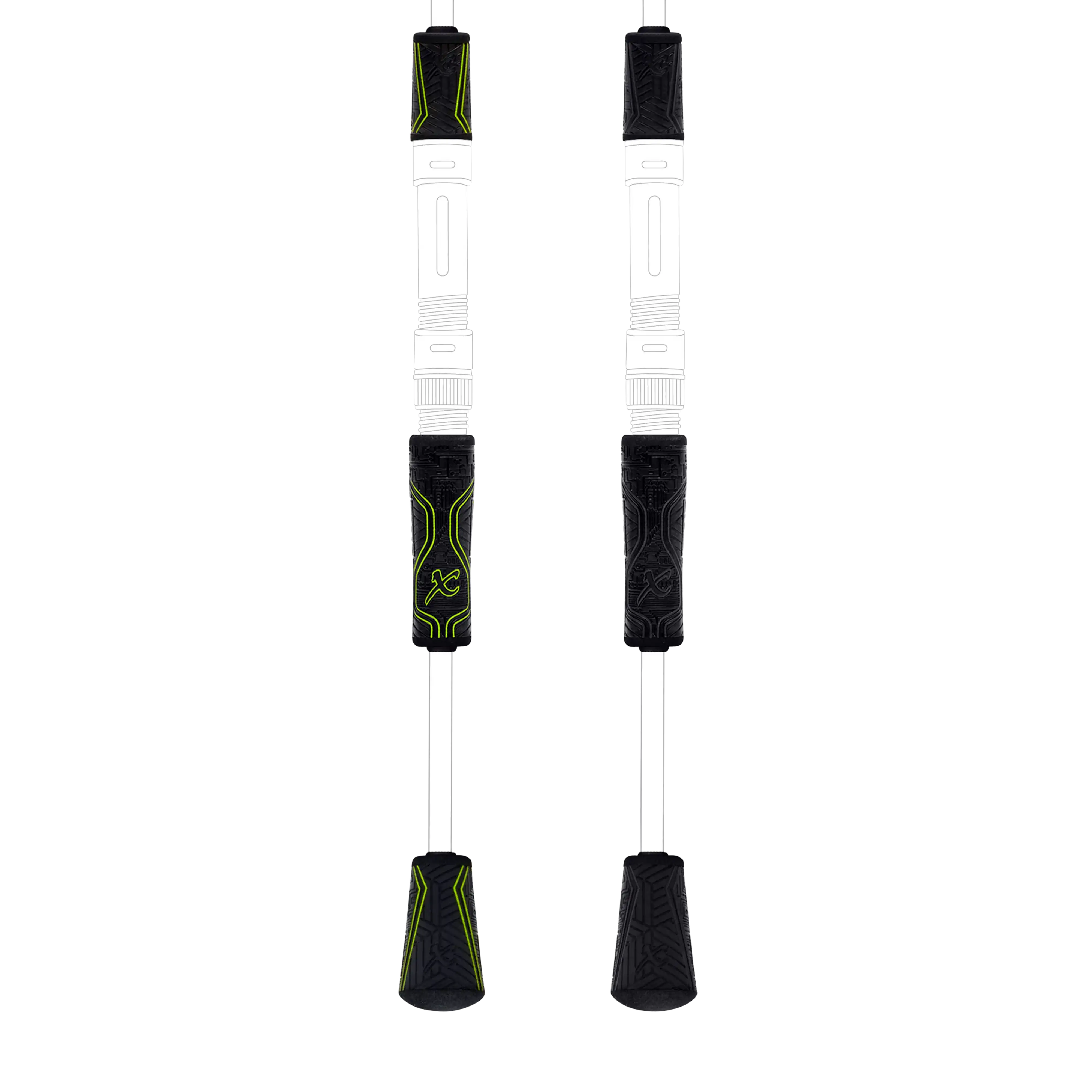
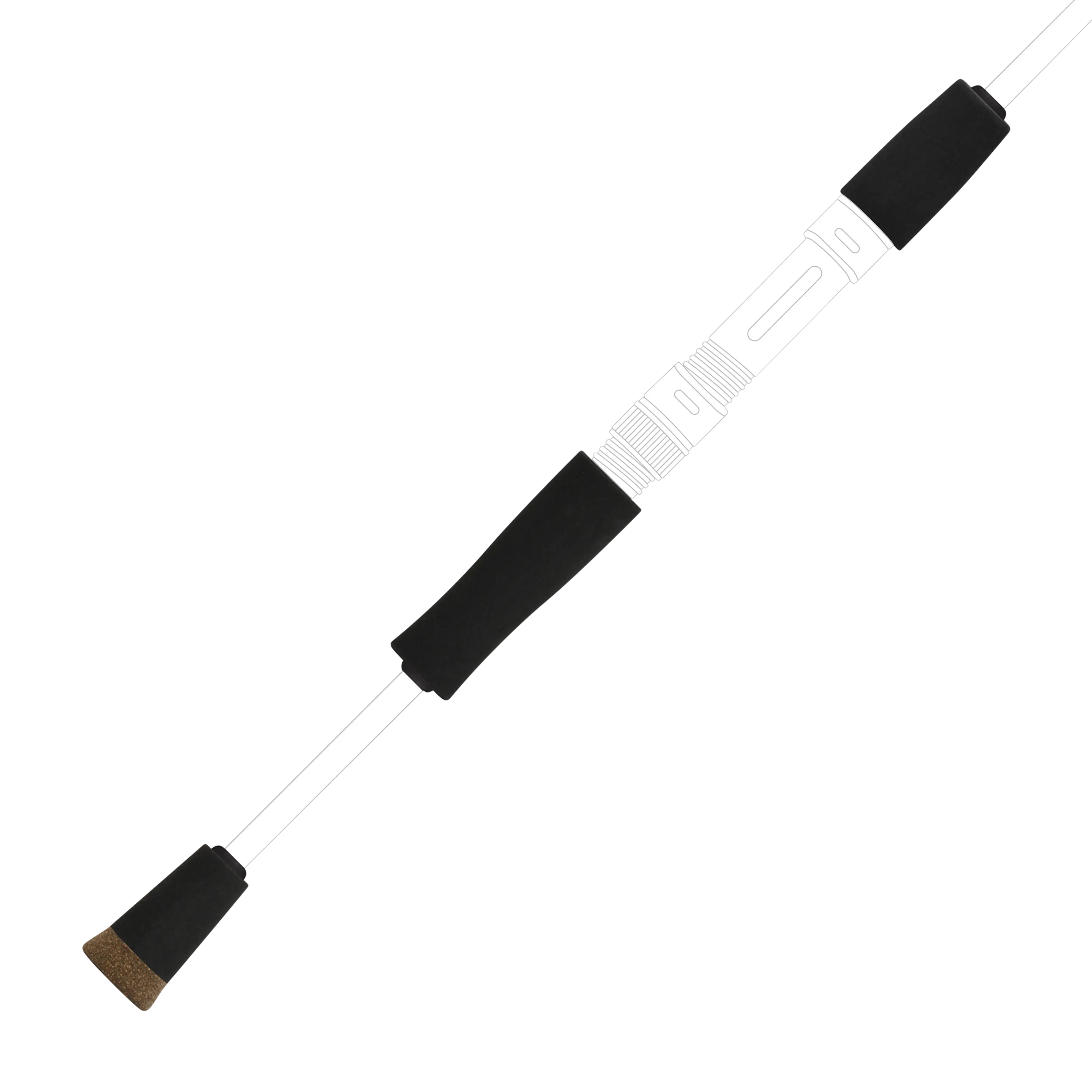
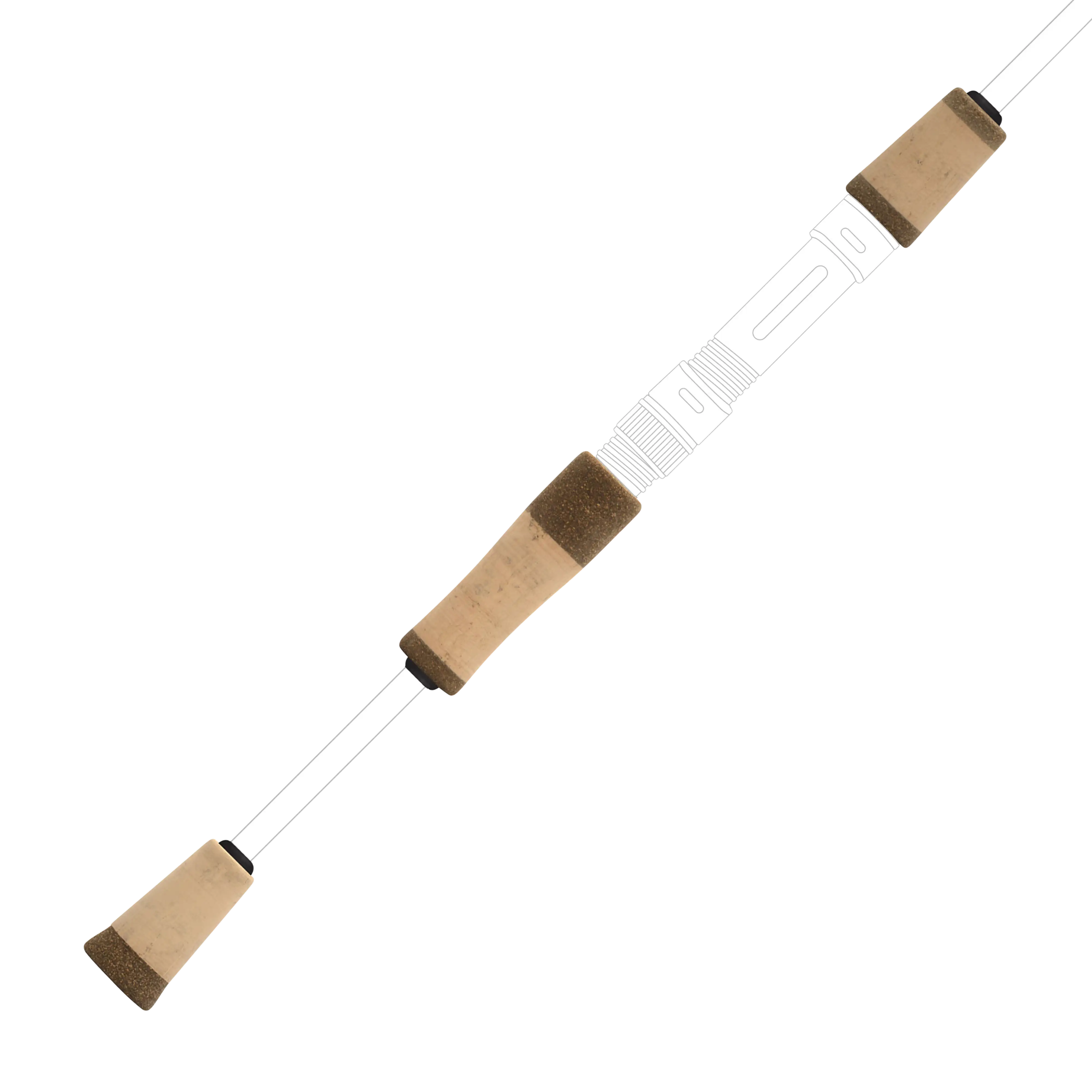
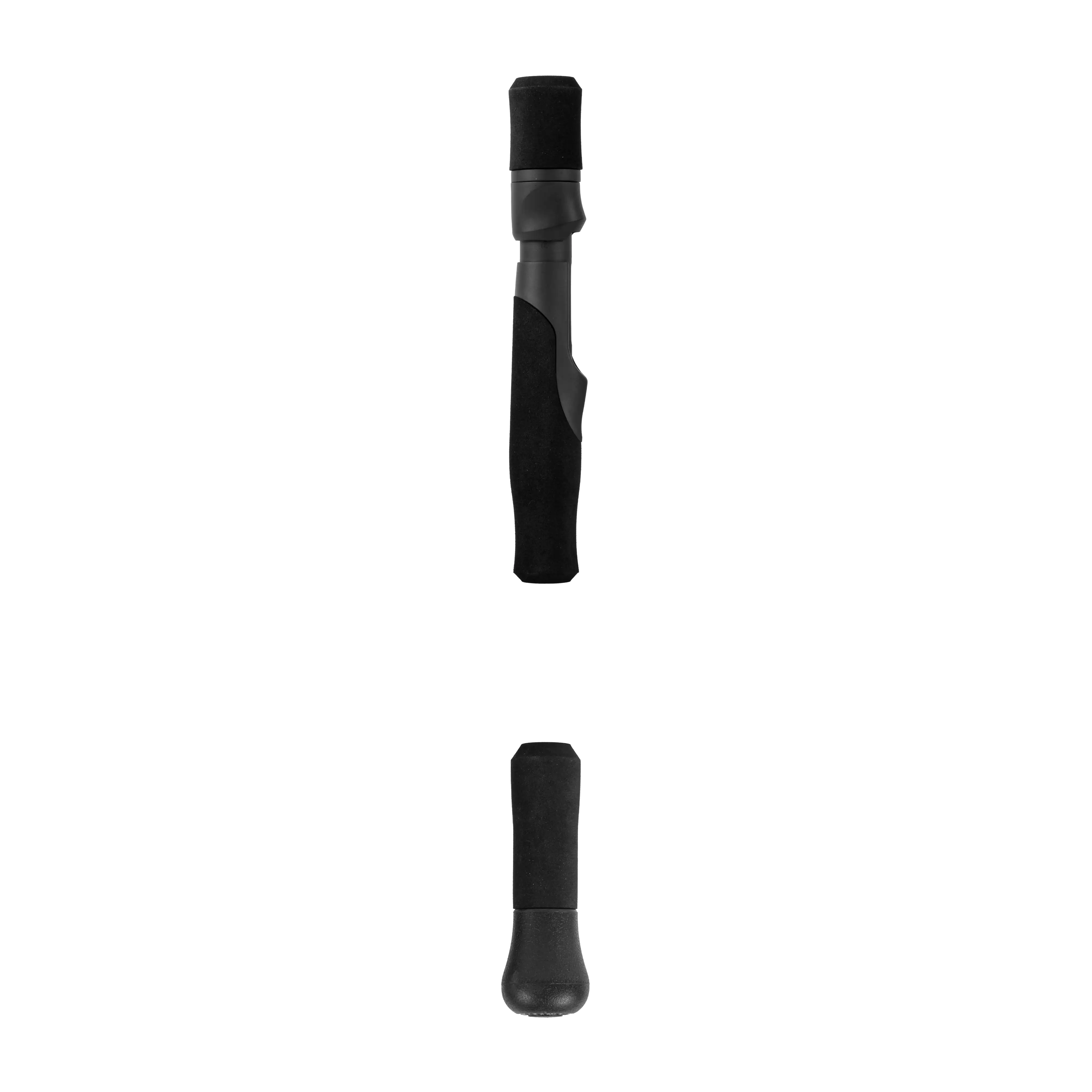
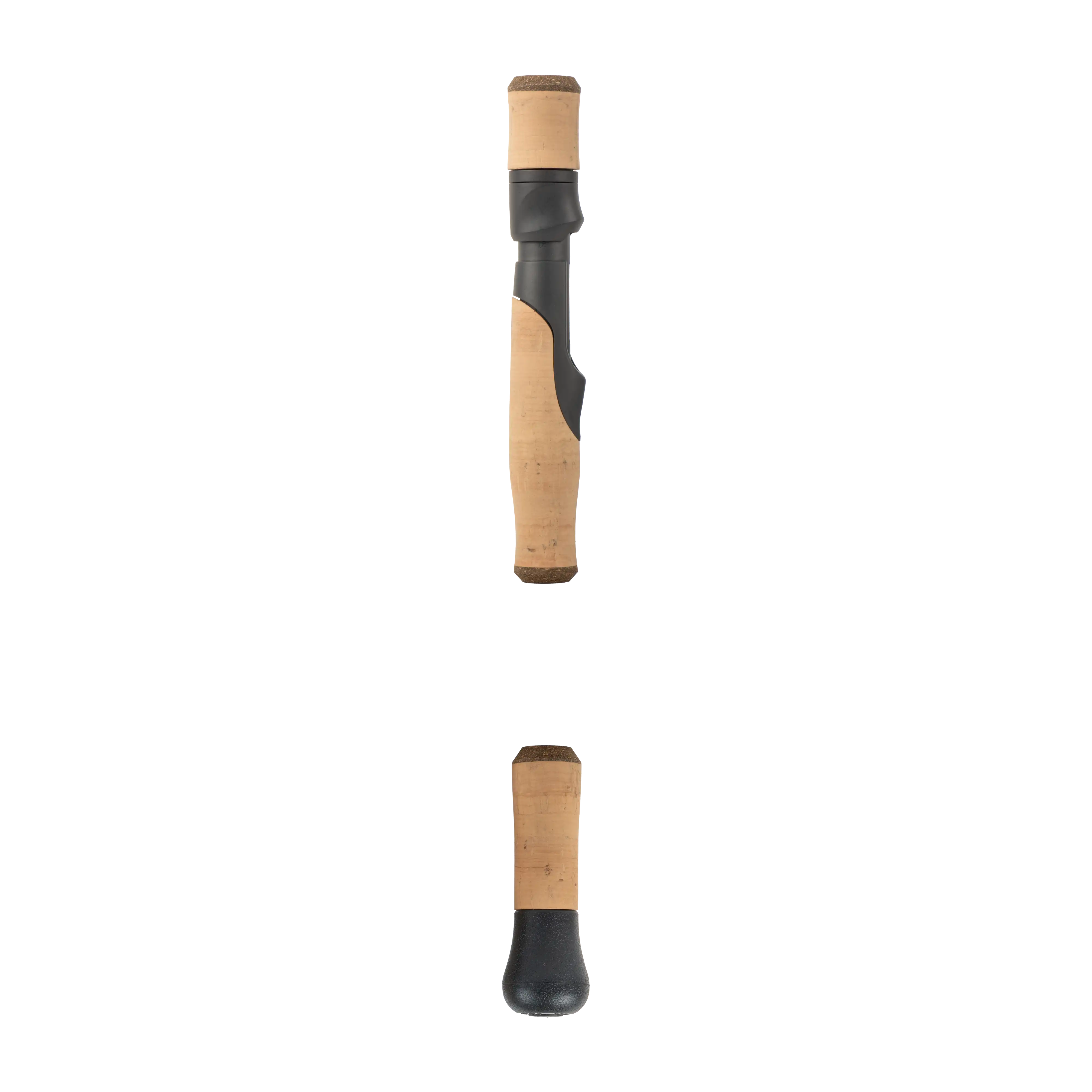
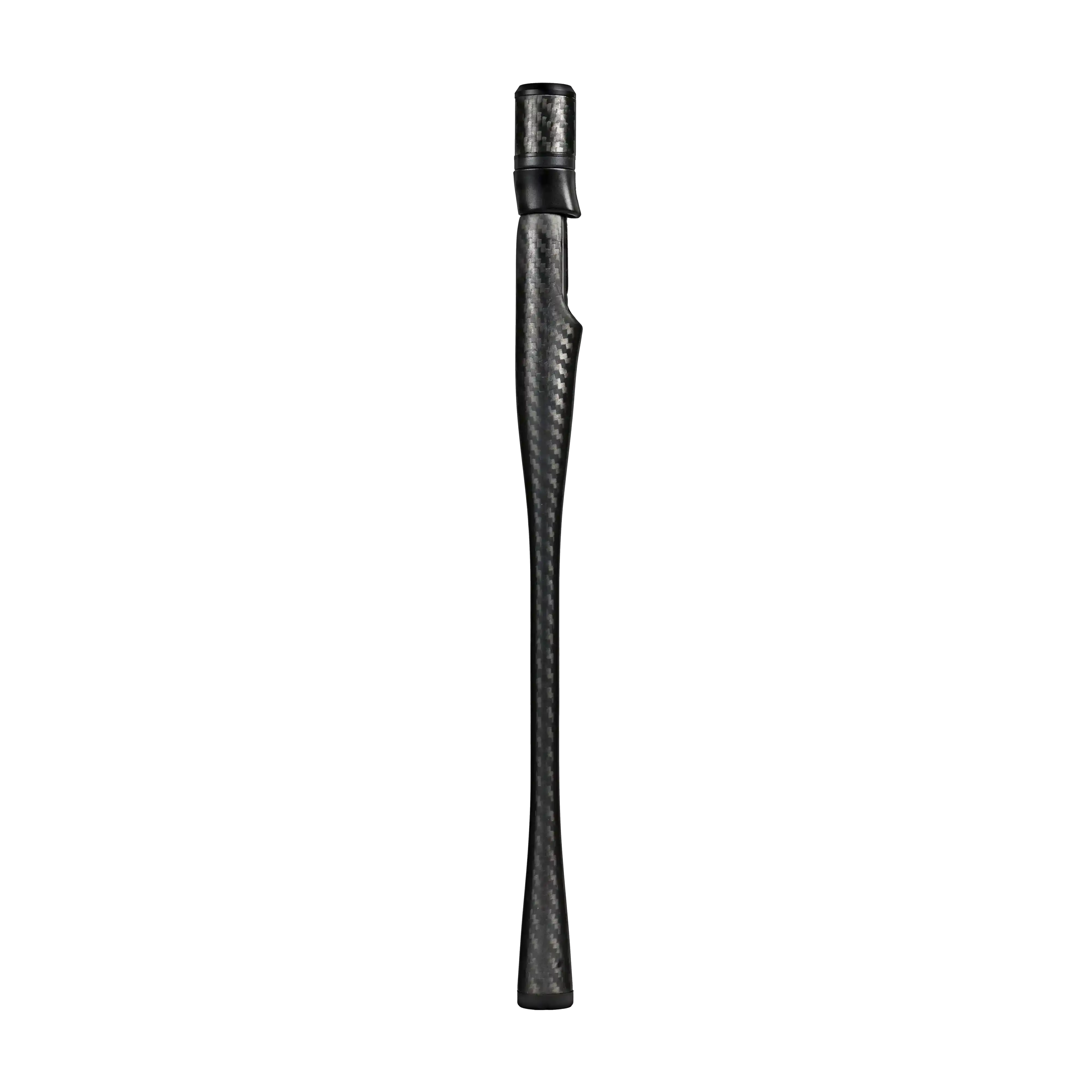
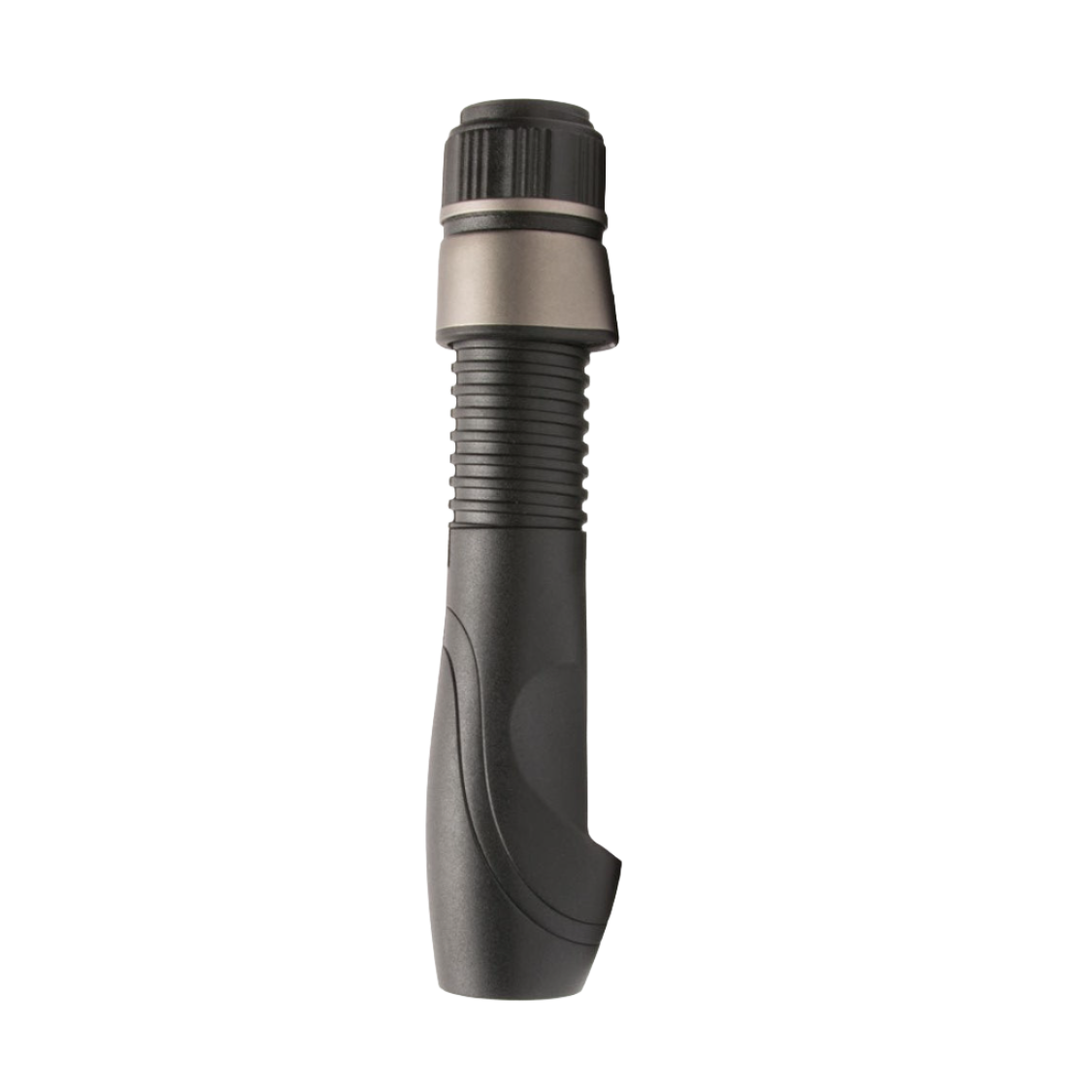
Handles do more than improve comfort — they have a major influence on how a finesse swimbait rod balances, responds, and performs during long casting and retrieve-focused sessions. A well-designed handle system helps reduce fatigue, improves overall rod balance, and maintains a clean connection to the blank for better sensitivity and bait control. Handle kits also simplify the build process by packaging compatible components together, making it easier to assemble a balanced setup without sourcing parts individually.
Split vs Full-Grip Handles
Choosing between a split grip and a full-length rear grip comes down to how you want the finished finesse swimbait rod to balance and feel during steady retrieves and repetitive casting. This choice affects overall weight distribution, comfort, and how responsive the rod feels when working smaller moving baits.
Split Grips
Split grips are popular in finesse swimbait builds because they reduce weight in the rear section of the rod while exposing more of the blank. This lighter layout can improve overall balance and increase direct feedback from the blank during subtle retrieves and light bites. Split grips also give builders more flexibility when fine-tuning reel seat positioning and overall rod balance.
Many builders prefer split grips for their lighter, more responsive feel, especially when building rods focused on sensitivity and controlled moving presentations. The reduced rear weight can also help the rod feel quicker and more efficient during repeated casts and steady retrieve applications.
Full-Length Grips
Full-length grips use a continuous rear handle section extending from the reel seat to the butt of the rod, creating a more traditional and stable grip profile. While they offer less flexibility for balance adjustments compared to split grips, they provide a very consistent feel in hand throughout the retrieve.
Although slightly heavier, full grips deliver excellent comfort during long fishing sessions and provide solid rear-hand support during repeated casting and steady swimbait presentations. Many anglers prefer them for their predictable handling and added stability during slower, controlled retrieves.
Handle Materials
Handle material affects comfort, overall weight, durability, and how efficiently feedback transfers from the blank into your hands. Each material offers different performance characteristics depending on fishing style and builder preference.
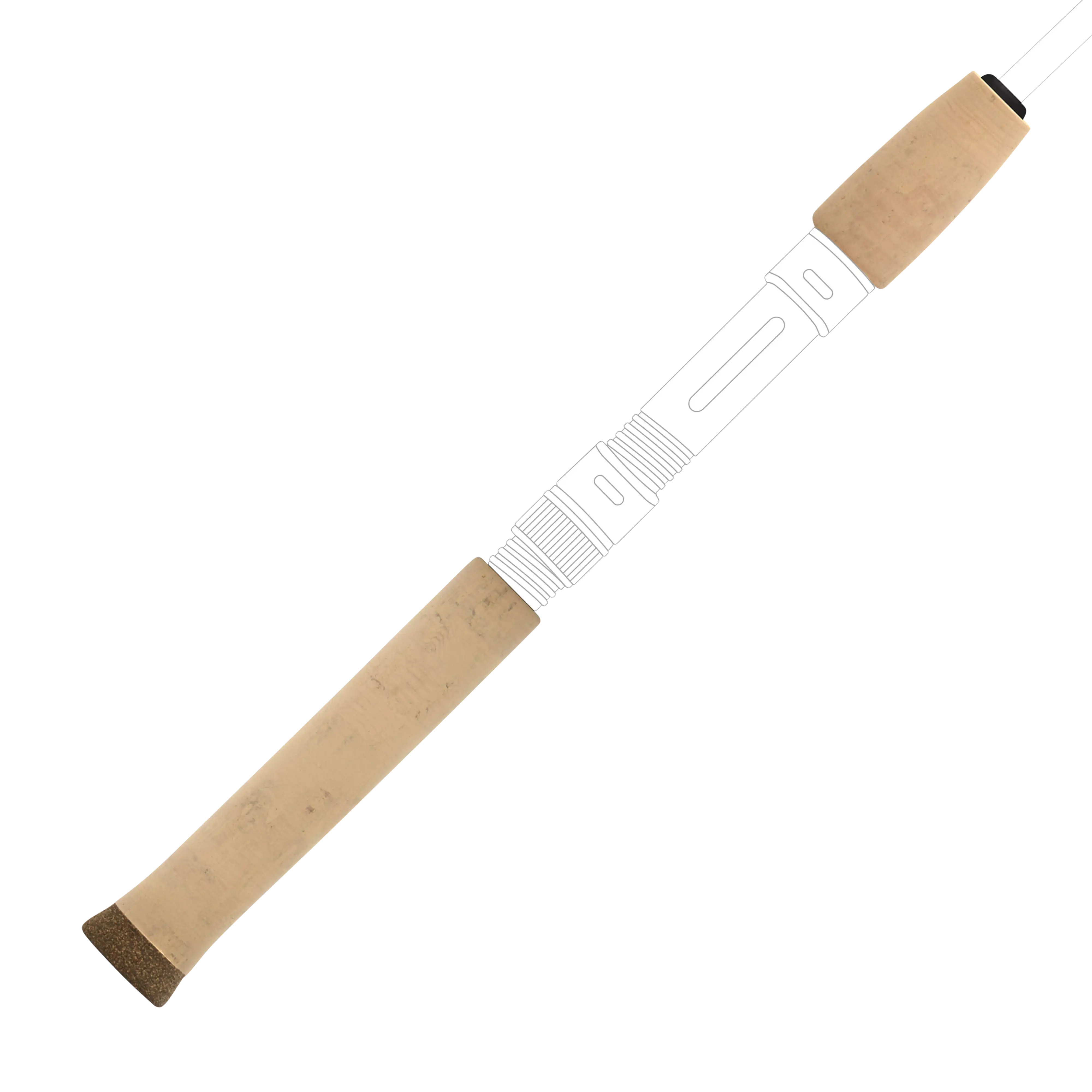
Cork
Cork is lightweight with a natural texture and strong vibration transfer, making it a popular option for sensitivity-focused finesse swimbait builds. It remains comfortable over long sessions but may show wear over time with heavy use.
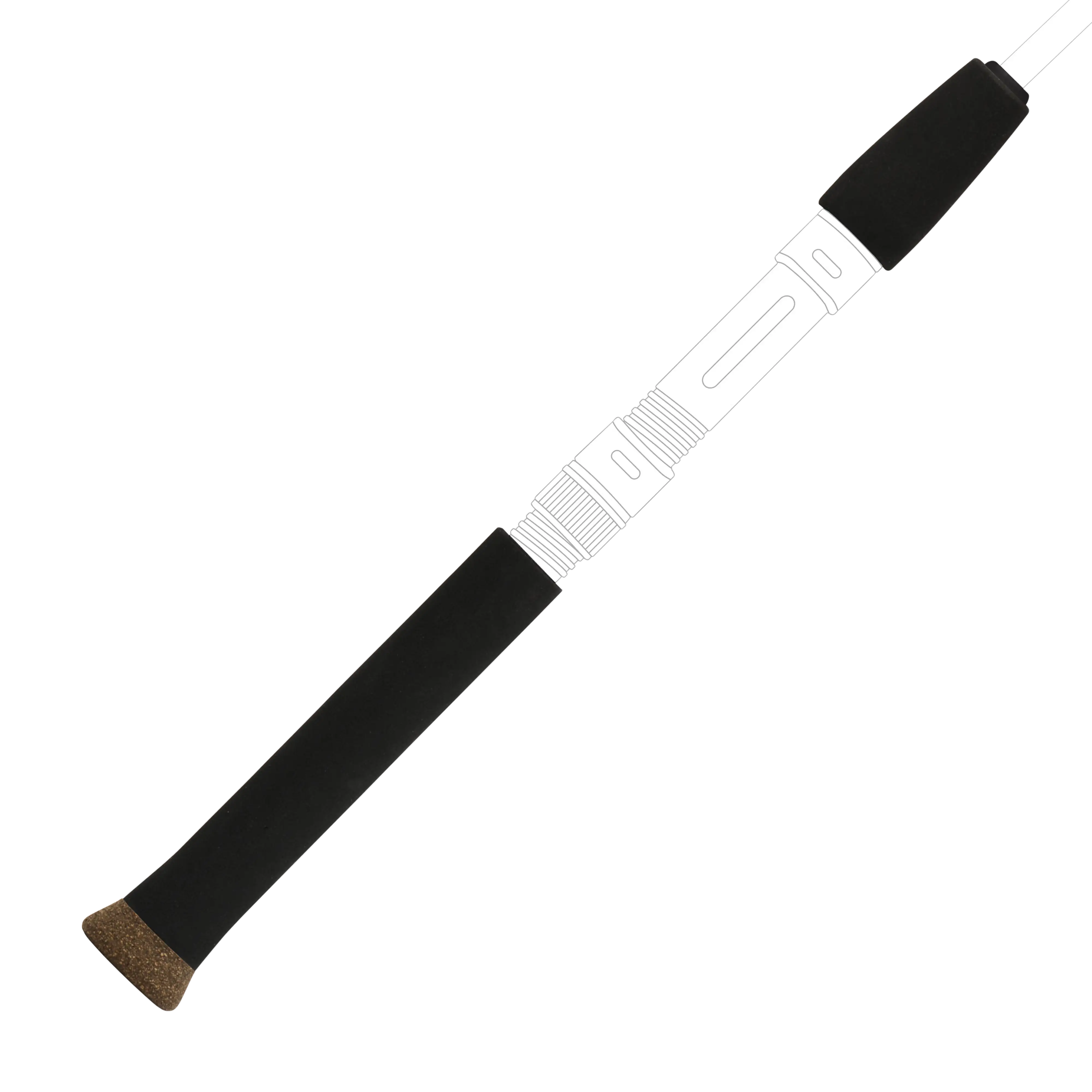
EVA Foam
EVA foam is durable, water-resistant, and highly resistant to abrasion while providing a softer, more cushioned feel. It performs especially well in wet conditions and maintains comfort during long days of casting and retrieving.
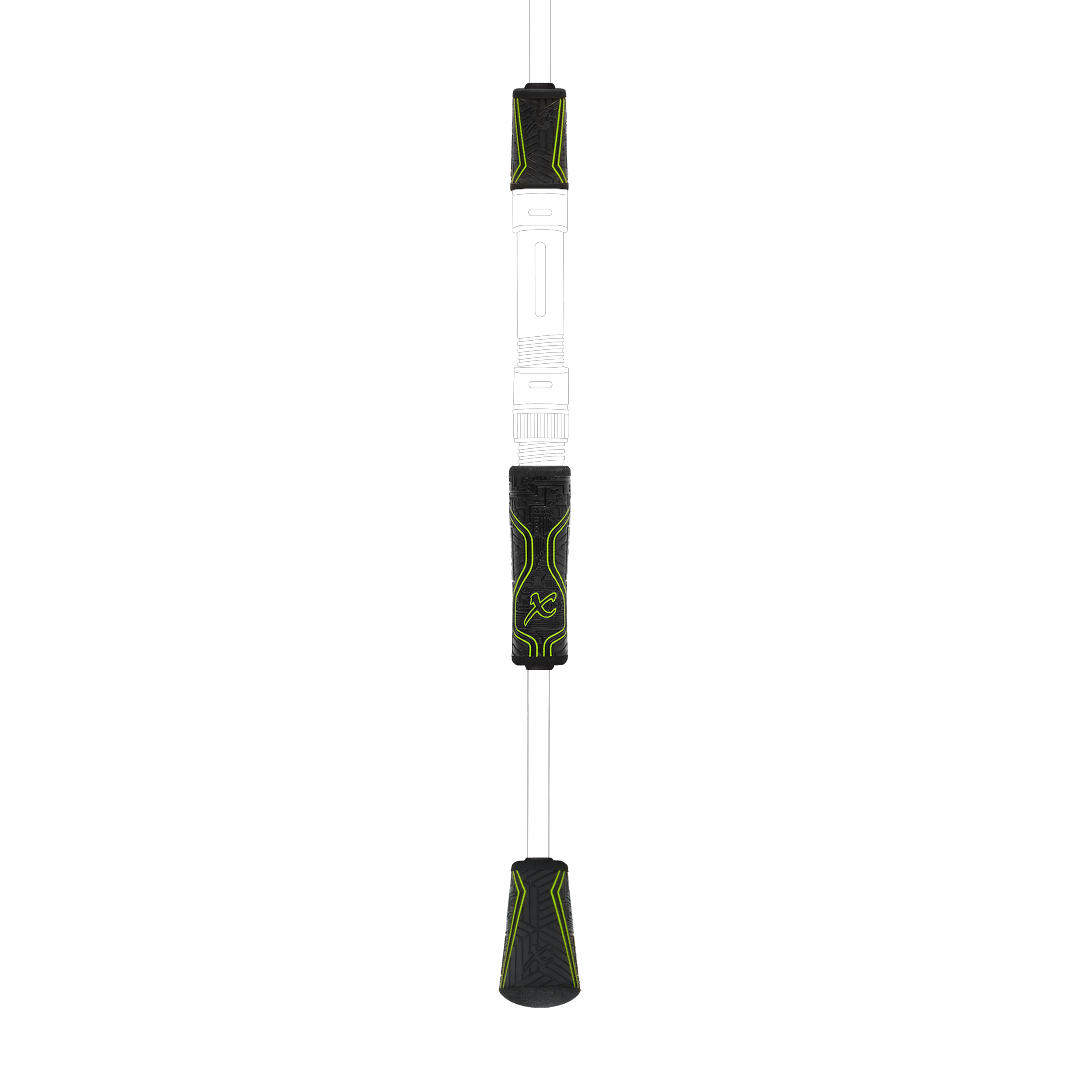
Carbon / Composite
Carbon and composite handles are extremely lightweight and rigid, helping reduce overall rod weight while increasing responsiveness. Their stiffness creates a more direct connection to the blank, improving feedback and sensitivity during subtle finesse swimbait presentations.
Choosing the right handle kit ultimately comes down to matching the blank, presentation style, and overall feel you want from the finished rod. Whether you prefer the lighter, adjustable feel of a split grip or the stability of a full-length handle, pairing it with the right material helps optimize balance, comfort, and control for finesse swimbait fishing.
Key Takeaways
- Handle design directly affects balance, comfort, and rod responsiveness
- Split grips reduce weight and expose more blank for improved sensitivity, while full grips provide added stability and consistent handling
- Proper handle and reel seat placement are important for maintaining overall rod balance
- Cork, EVA, and carbon each offer different advantages in sensitivity, durability, and weight
Finesse Swimbait Handle Kits
Handles do more than improve comfort — they have a major influence on how a finesse swimbait rod balances, responds, and performs during long casting and retrieve-focused sessions. A well-designed handle system helps reduce fatigue, improves overall rod balance, and maintains a clean connection to the blank for better sensitivity and bait control. Handle kits also simplify the build process by packaging compatible components together, making it easier to assemble a balanced setup without sourcing parts individually.
Split vs Full-Grip Handles
Choosing between a split grip and a full-length rear grip comes down to how you want the finished finesse swimbait rod to balance and feel during steady retrieves and repetitive casting. This choice affects overall weight distribution, comfort, and how responsive the rod feels when working smaller moving baits.
Split Grips
Split grips are popular in finesse swimbait builds because they reduce weight in the rear section of the rod while exposing more of the blank. This lighter layout can improve overall balance and increase direct feedback from the blank during subtle retrieves and light bites. Split grips also give builders more flexibility when fine-tuning reel seat positioning and overall rod balance.
Many builders prefer split grips for their lighter, more responsive feel, especially when building rods focused on sensitivity and controlled moving presentations. The reduced rear weight can also help the rod feel quicker and more efficient during repeated casts and steady retrieve applications.
Full-Length Grips
Full-length grips use a continuous rear handle section extending from the reel seat to the butt of the rod, creating a more traditional and stable grip profile. While they offer less flexibility for balance adjustments compared to split grips, they provide a very consistent feel in hand throughout the retrieve.
Although slightly heavier, full grips deliver excellent comfort during long fishing sessions and provide solid rear-hand support during repeated casting and steady swimbait presentations. Many anglers prefer them for their predictable handling and added stability during slower, controlled retrieves.
Handle Materials
Handle material affects comfort, overall weight, durability, and how efficiently feedback transfers from the blank into your hands. Each material offers different performance characteristics depending on fishing style and builder preference.
Cork
Cork is lightweight with a natural texture and strong vibration transfer, making it a popular option for sensitivity-focused finesse swimbait builds. It remains comfortable over long sessions but may show wear over time with heavy use.
EVA Foam
EVA foam is durable, water-resistant, and highly resistant to abrasion while providing a softer, more cushioned feel. It performs especially well in wet conditions and maintains comfort during long days of casting and retrieving.
Carbon / Composite
Carbon and composite handles are extremely lightweight and rigid, helping reduce overall rod weight while increasing responsiveness. Their stiffness creates a more direct connection to the blank, improving feedback and sensitivity during subtle finesse swimbait presentations.
Choosing the right handle kit ultimately comes down to matching the blank, presentation style, and overall feel you want from the finished rod. Whether you prefer the lighter, adjustable feel of a split grip or the stability of a full-length handle, pairing it with the right material helps optimize balance, comfort, and control for finesse swimbait fishing.
Key Takeaways
- Handle design directly affects balance, comfort, and rod responsiveness
- Split grips reduce weight and expose more blank for improved sensitivity, while full grips provide added stability and consistent handling
- Proper handle and reel seat placement are important for maintaining overall rod balance
- Cork, EVA, and carbon each offer different advantages in sensitivity, durability, and weight
Finesse Swimbait Handle Kits



Finesse Swimbait Reel Seats
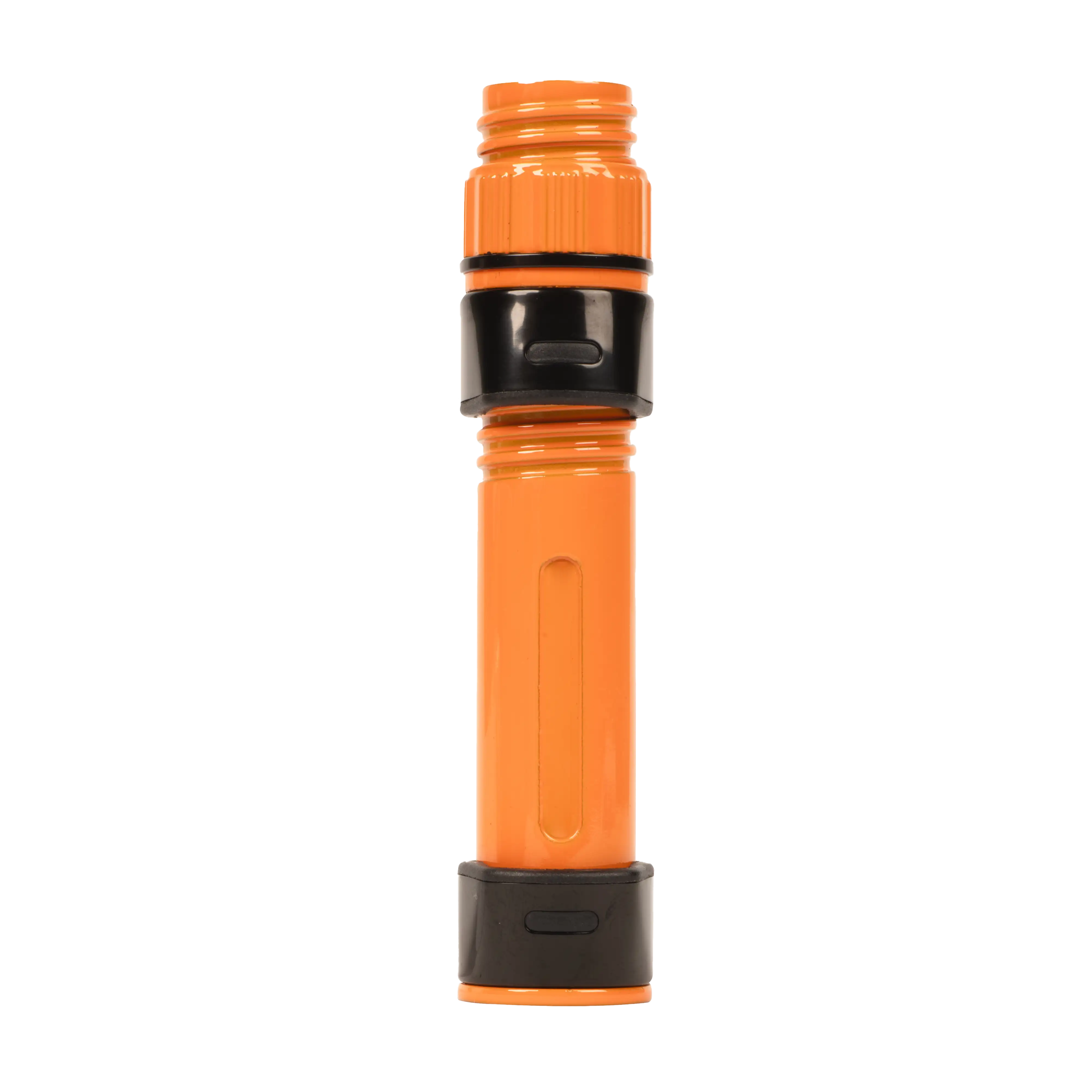
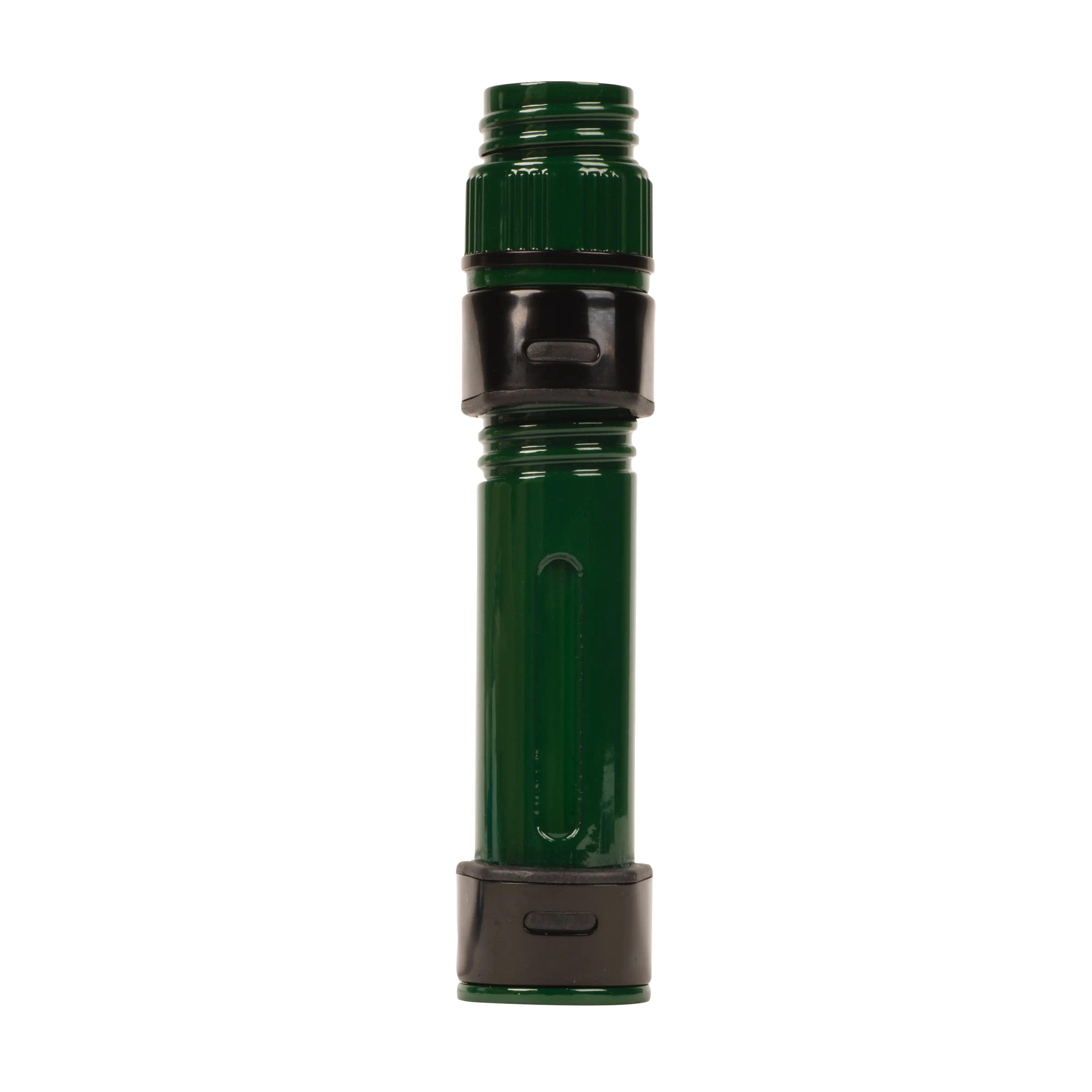
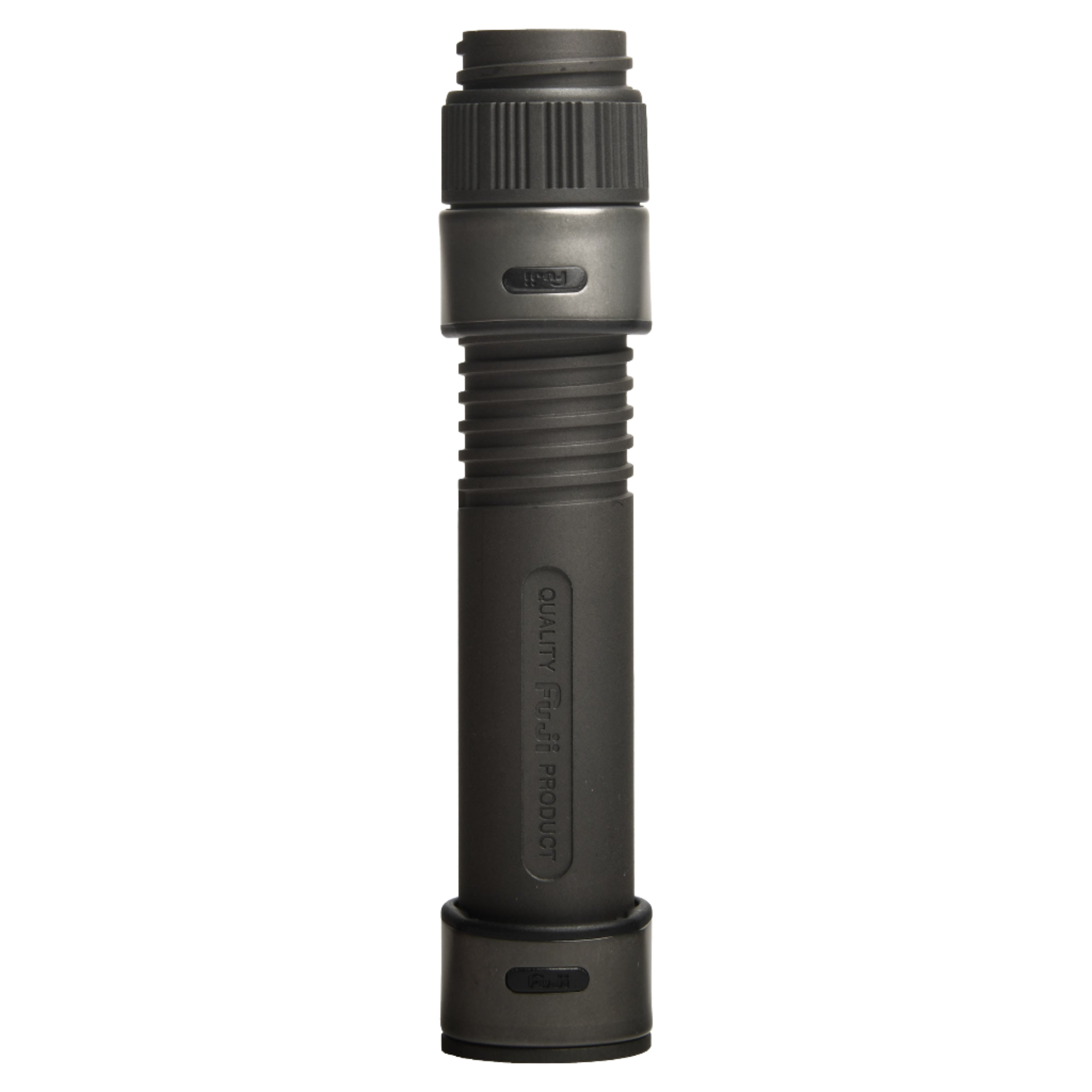
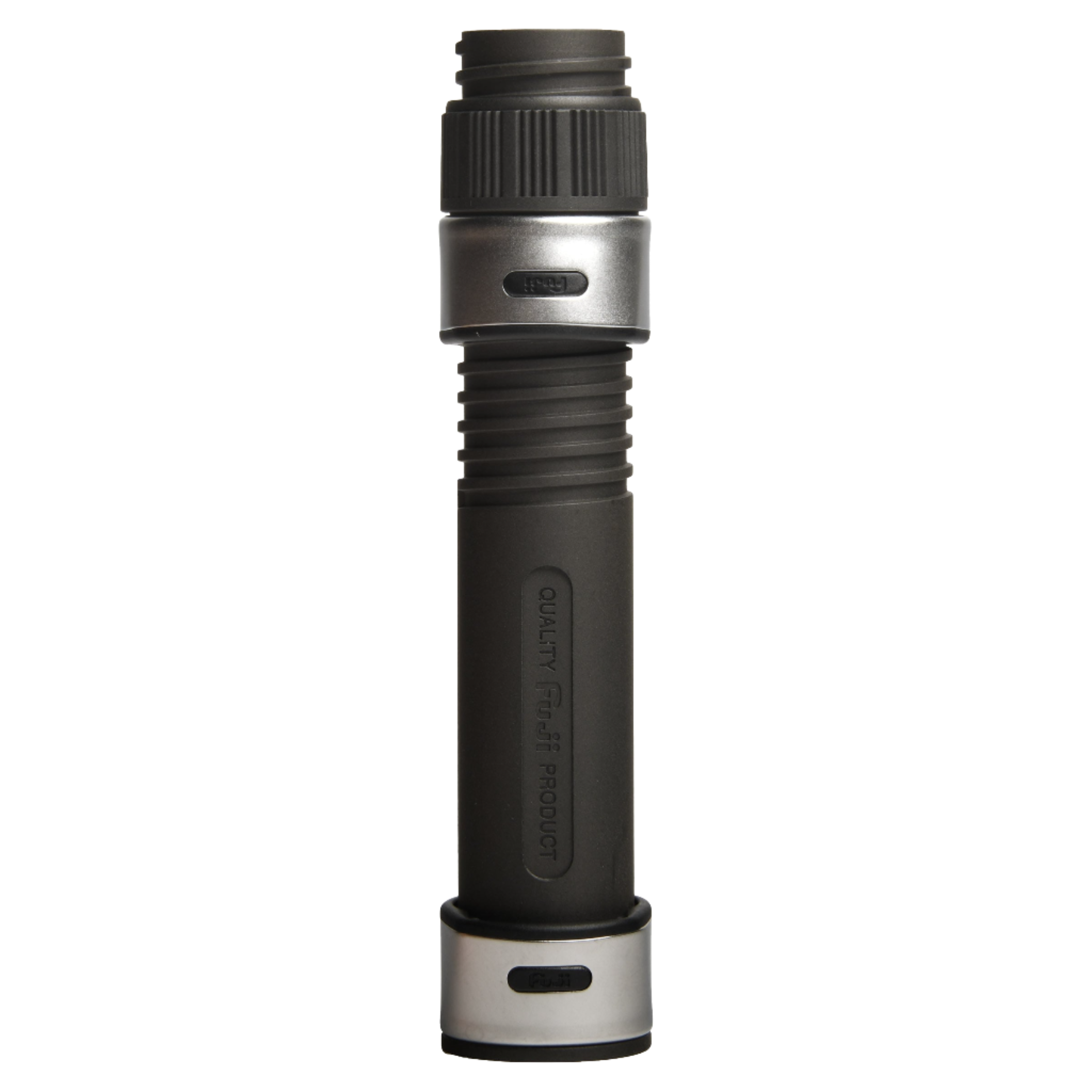
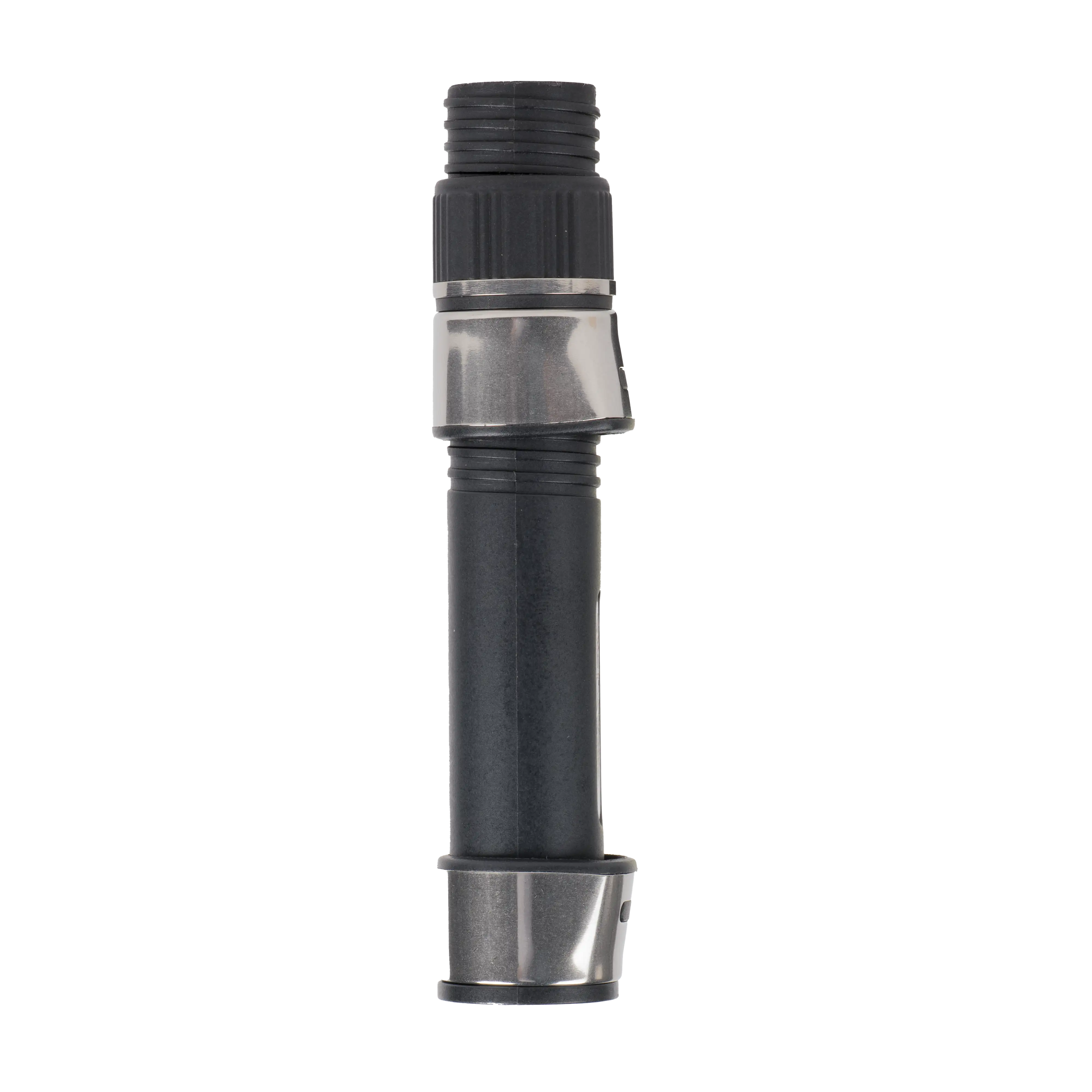
Some handle kits include a reel seat, while others require it to be selected separately. In a custom finesse swimbait rod build, the reel seat is a key structural and performance component that anchors the spinning reel to the blank. Beyond simply holding the reel in place, it directly affects balance, comfort, and how efficiently the rod transmits subtle feedback during long casts and steady retrieves. Because finesse swimbait fishing relies on controlled movement and detecting light pressure changes, the reel seat must provide a secure fit, clean alignment, and efficient energy transfer through the handle system.
When choosing a reel seat, factors like fit, material, placement, and handle compatibility all influence the finished rod’s performance and feel.
Reel Compatibility & Seat Types
Finesse swimbait rods are built around spinning reels, so the reel seat must match the reel foot precisely to ensure a secure, stable connection. Proper alignment supports smooth line flow, consistent hand placement, and reliable performance during long, repetitive casting and retrieve sequences where control and sensitivity matter most.
Several design options influence balance, weight, and overall feel.
Split vs. Full Reel Seats
Split reel seats use a two-piece design that reduces overall weight and creates a more modern, performance-oriented build. By removing material between contact points, they help reduce handle weight while maintaining a secure reel mount. These seats pair well with both split and full-grip handle configurations and often include insert options to fine-tune fit, balance, and aesthetics.
Full-length (barrel) reel seats use a single continuous body that provides a solid, uninterrupted mounting surface for the reel. This design emphasizes stability and a more traditional feel in hand. While slightly heavier than split options, full seats are valued for their consistent support and solid connection during slow, controlled finesse swimbait presentations.
Materials
Material selection influences weight, sensitivity, and feedback transmission—important factors in finesse swimbait fishing where subtle changes in bait movement and pressure need to be detected through the blank.
Graphite
Graphite reel seats are the most common choice for finesse swimbait builds due to their lightweight construction, durability, and corrosion resistance. They offer a strong balance of sensitivity and structure without adding unnecessary weight to the handle section, helping maintain overall rod responsiveness and control.
Composite & Carbon Fiber
Composite and carbon fiber reel seats are more performance-focused options, offering increased rigidity, reduced weight, and improved vibration transfer through the handle. These materials are often used in higher-end builds where maximum sensitivity and refined feedback are priorities, especially in clear water or heavily pressured conditions.
A properly selected reel seat ensures the spinning reel stays securely aligned with the blank, maintains consistent balance through the handle system, and contributes directly to the comfort, control, and performance of the finished finesse swimbait rod.
Key Takeaways
- Some handle kits include a reel seat; others require a separate purchase
- Split reel seats reduce weight and support a more performance-focused build
- Full-length reel seats provide stability and a more traditional, solid feel
- Graphite is the most common all-around material for balancing weight, strength, and durability
Finesse Swimbait Reel Seats
Some handle kits include a reel seat, while others require it to be selected separately. In a custom finesse swimbait rod build, the reel seat is a key structural and performance component that anchors the spinning reel to the blank. Beyond simply holding the reel in place, it directly affects balance, comfort, and how efficiently the rod transmits subtle feedback during long casts and steady retrieves. Because finesse swimbait fishing relies on controlled movement and detecting light pressure changes, the reel seat must provide a secure fit, clean alignment, and efficient energy transfer through the handle system.
When choosing a reel seat, factors like fit, material, placement, and handle compatibility all influence the finished rod’s performance and feel.
Reel Compatibility & Seat Types
Finesse swimbait rods are built around spinning reels, so the reel seat must match the reel foot precisely to ensure a secure, stable connection. Proper alignment supports smooth line flow, consistent hand placement, and reliable performance during long, repetitive casting and retrieve sequences where control and sensitivity matter most.
Several design options influence balance, weight, and overall feel.
Split vs. Full Reel Seats
Split reel seats use a two-piece design that reduces overall weight and creates a more modern, performance-oriented build. By removing material between contact points, they help reduce handle weight while maintaining a secure reel mount. These seats pair well with both split and full-grip handle configurations and often include insert options to fine-tune fit, balance, and aesthetics.
Full-length (barrel) reel seats use a single continuous body that provides a solid, uninterrupted mounting surface for the reel. This design emphasizes stability and a more traditional feel in hand. While slightly heavier than split options, full seats are valued for their consistent support and solid connection during slow, controlled finesse swimbait presentations.
Materials
Material selection influences weight, sensitivity, and feedback transmission—important factors in finesse swimbait fishing where subtle changes in bait movement and pressure need to be detected through the blank.
Graphite
Graphite reel seats are the most common choice for finesse swimbait builds due to their lightweight construction, durability, and corrosion resistance. They offer a strong balance of sensitivity and structure without adding unnecessary weight to the handle section, helping maintain overall rod responsiveness and control.
Composite & Carbon Fiber
Composite and carbon fiber reel seats are more performance-focused options, offering increased rigidity, reduced weight, and improved vibration transfer through the handle. These materials are often used in higher-end builds where maximum sensitivity and refined feedback are priorities, especially in clear water or heavily pressured conditions.
A properly selected reel seat ensures the spinning reel stays securely aligned with the blank, maintains consistent balance through the handle system, and contributes directly to the comfort, control, and performance of the finished finesse swimbait rod.
Key Takeaways
- Some handle kits include a reel seat; others require a separate purchase
- Split reel seats reduce weight and support a more performance-focused build
- Full-length reel seats provide stability and a more traditional, solid feel
- Graphite is the most common all-around material for balancing weight, strength, and durability
Finesse Swimbait Reel Seats




Choose Your Supply Kits
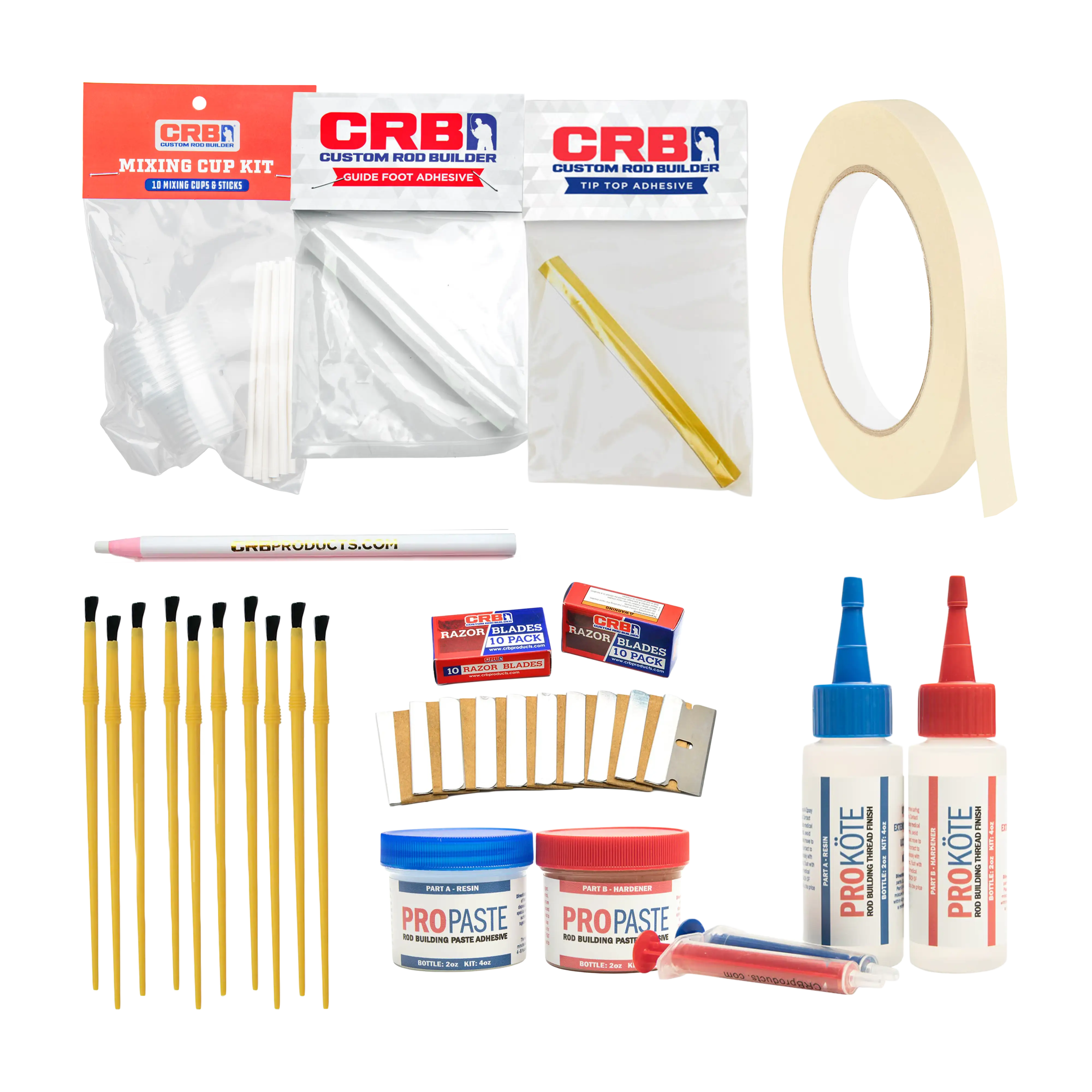
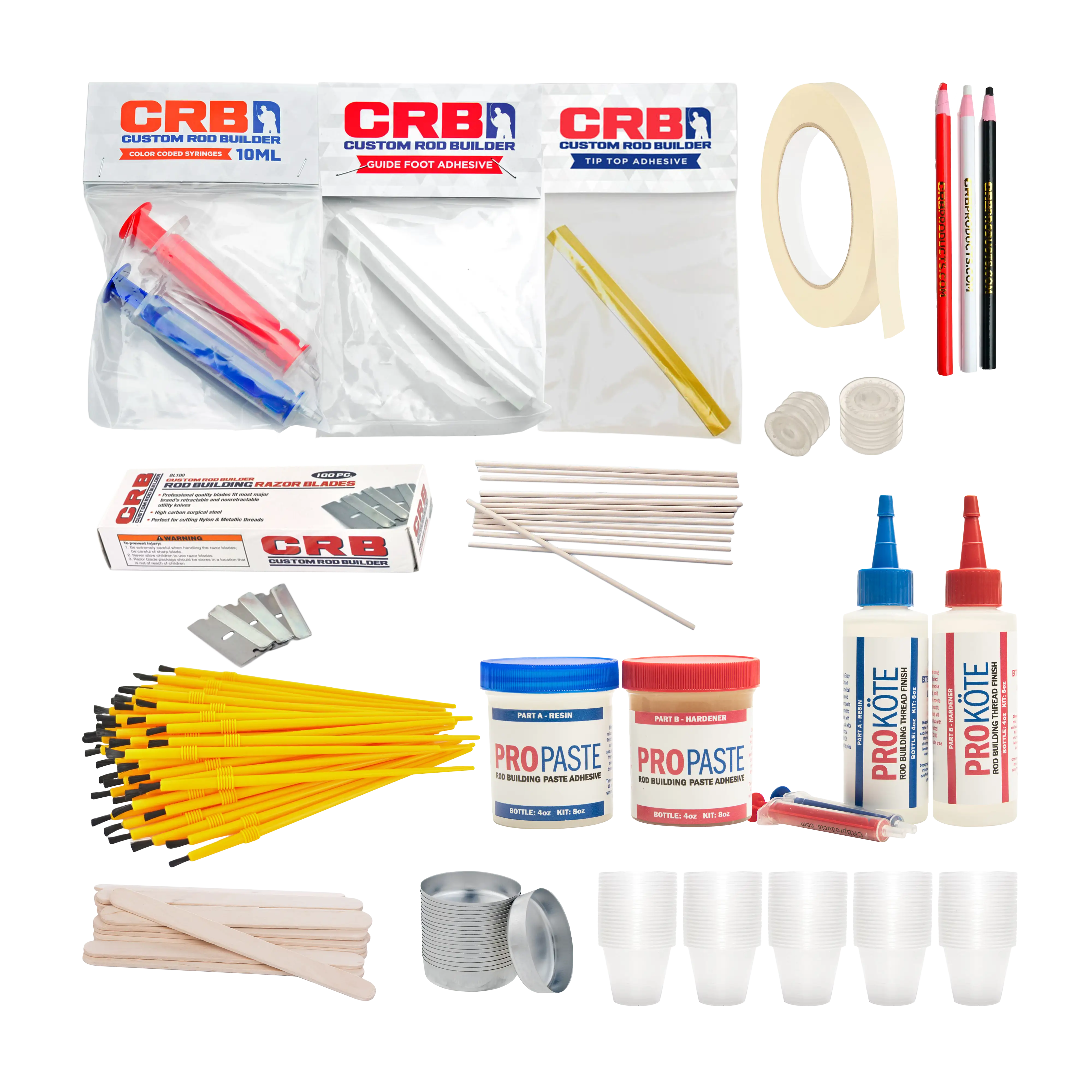
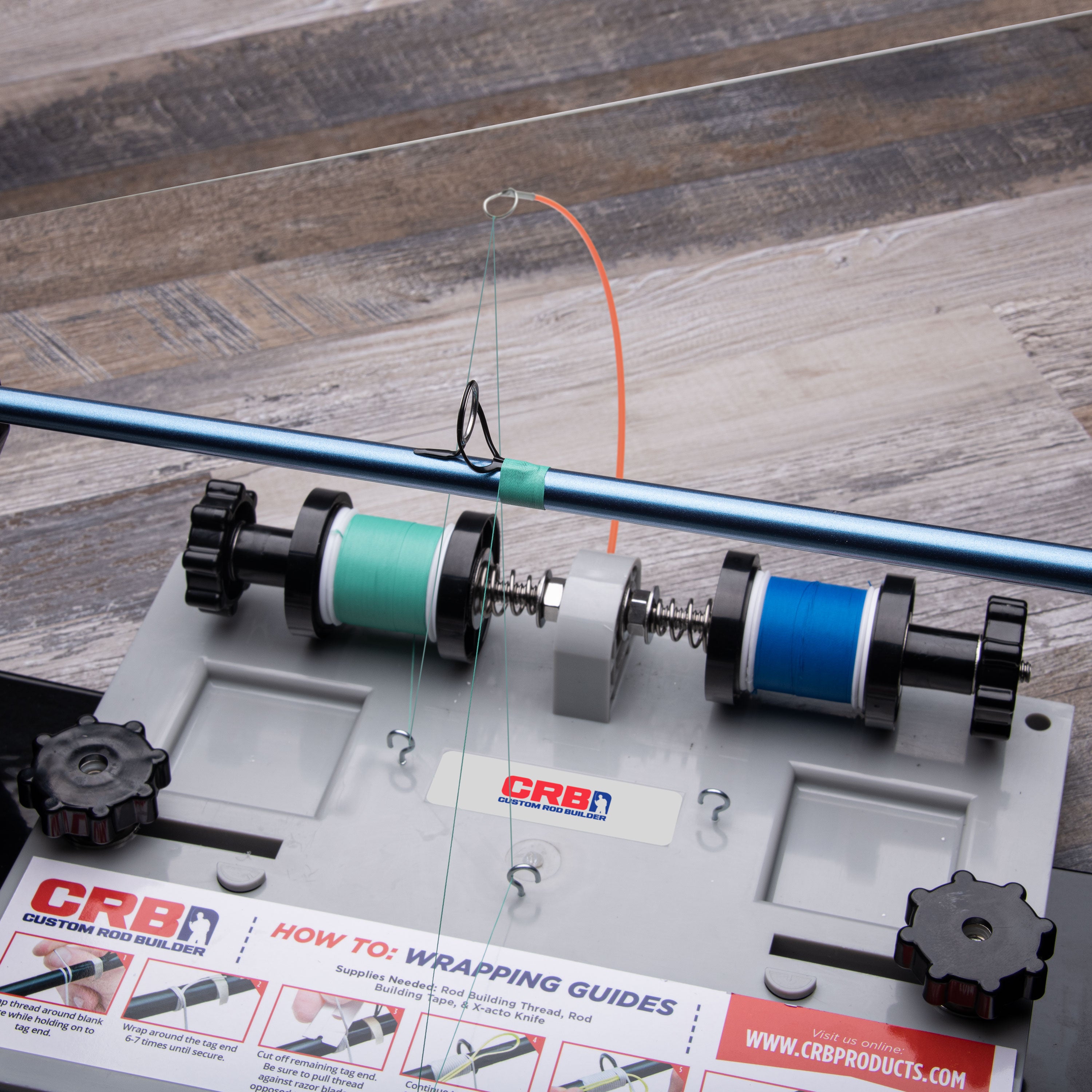
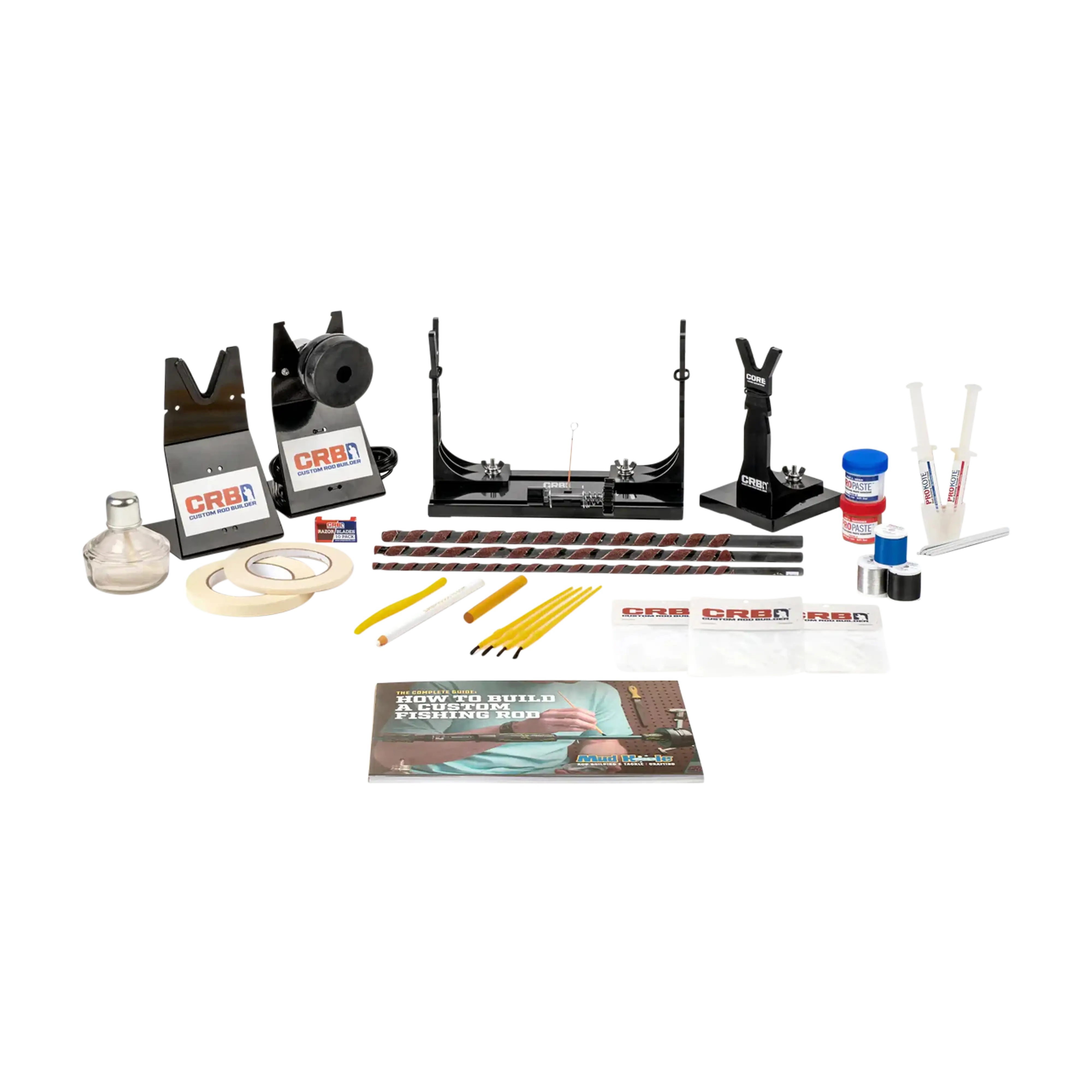
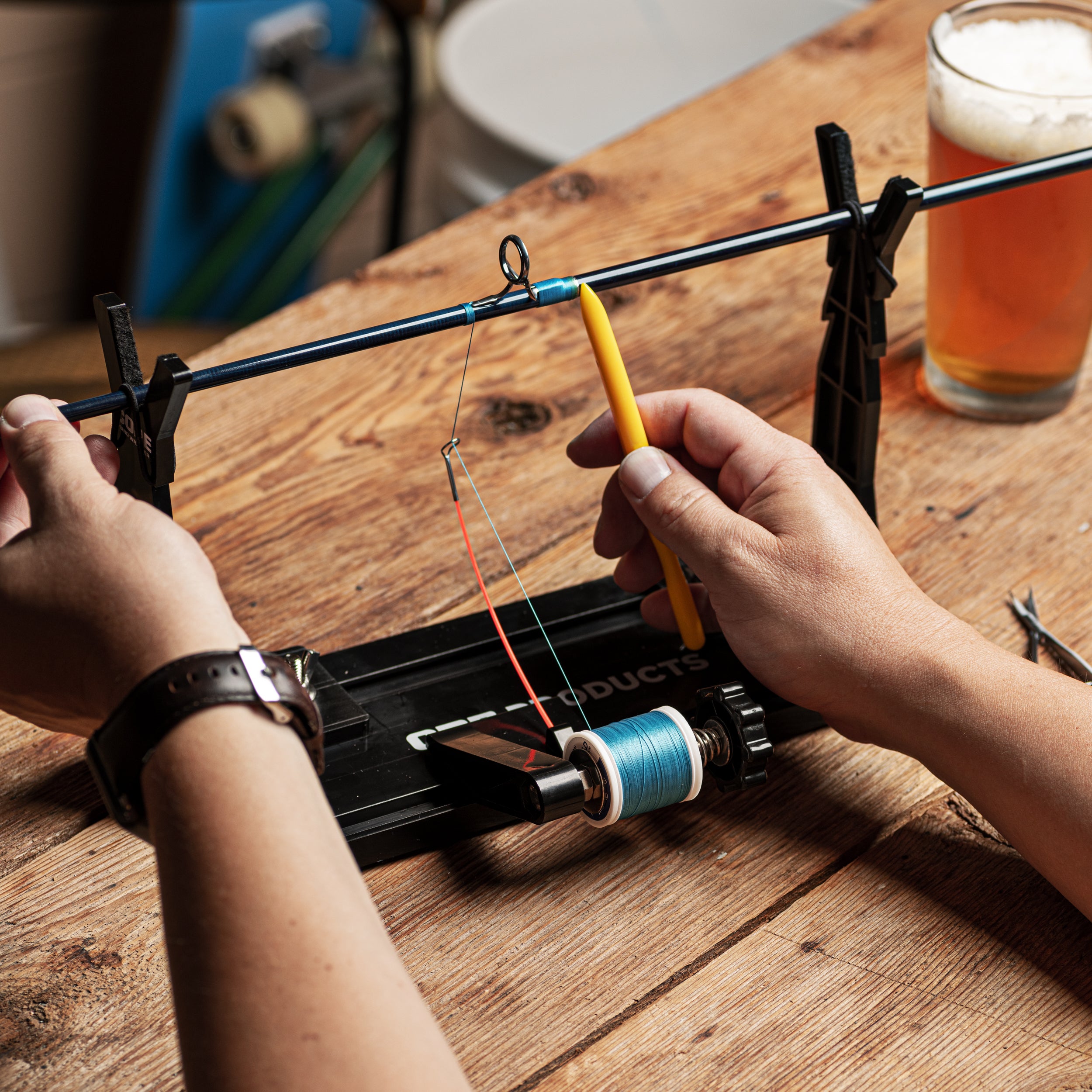
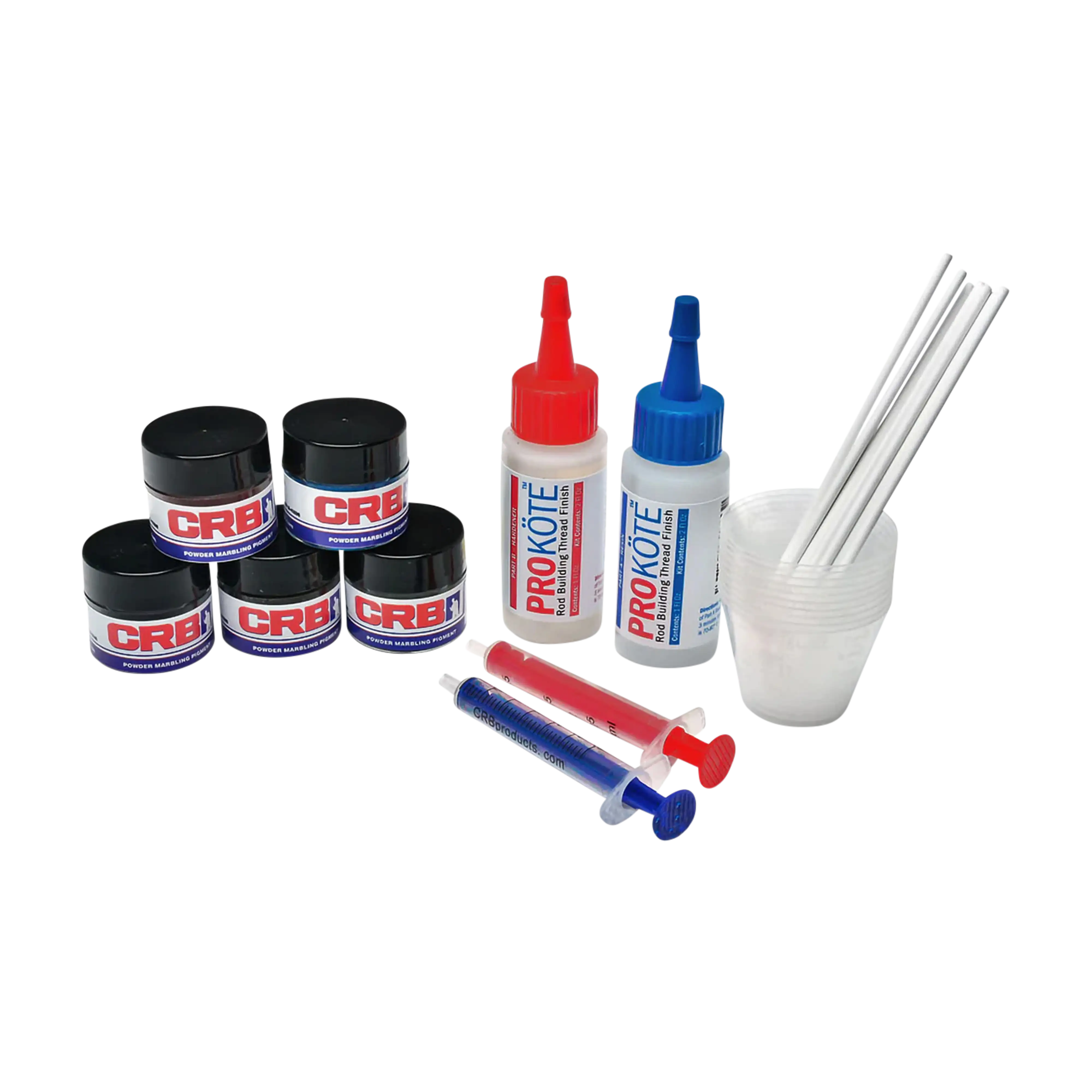
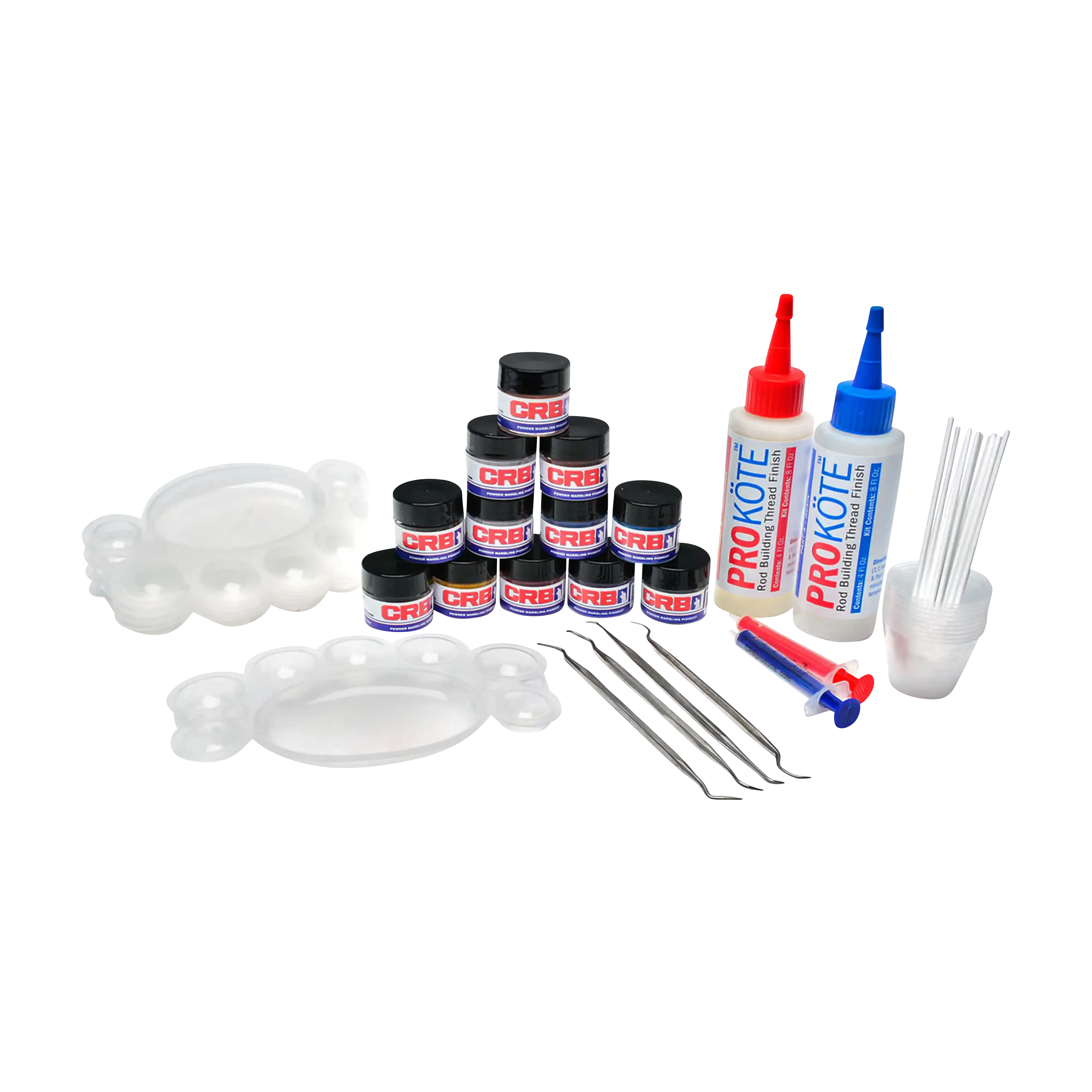
Everything you need to build a high-performance finesse swimbait rod is included in a rod building supply kit. These kits typically bundle essential tools such as rod dryers, thread, hand wrappers, epoxy, brushes, reamers, and other core supplies, allowing you to focus on the build itself rather than sourcing individual components. Using a kit helps streamline the process, improve build consistency, and support the level of precision required for a finesse swimbait rod designed around smooth casting, controlled retrieves, and subtle bite detection. It’s a practical solution for both new and experienced rod builders.
For Beginners
All-in-one supply kits give new builders everything needed to complete a full rod build without having to track down tools and materials separately. This makes it easier to focus on core skills like guide wrapping, tip-top installation, handle assembly, and building a balanced spinning setup suited for light-line swimbait presentations.
For Experienced Builders
For experienced rod builders, supply kits are a convenient way to replenish consumables like epoxy, thread, and brushes. Even with an established toolset, kits help maintain efficiency, reduce downtime, and ensure the right materials are always available for repeatable, high-quality finesse swimbait builds.
Key Takeaways
- Supply kits include the essential tools and materials needed for finesse swimbait rod builds
- Beginners benefit from simplified, all-in-one setups that support proper building technique
- Experienced builders can restock consumables and maintain an efficient workflow
- Using the right tools helps ensure consistent assembly and professional-quality results
Choose Your Supply Kits
Everything you need to build a high-performance finesse swimbait rod is included in a rod building supply kit. These kits typically bundle essential tools such as rod dryers, thread, hand wrappers, epoxy, brushes, reamers, and other core supplies, allowing you to focus on the build itself rather than sourcing individual components. Using a kit helps streamline the process, improve build consistency, and support the level of precision required for a finesse swimbait rod designed around smooth casting, controlled retrieves, and subtle bite detection. It’s a practical solution for both new and experienced rod builders.
For Beginners
All-in-one supply kits give new builders everything needed to complete a full rod build without having to track down tools and materials separately. This makes it easier to focus on core skills like guide wrapping, tip-top installation, handle assembly, and building a balanced spinning setup suited for light-line swimbait presentations.
For Experienced Builders
For experienced rod builders, supply kits are a convenient way to replenish consumables like epoxy, thread, and brushes. Even with an established toolset, kits help maintain efficiency, reduce downtime, and ensure the right materials are always available for repeatable, high-quality finesse swimbait builds.
Key Takeaways
- Supply kits include the essential tools and materials needed for finesse swimbait rod builds
- Beginners benefit from simplified, all-in-one setups that support proper building technique
- Experienced builders can restock consumables and maintain an efficient workflow
- Using the right tools helps ensure consistent assembly and professional-quality results
Supply Kits

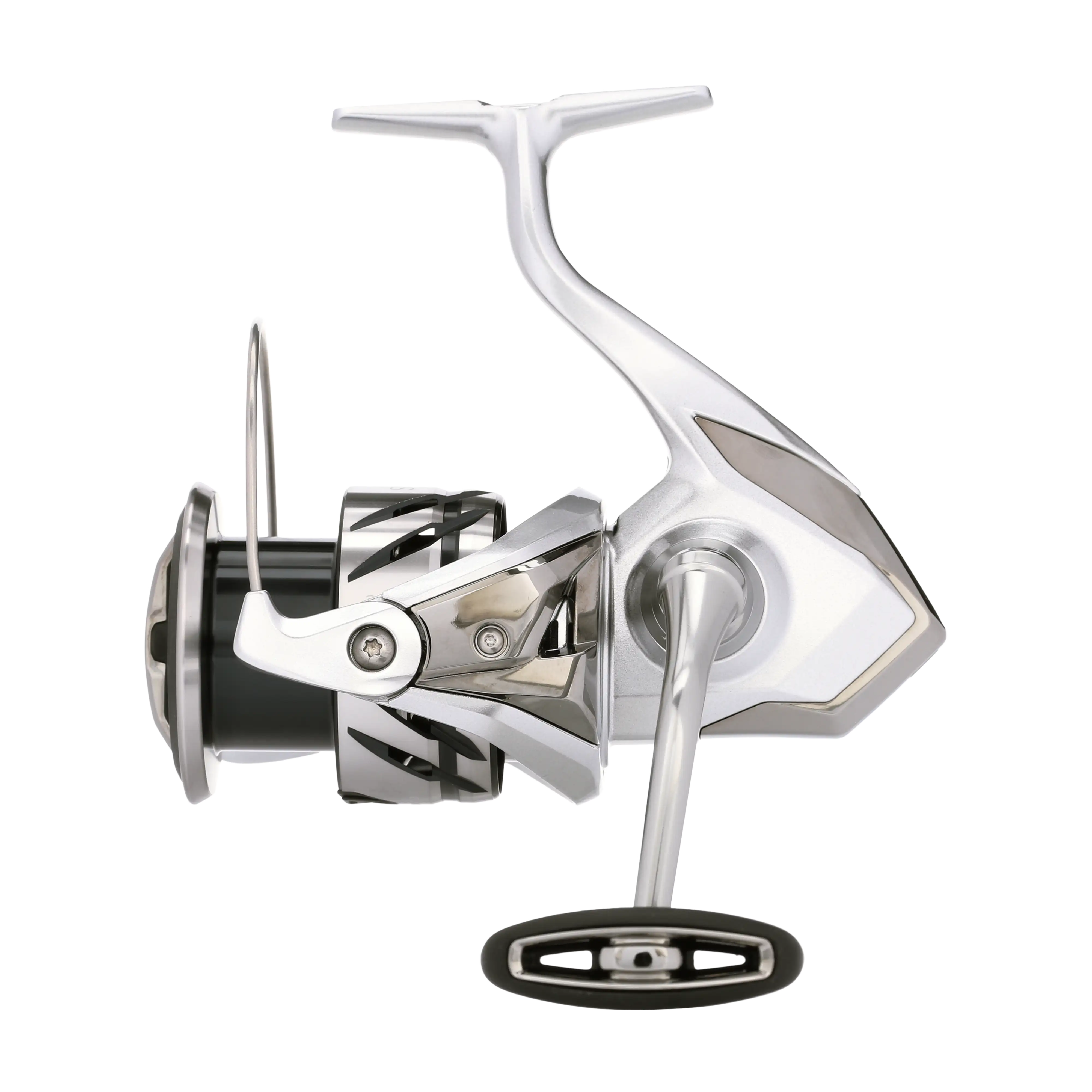
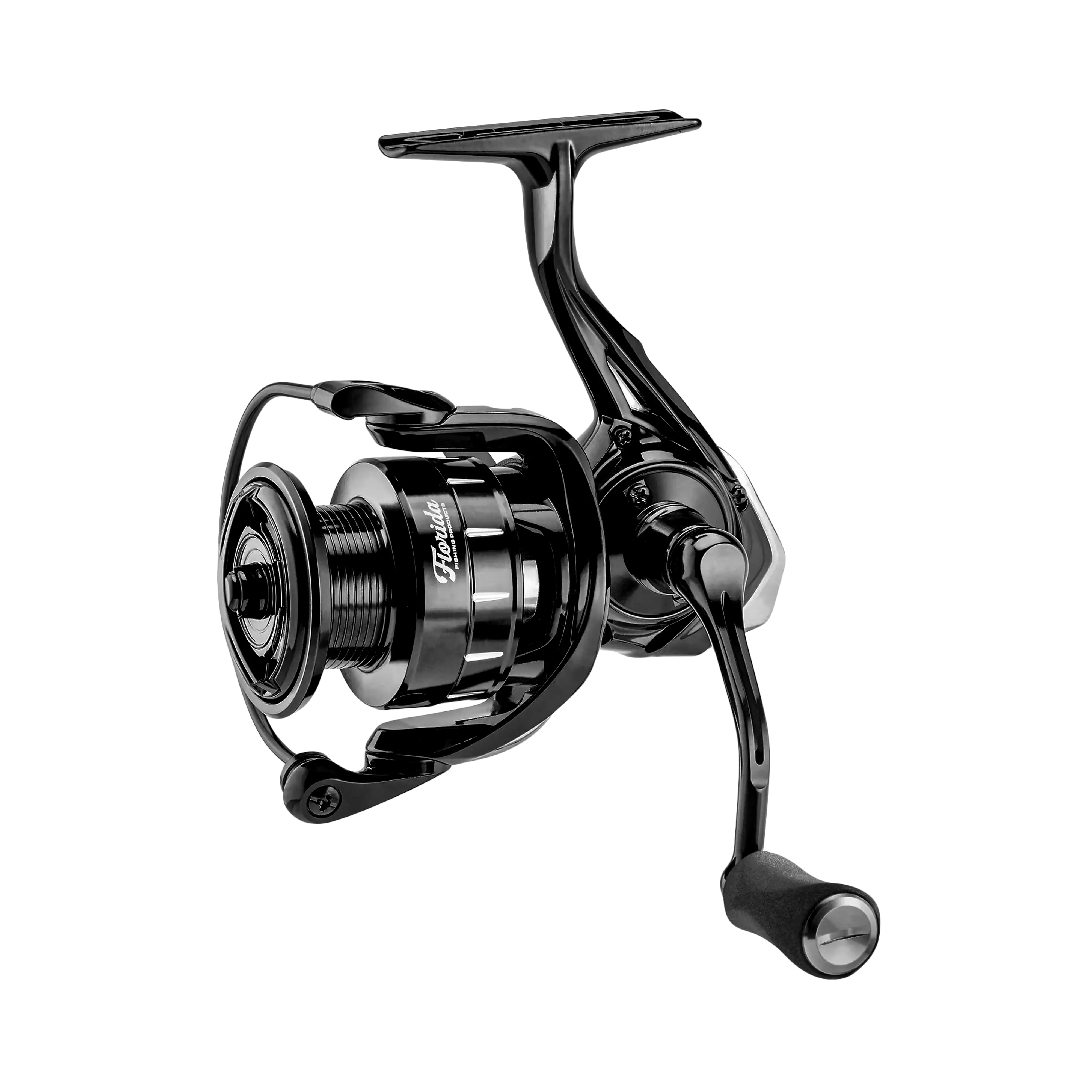
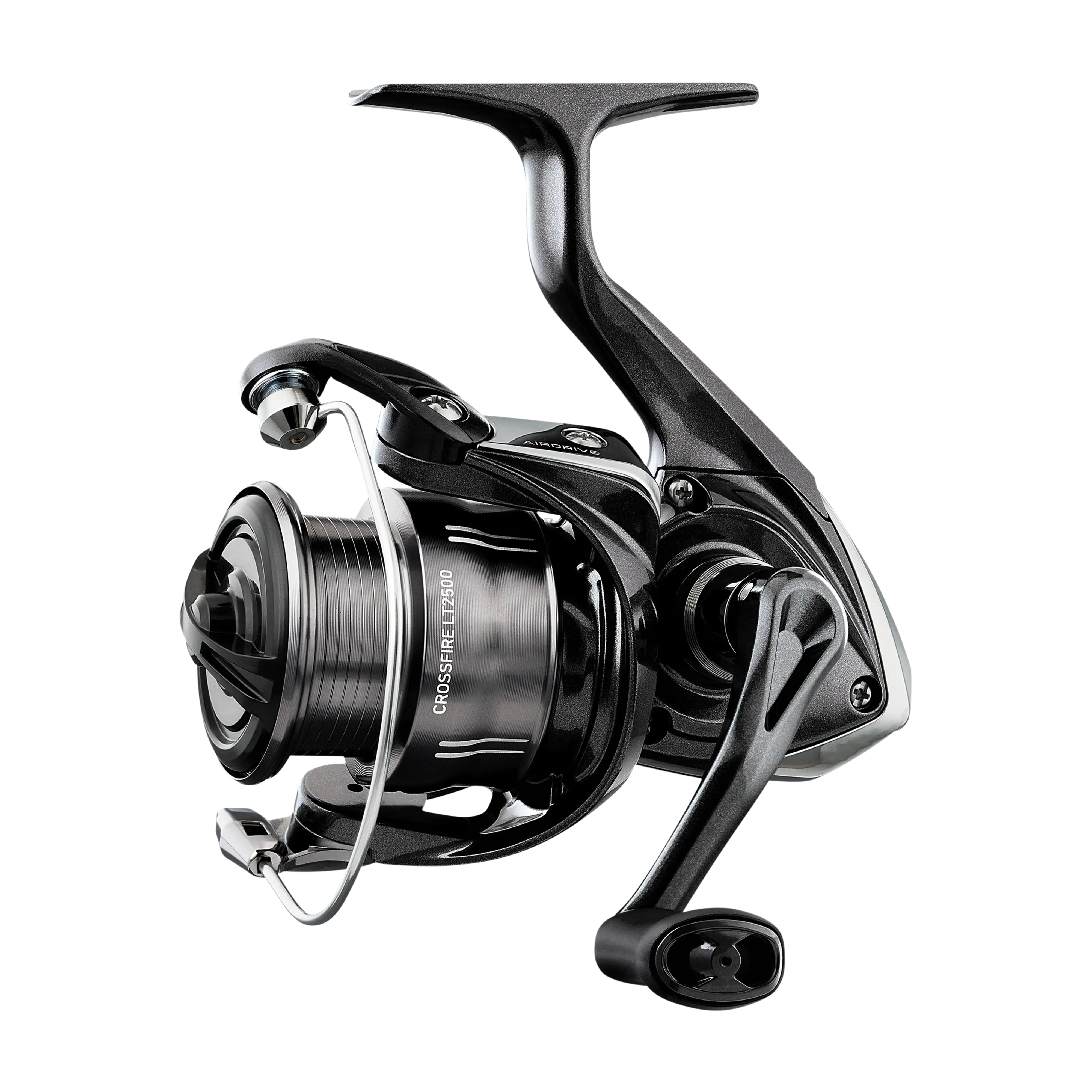
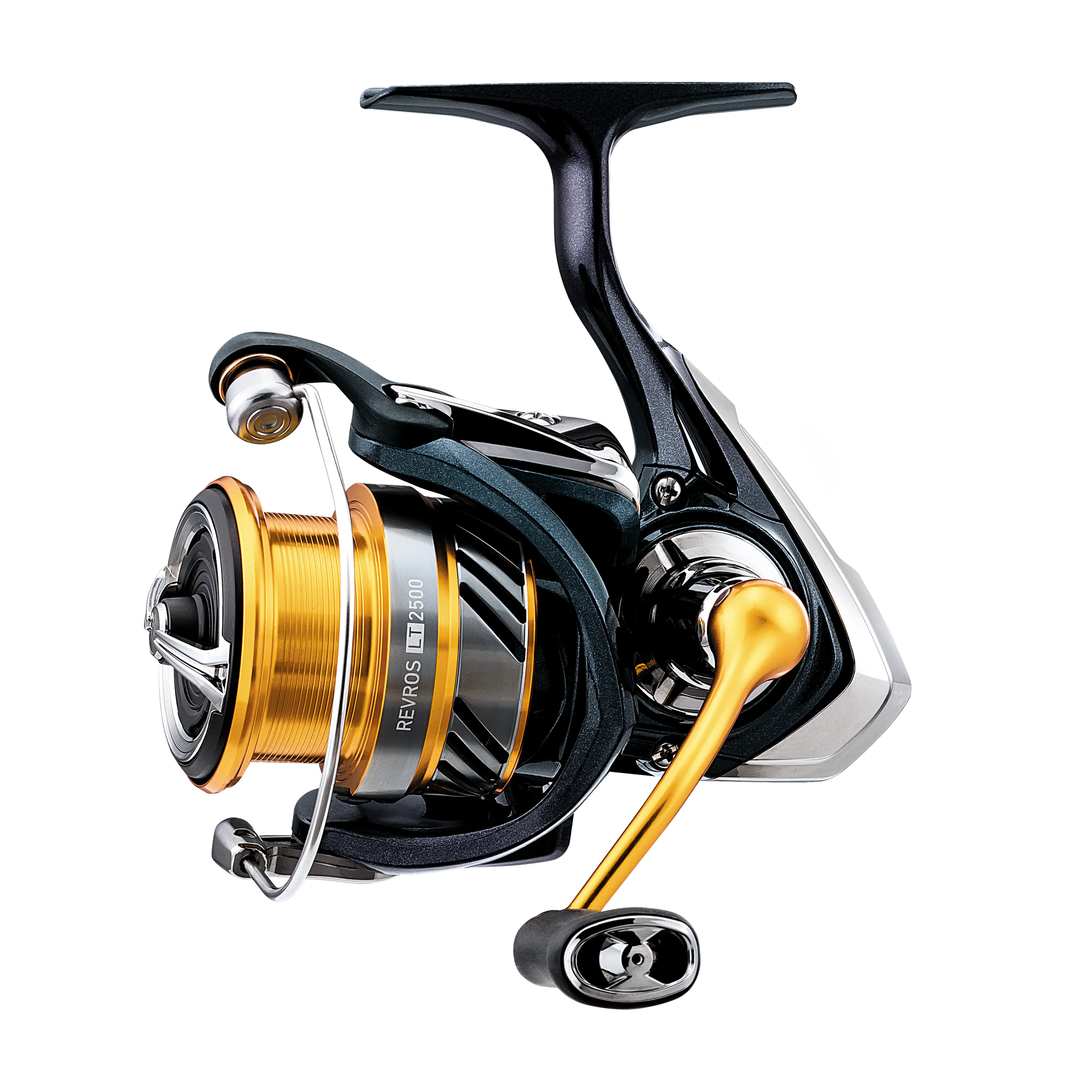
Best Reels for Finesse Swimbait Fishing
Now let’s find a reel for your custom rod.
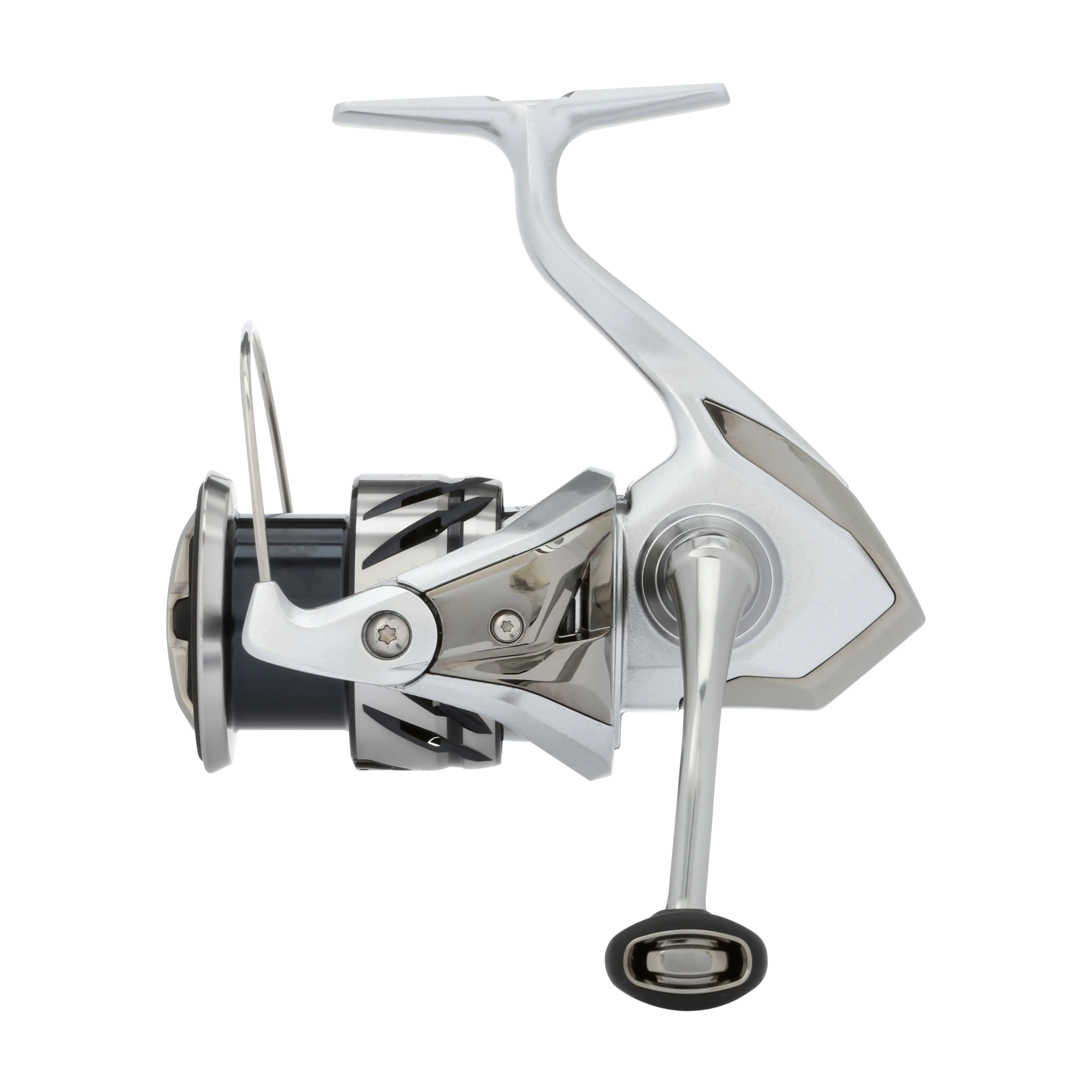
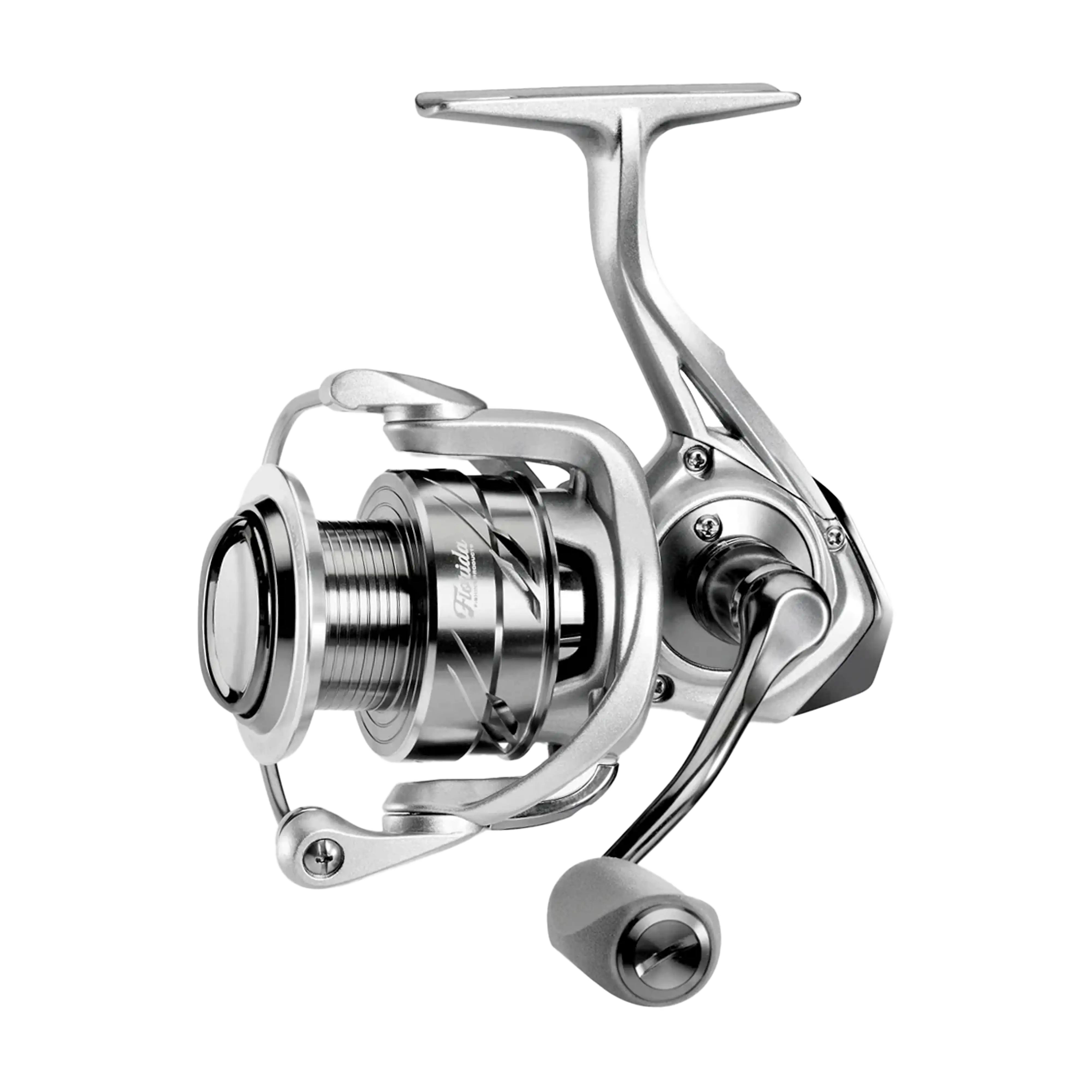
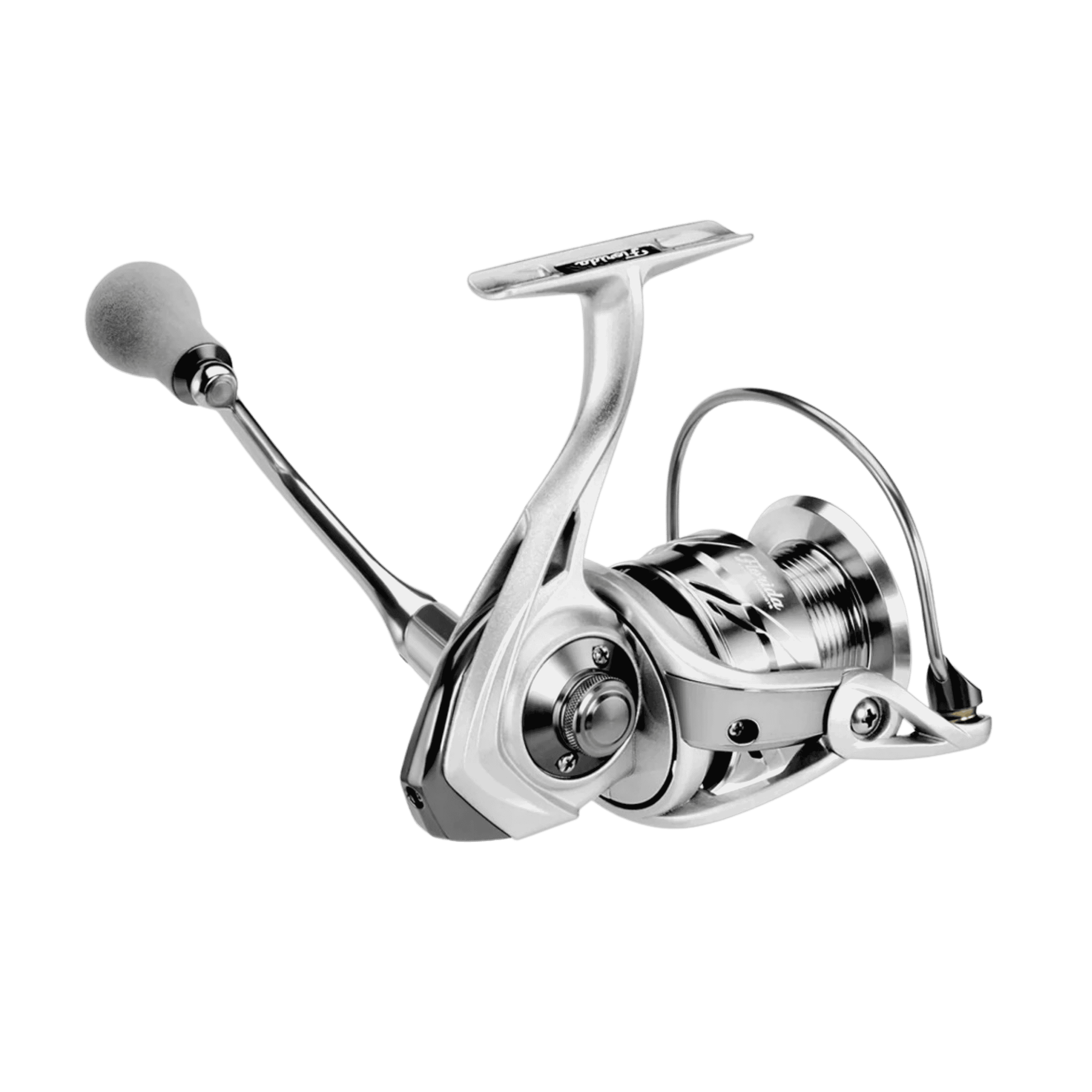
Finesse swimbait reels need to handle smaller lures and lighter line while delivering smooth, precise retrieves and reliable hooksets. Because these techniques rely on subtle presentations and steady cadences rather than aggressive retrieves, the reel plays a major role in maintaining bait control and natural swimming action. Spinning reels are the standard choice for finesse swimbait setups because they offer better line control, lightweight balance, and consistent performance with light line and delicate presentations. A properly matched reel reduces fatigue, improves casting accuracy, and helps maintain confidence when targeting pressured or suspended fish.
When evaluating a reel for finesse swimbait fishing, consider these key features:
Reel Type / Size
Spinning reels are the standard for finesse swimbaits due to their ability to manage light line efficiently and deliver long, controlled casts. The ideal size range is 1500–2500, which provides the best balance of weight, line capacity, and smooth handling for most finesse applications. A 1500–2000 size reel is ideal for true finesse and light swimbait presentations where balance and sensitivity are priorities. A 2500-size reel is better suited for longer casts, slightly heavier swimbaits, or open-water fishing situations where additional line capacity is helpful. Some anglers may step up to a 3000-size reel when fishing from boats, piers, or deeper water environments, but larger reels are generally not needed for these finesse-specific presentations and can reduce overall balance.
Gear Ratio
Moderate gear ratios (5.0:1–6.2:1) are ideal for finesse swimbaits because they provide steady, controlled line pickup without disrupting the natural swimming cadence of the bait. These ratios allow anglers to maintain a consistent retrieve speed over long casts, which is critical for keeping soft swimbaits tracking naturally in the water column. Faster gear ratios are typically unnecessary, as finesse swimbait fishing emphasizes smoothness, cadence control, and bait stability rather than rapid line recovery.
Drag System
The drag system is critical in finesse swimbait fishing because it controls pressure during hooksets and long fights on light line. Smooth, progressive drag systems are essential to prevent sudden tension spikes that can lead to break-offs. A well-tuned drag allows steady pressure on single-hook swimbaits, ensuring solid hook penetration while still protecting light fluorocarbon or braid-to-leader setups when fish surge or change direction.
Line Capacity
Line capacity should match the demands of long casts and open-water presentations without compromising reel balance. While finesse swimbaits do not require extreme capacity, the reel should comfortably hold enough line for extended casts and consistent depth coverage. Smooth line lay and controlled spool release are more important than maximum capacity, as they directly affect casting distance and bait tracking stability.
Durability
Even finesse setups require reels that can withstand repeated casting, long retrieves, and occasional contact with light cover or structure. A rigid frame helps maintain gear alignment under load, while corrosion-resistant components ensure long-term reliability. Smooth internal gearing and stable rotor balance are essential for maintaining consistent retrieve feel and sensitivity over time.
Open Water
This setup works well because a mid-size spinning reel provides smooth, consistent line pickup on long casts while maintaining a steady retrieve that keeps swimbaits tracking naturally in open water.
Reel Type / Size: Spinning reel, 1500–2500
Gear Ratio: 5.0:1–6.2:1
Drag: 6–10 lb, smooth
Line: 6–10 lb fluorocarbon or 10–15 lb braid
Bottom Contact / Depth-Control
This setup works well because a slightly larger reel helps maintain smoother, more consistent line pickup when more line is out in deeper water, making it easier to keep a steady retrieve speed on bottom contact presentations.
Reel Type / Size: Spinning reel, 2000–2500
Gear Ratio: 5.0:1–6.2:1
Drag: 8–12 lb, smooth
Line: 6–10 lb fluorocarbon
Weedless / Structure
This setup works well because the added spool size and drag strength help manage short, hard runs from fish around cover while maintaining enough control to keep fish from burying into structure during the fight.
Reel Type / Size: Spinning reel, 2000–2500
Gear Ratio: 5.0:1–6.2:1
Drag: 8–12 lb, smooth
Line: 8–10 lb fluorocarbon or 10–15 lb braid
Hover / Mid-Strolling
This setup works well because a smaller, lighter reel reduces resistance and helps maintain an ultra-steady retrieve, which is critical for keeping swimbaits suspended and tracking clean at slow speeds.
Reel Type / Size: Spinning reel, 1500–2000
Gear Ratio: 5.0:1–6.2:1
Drag: 6–10 lb, smooth
Line: 6–10 lb fluorocarbon (or 10–15 lb braid + leader)
Key Takeaways
- Spinning reels in the 1500–2500 size range are ideal for finesse swimbaits, with smaller reels preferred for true finesse and larger reels used for added line capacity or open-water applications.
- Moderate gear ratios (5.0:1–6.2:1) provide the most consistent retrieve control and help maintain a natural swimbait cadence.
- Smooth, progressive drag systems are essential for managing light line hooksets and keeping steady pressure on fish.
- Line capacity is secondary to balance, spool performance, and casting efficiency in finesse swimbait setups.
- Overall reel selection should prioritize smoothness, control, and comfort over speed or raw power.
Best Reels for Finesse Swimbait Fishing
Now let’s find a reel for your custom rod.
Finesse swimbait reels need to handle smaller lures and lighter line while delivering smooth, precise retrieves and reliable hooksets. Because these techniques rely on subtle presentations and steady cadences rather than aggressive retrieves, the reel plays a major role in maintaining bait control and natural swimming action. Spinning reels are the standard choice for finesse swimbait setups because they offer better line control, lightweight balance, and consistent performance with light line and delicate presentations. A properly matched reel reduces fatigue, improves casting accuracy, and helps maintain confidence when targeting pressured or suspended fish.
When evaluating a reel for finesse swimbait fishing, consider these key features:
Reel Type / Size
Spinning reels are the standard for finesse swimbaits due to their ability to manage light line efficiently and deliver long, controlled casts. The ideal size range is 1500–2500, which provides the best balance of weight, line capacity, and smooth handling for most finesse applications. A 1500–2000 size reel is ideal for true finesse and light swimbait presentations where balance and sensitivity are priorities. A 2500-size reel is better suited for longer casts, slightly heavier swimbaits, or open-water fishing situations where additional line capacity is helpful. Some anglers may step up to a 3000-size reel when fishing from boats, piers, or deeper water environments, but larger reels are generally not needed for these finesse-specific presentations and can reduce overall balance.
Gear Ratio
Moderate gear ratios (5.0:1–6.2:1) are ideal for finesse swimbaits because they provide steady, controlled line pickup without disrupting the natural swimming cadence of the bait. These ratios allow anglers to maintain a consistent retrieve speed over long casts, which is critical for keeping soft swimbaits tracking naturally in the water column. Faster gear ratios are typically unnecessary, as finesse swimbait fishing emphasizes smoothness, cadence control, and bait stability rather than rapid line recovery.
Drag System
The drag system is critical in finesse swimbait fishing because it controls pressure during hooksets and long fights on light line. Smooth, progressive drag systems are essential to prevent sudden tension spikes that can lead to break-offs. A well-tuned drag allows steady pressure on single-hook swimbaits, ensuring solid hook penetration while still protecting light fluorocarbon or braid-to-leader setups when fish surge or change direction.
Line Capacity
Line capacity should match the demands of long casts and open-water presentations without compromising reel balance. While finesse swimbaits do not require extreme capacity, the reel should comfortably hold enough line for extended casts and consistent depth coverage. Smooth line lay and controlled spool release are more important than maximum capacity, as they directly affect casting distance and bait tracking stability.
Durability
Even finesse setups require reels that can withstand repeated casting, long retrieves, and occasional contact with light cover or structure. A rigid frame helps maintain gear alignment under load, while corrosion-resistant components ensure long-term reliability. Smooth internal gearing and stable rotor balance are essential for maintaining consistent retrieve feel and sensitivity over time.
Open Water
This setup works well because a mid-size spinning reel provides smooth, consistent line pickup on long casts while maintaining a steady retrieve that keeps swimbaits tracking naturally in open water.
Reel Type / Size: Spinning reel, 1500–2500
Gear Ratio: 5.0:1–6.2:1
Drag: 6–10 lb, smooth
Line: 6–10 lb fluorocarbon or 10–15 lb braid
Bottom Contact / Depth-Control
This setup works well because a slightly larger reel helps maintain smoother, more consistent line pickup when more line is out in deeper water, making it easier to keep a steady retrieve speed on bottom contact presentations.
Reel Type / Size: Spinning reel, 2000–2500
Gear Ratio: 5.0:1–6.2:1
Drag: 8–12 lb, smooth
Line: 6–10 lb fluorocarbon
Weedless / Structure
This setup works well because the added spool size and drag strength help manage short, hard runs from fish around cover while maintaining enough control to keep fish from burying into structure during the fight.
Reel Type / Size: Spinning reel, 2000–2500
Gear Ratio: 5.0:1–6.2:1
Drag: 8–12 lb, smooth
Line: 8–10 lb fluorocarbon or 10–15 lb braid
Hover / Mid-Strolling
This setup works well because a smaller, lighter reel reduces resistance and helps maintain an ultra-steady retrieve, which is critical for keeping swimbaits suspended and tracking clean at slow speeds.
Reel Type / Size: Spinning reel, 1500–2000
Gear Ratio: 5.0:1–6.2:1
Drag: 6–10 lb, smooth
Line: 6–10 lb fluorocarbon (or 10–15 lb braid + leader)
Key Takeaways
- Spinning reels in the 1500–2500 size range are ideal for finesse swimbaits, with smaller reels preferred for true finesse and larger reels used for added line capacity or open-water applications.
- Moderate gear ratios (5.0:1–6.2:1) provide the most consistent retrieve control and help maintain a natural swimbait cadence.
- Smooth, progressive drag systems are essential for managing light line hooksets and keeping steady pressure on fish.
- Line capacity is secondary to balance, spool performance, and casting efficiency in finesse swimbait setups.
- Overall reel selection should prioritize smoothness, control, and comfort over speed or raw power.
Finesse Swimbait Reels



Build a Finesse Swimbait Rod
FAQ - Custom Finesse Swimbait Rods
What rod blank should I choose for finesse swimbait fishing?
For a versatile finesse swimbait build, choose a medium-light to medium power blank in the 7’0″–7’6″ range with a moderate-fast to fast action. This combination supports smooth, controlled casting and steady retrieve performance while still providing the sensitivity needed to detect subtle bites and bait movement. The added length helps with line control and hook leverage without sacrificing finesse feel.
How do I pick the right guides for a finesse swimbait rod?
Use a high-quality spinning guide set designed for light-line performance. Proper guide sizing and spacing ensure clean line flow during long casts and steady retrieves, while also maintaining blank sensitivity. A well-matched guide train helps reduce friction and supports consistent tracking when working swimbaits at varying speeds.
What tip-top works best for a finesse swimbait build?
Choose a tip-top that fits securely over the blank tip and matches the final running guide ring size. A properly matched tip-top protects the blank, maintains smooth line flow, and preserves sensitivity through the rod tip—helping you feel subtle swimbait movement and detect light pressure changes during the retrieve.
Should I use a split grip or full grip handle for a finesse swimbait rod?
Both options work depending on feel preference and balance goals. Split grips reduce overall weight and expose more of the blank, improving feedback and responsiveness during steady retrieves. Full grips provide a more traditional feel with added rear-hand support, offering comfort and stability during long casting sessions and repetitive retrieves.
Why are rod building kits useful for finesse swimbait rod builds?
Rod building kits bundle essential components like handles, guides, thread, epoxy, and tools into one system. This simplifies the build process, ensures better component compatibility, and helps achieve consistent, professional results tailored to light-line swimbait fishing, controlled retrieves, and balanced rod performance.
Can I build a finesse swimbait rod for baitcasting setups?
Yes, finesse swimbait rods can be built on either spinning or casting blanks, but spinning setups are more common for lighter presentations. Spinning reels handle light line more efficiently and provide smoother control for steady retrieves, improved sensitivity, and better performance with smaller swimbaits.
What rod power is best for finesse swimbait fishing?
Medium-light to medium power blanks are the most versatile choice for finesse swimbait applications. This power range offers enough backbone for controlled hooksets while maintaining the sensitivity and responsiveness needed for subtle strikes and natural bait movement during slow to moderate retrieves.
From the Mud Hole Journal
Further Reading
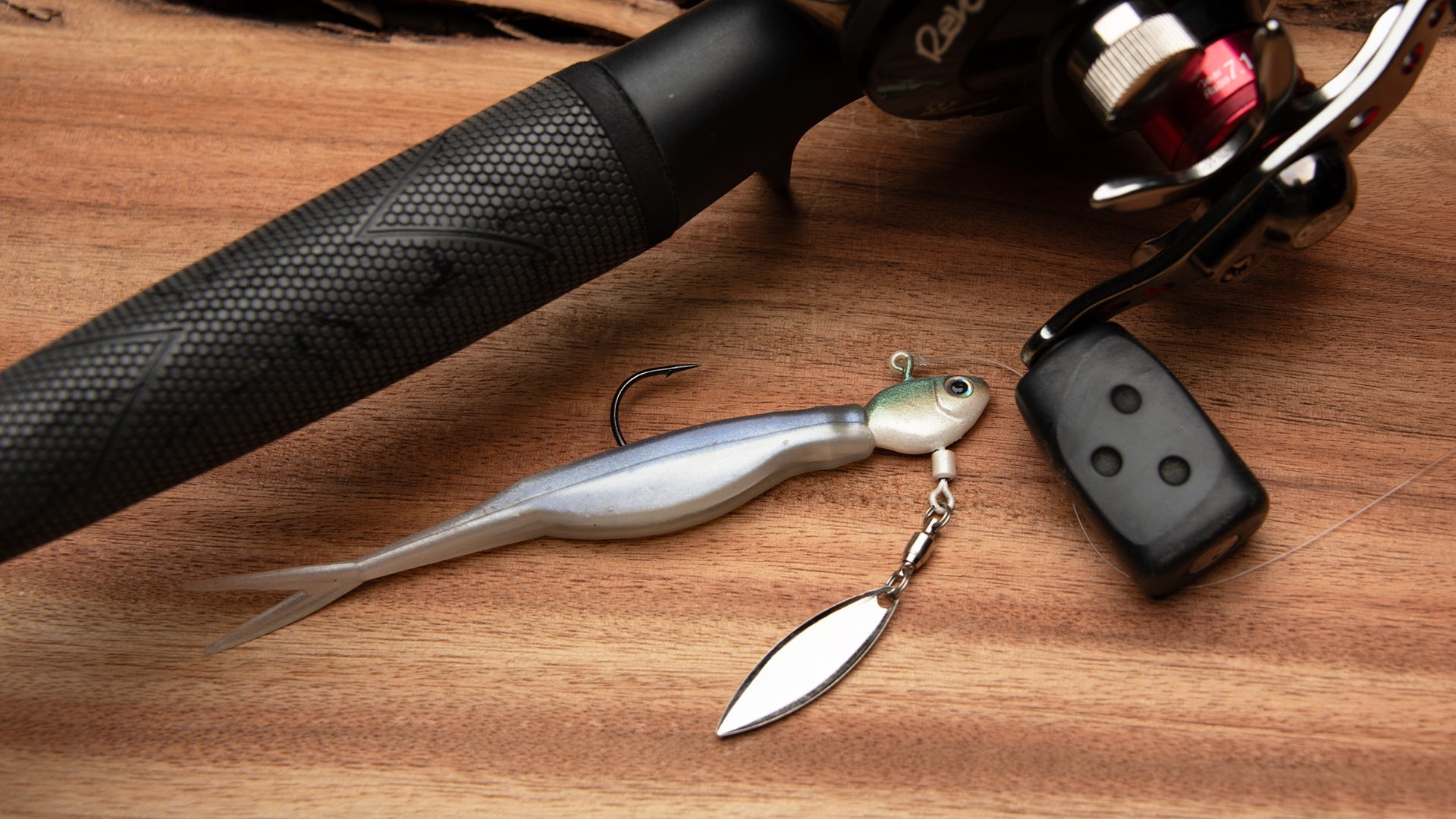
Tackle Suspended Bass with this Underspin Build
Suspended bass pose a challenge for many anglers, especially when factors like weather fronts or seasonal patterns cause them to hang in mid-water. They're notoriously elusive and can be tough to e...