














If you've spent much time around rod builders, you've probably heard the warnings about using heat on thread finish. Some builders swear that you should never let a flame anywhere near epoxy, claiming it weakens the finish, damages the blank, or creates more problems than it solves. Others use heat on every rod they build without giving it a second thought.
As with most debates in rod building, the truth lies somewhere in the middle.
Personally, I fall firmly into the camp that believes heat is one of the most valuable finishing tools you can have. I use it on nearly every rod I build because it helps eliminate bubbles, smooths the finish beautifully, and gives me a way to correct small mistakes before the epoxy begins to cure. The key is understanding that heat is a tool, not a shortcut. Used properly, it can improve your results. Used carelessly, it can quickly turn a good finish into a complete mess.
Why Heat Gets a Bad Reputation
The concern over using heat isn't entirely without merit. Thread finish is a two-part epoxy that begins a chemical reaction the moment the resin and hardener are mixed together. Applying excessive heat can accelerate that reaction, shorten your working time, and in extreme cases even affect the way the finish cures.
The blank itself is another concern. Modern graphite blanks are built with sophisticated resin systems that can be damaged if subjected to excessive temperatures. While it's unlikely that a quick pass from an alcohol burner will cause any issues, holding a torch or heat gun in one spot for several seconds is an entirely different story.
Most of the horror stories surrounding heat aren't caused by the fact that heat was used. They're caused because far too much heat was applied. Like many tools in rod building, the problem usually isn't the tool itself. It's how the tool was used.
Why I Use Heat on Almost Every Build
Despite the warnings, I still reach for my alcohol burner almost every time I apply finish. Over the years I've found that a controlled amount of heat consistently improves the final result in several different ways.
The first and most obvious benefit is removing bubbles. Even when you mix your finish carefully, tiny air bubbles can still appear. Some are introduced while mixing, while others show up as you brush finish onto the wraps. Decorative wraps, guide feet, and thread tunnels can also trap small pockets of air that eventually rise to the surface.

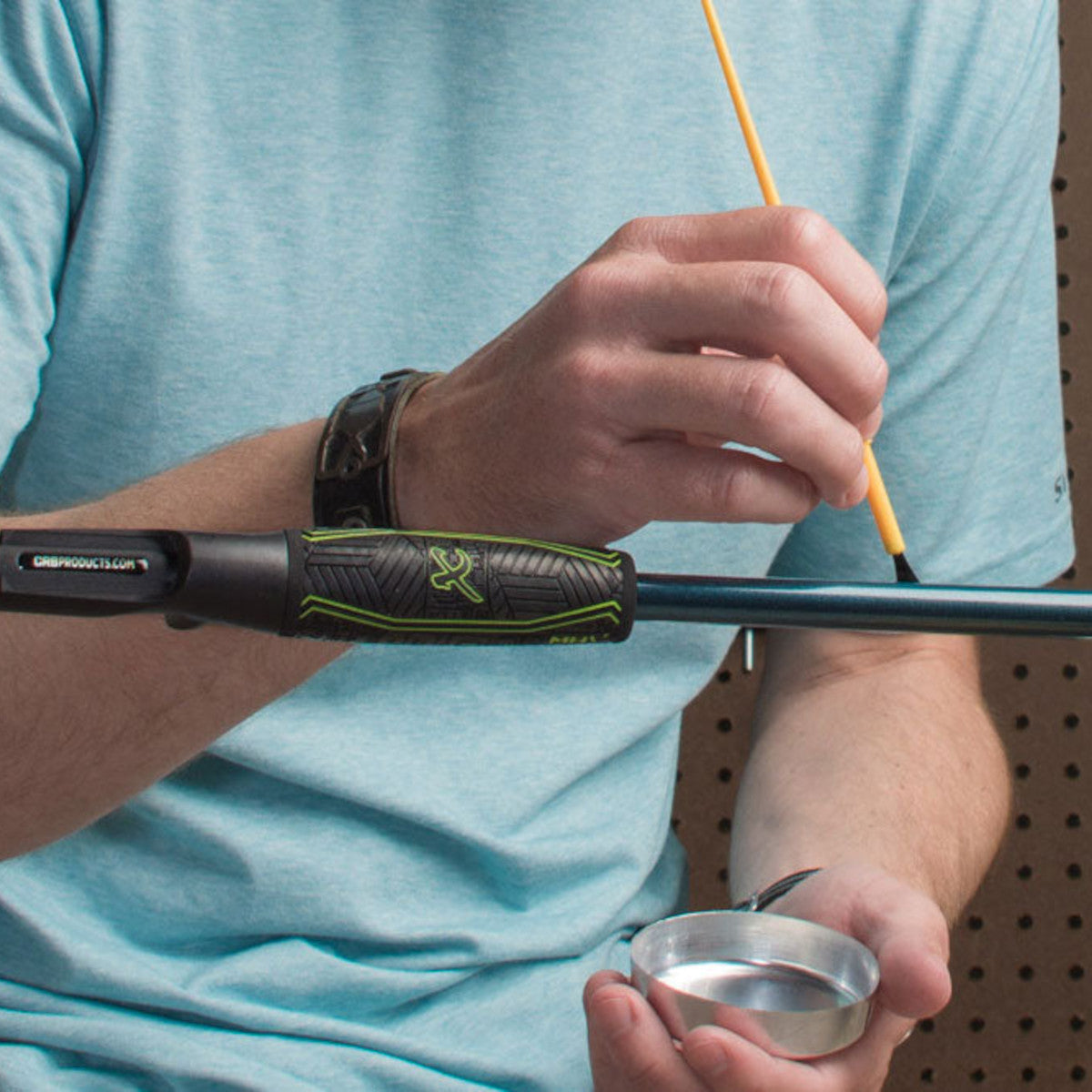
A side note, if you have not tried metal foil dishes to pour your epoxy into after mixing, you should try it. It helps lengthen your working times as well as remove bubbles.
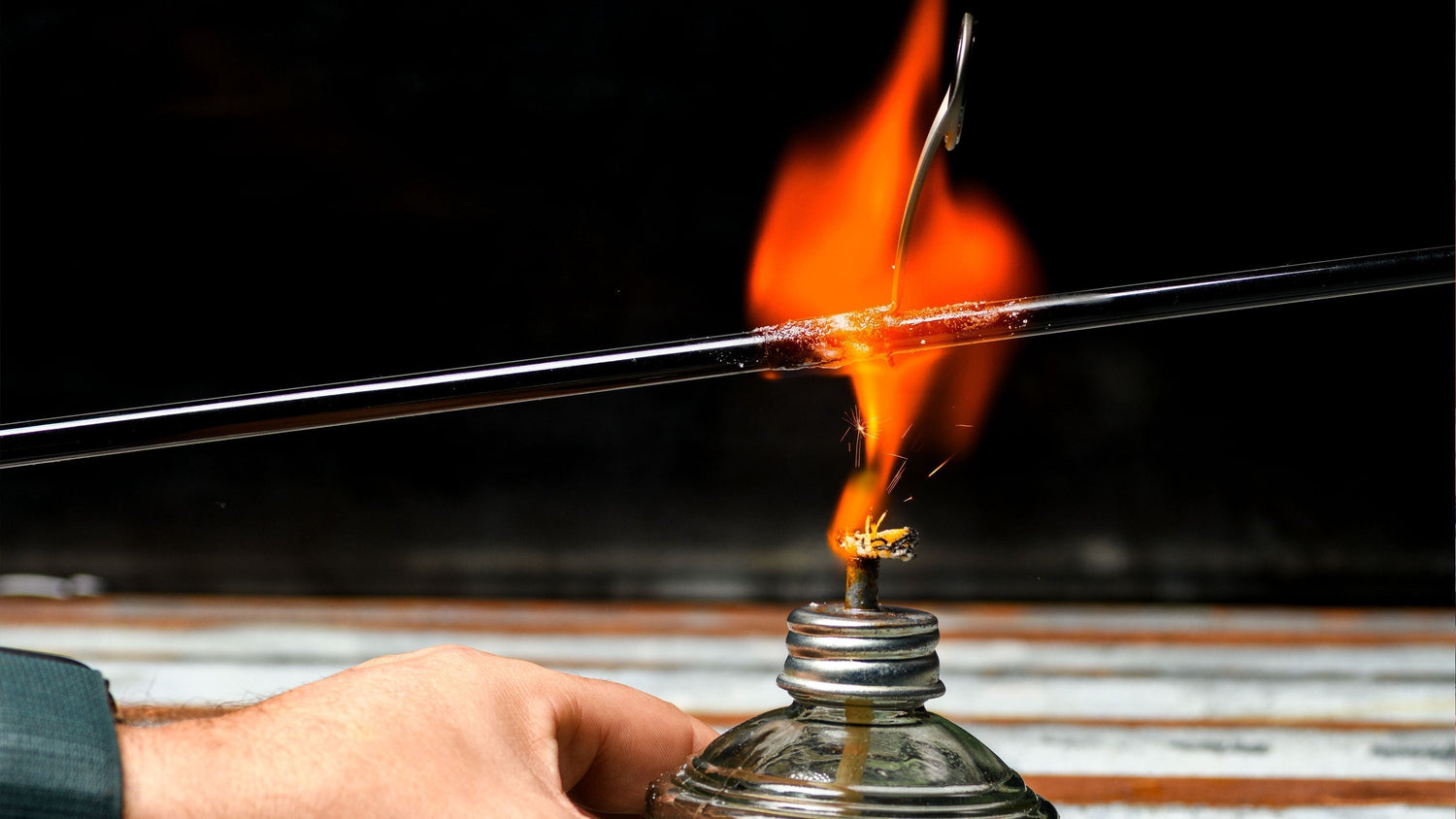
A quick pass of gentle heat lowers the viscosity of the epoxy just enough for those bubbles to rise and disappear. I'm not trying to cook the finish or make it run like water. I'm simply encouraging those tiny bubbles to escape before the epoxy begins to set. Most of the time, a single pass lasting only a second or two is all that's needed.
Another reason I use heat is to help the finish level itself. As the epoxy briefly becomes more fluid, it flows together more evenly, reducing brush marks and creating that smooth, professional appearance every builder is after. This is especially noticeable on decorative wraps or longer guide wraps where even a slight imperfection can stand out once the finish cures.
Perhaps my favorite use for heat is correcting an over-applied finish. Every builder has loaded the brush with a little too much epoxy at some point. Before long, the finish starts building up into a heavy football shape or begins sagging toward the bottom of the wrap. Rather than fighting thick epoxy with the brush, a quick touch of heat allows the finish to flow more freely. That makes it much easier to wick away the excess and reshape the finish before it begins curing.
I've saved countless wraps this way that otherwise would have required stripping off the finish and starting over.
Less Heat Is Almost Always Better
If there's one lesson I've learned over the years, it's that successful builders use surprisingly little heat. The best application is often one that you barely notice.
When I pass an alcohol burner under a wrap, I'm usually talking about one second. Maybe two. The flame never stops moving, and it certainly never sits directly under one spot. The finish should never become hot to the touch, smoke, or suddenly become extremely thin.
If you see smoke, smell something burning, or watch the finish start flowing uncontrollably, you've already gone too far.
It's much better to make two quick passes with a few seconds between them than to try accomplishing everything at once. A little patience goes a long way, and you'll have much more control over the finish.
Choosing the Right Heat Source
Not every heat source works equally well. My preference has always been a simple alcohol burner because it produces a gentle, consistent flame that's easy to control. It generates enough warmth to help the finish without exposing it to the intense temperatures produced by larger torches.
Small butane torches can certainly be used, but they require a much lighter touch because they burn significantly hotter. It's very easy to overheat a wrap if you're not careful.
Heat guns are another option, although they create a different set of challenges. The moving air can stir up dust that eventually lands in the finish, and it can also push the epoxy around more than you intended. For those reasons, I rarely reach for one when applying thread finish.

Propane torches are probably the least forgiving option and something new builders will need to learn or work up to. While they certainly produce heat, they also leave almost no room for error. In my opinion, they're simply too aggressive for something as delicate as thread finish, especially for new builders.
Regardless of which tool you choose, remember that the objective isn't to heat the wrap. The objective is to gently warm the epoxy just enough to help it flow.
One heat source I generally recommend avoiding is a standard Bic-style lighter. While they're convenient and almost everyone has one nearby, they can produce soot and smoke if the flame isn't burning cleanly. That soot can easily contaminate your finish, leaving tiny black specks or imperfections that become permanently trapped in the epoxy. It's simply not worth risking an otherwise beautiful finish when cleaner, more controlled heat sources are readily available.

Heat Won't Fix Poor Technique
One mistake I see fairly often is builders relying on heat to compensate for poor finishing habits. If you're constantly applying heat because every wrap is full of bubbles, it's worth taking a step back and looking at what happens before the finish ever reaches the rod.
Most bubbles begin during mixing. Stirring too aggressively introduces unnecessary air into the epoxy, and once those bubbles are in the finish, you're forced to chase them later. The same thing can happen if you're brushing too aggressively or repeatedly working the finish after it's already been applied.
Good finishing starts with good preparation. Mix slowly, apply finish evenly, and avoid overworking the epoxy. When you do those things well, there usually aren't many bubbles to remove in the first place. Heat simply becomes the final touch that helps an already good finish look even better.
Timing Is Everything
Knowing when to apply heat is just as important as knowing how much to use. I prefer using it shortly after the finish has been applied while the epoxy is still naturally flowing. At that stage, the finish responds beautifully, and bubbles rise quickly without much effort.
Once the epoxy begins thickening, it's usually best to leave it alone. Trying to reflow partially cured finish often creates more problems than it solves. You can introduce waves, uneven thickness, or brush marks that weren't there to begin with.
This is one of those situations where patience becomes one of your best tools. Sometimes the smartest decision is recognizing when it's time to stop working on the finish and simply let it cure.
Know When to Walk Away
One of the biggest challenges for newer builders is resisting the urge to chase perfection. It's easy to convince yourself that one more brush stroke or one more pass with the flame will make the finish even better.
In reality, the opposite is usually true.

The more you continue working epoxy, the greater the chance you'll introduce dust, contamination, or uneven thickness. Thread finish is designed to level itself as it cures, and many small imperfections disappear naturally during that process.
I've learned that some of the best finishes I've ever produced came from knowing when to stop touching them. Once the bubbles are gone and the finish is evenly distributed, I let the dryer do its job and trust the epoxy.
My Philosophy on Heat
I completely understand why some builders choose not to use heat. Many of them produce flawless finishes, and if their process works, there's no reason to change it.
For me, however, heat has become part of my finishing routine because I know exactly what it can do when used properly. It helps remove bubbles, encourages the finish to level, and gives me a chance to rescue a wrap if I accidentally apply too much epoxy.
The important thing is remembering that heat isn't a miracle cure. It won't fix poor mixing, sloppy application, or a lack of patience. It simply gives you another tool that can refine a finish that's already headed in the right direction.
Final Thoughts
So, is heat on thread finish a smart tool or a recipe for failure?
In my opinion, it's absolutely a smart tool, provided it's used with restraint. A quick pass of gentle heat can improve the appearance of your finish, eliminate stubborn bubbles, and help correct small application mistakes without creating new ones.
Like so many aspects of rod building, success comes from moderation. The goal isn't to heat the epoxy as much as possible. The goal is to use just enough warmth to help the finish do what it naturally wants to do.
I've never looked at heat as something to fear. When it's used with a light touch and a little common sense, it becomes another valuable technique that helps produce cleaner, smoother, and more professional-looking wraps. The trick isn't avoiding heat altogether. It's learning how to use it wisely.