









If you’re looking for more rod recommendations, reel pairings, line setups, and technique-specific advice, head back to the complete Main Gear Guide Page for the full breakdowns on your favorite techniques.
One of the most frustrating situations in bass fishing is finding fish that are clearly visible on electronics but refuse to interact with traditional presentations. They aren't relating to the bottom, they aren't positioned tight to cover, and they often seem impossible to reach with conventional techniques.
These fish are suspended.
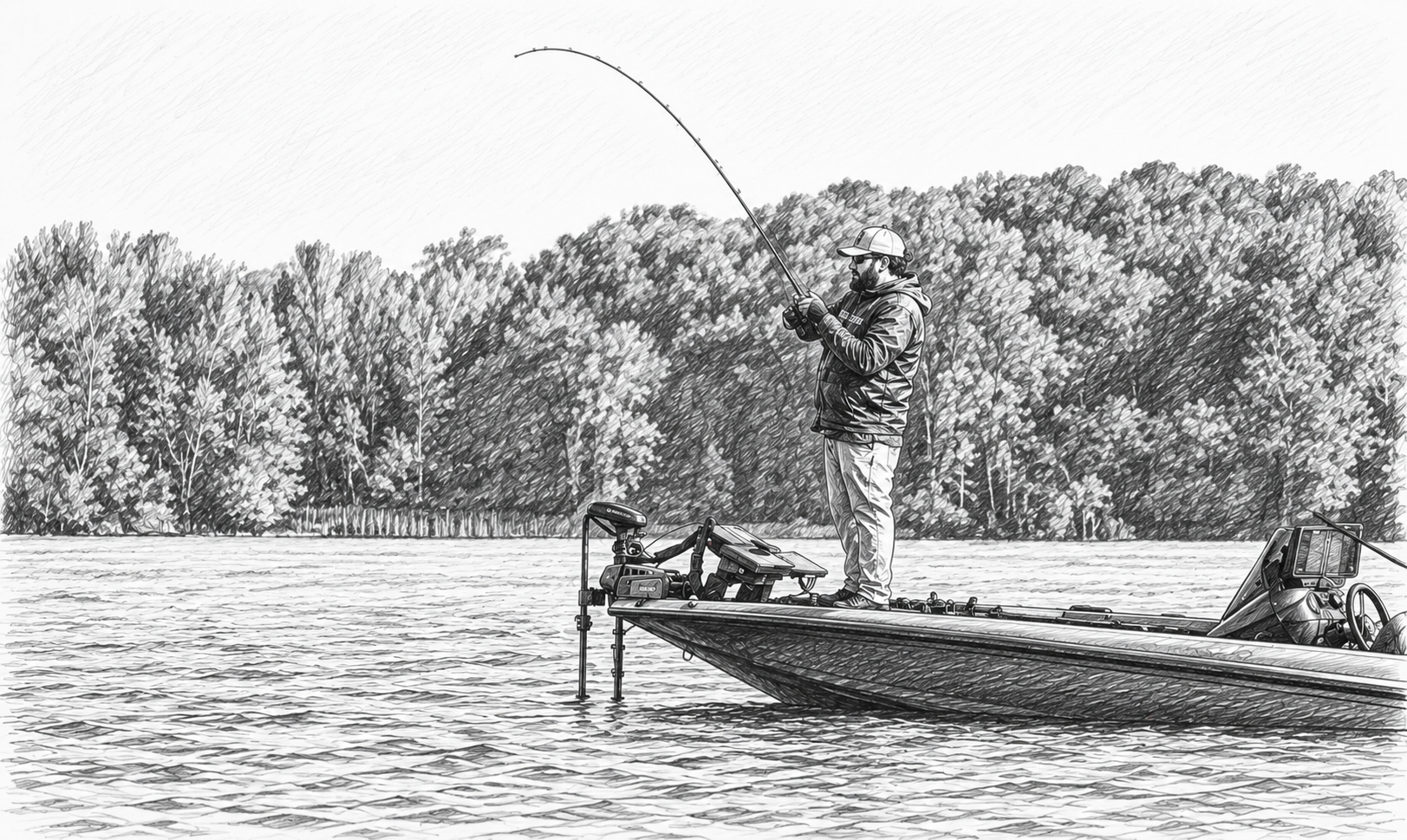
Whether they're following schools of baitfish, holding around bridge pilings, hovering over timber, or roaming open water, suspended bass can be notoriously difficult to catch. They often spend much of their time in the middle of the water column, far removed from the structure and bottom-oriented presentations many anglers rely on.
This is where the suspended fish drop shot excels.
By allowing anglers to position a bait at the exact depth where bass are holding, the drop shot creates one of the most precise and natural presentations available. Instead of dragging a lure below the fish or forcing them to move vertically to feed, anglers can place a bait directly in the strike zone and keep it there longer than almost any other technique.
For targeting bass suspended around bait schools, offshore structure, and open-water environments, few finesse presentations are more effective.
What Is a Suspended Fish Drop Shot?
A suspended fish drop shot is a specialized variation of the traditional drop shot designed to target fish holding above the bottom.
The basic rig remains the same. A weight is attached to the end of the line while the hook is tied above it. However, the distance between the hook and the weight is often adjusted to position the bait at the same depth as the fish being targeted.
Instead of allowing the weight to simply rest on the bottom, anglers use the rig to control bait depth throughout the water column. This allows the lure to hover naturally around suspended bass while maintaining precise depth control.
The presentation can be used around open-water bait schools, standing timber, bridge pilings, bluff walls, and other vertical structures where bass commonly suspend.
Because the bait remains elevated and visible, fish can easily locate it without making large movements or expending unnecessary energy.
The ability to fish at exact depths is what separates this technique from many traditional bass presentations.
Why Suspended Fish Drop Shotting Works
Suspended bass often behave differently than bottom-oriented fish.
Rather than positioning around a specific piece of cover, they frequently follow baitfish schools or remain suspended near structure where forage is abundant. These fish can be highly selective because they are surrounded by natural food sources.
The suspended fish drop shot works because it places a realistic-looking bait directly within that feeding zone.

Table Rock Lake
Instead of asking bass to chase a lure through the water column, the presentation remains at eye level and appears vulnerable. The bait can hover naturally with only minimal rod movement, mimicking an injured baitfish or an easy target separated from the school.
Another major advantage is time in the strike zone.
Many lures pass through suspended fish quickly. A drop shot allows anglers to keep the bait at the correct depth for extended periods, dramatically increasing the opportunity for a fish to react.
When bass are actively feeding, the presentation can trigger aggressive strikes. When they are neutral or pressured, the subtle action often convinces fish that ignore faster-moving lures.
Where Suspended Fish Drop Shotting Excels
This technique shines whenever bass suspend away from the bottom.
Bridge pilings are a classic example. Bass often hold at specific depths along the structure while waiting for baitfish to pass through.
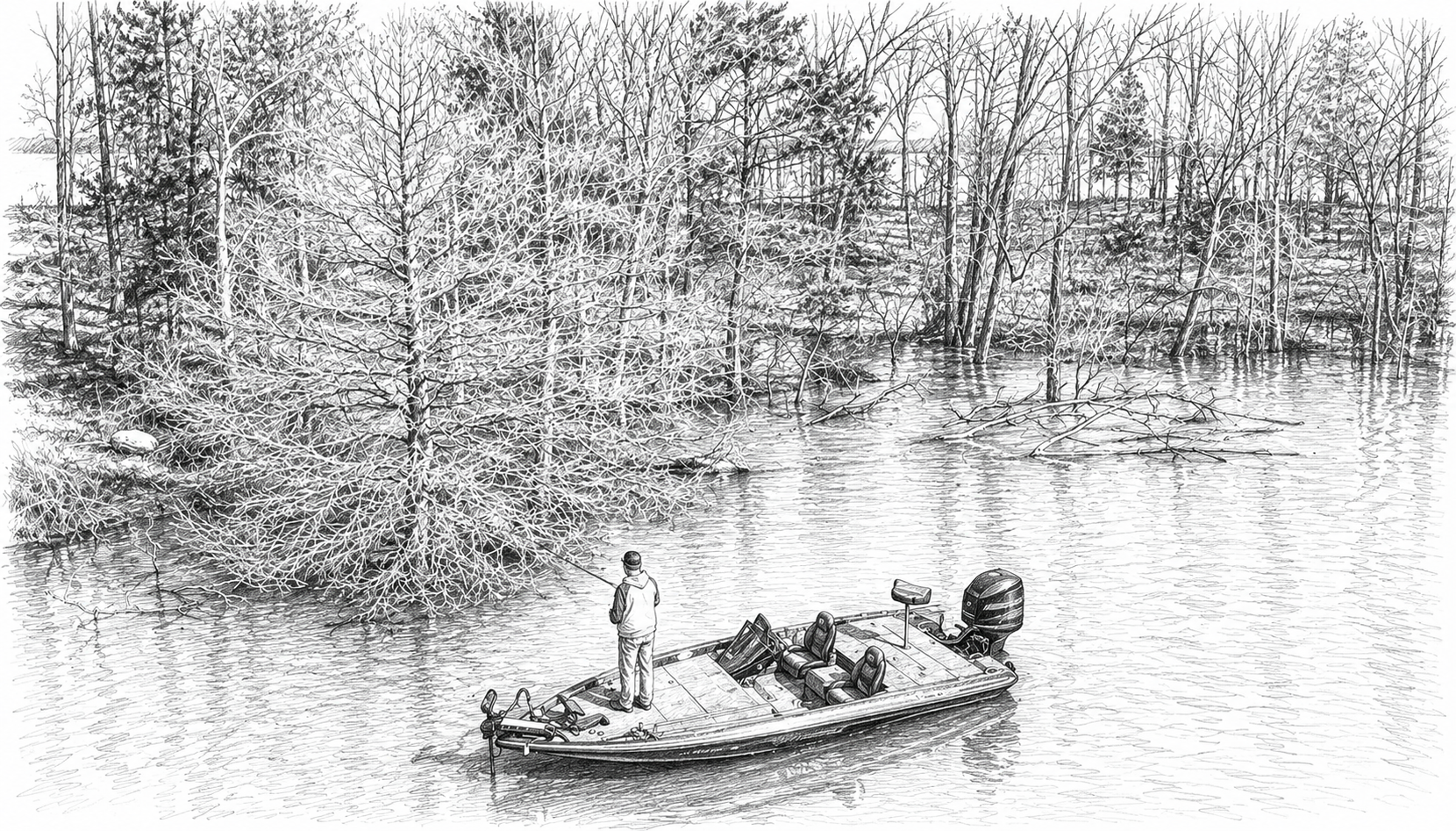
Standing timber creates another excellent opportunity. Suspended fish frequently position around submerged trees where forage gathers and vertical cover provides security.
Open-water bait schools are perhaps the most obvious application. When bass are following schools of shad, herring, or other forage species, a suspended drop shot allows anglers to target fish precisely without disturbing the school.
Bluff walls, steep points, and deep creek channels can also hold suspended bass throughout much of the year.
The technique is especially effective in clear-water reservoirs where fish commonly suspend around bait and rely heavily on sight to feed.
Whenever fish appear on electronics but refuse bottom-oriented presentations, the suspended fish drop shot deserves serious consideration.
Reading Conditions and Fish Behavior
Success with suspended fish starts with understanding where they position themselves and why.
Electronics play a major role in this style of fishing. Modern sonar allows anglers to identify bait schools, determine fish depth, and monitor how bass react to presentations in real time.
Pay close attention to the relationship between bait and predators. Bass rarely suspend randomly. More often, they position themselves near forage, structure, or environmental conditions that provide feeding opportunities.
Seasonal patterns can be especially important.
During summer, bass frequently suspend around deep bait schools and offshore structure. In winter, they often remain suspended for extended periods while conserving energy. During fall, baitfish migrations can create excellent opportunities for targeting roaming schools of suspended fish.
Water clarity also affects fish behavior. In clear water, bass may suspend farther from cover and use vision to track prey. In stained water, fish often position closer to structure and may require a more precise presentation.
One of the biggest clues is fish that appear on electronics but refuse to commit to moving baits. In these situations, a drop shot often provides the subtle presentation needed to convert opportunities into bites.
Technique: Match the Depth, Not the Structure
The biggest mistake anglers make when targeting suspended fish is focusing too heavily on the structure itself.
The real target is the depth where the fish are holding.
Once fish are located, adjust the distance between the hook and weight to position the bait directly within the strike zone. If fish are suspended ten feet off the bottom, the bait should remain at that level rather than below it.
After reaching the desired depth, use subtle rod-tip movements to make the bait quiver naturally. Excessive action is rarely necessary.
Small shakes, controlled pauses, and maintaining precise depth are often all that's required.
Watch electronics whenever possible. In many situations, anglers can observe fish reacting to the presentation and make adjustments immediately.
Patience is critical. Suspended bass often inspect a bait multiple times before committing.
The goal is to maintain a realistic presentation and keep the lure where the fish already want to feed.
Best Baits for Suspended Fish Drop Shotting
Bait selection should closely match the forage bass are feeding on.
Mini swimbaits are among the most productive choices because they closely resemble small baitfish and create natural movement with very little effort.
Minnow-style plastics are another excellent option, particularly when bass are feeding on shad, herring, or other pelagic forage species.
Straight-tail finesse worms continue to produce in a wide range of conditions. Their subtle movement makes them especially effective when fish are pressured or inactive.
Small stickbaits can also be highly effective when bass become selective and refuse larger profiles.
Most successful suspended-fish presentations utilize baits between 3 and 5 inches long. These sizes provide a realistic appearance while maintaining the finesse characteristics that make the drop shot so effective.

Evergreen Last Ace 75 Swimbait
Natural baitfish colors, translucent finishes, smoke patterns, and subtle shad imitations consistently produce across a variety of fisheries.
For a complete selection of proven suspended-fish presentations, check out our curated collection of drop shot finesse baits designed to mimic natural forage.
Gear Setup for Mid-Column Fishing
Suspended fish presentations demand exceptional sensitivity and depth control.
A medium-light spinning rod between 6'10" and 7'2" provides the ideal combination of responsiveness, sensitivity, and fish-fighting power. Fast or extra-fast actions help anglers detect subtle bites while maintaining precise bait control. Start with picking out your rod here.

Fitzgerald Stunner HD V2 Spinning Rod
Choosing the right drop shot rod becomes especially important when targeting suspended bass because many strikes occur on slack line or while the bait is hovering motionless.
A quality 2500-3000 size spinning reel offers smooth retrieval and dependable drag performance while maintaining balance with finesse rods.Check out our reel recommendations.

Daiwa Ballistic MQ LT Spinning Reel
Most anglers prefer a 12-15 lb braided mainline paired with a 6-10 lb fluorocarbon leader. This setup maximizes sensitivity while maintaining stealth in clear-water environments where suspended fish are commonly found. These are the line and leader combinations we pick.

VMC Tungsten Drop Shot Ball Weight
Drop shot weights between 3/16 and 3/4 ounce cover most suspended-fish situations. Heavier weights become increasingly important when fishing deeper water or maintaining precise depth control in wind and current. Grab your hooks and weights here.
Matching hook size, bait profile, and leader length to the fish you're targeting can dramatically improve presentation quality and hookup percentages.
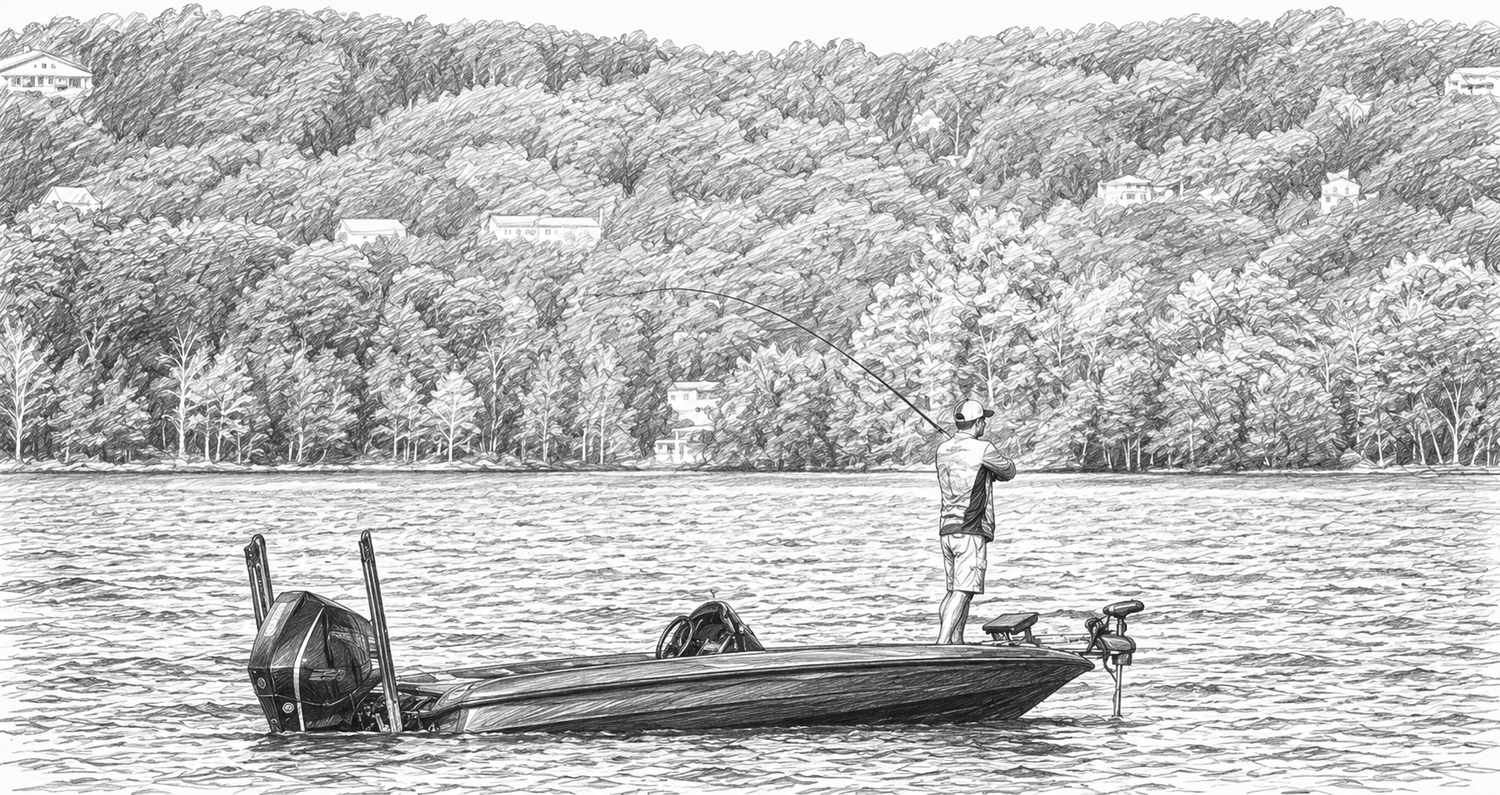
A Must-Fish Destination: Table Rock Lake
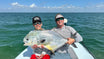
A perfect example of where suspended fish drop shotting excels is Table Rock Lake.
Known for its clear water, abundant baitfish population, and offshore bass fisheries, Table Rock consistently produces suspended fish opportunities throughout much of the year.

Table Rock Lake
Spotted bass and largemouth bass frequently suspend around standing timber, bluff ends, and roaming bait schools. These fish often appear prominently on electronics but can be difficult to catch with traditional bottom-contact presentations.
The drop shot allows anglers to match the depth of suspended fish precisely and maintain a natural presentation within the strike zone.
Many experienced anglers consider it one of the most productive techniques on the lake, particularly during summer and winter when fish spend extended periods suspended offshore.
Few fisheries demonstrate the effectiveness of mid-column drop shot fishing better than Table Rock Lake.
Final Thoughts
Suspended fish are often some of the most challenging bass to catch, but they can also be among the most rewarding once you understand how they behave.
The suspended fish drop shot provides unmatched depth control, natural presentation, and the ability to keep a bait exactly where bass are feeding. Whether targeting bridge pilings, standing timber, open-water bait schools, or offshore structure, this finesse technique consistently produces when fish refuse more traditional approaches.
The key is focusing on fish depth rather than simply fishing the structure around them.
Mastering this presentation gives anglers a reliable solution for one of bass fishing's most difficult situations. In the end, success often comes from placing a bait precisely where the fish live and giving them every opportunity to bite.
For more rod recommendations, reel pairings, line setups, and drop shot-specific advice, check out the complete Drop Shot Gear Guide and build a system designed to maximize your success with suspended bass.
About the Author

The team at Mud Hole Custom Tackle are industry leaders in custom rod building, fishing tackle innovation, and technique-specific rod design. With decades of hands-on experience both on the water and at the rod bench, the Mud Hole Staff combines technical expertise with real-world fishing knowledge to help anglers build better rods and catch more fish. From bass and inshore applications to offshore and specialty techniques, their passion for performance-driven gear is at the core of every article, tutorial, and product they develop.