






Mud Hole Gear Guide:
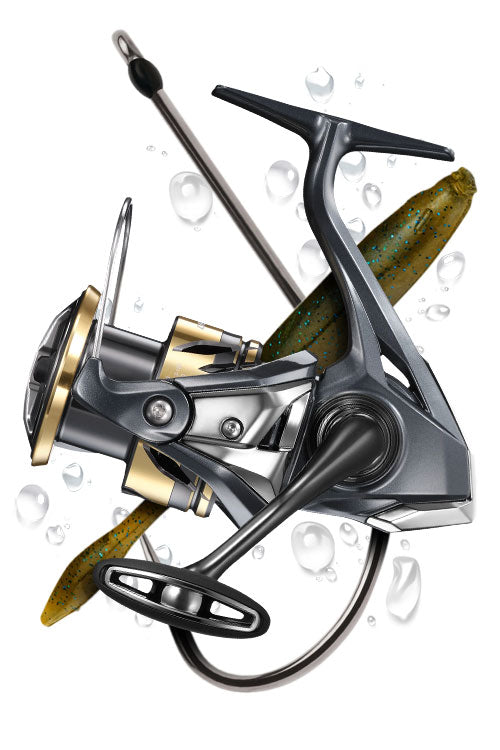
What is Drop Shot Fishing?
Drop shot fishing is a finesse technique designed to keep your bait suspended above the bottom, right in the strike zone. Instead of dragging a lure along the bottom, the rig places a weight at the end of the line with the hook tied above it, allowing the bait to hover naturally and move with subtle rod movements or current. This controlled presentation keeps the lure in front of fish longer and often triggers bites when bass are pressured, inactive, or reluctant to chase faster-moving lures.
While the rig itself is simple, the drop shot can be used in several different ways depending on depth, cover, and how fish are positioned in the water column. Some anglers fish it vertically over deep structure, others cast it across open water, and many use it around shallow cover or suspended fish. Each approach changes how the bait is presented and often calls for slight differences in rod length, line strength, and weight.
Understanding these common drop shot applications helps anglers match their gear and presentation to the conditions. Below are the most widely used types of drop shot fishing.
Introduction
What is Drop Shot Fishing?
What is Drop Shot Fishing?
Drop shot fishing is a finesse technique designed to keep your bait suspended above the bottom, right in the strike zone. Instead of dragging a lure along the bottom, the rig places a weight at the end of the line with the hook tied above it, allowing the bait to hover naturally and move with subtle rod movements or current. This controlled presentation keeps the lure in front of fish longer and often triggers bites when bass are pressured, inactive, or reluctant to chase faster-moving lures.
While the rig itself is simple, the drop shot can be used in several different ways depending on depth, cover, and how fish are positioned in the water column. Some anglers fish it vertically over deep structure, others cast it across open water, and many use it around shallow cover or suspended fish. Each approach changes how the bait is presented and often calls for slight differences in rod length, line strength, and weight.
Understanding these common drop shot applications helps anglers match their gear and presentation to the conditions. Below are the most widely used types of drop shot fishing.
Drop Shot Fishing Applications
Vertical Drop Shot (Deep Water)
Targets: Offshore structure, deep points, humps, ledges, suspended fish
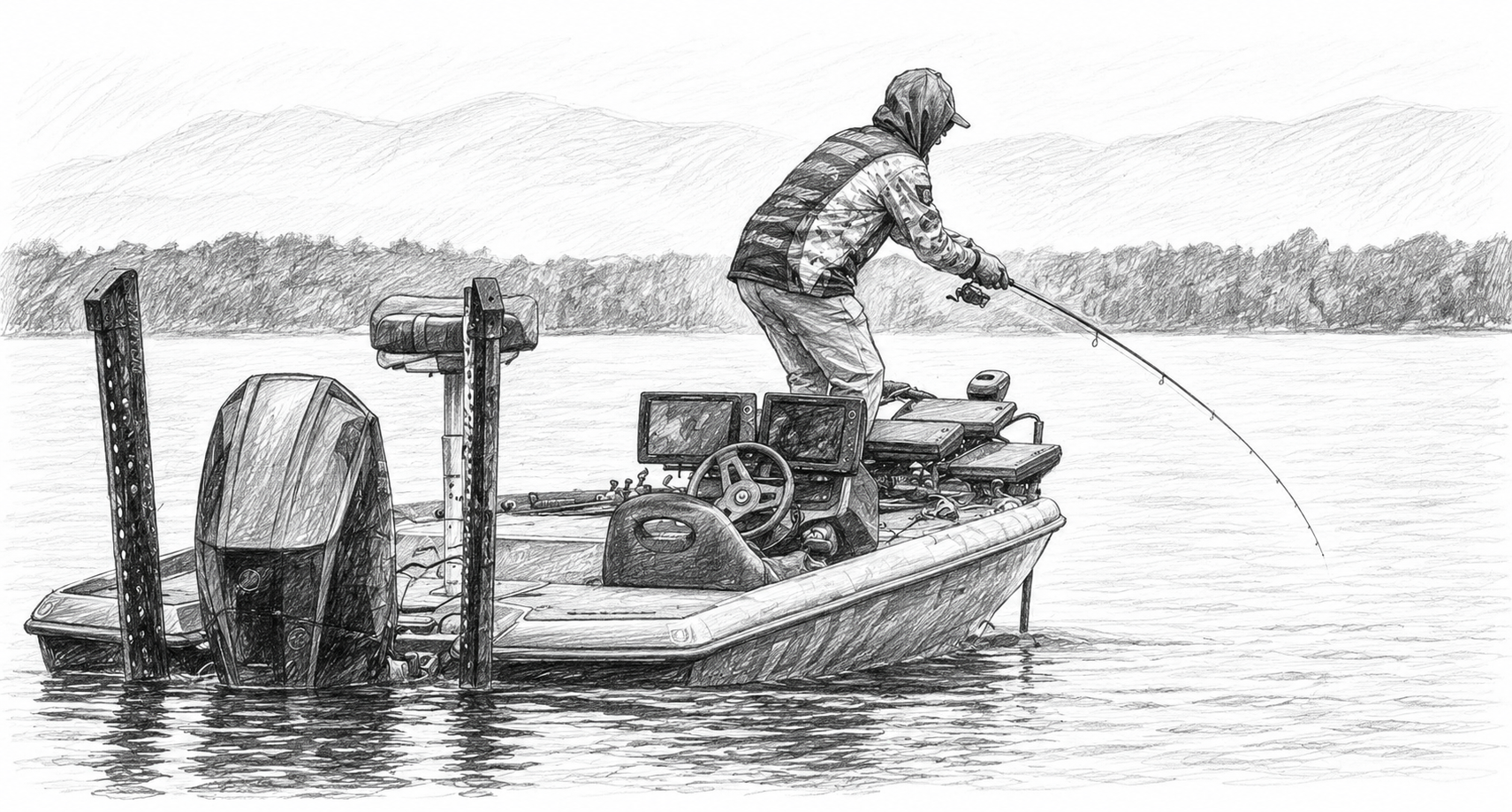
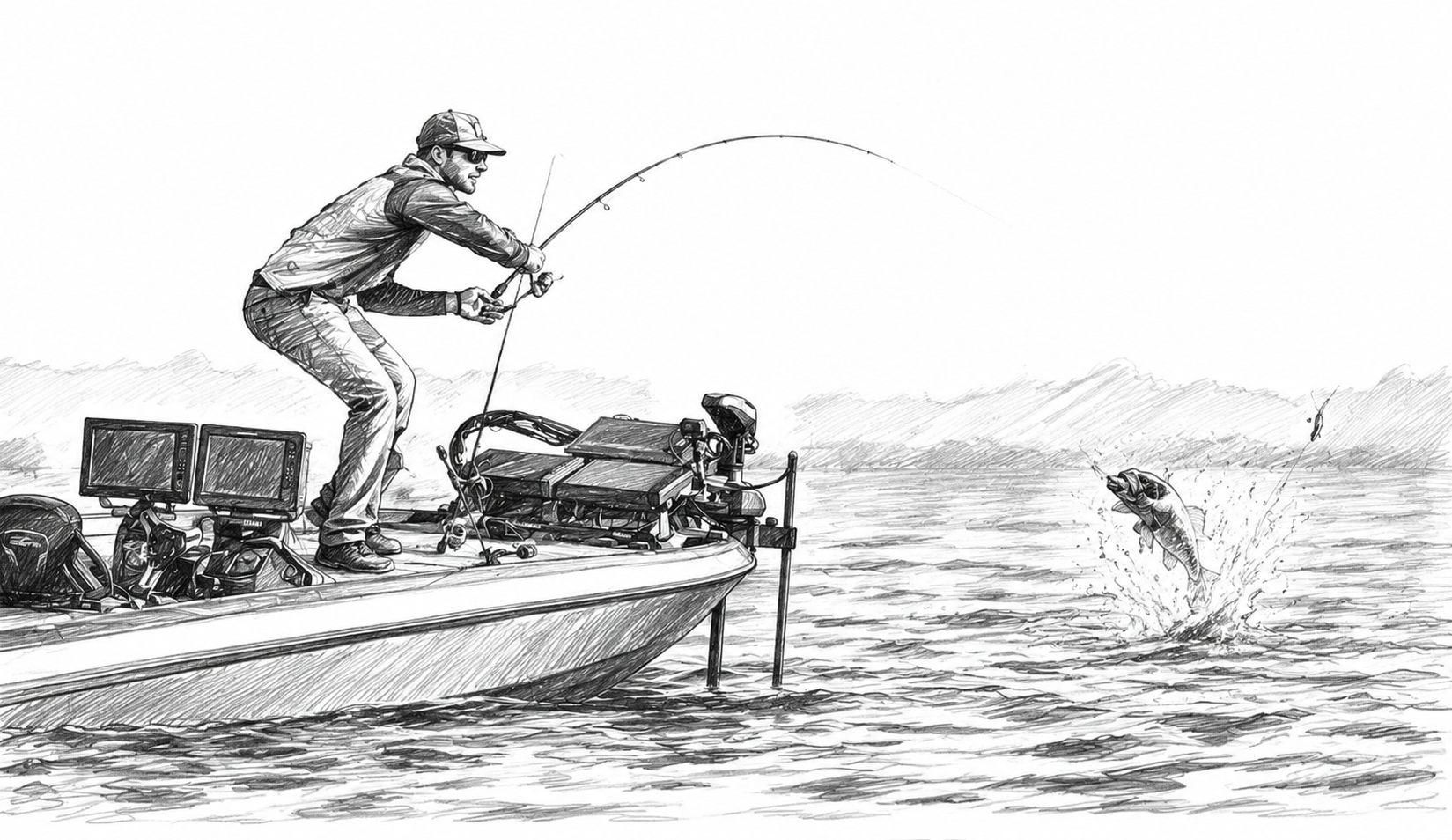
Vertical drop shotting is the classic deep-water application of the technique. Instead of casting, anglers position their boat over fish located on electronics and lower the rig straight down so the bait hovers just above them. This is especially common when targeting smallmouth or spotted bass holding on offshore structure or suspended baitfish schools.
Because the rig stays nearly vertical, anglers can keep the weight on the bottom while lightly shaking the rod tip so the bait quivers in place. This subtle presentation keeps the lure in the strike zone longer and is extremely effective when fish are deep or inactive.
Casting Drop Shot (Open Water Finesse)
Targets: Points, flats, gravel bottoms, roaming fish, clear water
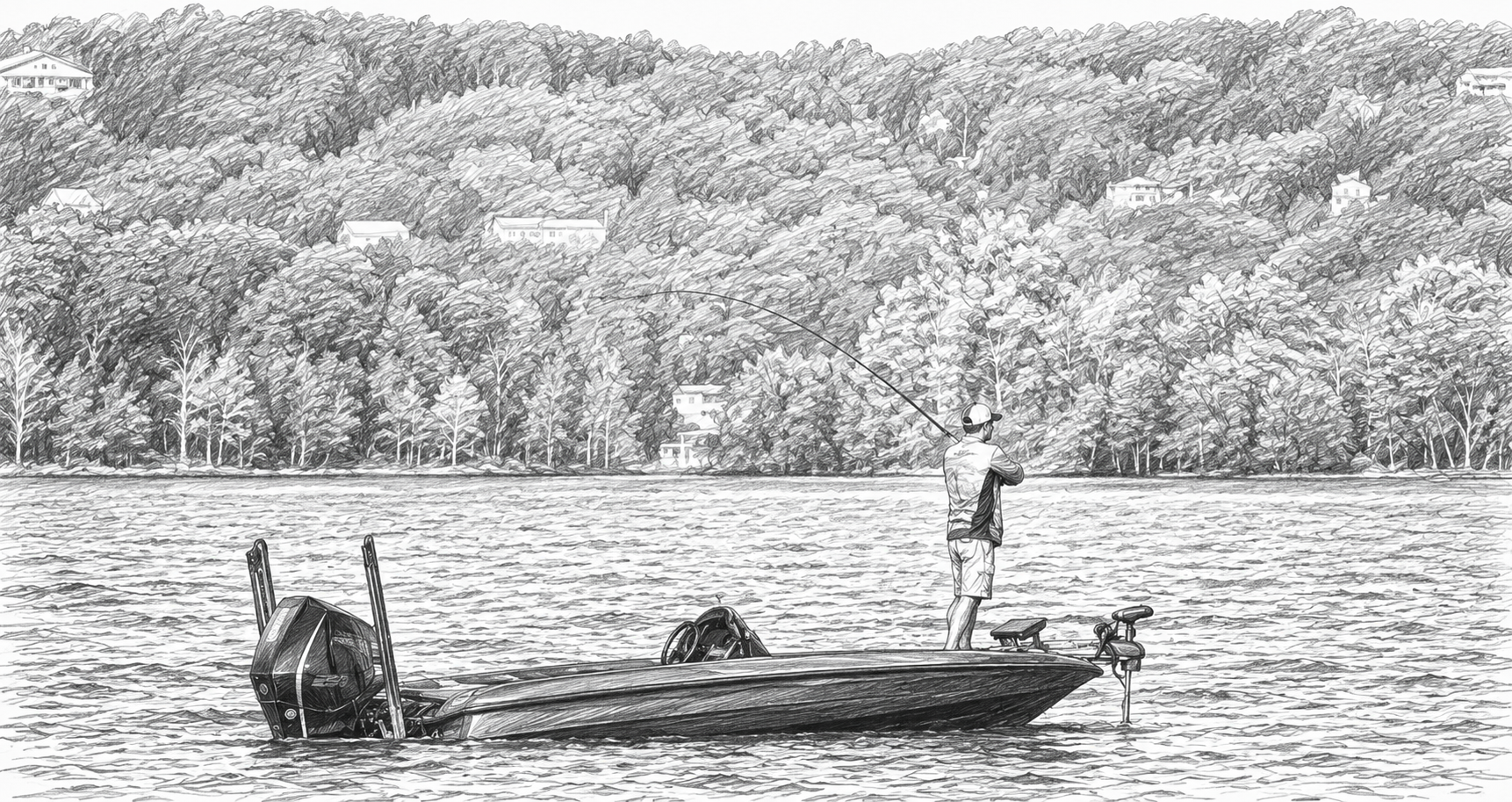
Casting a drop shot across open water structure is one of the most common ways to fish the rig. After casting, anglers allow the weight to settle on the bottom, then slowly drag or shake the bait while keeping the sinker in contact with the bottom.
This approach is ideal for covering water while still maintaining the finesse action that makes the drop shot effective. The bait stays suspended slightly above the bottom where bass can easily see it, which often triggers bites from pressured or finicky fish that ignore faster-moving lures.
Shallow Cover Drop Shot (Docks / Vegetation)
Targets: Boat docks, brush piles, laydowns, grass edges
Although many anglers think of drop shots as a deep-water tactic, they can be extremely effective in shallow cover. Anglers often pitch or skip the rig around docks, wood, or vegetation and let the bait sit just above the bottom where bass are holding.
This presentation is typically worked slowly—dragging the weight into cover and lightly shaking the bait in place to keep it hovering near structure. Because the hook is exposed on many drop shot rigs, anglers frequently switch to weedless setups when fishing around heavy cover to reduce snags.
Suspended Fish Drop Shot (Mid-column Fishing)
Targets: Suspended bass, baitfish schools, bridge pilings, open water
When bass suspend off the bottom—often around bait schools or vertical structure—the drop shot allows anglers to present a lure precisely at the depth where fish are holding. By adjusting the distance between the hook and the weight, the bait can be positioned well above the sinker so it hovers naturally in the same part of the water column as the fish. In many cases, anglers lengthen this leader to keep the bait higher in the water while the weight provides stability and depth control.
This setup allows the lure to remain in the strike zone longer, especially when fish are feeding on suspended baitfish. Anglers typically work the rig slowly with subtle shakes or short pauses so the bait quivers naturally, imitating an injured baitfish or easy prey suspended in open water.
Drop Shot Fishing Applications
Vertical Drop Shot (Deep Water)
Targets: Offshore structure, deep points, humps, ledges, suspended fish
Vertical drop shotting is the classic deep-water application of the technique. Instead of casting, anglers position their boat over fish located on electronics and lower the rig straight down so the bait hovers just above them. This is especially common when targeting smallmouth or spotted bass holding on offshore structure or suspended baitfish schools.
Because the rig stays nearly vertical, anglers can keep the weight on the bottom while lightly shaking the rod tip so the bait quivers in place. This subtle presentation keeps the lure in the strike zone longer and is extremely effective when fish are deep or inactive.
Casting Drop Shot (Open Water Finesse)
Targets: Points, flats, gravel bottoms, roaming fish, clear water
Casting a drop shot across open water structure is one of the most common ways to fish the rig. After casting, anglers allow the weight to settle on the bottom, then slowly drag or shake the bait while keeping the sinker in contact with the bottom.
This approach is ideal for covering water while still maintaining the finesse action that makes the drop shot effective. The bait stays suspended slightly above the bottom where bass can easily see it, which often triggers bites from pressured or finicky fish that ignore faster-moving lures.
Shallow Cover Drop Shot (Docks / Vegetation)
Targets: Boat docks, brush piles, laydowns, grass edges
Although many anglers think of drop shots as a deep-water tactic, they can be extremely effective in shallow cover. Anglers often pitch or skip the rig around docks, wood, or vegetation and let the bait sit just above the bottom where bass are holding.
This presentation is typically worked slowly—dragging the weight into cover and lightly shaking the bait in place to keep it hovering near structure. Because the hook is exposed on many drop shot rigs, anglers frequently switch to weedless setups when fishing around heavy cover to reduce snags.
Suspended Fish Drop Shot (Mid-column Fishing)
Targets: Suspended bass, baitfish schools, bridge pilings, open water
When bass suspend off the bottom—often around bait schools or vertical structure—the drop shot allows anglers to present a lure precisely at the depth where fish are holding. By adjusting the distance between the hook and the weight, the bait can be positioned well above the sinker so it hovers naturally in the same part of the water column as the fish. In many cases, anglers lengthen this leader to keep the bait higher in the water while the weight provides stability and depth control.
This setup allows the lure to remain in the strike zone longer, especially when fish are feeding on suspended baitfish. Anglers typically work the rig slowly with subtle shakes or short pauses so the bait quivers naturally, imitating an injured baitfish or easy prey suspended in open water.
How to Choose a Drop Shot Fishing Rod
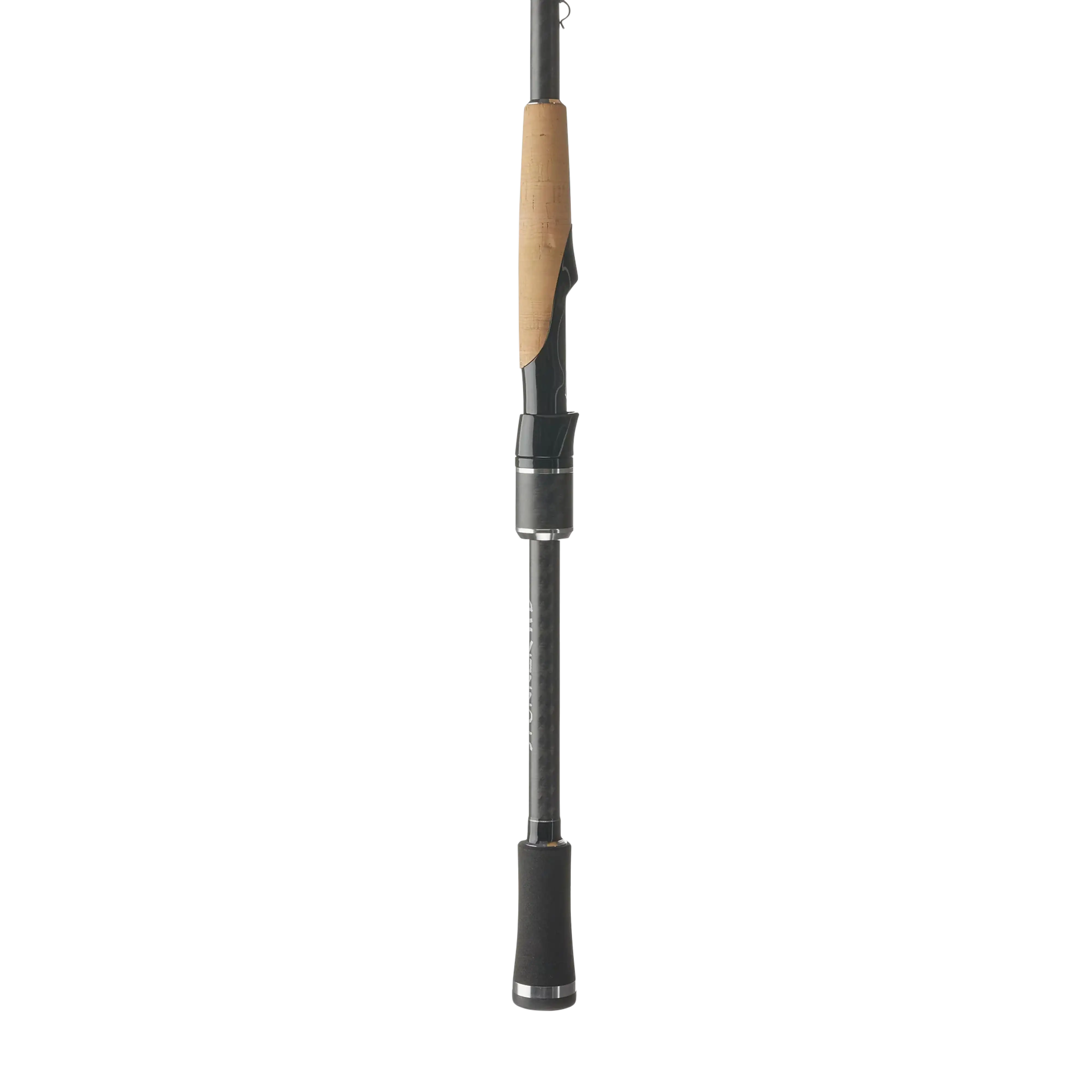
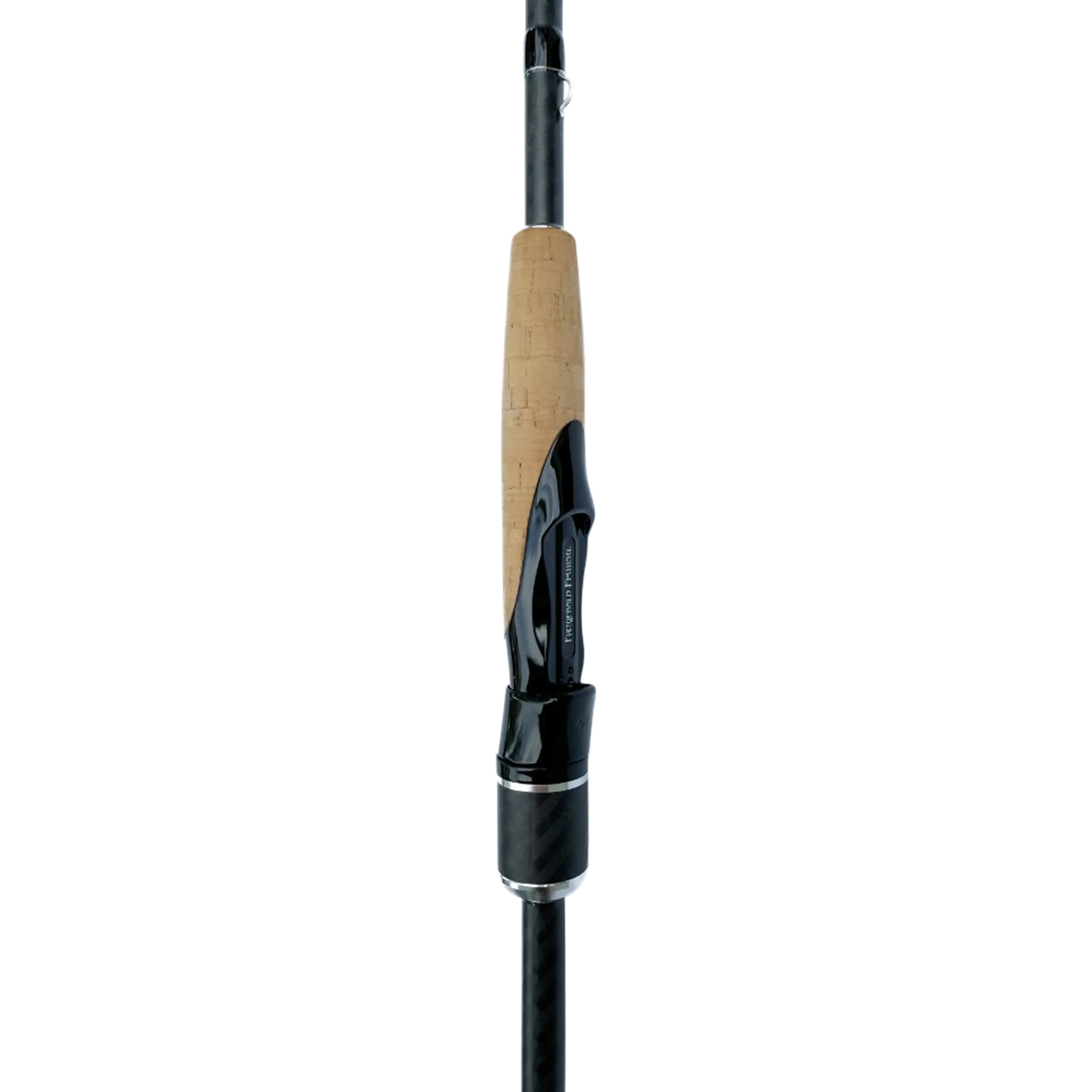
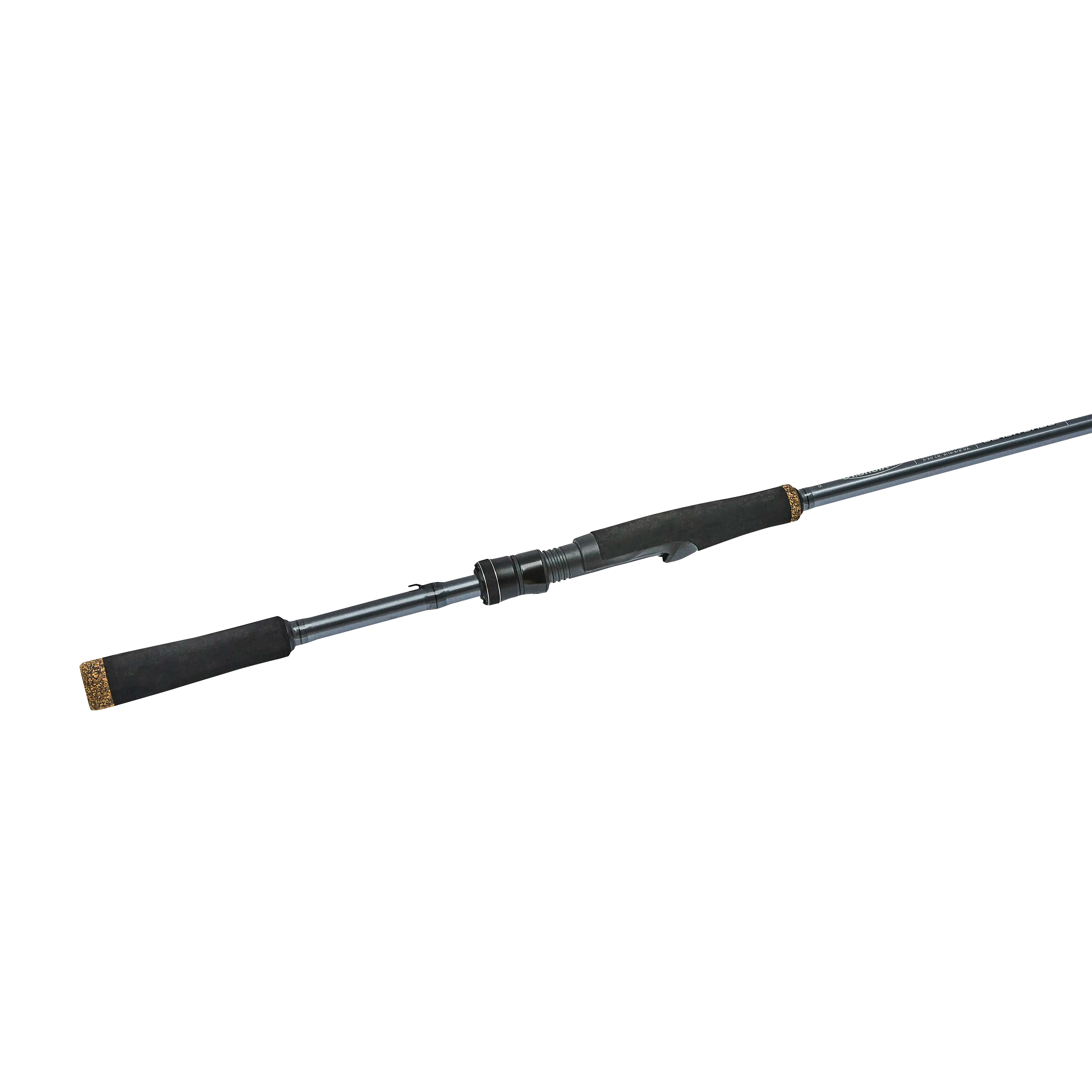
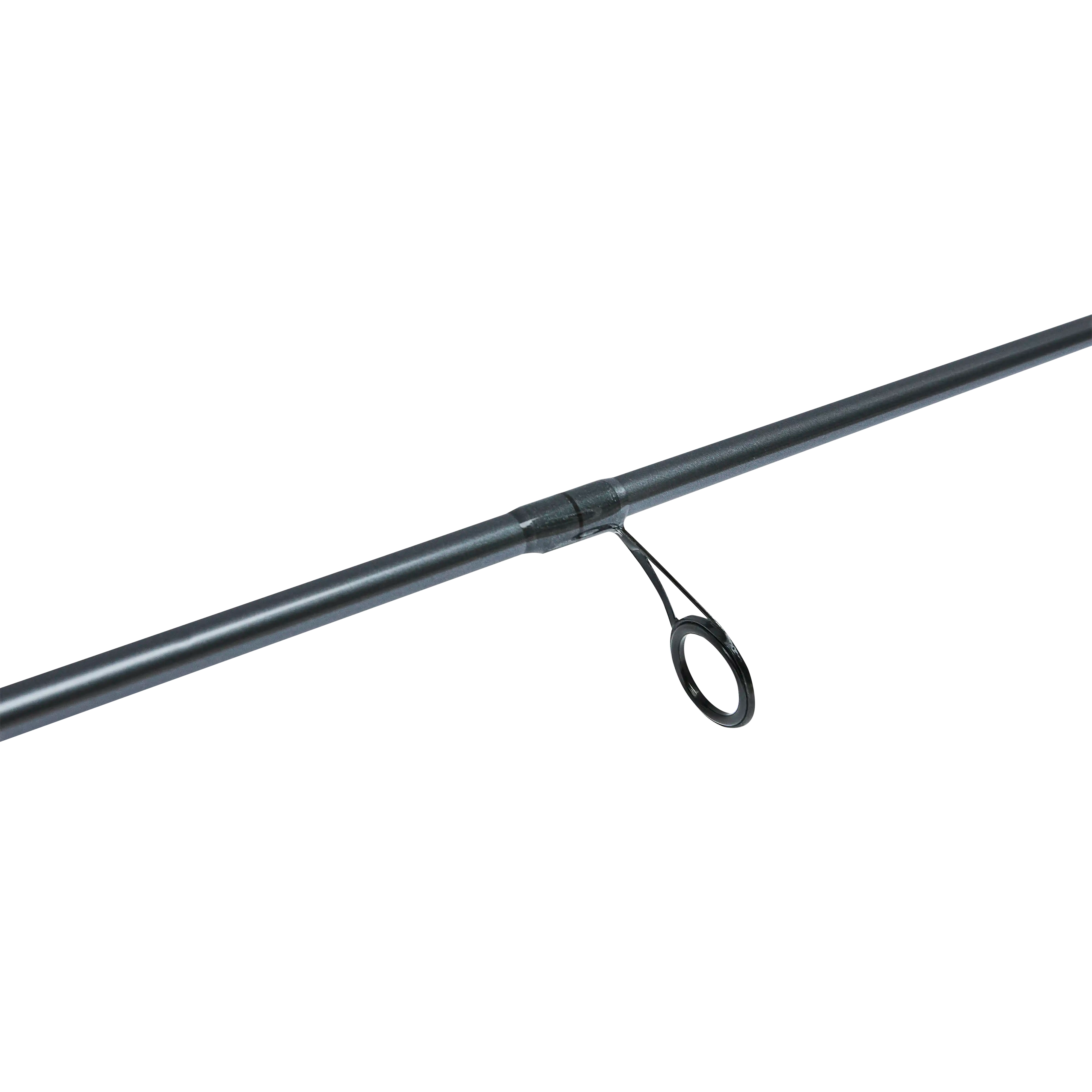
A drop shot rod should prioritize sensitivity, control, and finesse. Because bites are often light, you need a rod that clearly transmits subtle taps, pressure changes, and the feeling of fish simply loading the line. Spinning rods dominate drop shot fishing because they handle light line, small hooks, and finesse baits more effectively than baitcasting setups. A balanced rod with a responsive fast tip allows anglers to shake the bait in place without constantly moving the sinker, which keeps the lure in the strike zone longer.
While many rods can technically fish a drop shot, the best setups are designed to balance sensitivity with enough backbone to control hooked fish on light line. The right combination of power, action, length, and line rating helps anglers maintain bottom contact, detect subtle bites, and fight fish without breaking light leaders.
When choosing a rod, consider these key specs:
Power
Rod power refers to the rod’s resistance to bending under load. Drop shot rods typically fall in the light to medium range because the technique relies on small hooks, light weights, and finesse line. Lighter power rods help protect thin fluorocarbon leaders and allow fish to load the rod naturally before the hookset. Medium-light power is the most common choice because it balances sensitivity with enough backbone to land larger bass in deeper water. In heavier cover or around docks and vegetation, anglers sometimes step up to medium power rods for added control.
Action
Action describes where a rod bends along the blank when pressure is applied. Extra-fast actions are the most popular for drop shot fishing because they concentrate flex in the upper portion of the rod, creating a sensitive tip that lets anglers shake the bait with minimal movement while keeping the weight in place. Fast actions are also used, offering a bit more versatility for anglers who don’t have a dedicated extra-fast drop shot rod. In both cases, a responsive tip improves bite detection and allows a subtle hookset without pulling the bait out of the strike zone.
Length
Drop shot rods typically range from 6'8" to 7'4". Shorter rods offer better control and accuracy when fishing vertically or around cover, while longer rods improve casting distance and line management in deeper water or open areas. Many anglers favor lengths between 6'10" and 7'0" as a balance of sensitivity, casting performance, and fish-fighting leverage.
Line Rating
Line rating indicates the range of line strengths a rod is designed to handle safely. Most drop shot rods are rated for 8-15 lb braided mainline, which provides excellent sensitivity, minimal stretch, and the ability to cast light rigs effectively. Fluorocarbon is commonly used as a leader in the 6–12 lb range to keep the bait nearly invisible and resistant to abrasion near structure. In clear water or highly pressured conditions, anglers may also use straight fluorocarbon as the mainline, typically 6–10 lb, for maximum stealth. Choosing a rod rated for your intended line ensures the blank loads properly, transmits subtle bites, and allows secure hooksets on light hooks without overloading the rod.
Weight / Lure Rating
The lure rating identifies the range of weights a rod is designed to cast and control effectively. Drop shot weights typically range from 1/8 oz up to 3/4 oz, depending on depth, wind, current, and the size of the fish being targeted. Lighter weights are ideal for shallow water, calm conditions, or finesse presentations, while heavier weights help maintain bottom contact in deeper water, strong current, or vertical presentations. Choosing a rod rated for the weights you intend to fish ensures the blank loads properly during the cast, maintains sensitivity, and allows precise bait control.
Vertical Drop Shot (Deep Water)
Vertical drop shotting is typically fished directly below the boat over deep structure or suspended fish. Because the presentation stays nearly vertical, rods should prioritize sensitivity and precise control over casting distance. Medium-light rods with fast or extra-fast tips allow anglers to subtly shake the bait while keeping the weight in contact with the bottom. Slightly longer rods help manage deeper water and maintain line control when fighting fish below the boat.
Targets: Offshore structure, deep points, humps, ledges, suspended fish
Rod Length: 6'10"–7'2"
Power: Medium-light
Action: Fast or extra-fast
Line (Mainline / Leader): 12–15 lb braid / 8–10 lb fluorocarbon (leader or straight mainline)
Weights Used: 3/16–3/4 oz
Casting Drop Shot (Open Water Finesse)
Casting a drop shot across open water structure requires rods that balance sensitivity with casting distance. Longer spinning rods help launch light rigs accurately and maintain line control during long drifts or slow bottom presentations. Medium-light power rods remain the most common choice because they allow the bait to move naturally while still providing enough backbone to land larger fish hooked farther from the boat.
Targets: Points, flats, gravel bottoms, roaming fish, clear water
Rod Length: 7'0"–7'4"
Power: Medium-light
Action: Fast or extra-fast
Line (Mainline / Leader): 10–15 lb braid / 6–10 lb fluorocarbon (leader or straight mainline)
Weights Used: 1/8–3/8 oz
Shallow Cover Drop Shot
When fishing around docks, brush, or vegetation, anglers often need slightly more rod power to steer fish away from cover. Medium to medium-light rods provide additional backbone while maintaining the finesse needed for drop shot fishing. Accuracy becomes critical, so rod lengths generally stay shorter—around 6'8"–7'0"—to maintain control when pitching or skipping the rig into tight spaces.
Targets: Boat docks, brush piles, laydowns, grass edges
Rod Length: 6'8"–7'0"
Power: Medium-light to medium
Action: Fast or extra fast
Line (Mainline / Leader): 10–15 lb braid / 6–10 lb fluorocarbon (leader or straight mainline)
Weights Used: 3/16–3/8 oz
Suspended Fish Drop Shot
When targeting fish suspended around bait schools or structure, anglers fish the drop shot at specific depths rather than directly on the bottom. Rods similar to vertical setups work well because sensitivity and precise bait control are critical. Medium-light rods with fast or extra-fast tips allow anglers to detect subtle bites while keeping the bait naturally suspended in the strike zone.
Targets: Suspended bass, baitfish schools, bridge pilings, open water
Rod Length: 6'10"–7'2"
Power: Medium-light
Action: Fast or extra-fast
Line (Mainline / Leader): 12–15 lb braid / 6–10 lb fluorocarbon (leader or straight mainline)
Weights Used: 3/16–3/4 oz
Key Takeaways
- Medium-light power balances finesse sensitivity with fish-fighting control
- Fast or extra-fast actions improve bait control and bite detection
- 6'10"–7'2" rods provide ideal casting distance and control
- Heavier setups work around cover; lighter setups excel in open water and pressured conditions
How to Choose a Drop Shot Fishing Rod
A drop shot rod should prioritize sensitivity, control, and finesse. Because bites are often light, you need a rod that clearly transmits subtle taps, pressure changes, and the feeling of fish simply loading the line. Spinning rods dominate drop shot fishing because they handle light line, small hooks, and finesse baits more effectively than baitcasting setups. A balanced rod with a responsive fast tip allows anglers to shake the bait in place without constantly moving the sinker, which keeps the lure in the strike zone longer.
While many rods can technically fish a drop shot, the best setups are designed to balance sensitivity with enough backbone to control hooked fish on light line. The right combination of power, action, length, and line rating helps anglers maintain bottom contact, detect subtle bites, and fight fish without breaking light leaders.
When choosing a rod, consider these key specs:
Power
Rod power refers to the rod’s resistance to bending under load. Drop shot rods typically fall in the light to medium range because the technique relies on small hooks, light weights, and finesse line. Lighter power rods help protect thin fluorocarbon leaders and allow fish to load the rod naturally before the hookset. Medium-light power is the most common choice because it balances sensitivity with enough backbone to land larger bass in deeper water. In heavier cover or around docks and vegetation, anglers sometimes step up to medium power rods for added control.
Action
Action describes where a rod bends along the blank when pressure is applied. Extra-fast actions are the most popular for drop shot fishing because they concentrate flex in the upper portion of the rod, creating a sensitive tip that lets anglers shake the bait with minimal movement while keeping the weight in place. Fast actions are also used, offering a bit more versatility for anglers who don’t have a dedicated extra-fast drop shot rod. In both cases, a responsive tip improves bite detection and allows a subtle hookset without pulling the bait out of the strike zone.
Length
Drop shot rods typically range from 6'8" to 7'4". Shorter rods offer better control and accuracy when fishing vertically or around cover, while longer rods improve casting distance and line management in deeper water or open areas. Many anglers favor lengths between 6'10" and 7'0" as a balance of sensitivity, casting performance, and fish-fighting leverage.
Line Rating
Line rating indicates the range of line strengths a rod is designed to handle safely. Most drop shot rods are rated for 8-15 lb braided mainline, which provides excellent sensitivity, minimal stretch, and the ability to cast light rigs effectively. Fluorocarbon is commonly used as a leader in the 6–12 lb range to keep the bait nearly invisible and resistant to abrasion near structure. In clear water or highly pressured conditions, anglers may also use straight fluorocarbon as the mainline, typically 6–10 lb, for maximum stealth. Choosing a rod rated for your intended line ensures the blank loads properly, transmits subtle bites, and allows secure hooksets on light hooks without overloading the rod.
Weight / Lure Rating
The lure rating identifies the range of weights a rod is designed to cast and control effectively. Drop shot weights typically range from 1/8 oz up to 3/4 oz, depending on depth, wind, current, and the size of the fish being targeted. Lighter weights are ideal for shallow water, calm conditions, or finesse presentations, while heavier weights help maintain bottom contact in deeper water, strong current, or vertical presentations. Choosing a rod rated for the weights you intend to fish ensures the blank loads properly during the cast, maintains sensitivity, and allows precise bait control.
Vertical Drop Shot (Deep Water)
Vertical drop shotting is typically fished directly below the boat over deep structure or suspended fish. Because the presentation stays nearly vertical, rods should prioritize sensitivity and precise control over casting distance. Medium-light rods with fast or extra-fast tips allow anglers to subtly shake the bait while keeping the weight in contact with the bottom. Slightly longer rods help manage deeper water and maintain line control when fighting fish below the boat.
Targets: Offshore structure, deep points, humps, ledges, suspended fish
Rod Length: 6'10"–7'2"
Power: Medium-light
Action: Fast or extra-fast
Line (Mainline / Leader): 12–15 lb braid / 8–10 lb fluorocarbon (leader or straight mainline)
Weights Used: 3/16–3/4 oz
Casting Drop Shot (Open Water Finesse)
Casting a drop shot across open water structure requires rods that balance sensitivity with casting distance. Longer spinning rods help launch light rigs accurately and maintain line control during long drifts or slow bottom presentations. Medium-light power rods remain the most common choice because they allow the bait to move naturally while still providing enough backbone to land larger fish hooked farther from the boat.
Targets: Points, flats, gravel bottoms, roaming fish, clear water
Rod Length: 7'0"–7'4"
Power: Medium-light
Action: Fast or extra-fast
Line (Mainline / Leader): 10–15 lb braid / 6–10 lb fluorocarbon (leader or straight mainline)
Weights Used: 1/8–3/8 oz
Shallow Cover Drop Shot
When fishing around docks, brush, or vegetation, anglers often need slightly more rod power to steer fish away from cover. Medium to medium-light rods provide additional backbone while maintaining the finesse needed for drop shot fishing. Accuracy becomes critical, so rod lengths generally stay shorter—around 6'8"–7'0"—to maintain control when pitching or skipping the rig into tight spaces.
Targets: Boat docks, brush piles, laydowns, grass edges
Rod Length: 6'8"–7'0"
Power: Medium-light to medium
Action: Fast or extra fast
Line (Mainline / Leader): 10–15 lb braid / 6–10 lb fluorocarbon (leader or straight mainline)
Weights Used: 3/16–3/8 oz
Suspended Fish Drop Shot
When targeting fish suspended around bait schools or structure, anglers fish the drop shot at specific depths rather than directly on the bottom. Rods similar to vertical setups work well because sensitivity and precise bait control are critical. Medium-light rods with fast or extra-fast tips allow anglers to detect subtle bites while keeping the bait naturally suspended in the strike zone.
Targets: Suspended bass, baitfish schools, bridge pilings, open water
Rod Length: 6'10"–7'2"
Power: Medium-light
Action: Fast or extra-fast
Line (Mainline / Leader): 12–15 lb braid / 6–10 lb fluorocarbon (leader or straight mainline)
Weights Used: 3/16–3/4 oz
Key Takeaways
- Medium-light power balances finesse sensitivity with fish-fighting control
- Fast or extra-fast actions improve bait control and bite detection
- 6'10"–7'2" rods provide ideal casting distance and control
- Heavier setups work around cover; lighter setups excel in open water and pressured conditions
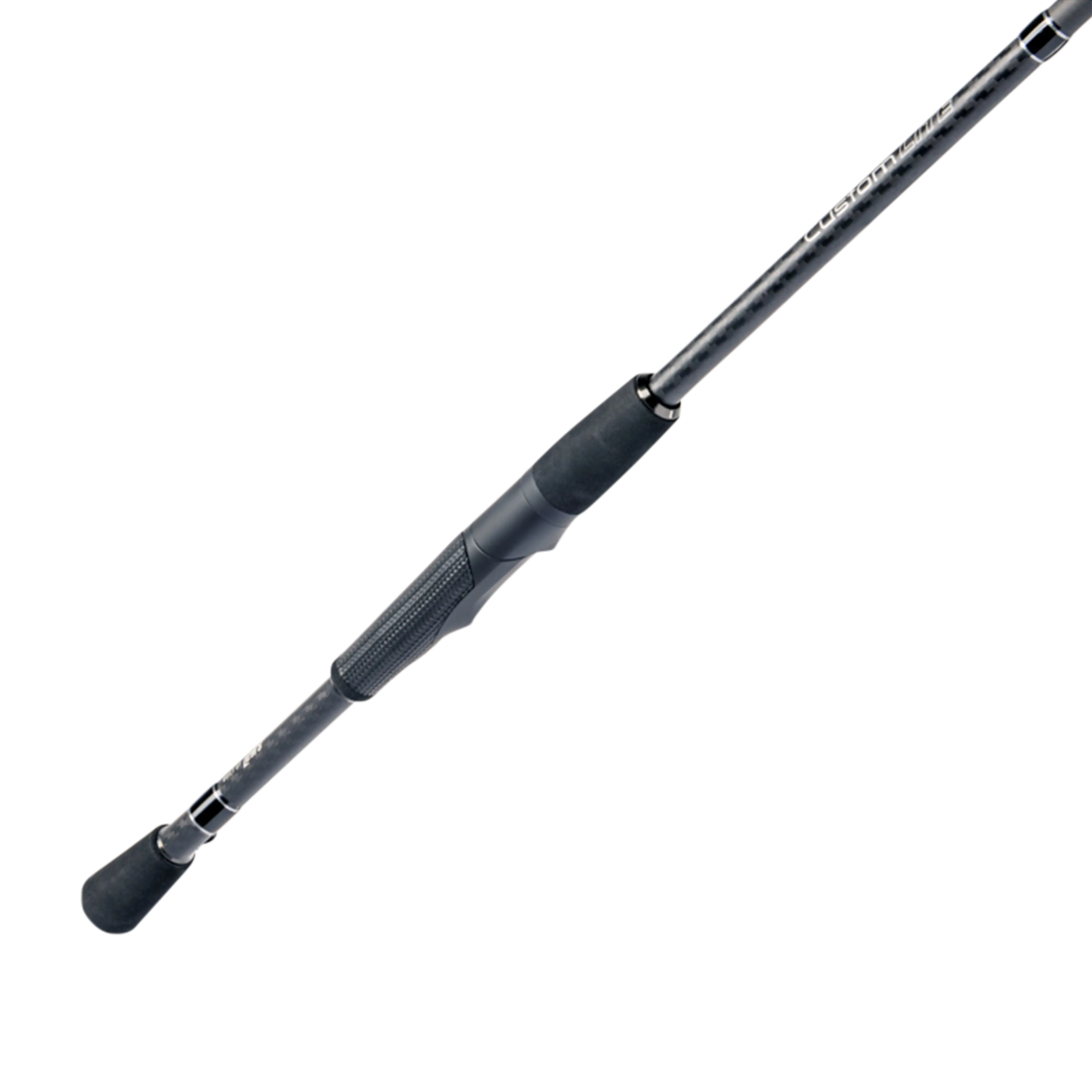
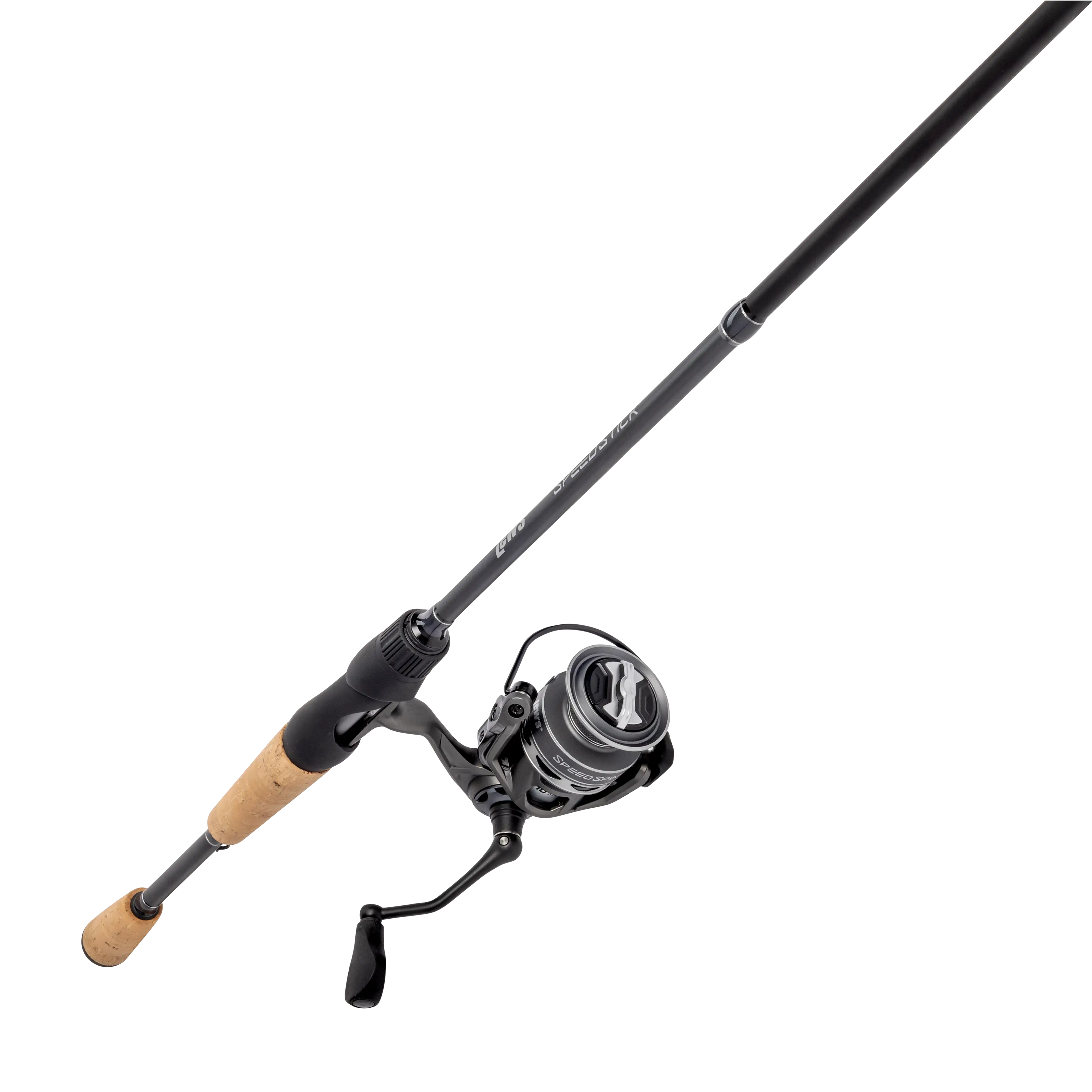
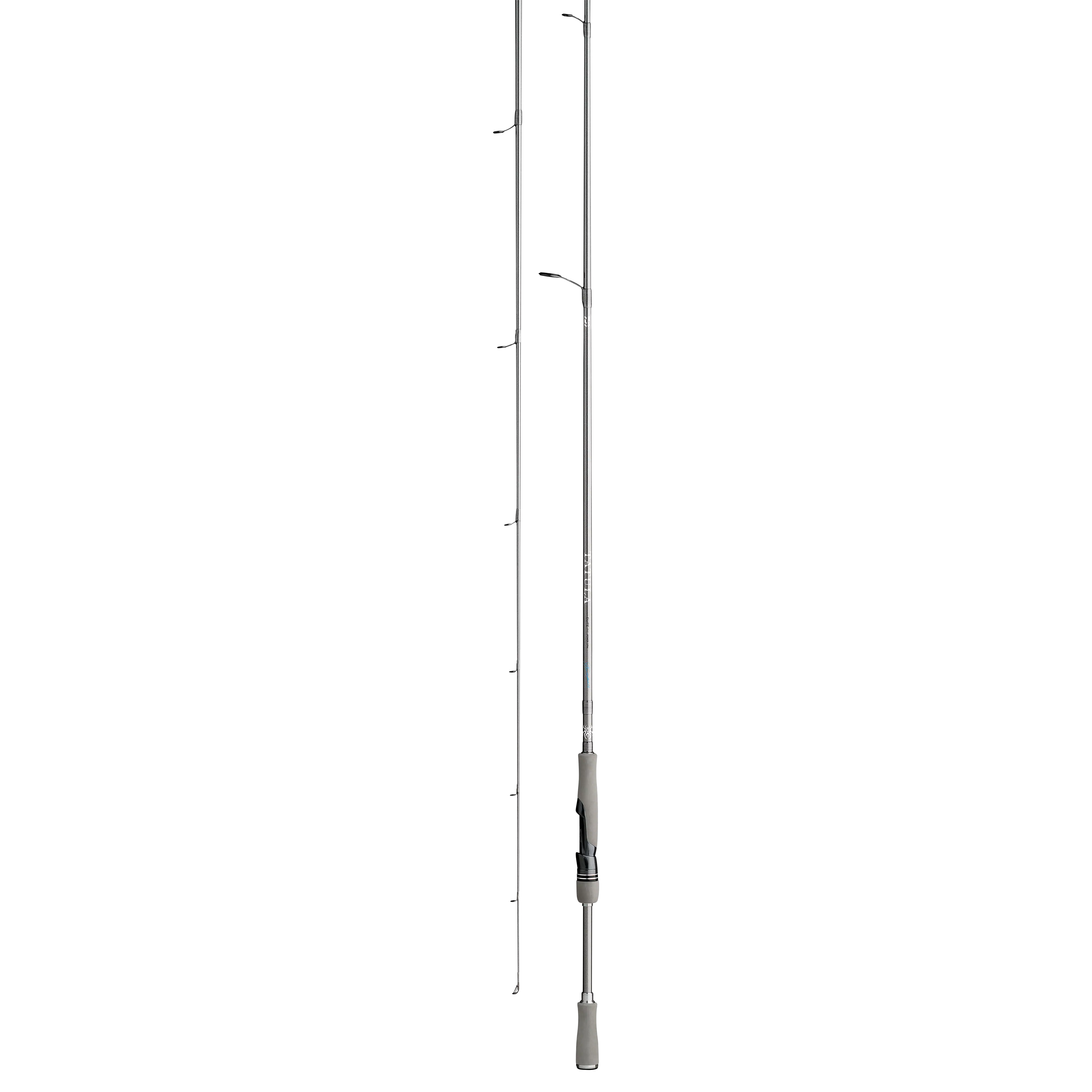
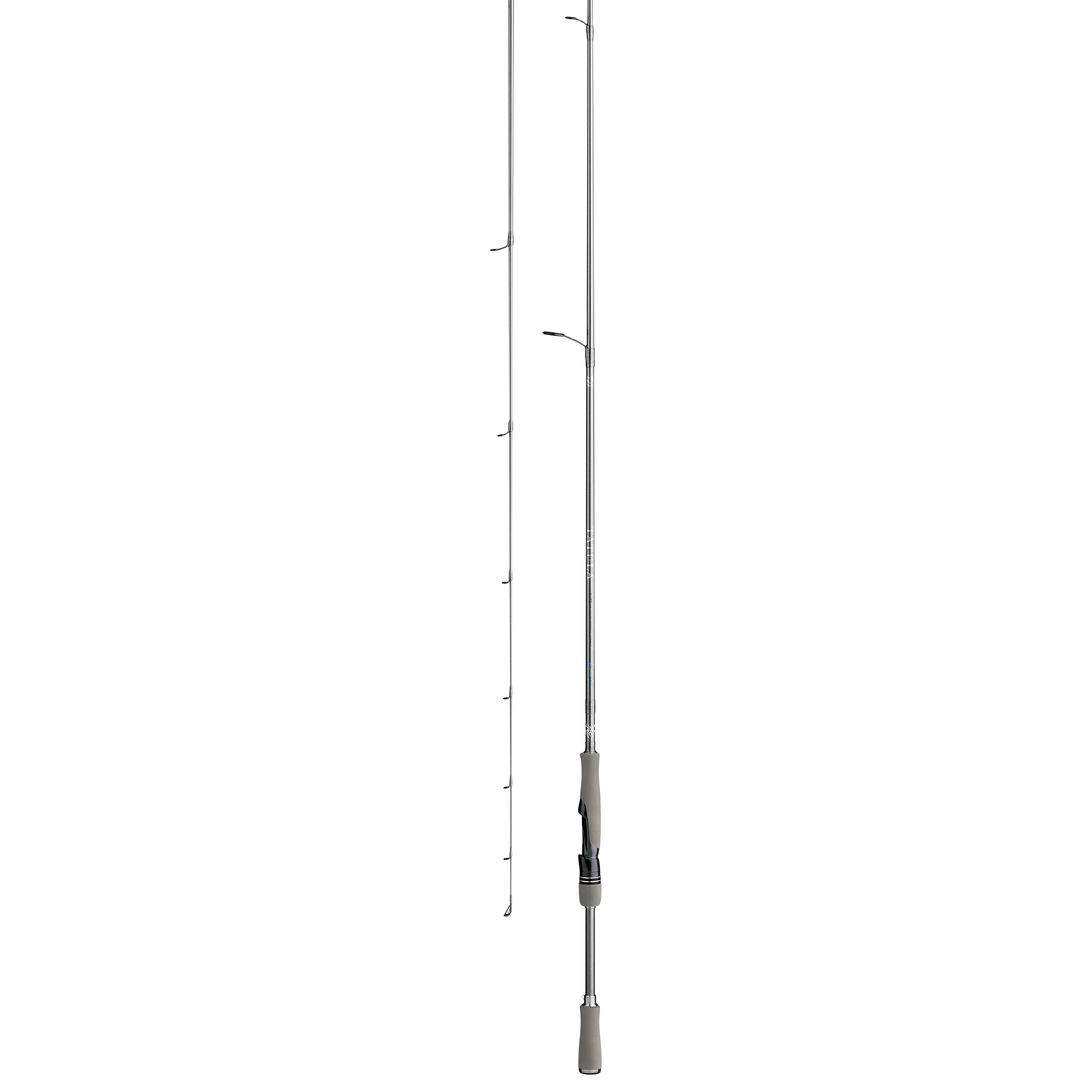
Drop Shot Rods & Combos
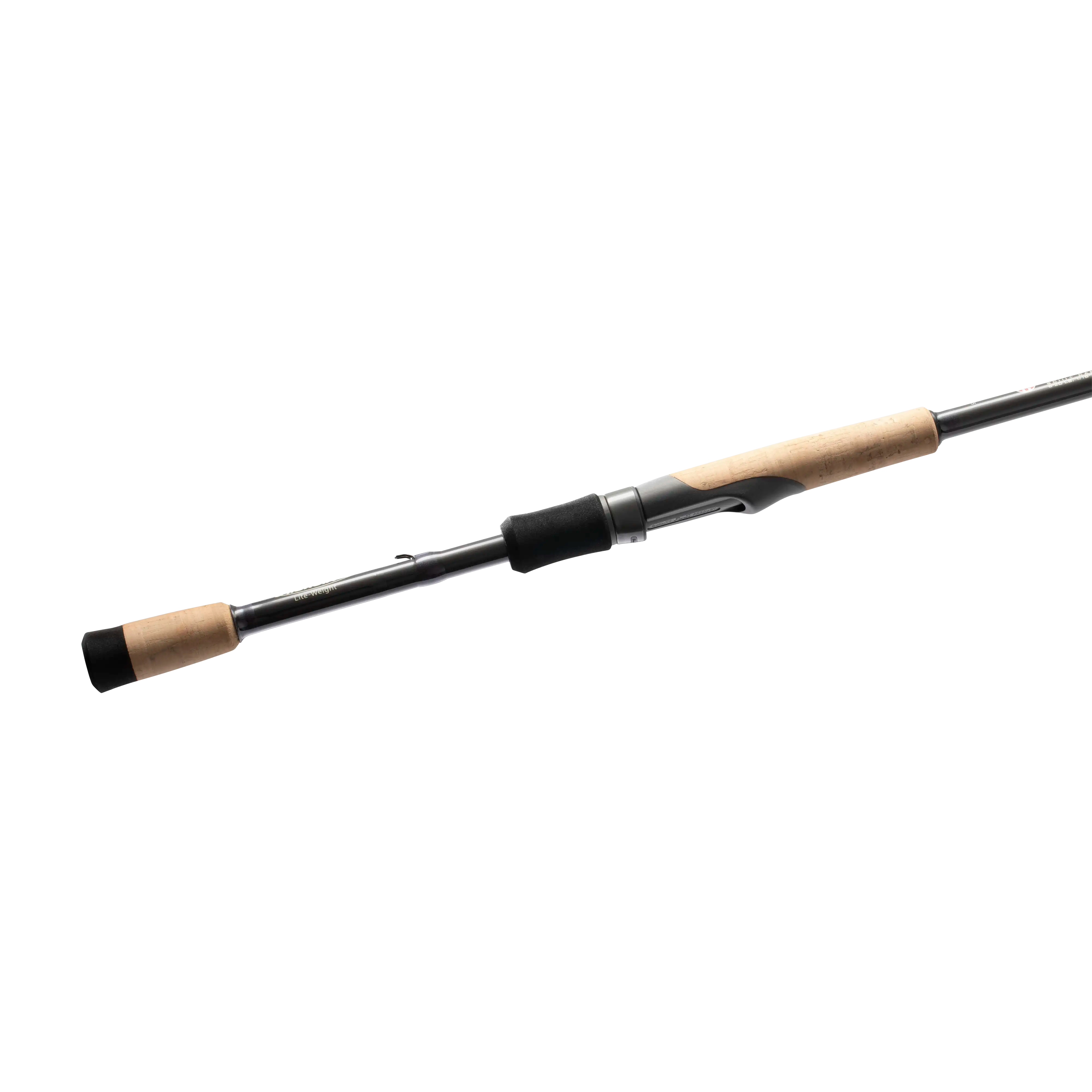



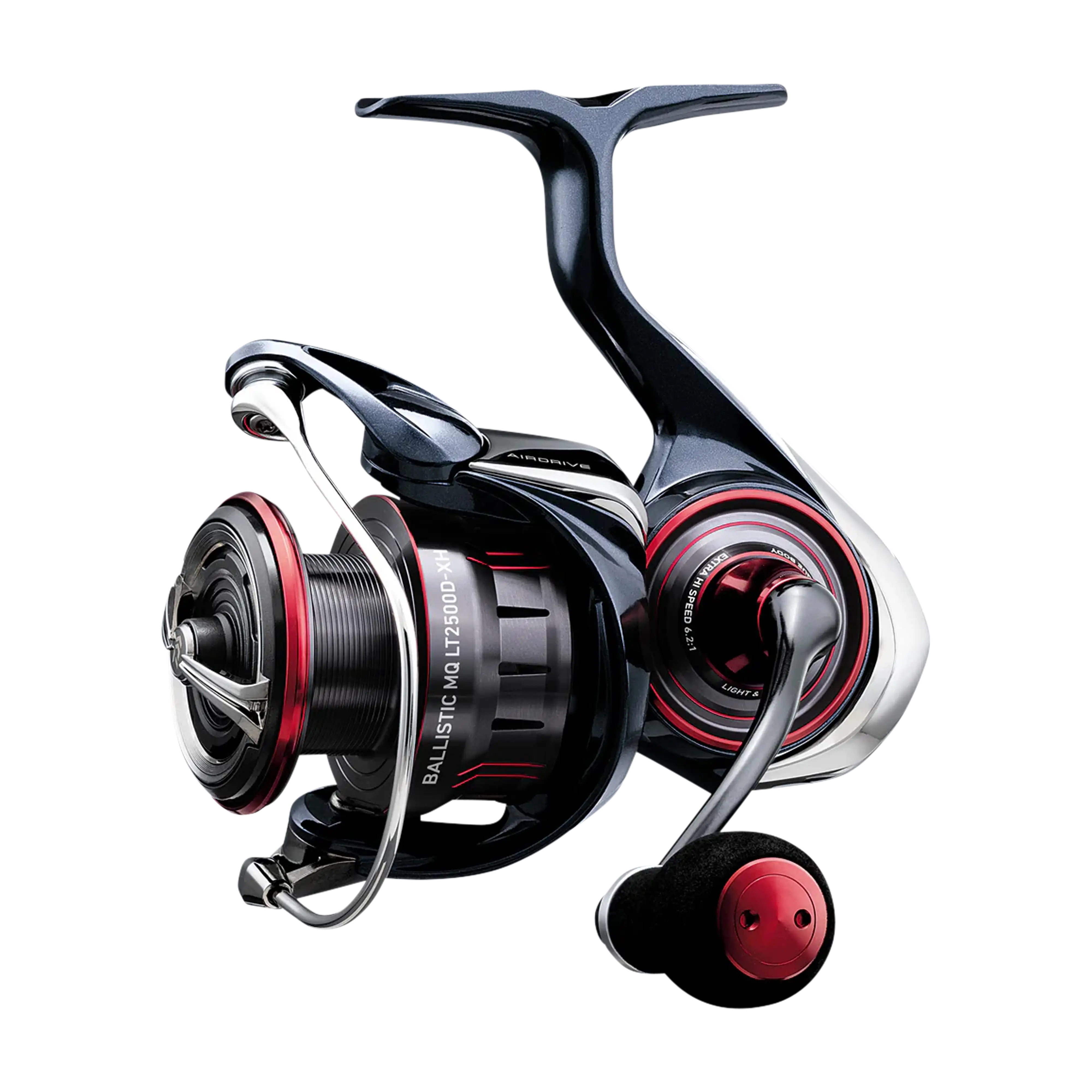
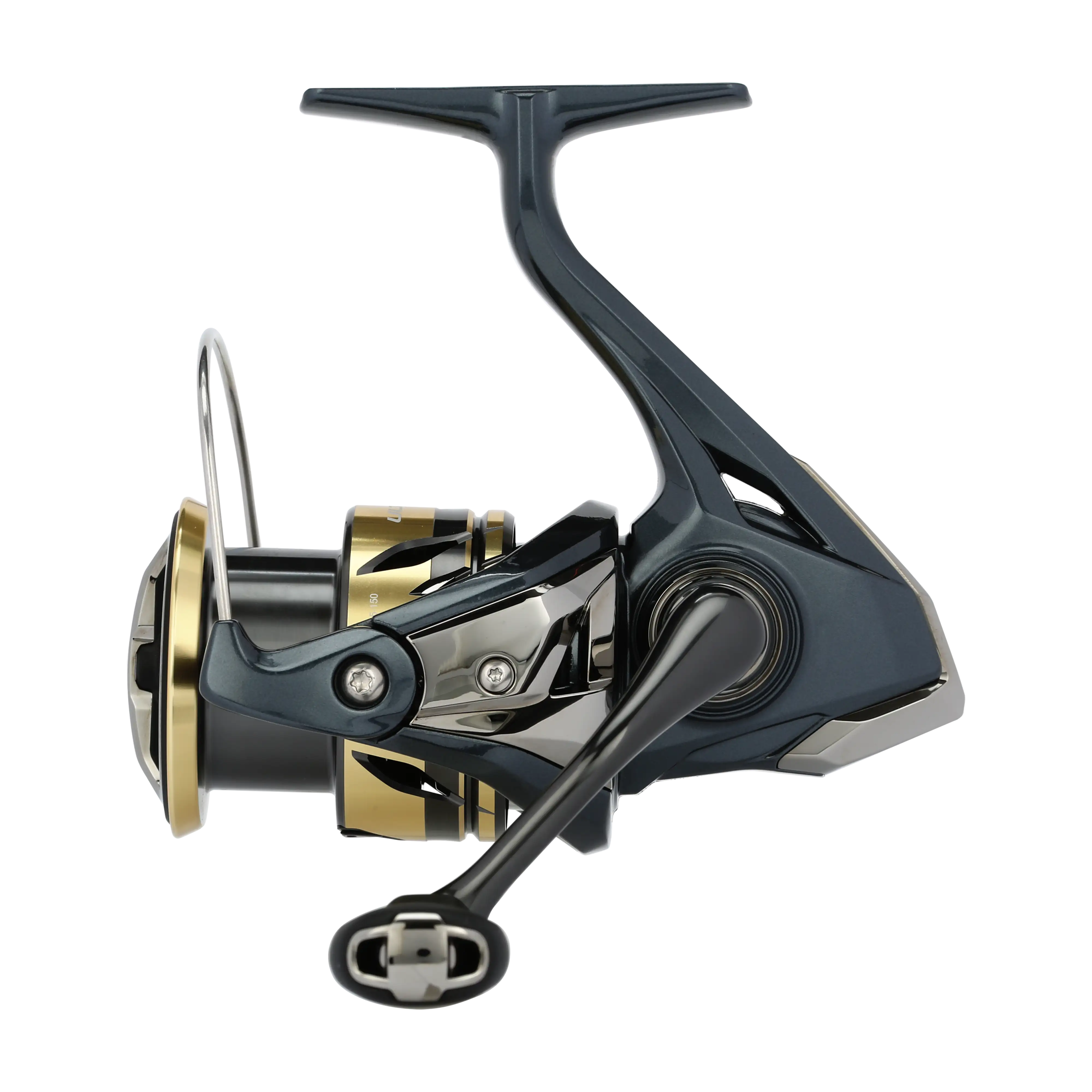
Best Reels for Drop Shot Fishing
A high-quality spinning reel is just as important as the rod in a drop shot setup. Because drop shot fishing typically uses light line and small hooks, the reel must provide smooth, consistent line management, reliable gearing, and a drag system capable of protecting against sudden strikes or long runs without breaking the line. Precision, sensitivity, and control are critical so anglers can detect subtle bites and manipulate the bait effectively
When evaluating a reel for drop shotting, consider these key features:
Reel Type
Spinning reels are the standard for drop shot fishing because they handle light lines, finesse baits, and subtle presentations with greater control than baitcasting setups. They allow smoother casting with lightweight rigs, better slack-line management, and more precise bait control when working vertical structure, deep water, or suspended fish. Spinning reels also reduce line management issues commonly associated with finesse fishing, making them ideal for both beginners and experienced anglers.
Gear Ratio
Gear ratio determines how many times the spool rotates with one full turn of the handle, directly affecting retrieve speed and line pickup. Faster gear ratios in the 6.0:1 to 7.0:1+ range are excellent for quickly removing slack line, maintaining contact in deeper water, and reacting instantly to subtle bites or fish swimming toward the boat. Standard ratios around 5.2:1 to 6.2:1 provide smoother, more controlled retrieves that many anglers prefer for slower finesse presentations. The ideal ratio depends on fishing depth, current, lure weight, and how aggressively you work the bait.
Drag System
The drag system controls line tension during the fight and is one of the most important features on a drop shot reel. Because drop shot fishing often relies on light braid and fluorocarbon leaders, smooth and consistent drag pressure is critical for preventing sudden break-offs during hard runs or head shakes. A quality drag system allows fish to pull line smoothly without sudden tension spikes, helping protect light tackle while maintaining steady pressure throughout the fight.
Line Capacity
Drop shot fishing doesn’t require excessive line capacity, but your reel should still hold enough braid or fluorocarbon to comfortably fish deep water, long points, offshore structure, or make long finesse casts. A properly sized spool also improves casting distance and line management by reducing line memory and twist, which is especially important with lighter finesse presentations.
Durability
Even finesse reels need to handle repeated use, constant casting, and occasional impacts around docks, rocks, and boat decks. Reels built with corrosion-resistant components, rigid frames, and quality bearings maintain smoother performance over time and hold up better under regular use. A durable reel not only lasts longer but also keeps retrieves, drag performance, and line management consistent season after season.
Vertical Drop Shot
Vertical drop shotting is fished directly under the boat over deep structure or suspended fish. Because the presentation is nearly vertical, reels must allow precise line control, smooth retrieval, and sensitive bite detection. Fast gear ratios help remove slack quickly on bites, while smooth drags protect light braid and fluorocarbon lines from snapping on deep strikes.
Reel Type / Size: Spinning reel, 2500–3000 size
Gear Ratio: 6.0:1–7.0:1+ (fast for quick line pickup and immediate hooksets)
Drag: Smooth, 8–12 lb maximum depending on line choice
Line (Mainline / Leader): 12–15 lb braid / 6–10 lb fluorocarbon (leader or straight mainline)
Casting Drop Shot
When casting across open water, reels must support long casts and controlled retrieves without line twist or backlash. Longer rods and lighter rigs demand reels that handle moderate line capacity and provide enough drag to manage fish hooked far from the boat.
Reel Type / Size: Spinning reel, 2500–3000 size
Gear Ratio: 5.2:1–6.2:1 (standard for controlled retrieves although some prefer 6.0:1–7.0:1+ here for quickly removing slack)
Drag: Smooth, 10–14 lb maximum
Line (Mainline / Leader): 10–15 lb braid / 8–12 lb fluorocarbon (leader or straight mainline)
Shallow Cover Drop Shot
Fishing docks, brush, or vegetation requires a reel that can handle precise presentations and sudden runs from fish hooked near structure. Slightly stronger drag may be used to steer fish away from cover without breaking light lines.
Reel Type / Size: Spinning reel, 2500–3000 size
Gear Ratio: 5.2:1–6.2:1 (standard for controlled retrieves and accurate hooksets)
Drag: Smooth, 6–10 lb maximum
Line (Mainline / Leader): 10–15 lb braid / 8–12 lb fluorocarbon (leader or straight mainline)
Suspended Fish Drop Shot
When targeting suspended fish, reels must provide smooth, controlled line management to maintain tension on light braid or fluorocarbon. Smooth drag and precise retrieval are key for managing slack and maintaining proper bait action in the water column.
Reel Type / Size: Spinning reel, 2500–3000 size
Gear Ratio: 6.0:1–7.0:1+ (fast for quickly removing slack and responding to mid-water bites)
Drag: Smooth, 8–12 lb maximum
Line (Mainline / Leader): 12–20 lb braid / 6–10 lb fluorocarbon (leader or straight mainline)
Key Takeaways
- Spinning reels excel with light line and finesse presentations
- 5.2:1–6.2:1 gear ratios balance speed and control
- Smooth drags protect light braid and fluorocarbon lines
- 2500–3000 size reels match most drop shot setups
- Good line management improves sensitivity and presentation
- Adjust drag and retrieve speed for conditions and depth
Best Reels for Drop Shot Fishing
A high-quality spinning reel is just as important as the rod in a drop shot setup. Because drop shot fishing typically uses light line and small hooks, the reel must provide smooth, consistent line management, reliable gearing, and a drag system capable of protecting against sudden strikes or long runs without breaking the line. Precision, sensitivity, and control are critical so anglers can detect subtle bites and manipulate the bait effectively
When evaluating a reel for drop shotting, consider these key features:
Reel Type
Spinning reels are the standard for drop shot fishing because they handle light lines, finesse baits, and subtle presentations with greater control than baitcasting setups. They allow smoother casting with lightweight rigs, better slack-line management, and more precise bait control when working vertical structure, deep water, or suspended fish. Spinning reels also reduce line management issues commonly associated with finesse fishing, making them ideal for both beginners and experienced anglers.
Gear Ratio
Gear ratio determines how many times the spool rotates with one full turn of the handle, directly affecting retrieve speed and line pickup. Faster gear ratios in the 6.0:1 to 7.0:1+ range are excellent for quickly removing slack line, maintaining contact in deeper water, and reacting instantly to subtle bites or fish swimming toward the boat. Standard ratios around 5.2:1 to 6.2:1 provide smoother, more controlled retrieves that many anglers prefer for slower finesse presentations. The ideal ratio depends on fishing depth, current, lure weight, and how aggressively you work the bait.
Drag System
The drag system controls line tension during the fight and is one of the most important features on a drop shot reel. Because drop shot fishing often relies on light braid and fluorocarbon leaders, smooth and consistent drag pressure is critical for preventing sudden break-offs during hard runs or head shakes. A quality drag system allows fish to pull line smoothly without sudden tension spikes, helping protect light tackle while maintaining steady pressure throughout the fight.
Line Capacity
Drop shot fishing doesn’t require excessive line capacity, but your reel should still hold enough braid or fluorocarbon to comfortably fish deep water, long points, offshore structure, or make long finesse casts. A properly sized spool also improves casting distance and line management by reducing line memory and twist, which is especially important with lighter finesse presentations.
Durability
Even finesse reels need to handle repeated use, constant casting, and occasional impacts around docks, rocks, and boat decks. Reels built with corrosion-resistant components, rigid frames, and quality bearings maintain smoother performance over time and hold up better under regular use. A durable reel not only lasts longer but also keeps retrieves, drag performance, and line management consistent season after season.
Vertical Drop Shot
Vertical drop shotting is fished directly under the boat over deep structure or suspended fish. Because the presentation is nearly vertical, reels must allow precise line control, smooth retrieval, and sensitive bite detection. Fast gear ratios help remove slack quickly on bites, while smooth drags protect light braid and fluorocarbon lines from snapping on deep strikes.
Reel Type / Size: Spinning reel, 2500–3000 size
Gear Ratio: 6.0:1–7.0:1+ (fast for quick line pickup and immediate hooksets)
Drag: Smooth, 8–12 lb maximum depending on line choice
Line (Mainline / Leader): 12–15 lb braid / 6–10 lb fluorocarbon (leader or straight mainline)
Casting Drop Shot
When casting across open water, reels must support long casts and controlled retrieves without line twist or backlash. Longer rods and lighter rigs demand reels that handle moderate line capacity and provide enough drag to manage fish hooked far from the boat.
Reel Type / Size: Spinning reel, 2500–3000 size
Gear Ratio: 5.2:1–6.2:1 (standard for controlled retrieves although some prefer 6.0:1–7.0:1+ here for quickly removing slack)
Drag: Smooth, 10–14 lb maximum
Line (Mainline / Leader): 10–15 lb braid / 8–12 lb fluorocarbon (leader or straight mainline)
Shallow Cover Drop Shot
Fishing docks, brush, or vegetation requires a reel that can handle precise presentations and sudden runs from fish hooked near structure. Slightly stronger drag may be used to steer fish away from cover without breaking light lines.
Reel Type / Size: Spinning reel, 2500–3000 size
Gear Ratio: 5.2:1–6.2:1 (standard for controlled retrieves and accurate hooksets)
Drag: Smooth, 6–10 lb maximum
Line (Mainline / Leader): 10–15 lb braid / 8–12 lb fluorocarbon (leader or straight mainline)
Suspended Fish Drop Shot
When targeting suspended fish, reels must provide smooth, controlled line management to maintain tension on light braid or fluorocarbon. Smooth drag and precise retrieval are key for managing slack and maintaining proper bait action in the water column.
Reel Type / Size: Spinning reel, 2500–3000 size
Gear Ratio: 6.0:1–7.0:1+ (fast for quickly removing slack and responding to mid-water bites)
Drag: Smooth, 8–12 lb maximum
Line (Mainline / Leader): 12–20 lb braid / 6–10 lb fluorocarbon (leader or straight mainline)
Key Takeaways
- Spinning reels excel with light line and finesse presentations
- 5.2:1–6.2:1 gear ratios balance speed and control
- Smooth drags protect light braid and fluorocarbon lines
- 2500–3000 size reels match most drop shot setups
- Good line management improves sensitivity and presentation
- Adjust drag and retrieve speed for conditions and depth
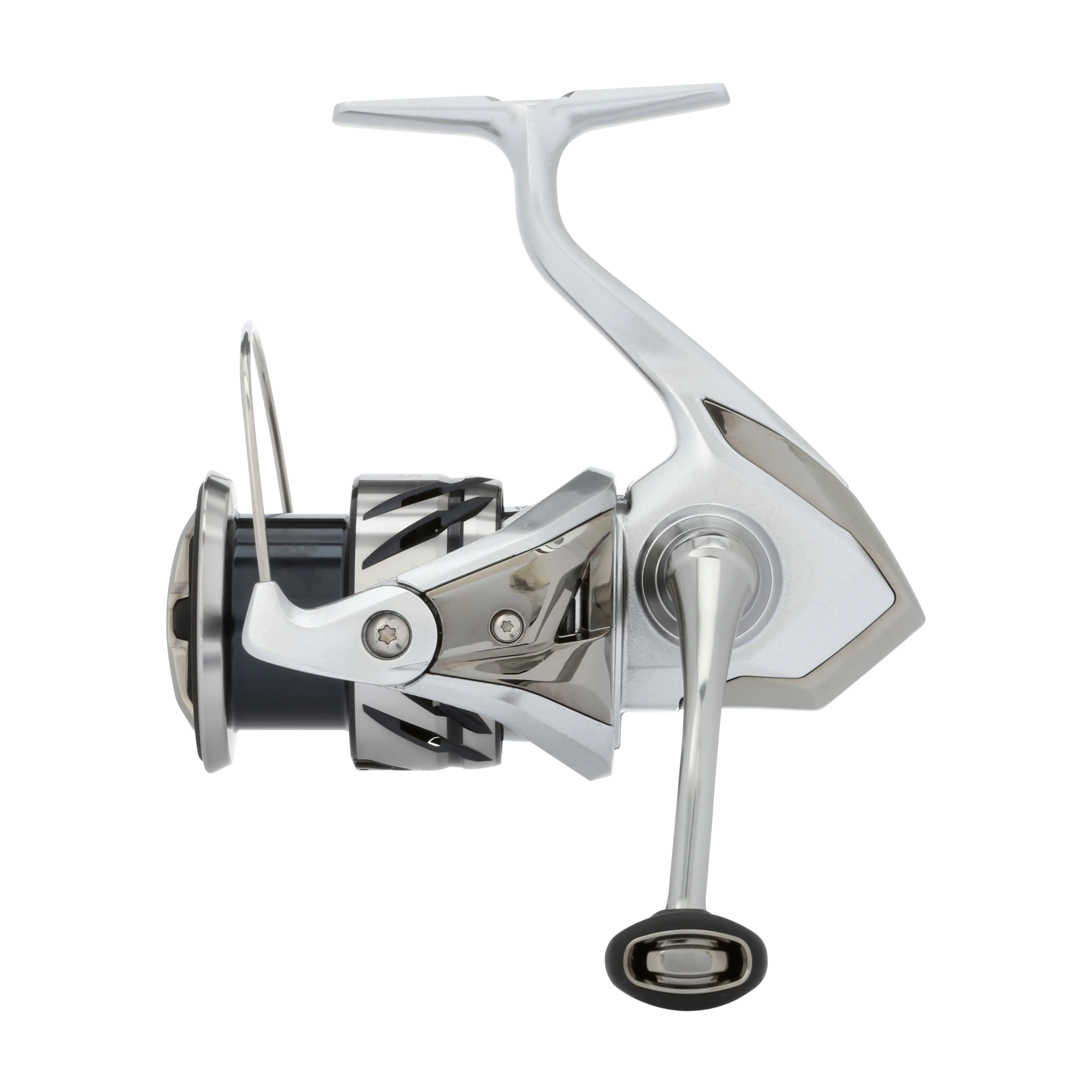
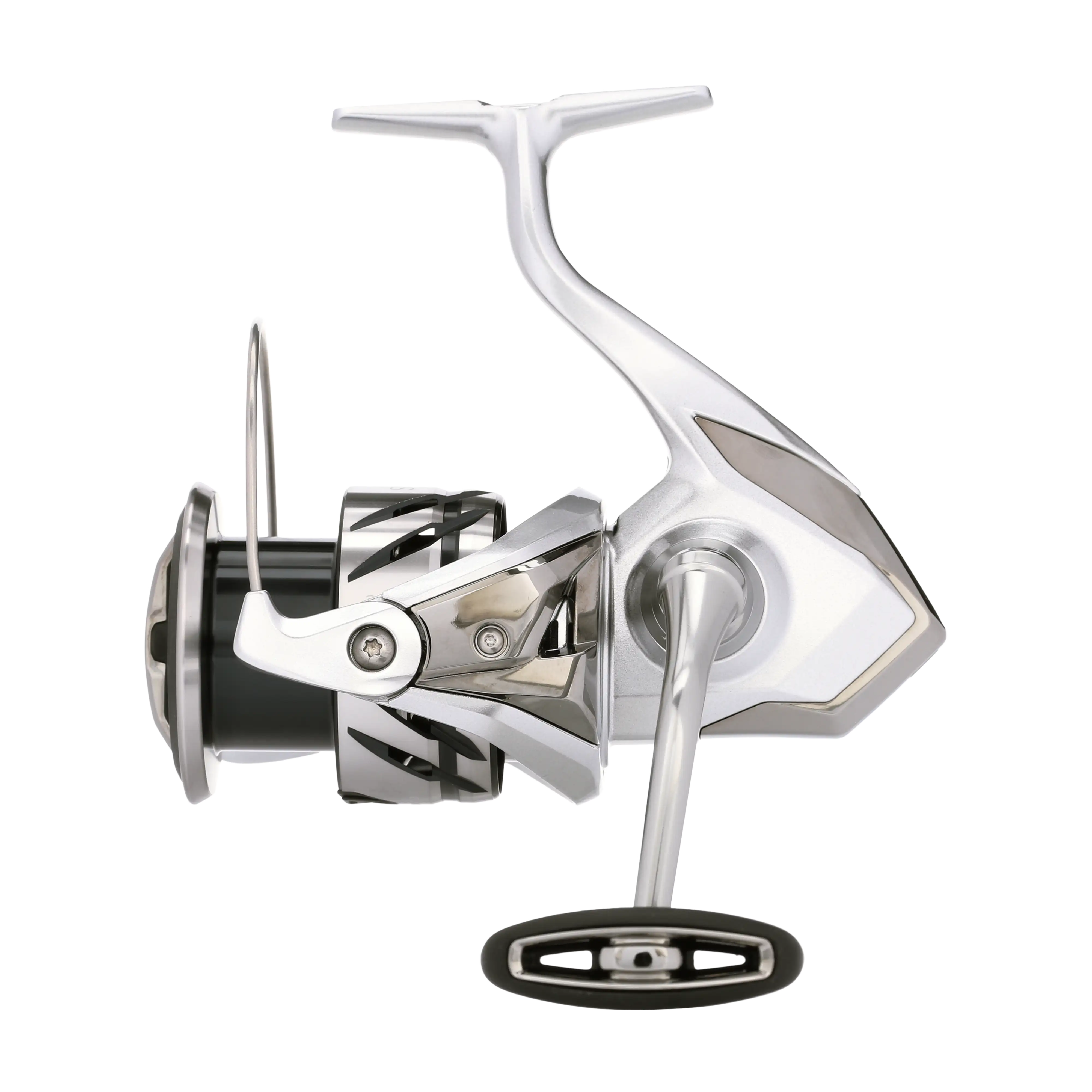
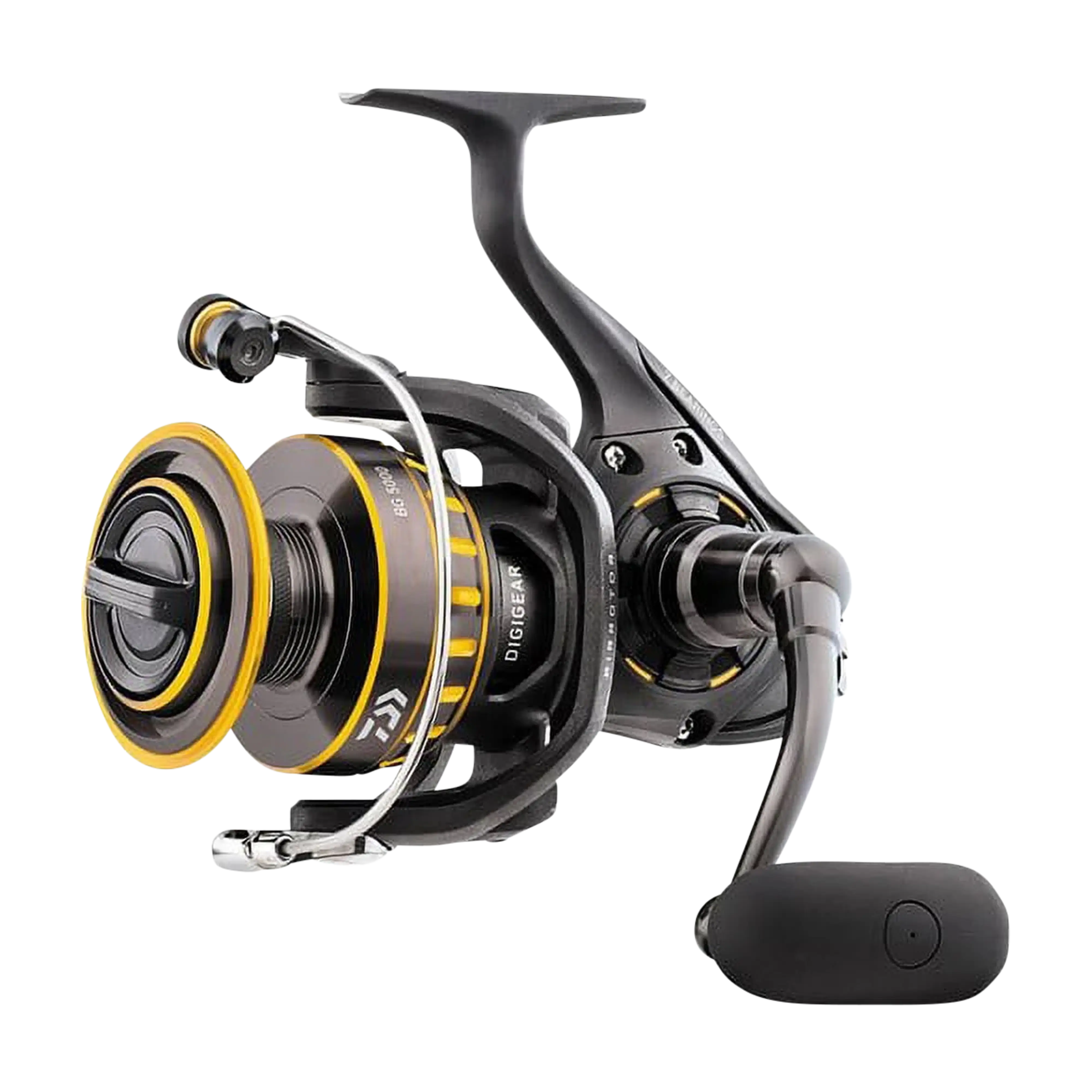
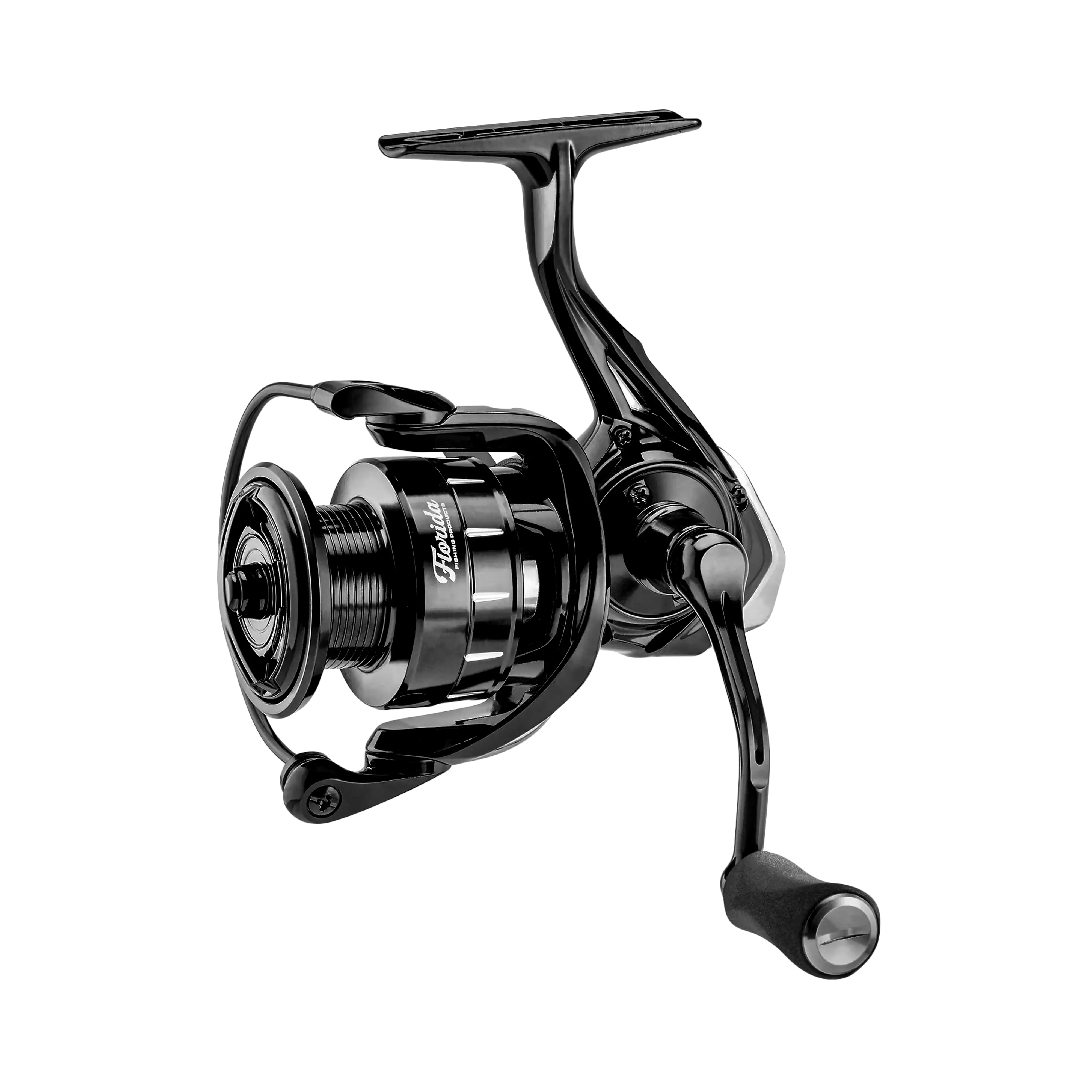
Drop Shot Reels





Drop Shot Finesse Baits
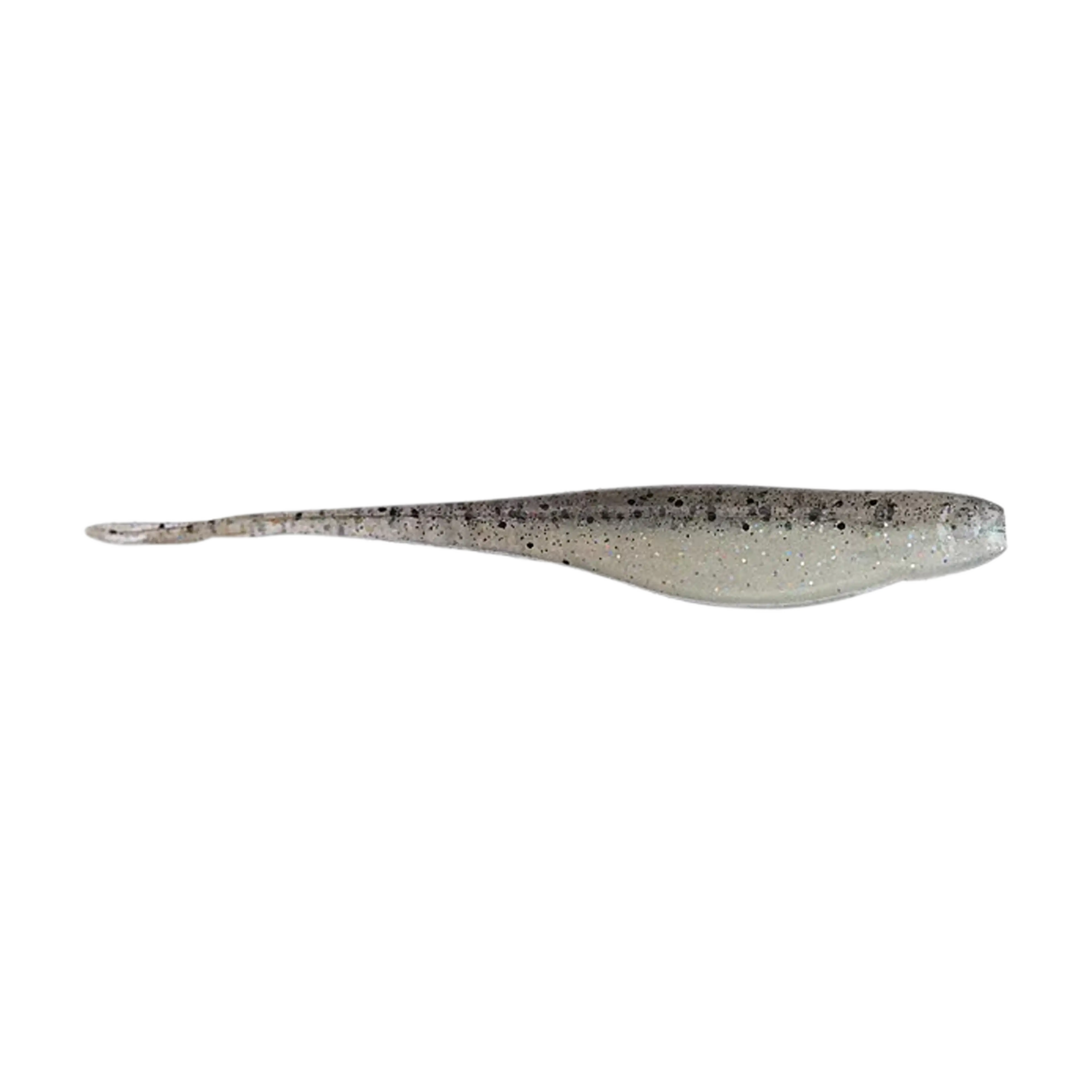
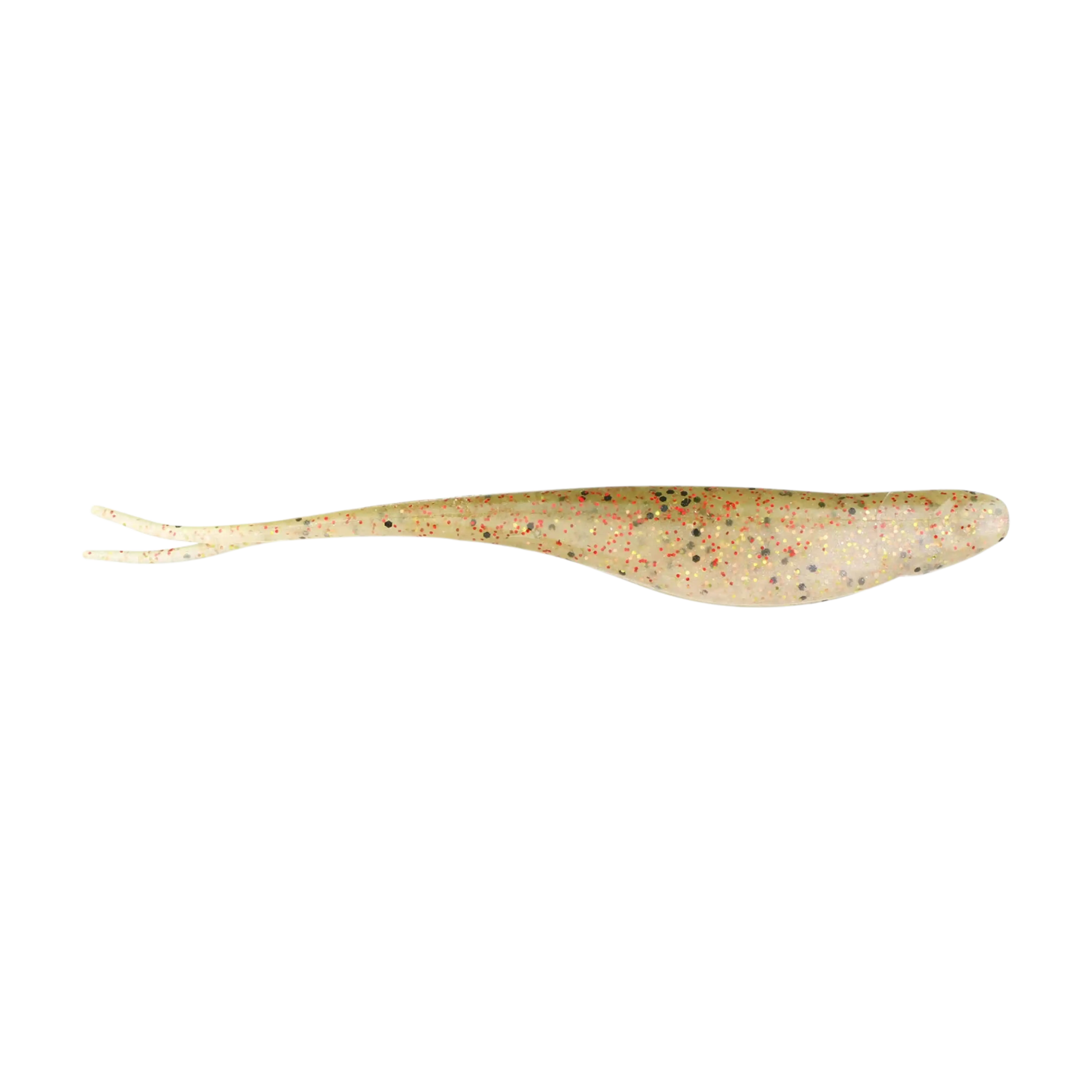
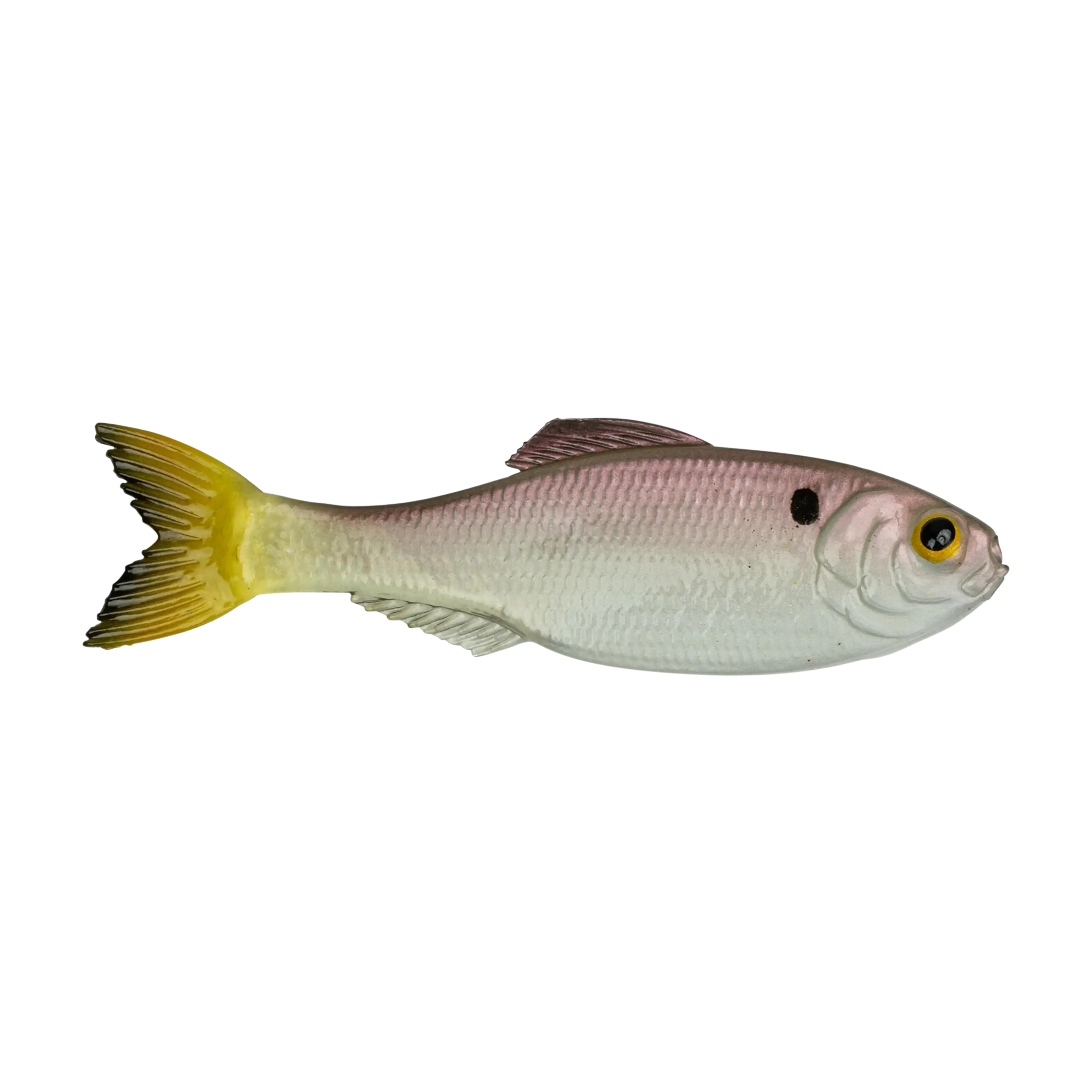
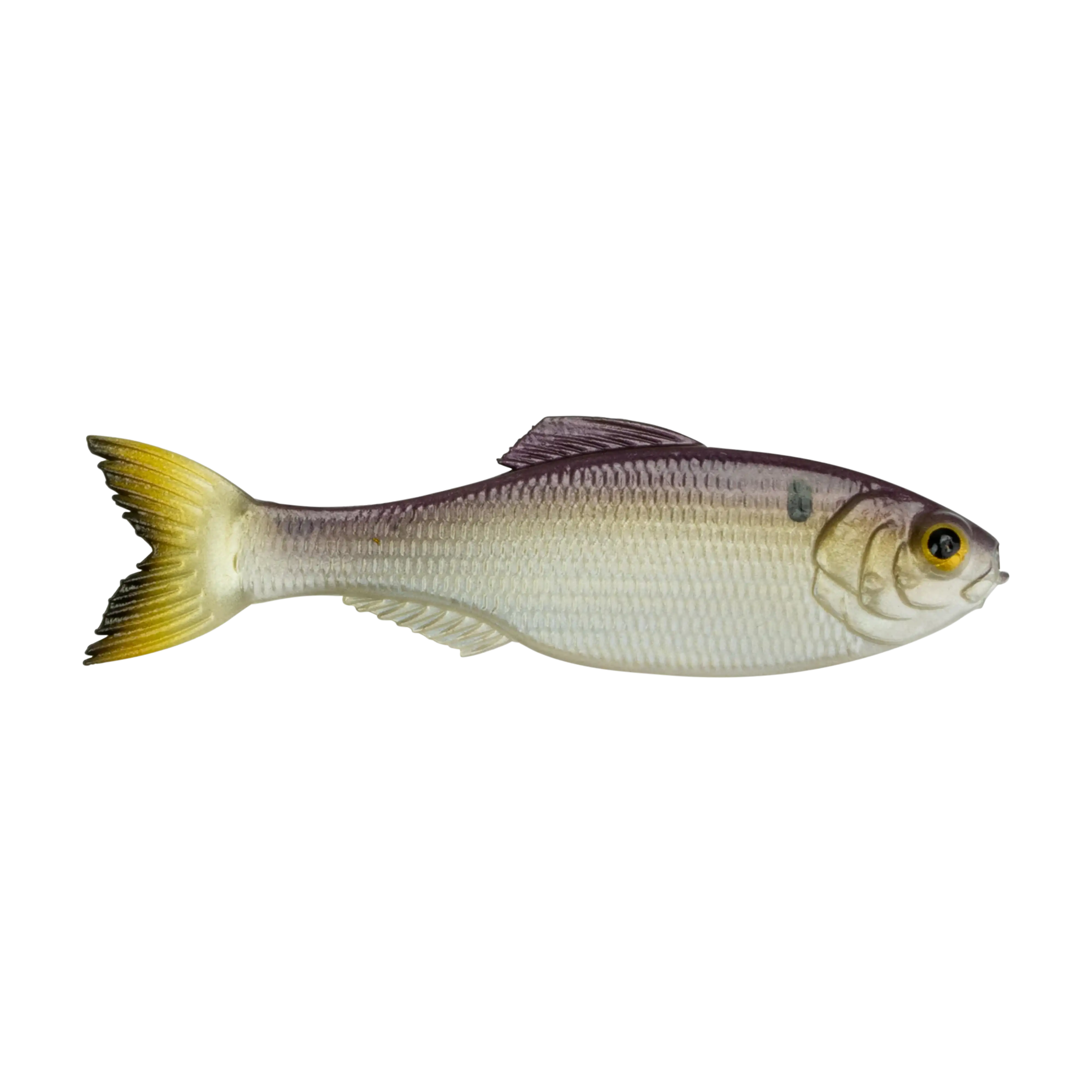
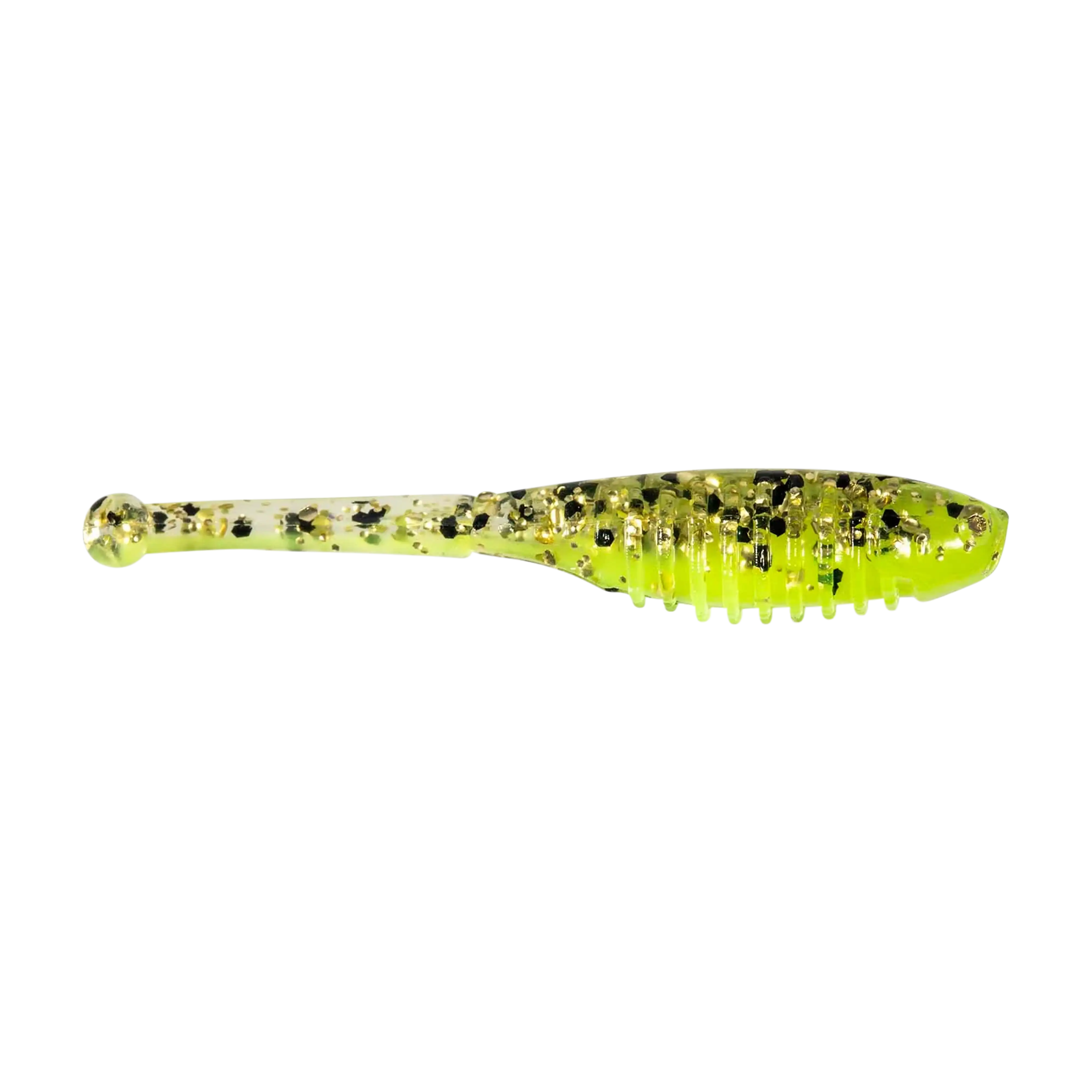
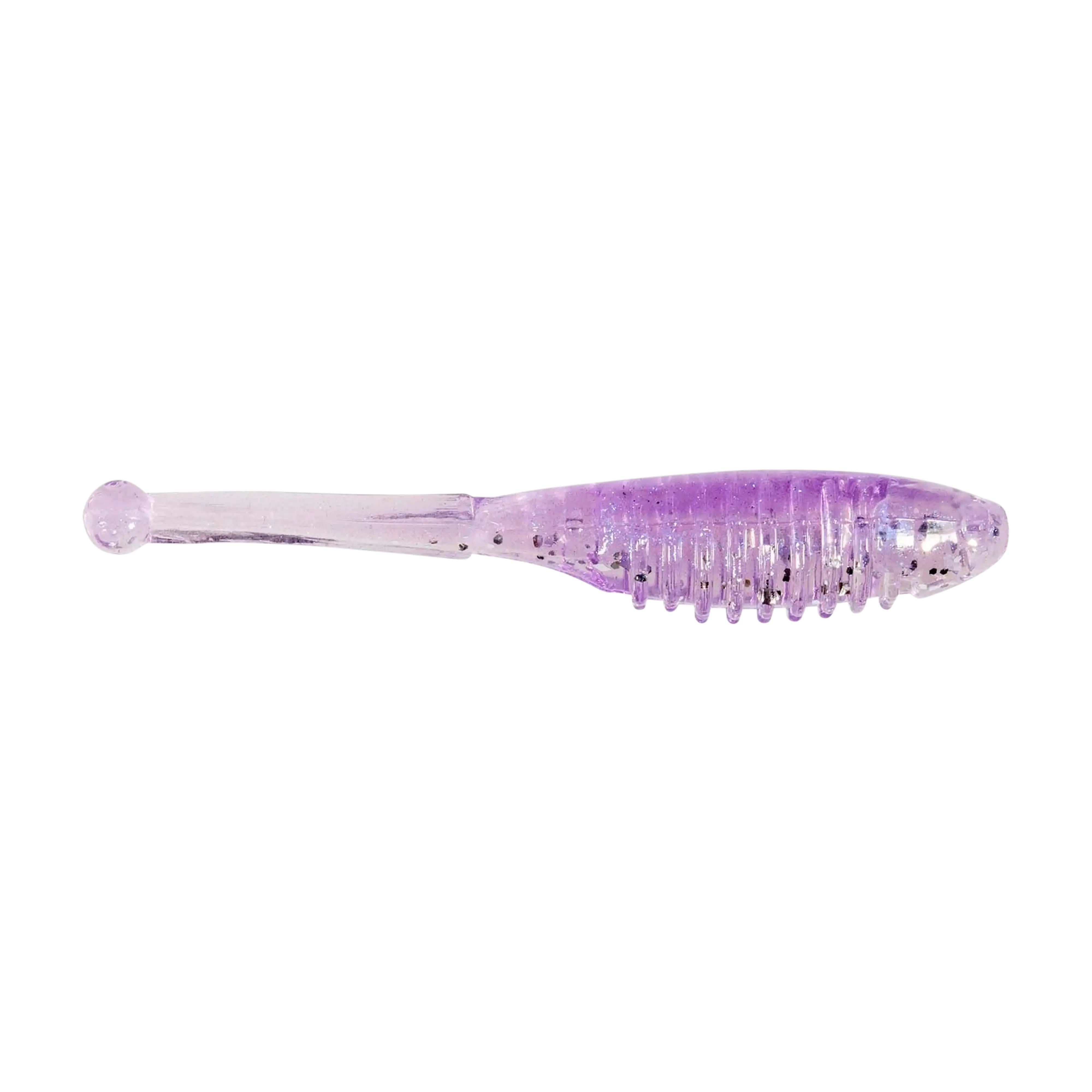
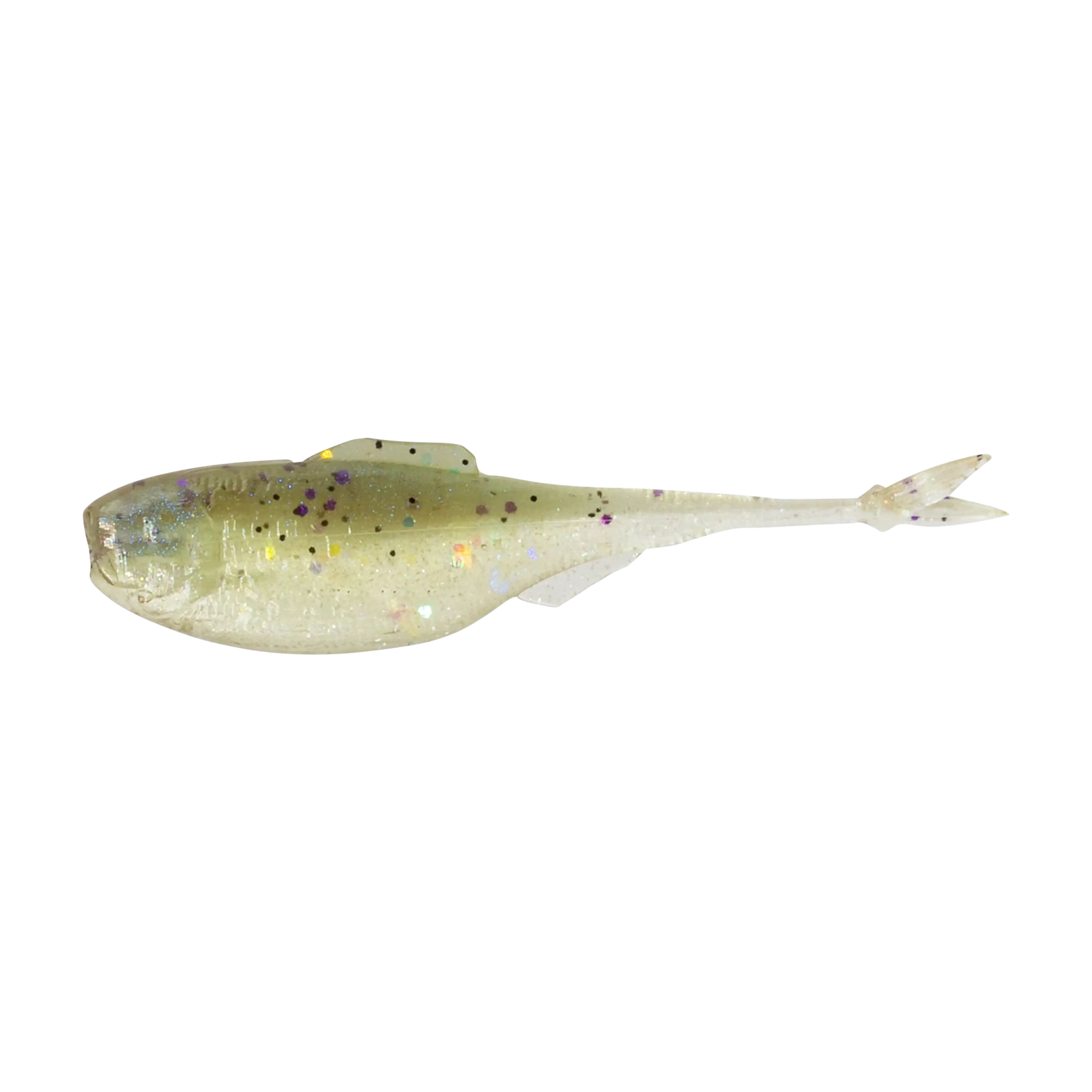
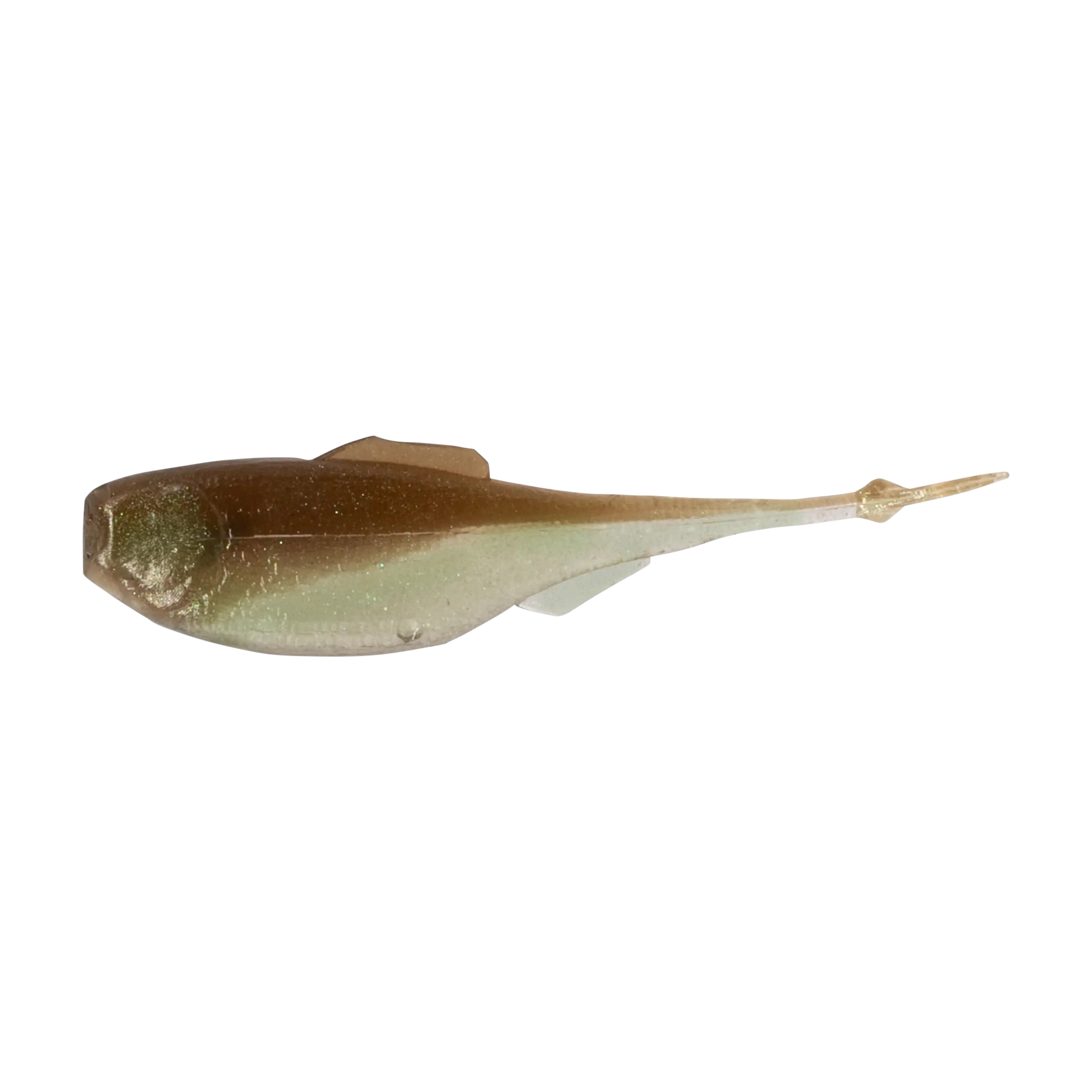
Drop shot fishing relies on realistic, low-effort movement. The best lures don’t require aggressive rod action — they come alive with subtle line tension, slight current, or gentle rod tip movement. When selecting drop shot baits, focus on profile, material softness, and how the bait behaves when nearly motionless. A carefully chosen selection of sizes, shapes, and colors lets you adjust quickly to water clarity, pressure, and fish mood without overcomplicating your setup.
Here’s what to look for:
Size & Weight
Most drop shot soft plastics fall in the 2”–4” range, and for good reason. Smaller profiles create less resistance, allowing the bait to hover naturally above the weight and respond to minimal input. In heavily pressured or clear water, downsizing often produces more consistent bites. Slightly larger baits can provide extra presence when fish are more active or when you need the lure to stand out. When evaluating size, consider overall bulk, not just length — thin, straight-tail profiles often outperform bulkier shapes when fish are cautious.
Colors & Styles
Color choice should prioritize realism first and visibility second. In clear water, natural or translucent colors help the bait blend with the environment and avoid spooking fish. Subtle laminates, light flake, or semi-transparent finishes typically outperform solid, opaque colors in finesse situations. In stained water or low-light conditions, higher-contrast colors make the bait more visible without adding unnecessary action. Styles with minimal appendages or straight-tail designs maintain a clean profile and move naturally with very little input. A well-rounded selection includes both subtle and high-contrast options for quick adjustments as conditions change.
Baits by Application
Vertical / Deep Water
Small stickbaits, finesse worms, or minnow-style tails (3–5”). Ideal for subtle action and suspended fish.
Casting / Open Water Finesse
Slim worms, curly tails, or shad-style plastics (4–6”). Designed for longer casts and natural fall over open structure.
Shallow Cover / Docks & Brush
Short worms, paddle tail grubs, or small creature baits (3–4”). Compact baits minimize snags and allow precise placement near structure.
Suspended Fish
Mini swimbaits, stickbaits, or finesse worms (3–5”). Small profile mimics tiny baitfish or insects without spooking wary fish.
Key Takeaways
- Choose baits that move naturally with minimal rod input
- 2”–4” profiles for most drop shot situations, slightly larger for active fish
- Slim profiles often outperform bulky shapes in pressured or clear water
- Natural colors for clear water; high-contrast colors for low visibility
Drop Shot Finesse Baits
Drop shot fishing relies on realistic, low-effort movement. The best lures don’t require aggressive rod action — they come alive with subtle line tension, slight current, or gentle rod tip movement. When selecting drop shot baits, focus on profile, material softness, and how the bait behaves when nearly motionless. A carefully chosen selection of sizes, shapes, and colors lets you adjust quickly to water clarity, pressure, and fish mood without overcomplicating your setup.
Here’s what to look for:
Size & Weight
Most drop shot soft plastics fall in the 2”–4” range, and for good reason. Smaller profiles create less resistance, allowing the bait to hover naturally above the weight and respond to minimal input. In heavily pressured or clear water, downsizing often produces more consistent bites. Slightly larger baits can provide extra presence when fish are more active or when you need the lure to stand out. When evaluating size, consider overall bulk, not just length — thin, straight-tail profiles often outperform bulkier shapes when fish are cautious.
Colors & Styles
Color choice should prioritize realism first and visibility second. In clear water, natural or translucent colors help the bait blend with the environment and avoid spooking fish. Subtle laminates, light flake, or semi-transparent finishes typically outperform solid, opaque colors in finesse situations. In stained water or low-light conditions, higher-contrast colors make the bait more visible without adding unnecessary action. Styles with minimal appendages or straight-tail designs maintain a clean profile and move naturally with very little input. A well-rounded selection includes both subtle and high-contrast options for quick adjustments as conditions change.
Baits by Application
Vertical / Deep Water
Small stickbaits, finesse worms, or minnow-style tails (3–5”). Ideal for subtle action and suspended fish.
Casting / Open Water Finesse
Slim worms, curly tails, or shad-style plastics (4–6”). Designed for longer casts and natural fall over open structure.
Shallow Cover / Docks & Brush
Short worms, paddle tail grubs, or small creature baits (3–4”). Compact baits minimize snags and allow precise placement near structure.
Suspended Fish
Mini swimbaits, stickbaits, or finesse worms (3–5”). Small profile mimics tiny baitfish or insects without spooking wary fish.
Key Takeaways
- Choose baits that move naturally with minimal rod input
- 2”–4” profiles for most drop shot situations, slightly larger for active fish
- Slim profiles often outperform bulky shapes in pressured or clear water
- Natural colors for clear water; high-contrast colors for low visibility
Drop Shot Finesse Baits


Drop Shot Line & Leaders
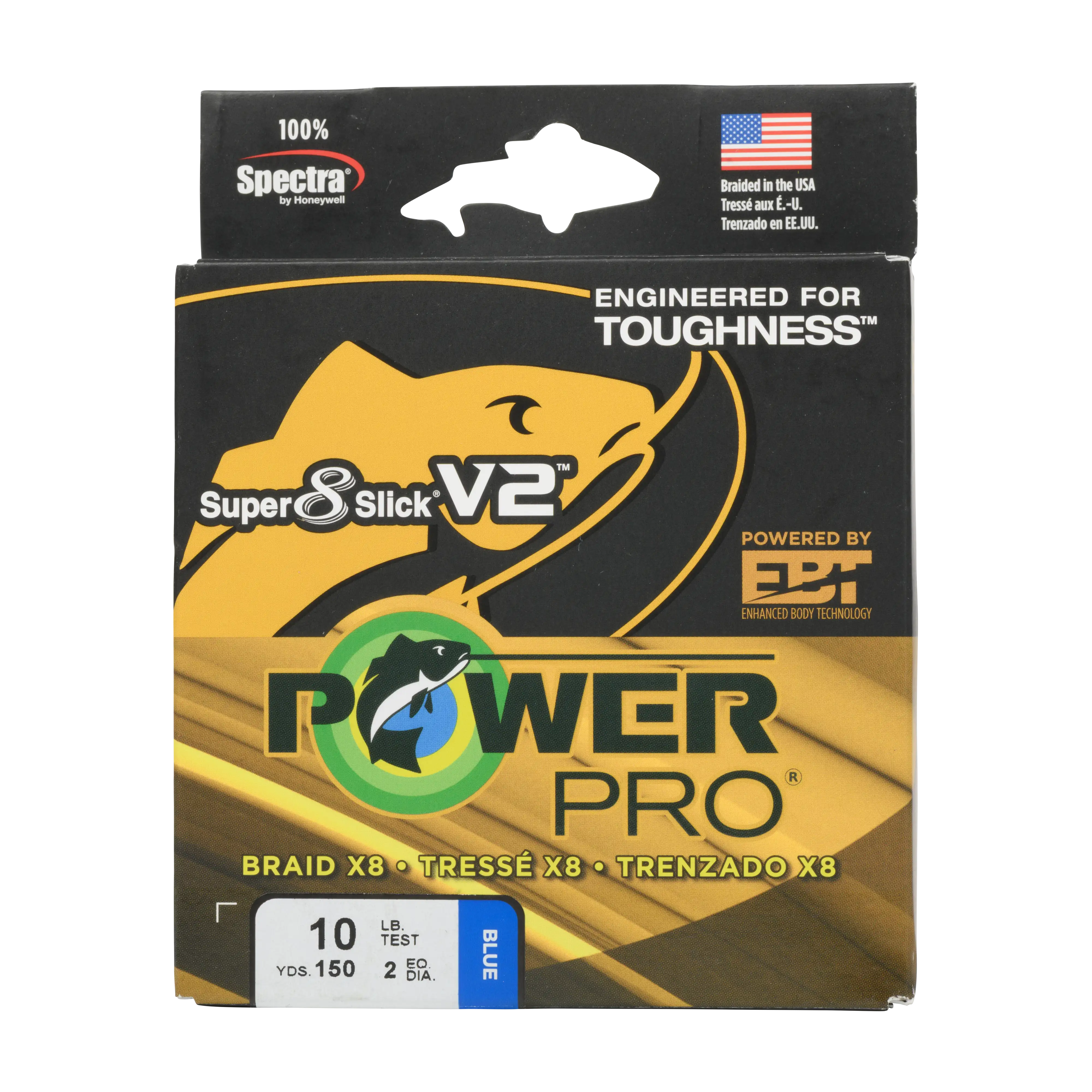
Choosing the right line and leader is critical for drop shot success. Finesse presentations rely on subtle movement, and even small differences in line type, diameter, or leader length can determine whether a bite is detected or missed. The correct combination keeps your bait positioned naturally, improves sensitivity, and ensures every strike is felt and delivered cleanly.
Braided Mainline
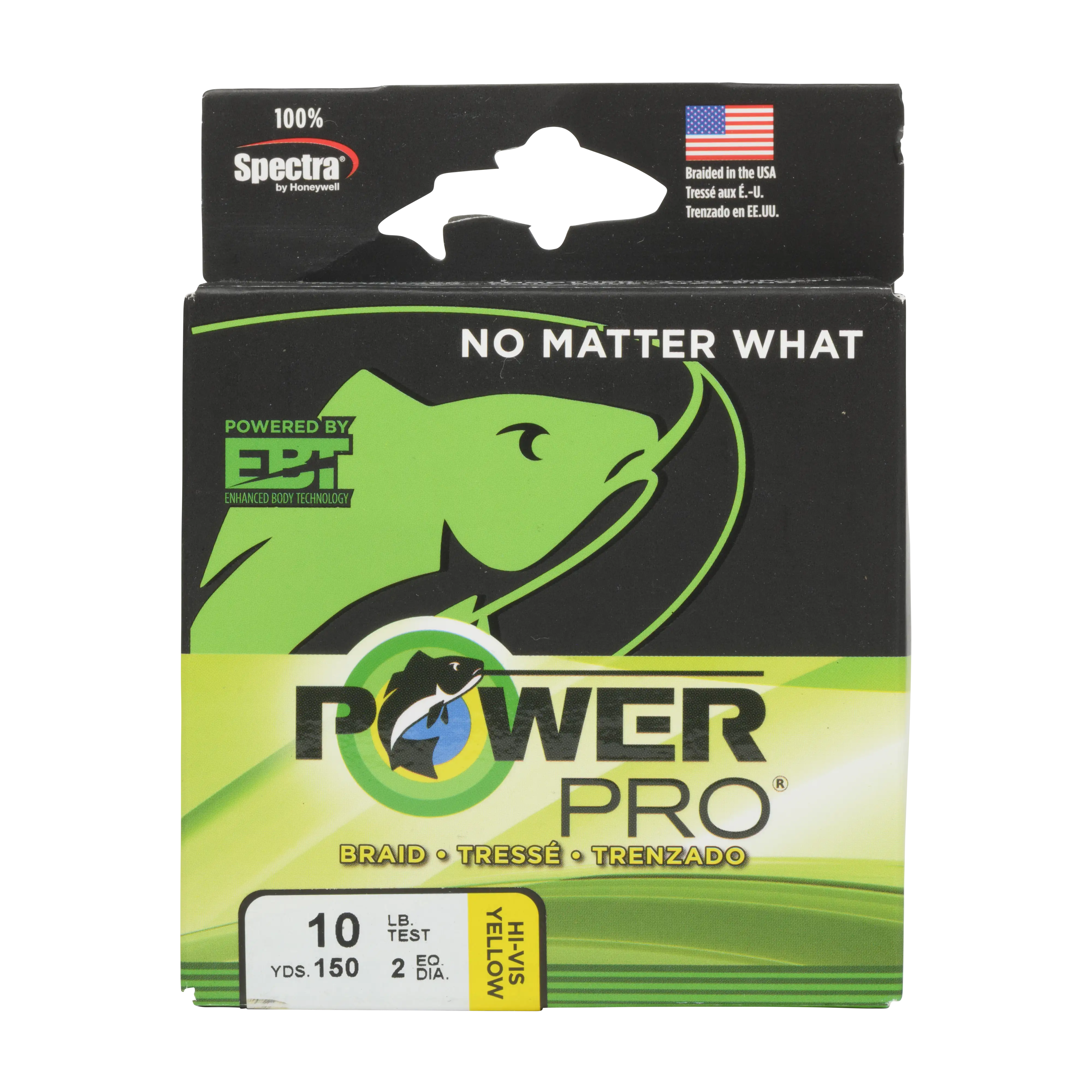
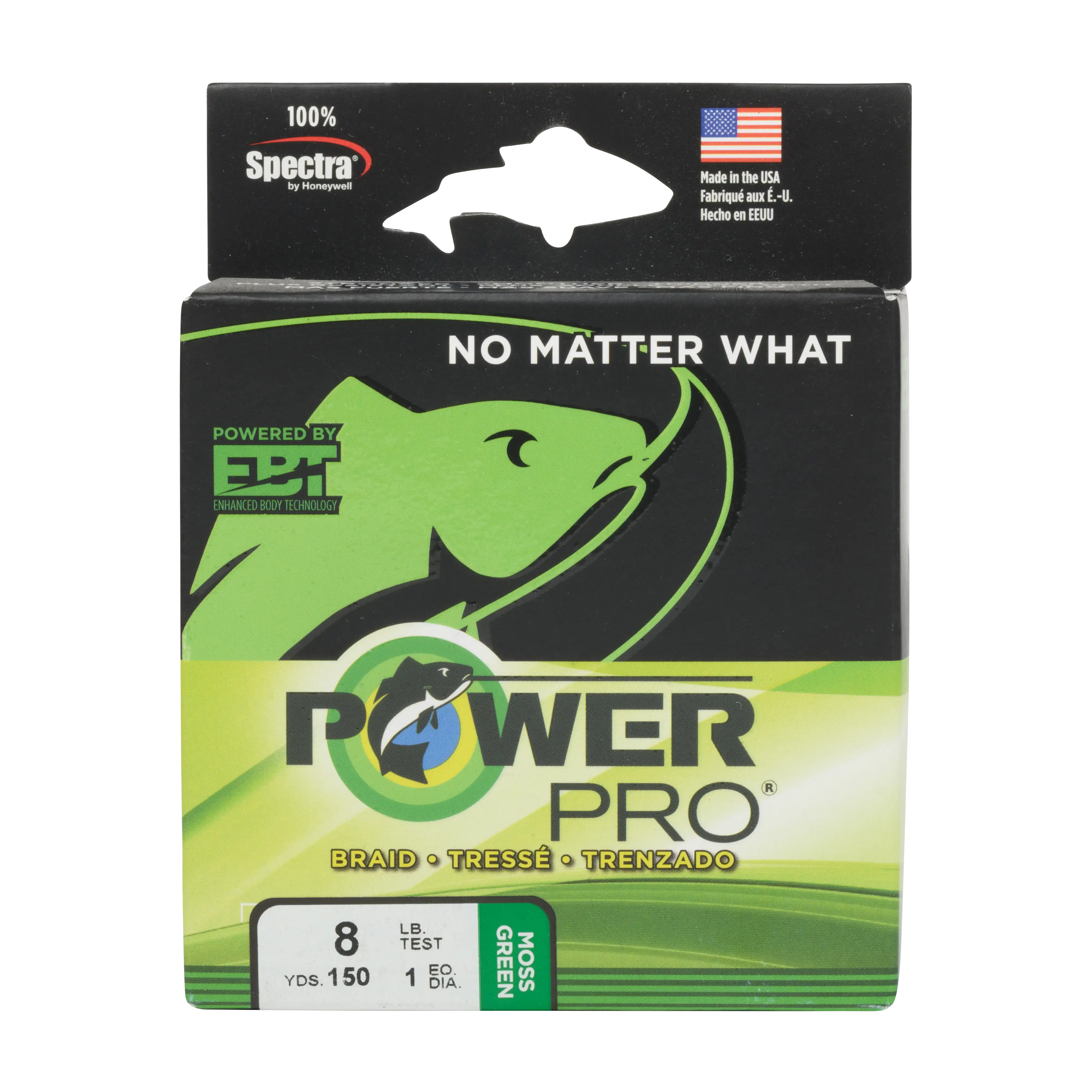
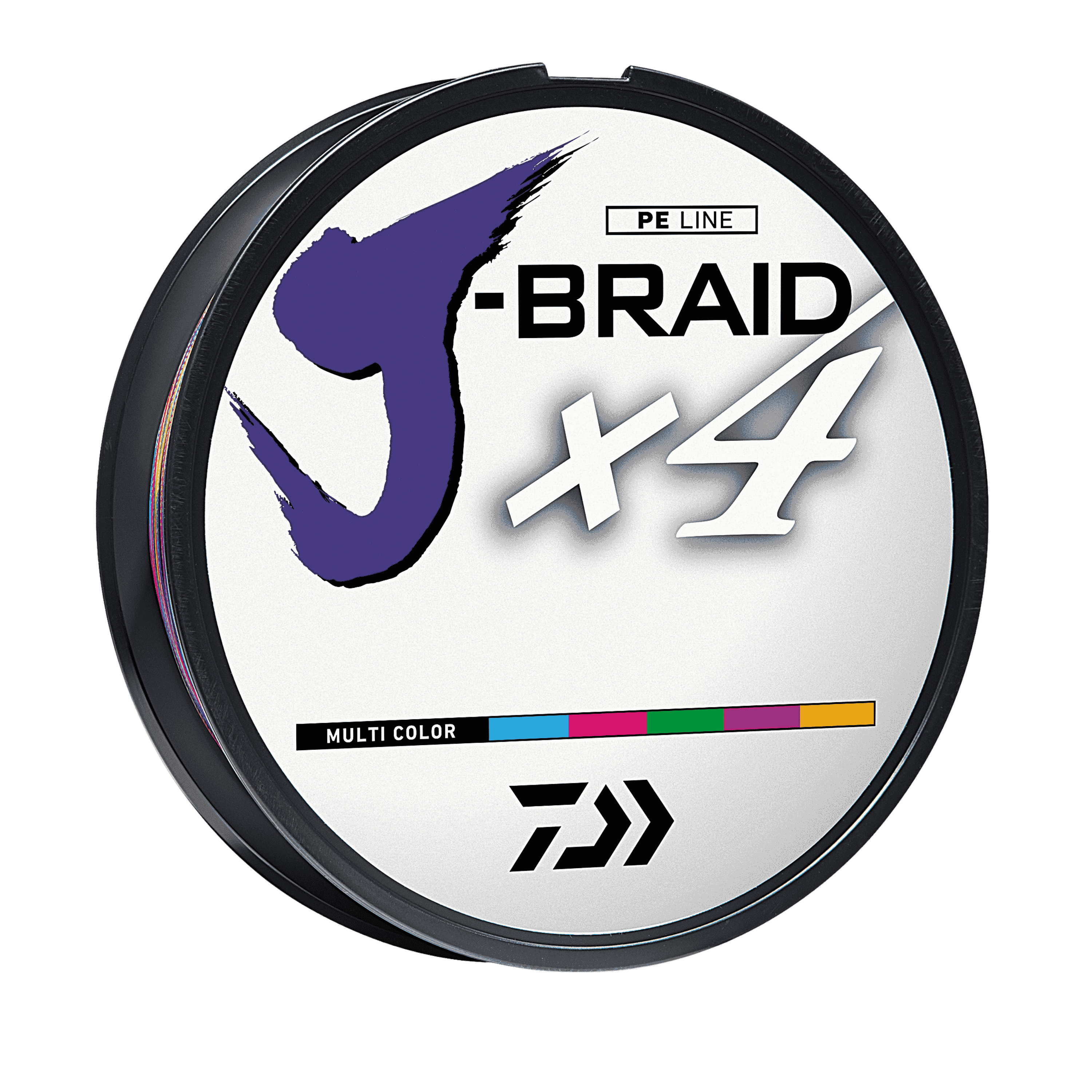
For drop shot rigs, sensitivity and stealth are paramount. Many anglers use braided mainline because it maximizes feel, reduces stretch, and maintains precise contact with both the bait and weight, making light bites easier to detect. Braided line also casts light rigs smoothly and helps control slack for a natural, responsive presentation.
Fluorocarbon Mainline
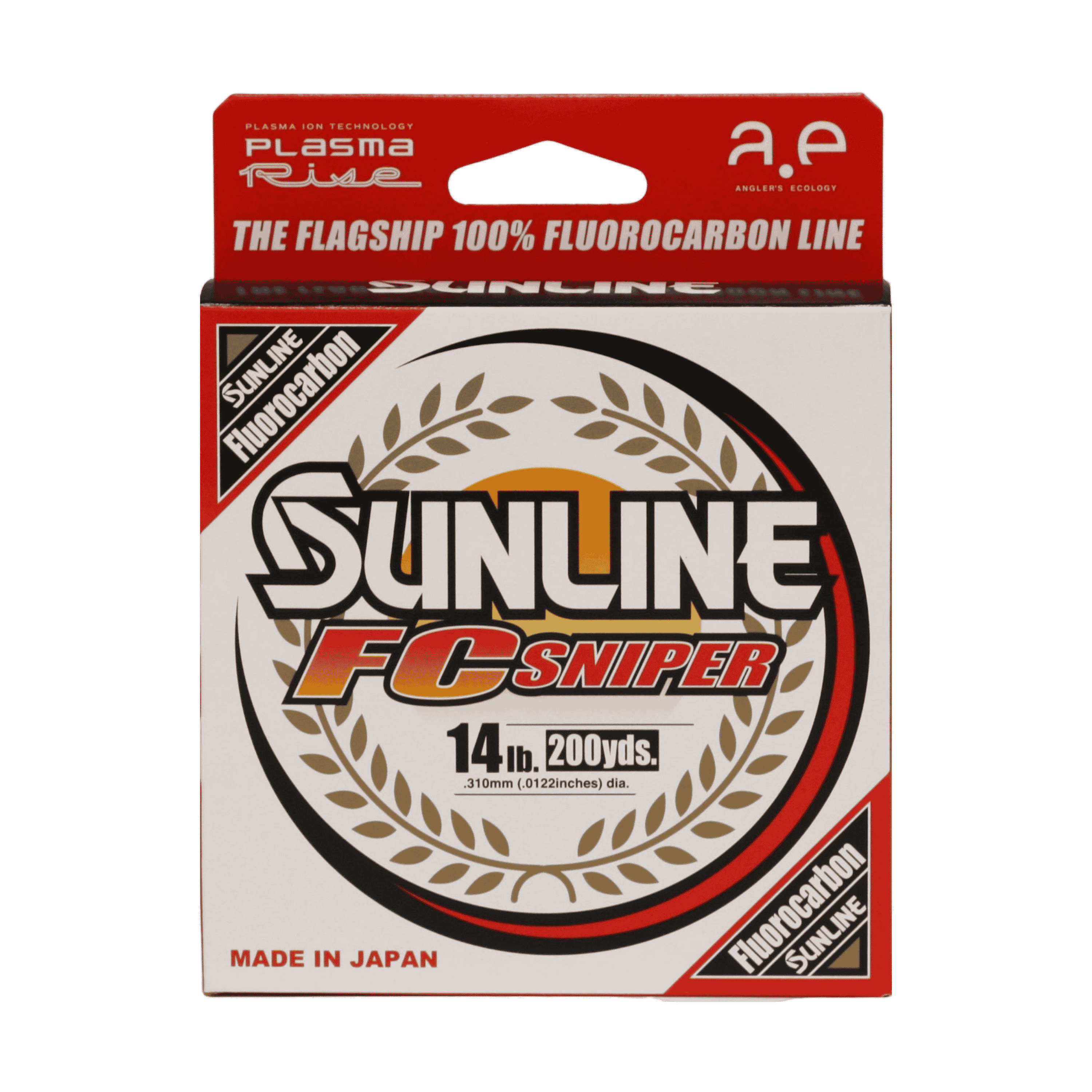
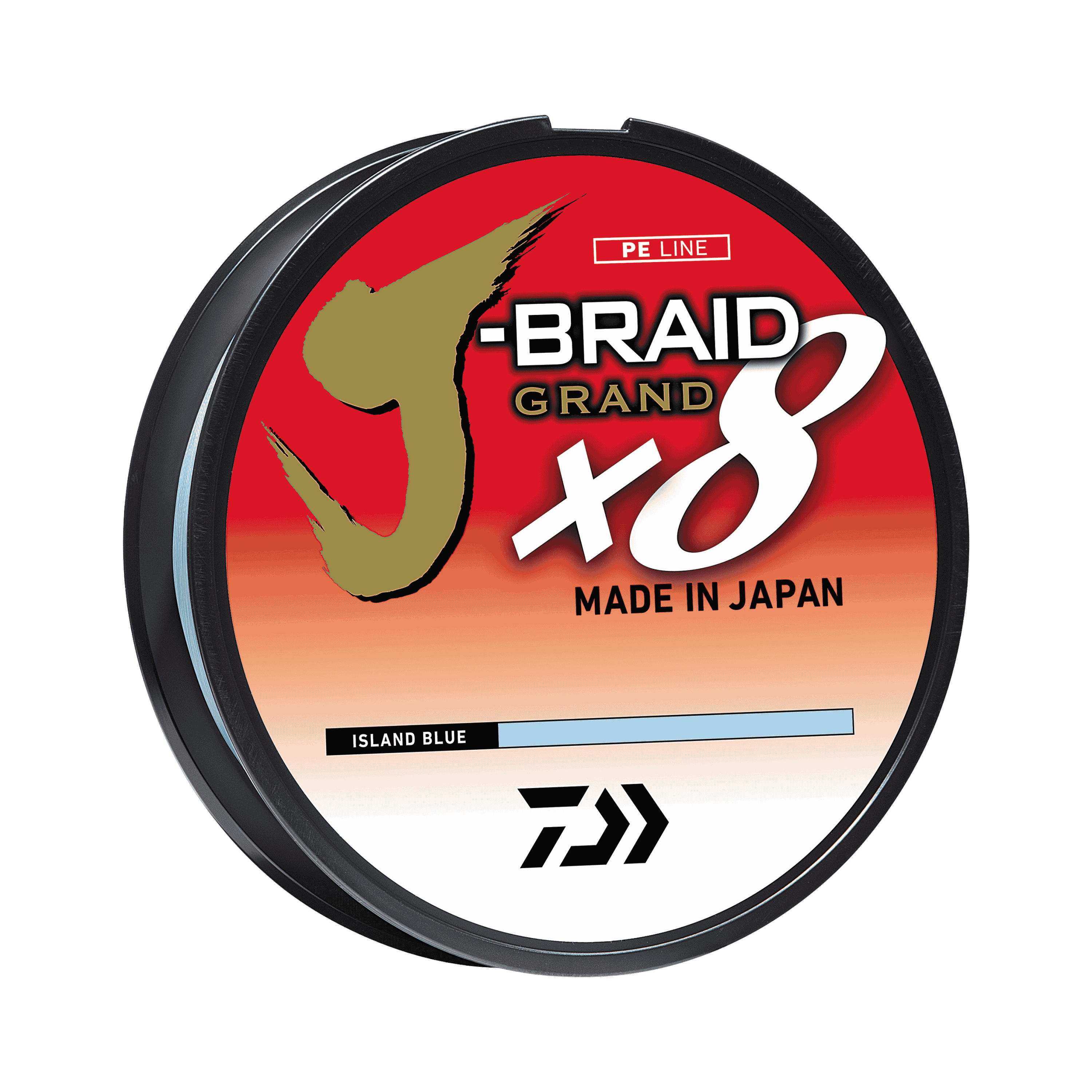
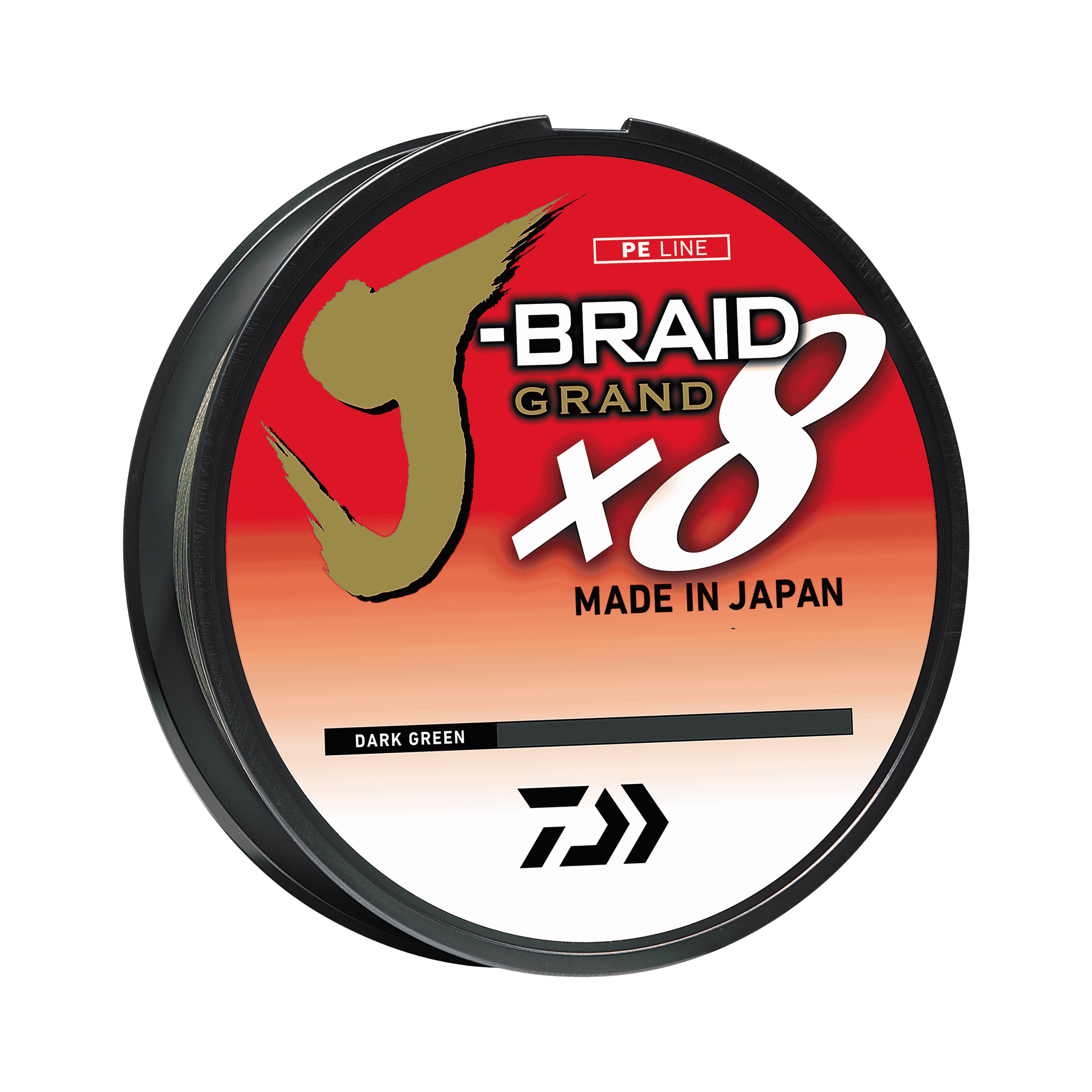
Fluorocarbon can also be used as a mainline for situations where invisibility and low stretch are priorities, such as clear water or heavily pressured fisheries. It provides excellent bite transmission while remaining nearly invisible, though it has slightly less casting distance and feel compared with braid.
Fluorocarbon Leader
A fluorocarbon leader is typically paired with braid to reduce visibility and preserve lifelike bait action. Leader strength is usually slightly lighter than the mainline, allowing the system to break safely if snagged without sacrificing control. Leader length matters: shorter leaders keep the bait close to the bottom for bottom-oriented fish, while longer leaders let the bait hover higher for suspended or finicky fish. When selecting line and leader, also consider diameter and manageability, not just pound test. Thinner lines allow the bait to move more naturally, maintain vertical presentation, and transmit bites more clearly — especially in deeper water or pressured fisheries.
Key Takeaways
- Braided mainline improves sensitivity, slack control, and bite detection
- Fluorocarbon works as either leader or mainline for stealth and low-stretch feel
- Leader length controls how high the bait suspends above the bottom
- Thinner lines allow natural bait movement and precise vertical presentation
- Slightly lighter leader strength provides snag safety while maintaining control
Drop Shot Line & Leaders
Choosing the right line and leader is critical for drop shot success. Finesse presentations rely on subtle movement, and even small differences in line type, diameter, or leader length can determine whether a bite is detected or missed. The correct combination keeps your bait positioned naturally, improves sensitivity, and ensures every strike is felt and delivered cleanly.
Braided Mainline
For drop shot rigs, sensitivity and stealth are paramount. Many anglers use braided mainline because it maximizes feel, reduces stretch, and maintains precise contact with both the bait and weight, making light bites easier to detect. Braided line also casts light rigs smoothly and helps control slack for a natural, responsive presentation.
Fluorocarbon Mainline
Fluorocarbon can also be used as a mainline for situations where invisibility and low stretch are priorities, such as clear water or heavily pressured fisheries. It provides excellent bite transmission while remaining nearly invisible, though it has slightly less casting distance and feel compared with braid.
Fluorocarbon Leader
A fluorocarbon leader is typically paired with braid to reduce visibility and preserve lifelike bait action. Leader strength is usually slightly lighter than the mainline, allowing the system to break safely if snagged without sacrificing control. Leader length matters: shorter leaders keep the bait close to the bottom for bottom-oriented fish, while longer leaders let the bait hover higher for suspended or finicky fish. When selecting line and leader, also consider diameter and manageability, not just pound test. Thinner lines allow the bait to move more naturally, maintain vertical presentation, and transmit bites more clearly — especially in deeper water or pressured fisheries.
Key Takeaways
- Braided mainline improves sensitivity, slack control, and bite detection
- Fluorocarbon works as either leader or mainline for stealth and low-stretch feel
- Leader length controls how high the bait suspends above the bottom
- Thinner lines allow natural bait movement and precise vertical presentation
- Slightly lighter leader strength provides snag safety while maintaining control
Drop Shot Line & Leaders


Drop Shot Hooks and Weights
Choosing the right hooks and weights is essential for drop shot success. These components control how your bait behaves in the water, influence hook penetration, and ensure the rig remains subtle and natural. The correct combination lets your bait move freely, maintains proper bottom contact, and increases your chances of clean, confident hooksets on even the most cautious fish.
Drop Shot Weights
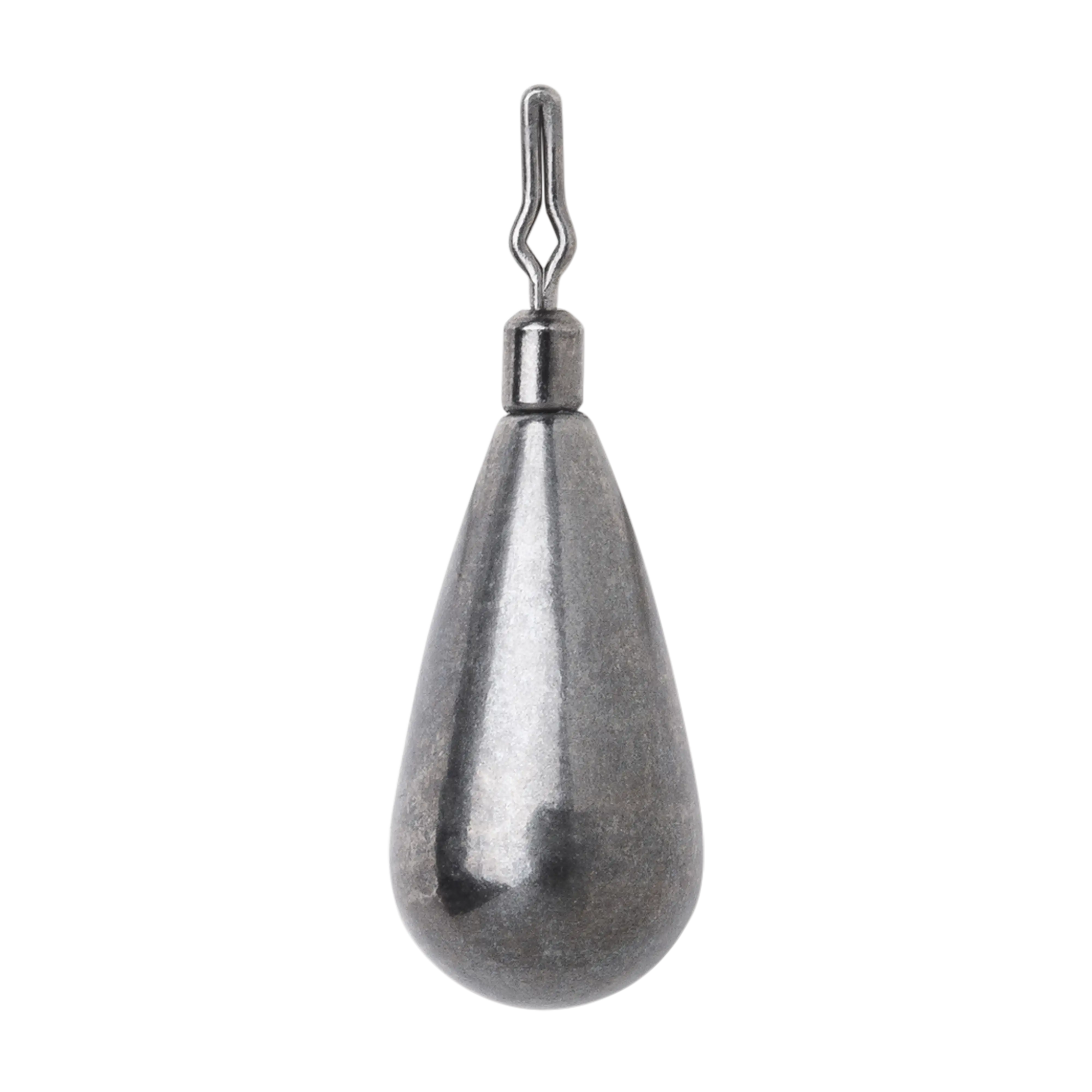
Drop shot weights should maintain bottom contact without restricting the bait’s natural movement. Lighter weights work well in shallow water or calm conditions, while heavier weights help keep contact in deeper water, stronger current, or windy conditions. Slim or cylindrical shapes slip through rocks and cover more easily, and many anglers prefer weights with line clips for quick depth adjustments without retying. Tungsten weights are denser than lead, allowing smaller profiles to maintain bottom contact and transmit bites more effectively, while lead weights are generally less expensive and easier to cast but slightly bulkier for the same weight.
Drop Shot Hooks
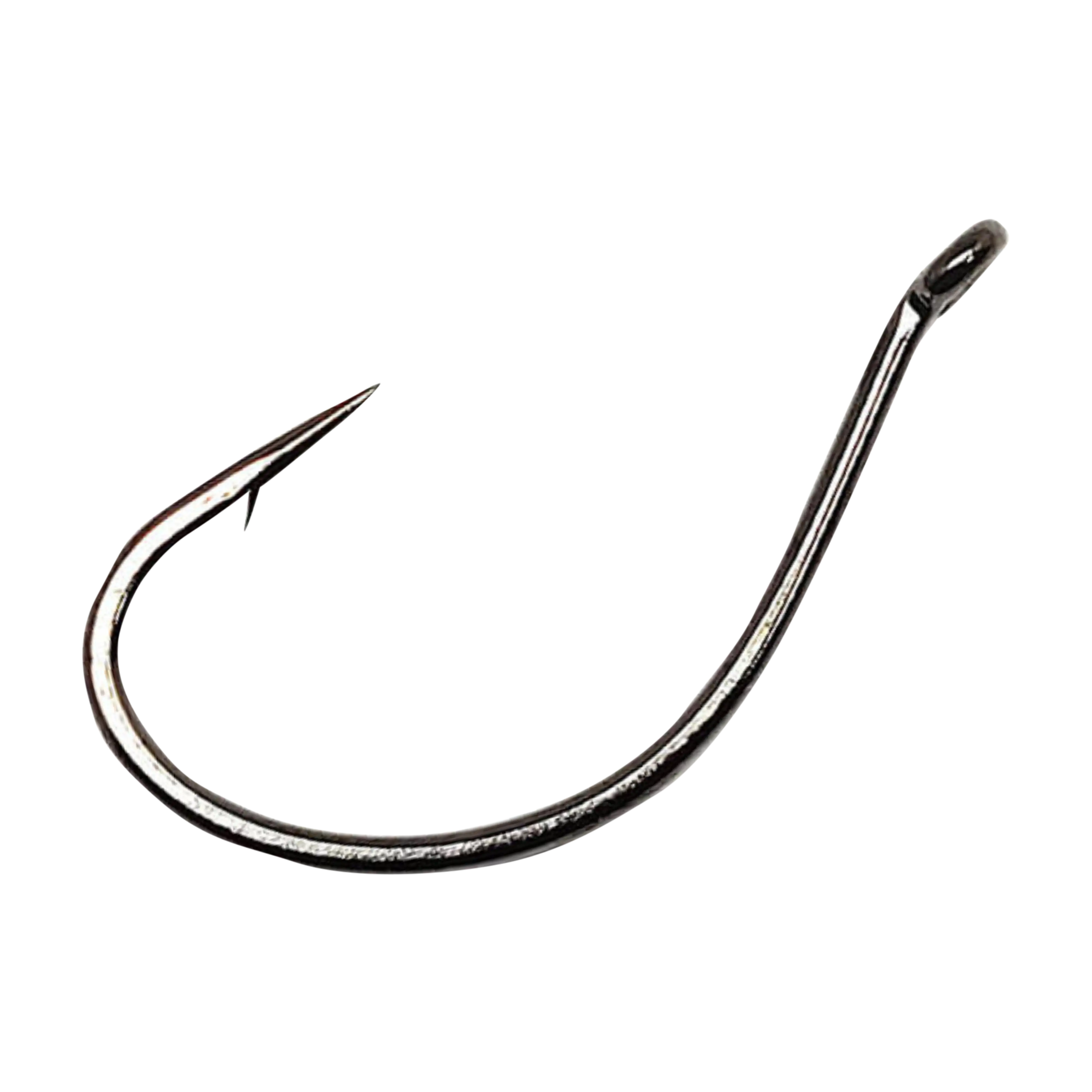
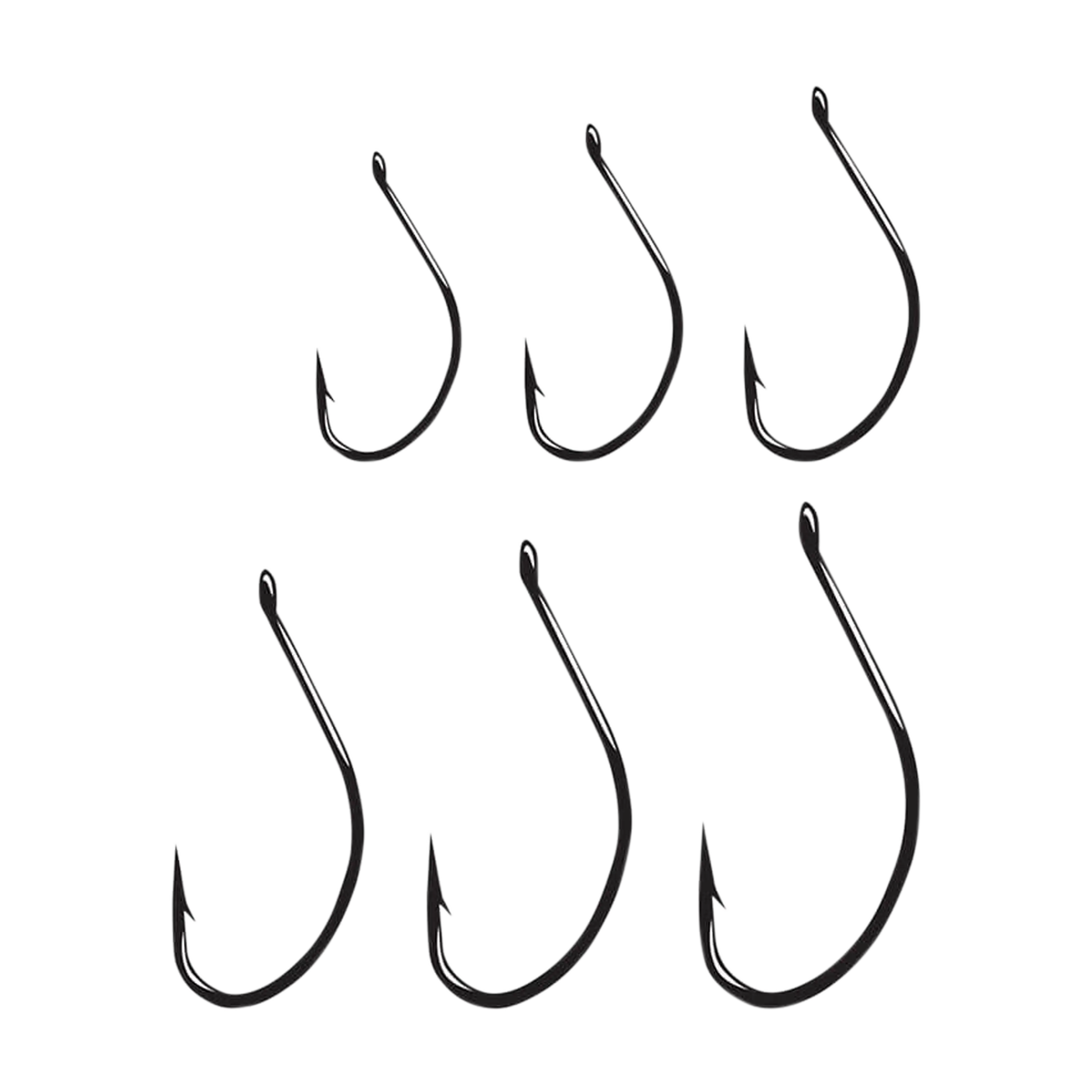
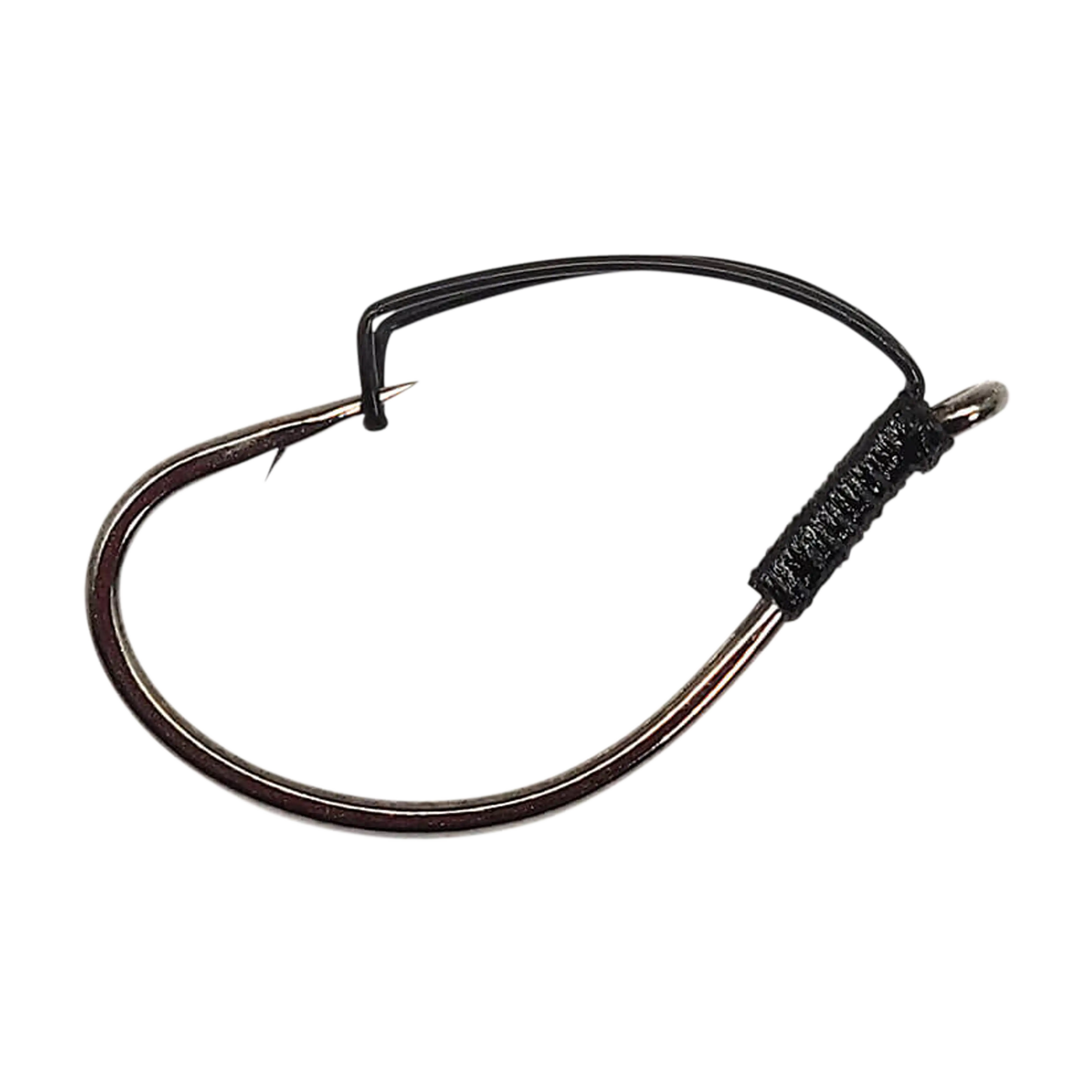
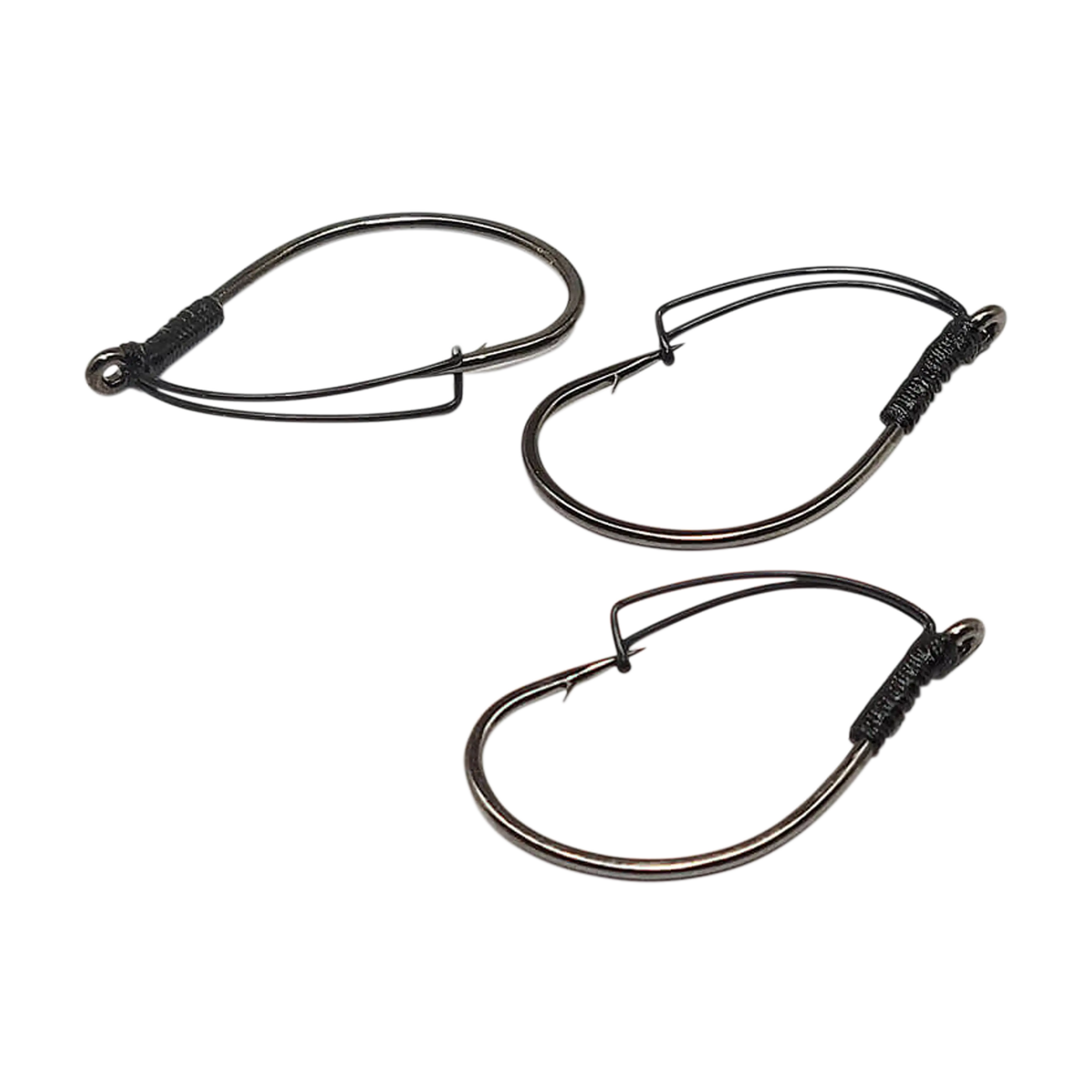
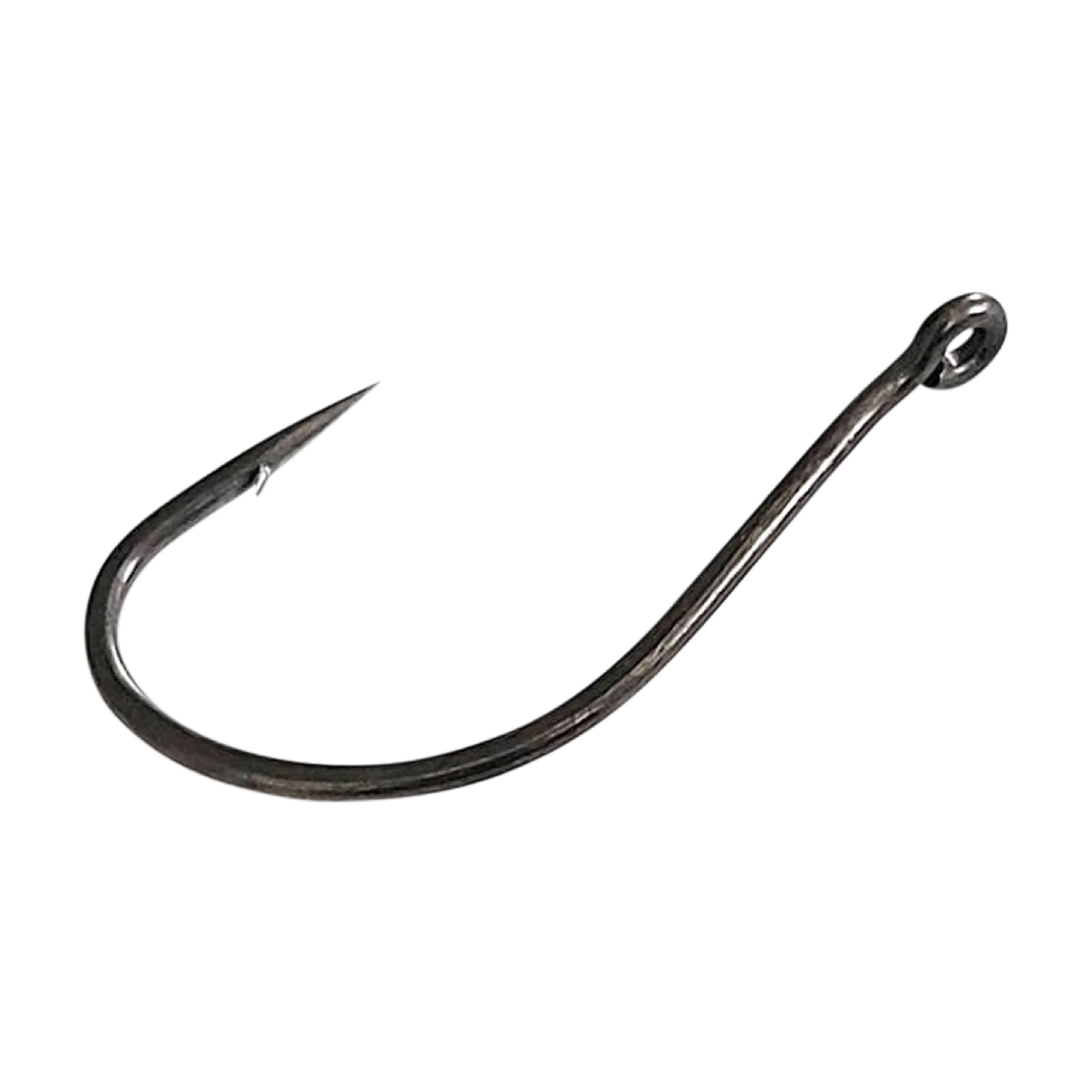
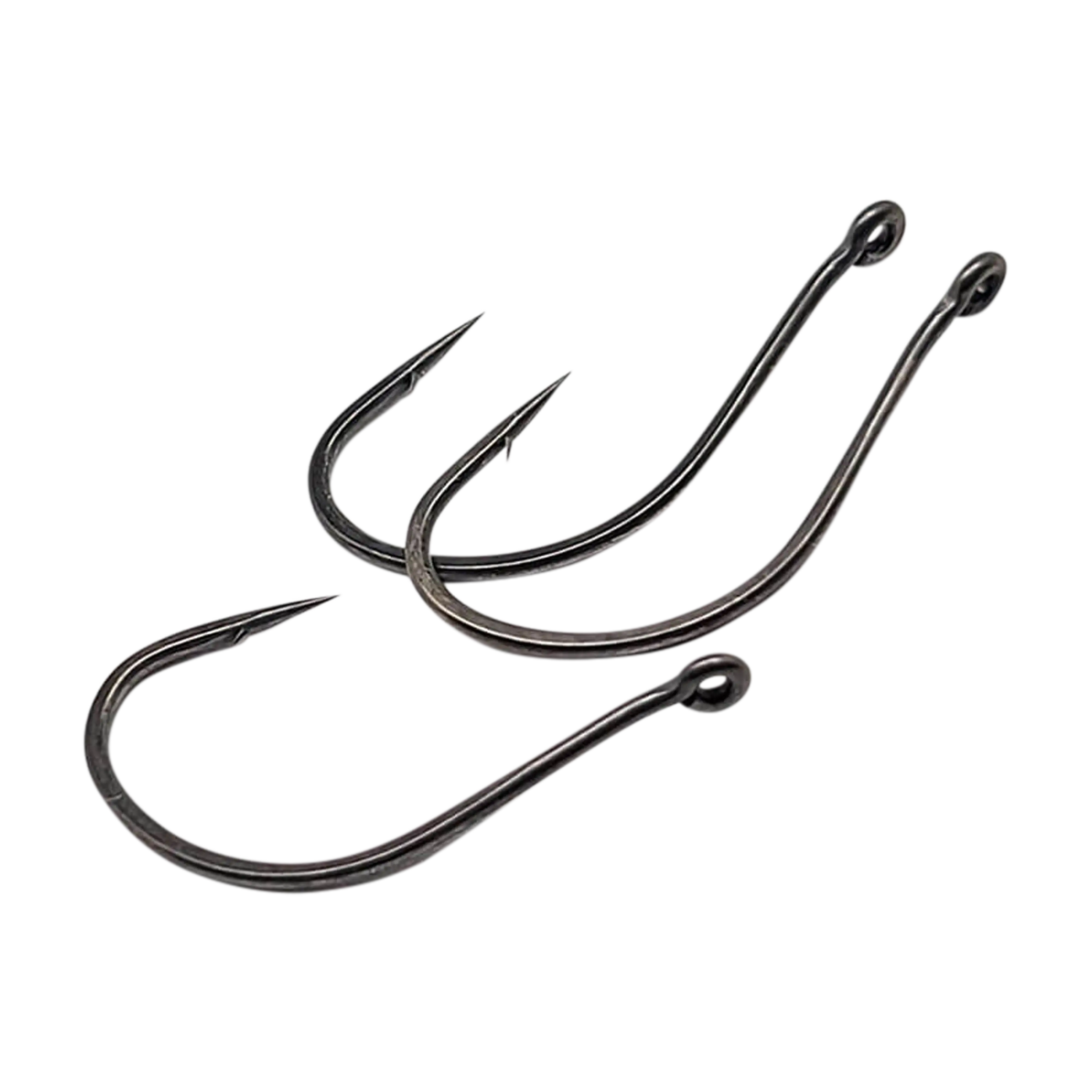
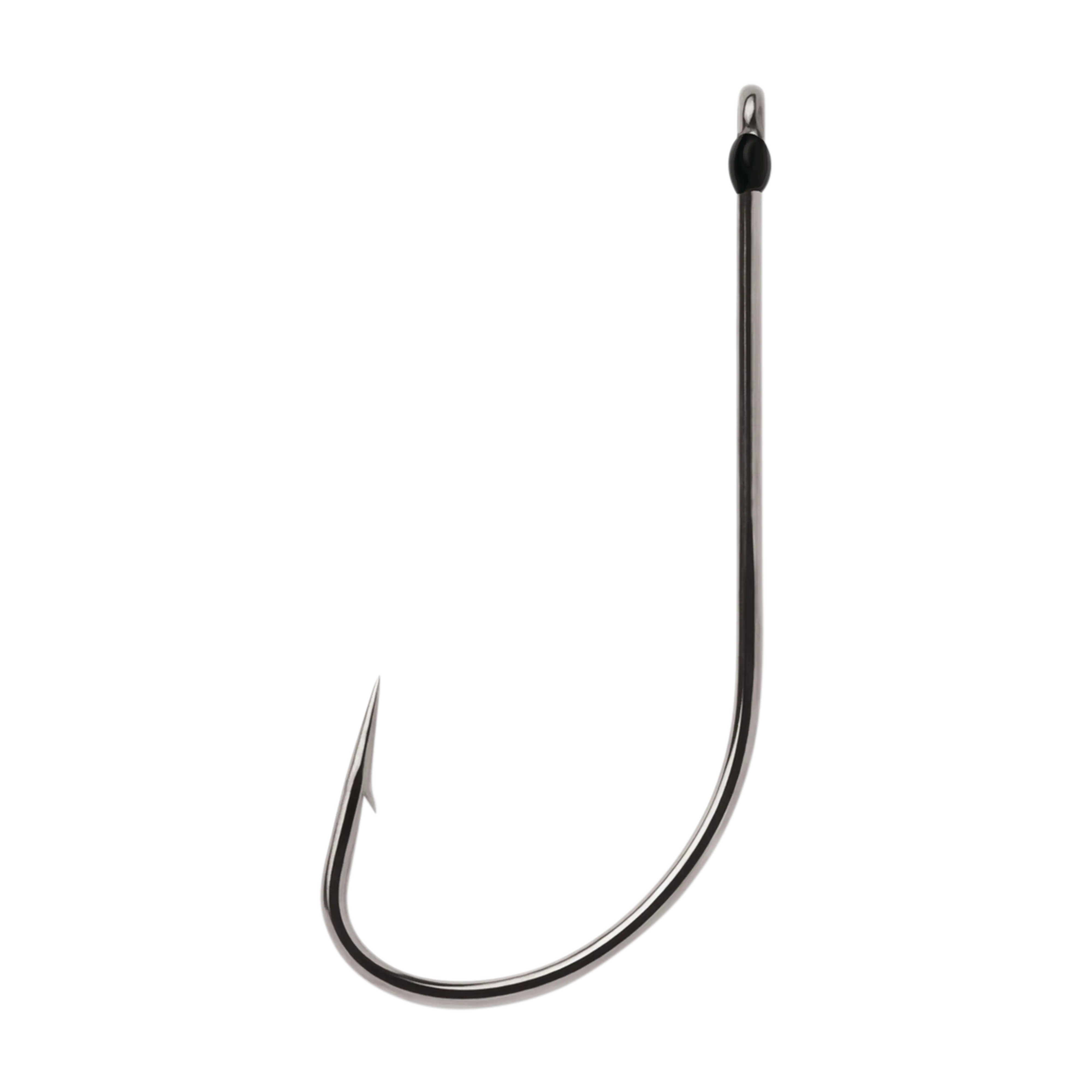
Drop shot hooks should be thin-wire, sharp, and sized to match the bait rather than the fish, allowing light lines to penetrate easily and improve hookset efficiency. Most feature a short shank, wide gap, and a slightly upturned or straight point, which holds finesse baits securely while preserving natural movement.
Common hook sizes:
- #4–#2: Best for smaller 2–4" finesse worms and soft plastics, especially in clear water, cold conditions, or heavily pressured fisheries where subtle presentations produce more bites.
- #2–#1: The most versatile drop shot hook sizes for 4–6" finesse worms, offering a balanced combination of natural bait action, hook penetration, and fish-holding power across a wide range of conditions.
- 1/0–2/0: Ideal for larger 6"+ soft plastics, thicker-bodied baits, or targeting bigger and more aggressive bass that require a stronger hook and larger profile presentation.
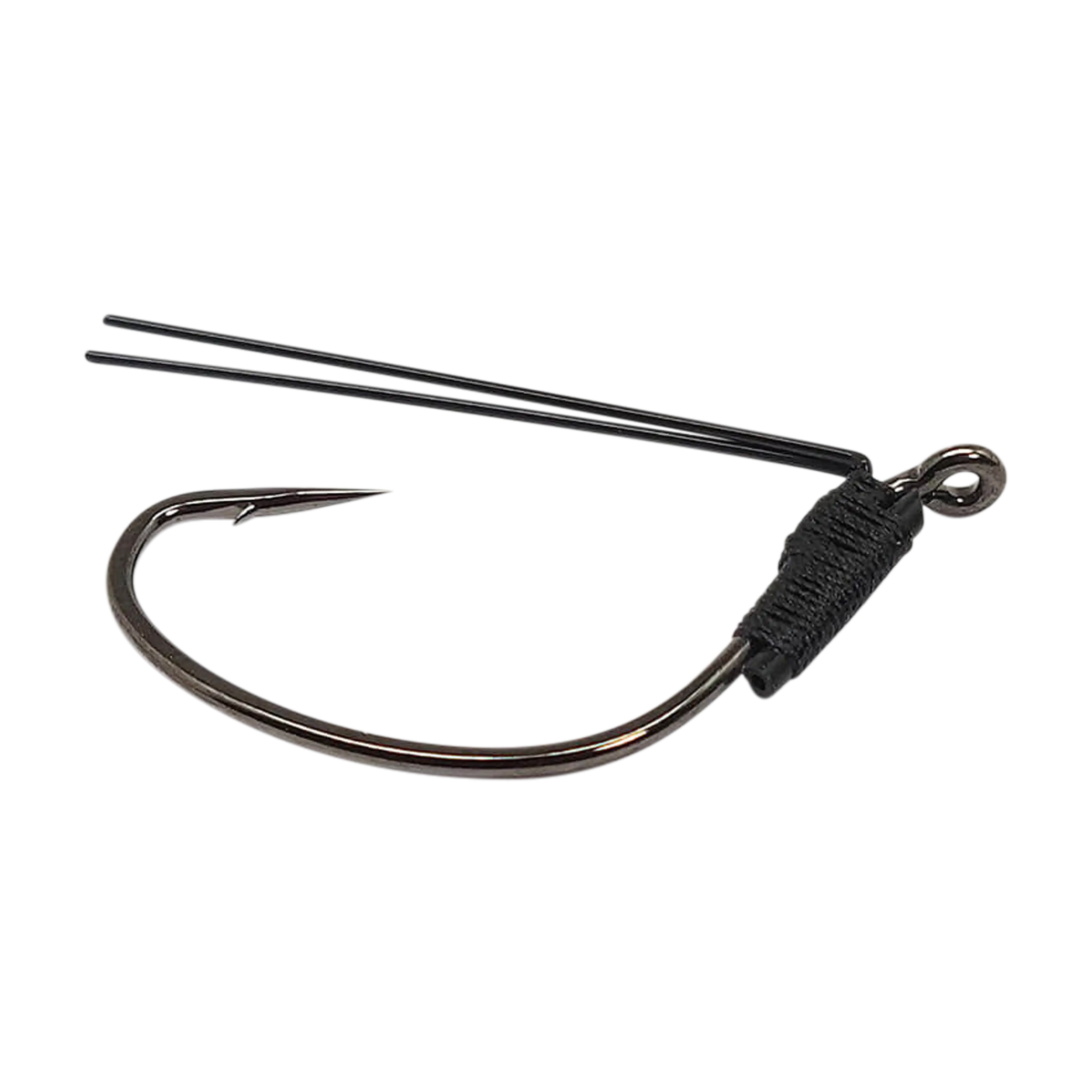
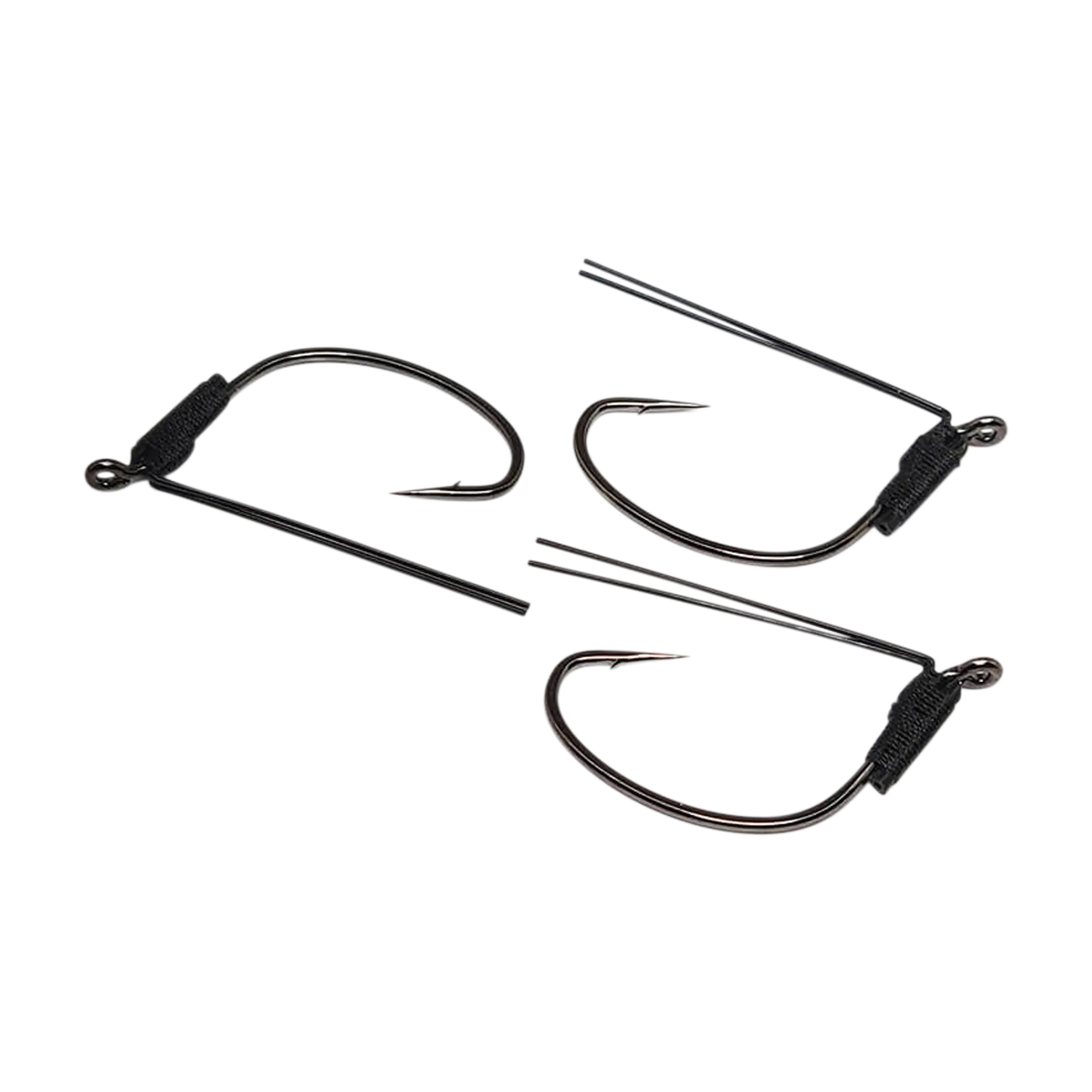
Hook style affects presentation: nose-hooking maximizes bait action, while weedless or specialized weedless drop shot hooks provide snag resistance in heavier structure. Choosing the right combination of size, shape, and style ensures subtle presentation, reliable hook placement, and effective hooksets.
Drop Shot Hooks and Weights
Choosing the right hooks and weights is essential for drop shot success. These components control how your bait behaves in the water, influence hook penetration, and ensure the rig remains subtle and natural. The correct combination lets your bait move freely, maintains proper bottom contact, and increases your chances of clean, confident hooksets on even the most cautious fish.
Drop Shot Weights
Drop shot weights should maintain bottom contact without restricting the bait’s natural movement. Lighter weights work well in shallow water or calm conditions, while heavier weights help keep contact in deeper water, stronger current, or windy conditions. Slim or cylindrical shapes slip through rocks and cover more easily, and many anglers prefer weights with line clips for quick depth adjustments without retying. Tungsten weights are denser than lead, allowing smaller profiles to maintain bottom contact and transmit bites more effectively, while lead weights are generally less expensive and easier to cast but slightly bulkier for the same weight.
Drop Shot Hooks
Drop shot hooks should be thin-wire, sharp, and sized to match the bait rather than the fish, allowing light lines to penetrate easily and improve hookset efficiency. Most feature a short shank, wide gap, and a slightly upturned or straight point, which holds finesse baits securely while preserving natural movement.
Common hook sizes:
- #4–#2: Best for smaller 2–4" finesse worms and soft plastics, especially in clear water, cold conditions, or heavily pressured fisheries where subtle presentations produce more bites.
- #2–#1: The most versatile drop shot hook sizes for 4–6" finesse worms, offering a balanced combination of natural bait action, hook penetration, and fish-holding power across a wide range of conditions.
- 1/0–2/0: Ideal for larger 6"+ soft plastics, thicker-bodied baits, or targeting bigger and more aggressive bass that require a stronger hook and larger profile presentation.
Hook style affects presentation: nose-hooking maximizes bait action, while weedless or specialized weedless drop shot hooks provide snag resistance in heavier structure. Choosing the right combination of size, shape, and style ensures subtle presentation, reliable hook placement, and effective hooksets.
Drop Shot Hooks & Weights
Drop Shot Tackle Storage
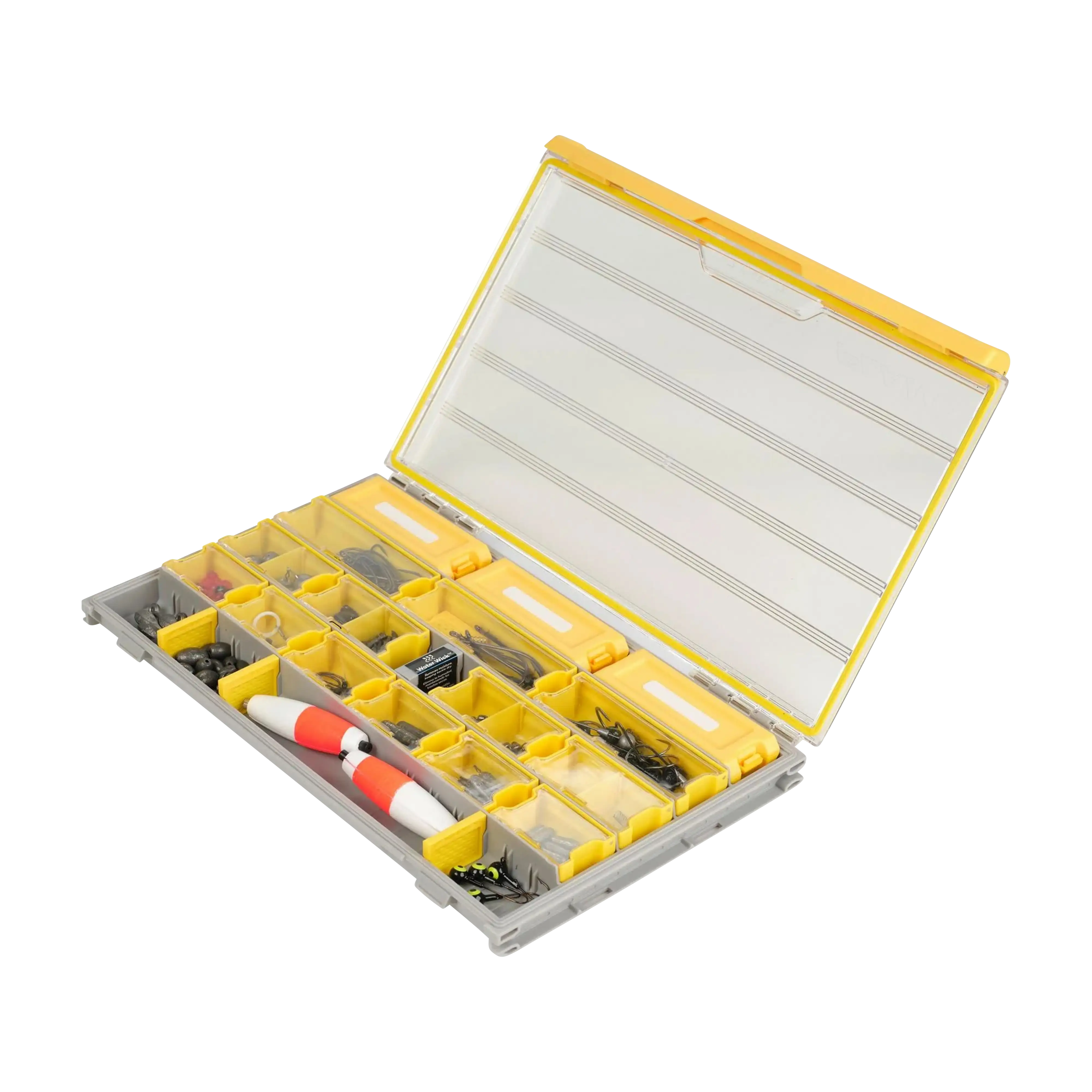
Even though drop shot gear is small, keeping it organized is crucial. Light line, small hooks, compact weights, and soft plastics can easily tangle or get damaged if tossed together. Efficient storage protects your gear, speeds up re-rigging, and keeps you focused on fishing instead of digging through clutter.
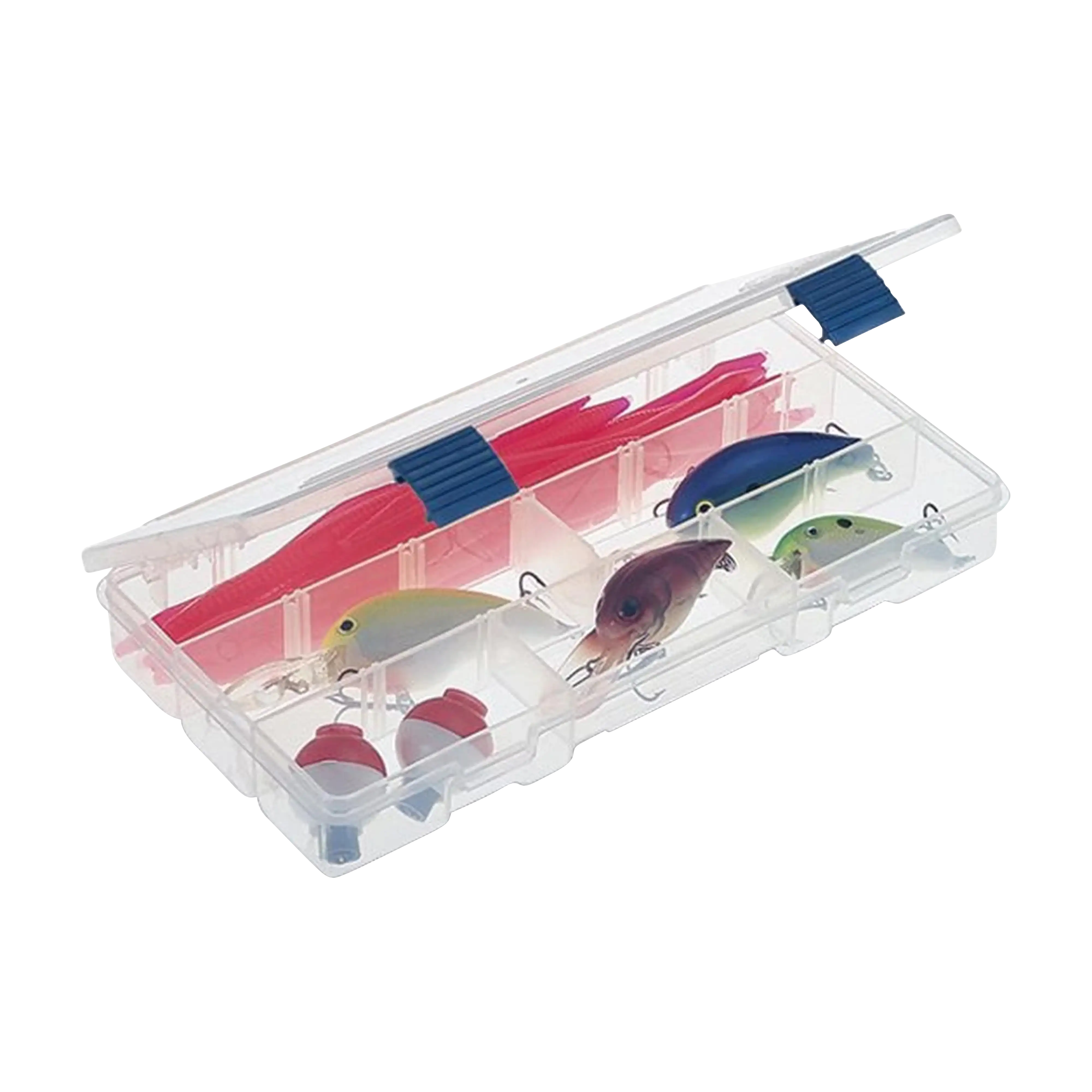
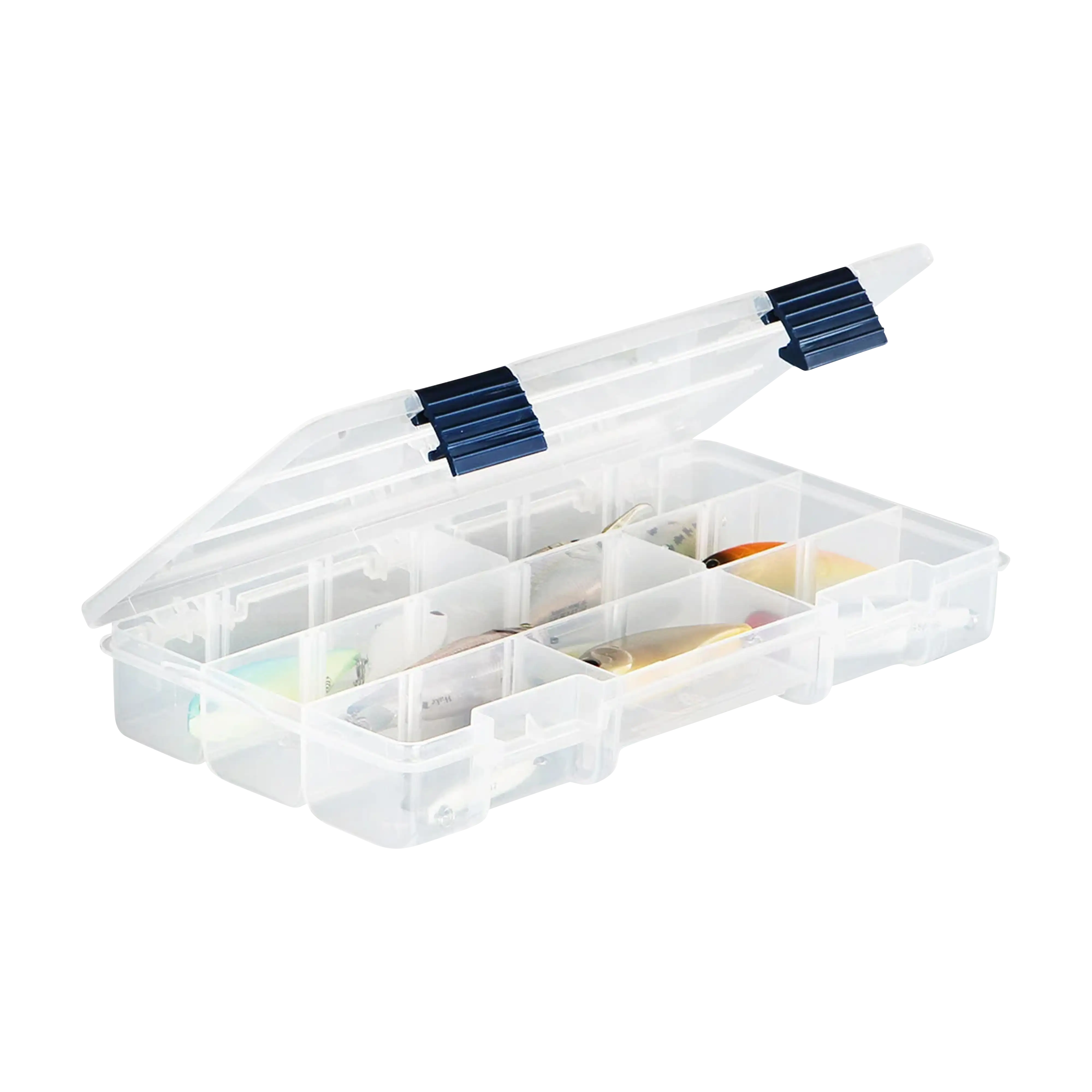
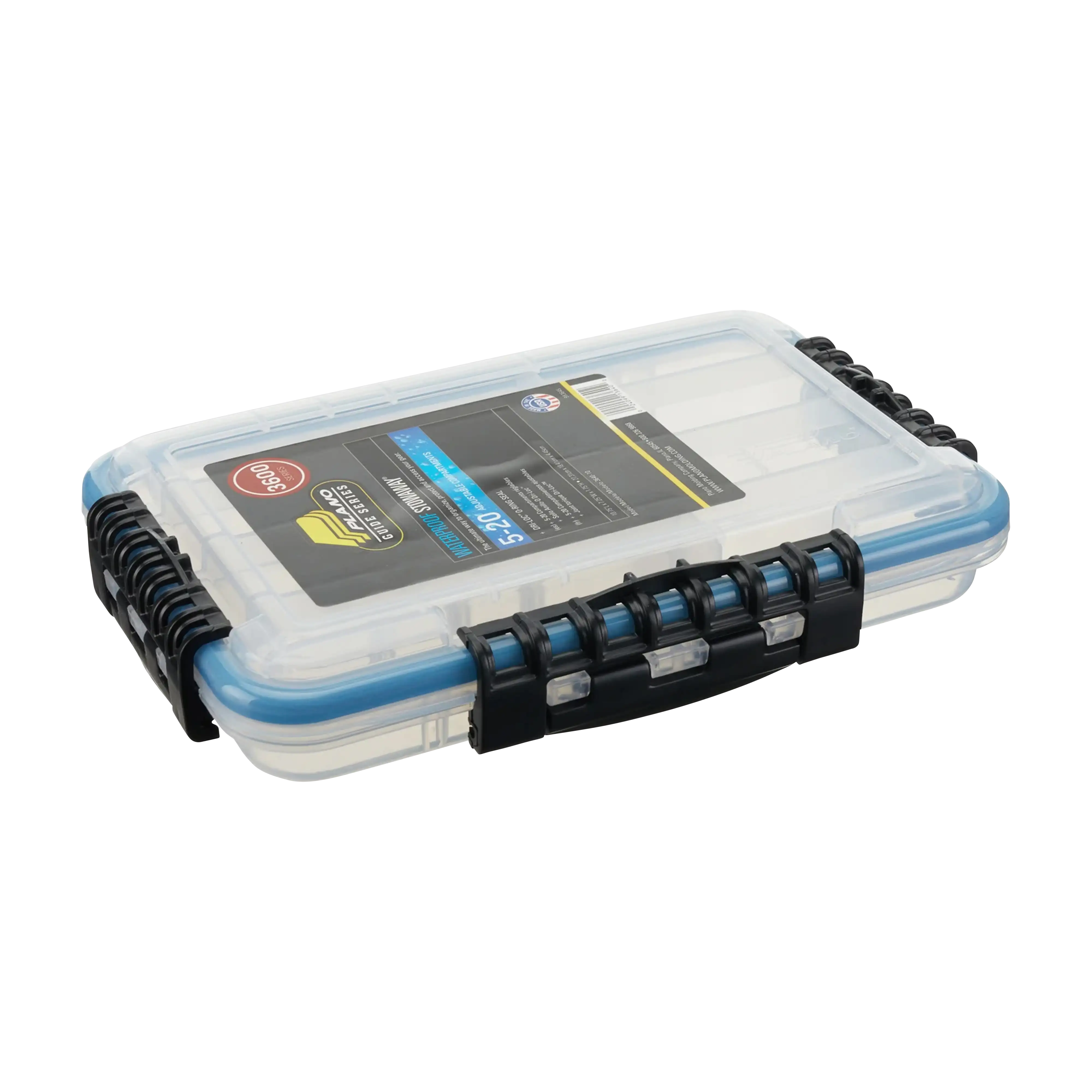
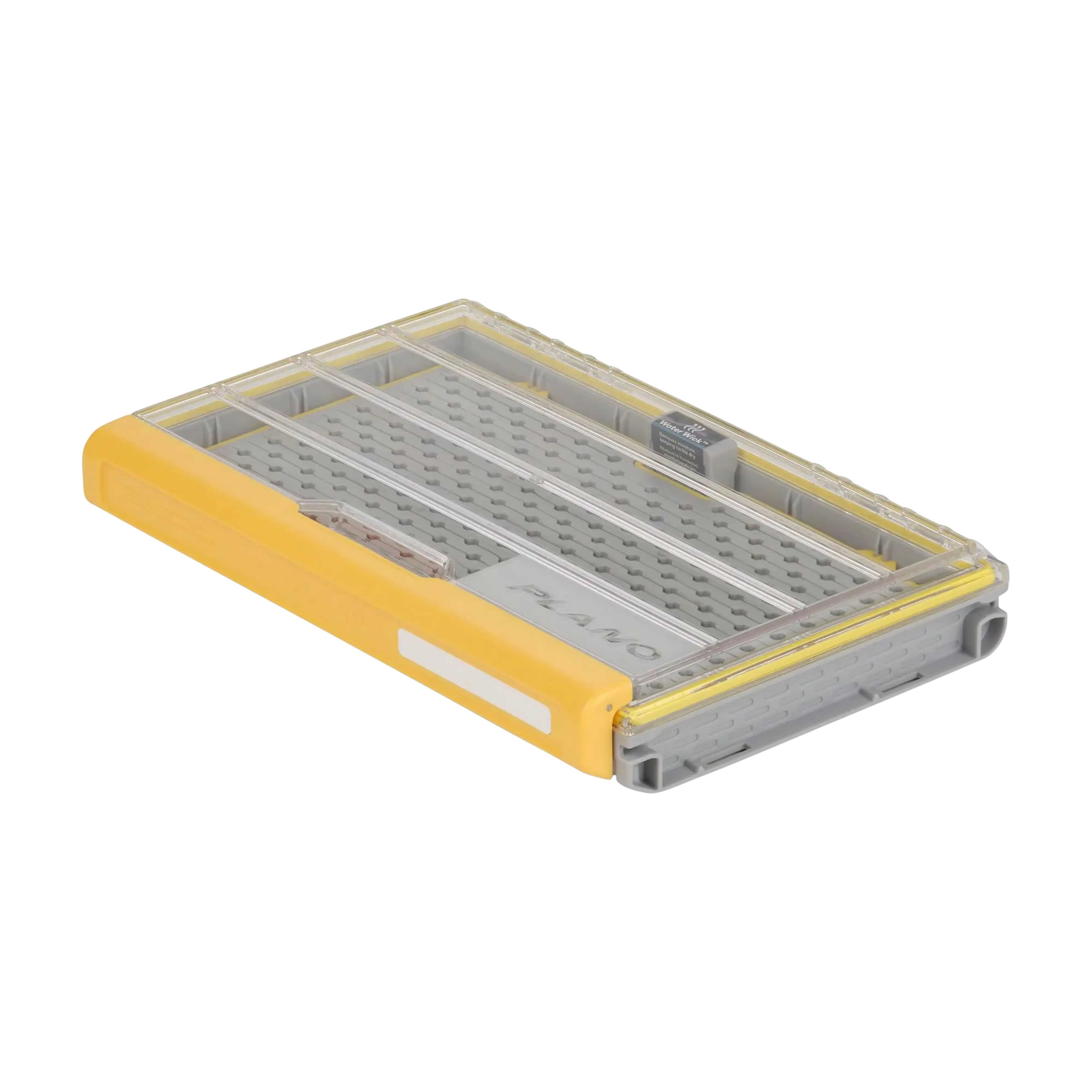
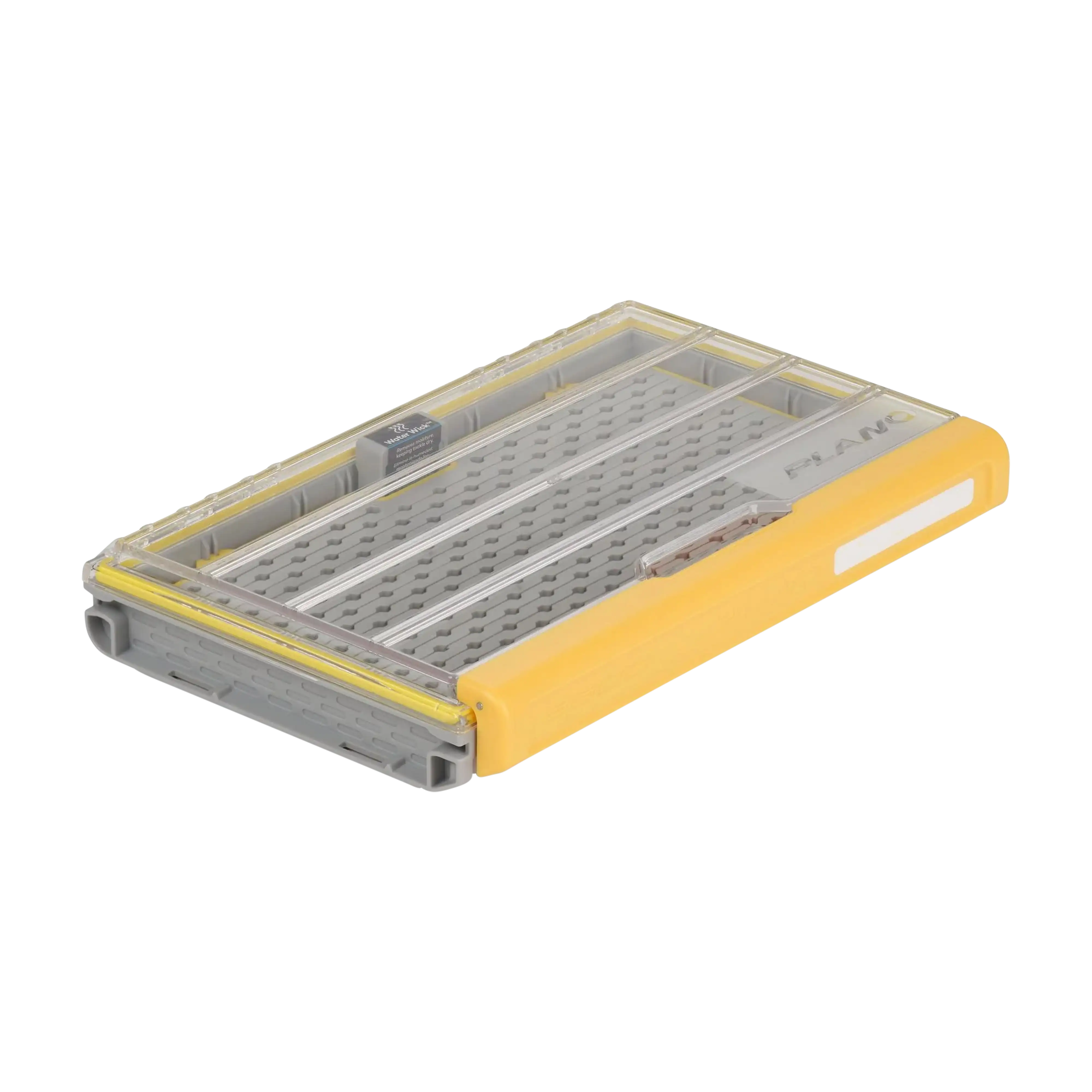
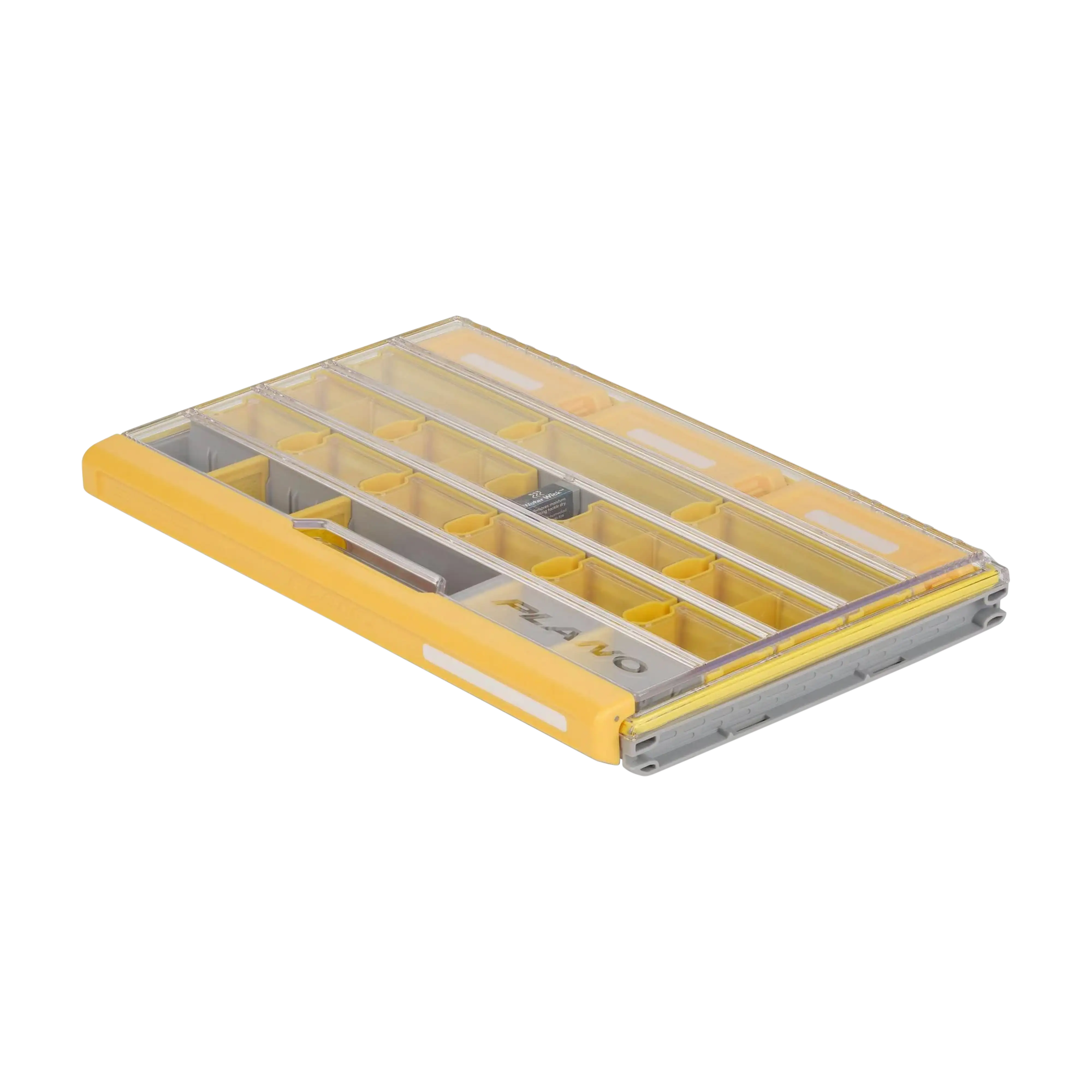
Look for compact tackle boxes or storage bags designed for finesse gear. Tackle boxes with adjustable trays or dividers let you organize hooks, weights, and terminal components by size and type, making re-rigging faster and reducing tangles. Clear lids or panels allow quick identification of what you need, while secure latches keep items from shifting during transport.
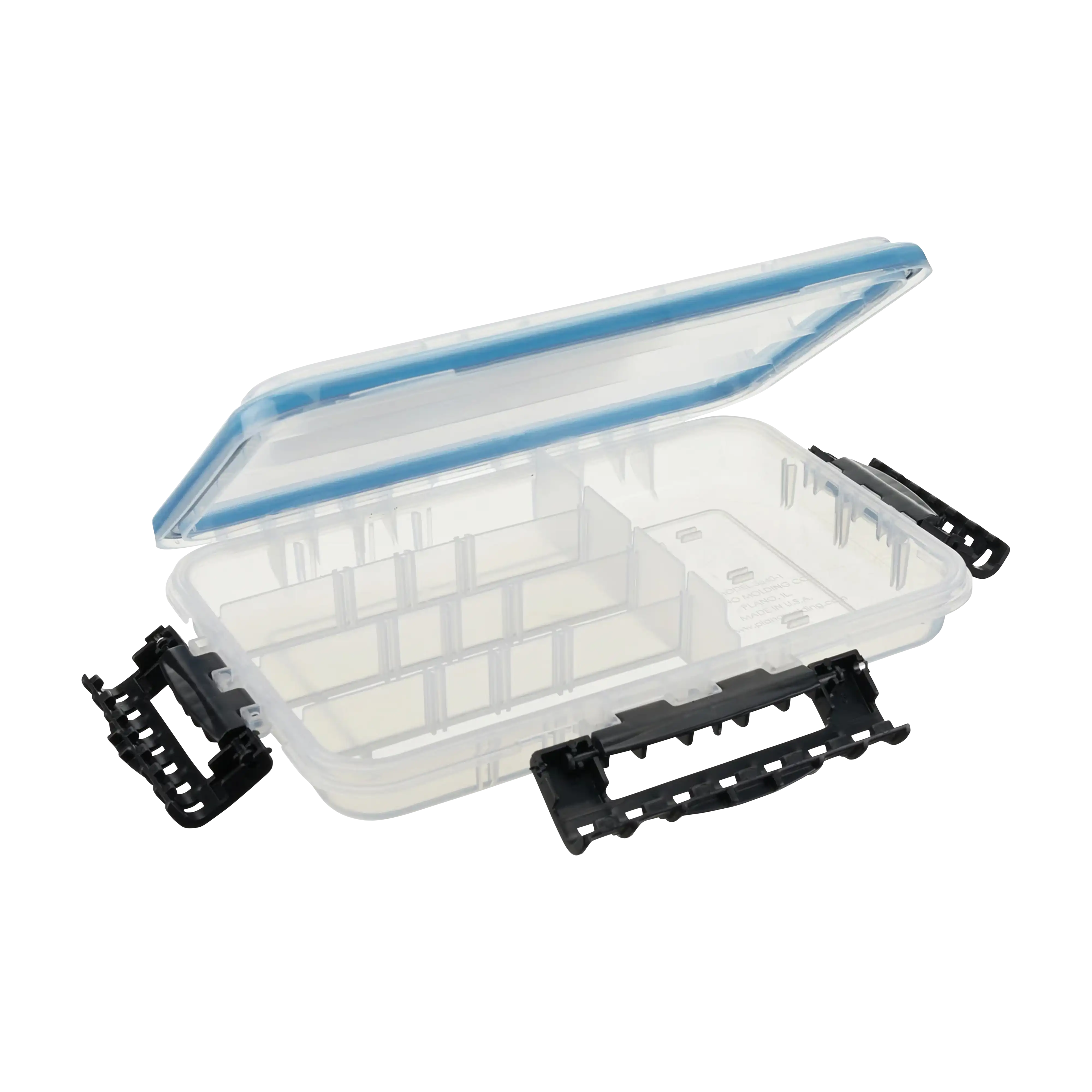
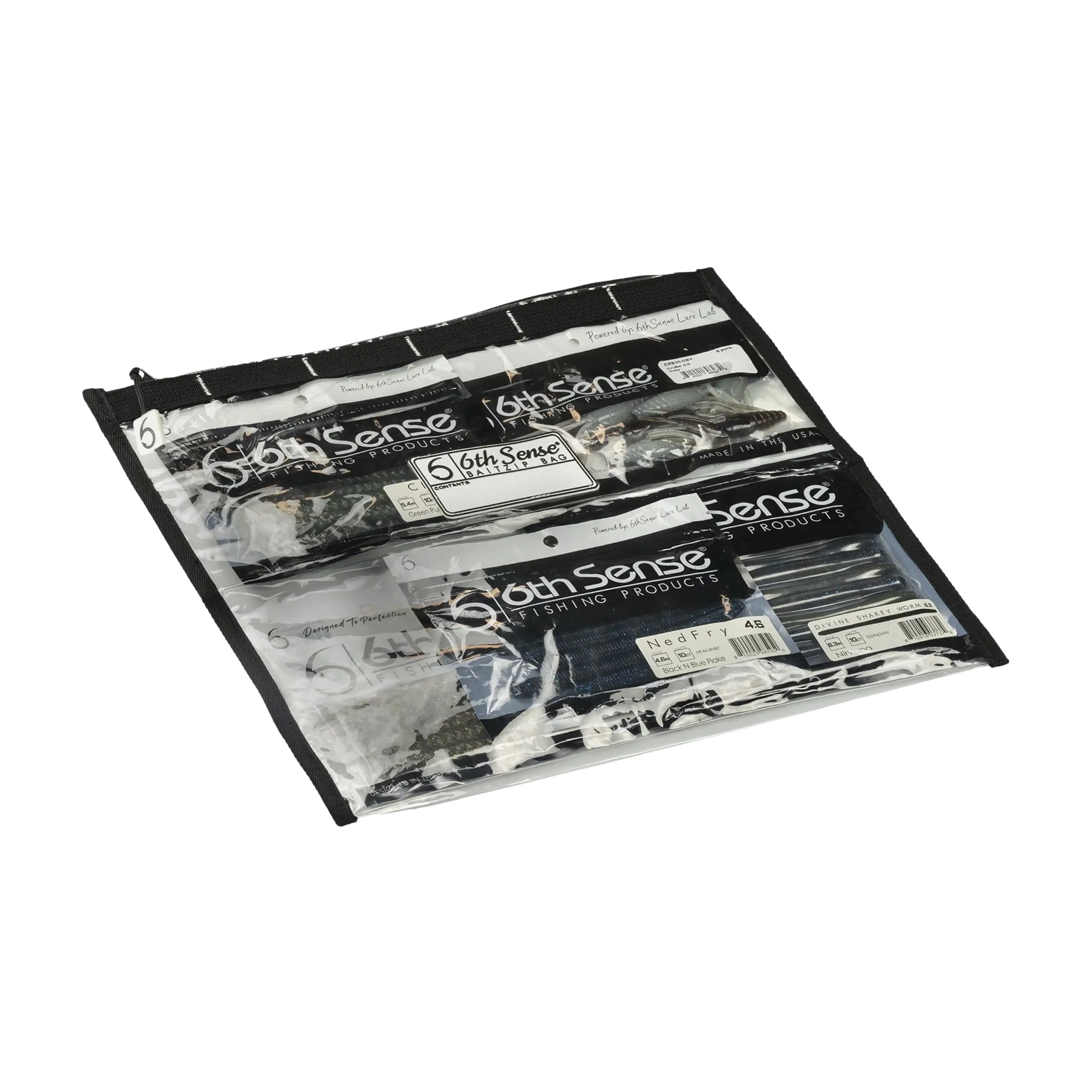
Soft plastics benefit from waterproof or sealed compartments, which protect them from heat, moisture, and crushing. For anglers on the move, zippered tackle bags or multi-pocket cases offer portable organization, keeping all your drop shot gear accessible whether you’re on a boat, kayak, or bank.
Key Takeaways
- Organized storage reduces downtime and speeds up rigging
- Adjustable dividers and clear compartments keep small gear sorted and accessible
- Waterproof or sealed storage preserves soft plastics and hooks
- Compact systems make finesse setups portable and efficient
Drop Shot Tackle Storage
Even though drop shot gear is small, keeping it organized is crucial. Light line, small hooks, compact weights, and soft plastics can easily tangle or get damaged if tossed together. Efficient storage protects your gear, speeds up re-rigging, and keeps you focused on fishing instead of digging through clutter.
Look for compact tackle boxes or storage bags designed for finesse gear. Tackle boxes with adjustable trays or dividers let you organize hooks, weights, and terminal components by size and type, making re-rigging faster and reducing tangles. Clear lids or panels allow quick identification of what you need, while secure latches keep items from shifting during transport.
Soft plastics benefit from waterproof or sealed compartments, which protect them from heat, moisture, and crushing. For anglers on the move, zippered tackle bags or multi-pocket cases offer portable organization, keeping all your drop shot gear accessible whether you’re on a boat, kayak, or bank.
Key Takeaways
- Organized storage reduces downtime and speeds up rigging
- Adjustable dividers and clear compartments keep small gear sorted and accessible
- Waterproof or sealed storage preserves soft plastics and hooks
- Compact systems make finesse setups portable and efficient
Drop Shot Tackle Storage


Drop Shot Tips & Techniques
Drop shot fishing rewards anglers who slow down and stay intentional. Success often comes from controlling slack, limiting unnecessary movement, and making small adjustments based on how fish respond. These techniques and tips focus on how to work the rig once it’s in the water — not just how to rig it — helping you get more bites from fish that won’t commit to faster presentations.
Technique 1: Slack-Line Deadsticking
Slack-line deadsticking is one of the most effective ways to fish a drop shot when fish are pressured or inactive. After the weight contacts the bottom, lower your rod tip and introduce a slight amount of slack into the line. The goal is to let the bait hover naturally above the weight without pulling it forward or lifting it off plane. Many bites happen when the bait appears nearly motionless, allowing fish to approach and inhale it without resistance.
Instead of feeling a sharp tap, watch for line movement, tightening, or subtle changes in slack. When a bite is detected, apply steady pressure rather than a hard hookset to drive the hook cleanly.
Key Takeaways
- Slack allows the bait to move naturally with no resistance
- Deadsticking excels in pressured or cold-water conditions
- Many bites are visual, not felt
- Use steady pressure instead of aggressive hooksets
Technique 2: Subtle Rod-Tip Twitches
Subtle rod-tip twitches add life to a drop shot without pulling the bait out of the strike zone. With the weight resting on bottom, use small, controlled movements of the rod tip to make the bait quiver or shake in place. The motion should be minimal — just enough to make the bait react — while the weight stays planted.
This technique is effective when fish are present but need a trigger to commit. Pausing between twitches is critical, as many bites occur immediately after the bait stops moving.
Key Takeaways
- Small rod movements create realistic, controlled action
- Keep the weight on bottom to maintain bait position
- Pauses between movements trigger reaction bites
- Avoid lifting the rig or overworking the bait
Tip: Match Size & Color to Conditions
Fine-tuning bait size and color is one of the fastest ways to improve drop shot results. When fish are pressured, downsizing the bait reduces visual intimidation and increases realism. Slim profiles often outperform bulkier shapes, especially in clear water. Color selection should match visibility needs — natural, translucent colors for clear water and higher-contrast options when light or clarity is reduced.
Rather than changing locations immediately, adjusting size or color can be enough to turn follows into bites. Small changes often produce big results with finesse techniques.
Key Takeaways
- Downsizing increases bites in pressured conditions
- Slim profiles look more natural on a drop shot
- Natural colors excel in clear water
- High-contrast colors improve visibility when needed
Drop Shot Tips & Techniques
Drop shot fishing rewards anglers who slow down and stay intentional. Success often comes from controlling slack, limiting unnecessary movement, and making small adjustments based on how fish respond. These techniques and tips focus on how to work the rig once it’s in the water — not just how to rig it — helping you get more bites from fish that won’t commit to faster presentations.
Technique 1: Slack-Line Deadsticking
Slack-line deadsticking is one of the most effective ways to fish a drop shot when fish are pressured or inactive. After the weight contacts the bottom, lower your rod tip and introduce a slight amount of slack into the line. The goal is to let the bait hover naturally above the weight without pulling it forward or lifting it off plane. Many bites happen when the bait appears nearly motionless, allowing fish to approach and inhale it without resistance.
Instead of feeling a sharp tap, watch for line movement, tightening, or subtle changes in slack. When a bite is detected, apply steady pressure rather than a hard hookset to drive the hook cleanly.
Key Takeaways
- Slack allows the bait to move naturally with no resistance
- Deadsticking excels in pressured or cold-water conditions
- Many bites are visual, not felt
- Use steady pressure instead of aggressive hooksets
Technique 2: Subtle Rod-Tip Twitches
Subtle rod-tip twitches add life to a drop shot without pulling the bait out of the strike zone. With the weight resting on bottom, use small, controlled movements of the rod tip to make the bait quiver or shake in place. The motion should be minimal — just enough to make the bait react — while the weight stays planted.
This technique is effective when fish are present but need a trigger to commit. Pausing between twitches is critical, as many bites occur immediately after the bait stops moving.
Key Takeaways
- Small rod movements create realistic, controlled action
- Keep the weight on bottom to maintain bait position
- Pauses between movements trigger reaction bites
- Avoid lifting the rig or overworking the bait
Tip: Match Size & Color to Conditions
Fine-tuning bait size and color is one of the fastest ways to improve drop shot results. When fish are pressured, downsizing the bait reduces visual intimidation and increases realism. Slim profiles often outperform bulkier shapes, especially in clear water. Color selection should match visibility needs — natural, translucent colors for clear water and higher-contrast options when light or clarity is reduced.
Rather than changing locations immediately, adjusting size or color can be enough to turn follows into bites. Small changes often produce big results with finesse techniques.
Key Takeaways
- Downsizing increases bites in pressured conditions
- Slim profiles look more natural on a drop shot
- Natural colors excel in clear water
- High-contrast colors improve visibility when needed
Drop Shot Fishing
FAQ - Drop Shot Gear
What line is best for drop shot fishing?
A braided mainline paired with a fluorocarbon leader is best for drop shot fishing because it provides maximum sensitivity to detect subtle bites, maintains precise slack-line control, and keeps the bait nearly invisible for a natural, lifelike presentation.
How long should my leader be for a drop shot rig
Most anglers use a 12”–24” leader, adjusting length to control bait height above the bottom, match local forage, avoid spooking fish, and optimize hooksets in different depths, current, and cover.
What hook size should I use for drop shot fishing?
Drop shot hook sizes range from #4–#2 for small 2–4” worms or soft plastics in clear or pressured water, #2–#1 for standard 4–6” finesse worms across most conditions, and 1/0–2/0 for larger 6”+ baits targeting bigger or more aggressive bass.
Do I need special drop shot weights?
Dedicated drop shot weights make depth adjustments faster, reduce hang-ups, and improve bottom contact, but any weight that allows the bait to hover naturally while staying anchored will work effectively.
Is drop shot fishing only for bass?
Drop shot fishing is commonly used for bass but also works well for crappie, walleye, panfish, and other freshwater species that respond to subtle, suspended, finesse-style presentations.
Can I use baitcasting gear for drop shot fishing?
While baitcasting gear can be used, spinning setups are preferred because they handle light line, small baits, and slack-line control more efficiently, making it easier to present finesse rigs and achieve clean hooksets.
What rod power is best for drop shot fishing?
Medium-light powered rods with fast or extra-fast tips are most common and provide the ideal combination of sensitivity for detecting light bites, enough backbone for solid hooksets, and precise control of light finesse presentations.
Does water clarity matter for drop shot fishing?
Drop shot fishing performs best in clear water, but careful adjustments to bait size, color, leader length, and weight make it effective in stained or low-visibility conditions while keeping presentations realistic.
Is drop shot fishing good for beginners?
Drop shot fishing is beginner-friendly because it’s simple to rig, forgiving with light line and finesse baits, and consistently effective without requiring advanced retrieves or aggressive techniques.
Can you fish a drop shot in current?
Drop shot rigs work well in current when weight size is increased to maintain bottom contact, line tension is controlled, and the bait remains suspended naturally above the structure.
What’s the biggest mistake anglers make when drop shot fishing?
The biggest mistake is overworking the bait, which reduces realism, pulls the lure out of the strike zone, and dramatically lowers the chance of enticing cautious or pressured fish to bite.
From the Mud Hole Journal
Further Reading
Vertical Drop Shot (Deep Water): Precision Fishing When Bass Go Offshore
If you’re looking for more rod recommendations, reel pairings, line setups, and technique-specific advice, head back to the complete Main Gear Guide Page for the full breakdowns on your favorite t...
Further Reading
Can't get enough Drop Shot Fishing content? Check out the articles below!