







Mud Hole Gear Guide:
What is Offshore Trolling?
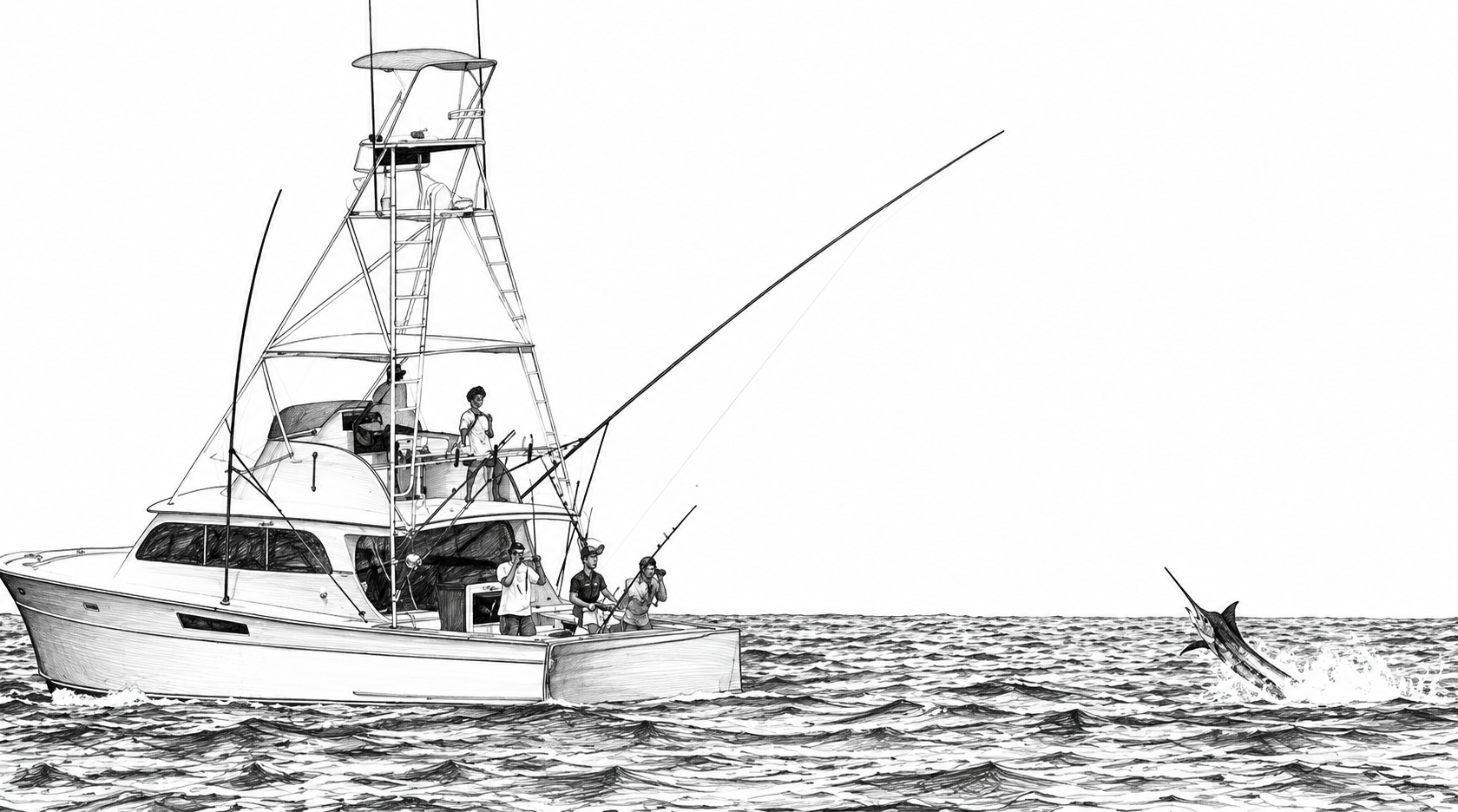
Offshore trolling is a saltwater fishing method where boats pull artificial lures or natural baits through open water to target pelagic species like tuna, mahi-mahi, wahoo, sailfish, and marlin. Instead of fishing fixed structure, anglers cover large areas while tracking temperature breaks, current seams, bait schools, and offshore contours. The goal is to keep a spread of baits running cleanly at the right speed, depth, and distance to trigger strikes from actively feeding fish.
Success offshore depends on more than just finding fish. Rods, reels, line, leaders, and lure placement all need to work together to keep the spread tracking properly in changing conditions. Small adjustments to speed or lure position can dramatically affect how baits run and how fish respond, especially when trolling multiple lines across different parts of the water column.
Offshore trolling also includes a variety of techniques, from skirted lure spreads and diving plugs to high-speed wahoo trolling and slow-trolled live bait. Each approach uses different tackle, lure styles, and trolling speeds, but all rely on clean line management, consistent lure presentation, and being ready when a fish suddenly crashes the spread.
Introduction
What is Offshore Trolling?
What is Offshore Trolling?
Offshore trolling is a saltwater fishing method where boats pull artificial lures or natural baits through open water to target pelagic species like tuna, mahi-mahi, wahoo, sailfish, and marlin. Instead of fishing fixed structure, anglers cover large areas while tracking temperature breaks, current seams, bait schools, and offshore contours. The goal is to keep a spread of baits running cleanly at the right speed, depth, and distance to trigger strikes from actively feeding fish.
Success offshore depends on more than just finding fish. Rods, reels, line, leaders, and lure placement all need to work together to keep the spread tracking properly in changing conditions. Small adjustments to speed or lure position can dramatically affect how baits run and how fish respond, especially when trolling multiple lines across different parts of the water column.
Offshore trolling also includes a variety of techniques, from skirted lure spreads and diving plugs to high-speed wahoo trolling and slow-trolled live bait. Each approach uses different tackle, lure styles, and trolling speeds, but all rely on clean line management, consistent lure presentation, and being ready when a fish suddenly crashes the spread.
Types of Offshore Trolling
Offshore trolling includes several distinct approaches, each built around how fast you’re fishing, where your baits are positioned in the water column, and what species you’re targeting. Some methods focus on speed and reaction strikes, while others rely on precise depth control or natural bait presentation. Knowing when to use each style helps you adjust your spread to match conditions and fish behavior offshore.
High-Speed Trolling (Surface)
Targets: Wahoo primarily; also tuna and other aggressive pelagics, typically fished at 10–20 knots.
High-speed trolling is designed to cover large areas quickly while triggering reaction strikes from fast-moving predators. This technique uses heavy, streamlined lures—often weighted heads or bullet-style designs—that stay stable and track straight at elevated speeds. Because of the speed involved, spreads are usually simple and widely spaced to prevent tangles and maintain clean lure action.
Durable leaders, often wire or heavy fluorocarbon, are required to handle abrasion and violent strikes. This method is especially effective for wahoo, which are known for attacking fast-moving prey. Success depends on maintaining consistent speed, keeping lures running true, and covering productive water like current edges and temperature breaks.
Skirted Lure Trolling (Conventional Spread)
Targets: Marlin, sailfish, tuna, mahi-mahi; typically fished at 5–9 knots.
This is the most widely used offshore trolling method, built around a multi-lure spread positioned at different distances behind the boat. Skirted trolling lures are designed to create surface disturbance—popping, smoking, or diving in a repeating pattern that imitates fleeing baitfish. Each lure is placed in a specific position, such as short rigger, long rigger, flat line, or shotgun, to create separation and prevent overlap.
The key to this technique is balance—every lure must run cleanly in its own lane without crossing lines or losing its action. Adjusting lure size, head shape, and placement allows anglers to fine-tune the spread based on sea conditions and target species. This approach is highly versatile and forms the foundation of most offshore trolling setups.
Artificial Lure Trolling (Diving Hard Baits)
Targets: Tuna, wahoo, king mackerel, mahi; typically fished around 4–8 knots.
Plug trolling uses hard-bodied diving lures that reach depth and maintain action without additional rigging. These lures track consistently below the surface, making them effective when fish are holding just under the top layer or when a tighter, more controlled presentation is needed. Their built-in lip creates a steady wobble and vibration that helps draw strikes even when visibility is reduced.
Plugs can be run on their own or combined with weights, planers, or downriggers to extend their depth range. Because they rely on proper speed to function correctly, maintaining the right trolling pace is critical to keep them swimming true and avoid blowout.
Slow Trolling (Live Bait)
Targets: Sailfish, tuna, kingfish, and other species feeding on live bait; typically under 3 knots.
Slow trolling focuses on presenting live bait as naturally as possible while still covering water. Baits are rigged to swim freely behind the boat and are often staggered across the surface using flat lines, kites, or outriggers. This method is especially effective when fish are keyed in on live forage and less responsive to artificial lures.
Boat control plays a major role, as speed and direction must keep baits active without dragging or tiring them out. This technique is commonly used around structure, current edges, or bait schools where predators are actively feeding.
Deep Trolling (Planers & Downriggers)
Targets: Tuna, wahoo, king mackerel, and deeper-holding pelagics; speed varies by setup.
Deep trolling is used to reach fish that are holding well below the surface and not actively feeding in the top layer. Planers and downriggers allow anglers to present lures or rigged baits at controlled depths while maintaining forward movement. Planers dive under tension and trip when a fish strikes, while downriggers use weighted balls and release clips for precise depth placement.
This method expands your spread vertically, allowing you to target multiple depth zones at once. It’s especially useful when fish are marked deeper on electronics or holding along thermoclines, ledges, or submerged structure. Proper spacing and rigging are important to keep lines separated and running clean.
Types of Offshore Trolling
Offshore trolling includes several distinct approaches, each built around how fast you’re fishing, where your baits are positioned in the water column, and what species you’re targeting. Some methods focus on speed and reaction strikes, while others rely on precise depth control or natural bait presentation. Knowing when to use each style helps you adjust your spread to match conditions and fish behavior offshore.
High-Speed Trolling (Surface)
Targets: Wahoo primarily; also tuna and other aggressive pelagics, typically fished at 10–20 knots.
High-speed trolling is designed to cover large areas quickly while triggering reaction strikes from fast-moving predators. This technique uses heavy, streamlined lures—often weighted heads or bullet-style designs—that stay stable and track straight at elevated speeds. Because of the speed involved, spreads are usually simple and widely spaced to prevent tangles and maintain clean lure action.
Durable leaders, often wire or heavy fluorocarbon, are required to handle abrasion and violent strikes. This method is especially effective for wahoo, which are known for attacking fast-moving prey. Success depends on maintaining consistent speed, keeping lures running true, and covering productive water like current edges and temperature breaks.
Skirted Lure Trolling (Conventional Spread)
Targets: Marlin, sailfish, tuna, mahi-mahi; typically fished at 5–9 knots.
This is the most widely used offshore trolling method, built around a multi-lure spread positioned at different distances behind the boat. Skirted trolling lures are designed to create surface disturbance—popping, smoking, or diving in a repeating pattern that imitates fleeing baitfish. Each lure is placed in a specific position, such as short rigger, long rigger, flat line, or shotgun, to create separation and prevent overlap.
The key to this technique is balance—every lure must run cleanly in its own lane without crossing lines or losing its action. Adjusting lure size, head shape, and placement allows anglers to fine-tune the spread based on sea conditions and target species. This approach is highly versatile and forms the foundation of most offshore trolling setups.
Artificial Lure Trolling (Diving Hard Baits)
Targets: Tuna, wahoo, king mackerel, mahi; typically fished around 4–8 knots.
Plug trolling uses hard-bodied diving lures that reach depth and maintain action without additional rigging. These lures track consistently below the surface, making them effective when fish are holding just under the top layer or when a tighter, more controlled presentation is needed. Their built-in lip creates a steady wobble and vibration that helps draw strikes even when visibility is reduced.
Plugs can be run on their own or combined with weights, planers, or downriggers to extend their depth range. Because they rely on proper speed to function correctly, maintaining the right trolling pace is critical to keep them swimming true and avoid blowout.
Slow Trolling (Live Bait)
Targets: Sailfish, tuna, kingfish, and other species feeding on live bait; typically under 3 knots.
Slow trolling focuses on presenting live bait as naturally as possible while still covering water. Baits are rigged to swim freely behind the boat and are often staggered across the surface using flat lines, kites, or outriggers. This method is especially effective when fish are keyed in on live forage and less responsive to artificial lures.
Boat control plays a major role, as speed and direction must keep baits active without dragging or tiring them out. This technique is commonly used around structure, current edges, or bait schools where predators are actively feeding.
Deep Trolling (Planers & Downriggers)
Targets: Tuna, wahoo, king mackerel, and deeper-holding pelagics; speed varies by setup.
Deep trolling is used to reach fish that are holding well below the surface and not actively feeding in the top layer. Planers and downriggers allow anglers to present lures or rigged baits at controlled depths while maintaining forward movement. Planers dive under tension and trip when a fish strikes, while downriggers use weighted balls and release clips for precise depth placement.
This method expands your spread vertically, allowing you to target multiple depth zones at once. It’s especially useful when fish are marked deeper on electronics or holding along thermoclines, ledges, or submerged structure. Proper spacing and rigging are important to keep lines separated and running clean.
How to Choose an Offshore Trolling Saltwater Rod
Offshore trolling rods are purpose‑built to handle constant drag pressure, heavy line classes, and repeated strikes from powerful saltwater pelagics. Unlike casting or jigging rods that see intermittent pressure, a trolling rod can sit in a holder for hours while baits are pulled at speed, then instantly load up when a fish eats. That means durability, balanced strength, and corrosion‑resistant hardware matter more than sensitivity alone. The right rod matches length, power, action, line rating, components, and ergonomics to your boat setup, target species, and how you plan to troll.
When selecting a rod, focus on these key performance characteristics:
Power
Power refers to how much pressure it takes to bend the blank — basically the backbone or strength of the rod. Offshore trolling typically calls for medium‑heavy to extra‑heavy powers, with heavier rods needed as line weights and drag pressures increase or when chasing bigger game like marlin, tuna, and wahoo. A rod that’s too light will flex excessively, robbing you of hook‑setting authority and risking breakage under load, while too heavy a blank can fatigue the angler and mute feel.
Action
Action describes where on the blank the rod tends to bend. Trolling rods are most commonly moderate to moderate‑fast action: they bend a bit deeper into the blank to absorb sudden loads and reduce pulled hooks, but still offer enough tip stiffness to transmit lure action and detect strikes. Some specialized offshore rods lean toward faster actions when a quick hook set is vital. In general, slower actions aren’t typical for heavy offshore trolling because they can lack the quick recovery needed once a fish turns.
Length
Offshore trolling rods generally range from 5’6″ to 8′, depending on technique and line placement needs. Shorter rods (~5’6″–6′) give more leverage and control for high-speed surface trolling or stand-up fighting, while medium rods (6′–7′) are versatile for conventional skirted spreads and plug trolling. For planer or downrigger deep trolling, longer rods (~7’6″–8′) are preferred because they provide extra reach to keep lines separated, maintain proper angles to the fish, and absorb the pull from baits set deep in the water column. Rod length should be matched to boat size, number of rods deployed, and the trolling method you plan to use.
Line Rating
Rod line ratings indicate the range of line strengths a blank is designed to handle safely. Offshore trolling rods are typically rated for mono from 30 lb up to 100+ lb, with braid equivalents often ranging from mid‑30s to 130–150 lb+, depending on rod power and target species. Using line within the recommended rating ensures the rod isn’t overstressed and that guides and hardware remain protected. Braid allows higher breaking strength in a thinner diameter, while mono or fluorocarbon stretches more and handles differently under drag. Choosing the right combination of line, leader, and drag setting ensures reliable hook sets and effective fish control.
Weight / Lure Rating
Unlike inshore and many nearshore rods, offshore trolling rods generally do not list a lure or bait weight rating, because they are not designed for casting. Instead, these rods are engineered to handle constant drag pressure, heavy lines, and repeated strikes from large pelagic species. The rod’s performance is determined primarily by its power, action, and line rating, which govern how it bends and absorbs load while trolling plugs, spreader bars, skirted lures, or planers. Choosing the appropriate line and matching it to the rod’s specifications ensures that the rod can control the fish effectively under sustained trolling conditions.
Guides
The choice of guides on an offshore trolling rod affects how smoothly line flows under load, how heat is managed during long fights, and the overall durability of the rod. Many offshore rods use conventional ring guides, but roller tips or roller guides are available for very heavy, high-tension setups. Understanding the differences helps you pick the right option for your line, target species, and trolling style.
Conventional Ring Guides – The standard choice for many trolling rods. These are made from durable ring materials like aluminum oxide, Nanolite, Duralite or SiC, often with heavy-duty corrosion resistant frames for extra strength under constant drag and big-fish pressure. They handle heavy braid, fluoro or mono reliably, keep rod weight manageable, and are sufficient for the majority of offshore trolling applications.
Roller Tips / Roller Guides – Used primarily on rods paired with extremely heavy lines and high-drag reels, such as big-tuna or billfish setups. Rollers reduce friction and heat as line peels off the reel, which can help prevent line wear during extended fights, but they add weight and are generally unnecessary for lighter trolling applications.
Handles
Offshore trolling rods come with a variety of handle and reel seat designs to provide leverage, control, and durability during extended fights with large pelagic species.
Standard Front/Rear Grip with Reel Seat – Many offshore trolling rods use a traditional layout with a foregrip, reel seat, and rear grip, typically finished with a gimbal. Rear grips are commonly in the 10–14″ range, providing enough length for leverage in rod holders and when fighting fish. Materials like EVA foam, rubberized grips, or carbon fiber grips offer durability, comfort, and resistance to saltwater exposure. These setups work well for lighter trolling or mixed-use rods, but softer materials can compress under heavy load, making rods harder to remove from holders in high-drag situations. Heavy-duty reel seats and gimbals ensure the reel stays locked in place under sustained pressure.
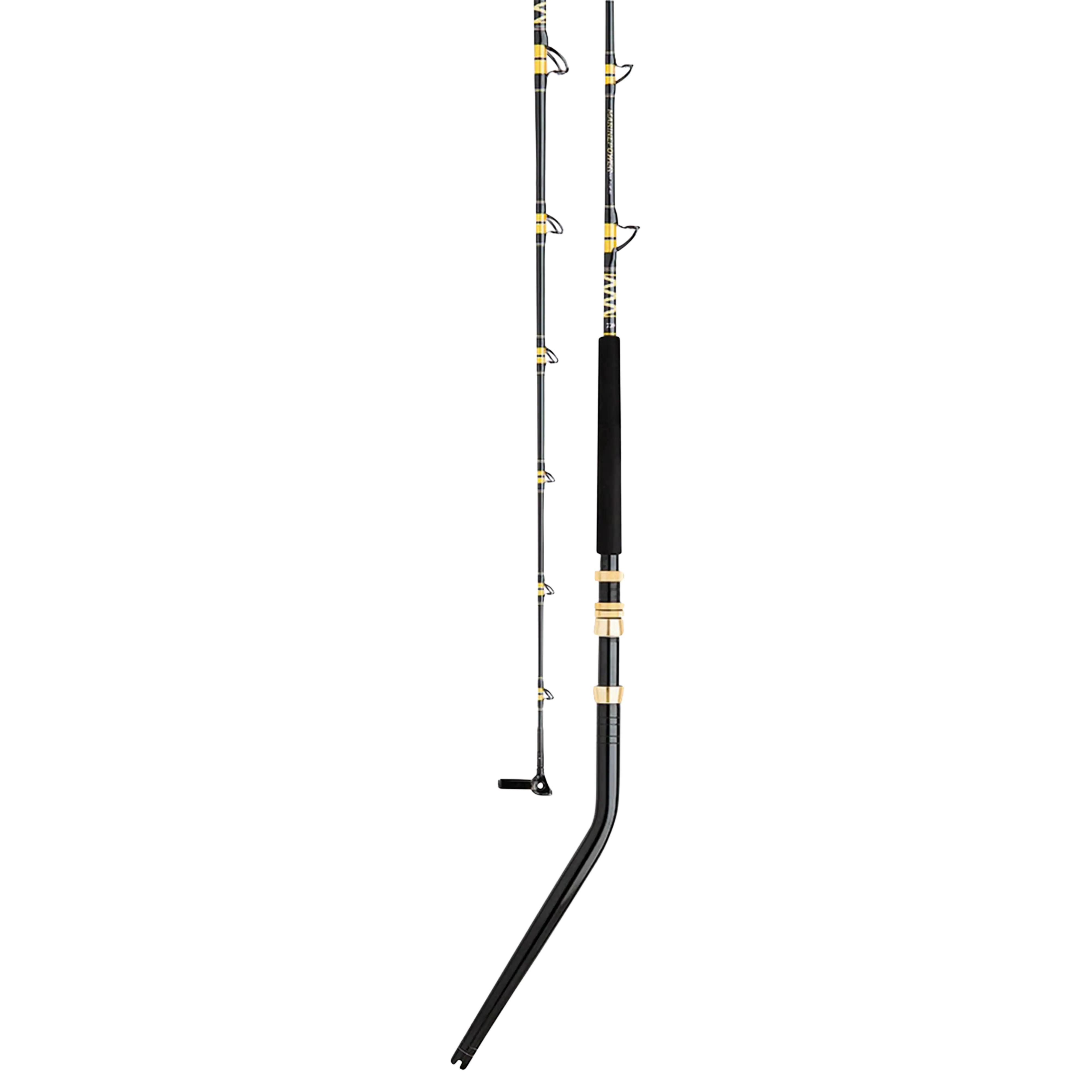
Aluminum or Composite Butt Handles (Including Slick Butts) – Offshore trolling rods built for heavier applications often use aluminum or composite butt sections, available in straight or bent configurations, and frequently paired with slick (smooth) butts. Slick butts are rigid, low-friction rear sections designed specifically for trolling — they slide in and out of rod holders easily, even under heavy drag, unlike foam grips that can bind or compress.
Straight butts are commonly used for stand-up fishing, providing a solid leverage point for harness or belt use, while bent butts are ideal for rod-holder applications, improving pulling angle and reducing angler fatigue during fights. These setups are standard when trolling heavy lures, planers, or targeting large pelagics, where quick rod removal and consistent leverage are critical. Reinforced gimbals and hardware complete the system for high-load offshore use.
How Rod Specs Vary by Trolling Style
Below are typical rod choices that match common offshore trolling applications. These are general guidelines — always verify manufacturer ratings and pair rods to the reel and line you’ll actually fish with.
High‑Speed Trolling (Surface)
Targets: Wahoo primarily; also tuna and other aggressive pelagics, typically trolled at 10–20+ knots.
Rod length: ~5’6″–6’6″ — Shorter rods improve leverage and control under high drag and help keep lines from swinging or slipping at speed.
Power: Heavy to Extra‑Heavy — needed to handle constant drag pressure and powerful strikes at high trolling speeds.
Action: Moderate‑fast to Fast — a stiffer tip helps keep high‑speed lures running straight, while adequate backbone resists excessive bending.
Line: 50–130+ lb braid — heavier braid is common on these rods to match drag demands and maintain line strength without excessive diameter.
Guides: High‑quality ring guides or optional roller tips — rollers help reduce friction and heat under extreme loads, though heavy‑duty ring guides are standard on many models.
Handles: Bent or straight butt, often with reinforced gimbal — bent butts help anglers drive into fish from rod holders; straight butts are ideal for stand‑up fighting with harnesses.
Notes: Short heavy rods with robust construction are preferred because they resist excessive leverage against the angler and help prevent blank twist or breakage while pulling heavy lures at speed.
Skirted Lure Trolling (Conventional Spread)
Targets: Marlin, sailfish, tuna, mahi‑mahi; typically fished at 5–9 knots.
Rod length: ~6’6″–7’6″ — Longer rods help keep multiple lines separated in a traditional spread.
Power: Medium‑Heavy to Heavy — balances line control with lift for larger pelagics.
Action: Moderate — allows the rod to bend sufficiently under pressure, improving shock absorption on prolonged strikes.
Line: 30–100+ lb mono is most commonly used for artificial lure trolling due to its stretch, shock absorption, and abrasion resistance under high-speed strikes. Some anglers do run braid for added capacity and sensitivity, but when they do it is typically paired with a mono top-shot (often ~50–100+ feet) to restore stretch and improve shock handling. This creates a hybrid system where braid serves as backing and the mono top-shot acts as the working section for trolling plugs and diving baits.
Guides: Heavy‑duty ring guides; optional roller tip for heavier setups — ring guides are the norm, and many rods pair with roller tips only if very heavy braid/draw is expected.
Handles: Straight or bent butt with gimbal — straight for stand‑up fights, bent for leverage from holders or harnesses.
Notes: Medium‑heavy rods around 7′ handle a variety of pelagics and allow multiple rods to be used without line tangles. Heavier or shorter rods within this range can be used for stronger fish or faster trolling.
Artificial Lure Trolling (Diving Hard Baits / Plug Trolling)
Targets: Tuna, wahoo, kingfish, mahi; typically trolled around 4–8 knots.
Rod length: ~6′–7’6″ — Medium‑length rods offer stable lure tracking and sufficient lift without being difficult to control.
Power: Medium‑Heavy to X-Heavy — needed to control deep‑diving plugs and handle strong strikes.
Action: Moderate‑fast — helps maintain consistent lure action and positive hook penetration.
Line: 30–100+ lb mono is most commonly used for artificial lure trolling due to its stretch, shock absorption, and abrasion resistance under high-speed strikes. Some anglers do run braid for added capacity and sensitivity, but when they do it is typically paired with a mono top-shot (often ~50–100+ feet) to restore stretch and improve shock handling. This creates a hybrid system where braid serves as backing and the mono top-shot acts as the working section for trolling plugs and diving baits.
Guides: Quality ring guides; optional roller tip on heavier setups — ring guides are standard; rollers only when drag/line heat is a concern.
Handles: Straight or bent butt with gimbal — based on preference and whether the rod stays in a holder or is fought standing.
Notes: Rods for hard‑bait trolling must balance lure control with shock absorption — stiffer tips improve tracking, while adequate butt strength resists fish runs from depth.
Slow Trolling (Live Bait)
Targets: Sailfish, tuna, kingfish, stripers, and other species feeding on live bait; typically under 3–4 knots.
Rod length: ~6’6″–7’6″ — Longer rods provide steady bait presentation and leverage when a fish eats.
Power: Medium‑Heavy to Heavy — supports smooth hook sets while allowing bait to swim naturally.
Action: Moderate — deeper bend helps absorb sudden pressure and prevents tearing hooks out when fish take live bait.
Line: 30–80+ lb braid or equivalent mono/fluoro — braid is common for strength and capacity; mono/fluoro leaders improve bait presentation.
Guides: Corrosion‑resistant ring guides; optional heavy‑duty turbo guides — rollers can be used but are not required.
Handles: Shorter straight or bent butts with gimbals — chosen based on holder use or stand‑up fighting style.
Notes: Slow trolling rods perform best when presented with smooth action that doesn’t overly tension live bait. Many anglers prefer softer tips on these rods to keep baits lively.
Deep Trolling (Planers & Downriggers)
Targets: Tuna, wahoo, kingfish, and pelagics holding deeper in the water column.
Planer rod length: ~5’6″–6’6″ — shorter rods help control planers and maintain depth pull.
Downrigger rod length: ~6’6″–7’6″ — longer rods help separate lines and supply leverage when fishing heavy downrigger weights.
Power: Heavy to Extra‑Heavy — needed to handle planer drag and deep fish pressure.
Action: Moderate to Moderate‑Fast — deeper bend absorbs shock while still providing lift.
Line: 40–100+ lb braid — heavier braid is common to maintain strength without excessive diameter.
Guides: Durable ring guides; optional roller tips for very heavy applications — ring guides are standard; rollers when line friction under load is a concern.
Handles: Straight or bent butt with gimbals — straight butts for stand‑up fighting; bent for holders.
Notes: Planer rods tend to be shorter and stiffer to handle the mechanical drag from planers and maintain depth control, while downrigger rods are longer to keep lines separated and offer better leverage for deeper bites.
How to Choose an Offshore Trolling Saltwater Rod
Offshore trolling rods are purpose‑built to handle constant drag pressure, heavy line classes, and repeated strikes from powerful saltwater pelagics. Unlike casting or jigging rods that see intermittent pressure, a trolling rod can sit in a holder for hours while baits are pulled at speed, then instantly load up when a fish eats. That means durability, balanced strength, and corrosion‑resistant hardware matter more than sensitivity alone. The right rod matches length, power, action, line rating, components, and ergonomics to your boat setup, target species, and how you plan to troll.
When selecting a rod, focus on these key performance characteristics:
Power
Power refers to how much pressure it takes to bend the blank — basically the backbone or strength of the rod. Offshore trolling typically calls for medium‑heavy to extra‑heavy powers, with heavier rods needed as line weights and drag pressures increase or when chasing bigger game like marlin, tuna, and wahoo. A rod that’s too light will flex excessively, robbing you of hook‑setting authority and risking breakage under load, while too heavy a blank can fatigue the angler and mute feel.
Action
Action describes where on the blank the rod tends to bend. Trolling rods are most commonly moderate to moderate‑fast action: they bend a bit deeper into the blank to absorb sudden loads and reduce pulled hooks, but still offer enough tip stiffness to transmit lure action and detect strikes. Some specialized offshore rods lean toward faster actions when a quick hook set is vital. In general, slower actions aren’t typical for heavy offshore trolling because they can lack the quick recovery needed once a fish turns.
Length
Offshore trolling rods generally range from 5’6″ to 8′, depending on technique and line placement needs. Shorter rods (~5’6″–6′) give more leverage and control for high-speed surface trolling or stand-up fighting, while medium rods (6′–7′) are versatile for conventional skirted spreads and plug trolling. For planer or downrigger deep trolling, longer rods (~7’6″–8′) are preferred because they provide extra reach to keep lines separated, maintain proper angles to the fish, and absorb the pull from baits set deep in the water column. Rod length should be matched to boat size, number of rods deployed, and the trolling method you plan to use.
Line Rating
Rod line ratings indicate the range of line strengths a blank is designed to handle safely. Offshore trolling rods are typically rated for mono from 30 lb up to 100+ lb, with braid equivalents often ranging from mid‑30s to 130–150 lb+, depending on rod power and target species. Using line within the recommended rating ensures the rod isn’t overstressed and that guides and hardware remain protected. Braid allows higher breaking strength in a thinner diameter, while mono or fluorocarbon stretches more and handles differently under drag. Choosing the right combination of line, leader, and drag setting ensures reliable hook sets and effective fish control.
Weight / Lure Rating
Unlike inshore and many nearshore rods, offshore trolling rods generally do not list a lure or bait weight rating, because they are not designed for casting. Instead, these rods are engineered to handle constant drag pressure, heavy lines, and repeated strikes from large pelagic species. The rod’s performance is determined primarily by its power, action, and line rating, which govern how it bends and absorbs load while trolling plugs, spreader bars, skirted lures, or planers. Choosing the appropriate line and matching it to the rod’s specifications ensures that the rod can control the fish effectively under sustained trolling conditions.
Guides
The choice of guides on an offshore trolling rod affects how smoothly line flows under load, how heat is managed during long fights, and the overall durability of the rod. Many offshore rods use conventional ring guides, but roller tips or roller guides are available for very heavy, high-tension setups. Understanding the differences helps you pick the right option for your line, target species, and trolling style.
Conventional Ring Guides – The standard choice for many trolling rods. These are made from durable ring materials like aluminum oxide, Nanolite, Duralite or SiC, often with heavy-duty corrosion resistant frames for extra strength under constant drag and big-fish pressure. They handle heavy braid, fluoro or mono reliably, keep rod weight manageable, and are sufficient for the majority of offshore trolling applications.
Roller Tips / Roller Guides – Used primarily on rods paired with extremely heavy lines and high-drag reels, such as big-tuna or billfish setups. Rollers reduce friction and heat as line peels off the reel, which can help prevent line wear during extended fights, but they add weight and are generally unnecessary for lighter trolling applications.
Handles
Offshore trolling rods come with a variety of handle and reel seat designs to provide leverage, control, and durability during extended fights with large pelagic species.
Standard Front/Rear Grip with Reel Seat – Many offshore trolling rods use a traditional layout with a foregrip, reel seat, and rear grip, typically finished with a gimbal. Rear grips are commonly in the 10–14″ range, providing enough length for leverage in rod holders and when fighting fish. Materials like EVA foam, rubberized grips, or carbon fiber grips offer durability, comfort, and resistance to saltwater exposure. These setups work well for lighter trolling or mixed-use rods, but softer materials can compress under heavy load, making rods harder to remove from holders in high-drag situations. Heavy-duty reel seats and gimbals ensure the reel stays locked in place under sustained pressure.
Aluminum or Composite Butt Handles (Including Slick Butts) – Offshore trolling rods built for heavier applications often use aluminum or composite butt sections, available in straight or bent configurations, and frequently paired with slick (smooth) butts. Slick butts are rigid, low-friction rear sections designed specifically for trolling — they slide in and out of rod holders easily, even under heavy drag, unlike foam grips that can bind or compress.
Straight butts are commonly used for stand-up fishing, providing a solid leverage point for harness or belt use, while bent butts are ideal for rod-holder applications, improving pulling angle and reducing angler fatigue during fights. These setups are standard when trolling heavy lures, planers, or targeting large pelagics, where quick rod removal and consistent leverage are critical. Reinforced gimbals and hardware complete the system for high-load offshore use.
How Rod Specs Vary by Trolling Style
Below are typical rod choices that match common offshore trolling applications. These are general guidelines — always verify manufacturer ratings and pair rods to the reel and line you’ll actually fish with.
High‑Speed Trolling (Surface)
Targets: Wahoo primarily; also tuna and other aggressive pelagics, typically trolled at 10–20+ knots.
Rod length: ~5’6″–6’6″ — Shorter rods improve leverage and control under high drag and help keep lines from swinging or slipping at speed.
Power: Heavy to Extra‑Heavy — needed to handle constant drag pressure and powerful strikes at high trolling speeds.
Action: Moderate‑fast to Fast — a stiffer tip helps keep high‑speed lures running straight, while adequate backbone resists excessive bending.
Line: 50–130+ lb braid — heavier braid is common on these rods to match drag demands and maintain line strength without excessive diameter.
Guides: High‑quality ring guides or optional roller tips — rollers help reduce friction and heat under extreme loads, though heavy‑duty ring guides are standard on many models.
Handles: Bent or straight butt, often with reinforced gimbal — bent butts help anglers drive into fish from rod holders; straight butts are ideal for stand‑up fighting with harnesses.
Notes: Short heavy rods with robust construction are preferred because they resist excessive leverage against the angler and help prevent blank twist or breakage while pulling heavy lures at speed.
Skirted Lure Trolling (Conventional Spread)
Targets: Marlin, sailfish, tuna, mahi‑mahi; typically fished at 5–9 knots.
Rod length: ~6’6″–7’6″ — Longer rods help keep multiple lines separated in a traditional spread.
Power: Medium‑Heavy to Heavy — balances line control with lift for larger pelagics.
Action: Moderate — allows the rod to bend sufficiently under pressure, improving shock absorption on prolonged strikes.
Line: 30–100+ lb mono is most commonly used for artificial lure trolling due to its stretch, shock absorption, and abrasion resistance under high-speed strikes. Some anglers do run braid for added capacity and sensitivity, but when they do it is typically paired with a mono top-shot (often ~50–100+ feet) to restore stretch and improve shock handling. This creates a hybrid system where braid serves as backing and the mono top-shot acts as the working section for trolling plugs and diving baits.
Guides: Heavy‑duty ring guides; optional roller tip for heavier setups — ring guides are the norm, and many rods pair with roller tips only if very heavy braid/draw is expected.
Handles: Straight or bent butt with gimbal — straight for stand‑up fights, bent for leverage from holders or harnesses.
Notes: Medium‑heavy rods around 7′ handle a variety of pelagics and allow multiple rods to be used without line tangles. Heavier or shorter rods within this range can be used for stronger fish or faster trolling.
Artificial Lure Trolling (Diving Hard Baits / Plug Trolling)
Targets: Tuna, wahoo, kingfish, mahi; typically trolled around 4–8 knots.
Rod length: ~6′–7’6″ — Medium‑length rods offer stable lure tracking and sufficient lift without being difficult to control.
Power: Medium‑Heavy to X-Heavy — needed to control deep‑diving plugs and handle strong strikes.
Action: Moderate‑fast — helps maintain consistent lure action and positive hook penetration.
Line: 30–100+ lb mono is most commonly used for artificial lure trolling due to its stretch, shock absorption, and abrasion resistance under high-speed strikes. Some anglers do run braid for added capacity and sensitivity, but when they do it is typically paired with a mono top-shot (often ~50–100+ feet) to restore stretch and improve shock handling. This creates a hybrid system where braid serves as backing and the mono top-shot acts as the working section for trolling plugs and diving baits.
Guides: Quality ring guides; optional roller tip on heavier setups — ring guides are standard; rollers only when drag/line heat is a concern.
Handles: Straight or bent butt with gimbal — based on preference and whether the rod stays in a holder or is fought standing.
Notes: Rods for hard‑bait trolling must balance lure control with shock absorption — stiffer tips improve tracking, while adequate butt strength resists fish runs from depth.
Slow Trolling (Live Bait)
Targets: Sailfish, tuna, kingfish, stripers, and other species feeding on live bait; typically under 3–4 knots.
Rod length: ~6’6″–7’6″ — Longer rods provide steady bait presentation and leverage when a fish eats.
Power: Medium‑Heavy to Heavy — supports smooth hook sets while allowing bait to swim naturally.
Action: Moderate — deeper bend helps absorb sudden pressure and prevents tearing hooks out when fish take live bait.
Line: 30–80+ lb braid or equivalent mono/fluoro — braid is common for strength and capacity; mono/fluoro leaders improve bait presentation.
Guides: Corrosion‑resistant ring guides; optional heavy‑duty turbo guides — rollers can be used but are not required.
Handles: Shorter straight or bent butts with gimbals — chosen based on holder use or stand‑up fighting style.
Notes: Slow trolling rods perform best when presented with smooth action that doesn’t overly tension live bait. Many anglers prefer softer tips on these rods to keep baits lively.
Deep Trolling (Planers & Downriggers)
Targets: Tuna, wahoo, kingfish, and pelagics holding deeper in the water column.
Planer rod length: ~5’6″–6’6″ — shorter rods help control planers and maintain depth pull.
Downrigger rod length: ~6’6″–7’6″ — longer rods help separate lines and supply leverage when fishing heavy downrigger weights.
Power: Heavy to Extra‑Heavy — needed to handle planer drag and deep fish pressure.
Action: Moderate to Moderate‑Fast — deeper bend absorbs shock while still providing lift.
Line: 40–100+ lb braid — heavier braid is common to maintain strength without excessive diameter.
Guides: Durable ring guides; optional roller tips for very heavy applications — ring guides are standard; rollers when line friction under load is a concern.
Handles: Straight or bent butt with gimbals — straight butts for stand‑up fighting; bent for holders.
Notes: Planer rods tend to be shorter and stiffer to handle the mechanical drag from planers and maintain depth control, while downrigger rods are longer to keep lines separated and offer better leverage for deeper bites.
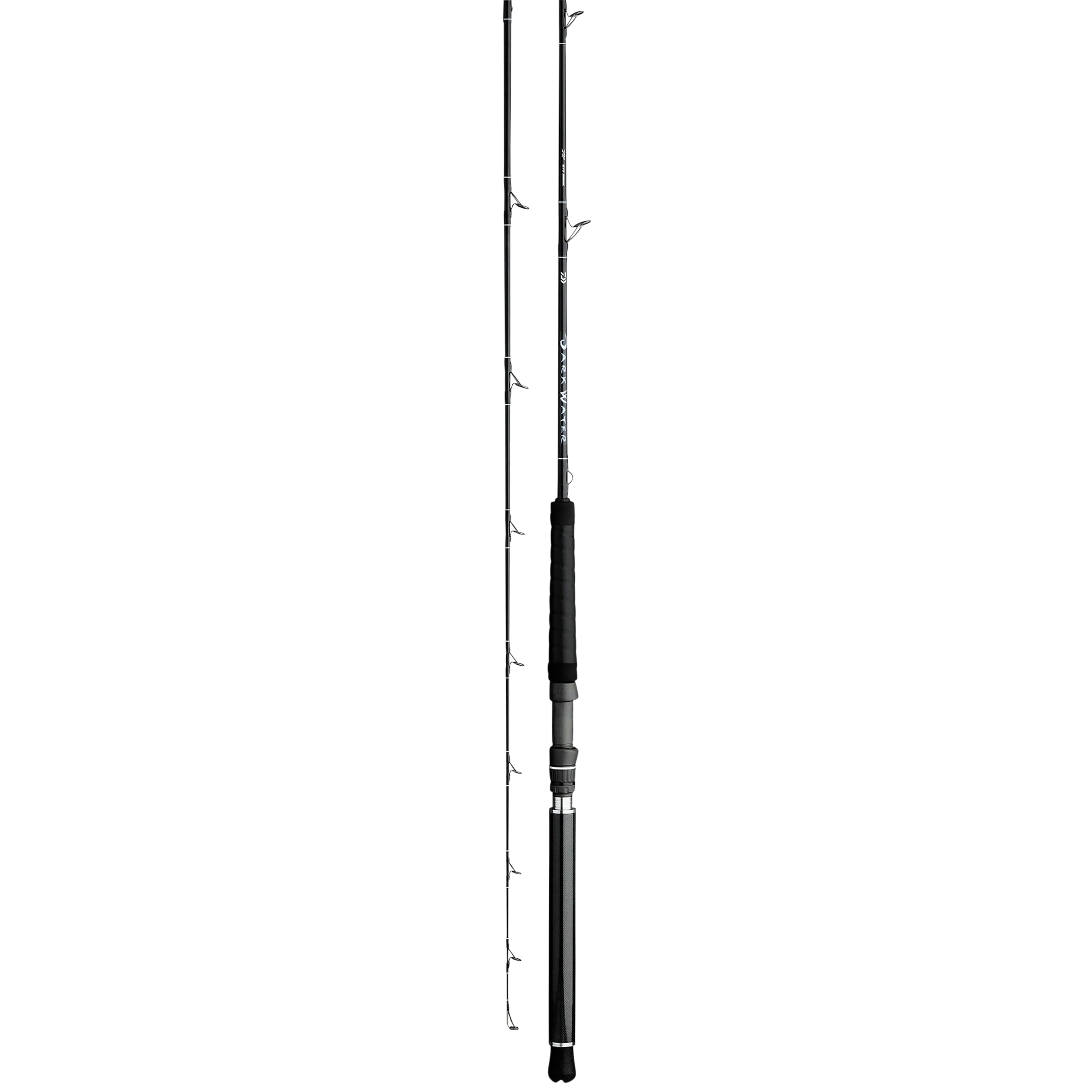
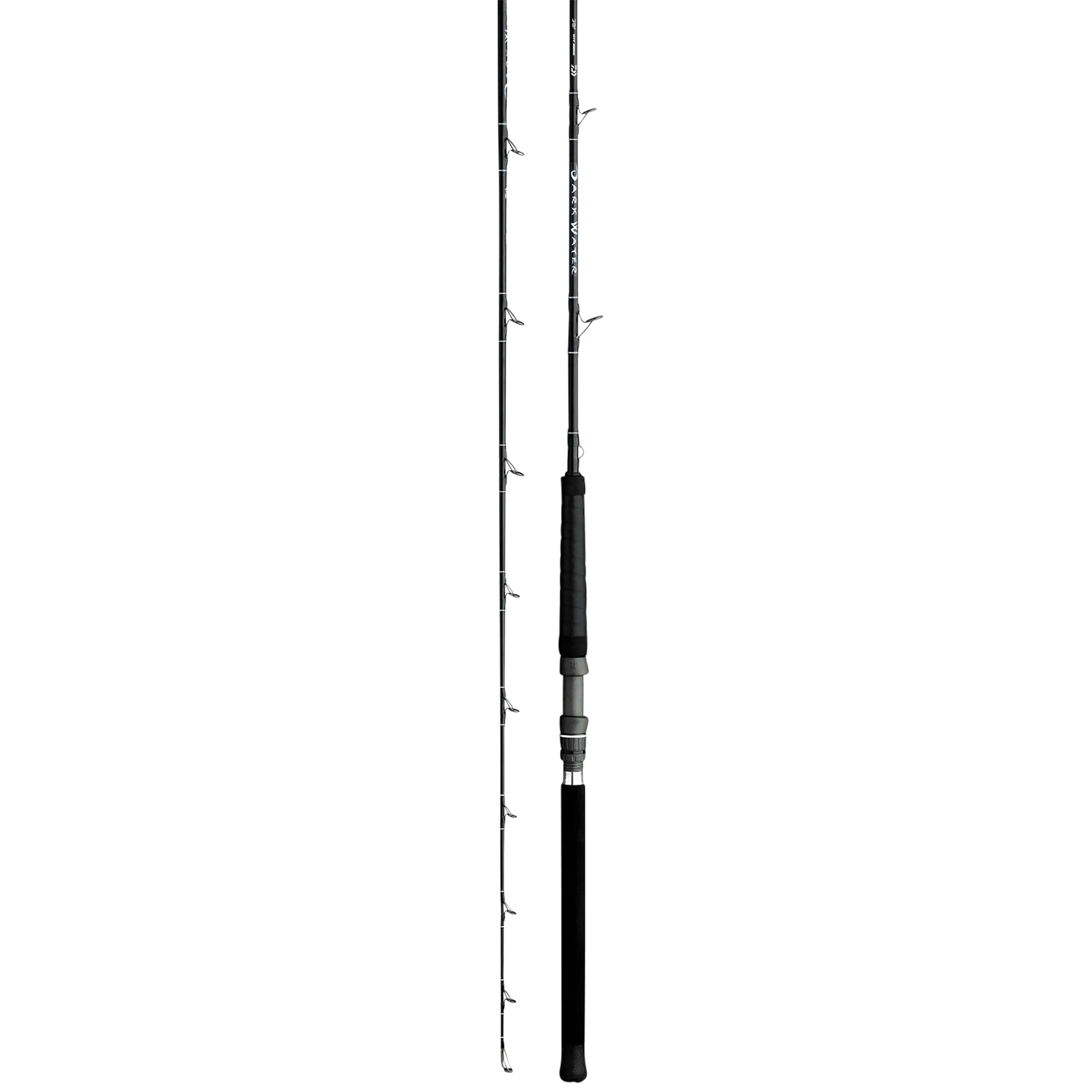
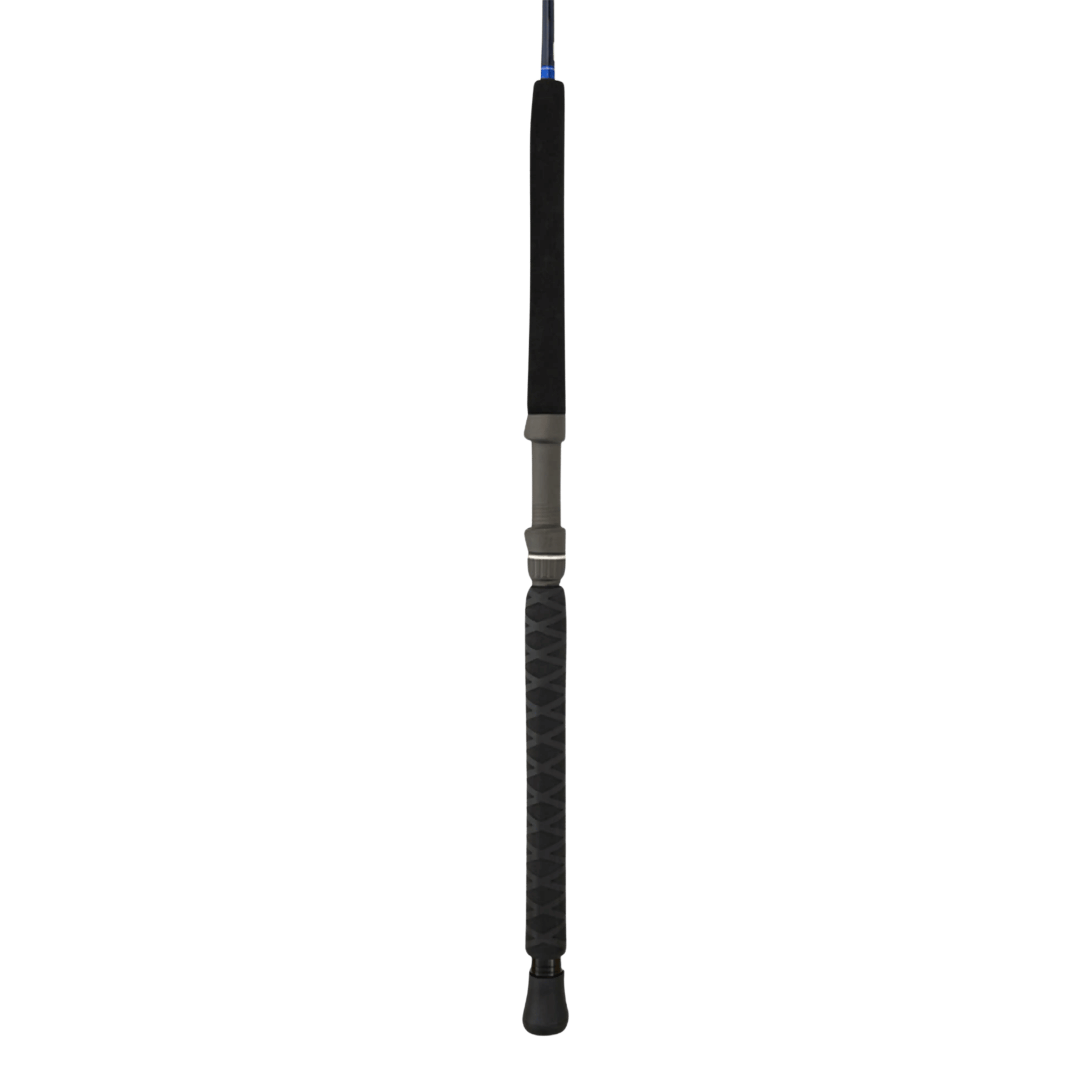
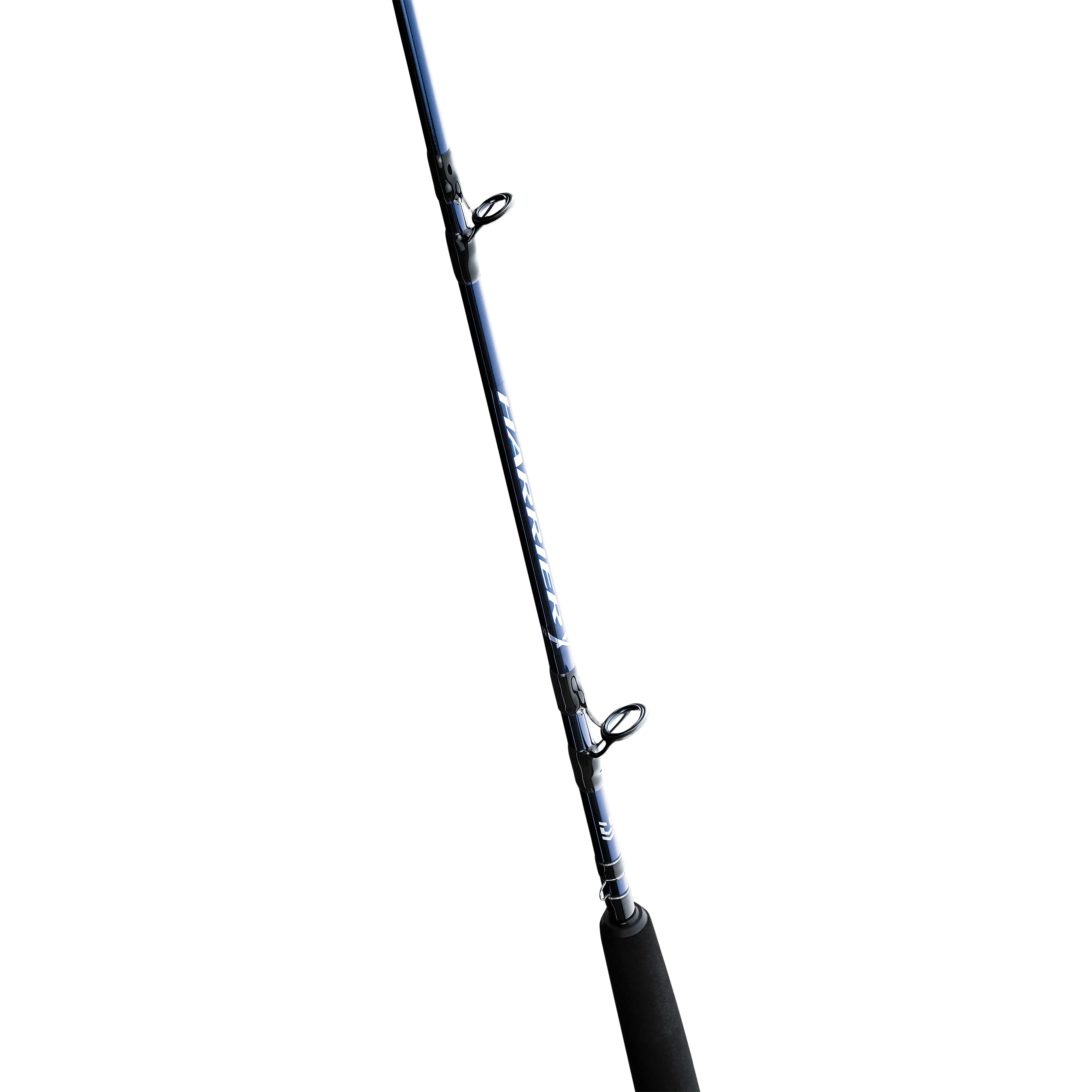
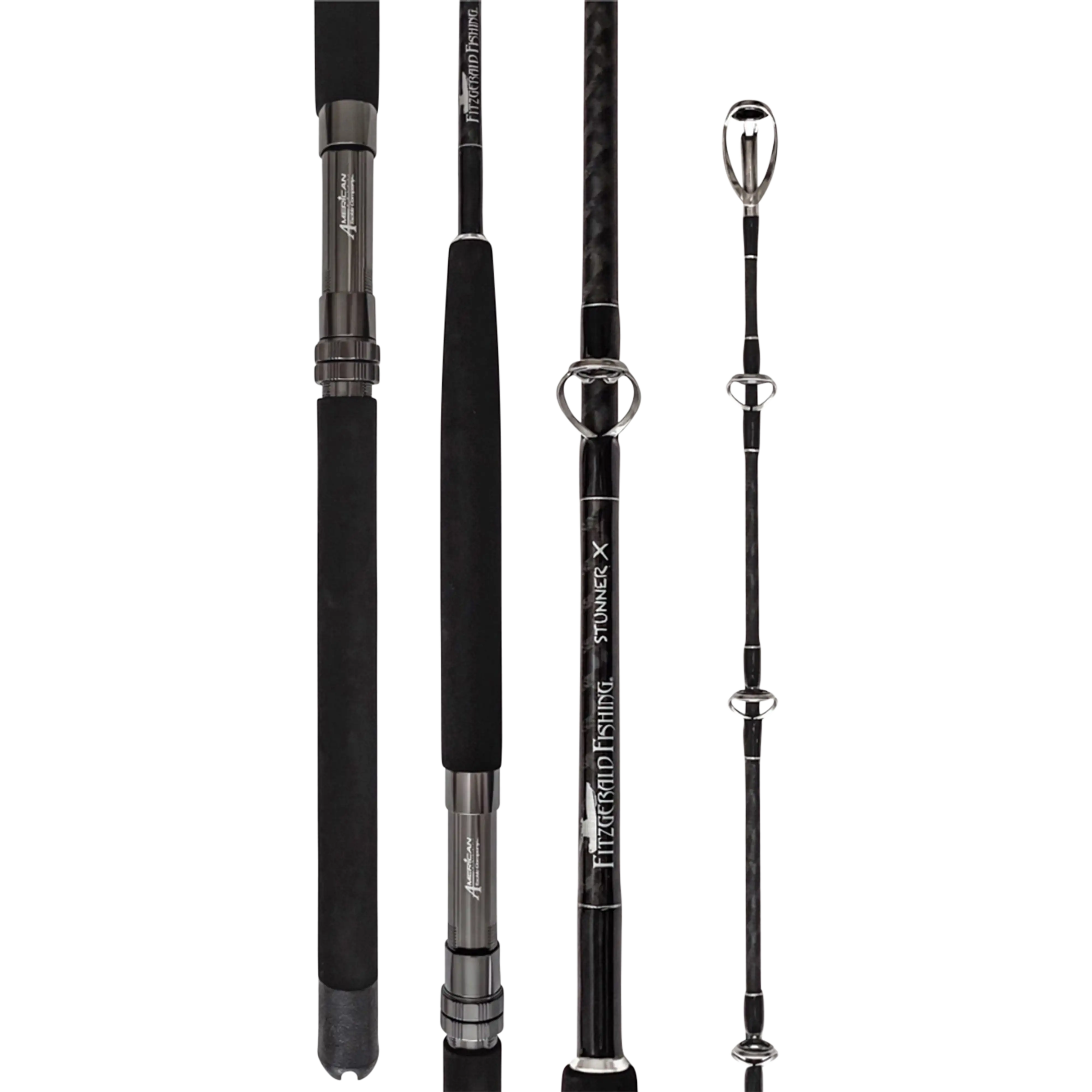
Offshore Trolling Rods

Best Reels for Offshore Trolling
Offshore trolling reels are built to deploy lures or baits behind a moving boat and handle long runs, heavy drag pressure, and harsh saltwater conditions. Compared to inshore reels, they require high line capacity, smooth strong drag systems, and corrosion-resistant construction to manage powerful pelagic species like tuna, wahoo, marlin, and mahi-mahi.
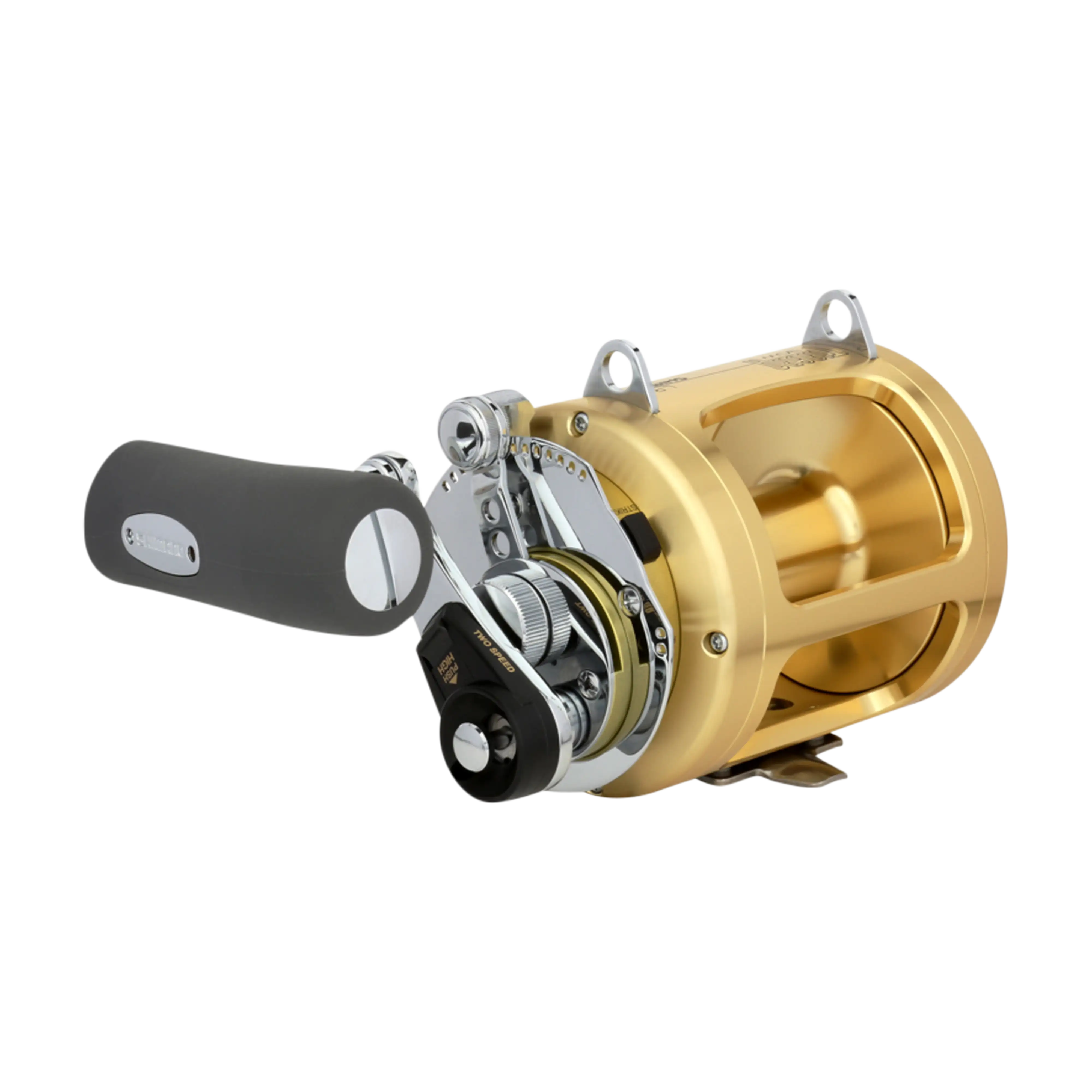
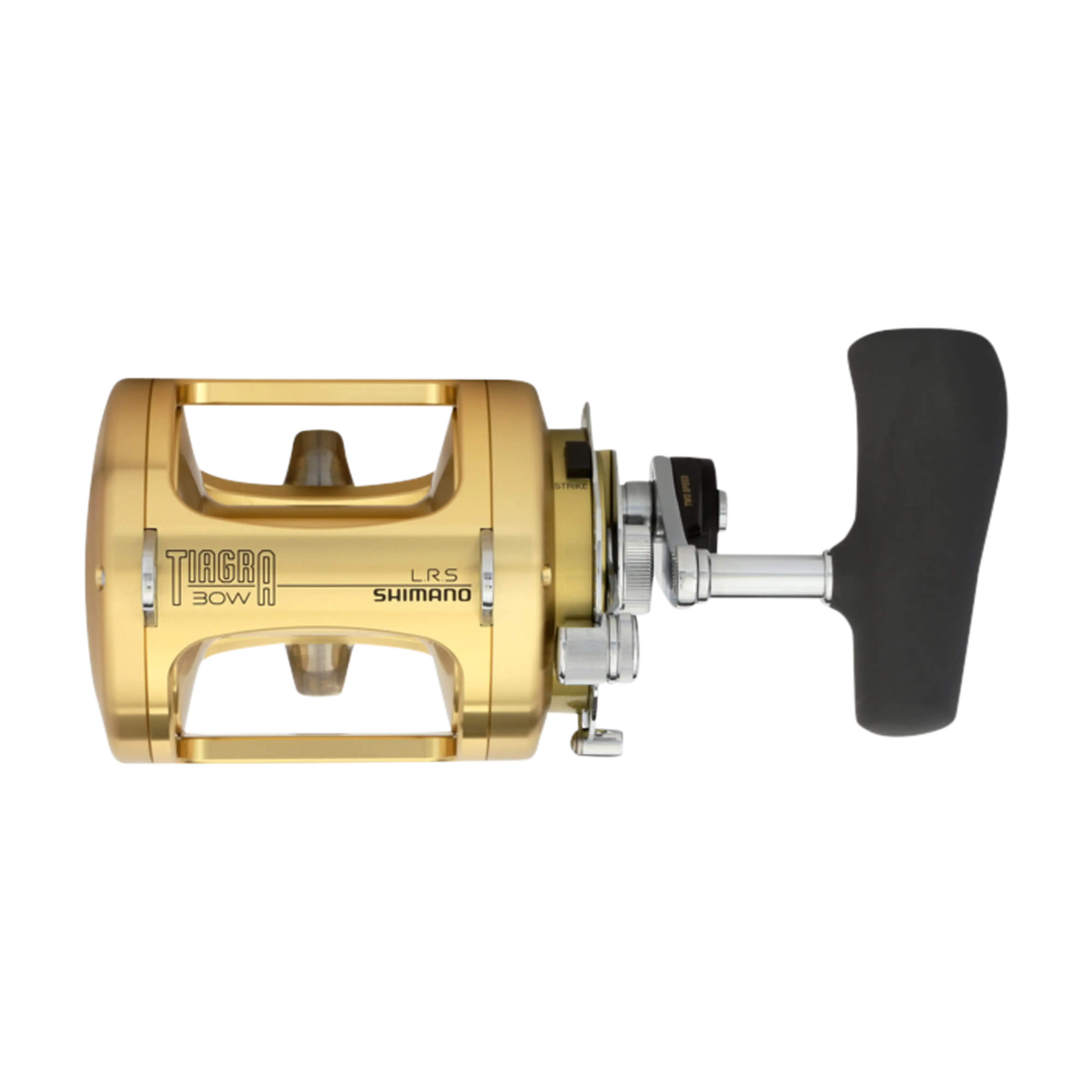
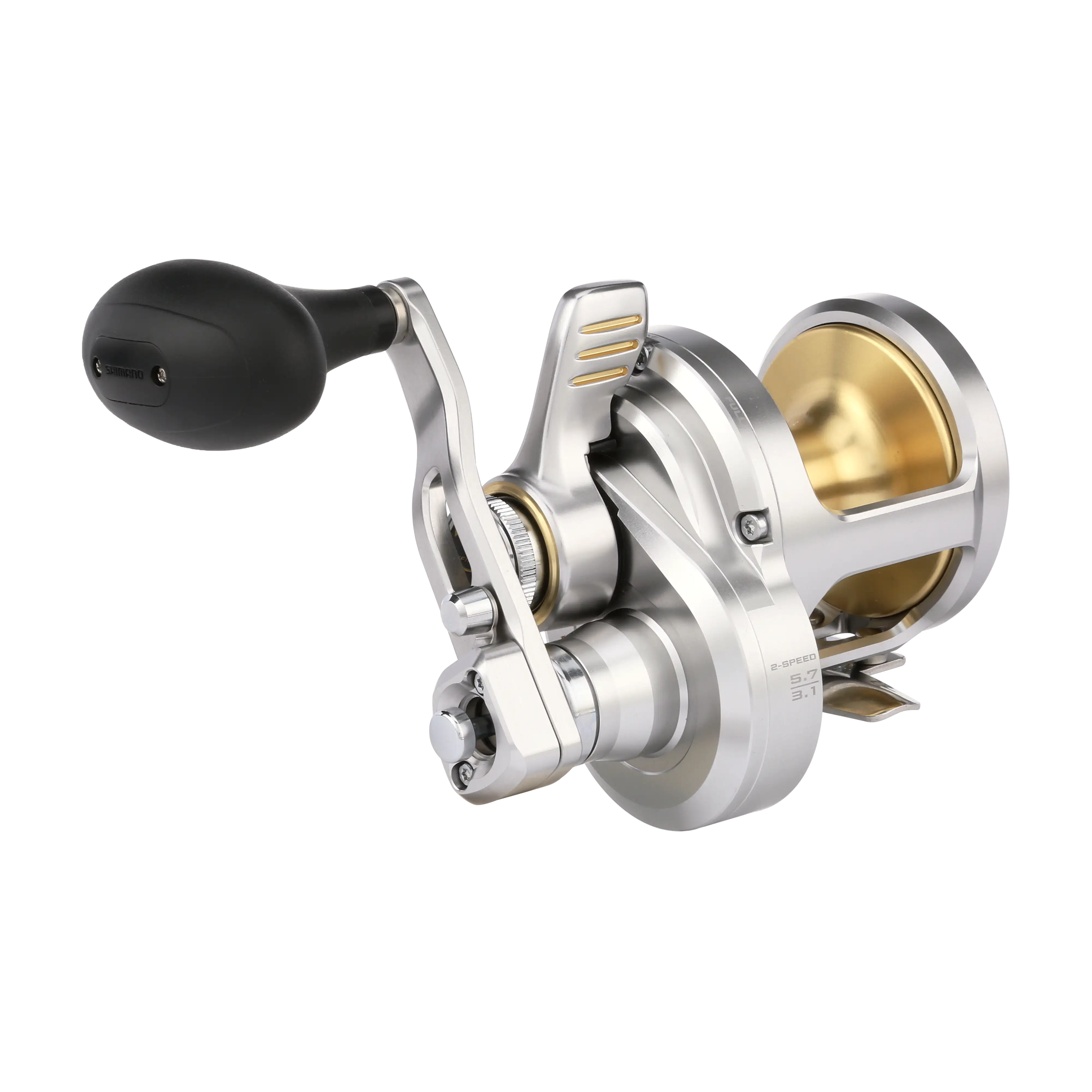
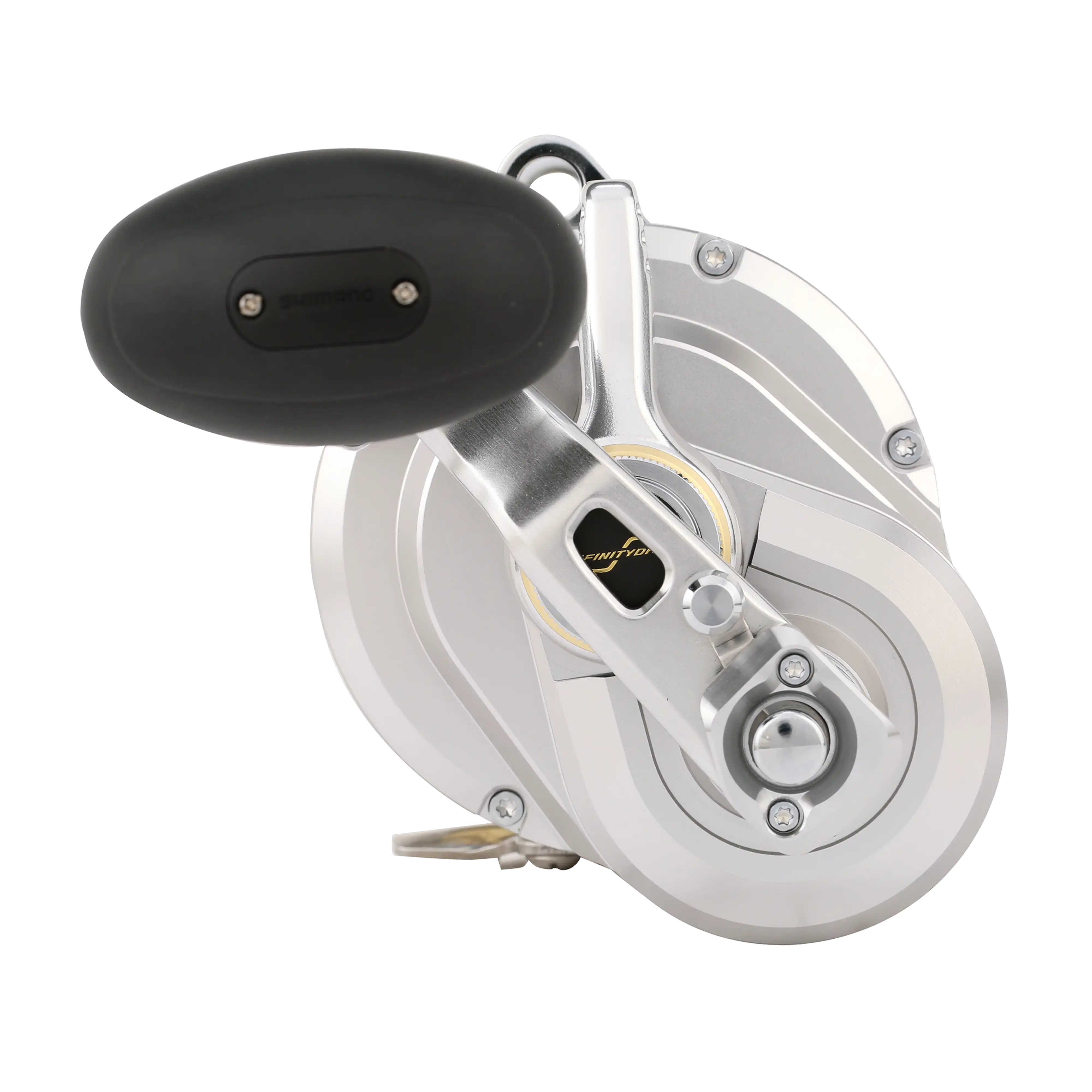
The standard offshore trolling reel is a conventional lever-drag, preferred for its strength, torque, and repeatable drag settings. The preset “strike” position allows anglers to quickly return to a known drag level after resets or leader changes without guessing. Star-drag reels can be used in lighter setups, but lever-drags are the standard for serious offshore trolling due to consistency and control under load.
Most offshore trolling reels hold hundreds of yards of line (often 800–1000+ depending on class) and are designed with sealed, corrosion-resistant components for long-term durability. While gear ratio and bearings affect retrieve feel, drag performance and line capacity are the primary requirements. Many big-game reels are also two-speed, allowing quick line pickup in high gear and increased cranking power in low gear — a feature largely unique to offshore trolling applications.
When evaluating reels, focus on these key features:
Reel Type
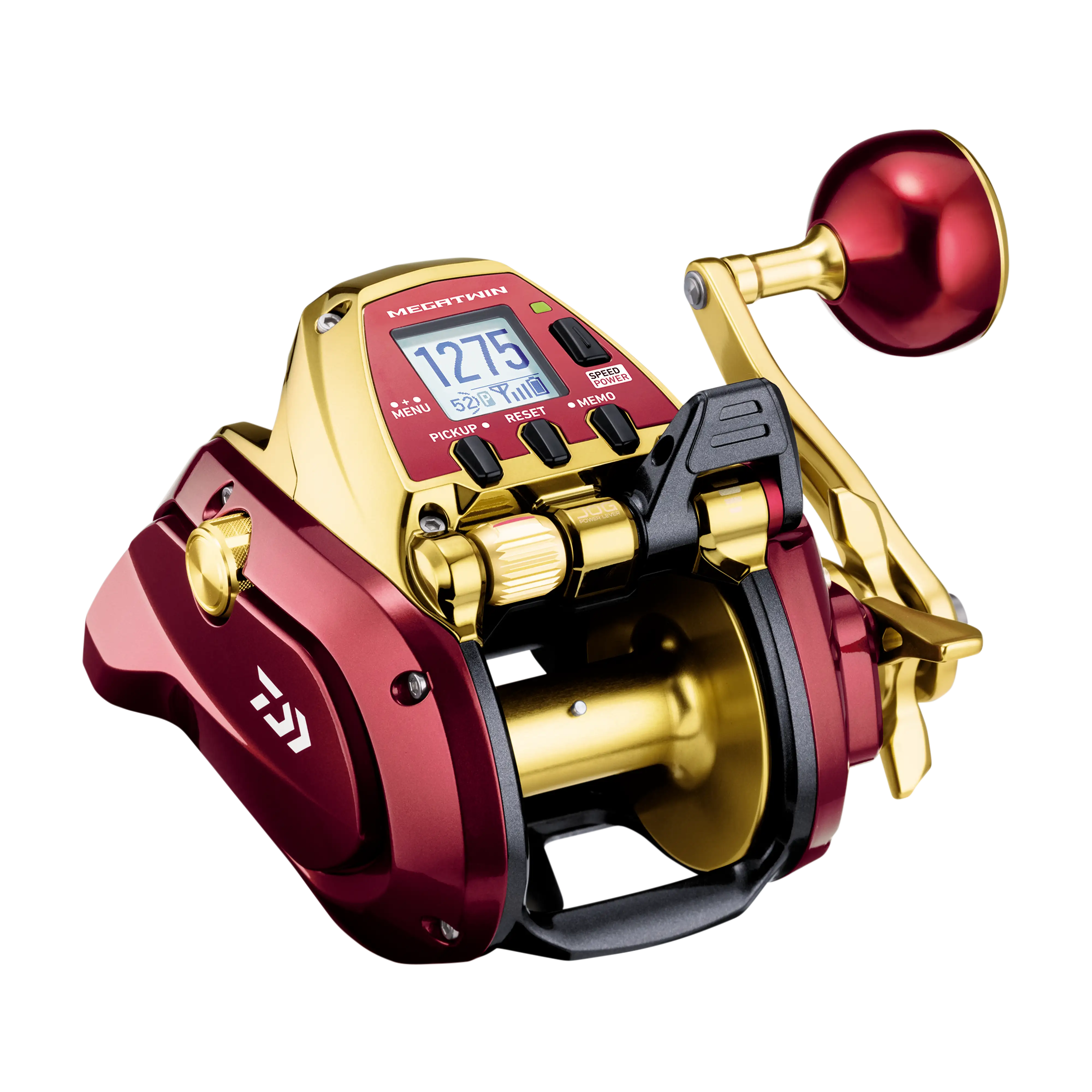
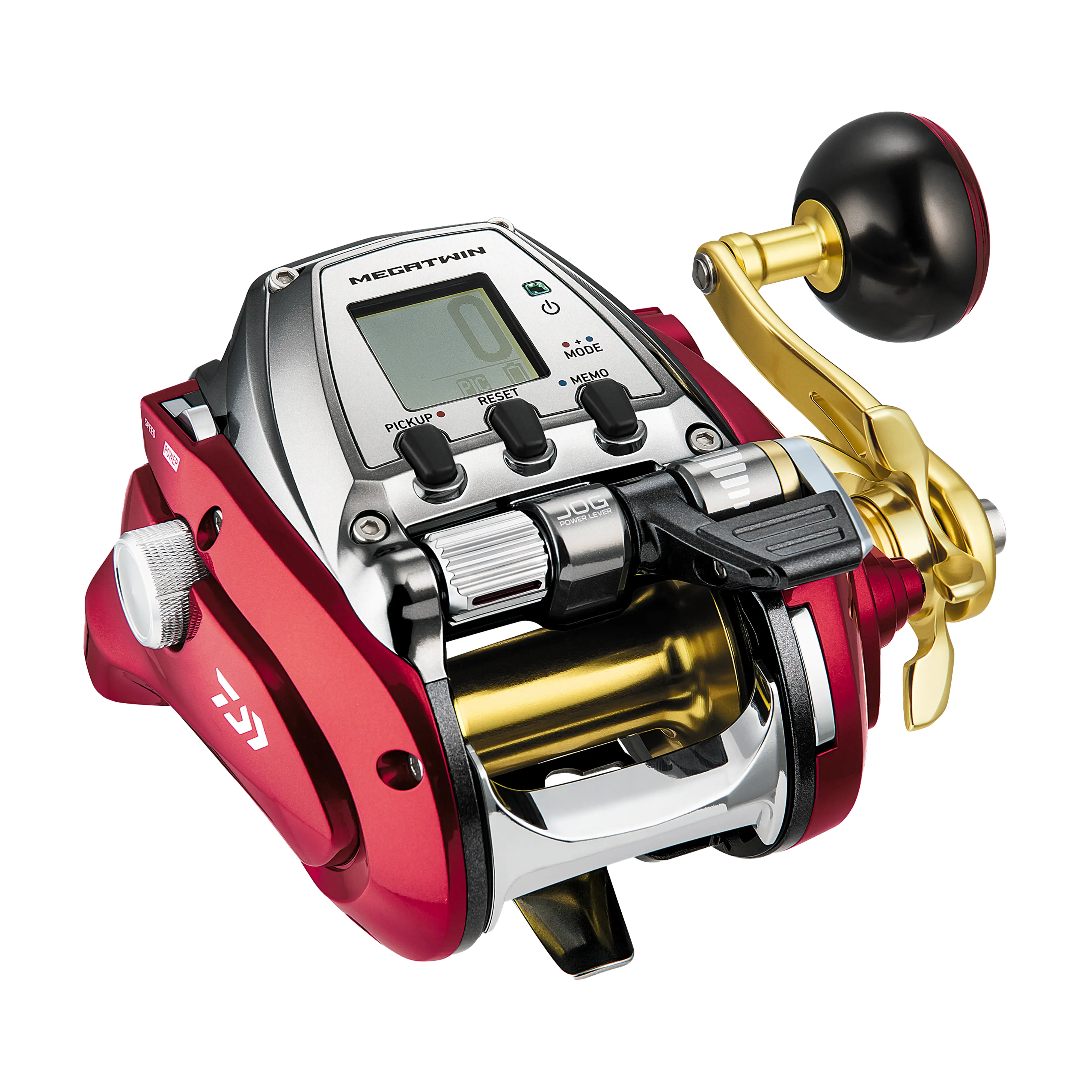
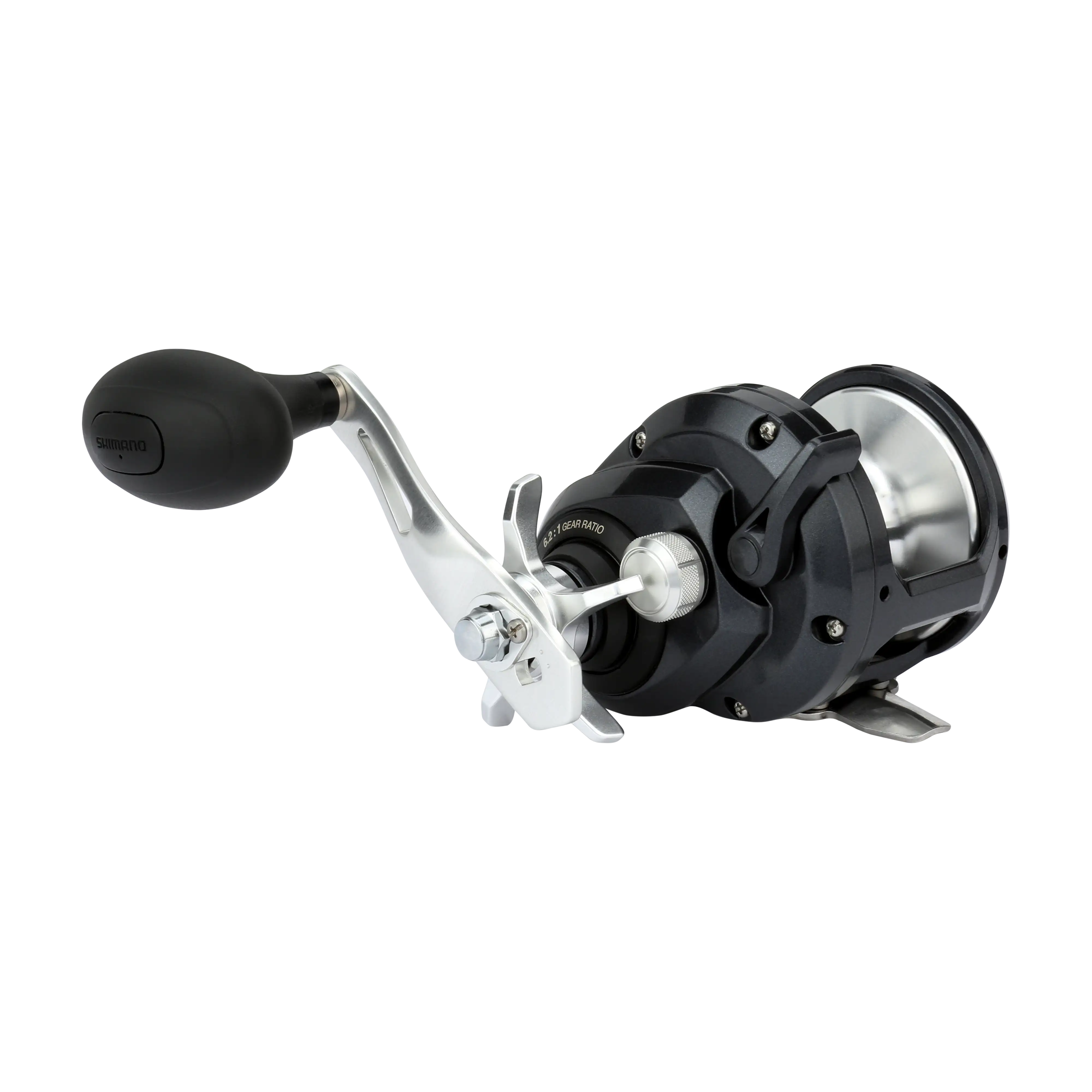
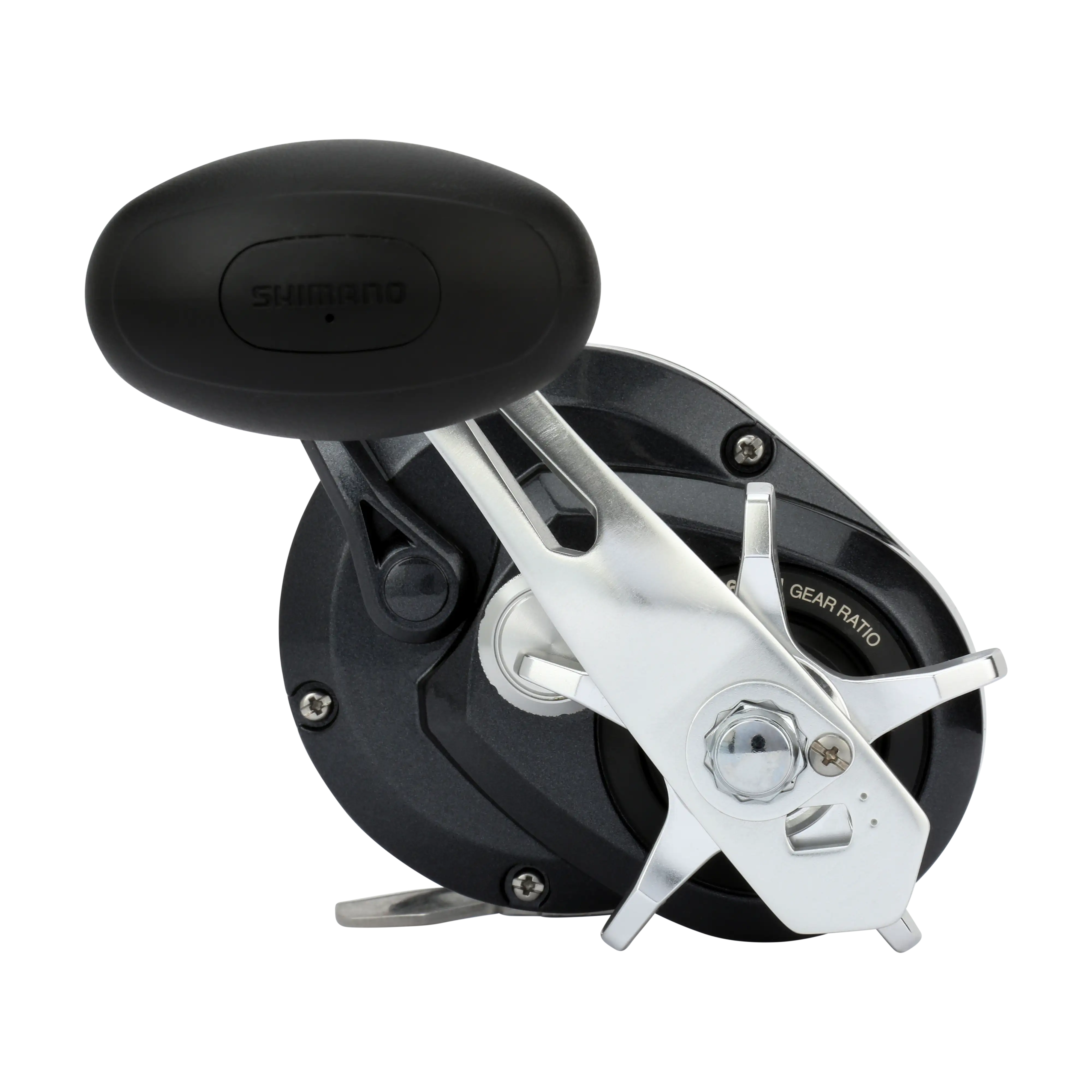
For offshore trolling, conventional reels — including lever‑drag, star‑drag, and levelwind models — are the standard choice. These reels feature large spools, heavy-duty frames, and robust internals designed to handle high line capacities, sustained drag pressure, and repeated strikes from large pelagic species. Electric trolling reels can also be used, particularly for deep trolling or long downrigger runs, providing powered line retrieval while maintaining smooth drag and consistent line control. Reliability, corrosion resistance, and mechanical strength are the primary considerations when selecting a reel for extended offshore trolling.
Gear Ratio
The gear ratio determines how quickly line is retrieved per turn of the handle and the torque available to pull fish under load. Lower to moderate ratios (roughly 3.5:1–5.5:1) provide more torque, making it easier to control large fish, maintain tension on deep-running lures or planers, and handle sustained fights. Higher ratios (up to 6.5:1+) retrieve line faster, helping reset lures, clear slack, or recover baits quickly between strikes. Choosing the right ratio depends on your trolling style, target species, and whether consistent power under load or rapid line pickup is most important.
Drag System
Smooth, consistent drag is critical for offshore trolling to manage sudden strikes and long runs from powerful species. Most offshore reels use multi‑disc carbon drags or sealed lever‑drag systems that maintain steady pressure without sticking or pulsing, protecting both line and hooks. Smaller to medium reels for species like tuna, mahi, or kingfish typically offer 20–40 lb max drag, while larger reels built for wahoo, marlin, sailfish, or big tuna often deliver 40–80+ lb, and specialized big-game or electric trolling reels can exceed 100 lb. Selecting a reel with drag capacity matched to your target fish ensures you can maintain control and consistent pressure during extended fights without overstressing the reel or line.
Durability
Saltwater conditions are highly corrosive. Look for reels with anodized aluminum frames, sealed bearings, and corrosion‑resistant components to ensure performance and longevity.
High‑Speed Trolling (Surface)
Targets: Wahoo primarily; also tuna and other aggressive pelagics, typically 10–20+ knots.
Reel Type: Large conventional with strong drag (star‑drag or lever‑drag).
Gear Ratio: Moderate (4.1:1–5.3:1) to higher (5.5:1+) — higher helps retrieve line after a bite or speed dives.
Drag: Light to moderate at strike — typically 8–15 lb, just enough to keep lures tracking at speed without slipping. Drag is increased after hookup depending on fish size.
Skirted Lure Trolling (Conventional Spread)
Targets: Marlin, sailfish, tuna, mahi‑mahi; typically 5–9 knots.
Reel Type: Conventional with good line capacity and smooth drag.
Gear Ratio: Lower to moderate (3.5:1–5.0:1) — torque for big fish and steady retrieves.
Drag: Moderate at strike — typically 5–12 lb, allowing fish to eat cleanly before pressure is increased during the fight.
Artificial Lure Trolling (Diving Hard Baits)
Targets: Tuna, wahoo, kingfish, mahi; 4–8 knots.
Reel Type: Conventional reel sized for lure size and target species.
Gear Ratio: Mid‑range (4.0:1–5.3:1) — balanced for retrieving diving lures and controlling fish.
Drag: Moderate at strike — typically 6–12 lb, adjusted to keep diving plugs running properly without overpowering their action.
Slow Trolling (Live Bait)
Targets: Sailfish, tuna, kingfish, and other species; under ~3–4 knots.
Reel Type: Conventional with lever‑drag or smooth star‑drag for controlled pressure on live bait.
Gear Ratio: Lower (3.5:1–4.9:1) for torque when lifting and controlling baited fish.
Drag: Light at strike — typically 4–8 lb, keeping tension low so live bait can swim naturally; increased progressively after hookup.
Deep Trolling (Planers & Downriggers)
Targets: Tuna, wahoo, kingfish, and deeper‑holding pelagics; speeds vary.
Reel Type: Large conventional with high line capacity.
Gear Ratio: Lower ratios (3.5:1–4.9:1) for torque during long deep pulls.
Drag: Moderate at strike — typically 8–15 lb, enough to manage planer or trolling weight resistance while maintaining consistent depth and lure action.
Key Takeaways
- Offshore trolling reels are overwhelmingly conventional models built for high line capacity and smooth, sustained drag under tension.
- Match gear ratio to your style — lower for torque and big fish, higher when fast line retrieve matters.
- Drag quality and capacity are more important offshore than spinning‑style features.
- Choose reels with corrosion‑resistant construction and sealed components for long life in saltwater.
- Line capacity should be sufficient for your typical trolling depth and species — braid increases effective capacity compared with mono.
Best Reels for Offshore Trolling
Offshore trolling reels are built to deploy lures or baits behind a moving boat and handle long runs, heavy drag pressure, and harsh saltwater conditions. Compared to inshore reels, they require high line capacity, smooth strong drag systems, and corrosion-resistant construction to manage powerful pelagic species like tuna, wahoo, marlin, and mahi-mahi.
The standard offshore trolling reel is a conventional lever-drag, preferred for its strength, torque, and repeatable drag settings. The preset “strike” position allows anglers to quickly return to a known drag level after resets or leader changes without guessing. Star-drag reels can be used in lighter setups, but lever-drags are the standard for serious offshore trolling due to consistency and control under load.
Most offshore trolling reels hold hundreds of yards of line (often 800–1000+ depending on class) and are designed with sealed, corrosion-resistant components for long-term durability. While gear ratio and bearings affect retrieve feel, drag performance and line capacity are the primary requirements. Many big-game reels are also two-speed, allowing quick line pickup in high gear and increased cranking power in low gear — a feature largely unique to offshore trolling applications.
When evaluating reels, focus on these key features:
Reel Type
For offshore trolling, conventional reels — including lever‑drag, star‑drag, and levelwind models — are the standard choice. These reels feature large spools, heavy-duty frames, and robust internals designed to handle high line capacities, sustained drag pressure, and repeated strikes from large pelagic species. Electric trolling reels can also be used, particularly for deep trolling or long downrigger runs, providing powered line retrieval while maintaining smooth drag and consistent line control. Reliability, corrosion resistance, and mechanical strength are the primary considerations when selecting a reel for extended offshore trolling.
Gear Ratio
The gear ratio determines how quickly line is retrieved per turn of the handle and the torque available to pull fish under load. Lower to moderate ratios (roughly 3.5:1–5.5:1) provide more torque, making it easier to control large fish, maintain tension on deep-running lures or planers, and handle sustained fights. Higher ratios (up to 6.5:1+) retrieve line faster, helping reset lures, clear slack, or recover baits quickly between strikes. Choosing the right ratio depends on your trolling style, target species, and whether consistent power under load or rapid line pickup is most important.
Drag System
Smooth, consistent drag is critical for offshore trolling to manage sudden strikes and long runs from powerful species. Most offshore reels use multi‑disc carbon drags or sealed lever‑drag systems that maintain steady pressure without sticking or pulsing, protecting both line and hooks. Smaller to medium reels for species like tuna, mahi, or kingfish typically offer 20–40 lb max drag, while larger reels built for wahoo, marlin, sailfish, or big tuna often deliver 40–80+ lb, and specialized big-game or electric trolling reels can exceed 100 lb. Selecting a reel with drag capacity matched to your target fish ensures you can maintain control and consistent pressure during extended fights without overstressing the reel or line.
Durability
Saltwater conditions are highly corrosive. Look for reels with anodized aluminum frames, sealed bearings, and corrosion‑resistant components to ensure performance and longevity.
High‑Speed Trolling (Surface)
Targets: Wahoo primarily; also tuna and other aggressive pelagics, typically 10–20+ knots.
Reel Type: Large conventional with strong drag (star‑drag or lever‑drag).
Gear Ratio: Moderate (4.1:1–5.3:1) to higher (5.5:1+) — higher helps retrieve line after a bite or speed dives.
Drag: Light to moderate at strike — typically 8–15 lb, just enough to keep lures tracking at speed without slipping. Drag is increased after hookup depending on fish size.
Skirted Lure Trolling (Conventional Spread)
Targets: Marlin, sailfish, tuna, mahi‑mahi; typically 5–9 knots.
Reel Type: Conventional with good line capacity and smooth drag.
Gear Ratio: Lower to moderate (3.5:1–5.0:1) — torque for big fish and steady retrieves.
Drag: Moderate at strike — typically 5–12 lb, allowing fish to eat cleanly before pressure is increased during the fight.
Artificial Lure Trolling (Diving Hard Baits)
Targets: Tuna, wahoo, kingfish, mahi; 4–8 knots.
Reel Type: Conventional reel sized for lure size and target species.
Gear Ratio: Mid‑range (4.0:1–5.3:1) — balanced for retrieving diving lures and controlling fish.
Drag: Moderate at strike — typically 6–12 lb, adjusted to keep diving plugs running properly without overpowering their action.
Slow Trolling (Live Bait)
Targets: Sailfish, tuna, kingfish, and other species; under ~3–4 knots.
Reel Type: Conventional with lever‑drag or smooth star‑drag for controlled pressure on live bait.
Gear Ratio: Lower (3.5:1–4.9:1) for torque when lifting and controlling baited fish.
Drag: Light at strike — typically 4–8 lb, keeping tension low so live bait can swim naturally; increased progressively after hookup.
Deep Trolling (Planers & Downriggers)
Targets: Tuna, wahoo, kingfish, and deeper‑holding pelagics; speeds vary.
Reel Type: Large conventional with high line capacity.
Gear Ratio: Lower ratios (3.5:1–4.9:1) for torque during long deep pulls.
Drag: Moderate at strike — typically 8–15 lb, enough to manage planer or trolling weight resistance while maintaining consistent depth and lure action.
Key Takeaways
- Offshore trolling reels are overwhelmingly conventional models built for high line capacity and smooth, sustained drag under tension.
- Match gear ratio to your style — lower for torque and big fish, higher when fast line retrieve matters.
- Drag quality and capacity are more important offshore than spinning‑style features.
- Choose reels with corrosion‑resistant construction and sealed components for long life in saltwater.
- Line capacity should be sufficient for your typical trolling depth and species — braid increases effective capacity compared with mono.
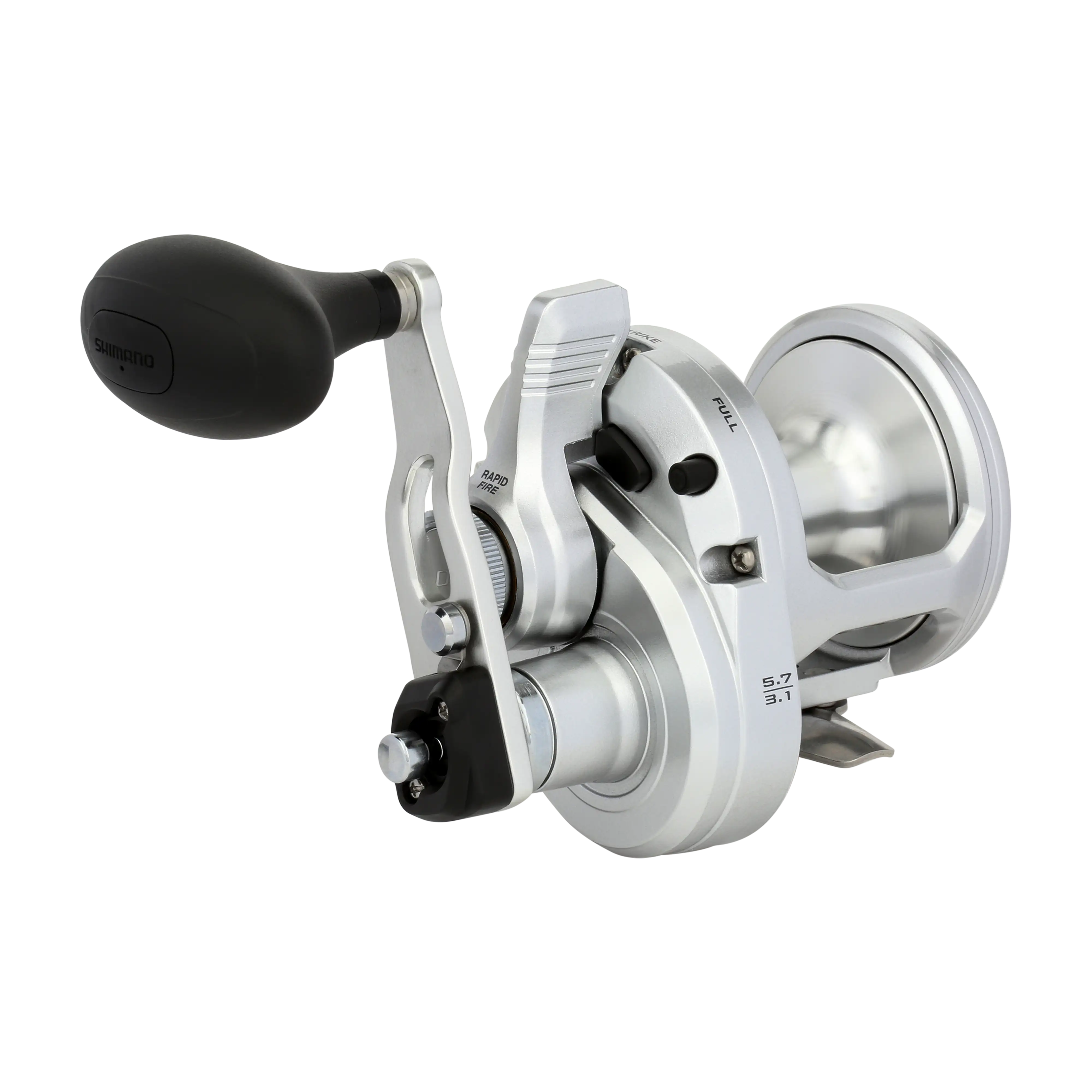
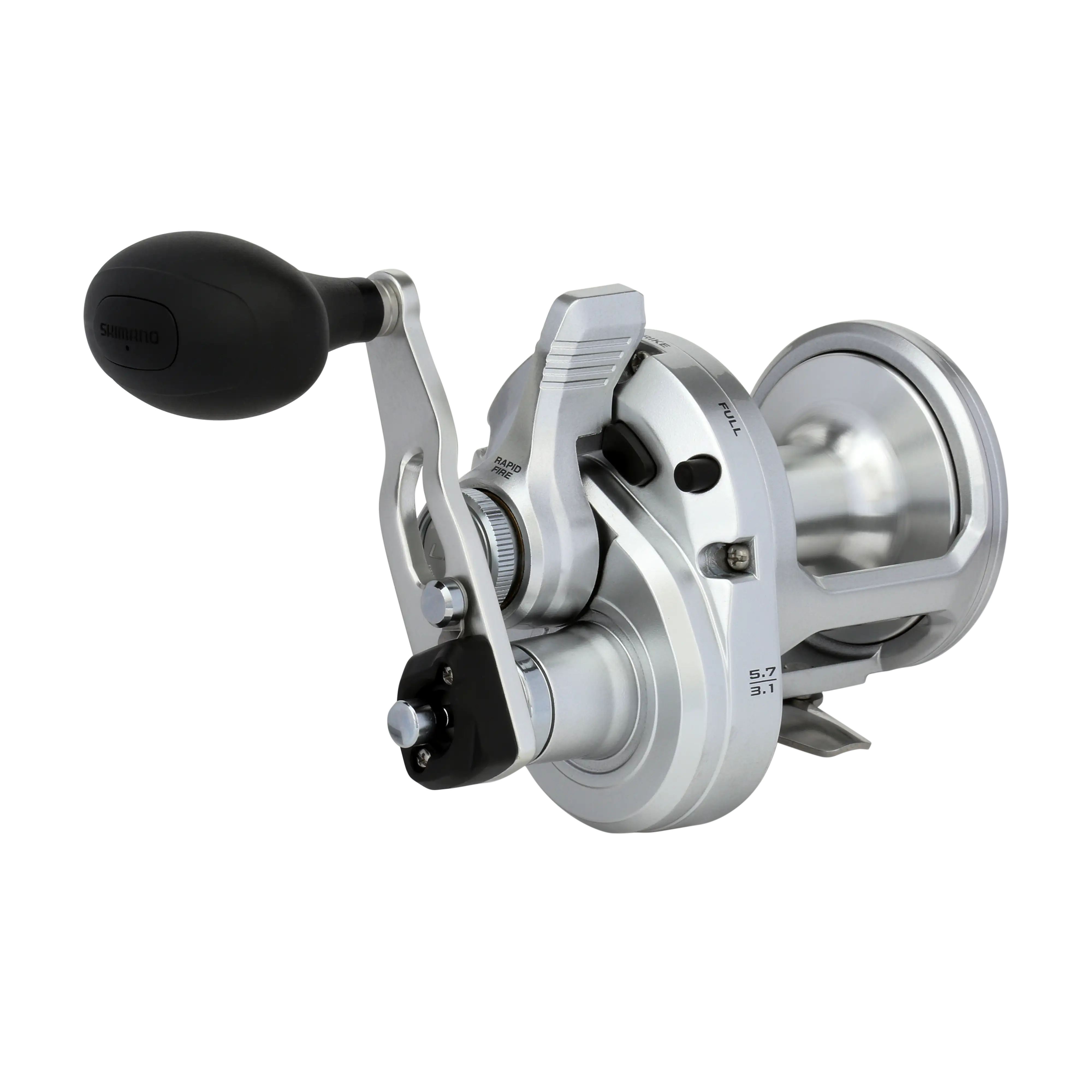
Offshore Trolling Reels
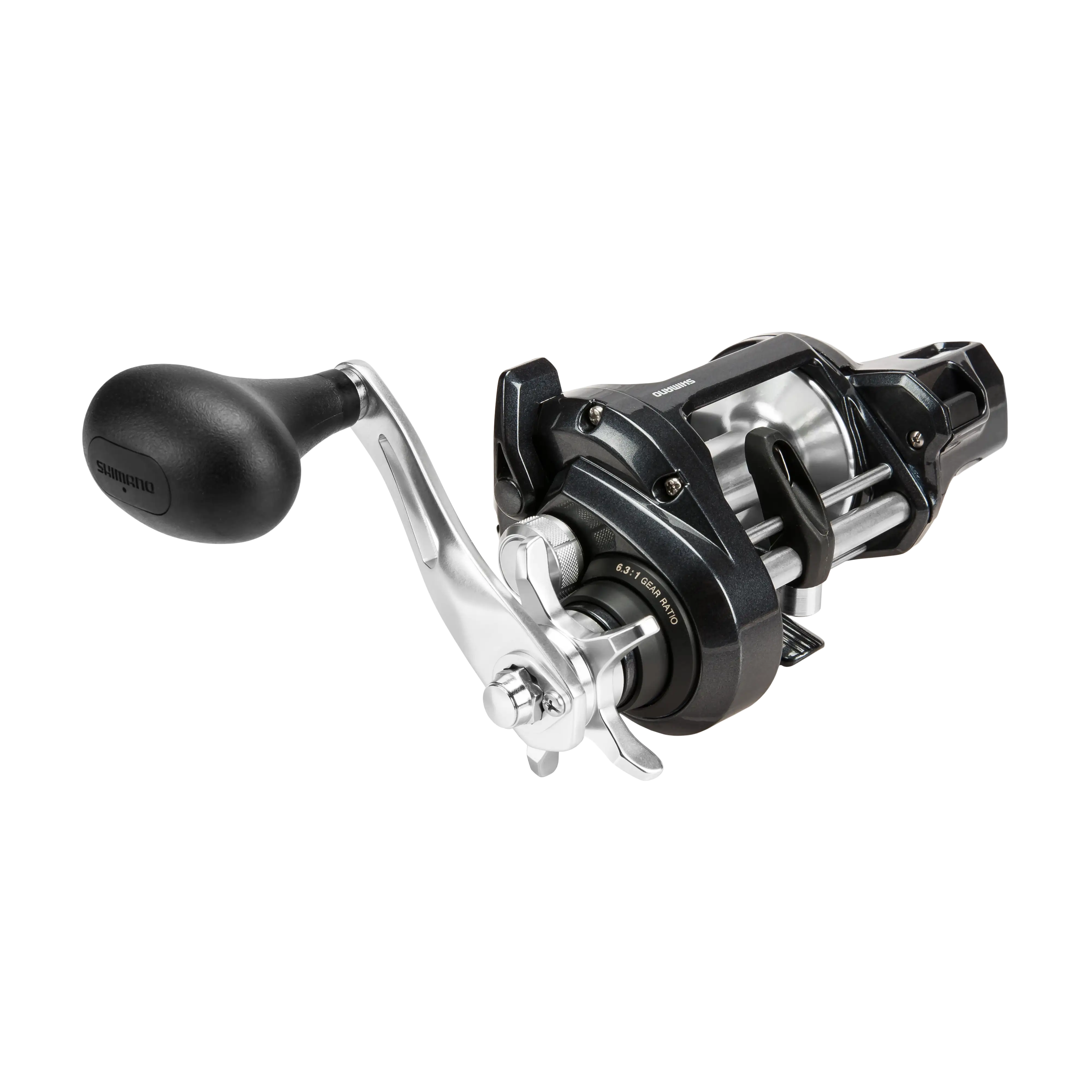
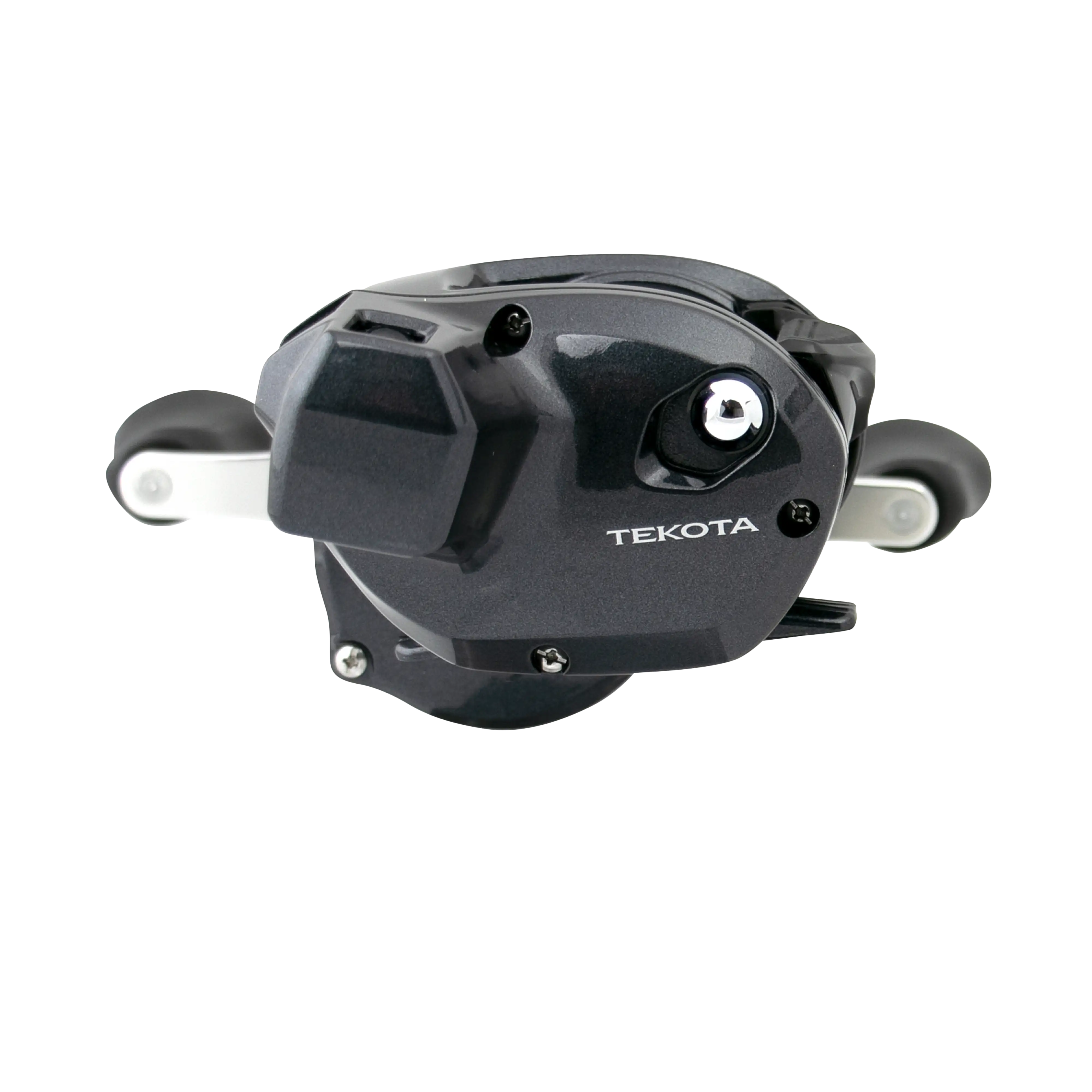
Offshore Trolling Lures & Plugs
Offshore trolling lures are designed to track cleanly behind a moving boat while creating flash, vibration, and movement that trigger reaction strikes from pelagic species. A balanced spread uses multiple lure types to cover different depths and behaviors, allowing you to target fish holding near the surface, mid-water, or deeper in the water column. Matching lure style to trolling speed, sea conditions, and target species is key to consistent results offshore.
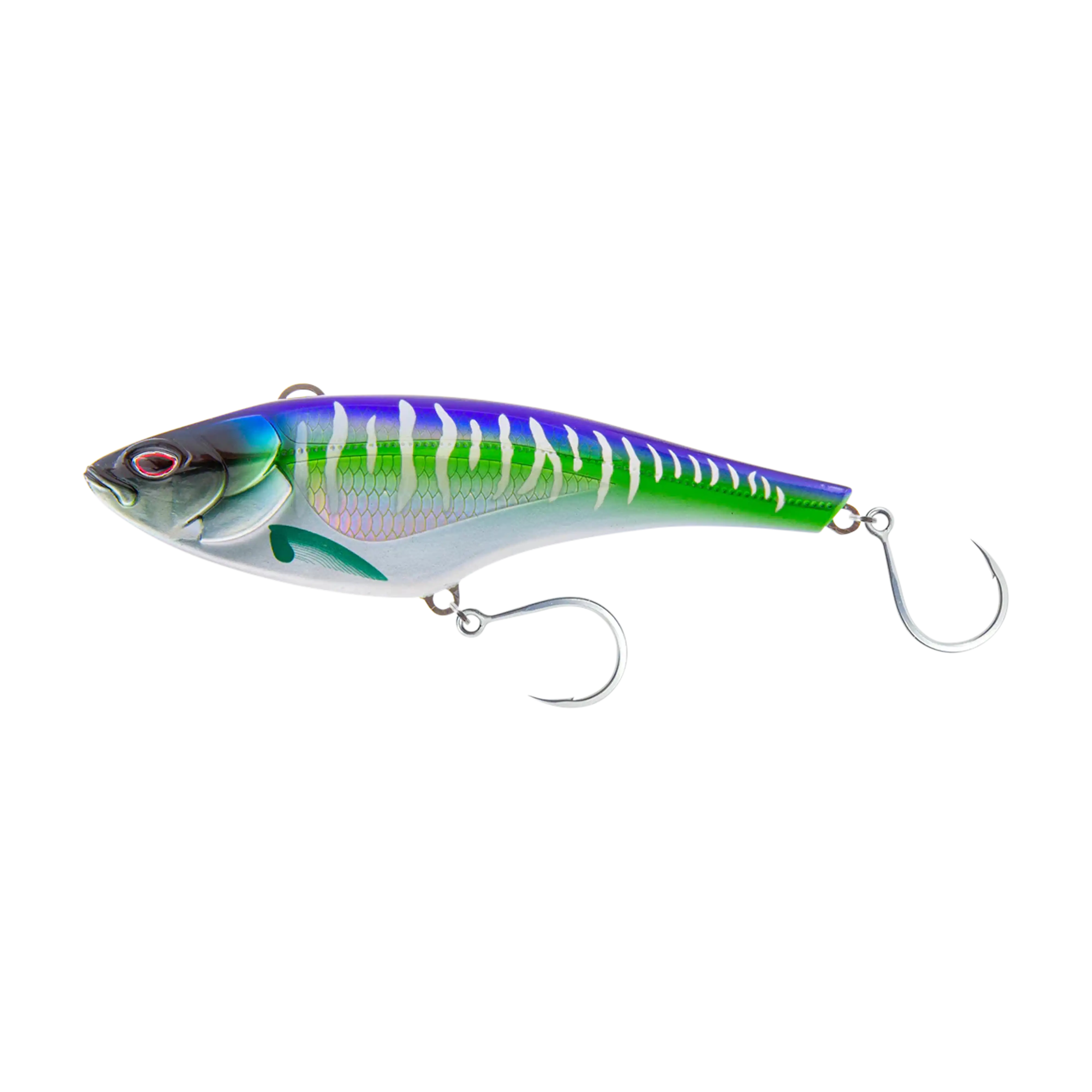
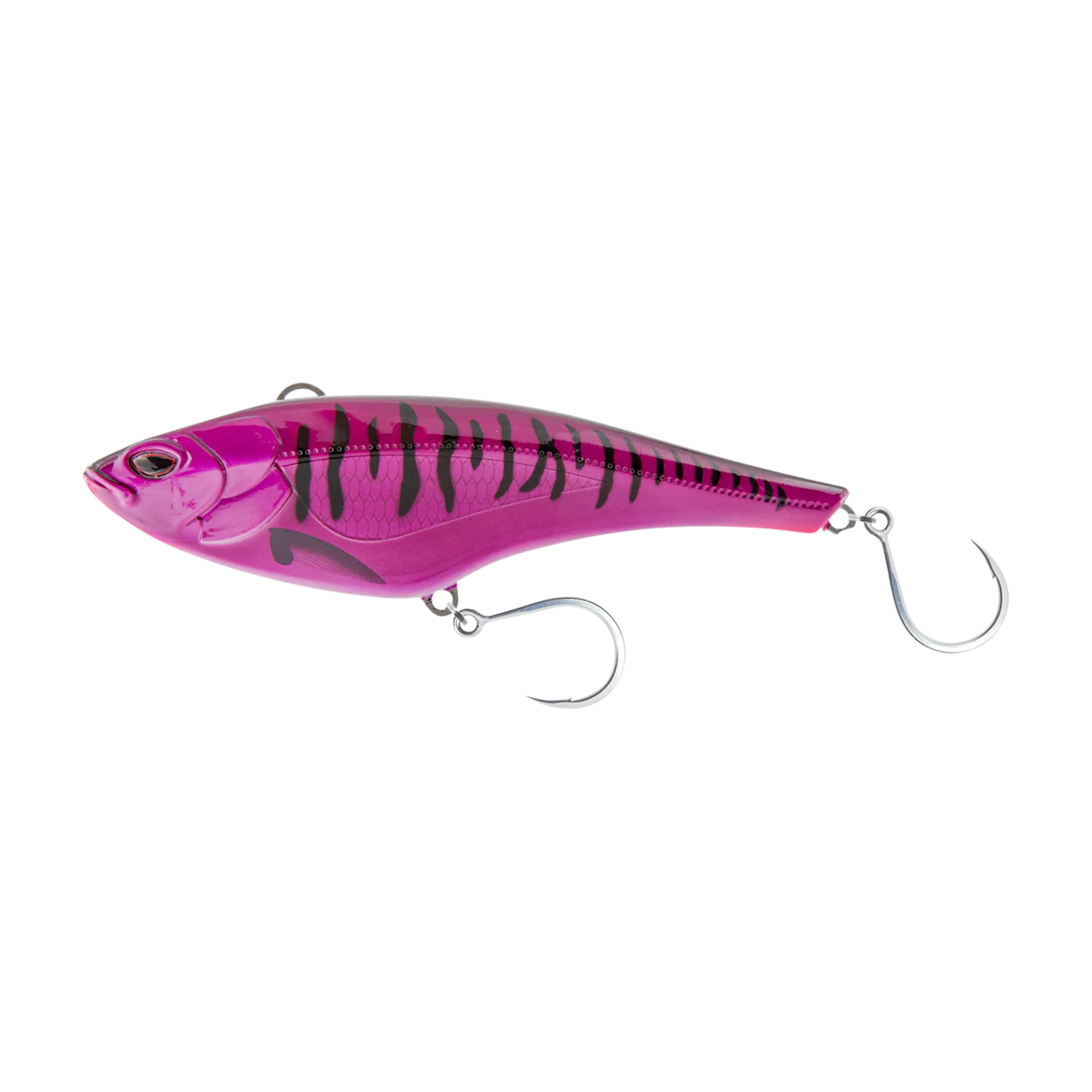
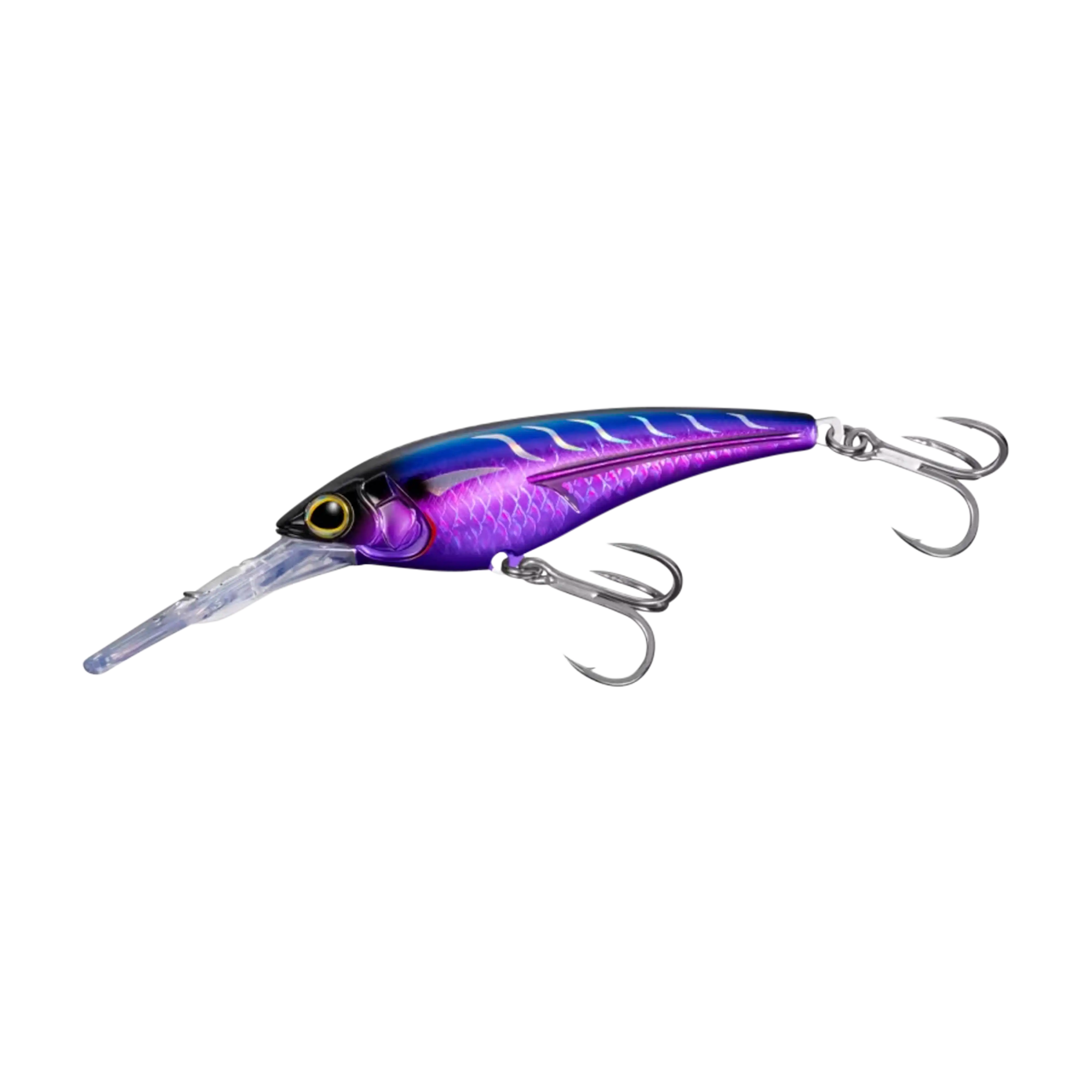
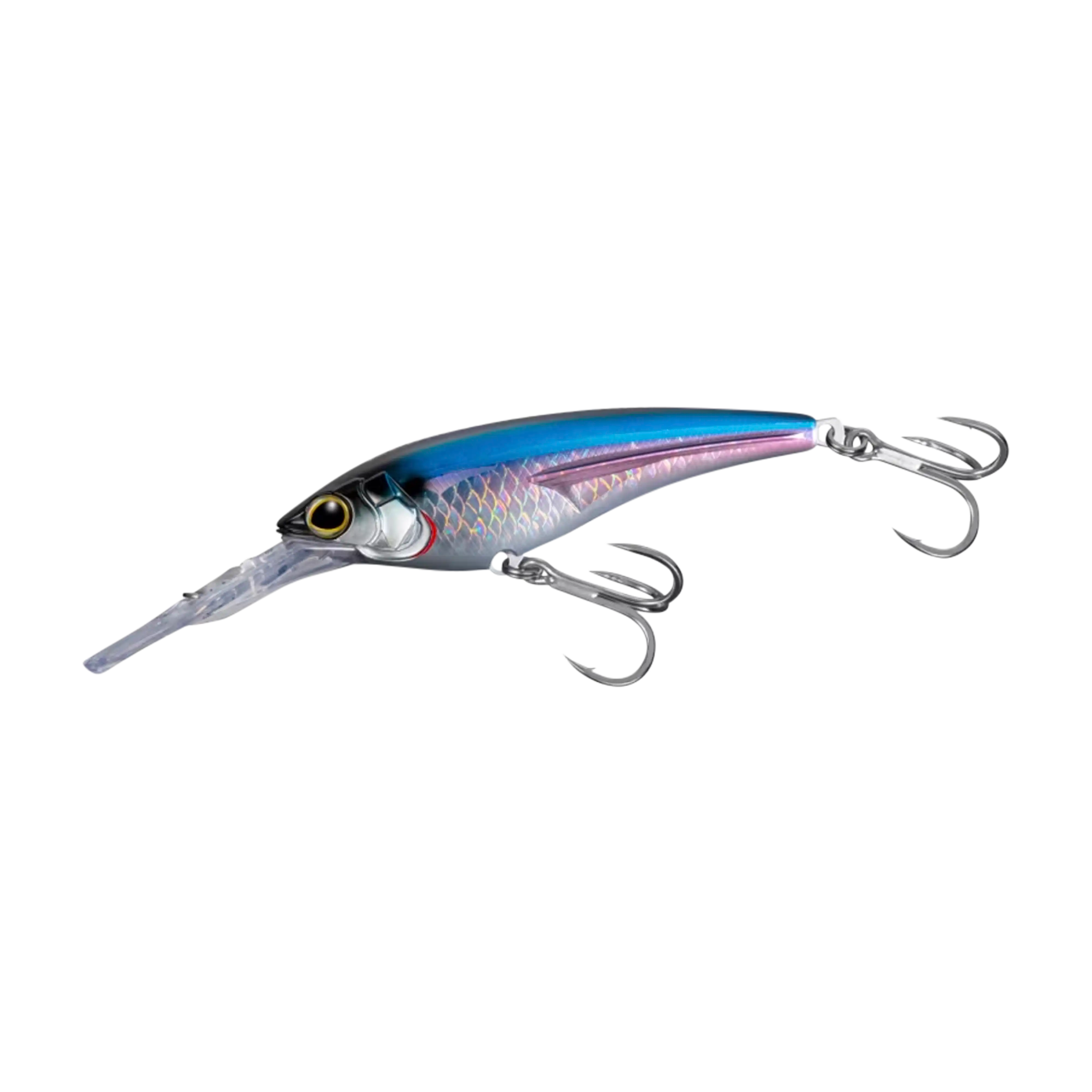
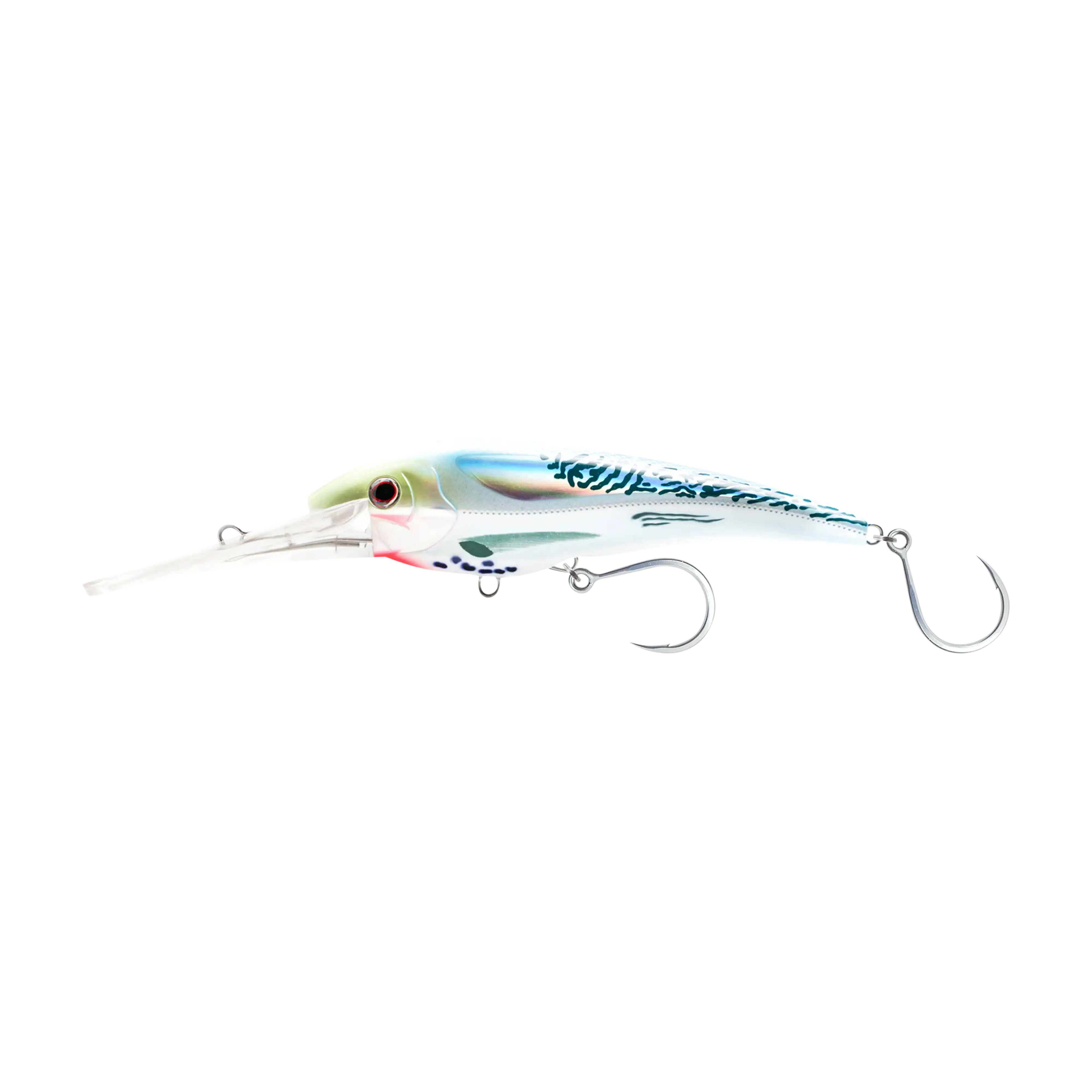
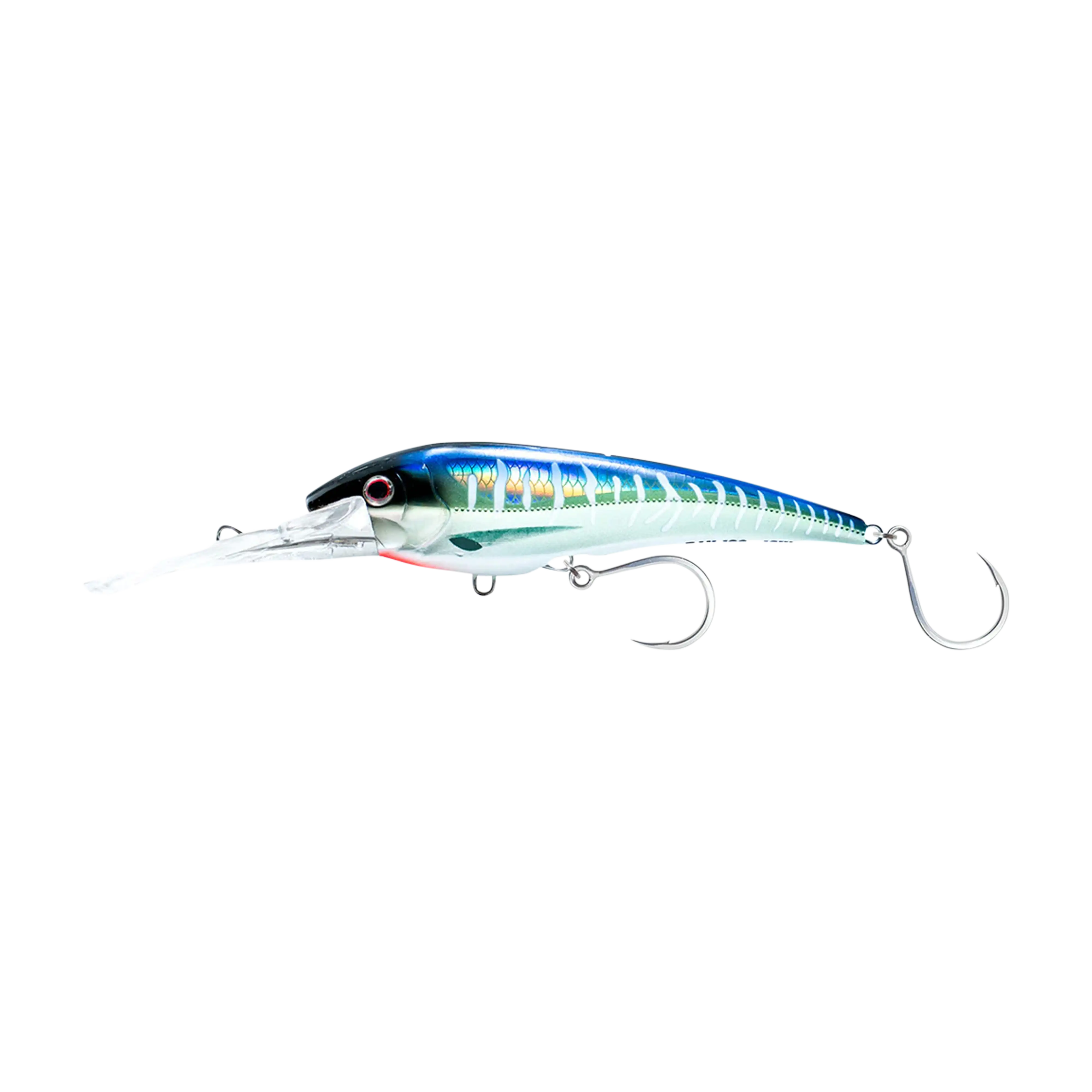
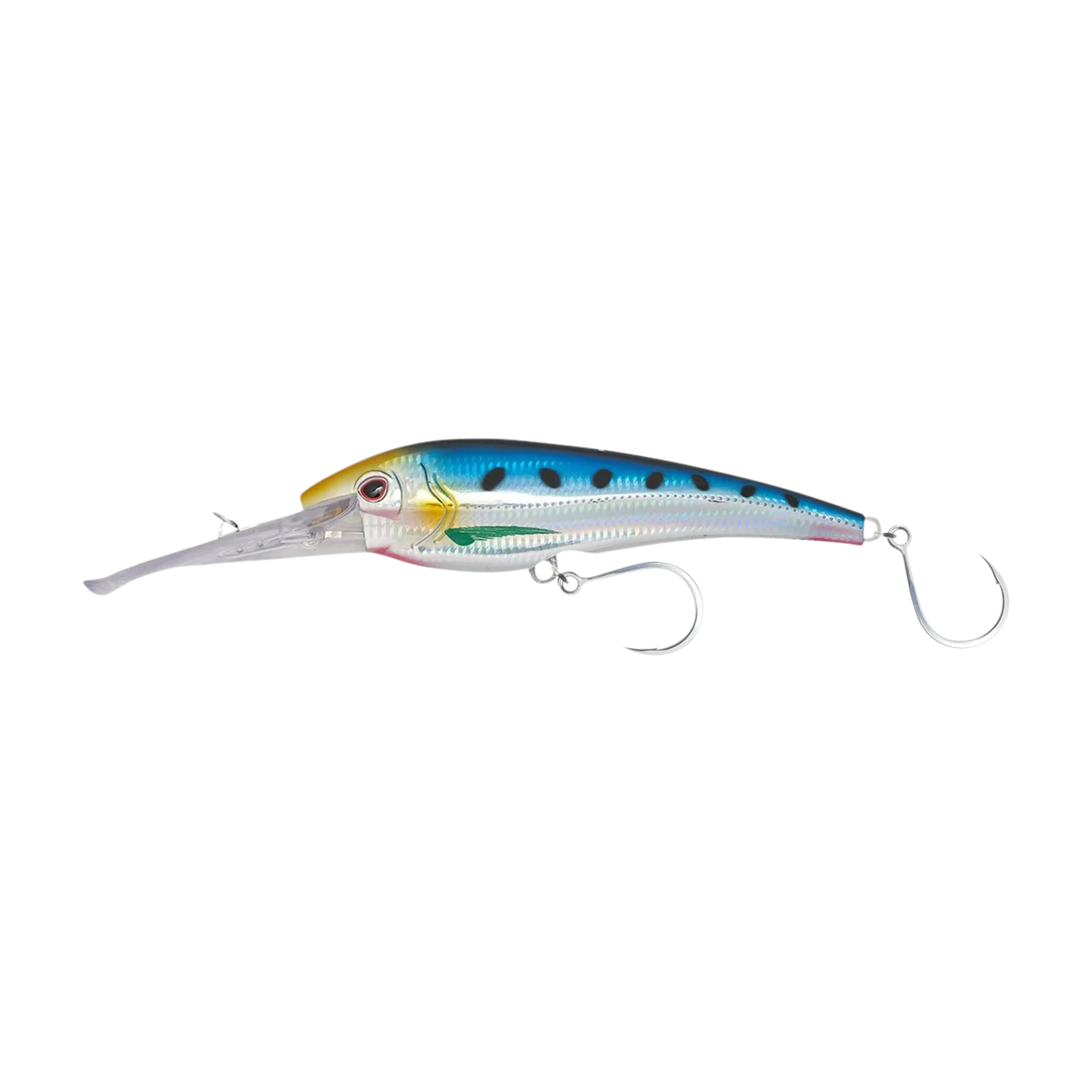
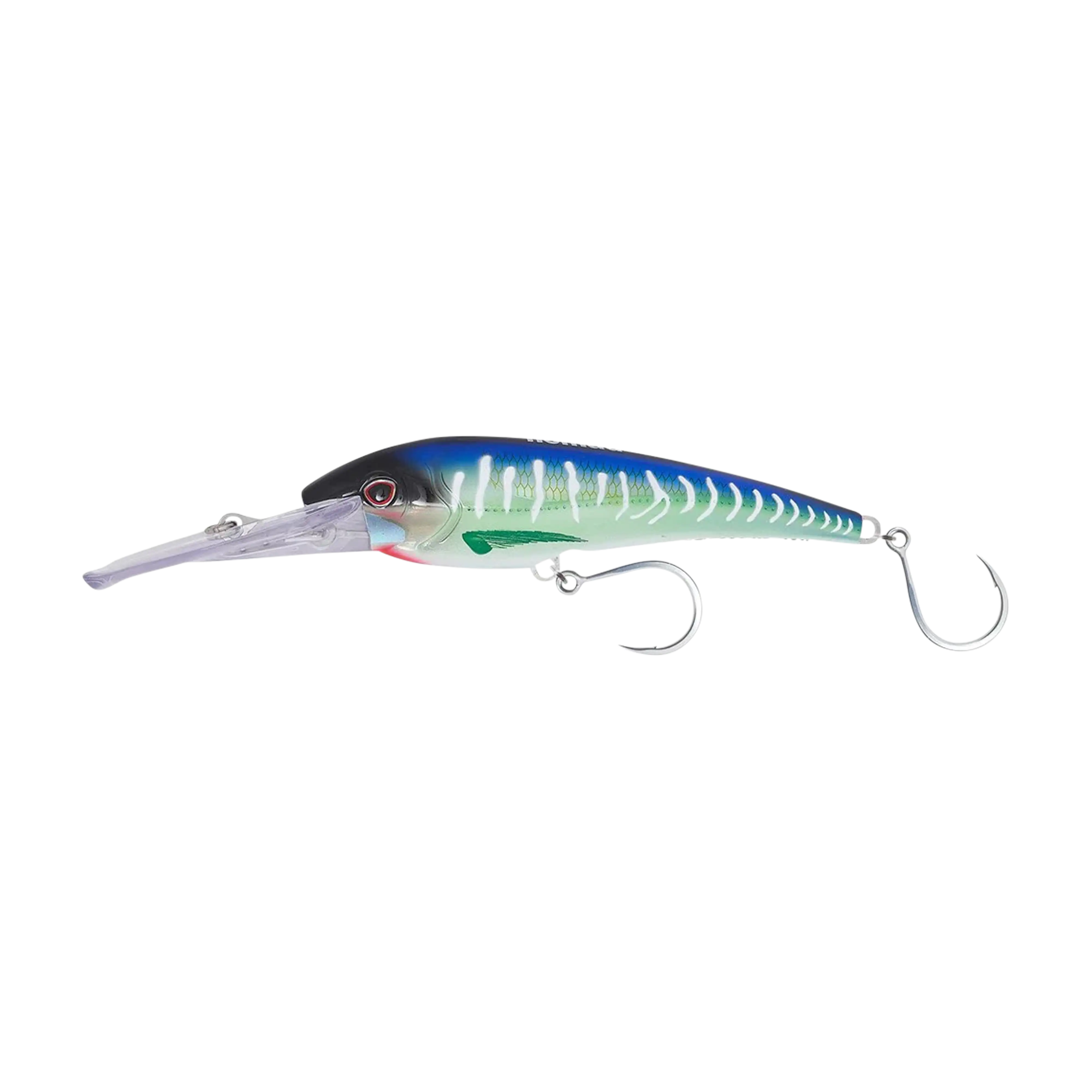
Hard-body plugs are a core part of most trolling spreads. These rigid lures use diving lips or weighted bodies to maintain action at speed and reach specific depths, making them highly effective for tuna, wahoo, mahi, and billfish. They’re often run alongside skirted lures and teasers to create a varied spread that covers multiple strike zones at once.
Lure Styles
Offshore trolling relies on a few core lure categories, each serving a specific role in the spread:
- Hard-body plugs (floating, neutral, diving): Run at or below the surface depending on design, ideal for tuna, wahoo, and kingfish when targeting active fish or specific depth zones.
- Skirted lures (chuggers, jets, feathers): Versatile trolling staples that provide consistent motion and attraction across a wide range of speeds; can be tuned for splash, bubble trail, or subtle movement.
- High-speed lures: Weighted or streamlined designs built for 10–20+ knots, commonly used for wahoo and fast-moving pelagics.
- Natural bait rigs (ballyhoo, rigged bait): Combine scent and realism for species like mahi, sailfish, tuna, and marlin.
- Teasers (dredges, daisy chains): Attract fish into the spread without hooks, creating feeding competition and increasing strike chances on trailing lures.
- Weighted/deep-running lures: Used with planers or downriggers to target fish holding deeper in the water column.
Lure Sizes
Lure size and weight directly affect how deep a lure runs and how stable it remains at trolling speed. Smaller lures stay higher in the water column and are ideal for moderate speeds or surface-feeding fish, while larger, heavier lures hold deeper and stay more stable in rougher conditions or faster trolling speeds. In general, lighter lures excel in shallow-feeding scenarios, while heavier plugs and heads are used when fish are suspended or deeper.
Colors & Finishes
Color and finish affect visibility and how a lure signals prey at range. While fish behavior and water conditions vary, these guidelines are widely used:
- Natural/Schooling Patterns: Silver, blue, green, and herring patterns mimic local baitfish and are reliable when fish are feeding actively on forage.
- High‑Contrast/Bright Colors: Chartreuse, pink, UV accents, or bright combinations increase visibility in low light, stained water, or when fish are aggressive and chasing fast targets.
- Chrome/Reflective Finishes: Create strong flash that mirrors sunlight — useful in clear, sunlit conditions or when covering water quickly.
- Dark/Matte Colors: Black or dark finishes silhouette well against a bright surface, especially in rough seas or when fish are keyed in on contrast.
No single color is best everywhere — pairing contrasting options together often helps trigger more strikes by providing both flash and visibility in varied light and water conditions.
Key Takeaways
- Offshore lures must maintain clean action at trolling speed to stay effective.
- Hard-body plugs control depth and create consistent vibration for reaction strikes.
- Lure size and weight determine running depth and stability in the spread.
- Different lure styles cover surface, mid-water, and deep strike zones.
- Mixing lure types improves coverage and increases strike opportunities.
Offshore Trolling Lures & Plugs
Offshore trolling lures are designed to track cleanly behind a moving boat while creating flash, vibration, and movement that trigger reaction strikes from pelagic species. A balanced spread uses multiple lure types to cover different depths and behaviors, allowing you to target fish holding near the surface, mid-water, or deeper in the water column. Matching lure style to trolling speed, sea conditions, and target species is key to consistent results offshore.
Hard-body plugs are a core part of most trolling spreads. These rigid lures use diving lips or weighted bodies to maintain action at speed and reach specific depths, making them highly effective for tuna, wahoo, mahi, and billfish. They’re often run alongside skirted lures and teasers to create a varied spread that covers multiple strike zones at once.
Lure Styles
Offshore trolling relies on a few core lure categories, each serving a specific role in the spread:
- Hard-body plugs (floating, neutral, diving): Run at or below the surface depending on design, ideal for tuna, wahoo, and kingfish when targeting active fish or specific depth zones.
- Skirted lures (chuggers, jets, feathers): Versatile trolling staples that provide consistent motion and attraction across a wide range of speeds; can be tuned for splash, bubble trail, or subtle movement.
- High-speed lures: Weighted or streamlined designs built for 10–20+ knots, commonly used for wahoo and fast-moving pelagics.
- Natural bait rigs (ballyhoo, rigged bait): Combine scent and realism for species like mahi, sailfish, tuna, and marlin.
- Teasers (dredges, daisy chains): Attract fish into the spread without hooks, creating feeding competition and increasing strike chances on trailing lures.
- Weighted/deep-running lures: Used with planers or downriggers to target fish holding deeper in the water column.
Lure Sizes
Lure size and weight directly affect how deep a lure runs and how stable it remains at trolling speed. Smaller lures stay higher in the water column and are ideal for moderate speeds or surface-feeding fish, while larger, heavier lures hold deeper and stay more stable in rougher conditions or faster trolling speeds. In general, lighter lures excel in shallow-feeding scenarios, while heavier plugs and heads are used when fish are suspended or deeper.
Colors & Finishes
Color and finish affect visibility and how a lure signals prey at range. While fish behavior and water conditions vary, these guidelines are widely used:
- Natural/Schooling Patterns: Silver, blue, green, and herring patterns mimic local baitfish and are reliable when fish are feeding actively on forage.
- High‑Contrast/Bright Colors: Chartreuse, pink, UV accents, or bright combinations increase visibility in low light, stained water, or when fish are aggressive and chasing fast targets.
- Chrome/Reflective Finishes: Create strong flash that mirrors sunlight — useful in clear, sunlit conditions or when covering water quickly.
- Dark/Matte Colors: Black or dark finishes silhouette well against a bright surface, especially in rough seas or when fish are keyed in on contrast.
No single color is best everywhere — pairing contrasting options together often helps trigger more strikes by providing both flash and visibility in varied light and water conditions.
Key Takeaways
- Offshore lures must maintain clean action at trolling speed to stay effective.
- Hard-body plugs control depth and create consistent vibration for reaction strikes.
- Lure size and weight determine running depth and stability in the spread.
- Different lure styles cover surface, mid-water, and deep strike zones.
- Mixing lure types improves coverage and increases strike opportunities.
Offshore Plugs & Trolling Lures


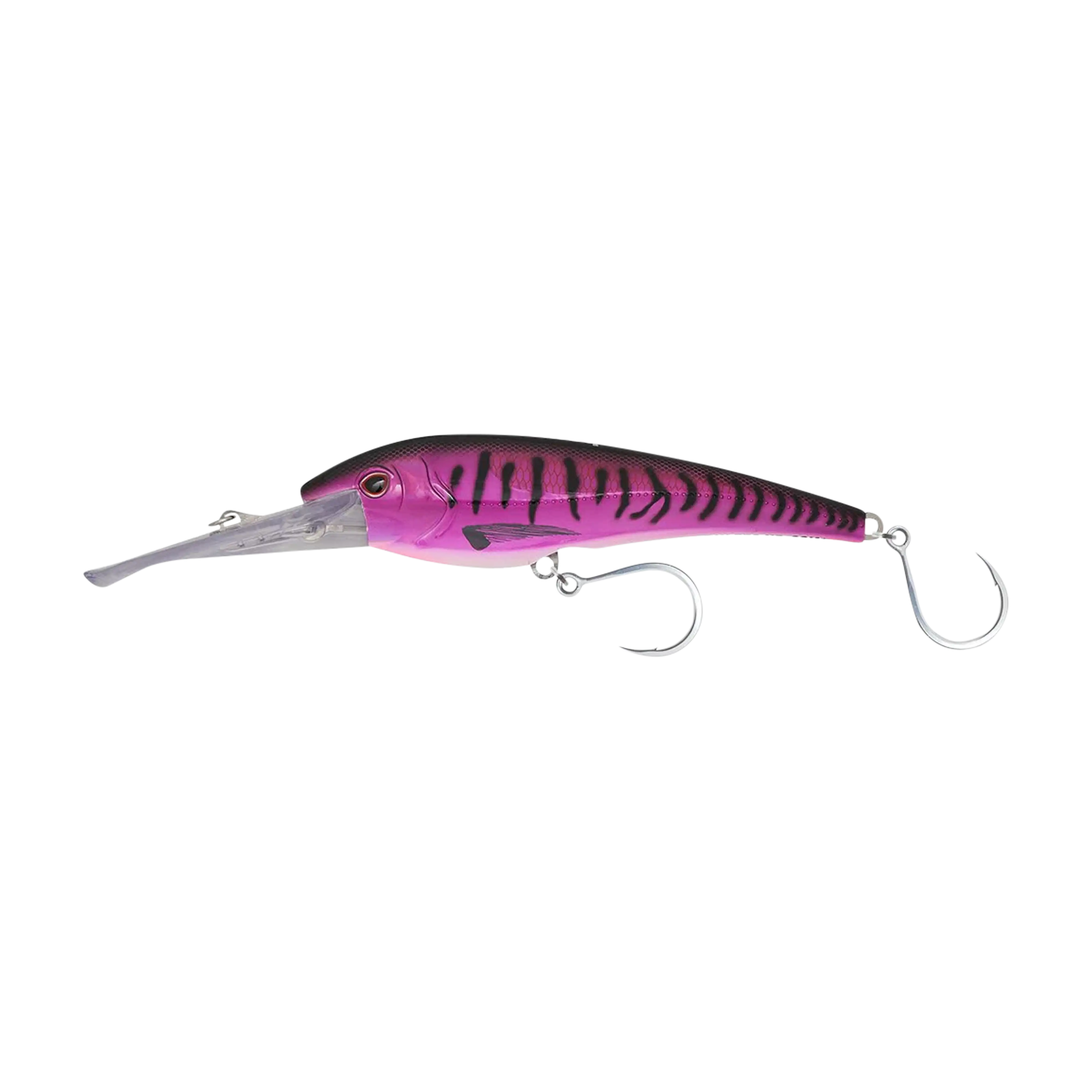
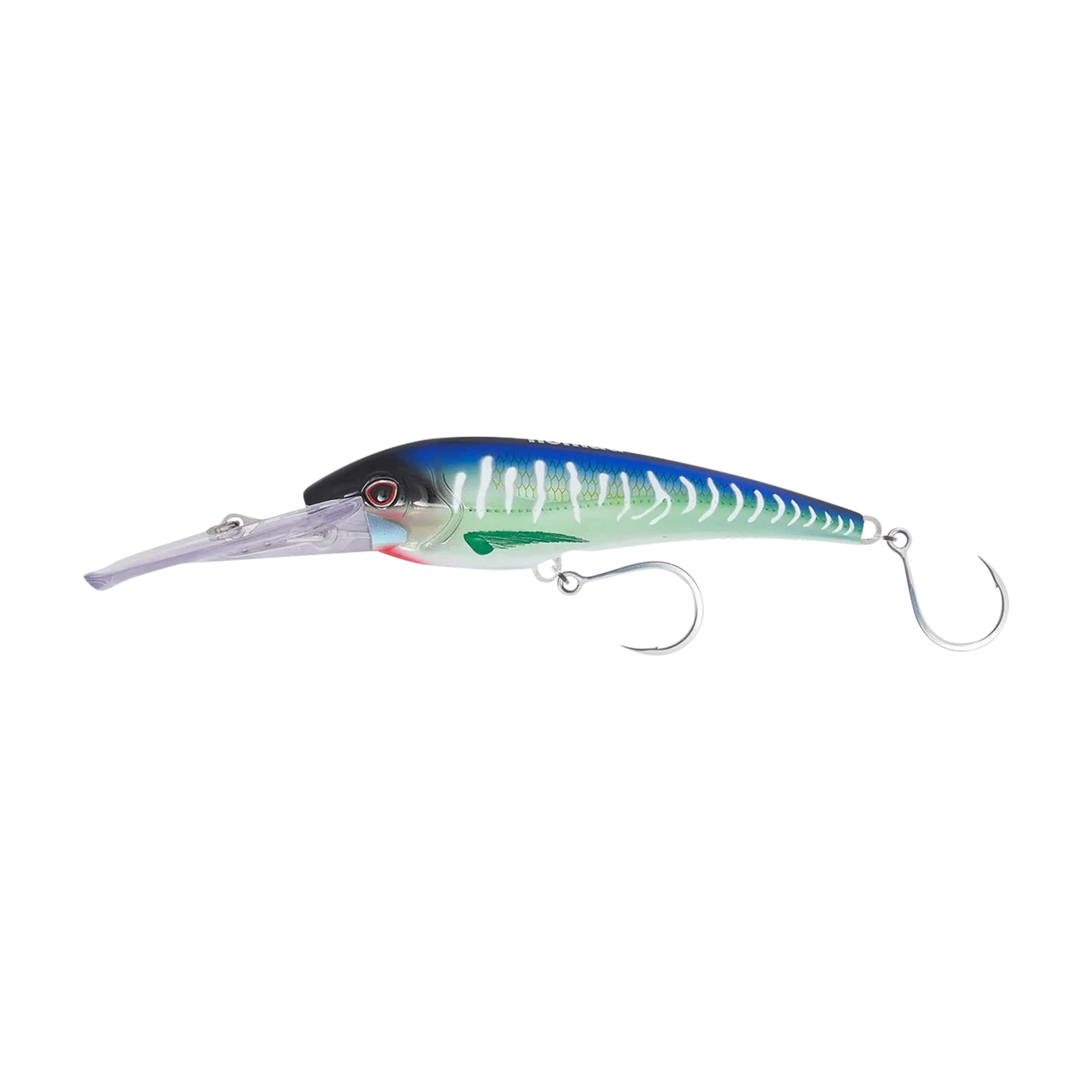
Offshore Trolling Skirts & Rigs
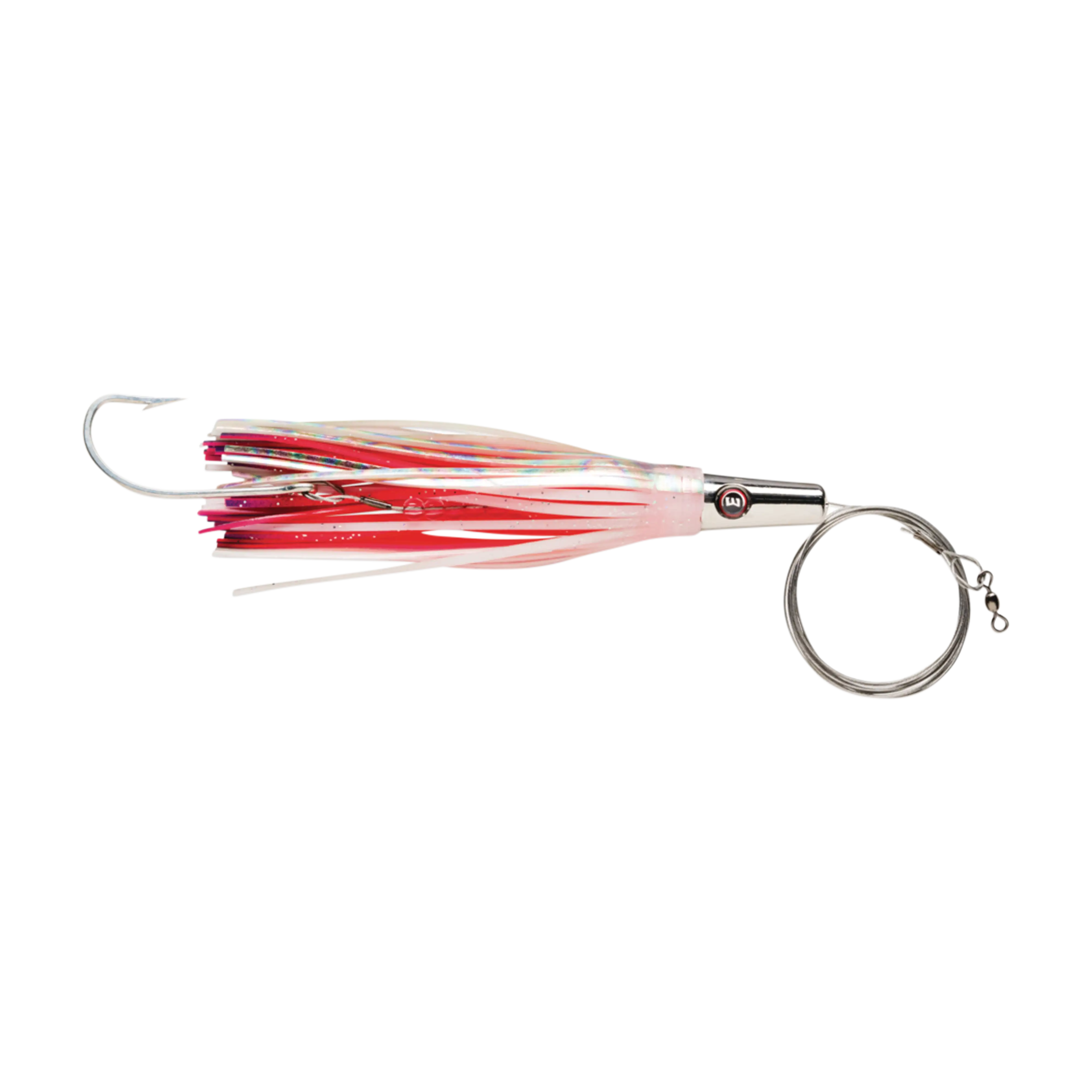
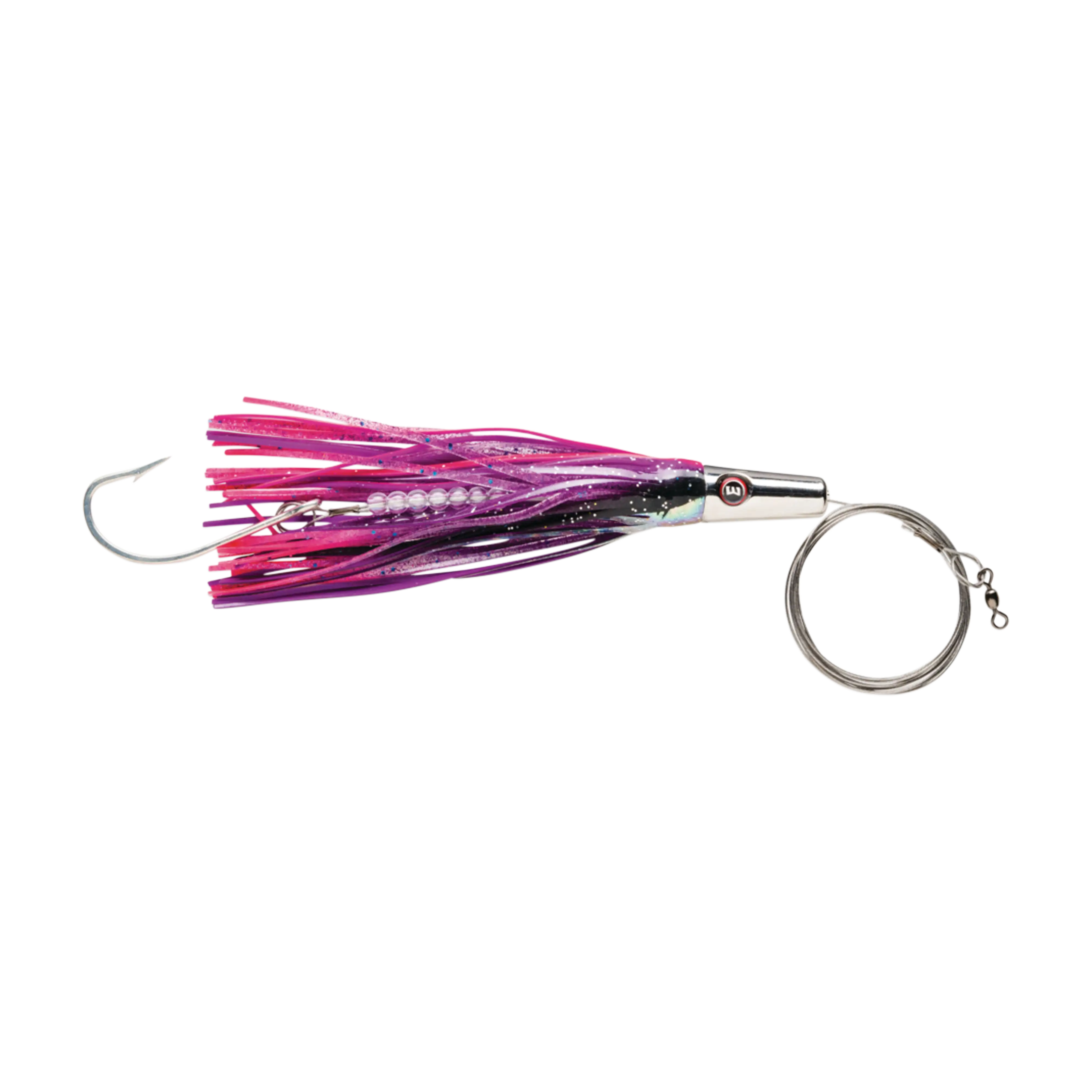
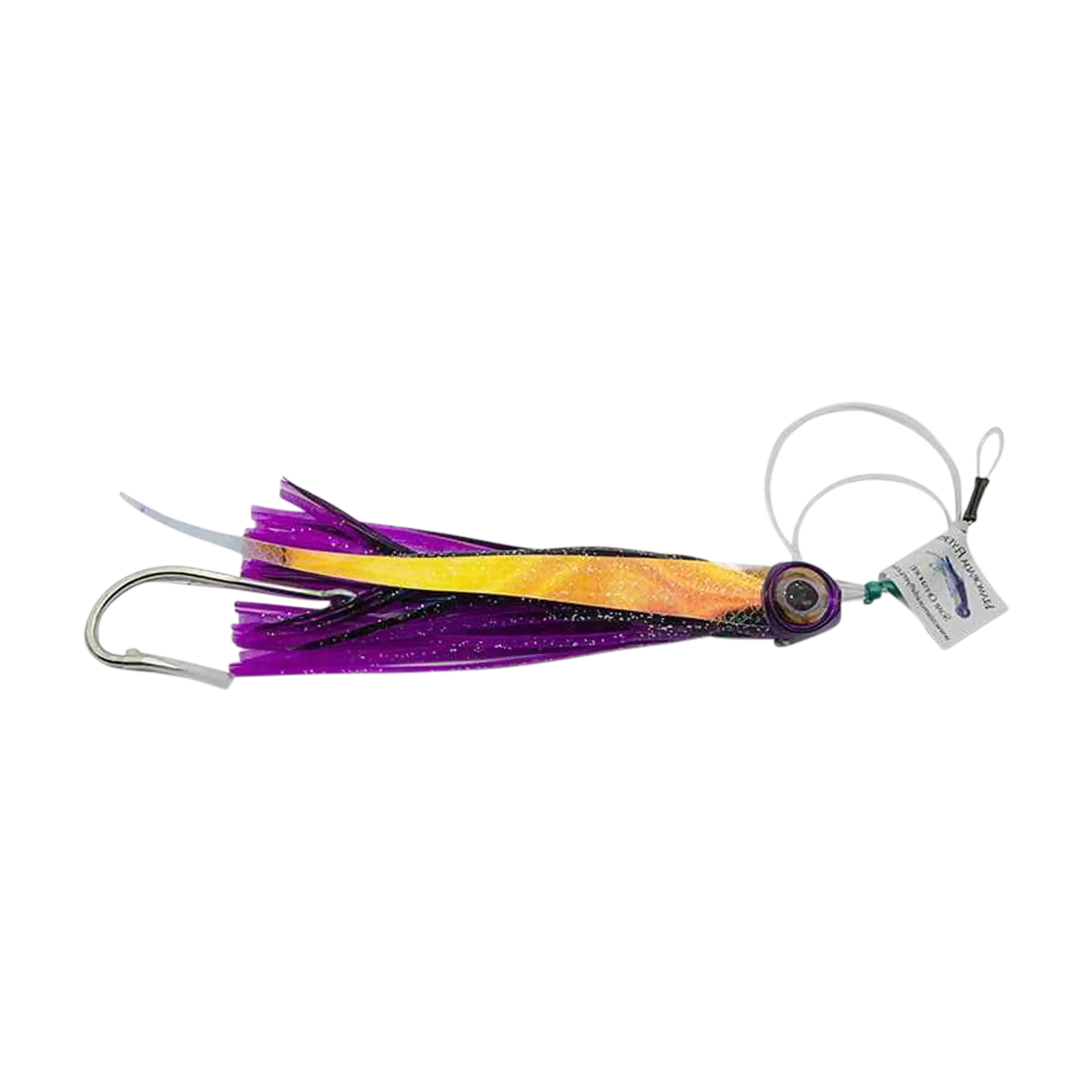
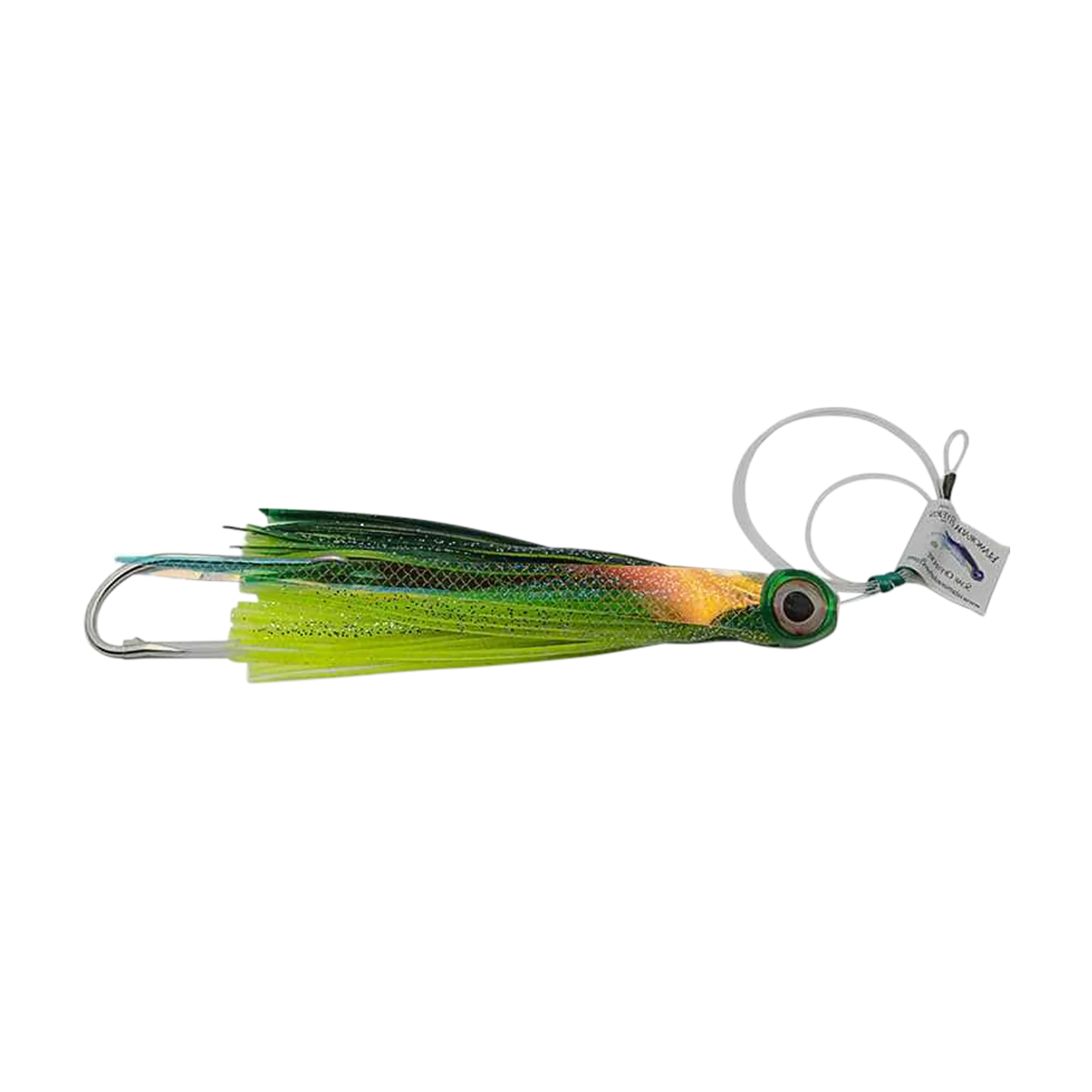
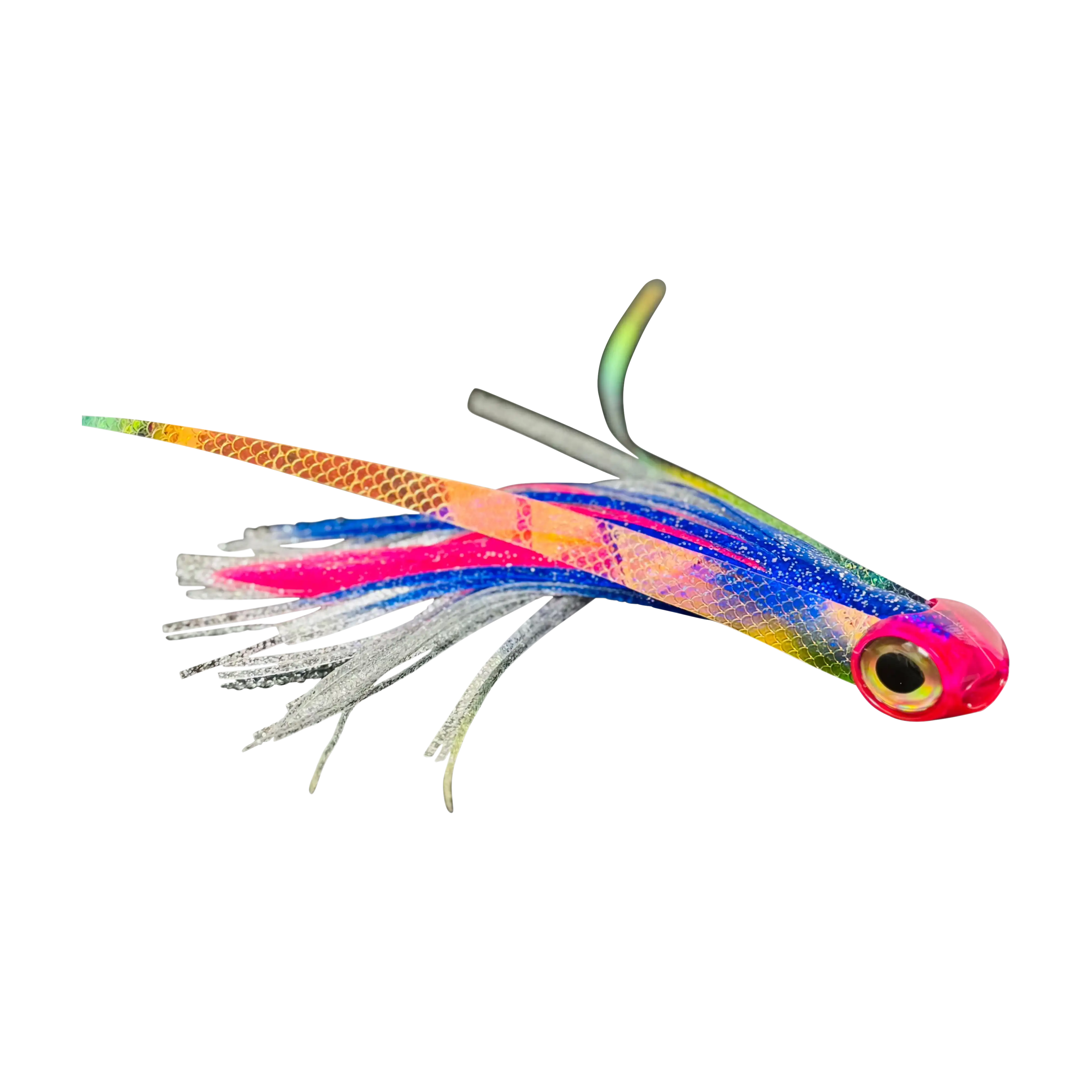
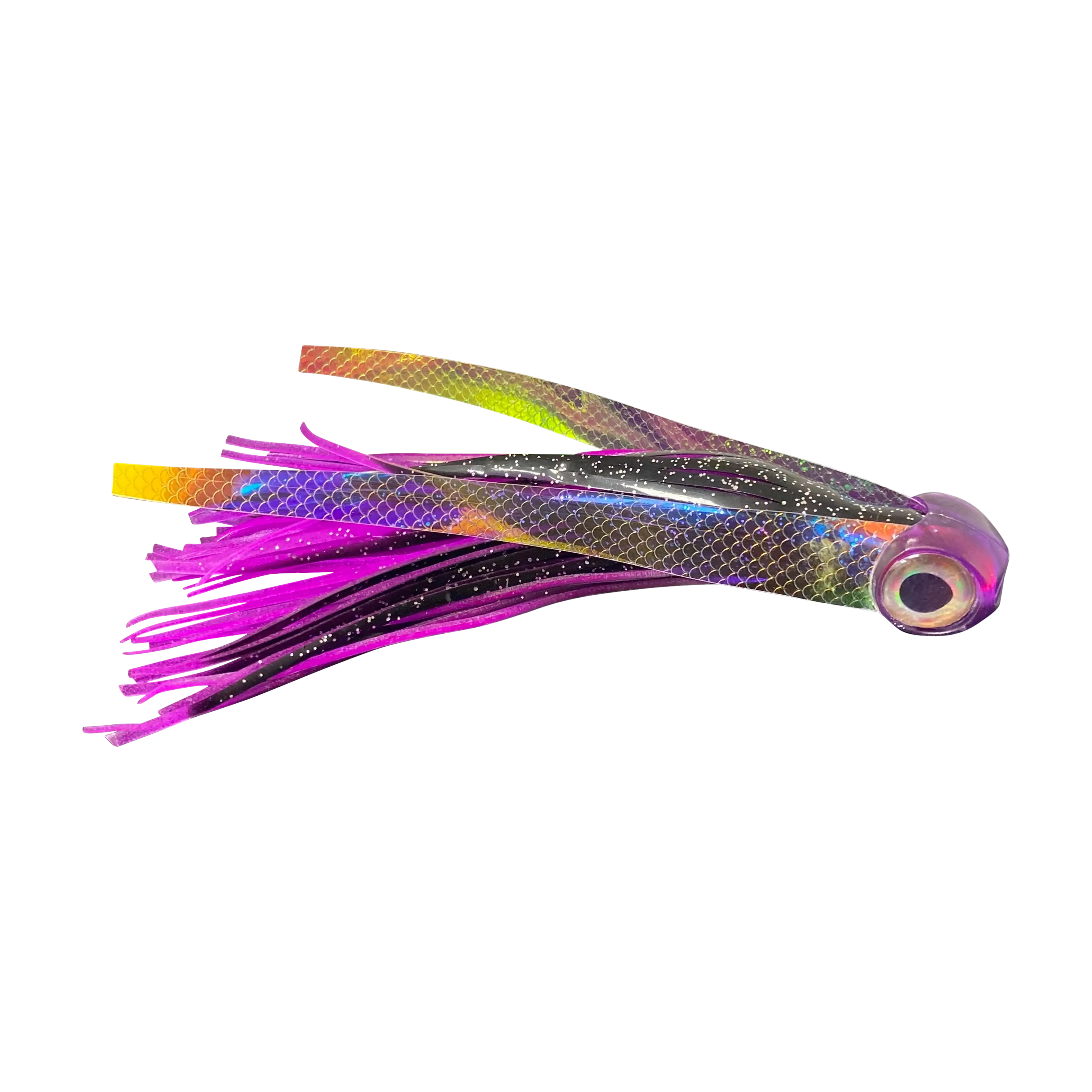
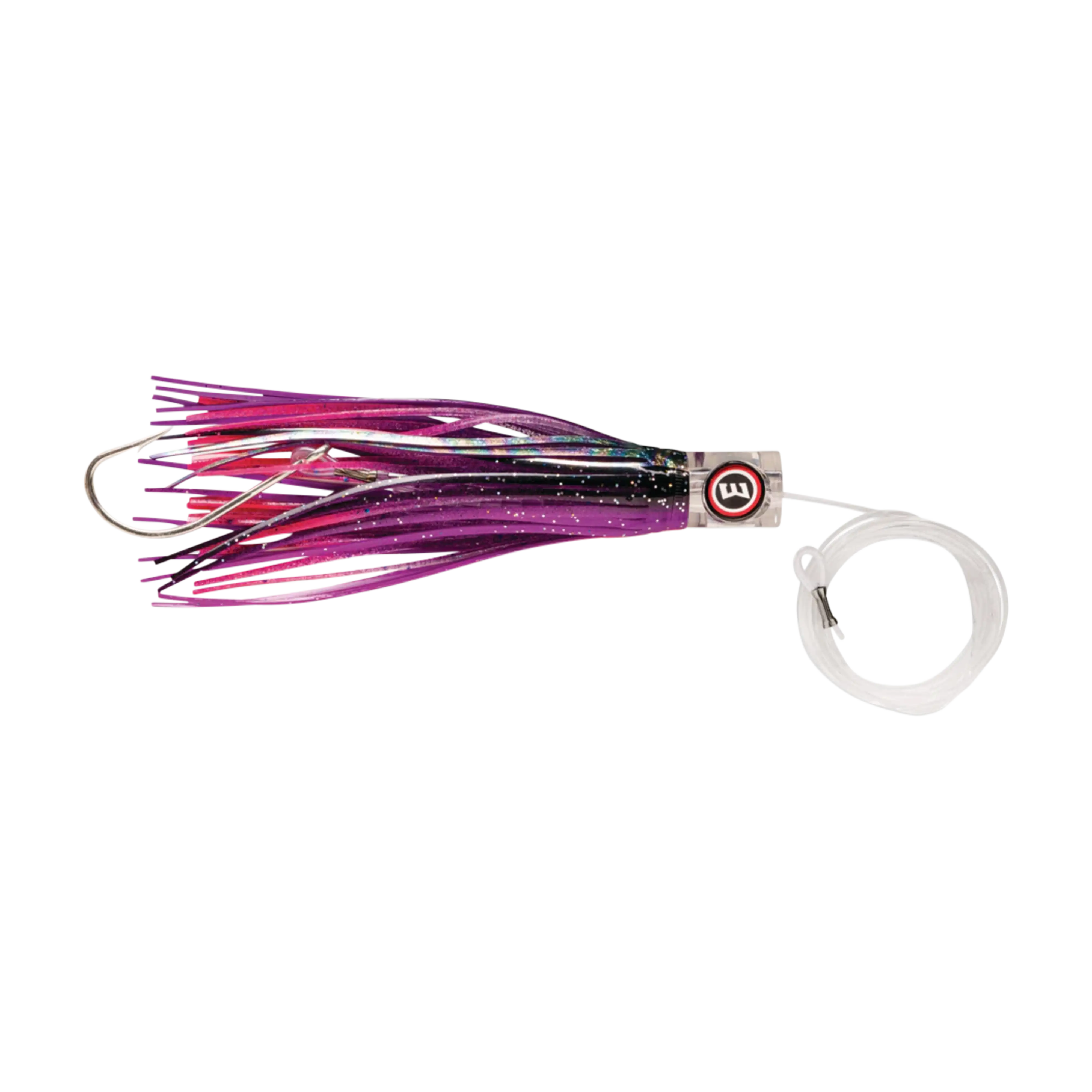
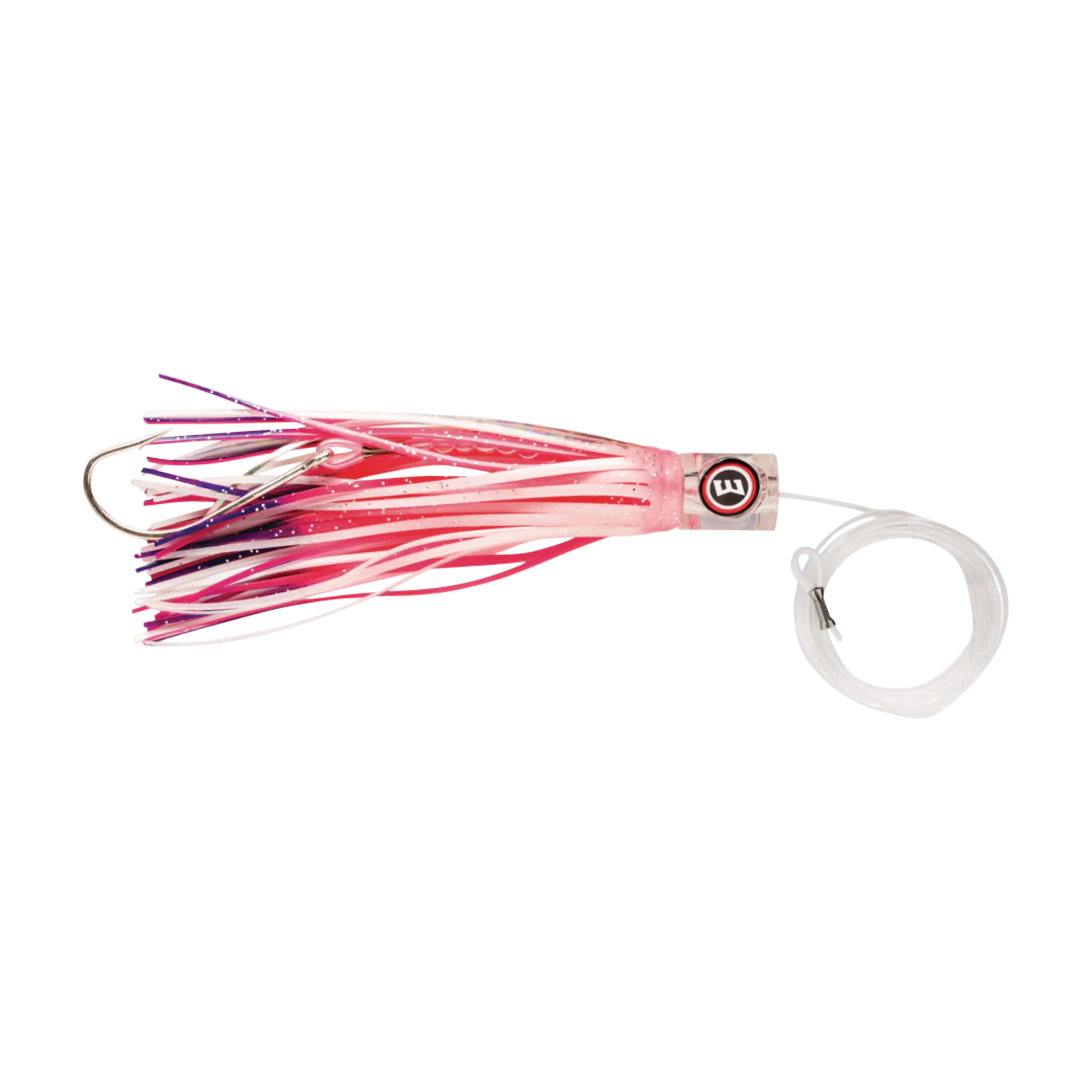
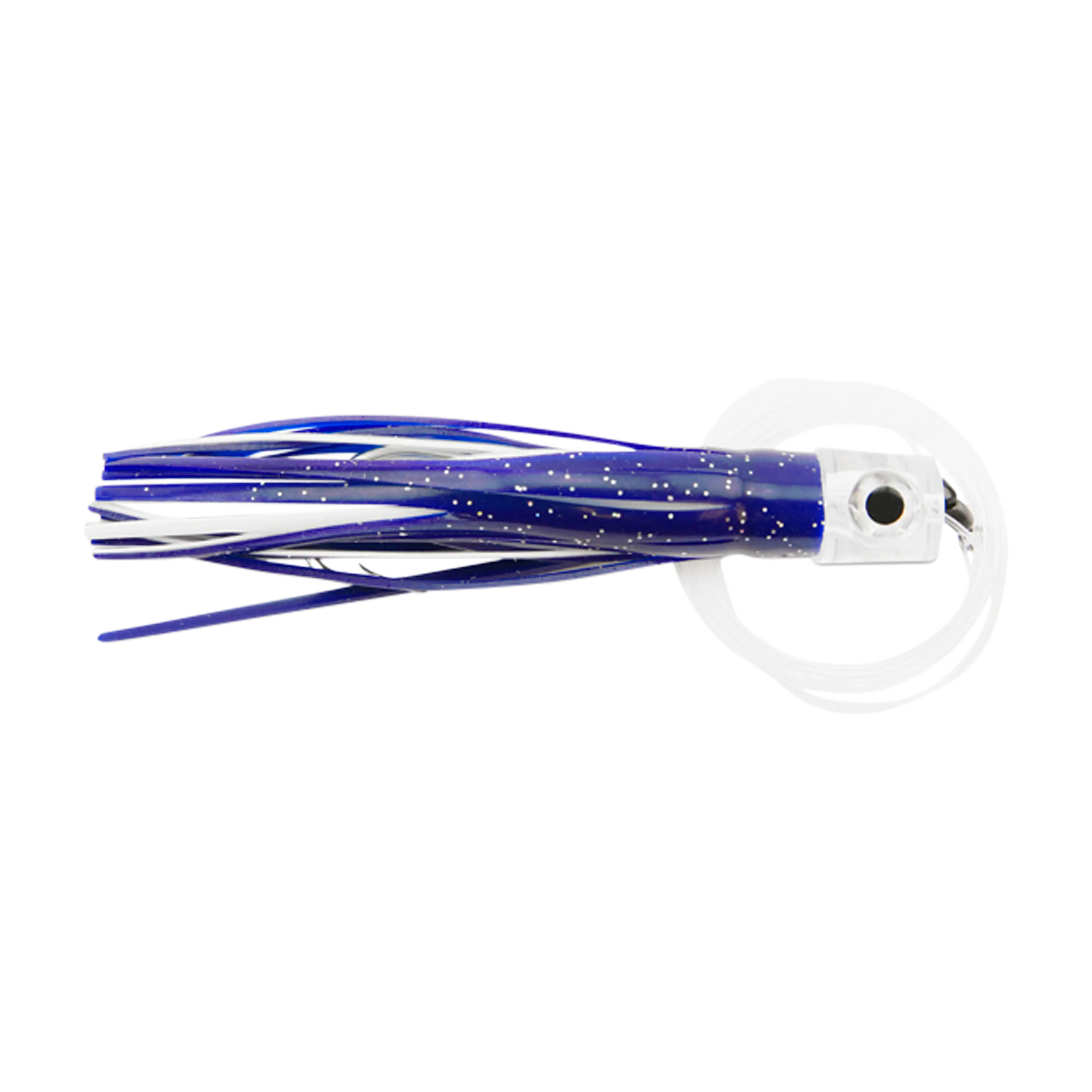
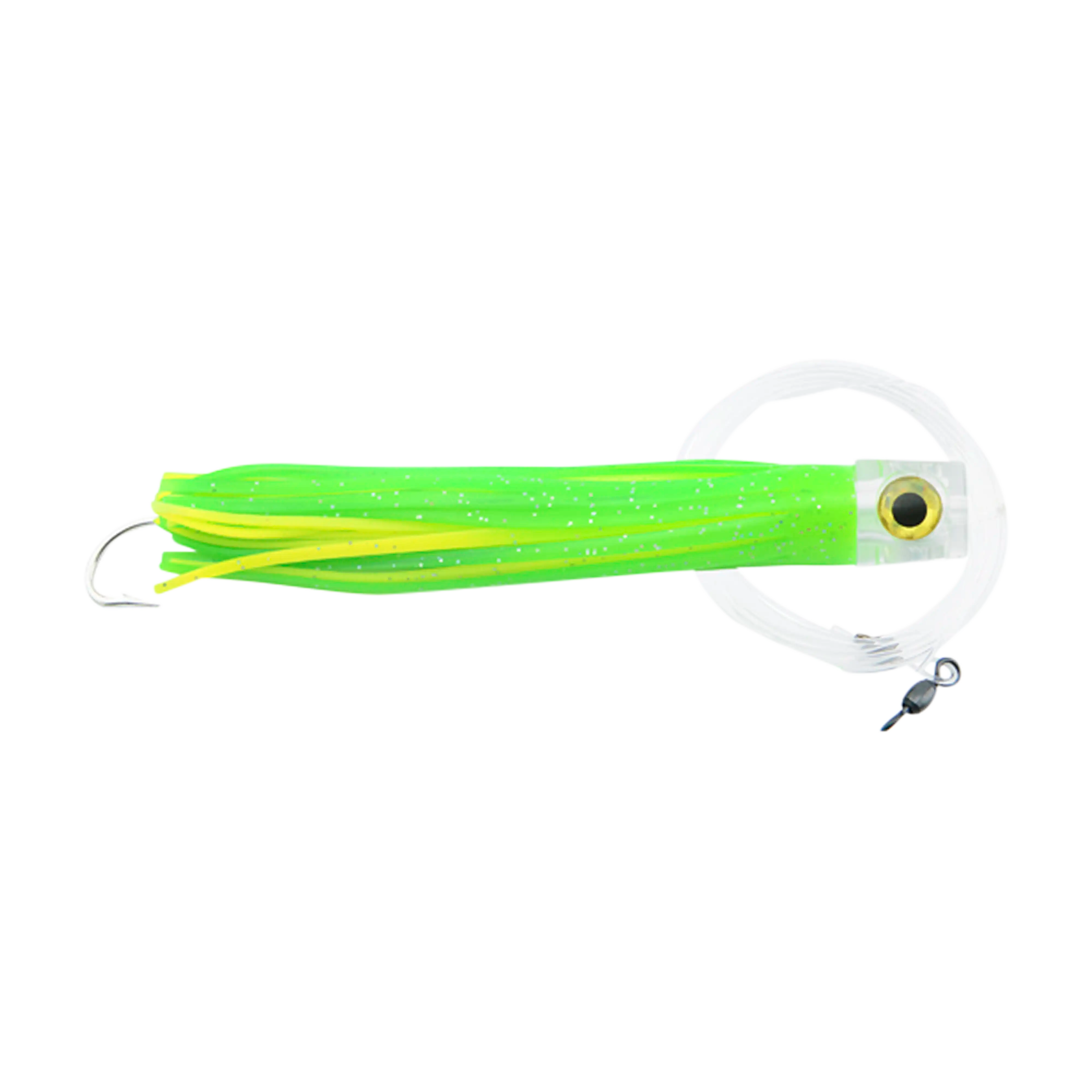
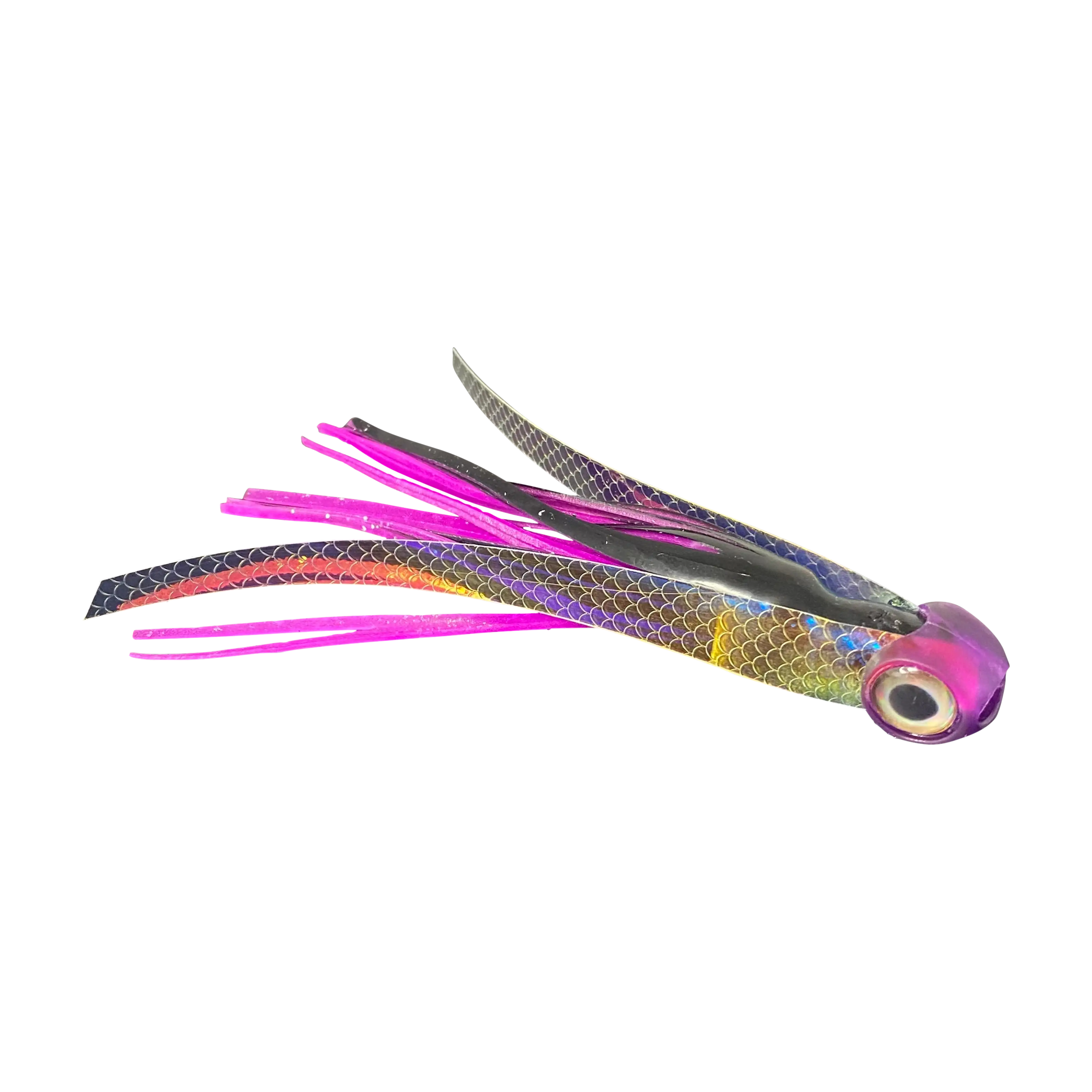
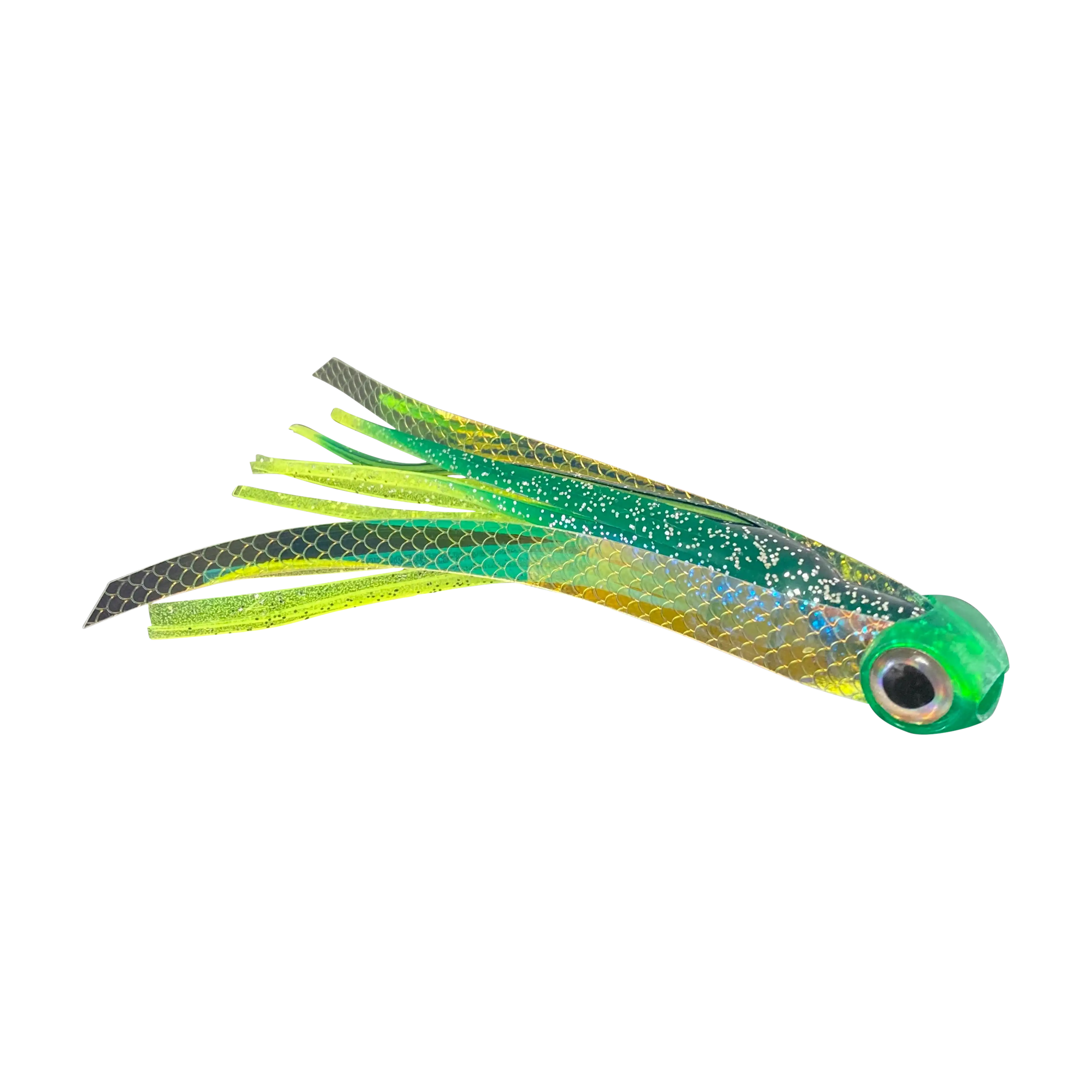
Skirted trolling lures are a core component of offshore spreads, valued for their ability to create strong visual presence through flash, profile, and continuous movement. They’re widely used because they remain effective across a broad range of trolling speeds and sea conditions, maintaining consistent action where many hard-body lures can lose stability or “blow out.” This makes them a reliable option when covering water and trying to draw attention from pelagic species over long distances.
Unlike hard plugs that rely on specific depth and lip design, skirted lures generate attraction through vibration, color contrast, and water displacement. They are commonly rigged with weighted heads, natural baits, or wire leaders depending on target species and conditions, allowing anglers to fine-tune depth and tracking. This versatility is one of the main reasons skirts appear in nearly every offshore trolling spread.
Action varies significantly between skirt styles and rigging methods. Some are designed to track straight and stay stable at speed, while others are tuned to dart, flutter, or spiral to trigger reaction bites. Surface-running skirted lures can even skip across the water like baitfish, imitating flying fish and creating explosive topwater strikes from aggressive pelagics.
Selecting the right skirt requires attention to size, weight, and action, as well as color and style, to match both trolling speed and fish behavior.
Sizes
Skirt size, head weight, and design determine how a lure runs and holds in the water column:
Small skirts (compact profiles): Best for shallow presentations and lighter baits. They typically run true and straight, keeping hooks aligned and consistent at moderate trolling speeds.
Mid-size skirts: Versatile option that produces stable yet lively action, effective across most trolling speeds.
Large skirts: Provide a bolder profile, helping lures maintain depth in rough water or at high speed, with heavier heads to stabilize the skirt’s motion.
Actions
Matching size, weight, and action to trolling speed and target species ensures skirts stay in the strike zone and perform as intended.
True-running skirts: Track straight behind the boat, offering a realistic baitfish presentation and consistent hook alignment.
Erratic/spiral skirts: Flutter, pulse, or twist to mimic injured or fleeing prey, triggering strikes from aggressive pelagics.
Skipping skirts (flying fish imitation): Designed to bounce across the surface, perfect for sailfish or dorado targeting topwater strikes.
Colors & Styles
Color selection enhances visibility and mimics forage, depending on conditions:
Natural baitfish patterns: Blue/silver, green/silver, black/blue — reliable when fish are feeding actively on schools.
Bright or high-contrast: Chartreuse, pink, orange, UV accents — improve visibility in low light, stained water, or for following fish.
Dark/deep-water colors: Black, purple, deep blue — maintain profile against glare and cloudy conditions, effective in rough seas.
Multi-color or flash accents: Contrasting or metallic strands add shimmer and movement, triggering strikes from curious or aggressive pelagics.
A mix of natural and high-contrast skirts in your spread helps cover multiple species and behavioral conditions simultaneously.
Key Takeaways
- Skirts add flash, profile, and lifelike movement to your offshore spread.
- Size, weight, and head design determine depth, stability, and how the skirt runs.
- Action type matters: true-running, erratic/spiral, or skipping skirts each provoke strikes differently.
- Pair skirts with weighted heads or rigged baits to control depth and maintain consistent presentation.
- Color selection allows you to adapt to light, water clarity, and fish behavior.
- Using a variety of skirt sizes, actions, and colors increases coverage and effectiveness across different pelagic species.
Offshore Trolling Skirts & Rigs
Skirted trolling lures are a core component of offshore spreads, valued for their ability to create strong visual presence through flash, profile, and continuous movement. They’re widely used because they remain effective across a broad range of trolling speeds and sea conditions, maintaining consistent action where many hard-body lures can lose stability or “blow out.” This makes them a reliable option when covering water and trying to draw attention from pelagic species over long distances.
Unlike hard plugs that rely on specific depth and lip design, skirted lures generate attraction through vibration, color contrast, and water displacement. They are commonly rigged with weighted heads, natural baits, or wire leaders depending on target species and conditions, allowing anglers to fine-tune depth and tracking. This versatility is one of the main reasons skirts appear in nearly every offshore trolling spread.
Action varies significantly between skirt styles and rigging methods. Some are designed to track straight and stay stable at speed, while others are tuned to dart, flutter, or spiral to trigger reaction bites. Surface-running skirted lures can even skip across the water like baitfish, imitating flying fish and creating explosive topwater strikes from aggressive pelagics.
Selecting the right skirt requires attention to size, weight, and action, as well as color and style, to match both trolling speed and fish behavior.
Sizes
Skirt size, head weight, and design determine how a lure runs and holds in the water column:
Small skirts (compact profiles): Best for shallow presentations and lighter baits. They typically run true and straight, keeping hooks aligned and consistent at moderate trolling speeds.
Mid-size skirts: Versatile option that produces stable yet lively action, effective across most trolling speeds.
Large skirts: Provide a bolder profile, helping lures maintain depth in rough water or at high speed, with heavier heads to stabilize the skirt’s motion.
Actions
Matching size, weight, and action to trolling speed and target species ensures skirts stay in the strike zone and perform as intended.
True-running skirts: Track straight behind the boat, offering a realistic baitfish presentation and consistent hook alignment.
Erratic/spiral skirts: Flutter, pulse, or twist to mimic injured or fleeing prey, triggering strikes from aggressive pelagics.
Skipping skirts (flying fish imitation): Designed to bounce across the surface, perfect for sailfish or dorado targeting topwater strikes.
Colors & Styles
Color selection enhances visibility and mimics forage, depending on conditions:
Natural baitfish patterns: Blue/silver, green/silver, black/blue — reliable when fish are feeding actively on schools.
Bright or high-contrast: Chartreuse, pink, orange, UV accents — improve visibility in low light, stained water, or for following fish.
Dark/deep-water colors: Black, purple, deep blue — maintain profile against glare and cloudy conditions, effective in rough seas.
Multi-color or flash accents: Contrasting or metallic strands add shimmer and movement, triggering strikes from curious or aggressive pelagics.
A mix of natural and high-contrast skirts in your spread helps cover multiple species and behavioral conditions simultaneously.
Key Takeaways
- Skirts add flash, profile, and lifelike movement to your offshore spread.
- Size, weight, and head design determine depth, stability, and how the skirt runs.
- Action type matters: true-running, erratic/spiral, or skipping skirts each provoke strikes differently.
- Pair skirts with weighted heads or rigged baits to control depth and maintain consistent presentation.
- Color selection allows you to adapt to light, water clarity, and fish behavior.
- Using a variety of skirt sizes, actions, and colors increases coverage and effectiveness across different pelagic species.
Offshore Trolling Skirts & Rigs
Terminal Tackle & Rigging Tools
Terminal tackle is the connection point between rods, reels, and lures, and it plays a critical role in how effectively an offshore spread performs. Proper hooks, leaders, rigging hardware, and tools ensure lures track correctly, hooks set efficiently, and gear withstands sudden strikes, long runs, and abrasive saltwater conditions. When targeting fast or toothy pelagics like tuna, wahoo, mahi, and billfish, terminal setup is just as important as the lure itself for consistent hook-ups and fish retention.
Hooks
Hooks directly influence hook-up rates, lure balance, and overall spread performance, and must be matched to lure style and target species. Offshore trolling commonly uses:
- J-style hooks: Standard for single-hook plugs, offering reliable penetration and general-purpose use.
- Circle hooks: Primarily used with live or natural bait to improve hook retention and reduce deep hooking.
- Double hooks: Common on skirted lures and large plugs, improving balance and hookup probability.
- Treble hooks: Used on some bait rigs and hard-body plugs but less common offshore due to tangling and rigging limitations.
Hooks are typically made from high-carbon steel with corrosion-resistant finishes such as black nickel or tin to maintain strength and sharpness in saltwater. Sizes generally range from 4/0–10/0 for single hooks and 3/0–8/0 for doubles, depending on lure size and target species.
Leaders
Leaders connect the mainline to the lure, providing abrasion resistance, stealth, and shock absorption depending on material choice and setup.
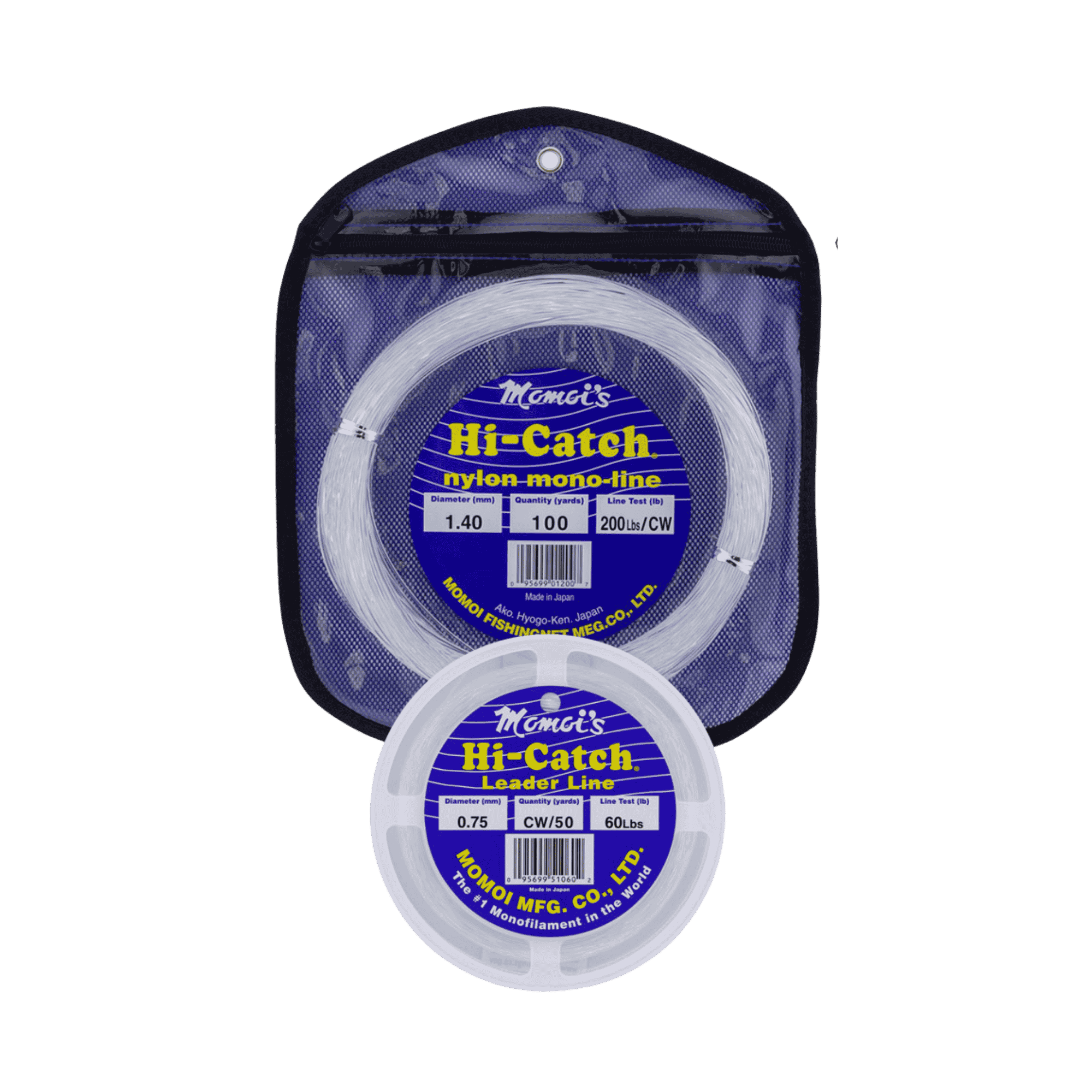
- Fluorocarbon leaders (50–100 lb): Low visibility and high abrasion resistance, commonly used for tuna, mahi, and billfish.
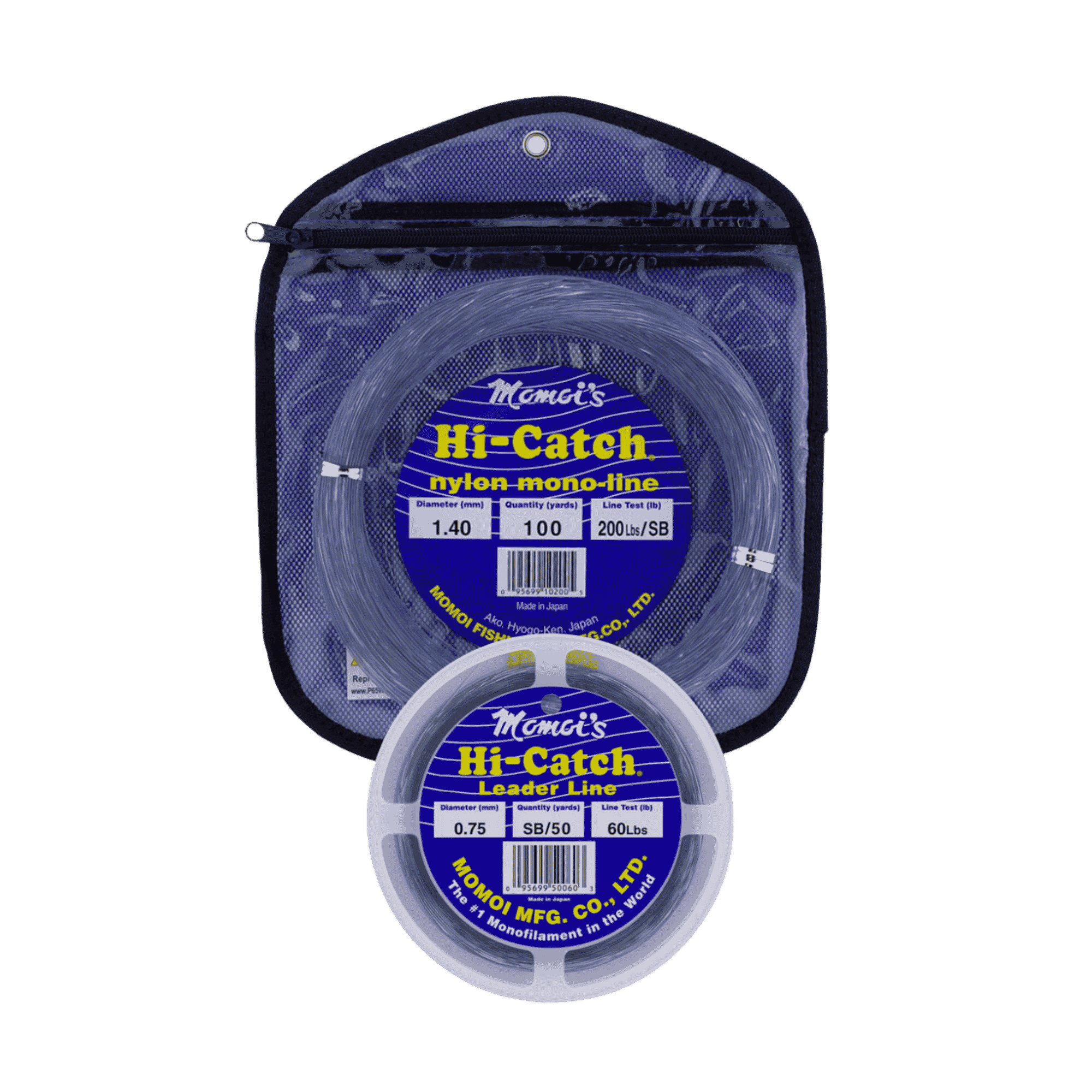
- Monofilament leaders (50–80 lb): Added stretch to absorb shock from strikes and long runs, often used in slower trolling or live bait setups.
- Wire leaders (30–100 lb): Essential for toothy species like wahoo, typically used in short bite sections ahead of plugs or skirted lures.
- Top-shot leaders: A longer section of mono or fluorocarbon (often ~50–100+ ft) connected to braided mainline, combining braid capacity with added stretch and abrasion resistance near the working end.
Example setups include fluorocarbon leaders for tuna on plugs and wire bite sections for high-speed wahoo trolling rigs.
Rigging Tools & Accessories
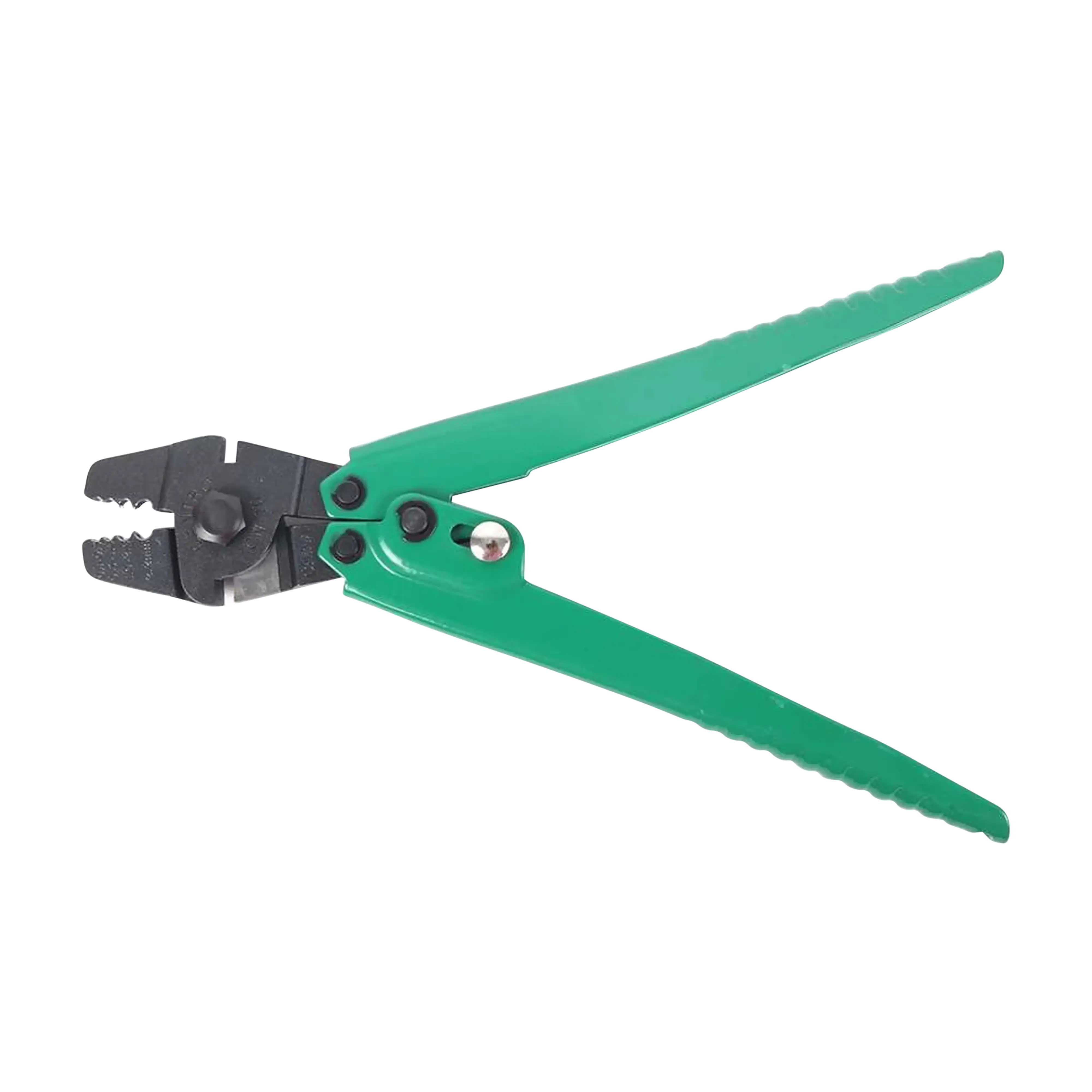
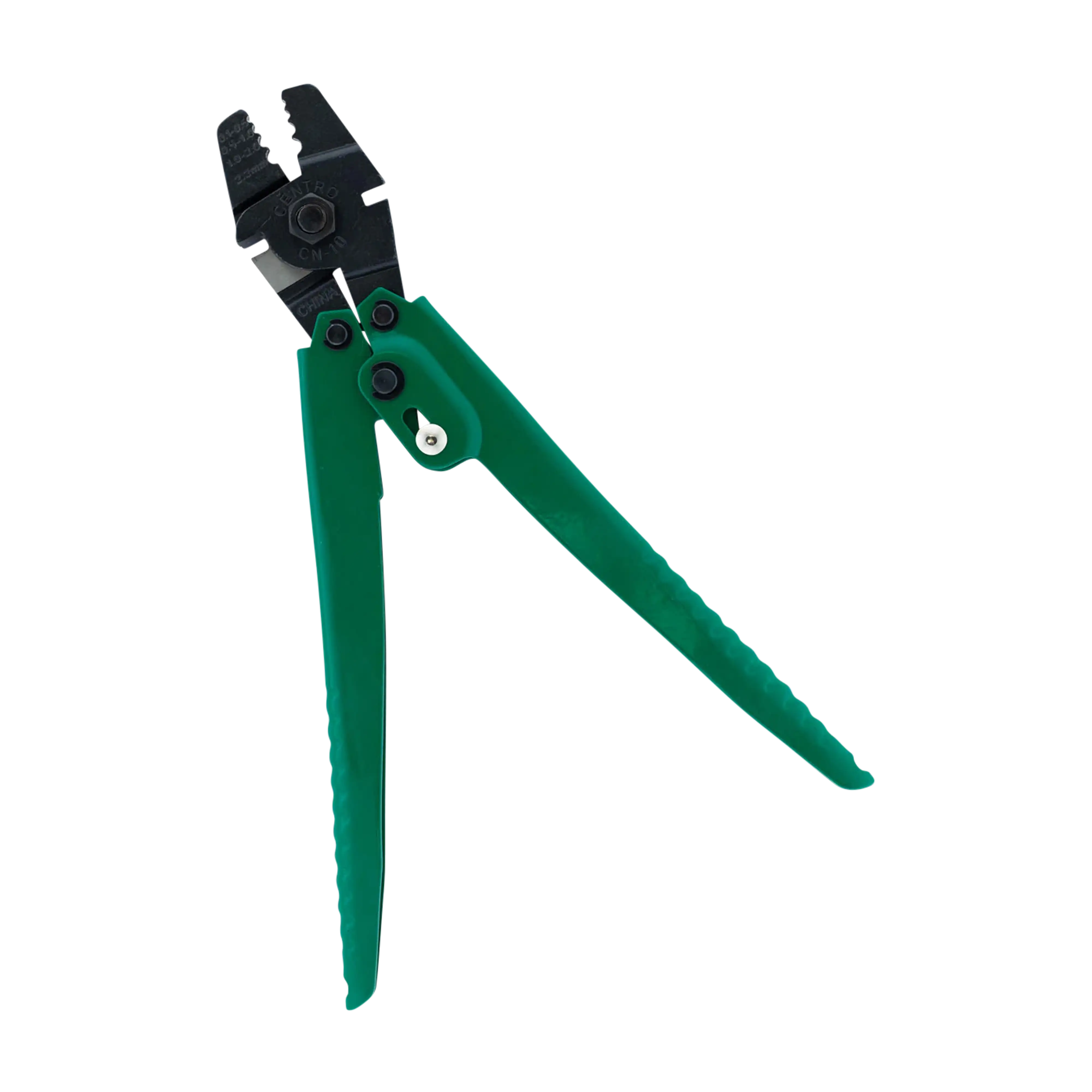
Offshore trolling requires heavy-duty tools capable of handling thick mono, fluorocarbon, and wire without failure. Essential tools include crimpers, split-ring pliers, heavy-duty cutters, and needle-nose pliers, all built with corrosion-resistant materials for saltwater durability and high-leverage use under load. These tools are used to build leaders, attach hooks, and adjust rigs efficiently in offshore conditions.
Many anglers also maintain a dedicated rigging station onboard, keeping tools, tackle trays, and leader materials organized for fast repairs and lure changes during active trolling windows. This becomes especially important when working with multi-hook rigs, wire sections, or weighted systems where precision directly affects performance and reliability.
Rigging Components (Hardware & Connection Pieces)
Offshore trolling rigs rely on a set of small but critical components that form secure, repeatable connections between line, leaders, hooks, and lures. These components are typically assembled using crimped connections or loop systems and must withstand sustained pressure and saltwater exposure.
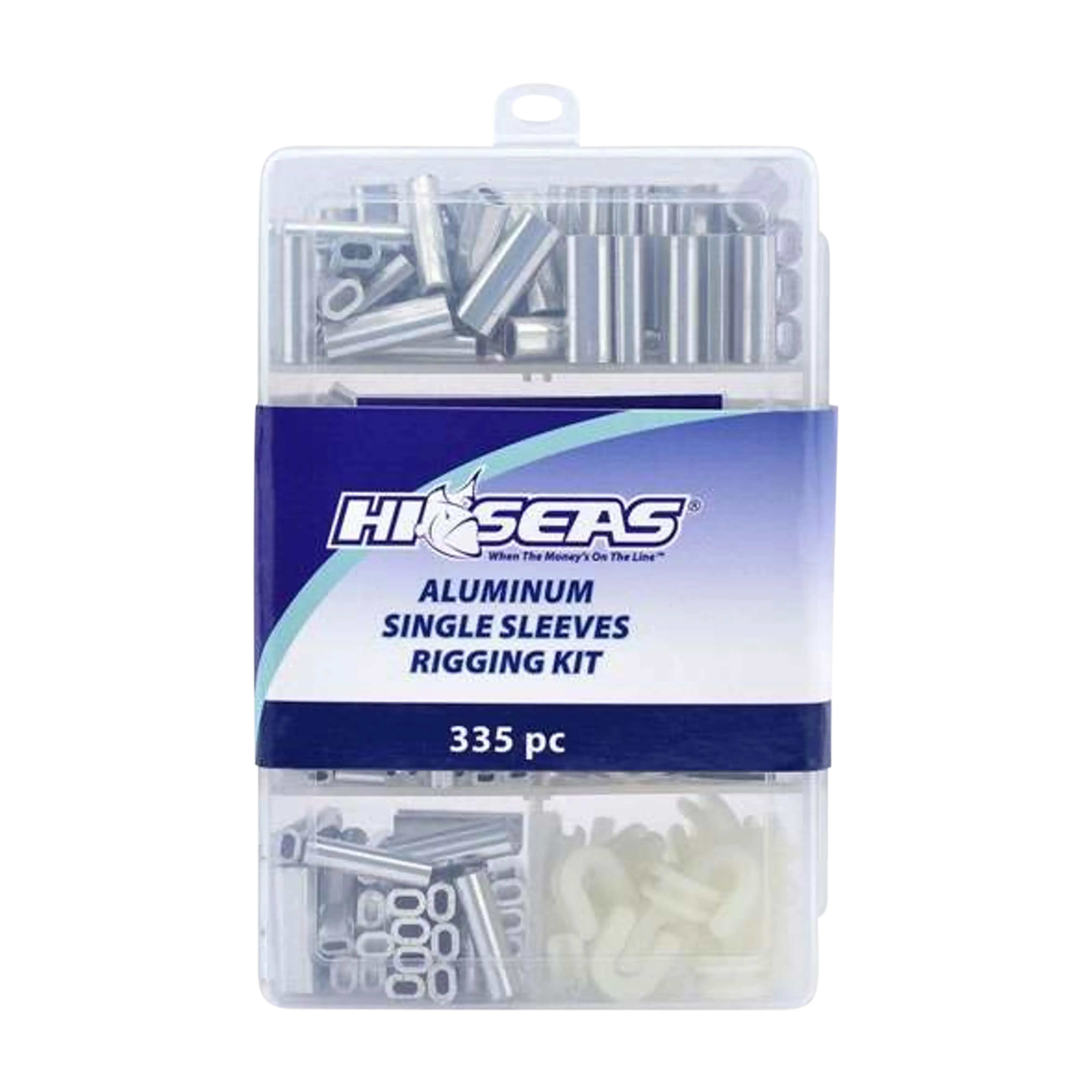
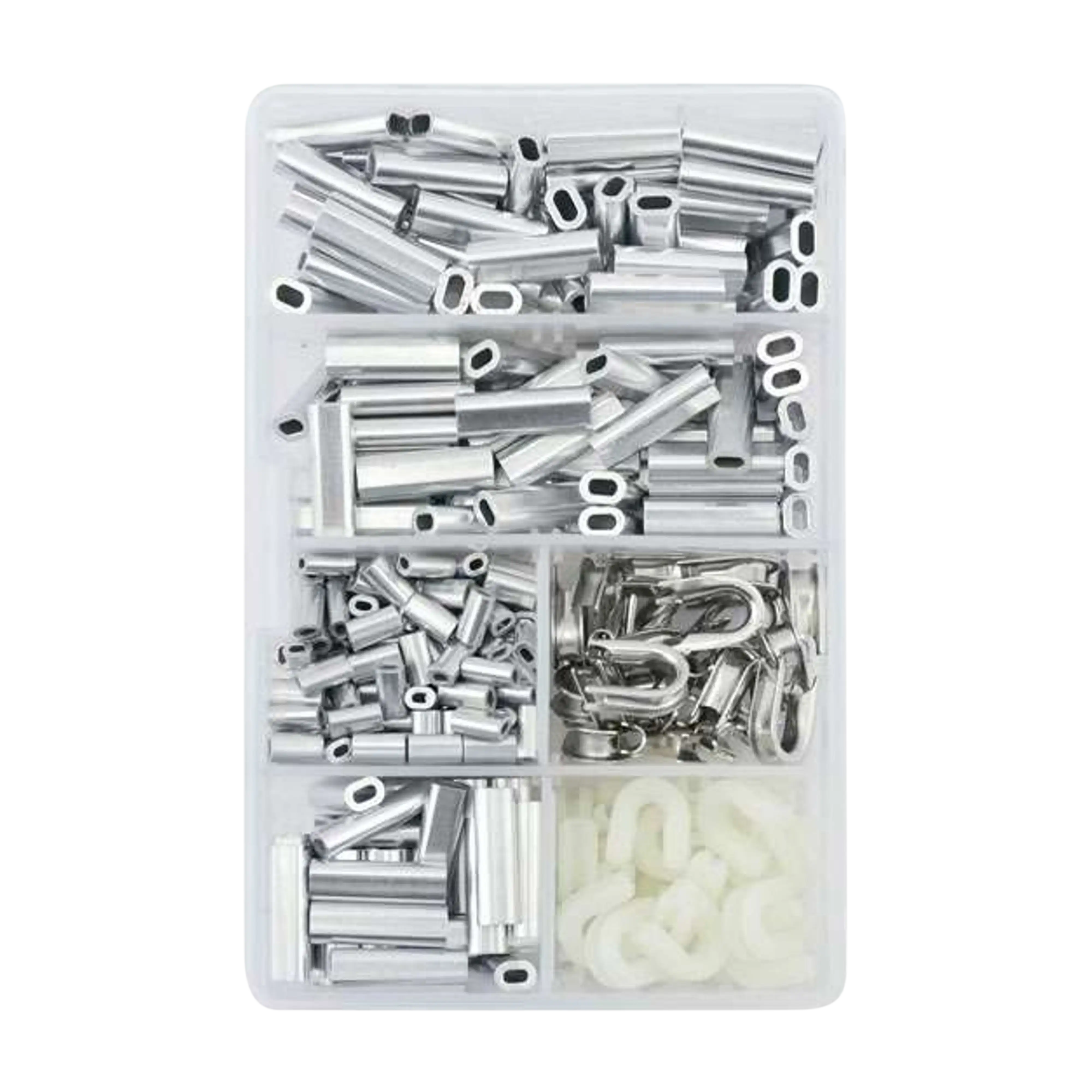
- Crimp sleeves (aluminum or copper): Used to secure heavy mono, fluorocarbon, or wire leaders; must be matched precisely to leader diameter for proper strength.
- Crimping tools: Heavy-duty calibrated tools designed to compress sleeves without cutting or weakening leader material.
- Swivels (ball bearing or heavy-duty barrel): Reduce line twist and maintain smooth lure rotation under load.
- Split rings: Heavy-gauge connectors used on plugs and hard baits for secure hook attachment.
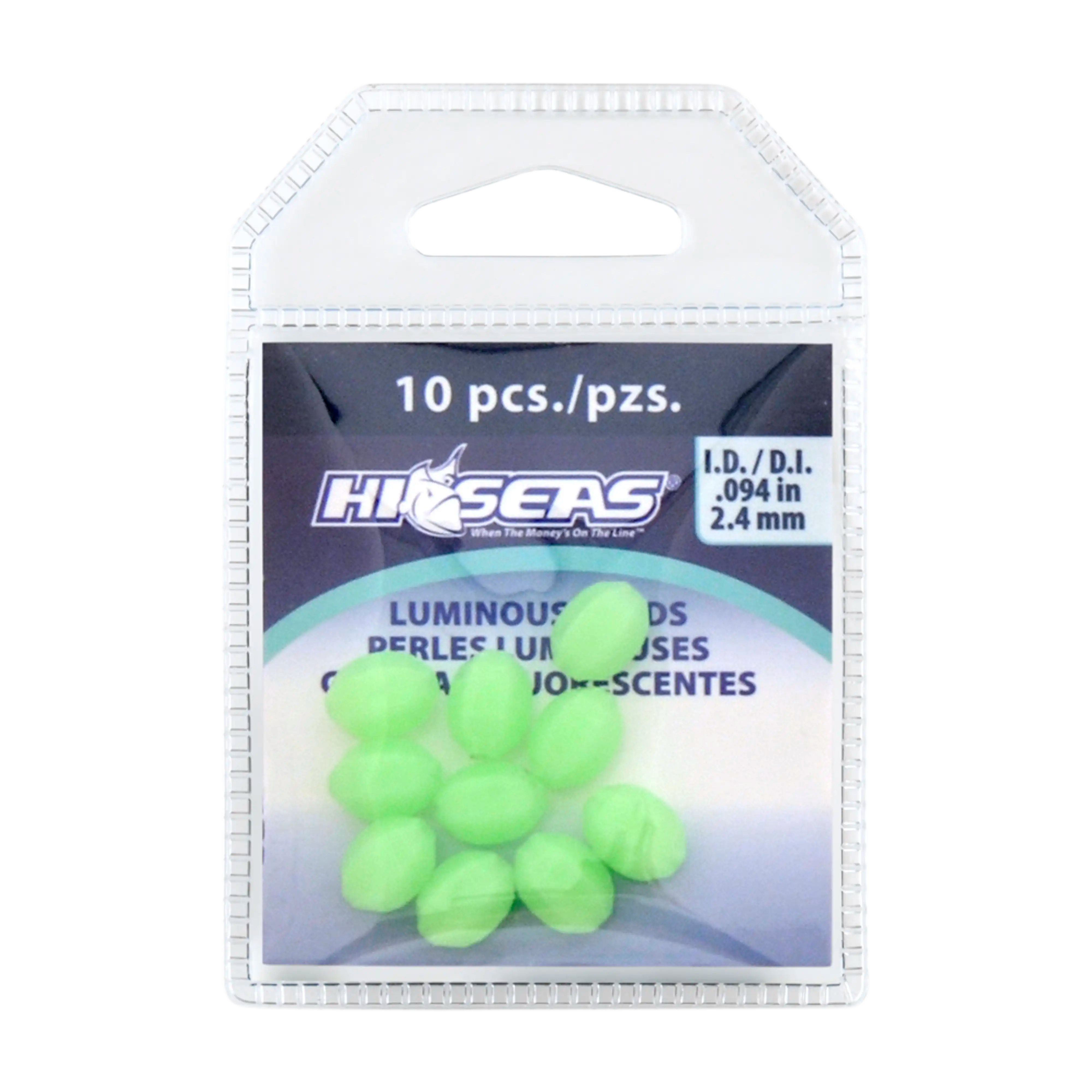
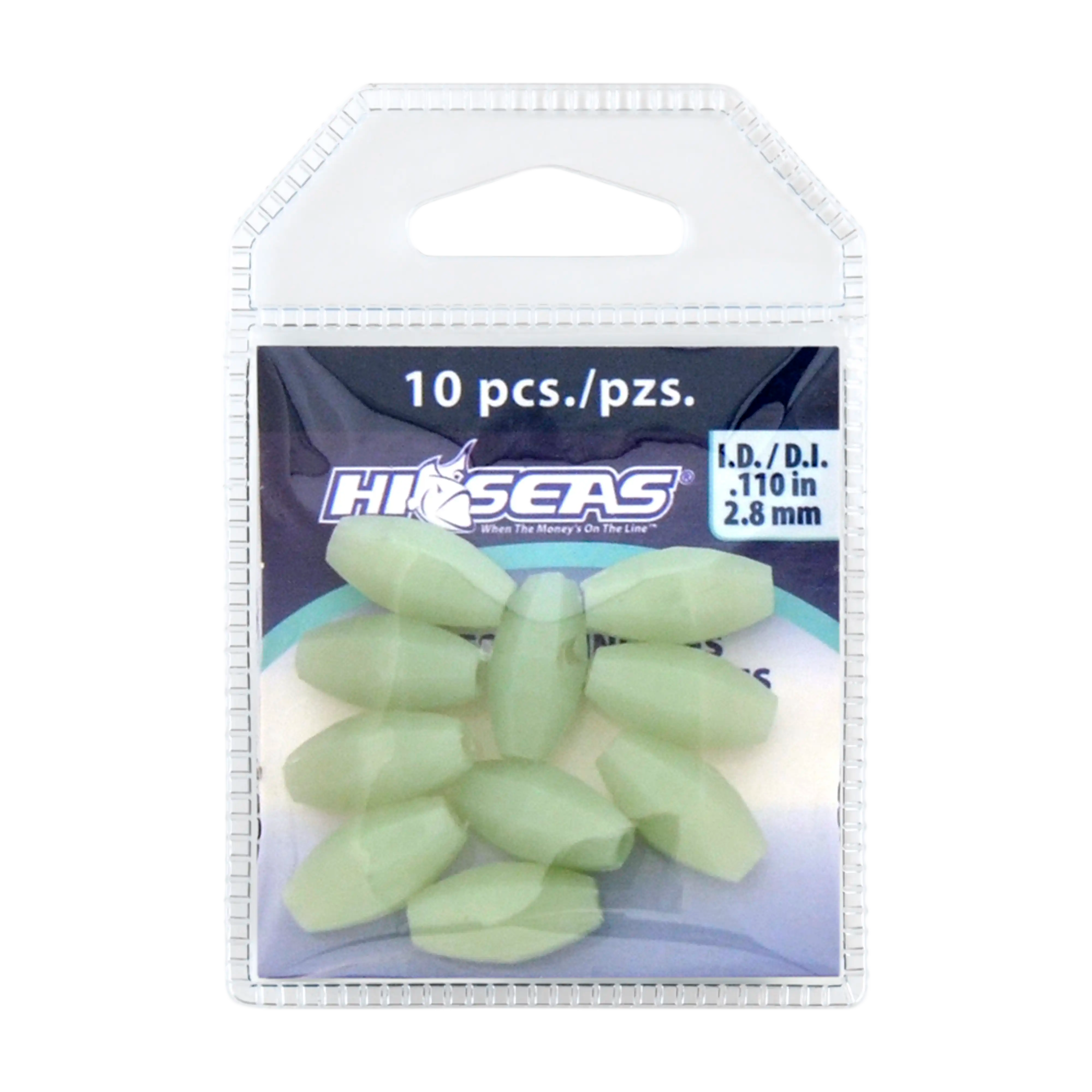
- Beads & chafe gear: Protect knots, crimps, and leader sections from abrasion under pressure.
- Solid rings / welded rings: High-strength connection points used in heavy offshore rigs for maximum reliability.
- Heavy-duty snaps (select use): Occasionally used for quick lure changes in specific trolling setups, though less common in big-game applications.
These components are selected based on leader size, trolling speed, and target species. Weak or low-quality hardware is often the first point of failure in offshore rigs.
Key Takeaways
- Terminal tackle directly impacts hook-ups, lure performance, and fish retention offshore.
- Leaders: Fluorocarbon for stealth, mono for stretch, wire for toothy species.
- Top-shot leaders combine braid backing with mono/fluoro for added shock absorption and abrasion resistance.
- Rigging components (crimps, swivels, rings, beads) are essential for secure, repeatable offshore systems.
Terminal Tackle & Rigging Tools
Terminal tackle is the connection point between rods, reels, and lures, and it plays a critical role in how effectively an offshore spread performs. Proper hooks, leaders, rigging hardware, and tools ensure lures track correctly, hooks set efficiently, and gear withstands sudden strikes, long runs, and abrasive saltwater conditions. When targeting fast or toothy pelagics like tuna, wahoo, mahi, and billfish, terminal setup is just as important as the lure itself for consistent hook-ups and fish retention.
Hooks
Hooks directly influence hook-up rates, lure balance, and overall spread performance, and must be matched to lure style and target species. Offshore trolling commonly uses:
- J-style hooks: Standard for single-hook plugs, offering reliable penetration and general-purpose use.
- Circle hooks: Primarily used with live or natural bait to improve hook retention and reduce deep hooking.
- Double hooks: Common on skirted lures and large plugs, improving balance and hookup probability.
- Treble hooks: Used on some bait rigs and hard-body plugs but less common offshore due to tangling and rigging limitations.
Hooks are typically made from high-carbon steel with corrosion-resistant finishes such as black nickel or tin to maintain strength and sharpness in saltwater. Sizes generally range from 4/0–10/0 for single hooks and 3/0–8/0 for doubles, depending on lure size and target species.
Leaders
Leaders connect the mainline to the lure, providing abrasion resistance, stealth, and shock absorption depending on material choice and setup.
- Fluorocarbon leaders (50–100 lb): Low visibility and high abrasion resistance, commonly used for tuna, mahi, and billfish.
- Monofilament leaders (50–80 lb): Added stretch to absorb shock from strikes and long runs, often used in slower trolling or live bait setups.
- Wire leaders (30–100 lb): Essential for toothy species like wahoo, typically used in short bite sections ahead of plugs or skirted lures.
- Top-shot leaders: A longer section of mono or fluorocarbon (often ~50–100+ ft) connected to braided mainline, combining braid capacity with added stretch and abrasion resistance near the working end.
Example setups include fluorocarbon leaders for tuna on plugs and wire bite sections for high-speed wahoo trolling rigs.
Rigging Tools & Accessories
Offshore trolling requires heavy-duty tools capable of handling thick mono, fluorocarbon, and wire without failure. Essential tools include crimpers, split-ring pliers, heavy-duty cutters, and needle-nose pliers, all built with corrosion-resistant materials for saltwater durability and high-leverage use under load. These tools are used to build leaders, attach hooks, and adjust rigs efficiently in offshore conditions.
Many anglers also maintain a dedicated rigging station onboard, keeping tools, tackle trays, and leader materials organized for fast repairs and lure changes during active trolling windows. This becomes especially important when working with multi-hook rigs, wire sections, or weighted systems where precision directly affects performance and reliability.
Rigging Components (Hardware & Connection Pieces)
Offshore trolling rigs rely on a set of small but critical components that form secure, repeatable connections between line, leaders, hooks, and lures. These components are typically assembled using crimped connections or loop systems and must withstand sustained pressure and saltwater exposure.
- Crimp sleeves (aluminum or copper): Used to secure heavy mono, fluorocarbon, or wire leaders; must be matched precisely to leader diameter for proper strength.
- Crimping tools: Heavy-duty calibrated tools designed to compress sleeves without cutting or weakening leader material.
- Swivels (ball bearing or heavy-duty barrel): Reduce line twist and maintain smooth lure rotation under load.
- Split rings: Heavy-gauge connectors used on plugs and hard baits for secure hook attachment.
- Beads & chafe gear: Protect knots, crimps, and leader sections from abrasion under pressure.
- Solid rings / welded rings: High-strength connection points used in heavy offshore rigs for maximum reliability.
- Heavy-duty snaps (select use): Occasionally used for quick lure changes in specific trolling setups, though less common in big-game applications.
These components are selected based on leader size, trolling speed, and target species. Weak or low-quality hardware is often the first point of failure in offshore rigs.
Key Takeaways
- Terminal tackle directly impacts hook-ups, lure performance, and fish retention offshore.
- Leaders: Fluorocarbon for stealth, mono for stretch, wire for toothy species.
- Top-shot leaders combine braid backing with mono/fluoro for added shock absorption and abrasion resistance.
- Rigging components (crimps, swivels, rings, beads) are essential for secure, repeatable offshore systems.
Offshore Trolling Terminal Tackle & Rigging


Tackle Storage & Boat Accessories
Offshore trolling puts constant stress on gear from saltwater, sun, vibration, and boat movement, so organization directly impacts efficiency, safety, and how long your equipment lasts. A well-planned system keeps lures, leaders, hooks, and rigs protected, easy to access, and ready to deploy, which becomes especially important during short bite windows where fast resets and clean transitions matter.
Both tackle storage and boat setup play a role in how smoothly a trolling spread runs. Storage systems keep gear organized and protected before it hits the water, while boat accessories control how that gear performs once deployed. Together, they reduce tangles, speed up lure changes, and help maintain a consistent, controlled presentation across the entire spread.
Tackle Storage
Tackle storage is about protecting gear and keeping everything organized so it can be deployed quickly and efficiently when needed. Offshore conditions are harsh on equipment, so storage systems must handle salt, moisture, impact, and constant motion while preventing damage to expensive lures, leaders, and rigs.
Waterproof tackle boxes, leader wallets, and dedicated lure bags form the foundation of offshore storage. These systems use compartments, dividers, and padded sections to separate skirted lures, plugs, rigged baits, and terminal tackle so hooks don’t tangle or damage other gear. Many anglers also use labeling or color-coding to quickly identify lure types, leader strengths, and pre-rigged setups when managing a full spread. This keeps gear rotation efficient and reduces mistakes when switching tactics on the water.
Boat Accessories
Boat accessories control how your trolling spread actually performs once gear is in the water. Rod positioning, line spacing, and deck layout all influence how cleanly lures run and how efficiently the crew can respond during strikes or resets.
Rod holders and outriggers are key for maintaining spread geometry, keeping lines separated and preventing crossed presentations. Dedicated storage areas for leaders, rigs, and tools keep essential gear within reach for fast changes. Deck hardware such as cleats, grab handles, and tie-down points improves safety and stability when moving around the boat in offshore conditions, especially when fighting fish or adjusting gear under load. A properly rigged cockpit allows anglers to focus on fishing rather than managing clutter or tangles.
Key Takeaways
- Offshore trolling efficiency depends on both gear storage and boat setup working together.
- Waterproof tackle storage protects lures, leaders, and rigs from salt, moisture, and impact damage.
- Compartments, dividers, and labeling systems reduce tangles and speed up lure selection.
- Rod holders and outriggers maintain proper spread spacing and prevent line crossing.
- Deck hardware improves safety and control in rough offshore conditions.
- A well-organized boat setup reduces downtime and improves overall trolling consistency.
Tackle Storage & Boat Accessories
Offshore trolling puts constant stress on gear from saltwater, sun, vibration, and boat movement, so organization directly impacts efficiency, safety, and how long your equipment lasts. A well-planned system keeps lures, leaders, hooks, and rigs protected, easy to access, and ready to deploy, which becomes especially important during short bite windows where fast resets and clean transitions matter.
Both tackle storage and boat setup play a role in how smoothly a trolling spread runs. Storage systems keep gear organized and protected before it hits the water, while boat accessories control how that gear performs once deployed. Together, they reduce tangles, speed up lure changes, and help maintain a consistent, controlled presentation across the entire spread.
Tackle Storage
Tackle storage is about protecting gear and keeping everything organized so it can be deployed quickly and efficiently when needed. Offshore conditions are harsh on equipment, so storage systems must handle salt, moisture, impact, and constant motion while preventing damage to expensive lures, leaders, and rigs.
Waterproof tackle boxes, leader wallets, and dedicated lure bags form the foundation of offshore storage. These systems use compartments, dividers, and padded sections to separate skirted lures, plugs, rigged baits, and terminal tackle so hooks don’t tangle or damage other gear. Many anglers also use labeling or color-coding to quickly identify lure types, leader strengths, and pre-rigged setups when managing a full spread. This keeps gear rotation efficient and reduces mistakes when switching tactics on the water.
Boat Accessories
Boat accessories control how your trolling spread actually performs once gear is in the water. Rod positioning, line spacing, and deck layout all influence how cleanly lures run and how efficiently the crew can respond during strikes or resets.
Rod holders and outriggers are key for maintaining spread geometry, keeping lines separated and preventing crossed presentations. Dedicated storage areas for leaders, rigs, and tools keep essential gear within reach for fast changes. Deck hardware such as cleats, grab handles, and tie-down points improves safety and stability when moving around the boat in offshore conditions, especially when fighting fish or adjusting gear under load. A properly rigged cockpit allows anglers to focus on fishing rather than managing clutter or tangles.
Key Takeaways
- Offshore trolling efficiency depends on both gear storage and boat setup working together.
- Waterproof tackle storage protects lures, leaders, and rigs from salt, moisture, and impact damage.
- Compartments, dividers, and labeling systems reduce tangles and speed up lure selection.
- Rod holders and outriggers maintain proper spread spacing and prevent line crossing.
- Deck hardware improves safety and control in rough offshore conditions.
- A well-organized boat setup reduces downtime and improves overall trolling consistency.
Offshore Trolling Tackle Storage & Accessories
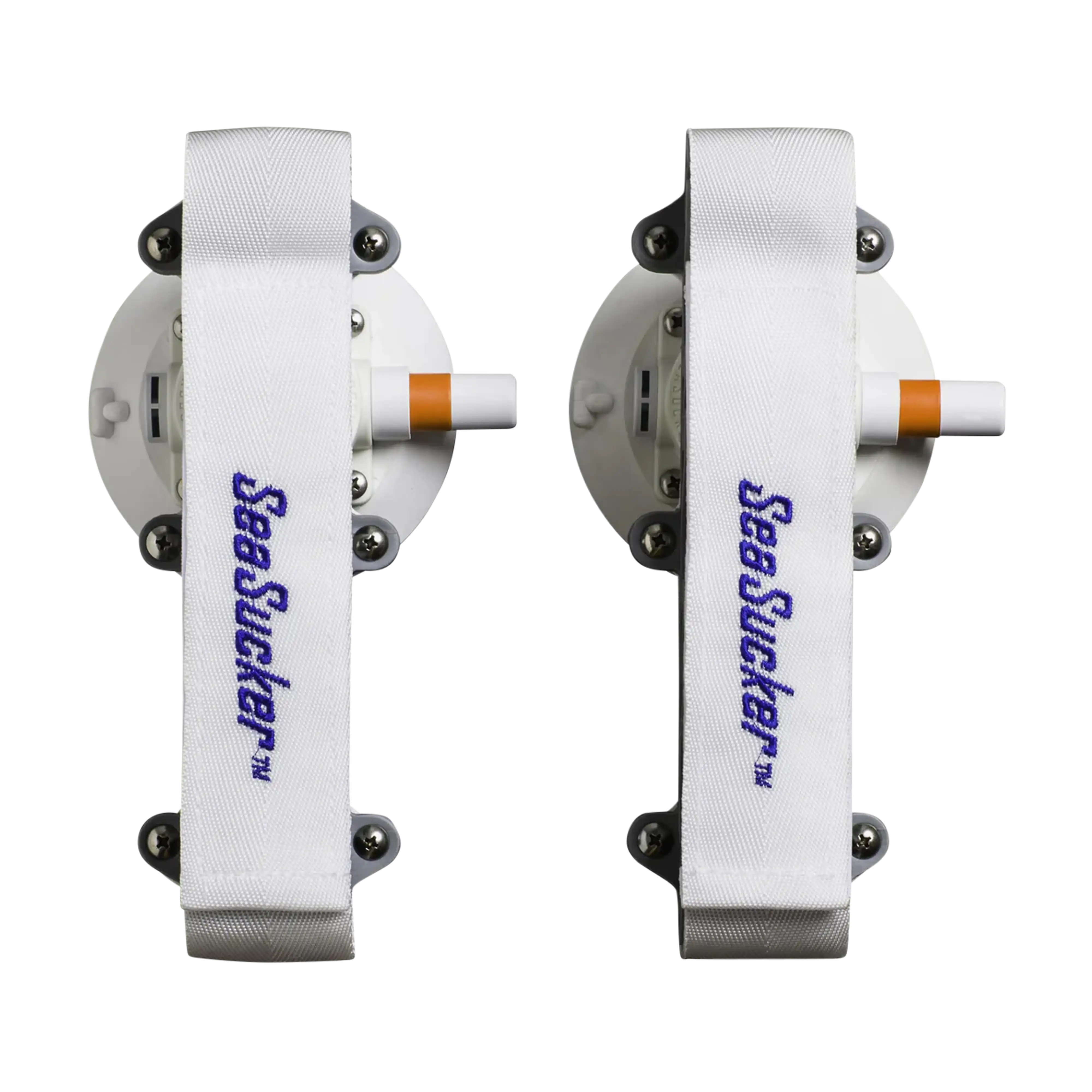

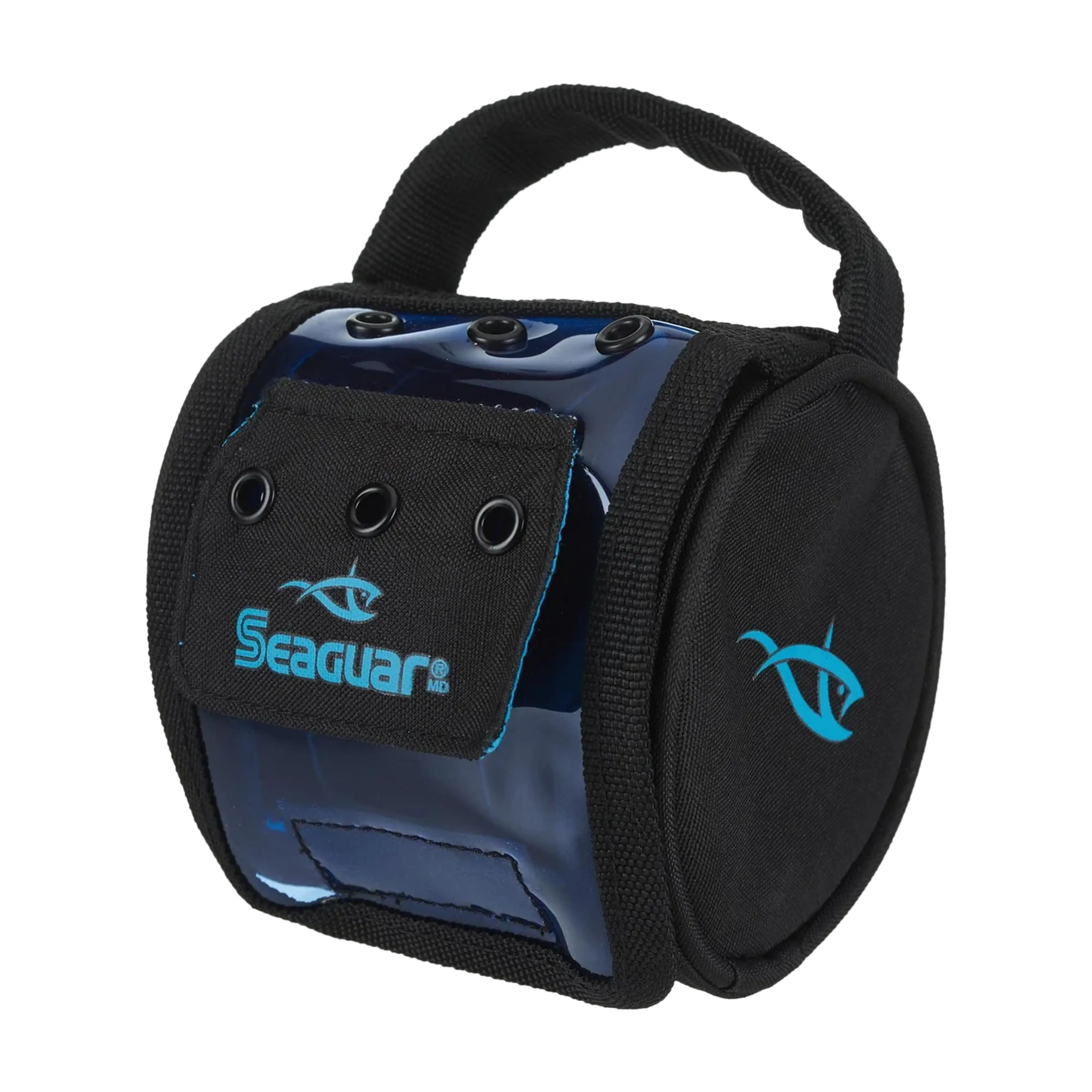
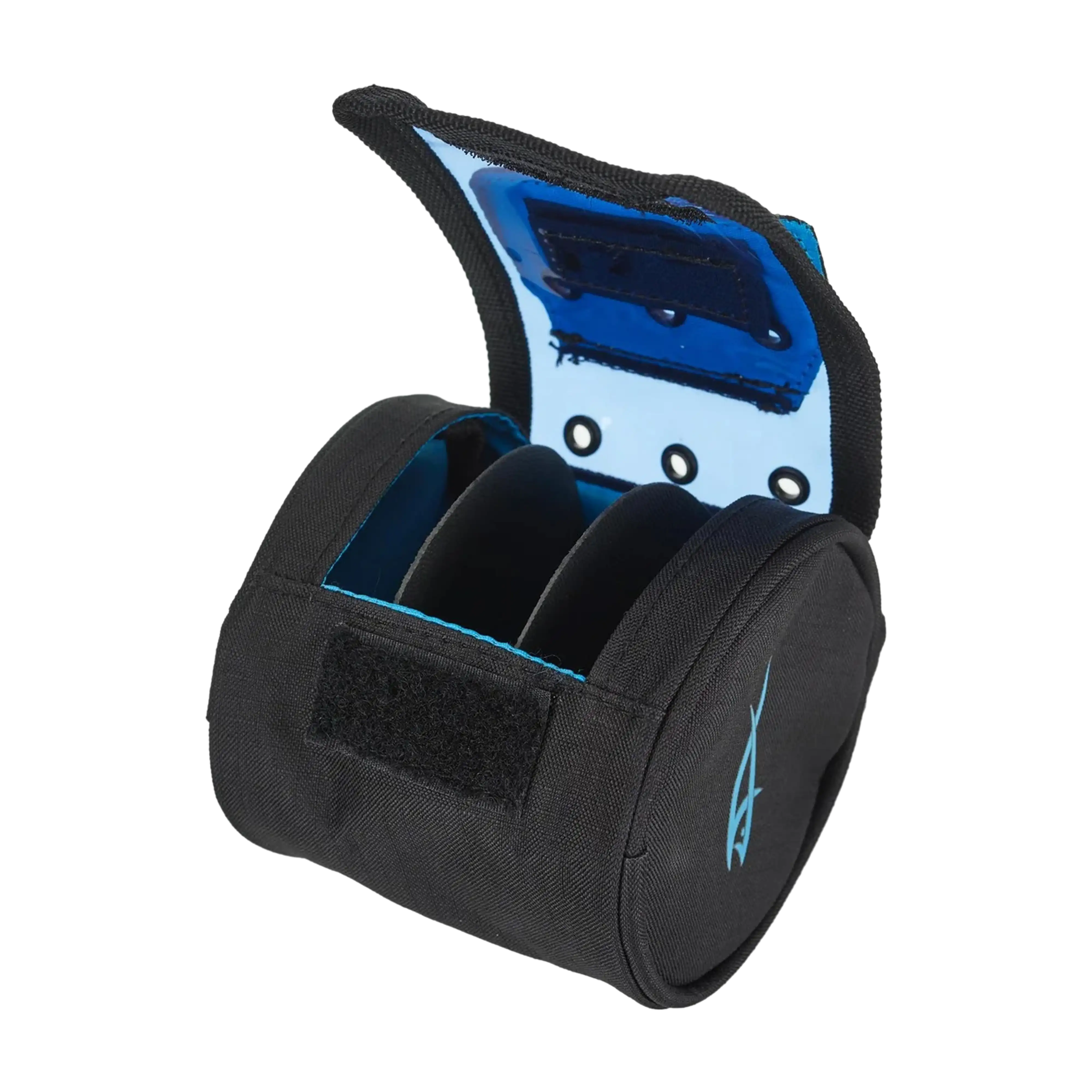
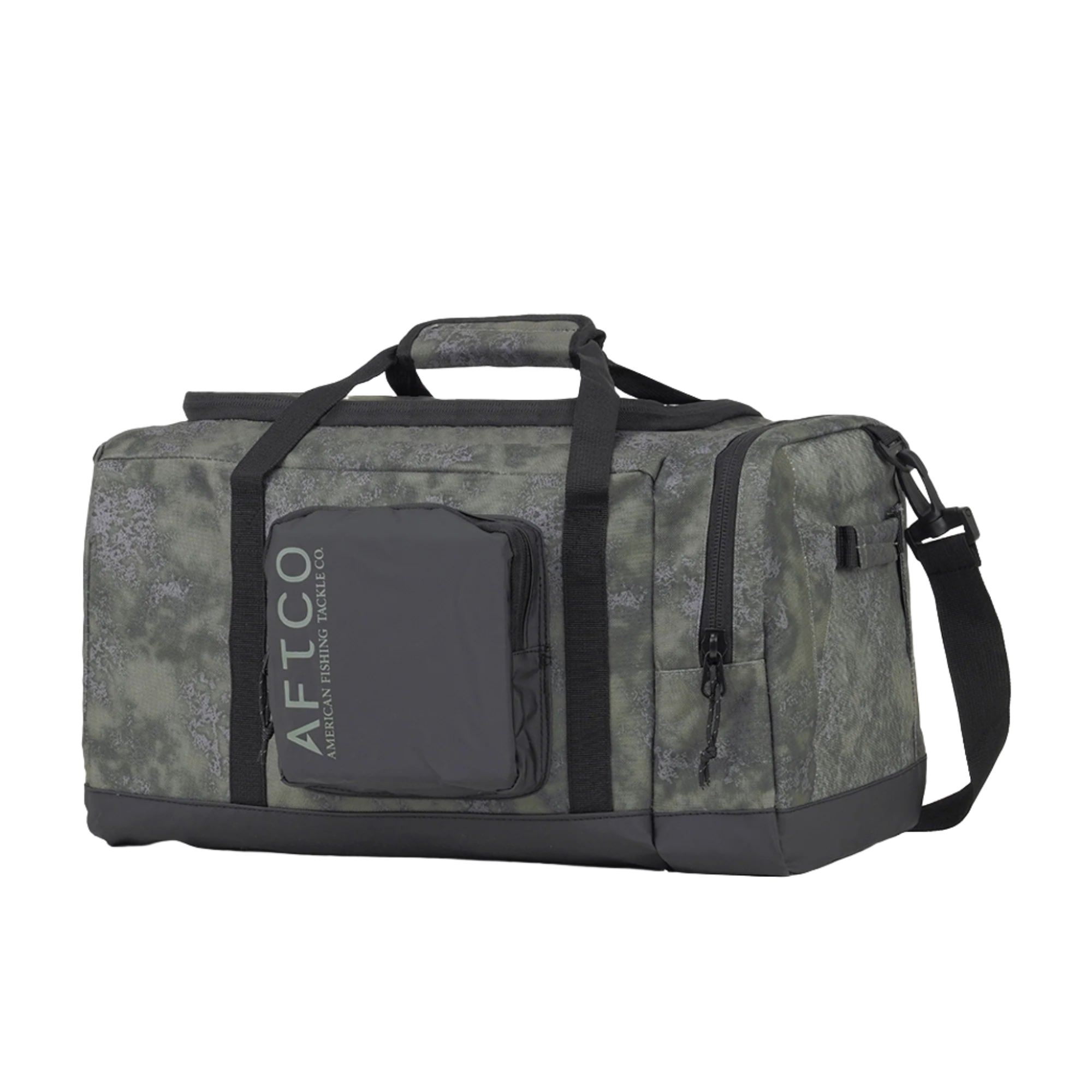
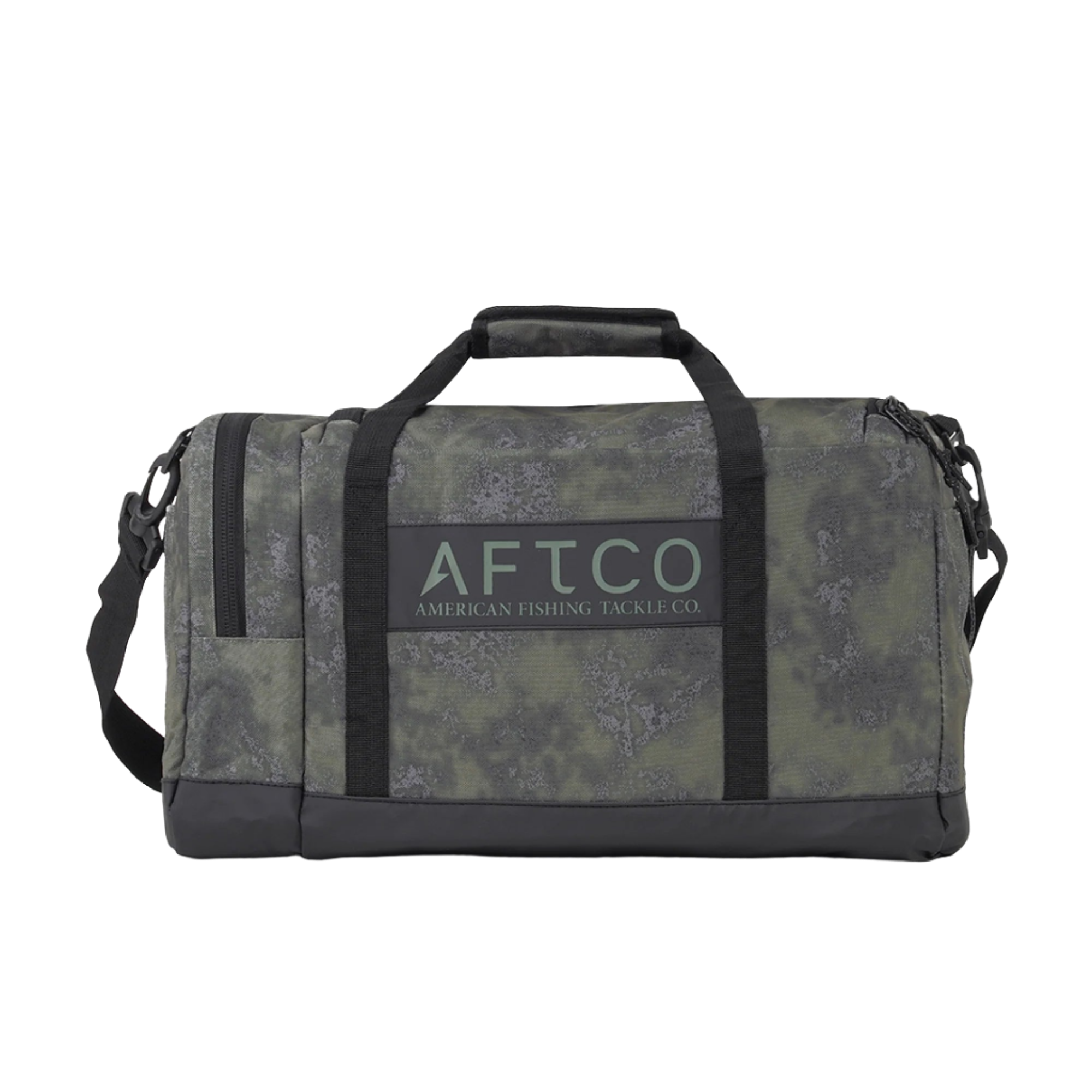
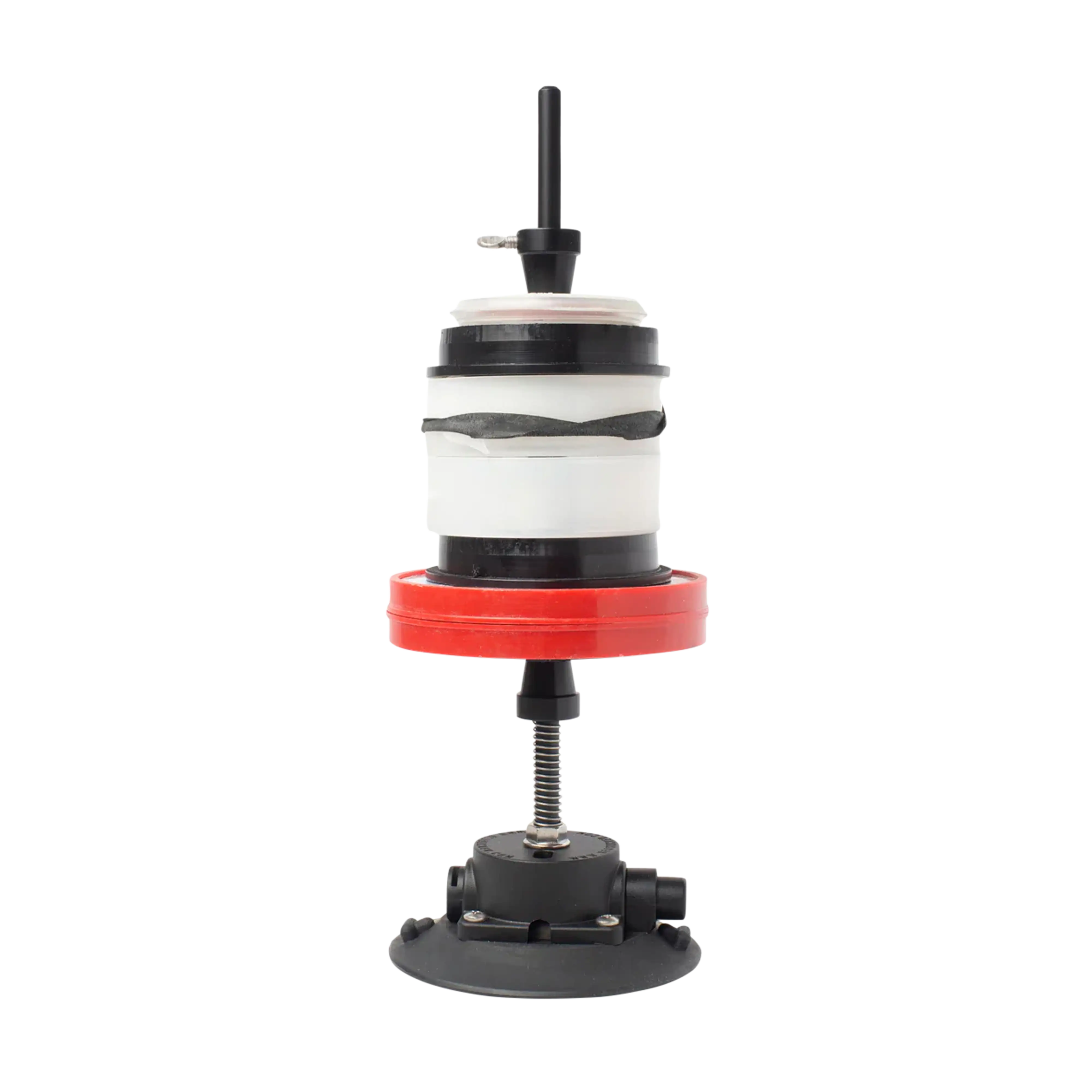

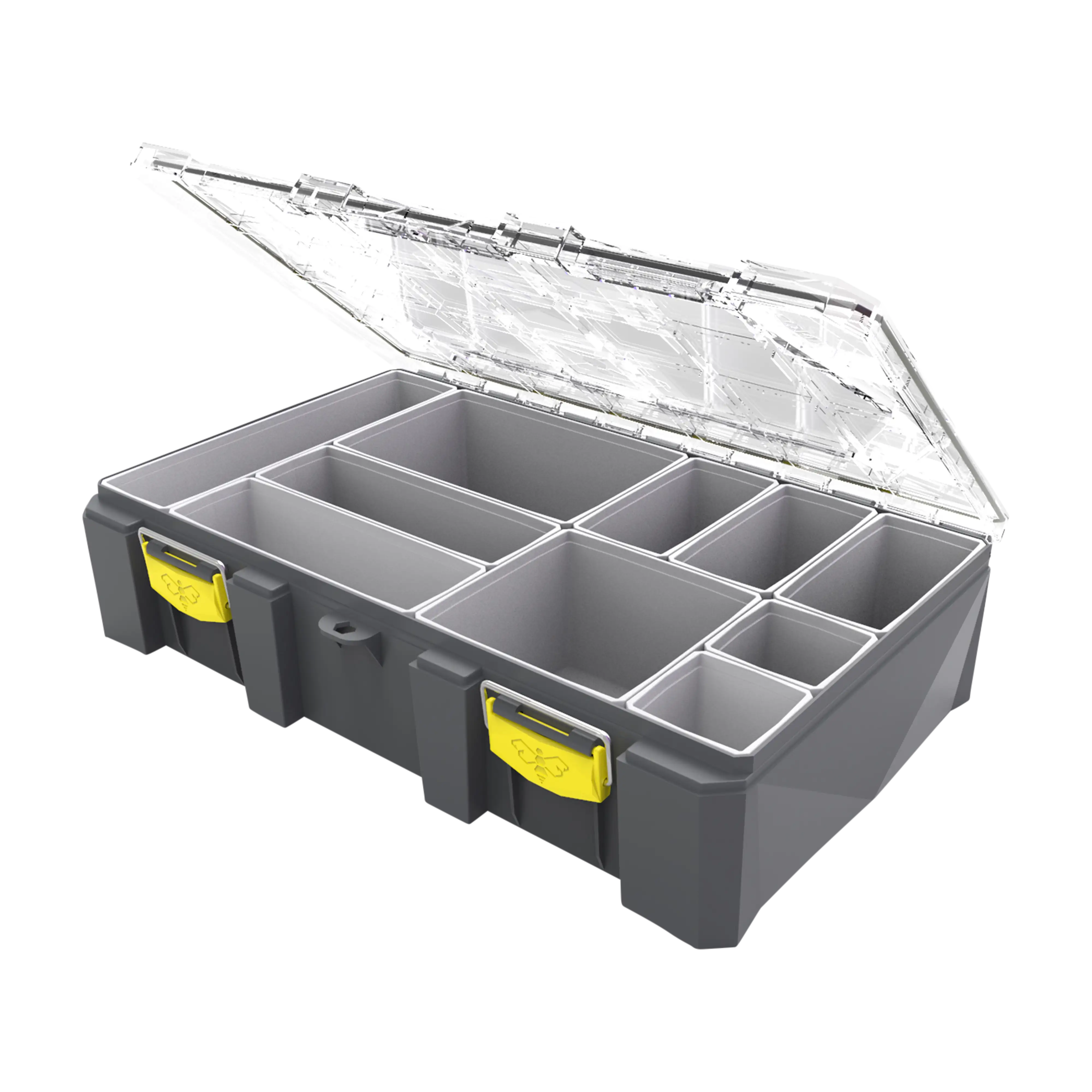
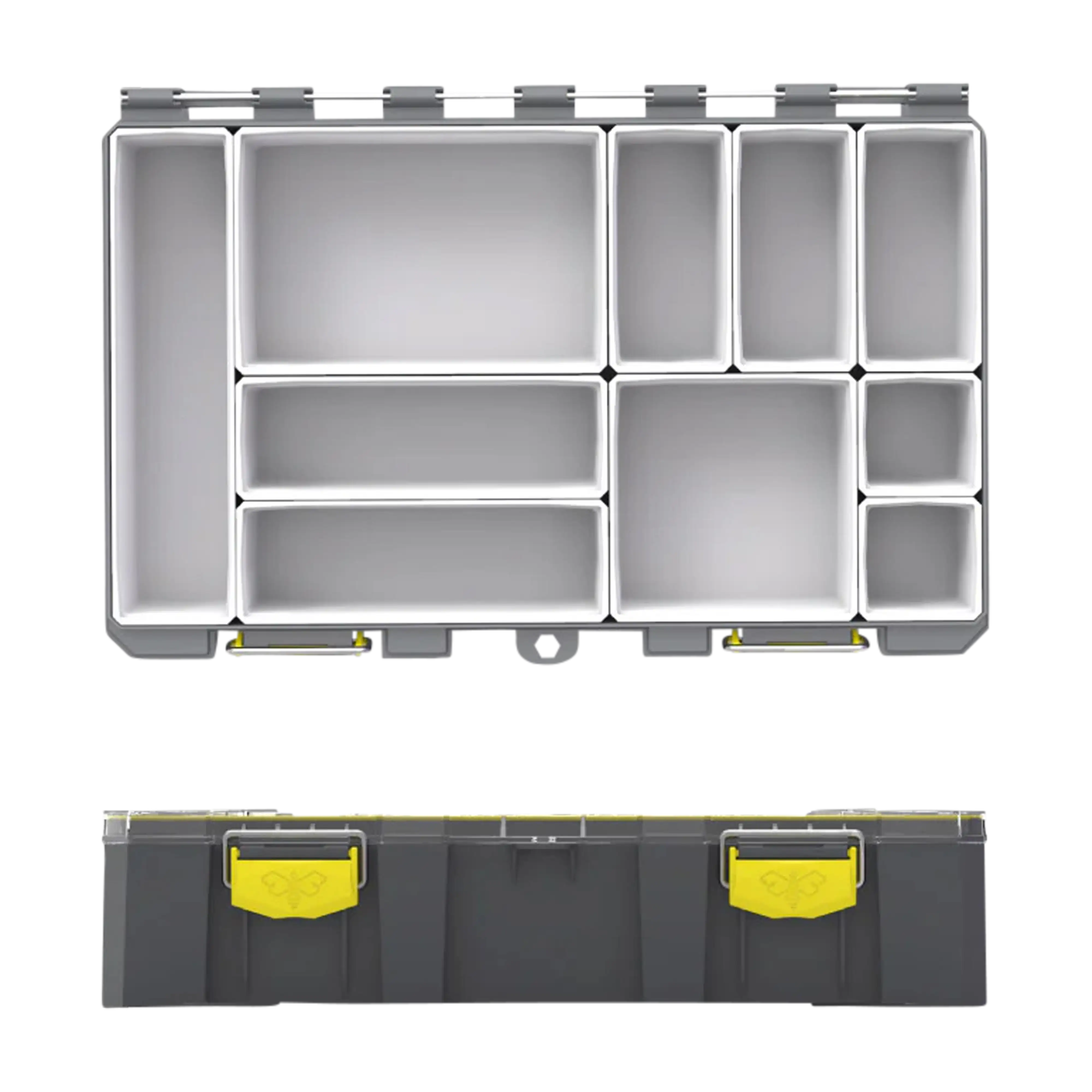
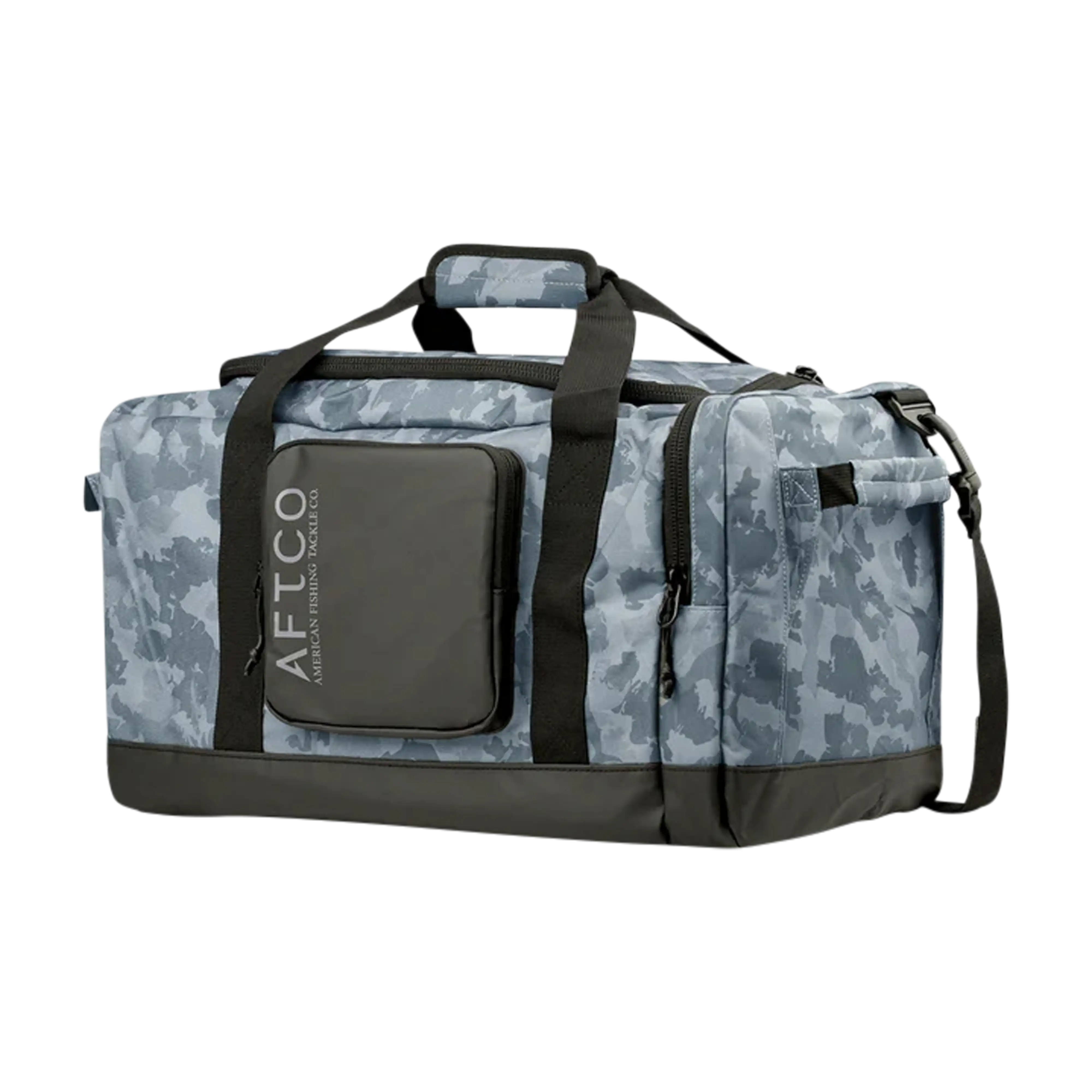
Offshore Trolling Tips & Techniques
Successful offshore trolling is all about refinement and attention to detail. Small adjustments to speed, spread, lure type, and placement often determine whether you get a strike or miss the fish entirely. Observing fish behavior, monitoring gear, and reacting to changing conditions on the water are crucial for consistent success.
Tip 1: Stagger Your Spread
Running lures at varying distances behind the boat and at different heights helps prevent line tangles and presents multiple profiles to fish simultaneously. Place short, aggressive lures closer to the boat for quick, visible action, while running longer, subtler plugs or skirted baits farther back to cover additional water and depth. Using outriggers or varying downrigger depth can further spread lines and keep lures from crossing paths.
Key Takeaways
- Stagger lures in distance and height to reduce tangles and cover more water
- Place short, aggressive baits near the boat and longer, subtler baits farther back
- Use outriggers or downriggers to maximize line separation and depth coverage
- Multiple lure profiles increase strike chances across species and water columns
Tip 2: Dial in Trolling Speed
Each lure and bait type has a “sweet spot” speed where it runs straight, creates the intended action, and mimics prey. Observing lure action carefully and adjusting boat speed in small increments can make a huge difference. For instance, cedar plugs may require 6–8 knots to swim properly, while skirted lures often perform best slightly slower. Adjusting speed to the lure, water conditions, and species being targeted ensures your spread runs clean and triggers more reaction strikes.
Key Takeaways
- Let each lure’s action dictate boat speed for proper presentation
- Small, incremental speed changes can dramatically improve strike rates
- Different lure types often require slightly different speeds for maximum effectiveness
- Maintain a steady speed once optimal lure action is achieved to keep fish hooked longer
Tip 3: Watch Lure Trolling Distances
Understanding and managing trolling distances is key to keeping lures separated, reducing tangles, and presenting multiple profiles to fish across the water column. Different positions in your spread serve different purposes depending on boat size, outrigger setup, and target species.
Here are some recommendations (you mileage may vary):
- Close lines / flat lines: Set just outside the immediate wake, around 25–35 ft behind the boat, to run lures cleanly without turbulence from the props. Ideal for quick, reactive strikes from aggressive fish.
- Short rigger positions: Positioned 50–60+ ft behind the boat, depending on outrigger length and lure type. These lines help fill the mid-spread and present slightly subtler or larger lures.
- Long lines / outriggers: Extend 75–125+ ft back, covering more water and reducing the chance of line crossing. Great for larger lures or targeting fish holding deeper or farther from the boat.
- Deep and extended spreads: On large sportfishing boats, ultra-long lines of 150–250+ ft may be used for big pelagic species like tuna or billfish, maximizing coverage over wide areas.
Tip 4: Watch Conditions Constantly
Birds feeding on bait, surface activity, temperature breaks, current lines, and sonar-marked bait schools all provide critical clues to where fish are holding. Adjust your spread, lure selection, and trolling depth based on these observations. For example, a school of diving birds near a temperature break often signals active tuna; moving lures toward that zone can produce fast strikes. Reading conditions continuously allows you to anticipate fish behavior and reposition your spread effectively.
Key Takeaways
- Monitor birds, bait schools, and water temperature breaks to locate fish
- Adjust spread, lure type, and depth as conditions change
- Observing currents and wind patterns helps maintain an effective spread
- Being proactive with changes often results in more consistent bites
Offshore Trolling Tips & Techniques
Successful offshore trolling is all about refinement and attention to detail. Small adjustments to speed, spread, lure type, and placement often determine whether you get a strike or miss the fish entirely. Observing fish behavior, monitoring gear, and reacting to changing conditions on the water are crucial for consistent success.
Tip 1: Stagger Your Spread
Running lures at varying distances behind the boat and at different heights helps prevent line tangles and presents multiple profiles to fish simultaneously. Place short, aggressive lures closer to the boat for quick, visible action, while running longer, subtler plugs or skirted baits farther back to cover additional water and depth. Using outriggers or varying downrigger depth can further spread lines and keep lures from crossing paths.
Key Takeaways
- Stagger lures in distance and height to reduce tangles and cover more water
- Place short, aggressive baits near the boat and longer, subtler baits farther back
- Use outriggers or downriggers to maximize line separation and depth coverage
- Multiple lure profiles increase strike chances across species and water columns
Tip 2: Dial in Trolling Speed
Each lure and bait type has a “sweet spot” speed where it runs straight, creates the intended action, and mimics prey. Observing lure action carefully and adjusting boat speed in small increments can make a huge difference. For instance, cedar plugs may require 6–8 knots to swim properly, while skirted lures often perform best slightly slower. Adjusting speed to the lure, water conditions, and species being targeted ensures your spread runs clean and triggers more reaction strikes.
Key Takeaways
- Let each lure’s action dictate boat speed for proper presentation
- Small, incremental speed changes can dramatically improve strike rates
- Different lure types often require slightly different speeds for maximum effectiveness
- Maintain a steady speed once optimal lure action is achieved to keep fish hooked longer
Tip 3: Watch Lure Trolling Distances
Understanding and managing trolling distances is key to keeping lures separated, reducing tangles, and presenting multiple profiles to fish across the water column. Different positions in your spread serve different purposes depending on boat size, outrigger setup, and target species.
Here are some recommendations (you mileage may vary):
- Close lines / flat lines: Set just outside the immediate wake, around 25–35 ft behind the boat, to run lures cleanly without turbulence from the props. Ideal for quick, reactive strikes from aggressive fish.
- Short rigger positions: Positioned 50–60+ ft behind the boat, depending on outrigger length and lure type. These lines help fill the mid-spread and present slightly subtler or larger lures.
- Long lines / outriggers: Extend 75–125+ ft back, covering more water and reducing the chance of line crossing. Great for larger lures or targeting fish holding deeper or farther from the boat.
- Deep and extended spreads: On large sportfishing boats, ultra-long lines of 150–250+ ft may be used for big pelagic species like tuna or billfish, maximizing coverage over wide areas.
Tip 4: Watch Conditions Constantly
Birds feeding on bait, surface activity, temperature breaks, current lines, and sonar-marked bait schools all provide critical clues to where fish are holding. Adjust your spread, lure selection, and trolling depth based on these observations. For example, a school of diving birds near a temperature break often signals active tuna; moving lures toward that zone can produce fast strikes. Reading conditions continuously allows you to anticipate fish behavior and reposition your spread effectively.
Key Takeaways
- Monitor birds, bait schools, and water temperature breaks to locate fish
- Adjust spread, lure type, and depth as conditions change
- Observing currents and wind patterns helps maintain an effective spread
- Being proactive with changes often results in more consistent bites
Offshore Trolling
FAQ - Offshore Trolling Gear
What species can I catch offshore trolling?
Tuna, mahi, wahoo, sailfish, marlin, and other pelagic species are commonly targeted. The species you encounter depend on location, season, and water temperature, so adjusting lures and trolling techniques for each fish type increases success.
What trolling speed is best offshore?
Most offshore spreads run between 5–9 knots depending on lure type and target species. Adjusting speed slightly can optimize lure action, mimic baitfish, and trigger more strikes.
Do I need roller guides for offshore trolling?
Roller guides are recommended for heavy drag setups targeting big fish because they reduce friction and heat on the line. For lighter trolling rigs or smaller species, standard “Turbo” guides designed for saltwater are sufficient and easier to maintain.
Is braid, fluoro or mono better for offshore trolling?
Braid is ideal for backing due to its high strength and low stretch, while mono or fluorocarbon topshots and leaders provide stretch, shock absorption, and abrasion resistance. Using the right combination helps maximize lure presentation and reduces line break-offs.
How many rods should I use when offshore trolling?
You can troll anywhere from two to six rods depending on boat size, crew experience, and target species. More rods allow you to cover water and present multiple lure styles, but managing tangles and line separation becomes more important as you add rods.
What colors work best for offshore trolling lures?
Natural colors like blue-white, green-yellow, and black-purple are consistent producers in most offshore conditions. Bright patterns and high-contrast colors are effective in low-light conditions, stained water, or when fish are actively feeding.
Are two-speed reels necessary for offshore trolling?
Two-speed reels aren’t required but are very helpful for controlling big fish during long fights. High gear allows fast line retrieval, while low gear provides torque for tiring out large pelagics.
How long should leaders be when offshore trolling?
Leader length typically ranges from 6–15 feet depending on species and lure size. Longer leaders help keep lures at a natural distance from the line, reduce visibility to cautious fish, and protect against sharp teeth or abrasion.
Do I need outriggers for offshore trolling?
Outriggers are not required but can greatly improve line separation for larger spreads. They allow you to run more lines at multiple distances and reduce tangles, which is particularly useful when trolling multiple lures for different species simultaneously.
How often should I check lures while offshore trolling?
Check lures regularly, especially after striking fish, passing through weed lines, or trolling at high speeds. Keeping lures clean, properly rigged, and free of damage ensures they run correctly and maintain maximum effectiveness.
What line class should I use for offshore trolling?
Choose line based on species and rod rating. For example, 30–50 lb line for mahi or smaller tuna, 80–130 lb for marlin or big bluefin, and 50-80 lb for wahoo. Braided backing with a mono or fluorocarbon topshot provides capacity, stretch, and abrasion resistance while reducing break-offs during long fights.
Can I troll dead bait offshore?
Yes, rigged dead bait is very effective for many pelagic species like tuna and mahi. Properly rigged dead bait can mimic live prey, stay in the strike zone longer, and trigger aggressive bites when live bait isn’t available.
From the Mud Hole Journal
Further Reading
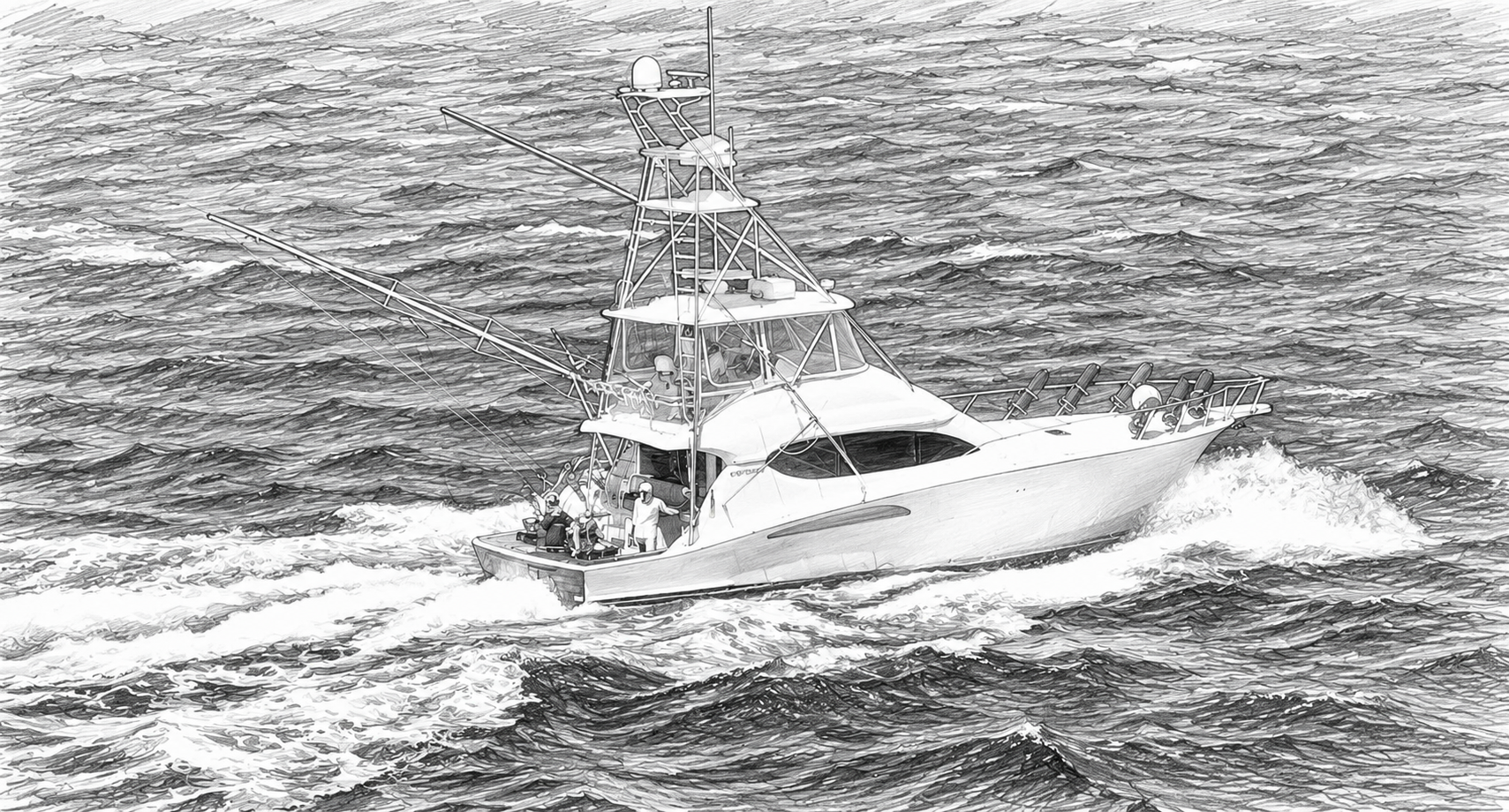
High-Speed Trolling: Covering Water and Triggering Offshore Predators
If you’re looking for more rod recommendations, reel pairings, line setups, and technique-specific advice, head back to the complete Main Gear Guide Page for the full breakdowns on your favorite te...
Further Reading
Can't get enough Offshore Trolling content? Check out the articles below!