


















If you’re looking for more rod recommendations, reel pairings, line setups, and technique-specific advice, head back to the complete Main Gear Guide Page for the full breakdowns on your favorite techniques.
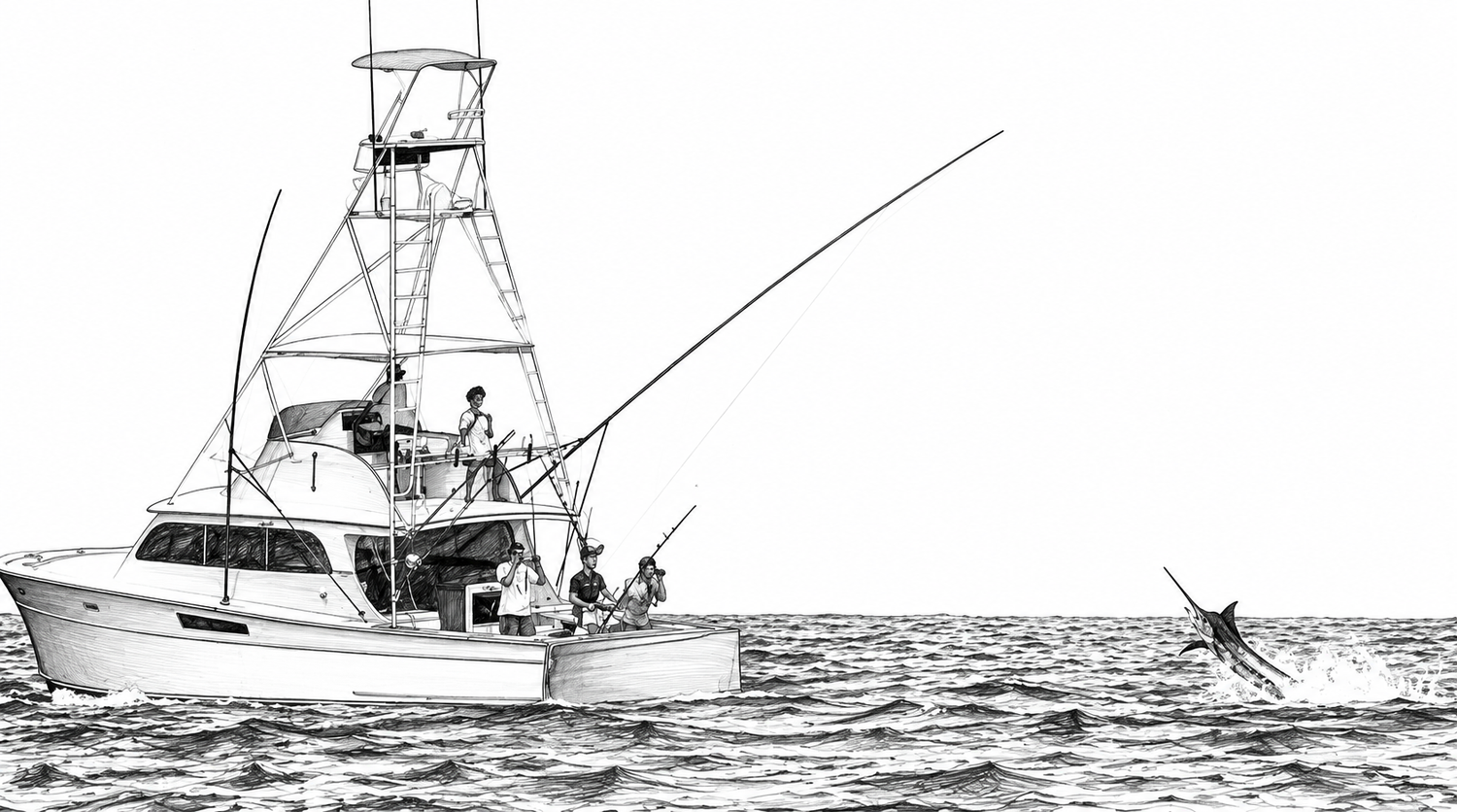
When most anglers picture offshore trolling, they imagine a spread of colorful skirted lures dancing behind a boat as it works across bluewater in search of marlin, sailfish, tuna, and mahi-mahi.
This is the traditional offshore trolling presentation that has become synonymous with big-game fishing around the world.
Unlike high-speed trolling, which focuses primarily on reaction strikes from species like wahoo, conventional skirted lure trolling is designed to imitate a school of baitfish moving naturally through the water. Multiple lures are strategically positioned throughout the spread, creating an irresistible target for predators actively searching for food.
The visual aspect of this technique is part of what makes it so exciting.
Watching a billfish appear behind a lure, seeing tuna crash through the spread, or witnessing a mahi-mahi light up as it charges a bait are experiences that keep anglers returning to offshore waters year after year.
For many offshore fishermen, skirted lure trolling remains the gold standard of bluewater fishing.
What Is Skirted Lure Trolling?
Skirted lure trolling is a technique that utilizes artificial trolling lures dressed with soft skirts designed to imitate baitfish, squid, or other offshore forage species.
These lures are deployed behind the boat in a carefully organized pattern known as a spread.
The objective is to create multiple feeding opportunities while covering a broad section of water.
Each lure position serves a specific purpose.
Some lures run close to the boat in turbulent water, while others are positioned farther back in cleaner water. Together, they create the illusion of a scattered bait school moving through the ocean.
The technique typically targets highly migratory pelagic species including marlin, sailfish, tuna, mahi-mahi, and other offshore predators.
Because these fish often feed visually, the appearance, action, and positioning of each lure become critical components of success.
Why Skirted Lure Trolling Works
Offshore predators spend much of their lives hunting schools of baitfish.
Skirted lure spreads capitalize on this behavior by presenting multiple potential targets at the same time.
The pulsing skirts, surface commotion, and varied lure actions create the appearance of vulnerable forage moving through the water.
Many predators respond instinctively.
Rather than focusing on a single lure, fish often approach the entire spread as if they have encountered a small group of baitfish.
This increases the likelihood of attracting attention and triggering strikes.
Another advantage is versatility.
Different lure sizes, colors, and positions allow anglers to target multiple species simultaneously.
A properly designed spread can appeal to everything from dolphin and tuna to sailfish and marlin.
The ability to cover water efficiently while presenting multiple feeding opportunities makes skirted lure trolling one of the most productive offshore techniques available.
Where Skirted Lure Trolling Excels
This technique thrives in bluewater environments where pelagic predators actively search for bait.
Temperature breaks, weed lines, current edges, offshore banks, seamounts, and floating debris all create productive trolling opportunities.

Areas with consistent bait activity are particularly valuable.
Predators often patrol these locations while searching for feeding opportunities.
Skirted lure trolling excels when fish are actively hunting near the surface or throughout the upper portions of the water column.
The technique is especially effective in open-water environments where fish may be spread across large areas.
Whenever pelagic species are feeding on baitfish, a properly presented trolling spread can be remarkably effective.
Reading Conditions and Fish Behavior
Successful offshore trolling starts with understanding where fish are most likely to feed.
Water temperature is often one of the first factors anglers evaluate.
Temperature breaks frequently create feeding zones where bait and predators concentrate.
Current direction and strength also play important roles.
Areas where currents collide or change direction often hold increased bait activity.
Birds provide valuable information as well.
Diving birds, frigate birds, and other offshore species frequently reveal feeding activity below the surface.
Weed lines, floating debris, and color changes should never be ignored.
These features often attract baitfish and become natural gathering points for predators.
The more signs of life anglers can identify, the more likely they are to encounter productive trolling opportunities.
Technique: Build a Balanced Spread
The key to successful skirted lure trolling is creating a spread that appears natural and organized.
Most offshore boats deploy multiple lures at varying distances behind the vessel.
Short positions often run closer to the prop wash where increased turbulence creates additional attraction.
Long positions extend farther behind the boat where water remains cleaner and lure action becomes more visible.
Outriggers help spread lines apart, increasing coverage while reducing the likelihood of tangles.
Speed is typically maintained between 6 and 9 knots, depending on lure style, sea conditions, and target species.
Regularly checking lure action is critical.
Each lure should swim properly, create consistent surface disturbance, and maintain a natural presentation.
A balanced spread often looks simple, but every lure position serves a purpose.
Best Lures for Conventional Offshore Trolling
Skirted trolling lures come in countless shapes, sizes, and color combinations.
Bullet heads, cup-faced heads, slant heads, and plunger-style lures all produce distinct actions in the water.
Many anglers incorporate a variety of head styles throughout the spread to create different movements and attract a wider range of species.
Color selection often reflects local forage and water conditions.
Blue-and-white, pink-and-blue, green-and-yellow, black-and-purple, and flying-fish patterns remain perennial favorites.
Lure size should also match the target species and available bait.

The Ilander
Smaller profiles often excel when tuna and mahi are feeding on small forage, while larger lures frequently attract marlin and other billfish.
A diverse spread allows anglers to present multiple feeding opportunities simultaneously.
For a complete selection of proven lures, explore our trolling lures and trolling skirts designed specifically for offshore applications.
Gear Setup for Offshore Trolling Success
Conventional offshore trolling requires tackle capable of handling powerful pelagic fish while maintaining lure performance throughout the day.

Shimano Terez Conventional Rod
Rods between 5'6" and 7'0" with medium-heavy to heavy power remain the standard for most trolling applications. Start by picking out your rod.
These rods provide the backbone necessary to handle large fish while remaining comfortable during extended trolling sessions.
Choosing the right offshore trolling rod is critical because it must balance fish-fighting power with long-term durability in demanding saltwater environments.
Conventional trolling reels with smooth drag systems and substantial line capacity remain the preferred choice. Check out our reel recommendations.

Shimano Tiagra 2-Speed
Most anglers utilize 30-80 lb line classes depending on their target species and local conditions.
High-quality leaders, swivels, and terminal tackle complete the system.
These are the hook, line and leader combinations we pick.
Every component should be selected with reliability in mind because offshore opportunities can develop quickly and often involve trophy-class fish.
A Must-Fish Destination: Kona, Hawaii
A perfect example of where skirted lure trolling excels is Kona, Hawaii.
Known worldwide for its legendary blue marlin fishery, Kona offers ideal conditions for traditional offshore trolling.

Deep water exists remarkably close to shore, allowing anglers to access productive pelagic habitats within minutes of leaving the harbor.
The area regularly produces marlin, yellowfin tuna, mahi-mahi, ono, and other prized offshore species.
Because baitfish and pelagic predators are present throughout much of the year, skirted lure trolling remains one of the most productive and popular techniques in the region.
Few destinations have contributed more to the evolution of modern trolling spreads than Kona.
It remains one of the premier offshore trolling fisheries in the world.
Final Thoughts
Skirted lure trolling remains one of the most iconic and productive offshore fishing techniques ever developed.
Its ability to imitate a school of baitfish, cover large expanses of water, and attract a wide variety of pelagic species makes it a cornerstone of offshore fishing around the globe.
Whether targeting tuna along temperature breaks, mahi around weed lines, or marlin in deep bluewater, a well-designed trolling spread creates opportunities that few techniques can match.
The key is maintaining a balanced spread, fishing productive conditions, and paying close attention to lure performance.
For anglers seeking consistent offshore action and the possibility of encountering some of the ocean's most exciting gamefish, skirted lure trolling continues to set the standard.
For more rod recommendations, reel pairings, line setups, lure selections, and trolling-specific advice, check out the complete Offshore Trolling Gear Guide and build a system designed for success on the open ocean.
About the Author

The team at Mud Hole Custom Tackle are passionate offshore anglers, boating enthusiasts, and tackle experts dedicated to helping fishermen build better gear and catch more fish. From coastal trolling applications to bluewater adventures targeting marlin, tuna, and other pelagic species, the Mud Hole Staff combines real-world experience with technical expertise to help anglers select equipment that performs when it matters most. Their passion for offshore fishing and practical knowledge drives every guide, article, and recommendation they create.