








What is Surf Fishing?
Surf fishing is a saltwater fishing technique focused on targeting fish from beaches, shorelines, jetties, and other coastal areas. Anglers cast natural baits or artificial lures into the surf, troughs, cuts, sandbars, and other areas where fish feed and travel. Because conditions can vary with waves, current, wind, tides, and structure, surf fishing requires the casting distance, line control, and power needed to effectively present baits and lures from shore.
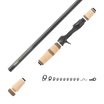
The demands of surf fishing put a premium on casting performance, durability, and fish-fighting control, which is why many anglers choose to build their own custom surf fishing rod. A custom build allows you to select the exact blank, guides, handle configuration, and components that match how and where you fish. Whether your focus is soaking bait from the beach, repeatedly casting plugs and lures, fishing lighter surf presentations, or working jetties and rocky structure, a purpose-built rod can be tailored for the application.
Understanding the most common surf fishing applications helps dial in both presentation and rod design. This guide breaks down the primary ways anglers fish the surf and how each approach influences the design of a custom rod.
Introduction
What is Build a Surf Fishing Rod?
What is Surf Fishing?
Surf fishing is a saltwater fishing technique focused on targeting fish from beaches, shorelines, jetties, and other coastal areas. Anglers cast natural baits or artificial lures into the surf, troughs, cuts, sandbars, and other areas where fish feed and travel. Because conditions can vary with waves, current, wind, tides, and structure, surf fishing requires the casting distance, line control, and power needed to effectively present baits and lures from shore.
The demands of surf fishing put a premium on casting performance, durability, and fish-fighting control, which is why many anglers choose to build their own custom surf fishing rod. A custom build allows you to select the exact blank, guides, handle configuration, and components that match how and where you fish. Whether your focus is soaking bait from the beach, repeatedly casting plugs and lures, fishing lighter surf presentations, or working jetties and rocky structure, a purpose-built rod can be tailored for the application.
Understanding the most common surf fishing applications helps dial in both presentation and rod design. This guide breaks down the primary ways anglers fish the surf and how each approach influences the design of a custom rod.
Types of Surf Fishing Applications
Surf fishing covers a wide range of techniques, from casting lighter presentations close to shore to soaking heavy baits beyond the breakers and working artificial lures around moving water and structure. Understanding these different applications helps determine the tackle and approach best suited to the conditions and species being targeted. Here are four of the most common surf fishing applications.
Bait Fishing
Targets: Striped bass, red drum, bluefish, pompano, whiting, sharks, and other coastal gamefish
Bait fishing is one of the most common surf fishing applications, using natural baits such as cut bait, shrimp, sand fleas, clams, mullet, or other local forage. Anglers cast beyond the breakers, into troughs and cuts, or along sandbars and other areas where fish travel and feed, then allow the bait to remain in the strike zone.
Conditions play a major role in how bait is presented from the surf. Waves, current, wind, water depth, and bottom composition influence sinker choice and the amount of weight needed to hold position. Bait fishing can range from lighter presentations for smaller species to heavy bait fishing or heaving with larger sinkers and baits when targeting powerful fish or fishing rough conditions.
Surf Plugging & Lure Casting
Targets: Striped bass, bluefish, snook, redfish, Spanish mackerel, and other coastal gamefish
Surf plugging and lure casting is an active approach where anglers repeatedly cast and retrieve artificial lures while covering water from the beach or shoreline. Swimming plugs, topwaters, metal jigs, bucktails, soft plastics, and other artificials can be worked through troughs, cuts, around sandbars, and anywhere baitfish or predators are concentrated.
Rather than leaving a presentation stationary, anglers control lure speed, depth, and action throughout the retrieve. Changing retrieves, working different parts of the water column, and making repeated casts allow anglers to locate feeding fish and adjust quickly as surf conditions, bait movement, and fish activity change.
Light Surf Fishing
Targets: Atlantic & Gulf Coasts – Pompano, whiting, croaker, flounder, and other coastal gamefish; Pacific Coast – Surfperch, corbina, croaker, and other coastal gamefish
Light surf fishing focuses on smaller baits, lures, and rigs for species feeding relatively close to shore. Depending on the region and conditions, anglers may use small natural baits, Carolina-style rigs, jigs, soft plastics, or other compact presentations around troughs, cuts, wash zones, and shallow structure.
This style of fishing can be especially effective when fish are feeding in the first trough or along areas where waves expose or concentrate forage. Although the tackle and presentations are generally lighter, changing surf, current, and bottom conditions can still require enough weight to maintain control and keep the presentation in productive water.
Jetty & Rock Fishing
Targets: Striped bass, tautog, black sea bass, snook, bluefish, and other coastal gamefish
Jetty and rock fishing targets fish around jetties, rock piles, inlets, breachways, and other hard coastal structure. Anglers may cast plugs, bucktails, heavy jigs, soft plastics, or bait along current seams, deeper pockets, and the edges of structure where predators often hold and intercept passing forage.
Unlike fishing an open beach, these areas introduce strong currents, uneven footing, sharp structure, and limited space for fighting fish. Presentations may be cast and retrieved, drifted through current, or worked vertically depending on the location, making jetty and rock fishing a versatile but demanding surf application that can be fished with either spinning or conventional tackle.
Key Takeaways
- Bait Fishing – Uses natural baits in productive surf zones, with sinker weight and tackle matched to conditions, target species, and the size of the bait.
- Surf Plugging & Lure Casting – Focuses on repeatedly casting and retrieving artificial lures to cover water and target actively feeding fish.
- Light Surf Fishing – Uses smaller baits, rigs, and lures to target fish feeding closer to shore, with tackle adjusted to regional species and surf conditions.
- Jetty & Rock Fishing – Targets fish around coastal structure using bait or artificials, with an emphasis on current and presentation control.
How to Choose a Surf Fishing Rod Blank
A surf fishing rod blank should provide the casting performance, line control, and power needed to fish effectively from shore. The right blank depends on the application, from lightweight, responsive blanks for repeatedly casting lures to longer, more powerful blanks designed for heavy bait and sinkers. Choosing the proper material, power, action, length, line rating, and casting-weight rating ensures the blank performs effectively for the intended presentation and surf conditions.
When choosing a surf fishing rod blank, consider these key specs:
Material
Rod blank material influences weight, casting response, durability, and overall feel. Because surf rods are generally longer than conventional inshore rods and may be used for repeated casting or handling substantial casting loads, blank construction plays an important role in balancing weight and responsiveness with the strength required for the intended application.
Carbon and graphite blanks are popular for anglers who prioritize reduced weight, responsiveness, and efficient recovery after the cast. These characteristics make graphite especially well suited for surf plugging and lure casting, where the rod remains in hand and may be cast repeatedly throughout the day. Graphite construction is also used across heavier surf applications when a lighter, more responsive finished rod is desired.
Fiberglass blanks provide greater flexibility and a slower, more forgiving response under load. Although generally heavier than graphite, fiberglass is valued for durability and its ability to load progressively when casting heavier baits and sinkers. These characteristics can make fiberglass a good choice for heavy bait fishing and other applications where toughness and a deep-loading blank are priorities.
Composite blanks combine graphite and fiberglass to balance weight and responsiveness with the durability and deeper loading characteristics valued in surf fishing. The graphite portion helps reduce weight and improve recovery, while fiberglass adds toughness and a more forgiving bend under heavy casting and fighting loads. This combination makes composite construction especially well suited for versatile surf rods, bait fishing, and heavier applications where anglers want durability without the added weight and slower response of a full fiberglass blank.
Power
Rod power refers to the amount of force required to bend the blank. Surf rods commonly range from Medium-Light and Medium power for lighter baits, rigs, and artificials to Medium-Heavy and Heavy power for larger plugs, heavier casting loads, stronger current, and larger fish. The appropriate power depends primarily on the weight being cast, target species, fishing conditions, and the amount of fish-fighting control required.
Choosing the correct power also allows the blank to load and perform as intended. A blank that is too powerful may not load efficiently with lighter presentations, while an underpowered blank can become overloaded when casting heavier sinkers, bait, or lures and may lack the backbone needed to control larger fish.
Action
Action describes where the blank begins to bend when pressure is applied. Surf rods use different actions depending on the casting load and presentation.
Fast actions concentrate more flex toward the tip and recover quickly, providing a crisp, responsive feel during the cast. They are commonly used for plugs, bucktails, metals, and other artificials, but are also preferred by some surf anglers for heavy bait fishing and heaving where quick recovery can improve casting control and accuracy.
Moderate-Fast actions flex farther into the blank and provide a more progressive load while retaining relatively quick recovery. This balance makes them a versatile choice across surf applications, including plugging, general bait fishing, and heavier casting, and they are also used in distance-oriented surf setups.
Moderate actions bend progressively through a larger portion of the blank, providing a deeper, more forgiving load during the cast. They can work well for plugs and bait-and-sinker combinations when a deeper-loading blank is preferred, particularly for anglers whose casting style benefits from a smoother, more progressive bend.
There is considerable crossover between surf rod actions, and no single action is required for a particular presentation. Blank design, casting style, casting weight, conditions, and personal preference should all be considered when selecting the appropriate action.
Length
Surf fishing rod blanks commonly range from approximately 8' to 13'+, depending on the application, casting requirements, shoreline, and species being targeted. Rods around 8' to 10' provide increased maneuverability and are popular for lighter surf fishing, lure casting, jetties, and areas where maximum casting distance is not always necessary.
Rods around 9' to 11' cover a broad range of general surf applications and provide a useful balance of casting distance, leverage, and line control. The additional length helps anglers keep line above breaking waves, manage presentations in current, and reach productive water while remaining manageable for repeated casting.
Longer 11' to 13'+ rods are commonly associated with bait fishing and situations where additional casting distance or line clearance is beneficial. These rods provide greater leverage during the cast and help keep more line above the surf, but the ideal length still depends on the angler, casting style, weight being thrown, and fishing environment.
Line Rating
Line rating indicates the range of line strengths a blank is designed to handle effectively. Surf fishing line selection varies widely depending on the species, presentation, structure, and conditions.
Braided line is widely used for surf fishing because its thin diameter provides high strength with reduced line diameter, helping anglers maintain line capacity and cast efficiently. Its low stretch also provides direct lure control and solid contact at distance. Braid in the 15–30 lb range covers many lighter and general surf applications, while 30–50 lb or heavier braid is used for larger fish, heavier presentations, and demanding structure.
Monofilament remains a common surf-fishing mainline because its stretch provides shock absorption during casting and fighting fish. It is also resistant to the type of wind knots sometimes encountered with braid and can be a practical choice for bait fishing and conventional surf setups. Depending on the application, approximately 10–30 lb mono covers a broad range of surf fishing, with heavier line used for larger species and specialized heavy-tackle applications.
Fluorocarbon is most commonly used as leader material in surf fishing because of its low visibility. Leader strength can range from relatively light material for smaller surf species to 30–60 lb or considerably heavier when targeting bluefish, large striped bass, snook, sharks, or fish around abrasive structure. Monofilament leaders are also widely used when additional stretch or a more economical heavy leader is preferred.
Choosing a blank with the correct line rating ensures the rod, line, drag, and intended casting load work together without placing unnecessary stress on the blank.
Weight / Lure Rating
The lure or casting-weight rating identifies the range of weights a surf rod blank is designed to cast effectively. For artificial lures, this means the weight of the lure being cast. For bait fishing, the complete casting load must be considered, including the sinker, rig, and bait rather than evaluating sinker weight alone.
Lighter surf and lure-casting setups may handle approximately 1/2 oz to 3 oz presentations, including soft plastics, bucktails, plugs, spoons, metals, and lighter bait rigs. These blanks provide enough tip response to load efficiently with lighter weights while maintaining the length and power required for surf conditions.
General-purpose surf rods commonly handle approximately 1 to 5 oz presentations, covering a broad range of plugs, metals, jigs, and bait rigs. This range provides considerable versatility, but the blank should still be selected around the weights most frequently cast rather than simply choosing the widest available rating.
Heavy bait fishing and heaving can require blanks capable of handling 4 to 8 oz or more of total casting weight, depending on the sinker, bait, current, surf conditions, and target species. Heavy surf casting places substantial stress on the blank, making it especially important to remain within the manufacturer's specified casting range.
Choosing a rod blank with the correct weight rating allows the blank to load efficiently during the cast while maintaining the power and control needed for the intended surf fishing application.
Blanks by Application
Below are the key surf fishing techniques, along with recommended rod blank specs and MHX models to simplify your build selection.
Bait Fishing
Bait fishing requires a blank that loads smoothly under the combined weight of the sinker, rig, and bait while providing the power to cast and control fish from shore. Longer blanks provide casting leverage and line control, while a progressive bend helps distribute heavier casting loads.
Targets: Striped bass, red drum, bluefish, pompano, whiting, sharks, and other coastal gamefish
Rod Length: 10'–13+'
Power: Medium-Heavy to Heavy
Action: Moderate-Fast to Moderate
Line (Mainline / Leader): 15–30 lb mono or 20–50 lb braid / 20–60 lb mono or fluorocarbon; heavier leaders as required for sharks and toothy species
Weights Used: 2–8 oz+ total casting load; match the blank rating to sinker + rig + bait
MHX Models: ISSW1448-2, ISSW1568-2
Surf Plugging & Lure Casting
Surf plugging and lure casting requires a lightweight, responsive blank that loads efficiently and recovers quickly during repeated casting. The blank should provide precise lure control with enough backbone to work plugs, bucktails, metals, and soft plastics while controlling strong fish in the surf.
Targets: Striped bass, bluefish, snook, redfish, Spanish mackerel, and other coastal gamefish
Rod Length: 9'–11'
Power: Medium to Medium-Heavy
Action: Fast to Moderate-Fast
Line (Mainline / Leader): 15–30 lb braid / 20–50 lb mono or fluorocarbon
Weights Used: 1/2–4 oz
MHX Models: SU1088F, ISSW1088
Light Surf Fishing
Light surf fishing requires a responsive blank that loads effectively with smaller baits, rigs, and artificials while maintaining control in moving water. Lighter powers improve performance with smaller presentations, while sufficient backbone is still needed to handle surf, current, and heavier sinkers when conditions require them.
Targets: Surfperch, pompano, whiting, croaker, corbina, and other coastal gamefish
Rod Length: 8'–10'
Power: Medium-Light to Medium
Action: Fast to Moderate-Fast
Line (Mainline / Leader): 8–15 lb mono or 10–20 lb braid / 8–20 lb mono or fluorocarbon
Weights Used: 1/2–3 oz typical; heavier sinkers may be required in strong surf or current
MHX Models: ISSW1087, SU1087F
Jetty & Rock Fishing
Jetty and rock fishing requires a strong, responsive blank with the power to control fish around hard structure and current. A manageable length improves maneuverability, while a powerful lower section provides the leverage needed to turn fish away from rocks, jetties, and other structure.
Targets: Striped bass, tautog, black sea bass, snook, bluefish, and other coastal gamefish
Rod Length: 8'–11'
Power: Medium-Heavy to Heavy
Action: Fast to Moderate-Fast
Line (Mainline / Leader): 20–50 lb braid / 30–60 lb mono or fluorocarbon
Weights Used: 1–6 oz
MHX Models: ISSW1089, SU1089F
Surf & Inlet Rod Blanks

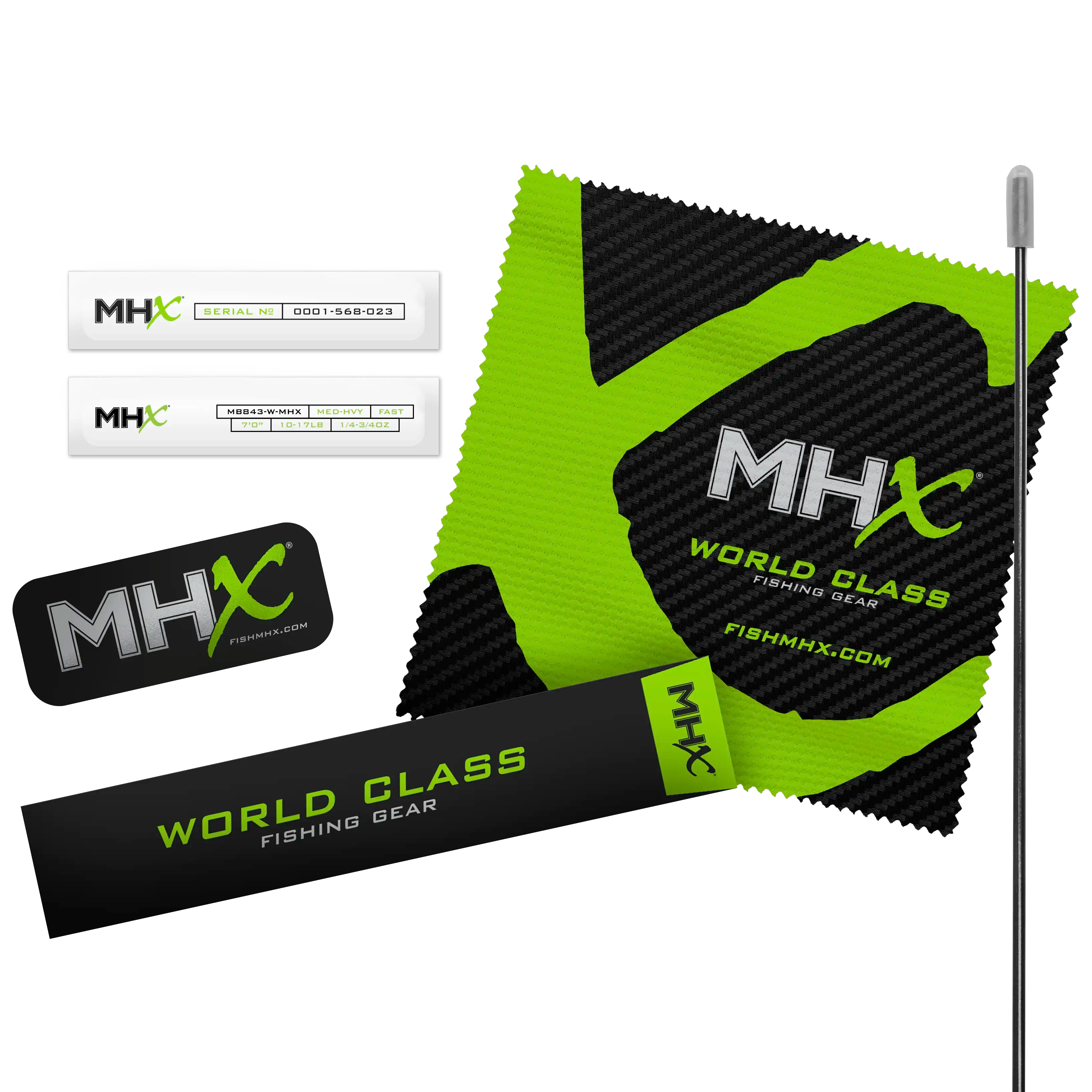
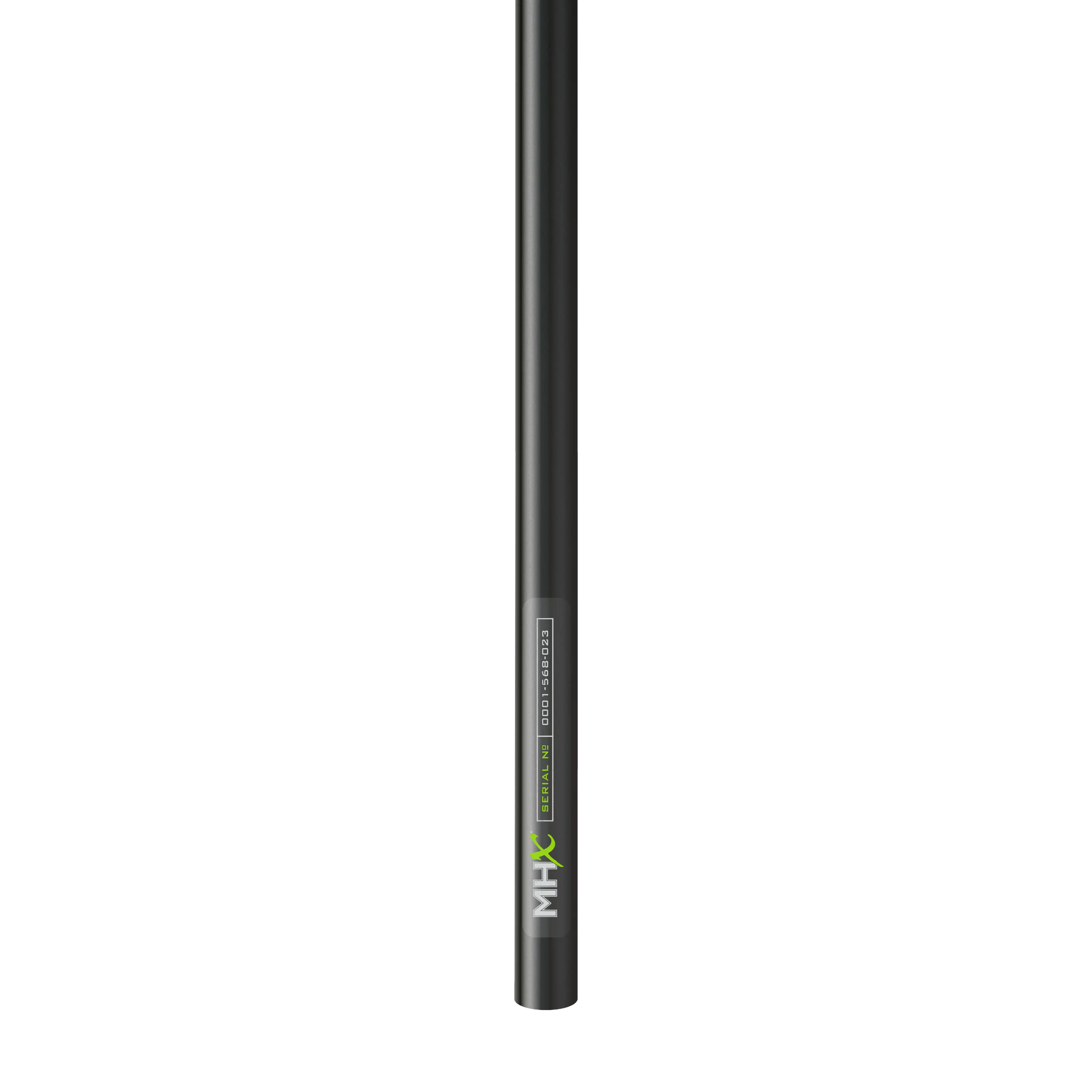


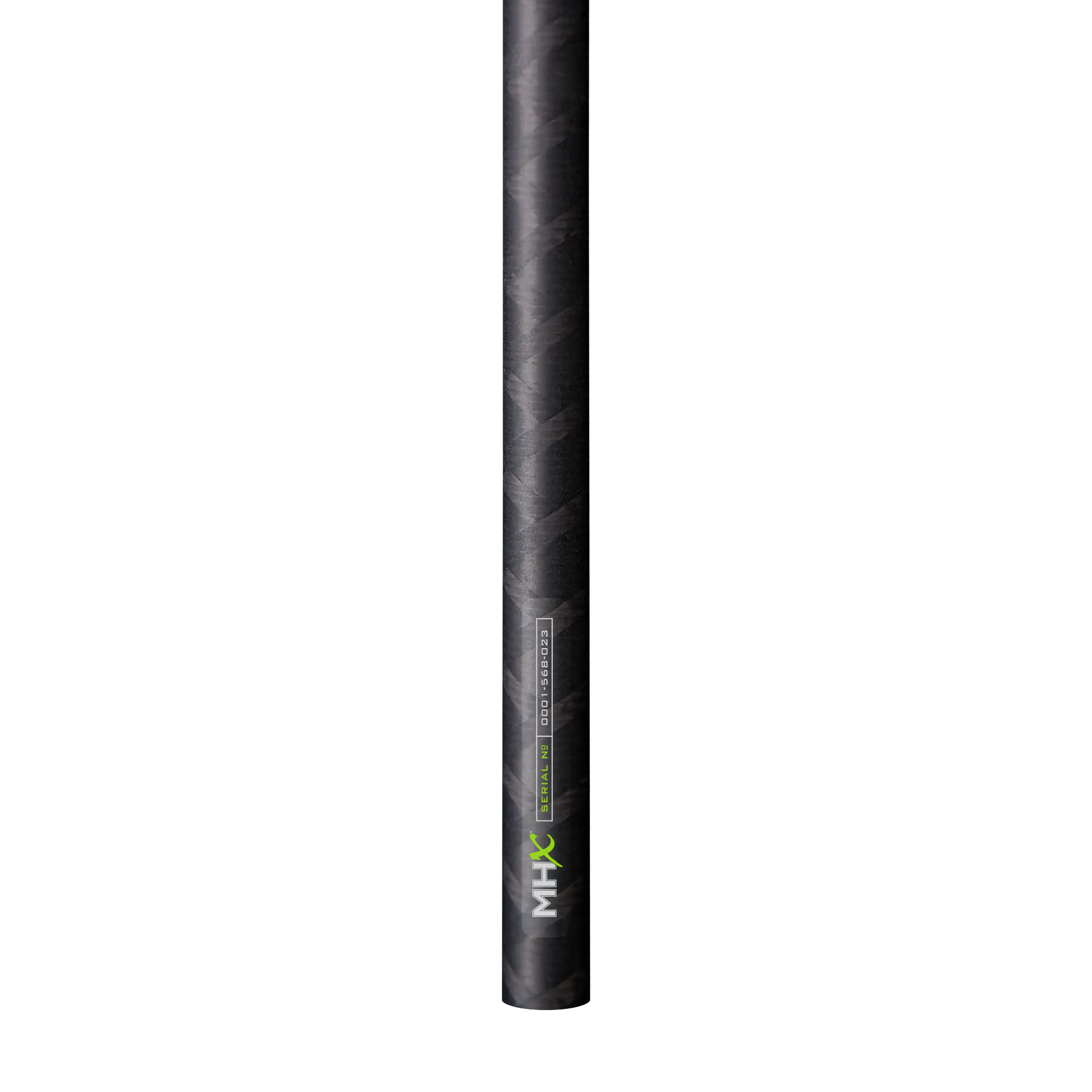


6 models available
Surf Rod Guide Kits
When building a custom surf fishing rod, a dedicated guide kit simplifies component selection while providing a guide train matched to the blank and reel configuration. Proper guide size, spacing, and placement help control line during long casts, distribute load along the blank, and provide reliable performance in demanding saltwater conditions.
Spinning vs. Casting
Surf rods can be built for either spinning or conventional reels, with each requiring a guide layout matched to how line leaves the spool. Spinning guide trains use larger reduction guides to control line coils before transitioning to smaller runners. Conventional guide trains typically use smaller guides because line leaves the spool more directly. In both cases, guide sizing and spacing should complement the reel, line, and blank.
Stripper Guides
The stripper guide is the first guide that receives line from the reel, making its size and placement important for casting performance. Spinning surf rods generally require a larger stripper guide to begin controlling line coils, while conventional rods can often use a smaller guide suited to their more direct line path.
Stripper guide selection should account for reel size, line, blank length, and the overall guide layout to promote smooth line flow without adding unnecessary weight.
Running Guides
Running guides control the line through the remainder of the blank while supporting the rod as it flexes under load. Proper sizing and spacing help keep the line following the blank, distribute stress, and maintain consistent line flow during both casting and fighting fish.
Running guide size depends on the application, line and leader system being used. Smaller guides reduce weight and can improve recovery and casting efficiency, while larger rings may be necessary when heavy line, leader knots, or wind-on connections must pass through the guide train.
Frame and Ring Size
Selecting the correct frame style, ring size, and guide material is important on a surf rod because guides must handle repeated casting, saltwater exposure, and the loads generated by larger fish and heavier presentations. Guide selection should balance strength and durability with the weight and line-flow requirements of the finished rod.
Double-foot guides are commonly used on surf rods to provide the strength, stability, and durability needed for repeated casting and demanding saltwater conditions. Frame size and weight can still vary considerably, with lighter, lower-profile double-foot guides suited for lure casting and general surf builds and heavier-duty frames used for heavier bait, line, and more demanding applications. Ring size should provide sufficient clearance for the intended line and leader connections without adding unnecessary weight to the blank.
Corrosion-resistant frames, including stainless steel and TiForged options, and durable ring materials such as Duralite, Nanolite, SiC/SiN, and Alconite are well suited for surf fishing, where guides are routinely exposed to salt, sand, and moisture. Properly selected components provide smooth line flow and dependable performance while allowing the blank to cast, recover, and flex as designed.
Key Takeaways
- Surf rod guide layouts prioritize casting efficiency, line control, strength, and saltwater durability.
- Spinning guides manage large coils leaving a fixed spool, while conventional layouts follow a more direct line path.
- Stripper guide size and placement should match the reel, line, blank, and guide system.
- Running guides control line and distribute load as the blank flexes.
- Guide and ring size should provide adequate clearance for the intended line, leaders, and connections.
- Corrosion-resistant frames and durable rings are important for repeated saltwater use.
- Guide kits simplify component selection by providing guides matched to the intended surf rod configuration.
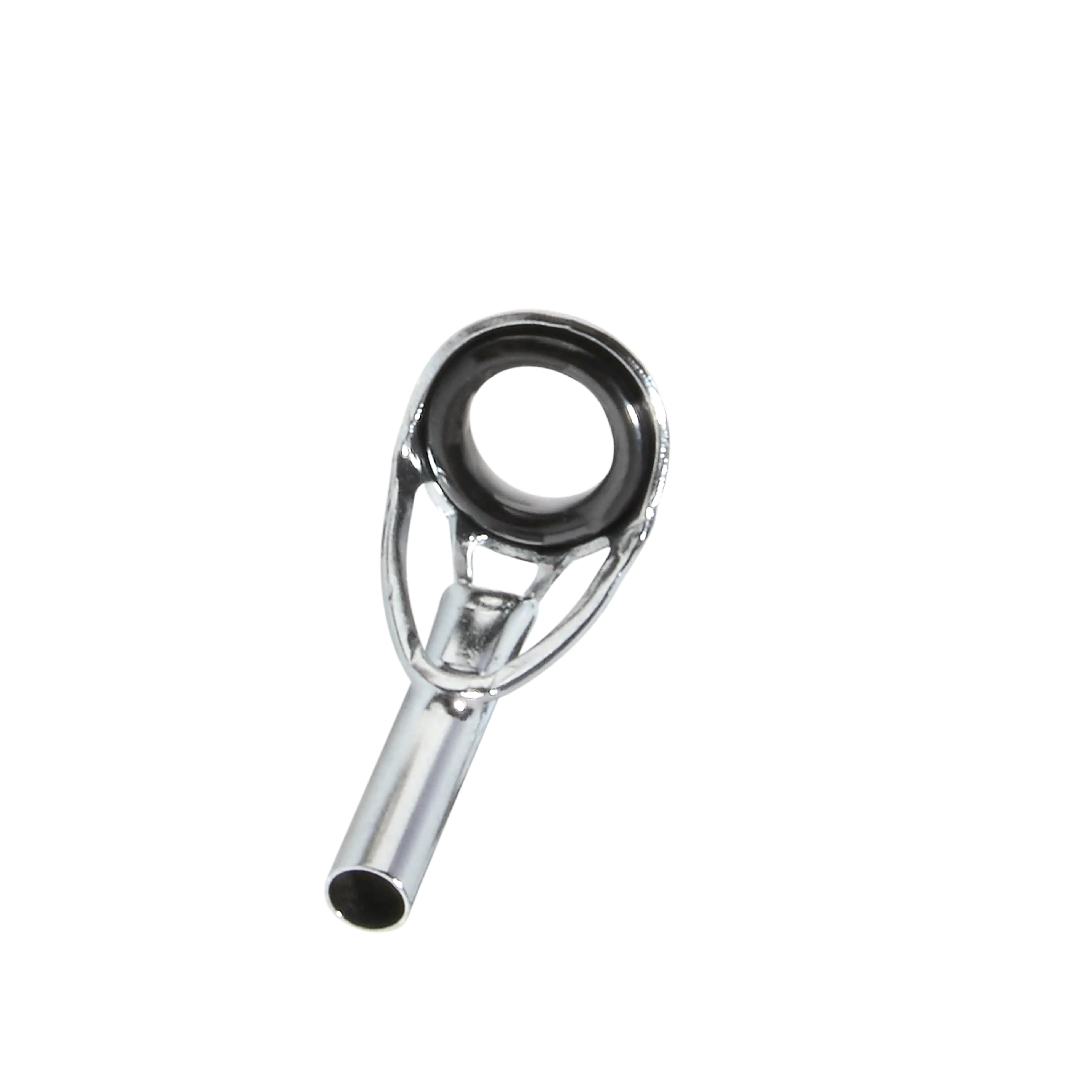
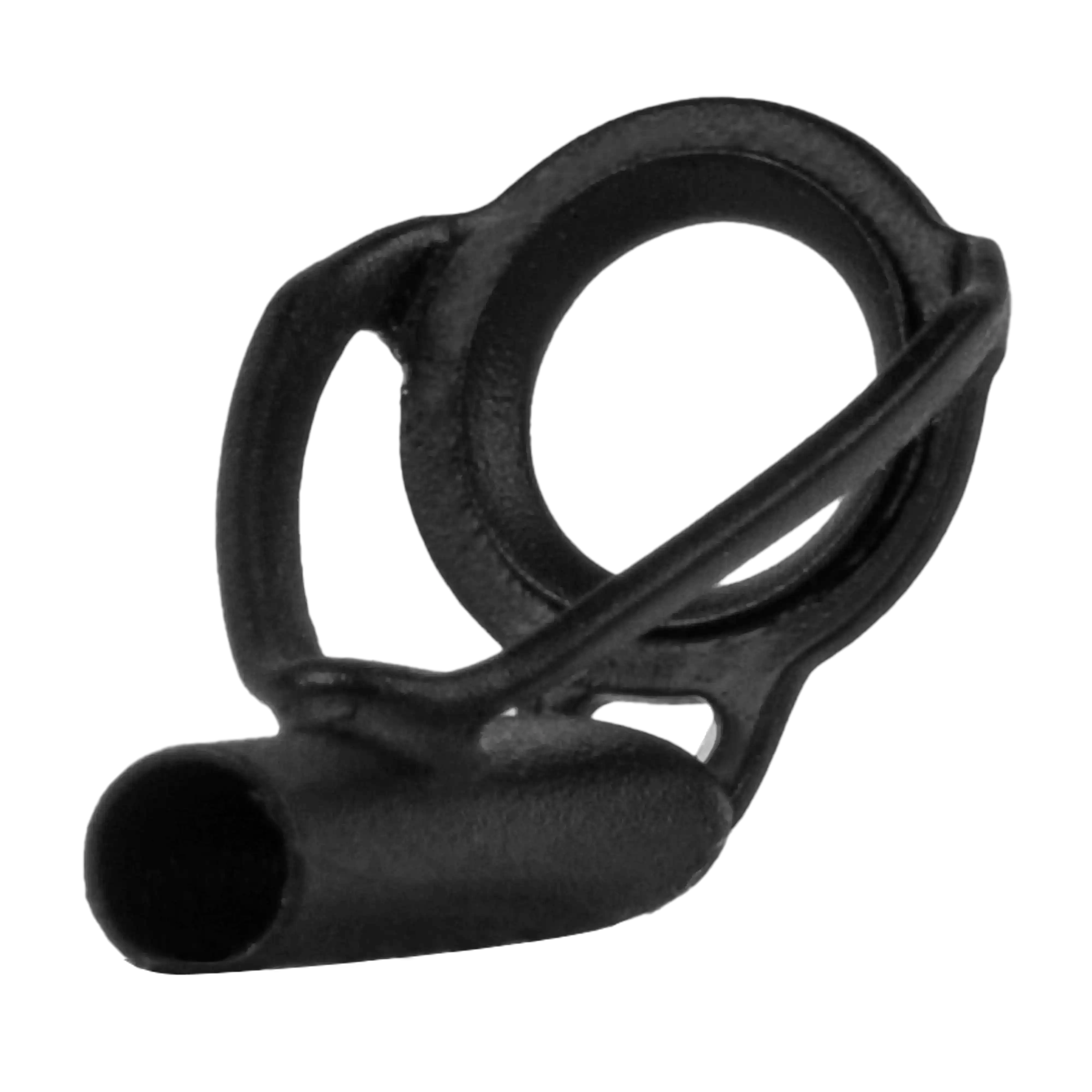
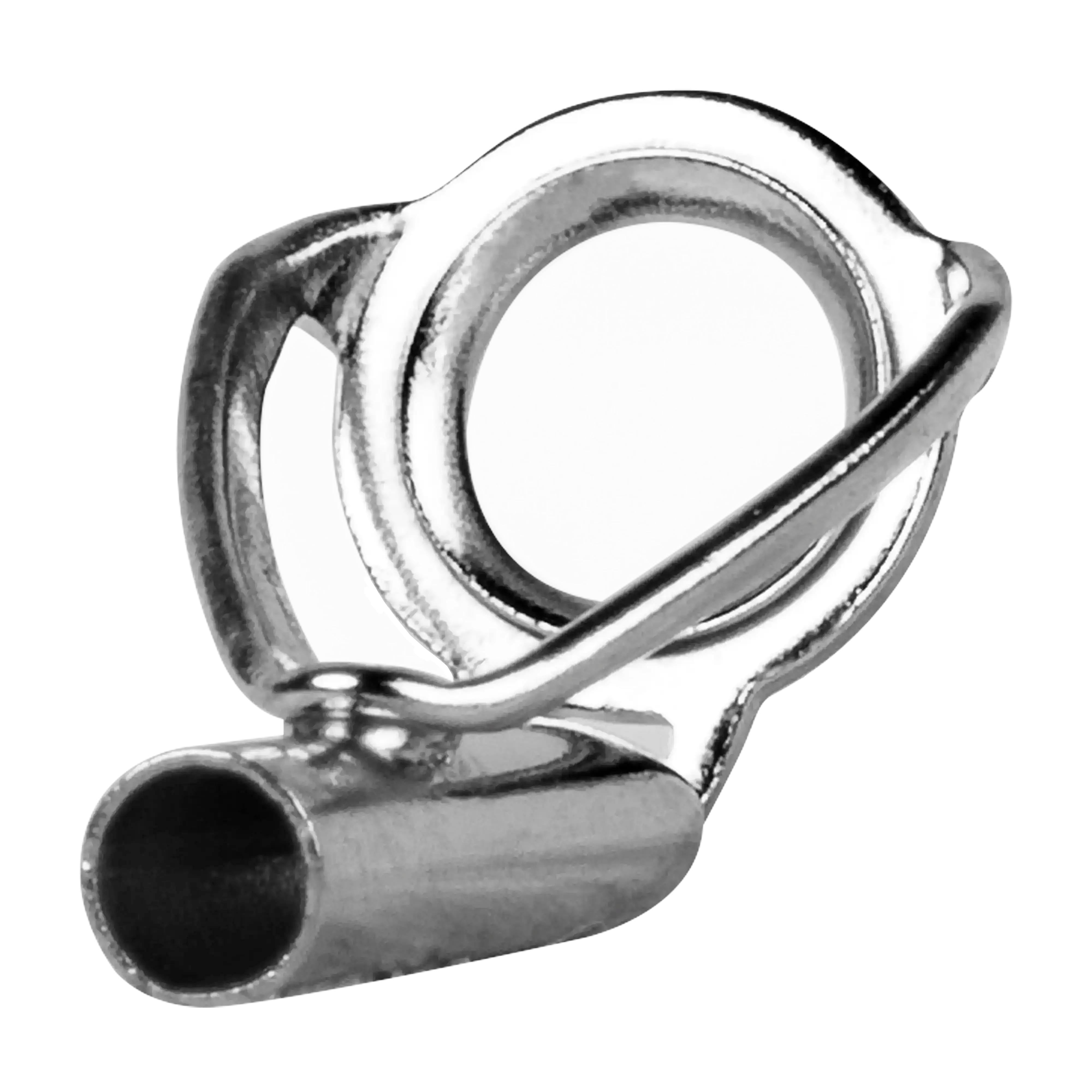
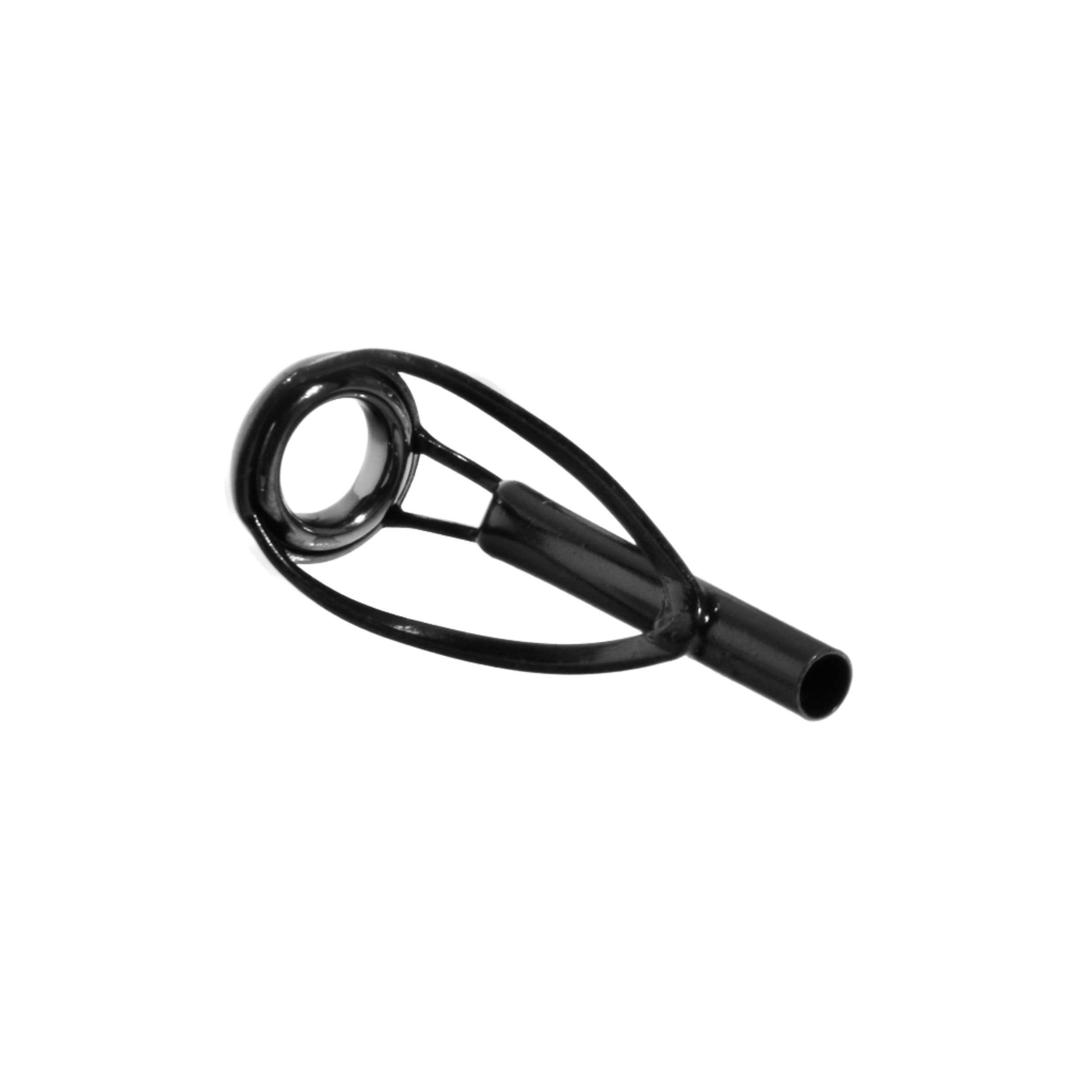
Surf Rod Tip Tops
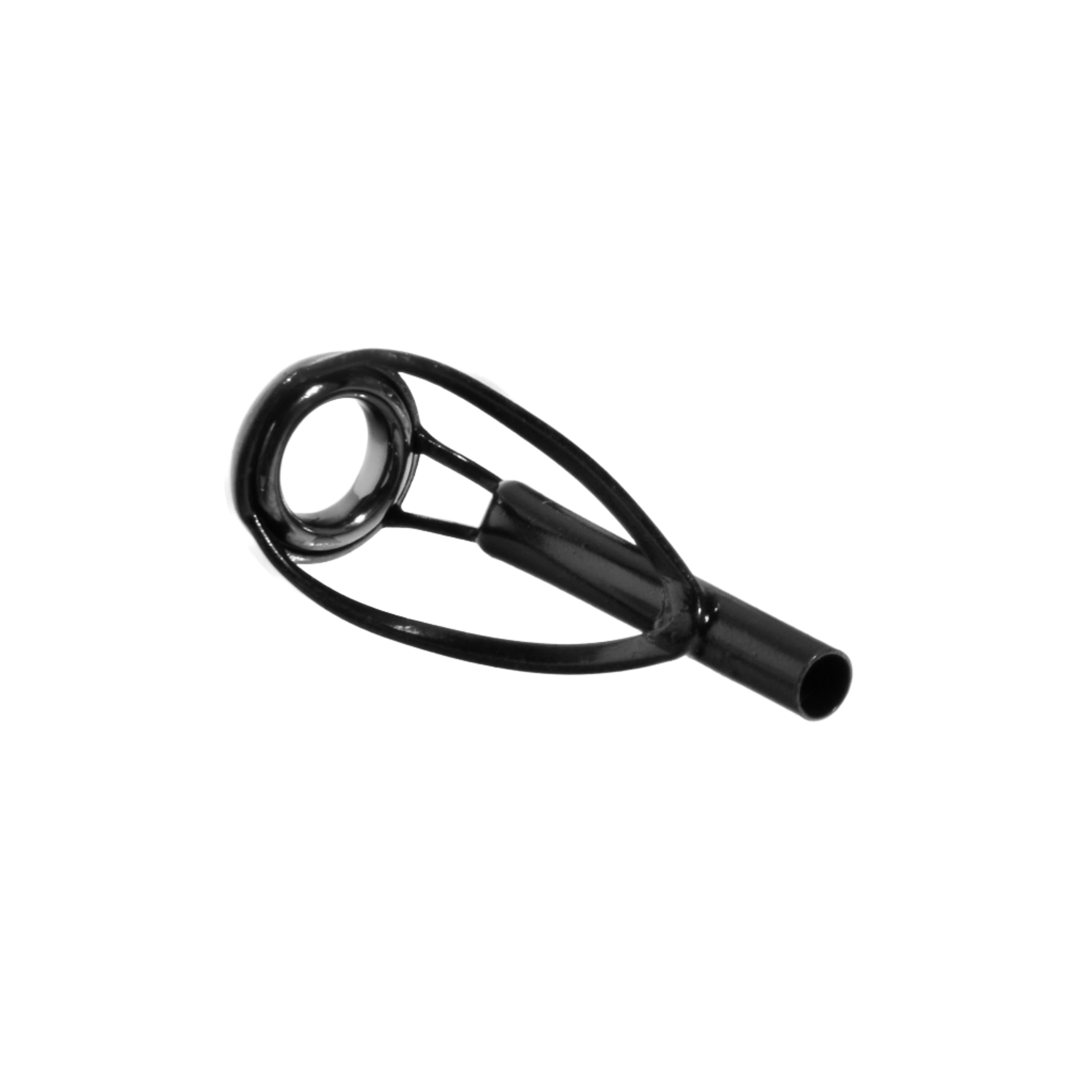
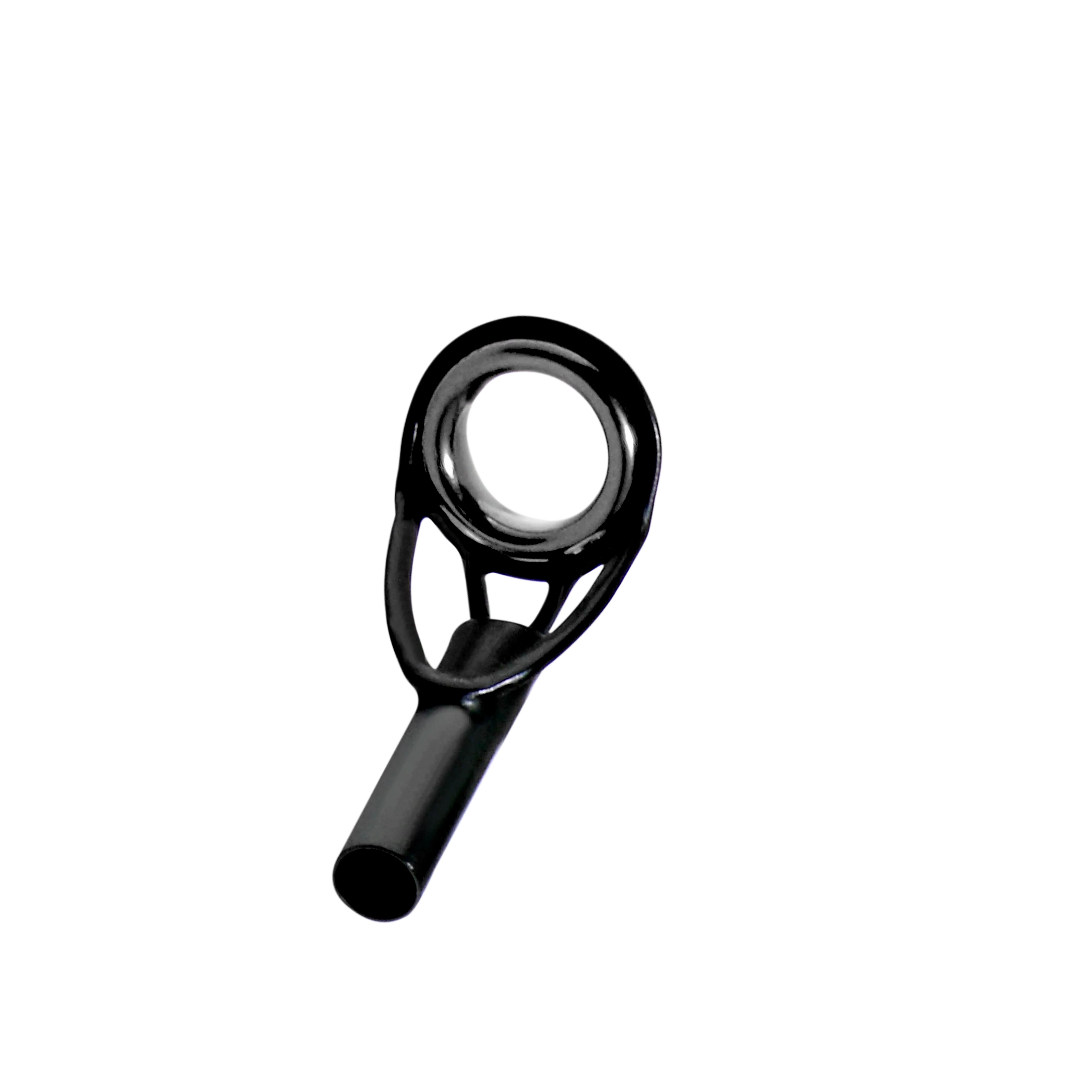
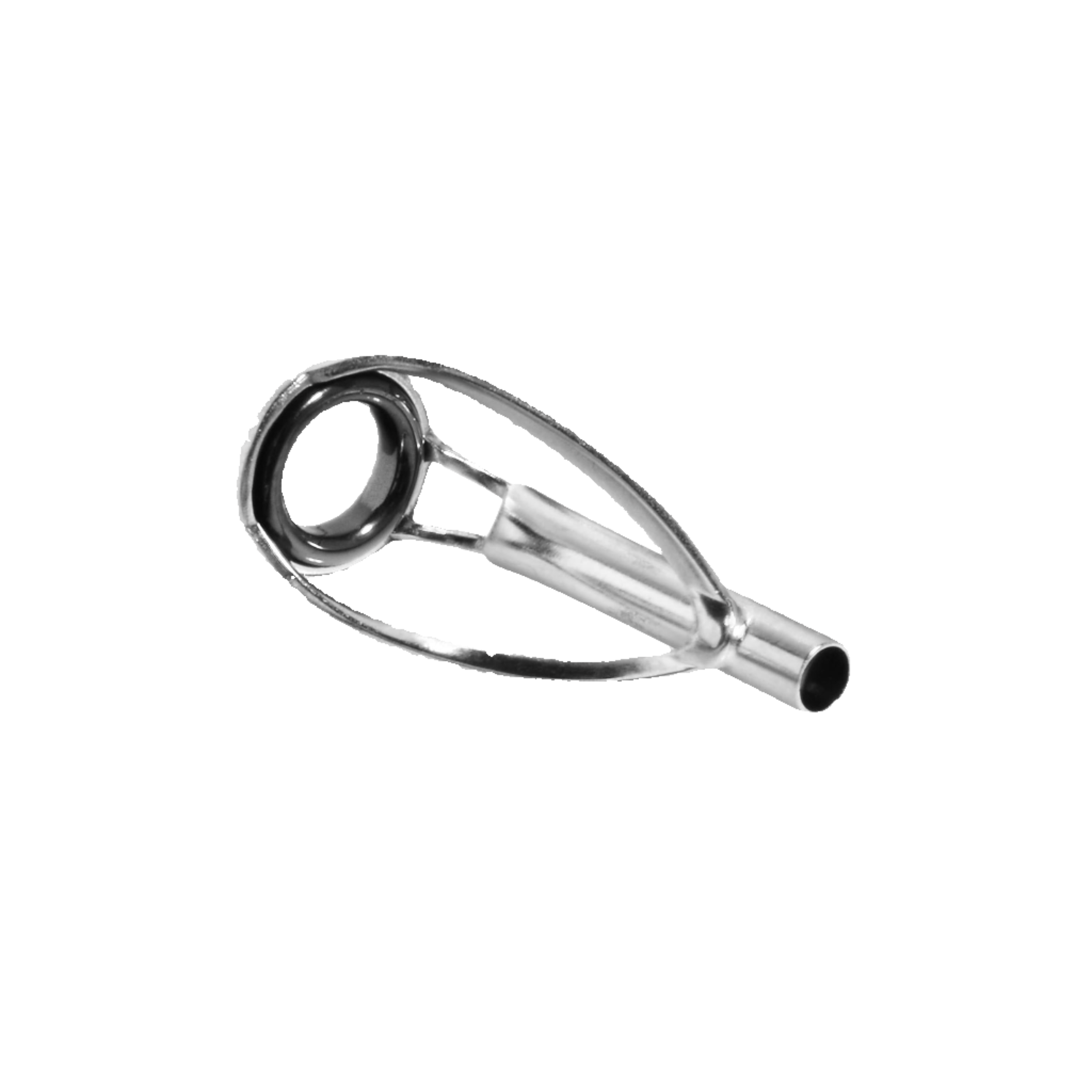
The tip-top plays an important role in the performance and durability of a surf fishing rod. As the final point where line passes through before reaching the rig or lure, it must provide smooth line flow while handling repeated casting, heavy loads, and exposure to salt, sand, and moisture. Choosing the correct tip-top helps complete the guide train without restricting line or adding unnecessary weight at the end of the blank.
When selecting a tip-top, two key factors matter:
Ring Size
Ring size influences line flow and the ability of leader knots and connections to pass smoothly through the guide train. In most surf builds, the tip-top ring is matched closely to the running guides to maintain a consistent line path and avoid creating an unnecessary restriction at the end of the rod.
Larger rings may be required when using heavier line, shock leaders, wind-on leaders, or knots that must pass through the guides during casting. The correct ring size should provide sufficient clearance for the intended line and leader system without adding unnecessary size and weight to the blank tip.
Tube Size
Tube size refers to the inside diameter of the tip-top tube that fits over the blank tip. Match the tube to the blank’s measured tip diameter for a secure fit without excessive clearance or adhesive. Surf blanks vary in tip diameter by length, power, and construction, so always confirm the blank’s tip measurement before selecting a tip-top.
Matching Your Tip-Top
While an exact match is not required for performance, many builders select a tip-top that complements the rest of the guide train in frame strength, finish, and ring material. Corrosion-resistant stainless steel and TiForged options paired with durable rings such as Duralite, Nanolite, SiC/SiN, or Alconite provide choices suited to demanding saltwater use.
For heavier surf builds, a rugged tip-top should also complement the strength and durability of the double-foot guide train. Matching the components creates a consistent guide system while maintaining the line clearance and durability required for the intended surf application.
Key Takeaways
- Surf tip-tops should provide smooth line flow while handling repeated casting and saltwater exposure.
- Ring size should match the guide train and provide clearance for the intended line, leaders, and knots.
- Larger rings may be required for heavy shock leaders, wind-on leaders, and larger connections.
- Tube size must match the blank tip for proper fit, alignment, and durability.
- Tip-top frame and ring materials should complement the durability and corrosion resistance of the guide train.
- Heavier surf builds benefit from rugged tip-tops matched to the strength of the double-foot guides.
Surf Rod Tip Tops



Surf Rod Grip Components
Surf rod handles need to provide a secure grip for casting and fighting fish while standing up to repeated exposure to salt, moisture, and sand spikes. Handle configurations vary by application, but cork tape, heat-shrink tubing, EVA, and durable butt components are commonly used to create comfortable, hard-wearing surf builds.
Building the Handle System
Surf rod handles are often built by combining several materials rather than using a single continuous grip. Cork tape can provide a lightweight grip or base layer, textured heat-shrink tubing adds a durable gripping and protective surface, and EVA sections create defined hand positions around the reel seat and butt. The exact combination and length of each component depends on the rod's application, handle layout, and the angler's preferred casting and fighting positions.
Traditional solid cork grips can also be used on surf rods, but because surf handles are routinely exposed to saltwater, sand, moisture, and abrasion, this guide focuses on textured tapes and synthetic grip materials that provide a durable, practical starting point for surf builds.
Cork Tape
Cork tape provides a lightweight, comfortable grip that can be wrapped directly onto the rod blank and built up to the desired diameter. It is commonly used across longer sections of surf rod handles where a continuous gripping surface is preferred without the weight or bulk of a full-length molded grip. Plate-style reel seats are also commonly paired with cork tape, creating a slim handle profile while allowing the reel position to be tailored to the angler's grip, arm length, and preferred casting position.
Cork tape can also be used beneath EVA grips and heat-shrink tubing to add diameter, cushioning, and a more uniform foundation for the finished grip. The amount of tape can be adjusted during the build to achieve the desired handle thickness and feel.
Textured Heat-Shrink Tubing
Textured heat-shrink tubing creates a durable, slip-resistant outer grip that performs well in wet and sandy conditions. The tubing can be installed directly over the blank or an underlying grip material and carefully heated until it conforms securely to the handle.
Heat shrink is especially useful on surf rods because it provides a tough protective surface in areas that may contact sand spikes or rod holders. It can cover long handle sections without adding the bulk of a traditional molded grip and is available in different diameters and textures to suit the build.
EVA Grips
EVA foam is widely used for surf rod foregrips and rear grips because it is lightweight and provides a comfortable, secure grip while resisting water and demanding saltwater use. A foregrip above the reel seat provides a stable hand position when applying pressure during the fight, while a rear grip below the seat provides a comfortable gripping surface for casting and rod control.
Foregrips around 2 to 6 inches and rear grips around 2 to 8 inches provide practical starting points for many surf builds. Some anglers prefer very short grip sections, while others favor longer grips for additional hand placement and leverage. There is no single correct length, so grip dimensions should ultimately be matched to the application, rod layout, casting style, and angler preference.
Butt Caps
Surf rod blanks commonly have large butt diameters, often around 0.7" or greater, making many conventional preformed fighting butts designed for smaller inshore and freshwater blanks unsuitable. Instead, rubber or vinyl butt caps are commonly fitted directly over the end of the surf blank to provide a durable, finished surface.
The butt cap protects an area that regularly contacts sand spikes, the ground, and other hard surfaces while adding minimal bulk to the handle. Caps are available in different diameters, so the inside diameter should be matched to the blank butt for a secure fit and clean transition.
Surf Rod Grip Components


Surf Rod Reel Seats
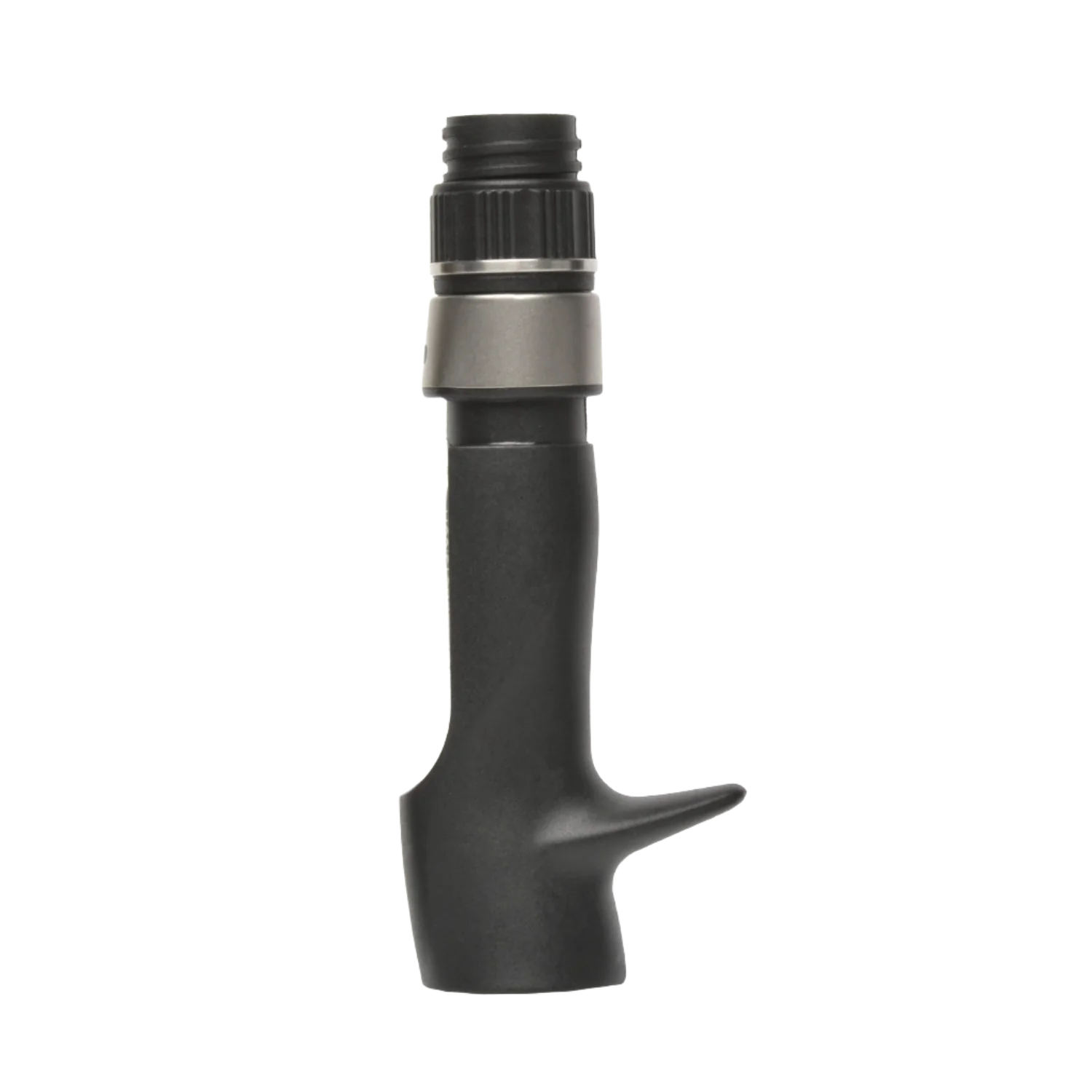
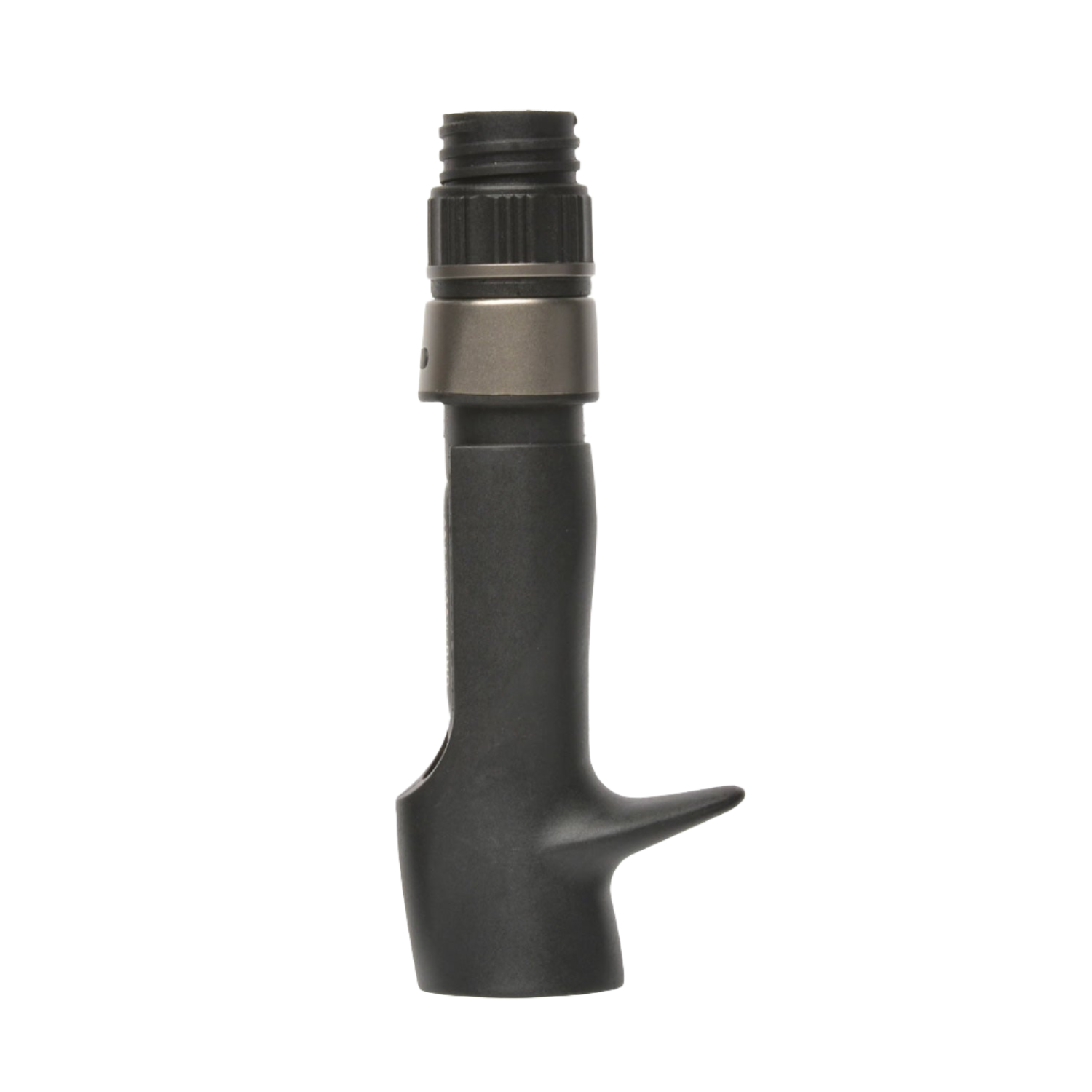
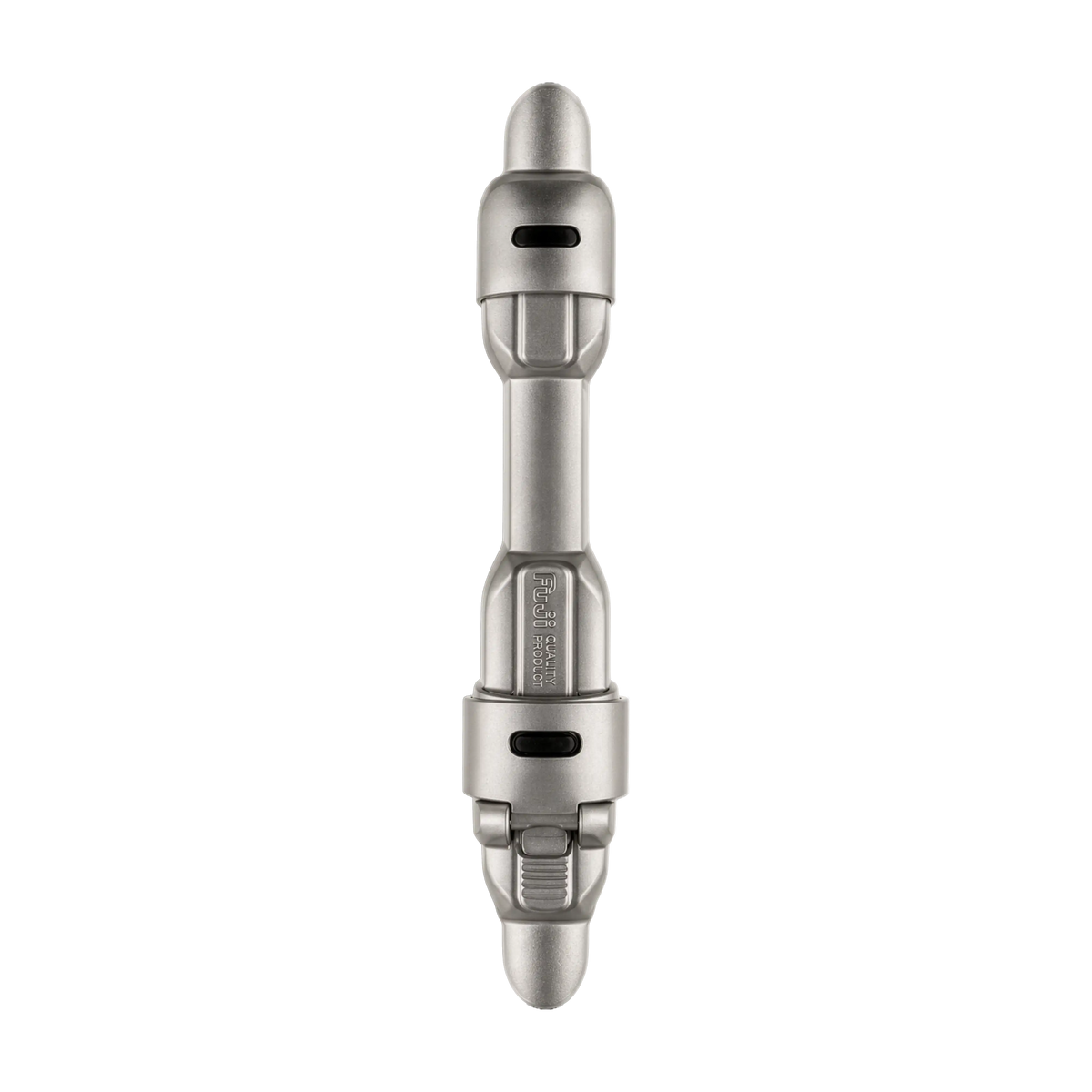
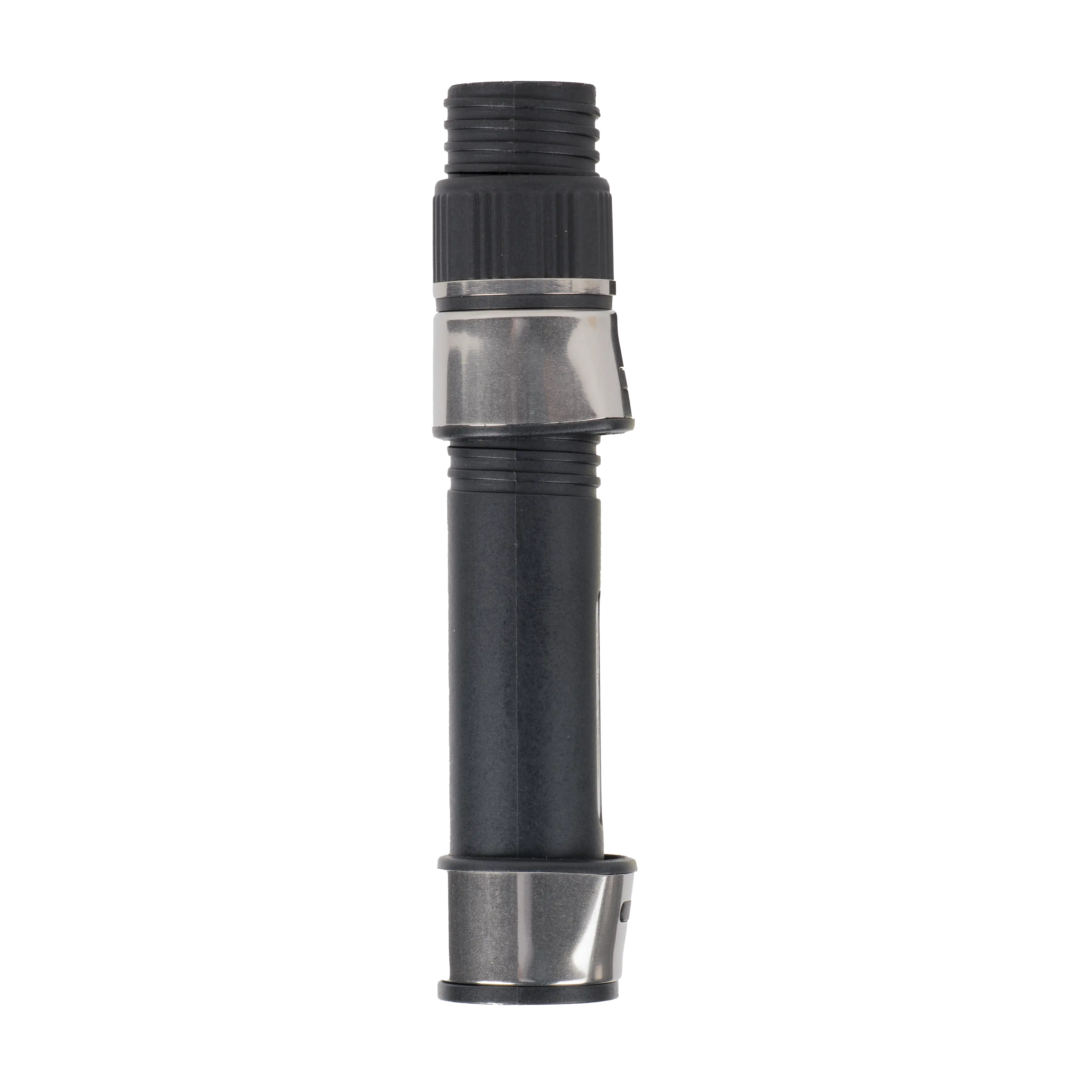
The reel seat secures the reel to the surf rod and provides a stable connection during casting, retrieving, and fighting fish. Choosing the right reel seat helps ensure the reel fits securely and the rod remains comfortable to handle throughout a day of surf fishing.
Spinning vs. Conventional Reel Seats.
Both spinning and conventional setups are common in surf fishing, with the reel seat selected to match the reel style, size, and intended use of the rod.
Spinning reels mount beneath the rod and are widely used in windy conditions and across light surf fishing, plugging, and bait fishing. Surf spinning reels can range considerably in size, so the reel seat should provide a comfortable grip while securely accommodating the reel foot and overall scale of the setup.
Conventional reels mount above the rod and are commonly used for bait fishing, distance casting, and heavier surf applications. The reel seat should securely fit the reel foot while allowing comfortable access to the spool and controls during casting and fishing.
Reel Seat Style
Barrel-style reel seats use a tubular body with threaded locking hardware and hoods that secure the reel foot in a fixed position. They provide a solid, straightforward connection and are available in a wide range of diameters and sizes for both spinning and conventional surf reels. Barrel seats are a practical choice when a permanent reel position and traditional handle configuration are preferred.
Plate-style reel seats use separate metal plates and locking hoods rather than a full tubular body surrounding the blank. Available in different lengths and sizes to accommodate different reel feet, their slim, lightweight design pairs well with cork tape and heat-shrink grips. Because they do not use a tubular barrel, plate seats can also accommodate large-diameter surf blanks without the same inside-diameter considerations as barrel-style seats.
Reel Seat Size
Barrel-style surf reel seats commonly range from sizes 18 to 24, with larger models used as blank diameter increases. Sizes 18 and 20 are common on lighter and general-purpose surf rods, while 22 and 24 provide the additional inside diameter often required for heavier surf blanks with larger butt sections.
Reel compatibility is equally important. Larger spinning and conventional reels used in surf fishing can have substantial reel feet, so the seat's hoods and opening must be large enough to securely accommodate the intended reel. When selecting a barrel seat, consider both the inside diameter needed for the blank and the reel-foot capacity needed for the reel. Plate seats are sized differently, so reel-foot dimensions and the manufacturer's specified capacity should be used when selecting them.
Key Takeaways
- Choose the Reel Configuration – Select a reel seat that properly accommodates the intended spinning or conventional reel.
- Compare Seat Styles – Barrel seats provide a traditional fixed reel position, while plate seats offer a slimmer alternative with greater flexibility in handle layout.
- Check Reel Foot Fit – Confirm that the hoods or plates are sized to securely hold the intended reel.
- Check Blank Diameter – Barrel-seat inside diameter must accommodate the larger butt diameters commonly found on surf blanks.
- Consider Grip Design – Plate seats work particularly well with thin cork-tape and heat-shrink style surf grips.
- Choose Saltwater-Ready Materials – Look for durable bodies and corrosion-resistant hardware suited for repeated exposure to salt, sand, and moisture.
Surf Rod Reel Seats





Choose Your Supply Kits
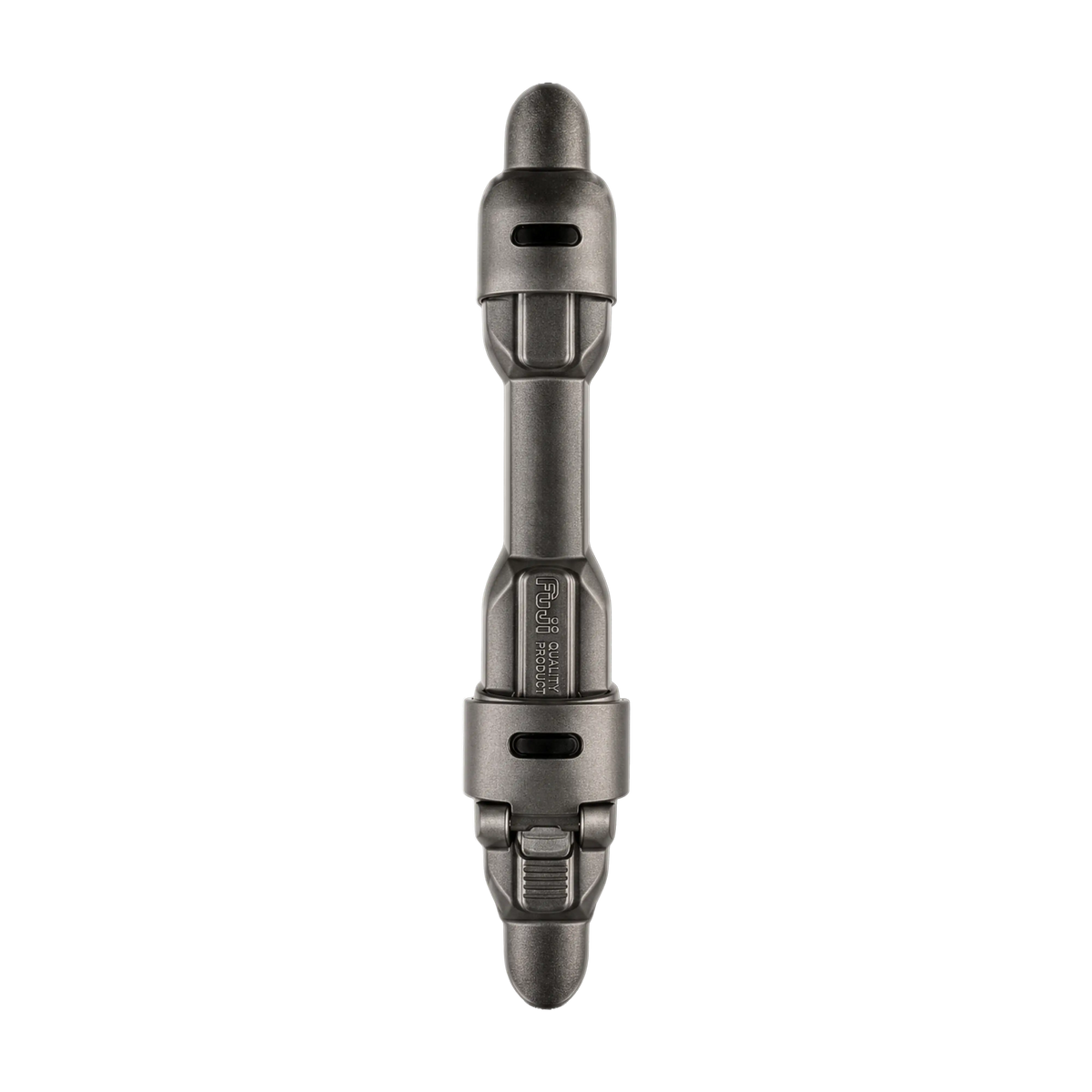
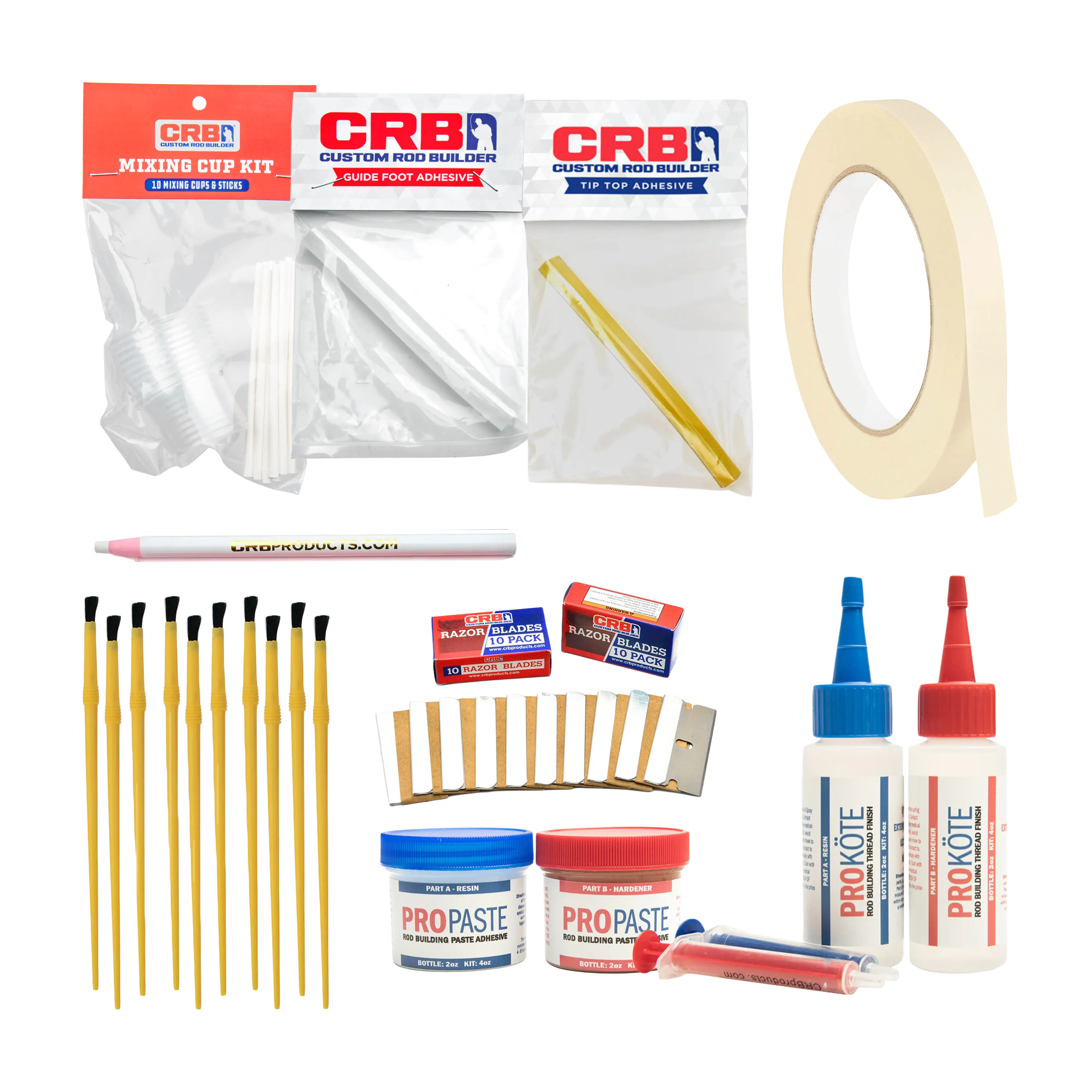
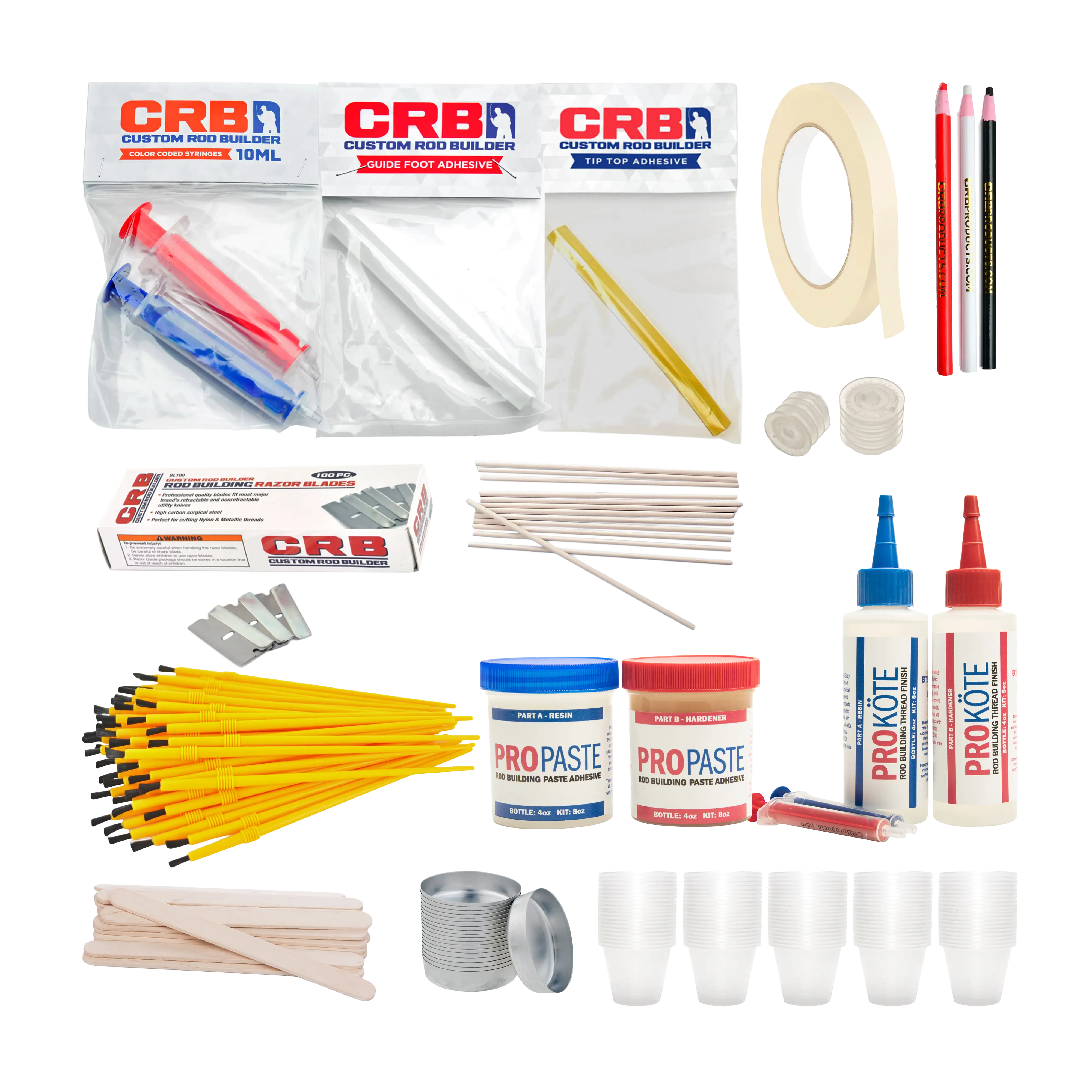
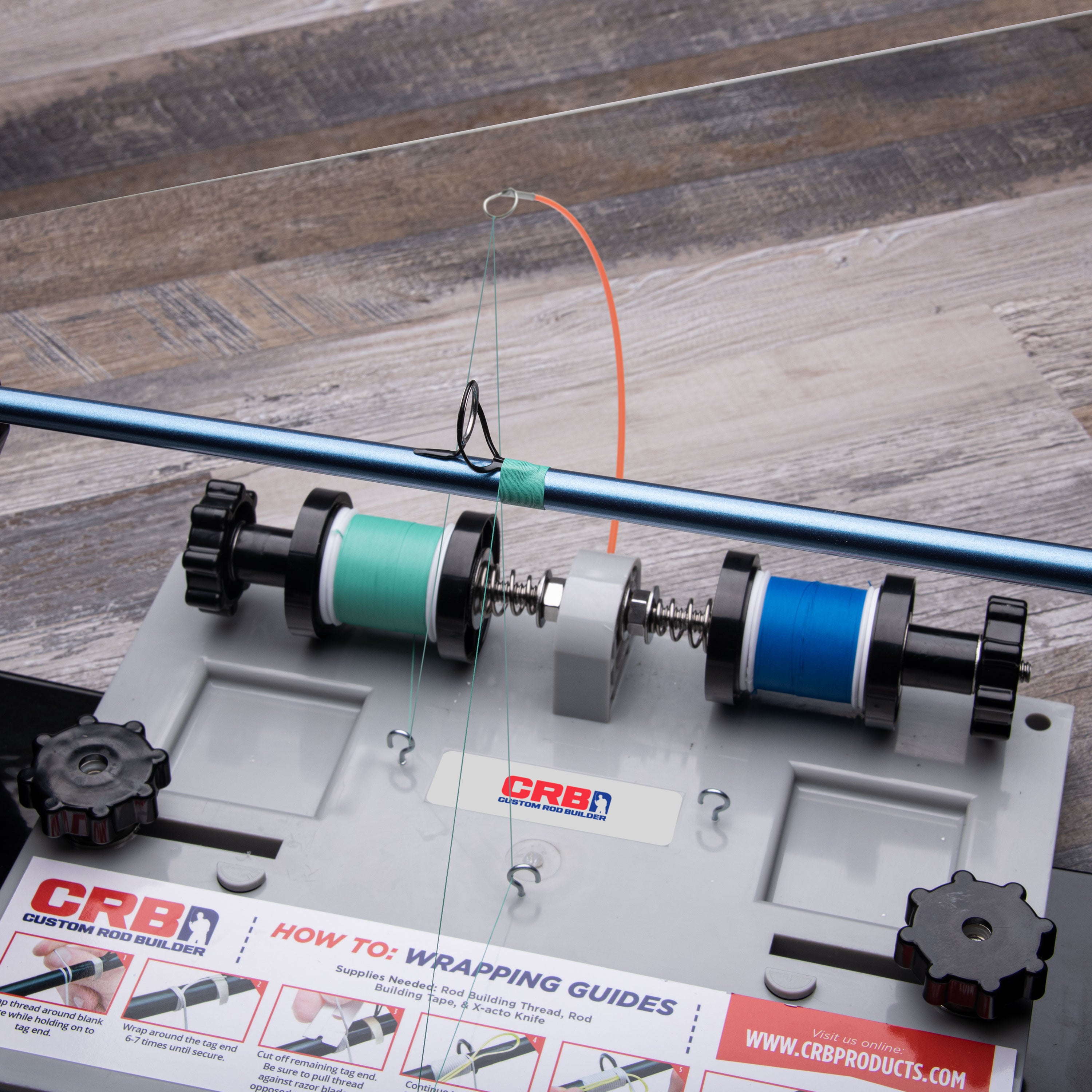
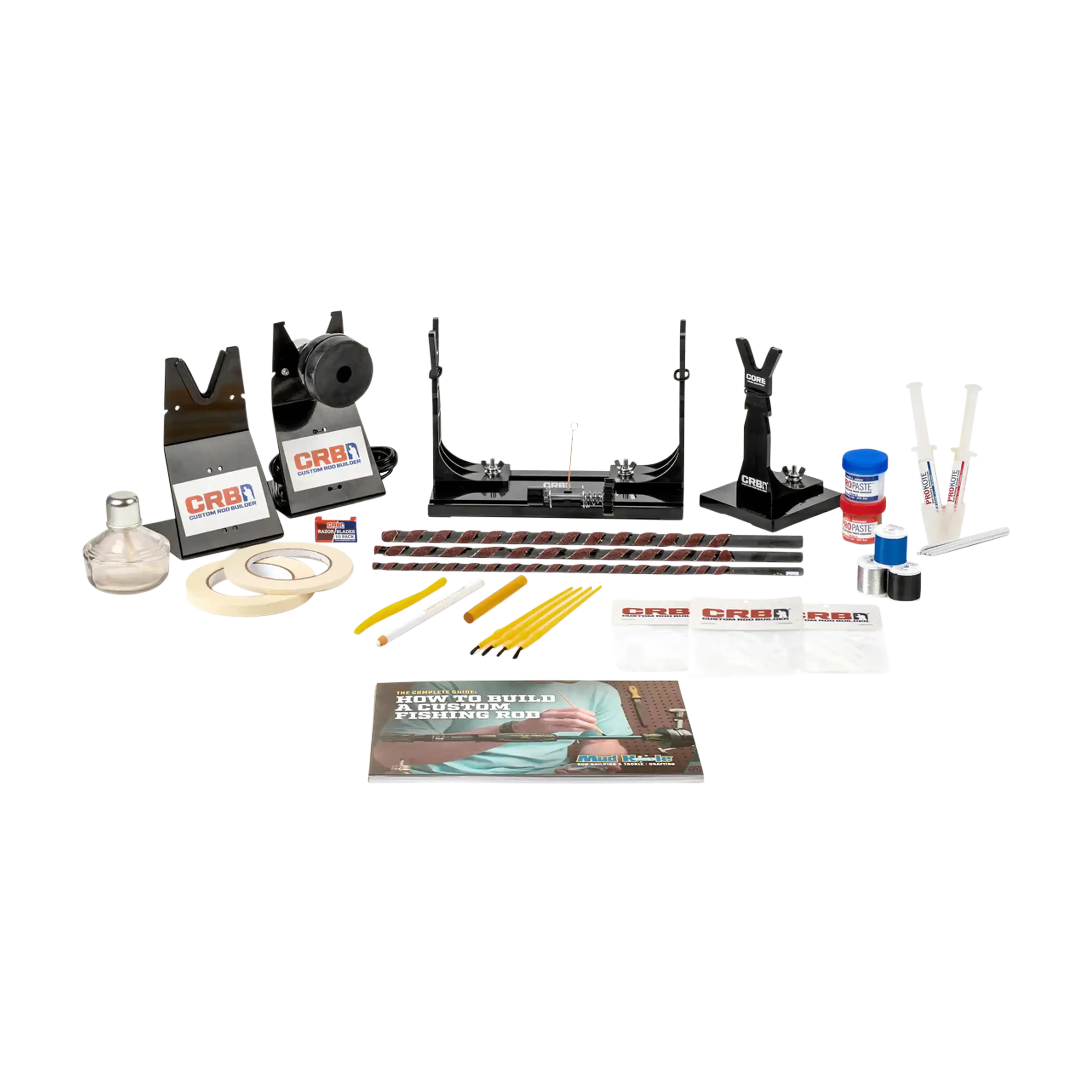
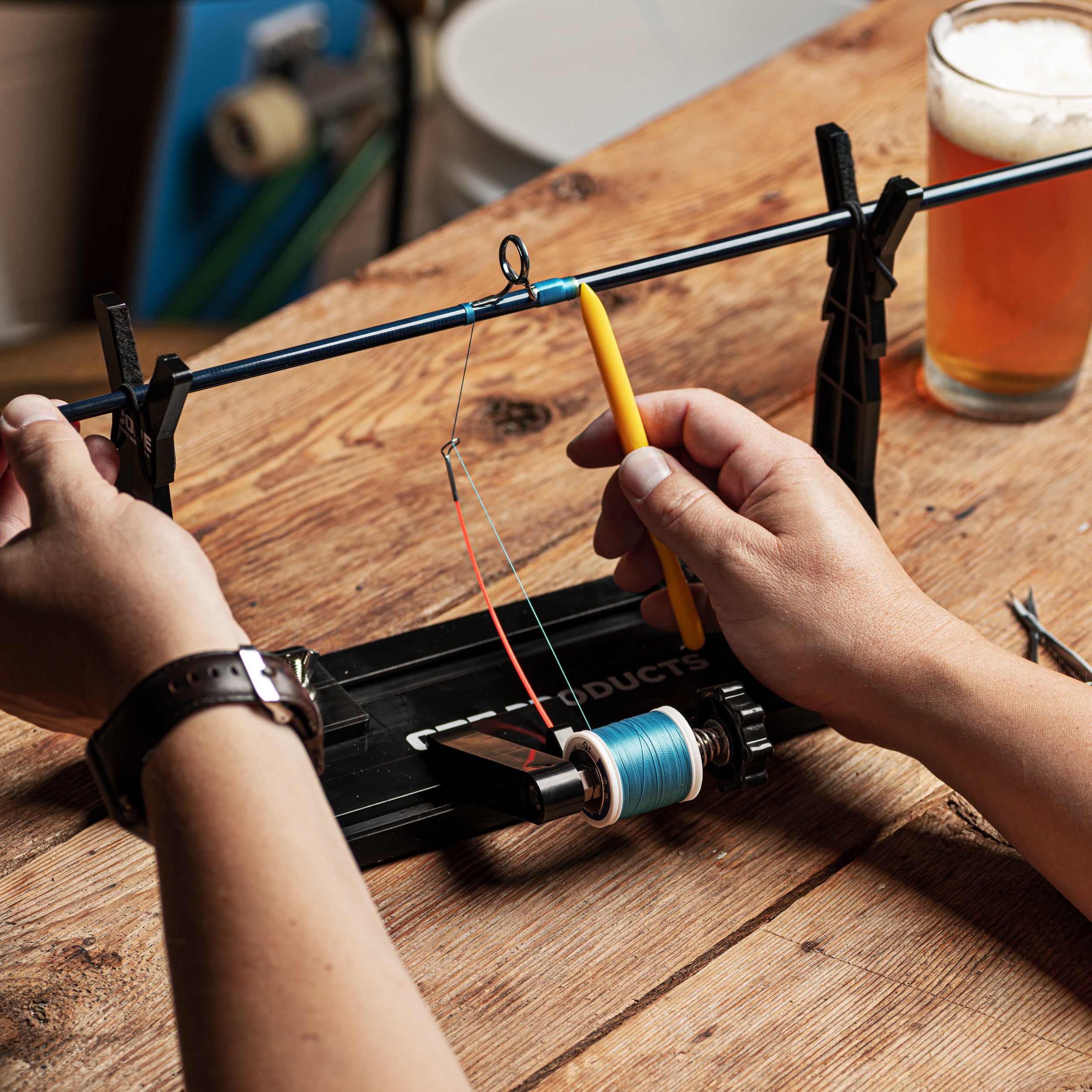
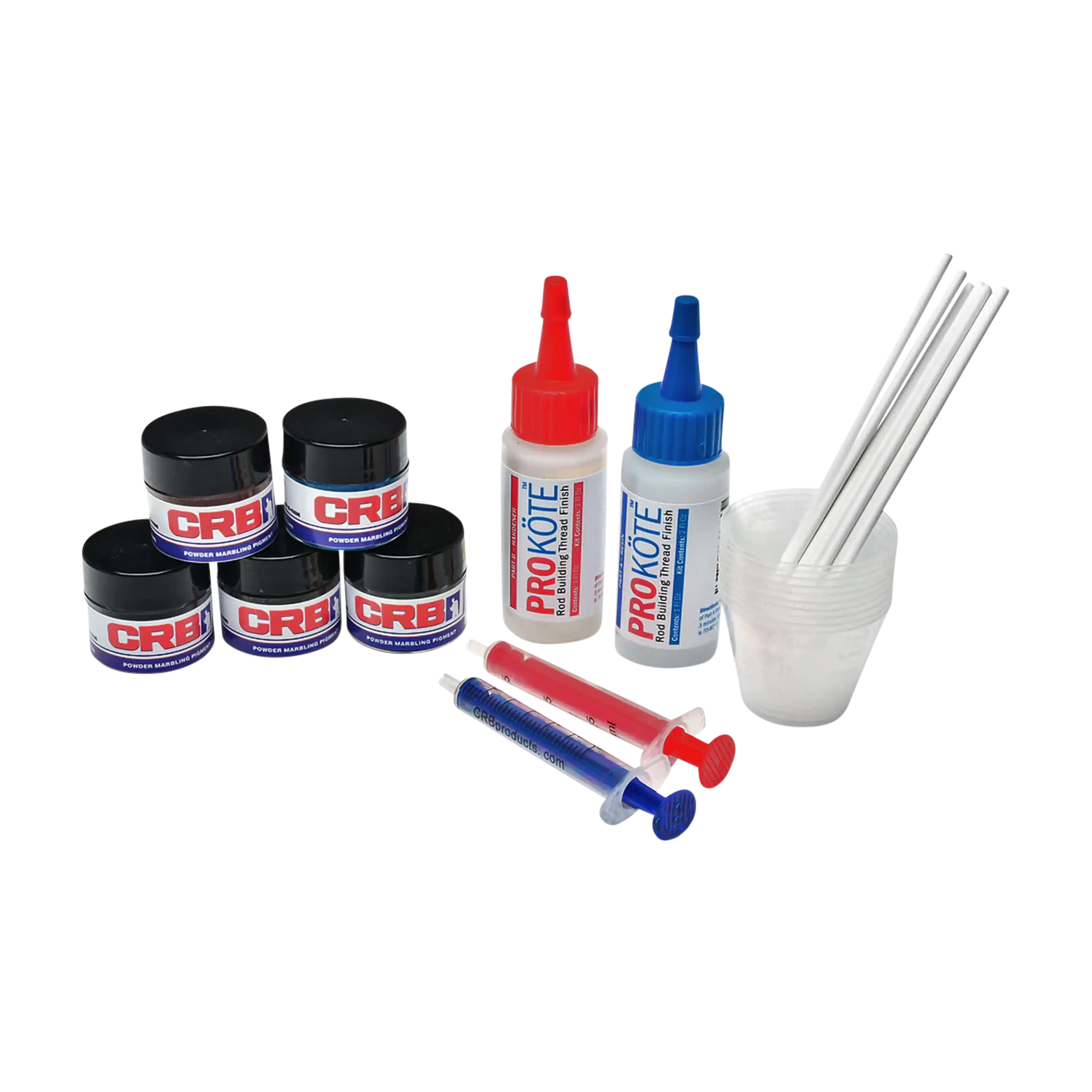
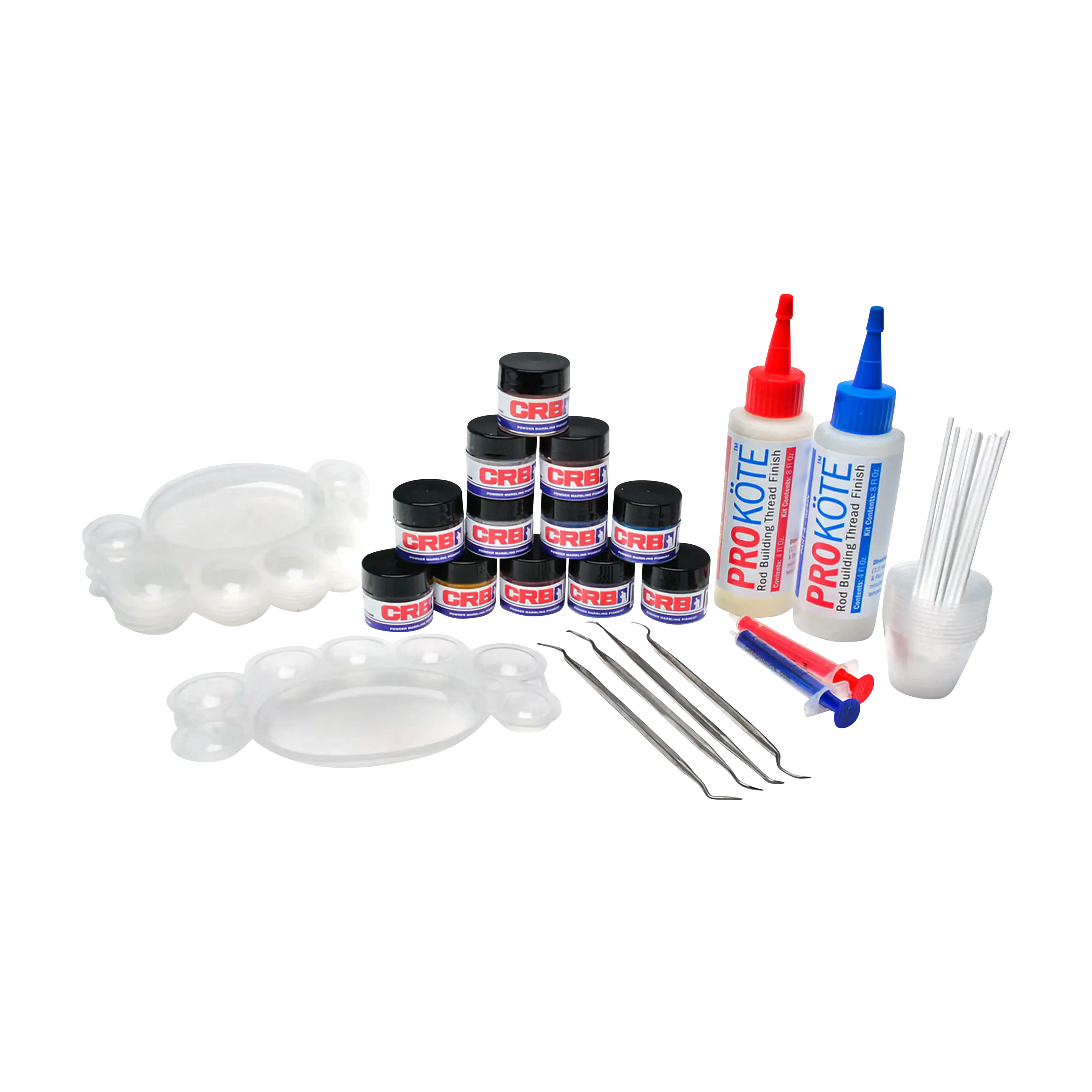
Everything needed to complete a custom surf fishing rod build can be found in a rod building supply kit. These kits include essential tools and materials such as rod dryers, thread, hand wrappers, epoxy, brushes, and reamers, helping builders avoid sourcing individual items separately. A complete supply kit simplifies the process and provides the equipment needed to build, finish, and maintain a custom surf rod with consistent results.
For Beginners
All-in-one supply kits provide the essential tools and materials needed to get started without purchasing each item individually. This allows new builders to focus on learning key techniques such as guide wrapping, epoxy application, and proper component installation.
For Experienced Builders
Supply kits are useful for replacing commonly used consumables such as thread, epoxy, and finishing supplies. Even experienced builders can save time by keeping essential materials organized and ready for future projects.
Key Takeaways
- Supply kits include essential tools and materials for completing custom rod builds.
- Beginners benefit from kits that simplify setup and provide the basics needed to learn rod building.
- Experienced builders can use kits to restock consumables and maintain an efficient workflow.
- Having the right supplies helps improve consistency and build quality.
Supply Kits

Best Reels for Surf Fishing
Now let’s find a reel for your custom rod.
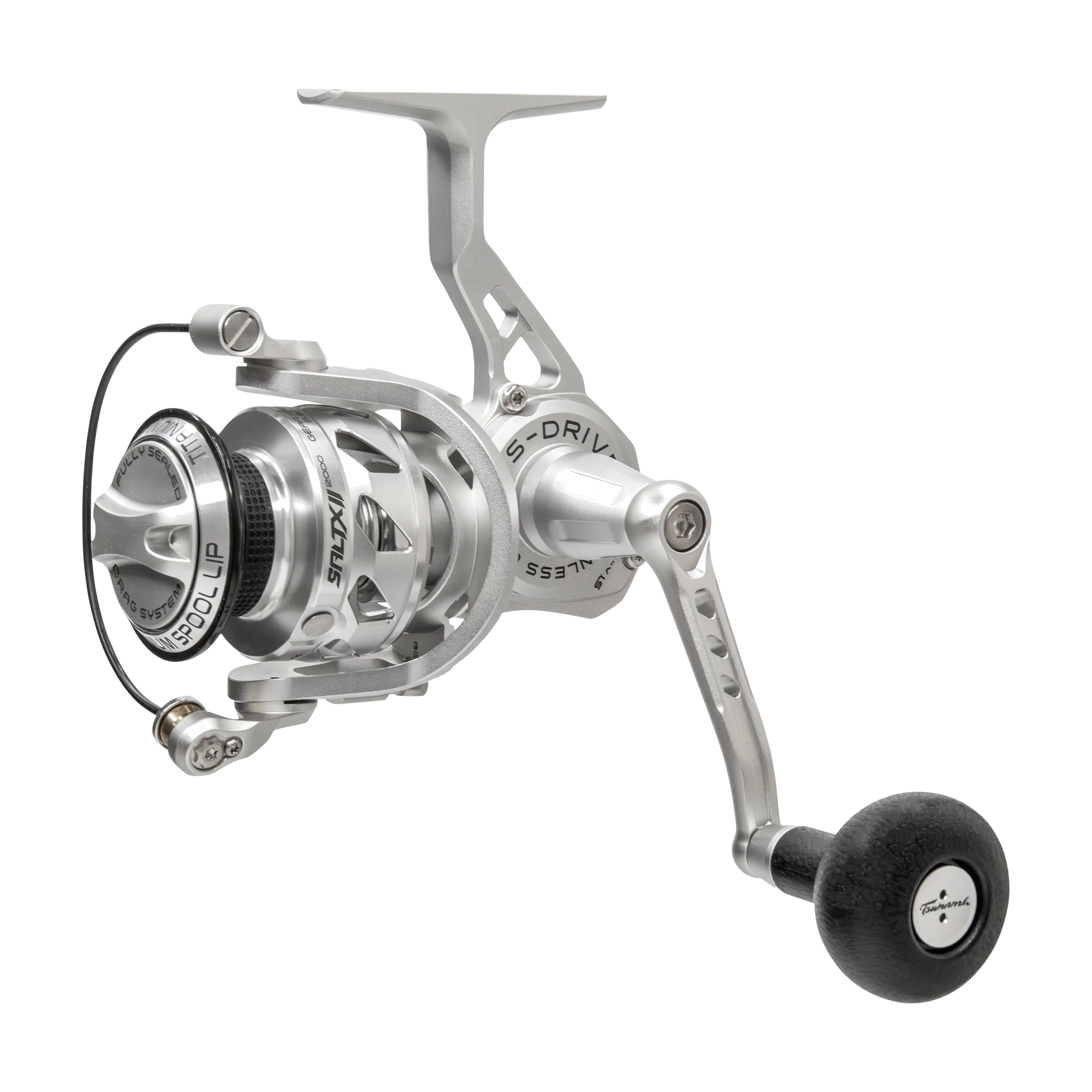
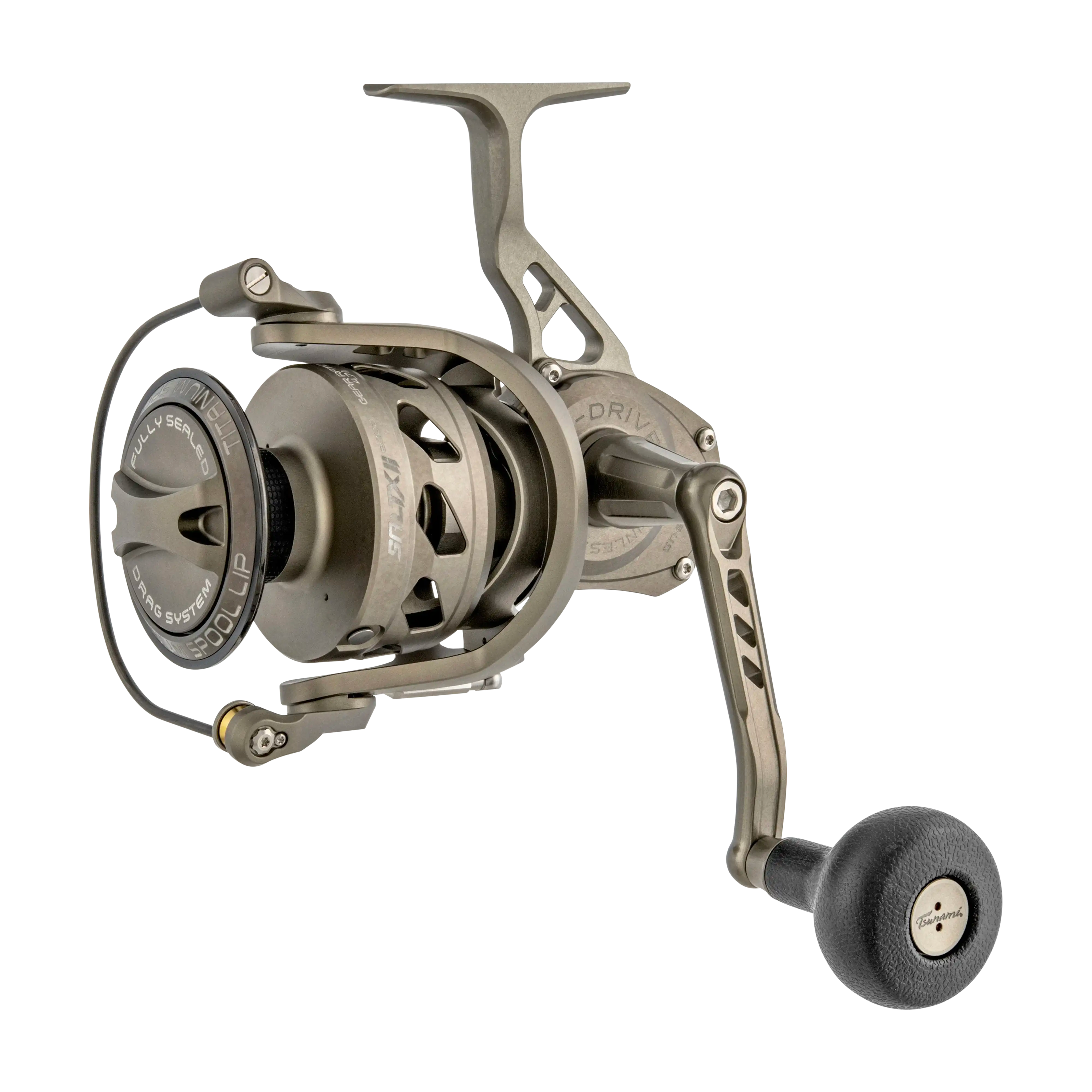
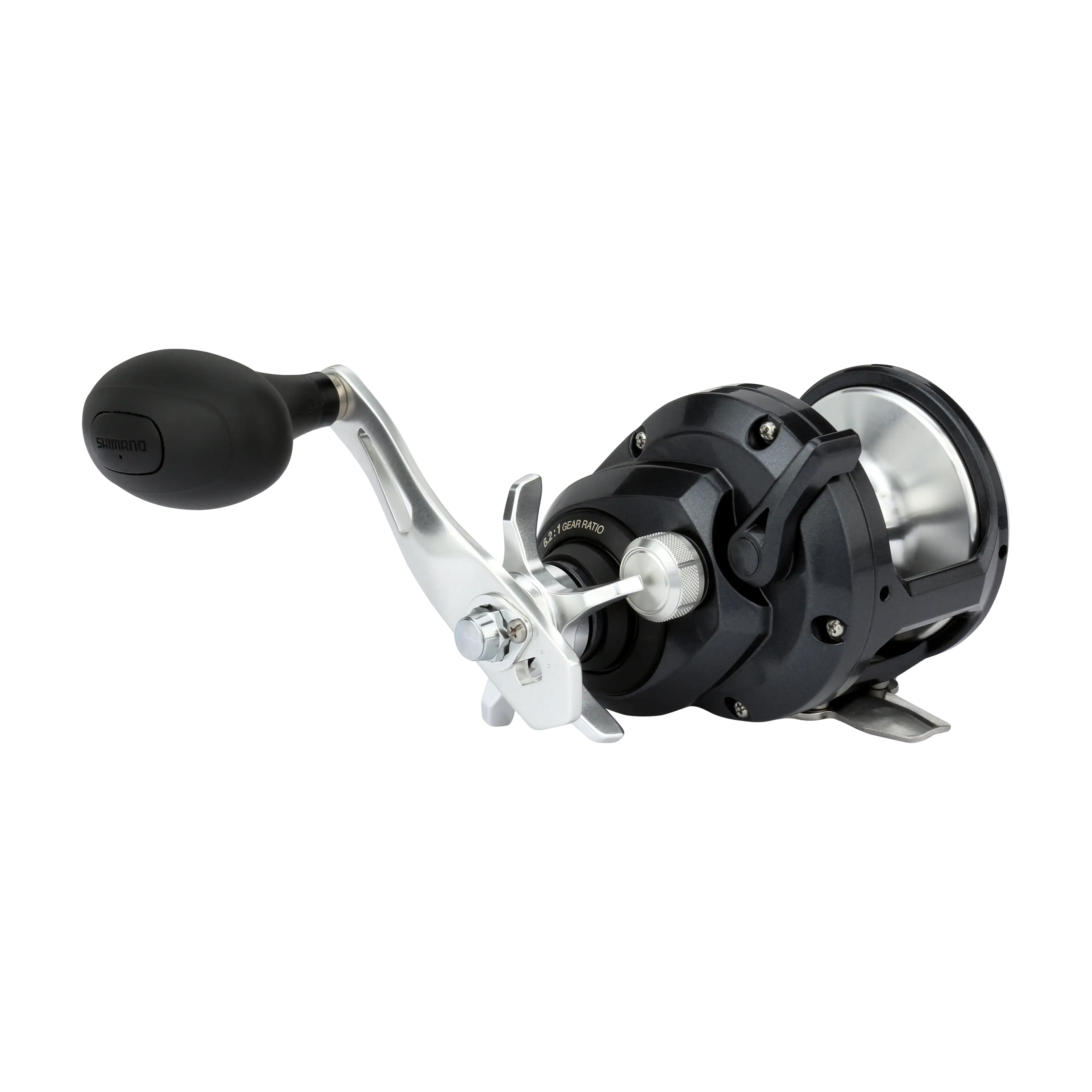
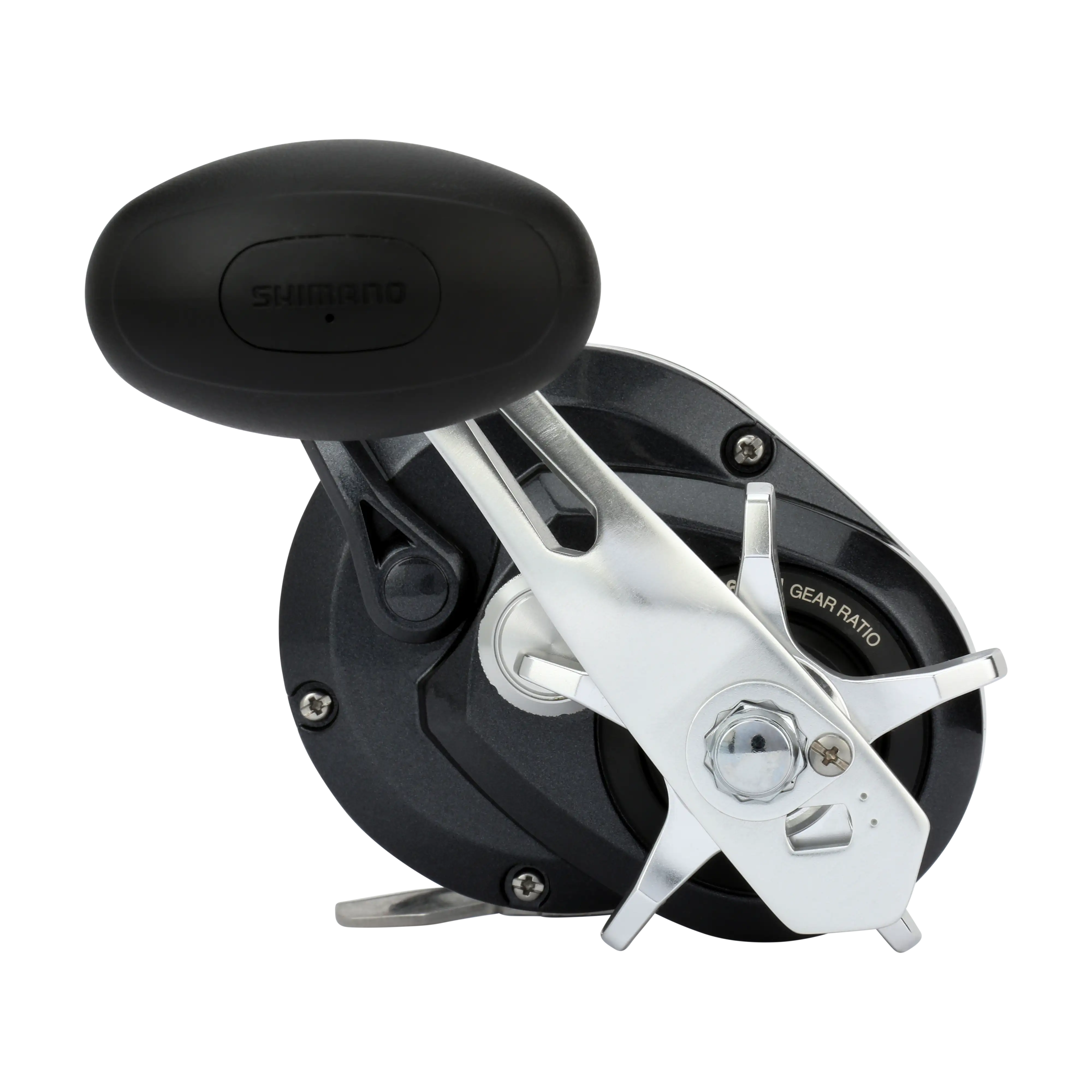
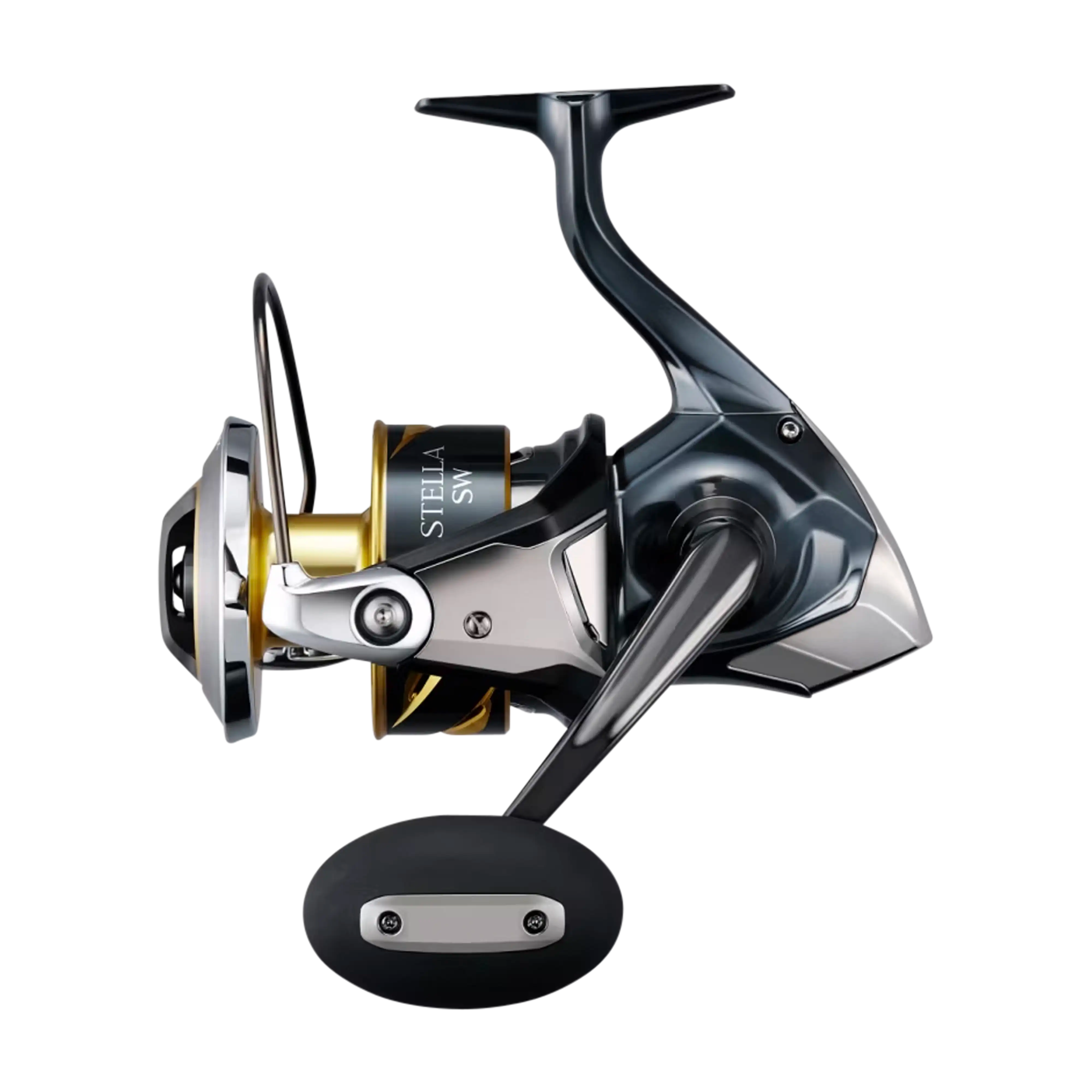
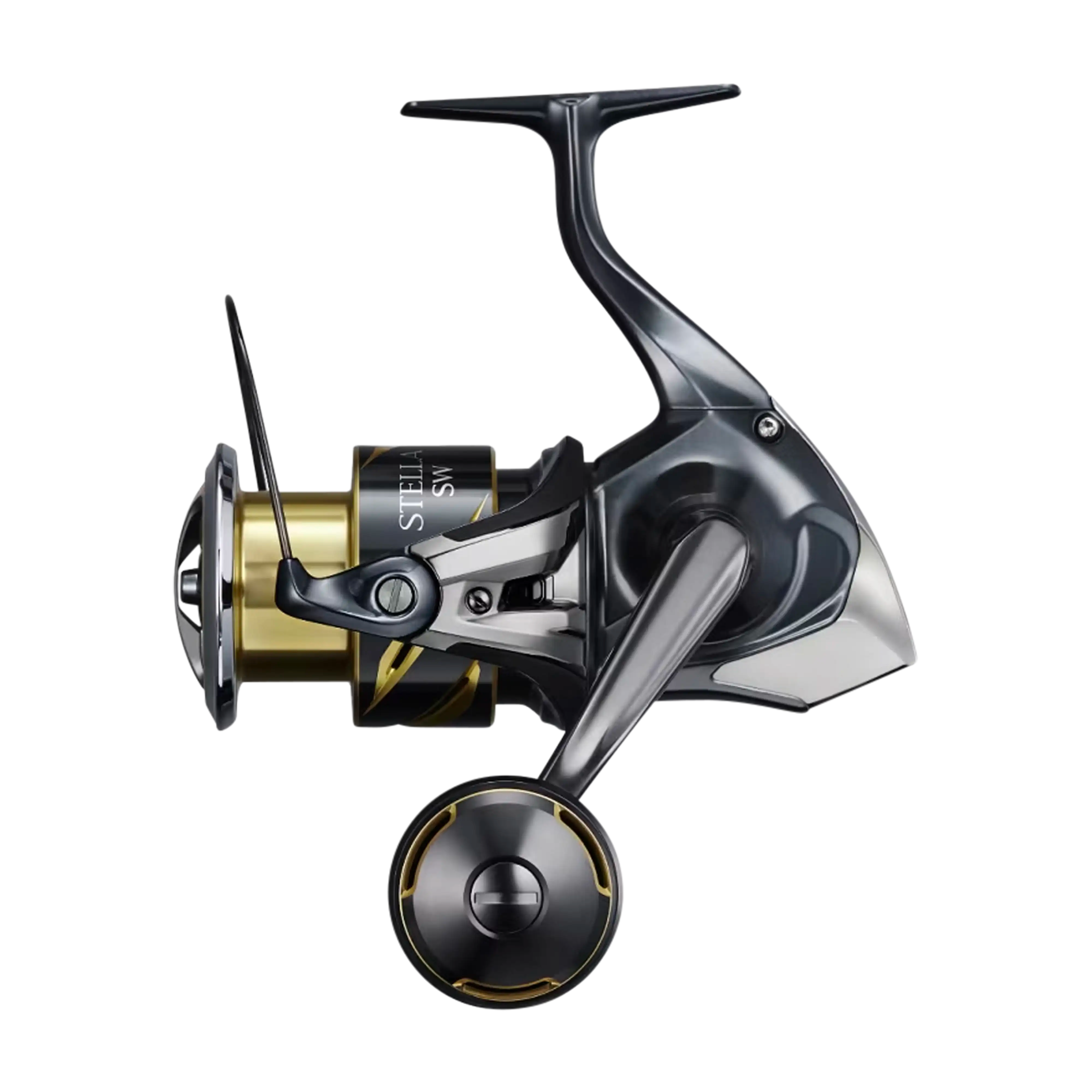
A surf fishing reel needs the casting performance, line capacity, drag, and durability to handle long casts and powerful fish in demanding saltwater conditions. The right reel depends on the application, with lighter setups favoring compact reels that are comfortable to cast repeatedly and heavier bait fishing requiring greater line capacity, drag capability, and cranking power.
Reel Type
Spinning reels are widely used throughout surf fishing because they are easy to cast, perform well with a broad range of line and presentation weights, and are a practical choice in windy conditions. They are especially popular for light surf fishing and plugging but can be sized up considerably for heavy bait fishing and larger species.
Conventional reels provide excellent casting performance, line capacity, and direct spool control in a compact design. They are particularly popular for bait fishing and distance casting, although smaller conventional reels can also be used for plugging, jetty fishing, and other surf applications. Casting them effectively requires more spool control than a spinning reel, especially in strong wind.
Reel Size
Spinning reels used in the surf can range from approximately 3000 to 8500 and larger, depending on the application. Sizes 3000–4000 suit lighter surf fishing, 4000–6000 cover much of surf plugging and general-purpose fishing, and 6000–8500+ provide increased capacity and power for heavier bait fishing and larger fish. Very large surf and land-based shark setups may require reels beyond these ranges.
Conventional reel sizing varies considerably by manufacturer, but compact 12–15 class reels can handle lighter surf applications, while 15–30 class reels cover much of conventional bait and heavier surf fishing. Round conventional reels may use entirely different size designations, so spool capacity, reel dimensions, drag, and intended line should be compared rather than relying on the size number alone.
Gear Ratio
Gear ratio determines how many times the spool or rotor turns with each rotation of the handle, while actual line pickup also depends on spool diameter and line level. Lower ratios around 4.0:1 to 5.0:1 provide greater cranking power and are commonly suited to heavy bait fishing and larger fish. Moderate ratios around 5.0:1 to 5.8:1 provide a versatile balance of retrieve speed and power for general surf fishing, while faster ratios around 5.8:1 to 6.5:1 and higher are useful for plugging and lure casting where quick line pickup is important.
Because two reels with the same gear ratio can retrieve different amounts of line per handle turn, consider both gear ratio and the manufacturer's listed line retrieve when comparing surf reels.
Line Capacity
Surf reels need enough capacity for the intended mainline while leaving sufficient reserve for long casts and hard-running fish. Braid is widely used because its thin diameter allows substantial line capacity without requiring an excessively large reel, while monofilament remains useful as a mainline, shock leader, or leader depending on the application.
Capacity becomes increasingly important when targeting large fish capable of making long runs or when fishing heavy tackle from shore. For lighter surf and plugging applications, excessive capacity can add unnecessary reel size and weight, so the goal is to carry enough line for the application without oversizing the entire setup.
Reel Specs by Application
Surf fishing reel selection is driven by presentation, casting distance, surf conditions, and target species. Lighter setups prioritize manageable weight and efficient casting, while heavier bait fishing and structure-oriented applications place greater demands on line capacity, drag, and durability. Reel size, retrieve speed, and line choice should be matched to the intended application and conditions.
Here are recommended reel specifications for four common surf fishing applications.
Bait Fishing
Bait fishing covers everything from lighter beach rigs to heavy sinkers, large baits, and powerful coastal species, so reel requirements vary considerably. General surf bait reels need ample line capacity, a smooth drag, and enough cranking power to retrieve weighted rigs through waves and current. Heavy bait fishing and shark applications place greater emphasis on capacity, drag capability, and strength.
Reel Type / Size: Spinning 4000–8500+; Conventional 15–30+
Gear Ratio: Approximately 4.3:1–6.2:1
Drag: Smooth, strong drag matched to line strength and target species
Line (Mainline / Leader): 15–30 lb mono or 20–50 lb braid / 20–60 lb mono or fluorocarbon; substantially heavier leaders for sharks and toothy species
Surf Plugging & Lure Casting
Surf plugging requires a reel that is light enough for repeated casting while providing the capacity, retrieve speed, and drag needed for strong coastal fish. A smooth retrieve and efficient line pickup are especially important when working plugs, bucktails, metals, and soft plastics through moving water.
Reel Type / Size: Spinning 4000–6000; Conventional 12–15 class
Gear Ratio: Approximately 5.2:1–6.2:1
Drag: Smooth, responsive drag with sufficient pressure for the target species
Line (Mainline / Leader): 15–30 lb braid / 20–50 lb mono or fluorocarbon leader
Light Surf Fishing
Light surf fishing benefits from a compact reel that balances well with a lighter surf rod and handles thin-diameter line efficiently. Spinning reels dominate this application because they cast lighter baits, rigs, and artificials effectively while keeping the overall setup lightweight and easy to fish.
Reel Type / Size: Spinning 3000–4000; compact conventional or saltwater casting reels are less common
Gear Ratio: Approximately 5.0:1–6.2:1
Drag: Smooth drag suited to lighter line and smaller coastal species
Line (Mainline / Leader): 8–15 lb mono or 10–20 lb braid / 8–20 lb mono or fluorocarbon leader
Jetty & Rock Fishing
Jetty and rock fishing requires a durable reel with the drag and cranking power to control fish around current and hard structure. Line capacity remains important, but stopping power and a strong, dependable retrieve become greater priorities when fish need to be turned away from rocks, pilings, and other abrasive cover.
Reel Type / Size: Spinning 5000–6500; Conventional 15–20 class
Gear Ratio: Approximately 4.8:1–6.2:1
Drag: Strong, smooth drag capable of applying immediate pressure around structure
Line (Mainline / Leader): 20–50 lb braid / 30–60 lb mono or fluorocarbon leader
Surf Fishing Reels


Build a Surf Fishing Rod
FAQ - Custom Surf Fishing Rods
What length rod blank is best for surf fishing?
Most surf rods range from about 8' to 13'+ depending on the application. Shorter 8'–10' blanks provide maneuverability for light surf, plugging, and some jetty fishing, while 9'–11' rods cover a broad range of lure and general surf applications. Longer 10'–13'+ blanks provide additional casting leverage and line control for bait fishing and reaching beyond the breakers.
What power should I choose for a surf rod?
Medium-Light through Heavy powers cover most surf fishing applications. Medium-Light and Medium blanks suit lighter baits, rigs, and artificials, while Medium-Heavy and Heavy blanks handle heavier casting loads, stronger surf and current, and larger fish. Choose power primarily around the total weight being cast and the amount of fish-fighting control required.
What action is best for a surf fishing rod?
Fast through Moderate actions are used for surf fishing depending on the application. Fast actions provide quick recovery and responsive lure control for plugging and lure casting, while Moderate-Fast offers a versatile balance of responsiveness and progressive loading. Moderate actions load deeper into the blank and can be well suited to heavier bait and sinker combinations.
Should I build a spinning or conventional surf rod?
Both are widely used. Spinning rods are versatile, easy to cast, and perform well with lighter presentations and in windy conditions, making them popular for light surf, plugging, and general bait fishing. Conventional builds are especially popular for bait fishing, distance casting, and heavier surf applications where spool control, line capacity, and cranking power are priorities.
How do I choose the correct casting-weight rating for a surf rod blank?
Match the blank's rating to the complete load being cast. For lure fishing, this is primarily the lure itself, while bait fishing requires accounting for the sinker, rig, and bait together. Never exceed the manufacturer's specified casting-weight range when selecting a blank for the intended presentation.
What guides should I use on a surf fishing rod?
Heavy-duty double-foot guides are commonly used for the strength and stability needed in surf fishing. Guide size and layout should match the spinning or conventional reel configuration, line, and leader system, with enough ring clearance for any knots or connections that must pass through the guides.
How do I choose the correct reel seat size for a surf rod?
Barrel-style surf reel seats commonly range from sizes 18 to 24, with larger sizes needed as blank diameter increases. The seat must also securely accommodate the intended reel foot, which is especially important with larger surf reels. Plate-style seats are another option when a thinner, streamlined grip is preferred.
What grip materials work best for a custom surf rod?
Cork tape, textured heat-shrink tubing, and EVA are all commonly used because they provide comfortable, durable gripping surfaces without excessive bulk. These materials can be used individually or combined depending on the desired grip diameter, hand placement, durability, and overall handle configuration.
Do I need larger guides when using a shock leader on a surf rod?
The guide train and tip-top need sufficient clearance for any leader knot or connection that will travel through them during casting. Heavier shock leaders, wind-on leaders, and larger knots may require additional ring clearance, but guides should not be oversized unnecessarily because added size and weight can affect the blank's performance.
From the Mud Hole Journal
Further Reading
Article
Write text about your blog post.