









If you’re looking for more rod recommendations, reel pairings, line setups, and technique-specific advice, head back to the complete Main Gear Guide Page for the full breakdowns on your favorite techniques.
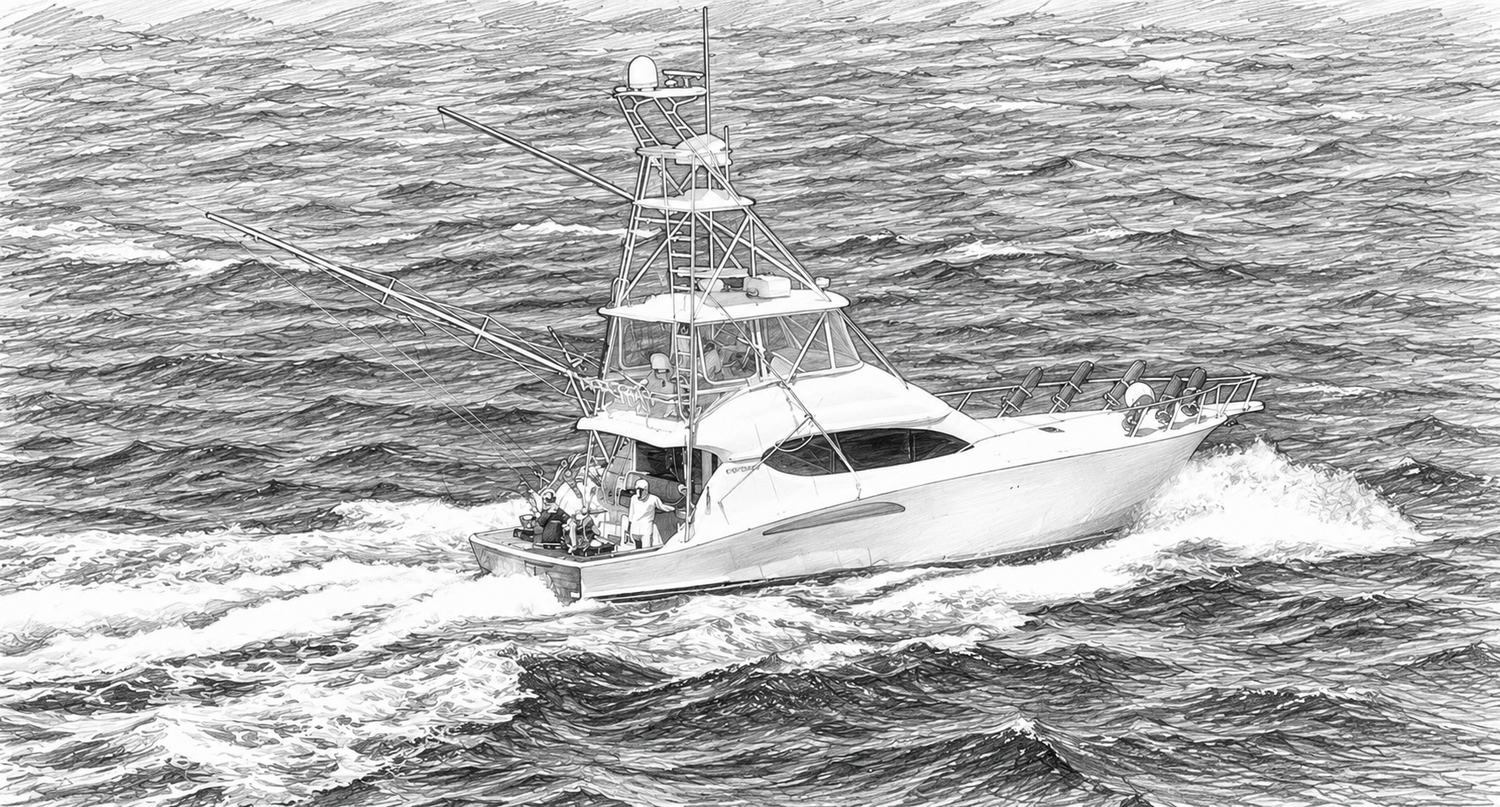
When it comes to offshore fishing, few techniques are as exciting or efficient as high-speed trolling.
Unlike traditional trolling methods that focus on carefully presenting baits to feeding fish, high-speed trolling is designed to trigger reaction strikes. Boats move at speeds ranging from 10 to 20 knots or more, pulling specialized lures that streak through the water and force predators to make split-second decisions.
The result is a technique built around covering water, locating active fish, and provoking violent strikes from some of the fastest predators in the ocean.
At the center of this style of fishing is one species in particular: the wahoo.
Known for blistering speed, razor-sharp teeth, and explosive strikes, wahoo are perfectly suited to high-speed presentations. While tuna, mahi-mahi, and other pelagic species occasionally join the action, few fish have become more closely associated with high-speed trolling than wahoo.
For anglers who enjoy fast-paced offshore fishing and the possibility of hooking one of the ocean's most powerful predators, few techniques can match the excitement of high-speed trolling.
What Is High-Speed Trolling?
High-speed trolling is an offshore fishing technique that utilizes elevated boat speeds and specialized lures to trigger reaction strikes from pelagic predators.
Instead of presenting natural baits or slower-moving lures, anglers pull streamlined trolling lures specifically designed to remain stable at speeds that would render most conventional trolling baits ineffective.
The technique typically targets fish that are actively hunting and capable of incredible bursts of speed.
Wahoo are the primary target because their streamlined bodies and aggressive feeding behavior make them particularly responsive to fast-moving prey.
The objective is simple: cover as much productive water as possible while presenting lures that appear to be fleeing baitfish.
When done correctly, the technique allows anglers to efficiently search large offshore areas and quickly identify active fish.

A lit-up Wahoo!
Why High-Speed Trolling Works
Predatory fish are wired to respond to movement.
Fast-moving prey often triggers an instinctive chase response, particularly among species that rely on speed to hunt.
High-speed trolling capitalizes on this behavior.
Rather than waiting for fish to discover a slowly moving bait, anglers present lures that race through the water at speeds that mimic fleeing forage.
This often forces fish to react immediately.
Wahoo, in particular, are famous for their willingness to attack high-speed presentations.
Their ability to accelerate rapidly allows them to overtake prey that many other species cannot catch.
The technique also increases efficiency.
Because boats cover significantly more water than with traditional trolling methods, anglers can locate productive areas more quickly and spend more time fishing around active fish.
In offshore environments where fish may be widely dispersed, this advantage can be substantial.
Where High-Speed Trolling Excels
High-speed trolling performs best in offshore environments where pelagic species move across large areas in search of bait.
Temperature breaks, current edges, underwater ridges, seamounts, and offshore structure all create productive opportunities.
Areas where currents converge often concentrate baitfish and become natural feeding zones for predators.
Wahoo frequently patrol these locations while looking for vulnerable prey.
The technique is especially effective when fish are scattered rather than concentrated.
Instead of relying on stationary structure or visible surface activity, anglers can systematically cover water until productive zones are identified.
Whenever the goal is locating aggressive pelagic fish quickly, high-speed trolling deserves serious consideration.
Reading Conditions and Fish Behavior
Successful high-speed trolling begins long before the first lure enters the water.
Locating productive offshore conditions is often the most important factor.
Temperature breaks frequently attract bait and predators by creating distinct boundaries between water masses.
Current seams can have a similar effect.
Bird activity, floating debris, weed lines, and bait concentrations all provide valuable clues.
Electronics and offshore charts can also reveal contour changes, ledges, and structure that concentrate fish.
Pay attention to water clarity and current direction as well.
Many successful offshore anglers spend as much time interpreting conditions as they do actively fishing.
The more efficiently productive water can be identified, the more opportunities anglers create for high-speed strikes.
Technique: Cover Water Efficiently
One of the defining characteristics of high-speed trolling is efficiency.
Unlike slower trolling methods that may focus on a specific area, high-speed trolling is designed to search.
Most anglers maintain speeds between 10 and 20 knots depending on lure style, sea conditions, and target species.
The spread is typically simple.
Fewer lines help reduce tangles while maintaining clean lure action at elevated speeds.
Lures are positioned at varying distances behind the boat to create separation and cover multiple lanes of water.
Consistency is critical.
Lures must track straight without spinning, blowing out, or skipping erratically.
Regularly checking lure action ensures the spread continues to perform as intended.
When a productive area is identified, anglers may make repeated passes through the zone to maximize opportunities.
Best Lures for High-Speed Trolling
Not all trolling lures can withstand high-speed presentations.
Specialized high-speed trolling lures are built with streamlined profiles and weighted heads that allow them to remain stable even at extreme speeds.
Bullet-style lures, heavy jet heads, and weighted trolling lures dominate this category.
These designs create minimal drag while maintaining consistent tracking.
Many anglers utilize wire leaders because wahoo possess razor-sharp teeth capable of cutting conventional leaders with ease.
Color selection often varies with conditions, but blue-and-white, black-and-purple, pink-and-silver, and other baitfish-inspired combinations consistently produce.
The key is selecting lures specifically designed for elevated trolling speeds.

Nomad Tackle DTX 220 Minnow Heavy Duty
Proper lure performance is often the difference between a productive day and a frustrating one.
For a complete selection of proven lures, explore our trolling lures and trolling skirts designed specifically for offshore applications.
Gear Setup for High-Speed Success
High-speed trolling places tremendous demands on equipment.
Rods between 5'6" and 6'6" with heavy to extra-heavy power provide the backbone necessary to withstand sustained drag pressure and violent strikes. Start by picking out your rod.
Shorter rods offer excellent leverage while reducing stress during extended trolling sessions.
Choosing the right offshore trolling rod is critical because these rods remain under constant load while pulling heavy lures at speed.

Shimano Tiagra 2-Speed Lever Drag Conventional Reel
Conventional trolling reels with substantial line capacity and smooth drag systems remain the standard.Check out our reel recommendations.
Most anglers utilize 50-130 lb braided line or equivalent heavy mono systems depending on their preferred setup. Strong leaders, durable terminal tackle, and corrosion-resistant components are essential.
These are the hook, line and leader combinations we pick.
Every part of the system must be capable of handling extreme forces without failure.
Reliability becomes especially important when targeting fish capable of reaching speeds exceeding 50 miles per hour.
A Must-Fish Destination: The Bahamas Wahoo Grounds
A perfect example of where high-speed trolling excels can be found throughout the Bahamas.

Headed To Wahoo Grounds
The islands are famous for their deep-water drop-offs, current-rich environments, and outstanding wahoo fishing opportunities.
Many productive areas feature steep contour changes where deep water rises rapidly toward the surface, creating natural feeding zones.
Strong currents concentrate bait and provide ideal hunting conditions for wahoo and other pelagic species.
These factors make the Bahamas one of the premier destinations in the world for high-speed trolling.
Anglers routinely cover large expanses of water while targeting fish capable of producing blistering runs and unforgettable strikes.
Few fisheries showcase the effectiveness of high-speed trolling better than the offshore waters surrounding the Bahamian islands.
Final Thoughts
High-speed trolling is one of the most efficient and exciting techniques in offshore fishing.
Its ability to cover vast areas of water while triggering reaction strikes from aggressive predators makes it a favorite among anglers targeting wahoo and other pelagic species.
Whether searching temperature breaks, current seams, or offshore structure, the technique provides a proven system for locating active fish and provoking explosive strikes.
The key is maintaining clean lure action, using tackle capable of handling extreme pressure, and focusing on productive offshore conditions.
For anglers seeking fast-paced action and some of the most violent strikes in saltwater fishing, high-speed trolling delivers an experience unlike any other.
For more rod recommendations, reel pairings, line setups, lure selections, and trolling-specific advice, check out the complete Offshore Trolling Gear Guide and build a system designed to maximize your success offshore.
About the Author

The team at Mud Hole Custom Tackle are passionate offshore anglers, boating enthusiasts, and tackle experts dedicated to helping fishermen build better gear and catch more fish. From nearshore trolling and coastal fisheries to bluewater adventures targeting the ocean's fastest predators, the Mud Hole Staff combines real-world experience with technical expertise to help anglers select equipment that performs when it matters most. Their passion for offshore fishing and practical knowledge drives every guide, article, and recommendation they create.