


















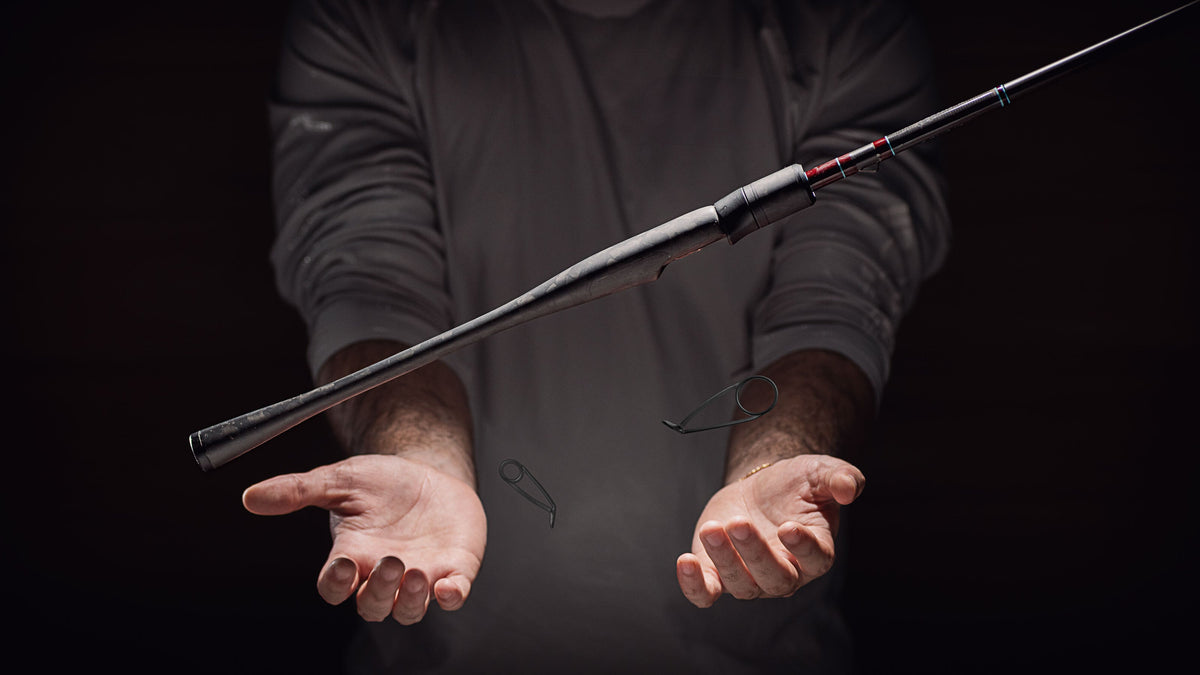
There is a point in rod building where “lighter” stops being a meaningful improvement and starts becoming the goal itself. We have spent years pushing rod weight lower, developing lighter blanks, lighter guides, smaller reel seats, minimalist handles, and increasingly streamlined component combinations. There are good reasons for that progress. A lighter rod can be easier to cast, more comfortable to hold throughout a long day on the water, and less fatiguing when you're constantly working a lure. Modern materials and manufacturing techniques have also made it possible to build rods that weigh far less than many of us could have imagined a few decades ago.
But somewhere along the way, it is worth asking an important question: Are we building better fishing rods, or are we simply building lighter fishing rods? Those aren't necessarily the same thing, and I think the distinction deserves more attention than it gets. Weight is an important part of rod design, but it is only one piece of a much larger puzzle. When we focus so heavily on making a rod lighter, we risk overlooking the characteristics that determine how well that rod actually performs in the hands of an angler.
Light Doesn't Automatically Mean Better
Weight matters when you're building a fishing rod, but the total weight of the finished rod only tells part of the story. Where that weight is located can have just as much impact on how a rod feels in your hand, how easily you can move it, and how comfortable it is to fish over an extended period. This is where balance and swing weight enter the conversation, and both deserve consideration before we declare one rod better than another simply because it weighs less.
A rod that weighs slightly more but balances naturally in your hand can feel more comfortable and require less effort to control than a lighter rod that is heavily tip weighted. You can remove material from the handle, choose lighter components, and build an impressively light finished rod, but if the result is a rod that constantly wants to fall toward the tip, have you really improved it? You may have reduced its weight on paper while making it less enjoyable to fish in practice.
Think about how often an angler moves a rod during a typical day. Casting, working a worm, twitching a jerkbait, walking a topwater, or maintaining contact with a jig all involve repeated movements. Even small differences in how a rod responds can become noticeable after hundreds of casts. Saving a few grams might sound impressive when the rod is sitting on the workbench, but that number doesn't tell you how the rod will feel after six hours of fishing.
We May Be Chasing the Wrong Number
One of the easiest traps in custom rod building is turning something we can measure into the thing we're trying to optimize. Weight is easy to measure. Put the rod on a scale, record the number, and compare it with another build. Balance, swing weight, comfort, and the way a rod feels throughout an entire day are more difficult to quantify, but those characteristics can have a much greater influence on the overall fishing experience.
Imagine two rods designed for the same technique. One weighs 3.8 ounces, while the other weighs 4.1 ounces. On paper, the 3.8-ounce rod wins the weight contest, and if weight is the only number that matters, the decision seems obvious. But what if the 4.1-ounce rod balances better, feels more natural in your hand, and is easier to keep under control while working a bait? What if the lighter rod is tip heavy and requires you to constantly support the tip with your wrist?
Suddenly, those three-tenths of an ounce don't seem quite as important. In fact, the heavier rod might be the one you reach for every time you head to the water, simply because it feels better to fish.
This is one of the things that makes custom rod building so interesting. We aren't limited to building the lightest possible version of a particular rod. We have the ability to build around the technique, the blank, the reel, the components, and, most importantly, the person who is going to fish it. The scale can tell us how much a finished rod weighs, but it cannot tell us which rod an angler will prefer after a full day of fishing.
Can a Rod Actually Be Too Light?
I think this is where the conversation gets interesting. Can a rod actually be too light? Absolutely, although that doesn't mean lightweight rods are bad or that we should stop trying to eliminate unnecessary weight. It means there can be a point where removing additional weight starts affecting other characteristics that are more important to the way the rod fishes.
Consider the handle. A builder can remove material from a grip, choose an extremely lightweight reel seat, shorten the rear grip, and minimize everything possible around the back of the rod. Those decisions might produce an impressive number on the scale, but the handle isn't simply there to give you something to hold. It influences comfort, grip security, leverage, and the balance of the finished build. Depending on the application, a little additional material in the right location may improve the way the rod feels and performs.

The same principle applies to guides, reel seats, winding checks, butt caps, and other components. Lightweight components can be excellent choices, and there are plenty of situations where reducing component weight provides a real benefit. The mistake is assuming that the lightest available option is automatically the best option for every build. A component has a job to do, and its weight needs to be considered alongside its strength, function, durability, and suitability for the intended application.
A finesse spinning rod and a heavy flipping rod shouldn't necessarily be built around the same weight philosophy. Neither should a freshwater bass rod and a heavy-duty saltwater rod. The demands placed on those rods are different, so the priorities behind their construction should be different as well. The right component isn't necessarily the lightest component. It's the component that does the job best.
The Tip-Heavy Rod Problem
One of the biggest problems with chasing weight is that we can unintentionally change where the remaining weight is located. Removing weight from the handle might sound like an improvement, but that weight wasn't simply disappearing from the rod. Its removal changes the balance of the entire system, potentially creating a finished rod that is lighter overall but feels more cumbersome when held and moved.
Anyone who has spent an entire day casting a tip-heavy rod knows what I'm talking about. You pick it up, make a few casts, and everything seems fine. After several hours of working a bait, however, you start noticing how much effort it takes to keep the rod tip where you want it. The rod may be light enough to impress anyone who picks it up on a scale, but the way it loads your wrist and forearm can make it less comfortable to fish.
Think about a hammer. Two hammers can weigh exactly the same, but if one has more of its weight concentrated toward the head, they won't feel the same when you swing them. The distribution of mass changes the effort required to move each tool. A fishing rod works in a similar way. Overall weight matters, but the distribution of that weight also influences how the rod feels when you're casting, retrieving, and making repeated movements.
This is why balance and swing weight deserve more attention than simply asking, "How much does this rod weigh?" Swing weight relates to the effort required to rotate or move the rod, and the distribution of mass along its length plays an important role. Two rods with identical weights can feel remarkably different because their mass is distributed differently. A well-designed build considers these characteristics together rather than treating the number on the scale as the final verdict.
Balance, Swing Weight, and Sensitivity Are Not the Same Thing
It's also important to recognize that balance, swing weight, and sensitivity are related to the overall fishing experience, but they are not interchangeable. A rod can balance well when held stationary and still feel cumbersome when repeatedly moved. Another rod might have a very light swing weight but not provide the balance or handling characteristics an angler prefers. Sensitivity, meanwhile, depends on several factors, including the blank's construction, the line, the components, and how the rod is held and used.
There isn't a single measurement that tells us everything we need to know about a finished rod. A static balance point can be useful, but it doesn't fully describe how the rod behaves during a cast or retrieve. Similarly, a low overall weight doesn't automatically guarantee a low swing weight, and neither measurement alone guarantees better sensitivity.
This is particularly important when choosing components for a custom build. Rather than assuming one characteristic will automatically deliver all the others, builders should evaluate what each component contributes to the finished rod. The goal is to find the combination that delivers the desired handling, comfort, sensitivity, and performance for the technique at hand.
The Custom Rod Advantage
This is one of the biggest advantages of building a custom rod. You're not limited to accepting the exact combination of blank, reel seat, guides, and handle that a manufacturer decided to put together. You can choose components individually and build around the way the rod is actually going to be used, which gives you the opportunity to prioritize performance instead of following a one-size-fits-all formula.
What technique is the rod designed for? What reel will be mounted on it? What line and lure will it be paired with? How long will the rod be, and how will that length affect leverage and handling? Will you be making hundreds of casts in a day, working a lure constantly with the rod tip, or fishing around heavy cover where strength and control are essential? These questions should influence the build just as much as the desire to save a few grams.

A rod designed for working a topwater all day may benefit from different balance and handling characteristics than a rod designed to drag a worm across the bottom. A flipping rod doesn't necessarily need to follow the same lightweight philosophy as a finesse spinning rod, and a heavy offshore rod certainly doesn't need to win a weight contest. Each application places different demands on the blank and components, and a successful build takes those demands into account.
Custom rod building gives us the flexibility to make those decisions intentionally. We can choose a blank that suits the technique, select guides that provide the right combination of strength and weight, and build a handle that feels comfortable and provides the desired balance. Instead of removing weight wherever possible, we can decide where reducing weight makes sense and where a little additional material might improve the finished rod.
That doesn't mean every build needs extra weight or that builders should ignore lightweight components. It means the decisions should be based on the performance we're trying to achieve rather than an arbitrary goal of making every finished rod lighter than the last.
Are We Sacrificing Durability for Weight?
There is also a difference between eliminating unnecessary material and eliminating material simply because it adds weight. Those are two very different approaches to rod building, and confusing them can lead us to make decisions that look good on paper but don't make sense for the intended use.
A component that provides strength, protection, durability, or a specific function may be worth the additional weight. The same goes for a handle or reel seat that provides the right combination of comfort, grip, and balance. Custom rod building shouldn't be about seeing how little material we can use. It should be about putting the right materials in the right places and understanding what each part contributes to the finished product.
This becomes even more important when building rods that are going to see hard use. A rod that spends its life bouncing around a boat, fishing heavy cover, throwing large lures, or fighting powerful fish has very different requirements from a finesse rod making delicate casts with lightweight tackle. Component selection, blank characteristics, and construction choices should reflect those differences.
Of course, adding weight doesn't automatically make a rod stronger or more durable, just as reducing weight doesn't automatically make it less durable. The point is that weight should be considered alongside the other properties that matter. If a lighter component performs just as well for the intended application, there's little reason to choose a heavier alternative simply for the sake of it. But if the lighter option compromises a necessary feature, saving a few grams may not be a worthwhile tradeoff.
Lightweight construction has tremendous value, but appropriate construction has even more value.
Maybe We Should Stop Asking, "How Much Does It Weigh?"
None of this means we should ignore weight. Lighter blanks and components have helped push rod design forward, and reducing unnecessary weight can absolutely improve a rod. There is a reason manufacturers continue investing in materials, designs, and components that reduce mass without sacrificing performance. The problem begins when weight becomes the only measurement we care about, or when we assume that every reduction represents an improvement.
Instead of automatically asking, "How light can I make this rod?" maybe the better question is, "Where does this rod need weight, and where doesn't it?" That is a completely different approach to building because it forces us to consider the entire system rather than focusing on a single number.
Instead of choosing the lightest possible component every time, consider what that component contributes to the finished rod. Instead of removing material because it sounds better on paper, consider whether that material serves a purpose. Instead of judging the build entirely by its weight, evaluate its balance, swing weight, comfort, and performance with the reel and line it will actually be used with.
And when the build is finished, pick it up and fish it. Cast it repeatedly, work the intended lure, and pay attention to how it feels after an extended period. Does the rod move naturally? Does it stay comfortable in your hand? Does the balance suit the technique? Does the finished build perform the way you intended? Those are the questions that ultimately matter, and they are questions a scale cannot answer.
The Best Rod Isn't Always the Lightest Rod
Rod building has always involved tradeoffs. Strength, weight, durability, balance, sensitivity, comfort, and performance all have to work together, and there isn't one combination that is perfect for every rod or every angler. What makes a rod exceptional for one technique may make it a poor choice for another. The challenge is understanding those differences and making decisions that serve the intended application.
The lightest possible rod might be exactly what you want for one application. For another, adding a few grams could produce a rod that is better balanced, more comfortable, and ultimately more enjoyable to fish. That additional weight might come from a component that improves handling, a handle configuration that better suits the angler, or a build that simply prioritizes the right characteristics over the lowest possible number.

That's what makes custom rod building so rewarding. We have more blank choices, more component options, and more information available to us than ever before. We can build highly specialized rods around specific techniques, individual preferences, and the demands of the fishing we actually do. We have the ability to go beyond simply assembling the lightest collection of parts and create something that performs as a complete system.
So, by all means, look for ways to eliminate unnecessary weight. Take advantage of new materials, lighter components, and better designs when they provide a genuine benefit. Just don't assume that all weight is unnecessary, or that the lightest rod on the bench is automatically the best one.
At the end of the day, the goal isn't to build the lightest rod sitting on the bench. It isn't to win a contest on the scale or to shave another fraction of an ounce off a build just because we can.
The goal is to build the rod you actually want to fish.
And sometimes, that rod might weigh a little more.