












If you’re looking for more rod recommendations, reel pairings, line setups, and technique-specific advice, head back to the complete Main Gear Guide Page for the full breakdowns on your favorite techniques. And if you're looking specifically for Flipping and Pitching ideas and products, head over to the Flipping and Pitching Gear Guide.
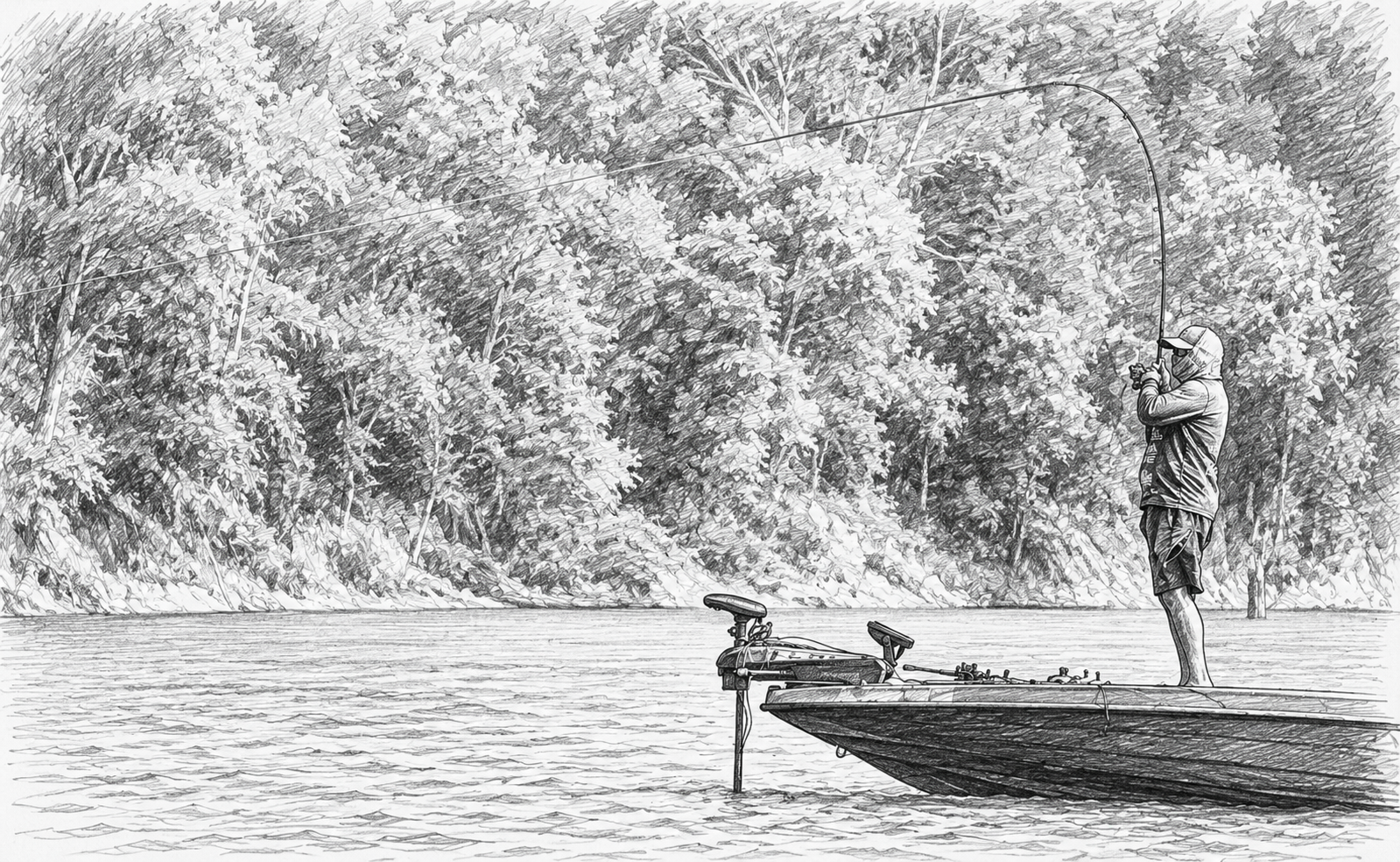
If docks are man-made bass magnets, then laydowns and wood cover are the original blueprint. Fallen trees, submerged branches, and scattered timber create some of the most natural and productive habitat bass will ever use. For anglers who understand how to break down wood cover, flipping and pitching these areas can consistently produce quality fish in every season.
Fishing wood is not just about putting a bait near a log and hoping for a bite. It is about understanding how bass position within that structure, how current and depth influence their behavior, and how to present a bait in a way that triggers a reaction. When done right, flipping and pitching wood becomes one of the most efficient ways to target big bass.
Understanding Laydowns and Wood Cover
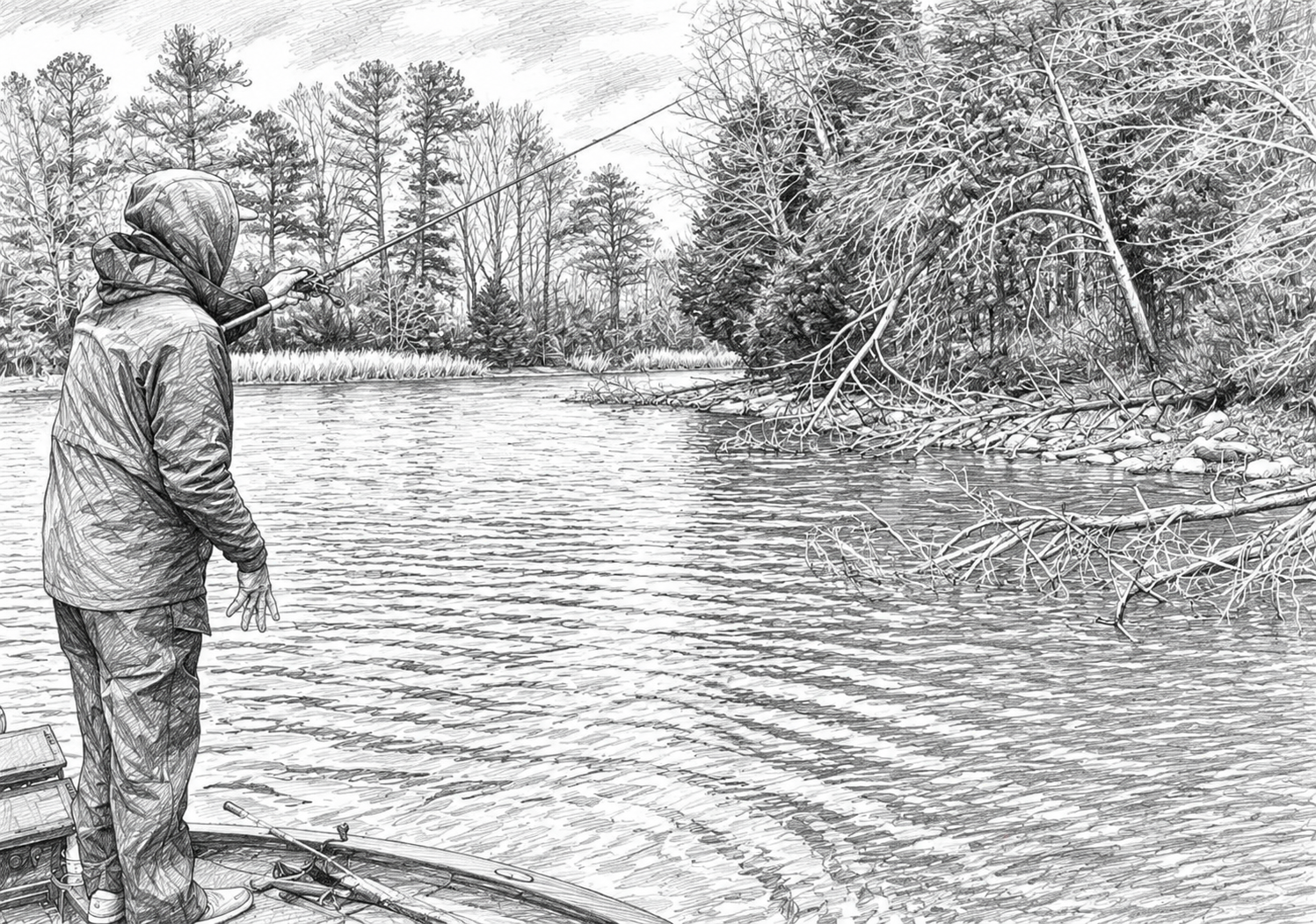
Laydowns are exactly what they sound like, trees that have fallen into the water, typically with the root ball still on the bank and the trunk and branches extending outward. These structures create a natural progression from shallow to deep water, making them ideal ambush points.

Lake Guntersville
Unlike docks, which are relatively uniform, every laydown is different. Some are sparse with just a few branches, while others are dense, tangled messes that provide endless hiding spots. This irregularity is what makes wood so effective. It creates multiple strike zones within a single piece of cover.
Bass relate to wood because it offers protection, shade, and feeding opportunities. Bluegill, crawfish, and baitfish all use wood for cover, and bass position themselves where they can take advantage of that activity. The key is identifying where within the laydown the highest percentage fish are holding.
Why Wood Holds Big Bass
There is a reason experienced anglers gravitate toward wood when targeting larger fish. Laydowns tend to attract better-than-average bass because they provide both security and access to food.
The root ball is often one of the most important areas. It is typically the thickest part of the structure and offers the most cover. In many cases, it also sits in slightly deeper water, making it a prime holding area for bigger fish.
The trunk and larger branches act as travel routes, allowing bass to move up and down the structure depending on conditions. Smaller branches and secondary cover create ambush points where fish can sit and wait for prey to pass by.
Current plays a huge role as well, especially in rivers or reservoirs with flow. Bass will often position on the downstream side of wood, using it as a current break while waiting for food to come to them. Understanding how water moves around a laydown can dramatically improve your efficiency.
What to Look for in High-Percentage Wood
Not all wood is equal, and learning to identify the best pieces can save you time and increase your catch rate.
Laydowns that extend into deeper water are typically more productive, especially during the summer and winter months. They give bass the ability to move vertically without leaving cover. Isolated laydowns also tend to hold more fish than stretches of continuous wood, simply because they stand out.
To give a better visual of how the laydown looks in the water, it is always a good idea to venture out on the lake during a time of a drawdown or low water to make those high-percentage trees that might not be visible during full-pool.

Lake Guntersville
Pay attention to how the wood enters the water. A tree that falls at an angle, creating multiple contact points with the bottom, often provides more structure than one that lies flat. The more complexity, the better.
Water clarity also plays a role. In stained or muddy water, bass may position tighter to the thickest cover, while in clear water, they may suspend slightly off the structure or hold in the shade created by branches.
Seasonal Patterns and Timing
Wood is a year-round player, but how bass use it changes with the seasons.
In the spring, laydowns become key staging and spawning areas. Bass move shallow and use wood for protection while preparing to spawn. This is a great time to target the shallower sections of a laydown, especially near the bank.
During the summer, fish often position deeper within the structure, seeking shade and cooler water. The outer limbs and deeper ends of laydowns become high-percentage areas, particularly during the heat of the day.
Fall brings baitfish activity, and bass will often roam more, using wood as feeding stations rather than permanent holding areas. This can create aggressive bites, especially around laydowns near creek channels or flats.
In winter, slower presentations around deeper wood are key. Bass tend to group up and hold tight to the structure, making precise, repeated presentations important.
Time of day also matters. Early and late can see fish positioned more on the outer edges, while midday often pushes them deeper into the thickest cover.
Technique: Breaking Down a Laydown
Fishing a laydown effectively requires a methodical approach. You cannot just make one cast and move on. Each section of the structure needs to be worked thoroughly.

Lake Guntersville
Start at the outermost branches and work your way in. These outer limbs often hold more aggressive fish that are easier to catch. From there, move progressively toward the trunk and eventually the root ball, which is often where the biggest fish are positioned.
Angle matters. Approaching a laydown from different angles can open up new casting lanes and present your bait in a way that fish have not seen. Boat positioning is critical, especially when trying to reach the heart of the structure.
Your bait should enter the water quietly and fall naturally. Many bites happen on the initial drop, so be ready. If the bait reaches the bottom without a bite, work it slowly through the cover, making contact with branches and structure to trigger a reaction.
Patience is key. The best anglers will make multiple pitches to the same target, knowing that sometimes it takes several presentations to get a fish to commit.
Best Lures for Wood Cover
When fishing laydowns, lure selection is all about efficiency and snag resistance. We have curated a full list of the best of the best when it comes to Flipping and Pitch Soft Baits.

6th Sense FlipGill 3.8" Flipping Bait
Flipping jigs are a staple. Their compact profile and weed guard allow them to move through branches while mimicking crawfish and bluegill. Paired with the right trailer, they can be fished slowly or aggressively depending on conditions.
Texas-rigged soft plastics, especially creature baits and beaver-style baits, are extremely effective in wood. They slide through cover with minimal resistance and can be adjusted in weight to match the depth and density of the structure.
In heavier cover, stepping up to a slightly heavier weight can help get your bait down quickly and maintain control. In lighter cover or clearer water, a more subtle presentation can produce better results. We always recommend your terminal tackle of hooks and weights to be flipping a pitching specific. Here is our list of what should be in your tackle box.
Color selection should match the environment. Natural tones work well in clear water, while darker colors provide better visibility in stained conditions.
Gear Setup for Wood Flipping and Pitching
Of course we begin with choosing the right Flipping and Pitching Rod for this technique. Fishing wood requires gear that can handle both precision and power.

St. Croix Victory Series
A medium-heavy to heavy casting rod, typically in the 7’ to 7’6” range, provides the backbone needed to pull fish out of cover while still allowing for accurate presentations.
Choosing the right flipping and pitching reel is critical for making quick, accurate presentations and maintaining control in heavy cover. A high-speed reel with a strong drag system helps anglers pick up line fast, drive solid hooksets, and pull big fish away from thick vegetation or structure.

Lew's Speed Spool
Check out our curated list of recommended flipping and pitching reels to find the best option for your style of fishing and target cover.
Line choice is critical. Braided line is often preferred in heavy wood due to its strength and abrasion resistance, while fluorocarbon can be used in clearer water where a more subtle presentation is needed.

Seaguar Red Label
We have our recommended list of proven line for flipping and pitching here.
Keeping your drag tight is essential. When you get a bite in wood, you need to move the fish immediately and keep it from gaining leverage within the structure.
A Must-Fish Destination: Lake Guntersville
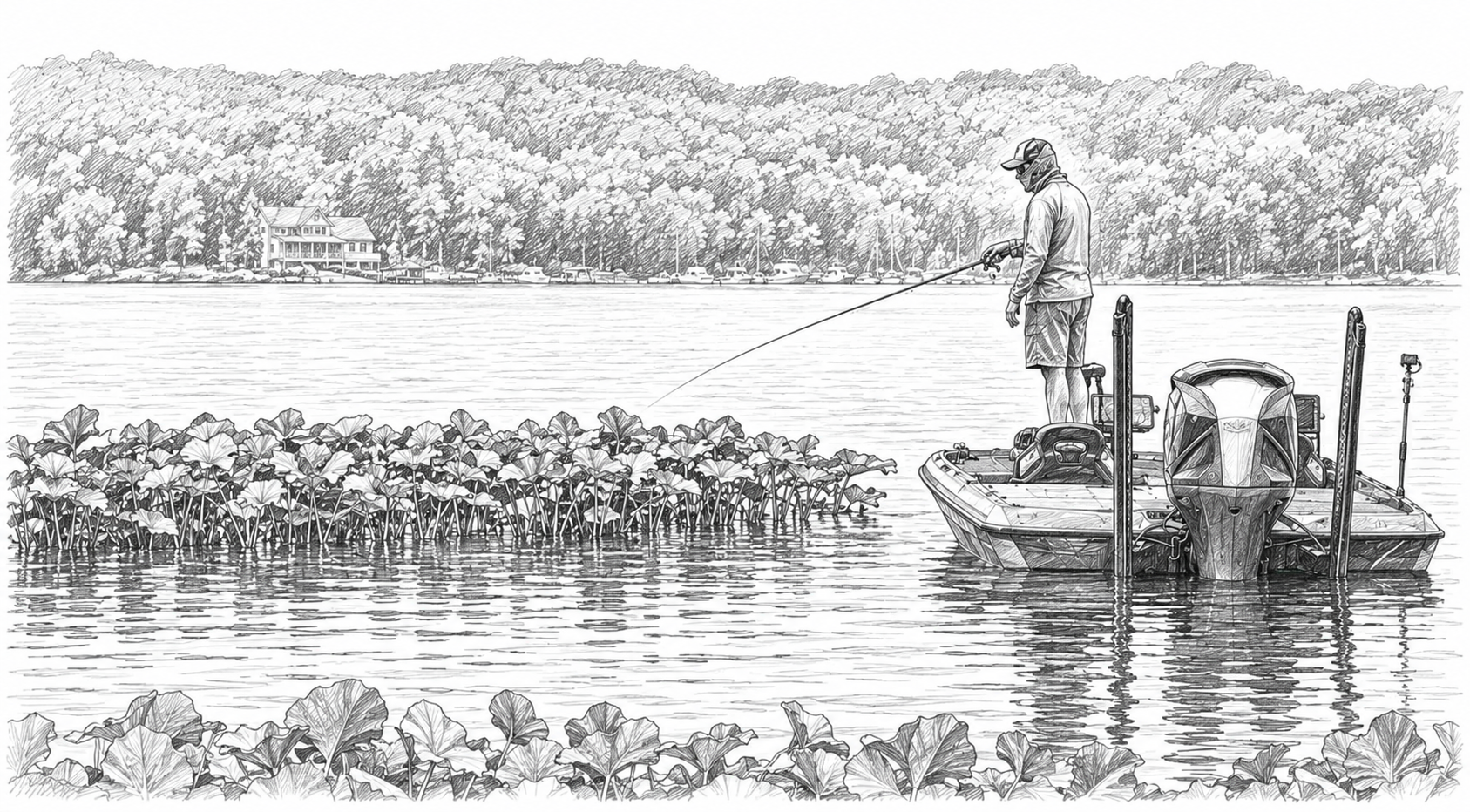
While Lake Guntersville is widely known for its grass fishing, it also offers outstanding opportunities for flipping and pitching wood. The Tennessee River system is full of laydowns, submerged timber, and shoreline wood that consistently hold bass.

Lake Guntersville
During certain times of year, especially when water levels fluctuate or current increases, bass position heavily on wood cover. Laydowns along channel swings and main river stretches can be particularly productive, offering both depth and current breaks.
Guntersville is a perfect example of how versatile wood fishing can be. It rewards anglers who understand how bass relate to structure and are willing to slow down and pick it apart piece by piece.
Final Thoughts
Flipping and pitching laydowns and wood is one of the most fundamental and effective ways to catch bass. It strips fishing down to its core, reading cover, making precise presentations, and understanding how fish position themselves within structure.
Unlike docks, which are predictable in design, wood forces you to think. Every laydown is different, and every one holds fish in its own way. That is what makes it both challenging and rewarding.
For anglers willing to put in the time and develop the skill, wood fishing offers some of the most consistent opportunities to catch quality bass. Approach each piece of cover with a plan, fish it thoroughly, and pay attention to the details. Over time, you will start to see patterns emerge, and that is when flipping and pitching wood truly becomes a strength.
For more rod recommendations, reel and line combinations, plus in-depth technique advice, check out the full Flipping and Pitching Gear Guide to help you catch more big bass!
About the Author

The team at Mud Hole Custom Tackle are industry leaders in custom rod building, fishing tackle innovation, and technique-specific rod design. With decades of hands-on experience both on the water and at the rod bench, the Mud Hole Staff combines technical expertise with real-world fishing knowledge to help anglers build better rods and catch more fish. From bass and inshore applications to offshore and specialty techniques, their passion for performance-driven gear is at the core of every article, tutorial, and product they develop.