













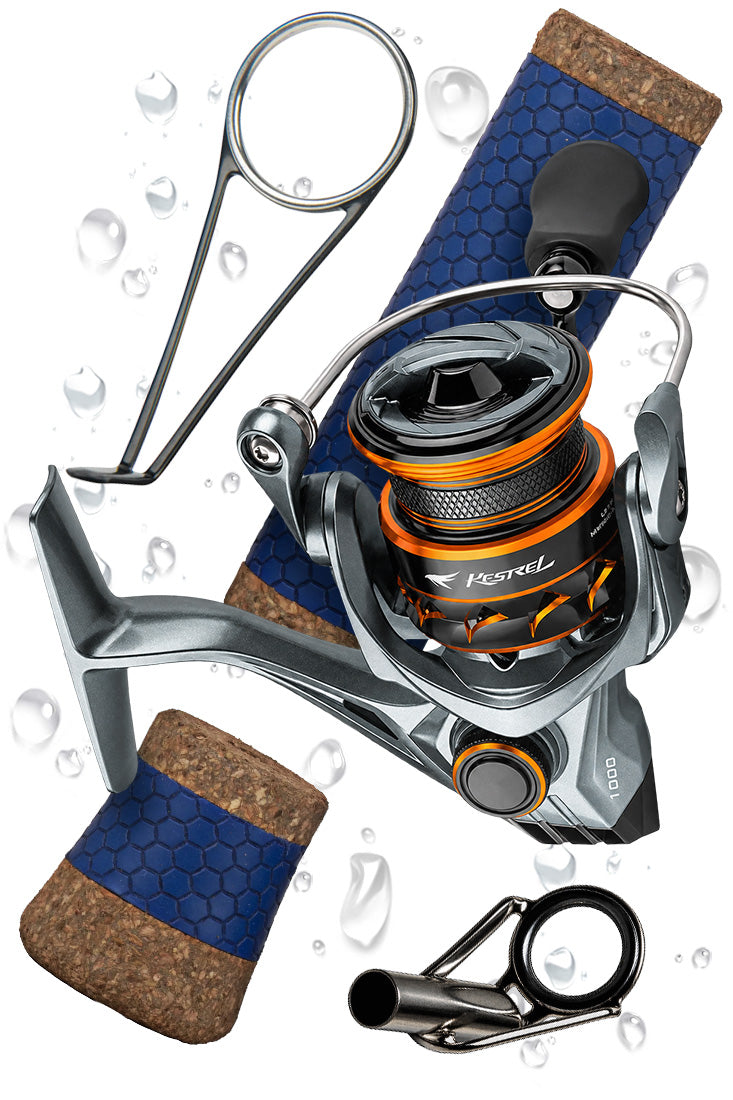
What is Ice Fishing?
Ice fishing is a cold-weather fishing technique focused on presenting baits vertically through holes drilled in the ice. Rather than covering water with casts, anglers use compact rods to control small jigs, live bait rigs, and other presentations directly below the ice. Because fish are often less active during winter, ice fishing relies on precise bait movement, subtle presentations, and the ability to detect light bites in challenging conditions.
The technical nature of ice fishing puts a premium on balance, sensitivity, and precise bait control, which is why many anglers choose to build their own custom ice fishing rod. A custom build allows you to select the exact blank, guides, handle configuration, and components that match how and where you fish. Whether your focus is finesse panfish presentations, vertical jigging for walleye, or targeting larger species through the ice, a purpose-built rod can be tailored to improve feel, control, and overall performance.
Understanding the most common ice fishing applications helps dial in both presentation and rod design. Below are several of the most widely used ways anglers fish through the ice and how those techniques influence custom rod selection.
Introduction
What is Build an Ice Fishing Rod?
What is Ice Fishing?
Ice fishing is a cold-weather fishing technique focused on presenting baits vertically through holes drilled in the ice. Rather than covering water with casts, anglers use compact rods to control small jigs, live bait rigs, and other presentations directly below the ice. Because fish are often less active during winter, ice fishing relies on precise bait movement, subtle presentations, and the ability to detect light bites in challenging conditions.
The technical nature of ice fishing puts a premium on balance, sensitivity, and precise bait control, which is why many anglers choose to build their own custom ice fishing rod. A custom build allows you to select the exact blank, guides, handle configuration, and components that match how and where you fish. Whether your focus is finesse panfish presentations, vertical jigging for walleye, or targeting larger species through the ice, a purpose-built rod can be tailored to improve feel, control, and overall performance.
Understanding the most common ice fishing applications helps dial in both presentation and rod design. Below are several of the most widely used ways anglers fish through the ice and how those techniques influence custom rod selection.
Ice Fishing Applications
Finesse Ice Fishing (Micro Jigs & Light Bites)
Targets: Bluegill, crappie, perch, trout, light-biting fish
Finesse ice fishing is one of the most common applications for targeting fish with small jigs, lightweight plastics, and live bait presentations. Anglers often use tiny tungsten or lead jigs, soft plastics, and natural baits to target fish holding in shallow weeds, basins, and suspended areas where subtle presentations are most effective.
Because these presentations rely on extremely small movements, finesse ice rods are designed around balance, light power, and precise bite detection. Soft tip sections allow anglers to see subtle strikes and detect changes in line movement when fish inhale small offerings.
Active Jigging (Artificial Lures)
Targets: Walleye, perch, trout, crappie, suspended fish
Active jigging allows anglers to control artificial lures such as jigging spoons, jigging minnows, blade baits, and metal jigs while fishing vertically through the ice. Using electronics to locate fish, anglers adjust lure depth and movement to trigger strikes from fish suspended in the water column or holding near structure.
Because the rod remains in hand throughout the presentation, active jigging requires precise lure control and quick response. Anglers use subtle shakes, lifts, pauses, and aggressive snaps to create action, making rod balance, tip response, and blank performance important factors in a custom ice rod.
Deadstick Fishing (Live Bait)
Targets: Walleye, panfish, trout, inactive fish
Deadstick fishing is a popular ice fishing application where anglers present live bait or lightly rigged offerings while the rod remains stationary. Instead of constantly working the bait, the goal is to allow natural movement while giving fish time to approach and commit to the presentation.
This technique is especially effective when fish are hesitant or less active during winter conditions. Deadstick rods are typically built with softer, more progressive actions that allow the rod to load gradually as a fish takes the bait while helping anglers detect subtle movement before setting the hook.
Heavy Ice Fishing (Large Lures & Predators)
Targets: Northern pike, lake trout, larger walleye, deep-water predators
Heavy ice fishing focuses on targeting larger species with bigger presentations such as heavy spoons, large plastics, jigging minnows, and live bait rigs. These setups are commonly used in deeper water, around structure, or anywhere additional power is needed to control larger fish.
Because these applications require more lifting power and lure control, heavy ice rods are built with stronger blanks and increased backbone. A properly matched rod provides the strength needed to work larger baits, handle heavier line, and fight powerful fish in the confined space of an ice hole.
Ice Fishing Applications
Finesse Ice Fishing (Micro Jigs & Light Bites)
Targets: Bluegill, crappie, perch, trout, light-biting fish
Finesse ice fishing is one of the most common applications for targeting fish with small jigs, lightweight plastics, and live bait presentations. Anglers often use tiny tungsten or lead jigs, soft plastics, and natural baits to target fish holding in shallow weeds, basins, and suspended areas where subtle presentations are most effective.
Because these presentations rely on extremely small movements, finesse ice rods are designed around balance, light power, and precise bite detection. Soft tip sections allow anglers to see subtle strikes and detect changes in line movement when fish inhale small offerings.
Active Jigging (Artificial Lures)
Targets: Walleye, perch, trout, crappie, suspended fish
Active jigging allows anglers to control artificial lures such as jigging spoons, jigging minnows, blade baits, and metal jigs while fishing vertically through the ice. Using electronics to locate fish, anglers adjust lure depth and movement to trigger strikes from fish suspended in the water column or holding near structure.
Because the rod remains in hand throughout the presentation, active jigging requires precise lure control and quick response. Anglers use subtle shakes, lifts, pauses, and aggressive snaps to create action, making rod balance, tip response, and blank performance important factors in a custom ice rod.
Deadstick Fishing (Live Bait)
Targets: Walleye, panfish, trout, inactive fish
Deadstick fishing is a popular ice fishing application where anglers present live bait or lightly rigged offerings while the rod remains stationary. Instead of constantly working the bait, the goal is to allow natural movement while giving fish time to approach and commit to the presentation.
This technique is especially effective when fish are hesitant or less active during winter conditions. Deadstick rods are typically built with softer, more progressive actions that allow the rod to load gradually as a fish takes the bait while helping anglers detect subtle movement before setting the hook.
Heavy Ice Fishing (Large Lures & Predators)
Targets: Northern pike, lake trout, larger walleye, deep-water predators
Heavy ice fishing focuses on targeting larger species with bigger presentations such as heavy spoons, large plastics, jigging minnows, and live bait rigs. These setups are commonly used in deeper water, around structure, or anywhere additional power is needed to control larger fish.
Because these applications require more lifting power and lure control, heavy ice rods are built with stronger blanks and increased backbone. A properly matched rod provides the strength needed to work larger baits, handle heavier line, and fight powerful fish in the confined space of an ice hole.
How to Choose an Ice Fishing Rod Blank
An ice fishing rod blank should prioritize balance, bite detection, and precise lure control. Because many winter bites are subtle, the right blank needs to communicate changes in lure movement, line tension, and fish activity while maintaining control of vertical presentations. The best custom builds are matched to the target species and technique, with the right combination of length, power, action, and line rating helping anglers control the lure, detect light bites, set hooks effectively, and handle fish in tight quarters.
When choosing an ice fishing rod blank, consider these key specs:
Material
Rod blank material influences the weight, sensitivity, and overall feel of an ice fishing rod. Because ice fishing often involves holding a rod for extended periods while detecting subtle bites, blank construction helps balance responsiveness with the desired action for each application.
Carbon and graphite blanks are popular for anglers who prioritize lightweight performance and sensitivity. They provide a quick, responsive feel that helps transmit subtle changes in lure movement and line tension, making them well suited for finesse presentations and active jigging.
Fiberglass blanks offer a softer, more forgiving response and are commonly used for noodle-style ice rods and deadstick applications. Their slower, progressive bend allows fish to take bait naturally while providing visible tip movement for detecting light bites. MHX, for example, offers solid fiberglass power noodle ice blanks designed for these softer presentations.
Composite blanks combine characteristics of multiple materials to balance sensitivity, strength, and flexibility. While less common for dedicated ice applications, they can provide a versatile option when anglers want a blend of responsiveness and durability.
Power
Rod power refers to the amount of force required to bend the blank. Ice fishing rods range from ultra-light and light power blanks for small panfish presentations to medium and heavy power blanks for larger predators. Lighter power rods allow anglers to fish extremely small jigs while providing the soft tip movement needed to detect delicate bites. Medium-light and medium power blanks offer additional backbone for walleye and multi-species applications, while heavier blanks are designed for larger lures and powerful fish such as northern pike and lake trout.
Choosing the correct power depends on lure size, target species, and presentation style. A blank that is too stiff can overpower small presentations and make light bites harder to detect, while a blank that is too light may struggle to control heavier lures or larger fish.
Action
Action describes where the blank begins to bend when pressure is applied. Ice fishing rods use a wide range of actions depending on the presentation. Fast and extra-fast actions are common for active jigging because they provide a responsive tip for controlling artificial lures while maintaining backbone for hooksets. Softer moderate actions are often preferred for deadstick applications because they allow fish to take live bait naturally without immediately feeling resistance.
Solid-tip and noodle-style designs are also popular for finesse ice fishing because the softer tip section creates visible movement when fish bite upward or lightly load the bait. The correct action helps match the rod’s response to how the fish are feeding and how the bait is being presented.
Length
Ice fishing rod blanks typically range from 17" to 50"+, with length determined by the presentation, fishing environment, and target species. Shorter blanks are common for finesse, shelter, and sight fishing where compact size provides better control in tight spaces. Longer blanks offer more line control, leverage, and clearance around the hole when fishing open ice or targeting larger fish.
Shorter blanks suit close-range finesse presentations, while longer blanks provide added control and power for deeper water, larger fish, and heavier presentations.
Line Rating
Line rating indicates the range of line strengths a blank is designed to handle effectively. Ice anglers commonly choose between monofilament, fluorocarbon, and braid based on sensitivity, flexibility, and freezing conditions.
Monofilament is one of the most common ice fishing lines because it stays flexible, sheds water well, and is less prone to freezing. Finesse and panfish setups commonly use 2–6 lb, while walleye and multi-species setups often use 4–10 lb.
Fluorocarbon offers low visibility and abrasion resistance but can become stiffer in cold temperatures. It is commonly used as a leader, with 2–6 lb for panfish and 6–12 lb for walleye, trout, and larger species.
Braid provides minimal stretch and excellent sensitivity but absorbs water and can freeze quickly. It is often used inside shelters or paired with a fluorocarbon or monofilament leader, with 4–10 lb common for walleye and multi-species fishing and 15–30 lb for larger predators.
Weight / Lure Rating
Lure rating indicates the range of weights a blank is designed to control effectively. Matching the blank to the presentation helps maintain proper lure control, sensitivity, and blank performance. These are common ranges, but specific applications may vary:
Finesse Panfish: 1/64–1/16 oz tungsten jigs and small plastics require ultra-light to light blanks with responsive tips.
Walleye & Multi-Species: 1/16–3/8 oz jigs, spoons, jigging minnows, blade baits, and small plastics require more backbone while retaining a responsive tip.
Heavy Predators: 1/4–1/2 oz+ spoons, jigging minnows, tubes, and plastics for lake trout and northern pike require stronger blanks with additional power.
Blanks by Application
Below are the key ice fishing techniques, along with the recommended rod blank specs and MHX part numbers to simplify your build selection.
Finesse Ice Fishing (Micro Jigs & Light Bites)
Targets: Bluegill, crappie, perch, trout, light-biting fish
Finesse ice fishing requires an extremely lightweight and responsive blank designed to detect subtle changes in line movement and light bites. These builds often use soft solid tips or noodle-style designs that allow anglers to see delicate strikes while maintaining enough sensitivity to feel when fish pick up small tungsten jigs and lightweight presentations.
Rod Length: 17"–30"
Power: Ultra-Light to Light
Action: Extra-Fast to Fast (often paired with a soft solid tip)
Line (Mainline / Leader): 2–6 lb monofilament or fluorocarbon
Weights Used: 1/64 oz–1/16 oz
MHX Models: FIB-33UL, BRB-17
Active Jigging (Artificial Lures)
Targets: Walleye, perch, trout, crappie, suspended fish
Active jigging requires a responsive blank that provides precise control over artificial lures while maintaining enough backbone for solid hooksets. These rods are designed to work vertical presentations such as tungsten jigs, spoons, jigging minnows, and blade baits with controlled rod movements while still detecting subtle winter bites.
Rod Length: 24"–42"
Power: Light to Medium
Action: Fast to Extra-Fast
Line (Mainline / Leader): 4–10 lb monofilament, fluorocarbon, or braid with fluorocarbon leader
Weights Used: 1/32 oz–3/8 oz
MHX Models: PPN-36, CIB-30, FIB-33UL
Deadstick Fishing (Live Bait)
Targets: Walleye, panfish, trout, inactive fish
Deadstick rods require a blank with a softer, more progressive response that allows fish to take live bait naturally before feeling resistance. A slower-action blank bends deeper through the rod, creating a more forgiving presentation while helping anglers detect subtle movement from fish slowly picking up the bait.
Rod Length: 24"–42"
Power: Ultra-Light to Medium-Light
Action: Moderate to Moderate-Fast
Line (Mainline / Leader): 2–8 lb monofilament or fluorocarbon
Weights Used: 1/32 oz–1/4 oz
MHX Models: CIB-28UL, CIB-32UL, DGB-31
Heavy Ice Fishing (Large Species & Deep Water)
Targets: Northern pike, lake trout, larger walleye, deep-water predators
Heavy ice fishing requires a stronger blank designed to provide additional backbone when targeting larger fish and fishing heavier presentations. These rods are built to handle stronger line, larger hooks, and powerful fish while still maintaining enough sensitivity to detect strikes through the ice.
Rod Length: 36"–54"
Power: Medium to Heavy
Action: Fast to Moderate-Fast
Line (Mainline / Leader): 8–20 lb monofilament, fluorocarbon, or braid with fluorocarbon/specialty leader
Weights Used: 1/4 oz–2 oz
MHX Models: GB-39, CIB-42
How to Choose an Ice Fishing Rod Blank
An ice fishing rod blank should prioritize balance, bite detection, and precise lure control. Because many winter bites are subtle, the right blank needs to communicate changes in lure movement, line tension, and fish activity while maintaining control of vertical presentations. The best custom builds are matched to the target species and technique, with the right combination of length, power, action, and line rating helping anglers control the lure, detect light bites, set hooks effectively, and handle fish in tight quarters.
When choosing an ice fishing rod blank, consider these key specs:
Material
Rod blank material influences the weight, sensitivity, and overall feel of an ice fishing rod. Because ice fishing often involves holding a rod for extended periods while detecting subtle bites, blank construction helps balance responsiveness with the desired action for each application.
Carbon and graphite blanks are popular for anglers who prioritize lightweight performance and sensitivity. They provide a quick, responsive feel that helps transmit subtle changes in lure movement and line tension, making them well suited for finesse presentations and active jigging.
Fiberglass blanks offer a softer, more forgiving response and are commonly used for noodle-style ice rods and deadstick applications. Their slower, progressive bend allows fish to take bait naturally while providing visible tip movement for detecting light bites. MHX, for example, offers solid fiberglass power noodle ice blanks designed for these softer presentations.
Composite blanks combine characteristics of multiple materials to balance sensitivity, strength, and flexibility. While less common for dedicated ice applications, they can provide a versatile option when anglers want a blend of responsiveness and durability.
Power
Rod power refers to the amount of force required to bend the blank. Ice fishing rods range from ultra-light and light power blanks for small panfish presentations to medium and heavy power blanks for larger predators. Lighter power rods allow anglers to fish extremely small jigs while providing the soft tip movement needed to detect delicate bites. Medium-light and medium power blanks offer additional backbone for walleye and multi-species applications, while heavier blanks are designed for larger lures and powerful fish such as northern pike and lake trout.
Choosing the correct power depends on lure size, target species, and presentation style. A blank that is too stiff can overpower small presentations and make light bites harder to detect, while a blank that is too light may struggle to control heavier lures or larger fish.
Action
Action describes where the blank begins to bend when pressure is applied. Ice fishing rods use a wide range of actions depending on the presentation. Fast and extra-fast actions are common for active jigging because they provide a responsive tip for controlling artificial lures while maintaining backbone for hooksets. Softer moderate actions are often preferred for deadstick applications because they allow fish to take live bait naturally without immediately feeling resistance.
Solid-tip and noodle-style designs are also popular for finesse ice fishing because the softer tip section creates visible movement when fish bite upward or lightly load the bait. The correct action helps match the rod’s response to how the fish are feeding and how the bait is being presented.
Length
Ice fishing rod blanks typically range from 17" to 50"+, with length determined by the presentation, fishing environment, and target species. Shorter blanks are common for finesse, shelter, and sight fishing where compact size provides better control in tight spaces. Longer blanks offer more line control, leverage, and clearance around the hole when fishing open ice or targeting larger fish.
Shorter blanks suit close-range finesse presentations, while longer blanks provide added control and power for deeper water, larger fish, and heavier presentations.
Line Rating
Line rating indicates the range of line strengths a blank is designed to handle effectively. Ice anglers commonly choose between monofilament, fluorocarbon, and braid based on sensitivity, flexibility, and freezing conditions.
Monofilament is one of the most common ice fishing lines because it stays flexible, sheds water well, and is less prone to freezing. Finesse and panfish setups commonly use 2–6 lb, while walleye and multi-species setups often use 4–10 lb.
Fluorocarbon offers low visibility and abrasion resistance but can become stiffer in cold temperatures. It is commonly used as a leader, with 2–6 lb for panfish and 6–12 lb for walleye, trout, and larger species.
Braid provides minimal stretch and excellent sensitivity but absorbs water and can freeze quickly. It is often used inside shelters or paired with a fluorocarbon or monofilament leader, with 4–10 lb common for walleye and multi-species fishing and 15–30 lb for larger predators.
Weight / Lure Rating
Lure rating indicates the range of weights a blank is designed to control effectively. Matching the blank to the presentation helps maintain proper lure control, sensitivity, and blank performance. These are common ranges, but specific applications may vary:
Finesse Panfish: 1/64–1/16 oz tungsten jigs and small plastics require ultra-light to light blanks with responsive tips.
Walleye & Multi-Species: 1/16–3/8 oz jigs, spoons, jigging minnows, blade baits, and small plastics require more backbone while retaining a responsive tip.
Heavy Predators: 1/4–1/2 oz+ spoons, jigging minnows, tubes, and plastics for lake trout and northern pike require stronger blanks with additional power.
Blanks by Application
Below are the key ice fishing techniques, along with the recommended rod blank specs and MHX part numbers to simplify your build selection.
Finesse Ice Fishing (Micro Jigs & Light Bites)
Targets: Bluegill, crappie, perch, trout, light-biting fish
Finesse ice fishing requires an extremely lightweight and responsive blank designed to detect subtle changes in line movement and light bites. These builds often use soft solid tips or noodle-style designs that allow anglers to see delicate strikes while maintaining enough sensitivity to feel when fish pick up small tungsten jigs and lightweight presentations.
Rod Length: 17"–30"
Power: Ultra-Light to Light
Action: Extra-Fast to Fast (often paired with a soft solid tip)
Line (Mainline / Leader): 2–6 lb monofilament or fluorocarbon
Weights Used: 1/64 oz–1/16 oz
MHX Models: FIB-33UL, BRB-17
Active Jigging (Artificial Lures)
Targets: Walleye, perch, trout, crappie, suspended fish
Active jigging requires a responsive blank that provides precise control over artificial lures while maintaining enough backbone for solid hooksets. These rods are designed to work vertical presentations such as tungsten jigs, spoons, jigging minnows, and blade baits with controlled rod movements while still detecting subtle winter bites.
Rod Length: 24"–42"
Power: Light to Medium
Action: Fast to Extra-Fast
Line (Mainline / Leader): 4–10 lb monofilament, fluorocarbon, or braid with fluorocarbon leader
Weights Used: 1/32 oz–3/8 oz
MHX Models: PPN-36, CIB-30, FIB-33UL
Deadstick Fishing (Live Bait)
Targets: Walleye, panfish, trout, inactive fish
Deadstick rods require a blank with a softer, more progressive response that allows fish to take live bait naturally before feeling resistance. A slower-action blank bends deeper through the rod, creating a more forgiving presentation while helping anglers detect subtle movement from fish slowly picking up the bait.
Rod Length: 24"–42"
Power: Ultra-Light to Medium-Light
Action: Moderate to Moderate-Fast
Line (Mainline / Leader): 2–8 lb monofilament or fluorocarbon
Weights Used: 1/32 oz–1/4 oz
MHX Models: CIB-28UL, CIB-32UL, DGB-31
Heavy Ice Fishing (Large Species & Deep Water)
Targets: Northern pike, lake trout, larger walleye, deep-water predators
Heavy ice fishing requires a stronger blank designed to provide additional backbone when targeting larger fish and fishing heavier presentations. These rods are built to handle stronger line, larger hooks, and powerful fish while still maintaining enough sensitivity to detect strikes through the ice.
Rod Length: 36"–54"
Power: Medium to Heavy
Action: Fast to Moderate-Fast
Line (Mainline / Leader): 8–20 lb monofilament, fluorocarbon, or braid with fluorocarbon/specialty leader
Weights Used: 1/4 oz–2 oz
MHX Models: GB-39, CIB-42
Ice Rod Blanks










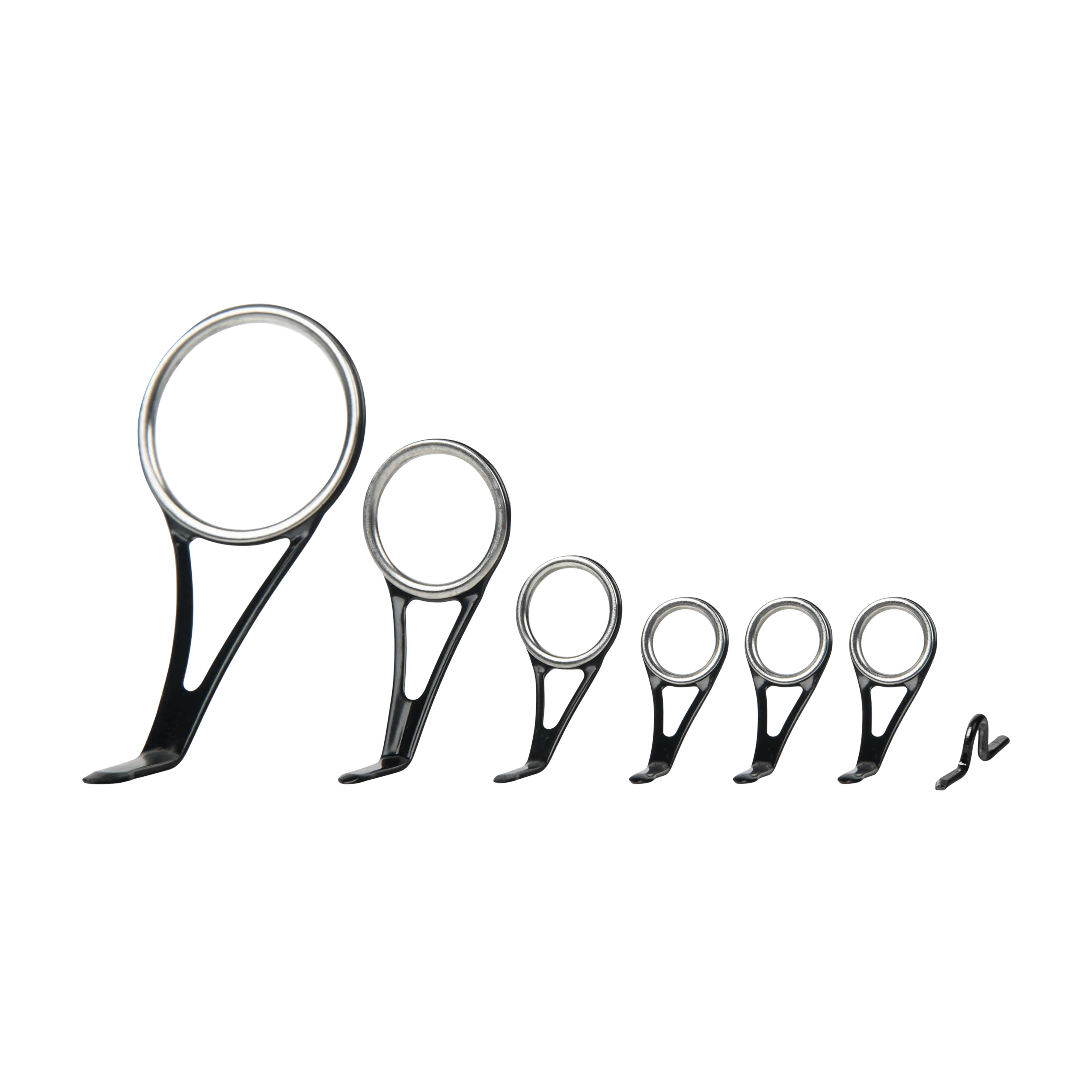
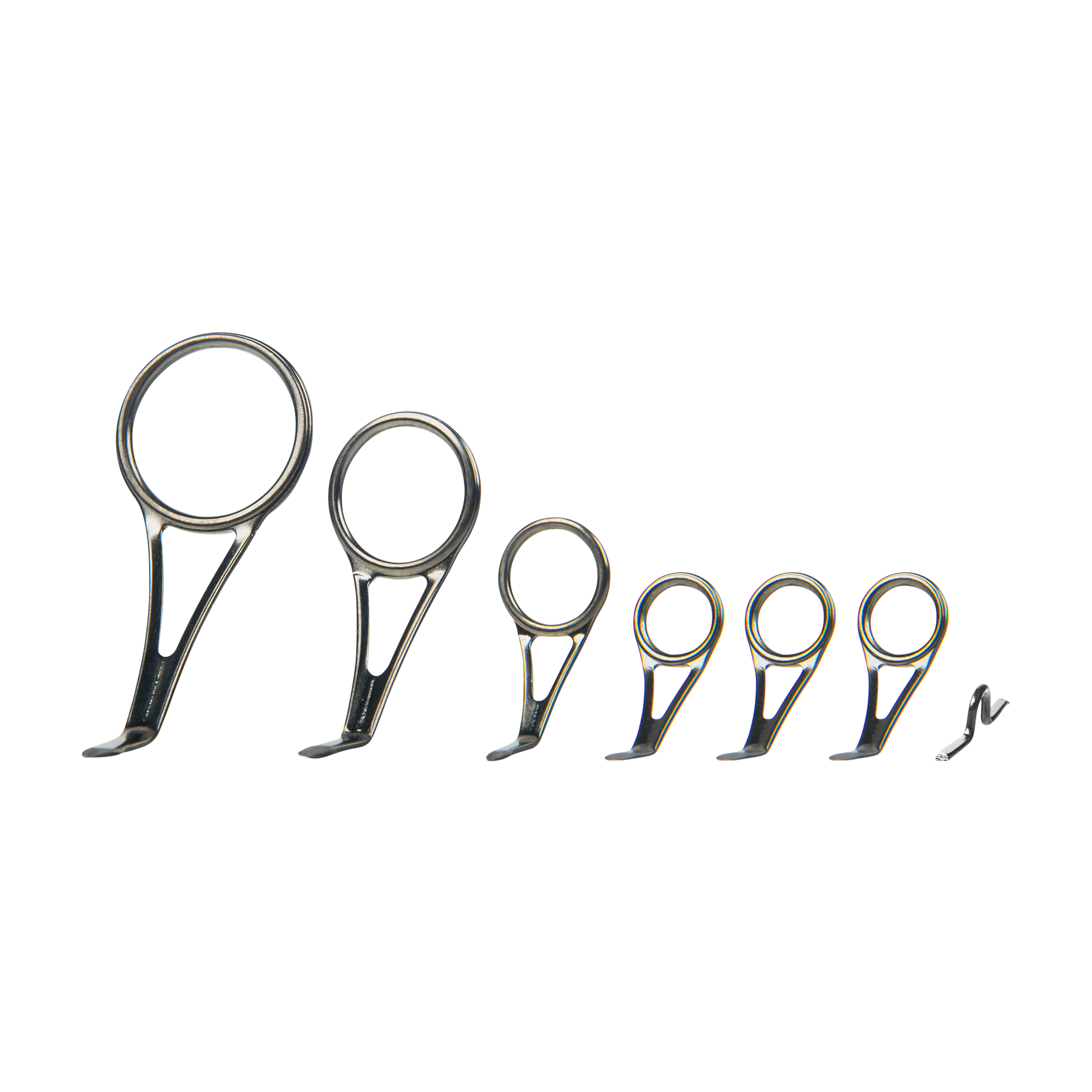
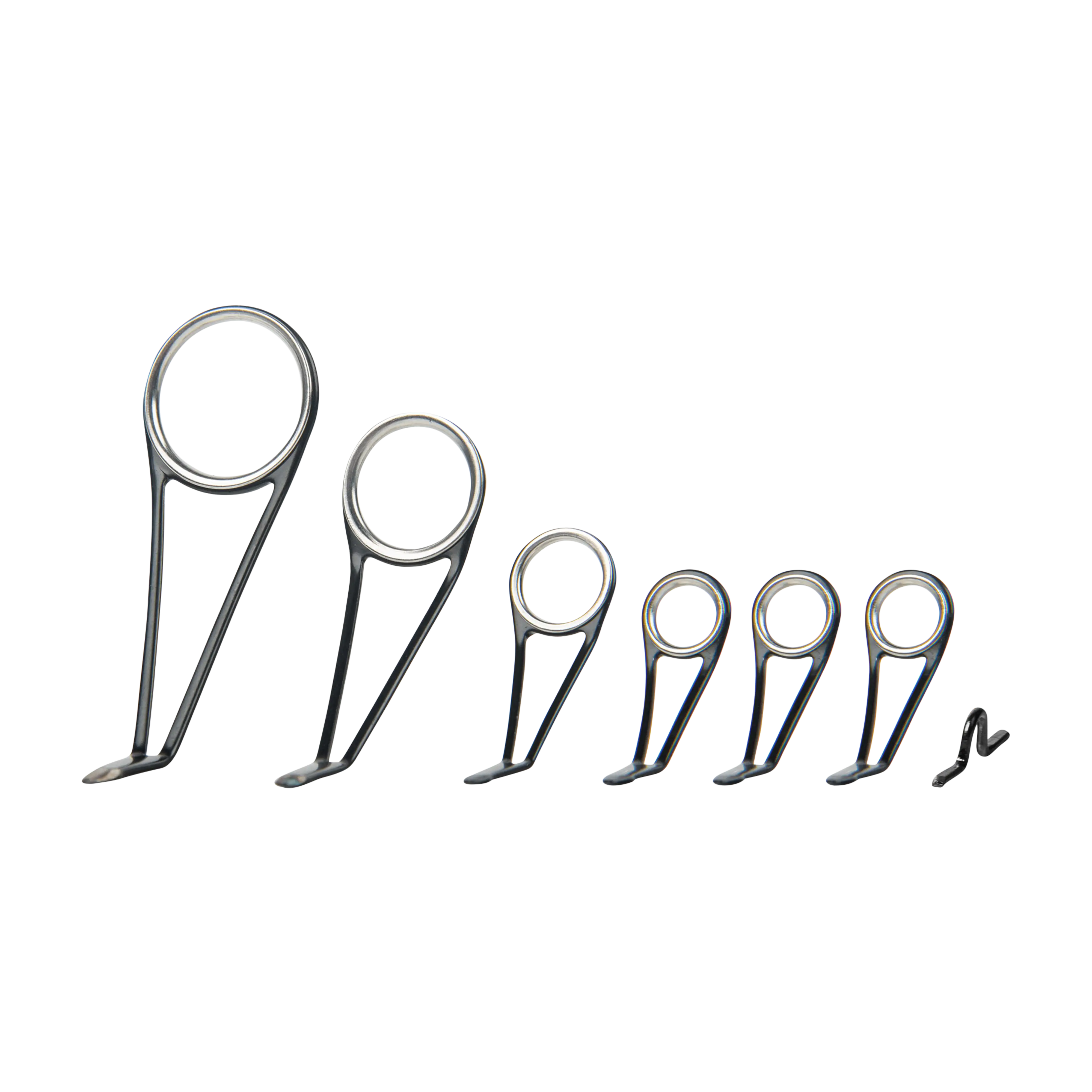
Ice Fishing Rod Guide Kits
When building a custom ice fishing rod, a dedicated guide kit simplifies the process with properly sized guides and recommended spacing matched to the blank. A well-designed layout distributes stress along the blank, promotes smooth line flow, reduces unnecessary weight, and preserves the blank’s natural action. Because ice rods are built around lightweight presentations and vertical lure control rather than casting distance, their compact guide trains are optimized for balance and reliable performance in cold conditions.
Build note: Always check to make sure the width of the guide feet is narrower than the width of the blank where the guide is being wrapped. If the guide foot is wider than the blank it may be difficult to wrap and secure to the blank.
Stripper Guides
Stripper guides control the line immediately as it leaves the reel and begin the transition into the rest of the guide train. Unlike long spinning rods that require multiple reduction guides to manage expanding line coils during casting, ice rods use shorter guide layouts because most presentations are vertical and require minimal line movement.
The stripper guide is typically selected to provide enough clearance for the reel, line type, and fishing conditions while keeping unnecessary weight away from the blank. Larger stripper guides may be preferred for outdoor ice fishing because they provide additional room for frozen line and ice buildup, while smaller guides can reduce weight and improve balance for finesse applications.
Proper stripper guide selection helps maintain smooth line flow, reduces resistance, and supports the rod’s intended action without adding unnecessary weight.
Running Guides
Running guides continue through the remainder of the blank and support the line while allowing the rod to flex and recover naturally under load. Proper spacing helps maintain line control, sensitivity, and the blank’s intended action.
Running guide size varies based on the blank, line choice, and fishing conditions. Lightweight guides are common on finesse builds to reduce weight and maximize responsiveness, while larger guides may be preferred for outdoor fishing where ice buildup and heavier line require additional clearance.
Frame and Ring Size
Selecting the right frame style, ring size, and guide material is important on an ice rod because the guide train must balance sensitivity, weight, and cold-weather performance. Every component works together to influence line flow, rod balance, and how effectively the blank transfers feedback to the angler.
Lightweight frames and smaller rings are commonly used on finesse ice rods to reduce weight and maximize responsiveness. Larger guides may be preferred for outdoor fishing because they provide additional clearance for ice buildup, frozen line, and knots in colder conditions.
Guide materials such as Duralite, Nanolite, Alconite, and stainless steel inserts are commonly used on ice rods. Stainless steel is especially popular because it provides durability and tolerates clearing ice buildup from the guides during use. Properly selected guide sizes and materials help maintain smooth line flow, sensitivity, and reliable performance without compromising the blank’s natural action.
Key Takeaways
- Ice rod guide layouts are designed for vertical presentations, sensitivity, and balance rather than long-distance casting.
- Stripper guides help transition line from the reel while balancing clearance, weight, and cold-weather performance.
- Running guides support the blank and maintain consistent line flow throughout the rod.
- Guide size varies based on application, with smaller guides prioritizing sensitivity and larger guides improving cold-weather reliability.
- Frame style and ring size influence line control, sensitivity, and overall rod balance.
- Guide kits remove guesswork by providing properly matched components and spacing recommendations.
Ice Fishing Rod Guide Kits
When building a custom ice fishing rod, a dedicated guide kit simplifies the process with properly sized guides and recommended spacing matched to the blank. A well-designed layout distributes stress along the blank, promotes smooth line flow, reduces unnecessary weight, and preserves the blank’s natural action. Because ice rods are built around lightweight presentations and vertical lure control rather than casting distance, their compact guide trains are optimized for balance and reliable performance in cold conditions.
Build note: Always check to make sure the width of the guide feet is narrower than the width of the blank where the guide is being wrapped. If the guide foot is wider than the blank it may be difficult to wrap and secure to the blank.
Stripper Guides
Stripper guides control the line immediately as it leaves the reel and begin the transition into the rest of the guide train. Unlike long spinning rods that require multiple reduction guides to manage expanding line coils during casting, ice rods use shorter guide layouts because most presentations are vertical and require minimal line movement.
The stripper guide is typically selected to provide enough clearance for the reel, line type, and fishing conditions while keeping unnecessary weight away from the blank. Larger stripper guides may be preferred for outdoor ice fishing because they provide additional room for frozen line and ice buildup, while smaller guides can reduce weight and improve balance for finesse applications.
Proper stripper guide selection helps maintain smooth line flow, reduces resistance, and supports the rod’s intended action without adding unnecessary weight.
Running Guides
Running guides continue through the remainder of the blank and support the line while allowing the rod to flex and recover naturally under load. Proper spacing helps maintain line control, sensitivity, and the blank’s intended action.
Running guide size varies based on the blank, line choice, and fishing conditions. Lightweight guides are common on finesse builds to reduce weight and maximize responsiveness, while larger guides may be preferred for outdoor fishing where ice buildup and heavier line require additional clearance.
Frame and Ring Size
Selecting the right frame style, ring size, and guide material is important on an ice rod because the guide train must balance sensitivity, weight, and cold-weather performance. Every component works together to influence line flow, rod balance, and how effectively the blank transfers feedback to the angler.
Lightweight frames and smaller rings are commonly used on finesse ice rods to reduce weight and maximize responsiveness. Larger guides may be preferred for outdoor fishing because they provide additional clearance for ice buildup, frozen line, and knots in colder conditions.
Guide materials such as Duralite, Nanolite, Alconite, and stainless steel inserts are commonly used on ice rods. Stainless steel is especially popular because it provides durability and tolerates clearing ice buildup from the guides during use. Properly selected guide sizes and materials help maintain smooth line flow, sensitivity, and reliable performance without compromising the blank’s natural action.
Key Takeaways
- Ice rod guide layouts are designed for vertical presentations, sensitivity, and balance rather than long-distance casting.
- Stripper guides help transition line from the reel while balancing clearance, weight, and cold-weather performance.
- Running guides support the blank and maintain consistent line flow throughout the rod.
- Guide size varies based on application, with smaller guides prioritizing sensitivity and larger guides improving cold-weather reliability.
- Frame style and ring size influence line control, sensitivity, and overall rod balance.
- Guide kits remove guesswork by providing properly matched components and spacing recommendations.
Ice Guide Kits
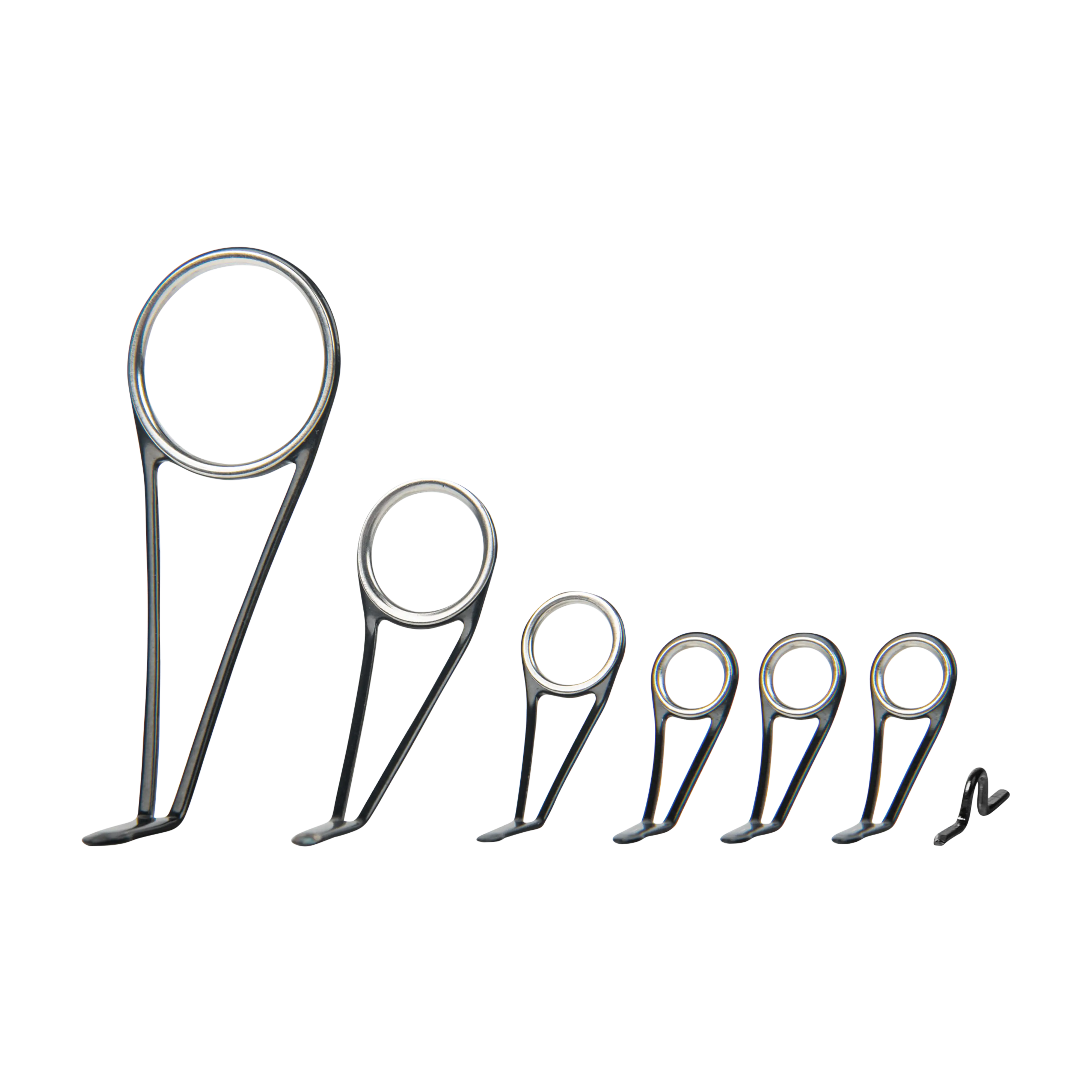
Ice Rod Tip Tops
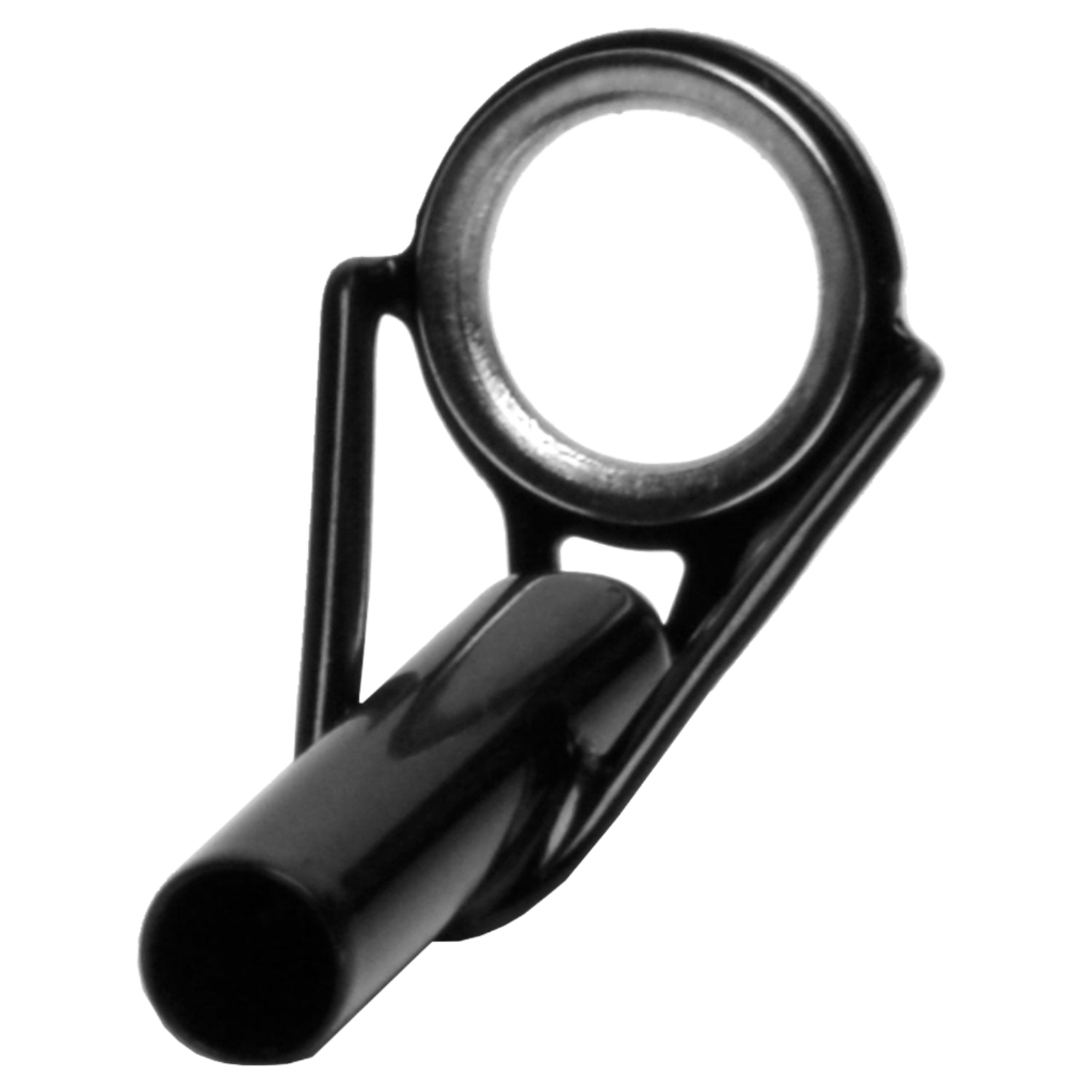
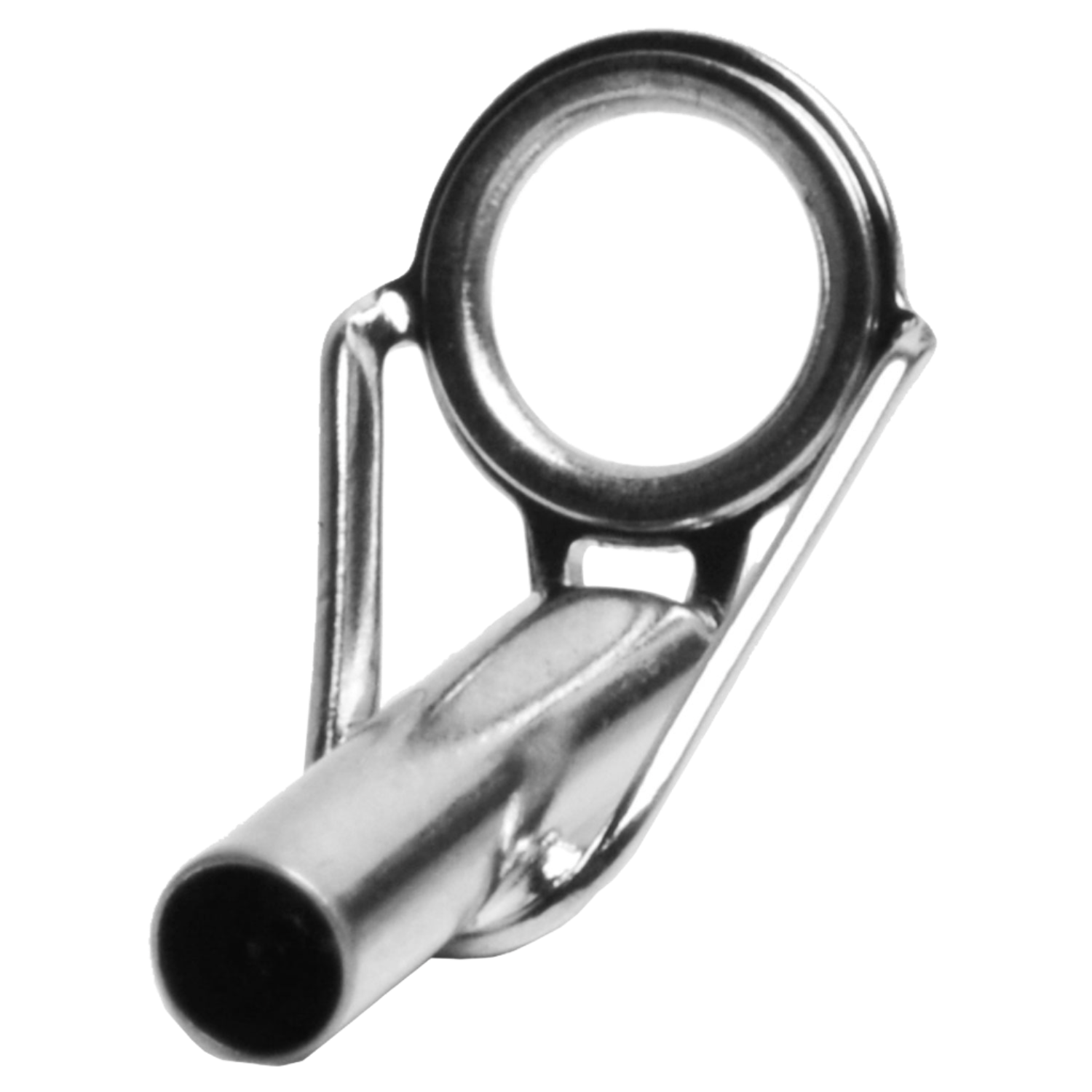
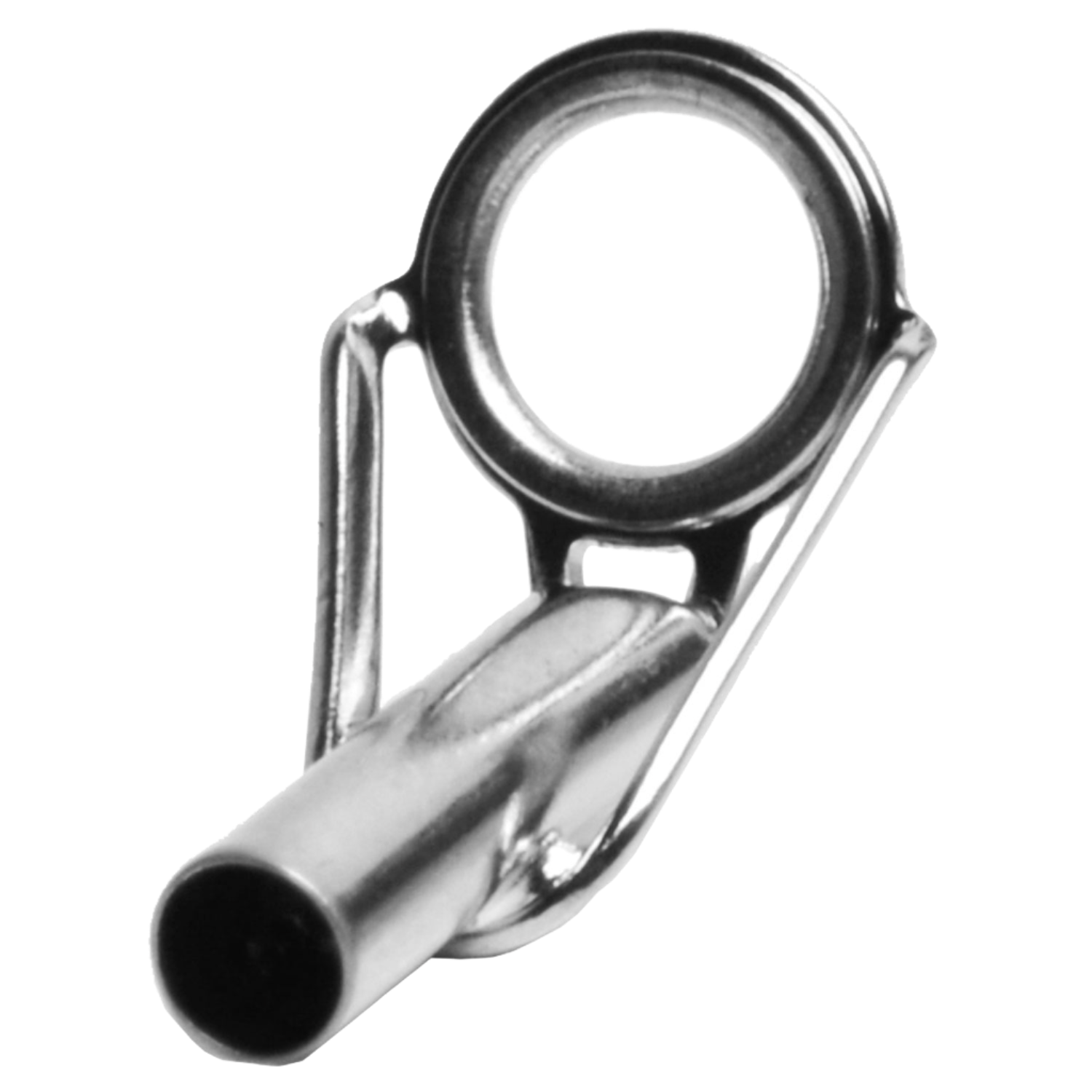
The tip-top plays an important role in the overall performance and durability of an ice fishing rod. As the final point where the line passes through before reaching the lure, the tip-top helps maintain smooth line movement, supports consistent tension during hooksets, and protects the rod tip from wear during repeated use. Since ice fishing relies on lightweight presentations and detecting subtle bites, choosing the correct tip-top helps preserve the rod’s sensitivity and reliability in cold conditions.
When selecting a tip-top, two key factors matter:
Ring Size
Ring size influences line flow, ice buildup, and overall guide performance. Many builders match the tip-top ring size to the final running guide to maintain consistent line tracking throughout the guide train and preserve the rod’s balance.
For outdoor ice fishing, some builders choose a slightly larger tip-top ring because the additional clearance helps reduce freezing issues and makes it easier to remove ice buildup during use. The correct size depends on the guide train, line choice, and whether the rod will be used inside a shelter or outside in freezing conditions.
Tube Size
Tube size refers to the inside diameter of the tip-top tube that mounts over the blank tip. Proper fit is important because the tube should seat securely without excess adhesive or unwanted movement. A correctly sized tube helps maintain proper alignment, protects the blank tip, and preserves the rod’s intended action and sensitivity.
A properly selected tip-top completes the guide train by supporting smooth line movement, protecting the rod tip, and improving reliability in cold-weather conditions. While it is a small component, the wrong tip-top can affect line control, ice buildup, and the overall performance of the finished rod.
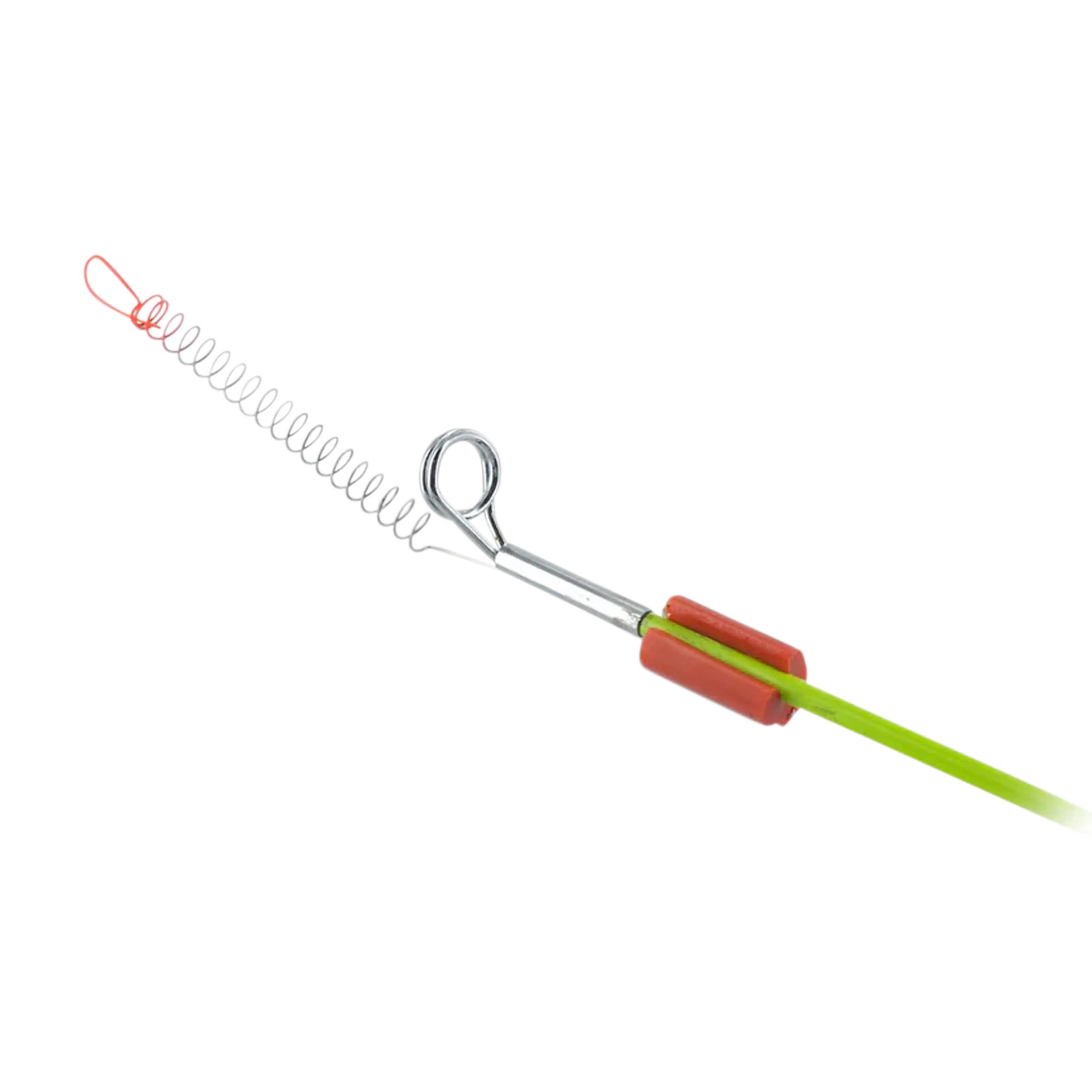
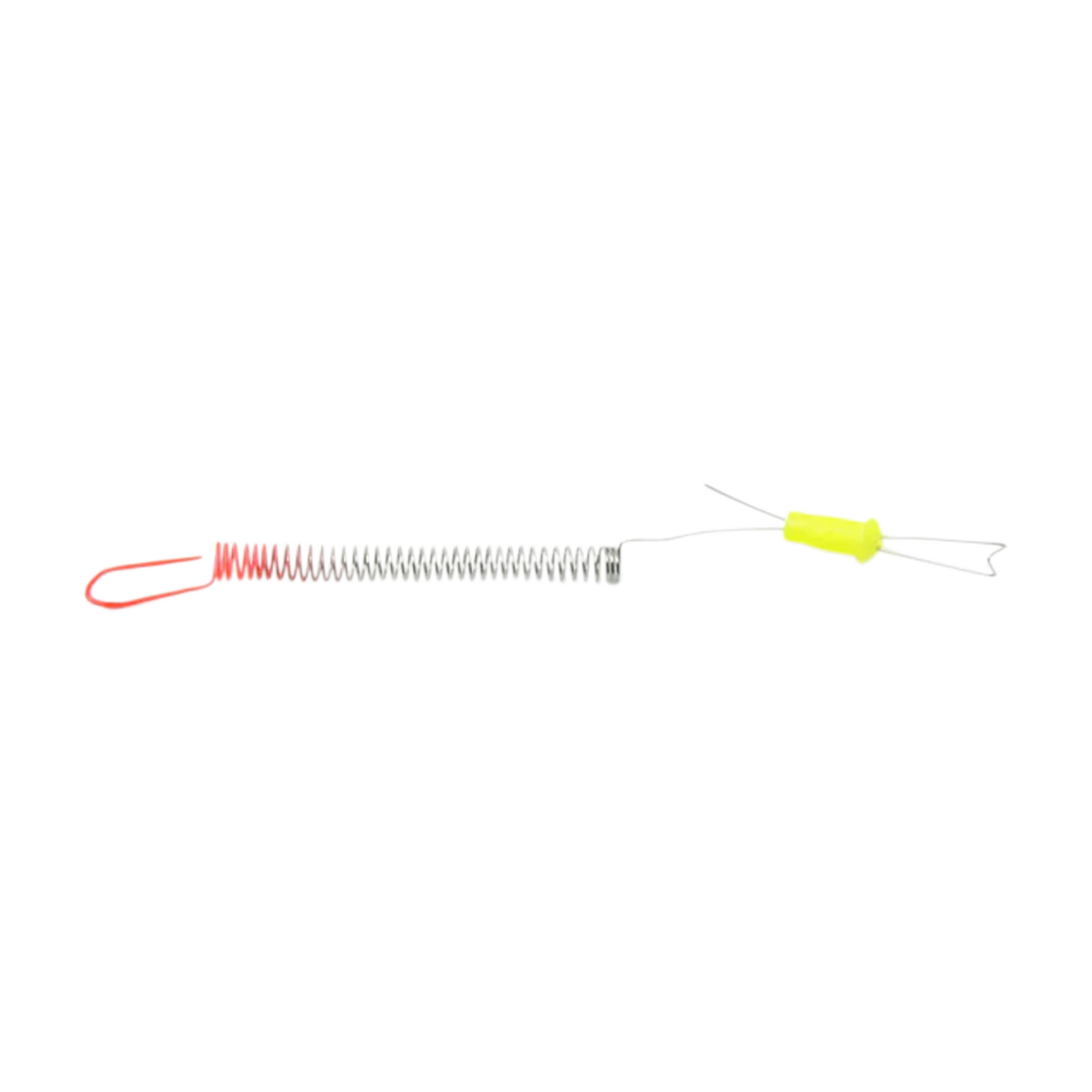
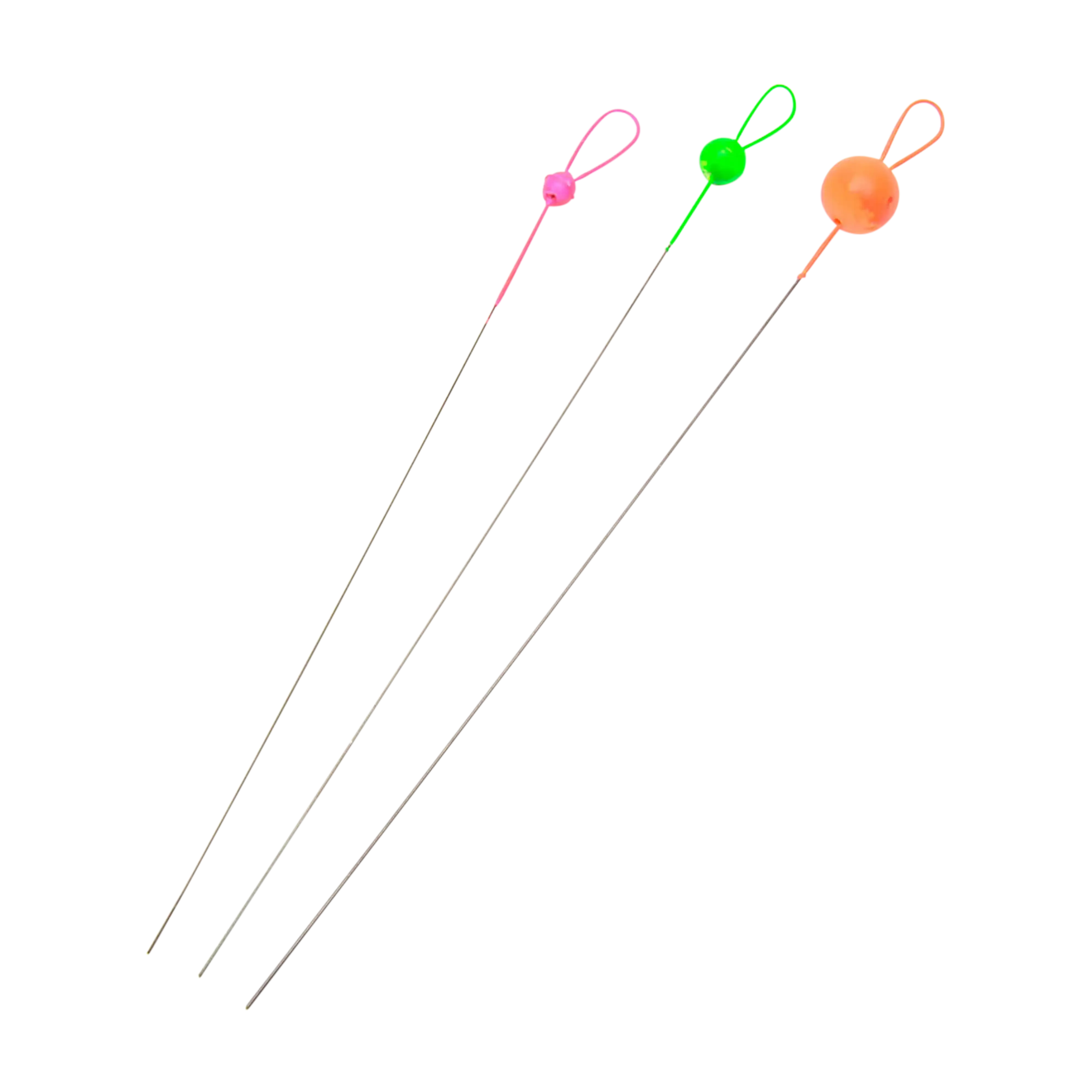
Tip: Spring bobbers can also be added to the tip-top setup for finesse ice fishing. The highly visible, flexible spring helps show subtle bites and changes in line tension that may be difficult to detect through the rod tip alone.
Matching Your Tip-Top
While matching is not required for performance, many builders prefer using a tip-top that visually matches the rest of the guide train for a cleaner, more finished appearance. This is commonly done by selecting the same manufacturer, frame style, finish, and ring material as the running guides to create a consistent custom build.
Ice Rod Tip Tops
The tip-top plays an important role in the overall performance and durability of an ice fishing rod. As the final point where the line passes through before reaching the lure, the tip-top helps maintain smooth line movement, supports consistent tension during hooksets, and protects the rod tip from wear during repeated use. Since ice fishing relies on lightweight presentations and detecting subtle bites, choosing the correct tip-top helps preserve the rod’s sensitivity and reliability in cold conditions.
When selecting a tip-top, two key factors matter:
Ring Size
Ring size influences line flow, ice buildup, and overall guide performance. Many builders match the tip-top ring size to the final running guide to maintain consistent line tracking throughout the guide train and preserve the rod’s balance.
For outdoor ice fishing, some builders choose a slightly larger tip-top ring because the additional clearance helps reduce freezing issues and makes it easier to remove ice buildup during use. The correct size depends on the guide train, line choice, and whether the rod will be used inside a shelter or outside in freezing conditions.
Tube Size
Tube size refers to the inside diameter of the tip-top tube that mounts over the blank tip. Proper fit is important because the tube should seat securely without excess adhesive or unwanted movement. A correctly sized tube helps maintain proper alignment, protects the blank tip, and preserves the rod’s intended action and sensitivity.
A properly selected tip-top completes the guide train by supporting smooth line movement, protecting the rod tip, and improving reliability in cold-weather conditions. While it is a small component, the wrong tip-top can affect line control, ice buildup, and the overall performance of the finished rod.
Tip: Spring bobbers can also be added to the tip-top setup for finesse ice fishing. The highly visible, flexible spring helps show subtle bites and changes in line tension that may be difficult to detect through the rod tip alone.
Matching Your Tip-Top
While matching is not required for performance, many builders prefer using a tip-top that visually matches the rest of the guide train for a cleaner, more finished appearance. This is commonly done by selecting the same manufacturer, frame style, finish, and ring material as the running guides to create a consistent custom build.
Ice Rod Tip Tops


Ice Fishing Handle Kits
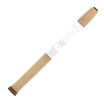
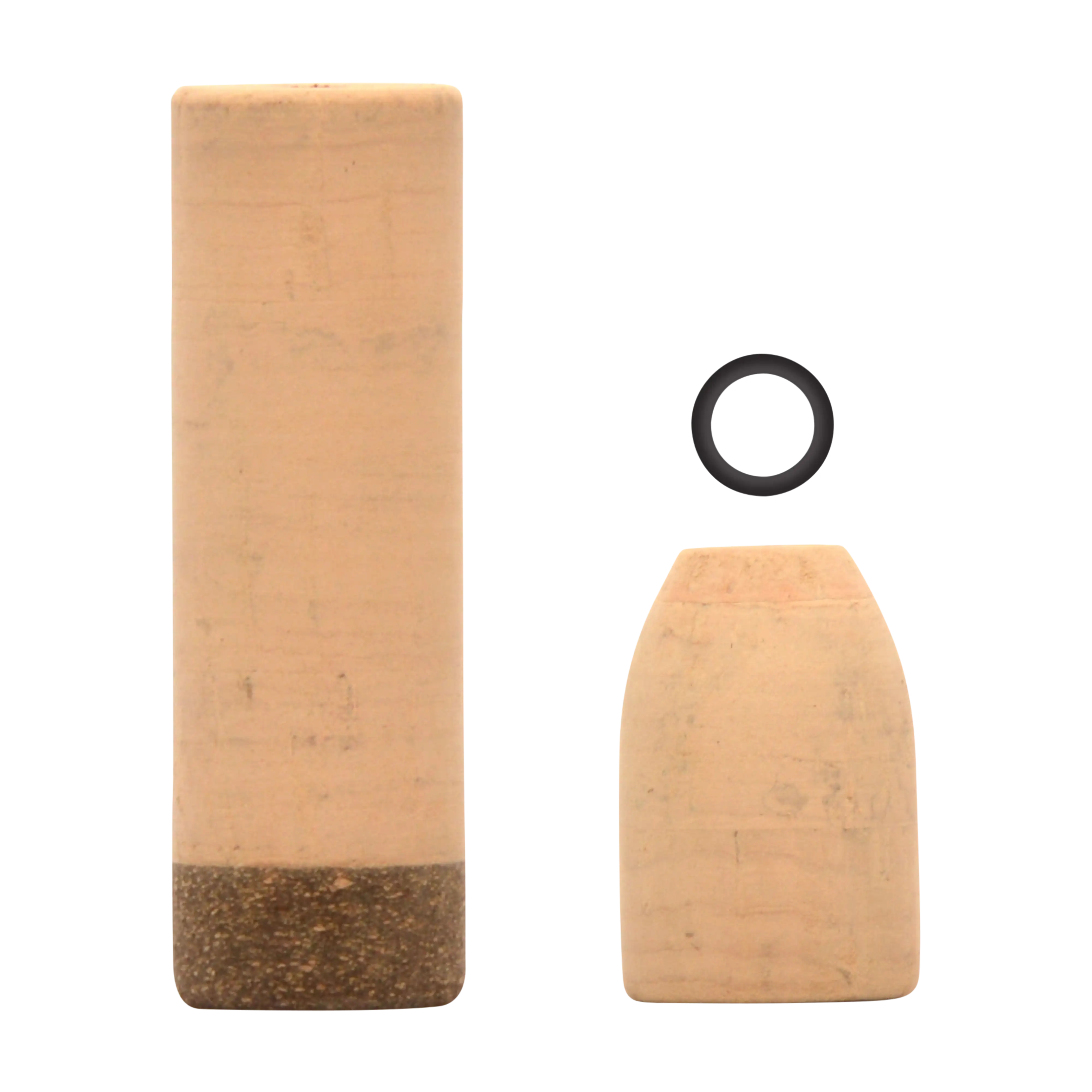
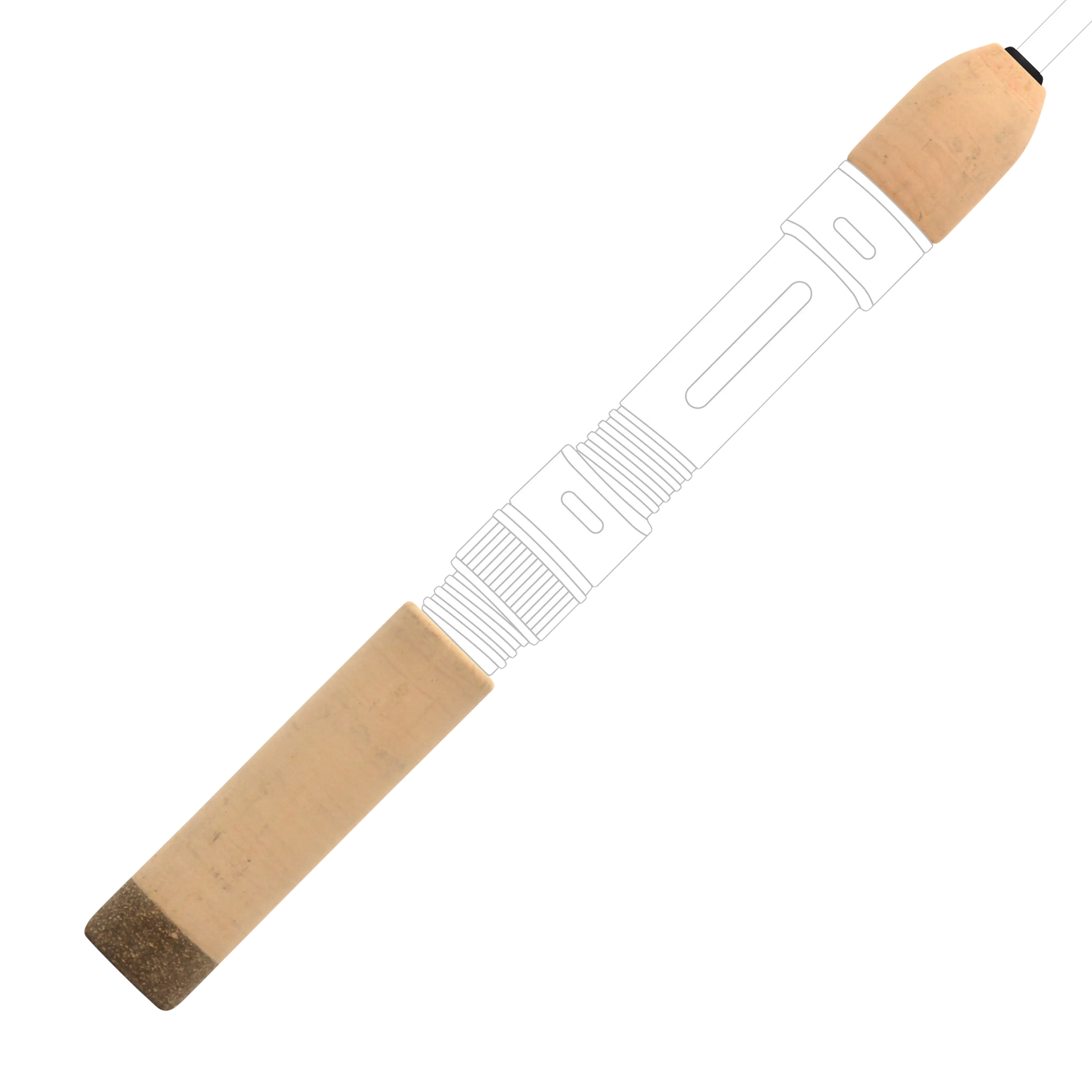
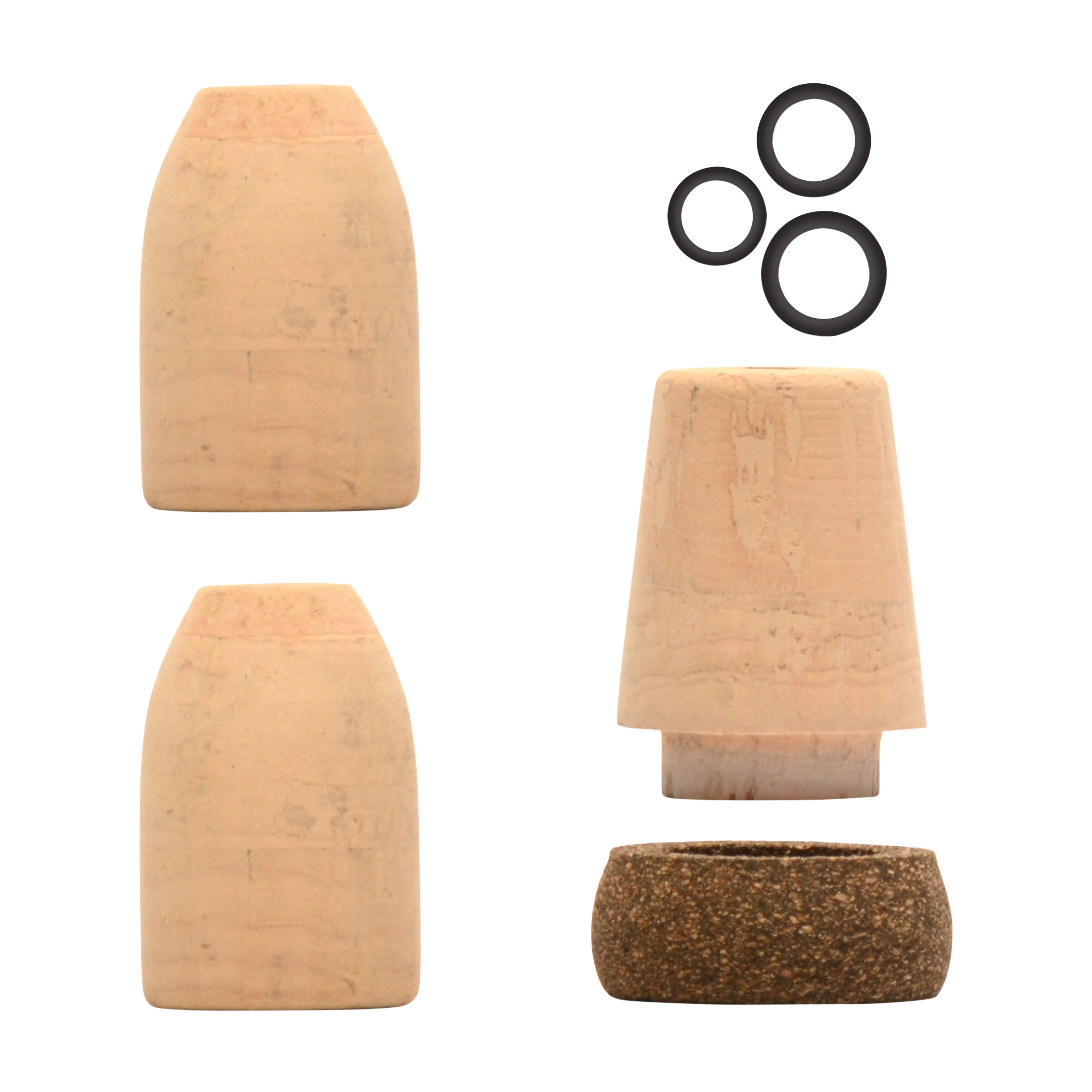
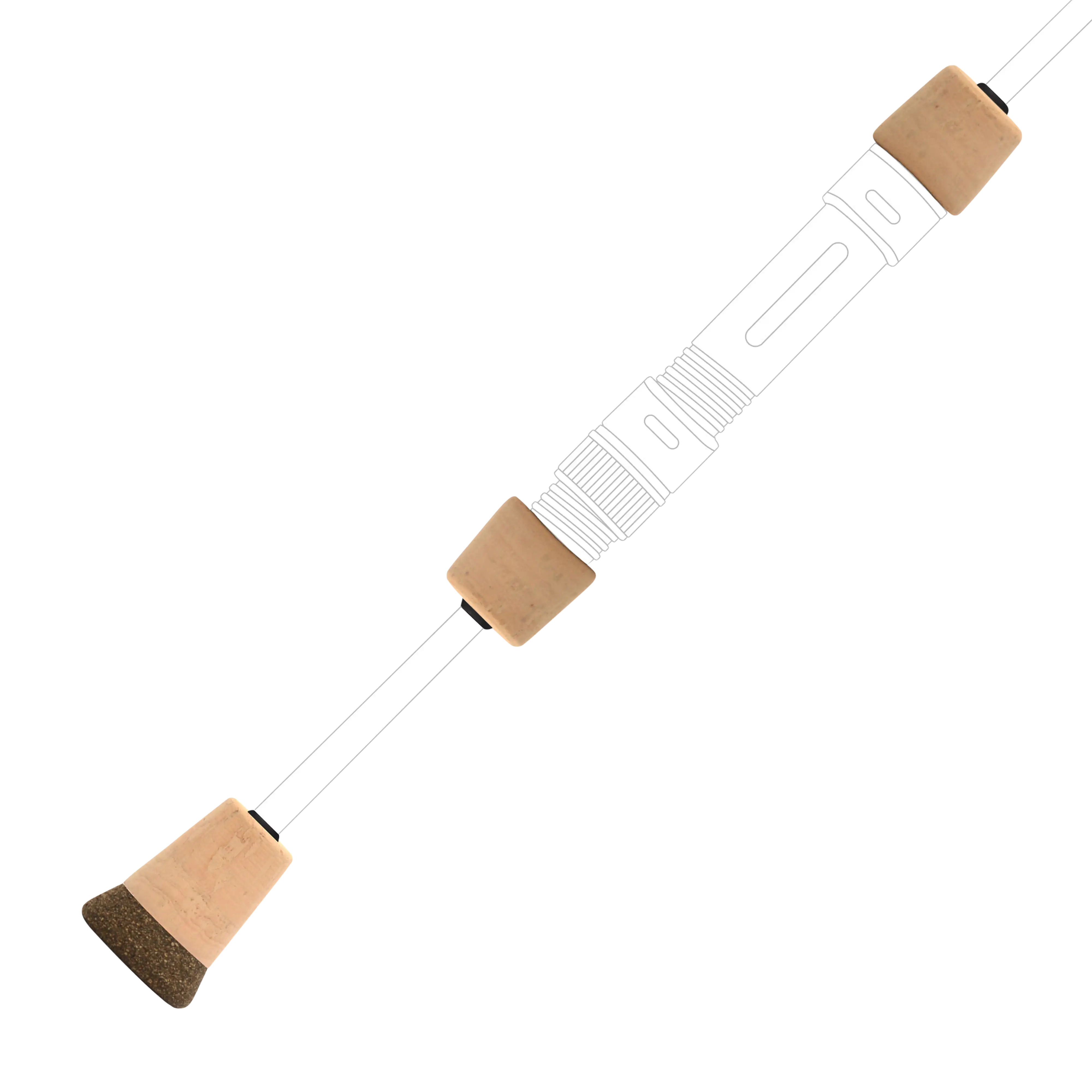
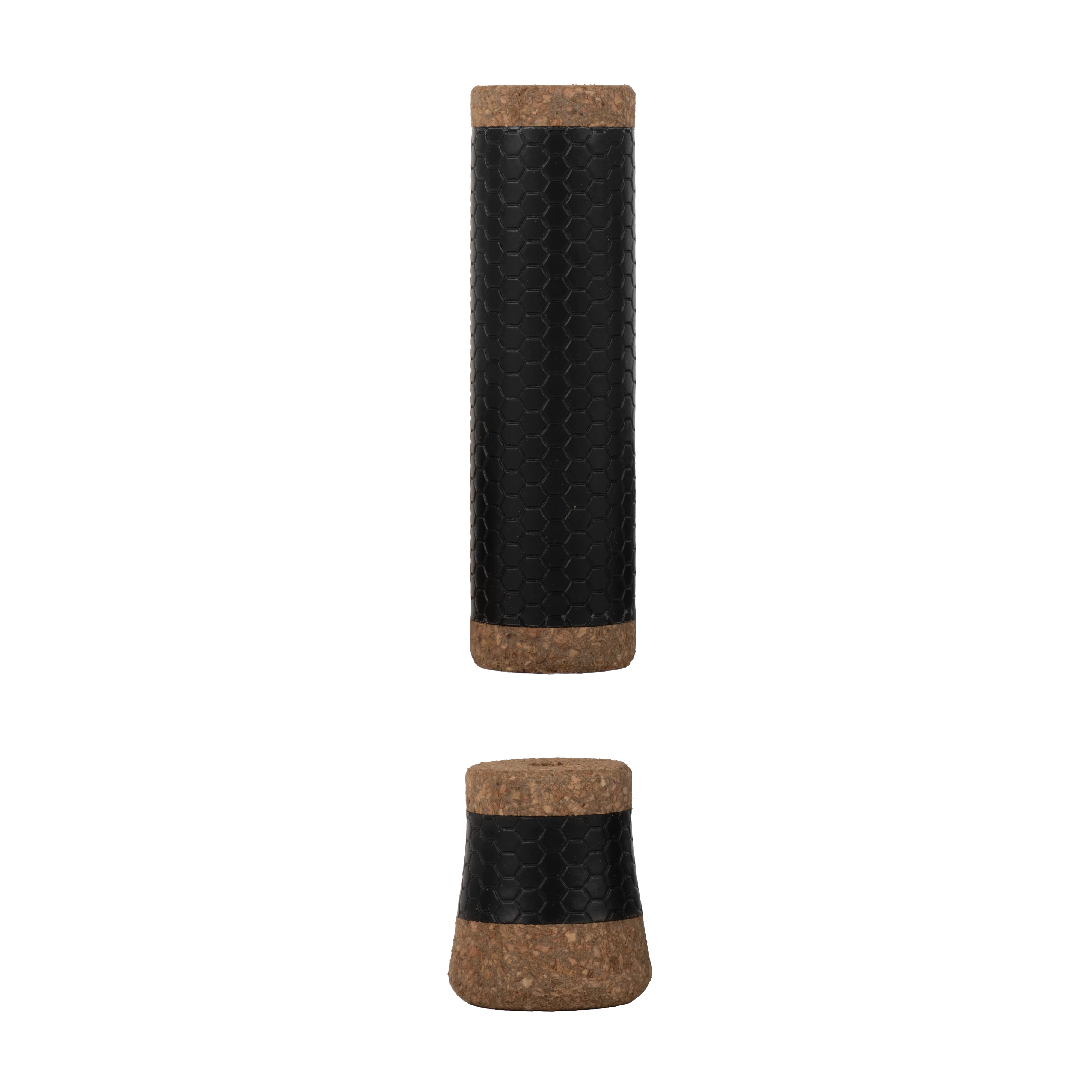
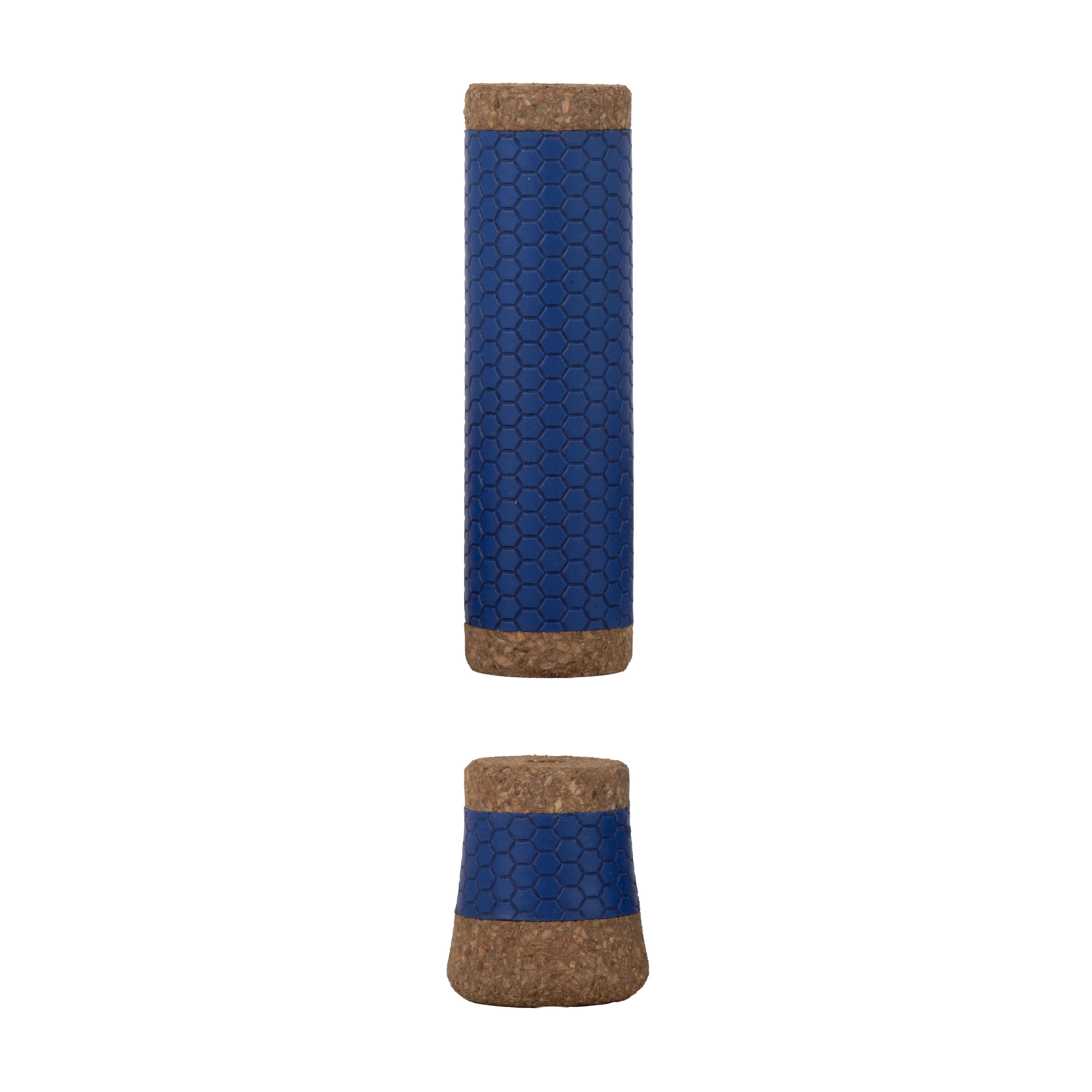
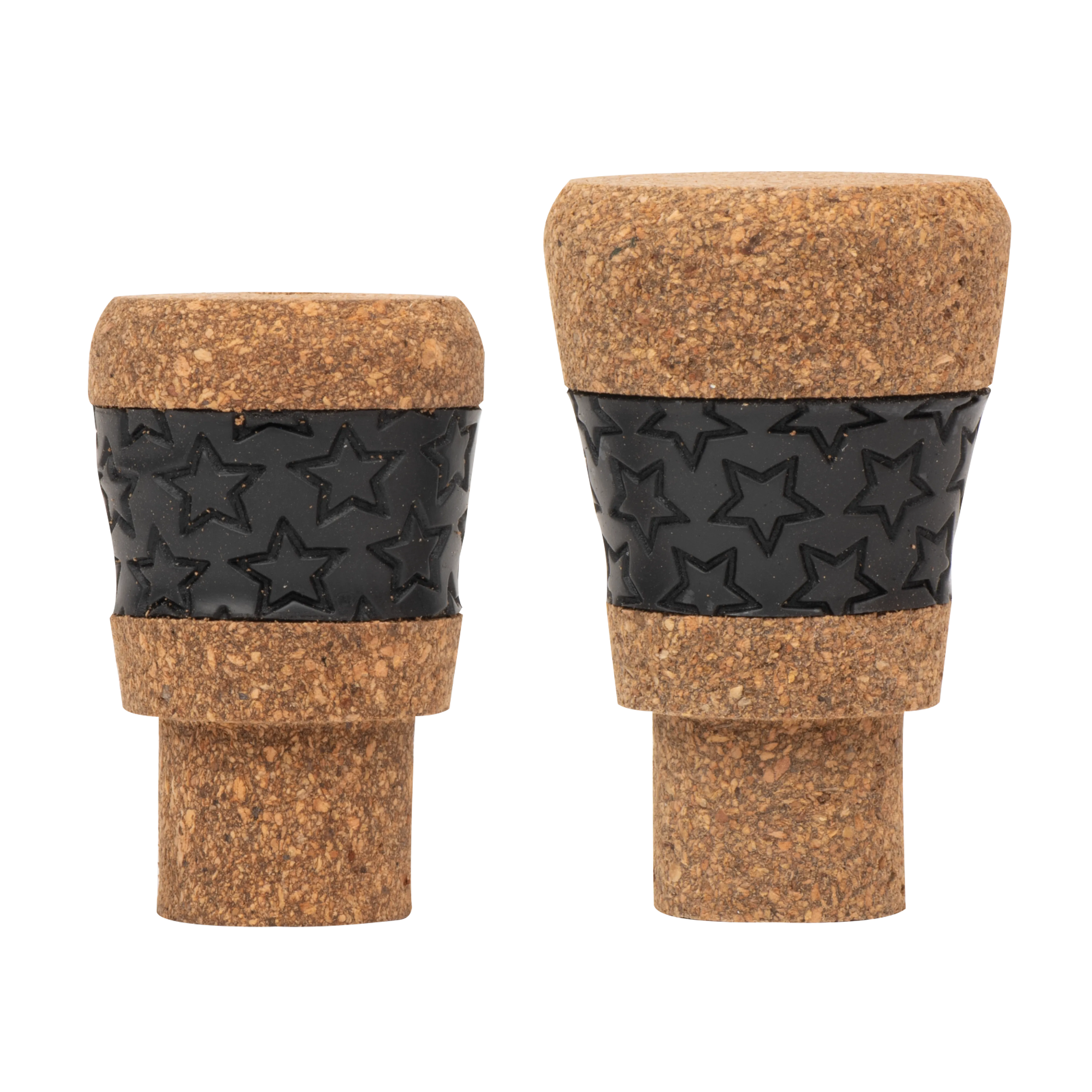
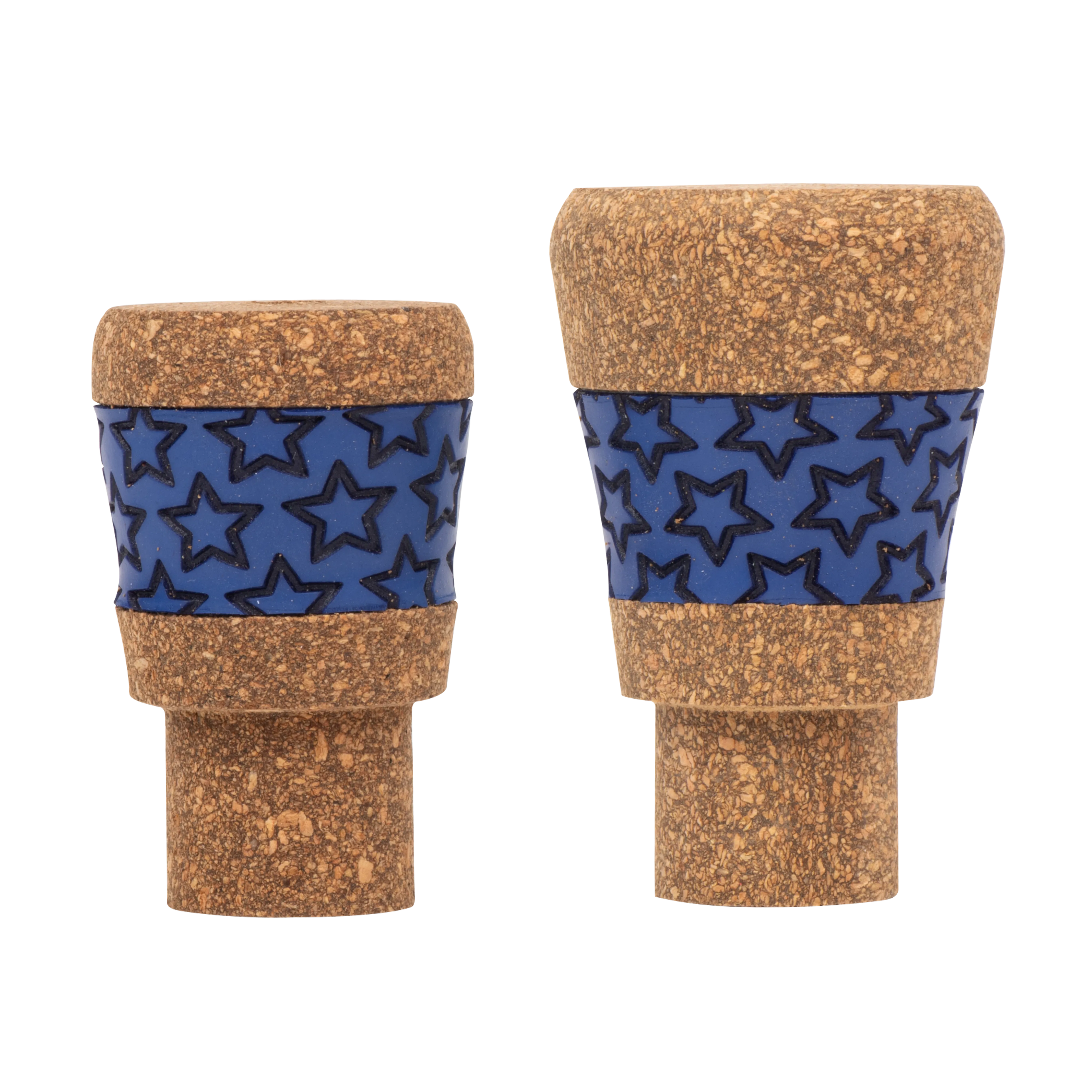
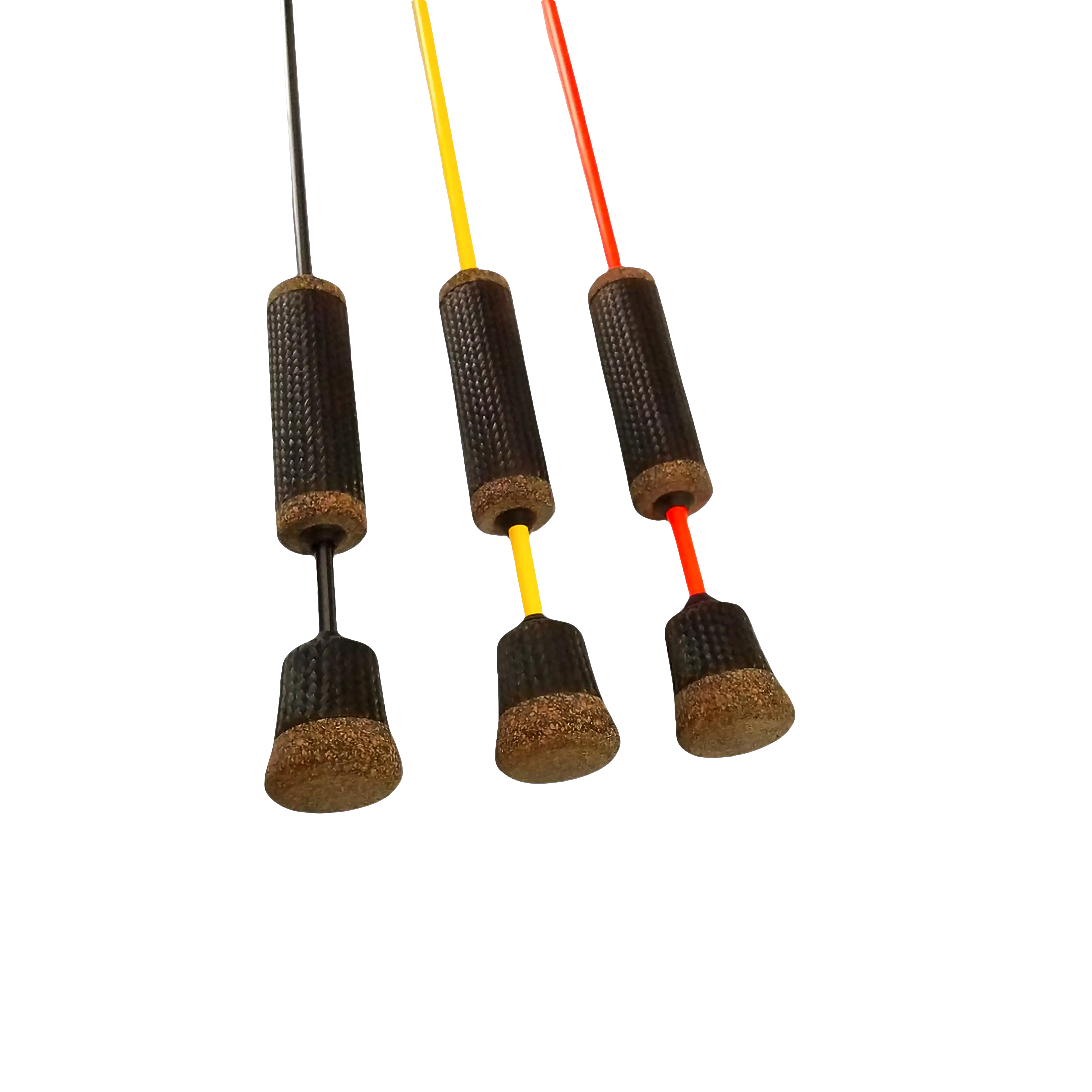
Handles play an important role in the balance, comfort, and sensitivity of a custom ice fishing rod. Because ice rods are lightweight and commonly held for long periods while watching for subtle bites, handle design focuses on reducing unnecessary weight and keeping the rod comfortable in hand. Handle kits simplify the build process by combining compatible components and making it easier to create a balanced setup.
Unlike open-water rods where handles are often designed around casting leverage, ice rod handles are built around control and presentation. A compact handle allows anglers to keep the rod balanced near the hand while working small jigs, detecting light bites, and managing fish close to the hole.
Handle Length and Design
Ice rod handles are typically shorter than traditional fishing rods because the rods themselves are compact and designed for close-range vertical presentations. Shorter handles reduce weight, improve balance, and make the rod easier to maneuver when working jigs, fishing inside shelters, or moving between holes. Some builders use minimalist designs with exposed blank sections to maximize feedback, while longer handles may be preferred for larger species and heavier presentations.
Split vs Full-Grip Handles
Both split-grip and full-grip designs can work well for ice rods, with the choice depending on balance, comfort, and fishing style.
Split Grips
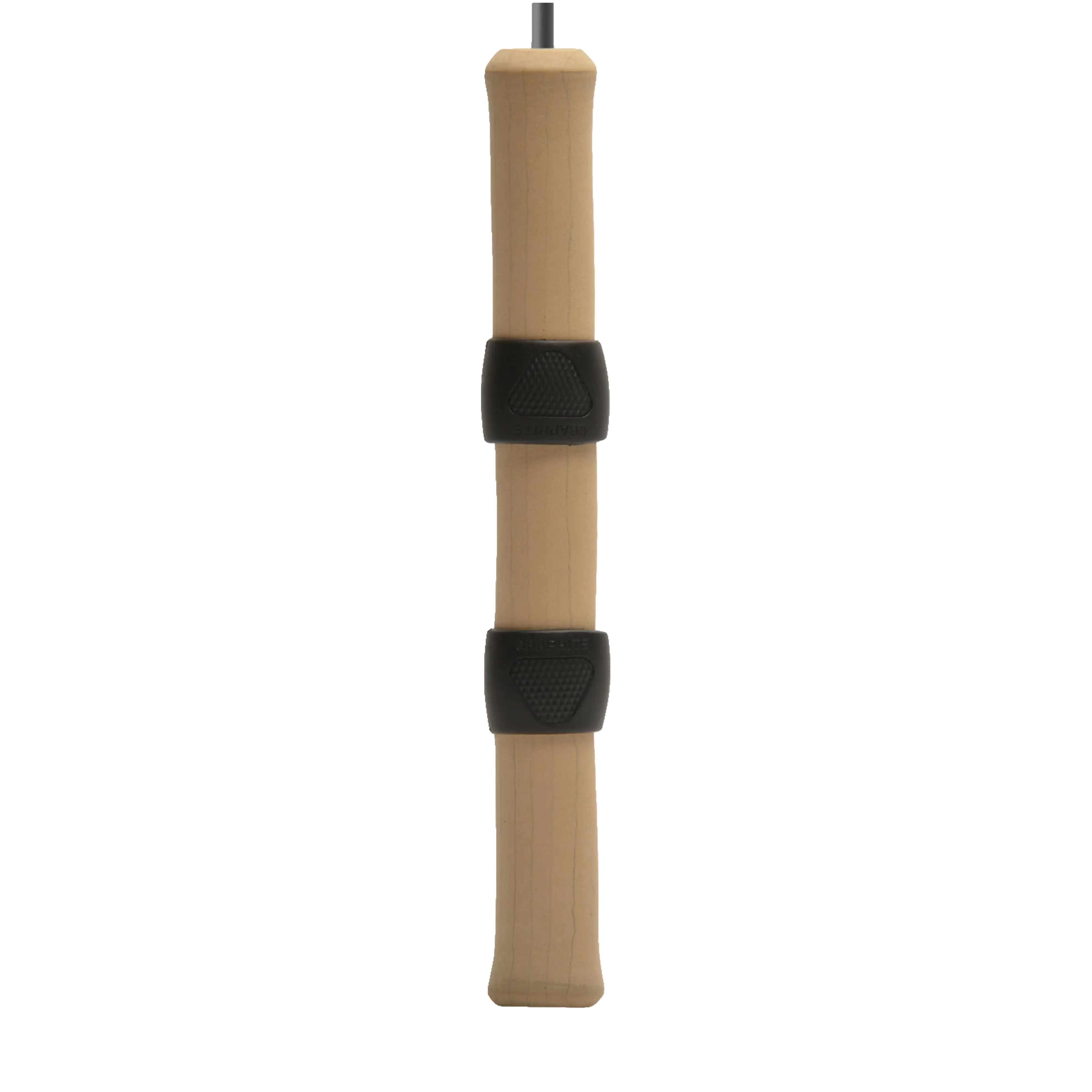
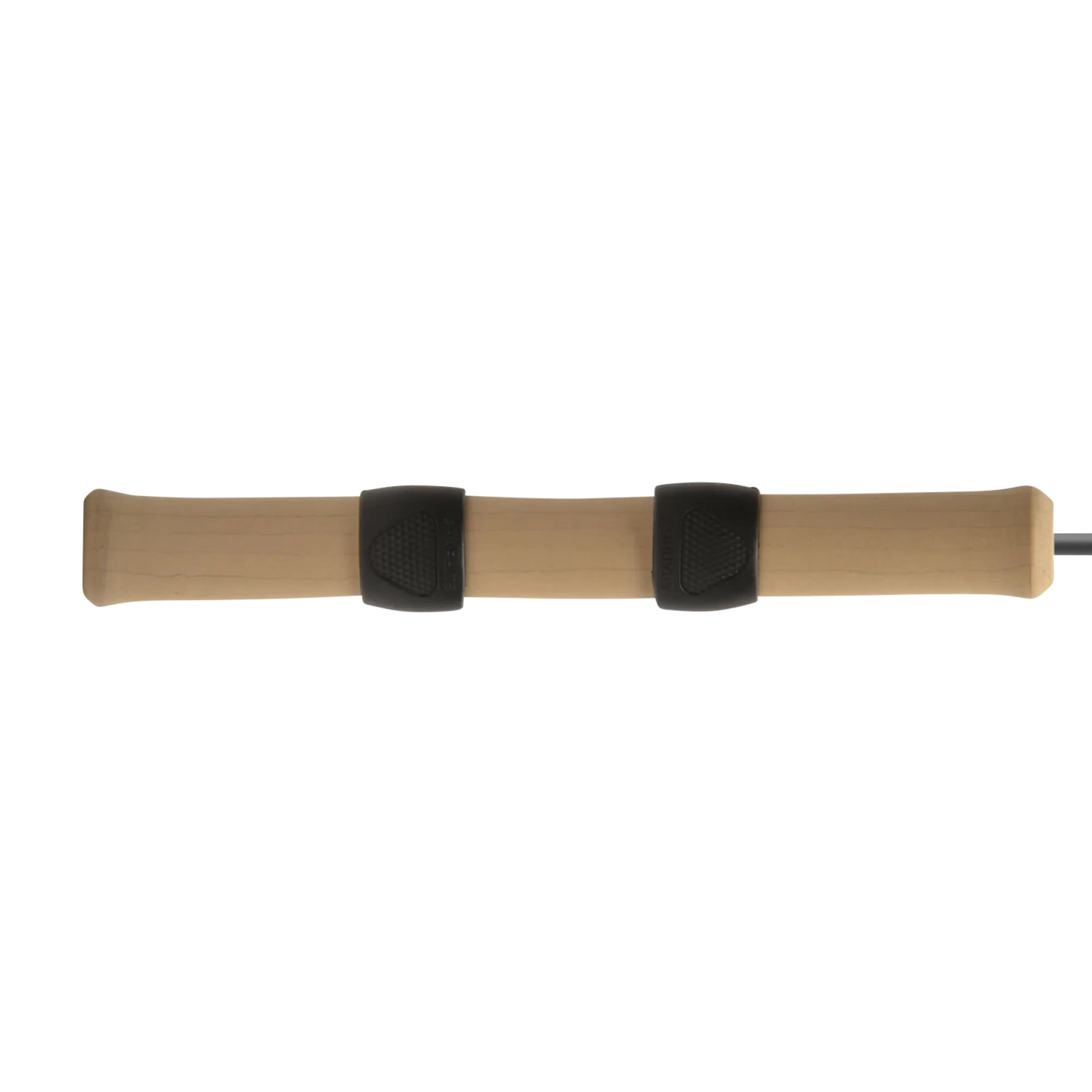
Split grips are an option on longer ice rods where there is enough space to create a functional split design. Removing material from the rear section can reduce weight and help fine-tune balance, which is useful on longer rods designed for larger presentations or bigger species. On shorter ice rods, compact full grips or minimalist handle designs are more common because the limited overall rod length leaves little room for a split configuration. The split grip is very popular with anglers who hold the rod "pencil style" while jigging. Keep in mind the open gap area of the split grip is usually no longer than 1-2".
Full-Length Grips
Full-length grips provide a continuous handle surface and are a common choice on shorter ice rods where there is limited space for a split design. The additional grip area creates a comfortable, secure feel and provides more surface contact when holding the rod for extended periods. Full grips also offer a traditional handle design that many builders prefer for its simplicity, durability, and finished appearance.
Handle Materials
Handle material affects weight, comfort, durability, and performance in cold conditions.
Cork
Cork is widely used on custom ice rods because it is lightweight, comfortable, and provides a traditional feel. It also remains comfortable in colder temperatures compared to some synthetic materials, making it a popular choice for finesse and panfish builds.
EVA Foam
EVA foam is durable, water-resistant, and easy to maintain, making it a practical choice for ice fishing conditions. It handles moisture, repeated use, and harsh environments well while providing a comfortable grip.
Carbon / Composite
Carbon and composite materials offer an extremely lightweight option for performance-focused builds. Their rigid construction helps reduce weight while maintaining durability and can complement rods where balance and sensitivity are the top priorities.
Choosing the right handle kit depends on the blank, target species, fishing environment, and desired feel. A properly designed ice rod handle keeps the rod balanced, comfortable, and responsive from the first jig movement to the hookset.
Build Note: Very thin ice rod blanks can be prone to grips and reel seats separating under load. For blanks with an OD under 0.19" at the grip location, many builders reinforce the handle area with a tube such as the American Tackle 10" Fiberglass Ice Rod Handle Mounting Tube. This adds support where it’s needed and helps prevent the grip or reel seat from separating from the blank.
Key Takeaways
- Ice rod handles prioritize balance, weight reduction, and control rather than casting performance.
- Shorter, lightweight handle designs are common for vertical presentations.
- Split grips reduce weight and allow balance adjustments, while full grips provide a traditional feel and added support.
- Cork, EVA, and carbon/composite materials each offer different advantages in comfort, weight, and durability.
- Proper handle selection maximizes sensitivity and control in a custom ice rod.
Ice Fishing Handle Kits
Handles play an important role in the balance, comfort, and sensitivity of a custom ice fishing rod. Because ice rods are lightweight and commonly held for long periods while watching for subtle bites, handle design focuses on reducing unnecessary weight and keeping the rod comfortable in hand. Handle kits simplify the build process by combining compatible components and making it easier to create a balanced setup.
Unlike open-water rods where handles are often designed around casting leverage, ice rod handles are built around control and presentation. A compact handle allows anglers to keep the rod balanced near the hand while working small jigs, detecting light bites, and managing fish close to the hole.
Handle Length and Design
Ice rod handles are typically shorter than traditional fishing rods because the rods themselves are compact and designed for close-range vertical presentations. Shorter handles reduce weight, improve balance, and make the rod easier to maneuver when working jigs, fishing inside shelters, or moving between holes. Some builders use minimalist designs with exposed blank sections to maximize feedback, while longer handles may be preferred for larger species and heavier presentations.
Split vs Full-Grip Handles
Both split-grip and full-grip designs can work well for ice rods, with the choice depending on balance, comfort, and fishing style.
Split Grips
Split grips are an option on longer ice rods where there is enough space to create a functional split design. Removing material from the rear section can reduce weight and help fine-tune balance, which is useful on longer rods designed for larger presentations or bigger species. On shorter ice rods, compact full grips or minimalist handle designs are more common because the limited overall rod length leaves little room for a split configuration. The split grip is very popular with anglers who hold the rod "pencil style" while jigging. Keep in mind the open gap area of the split grip is usually no longer than 1-2".
Full-Length Grips
Full-length grips provide a continuous handle surface and are a common choice on shorter ice rods where there is limited space for a split design. The additional grip area creates a comfortable, secure feel and provides more surface contact when holding the rod for extended periods. Full grips also offer a traditional handle design that many builders prefer for its simplicity, durability, and finished appearance.
Handle Materials
Handle material affects weight, comfort, durability, and performance in cold conditions.
Cork
Cork is widely used on custom ice rods because it is lightweight, comfortable, and provides a traditional feel. It also remains comfortable in colder temperatures compared to some synthetic materials, making it a popular choice for finesse and panfish builds.
EVA Foam
EVA foam is durable, water-resistant, and easy to maintain, making it a practical choice for ice fishing conditions. It handles moisture, repeated use, and harsh environments well while providing a comfortable grip.
Carbon / Composite
Carbon and composite materials offer an extremely lightweight option for performance-focused builds. Their rigid construction helps reduce weight while maintaining durability and can complement rods where balance and sensitivity are the top priorities.
Choosing the right handle kit depends on the blank, target species, fishing environment, and desired feel. A properly designed ice rod handle keeps the rod balanced, comfortable, and responsive from the first jig movement to the hookset.
Build Note: Very thin ice rod blanks can be prone to grips and reel seats separating under load. For blanks with an OD under 0.19" at the grip location, many builders reinforce the handle area with a tube such as the American Tackle 10" Fiberglass Ice Rod Handle Mounting Tube. This adds support where it’s needed and helps prevent the grip or reel seat from separating from the blank.
Key Takeaways
- Ice rod handles prioritize balance, weight reduction, and control rather than casting performance.
- Shorter, lightweight handle designs are common for vertical presentations.
- Split grips reduce weight and allow balance adjustments, while full grips provide a traditional feel and added support.
- Cork, EVA, and carbon/composite materials each offer different advantages in comfort, weight, and durability.
- Proper handle selection maximizes sensitivity and control in a custom ice rod.
Ice Grip & Handle Kits
Ice Rod Reel Seats
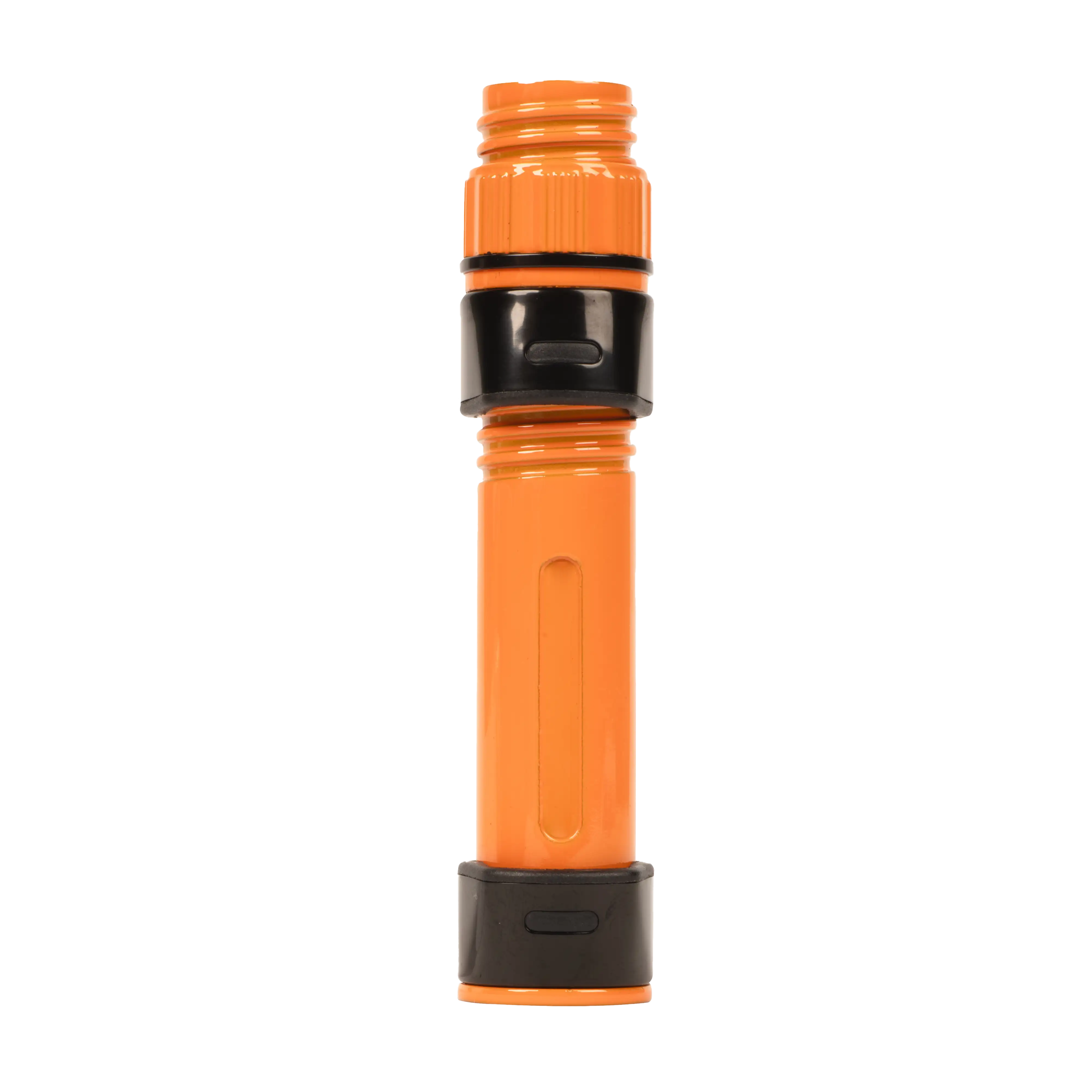
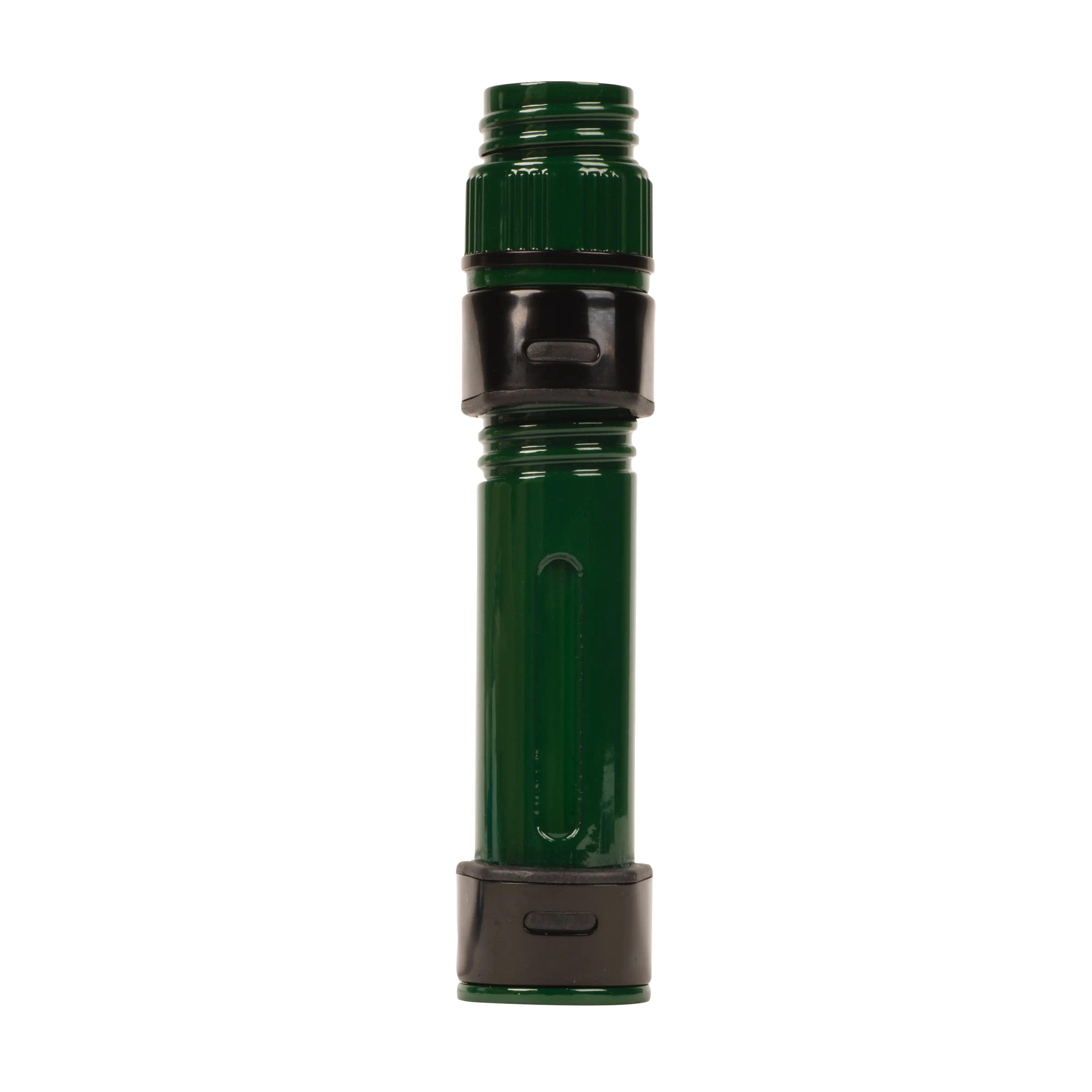
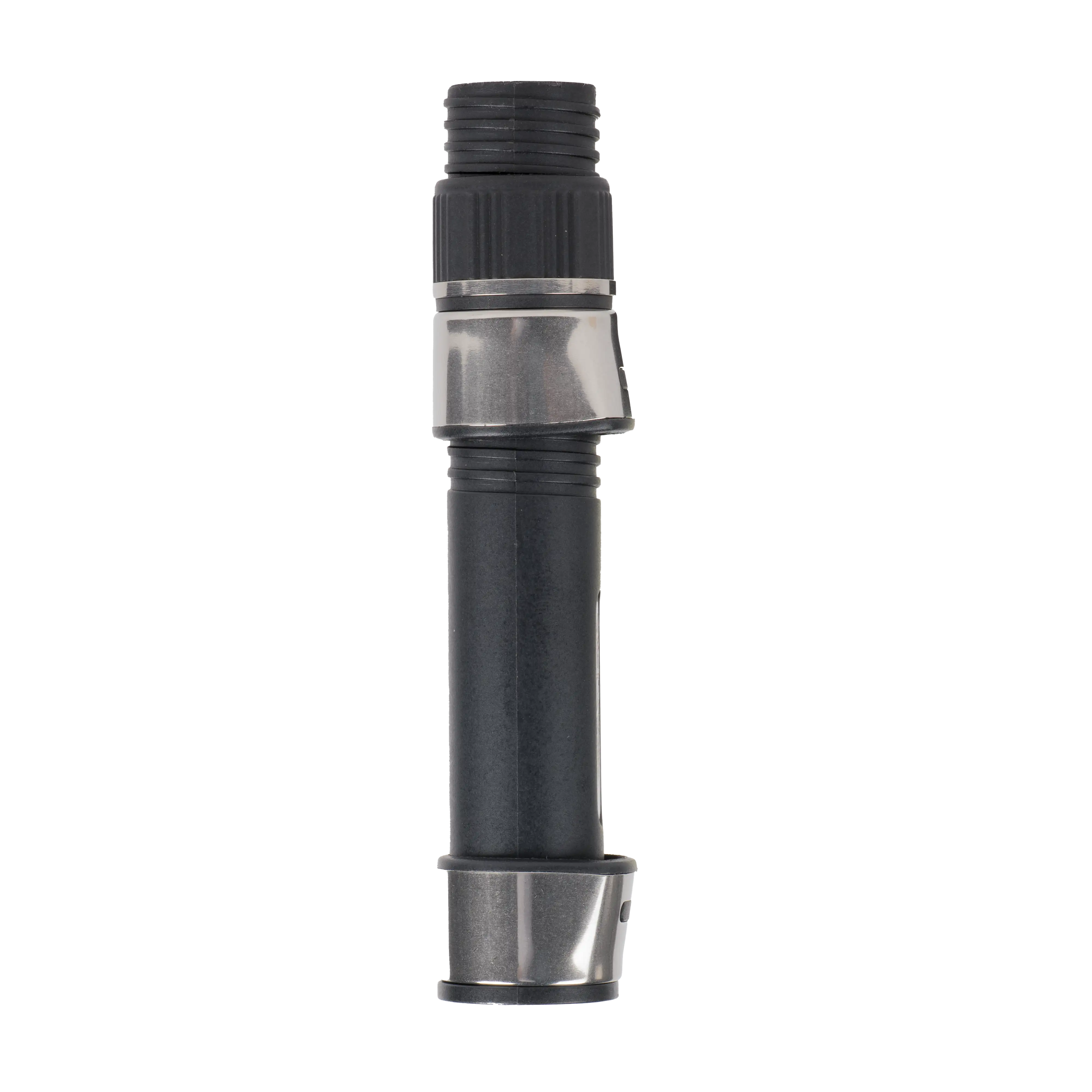
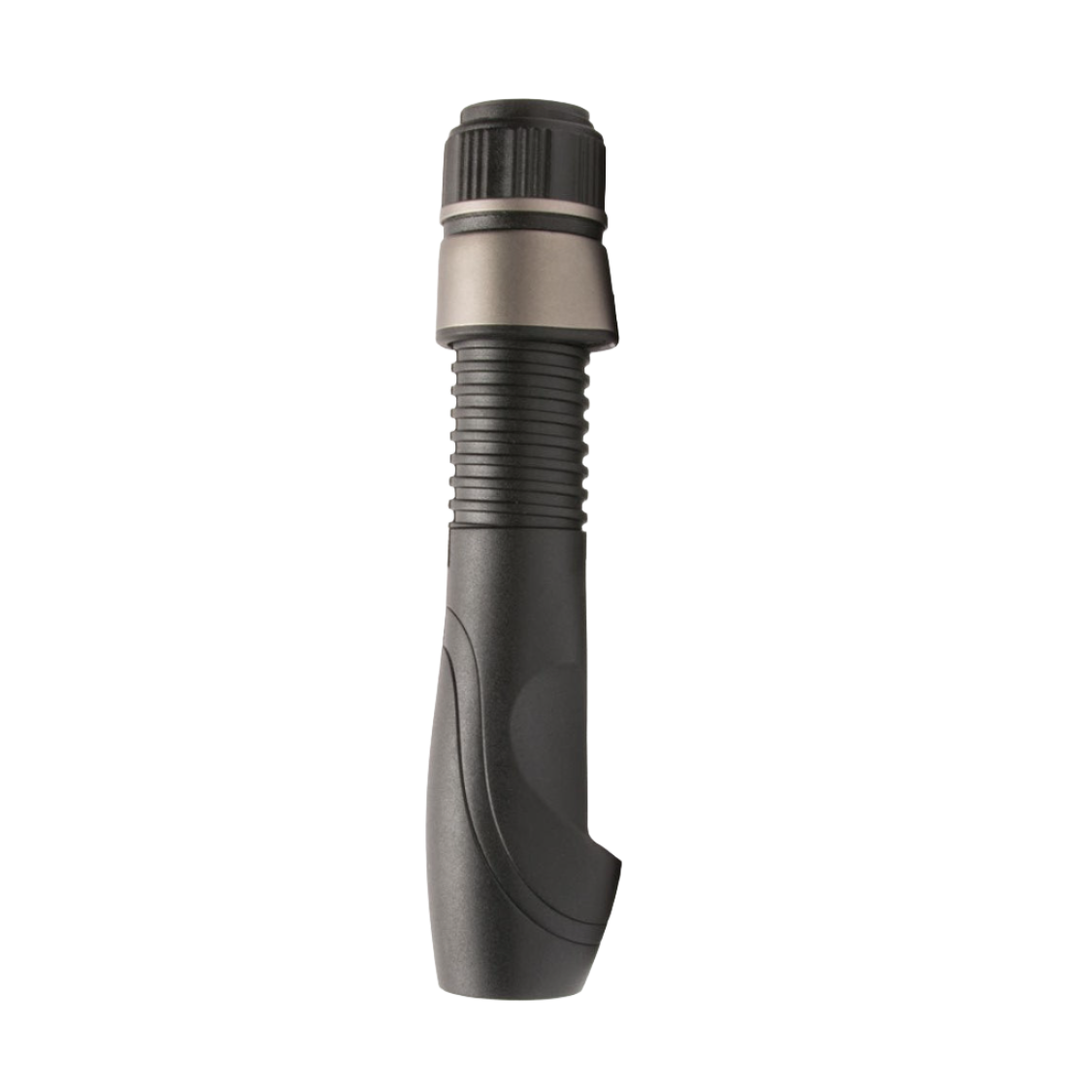
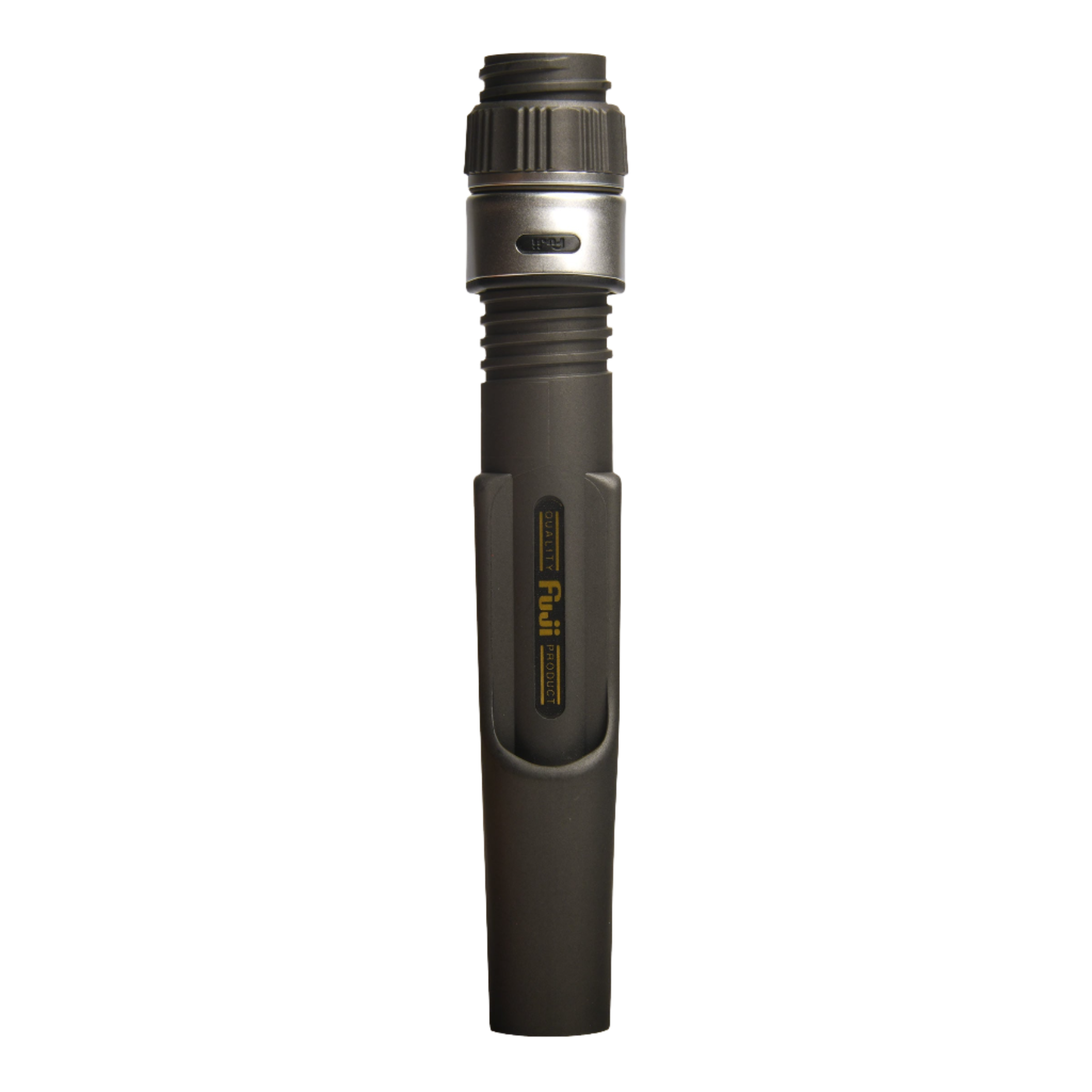
Some handle kits include a reel seat, while others do not. If your kit does not include one—or if you want to customize your build—the reel seat is an important component of an ice fishing rod. It secures the reel to the blank while also influencing balance, weight, and overall feel in hand. Since ice rods are lightweight and commonly held for long periods, the right reel seat helps maintain a comfortable, responsive setup.
When selecting a reel seat, consider reel compatibility, weight, material, and how the seat integrates with the handle design.
Reel Compatibility & Seat Types
Ice fishing rods commonly use smaller spinning reels and inline ice reels, so the reel seat must match the reel foot securely while maintaining proper alignment with the blank. A properly fitted seat helps prevent movement, improves comfort, and keeps the reel positioned correctly for vertical presentations.
Split vs. Full Reel Seats
Split reel seats use a two-piece reduced-material design that helps minimize overall weight and create a more minimalist build. They are often paired with lightweight ice rod builds where reducing unnecessary material helps improve balance and responsiveness.
Full-length (barrel) reel seats provide a continuous mounting surface and a traditional feel. They offer a secure reel connection and a more familiar handle design, making them a good choice for builders who prefer a simple, durable setup.
Materials
Reel seat material affects weight, durability, and overall feel in hand. Since ice rods are typically lightweight, reducing unnecessary weight in the handle section can have a noticeable effect on balance.
Graphite
Graphite reel seats are popular for custom ice rods because they are lightweight, durable, and resistant to corrosion. Their low weight helps maintain the balance and responsiveness needed for finesse presentations.
Composite & Carbon Fiber
Composite and carbon fiber reel seats provide another lightweight option for performance-focused builds. These materials are valued for their stiffness and reduced weight, making them a good choice when builders want to minimize overall rod weight.
A properly selected reel seat keeps the reel secure, maintains proper balance, and complements the lightweight design of a custom ice fishing rod.
Key Takeaways
- Reel seats influence rod balance, weight, and overall feel.
- Ice rod reel seats should match the reel type and handle design.
- Lightweight reel seats help maintain the responsive feel of short ice rods.
- Graphite, composite, and carbon materials provide lightweight and durable options.
Ice Rod Reel Seats
Some handle kits include a reel seat, while others do not. If your kit does not include one—or if you want to customize your build—the reel seat is an important component of an ice fishing rod. It secures the reel to the blank while also influencing balance, weight, and overall feel in hand. Since ice rods are lightweight and commonly held for long periods, the right reel seat helps maintain a comfortable, responsive setup.
When selecting a reel seat, consider reel compatibility, weight, material, and how the seat integrates with the handle design.
Reel Compatibility & Seat Types
Ice fishing rods commonly use smaller spinning reels and inline ice reels, so the reel seat must match the reel foot securely while maintaining proper alignment with the blank. A properly fitted seat helps prevent movement, improves comfort, and keeps the reel positioned correctly for vertical presentations.
Split vs. Full Reel Seats
Split reel seats use a two-piece reduced-material design that helps minimize overall weight and create a more minimalist build. They are often paired with lightweight ice rod builds where reducing unnecessary material helps improve balance and responsiveness.
Full-length (barrel) reel seats provide a continuous mounting surface and a traditional feel. They offer a secure reel connection and a more familiar handle design, making them a good choice for builders who prefer a simple, durable setup.
Materials
Reel seat material affects weight, durability, and overall feel in hand. Since ice rods are typically lightweight, reducing unnecessary weight in the handle section can have a noticeable effect on balance.
Graphite
Graphite reel seats are popular for custom ice rods because they are lightweight, durable, and resistant to corrosion. Their low weight helps maintain the balance and responsiveness needed for finesse presentations.
Composite & Carbon Fiber
Composite and carbon fiber reel seats provide another lightweight option for performance-focused builds. These materials are valued for their stiffness and reduced weight, making them a good choice when builders want to minimize overall rod weight.
A properly selected reel seat keeps the reel secure, maintains proper balance, and complements the lightweight design of a custom ice fishing rod.
Key Takeaways
- Reel seats influence rod balance, weight, and overall feel.
- Ice rod reel seats should match the reel type and handle design.
- Lightweight reel seats help maintain the responsive feel of short ice rods.
- Graphite, composite, and carbon materials provide lightweight and durable options.
Ice Reel Seats




Choose Your Supply Kits
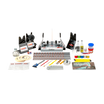
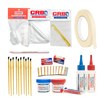
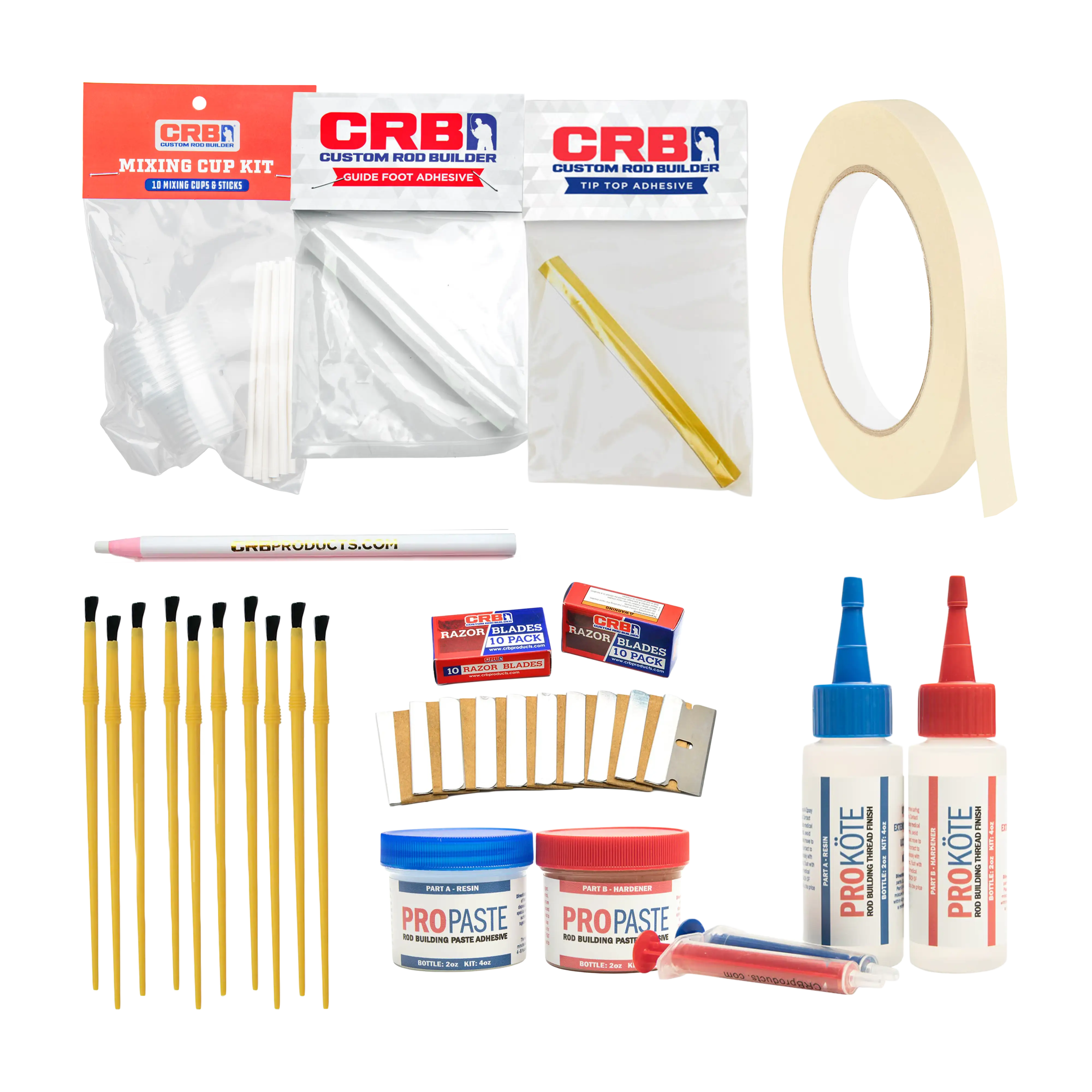
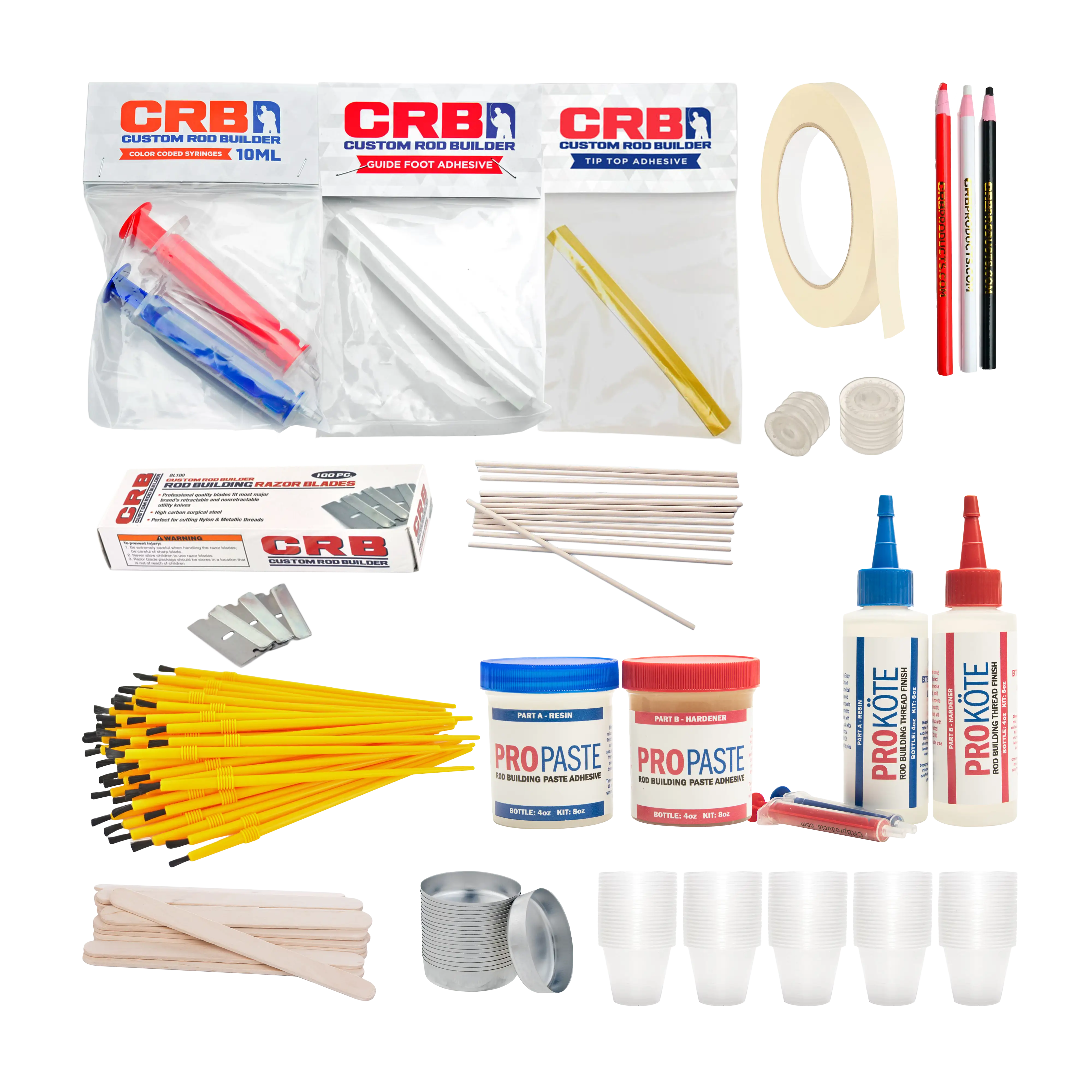
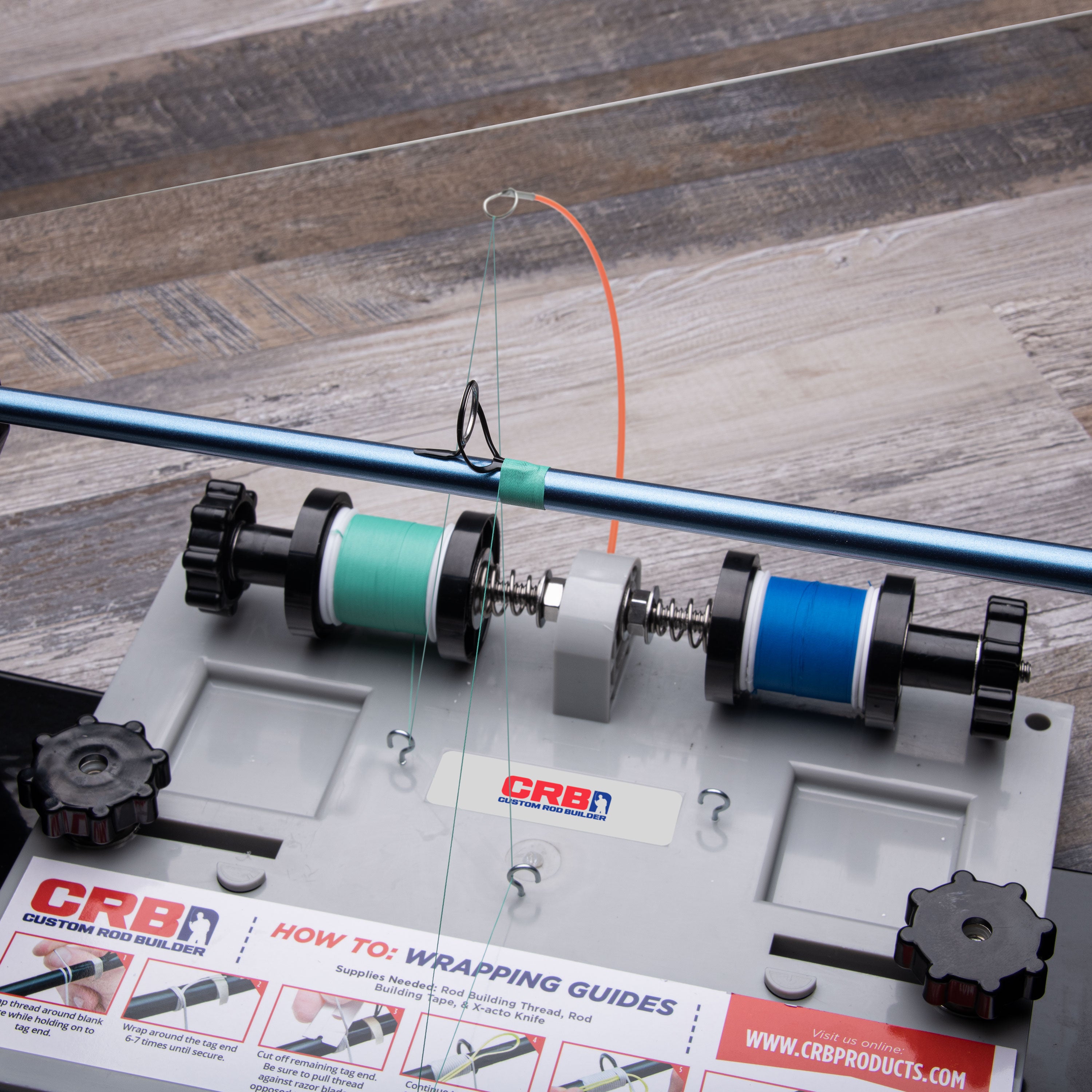
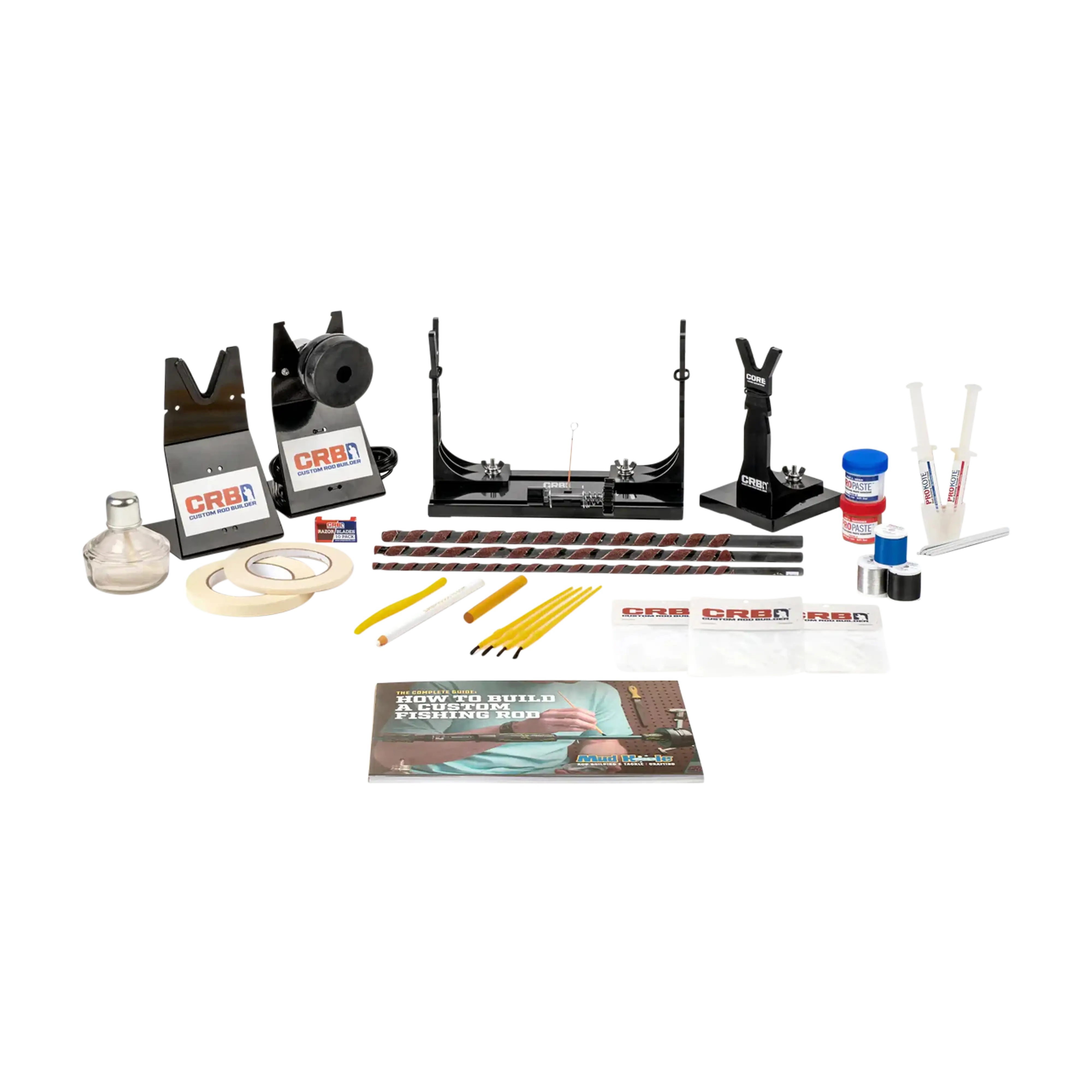
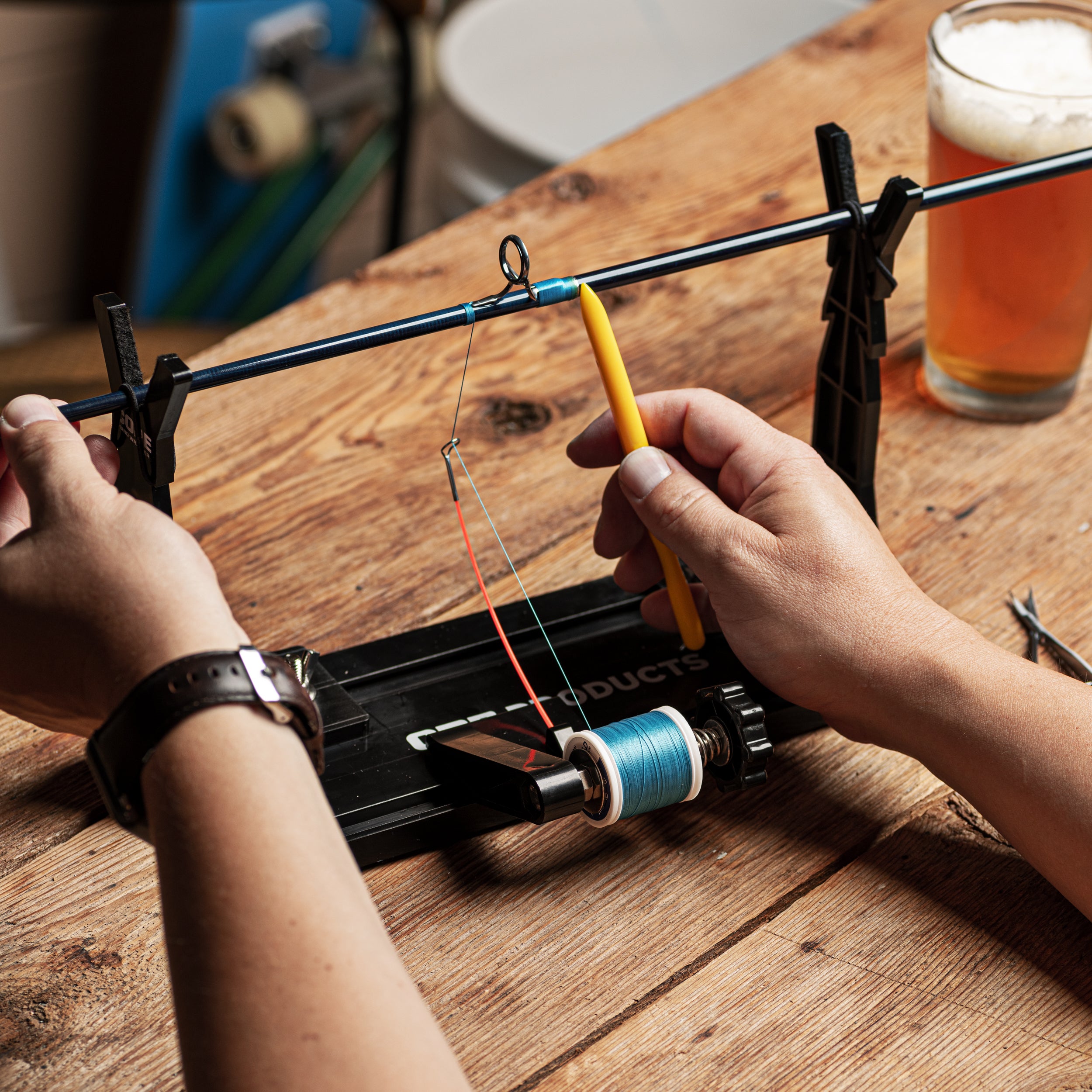
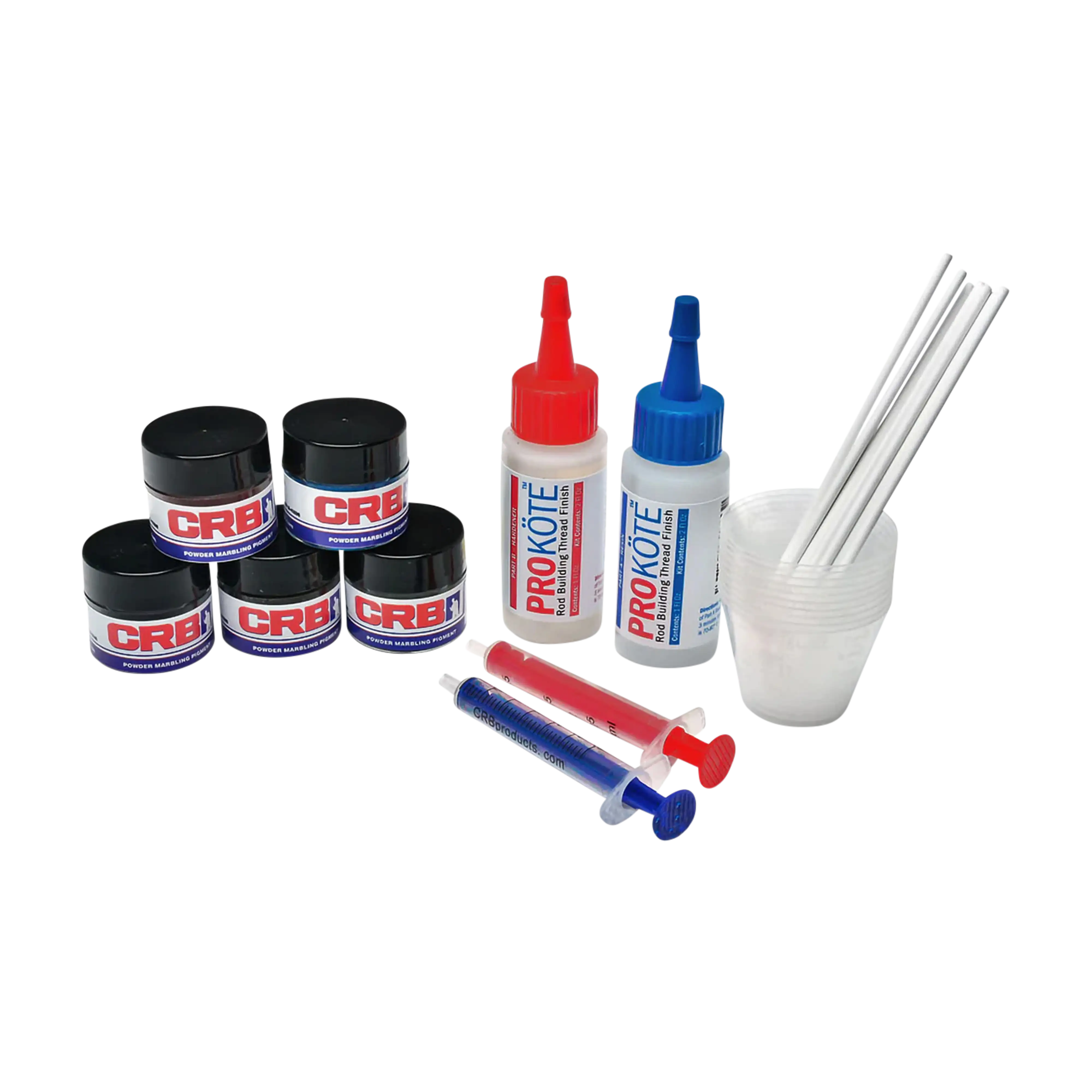
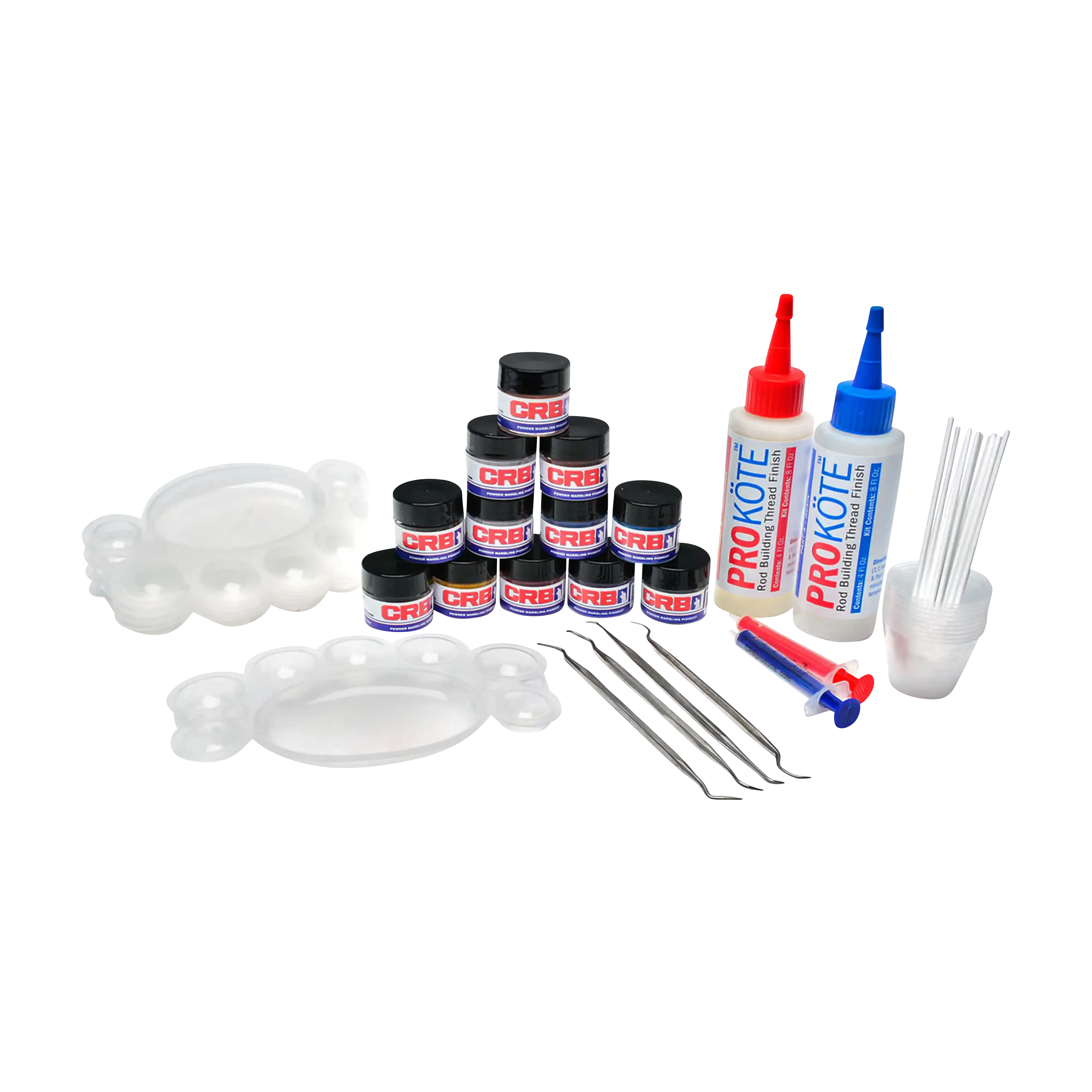
Everything needed to complete a custom ice fishing rod build can be found in a rod building supply kit. These kits include essential tools and materials such as rod dryers, thread, hand wrappers, epoxy, brushes, and reamers, helping builders avoid sourcing individual items separately. A complete supply kit simplifies the process and provides the equipment needed to build, finish, and maintain a custom rod with consistent results.
For Beginners
All-in-one supply kits provide the essential tools and materials needed to get started without purchasing each item individually. This allows new builders to focus on learning key techniques such as guide wrapping, epoxy application, and proper component installation.
For Experienced Builders
Supply kits are useful for replacing commonly used consumables such as thread, epoxy, and finishing supplies. Even experienced builders can save time by keeping essential materials organized and ready for future projects.
Key Takeaways
- Supply kits include essential tools and materials for completing custom rod builds.
- Beginners benefit from kits that simplify setup and provide the basics needed to learn rod building.
- Experienced builders can use kits to restock consumables and maintain an efficient workflow.
- Having the right supplies helps improve consistency and build quality.
Choose Your Supply Kits
Everything needed to complete a custom ice fishing rod build can be found in a rod building supply kit. These kits include essential tools and materials such as rod dryers, thread, hand wrappers, epoxy, brushes, and reamers, helping builders avoid sourcing individual items separately. A complete supply kit simplifies the process and provides the equipment needed to build, finish, and maintain a custom rod with consistent results.
For Beginners
All-in-one supply kits provide the essential tools and materials needed to get started without purchasing each item individually. This allows new builders to focus on learning key techniques such as guide wrapping, epoxy application, and proper component installation.
For Experienced Builders
Supply kits are useful for replacing commonly used consumables such as thread, epoxy, and finishing supplies. Even experienced builders can save time by keeping essential materials organized and ready for future projects.
Key Takeaways
- Supply kits include essential tools and materials for completing custom rod builds.
- Beginners benefit from kits that simplify setup and provide the basics needed to learn rod building.
- Experienced builders can use kits to restock consumables and maintain an efficient workflow.
- Having the right supplies helps improve consistency and build quality.
Supply Kits

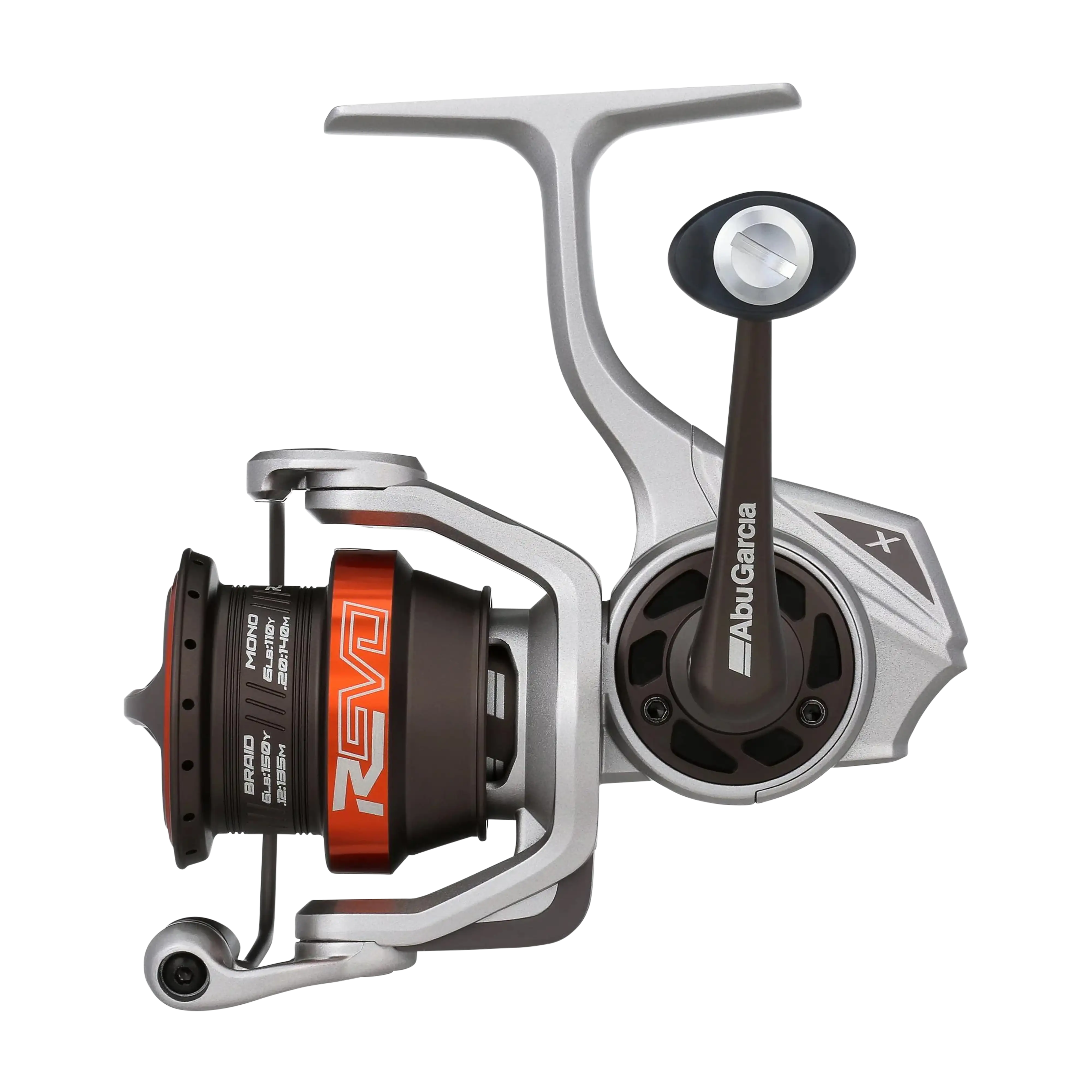
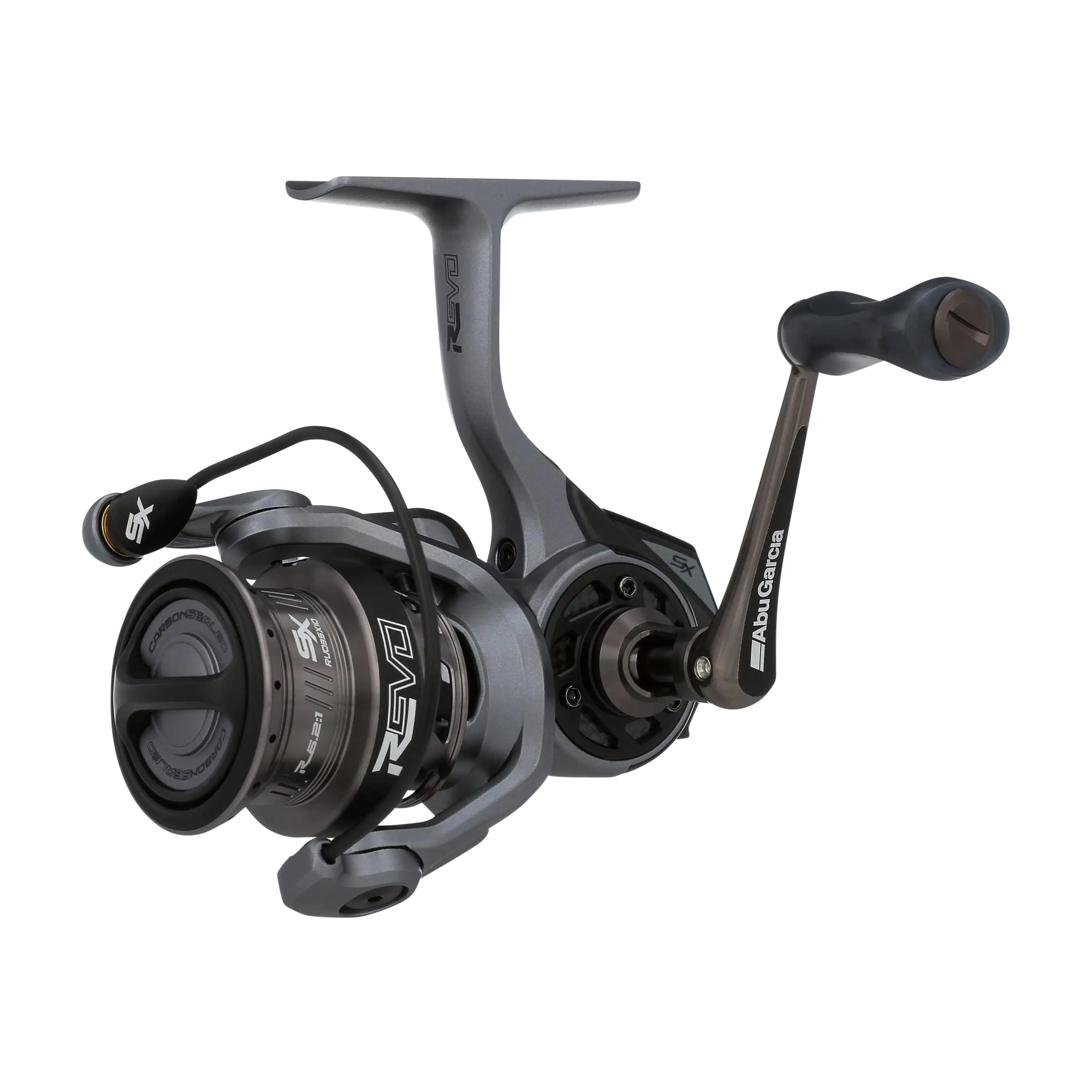
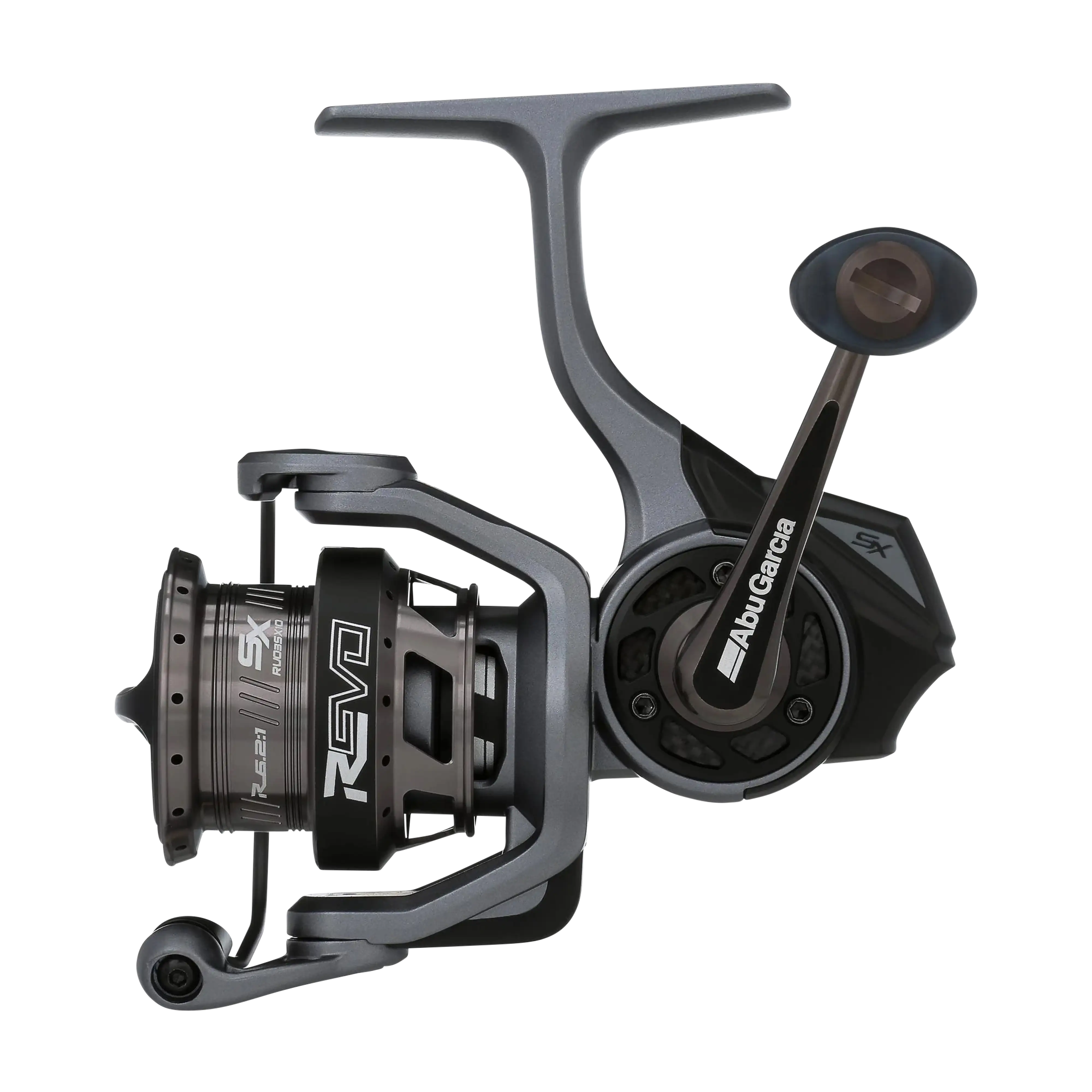
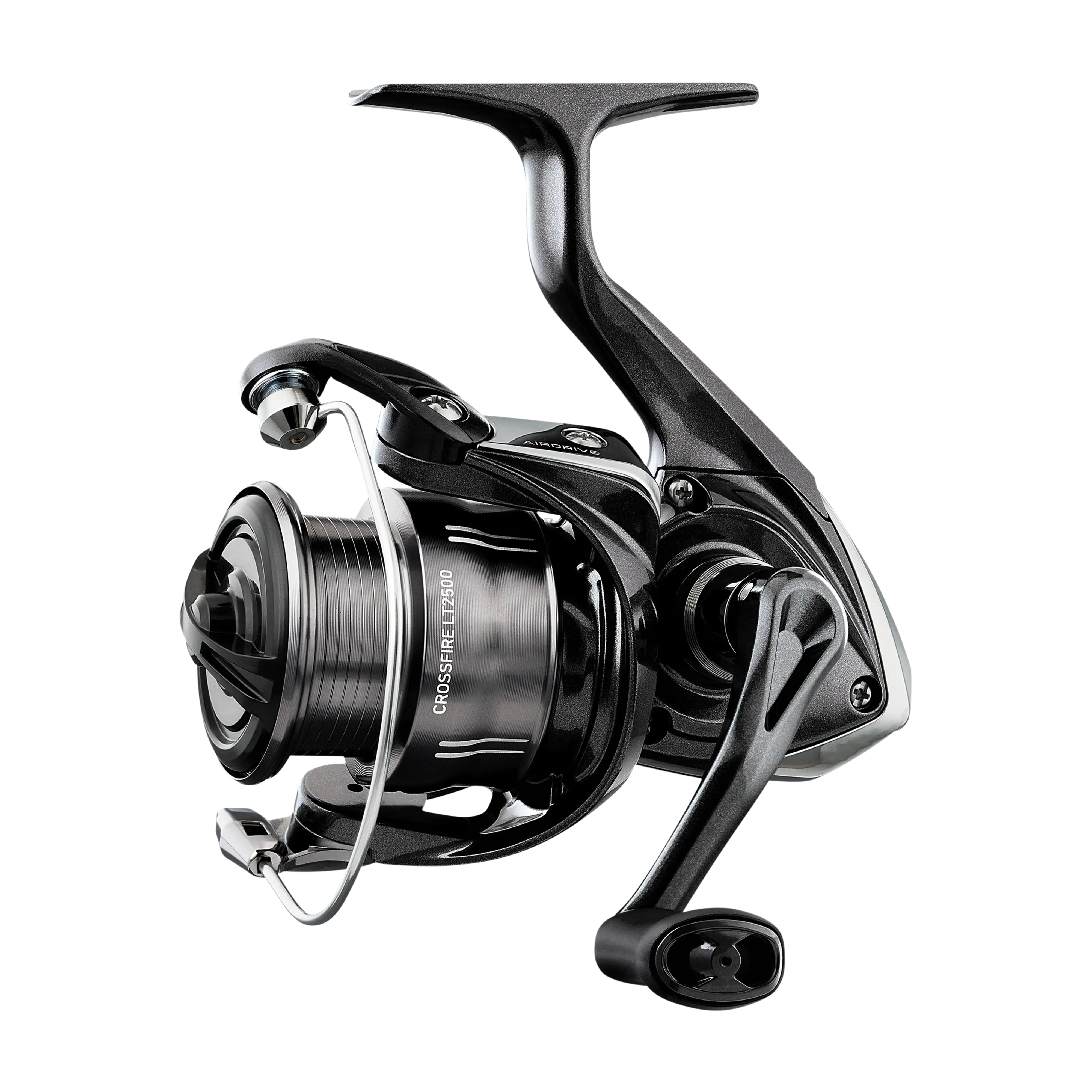
Best Reels for Ice Fishing
Now let’s find a reel for your custom rod.
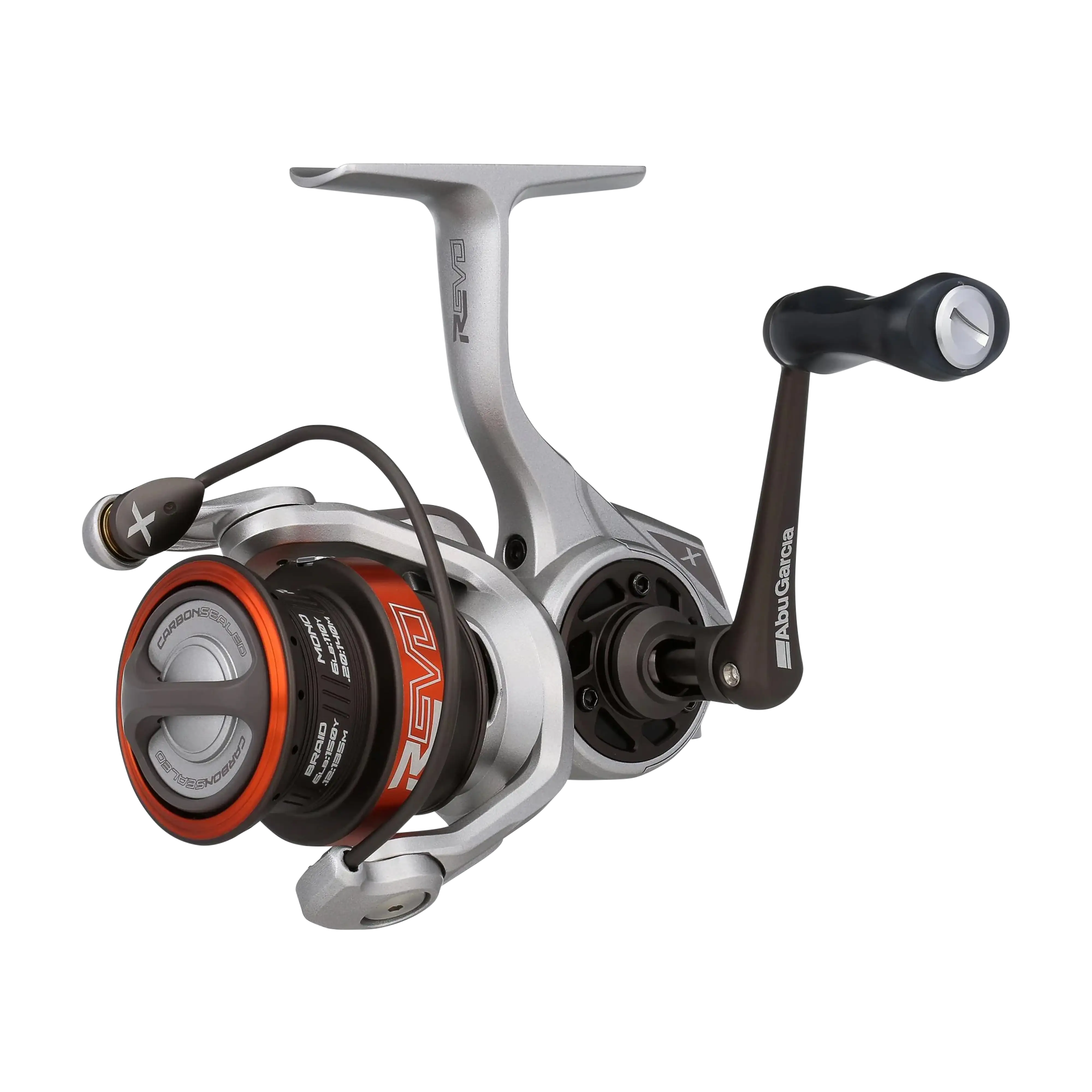
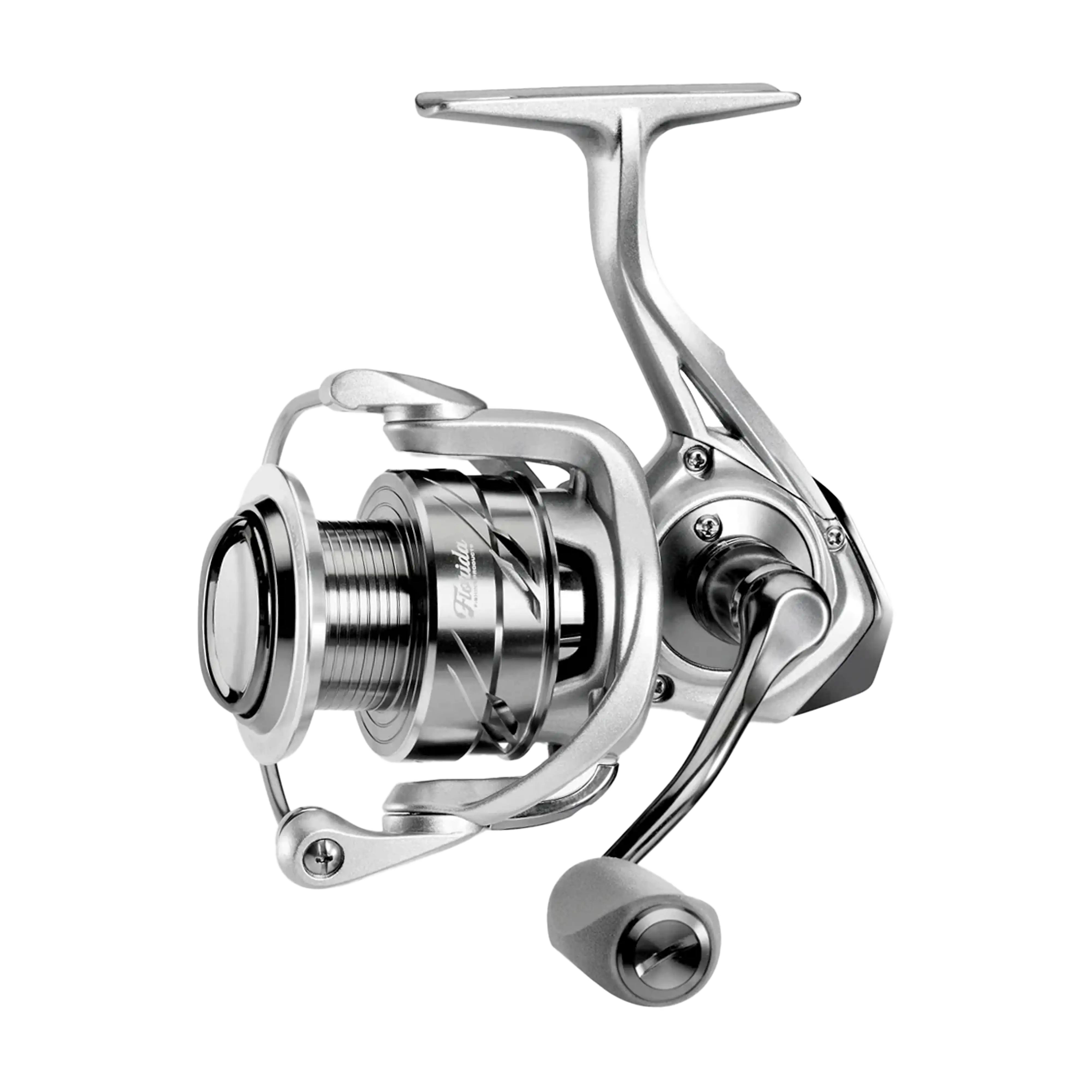
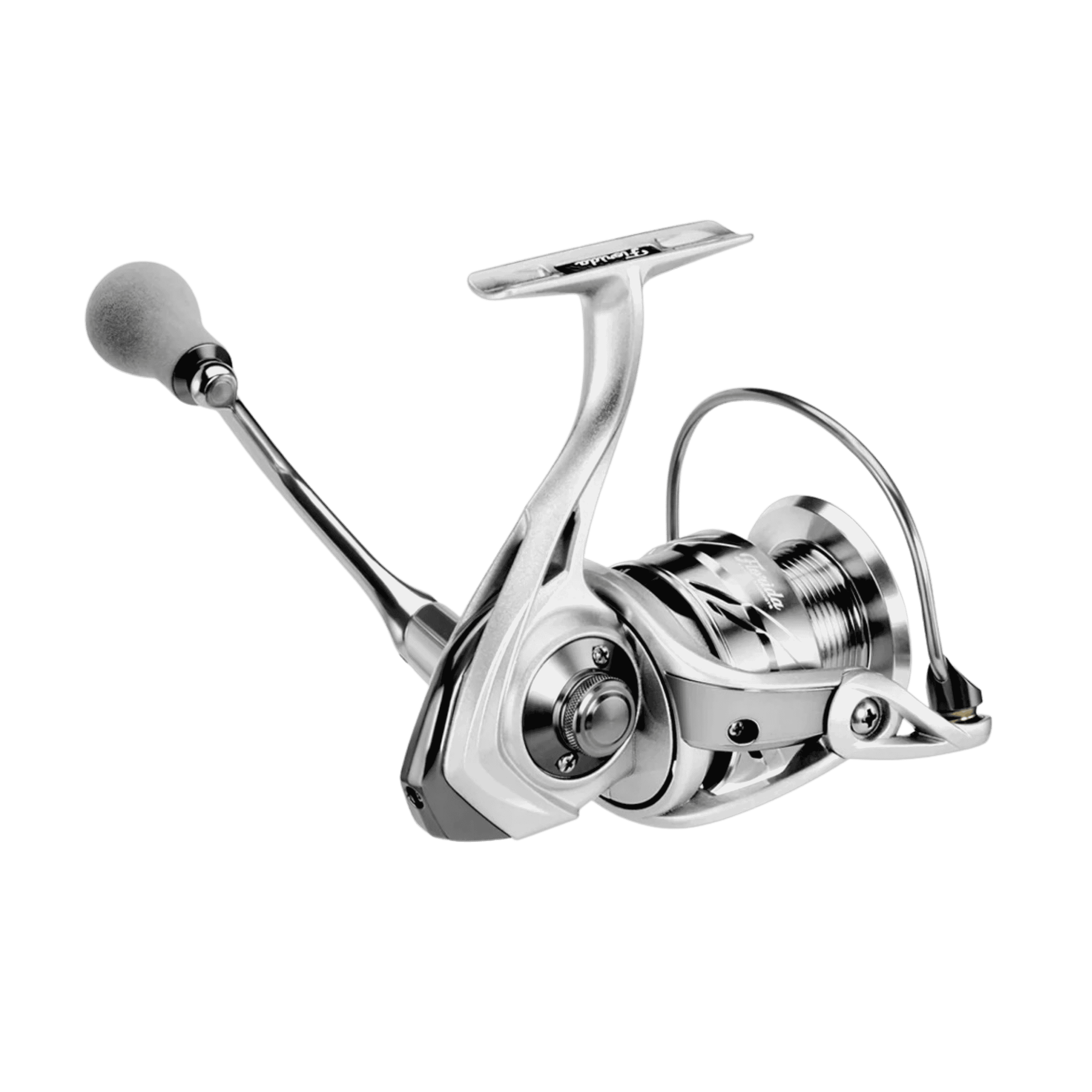
The right reel helps balance a custom ice fishing rod while providing smooth line control, reliable drag performance, and consistent operation in cold conditions. Because ice fishing often involves lightweight rods, small jigs, and vertical presentations, reel size, weight, and overall balance are important factors when building a comfortable setup.
When selecting a reel for ice fishing, consider these key features:
Reel Type
Spinning reels are one of the most common choices for custom ice rods because they are versatile, easy to use, and work well with light monofilament, fluorocarbon, and braided line setups. Their open spool design provides smooth line management and makes them suitable for a wide range of ice fishing applications.
Inline ice reels are another popular option, especially for finesse panfish applications. Because the spool rotates in line with the rod, inline reels can help reduce line twist when using lightweight jigs and thin line.
The best reel type depends on the presentation, species, and fishing style. Spinning reels provide versatility across multiple applications, while inline reels are often chosen for specialized finesse setups.
Reel Size
Ice fishing reels are typically smaller than open-water reels because they are paired with shorter rods and used primarily for vertical presentations. A compact reel helps maintain proper balance, reduces weight, and keeps the setup comfortable when holding the rod for extended periods.
Spinning reels in the 500–1000 size range are common for finesse ice fishing applications such as bluegill, crappie, perch, and light trout setups. These smaller reels pair well with ultra-light and light rods using lighter line.
Spinning reels in the 1000–2000 size range are common for multi-species ice fishing, including walleye, larger trout, and general-purpose setups. They provide additional line capacity and drag capability while maintaining good balance on shorter rods.
For larger predators such as northern pike and lake trout, anglers may even use 2000–2500 size reels or specialized inline reels depending on the presentation, depth, line choice, and fish size.
Gear Ratio
Gear ratio determines how much line is retrieved with each turn of the handle. While ice fishing does not require the high-speed retrieves common in open-water fishing, a smooth and consistent retrieve helps anglers quickly remove slack line, adjust depth, and respond when fish move toward or away from the bait.
Most ice fishing reels fall in the 4.8:1 to 6.2:1 gear ratio range. Lower ratios around 4.8:1 to 5.2:1 provide a slower, controlled retrieve that works well for finesse presentations and anglers who prefer a more deliberate approach. Standard ratios around 5.2:1 to 6.2:1 offer a balance of smoothness and line pickup, making them versatile choices for panfish, walleye, and multi-species ice fishing.
Higher-speed reels are generally less important for ice fishing because most presentations are vertical and close to the hole. A balanced gear ratio that provides smooth operation and dependable line pickup is usually more valuable than maximum retrieve speed.
Drag System
A smooth drag system is one of the most important features on an ice fishing reel, especially when using light line and small hooks. Cold conditions, thin leaders, and short rods require consistent drag pressure to prevent sudden break-offs during the fight.
A quality drag allows fish to pull line smoothly while maintaining steady pressure. This is especially important when targeting larger fish such as walleye, northern pike, and lake trout on lighter tackle.
Finesse Ice Fishing (Micro Jigs & Light Bites)
Finesse ice fishing requires a lightweight reel that keeps the rod balanced while providing smooth line control with extremely light presentations. Small spinning reels are commonly used because they pair well with ultra-light and light ice rods, manage thin line effectively, and provide the smooth drag needed when fighting fish on light tackle.
Reel Type / Size: Spinning reel, 500–1000 size
Gear Ratio: 4.8:1–6.0:1
Drag: Smooth, lightweight drag system designed for 2–6 lb line
Line (Mainline / Leader): 2–6 lb monofilament or fluorocarbon
Active Jigging (Artificial Lures)
Active jigging requires a reel that provides smooth operation, quick line pickup, and enough drag capability for fish that strike aggressively and make sudden runs. A slightly larger spinning reel can help balance longer ice rods while providing additional line capacity for deeper water and multi-species applications.
Reel Type / Size: Spinning reel, 1000–2000 size
Gear Ratio: 5.2:1–6.2:1
Drag: Smooth adjustable drag capable of protecting light leaders while controlling larger fish
Line (Mainline / Leader): 4–10 lb monofilament, fluorocarbon, or braid with fluorocarbon leader
Deadstick Fishing (Live Bait)
Deadstick fishing benefits from a reel with smooth drag performance and reliable line management because fish are often allowed to take the bait before the hookset. A compact spinning reel provides easy handling while maintaining enough capacity for common deadstick applications targeting walleye, trout, and larger panfish.
Reel Type / Size: Spinning reel, 500–1500 size
Gear Ratio: 4.8:1–5.8:1
Drag: Smooth, consistent drag for controlled pressure with live bait presentations
Line (Mainline / Leader): 2–8 lb monofilament or fluorocarbon
Heavy Ice Fishing (Large Species & Deep Water)
Heavy ice fishing requires a stronger reel with increased line capacity, a reliable drag system, and enough durability for larger fish and heavier presentations. Larger spinning reels are often paired with medium and medium-heavy ice rods when targeting predators such as northern pike and lake trout in deep water.
Reel Type / Size: Spinning reel, 1000–2000 size (occasionally 2500 for specialty setups)
Gear Ratio: 5.2:1–6.2:1
Drag: Strong, smooth drag system designed for heavier line and powerful fish
Line (Mainline / Leader): 8–20 lb monofilament, fluorocarbon, or braid with fluorocarbon/specialty leader
Key Takeaways
- Smaller 500–1000 size reels are ideal for finesse ice fishing where balance and light-line control are priorities.
- 1000–2000 size spinning reels provide versatility for walleye, trout, and multi-species ice fishing.
- Smooth drag performance is critical when using light line and small hooks.
- Gear ratio is less important than smooth operation and reliable line pickup for vertical ice presentations.
- Reel size should match the rod length, line rating, and target species to maintain proper balance.
Best Reels for Ice Fishing
Now let’s find a reel for your custom rod.
The right reel helps balance a custom ice fishing rod while providing smooth line control, reliable drag performance, and consistent operation in cold conditions. Because ice fishing often involves lightweight rods, small jigs, and vertical presentations, reel size, weight, and overall balance are important factors when building a comfortable setup.
When selecting a reel for ice fishing, consider these key features:
Reel Type
Spinning reels are one of the most common choices for custom ice rods because they are versatile, easy to use, and work well with light monofilament, fluorocarbon, and braided line setups. Their open spool design provides smooth line management and makes them suitable for a wide range of ice fishing applications.
Inline ice reels are another popular option, especially for finesse panfish applications. Because the spool rotates in line with the rod, inline reels can help reduce line twist when using lightweight jigs and thin line.
The best reel type depends on the presentation, species, and fishing style. Spinning reels provide versatility across multiple applications, while inline reels are often chosen for specialized finesse setups.
Reel Size
Ice fishing reels are typically smaller than open-water reels because they are paired with shorter rods and used primarily for vertical presentations. A compact reel helps maintain proper balance, reduces weight, and keeps the setup comfortable when holding the rod for extended periods.
Spinning reels in the 500–1000 size range are common for finesse ice fishing applications such as bluegill, crappie, perch, and light trout setups. These smaller reels pair well with ultra-light and light rods using lighter line.
Spinning reels in the 1000–2000 size range are common for multi-species ice fishing, including walleye, larger trout, and general-purpose setups. They provide additional line capacity and drag capability while maintaining good balance on shorter rods.
For larger predators such as northern pike and lake trout, anglers may even use 2000–2500 size reels or specialized inline reels depending on the presentation, depth, line choice, and fish size.
Gear Ratio
Gear ratio determines how much line is retrieved with each turn of the handle. While ice fishing does not require the high-speed retrieves common in open-water fishing, a smooth and consistent retrieve helps anglers quickly remove slack line, adjust depth, and respond when fish move toward or away from the bait.
Most ice fishing reels fall in the 4.8:1 to 6.2:1 gear ratio range. Lower ratios around 4.8:1 to 5.2:1 provide a slower, controlled retrieve that works well for finesse presentations and anglers who prefer a more deliberate approach. Standard ratios around 5.2:1 to 6.2:1 offer a balance of smoothness and line pickup, making them versatile choices for panfish, walleye, and multi-species ice fishing.
Higher-speed reels are generally less important for ice fishing because most presentations are vertical and close to the hole. A balanced gear ratio that provides smooth operation and dependable line pickup is usually more valuable than maximum retrieve speed.
Drag System
A smooth drag system is one of the most important features on an ice fishing reel, especially when using light line and small hooks. Cold conditions, thin leaders, and short rods require consistent drag pressure to prevent sudden break-offs during the fight.
A quality drag allows fish to pull line smoothly while maintaining steady pressure. This is especially important when targeting larger fish such as walleye, northern pike, and lake trout on lighter tackle.
Finesse Ice Fishing (Micro Jigs & Light Bites)
Finesse ice fishing requires a lightweight reel that keeps the rod balanced while providing smooth line control with extremely light presentations. Small spinning reels are commonly used because they pair well with ultra-light and light ice rods, manage thin line effectively, and provide the smooth drag needed when fighting fish on light tackle.
Reel Type / Size: Spinning reel, 500–1000 size
Gear Ratio: 4.8:1–6.0:1
Drag: Smooth, lightweight drag system designed for 2–6 lb line
Line (Mainline / Leader): 2–6 lb monofilament or fluorocarbon
Active Jigging (Artificial Lures)
Active jigging requires a reel that provides smooth operation, quick line pickup, and enough drag capability for fish that strike aggressively and make sudden runs. A slightly larger spinning reel can help balance longer ice rods while providing additional line capacity for deeper water and multi-species applications.
Reel Type / Size: Spinning reel, 1000–2000 size
Gear Ratio: 5.2:1–6.2:1
Drag: Smooth adjustable drag capable of protecting light leaders while controlling larger fish
Line (Mainline / Leader): 4–10 lb monofilament, fluorocarbon, or braid with fluorocarbon leader
Deadstick Fishing (Live Bait)
Deadstick fishing benefits from a reel with smooth drag performance and reliable line management because fish are often allowed to take the bait before the hookset. A compact spinning reel provides easy handling while maintaining enough capacity for common deadstick applications targeting walleye, trout, and larger panfish.
Reel Type / Size: Spinning reel, 500–1500 size
Gear Ratio: 4.8:1–5.8:1
Drag: Smooth, consistent drag for controlled pressure with live bait presentations
Line (Mainline / Leader): 2–8 lb monofilament or fluorocarbon
Heavy Ice Fishing (Large Species & Deep Water)
Heavy ice fishing requires a stronger reel with increased line capacity, a reliable drag system, and enough durability for larger fish and heavier presentations. Larger spinning reels are often paired with medium and medium-heavy ice rods when targeting predators such as northern pike and lake trout in deep water.
Reel Type / Size: Spinning reel, 1000–2000 size (occasionally 2500 for specialty setups)
Gear Ratio: 5.2:1–6.2:1
Drag: Strong, smooth drag system designed for heavier line and powerful fish
Line (Mainline / Leader): 8–20 lb monofilament, fluorocarbon, or braid with fluorocarbon/specialty leader
Key Takeaways
- Smaller 500–1000 size reels are ideal for finesse ice fishing where balance and light-line control are priorities.
- 1000–2000 size spinning reels provide versatility for walleye, trout, and multi-species ice fishing.
- Smooth drag performance is critical when using light line and small hooks.
- Gear ratio is less important than smooth operation and reliable line pickup for vertical ice presentations.
- Reel size should match the rod length, line rating, and target species to maintain proper balance.
Ice Fishing Reels


Build an Ice Fishing Rod
FAQ - Custom Ice Fishing Rods
How long should an ice fishing rod be?
Ice fishing rods commonly range from about 17" to 54", with length depending on the fishing style and species. Shorter rods around 18"–26" work well inside shelters or for close-range finesse fishing, while longer rods around 30"–42" provide better control when fishing outside. Longer predator rods may be used when targeting larger fish or fishing deeper water.
What power rod is best for ice fishing?
Rod power depends on the target species and lure size. Ultra-light and light power rods are popular for panfish and finesse presentations, medium-light to medium rods are versatile choices for walleye and multi-species fishing, and medium-heavy to heavy rods are used for larger predators such as northern pike and lake trout.
How do I choose the right guides for an ice fishing rod?
A quality guide kit simplifies the build by providing properly sized guides and spacing recommendations matched to the blank. Ice rod guides should balance sensitivity, weight, and cold-weather performance. Smaller guides are common on lightweight finesse rods, while larger guide sizes can help reduce freezing issues when fishing outside.
What tip-top works best for an ice fishing rod?
Choose a tip-top that matches the final running guide and fits securely over the blank tip. For outdoor ice fishing, some builders prefer slightly larger ring sizes because they provide more clearance for ice buildup and frozen line. Proper fit helps maintain smooth line flow, protect the blank tip, and preserve sensitivity.
Should I use a split grip or full grip handle for an ice fishing rod?
Short ice rods often use compact full grips or minimalist handle designs because there is limited space for a split grip configuration. Split grips become more practical on longer ice rods where removing rear handle material can help reduce weight and fine-tune balance. The best choice depends on rod length, application, and personal preference.
What reel size should I use for an ice fishing rod?
Most ice fishing setups use smaller spinning reels in the 500–2000 size range. A 500–1000 size reel is common for panfish and finesse applications, while 1000–2000 size reels are popular for walleye, trout, and multi-species rods. Larger reels may be used for specialty predator applications where additional drag and line capacity are needed.
Can I use braided line on an ice fishing rod?
Yes, braided line can be used on ice rods, especially for anglers who want increased sensitivity and low stretch. However, braid absorbs water and can freeze more easily when fishing outside, so many anglers use monofilament or fluorocarbon in cold conditions. Braid is often paired with a fluorocarbon leader when stealth and abrasion resistance are important.
What line is best for ice fishing?
The best line depends on the application. Monofilament is extremely popular because it remains manageable in freezing conditions and has some stretch to help protect light hooks. Fluorocarbon offers increased abrasion resistance and lower visibility but can become stiffer in cold temperatures. Braid provides excellent sensitivity but is more prone to freezing when exposed to water.
What action is best for an ice fishing rod?
Action depends on the presentation. Extra-fast and fast actions are common for jigging rods because they provide quick response and precise lure control. Softer or moderate actions are often preferred for deadstick setups because they allow fish to take bait with less resistance before the hookset.
What material is best for an ice fishing rod handle?
Cork, EVA foam, and carbon/composite materials are all used for ice rod handles. Cork is lightweight and traditional, EVA is durable and easy to maintain in wet winter conditions, and carbon/composite options provide an extremely lightweight performance-focused design. The best choice depends on the desired feel, weight, and application.
From the Mud Hole Journal
Further Reading
Article
Write text about your blog post.