













If you’re looking for more rod recommendations, reel pairings, line setups, and technique-specific advice, head back to the complete Main Gear Guide Page for the full breakdowns on your favorite techniques.
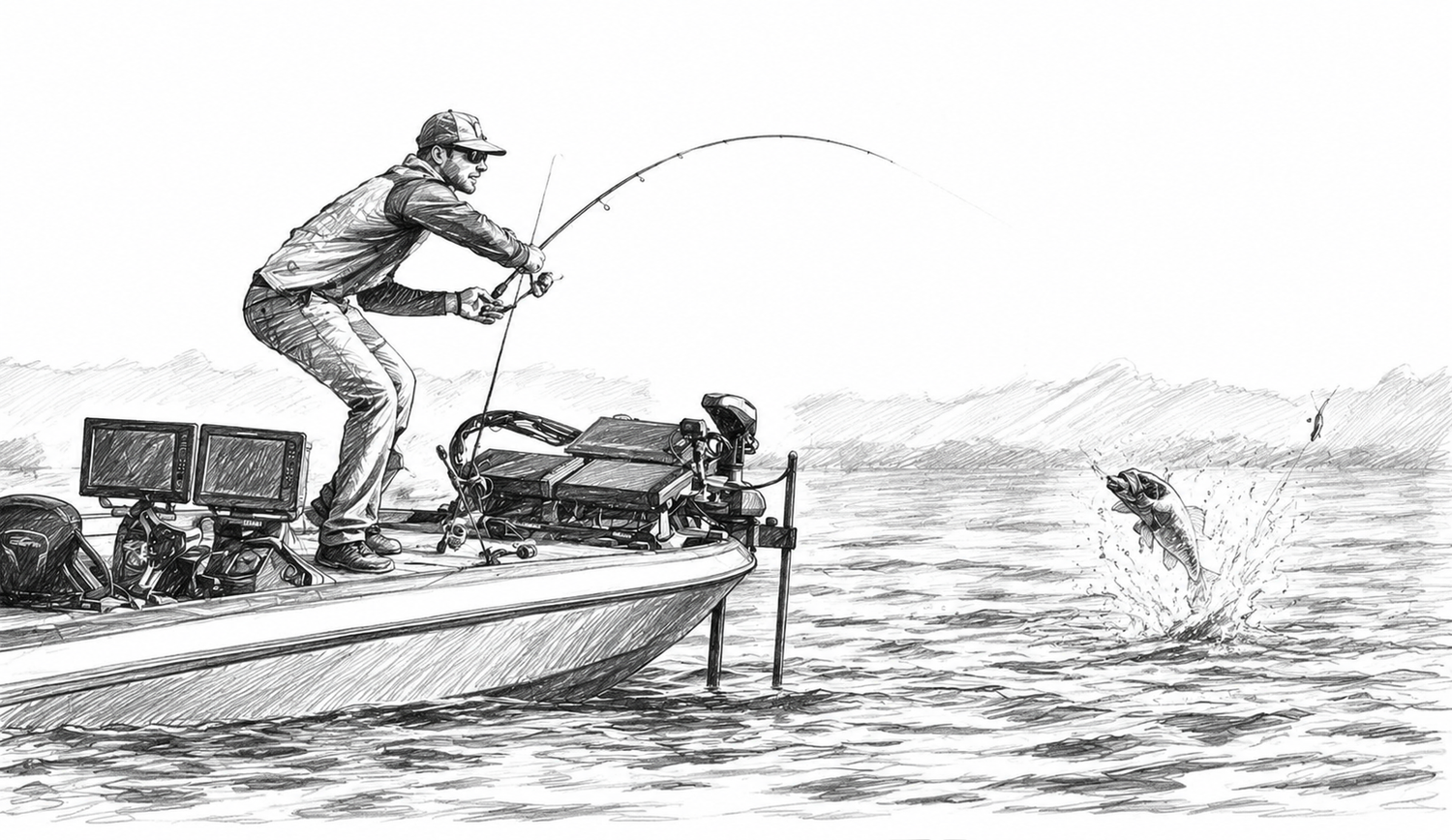
When bass move offshore and set up on deep structure, many anglers struggle to keep their bait in the strike zone long enough to trigger a bite. This is where the vertical drop shot shines. Built around precision, sensitivity, and direct presentations, the vertical drop shot allows anglers to place a bait exactly where fish are holding and keep it there longer than almost any other finesse technique.
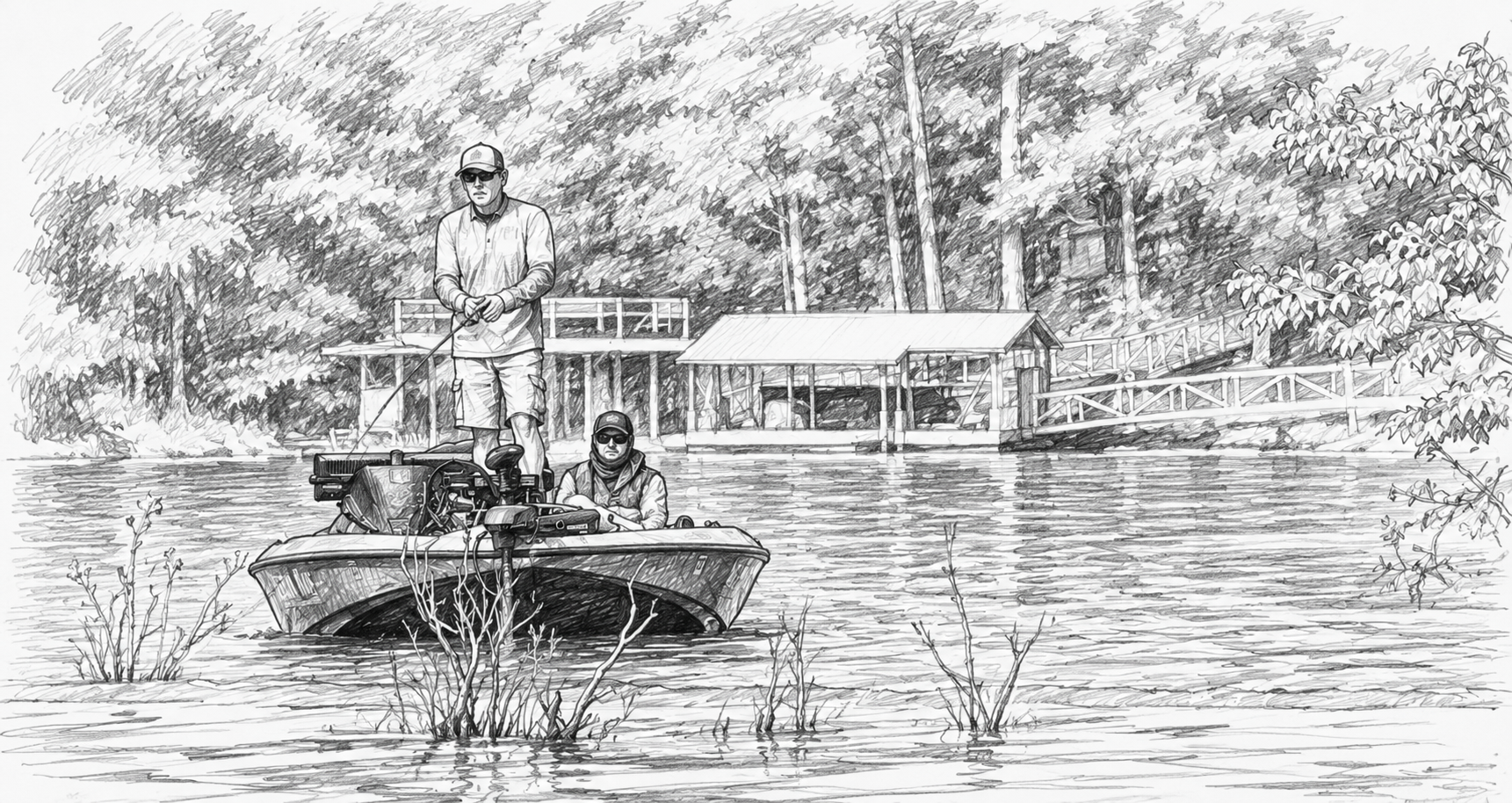
Unlike casting presentations that cover water horizontally, vertical drop shotting is all about fishing directly beneath the boat. Whether targeting fish suspended over deep points, relating to offshore humps, or holding tight to ledges and bait schools, this technique gives anglers complete control over depth and presentation.
For bass that refuse to chase or move far to feed, few methods are more effective.
What Is Vertical Drop Shot Fishing?
Vertical drop shotting is the classic deep-water application of the drop shot rig. Instead of making long casts, anglers position their boat directly over fish or structure and lower the rig straight down into the strike zone.
The setup is simple. A weight is attached at the end of the line while a hook is tied above it, allowing the bait to suspend naturally above the bottom. Once the weight reaches the desired depth, subtle rod movements make the bait quiver and hover in place while the sinker remains stationary.
Because the presentation stays nearly vertical, anglers can maintain precise control over depth and keep the bait directly in front of fish. This is especially important when targeting offshore bass that are holding tightly to structure or suspended around bait schools.
One of the biggest advantages of vertical drop shotting is efficiency. Rather than repeatedly casting and retrieving, anglers can immediately present the bait to fish identified on electronics and keep it in the strike zone for extended periods.
Why Vertical Drop Shotting Works
Deep-water bass often behave differently than shallow fish. They tend to conserve energy, position around structure, and feed opportunistically rather than chasing fast-moving lures.
The vertical drop shot excels because it presents an easy meal directly in front of the fish without requiring them to move far.
The suspended bait creates subtle movement while remaining nearly stationary. To a bass, it appears vulnerable and easy to catch. Even inactive fish that ignore crankbaits, jigs, or swimbaits often respond to the natural hovering action of a drop shot.
Another reason this technique is so effective is depth control. Offshore fish frequently suspend at precise depths. A vertical presentation allows anglers to target those exact zones and adjust instantly as fish move higher or lower in the water column.
Combined with modern electronics, vertical drop shotting becomes one of the most precise presentations available to bass anglers.
Where Vertical Drop Shotting Excels
This technique shines anytime bass position offshore or relate to deep structure.
Deep points, underwater humps, channel swings, ledges, rock piles, and submerged timber are all prime targets. Smallmouth bass are particularly susceptible to vertical presentations when holding on deep structure, but largemouth and spotted bass respond equally well in the right conditions.

Lake Lanier
Vertical drop shotting is also deadly around suspended baitfish schools. When bass are feeding on shad or other forage beneath the surface, anglers can lower the rig directly to the depth where fish are actively feeding.
Summer and winter are often considered peak seasons for vertical drop shot fishing because bass commonly group on offshore structure during these periods. However, the technique remains productive year-round whenever fish concentrate in deeper water.
Calm conditions can make the presentation even more effective because maintaining a true vertical line becomes easier, allowing for maximum bait control and sensitivity.
Reading Conditions and Fish Behavior
Success with a vertical drop shot starts with understanding fish positioning.
Electronics play a major role. Modern sonar allows anglers to locate structure, identify bait schools, and determine exactly where fish are holding in the water column. Once fish are located, the goal becomes presenting the bait at their level rather than simply dropping to the bottom.
Pay attention to how bass are positioned. Fish tight to the bottom often require a slightly different presentation than fish suspended several feet above structure.
Seasonal patterns matter as well. During summer, bass commonly hold on deep points and offshore structure near bait. In winter, fish often suspend deeper and become less willing to chase, making the drop shot particularly effective.
Current can also influence positioning. On reservoirs and river systems, bass frequently set up on current breaks where food is delivered naturally. Presenting a drop shot in these areas allows the bait to remain visible without being swept away from the strike zone.
If fish appear on electronics but refuse to bite, small adjustments in bait size, color, or leader length can often turn followers into biters.
Technique: Keeping the Bait in the Strike Zone
The biggest mistake anglers make with a vertical drop shot is moving the bait too much.
After lowering the rig to the target depth, allow the weight to settle. Once positioned, use small rod-tip movements to create subtle action without lifting the weight off the bottom.
The goal is not to move the bait far. Instead, you want it to quiver naturally while remaining in the strike zone.
Many bites occur during pauses. After shaking the bait for several seconds, stop and let it remain motionless. Bass often approach during the movement and commit when the bait suddenly stops.
Line control is equally important. Maintain contact with the rig while avoiding excessive tension. Too much pressure can restrict the bait's natural movement and reduce effectiveness.
Watch your electronics whenever possible. In many situations, anglers can actually see fish react to the bait and adjust their presentation accordingly.
Patience is often the difference between a slow day and a productive one.
Best Baits for Vertical Drop Shotting
Bait selection should emphasize subtle action and realistic movement.
Finesse worms remain one of the most productive choices because they move naturally with minimal rod input. Their slim profile allows them to hover effortlessly while maintaining a lifelike appearance.

6th Sense Strobe Minnow Swimbait in Gold Shiner
Minnow-style baits are another excellent option, especially when bass are feeding heavily on baitfish. Their profile closely resembles shad and other forage species common in deep-water environments.
Small stickbaits and straight-tail plastics also perform extremely well. These baits excel when fish are pressured or inactive because they create a realistic presentation without excessive movement.
Weight selection should match depth and conditions. Heavier drop shot weights help maintain bottom contact in deep water, while lighter weights can be used when fish are shallower or conditions are calm.
Natural colors generally perform best in clear water. Green pumpkin, smoke, shad patterns, and translucent finishes consistently produce when fishing offshore structure.
For a complete list of proven drop shot finesse baits, check out our curated collection of drop shot soft plastics designed specifically for finesse presentations.
Gear Setup for Deep-Water Success
Vertical drop shotting demands sensitivity above all else.
A medium-light spinning rod between 6'10" and 7'2" provides the ideal balance of sensitivity, control, and fish-fighting power. Fast or extra-fast actions help anglers shake the bait effectively while maintaining excellent bite detection. Start with picking out your rod here.

St. Croix Victory Series Spinning Rod 7'1" Medium - Fast Action
Choosing the right drop shot rod is critical because many bites feel like nothing more than added weight or slight pressure.
A quality 2500-3000 size spinning reel pairs perfectly with these rods. Smooth drag performance is essential because deep-water fish often make sudden runs on light line. Check out our reel recommendations.

Shimano Nasci FD Spinning Reel 2500
Most anglers prefer 12-15 lb braid connected to an 8-10 lb fluorocarbon leader. This combination delivers maximum sensitivity while maintaining the stealth necessary for clear-water conditions. These are the line and leader combinations we pick.
Drop shot weights between 3/16 and 3/4 ounce cover most deep-water situations. Heavier weights become increasingly important as depth, current, or wind increases.
Selecting the proper hooks and weights can dramatically improve both presentation and hookup percentage, making them a critical part of any deep-water drop shot setup. Grab your hooks and weights here.

VMC Tungsten Teardrop
A Must-Fish Destination: Lake Lanier
A perfect example of where vertical drop shotting excels is Lake Lanier.
Known for its clear water, abundant spotted bass population, and extensive offshore structure, Lanier has become one of the premier vertical fishing destinations in the country.

Lake Lanier
Spotted bass frequently suspend around timber, brush piles, and bait schools throughout much of the year. These fish are notorious for following baits without committing, making finesse presentations incredibly important.
Anglers who locate fish on electronics and present a drop shot directly at the proper depth often experience remarkable success. The lake rewards precision, patience, and a willingness to fish vertically rather than covering water aimlessly.
Few fisheries showcase the effectiveness of deep-water drop shotting better than Lake Lanier.
Final Thoughts
Vertical drop shot fishing is one of the most precise and effective finesse techniques available to modern bass anglers.
By keeping the bait directly in the strike zone and allowing it to move naturally, anglers can consistently catch fish that refuse more aggressive presentations. Whether targeting deep structure, suspended bait schools, or inactive offshore bass, this technique excels when subtlety and precision matter most.
While it may not generate the explosive strikes associated with power fishing, vertical drop shotting routinely produces bites when other methods fail.
Mastering this approach gives anglers a reliable tool for challenging conditions and deep-water situations. In the end, success often comes down to presenting the right bait at the right depth and having the patience to let the fish make the decision.
For more rod recommendations, reel pairings, line setups, and drop shot-specific advice, check out the complete Drop Shot Gear Guide and build a system designed to maximize every deep-water opportunity.
About the Author

The team at Mud Hole Custom Tackle are industry leaders in custom rod building, fishing tackle innovation, and technique-specific rod design. With decades of hands-on experience both on the water and at the rod bench, the Mud Hole Staff combines technical expertise with real-world fishing knowledge to help anglers build better rods and catch more fish. From bass and inshore applications to offshore and specialty techniques, their passion for performance-driven gear is at the core of every article, tutorial, and product they develop.