










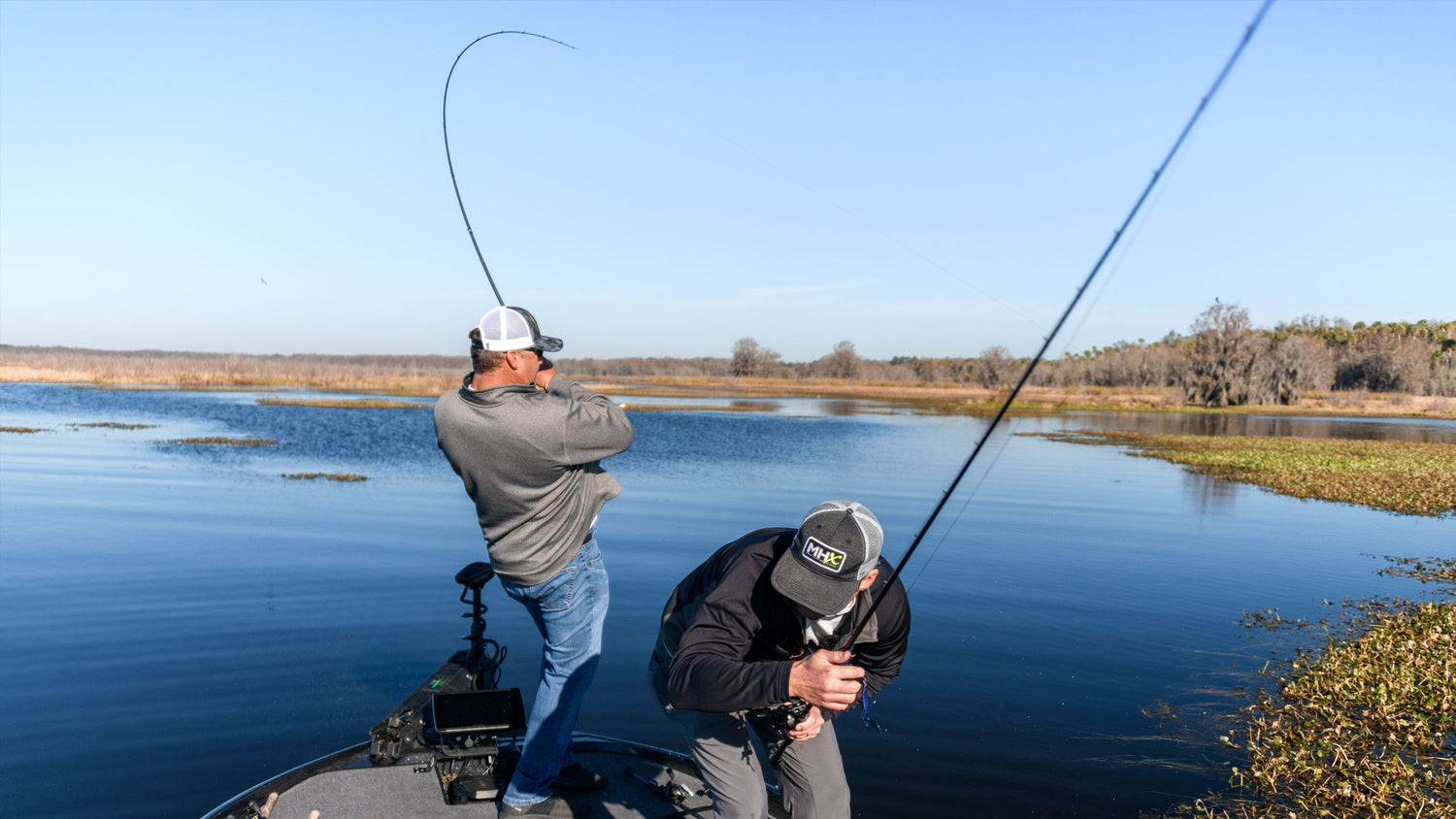
Flipping, pitching, and punching are close range power techniques built for targeting bass buried deep in cover. Whether fish are tucked into thick grass, holding tight to docks, or set up in shallow wood, success comes down to quiet entries, precise placement, and gear that allows you to hit hard and take control immediately. These are not long cast, open water techniques. They are deliberate, high percentage presentations designed to put your bait exactly where big bass live.
At Mud Hole Custom Tackle, we know that building the right setup for heavy cover can make all the difference. This journal will break down everything you need to fish these techniques efficiently and confidently.
Now, before we get this going, I wanted to say that my experience and expertise does not encompass flipping and pitching all over the USA. So, as they say, your milage may vary.
What’s in This Journal
I am going to do a deep dive into the essential rods, reels, line, soft baits, terminal tackle, and storage needed for effective flipping, pitching, and punching. You will also find setup tips, technique advice, FAQs, and additional resources to help you dial in your heavy cover game. It is one of my favorite way to catch big bass and I've got no problem talking about.
What Is Flipping, Pitching & Punching?
For anglers who are new to fishing heavy cover, or those who mostly fish open water, this will help get you up to speed for when you find yourself on a fishery that calls for a “big weight.” Flipping, pitching, and punching are close range techniques designed to place a bait precisely into hard to reach cover where bass feel secure and tend to strike quickly.
Instead of making long casts, anglers use controlled underhand presentations to quietly drop a bait into tight targets such as grass edges, dock openings, laydowns, brush, and shallow timber.
Some of the well respected “old timers” like to remind me that I tend to call everything flipping when in reality we are pitching about 99 percent of the time. True flipping uses a fixed length of line and is designed for repeated short drops without reeling in between presentations. It is a very efficient way to work targets that are close to the boat.
Pitching allows for a little more distance by loading the rod and feeding line from the reel, which makes it ideal when cover is spread out or when you need extra reach. Most anglers end up blending the two techniques depending on boat position, distance, and angle. Here in Florida, heavy grass and vegetation often extend well away from the boat, so pitching 20 to 30 feet is very common. True flipping tends to show up more along hard edge shorelines or timber where the distance to the target stays fairly consistent.
Punching is a specialized variation designed for the thickest cover you can find. This is where the term “big weight” comes into play. Heavy tungsten weights, usually in the 1 to 2 ounce range, drive the bait straight through dense mats or vegetation and keep the presentation vertical and controlled.
Many bites happen the moment the bait breaks through the mat, which makes line control and quick hooksets critical. There is nothing quite like watching your bait disappear into the mat and never feeling it reach the bottom. Set the hook immediately.

Choosing a Flipping & Pitching Rod
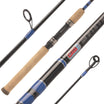
Your rod is the foundation of your entire setup. It controls bait placement, line management, hookset power, and your ability to move fish away from heavy cover. While Mud Hole is known as a rod building company, we also carry an extensive inventory of rods, reels, line, and lures. For anglers who prefer not to build their own rod, we still want to make sure we are providing the best information and options available. At the end of the day, we are anglers too.
What to Look For
Power: Heavy to extra heavy power is standard. You need backbone to drive hooks through thick plastics and pull fish from dense cover.
Action: Fast or moderate fast actions provide sensitivity during the fall and transfer energy quickly during hooksets.
Length: Most flipping rods range from 7'0" to 7'9" depending on cover. Longer rods offer more leverage and reach. Shorter rods excel in tight quarters like docks and wooded cover.
Line & Lure Ratings: Match your rod to your intended line strength and bait weight. Proper pairing ensures accurate presentations and controlled bait falls.

Rod Application Guide
Although I do not often write journals with bulleted lists, I wanted to create some quick reference material should you bookmark this for review in the future.
• Dock Flipping: 7’0”–7’6”, Heavy to Extra Heavy, Mod-Fast, 50–65lb braid or 15–20lb fluorocarbon. MHX Blank: FP885
• Wood / Laydowns: 7’0”–7’8”, Heavy to Extra Heavy, Fast or Mod-Fast 20-25lb fluorocarbon. MHX Blank: FS905
• Grassline Pitching: 7’0”–7’6”, Heavy to Extra Heavy, Fast or Mod-Fast action, 50–65lb braid or 20-25lb fluorocarbon. MHX Blank: FP936
• Punching Mats: 7’6”–8’0”, X-Heavy to XX-Heavy, 65–80lb braid. MHX Blank: FP937
• Finesse Flipping: 7’0”–7’4”, Med-Heavy to Heavy, 12lb-15lb fluorocarbon. MHX Blank: FS904
Choosing a Flipping & Pitching Reel
Reels for flipping and pitching need to engage instantly and pick up slack quickly. Most bites happen on the fall, so speed and control are critical. I cannot stress enough how important it is to have a quality reel when fishing heavy cover. If you are finesse flipping with fluorocarbon it is not quite as demanding, but once you start locking down the drag and fishing 65 pound braid, weak gears will not last long.
What to Look For
Reel Type: Low profile baitcasting reels are the standard. They are compact, comfortable, and ideal for repeated underhand presentations.

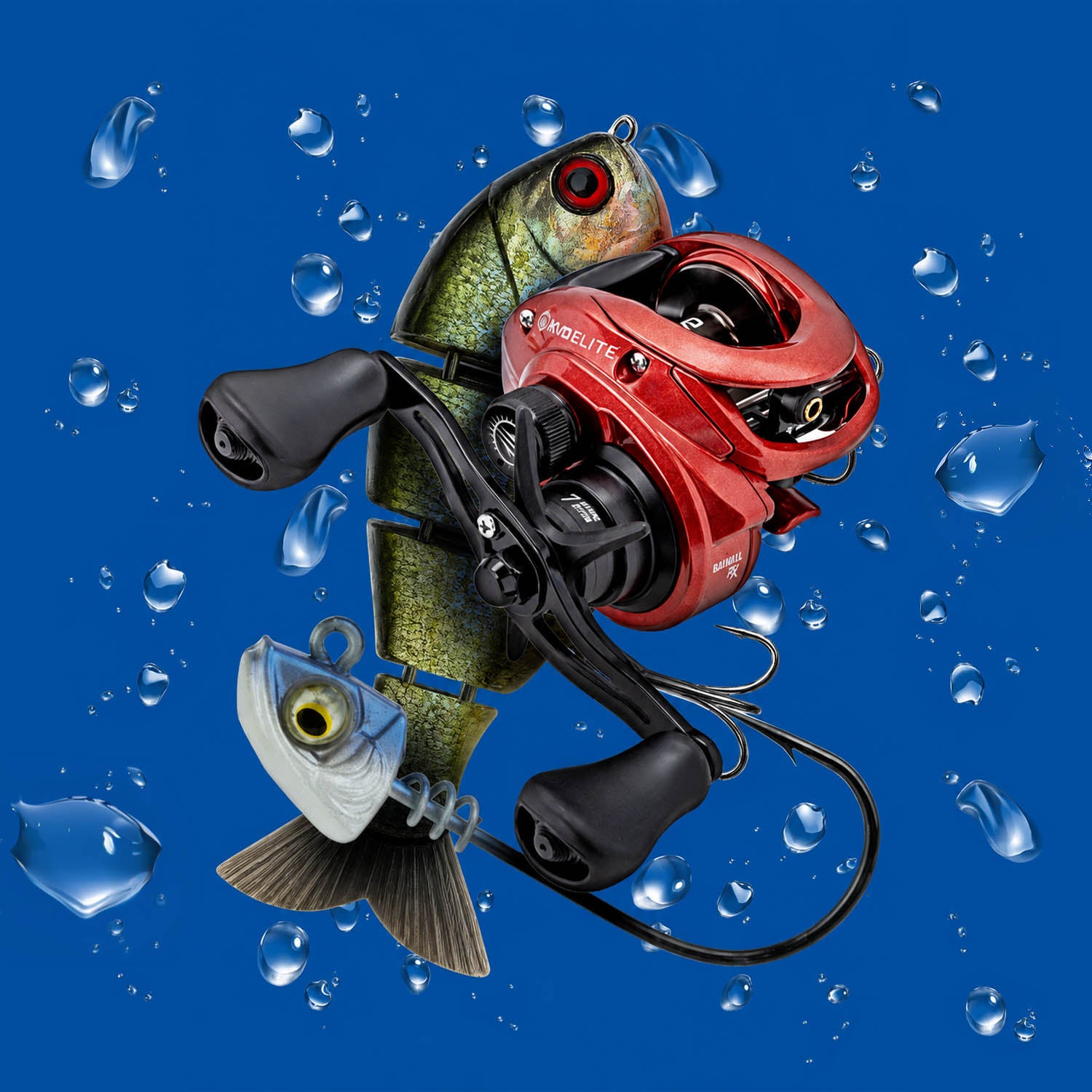
Gear Ratio: 7.0:1 to 8.1:1 is common for fast slack pickup. Some anglers argue they would rather have to torque of a lower gear ratio reel and if that is the case, the 6.4:1 work well for punching and heavy cover control. I would not reccommend going any lower or down to a 5.3:1 like you would use for cranking. You could even go with something designed to be the fastest retrieve reel on the market in the Abu Garcia Revo Rocket. (Pictured above)
Drag: Strong, smooth drag systems are essential. Often times anglers are fishing their drag locked down in close quarters so it needs to be able to withstand a full drag setting.
Durability: Solid frames and quality gears hold up under repeated heavy hooksets. This is not the time to have the lightest reel on the market. Forget flimsy frames and aluminum gearing, you want the strength and weight of aluminum body and brass gears.
Choosing Fishing Line
Line selection directly affects fall rate, bite detection, and pulling power. For the last decade or more there have really only been two options, braid or fluorocarbon. With that being said, we have even started to refine which braid and fluorocarbon we choose.
Braid
Braid is the most common choice. It offers strength, low stretch, and excellent sensitivity. It excels in grass, wood, and mats.
Typical ranges:
• 30–50lb braid for grass edges
• 50–65lb braid for wood and docks
• 65–80lb braid for punching
Fluorocarbon
Fluorocarbon adds abrasion resistance and stealth. It works well in clearer water or around docks and rock.
Typical ranges:
• 12–17lb for finesse presentations
• 15–20lb for heavier cover
Flipping & Pitching Soft Baits
Soft plastics are the backbone of these techniques. They fall naturally, slip through cover, and often trigger those reaction bites bass are known for. It sounds simple, but with the sheer number of options on the market it can quickly become overwhelming.
The way I simplify it is by organizing my baits into size categories. I keep a smaller bait for colder conditions or extremely dense cover, a reliable all around flipping bait that I reach for most of the time, and a larger profile bait for when bass are aggressive or keyed in on bluegill.

Colors
If I only had one color to flip, pitch or punch mats with it would be some version of black a blue. It works everywhere in Florida and oftentimes everywhere bass swim but we wouldn't be bass fisherman without a minimum of three colors of every bait.
• Natural tones like green pumpkin and brown for clear water
• Dark silhouettes like black or junebug for stained water or under matted vegetation
Size & Profile
These size ranges will help narrow down your selection. When we get down to the bulkier profile, don't forget you can always add a punch skirt to your favorite flipping bait or just flip a jig, which is what I like to do in reeds or wooded cover. One bait I never leave home without is the Missile Baits D-Bomb. (Pictured above)
• 2–3 inch baits for finesse or tight openings
• 3–5 inch creature baits and craws for thicker cover
• Slim profiles for subtle presentations
• Bulkier profiles for displacement and aggressive bites
Weight
A good rule of thumb is to use the least amount of weight you can get away with. There is a fine balance though, which is why many anglers keep multiple flipping or punching rods rigged at the same time. If you cannot get your bait through the cover, you simply cannot reach the fish.

When punching mats, it is a complete waste of time if your bait lands on top and never breaks through. There could be an eight pound bass sitting right under your bait, but if it cannot get to the fish you will never get the bite. Having multiple rods ready or learning which bait and weight combinations work best for different types of vegetation will save you a lot of missed opportunities.
Weight controls fall rate more than the plastic itself.
• 1/4–3/4 oz for most wood and grass
• 3/4–2 1/2 oz for punching mats
Tungsten is the preferred choice for its compact size and increased sensitivity. Bullet weights help maintain a straight fall and reduce hang ups around cover. I know tungsten is not cheap, but in this application it really makes a difference and is worth the investment.

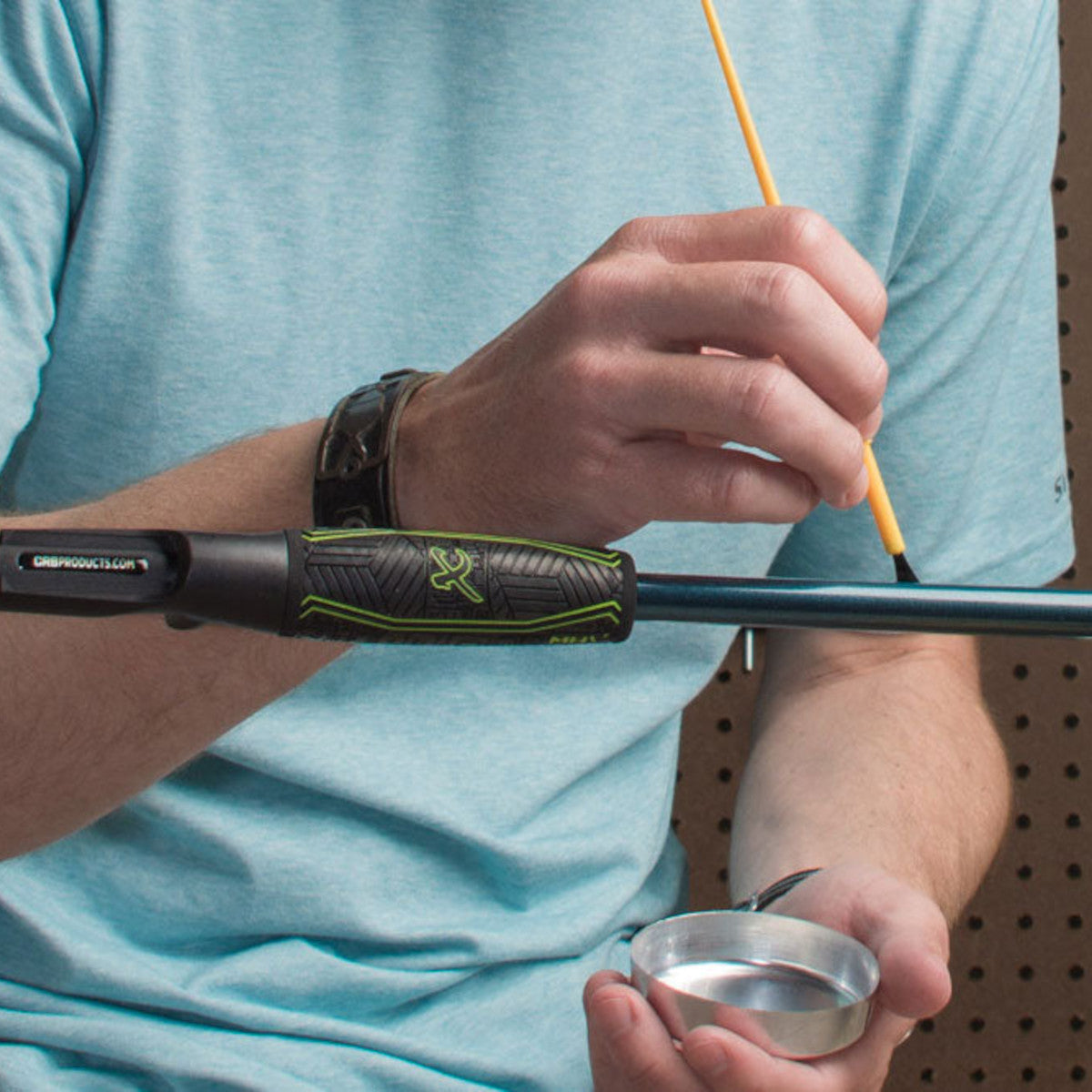
Along with tungsten, make sure you are using quality pegs or bobber stops. These keep the weight snug against the bait, which is especially important when punching mats. If the weight is going to break through the vegetation, it needs to pull the bait with it, not leave it sitting on top while the weight drags your line to the bottom.
Flipping & Pitching Terminal Tackle
Terminal tackle plays a major role in how your bait moves and how efficiently you hook fish. Whether you are flipping a jig or punching with a "big weight", this is not the place to cut corners. I have heard too many stories of anglers choosing lead over tungsten, buying the cheapest tungsten they could find, or using off brand flipping hooks. More often than not, that decision comes back to haunt them when the biggest bass of their life eats the bait, only for the line to break or the hook to fail as they watch her swim away.

Jigs
Not only do you need to make sure your jig is the correct weight, you also need to pay close attention to the hook it carries. Just because you are finesse flipping does not mean you should be using finesse jigs with thin wire hooks. In heavy cover situations you still need a strong hook that can handle hard hooksets and pulling fish out of thick cover. Also do not overlook double weed-guard jigs when fishing reeds, cattails, or dense vegetation. They were somewhat of a Florida secret for years, but they are incredibly effective anywhere heavy cover is involved.
• Light (1/8–1/4 oz) for shallow finesse
• Medium (1/4–3/4 oz) for wood and grass
• Heavy (3/4–2 oz) for punching
Skirt color and length affect visibility and profile.
Hooks
Heavy wire, wide gap hooks are the standard for this style of fishing because they can handle hard hooksets and heavy pressure around cover. I am also a big proponent of straight shank flipping hooks. They tend to slide through cover more cleanly, hold soft plastics in place better, and when paired with a snell knot they often produce more solid hookups than traditional offset worm hooks.
Flipping & Pitching Tips & Techniques
Now that we have covered the gear needed for flipping, pitching, and punching, I want to share a few tips and lessons I have picked up along the way. Some came through plenty of trial and error on the water, while others were passed down to me by some incredibly talented professional bass anglers over the years.
Tip 1: Control the Fall
Fall rate triggers bites. When flipping, pitching, and punching, it is easy to fall into a lazy routine. Working down long stretches of vegetation can feel repetitive, and many anglers simply drop the bait in, let it hit bottom, and reel it back up before doing the same thing again on the next target. The problem is you might be passing right by fish that are willing to eat, but your presentation never gives them the chance.
I cannot claim to have some magic cadence that makes bass bite every time, but I can tell you this. More often than not, it takes more than just crashing your bait into cover, hopping it once, and pulling it out. Paying attention to how your bait falls and taking the time to work it properly can make a big difference when it comes to getting those fish to commit.
Tip 2: Make Efficient Presentations
Every pitch should target a high percentage area, and the cover deserves to be worked thoroughly before moving on. This goes back to avoiding lazy presentations, but efficiency is just as important. Choosing the right tackle, especially the correct weight to consistently penetrate the cover, makes a big difference. If your pitch does not get where it needs to go, that opportunity is wasted. When that happens repeatedly throughout the day, those missed chances add up and can easily cost you an hour or more of productive fishing time.
Tip 3: Set the Hook
Many bites happen on the initial drop, and as someone once told me, “hooksets are free.” Keep a close eye on your line and pay attention to how your bait normally feels as it falls. If the line jumps, stops, or does anything unexpected, set the hook hard and take control right away. You know what a normal fall should feel like, so when something is different it usually means a fish is there. The last thing you want is to wait too long and feel that next bump, only to realize it was the fish spitting the bait and your opportunity slipping away.
About The Author

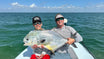
Capt. Chris Adams, originally from Jacksonville, FL, brings a wealth of knowledge and experience to his role as a product specialist and co-host for Mud Hole Live. Beyond the studio, Chris is a captain, fly fishing guide and avid angler with a penchant for the elusive bonefish, permit and tarpon often found on the flats of South Florida. His passion for fishing isn't just a hobby; it's a lifestyle that has taken him on adventures across Central and South America, where he's honed his rod building and fishing skills amidst some of the world's most challenging and rewarding waters.


