















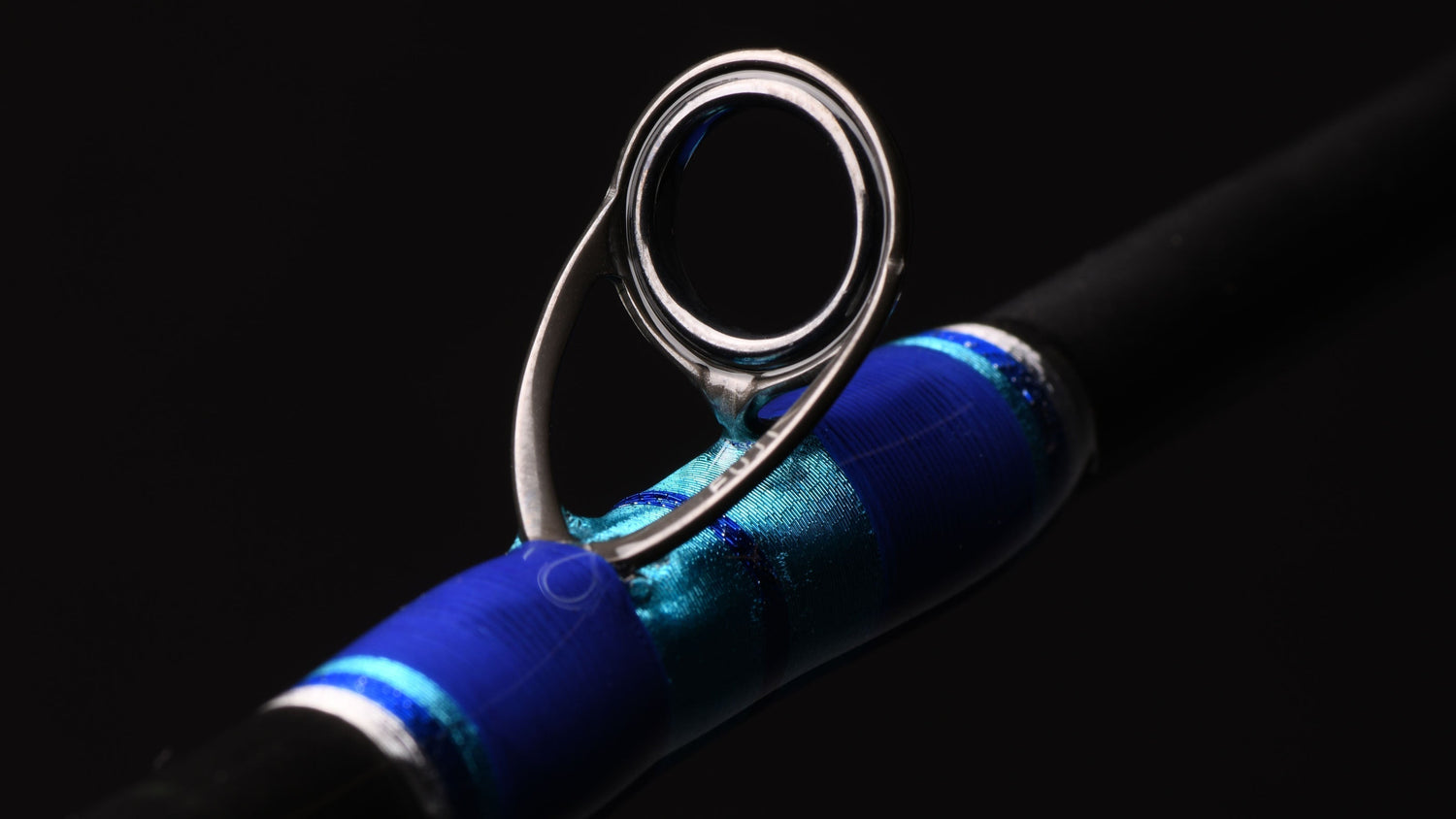
When it comes to building or upgrading a fishing rod, guide rings are often overlooked. They might look like simple loops of metal and ceramic, but they’re among the most critical components affecting casting performance, sensitivity, and longevity. The right guide ring ensures your line flows smoothly, your rod stays balanced, and your setup performs flawlessly under pressure.
Whether you’re chasing bonefish on the flats, jigging for crappie, or tossing plugs offshore, the guide rings you choose should match your fishing environment and style. Here’s how to pick the perfect combination of frame and ring materials for the type of fishing you’ll be doing.
Understanding the Role of a Guide Ring
Guides are more than just line keepers. They’re the rod’s power transmission system while distributing stress, controlling friction, and maintaining consistent line flow. The wrong guide material can cause premature line wear, reduce casting distance, or even fail under load.

With so many options in guide ring materials that sound more like a chemistry experiment than fishing gear, things can get confusing fast. That’s why I’ve put together a simple roadmap to help any rod builder choose the best guides for their next custom build.
Ring Materials: The Line Contact Surface That Matters Most
Modern guide rings use hardened, polished metals as well as advanced ceramics for smoothness, hardness, and heat dissipation. There is quite the laundry list of varying materials and each one serves a purpose. Whether you need the lightest possible guide or you need something to withstand the rigors of hard-running saltwater fish, there is something for everyone. Let's breakdown the most popular ring options.
Aluminum Oxide
A classic choice and the most common ceramic insert. Aluminum oxide is smooth and durable enough for most monofilament and fluorocarbon lines. Initially, there were grumblings of braided line grooving Aluminum Oxide rings but popular brands like Fuji adjusted their formula and even slimmed down the overall size of the guide ring which opens the ID a little, lightens the guide but maintains its famous durability.

Hardened Stainless Steel Ring
Yes, in a blog about guide rings, I am going to discuss ringless guides. Technically they are not ringless because they do have a ring but not in the typical ceramic sense. Guide like the SSR and TiForged air from American Tackle use a lightweight stainless-steel frame and a double-swaged ringless design that creates a wide, smooth opening for easy line flow. They come in a full range of sizes and are ideal for light-power freshwater spinning rods where reduced weight and affordability matter. They offer incredible durability and sensitivity and a price point that is truly unmatched. If you have fished a ringless guide, you should, they just might surprise you.
Alconite (Fuji)
While Fuji’s proprietary ceramics improve on aluminum oxide to add strength and smoothness, Alconite delivers near-premium performance at a mid-range price. Alconite handles braid well and dissipates heat effectively, making it a favorite for custom freshwater or inshore builds.

Duralite (American Tackle)
A high-performance ceramic insert from American Tackle offering near-zero friction on wet line, braid-proof durability and hardness seen in much more expensive guide rings. Serious anglers and custom rod builders Duralite when they need smooth casting while providing longer line life.
Nanolite (American Tackle)
This top selling ring features a proprietary ultra-hard ceramic insert that mimics SiC-level durability, designed for braid-proof performance and minimal friction. Its smooth finish and reinforced frame make it ideal for high-performance spinning or casting rod builds.

Silicon Carbide (SiC)
A premium material that’s ultra-hard, smooth, and heat-resistant. SiC inserts can handle anything from heavy braided line to long saltwater runs without wear or damage. From tournament level freshwater rods and high performing saltwater rods, the SiC and Slim SiC ring from Fuji is dependable and worth the price.
Zirconium and Torzite
The top of the line. These next-generation ceramics from the American Tackle LZR to the Fuji’s Torzite, are thinner, lighter, and smoother than SiC. They minimize friction and maximize casting distance, allowing for a larger inner diameter without extra bulk.
Matching Guide Rings to Your Type of Fishing
Different fishing styles demand different guide characteristics. Here’s how to choose what works best for your target species and environment.

Fly Fishing
Lightweight and corrosion-resistant stripper guides are essential in saltwater. Titanium frames with SiC or TiForged excel in saltwater, while freshwater builds perform beautifully with stainless and Alconite or Duralite. I never suggest going with ceramic ringed guides for your runners on fly rods but if you must, I do suggest spending the money on lightweight titanium with Torzite or Nanolite rings.
Freshwater Spinning and Casting
For bass, trout, and walleye, balance and sensitivity are key. Stainless steel frames with Alconite or Duralite rings offer smooth casting and durability with both mono and braid. For finesse or ultra-light setups, opt for a high-frame guide with micro runners to keep the weight down but maintain excellent cast-ability and feel.
Saltwater Inshore and Flats Fishing
Corrosion is your biggest enemy. Titanium or 316 Stainless frames are a must, paired with SiC or Nanolite rings for longevity and smoothness. They’ll stand up to salt spray and deliver long, accurate casts when the wind picks up. In addition, inshore and flats species tend to be hard running fish with can create high temps in your guide rings if you are not prepared. Don’t lose the fish of a lifetime over the wrong guide.

Surf and Offshore
These rods see long runs, high drag pressure, and serious stress. Choose heavy-duty stainless or titanium frames with double-braced construction and SiC or Zirconium inserts for maximum heat resistance and strength.
Ice and Specialty Rods
For cold-weather use, simple stainless steel with hard chrome or ceramic rings works best. Focus on durability and ease of ice removal rather than exotic ceramics. This is also a great option for the SSR and TiFored Air guides as well as the REC Recoil guide that have a specific line of ice guides to battle the frigid temperatures.

Balancing Performance and Budget
It’s easy to assume that the most expensive guides are always better—but that’s not necessarily true. For most anglers, stainless steel frames with Alconite or Duralite inserts offer the best performance-to-price ratio. They’re durable, braid-safe, and corrosion-resistant enough for all but the harshest saltwater.
Reserve titanium and SiC for rods that will face extreme conditions, heavy salt use, or daily professional charter service. As a rule of thumb, build your guide train for how you fish 90% of the time, not for the rare extremes.
Final Thoughts
Guide rings might be small, but they’re the connection point between your line and your rod and that connection determines how smoothly your casts fly, how sensitively your rod transmits bites, and how well it endures years of use.
When in doubt, remember: the right guide ring doesn’t just protect your line—it elevates your entire fishing experience. If there is still doubt, Mud Hole has a team, of experts standing by to help you choose every part of your custom rod, including the guides.