




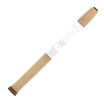




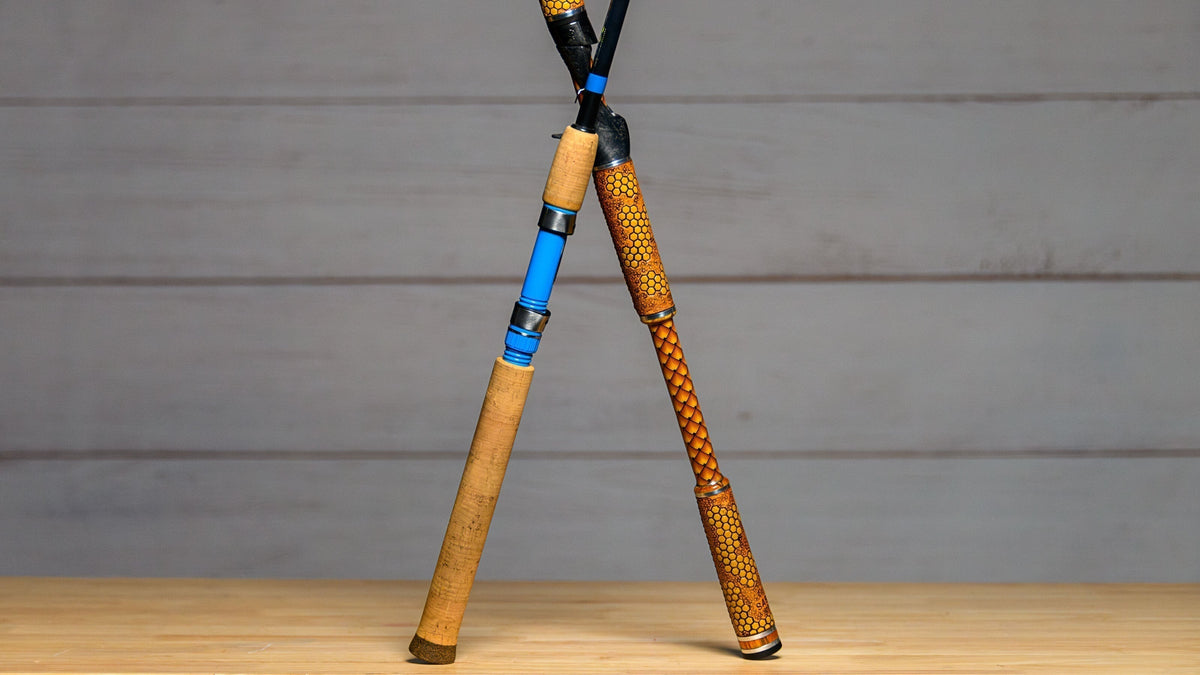
If you're anything like me, you've probably spent more time than you'd like to admit staring at rod grip options while planning your next custom build. Cork, EVA, carbon fiber, burl cork, colored EVA, split grips, full grips. There are more choices today than ever before, and that's one of the things that makes custom rod building so enjoyable. Every decision allows you to create a rod that's uniquely yours.
Unfortunately, there's a trap that many of us fall into.
We choose our rod grips based on how they look instead of how they'll perform.
Before I go any further, I'll admit that I'm just as guilty as anyone else. If you've watched Mud Hole Live or seen many of the rods I've built over the years, you've probably noticed that I gravitate toward cork. There's just something about the look of a quality cork handle that says "fishing rod" to me. Whether it's a fly rod, an inshore rod, or even a bass rod, cork has a timeless appearance that never gets old. It has tradition, character, and a warmth that I simply enjoy every time I pick up a rod.
The funny thing is that I know better. As someone who has built countless rods and spent years talking about components, I fully understand the advantages of EVA, carbon fiber, and other modern grip materials. Yet, more often than not, I still find myself reaching for cork simply because I like the way it looks. That realization made me stop and think. If someone who spends this much time building rods can fall into that habit, chances are many anglers do exactly the same thing.
The truth is that the grip is much more than a decorative component. It's the only part of the rod you touch during every cast, every retrieve, and every fight. It influences comfort, balance, control, durability, and even how connected you feel to what's happening beneath the surface. While appearance should absolutely be part of your decision, it shouldn't be the only factor.
Your Grip Is Your Connection to the Fish
Every vibration traveling through your rod eventually ends up in your hands.
Whether it's a jig crawling across rock, a crankbait ticking grass, a drop shot shaking in deep water, or a snapper inhaling a live bait offshore, the handle is your connection to everything happening below the surface. We often give all the credit for sensitivity to the blank, and today's high-performance blanks certainly deserve plenty of praise, but the handle plays an important supporting role.
Comfort has a surprising impact on sensitivity as well. When a grip fits your hand naturally, you don't have to squeeze it nearly as hard. Your hands stay more relaxed, allowing you to notice subtle changes in vibration that might otherwise go unnoticed. On the other hand, if you're constantly gripping an uncomfortable handle, your muscles begin to fatigue. As the day goes on, you lose focus, your hands tire, and those light bites become harder to detect.
That's one reason why professional anglers are so particular about the rods they use. They're making thousands of casts throughout a tournament, and even small improvements in comfort can make a noticeable difference over the course of an entire day.

Every Material Has a Purpose
One of the biggest misconceptions in rod building is that one grip material is simply better than another. The reality is that every material offers advantages, and each excels under different conditions. Understanding those strengths allows you to build a rod that truly matches your style of fishing.
Cork has remained popular for generations because it checks so many boxes. It's lightweight, naturally warm in cooler weather, comfortable to fish all day, and has a classic appearance that never goes out of style. Premium cork also develops character over time. Every small imperfection tells the story of another day on the water, another memorable fish, or another adventure. It's one of the reasons I continue to be drawn toward it despite having so many other options available.

Of course, cork isn't perfect. It can chip, stain, and eventually show its age. Lower-grade cork containing excessive filler can deteriorate even faster. If you're particularly hard on your equipment or spend much of your time in saltwater, those factors are worth considering before automatically reaching for cork.
EVA foam approaches the problem from a completely different perspective. It's exceptionally durable, resists moisture, stands up well to UV exposure, and cleans up with very little effort. Saltwater anglers especially appreciate EVA because it handles fish slime, sunscreen, blood, salt, and harsh conditions without requiring much maintenance. Today's EVA is also available in countless colors, densities, and designs, allowing builders to create unique custom rods without sacrificing durability.
Carbon fiber grips have become increasingly popular among performance-minded anglers because they're lightweight, rigid, and transmit vibration exceptionally well. They also offer a sleek, modern appearance that pairs perfectly with today's high-performance blanks and guide systems. Many bass anglers enjoy the crisp feel that carbon fiber provides, particularly when fishing bottom-contact techniques where every little vibration matters.
None of these materials is universally better than the others. They're simply different tools designed to solve different problems. The best choice depends on how you fish, where you fish, and what feels best in your hands.
Shape Is Often More Important Than Material
Ironically, many builders spend hours debating grip materials while giving very little thought to grip shape.
In reality, the diameter, contour, taper, and length of the grip often have a greater influence on comfort than the material itself. A handle that's too large can make finesse techniques feel awkward. One that's too small may force you to grip the rod tighter than necessary, leading to hand fatigue over the course of a long day.
Rear grip length deserves just as much attention. A long rear grip provides leverage for launching heavy swimbaits, surf rigs, offshore jigs, and flipping presentations. A shorter rear grip makes it easier to skip docks, work jerkbaits, walk topwater baits, and make accurate roll casts around cover.

The perfect grip almost disappears in your hand. You stop thinking about it entirely because everything feels natural. That's exactly what you're trying to achieve.
Your Fishing Style Should Drive Your Decisions
One of the biggest advantages of building a custom rod is that you aren't forced into someone else's idea of the perfect handle.
Think about how differently you hold various rods throughout the day. A finesse spinning rod often rests lightly in your fingertips while your index finger contacts the blank. A crankbait rod stays in your hand for hours of steady retrieves. A flipping rod spends much of the day tucked against your forearm while making repetitive pitches into heavy cover. An offshore jigging rod may remain under heavy load for several minutes while fighting powerful fish.
Those techniques place completely different demands on the handle.
Instead of asking which grip looks the best, ask which grip best supports the way you'll actually fish that rod. That single change in thinking can dramatically improve the finished product.
Don't Forget About Balance
Balance is another area where grips play a much larger role than many anglers realize.
Builders often focus exclusively on finding the lightest blank or the lightest guides available, assuming lighter always means better. In reality, a perfectly balanced rod often feels lighter than one that's technically lighter on a scale but noticeably tip heavy.
Grip material, rear grip length, butt diameter, winding checks, trim components, and even the choice of butt cap all influence where the finished rod balances. Sometimes adding a small amount of weight to the rear of the rod creates a setup that feels dramatically lighter in your hand because the balance point moves closer to where you naturally hold it.
The goal isn't to build the lightest rod possible. The goal is to build the rod that fishes the best.
That's the Beauty of Custom Rod Building
Factory rod manufacturers face an impossible challenge. They have to design one handle configuration that works reasonably well for thousands of anglers with different hand sizes, techniques, and personal preferences. Inevitably, those rods become compromises.
Custom builders don't have that limitation.

You can choose the exact grip diameter that fits your hand. You can determine the perfect rear grip length for your casting style. You can combine cork and carbon fiber, EVA and cork, or any combination of materials that best suits your fishing. You can prioritize sensitivity, comfort, durability, appearance, or strike the balance that makes the most sense for you.
That's something no factory rod can truly offer.
Performance First, Style Second
Don't misunderstand what I'm saying. I absolutely believe your custom rod should look amazing. One of the greatest joys of custom rod building is creating something that reflects your personality. Decorative thread wraps, trim accents, winding checks, custom grips, and personalized color schemes are all part of the experience.
In fact, I'm probably still going to build plenty of rods with cork handles because I genuinely love the way they look. There's nothing wrong with that. The difference is that I'll know exactly why I'm making that decision, and I'll understand the tradeoffs that come with it.
That's really the point of this entire discussion.
The next time you're planning a custom build, don't start by asking which grip looks the coolest. Start by asking how you'll fish the rod, how long you'll fish it, what conditions it will see, and what feels most comfortable in your hand. Once you've answered those questions, then choose the material and style that gives you the appearance you want.
When performance drives the decision and appearance follows, you'll build a rod that not only turns heads at the boat ramp but also performs exactly the way you hoped every time you pick it up.
And who knows? Maybe I'll even convince myself to build my next inshore rod with something other than cork.
...Although I wouldn't bet on it.