








If you’re looking for more rod recommendations, reel pairings, line setups, and technique-specific advice, head back to the complete Main Gear Guide Page for the full breakdowns on your favorite techniques.
For most anglers, single-hand fly fishing is where the journey begins.
It's the style most people picture when they think about fly fishing: a lone angler casting a fly line across a river, carefully presenting a fly to a rising trout, or working a streamer along a shoreline in search of bass. Single-hand fly rods are versatile, approachable, and capable of handling an incredible variety of fishing situations.
One of the biggest misconceptions about fly fishing is that it requires specialized skills, expensive gear, or years of experience before you can catch fish. In reality, modern rod and reel combos have made fly fishing more accessible than ever. With the right setup and a basic understanding of casting and presentation, beginners can quickly build confidence and start enjoying success on the water.
Whether your goal is catching trout in a mountain stream, bass in a local pond, or panfish in a neighborhood lake, single-hand fly fishing provides the ideal foundation for learning the sport.
What Is Single-Hand Fly Fishing?
Single-hand fly fishing is the most common and beginner-friendly style of fly fishing.
As the name suggests, it utilizes a traditional fly rod designed to be cast primarily with one hand. These rods are typically between 7 and 9 feet long and are paired with a fly reel, fly line, leader, and artificial fly.
Unlike spinning or baitcasting gear where the lure's weight carries the cast, fly fishing uses the weight of the fly line itself to load the rod and deliver the fly to the target. This creates a smooth, controlled casting motion that allows anglers to present lightweight flies with precision.
Single-hand setups are incredibly versatile.
They can be used for dry flies floating on the surface, nymphs drifting below the water, streamers imitating baitfish, and even poppers that create exciting topwater strikes.
Because of that versatility, single-hand fly rods remain the standard starting point for nearly every fly angler.
Why Single-Hand Fly Fishing Works
The effectiveness of fly fishing comes down to presentation.
Fish spend their lives feeding on insects, baitfish, crustaceans, and other small prey. Fly fishing allows anglers to imitate these food sources with remarkable realism.
Rather than relying on heavy lures, vibration, or aggressive retrieves, fly anglers focus on delivering a fly naturally and convincingly.
This becomes especially important when targeting selective fish such as trout. A perfectly presented fly often outperforms a poorly presented lure, regardless of the pattern being used.
Another advantage is adaptability.
A single-hand setup can be used in rivers, streams, lakes, ponds, and even light saltwater environments. By simply changing flies and adjusting presentations, anglers can target a wide variety of species using the same basic system.
For beginners, this versatility means one setup can provide years of fishing opportunities.
Where Single-Hand Fly Fishing Excels
Single-hand fly rods excel in a wide range of environments.
Small streams are perhaps the most iconic setting. Here, anglers can present dry flies, nymphs, and small streamers to trout holding in pools, riffles, and current seams.
Larger rivers provide opportunities to fish multiple techniques while targeting trout, bass, and other species.
Stillwater environments such as ponds and lakes are also excellent choices. Fly anglers can fish streamers, poppers, and baitfish imitations around shoreline structure, vegetation, and drop-offs.
Single-hand fly rods even cross over into light saltwater applications. Heavier-weight setups can target species such as redfish, schoolie striped bass, and other inshore gamefish.
For beginners, few fishing systems offer the same level of flexibility.
Reading Water and Fish Behavior
One of the most rewarding aspects of fly fishing is learning to understand how fish interact with their environment.
In rivers and streams, current becomes your guide.

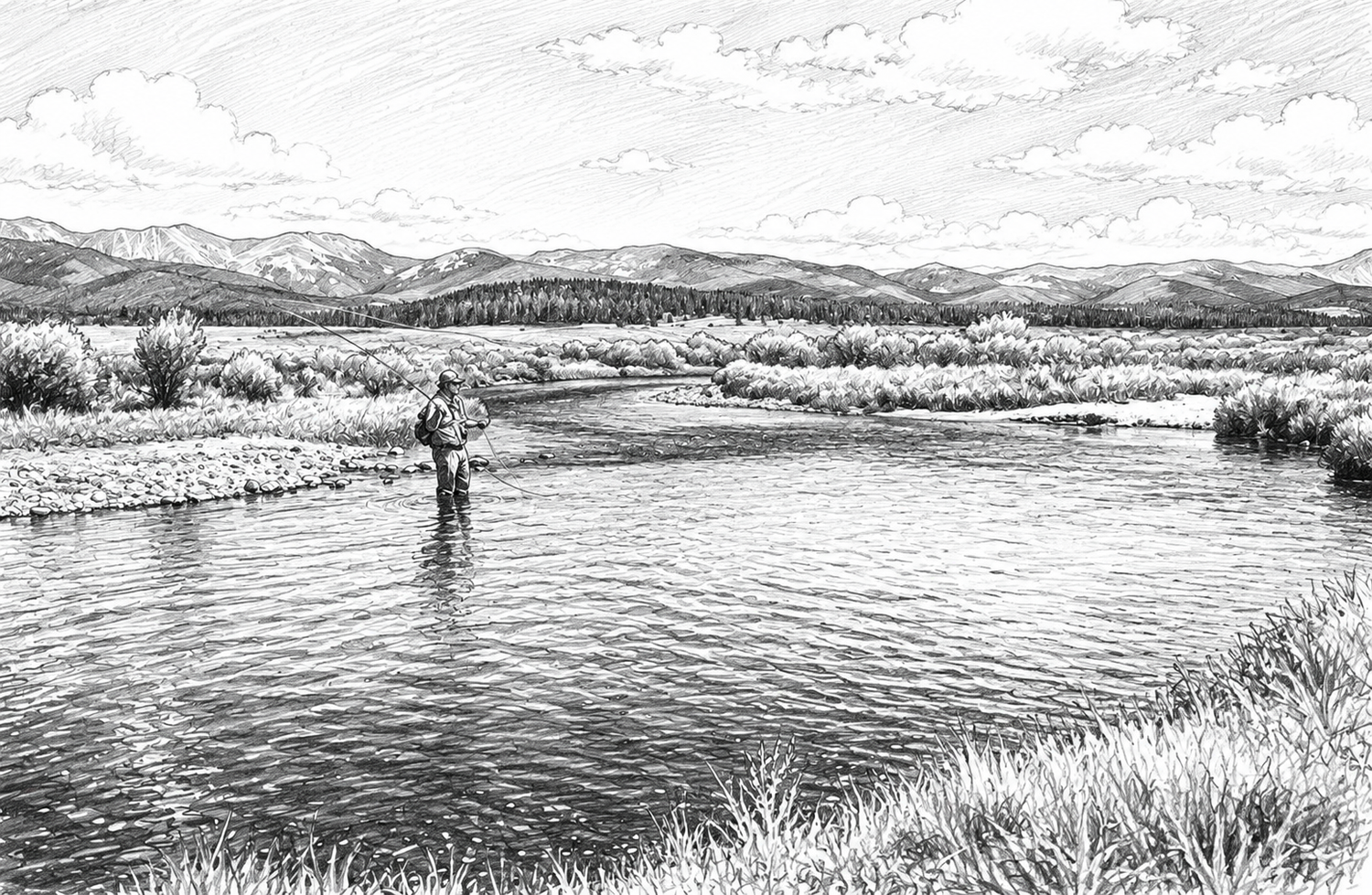
The Madison River
Fish often position themselves where they can conserve energy while intercepting food drifting naturally downstream. Current seams, riffles, pools, eddies, and undercut banks all become likely holding areas.
In lakes and ponds, structure takes on greater importance. Weed lines, points, submerged timber, and drop-offs frequently attract feeding fish.
Observation is a critical skill.
Watch for rising fish, feeding activity, insects on the water, baitfish movement, and subtle changes in current speed. These clues often reveal where fish are located and what they are feeding on.
The more attention anglers pay to their surroundings, the more productive fly fishing becomes.
Technique: Focus on Presentation First
Many beginners become overly focused on casting distance.
In reality, accuracy and presentation matter far more than how far a fly can be cast.
Start by making short, controlled casts and concentrate on placing the fly where fish are most likely to be feeding.
When fishing dry flies, the goal is often a drag-free drift that allows the fly to float naturally with the current.
Nymph fishing focuses on maintaining depth and drifting through likely holding water.
Streamer fishing introduces movement, using strips and pauses to imitate baitfish or other prey.
Regardless of technique, simplicity is key.
Most successful fly anglers rely on good presentations, proper positioning, and careful observation rather than complicated casting tricks.
Learning these fundamentals early builds a strong foundation for future success.
Recommended Gear for Beginners
The vast majority of beginners should start with a 5-weight fly rod and matching reel.
A 5-weight outfit offers the ideal balance of casting ease, versatility, and fish-fighting capability. It handles a wide variety of flies while remaining suitable for trout, bass, panfish, and many other freshwater species.

Cortland Guide Series Freshwater Fly Fishing Outfits 5wt
A 9-foot rod is generally considered the standard because it provides an excellent combination of casting distance, line control, and versatility. Start by picking out your rod and reel combo.
Most beginner anglers will benefit from a weight-forward floating fly line, which is easier to cast and works well across a wide range of fishing situations.
These are the fly line and leader combinations we pick.
Pairing the setup with tapered leaders and a basic assortment of flies allows anglers to fish confidently in most freshwater environments.

Cortland 333 Trout All Purpose Fly Line 5WT
A properly matched rod-and-reel combo removes much of the guesswork and allows beginners to focus on learning the fundamentals. Check out the fly and tackle kits.
A Must-Fish Destination: Madison River
A perfect example of where single-hand fly fishing excels is the Madison River in Montana.
Widely regarded as one of the premier trout fisheries in North America, the Madison offers everything that makes fly fishing special: beautiful scenery, abundant trout, diverse water types, and endless opportunities to refine your skills.

The Madison River
Anglers can fish dry flies through riffles, drift nymphs through deeper runs, or strip streamers along undercut banks and structure.
The river showcases the versatility of a standard single-hand fly rod better than almost anywhere else.
Whether you're a first-time fly angler or a seasoned veteran, the Madison demonstrates why traditional fly fishing remains one of the most rewarding ways to pursue fish.
Few destinations capture the essence of single-hand fly fishing better than the Madison River.
Final Thoughts
Single-hand fly fishing remains the foundation of the sport and the best place for most anglers to begin.
Its combination of versatility, accessibility, and effectiveness allows anglers to target a wide variety of species while developing skills that transfer to every other style of fly fishing.
Whether you're casting dry flies to rising trout, stripping streamers for bass, or simply enjoying a day on the water learning something new, a standard fly rod provides endless opportunities for growth and success.
The key is focusing on fundamentals, practicing presentation, and spending time on the water.
For beginners looking to start fly fishing the right way, there is no better place to begin than with a well-balanced single-hand fly setup.
For more rod recommendations, reel pairings, fly line options, and beginner-friendly tackle advice, check out the complete Beginner Fly Fishing Gear Guide and build a system designed to help you succeed from your very first cast.
About the Author

The team at Mud Hole Custom Tackle are industry leaders in custom rod building, fishing tackle innovation, and technique-specific rod design. With decades of hands-on experience both on the water and at the rod bench, the Mud Hole Staff combines technical expertise with real-world fishing knowledge to help anglers build better rods and catch more fish. From freshwater trout and bass applications to inshore and offshore fly fishing pursuits, their passion for performance-driven gear is at the core of every article, tutorial, and product they develop.