






Mud Hole Gear Guide:
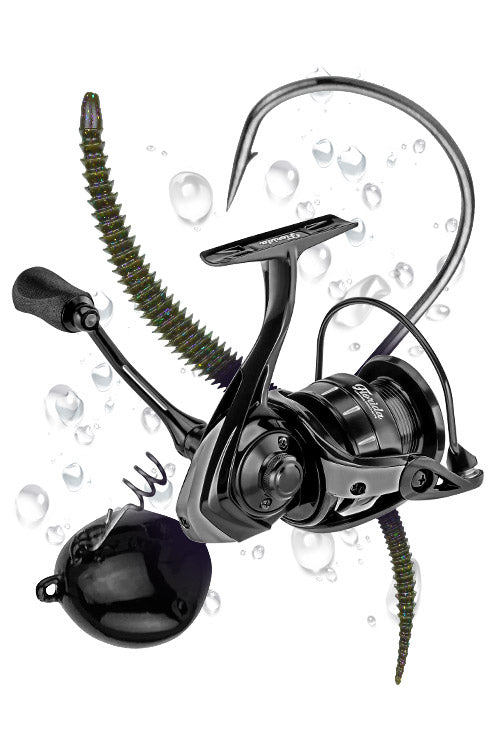
What is Shakey Head Fishing?
Shakey head is a finesse fishing technique that presents a soft plastic worm naturally while maintaining constant bottom contact. The rig pairs a weighted jig head with a slender soft plastic—most often a straight-tail worm—that stands upright or angles naturally when resting on the bottom. This posture mimics a baitfish feeding or a worm moving along the lake floor, often triggering bites from bass that are inactive or unwilling to chase faster-moving lures.
Anglers work a shakey head slowly along the bottom using subtle rod movements such as gentle shakes, short drags, or small hops. The goal is to keep the bait near the bottom where bass commonly feed, allowing the worm to move naturally while the jig head stays in contact with the structure.
Shakey head fishing is typically done with spinning tackle and light line to improve sensitivity and control lighter jig heads. It excels around rock, gravel, and other hard-bottom areas, but can also be effective around docks, brush, and sparse vegetation with weedless jig heads. Because the presentation relies on subtle movement rather than speed, it’s especially effective in clear water, tough conditions, and heavily pressured fisheries.
Introduction
What is Shakey Head Fishing?
What is Shakey Head Fishing?
Shakey head is a finesse fishing technique that presents a soft plastic worm naturally while maintaining constant bottom contact. The rig pairs a weighted jig head with a slender soft plastic—most often a straight-tail worm—that stands upright or angles naturally when resting on the bottom. This posture mimics a baitfish feeding or a worm moving along the lake floor, often triggering bites from bass that are inactive or unwilling to chase faster-moving lures.
Anglers work a shakey head slowly along the bottom using subtle rod movements such as gentle shakes, short drags, or small hops. The goal is to keep the bait near the bottom where bass commonly feed, allowing the worm to move naturally while the jig head stays in contact with the structure.
Shakey head fishing is typically done with spinning tackle and light line to improve sensitivity and control lighter jig heads. It excels around rock, gravel, and other hard-bottom areas, but can also be effective around docks, brush, and sparse vegetation with weedless jig heads. Because the presentation relies on subtle movement rather than speed, it’s especially effective in clear water, tough conditions, and heavily pressured fisheries.
Shakey Head Fishing Applications
While the basic shakey head rig is simple, anglers apply it in several distinct ways depending on depth, structure, and cover. Each variation focuses on maintaining bottom contact while presenting the worm naturally in the strike zone, but the retrieve and gear choices change slightly based on conditions.
Finesse Shakey Head
Targets: Largemouth bass, smallmouth bass, spotted bass
The finesse shakey head is the classic presentation for fishing rock, gravel, and hard-bottom areas. Light jig heads paired with straight-tail worms allow the bait to stand upright naturally on the bottom, creating a lifelike posture that draws attention from inactive or pressured fish. Anglers work the bait slowly, combining short drags, gentle pauses, and subtle rod-tip shakes to make the worm quiver while the jig maintains constant contact with the structure. This controlled movement keeps the bait in the strike zone longer and often convinces cautious bass to bite when faster-moving lures fail.
Weedless Shakey Head
Targets: Largemouth bass in brush, laydowns, and grass edges
Weedless shakey heads are built for fishing in heavy cover without snagging. The jig head typically features a wire guard or screw-lock keeper, allowing the worm to stay upright while moving through brush, wood, or grass. Presenting the bait close to structure, anglers use small shakes and short drags along the bottom, letting the worm move naturally without pulling it out of the strike zone. This subtle, controlled action gives bass a chance to inspect the bait and often triggers bites from fish holding tightly to cover.
Deep Water Shakey Head
Targets: Largemouth and smallmouth bass on ledges, points, or offshore structure
In deeper water, heavier shakey head jig heads are used to maintain constant bottom contact along points, ledges, or offshore structure. The bait is slowly dragged across the bottom with occasional light shakes, keeping the worm standing naturally between movements. This presentation keeps the worm in the strike zone where deeper bass often hold, while the upright posture and controlled motion help trigger strikes from fish that might ignore faster or more aggressive lures.
Dock Shakey Head
Targets: Largemouth bass around docks, pilings, and seawalls
Fishing shakey heads around docks focuses on precise bait placement under shade and vertical structure. Anglers skip or pitch the bait into tight spaces and allow it to settle on the bottom, then work it with gentle rod-tip shakes so the worm quivers while the jig remains mostly in place. This subtle presentation keeps the bait near pilings, cross-braces, and shaded edges where cautious bass often hold, providing an effective way to entice bites from fish that won’t chase other lures.
Key Takeaways
- Maintain consistent bottom contact for a natural presentation
- Adjust jig head weight based on depth and cover
- Subtle movement beats aggressive action in most situations
- Weedless setups excel in heavy cover; finesse heads on hard bottoms
- Precise placement around structure drives most bites
Shakey Head Fishing Applications
While the basic shakey head rig is simple, anglers apply it in several distinct ways depending on depth, structure, and cover. Each variation focuses on maintaining bottom contact while presenting the worm naturally in the strike zone, but the retrieve and gear choices change slightly based on conditions.
Finesse Shakey Head
Targets: Largemouth bass, smallmouth bass, spotted bass
The finesse shakey head is the classic presentation for fishing rock, gravel, and hard-bottom areas. Light jig heads paired with straight-tail worms allow the bait to stand upright naturally on the bottom, creating a lifelike posture that draws attention from inactive or pressured fish. Anglers work the bait slowly, combining short drags, gentle pauses, and subtle rod-tip shakes to make the worm quiver while the jig maintains constant contact with the structure. This controlled movement keeps the bait in the strike zone longer and often convinces cautious bass to bite when faster-moving lures fail.
Weedless Shakey Head
Targets: Largemouth bass in brush, laydowns, and grass edges
Weedless shakey heads are built for fishing in heavy cover without snagging. The jig head typically features a wire guard or screw-lock keeper, allowing the worm to stay upright while moving through brush, wood, or grass. Presenting the bait close to structure, anglers use small shakes and short drags along the bottom, letting the worm move naturally without pulling it out of the strike zone. This subtle, controlled action gives bass a chance to inspect the bait and often triggers bites from fish holding tightly to cover.
Deep Water Shakey Head
Targets: Largemouth and smallmouth bass on ledges, points, or offshore structure
In deeper water, heavier shakey head jig heads are used to maintain constant bottom contact along points, ledges, or offshore structure. The bait is slowly dragged across the bottom with occasional light shakes, keeping the worm standing naturally between movements. This presentation keeps the worm in the strike zone where deeper bass often hold, while the upright posture and controlled motion help trigger strikes from fish that might ignore faster or more aggressive lures.
Dock Shakey Head
Targets: Largemouth bass around docks, pilings, and seawalls
Fishing shakey heads around docks focuses on precise bait placement under shade and vertical structure. Anglers skip or pitch the bait into tight spaces and allow it to settle on the bottom, then work it with gentle rod-tip shakes so the worm quivers while the jig remains mostly in place. This subtle presentation keeps the bait near pilings, cross-braces, and shaded edges where cautious bass often hold, providing an effective way to entice bites from fish that won’t chase other lures.
Key Takeaways
- Maintain consistent bottom contact for a natural presentation
- Adjust jig head weight based on depth and cover
- Subtle movement beats aggressive action in most situations
- Weedless setups excel in heavy cover; finesse heads on hard bottoms
- Precise placement around structure drives most bites
How to Choose a Shakey Head Fishing Rod
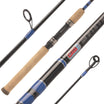
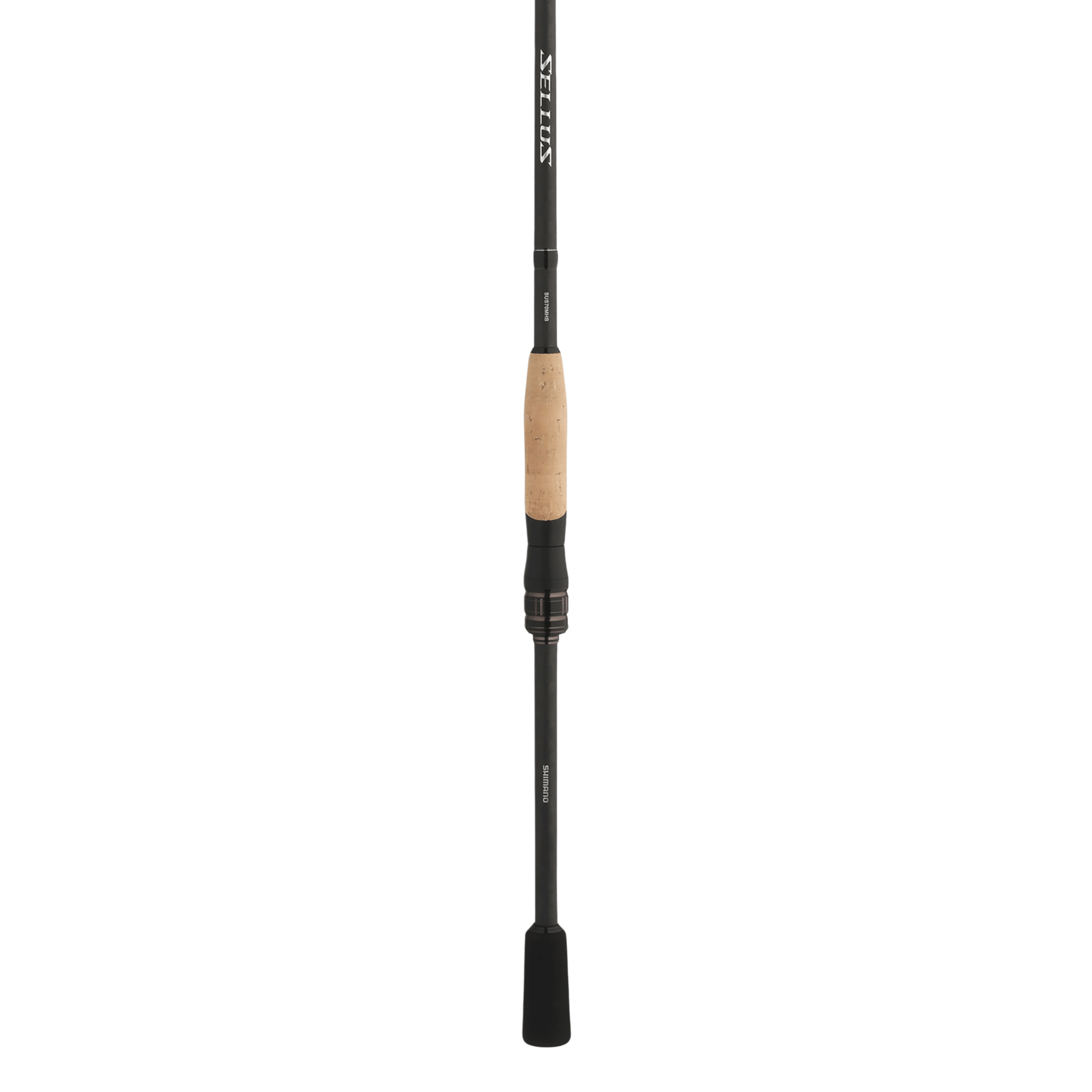
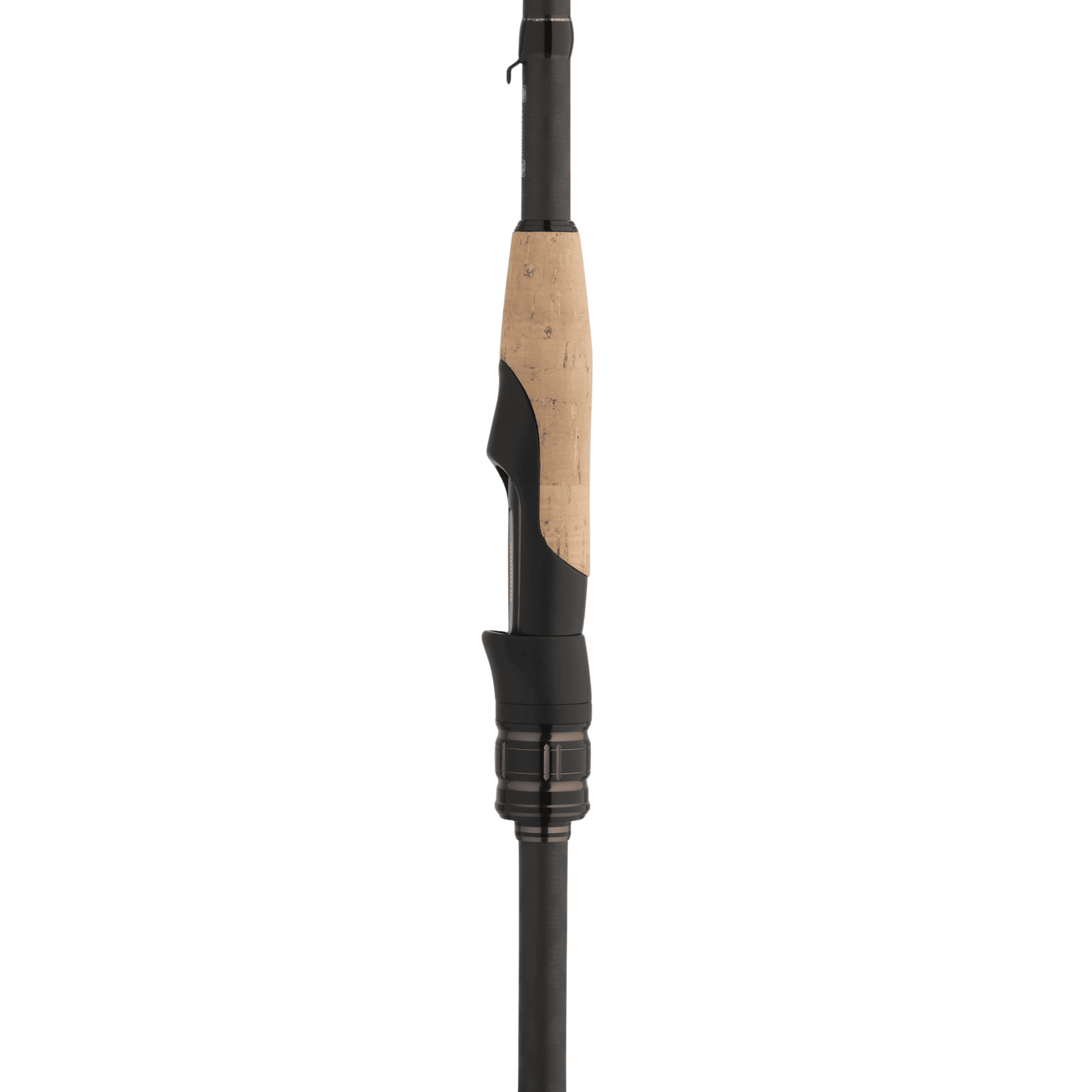
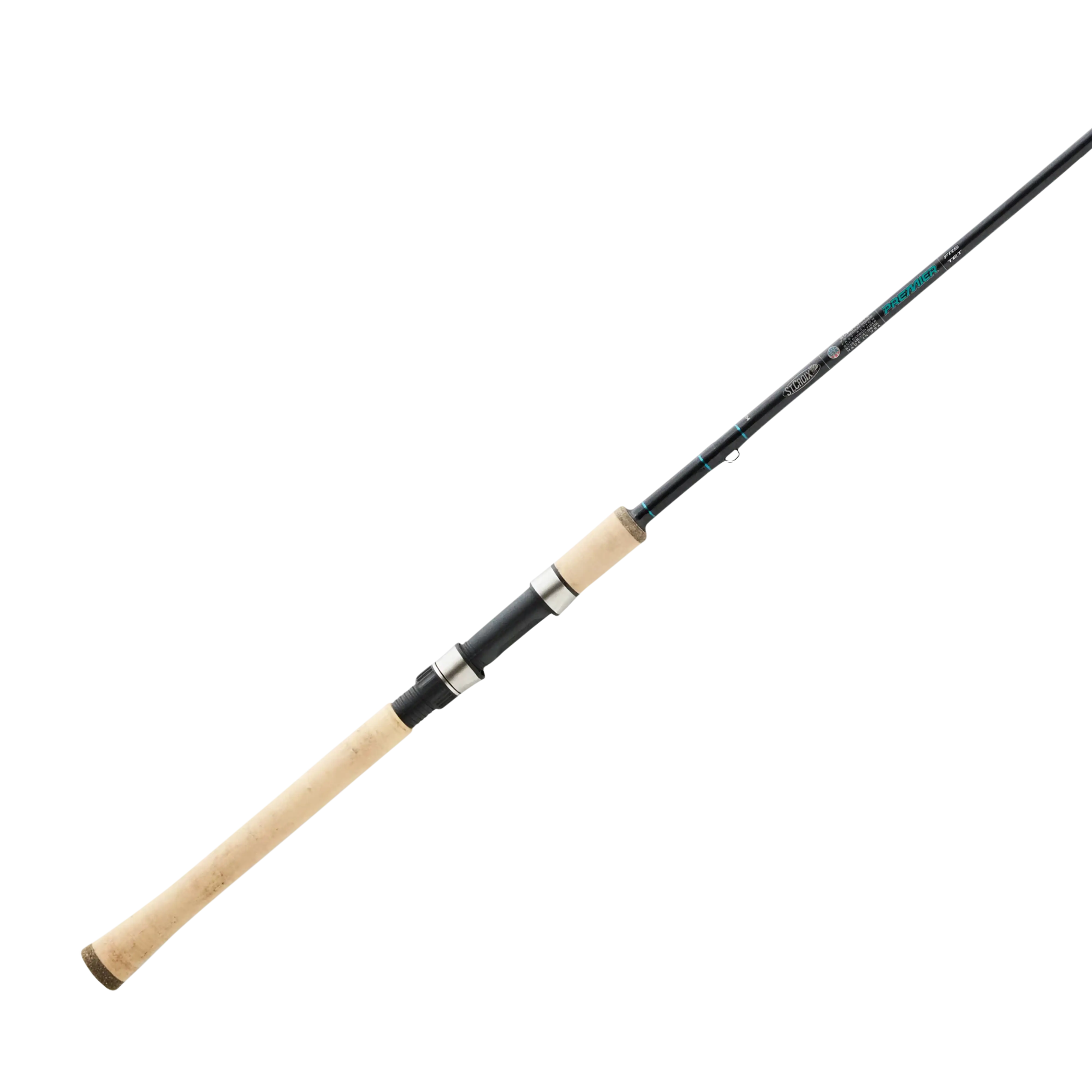
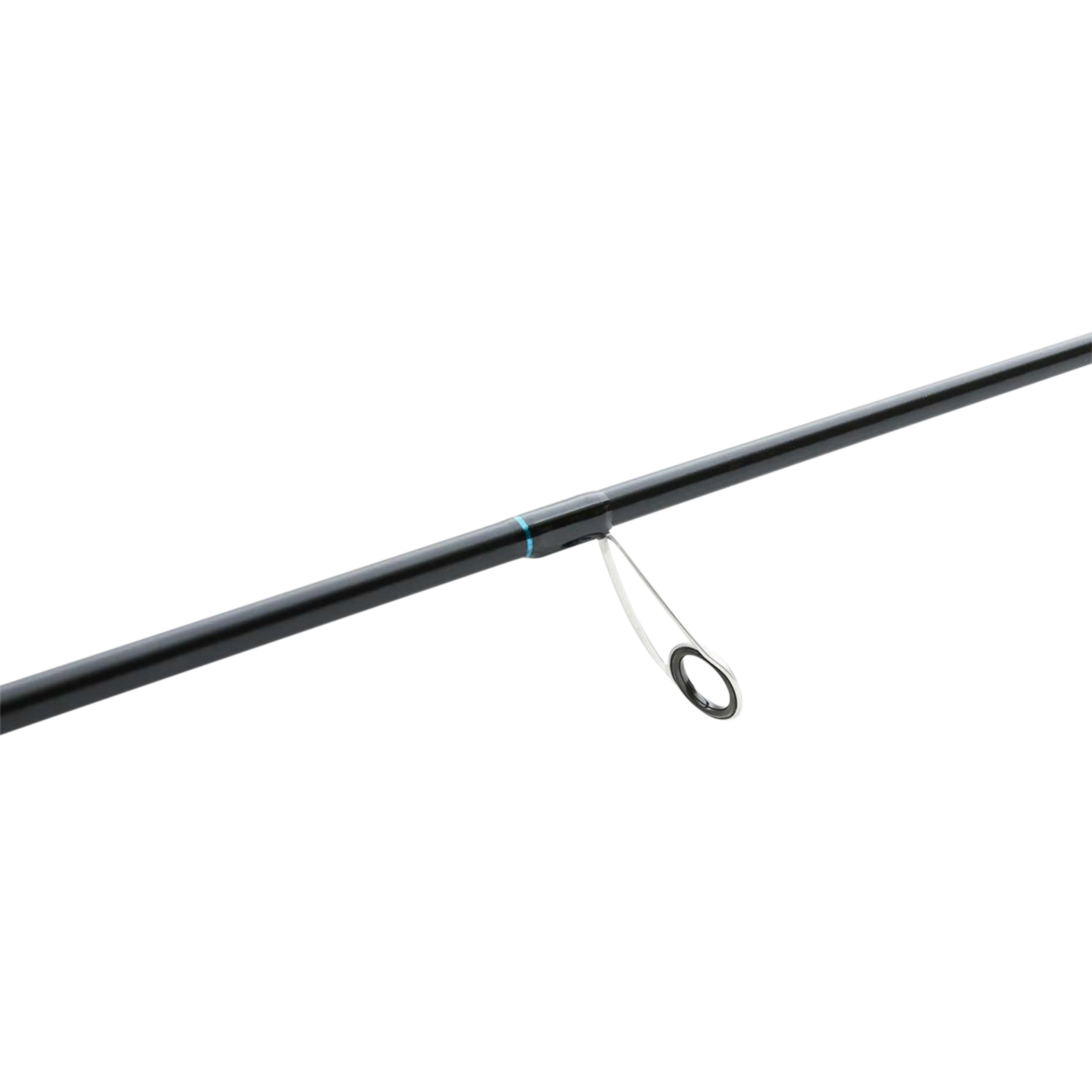
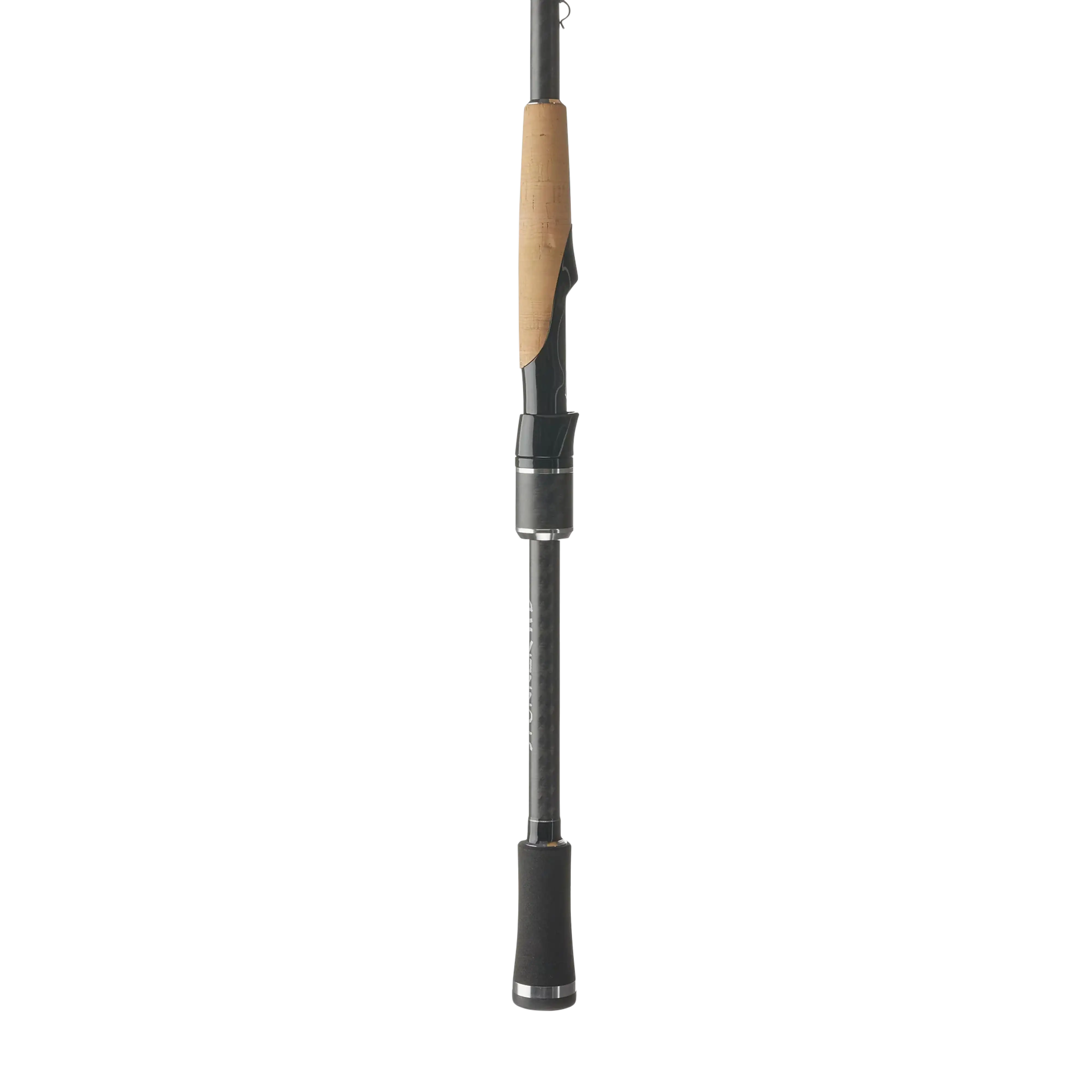
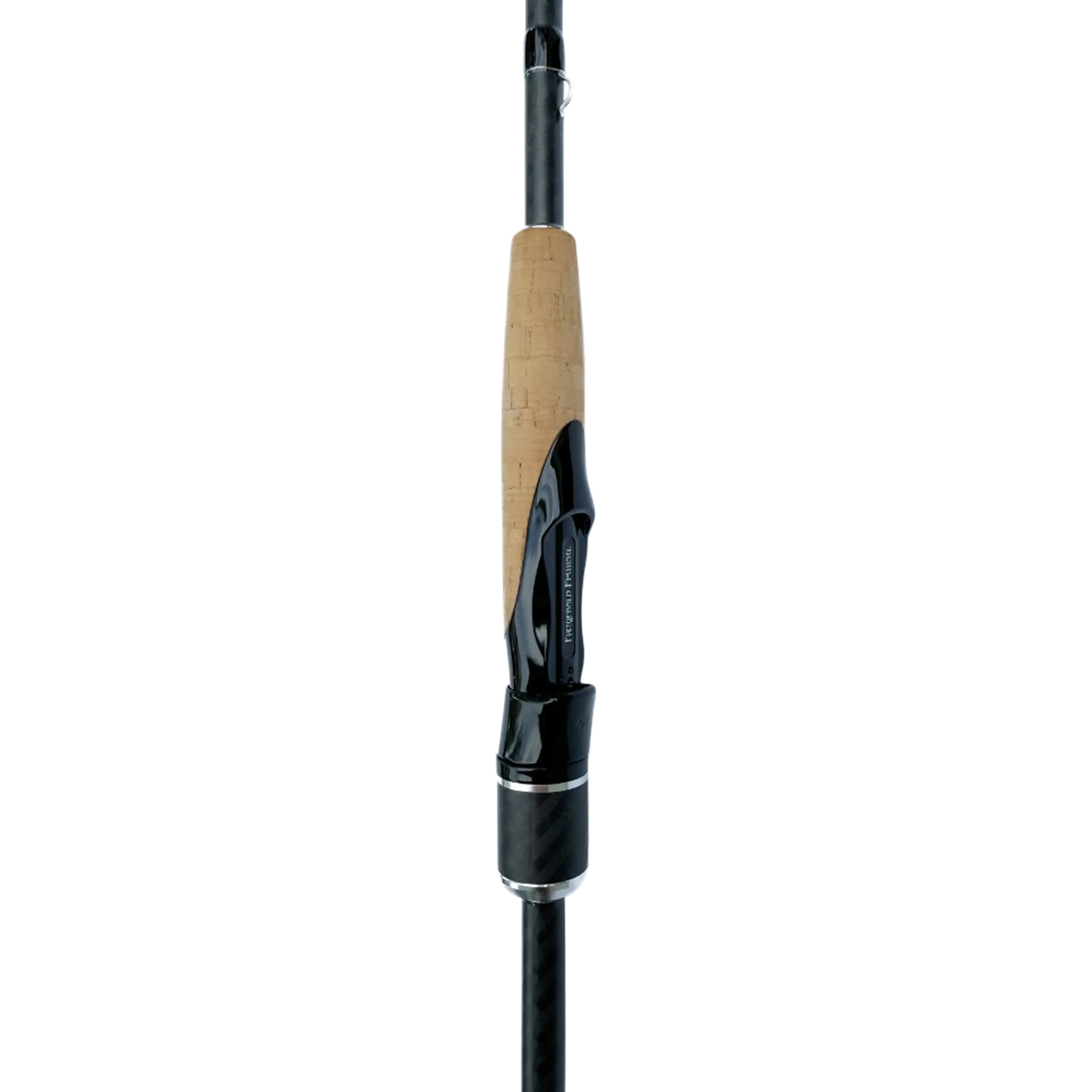
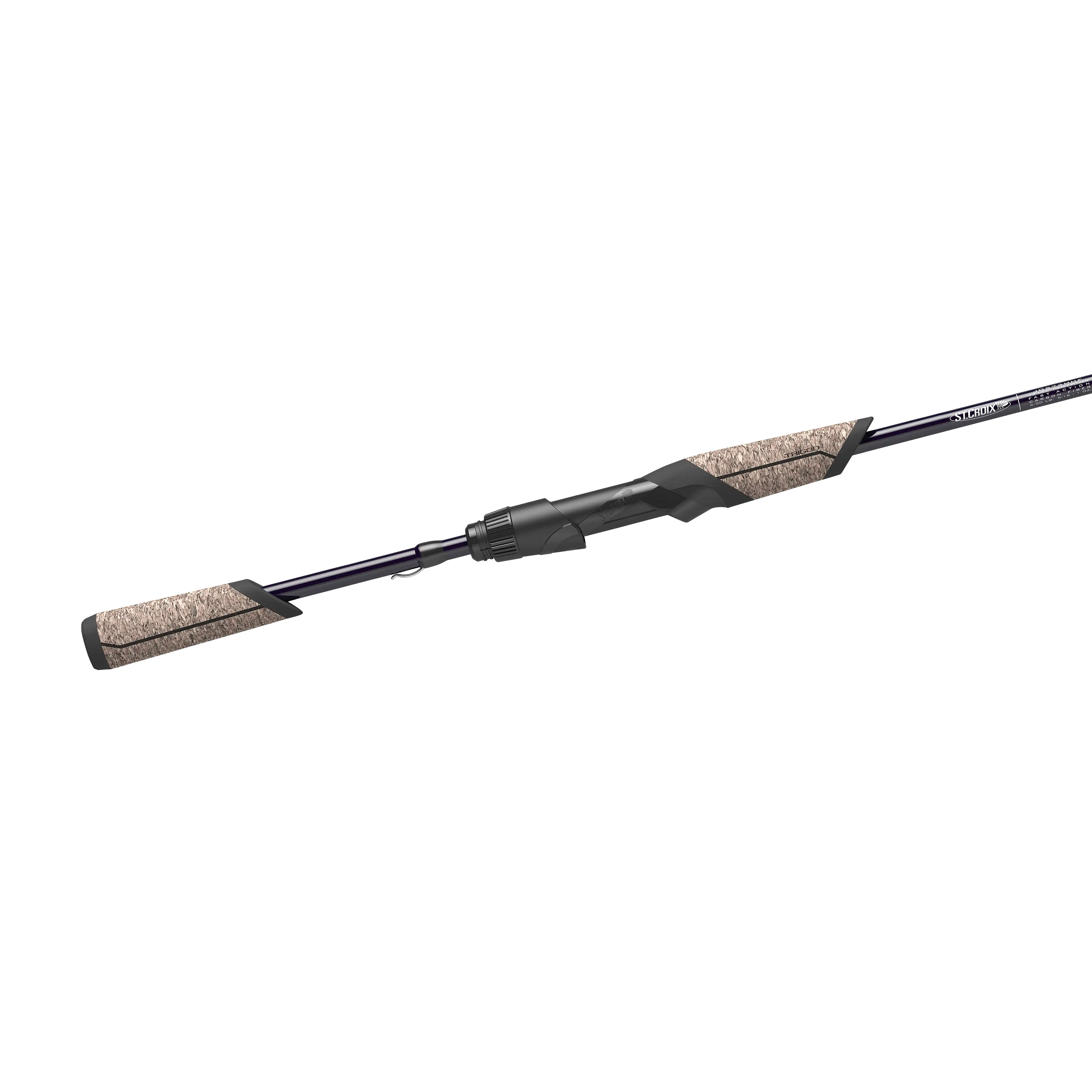
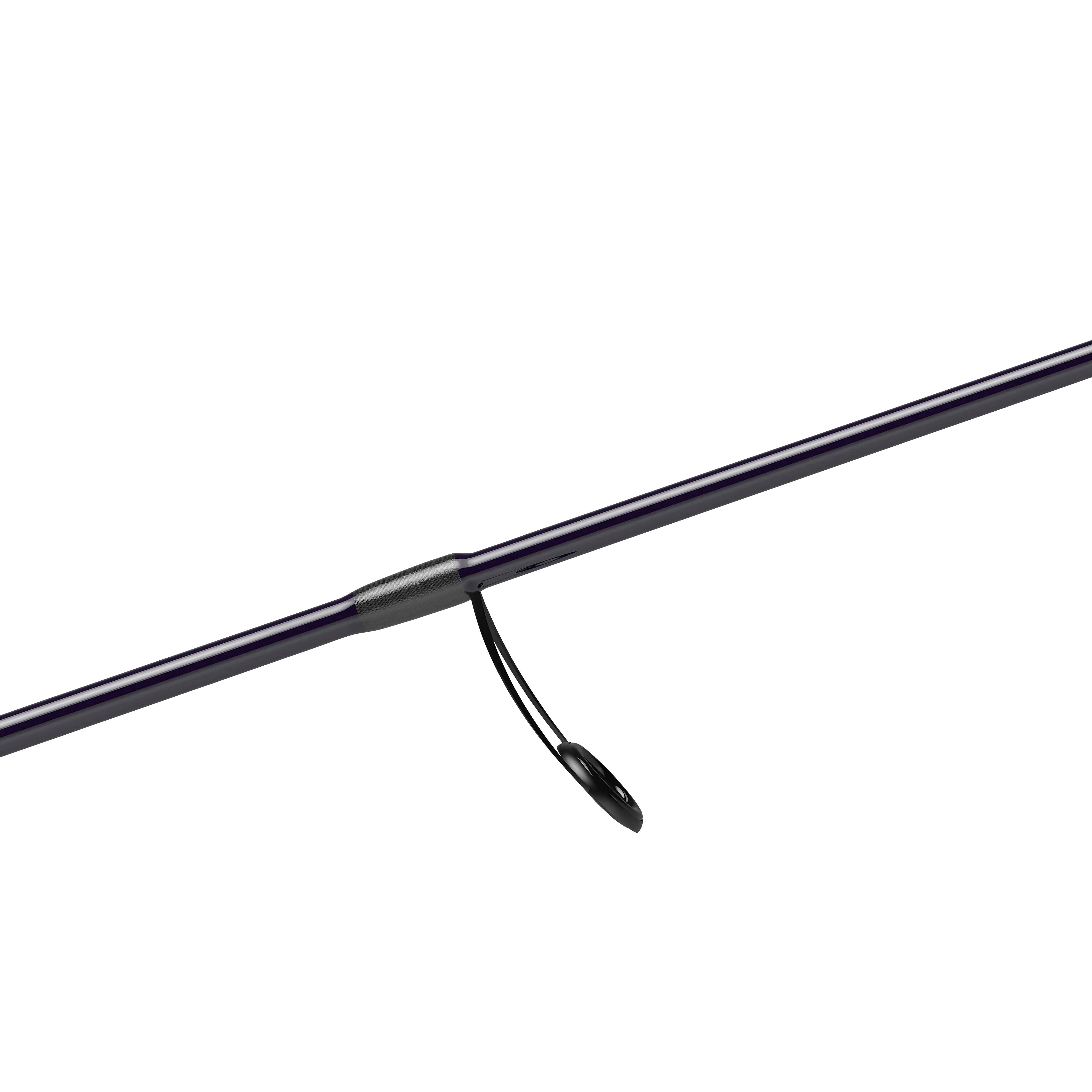
A shakey head rod should prioritize sensitivity, bottom feel, and finesse control. Because most bites are subtle and the technique relies on maintaining contact with the bottom, you need a rod that clearly transmits light taps, subtle pressure changes, and the feel of the bait resting on structure.
Spinning rods are commonly used for shakey head fishing because they handle light line, finesse jig heads, and subtle shaking or dragging presentations more effectively than baitcasting setups. They also allow for smooth, controlled casting of lighter rigs and better slack management, which helps maintain consistent bottom contact. A balanced rod with a responsive tip lets anglers work the jig with small movements while keeping it in the strike zone.
Casting rods are typically used when fishing heavier shakey heads (around 1/2 oz and up), especially in deeper water or when targeting offshore structure. They provide added power for longer casts and improved control when working heavier jig heads, but are less common for standard finesse applications.
The right combination of power, action, length, and line rating helps anglers detect subtle bites, maintain bottom contact, and fight fish without breaking light leaders or losing feel for the jig.
When choosing a rod, consider these key specs:
Power
Rod power refers to how much force is needed to bend the rod. Shakey head rods typically fall in the medium‑light to medium range because the technique uses light jig heads and finesse line. Medium‑light power provides excellent sensitivity and protects lighter fluorocarbon leaders from breaking on subtle hooksets, while medium power adds control when fishing slightly heavier jig heads or around light cover. In situations with thicker brush or heavier fish, some anglers opt for medium–heavy power to help control the bait and fight fish without sacrificing too much sensitivity.
Action
Action describes where along the blank the rod bends under load. Fast actions are most popular for shakey head fishing because they concentrate flex in the upper portion of the rod. This enhances sensitivity and allows anglers to impart subtle shakes and light drags without pulling the jig head off the bottom. A responsive tip also improves bite detection and helps set the hook without yanking the bait out of the strike zone.
Length
Shakey head rods typically range from 6’8″ to 7’6″. Shorter rods (6’8″–7’0″) deliver better accuracy and control when pitching or skipping under docks, around pilings, or through brush. Mid‑length rods (7’0″–7’3″) are the most versatile, offering a balance of sensitivity, casting distance, and line control for a wide range of depths and cover types. Longer rods (7’3″–7’6″) help maintain bottom contact on long casts or deeper water and can give better leverage when fishing offshore points or ledges.
Line Rating
Line rating indicates the range of line strengths a rod is designed to handle safely and effectively. For shakey head fishing, anglers commonly use 8–12 lb fluorocarbon straight or 10–15 lb braid with an 8–12 lb fluorocarbon leader. Fluorocarbon straight helps with stealth and sensitivity, especially in clear water, while braid plus leader gives excellent bottom feel and zero stretch from the braid with a natural presentation near the bait. Choosing a rod rated for your intended line ensures the blank loads properly during casts and transmits subtle bites without overloading the rod.
Weight / Jig Rating
The jig rating identifies the range of weights a rod is designed to cast and control effectively. Shakey head jig heads normally range from 1/16 oz to 5/8 oz depending on depth, current, wind, and structure. Lighter heads (1/16 – 1/8 oz) are ideal for shallow water and finesse presentations where subtle action and feel are paramount. Mid‑range heads (1/8 – 1/4 oz) are common in brush, grass edges, and docks, while heavier heads (1/4 – 5/8 oz) help maintain bottom contact on deeper points, offshore structure, or wind‑blown flats. Choosing a rod rated for the weights you intend to fish ensures the blank loads properly, maintains sensitivity, and gives precise control of the bait through different conditions.
Finesse Shakey Head
Choose a rod with a sensitive tip and medium-light power to feel subtle bites and maintain precise control of light jig heads. The 6’10″–7’0″ length gives a balance between accuracy and casting distance, allowing you to manipulate the jig with small shakes or drags while keeping it upright on hard-bottom structure. A fast action tip enhances bite detection and lets the rod load smoothly during gentle hooksets.
Targets: Largemouth bass, smallmouth bass, spotted bass
Rod Length: 6’10″–7’0″
Power: Medium-Light to Medium
Action: Fast
Line (Mainline / Leader): 10–15 lb braid / 6–10 lb fluorocarbon (leader or straight mainline)
Weights Used: 1/16 – 1/8 oz jig heads
Weedless Shakey Head
A medium-power rod provides enough backbone to work the jig through brush and grass without snagging, while still offering sensitivity to feel subtle bites. For dense cover or thicker laydowns, stepping up to medium-heavy power gives extra control without sacrificing tip feel. Longer lengths (7’0″–7’3″) help maintain leverage and bottom contact when dragging the jig through vegetation.
Targets: Largemouth bass in brush, laydowns, and grass edges
Rod Length: 7’0″–7’3″
Power: Medium (sometimes Medium–Heavy for dense cover)
Action: Fast
Line (Mainline / Leader): 10–15 lb braid / 8–10 lb fluorocarbon (leader or straight mainline)
Weights Used: 1/8 – 1/4 oz jig heads
Deep Water Shakey Head
For deep-water fishing, a medium-power rod with a longer 7’3″–7’6″ blank helps maintain bottom contact on heavier jig heads. Fast action provides sensitivity to detect light taps while giving the backbone to control the jig and fight fish at depth. The longer rod also improves casting distance and leverage on ledges or offshore points. Casting rods are sometimes used when casting a heavier shaky head (1/2oz+), specifically when targeting bass in deep water or open water structure.
Targets: Largemouth and smallmouth bass on ledges, points, or offshore structure
Rod Length: 7’3″–7’6″
Power: Medium
Action: Fast
Line (Mainline / Leader): 10–15 lb braid / 8–15 lb fluorocarbon (leader or straight mainline)
Weights Used: 1/4 – 5/8 oz jig heads
Dock Shakey Head
A medium-power rod in the 6’8″–7’2″ range offers precise control for pitching or skipping under docks and around pilings. Fast action enhances sensitivity for light bites while allowing subtle rod-tip shakes to move the jig naturally without pulling it off the bottom. The shorter length aids accuracy in tight spaces and provides better maneuverability around vertical structure.
Targets: Largemouth bass around docks, pilings, and seawalls
Rod Length: 6’8″–7’2″
Power: Medium
Action: Fast
Line (Mainline / Leader): 10–15 lb braid with 8–10 lb fluorocarbon (leader or straight mainline)
Weights Used: 1/8 – 1/4 oz jig heads
Key Takeaways
- Spinning rods provide the control and sensitivity needed for shakey head presentations.
- Rods in the 6’8″–7’4″ range deliver the best balance of accuracy, casting distance, and bottom feel.
- Medium-Light to Medium power with a fast or extra-fast tip covers nearly all shakey head scenarios; use Medium–Heavy for very dense cover.
- Graphite blanks and comfortable handles improve sensitivity and reduce fatigue during long finesse sessions.
- Choose rod power based on bait weight, cover density, and sensitivity needs, not just fish size.
How to Choose a Shakey Head Fishing Rod
A shakey head rod should prioritize sensitivity, bottom feel, and finesse control. Because most bites are subtle and the technique relies on maintaining contact with the bottom, you need a rod that clearly transmits light taps, subtle pressure changes, and the feel of the bait resting on structure.
Spinning rods are commonly used for shakey head fishing because they handle light line, finesse jig heads, and subtle shaking or dragging presentations more effectively than baitcasting setups. They also allow for smooth, controlled casting of lighter rigs and better slack management, which helps maintain consistent bottom contact. A balanced rod with a responsive tip lets anglers work the jig with small movements while keeping it in the strike zone.
Casting rods are typically used when fishing heavier shakey heads (around 1/2 oz and up), especially in deeper water or when targeting offshore structure. They provide added power for longer casts and improved control when working heavier jig heads, but are less common for standard finesse applications.
The right combination of power, action, length, and line rating helps anglers detect subtle bites, maintain bottom contact, and fight fish without breaking light leaders or losing feel for the jig.
When choosing a rod, consider these key specs:
Power
Rod power refers to how much force is needed to bend the rod. Shakey head rods typically fall in the medium‑light to medium range because the technique uses light jig heads and finesse line. Medium‑light power provides excellent sensitivity and protects lighter fluorocarbon leaders from breaking on subtle hooksets, while medium power adds control when fishing slightly heavier jig heads or around light cover. In situations with thicker brush or heavier fish, some anglers opt for medium–heavy power to help control the bait and fight fish without sacrificing too much sensitivity.
Action
Action describes where along the blank the rod bends under load. Fast actions are most popular for shakey head fishing because they concentrate flex in the upper portion of the rod. This enhances sensitivity and allows anglers to impart subtle shakes and light drags without pulling the jig head off the bottom. A responsive tip also improves bite detection and helps set the hook without yanking the bait out of the strike zone.
Length
Shakey head rods typically range from 6’8″ to 7’6″. Shorter rods (6’8″–7’0″) deliver better accuracy and control when pitching or skipping under docks, around pilings, or through brush. Mid‑length rods (7’0″–7’3″) are the most versatile, offering a balance of sensitivity, casting distance, and line control for a wide range of depths and cover types. Longer rods (7’3″–7’6″) help maintain bottom contact on long casts or deeper water and can give better leverage when fishing offshore points or ledges.
Line Rating
Line rating indicates the range of line strengths a rod is designed to handle safely and effectively. For shakey head fishing, anglers commonly use 8–12 lb fluorocarbon straight or 10–15 lb braid with an 8–12 lb fluorocarbon leader. Fluorocarbon straight helps with stealth and sensitivity, especially in clear water, while braid plus leader gives excellent bottom feel and zero stretch from the braid with a natural presentation near the bait. Choosing a rod rated for your intended line ensures the blank loads properly during casts and transmits subtle bites without overloading the rod.
Weight / Jig Rating
The jig rating identifies the range of weights a rod is designed to cast and control effectively. Shakey head jig heads normally range from 1/16 oz to 5/8 oz depending on depth, current, wind, and structure. Lighter heads (1/16 – 1/8 oz) are ideal for shallow water and finesse presentations where subtle action and feel are paramount. Mid‑range heads (1/8 – 1/4 oz) are common in brush, grass edges, and docks, while heavier heads (1/4 – 5/8 oz) help maintain bottom contact on deeper points, offshore structure, or wind‑blown flats. Choosing a rod rated for the weights you intend to fish ensures the blank loads properly, maintains sensitivity, and gives precise control of the bait through different conditions.
Finesse Shakey Head
Choose a rod with a sensitive tip and medium-light power to feel subtle bites and maintain precise control of light jig heads. The 6’10″–7’0″ length gives a balance between accuracy and casting distance, allowing you to manipulate the jig with small shakes or drags while keeping it upright on hard-bottom structure. A fast action tip enhances bite detection and lets the rod load smoothly during gentle hooksets.
Targets: Largemouth bass, smallmouth bass, spotted bass
Rod Length: 6’10″–7’0″
Power: Medium-Light to Medium
Action: Fast
Line (Mainline / Leader): 10–15 lb braid / 6–10 lb fluorocarbon (leader or straight mainline)
Weights Used: 1/16 – 1/8 oz jig heads
Weedless Shakey Head
A medium-power rod provides enough backbone to work the jig through brush and grass without snagging, while still offering sensitivity to feel subtle bites. For dense cover or thicker laydowns, stepping up to medium-heavy power gives extra control without sacrificing tip feel. Longer lengths (7’0″–7’3″) help maintain leverage and bottom contact when dragging the jig through vegetation.
Targets: Largemouth bass in brush, laydowns, and grass edges
Rod Length: 7’0″–7’3″
Power: Medium (sometimes Medium–Heavy for dense cover)
Action: Fast
Line (Mainline / Leader): 10–15 lb braid / 8–10 lb fluorocarbon (leader or straight mainline)
Weights Used: 1/8 – 1/4 oz jig heads
Deep Water Shakey Head
For deep-water fishing, a medium-power rod with a longer 7’3″–7’6″ blank helps maintain bottom contact on heavier jig heads. Fast action provides sensitivity to detect light taps while giving the backbone to control the jig and fight fish at depth. The longer rod also improves casting distance and leverage on ledges or offshore points. Casting rods are sometimes used when casting a heavier shaky head (1/2oz+), specifically when targeting bass in deep water or open water structure.
Targets: Largemouth and smallmouth bass on ledges, points, or offshore structure
Rod Length: 7’3″–7’6″
Power: Medium
Action: Fast
Line (Mainline / Leader): 10–15 lb braid / 8–15 lb fluorocarbon (leader or straight mainline)
Weights Used: 1/4 – 5/8 oz jig heads
Dock Shakey Head
A medium-power rod in the 6’8″–7’2″ range offers precise control for pitching or skipping under docks and around pilings. Fast action enhances sensitivity for light bites while allowing subtle rod-tip shakes to move the jig naturally without pulling it off the bottom. The shorter length aids accuracy in tight spaces and provides better maneuverability around vertical structure.
Targets: Largemouth bass around docks, pilings, and seawalls
Rod Length: 6’8″–7’2″
Power: Medium
Action: Fast
Line (Mainline / Leader): 10–15 lb braid with 8–10 lb fluorocarbon (leader or straight mainline)
Weights Used: 1/8 – 1/4 oz jig heads
Key Takeaways
- Spinning rods provide the control and sensitivity needed for shakey head presentations.
- Rods in the 6’8″–7’4″ range deliver the best balance of accuracy, casting distance, and bottom feel.
- Medium-Light to Medium power with a fast or extra-fast tip covers nearly all shakey head scenarios; use Medium–Heavy for very dense cover.
- Graphite blanks and comfortable handles improve sensitivity and reduce fatigue during long finesse sessions.
- Choose rod power based on bait weight, cover density, and sensitivity needs, not just fish size.
Shakey Head Rods & Combos
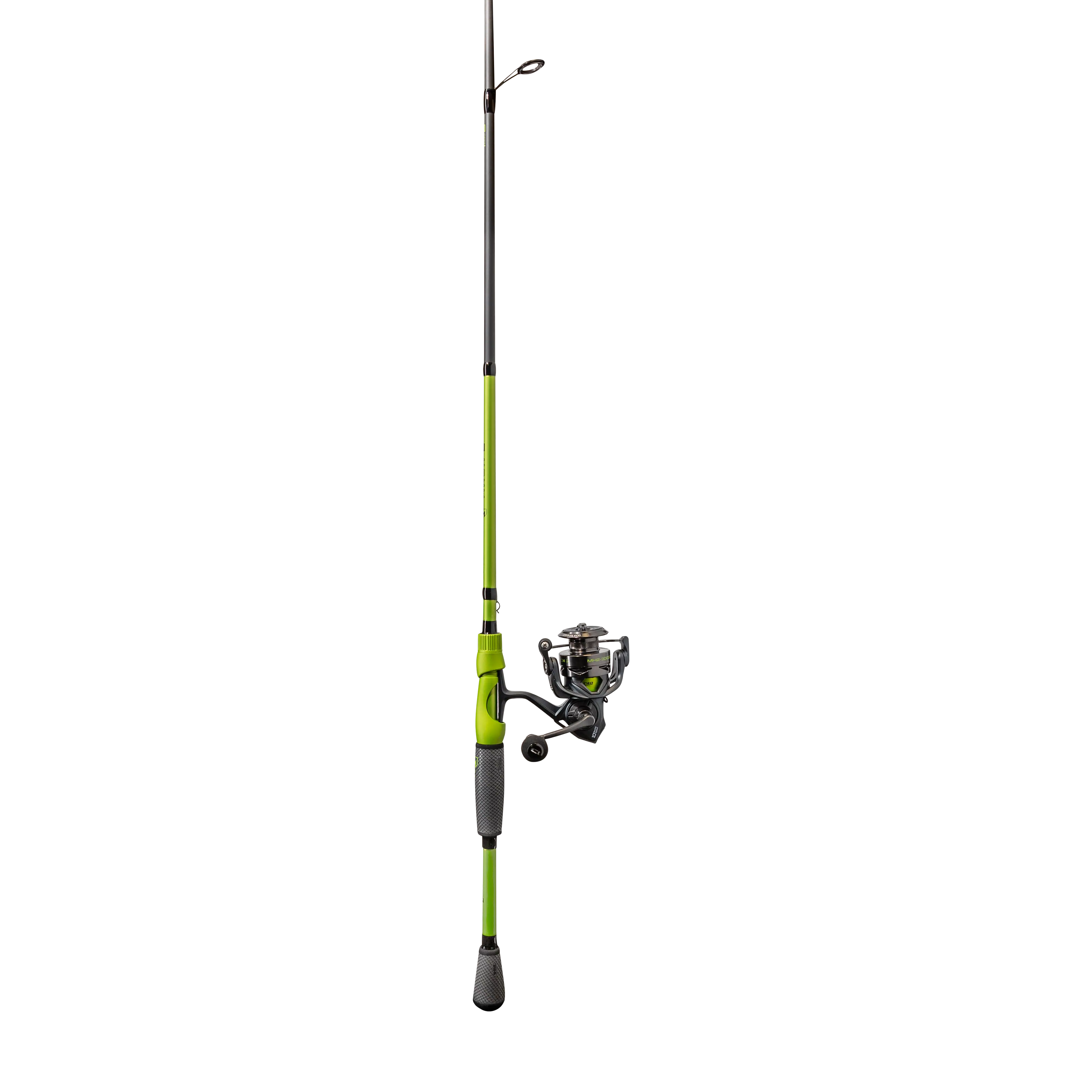
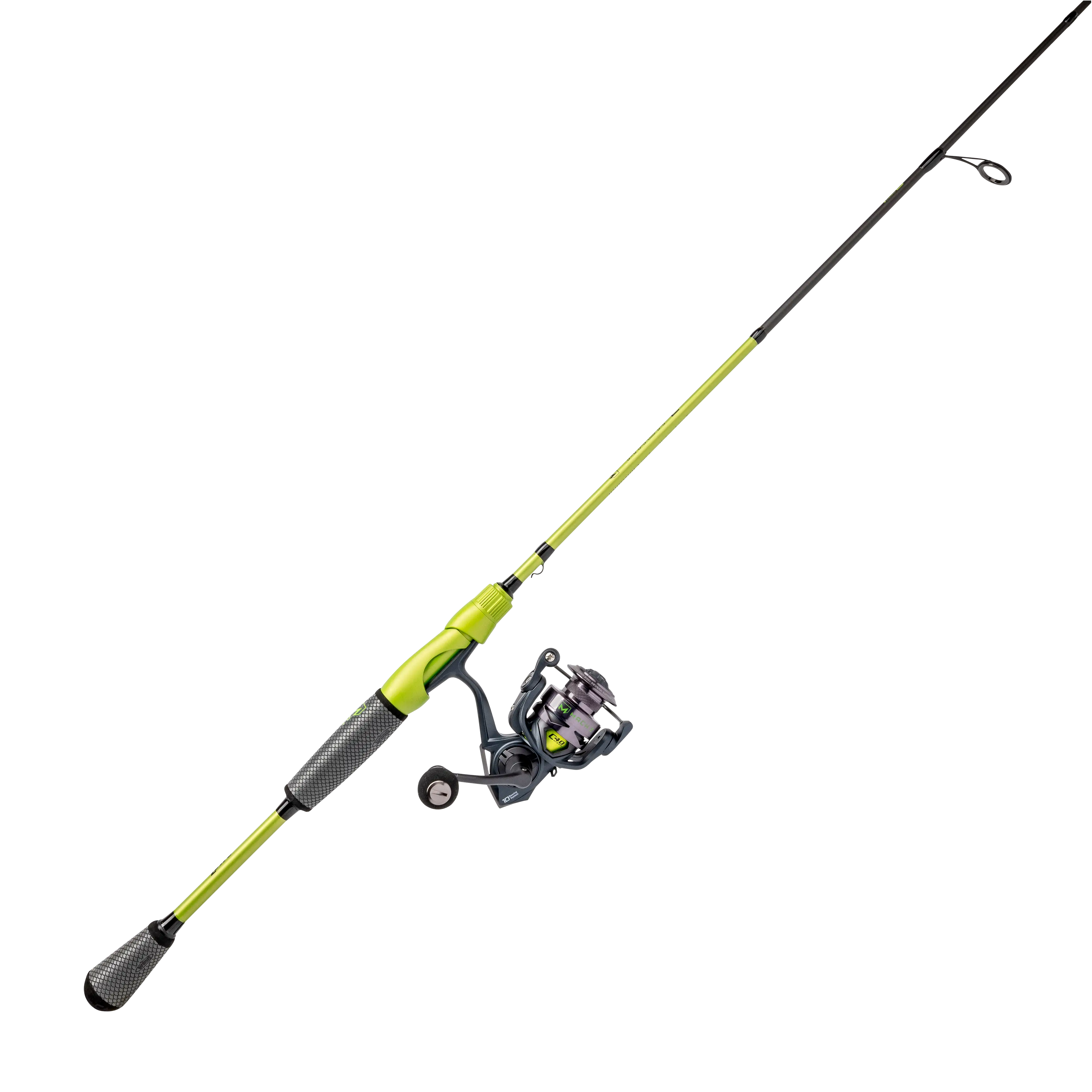
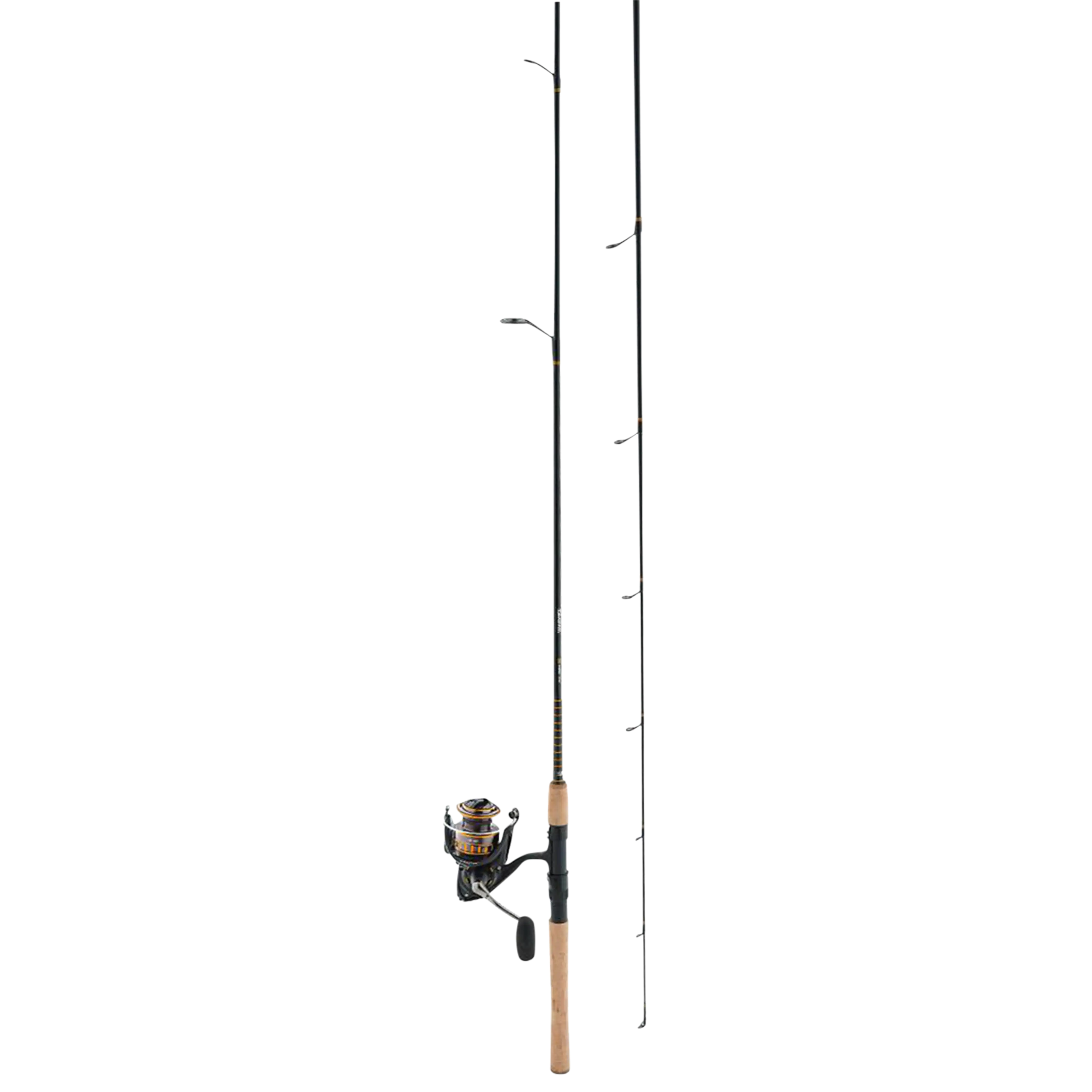
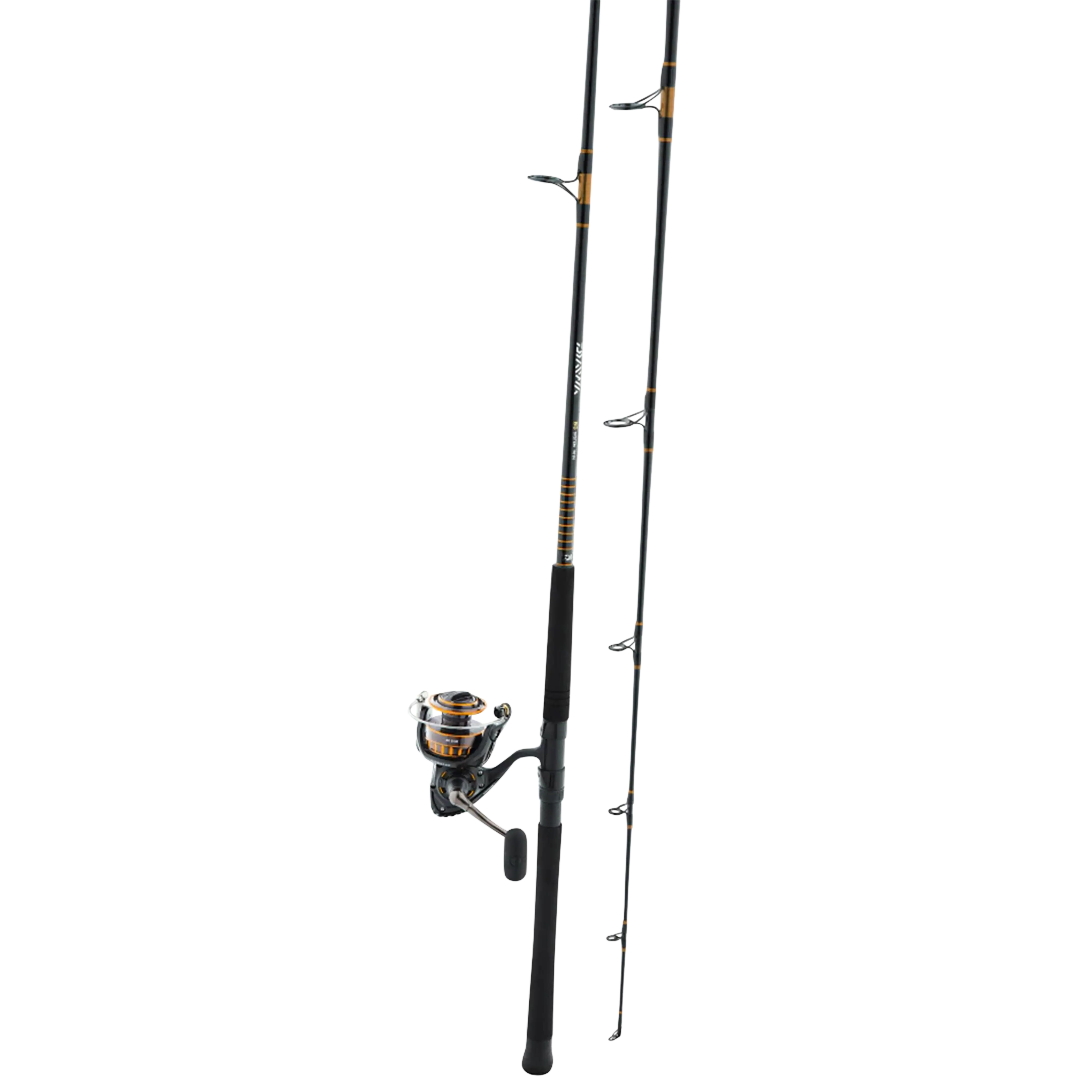
Best Reels for Shakey Head Fishing
A quality spinning reel is just as important as the rod in a shakey head setup. Because shakey heads are fished slowly along the bottom and worked with subtle rod-tip movements, the reel must provide consistent line management, smooth drag, and reliable gearing. Precision and sensitivity are essential so anglers can feel light bites, maintain jig contact with the bottom, and control the worm’s natural posture.
When evaluating a reel for shakey head fishing, consider these key features:
Reel Type / Size
Spinning reels are the standard because they handle light line and finesse jig heads precisely. A 2500–3000 size reel balances line capacity, weight, and ergonomics for most shakey head applications, while a 4000-size is sometimes preferred for longer rods or deeper/heavier setups.
Gear Ratio
Moderate ratios (5.2:1–6.2:1) are ideal for shakey head fishing because they provide a comfortable balance between line pickup and control during a fight. These ratios let anglers retrieve slack efficiently and maintain consistent contact with the jig, which is important for detecting subtle bites. Faster ratios aren’t usually necessary, since shakey head fishing emphasizes patience, finesse, and precise control rather than rapid retrieval.
Drag System
The drag system controls line tension during a fight. Smooth, progressive drags are essential for shaky head fishing because lighter braid and fluorocarbon lines can break if tension spikes. A drag rated appropriately for your line ensures that even sudden runs from a hooked fish won’t snap the line or pull hooks.
Line Capacity
The reel should hold enough line for your target water depth and presentation. Shakey head setups typically don’t require extreme capacity, but sufficient line ensures full coverage for deeper ledges and offshore points.
Durability
Even finesse rigs require reels that withstand repeated casts, occasional bumps on cover, and freshwater or mild saltwater exposure. Corrosion-resistant components and smooth bearings ensure consistent performance.
Finesse Shakey Head
For finesse shakey head fishing, the reel should be lightweight and responsive, allowing precise control of small jig heads. Moderate gear ratios let you retrieve line without disturbing the jig’s upright posture, and a smooth drag protects light line while letting you detect subtle bites. A 2500–3000 reel fits comfortably in hand for delicate rod-tip shakes over rock, gravel, or hard-bottom areas.
Reel Type / Size: Spinning reel, 2500–3000
Gear Ratio: 5.2:1–6.2:1
Drag: Smooth, 6–10 lb max
Line (Mainline / Leader): 10–15 lb braid / 6–10 lb fluorocarbon
Weedless Shakey Head
Weedless presentations often require working the jig through cover while maintaining sensitivity. The reel must provide controlled line pickup and strong, smooth drag to manage snags or light hooksets in brush, grass, or laydowns. A 2500–3000 reel balances line capacity and weight, giving precise control when dragging or shaking the worm through obstacles.
Reel Type / Size: Spinning reel, 2500–3000
Gear Ratio: 5.2:1–6.2:1
Drag: Smooth, 8–12 lb max
Line (Mainline / Leader): 10–15 lb braid / 8–10 lb fluorocarbon
Deep Water Shakey Head
Deeper-water fishing uses heavier jig heads and longer drags, so the reel should have slightly higher line capacity and stronger drag. A 3000–4000 size ensures enough spool to reach offshore points and ledges, while moderate gear ratios provide smooth retrieval and help keep the jig in contact with the bottom. Fast line recovery generally isn’t needed — finesse and control remain the priority. (Note: when using heavier shakey head (1/2oz+), specifically when targeting bass in deep water or open water structure, sometimes anglers prefer a casting reel).
Reel Type / Size: Spinning reel, 3000–4000
Gear Ratio: 5.2:1–6.2:1
Drag: Smooth, 10–15 lb max
Line (Mainline / Leader): 10–15 lb braid / 8–15 lb fluorocarbon
Dock Shakey Head
Dock fishing requires precise placement and delicate jig control. A lightweight 2500–3000 reel gives good ergonomics for pitching and skipping under docks, while smooth drag and moderate gear ratio allow subtle rod-tip shakes without disturbing the worm’s upright position.
Reel Type / Size: Spinning reel, 2500–3000
Gear Ratio: 5.2:1–6.2:1
Drag: Smooth, 6–10 lb max
Line (Mainline / Leader): 10–15 lb braid / 8–10 lb fluorocarbon
Best Reels for Shakey Head Fishing
A quality spinning reel is just as important as the rod in a shakey head setup. Because shakey heads are fished slowly along the bottom and worked with subtle rod-tip movements, the reel must provide consistent line management, smooth drag, and reliable gearing. Precision and sensitivity are essential so anglers can feel light bites, maintain jig contact with the bottom, and control the worm’s natural posture.
When evaluating a reel for shakey head fishing, consider these key features:
Reel Type / Size
Spinning reels are the standard because they handle light line and finesse jig heads precisely. A 2500–3000 size reel balances line capacity, weight, and ergonomics for most shakey head applications, while a 4000-size is sometimes preferred for longer rods or deeper/heavier setups.
Gear Ratio
Moderate ratios (5.2:1–6.2:1) are ideal for shakey head fishing because they provide a comfortable balance between line pickup and control during a fight. These ratios let anglers retrieve slack efficiently and maintain consistent contact with the jig, which is important for detecting subtle bites. Faster ratios aren’t usually necessary, since shakey head fishing emphasizes patience, finesse, and precise control rather than rapid retrieval.
Drag System
The drag system controls line tension during a fight. Smooth, progressive drags are essential for shaky head fishing because lighter braid and fluorocarbon lines can break if tension spikes. A drag rated appropriately for your line ensures that even sudden runs from a hooked fish won’t snap the line or pull hooks.
Line Capacity
The reel should hold enough line for your target water depth and presentation. Shakey head setups typically don’t require extreme capacity, but sufficient line ensures full coverage for deeper ledges and offshore points.
Durability
Even finesse rigs require reels that withstand repeated casts, occasional bumps on cover, and freshwater or mild saltwater exposure. Corrosion-resistant components and smooth bearings ensure consistent performance.
Finesse Shakey Head
For finesse shakey head fishing, the reel should be lightweight and responsive, allowing precise control of small jig heads. Moderate gear ratios let you retrieve line without disturbing the jig’s upright posture, and a smooth drag protects light line while letting you detect subtle bites. A 2500–3000 reel fits comfortably in hand for delicate rod-tip shakes over rock, gravel, or hard-bottom areas.
Reel Type / Size: Spinning reel, 2500–3000
Gear Ratio: 5.2:1–6.2:1
Drag: Smooth, 6–10 lb max
Line (Mainline / Leader): 10–15 lb braid / 6–10 lb fluorocarbon
Weedless Shakey Head
Weedless presentations often require working the jig through cover while maintaining sensitivity. The reel must provide controlled line pickup and strong, smooth drag to manage snags or light hooksets in brush, grass, or laydowns. A 2500–3000 reel balances line capacity and weight, giving precise control when dragging or shaking the worm through obstacles.
Reel Type / Size: Spinning reel, 2500–3000
Gear Ratio: 5.2:1–6.2:1
Drag: Smooth, 8–12 lb max
Line (Mainline / Leader): 10–15 lb braid / 8–10 lb fluorocarbon
Deep Water Shakey Head
Deeper-water fishing uses heavier jig heads and longer drags, so the reel should have slightly higher line capacity and stronger drag. A 3000–4000 size ensures enough spool to reach offshore points and ledges, while moderate gear ratios provide smooth retrieval and help keep the jig in contact with the bottom. Fast line recovery generally isn’t needed — finesse and control remain the priority. (Note: when using heavier shakey head (1/2oz+), specifically when targeting bass in deep water or open water structure, sometimes anglers prefer a casting reel).
Reel Type / Size: Spinning reel, 3000–4000
Gear Ratio: 5.2:1–6.2:1
Drag: Smooth, 10–15 lb max
Line (Mainline / Leader): 10–15 lb braid / 8–15 lb fluorocarbon
Dock Shakey Head
Dock fishing requires precise placement and delicate jig control. A lightweight 2500–3000 reel gives good ergonomics for pitching and skipping under docks, while smooth drag and moderate gear ratio allow subtle rod-tip shakes without disturbing the worm’s upright position.
Reel Type / Size: Spinning reel, 2500–3000
Gear Ratio: 5.2:1–6.2:1
Drag: Smooth, 6–10 lb max
Line (Mainline / Leader): 10–15 lb braid / 8–10 lb fluorocarbon
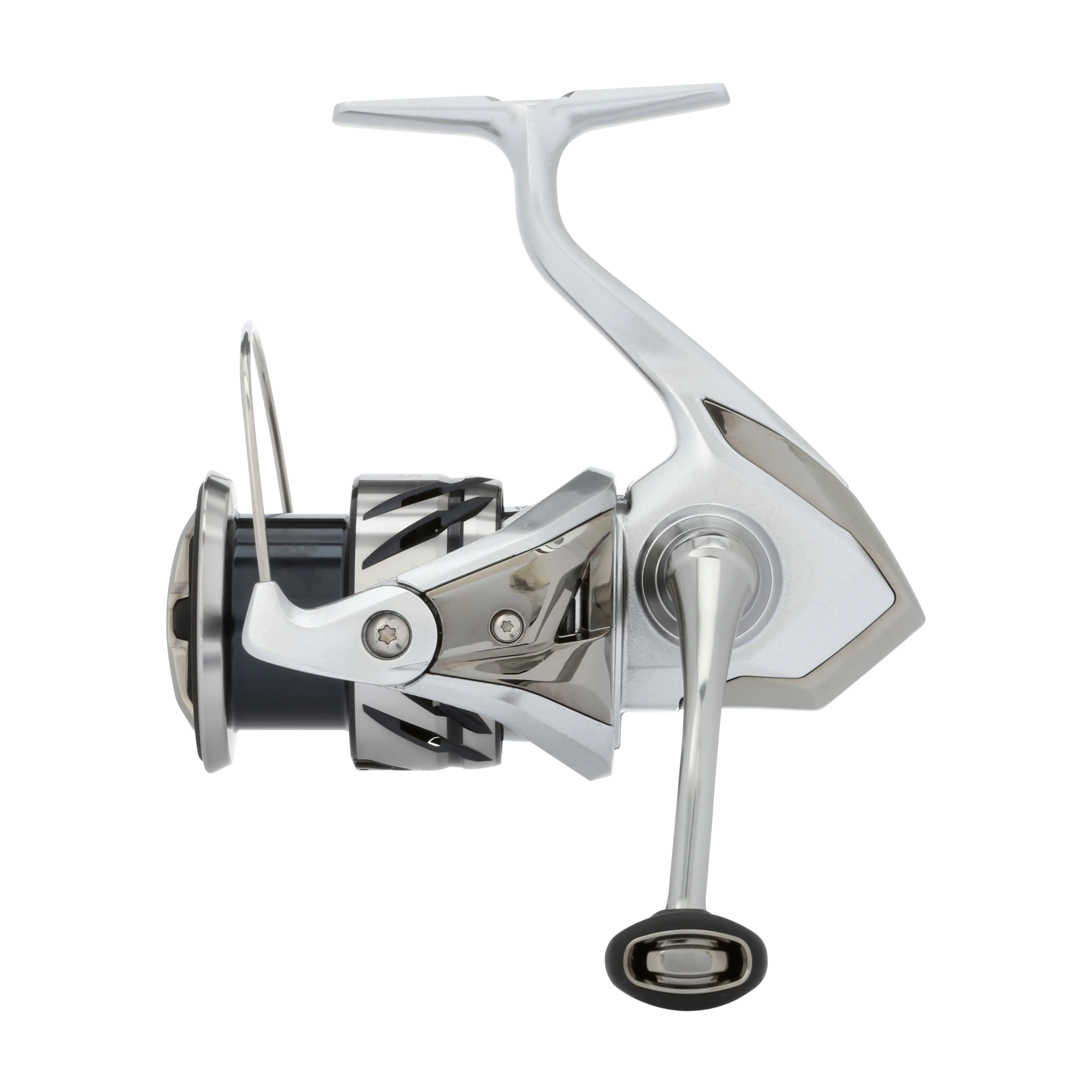
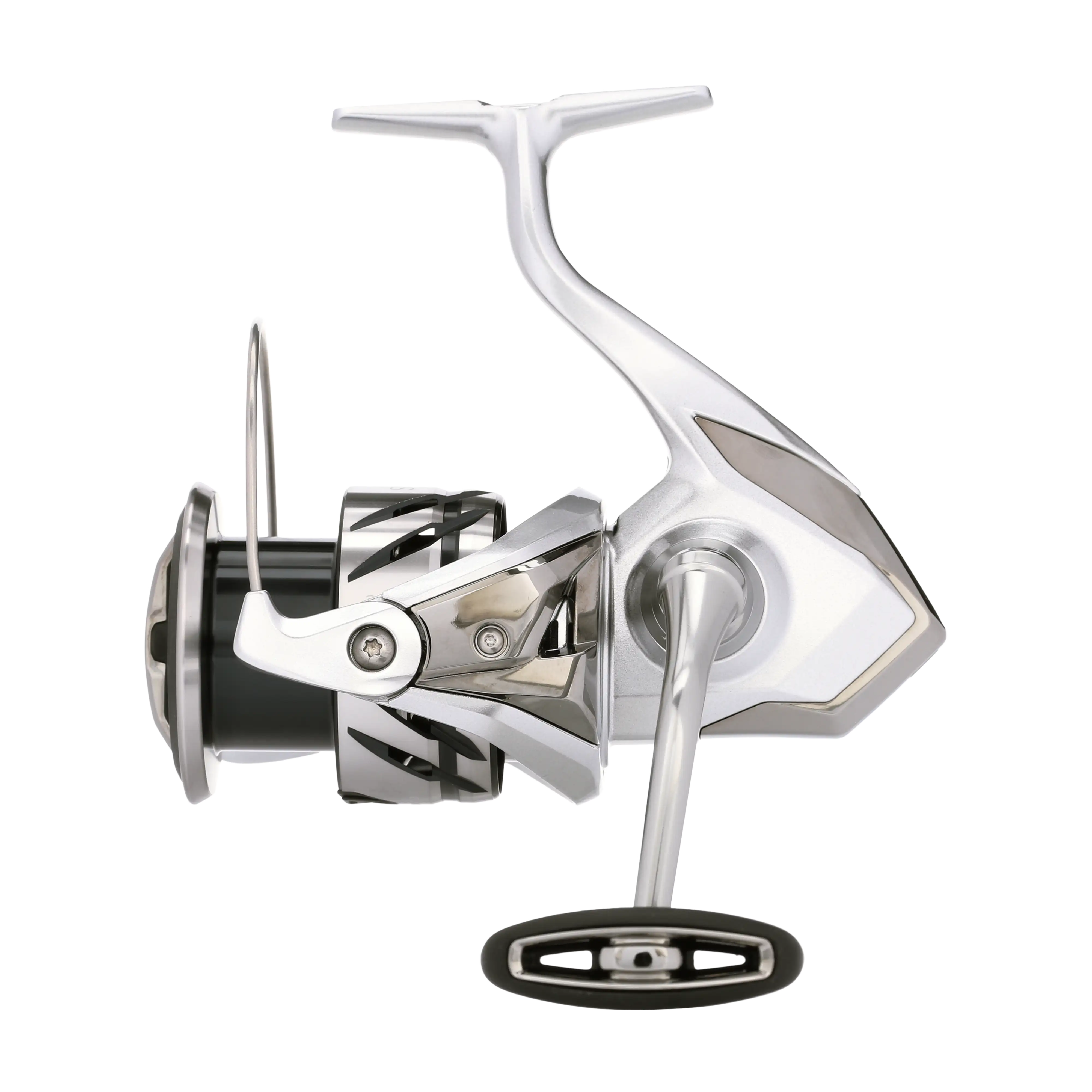
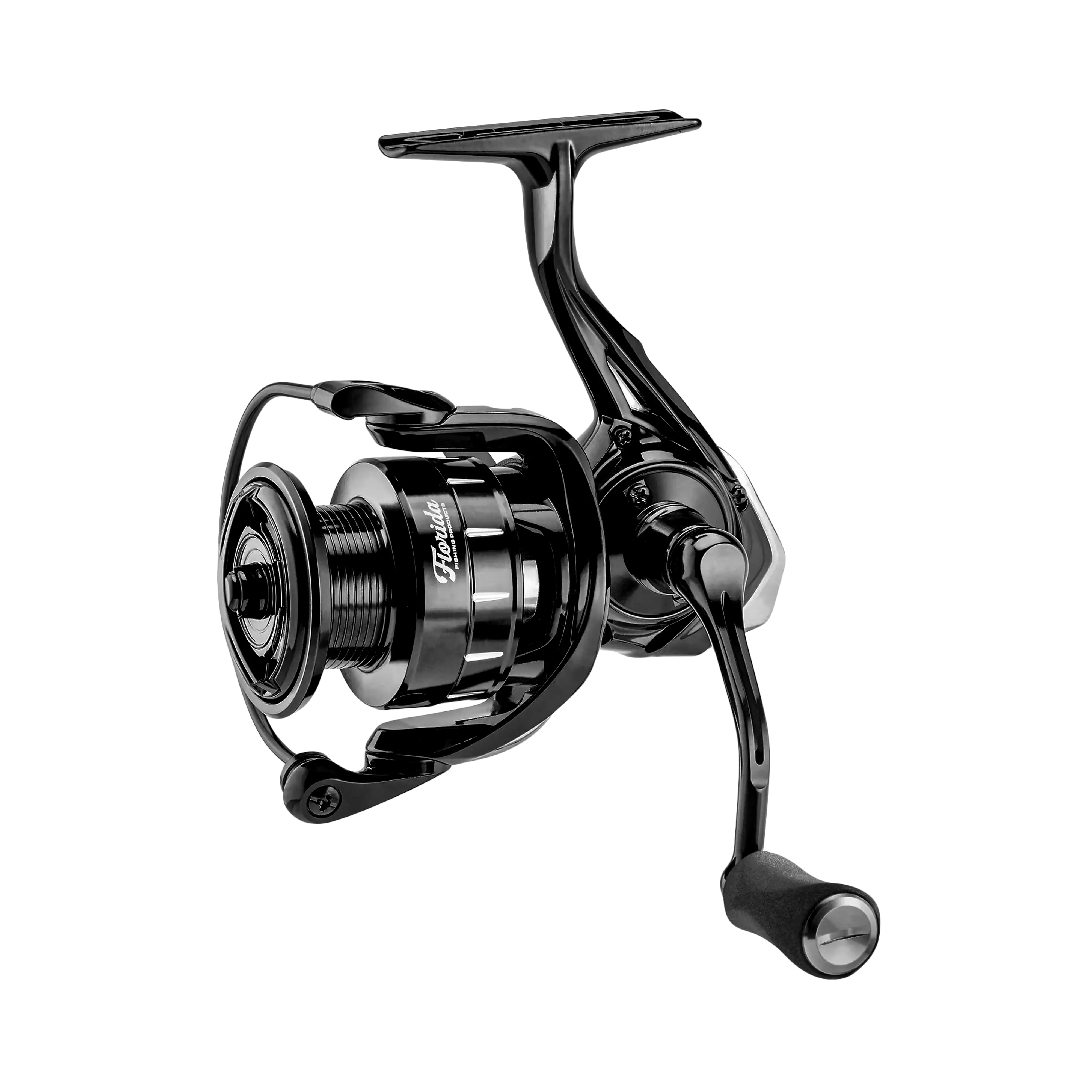
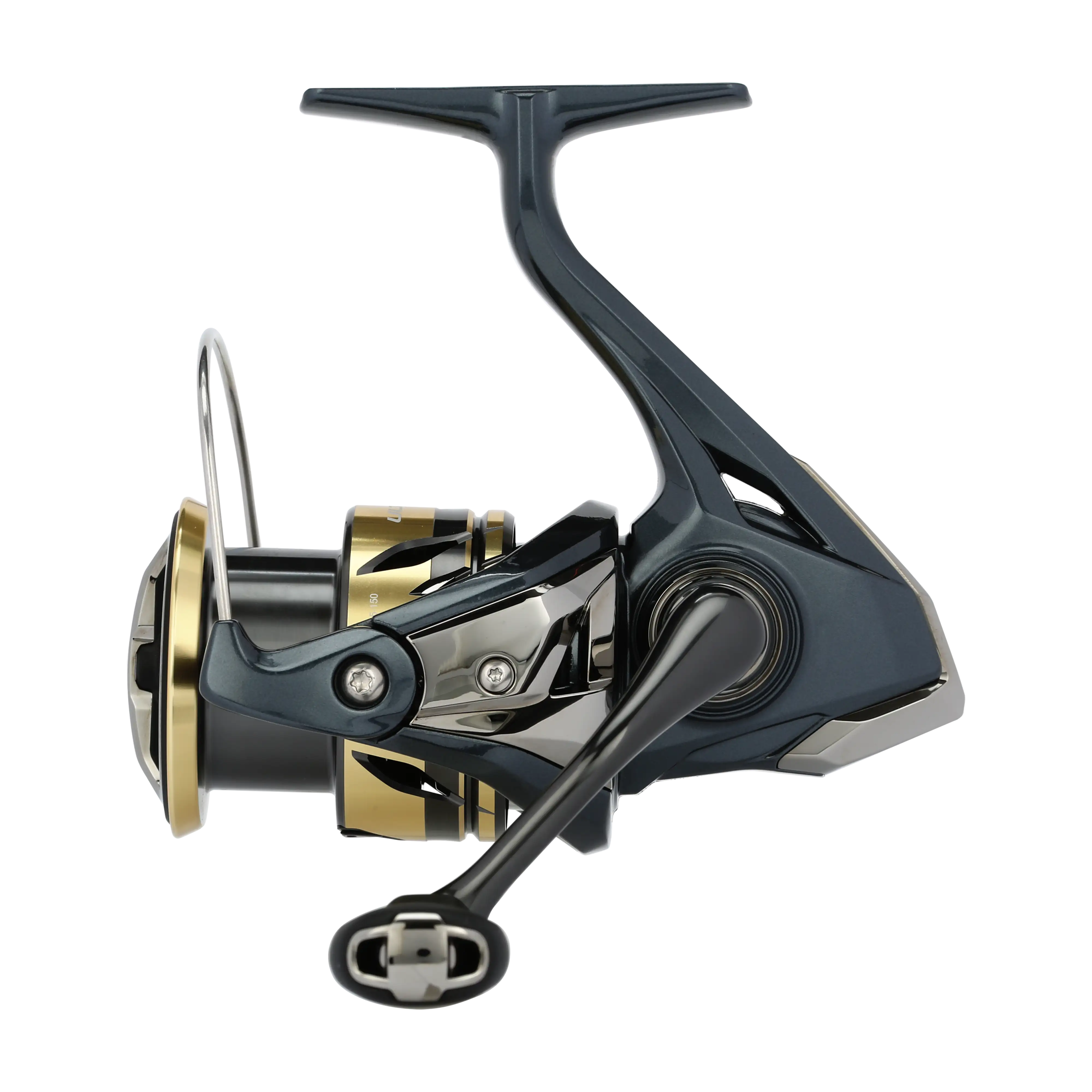
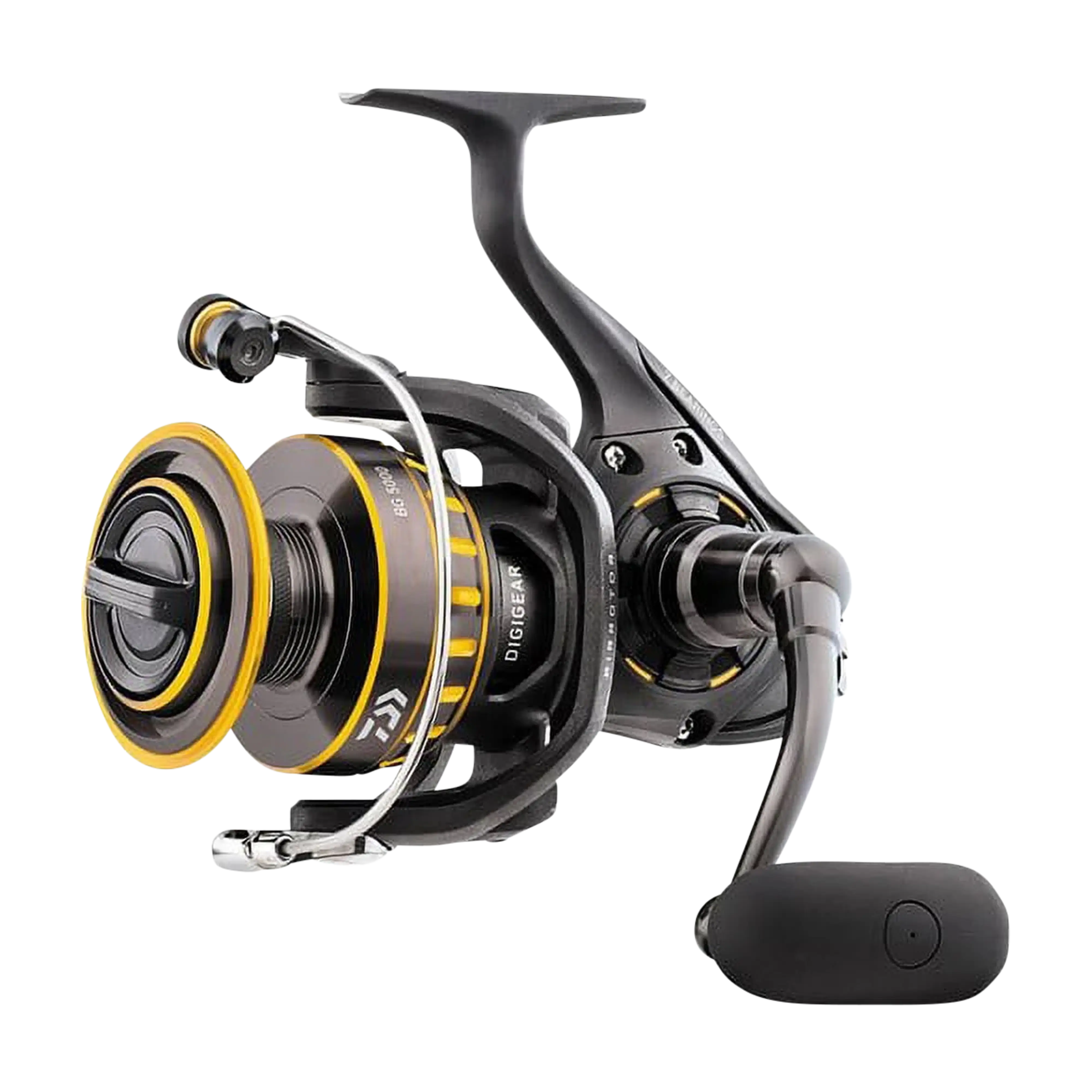
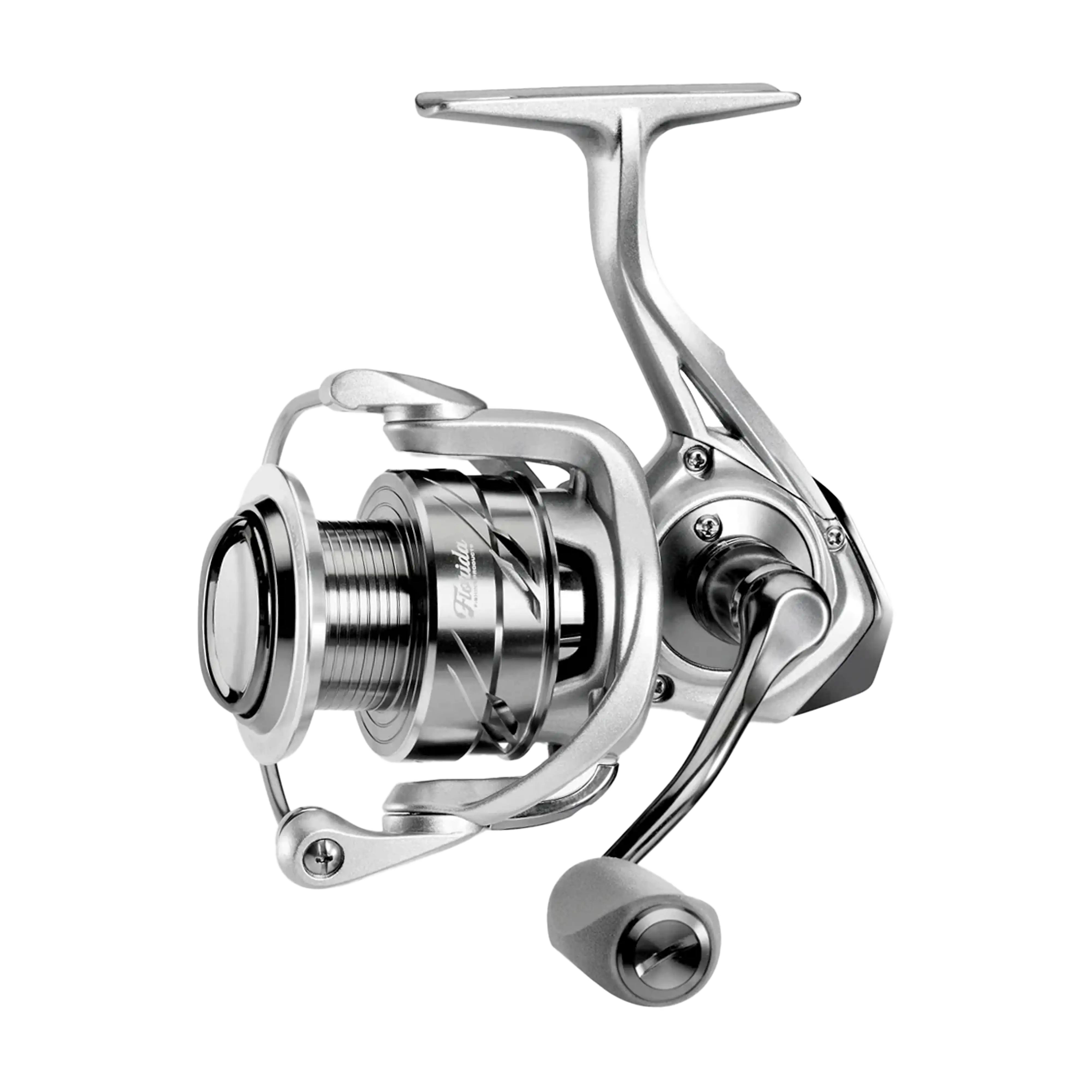
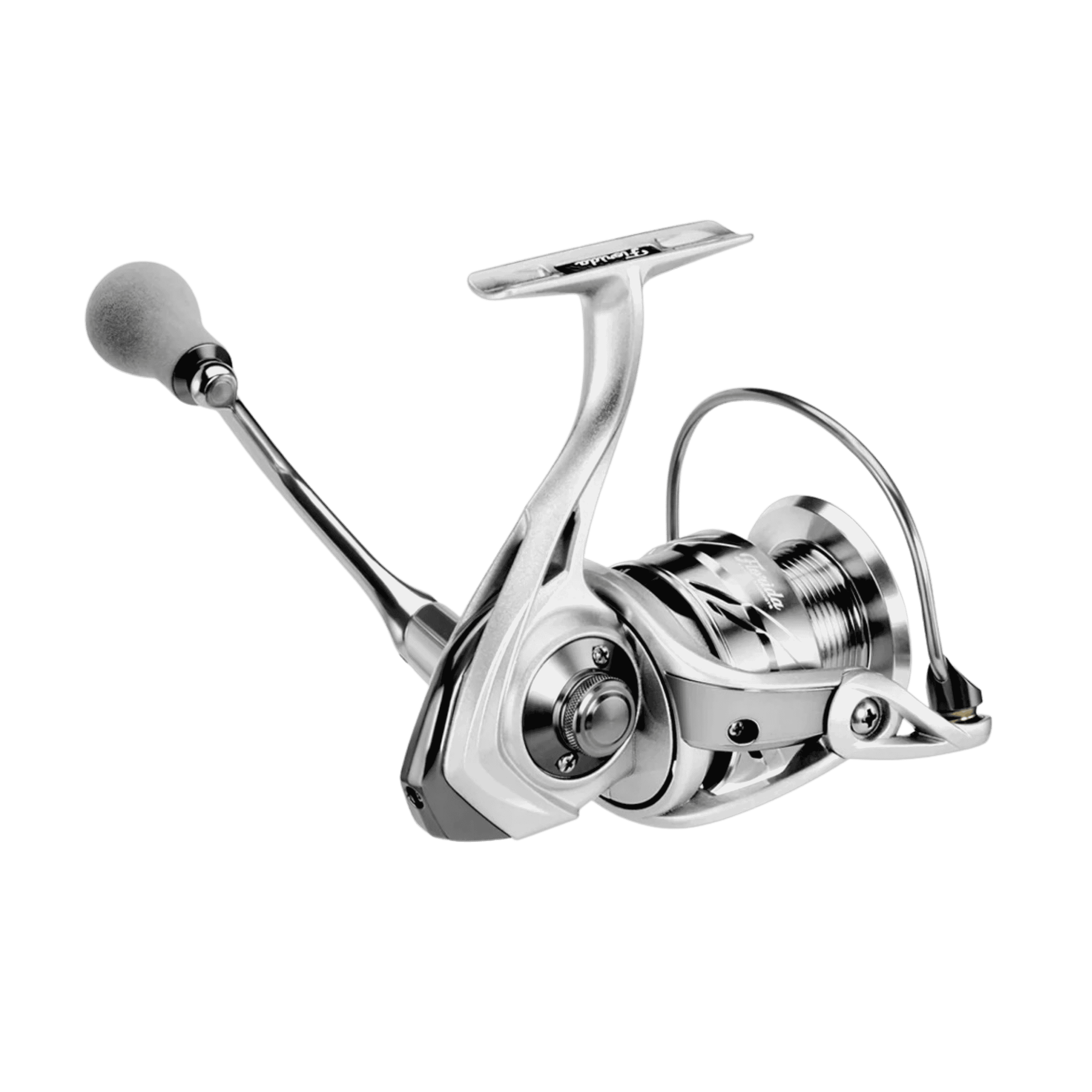
Shakey Head Reels




Shakey Head Line & Leaders
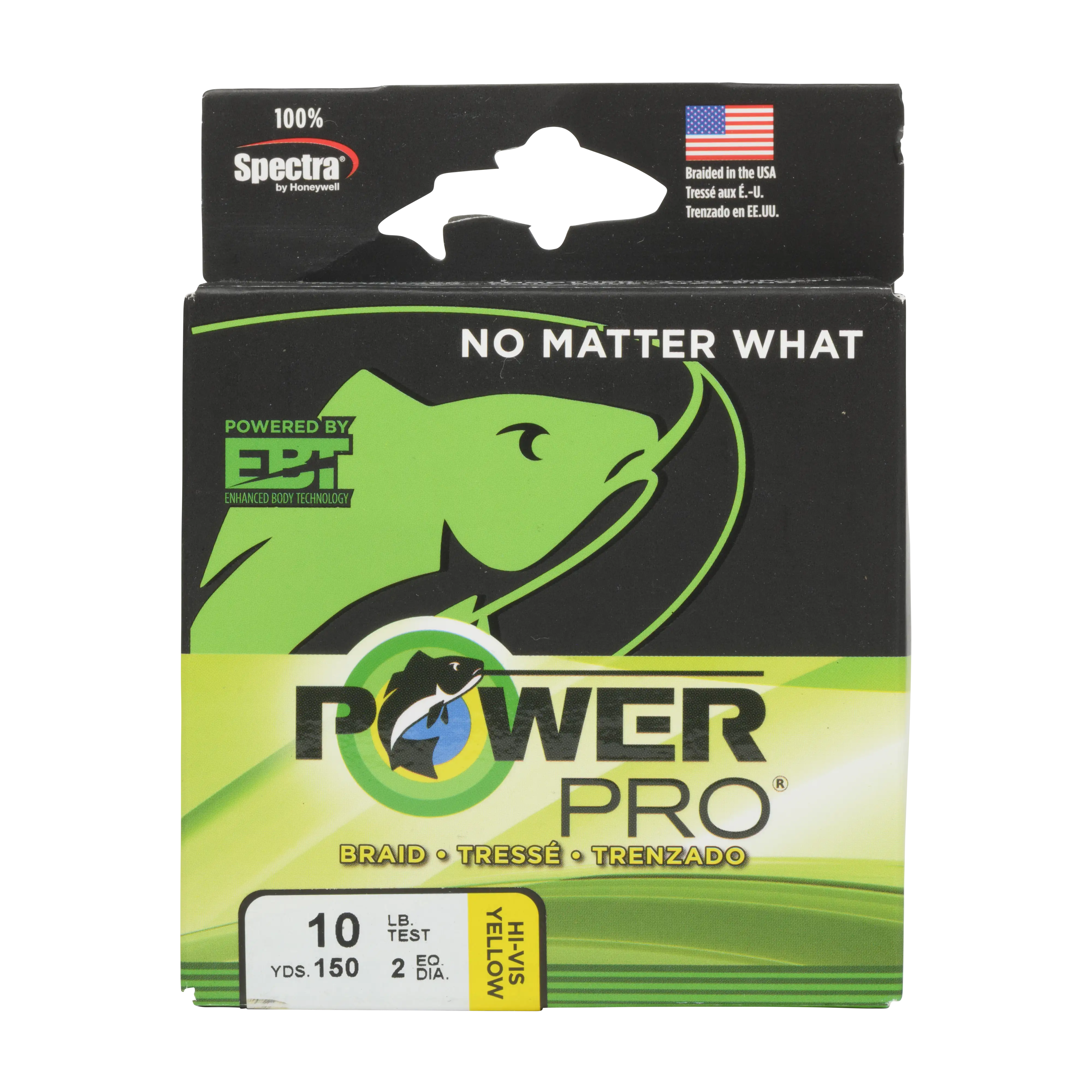
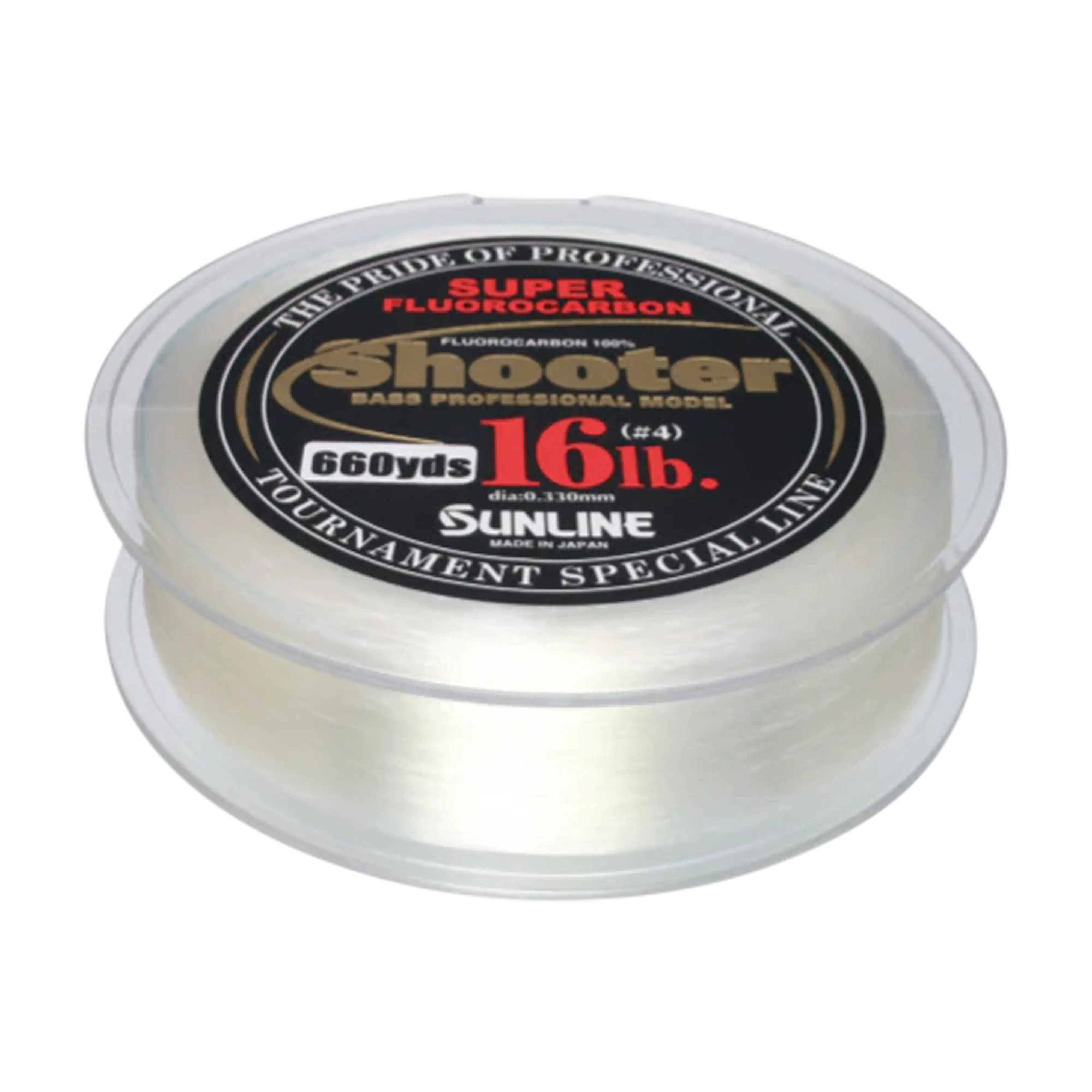
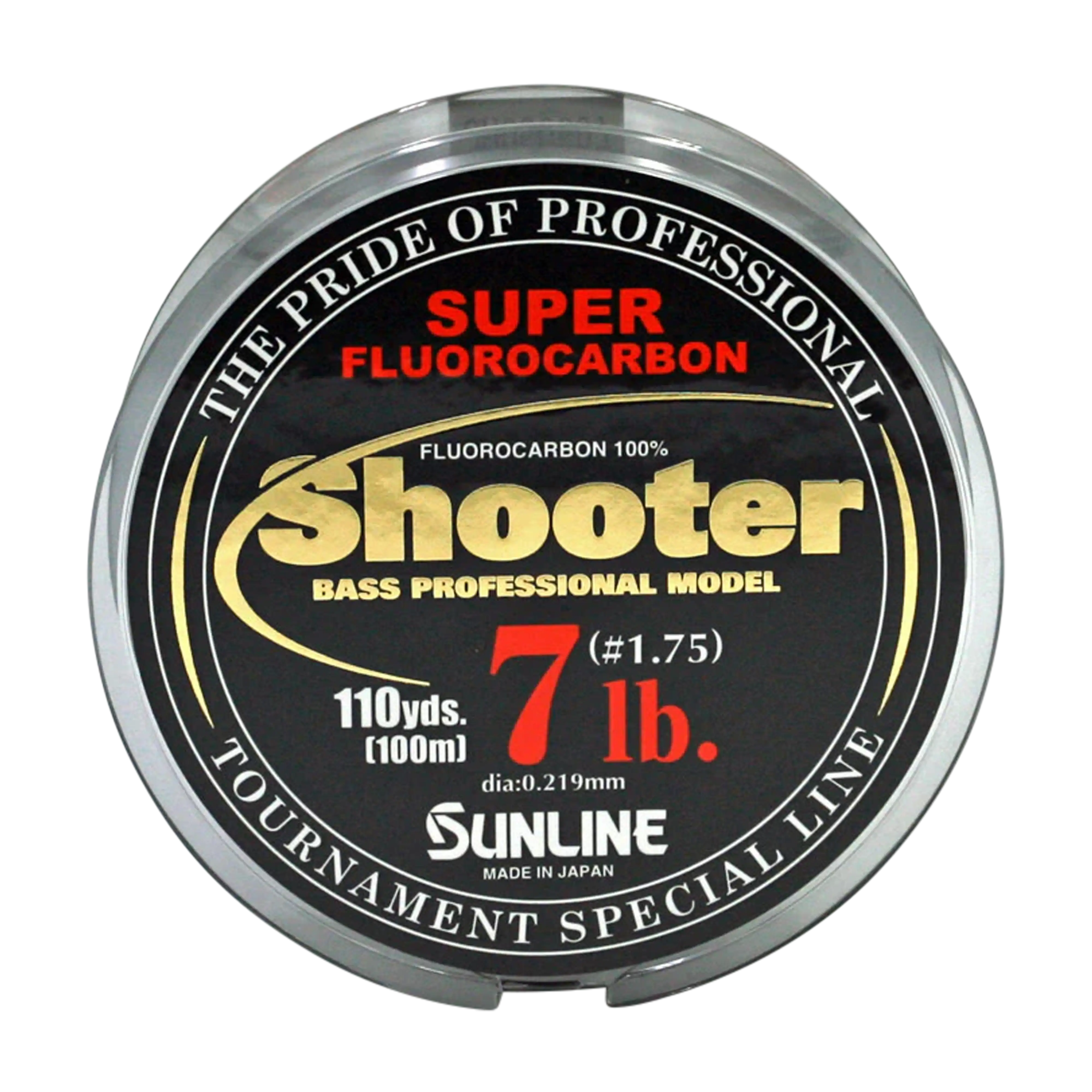
The right line and leader setup is crucial for getting the most out of shakey head fishing. This technique relies on keeping the jig in constant contact with the bottom while letting the worm stand naturally, so the line must provide control, sensitivity, and smooth handling. A well-matched setup ensures precise jig manipulation, natural bait posture, and reliable hooksets on light rigs.
Braided Mainline
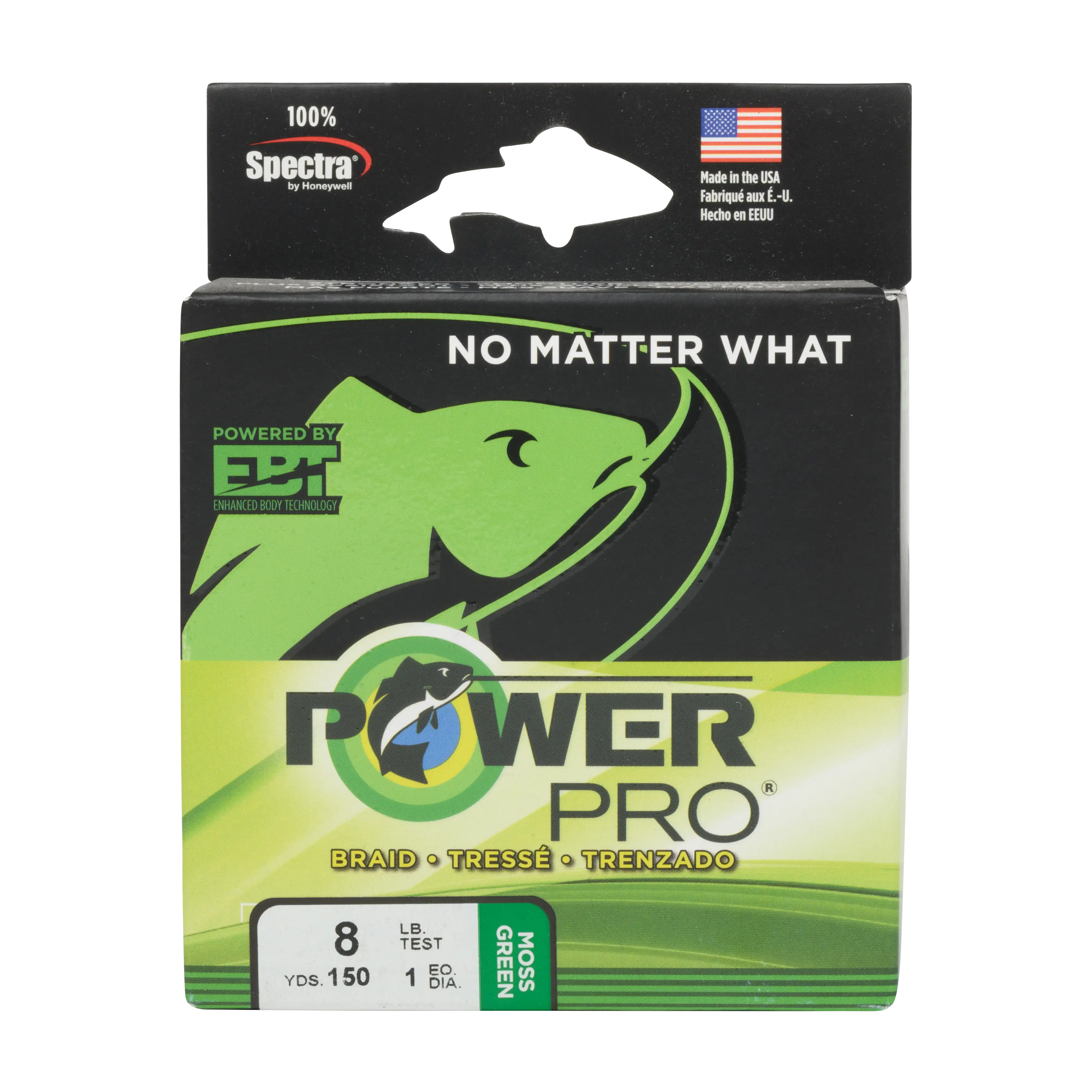
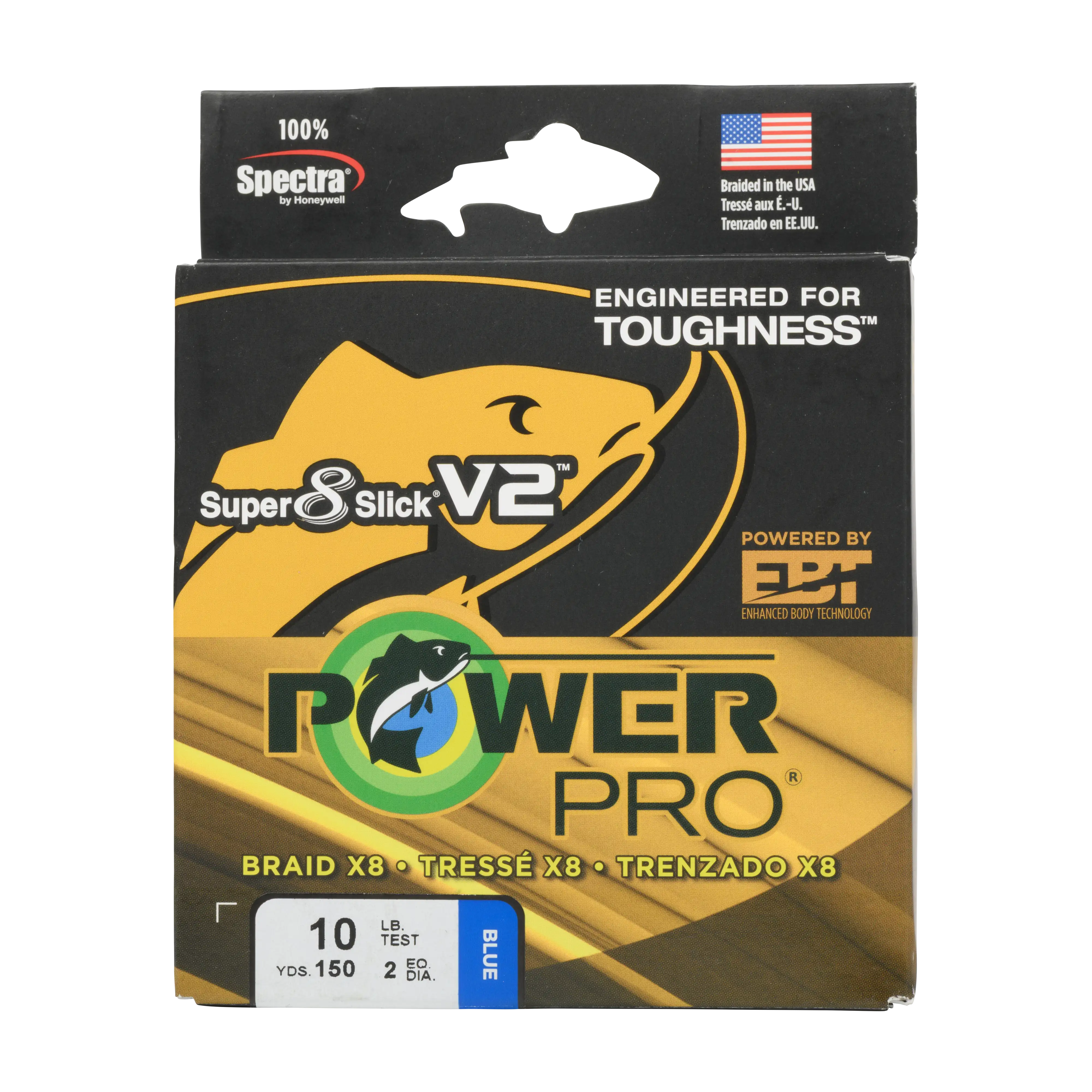
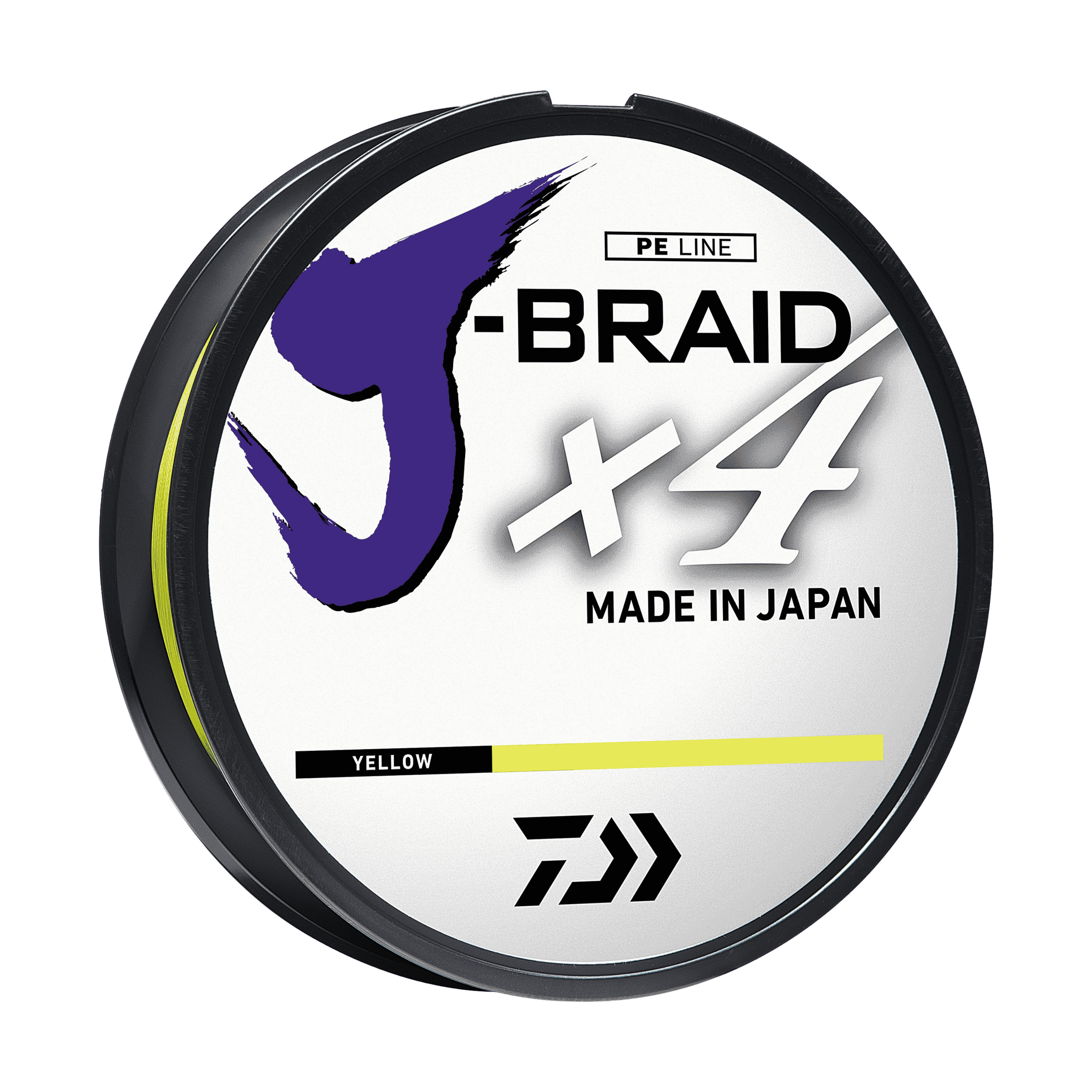
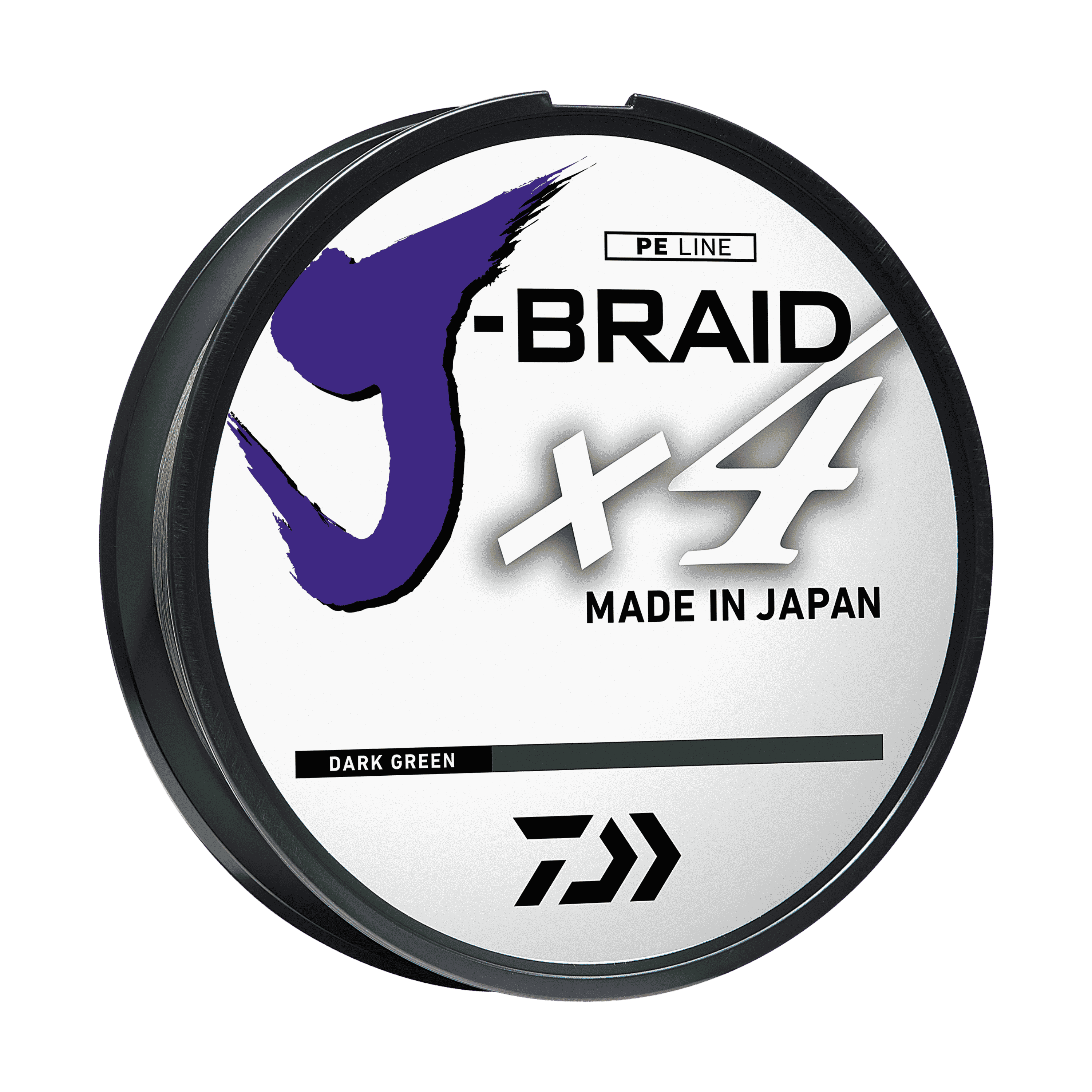
Many anglers choose braided line for shakey head rigs because it delivers consistent strength with almost no stretch. This allows the angler to maintain steady contact with the jig while performing subtle shakes or short drags. Braid also casts lightweight jigs easily and holds up well when fishing around rocks, wood, or brush without sacrificing control.
Recommended test: 10–15 lb braid
Fluorocarbon Mainline
Straight fluorocarbon is another option, especially in clear water or highly pressured fisheries. It is nearly invisible and transmits rod pressure directly to the jig, letting anglers feel the lightest taps. Fluorocarbon excels at stealth–keeping the bait discreet and maintaining natural bottom contact.
Recommended test: 6–10 lb fluorocarbon
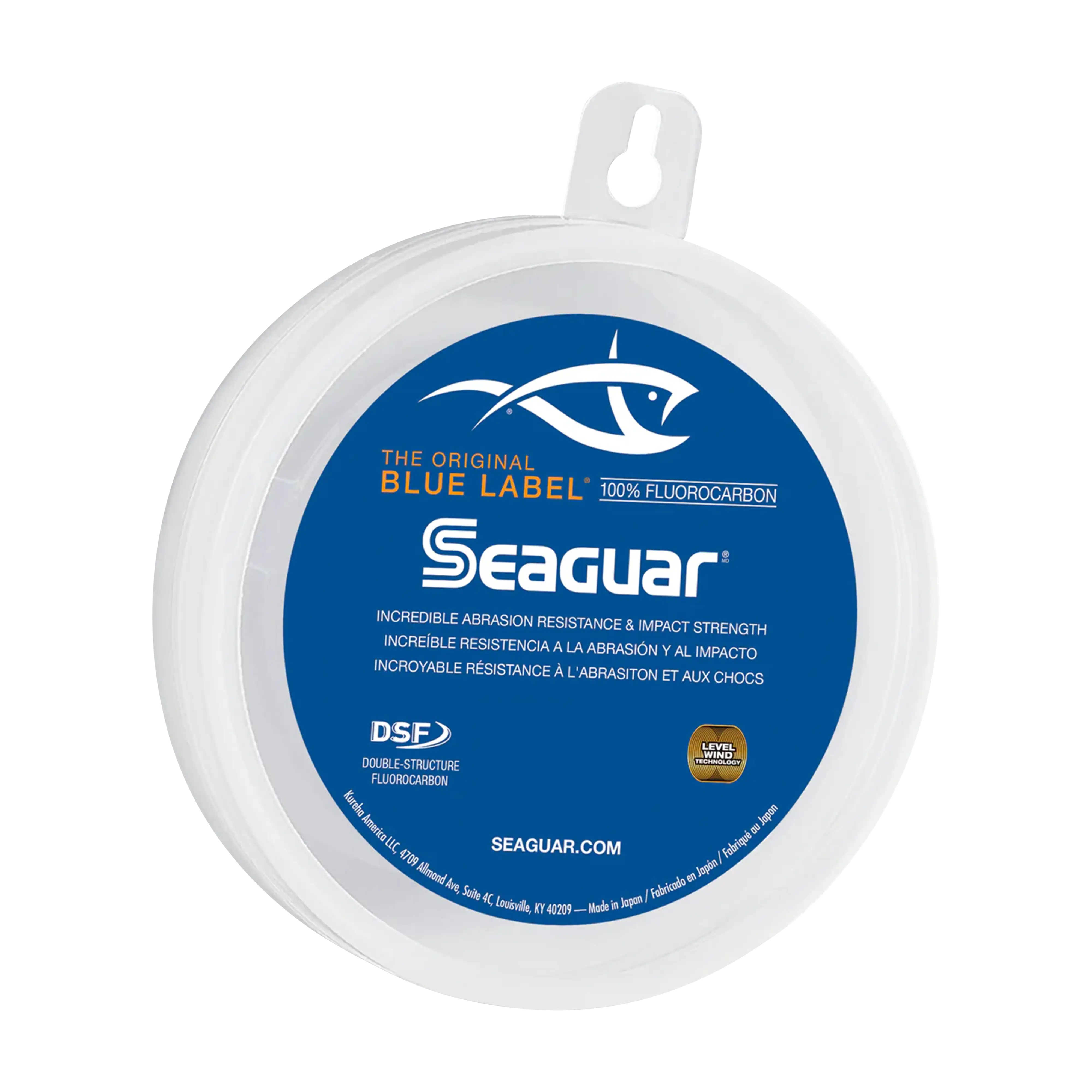
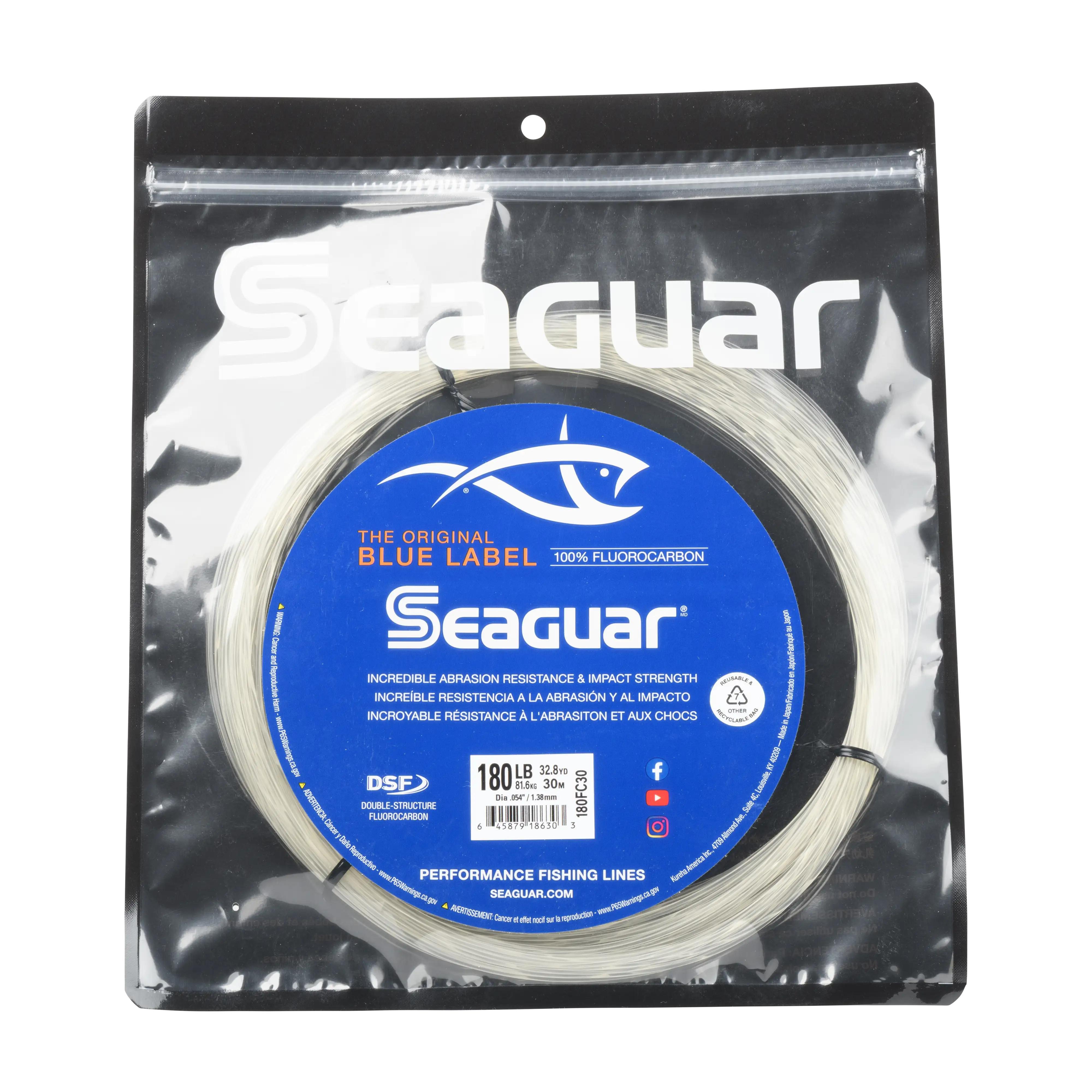
Fluorocarbon leader
A fluorocarbon leader paired with braid helps reduce visibility while allowing the jig and worm to move naturally. Leaders are usually slightly lighter than the mainline to prevent break-offs on snags while retaining control of the jig. Shorter leaders keep the worm tight to the bottom for bass feeding on structure, while longer leaders let the worm stand more naturally for cautious fish.
Recommended test: 8–12 lb fluorocarbon
Key Takeaways
- Braided mainline offers strong, low-stretch control for precise jig manipulation
- Fluorocarbon can serve as mainline or leader for near-invisible presentation
- Leader length affects worm posture and how close the bait stays to the bottom
- Thinner lines improve natural jig movement and detect subtle bites
Shakey Head Line & Leaders
The right line and leader setup is crucial for getting the most out of shakey head fishing. This technique relies on keeping the jig in constant contact with the bottom while letting the worm stand naturally, so the line must provide control, sensitivity, and smooth handling. A well-matched setup ensures precise jig manipulation, natural bait posture, and reliable hooksets on light rigs.
Braided Mainline
Many anglers choose braided line for shakey head rigs because it delivers consistent strength with almost no stretch. This allows the angler to maintain steady contact with the jig while performing subtle shakes or short drags. Braid also casts lightweight jigs easily and holds up well when fishing around rocks, wood, or brush without sacrificing control.
Recommended test: 10–15 lb braid
Fluorocarbon Mainline
Straight fluorocarbon is another option, especially in clear water or highly pressured fisheries. It is nearly invisible and transmits rod pressure directly to the jig, letting anglers feel the lightest taps. Fluorocarbon excels at stealth–keeping the bait discreet and maintaining natural bottom contact.
Recommended test: 6–10 lb fluorocarbon
Fluorocarbon leader
A fluorocarbon leader paired with braid helps reduce visibility while allowing the jig and worm to move naturally. Leaders are usually slightly lighter than the mainline to prevent break-offs on snags while retaining control of the jig. Shorter leaders keep the worm tight to the bottom for bass feeding on structure, while longer leaders let the worm stand more naturally for cautious fish.
Recommended test: 8–12 lb fluorocarbon
Key Takeaways
- Braided mainline offers strong, low-stretch control for precise jig manipulation
- Fluorocarbon can serve as mainline or leader for near-invisible presentation
- Leader length affects worm posture and how close the bait stays to the bottom
- Thinner lines improve natural jig movement and detect subtle bites
Shakey Head Line & Leaders


Shakey Head Baits
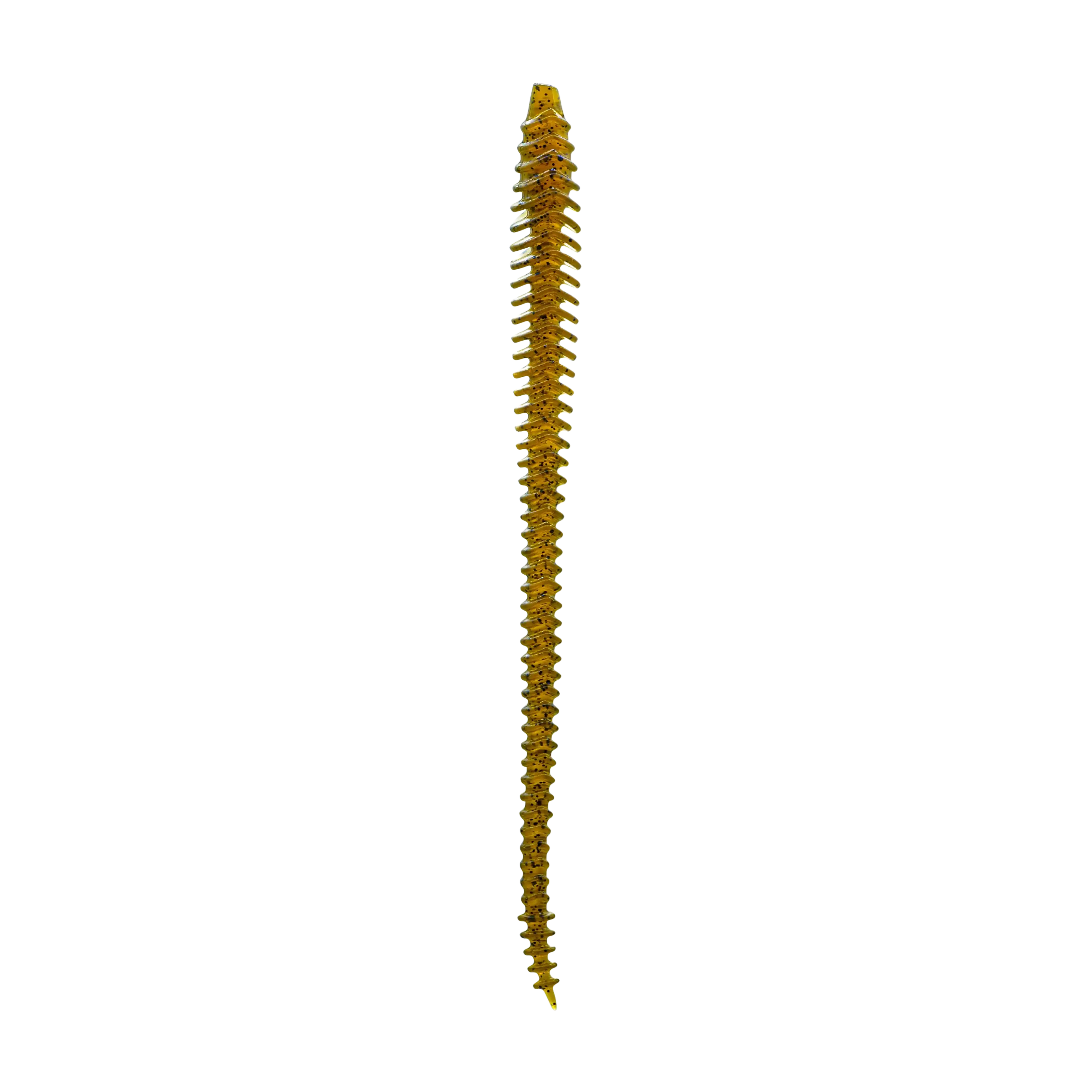
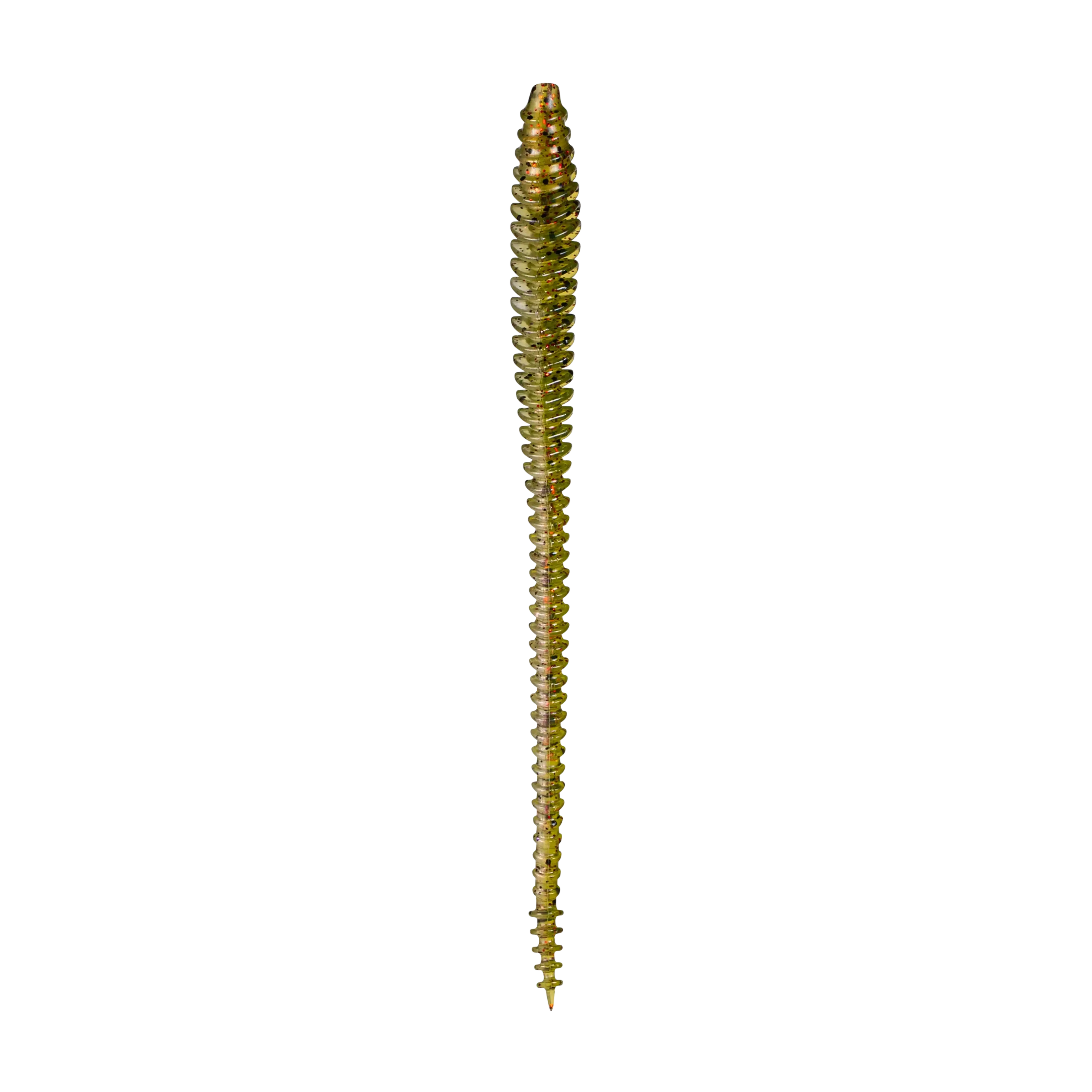
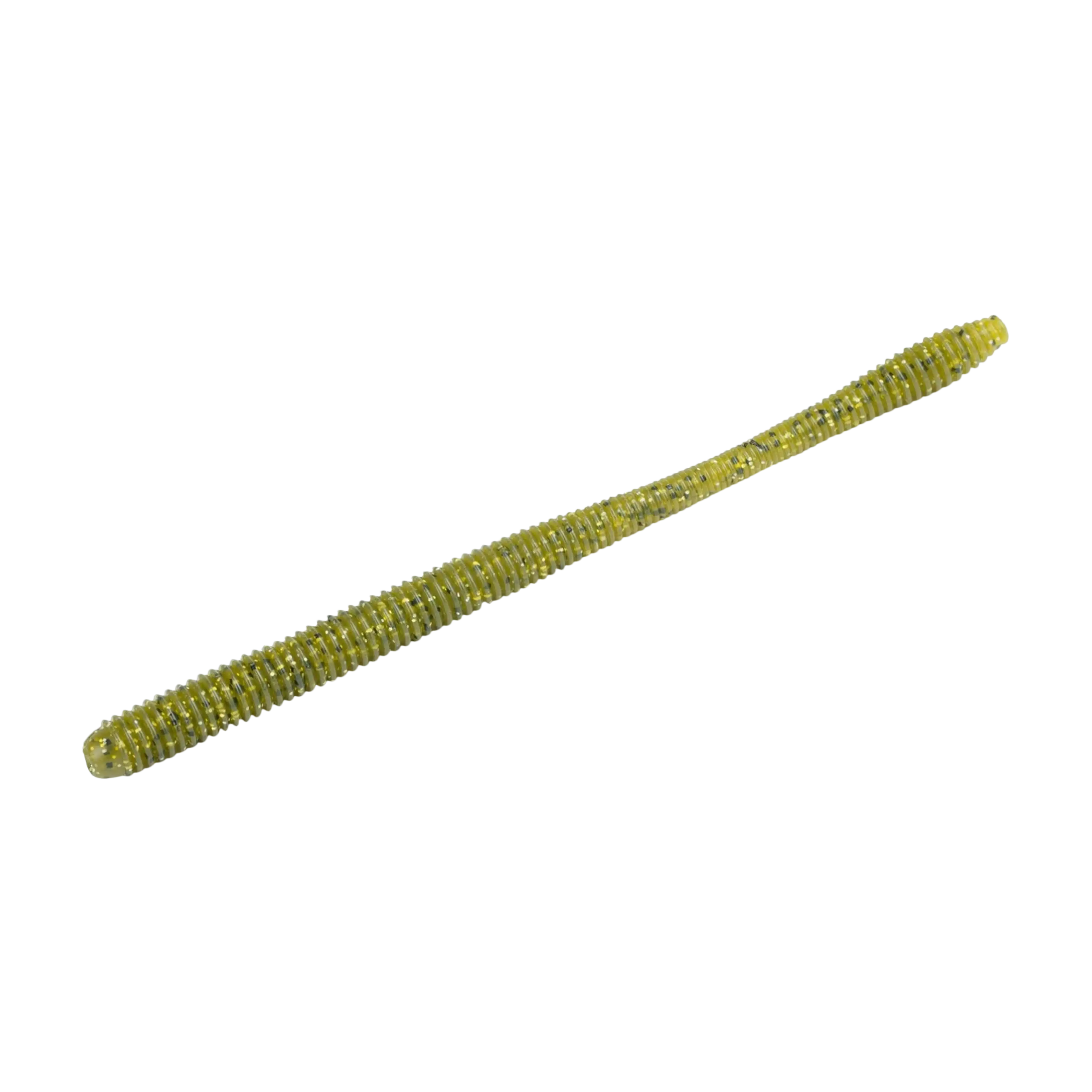
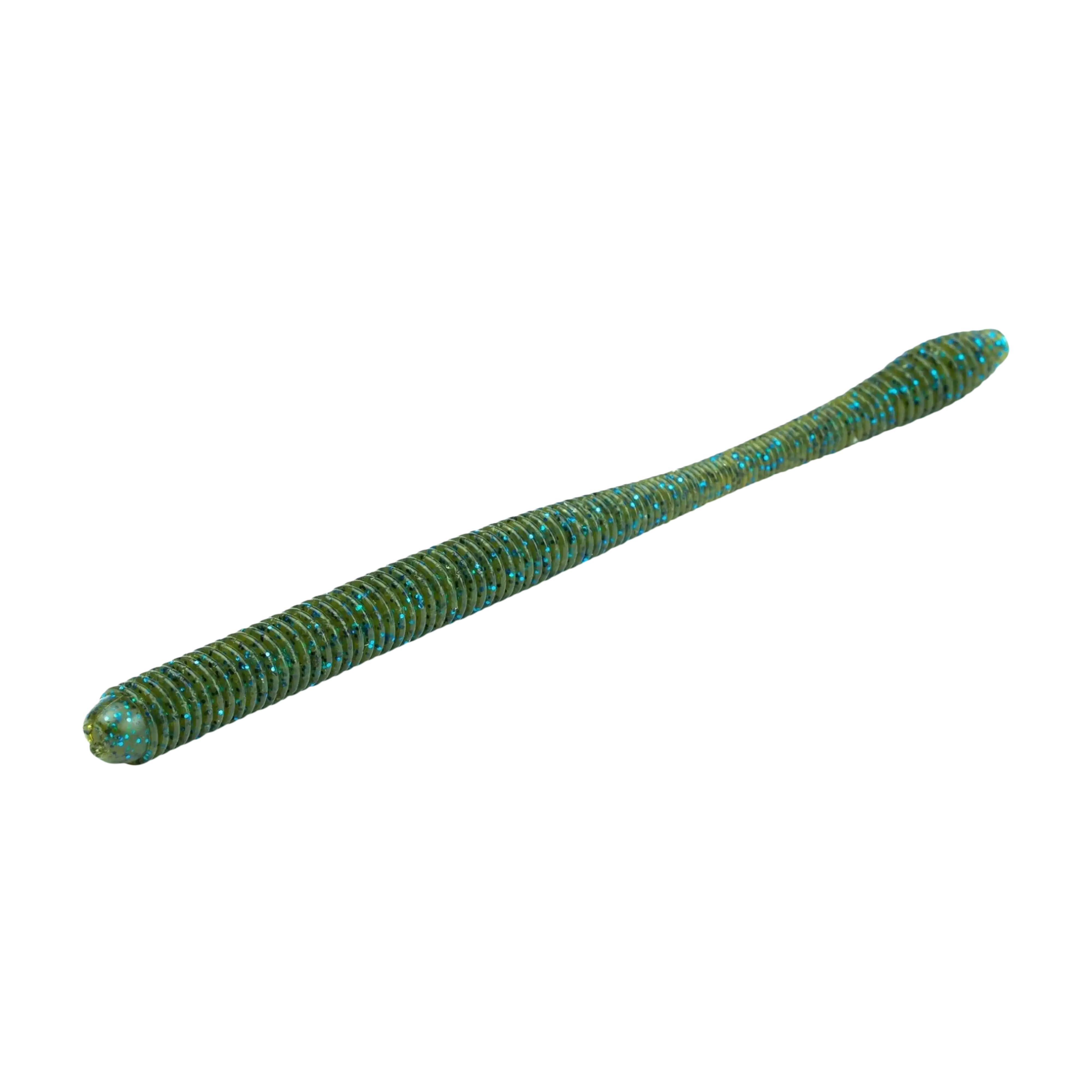
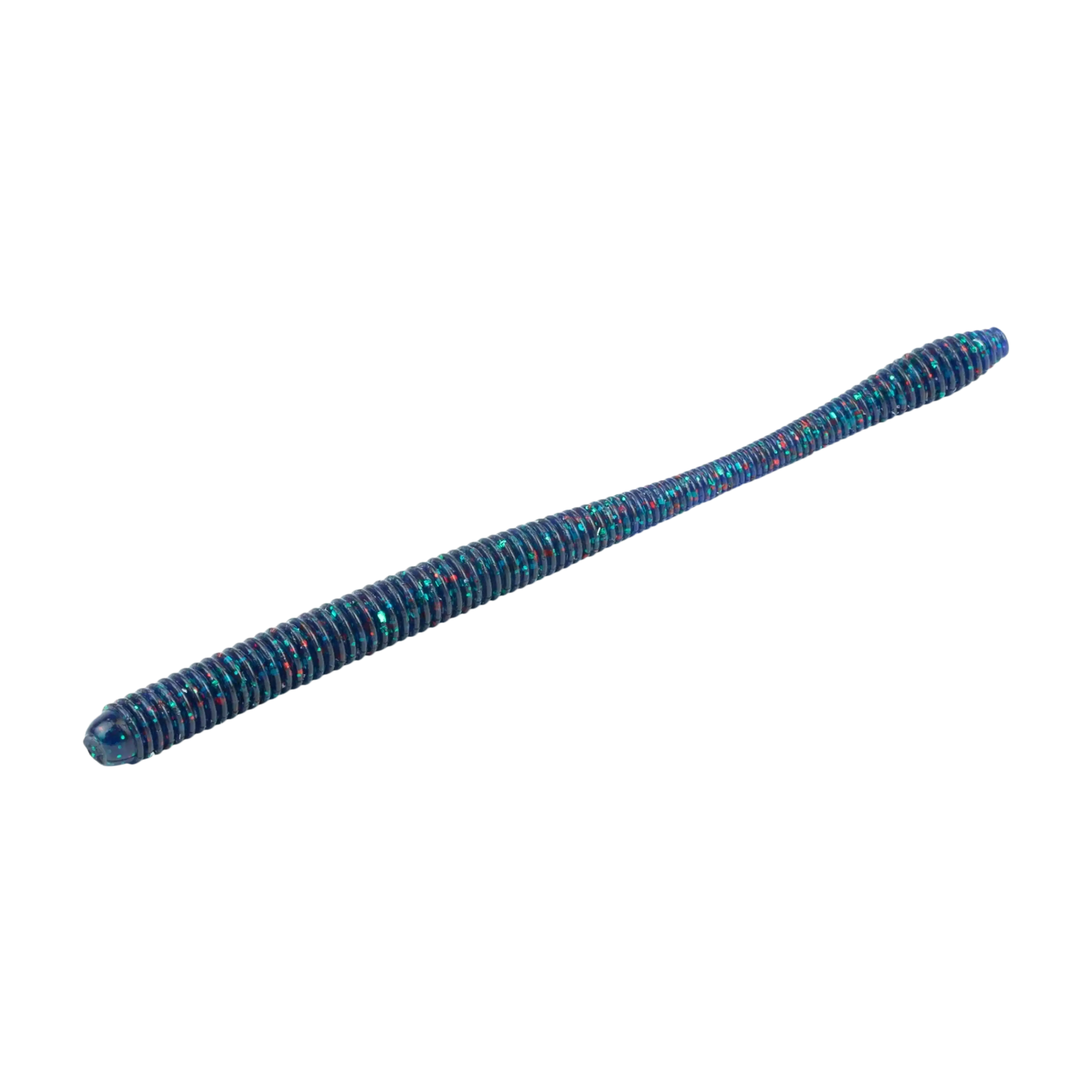
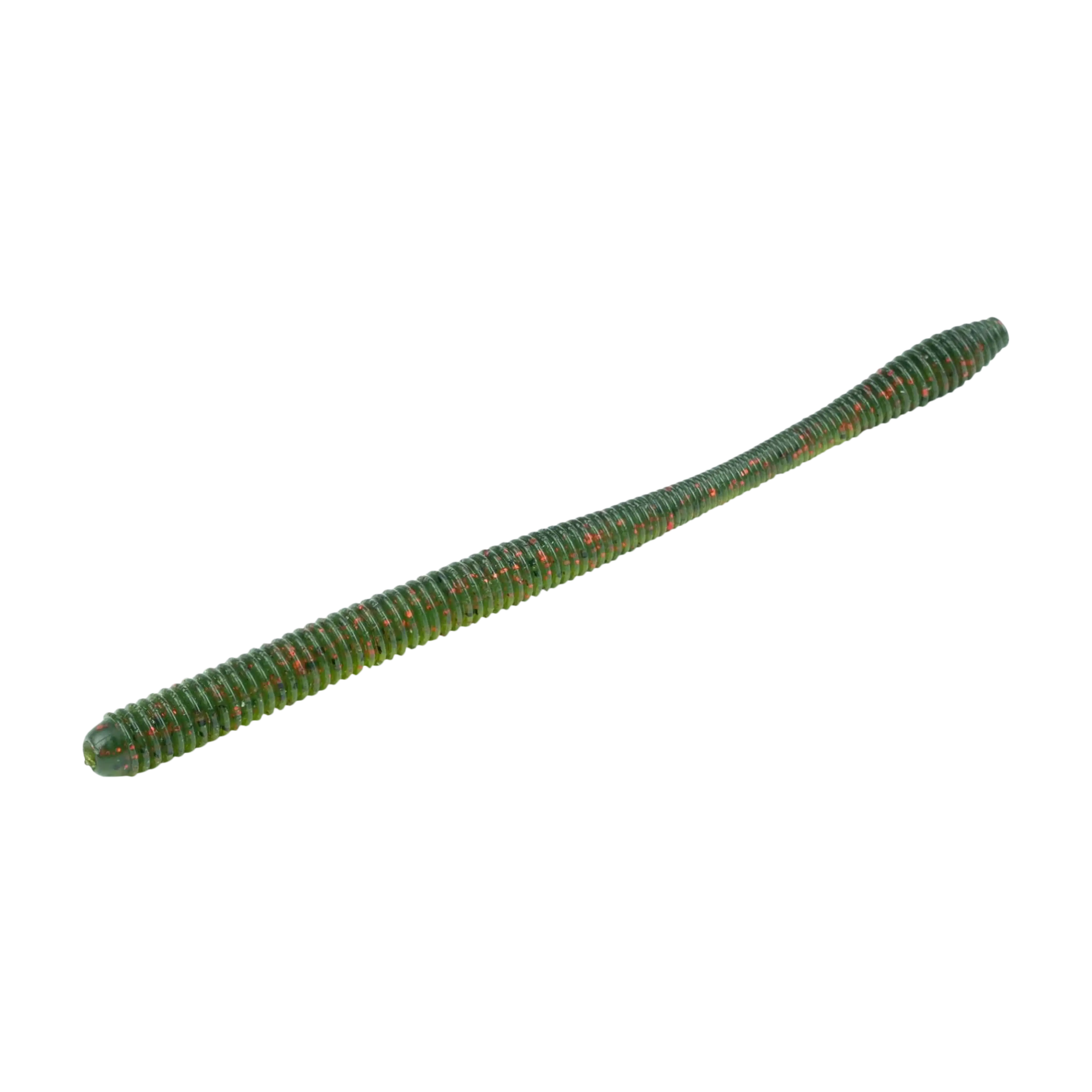
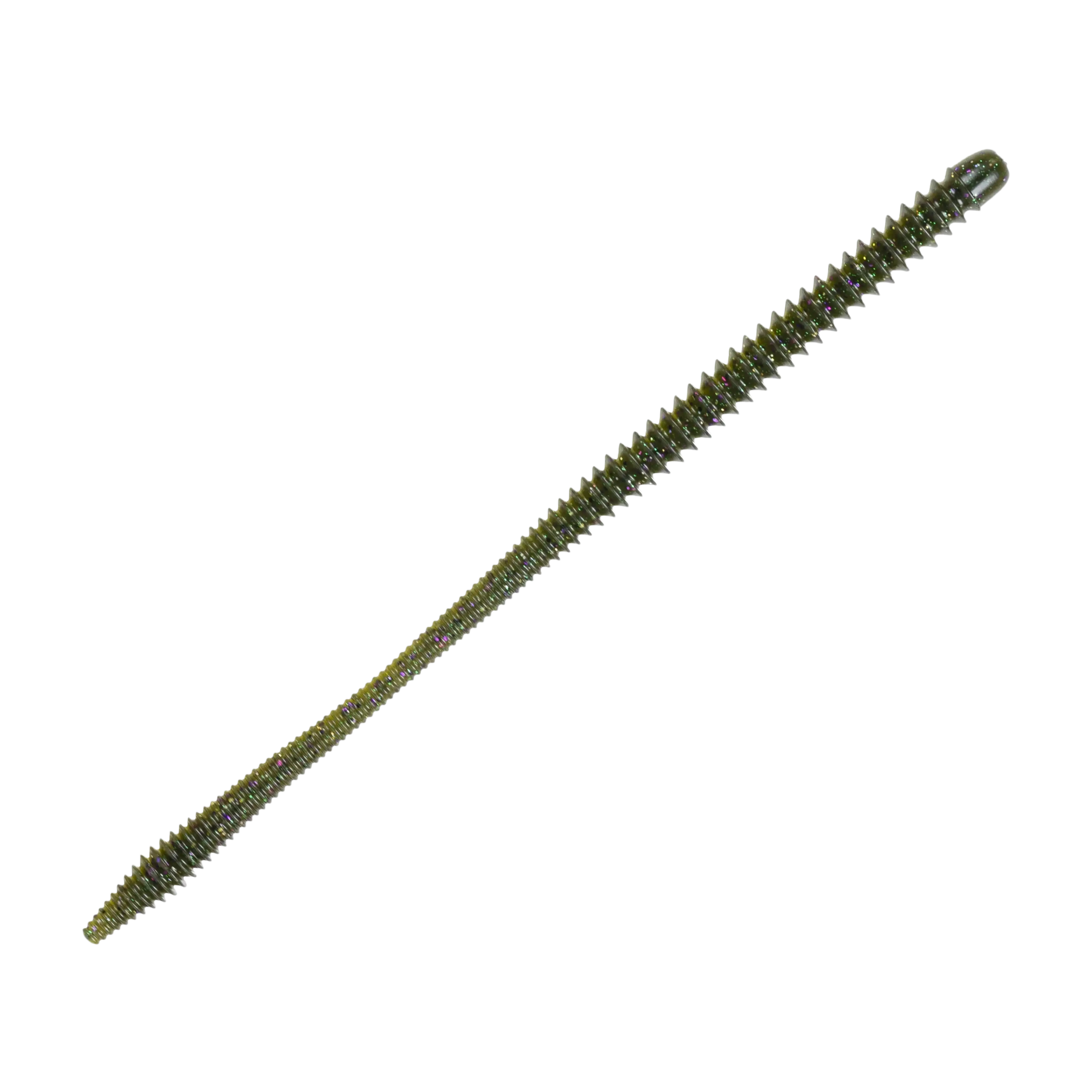
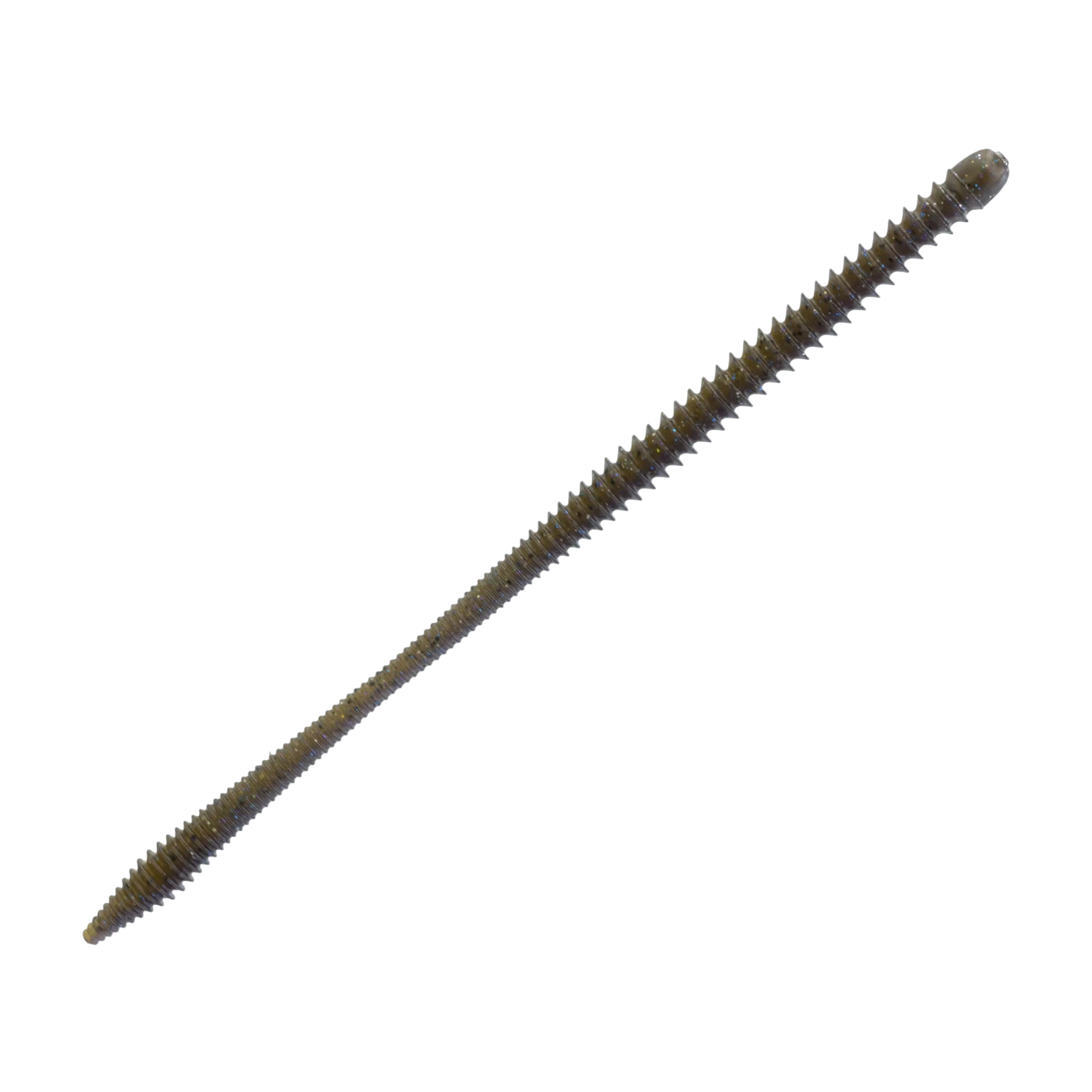
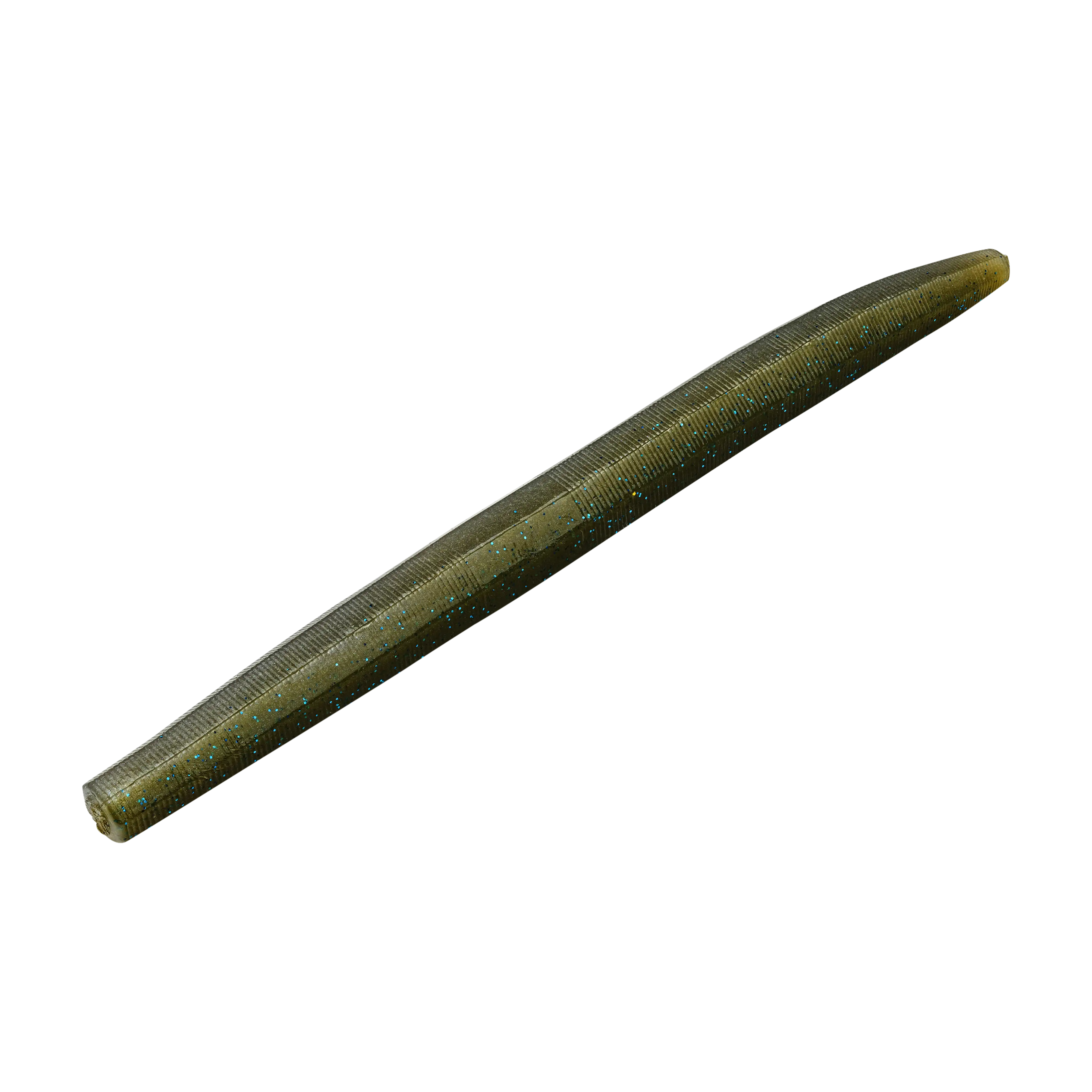
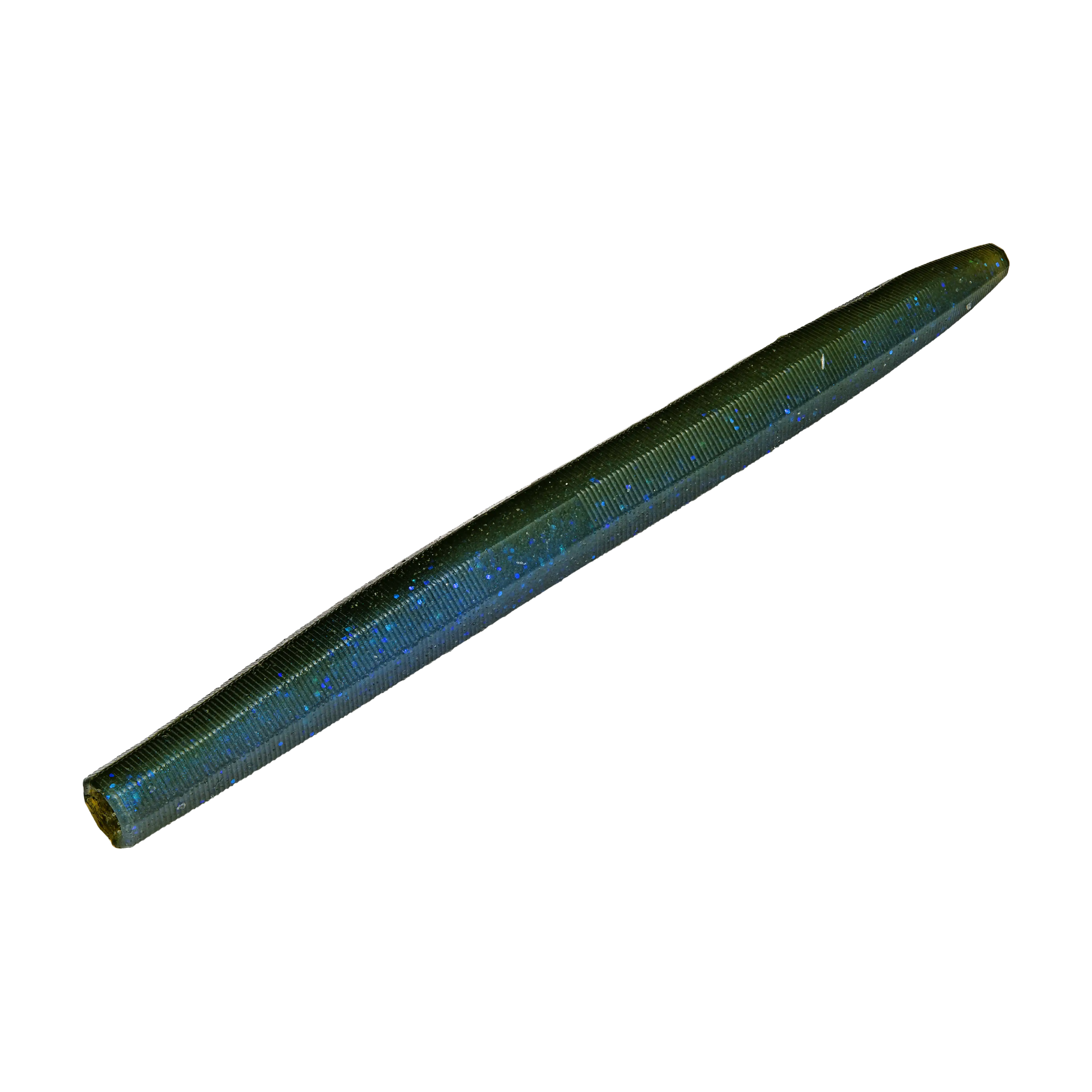
Selecting the right soft plastic is an important part of building an effective shakey head setup. This technique relies on the worm standing naturally on the jig head and responding to small rod movements while maintaining bottom contact. Slim soft plastics with simple shapes tend to perform best because they hold an upright posture and move subtly with minimal effort. By adjusting worm size and color, anglers can adapt to water clarity, fishing pressure, and depth while keeping the presentation simple and natural.
Size & Length
Most shakey head fishing is done with 4”–6” finesse worms, which provide the ideal balance of subtle movement and natural posture. These sizes pair well with lighter jig heads and allow the bait to stand upright while responding easily to small shakes or slow drags along the bottom.
Mid-size worms in the 6”–7” range add a slightly larger profile without changing the presentation, making them useful in deeper water or when fish are feeding more aggressively.
Larger shakey head worms in the 8”–9.5” range are commonly used when fishing deeper structure, offshore points, or areas holding larger bass. The longer body creates a more noticeable profile while still maintaining the upright posture that defines the shakey head technique.
Colors & Styles
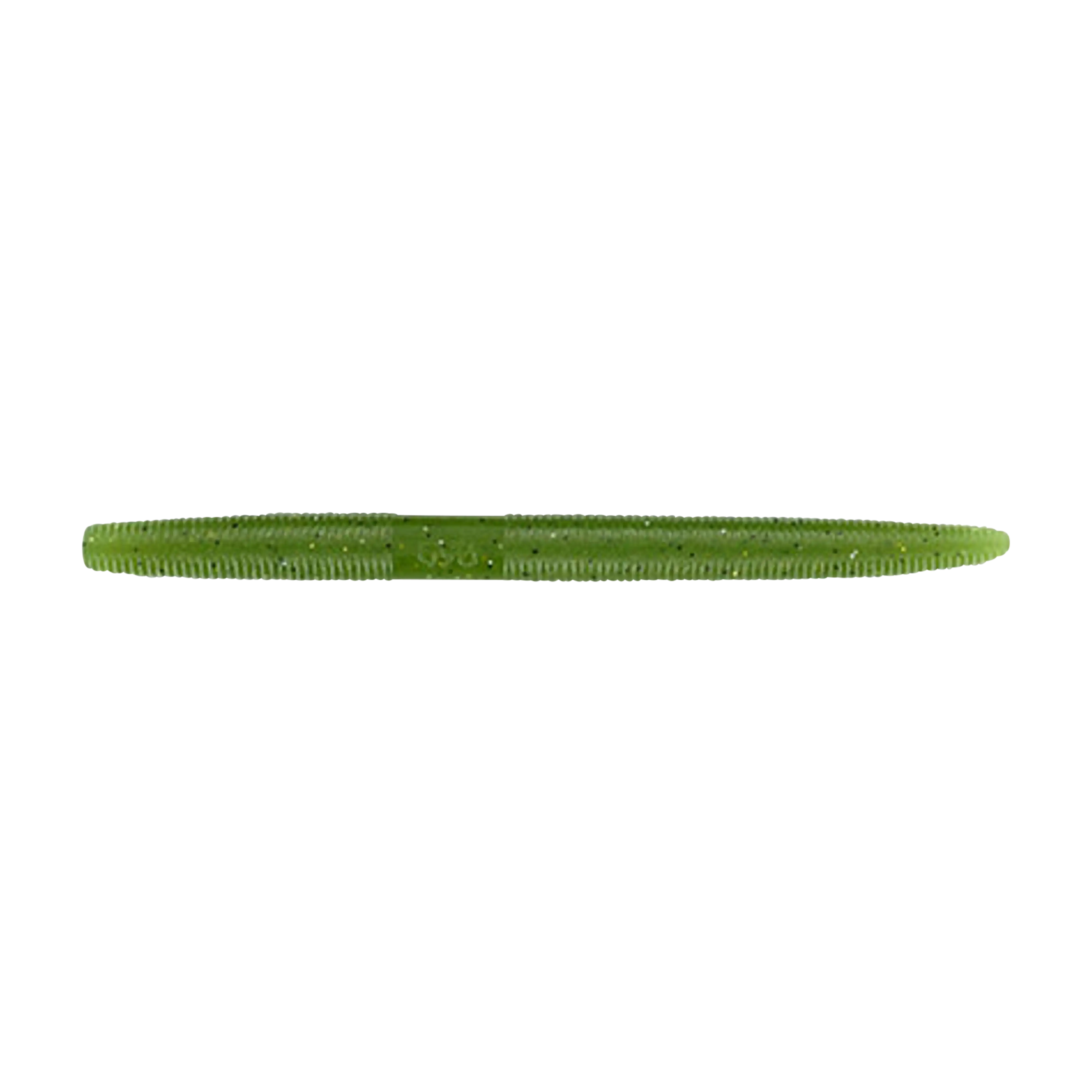
Natural, forage-based colors are the foundation of most shakey head presentations. Shades like green pumpkin, watermelon, and other earth tones consistently perform because they resemble common prey and remain effective in clear water conditions.
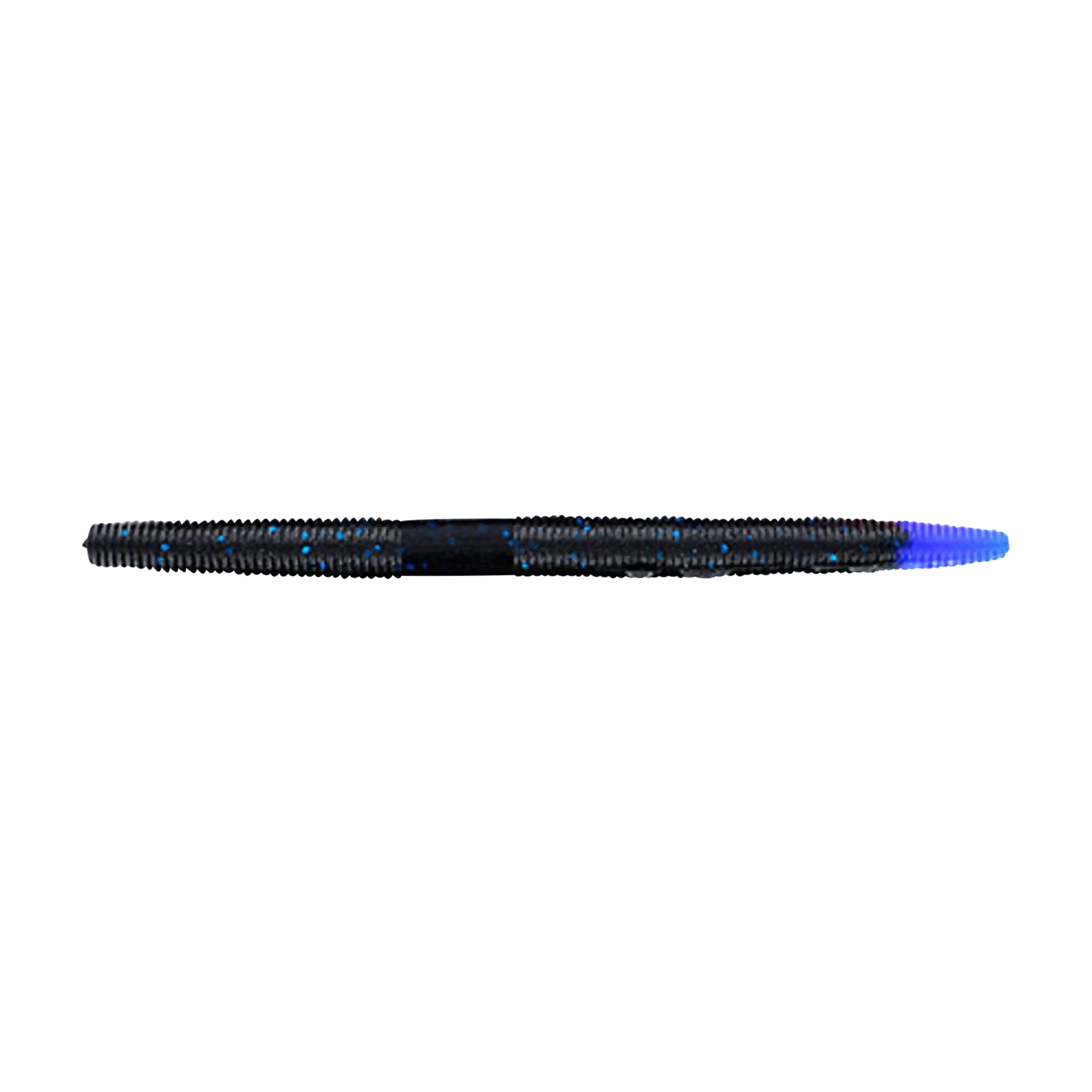
In stained water or low light, slightly darker or higher-contrast colors can help fish locate the bait more easily. Colors such as black, black/blue, junebug, plum, or darker green pumpkin variations create stronger silhouettes without changing the natural presentation.
Simple worm profiles—especially straight-tail finesse worms—generally outperform bulky or heavily appendaged soft plastics because they maintain a clean posture on the jig head and react naturally to subtle rod movements.
Keeping a small selection of natural and darker colors allows anglers to adjust quickly to changing water clarity without overcomplicating bait choice.
Baits by Application
Finesse Shakey Head
4”–5” finesse worms in natural colors such as green pumpkin, watermelon, or brown work best. Smaller worms stand upright easily on lighter jig heads and produce subtle movement that appeals to pressured fish in clear water or on heavily fished structure.
Weedless Shakey Head
5”–6” straight-tail worms offer a slightly larger profile while still moving cleanly through brush, grass, or wood. Natural colors remain reliable, though darker shades can help visibility when fishing thicker cover.
Deep Water Shakey Head
6”–7” worms are commonly used in deeper water because the added length creates a larger profile that fish can locate more easily. On deeper ledges or offshore structure, some anglers step up to 8”–9.5” worms to target larger bass while maintaining the same upright presentation.
Dock Shakey Head
4”–6” finesse worms work well around docks and vertical structure where accurate presentations and subtle movement are important. Natural colors like green pumpkin or watermelon remain the most consistent options in these typically clear or moderately clear environments.
Key Takeaways
- Straight-tail finesse worms are the most consistent soft plastics for shakey head fishing
- 4”–6” worms cover most situations; 6”–7” sizes add profile, while 8”–9.5” worms target deeper water or larger fish
- Slim, simple worm shapes stand upright and respond best to subtle rod movements
- Natural colors like green pumpkin and watermelon are reliable across most conditions
Shakey Head Baits
Selecting the right soft plastic is an important part of building an effective shakey head setup. This technique relies on the worm standing naturally on the jig head and responding to small rod movements while maintaining bottom contact. Slim soft plastics with simple shapes tend to perform best because they hold an upright posture and move subtly with minimal effort. By adjusting worm size and color, anglers can adapt to water clarity, fishing pressure, and depth while keeping the presentation simple and natural.
Size & Length
Most shakey head fishing is done with 4”–6” finesse worms, which provide the ideal balance of subtle movement and natural posture. These sizes pair well with lighter jig heads and allow the bait to stand upright while responding easily to small shakes or slow drags along the bottom.
Mid-size worms in the 6”–7” range add a slightly larger profile without changing the presentation, making them useful in deeper water or when fish are feeding more aggressively.
Larger shakey head worms in the 8”–9.5” range are commonly used when fishing deeper structure, offshore points, or areas holding larger bass. The longer body creates a more noticeable profile while still maintaining the upright posture that defines the shakey head technique.
Colors & Styles
Natural, forage-based colors are the foundation of most shakey head presentations. Shades like green pumpkin, watermelon, and other earth tones consistently perform because they resemble common prey and remain effective in clear water conditions.
In stained water or low light, slightly darker or higher-contrast colors can help fish locate the bait more easily. Colors such as black, black/blue, junebug, plum, or darker green pumpkin variations create stronger silhouettes without changing the natural presentation.
Simple worm profiles—especially straight-tail finesse worms—generally outperform bulky or heavily appendaged soft plastics because they maintain a clean posture on the jig head and react naturally to subtle rod movements.
Keeping a small selection of natural and darker colors allows anglers to adjust quickly to changing water clarity without overcomplicating bait choice.
Baits by Application
Finesse Shakey Head
4”–5” finesse worms in natural colors such as green pumpkin, watermelon, or brown work best. Smaller worms stand upright easily on lighter jig heads and produce subtle movement that appeals to pressured fish in clear water or on heavily fished structure.
Weedless Shakey Head
5”–6” straight-tail worms offer a slightly larger profile while still moving cleanly through brush, grass, or wood. Natural colors remain reliable, though darker shades can help visibility when fishing thicker cover.
Deep Water Shakey Head
6”–7” worms are commonly used in deeper water because the added length creates a larger profile that fish can locate more easily. On deeper ledges or offshore structure, some anglers step up to 8”–9.5” worms to target larger bass while maintaining the same upright presentation.
Dock Shakey Head
4”–6” finesse worms work well around docks and vertical structure where accurate presentations and subtle movement are important. Natural colors like green pumpkin or watermelon remain the most consistent options in these typically clear or moderately clear environments.
Key Takeaways
- Straight-tail finesse worms are the most consistent soft plastics for shakey head fishing
- 4”–6” worms cover most situations; 6”–7” sizes add profile, while 8”–9.5” worms target deeper water or larger fish
- Slim, simple worm shapes stand upright and respond best to subtle rod movements
- Natural colors like green pumpkin and watermelon are reliable across most conditions
Shakey Head Baits
Shakey Head Jigs
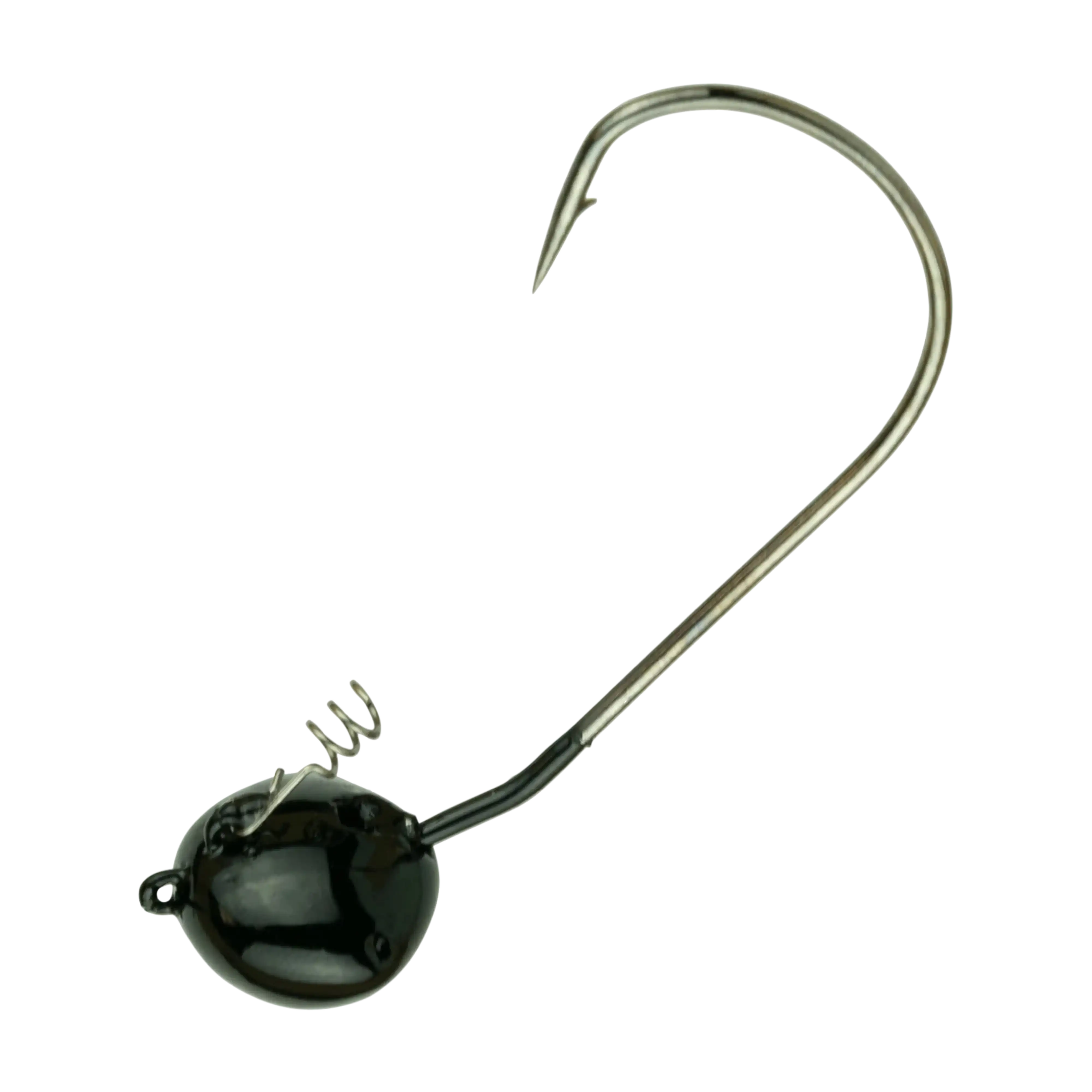
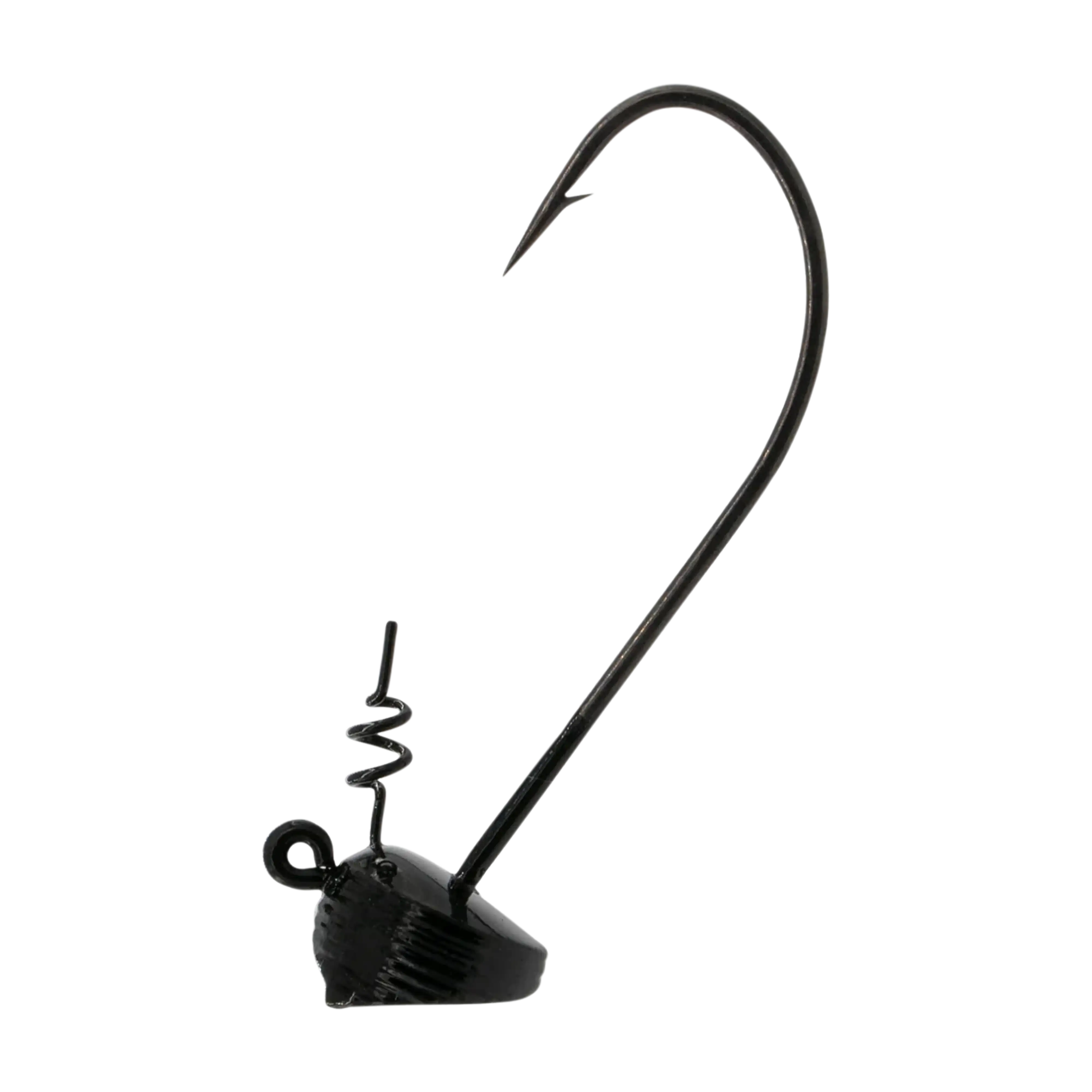
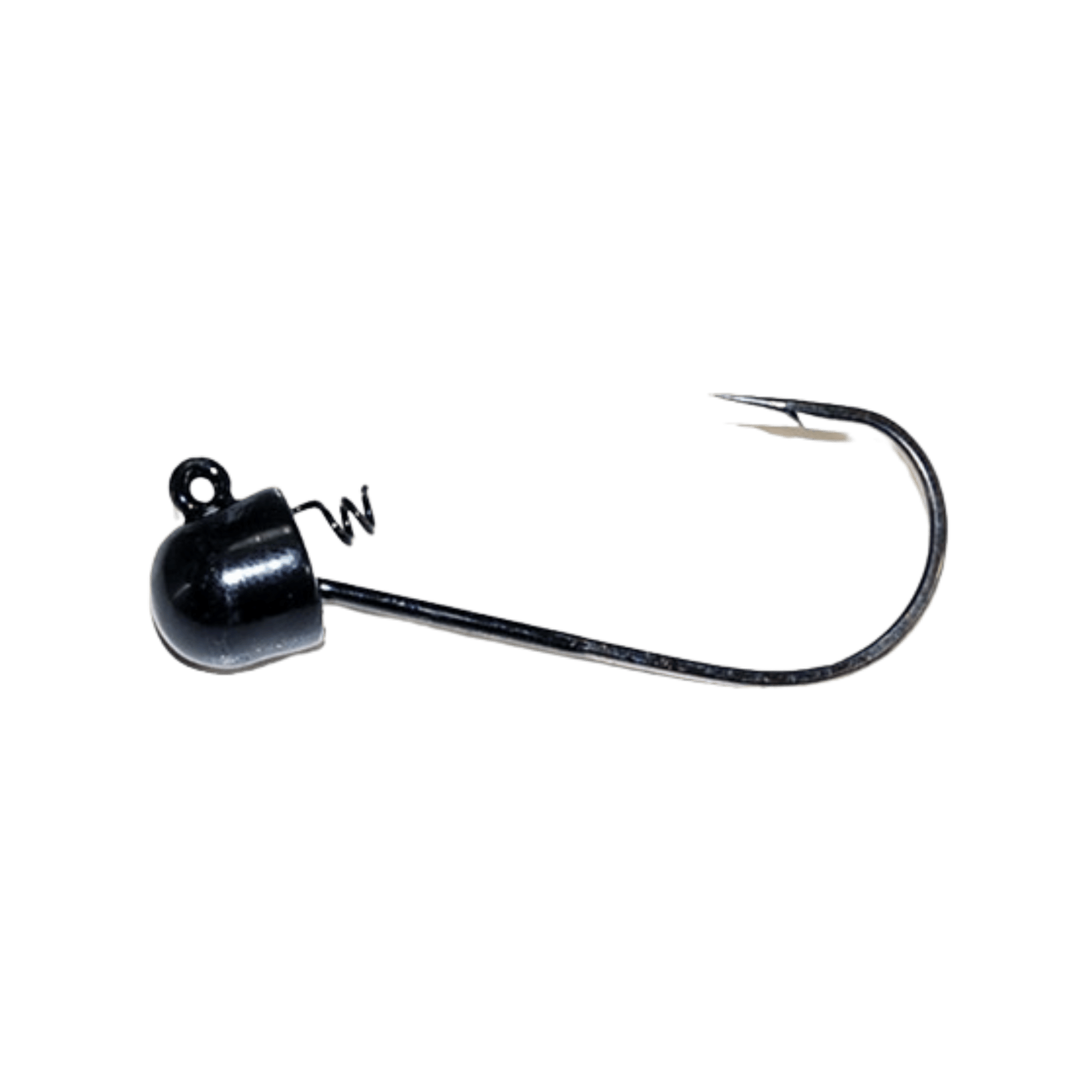
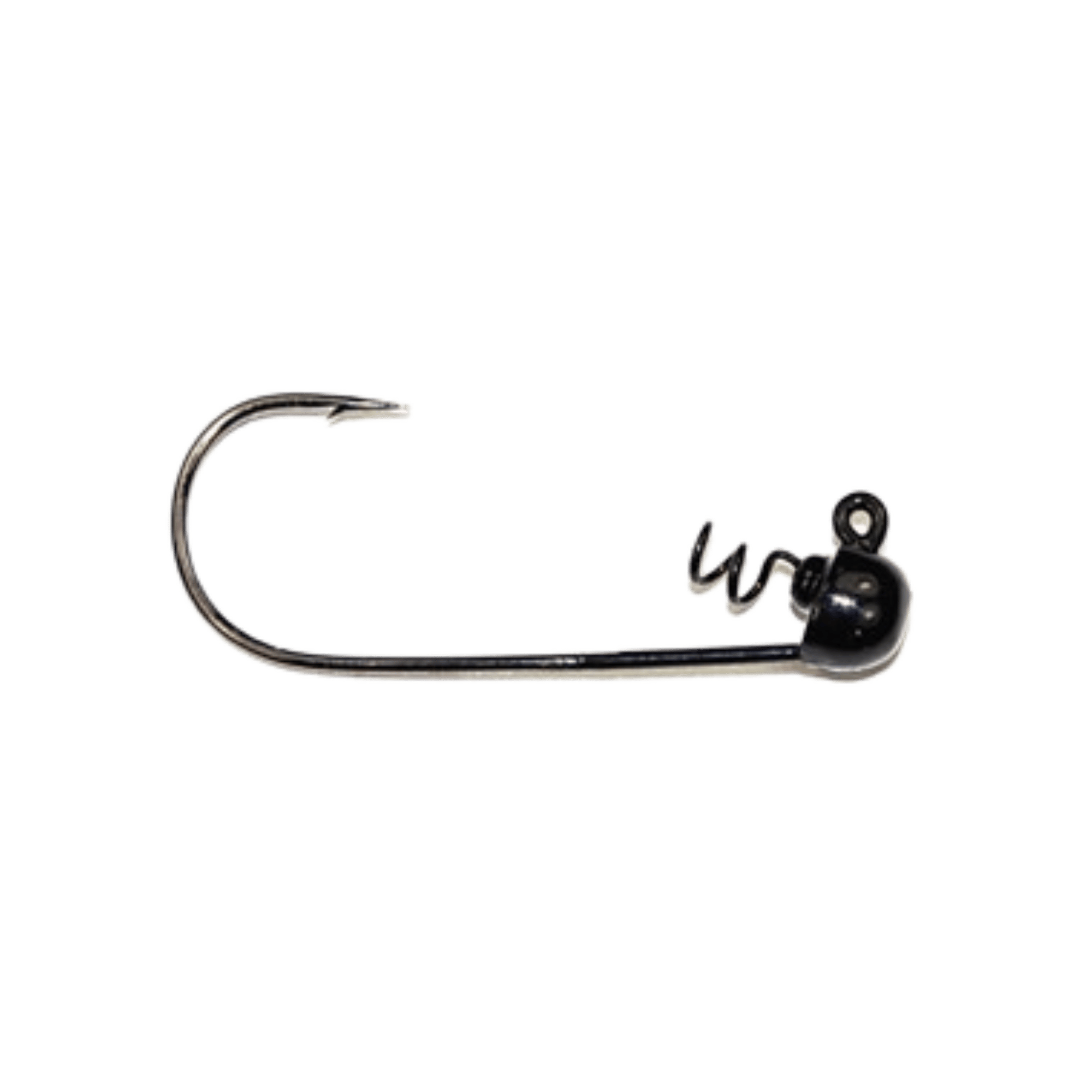
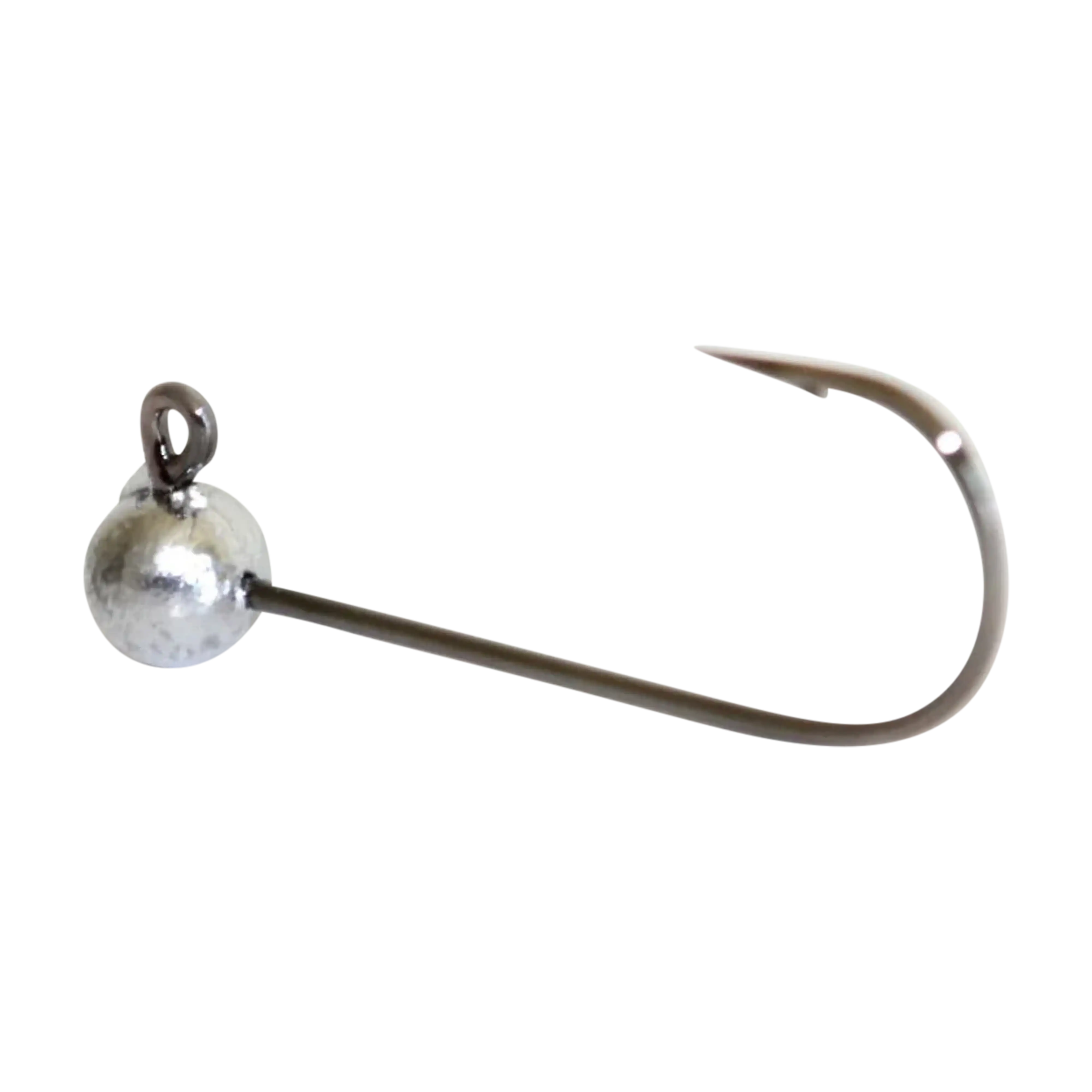
Selecting the right jig head is critical for shakey head fishing. The jig head determines how the worm stands, pivots, or drags along the bottom while also controlling weight, balance, and bottom contact. Using the correct jig head helps maintain a natural upright posture—or a slightly angled presentation depending on head design—improves hook-up reliability, and allows anglers to work the worm precisely around structure or across open bottom.
Choose jig heads with hook sizes and wire gauges that match your worm size and line setup. Lighter jig heads allow subtle presentations in shallow water or when fish are pressured, while heavier heads help maintain bottom contact when fishing deeper water, stronger current, or around heavier structure.
Many shakey head jig heads include practical features such as weed guards for snag protection and screw-lock or keeper systems that hold the worm firmly in place without tearing the plastic. Head design also matters—flat or angled heads help the worm stand upright, while balanced shapes allow the bait to pivot naturally when the line is lightly shaken.
Key Takeaways
- Jig heads control worm posture, bottom contact, and overall presentation
- Light jig heads are best for shallow water and finesse presentations
- Heavier heads help maintain bottom contact in deeper water or around structure
- Weed guards reduce snags; screw-lock or keeper systems secure the worm
- Head design should allow the worm to stand upright and pivot naturally
Shakey Head Jigs
Selecting the right jig head is critical for shakey head fishing. The jig head determines how the worm stands, pivots, or drags along the bottom while also controlling weight, balance, and bottom contact. Using the correct jig head helps maintain a natural upright posture—or a slightly angled presentation depending on head design—improves hook-up reliability, and allows anglers to work the worm precisely around structure or across open bottom.
Choose jig heads with hook sizes and wire gauges that match your worm size and line setup. Lighter jig heads allow subtle presentations in shallow water or when fish are pressured, while heavier heads help maintain bottom contact when fishing deeper water, stronger current, or around heavier structure.
Many shakey head jig heads include practical features such as weed guards for snag protection and screw-lock or keeper systems that hold the worm firmly in place without tearing the plastic. Head design also matters—flat or angled heads help the worm stand upright, while balanced shapes allow the bait to pivot naturally when the line is lightly shaken.
Key Takeaways
- Jig heads control worm posture, bottom contact, and overall presentation
- Light jig heads are best for shallow water and finesse presentations
- Heavier heads help maintain bottom contact in deeper water or around structure
- Weed guards reduce snags; screw-lock or keeper systems secure the worm
- Head design should allow the worm to stand upright and pivot naturally
Shakey Head Jigs



Shakey Head Tackle Storage
Neko rig setups rely on small, specialized components that are easy to misplace or damage if stored loosely. Jig heads, soft plastics, and terminal tackle each require different storage considerations, since every category has unique needs for protection and organization. Keeping these items properly separated improves efficiency, prevents damage, and makes on-the-water rigging faster and more consistent.
Tackle Boxes for Terminal Tackle
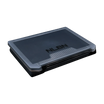
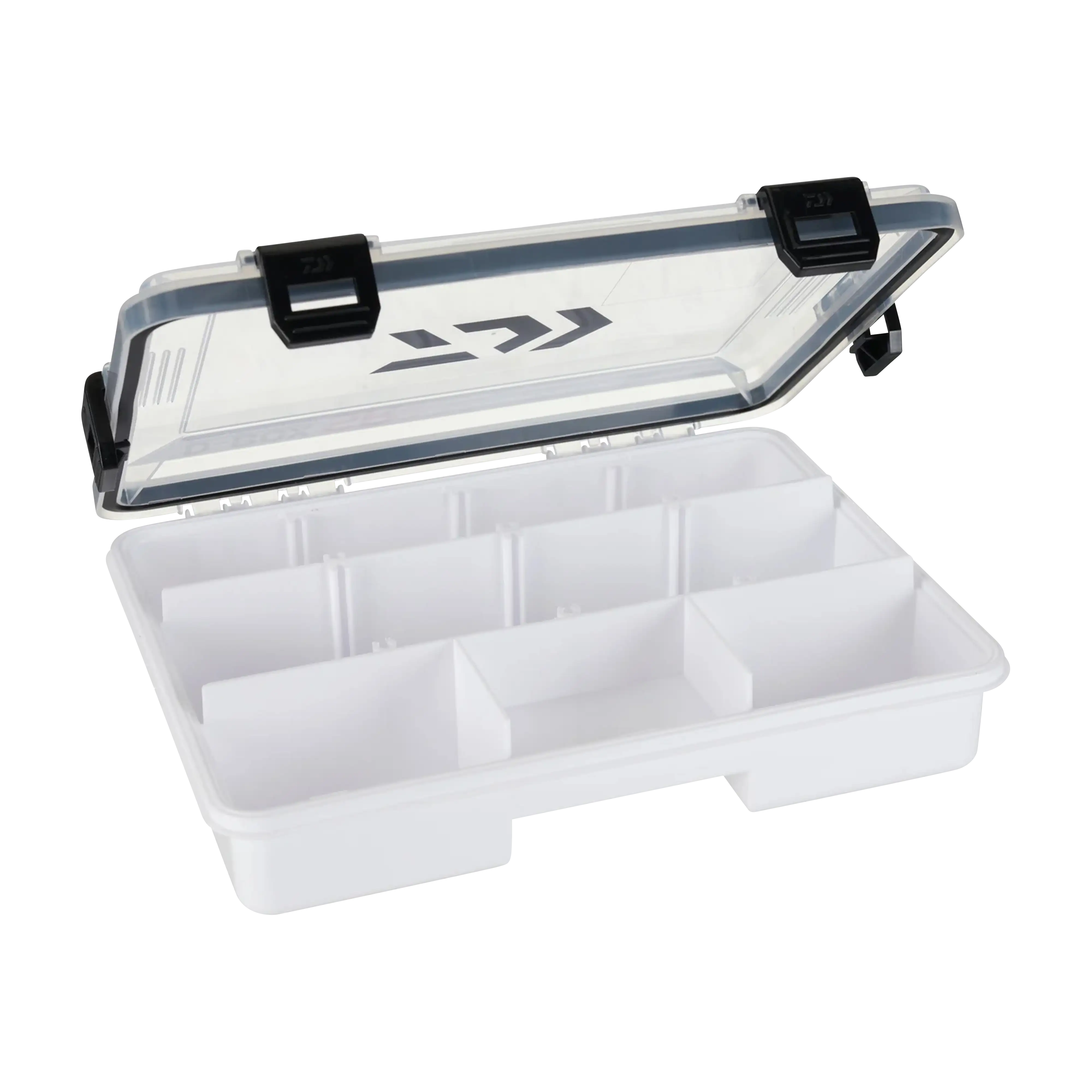
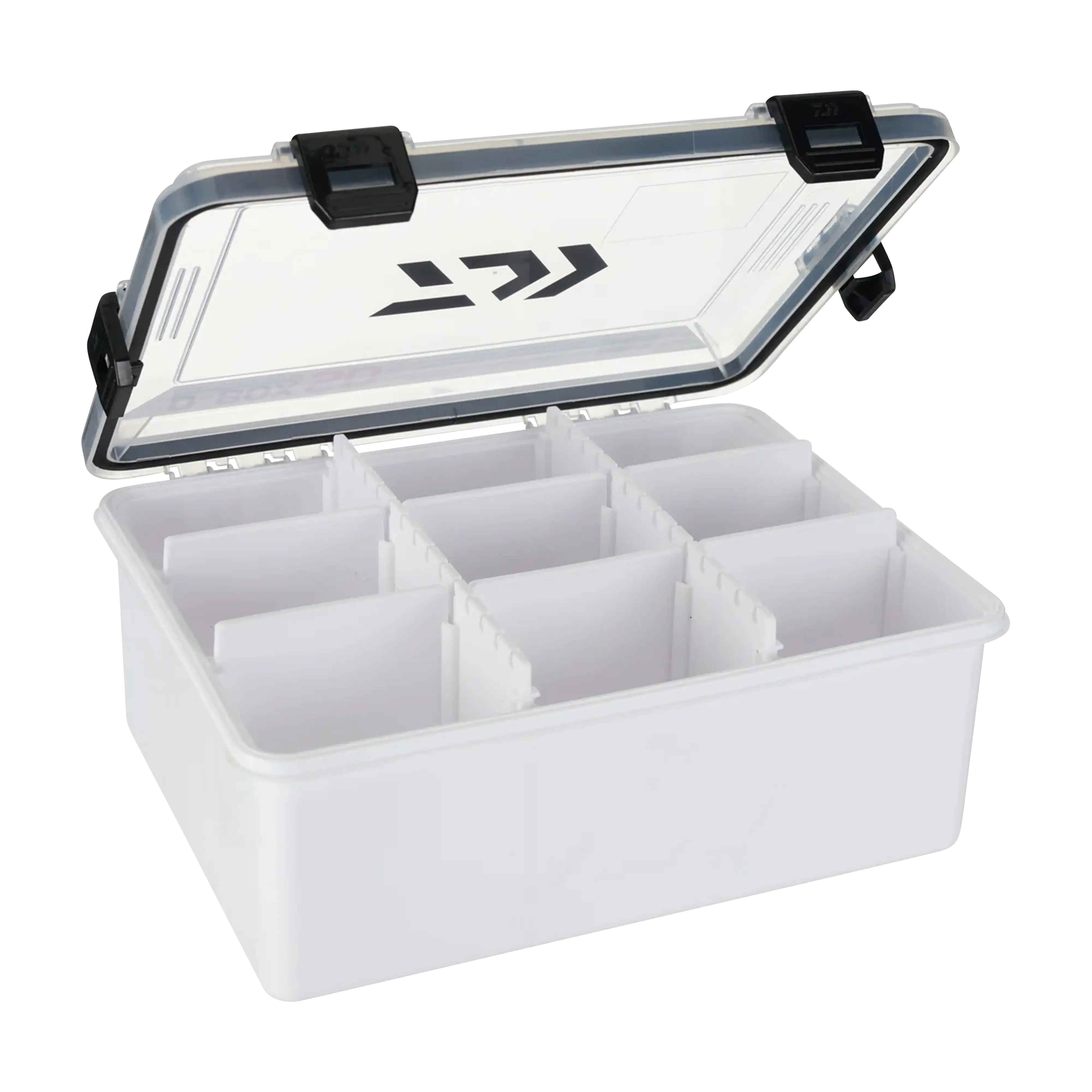
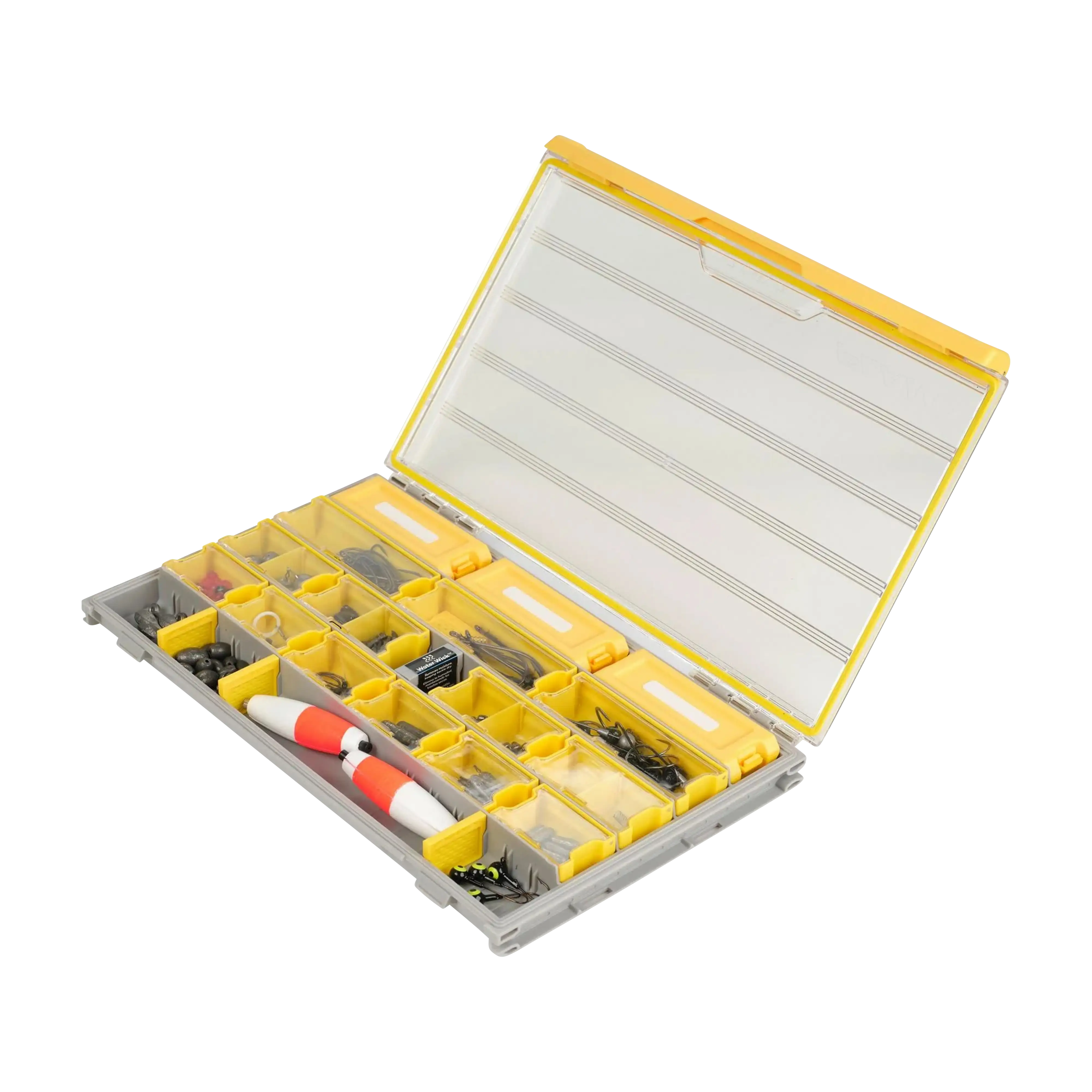
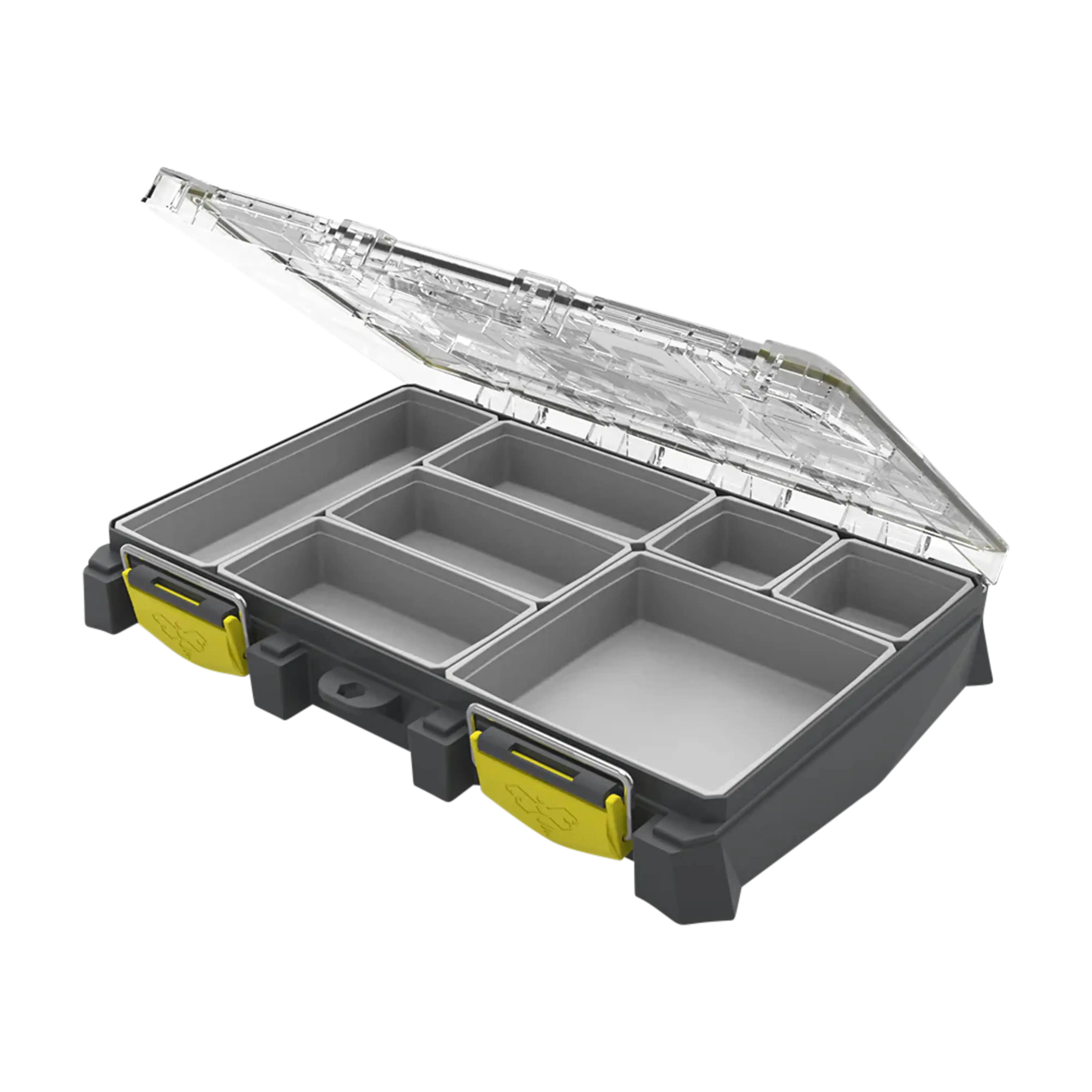
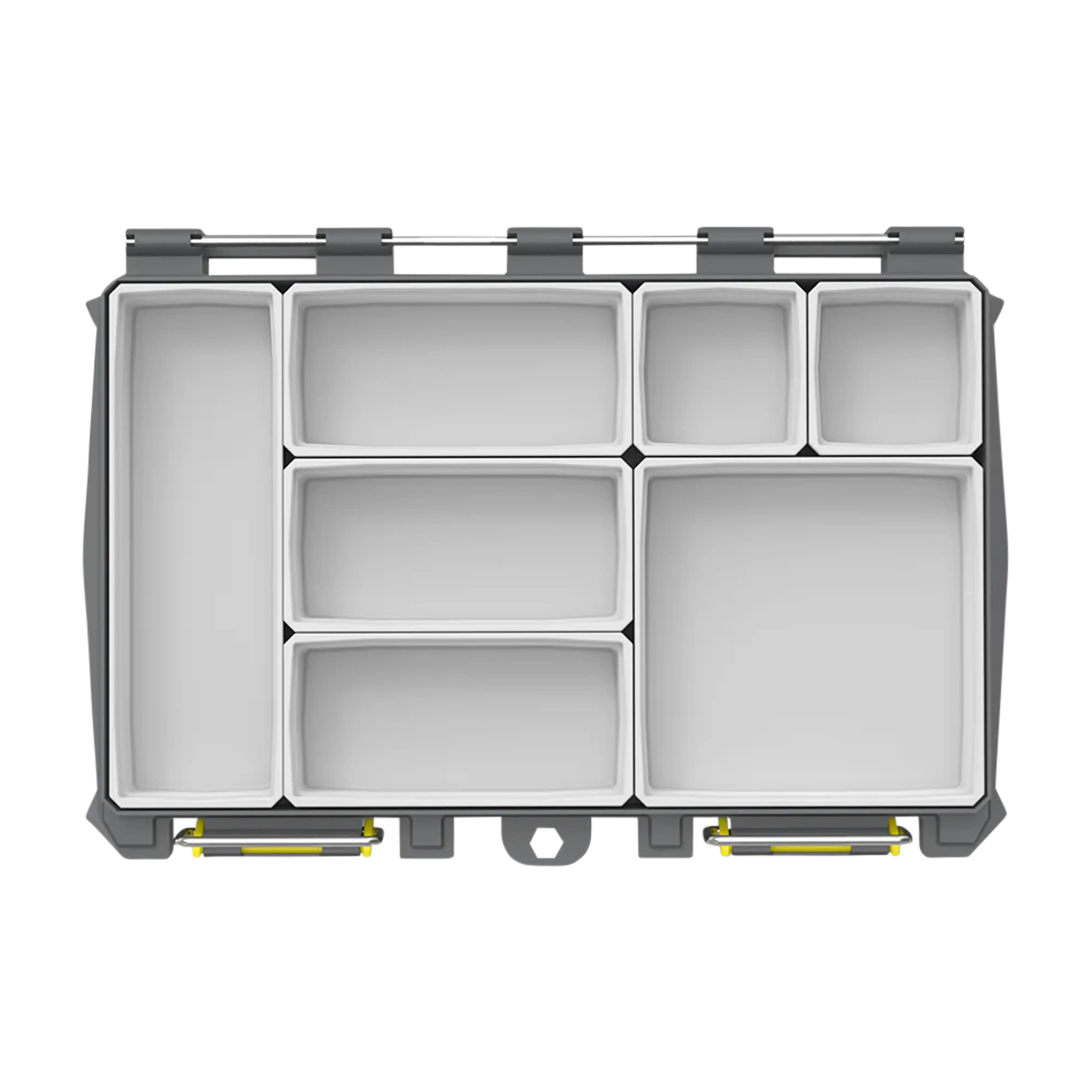
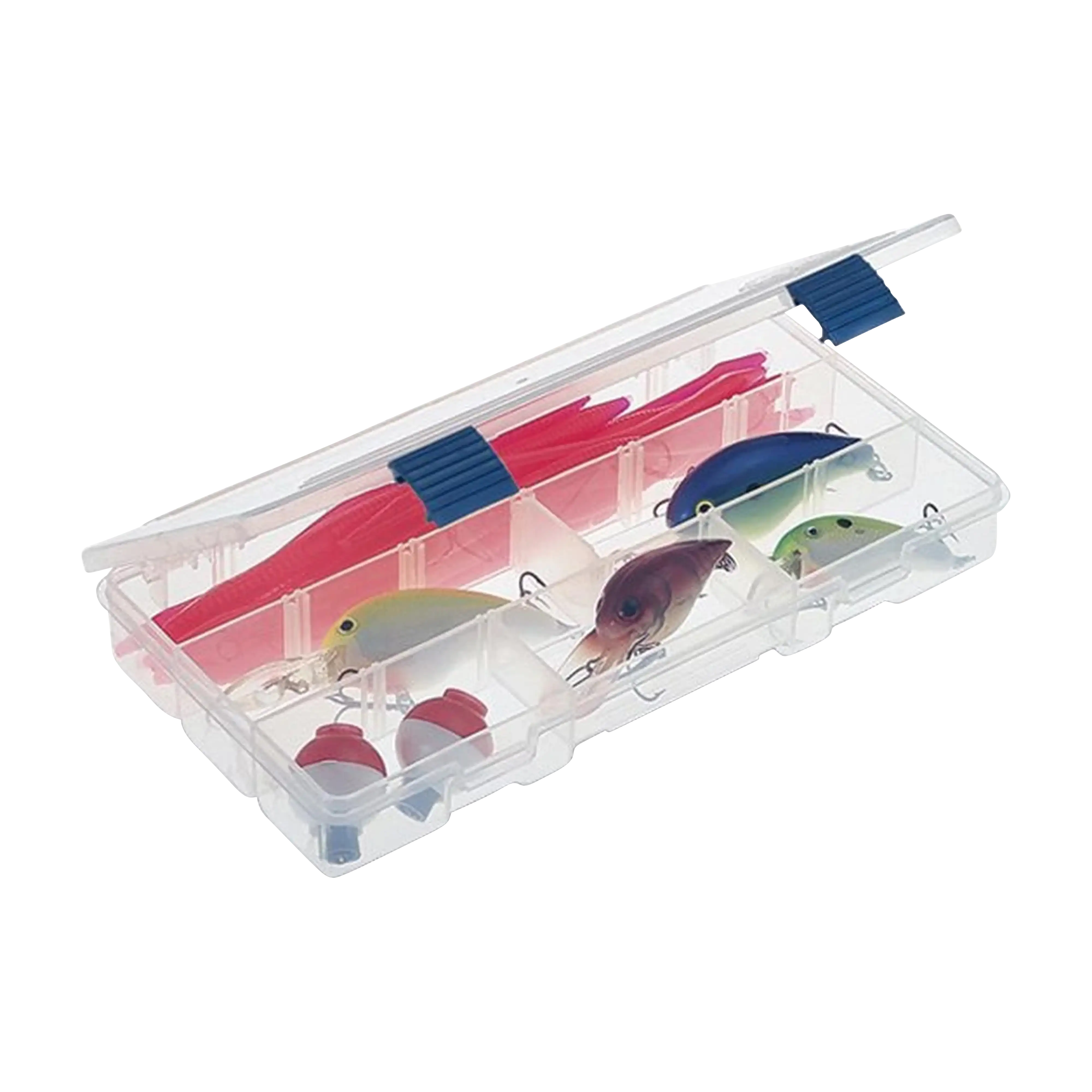
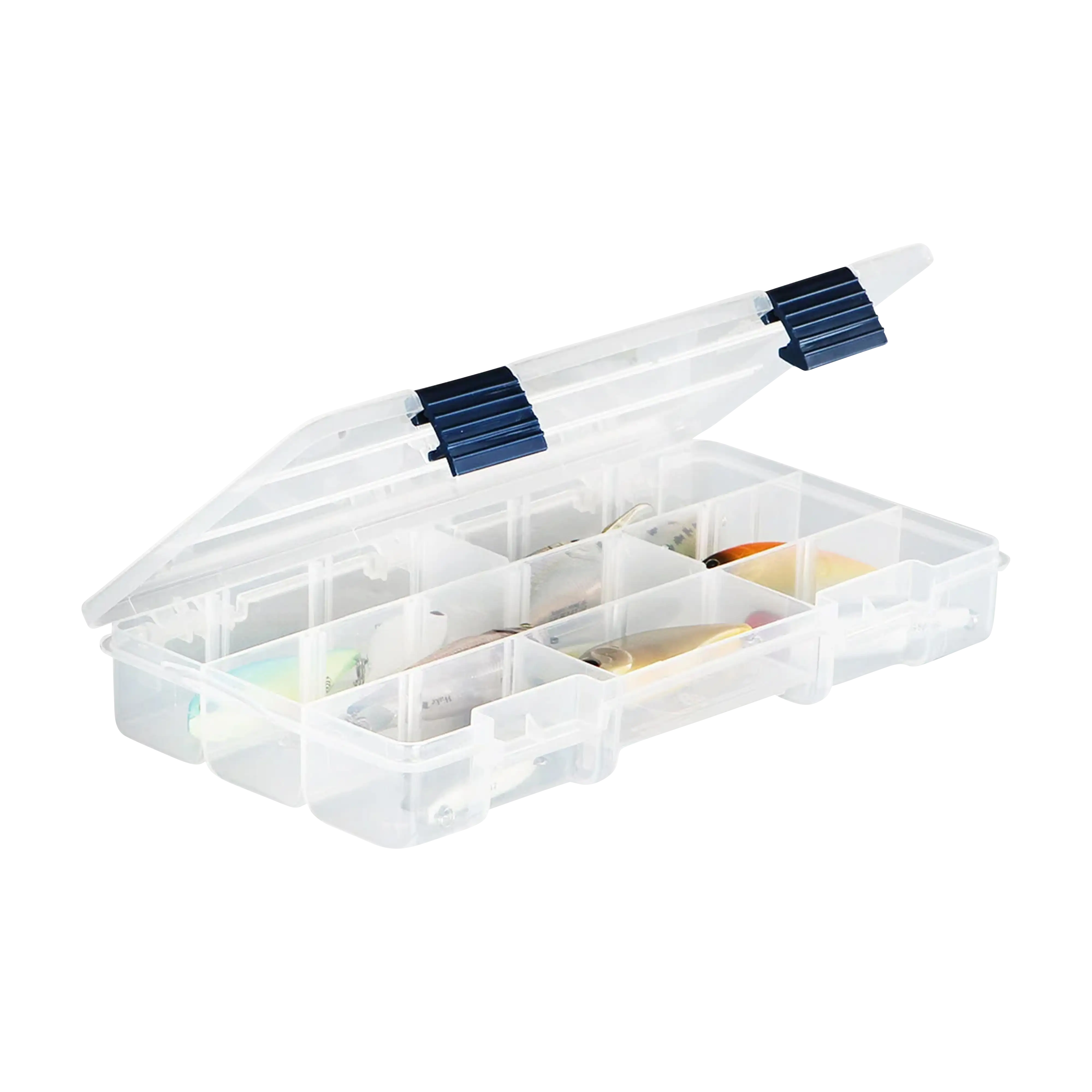
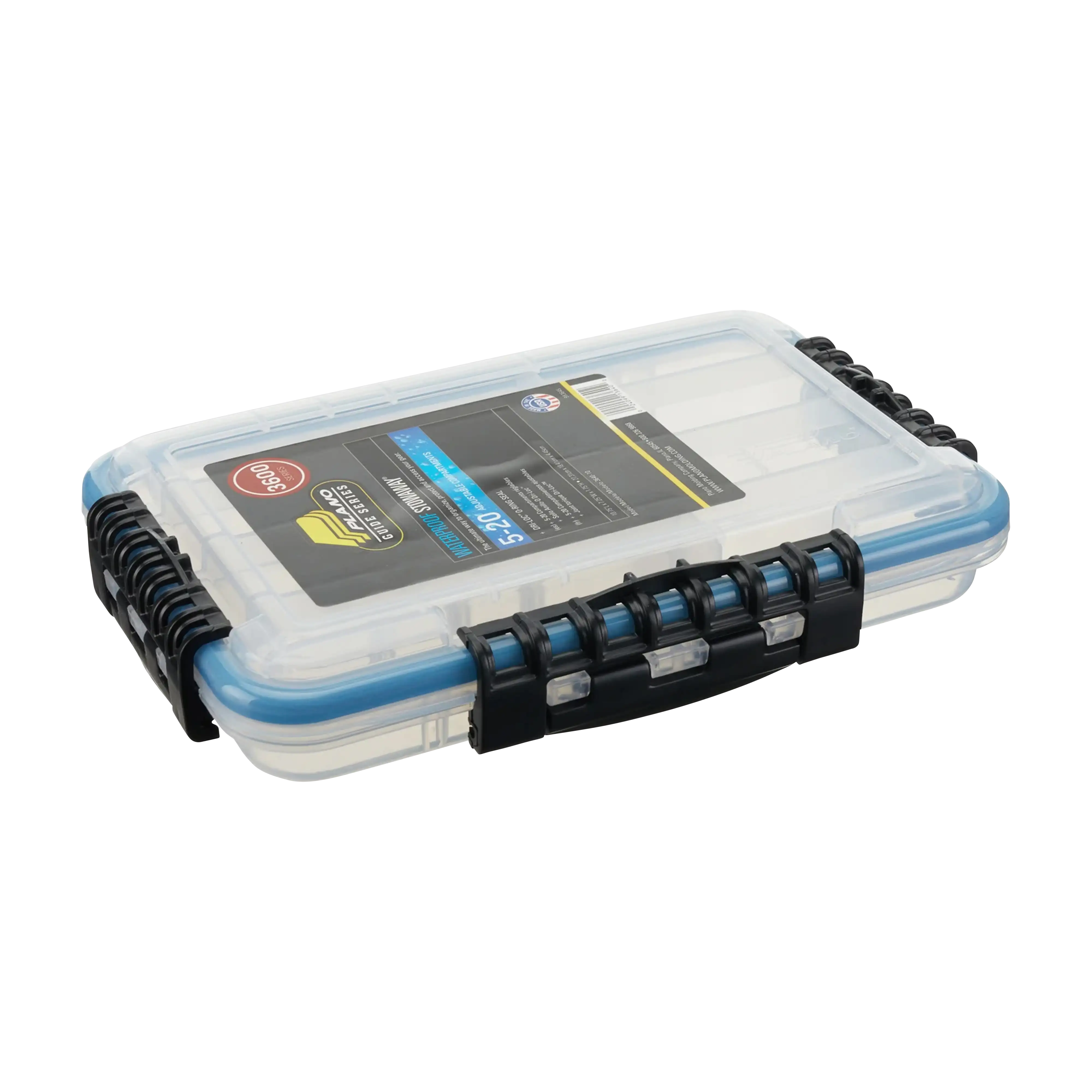
Jig heads, hooks, and small terminal tackle are best stored in compact tackle boxes with small, segmented compartments. Adjustable dividers help organize components by size, weight, and hook style, preventing jig heads from rattling together or hooks from dulling. Clear lids improve visibility so you can quickly grab the right weight or style, while secure closures keep everything in place during transport. Dedicated storage also speeds up rigging when conditions change.
Storage for Soft Plastics
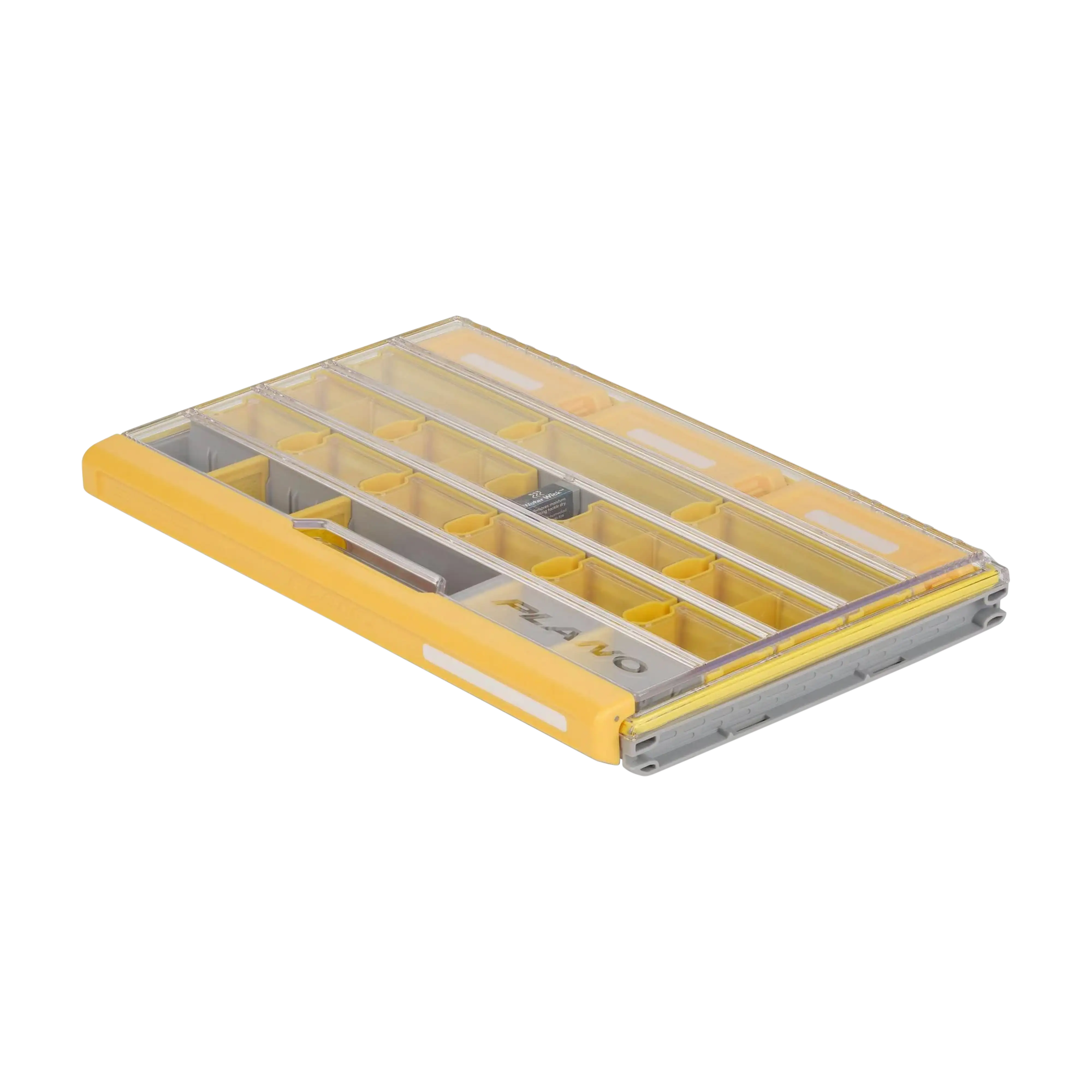
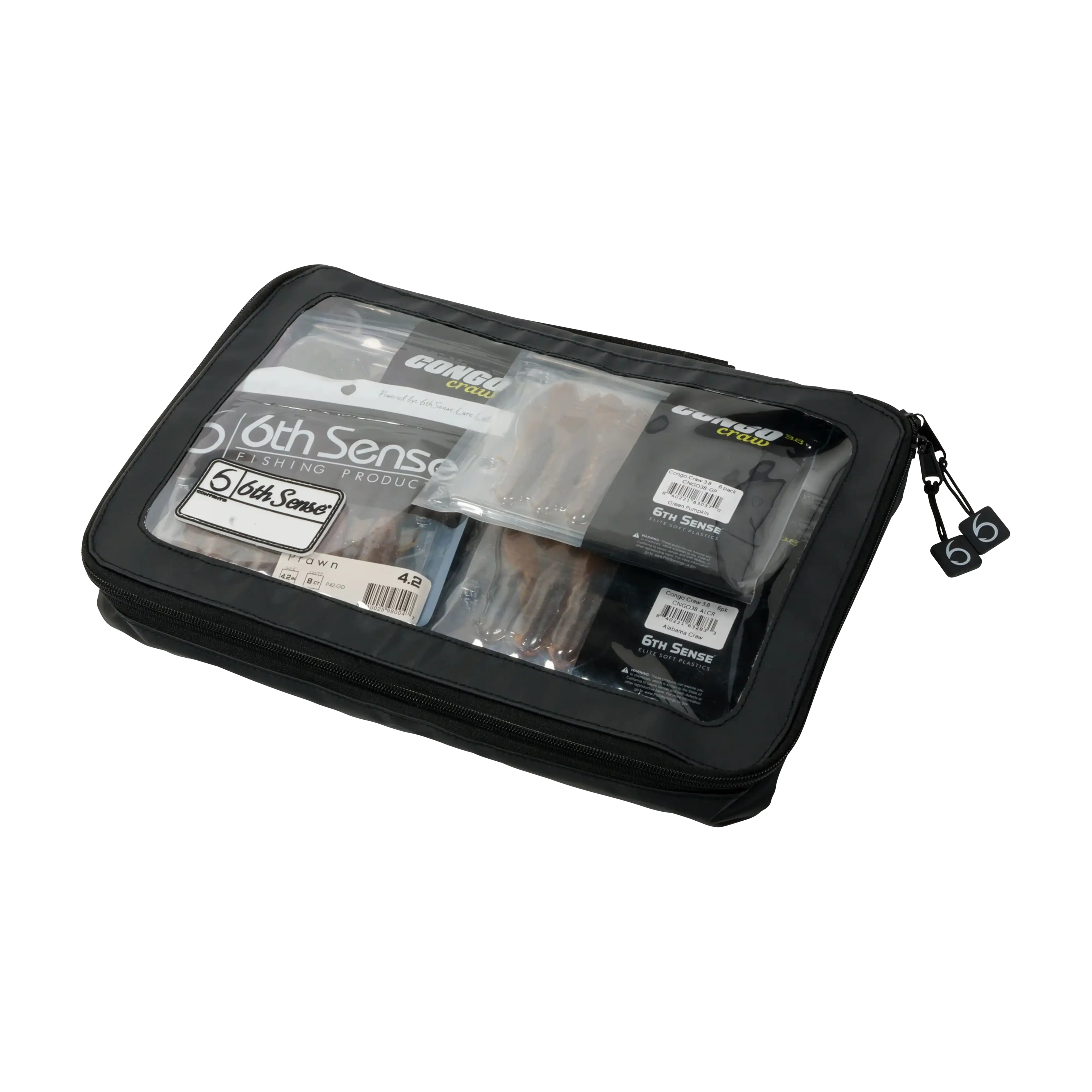
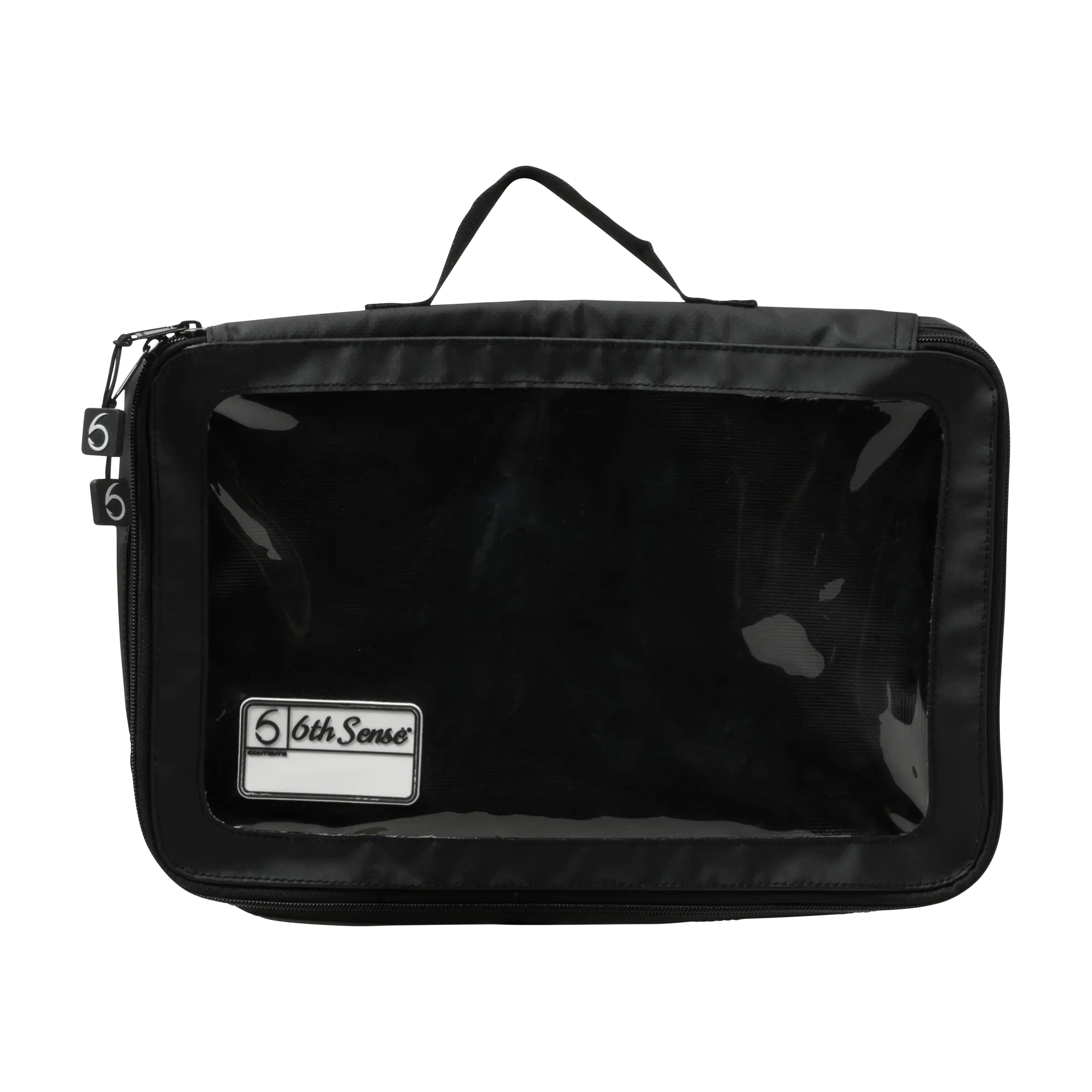
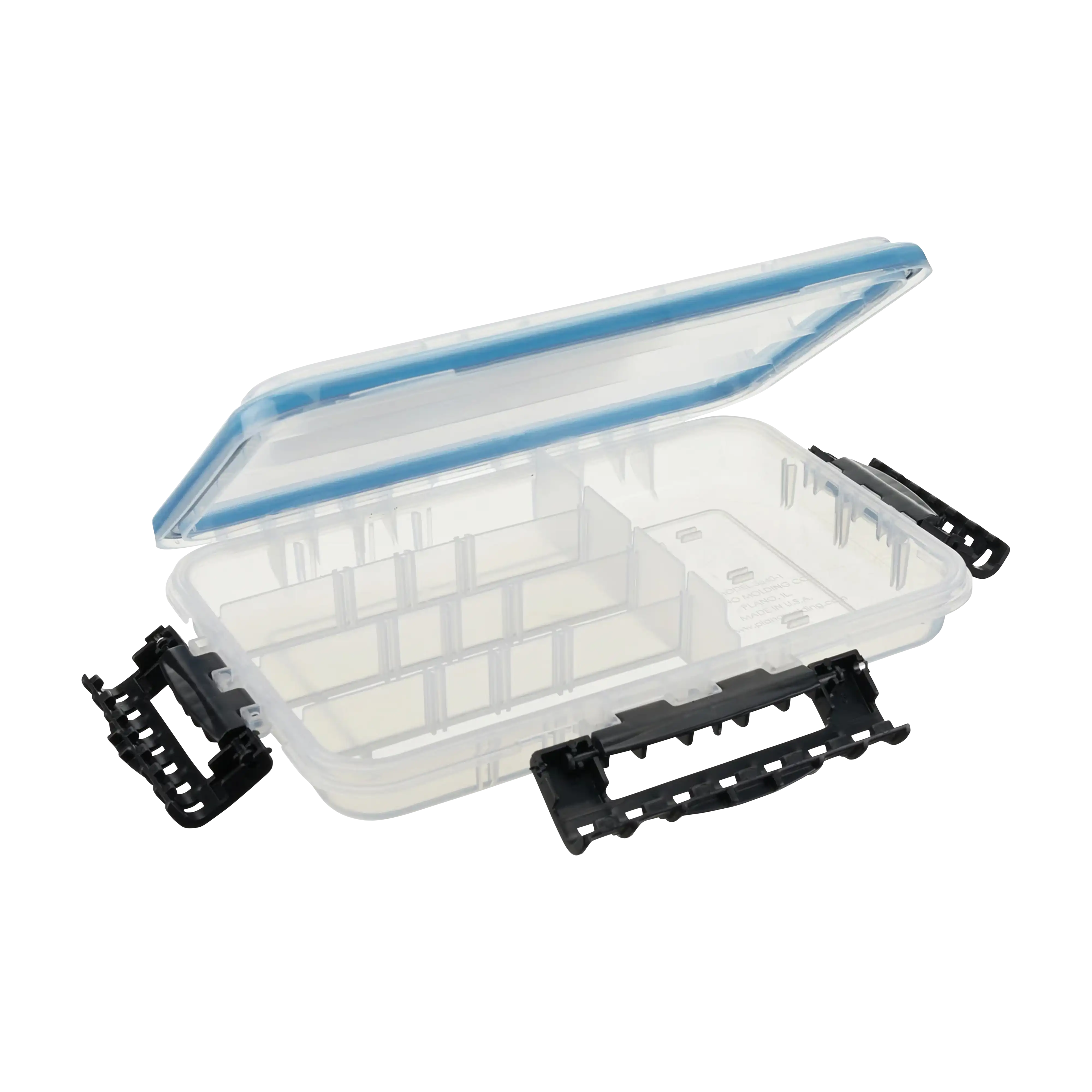
Soft plastics used for shakey head fishing should be stored separately in waterproof or sealed containers to maintain shape and durability. Heat and moisture can deform worms or cause them to stick together, so many anglers keep them in original packaging or transfer them into flat sleeves or binder systems for quick access. Divided boxes also work well when organizing by worm size, style, or color, helping maintain bait condition and making it faster to match conditions on the water.
Key Takeaways
- Jig heads and terminal tackle need small, compartmentalized storage
- Soft plastics require sealed or waterproof containers to prevent damage
- Separating hardware from baits improves organization and efficiency
- Clear labeling or dividers reduce time spent searching for gear
- Proper storage keeps shakey head setups consistent and ready to fish
Shakey Head Tackle Storage
Neko rig setups rely on small, specialized components that are easy to misplace or damage if stored loosely. Jig heads, soft plastics, and terminal tackle each require different storage considerations, since every category has unique needs for protection and organization. Keeping these items properly separated improves efficiency, prevents damage, and makes on-the-water rigging faster and more consistent.
Tackle Boxes for Terminal Tackle
Jig heads, hooks, and small terminal tackle are best stored in compact tackle boxes with small, segmented compartments. Adjustable dividers help organize components by size, weight, and hook style, preventing jig heads from rattling together or hooks from dulling. Clear lids improve visibility so you can quickly grab the right weight or style, while secure closures keep everything in place during transport. Dedicated storage also speeds up rigging when conditions change.
Storage for Soft Plastics
Soft plastics used for shakey head fishing should be stored separately in waterproof or sealed containers to maintain shape and durability. Heat and moisture can deform worms or cause them to stick together, so many anglers keep them in original packaging or transfer them into flat sleeves or binder systems for quick access. Divided boxes also work well when organizing by worm size, style, or color, helping maintain bait condition and making it faster to match conditions on the water.
Key Takeaways
- Jig heads and terminal tackle need small, compartmentalized storage
- Soft plastics require sealed or waterproof containers to prevent damage
- Separating hardware from baits improves organization and efficiency
- Clear labeling or dividers reduce time spent searching for gear
- Proper storage keeps shakey head setups consistent and ready to fish
Shakey Head Tackle Storage
Shakey Head Tips & Techniques
Shakey head fishing works best when you focus on subtle, controlled movement. The goal is to keep the worm in contact with the bottom while giving it a natural, lifelike action. Success comes from dragging, shaking, or occasionally hopping the worm over structure, adjusting speed and intensity based on fish behavior, water clarity, and cover type.
Small changes in rod movement and cadence can noticeably change how fish respond. The key is maintaining steady control of the jig while letting the worm move naturally enough to trigger cautious fish into biting.
Tip 1: Slow Drag Along the Bottom
The foundation of shakey head fishing is a slow, steady drag. Once the jig lands, gently drag the worm across rocks, sand, or timber. This allows the worm to pivot, wobble, and maintain its natural posture along the bottom. Vary your speed slightly to see what fish respond to—sometimes a steady drag works best, while other times brief pauses can trigger bites. Dragging also keeps the bait consistently in the strike zone where bass are actively feeding
Key Takeaways
- Drag the worm steadily across bottom surfaces to create natural movement
- Maintain consistent bottom contact over rocks, timber, or sand
- Vary drag speed and add pauses to find what fish prefer
- Keeping the bait near the bottom keeps it in the strike zone
Tip 2: Small Rod-Tip Twitches
Small, controlled rod-tip twitches add subtle movement to the worm without pulling it far off the bottom. Use short, precise motions to make the worm quiver or pivot in place. The key is subtlety—tiny movements are usually more effective than large lifts that move the bait too far from the structure. Pausing between twitches is important, as many bites occur when the worm settles back into place. Combining light shakes with slow drags creates a natural, bottom-oriented presentation.
Key Takeaways
- Minimal rod-tip movements make the worm pivot or quiver naturally
- Avoid large lifts that pull the bait too far off the bottom
- Pauses between movements often produce bites
- Combine light shakes with slow drags for a natural presentation
Tip 3: Focus on Structure and Cover
Shakey heads perform great around docks, rocks, laydowns, brush piles, and other bottom-oriented cover. Cast beyond the target area and allow the jig to reach the bottom before working it slowly into the structure. Adjust drag speed and rod movements depending on how fish respond—subtle presentations often work best in clear water or pressured fisheries. Working the worm carefully along the edges of cover keeps the bait where bass are most likely to strike.
Key Takeaways
- Fish slowly around docks, rocks, laydowns, and submerged timber
- Let the jig reach bottom before starting the retrieve
- Work the bait along the edges of structure where bass hold
- Controlled presentations around cover produce consistent bites
Shakey Head Tips & Techniques
Shakey head fishing works best when you focus on subtle, controlled movement. The goal is to keep the worm in contact with the bottom while giving it a natural, lifelike action. Success comes from dragging, shaking, or occasionally hopping the worm over structure, adjusting speed and intensity based on fish behavior, water clarity, and cover type.
Small changes in rod movement and cadence can noticeably change how fish respond. The key is maintaining steady control of the jig while letting the worm move naturally enough to trigger cautious fish into biting.
Tip 1: Slow Drag Along the Bottom
The foundation of shakey head fishing is a slow, steady drag. Once the jig lands, gently drag the worm across rocks, sand, or timber. This allows the worm to pivot, wobble, and maintain its natural posture along the bottom. Vary your speed slightly to see what fish respond to—sometimes a steady drag works best, while other times brief pauses can trigger bites. Dragging also keeps the bait consistently in the strike zone where bass are actively feeding
Key Takeaways
- Drag the worm steadily across bottom surfaces to create natural movement
- Maintain consistent bottom contact over rocks, timber, or sand
- Vary drag speed and add pauses to find what fish prefer
- Keeping the bait near the bottom keeps it in the strike zone
Tip 2: Small Rod-Tip Twitches
Small, controlled rod-tip twitches add subtle movement to the worm without pulling it far off the bottom. Use short, precise motions to make the worm quiver or pivot in place. The key is subtlety—tiny movements are usually more effective than large lifts that move the bait too far from the structure. Pausing between twitches is important, as many bites occur when the worm settles back into place. Combining light shakes with slow drags creates a natural, bottom-oriented presentation.
Key Takeaways
- Minimal rod-tip movements make the worm pivot or quiver naturally
- Avoid large lifts that pull the bait too far off the bottom
- Pauses between movements often produce bites
- Combine light shakes with slow drags for a natural presentation
Tip 3: Focus on Structure and Cover
Shakey heads perform great around docks, rocks, laydowns, brush piles, and other bottom-oriented cover. Cast beyond the target area and allow the jig to reach the bottom before working it slowly into the structure. Adjust drag speed and rod movements depending on how fish respond—subtle presentations often work best in clear water or pressured fisheries. Working the worm carefully along the edges of cover keeps the bait where bass are most likely to strike.
Key Takeaways
- Fish slowly around docks, rocks, laydowns, and submerged timber
- Let the jig reach bottom before starting the retrieve
- Work the bait along the edges of structure where bass hold
- Controlled presentations around cover produce consistent bites
Shakey Head Fishing
FAQ - Shakey Head Gear
What line works best for shakey head fishing?
Braided mainline paired with a fluorocarbon leader is a common setup. Braided line provides excellent feel and low stretch, while the fluorocarbon leader reduces visibility and adds abrasion resistance around rocks, timber, or docks. Fluorocarbon can also be used as the mainline.
How long should my shakey head leader be?
Leader length typically ranges from 12”–24”, depending on water clarity, cover, and personal preference. Shorter leaders provide a more direct connection to the jig head, while longer leaders can improve stealth in clear water.
What size worms should I use?
Most shakey head applications use 4”–6” finesse worms, with 6”–7” worms adding a slightly larger profile. Larger worms in the 8”–9.5” range are often used when fishing deeper structure or when targeting bigger bass. Slim, straight-tail worms generally produce the most consistent action.
What jig head size and style is best?
Use jig heads sized to match the worm and depth needed, generally in the 1/16–1/2 oz range for most conditions. Look for heads with screw locks or keeper systems to secure the worm, and optional weed guards when fishing around brush, wood, or grass.
Can I use baitcasting gear for shakey heads?
Spinning gear is preferred because it handles lighter line, smaller jig heads, and finesse presentations more easily. Baitcasting setups can work with heavier worms or jig heads, but spinning tackle generally provides better control for typical shakey head techniques.
What rod power works best?
A medium powered rod with fast action will probably cover most shakey head situations. Lighter rods work well with smaller worms and lighter jig heads, while medium-heavy rods provide more control when fishing heavier heads or around thicker cover.
How should I fish a shakey head?
Keep the worm in contact with the bottom. Use slow drags, light rod-tip shakes, or occasional small hops to create subtle movement. Avoid excessive motion—simple, controlled presentations usually produce the most bites.
Does water clarity matter?
Yes, especially for bait color selection. Natural colors such as green pumpkin or watermelon work well in clear water, while darker or higher-contrast colors like black/blue, junebug, and plum help fish locate the bait in stained water or lower visibility conditions.
Is shakey head fishing good for beginners?
Yes. Shakey head rigs are simple to set up, easy to fish slowly, and effective in a wide range of conditions. Even basic presentations can consistently catch fish.
What’s the most common mistake with shakey heads?
Overworking the worm. Excessive lifting or shaking can pull the bait out of the strike zone and reduce its natural bottom-oriented presentation. Subtle movement and consistent bottom contact usually work best.
Can I fish a shakey head in current?
Yes, but maintaining bottom contact becomes more important. Use a slightly heavier jig head if needed and control slack so the worm stays near the bottom while still allowing it to pivot naturally.
From the Mud Hole Journal
Further Reading
Finesse Shakey Head: The Ultimate Bottom-Contact Technique for Pressured Bass
If you’re looking for more rod recommendations, reel pairings, line setups, and technique-specific advice, head back to the complete Main Gear Guide Page for the full breakdowns on your favorite te...
Further Reading
Can't get enough Shakey Head Fishing content? Check out the articles below!