






Mud Hole Gear Guide:
About Red Snapper & Gag Grouper Fishing
Red snapper and gag grouper are two of the most sought-after offshore species, known for their strong connection to structure and tasty table quality. Both are commonly found around reefs, wrecks, ledges, oil platforms, and other hard bottom areas where bait is concentrated and current flow creates natural feeding lanes. Red snapper often school tightly and can be found both on the bottom and also suspended in the water column when actively feeding, while gag grouper are more solitary and stay tightly pinned to cover, using structure as ambush points.
Their behavior makes both species somewhat predictable in terms of location but more demanding in terms of presentation. Success depends on precise bottom contact, controlled gear setups, and the ability to keep fish from returning to structure once hooked. Depending on depth, current, and conditions, snapper may require adjustments in weight, leader length, and presentation style, while gag grouper typically benefit from heavier tackle and immediate control due to their tendency to dive straight back into cover.
Because they share much of the same offshore habitat, anglers often encounter both species on the same drops—even when specifically targeting one or the other—along with other reef fish like amberjack, triggerfish, and porgies. This overlap creates a versatile reef fishery where bottom fishing and vertical presentations consistently produce mixed catches.
Introduction
What is Red Snapper & Gag Grouper Fishing?
About Red Snapper & Gag Grouper Fishing
Red snapper and gag grouper are two of the most sought-after offshore species, known for their strong connection to structure and tasty table quality. Both are commonly found around reefs, wrecks, ledges, oil platforms, and other hard bottom areas where bait is concentrated and current flow creates natural feeding lanes. Red snapper often school tightly and can be found both on the bottom and also suspended in the water column when actively feeding, while gag grouper are more solitary and stay tightly pinned to cover, using structure as ambush points.
Their behavior makes both species somewhat predictable in terms of location but more demanding in terms of presentation. Success depends on precise bottom contact, controlled gear setups, and the ability to keep fish from returning to structure once hooked. Depending on depth, current, and conditions, snapper may require adjustments in weight, leader length, and presentation style, while gag grouper typically benefit from heavier tackle and immediate control due to their tendency to dive straight back into cover.
Because they share much of the same offshore habitat, anglers often encounter both species on the same drops—even when specifically targeting one or the other—along with other reef fish like amberjack, triggerfish, and porgies. This overlap creates a versatile reef fishery where bottom fishing and vertical presentations consistently produce mixed catches.
Types of Red Snapper & Gag Grouper Fishing
Red snapper and gag grouper are primarily targeted around reefs, wrecks, and other hard bottom structure using a range of bait and jigging techniques designed to keep presentations in the strike zone. While snapper may feed both near the bottom and higher in the water column, gag grouper stay tightly tied to cover, making presentation, depth control, and immediate fish control especially important. Here are the most common and effective offshore approaches for targeting both species.
Natural Baits & Rigs
Targets: Red snapper and gag grouper holding around reefs, wrecks, ledges, oil platforms, and hard bottom structure. Snapper may be positioned tight to the bottom or suspended slightly above structure, while gag grouper are almost always tight to cover and oriented directly on structure.
Natural bait fishing is the foundation of snapper fishing and also a highly effective method for gag grouper when fish are feeding. It involves presenting cut or whole squid, sardines, threadfin herring, and other baitfish, or live baits such as pinfish, pigfish, croakers, or grunts on weighted rigs designed to reach and maintain contact with structure. Presentations are typically fished on or near the bottom, with snapper also responding well when baits are suspended slightly above the reef or higher up in the water column.
Success depends on matching presentation to fish position. Snapper may require adjustments in weight and leader length to stay in the strike zone whether on bottom or suspended, while gag grouper demand immediate bottom contact and tight control to prevent fish from burying into structure the moment they bite.
Vertical Jigging (Speed Jigging)
Targets: Red snapper suspended around structure or actively feeding off the bottom, and gag grouper positioned tight to structure edges or ambush points where reaction strikes are possible during brief vertical movement windows.
Vertical jigging uses metal jigs dropped straight down and worked through the water column with a fast, rhythmic retrieve. For snapper, this technique is especially effective when fish are suspended or actively feeding off the bottom, allowing anglers to cover multiple depths quickly. For gag grouper, it can be effective around structure edges or drop-offs where fish are willing to react, but success typically requires more precise drops directly into heavy cover zones.
Speed jigging is most productive when fish are aggressive or current conditions reduce the effectiveness of static bottom presentations. The active nature of the technique allows anglers to trigger reaction strikes in both species, though snapper are generally more likely to respond higher in the water column than grouper. That said, gag grouper fished tight to structure are known to break off the bottom and chase a bait a short distance into the water column, especially when the jig passes directly through their strike zone near cover.
Slow Pitch Jigging
Targets: Red snapper and gag grouper holding near structure, especially in deeper water where fish are tight to cover and less responsive to fast-moving presentations. Red snapper are also commonly found higher in the water column.
Slow pitch jigging uses specialized rods and jigs designed to create a slow fluttering fall on slack line. Instead of aggressive retrieves, anglers rely on controlled rod movements to keep the jig suspended and in the strike zone longer. This method is effective for both species when fish are less aggressive or tightly holding to structure.
Snapper may respond throughout the water column during the fall and pause phases, while gag grouper are more likely to commit when the jig stays tight to structure and drops directly into their holding zone on the bottom or along vertical cover. Because grouper remain deeper in and around structure, precise vertical control and accurate drops are especially important when targeting them with this technique, ensuring the jig gets into the strike zone without drifting off target.
Jigheads & Baits
Targets: Primarily red snapper suspended above structure, following chum lines, or holding mid-water where lighter presentations are more effective than heavy bottom rigs.
This approach uses lighter tackle with jigheads rigged with soft plastics or small natural baits like cut squid or baitfish pieces. Presentations can be worked vertically or cast and allowed to sink naturally through the water column and strike zone.
It is most effective when snapper are suspended off the bottom or feeding higher in the water column. Compared to heavy bottom rigs, it offers a more subtle, natural presentation and can be especially productive in clear water or high-pressure conditions.
This method is primarily a red snapper application and is not commonly used for gag grouper, which remain tightly oriented to structure and are better targeted with heavier bottom-focused rigs designed to keep baits pinned in place. In some shallow-water situations, however, lighter jighead presentations may still occasionally pick up grouper when fishing tight to structure, but it is far less consistent compared to snapper applications.
Key Takeaways
- Natural bait rigs are the most versatile and consistent method for targeting both red snapper and gag grouper around structure
- Vertical jigging is effective for covering the water column quickly and triggering aggressive reaction strikes
- Slow pitch jigging keeps the lure in the strike zone longer, helping trigger bites from less active fish holding near structure
- Jigheads and lighter bait presentations excel for suspended red snapper feeding higher in the water column
Types of Red Snapper & Gag Grouper Fishing
Red snapper and gag grouper are primarily targeted around reefs, wrecks, and other hard bottom structure using a range of bait and jigging techniques designed to keep presentations in the strike zone. While snapper may feed both near the bottom and higher in the water column, gag grouper stay tightly tied to cover, making presentation, depth control, and immediate fish control especially important. Here are the most common and effective offshore approaches for targeting both species.
Natural Baits & Rigs
Targets: Red snapper and gag grouper holding around reefs, wrecks, ledges, oil platforms, and hard bottom structure. Snapper may be positioned tight to the bottom or suspended slightly above structure, while gag grouper are almost always tight to cover and oriented directly on structure.
Natural bait fishing is the foundation of snapper fishing and also a highly effective method for gag grouper when fish are feeding. It involves presenting cut or whole squid, sardines, threadfin herring, and other baitfish, or live baits such as pinfish, pigfish, croakers, or grunts on weighted rigs designed to reach and maintain contact with structure. Presentations are typically fished on or near the bottom, with snapper also responding well when baits are suspended slightly above the reef or higher up in the water column.
Success depends on matching presentation to fish position. Snapper may require adjustments in weight and leader length to stay in the strike zone whether on bottom or suspended, while gag grouper demand immediate bottom contact and tight control to prevent fish from burying into structure the moment they bite.
Vertical Jigging (Speed Jigging)
Targets: Red snapper suspended around structure or actively feeding off the bottom, and gag grouper positioned tight to structure edges or ambush points where reaction strikes are possible during brief vertical movement windows.
Vertical jigging uses metal jigs dropped straight down and worked through the water column with a fast, rhythmic retrieve. For snapper, this technique is especially effective when fish are suspended or actively feeding off the bottom, allowing anglers to cover multiple depths quickly. For gag grouper, it can be effective around structure edges or drop-offs where fish are willing to react, but success typically requires more precise drops directly into heavy cover zones.
Speed jigging is most productive when fish are aggressive or current conditions reduce the effectiveness of static bottom presentations. The active nature of the technique allows anglers to trigger reaction strikes in both species, though snapper are generally more likely to respond higher in the water column than grouper. That said, gag grouper fished tight to structure are known to break off the bottom and chase a bait a short distance into the water column, especially when the jig passes directly through their strike zone near cover.
Slow Pitch Jigging
Targets: Red snapper and gag grouper holding near structure, especially in deeper water where fish are tight to cover and less responsive to fast-moving presentations. Red snapper are also commonly found higher in the water column.
Slow pitch jigging uses specialized rods and jigs designed to create a slow fluttering fall on slack line. Instead of aggressive retrieves, anglers rely on controlled rod movements to keep the jig suspended and in the strike zone longer. This method is effective for both species when fish are less aggressive or tightly holding to structure.
Snapper may respond throughout the water column during the fall and pause phases, while gag grouper are more likely to commit when the jig stays tight to structure and drops directly into their holding zone on the bottom or along vertical cover. Because grouper remain deeper in and around structure, precise vertical control and accurate drops are especially important when targeting them with this technique, ensuring the jig gets into the strike zone without drifting off target.
Jigheads & Baits
Targets: Primarily red snapper suspended above structure, following chum lines, or holding mid-water where lighter presentations are more effective than heavy bottom rigs.
This approach uses lighter tackle with jigheads rigged with soft plastics or small natural baits like cut squid or baitfish pieces. Presentations can be worked vertically or cast and allowed to sink naturally through the water column and strike zone.
It is most effective when snapper are suspended off the bottom or feeding higher in the water column. Compared to heavy bottom rigs, it offers a more subtle, natural presentation and can be especially productive in clear water or high-pressure conditions.
This method is primarily a red snapper application and is not commonly used for gag grouper, which remain tightly oriented to structure and are better targeted with heavier bottom-focused rigs designed to keep baits pinned in place. In some shallow-water situations, however, lighter jighead presentations may still occasionally pick up grouper when fishing tight to structure, but it is far less consistent compared to snapper applications.
Key Takeaways
- Natural bait rigs are the most versatile and consistent method for targeting both red snapper and gag grouper around structure
- Vertical jigging is effective for covering the water column quickly and triggering aggressive reaction strikes
- Slow pitch jigging keeps the lure in the strike zone longer, helping trigger bites from less active fish holding near structure
- Jigheads and lighter bait presentations excel for suspended red snapper feeding higher in the water column
How to Choose a Snapper & Grouper Rod
Most red snapper and gag grouper rods are built for bottom contact, lifting power, and maintaining control around reefs, wrecks, ledges, and other hard structure. These rods are designed to handle heavy sinkers, vertical jigs, and bait rigs in current while still providing enough sensitivity to detect bites and read bottom changes. Because gag grouper stay tightly locked to cover, strong lifting power and immediate fish control are especially important once hooked.
Spinning
Spinning rods are used across a wide range of red snapper applications, particularly when casting jigheads, working soft plastics, or presenting lighter natural baits. They are commonly used when anglers are making controlled casts, working suspended fish in the water column, or fishing around chum lines where presentations are moving through different depths.
Gag grouper are also occasionally targeted with spinning gear in more situational scenarios, typically when fish are positioned slightly off structure or along reef edges in shallower water, where lighter presentations can be placed accurately near cover.
They are also used for vertical presentations in lighter current or shallower depth ranges where bait or lure control through the water column is the primary focus rather than heavy bottom contact.
Casting (Conventional)
Conventional rods are widely used for both red snapper and gag grouper bottom fishing and vertical jigging applications, particularly when fishing reefs, wrecks, ledges, oil platforms, and other hard structure.
These setups are commonly paired with heavier sinkers, vertical jigs, and bait rigs in current, where maintaining consistent bottom contact and working directly over structure is required. They are used across both species when fishing tight to structure or when presentations need to stay positioned in deeper zones of the water column.
Conventional gear is also used in a wide range of depth and current conditions where anglers are fishing vertically or directly over structure with controlled line angle and sustained load.
Power
Rod blank power determines how much lifting force you can apply when a fish is hooked in or around structure. In red snapper fishing, medium-heavy is the most common all-around choice for general bottom fishing and moderate depths, offering a strong balance of lifting power, control, and versatility. Heavy and extra-heavy blanks are used in deeper water, strong current, or when fishing heavier sinkers where maintaining bottom contact and turning fish away from structure becomes more demanding. Medium power blanks are typically used for lighter jigging or finesse-style presentations where sensitivity and lure control are prioritized over maximum lifting strength.
In saltwater fishing, line class ratings (lb test) are often shown alongside blank power as a general reference, but they represent a recommended line range and application window rather than the actual stiffness or flex characteristics of the blank.
As a general guide for offshore red snapper setups:
- 15–30 lb is considered light
- 20–40 lb is considered medium-light
- 20–50 lb is considered medium
- 40–60 lb is considered medium-heavy
- 50–80+ lb is considered heavy
Power selection is ultimately driven by depth, current, sinker weight, and how tightly fish are holding to structure.
Action
Action affects how the rod loads during the fight and how quickly it responds on hooksets. Fast action rods are commonly used in vertical and bottom-contact applications where sensitivity and immediate response are important, especially when working jigheads, vertical speed jigs, or fishing tight to structure where detecting bites and setting the hook quickly matters.
Moderate-fast actions are used in situations where a bit more rod load is beneficial during the fight, helping absorb sudden surges and reduce pulled hooks in close-quarters structure fishing, while still maintaining solid responsiveness for working baits or jigs through the water column.
Moderate action rods are typically used in slow pitch jigging, where a deeper, more parabolic bend is needed to keep the lure moving naturally on the fall and maintain tension through longer presentations. These actions are selected based on technique, depth, current, and structure.
Length
Most rods fall between 6’ and 7’6”. Shorter rods (6’–6’6”) are typically used for vertical fishing directly over structure, where tighter line control and direct vertical contact are important when working fish from depth. Medium lengths (6’6”–7’) are the most versatile and are commonly used across both bottom fishing and jigging applications in a wide range of depths and current conditions. Longer rods (7’–7’6”) are used when additional line control is needed, such as drifting, fishing multiple lines, or working presentations where managing line angle and separation through the water column is more important than maximum vertical leverage.
Rod length selection is based on fishing style, depth, and how directly the presentation needs to be controlled over structure. Sometimes even the vessel being fished can be an additional determining factor.
Line Rating
Line selection typically uses braided mainline in the 30–65 lb range, with 40–50 lb being a common all-around choice. Braid is preferred due to its thin diameter, high sensitivity, and ability to maintain direct contact with structure in deeper water while allowing lighter sinkers and more efficient bottom contact. Heavier braid in the 50–80 lb range is used around deep wrecks, heavy structure, or strong current where additional abrasion resistance and control are required to manage fish in tight cover.
Leaders are typically 30–80 lb fluorocarbon or monofilament, with 5–10 feet being standard depending on conditions and presentation. Fluorocarbon is most commonly used for abrasion resistance around reefs, wrecks, and rocky bottom, while monofilament is still used in some setups for added stretch to absorb sudden strikes and reduce pulled hooks. Line strength should always match structure pressure, water depth, and the angler’s ability to maintain control while keeping a natural presentation.
Weight / Lure Rating
Rods are rated differently depending on whether they are designed for vertical drop fishing or casting applications.
Conventional rods used for bottom fishing are built to handle heavy sinkers, jigs, and bait rigs that are dropped straight down into the water column and fished under load in current to maintain contact with structure. The rating reflects how much sustained vertical weight the rod can manage while staying in control through the drop and retrieve.
Casting-style rods (often used for jigheads and soft plastics or bait) are rated by lure weight, since they are designed for casting presentations outward, allowing the lure to sink through the water column, and then retrieving it back rather than working it straight beneath the boat under continuous vertical load.
Rod Specs by Application
The following are general rod specifications commonly used by red snapper and gag grouper anglers. While exact setups vary by depth, current, and structure, these ranges reflect typical gear choices across most offshore reef and structure fisheries and provide a practical baseline for matching rods to techniques.
Natural Baits & Rigs
A rod with strong lifting power and a responsive tip is important for maintaining bottom contact while keeping enough sensitivity to detect bites in current. It needs to handle sustained load from weighted rigs while controlling fish around structure once hooked.
Targets: Red snapper and gag grouper holding around reefs, wrecks, ledges, oil platforms, and hard bottom structure. Snapper may be positioned tight to the bottom or suspended slightly above structure, while gag grouper are almost always tight to cover and oriented directly on structure.
Rod Type: Casting (Conventional) primarily, some spinning in lighter applications
Rod length: 6’6” – 7’6”
Power: Medium-Heavy to Heavy
Action: Moderate-Fast to Fast
Line: 30–65 lb braid (often paired with 40–80 lb leader)
Weight Range: 2–6 oz sinkers (most common), up to ~6–12+ oz in deep water or strong current
Vertical Jigging (Speed Jigging)
A fast-action rod with a balanced power-to-sensitivity ratio is preferred, allowing sharp response for working jigs while still maintaining control under load. It should recover quickly under pressure and handle repeated vertical stress without losing responsiveness.
Targets: Red snapper suspended around structure or actively feeding off the bottom, and gag grouper positioned tight to structure edges or ambush points where reaction strikes are possible during brief vertical movement windows.
Rod Type: Casting (Conventional) or spinning, depending on angler preference and jig style
Rod length: 6’0” – 7’
Power: Medium to Medium-Heavy
Action: Moderate-Fast
Line: 30–50 lb braid
Weight Range: 80–200 g (3–7 oz) most common, up to 250+ g (8–9 oz) in deep water or strong current. A good rule of thumb is ~1 g per foot of depth, increasing as current or drift requires.
Slow Pitch Jigging
A rod with a moderate, load-responsive blank (with a parabolic bend) is needed to maintain consistent tension and allow controlled flex through the lift-and-fall cycle. It should stay engaged under minimal input while still recovering smoothly under load.
Targets: Red snapper and gag grouper holding near structure, especially in deeper water where fish are tight to cover and less responsive to fast-moving presentations. Red snapper are also commonly found higher in the water column.
Rod Type: Casting (Conventional) primarily, spinning in lighter applications or personal preference
Rod length: 6’3” – 7’0”+ (most common: 6’3” – 6’6”)
Power: Medium-Light to Medium
Action: Moderate to Moderate-Fast (slow pitch specific load)
Line: 20–50 lb braid
Weight Range: 20–200 g jigs (approx. 1–7 oz). A good rule of thumb is ~1 g per foot of depth, increasing as current or drift requires.
Jigheads & Baits
A lighter, sensitive rod with a fast response tip is preferred to detect subtle pressure changes and maintain direct connection to lighter presentations. It should allow precise control of small weights while still maintaining enough backbone for structure contact.
Targets: Primarily red snapper suspended above structure, following chum lines, or holding mid-water where lighter presentations are more effective than heavy bottom rigs.
Rod Type: Spinning primarily (light casting setups also used)
Rod length: 6’6” – 7’6”
Power: Medium to Medium-Heavy (spinning or casting setups)
Action: Fast
Line: 20–40 lb braid (often with 20–50 lb fluorocarbon leader)
Weight Range: 1/2–2 oz jigheads (most common), up to 2–3 oz in stronger current or deeper water where extra weight is needed
Key Takeaways
- Match rod type to technique: casting (conventional) and spinning can both be used across most fishing applications, but spinning is commonly used for jigheads and lighter presentations.
- Prioritize power for control in structure and current, with medium-heavy to heavy covering most scenarios. Extra-heavy when you need it.
- Choose action based on response and forgiveness, with fast for sensitivity and moderate-fast for added load absorption near structure.
- Keep length in the 6’0”–7’6” range to balance leverage, control, and maneuverability.
- Scale strength to conditions like depth, current, and structure pressure rather than overbuilding by default.
How to Choose a Snapper & Grouper Rod
Most red snapper and gag grouper rods are built for bottom contact, lifting power, and maintaining control around reefs, wrecks, ledges, and other hard structure. These rods are designed to handle heavy sinkers, vertical jigs, and bait rigs in current while still providing enough sensitivity to detect bites and read bottom changes. Because gag grouper stay tightly locked to cover, strong lifting power and immediate fish control are especially important once hooked.
Spinning
Spinning rods are used across a wide range of red snapper applications, particularly when casting jigheads, working soft plastics, or presenting lighter natural baits. They are commonly used when anglers are making controlled casts, working suspended fish in the water column, or fishing around chum lines where presentations are moving through different depths.
Gag grouper are also occasionally targeted with spinning gear in more situational scenarios, typically when fish are positioned slightly off structure or along reef edges in shallower water, where lighter presentations can be placed accurately near cover.
They are also used for vertical presentations in lighter current or shallower depth ranges where bait or lure control through the water column is the primary focus rather than heavy bottom contact.
Casting (Conventional)
Conventional rods are widely used for both red snapper and gag grouper bottom fishing and vertical jigging applications, particularly when fishing reefs, wrecks, ledges, oil platforms, and other hard structure.
These setups are commonly paired with heavier sinkers, vertical jigs, and bait rigs in current, where maintaining consistent bottom contact and working directly over structure is required. They are used across both species when fishing tight to structure or when presentations need to stay positioned in deeper zones of the water column.
Conventional gear is also used in a wide range of depth and current conditions where anglers are fishing vertically or directly over structure with controlled line angle and sustained load.
Power
Rod blank power determines how much lifting force you can apply when a fish is hooked in or around structure. In red snapper fishing, medium-heavy is the most common all-around choice for general bottom fishing and moderate depths, offering a strong balance of lifting power, control, and versatility. Heavy and extra-heavy blanks are used in deeper water, strong current, or when fishing heavier sinkers where maintaining bottom contact and turning fish away from structure becomes more demanding. Medium power blanks are typically used for lighter jigging or finesse-style presentations where sensitivity and lure control are prioritized over maximum lifting strength.
In saltwater fishing, line class ratings (lb test) are often shown alongside blank power as a general reference, but they represent a recommended line range and application window rather than the actual stiffness or flex characteristics of the blank.
As a general guide for offshore red snapper setups:
- 15–30 lb is considered light
- 20–40 lb is considered medium-light
- 20–50 lb is considered medium
- 40–60 lb is considered medium-heavy
- 50–80+ lb is considered heavy
Power selection is ultimately driven by depth, current, sinker weight, and how tightly fish are holding to structure.
Action
Action affects how the rod loads during the fight and how quickly it responds on hooksets. Fast action rods are commonly used in vertical and bottom-contact applications where sensitivity and immediate response are important, especially when working jigheads, vertical speed jigs, or fishing tight to structure where detecting bites and setting the hook quickly matters.
Moderate-fast actions are used in situations where a bit more rod load is beneficial during the fight, helping absorb sudden surges and reduce pulled hooks in close-quarters structure fishing, while still maintaining solid responsiveness for working baits or jigs through the water column.
Moderate action rods are typically used in slow pitch jigging, where a deeper, more parabolic bend is needed to keep the lure moving naturally on the fall and maintain tension through longer presentations. These actions are selected based on technique, depth, current, and structure.
Length
Most rods fall between 6’ and 7’6”. Shorter rods (6’–6’6”) are typically used for vertical fishing directly over structure, where tighter line control and direct vertical contact are important when working fish from depth. Medium lengths (6’6”–7’) are the most versatile and are commonly used across both bottom fishing and jigging applications in a wide range of depths and current conditions. Longer rods (7’–7’6”) are used when additional line control is needed, such as drifting, fishing multiple lines, or working presentations where managing line angle and separation through the water column is more important than maximum vertical leverage.
Rod length selection is based on fishing style, depth, and how directly the presentation needs to be controlled over structure. Sometimes even the vessel being fished can be an additional determining factor.
Line Rating
Line selection typically uses braided mainline in the 30–65 lb range, with 40–50 lb being a common all-around choice. Braid is preferred due to its thin diameter, high sensitivity, and ability to maintain direct contact with structure in deeper water while allowing lighter sinkers and more efficient bottom contact. Heavier braid in the 50–80 lb range is used around deep wrecks, heavy structure, or strong current where additional abrasion resistance and control are required to manage fish in tight cover.
Leaders are typically 30–80 lb fluorocarbon or monofilament, with 5–10 feet being standard depending on conditions and presentation. Fluorocarbon is most commonly used for abrasion resistance around reefs, wrecks, and rocky bottom, while monofilament is still used in some setups for added stretch to absorb sudden strikes and reduce pulled hooks. Line strength should always match structure pressure, water depth, and the angler’s ability to maintain control while keeping a natural presentation.
Weight / Lure Rating
Rods are rated differently depending on whether they are designed for vertical drop fishing or casting applications.
Conventional rods used for bottom fishing are built to handle heavy sinkers, jigs, and bait rigs that are dropped straight down into the water column and fished under load in current to maintain contact with structure. The rating reflects how much sustained vertical weight the rod can manage while staying in control through the drop and retrieve.
Casting-style rods (often used for jigheads and soft plastics or bait) are rated by lure weight, since they are designed for casting presentations outward, allowing the lure to sink through the water column, and then retrieving it back rather than working it straight beneath the boat under continuous vertical load.
Rod Specs by Application
The following are general rod specifications commonly used by red snapper and gag grouper anglers. While exact setups vary by depth, current, and structure, these ranges reflect typical gear choices across most offshore reef and structure fisheries and provide a practical baseline for matching rods to techniques.
Natural Baits & Rigs
A rod with strong lifting power and a responsive tip is important for maintaining bottom contact while keeping enough sensitivity to detect bites in current. It needs to handle sustained load from weighted rigs while controlling fish around structure once hooked.
Targets: Red snapper and gag grouper holding around reefs, wrecks, ledges, oil platforms, and hard bottom structure. Snapper may be positioned tight to the bottom or suspended slightly above structure, while gag grouper are almost always tight to cover and oriented directly on structure.
Rod Type: Casting (Conventional) primarily, some spinning in lighter applications
Rod length: 6’6” – 7’6”
Power: Medium-Heavy to Heavy
Action: Moderate-Fast to Fast
Line: 30–65 lb braid (often paired with 40–80 lb leader)
Weight Range: 2–6 oz sinkers (most common), up to ~6–12+ oz in deep water or strong current
Vertical Jigging (Speed Jigging)
A fast-action rod with a balanced power-to-sensitivity ratio is preferred, allowing sharp response for working jigs while still maintaining control under load. It should recover quickly under pressure and handle repeated vertical stress without losing responsiveness.
Targets: Red snapper suspended around structure or actively feeding off the bottom, and gag grouper positioned tight to structure edges or ambush points where reaction strikes are possible during brief vertical movement windows.
Rod Type: Casting (Conventional) or spinning, depending on angler preference and jig style
Rod length: 6’0” – 7’
Power: Medium to Medium-Heavy
Action: Moderate-Fast
Line: 30–50 lb braid
Weight Range: 80–200 g (3–7 oz) most common, up to 250+ g (8–9 oz) in deep water or strong current. A good rule of thumb is ~1 g per foot of depth, increasing as current or drift requires.
Slow Pitch Jigging
A rod with a moderate, load-responsive blank (with a parabolic bend) is needed to maintain consistent tension and allow controlled flex through the lift-and-fall cycle. It should stay engaged under minimal input while still recovering smoothly under load.
Targets: Red snapper and gag grouper holding near structure, especially in deeper water where fish are tight to cover and less responsive to fast-moving presentations. Red snapper are also commonly found higher in the water column.
Rod Type: Casting (Conventional) primarily, spinning in lighter applications or personal preference
Rod length: 6’3” – 7’0”+ (most common: 6’3” – 6’6”)
Power: Medium-Light to Medium
Action: Moderate to Moderate-Fast (slow pitch specific load)
Line: 20–50 lb braid
Weight Range: 20–200 g jigs (approx. 1–7 oz). A good rule of thumb is ~1 g per foot of depth, increasing as current or drift requires.
Jigheads & Baits
A lighter, sensitive rod with a fast response tip is preferred to detect subtle pressure changes and maintain direct connection to lighter presentations. It should allow precise control of small weights while still maintaining enough backbone for structure contact.
Targets: Primarily red snapper suspended above structure, following chum lines, or holding mid-water where lighter presentations are more effective than heavy bottom rigs.
Rod Type: Spinning primarily (light casting setups also used)
Rod length: 6’6” – 7’6”
Power: Medium to Medium-Heavy (spinning or casting setups)
Action: Fast
Line: 20–40 lb braid (often with 20–50 lb fluorocarbon leader)
Weight Range: 1/2–2 oz jigheads (most common), up to 2–3 oz in stronger current or deeper water where extra weight is needed
Key Takeaways
- Match rod type to technique: casting (conventional) and spinning can both be used across most fishing applications, but spinning is commonly used for jigheads and lighter presentations.
- Prioritize power for control in structure and current, with medium-heavy to heavy covering most scenarios. Extra-heavy when you need it.
- Choose action based on response and forgiveness, with fast for sensitivity and moderate-fast for added load absorption near structure.
- Keep length in the 6’0”–7’6” range to balance leverage, control, and maneuverability.
- Scale strength to conditions like depth, current, and structure pressure rather than overbuilding by default.
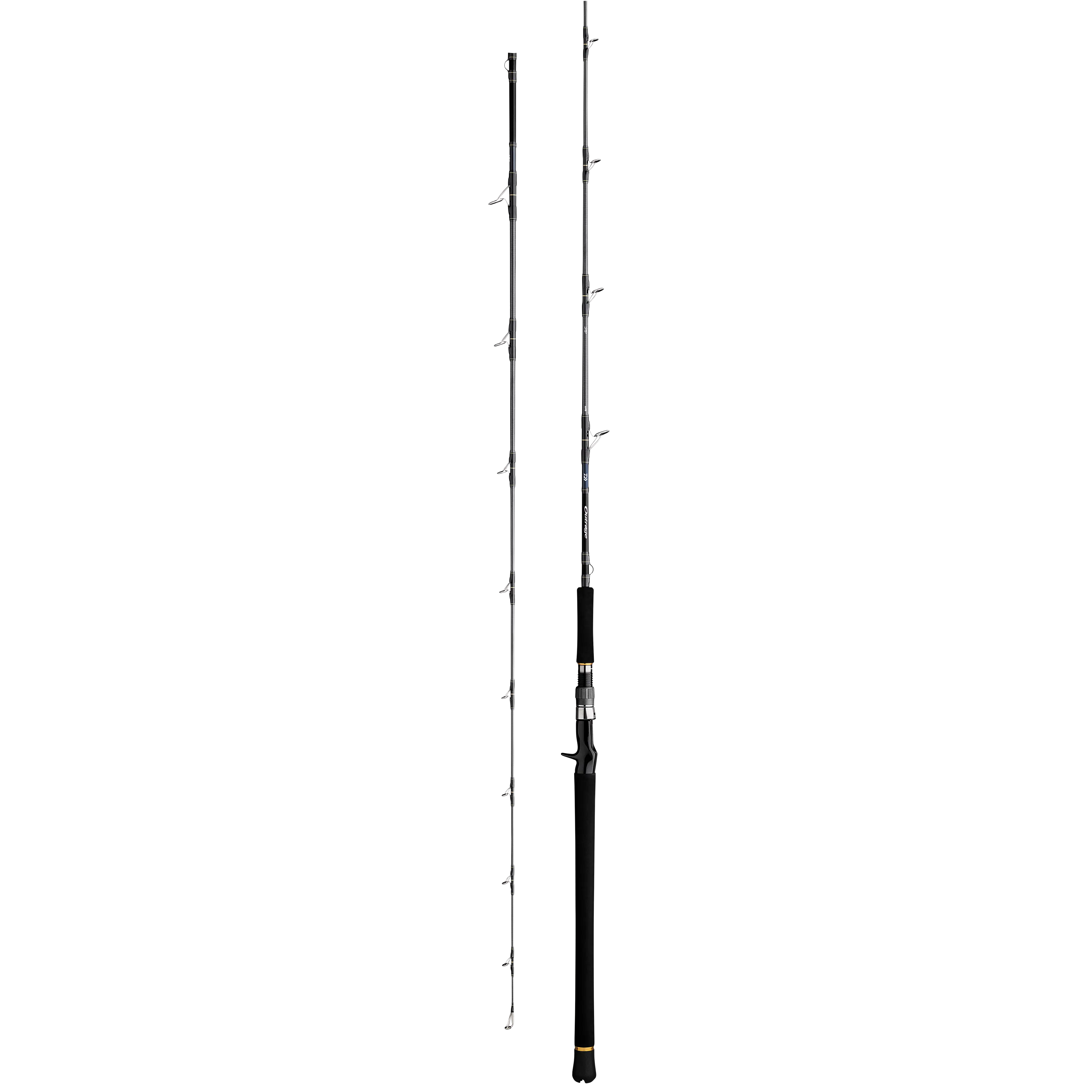
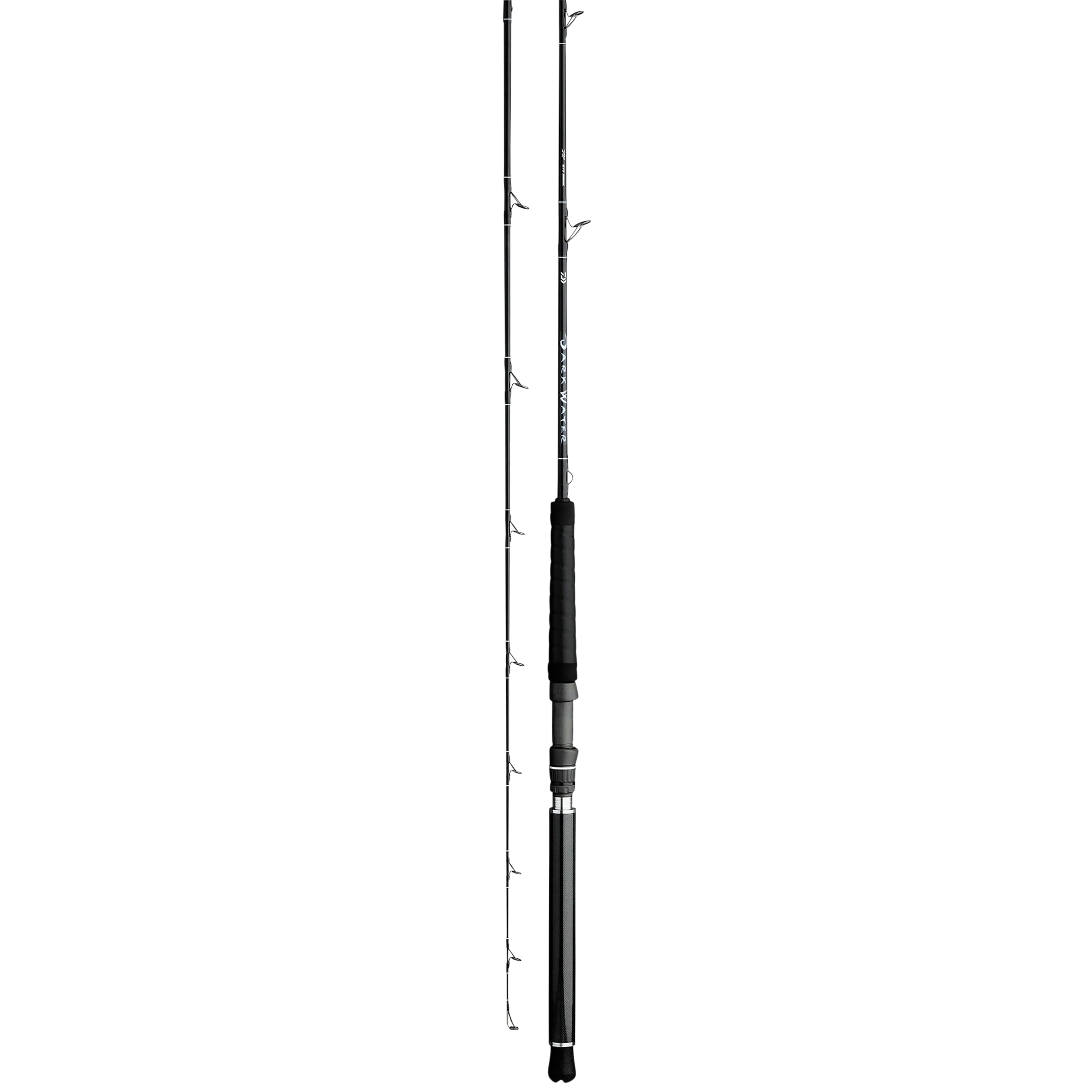
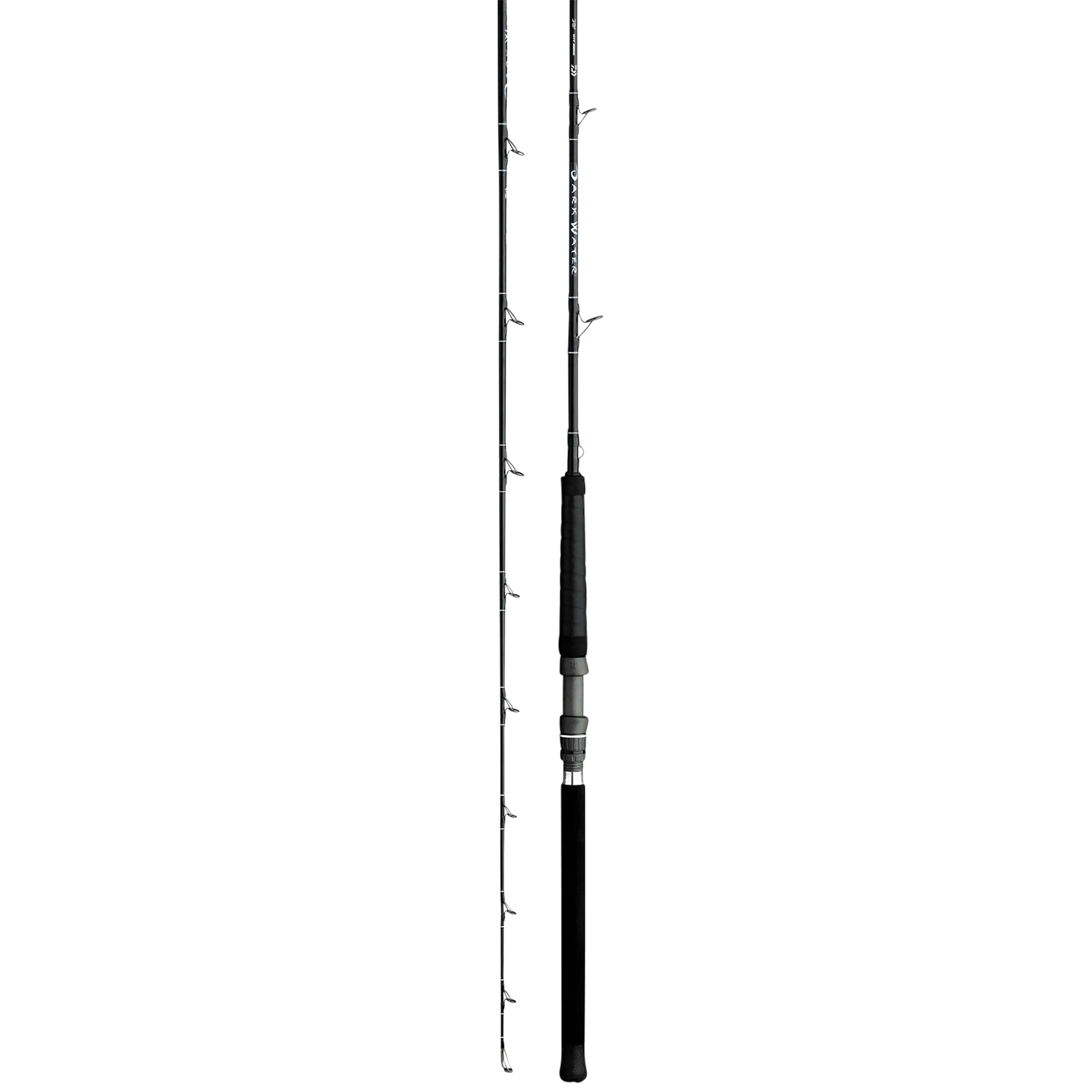
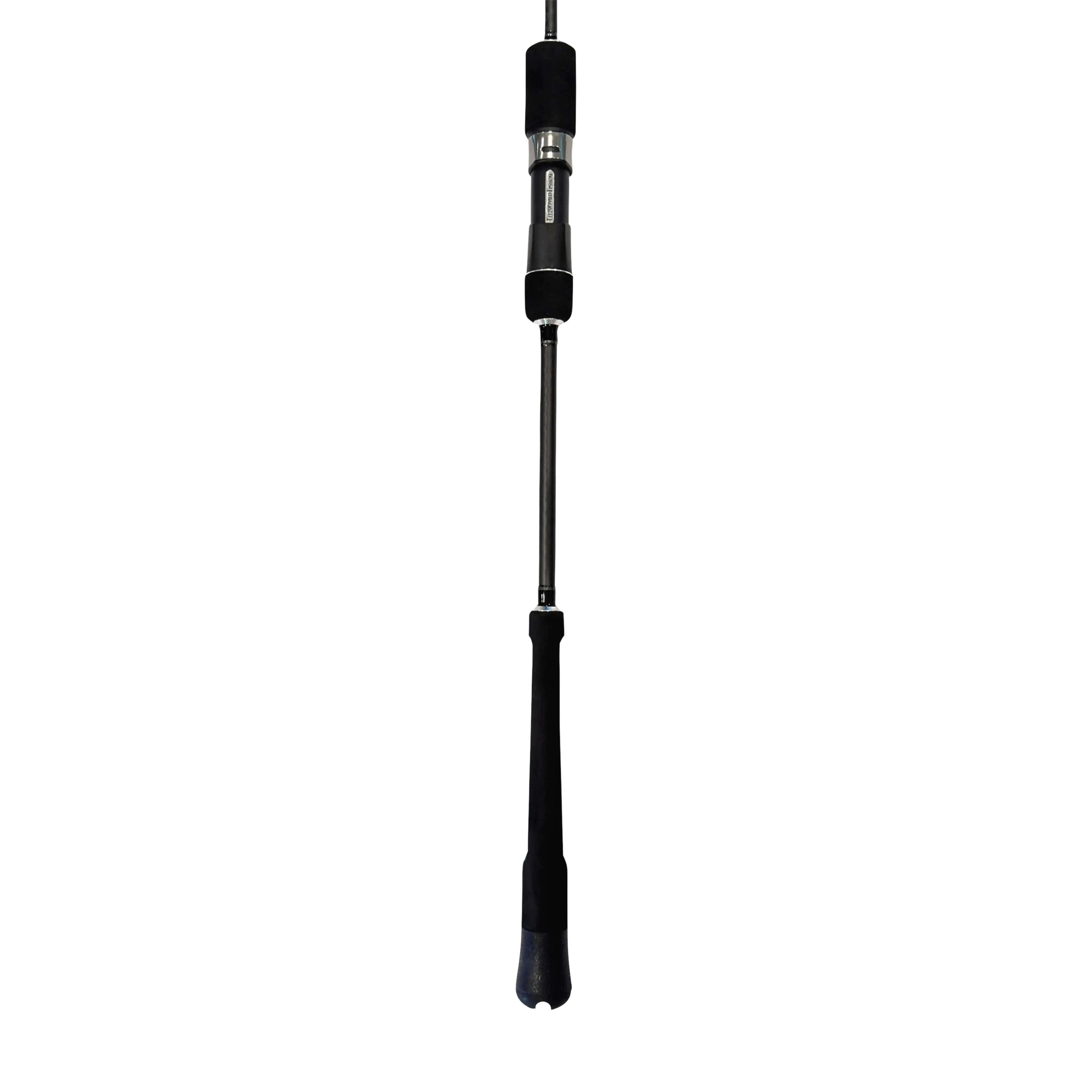
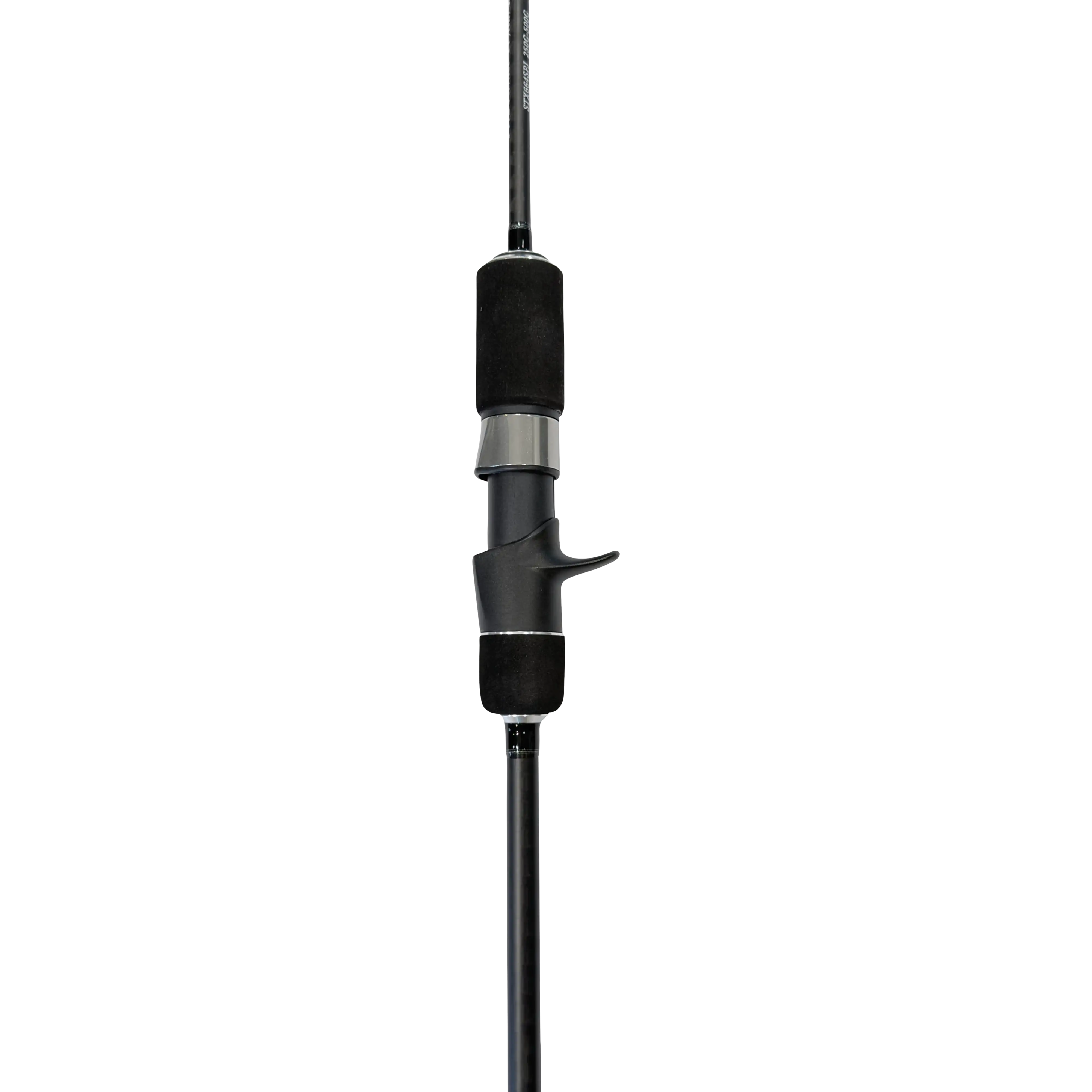
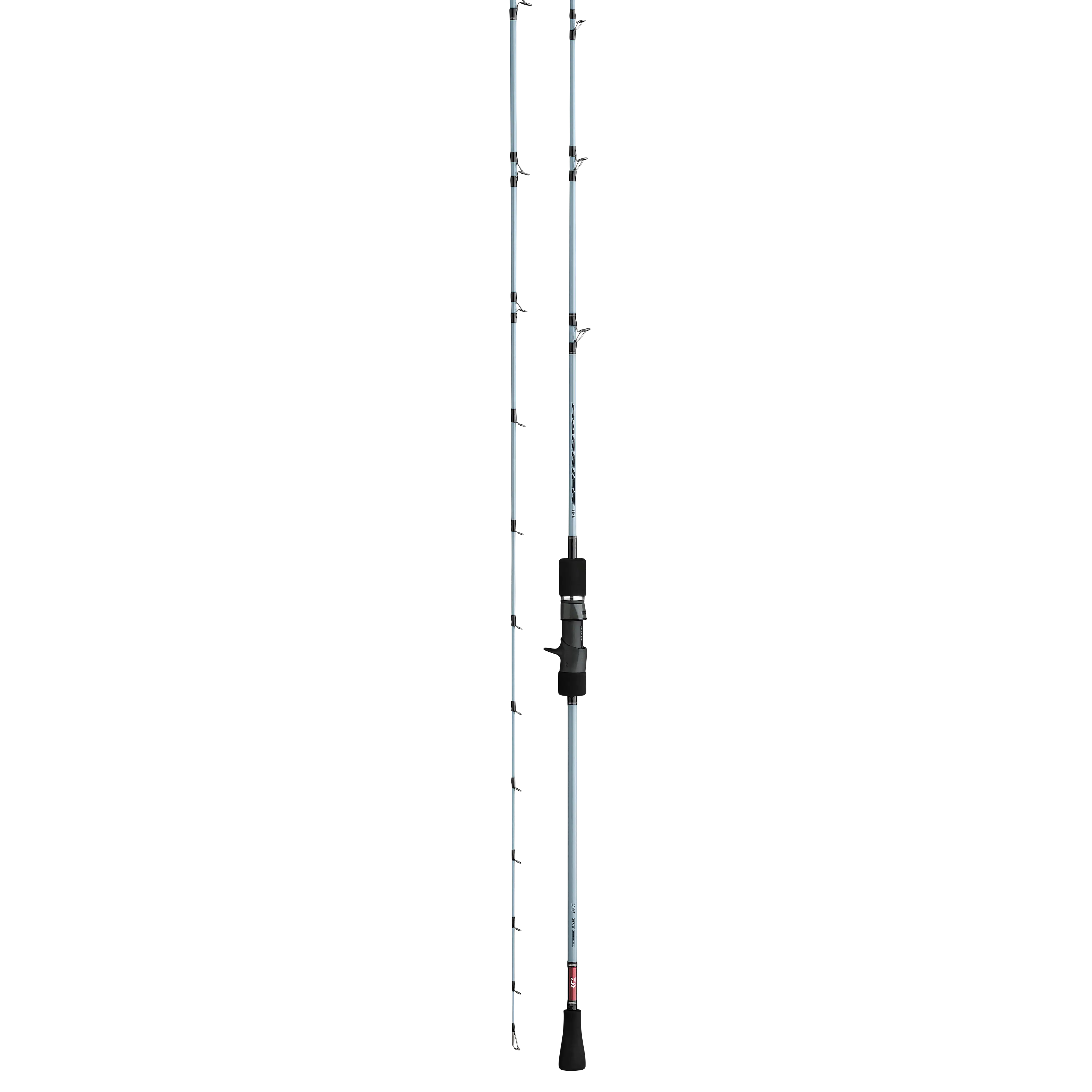
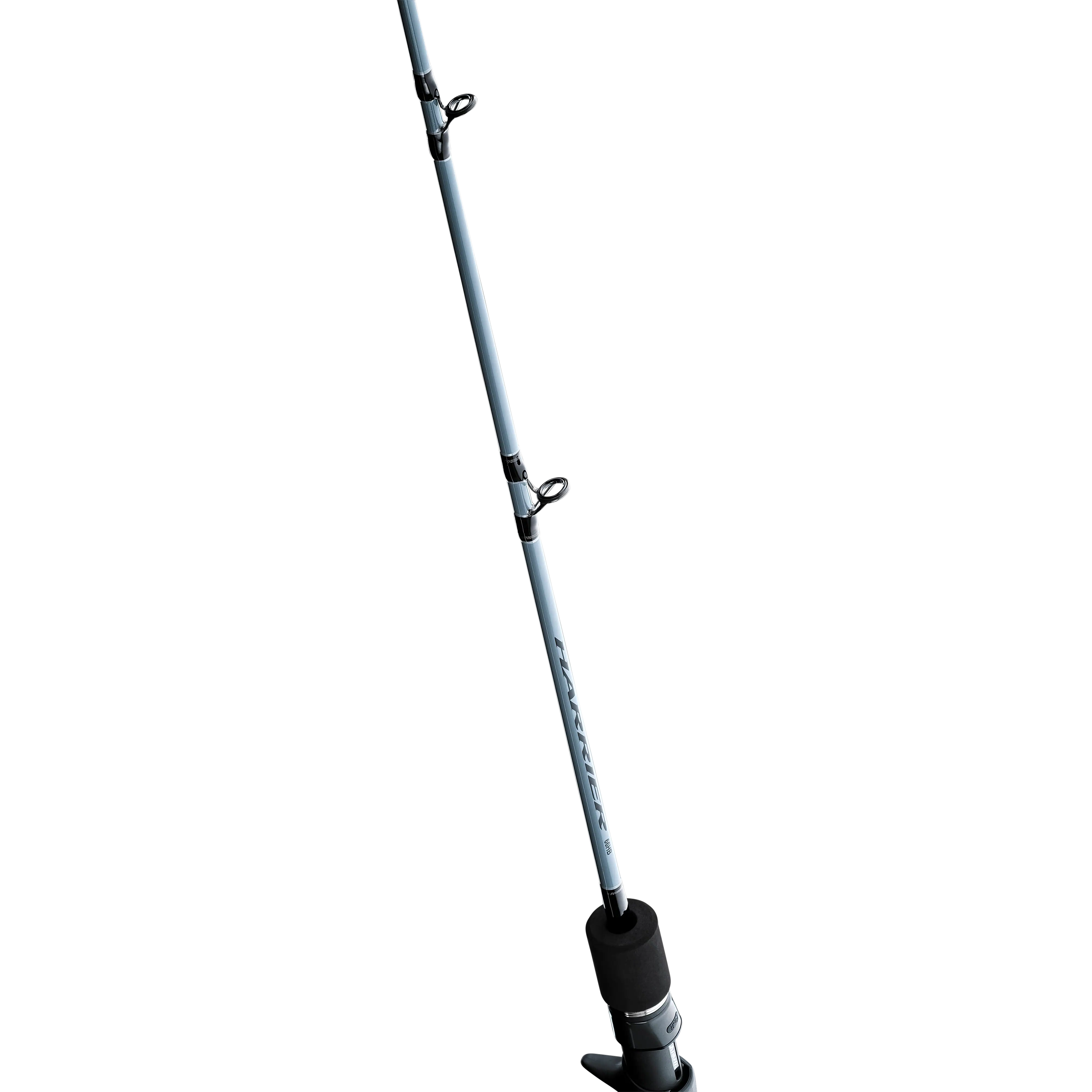
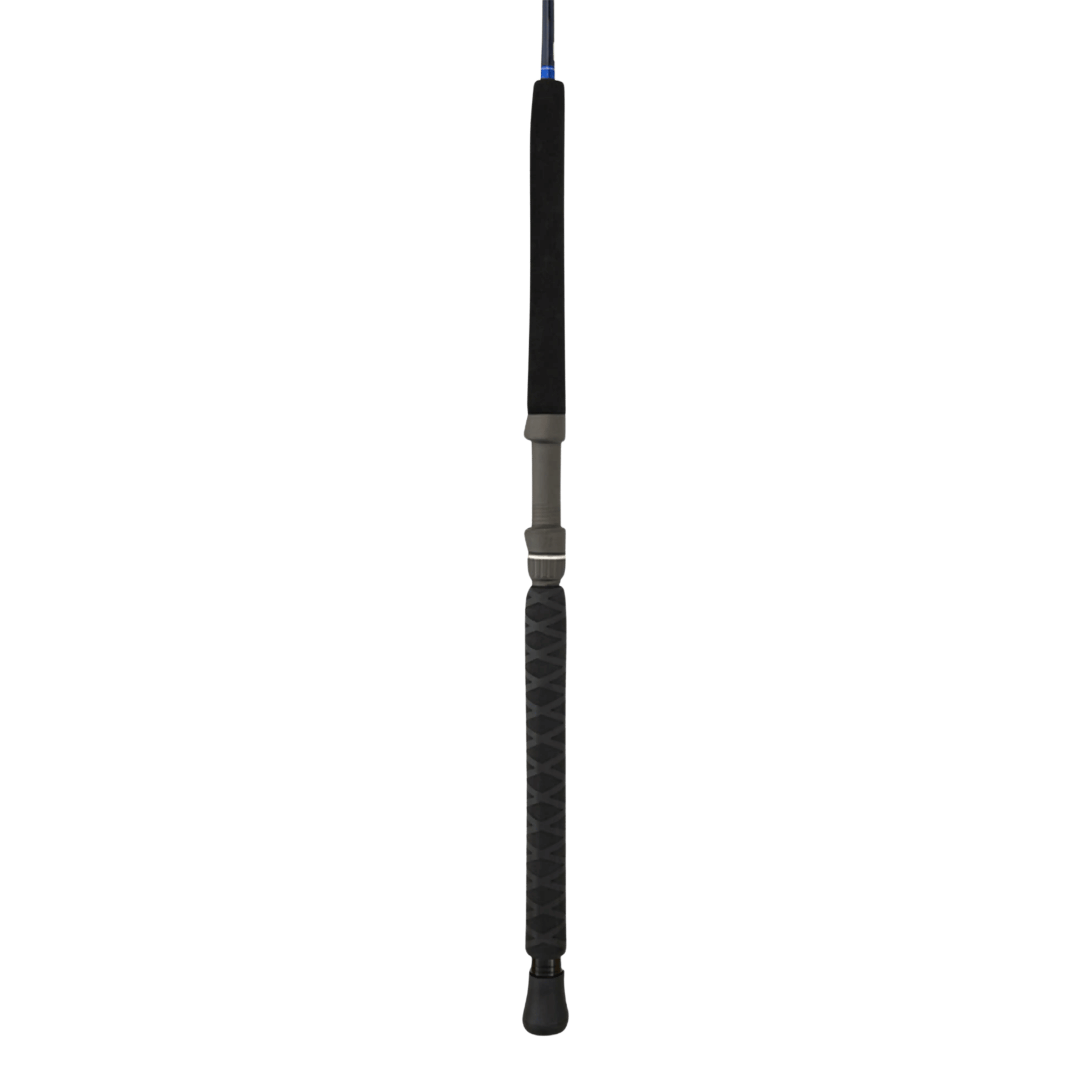
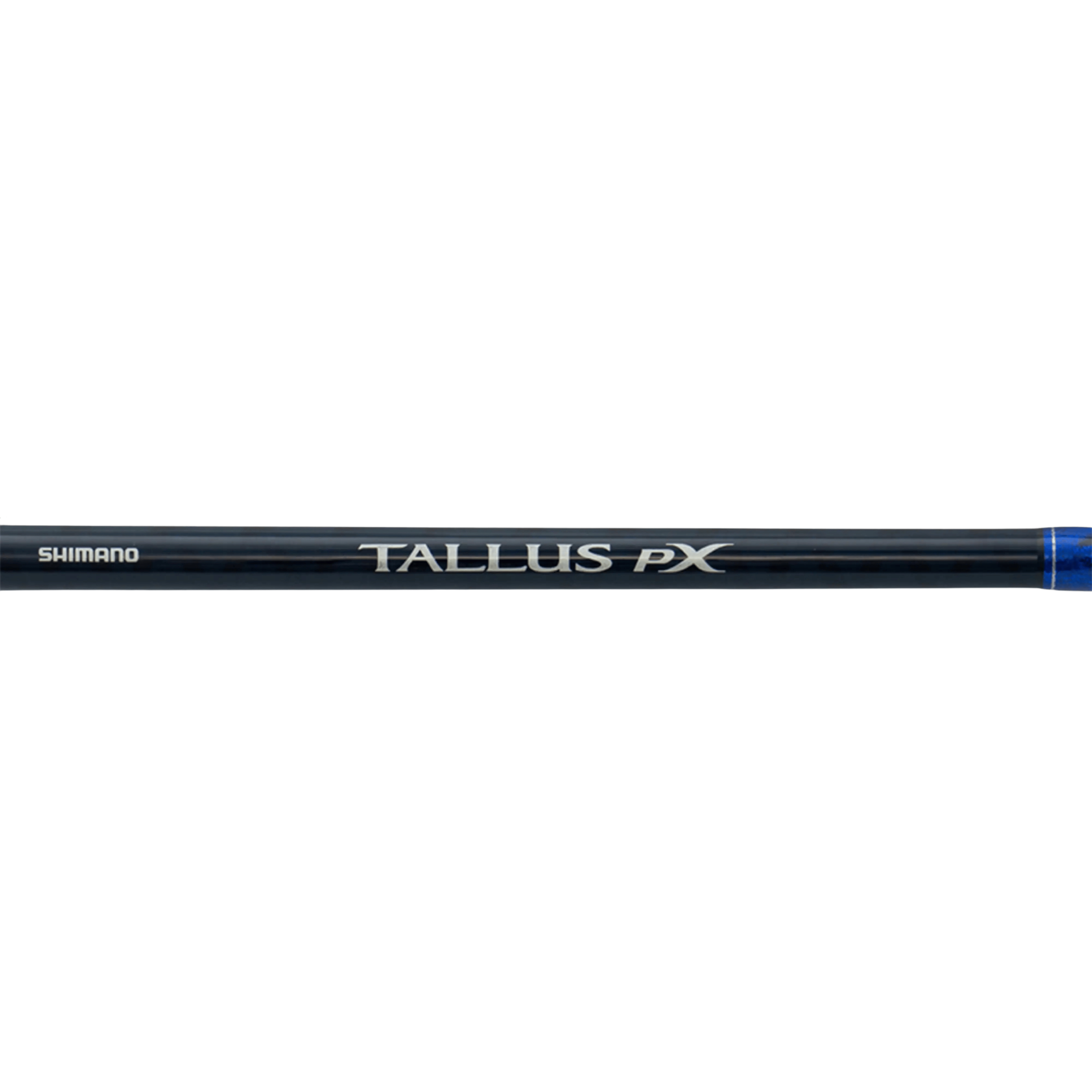
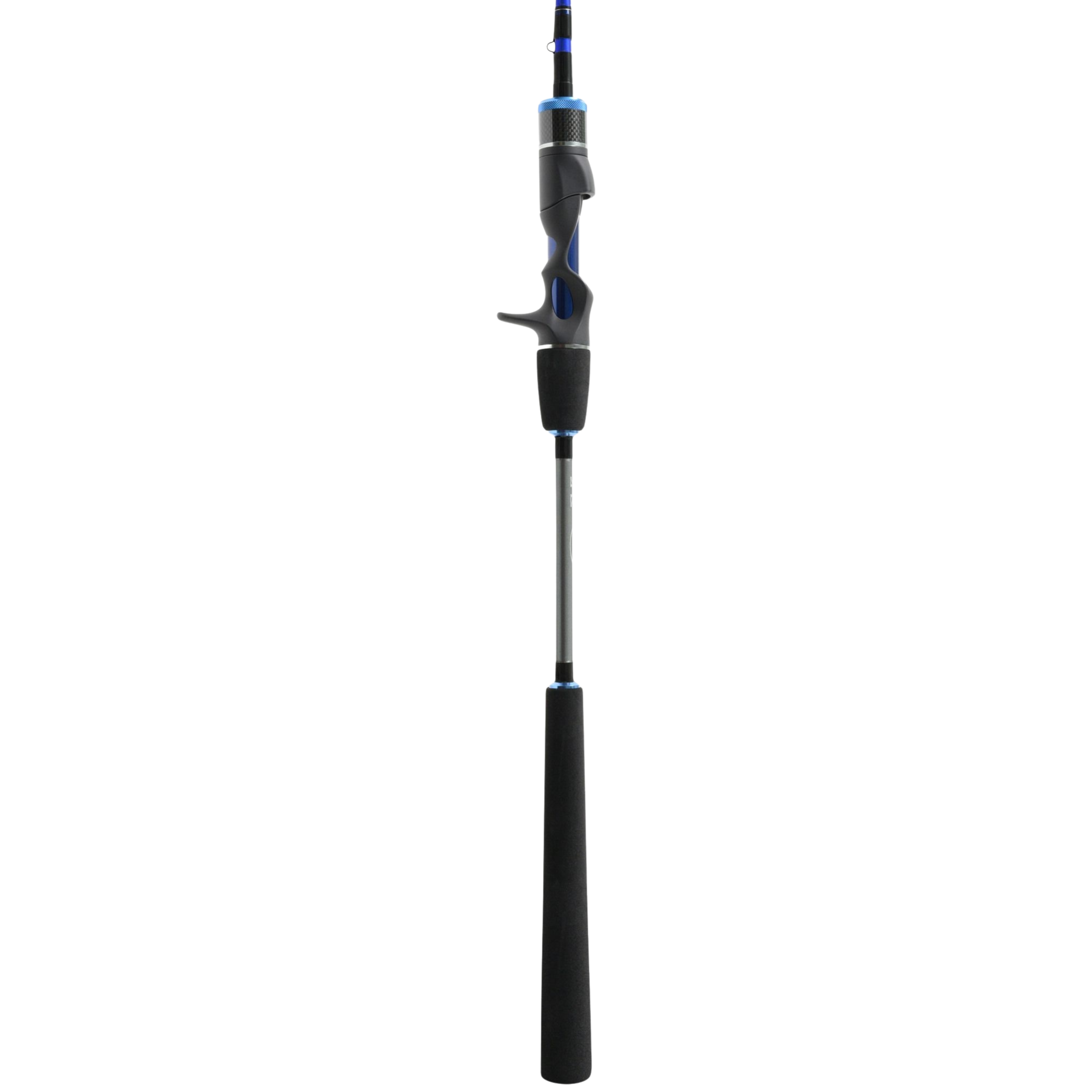
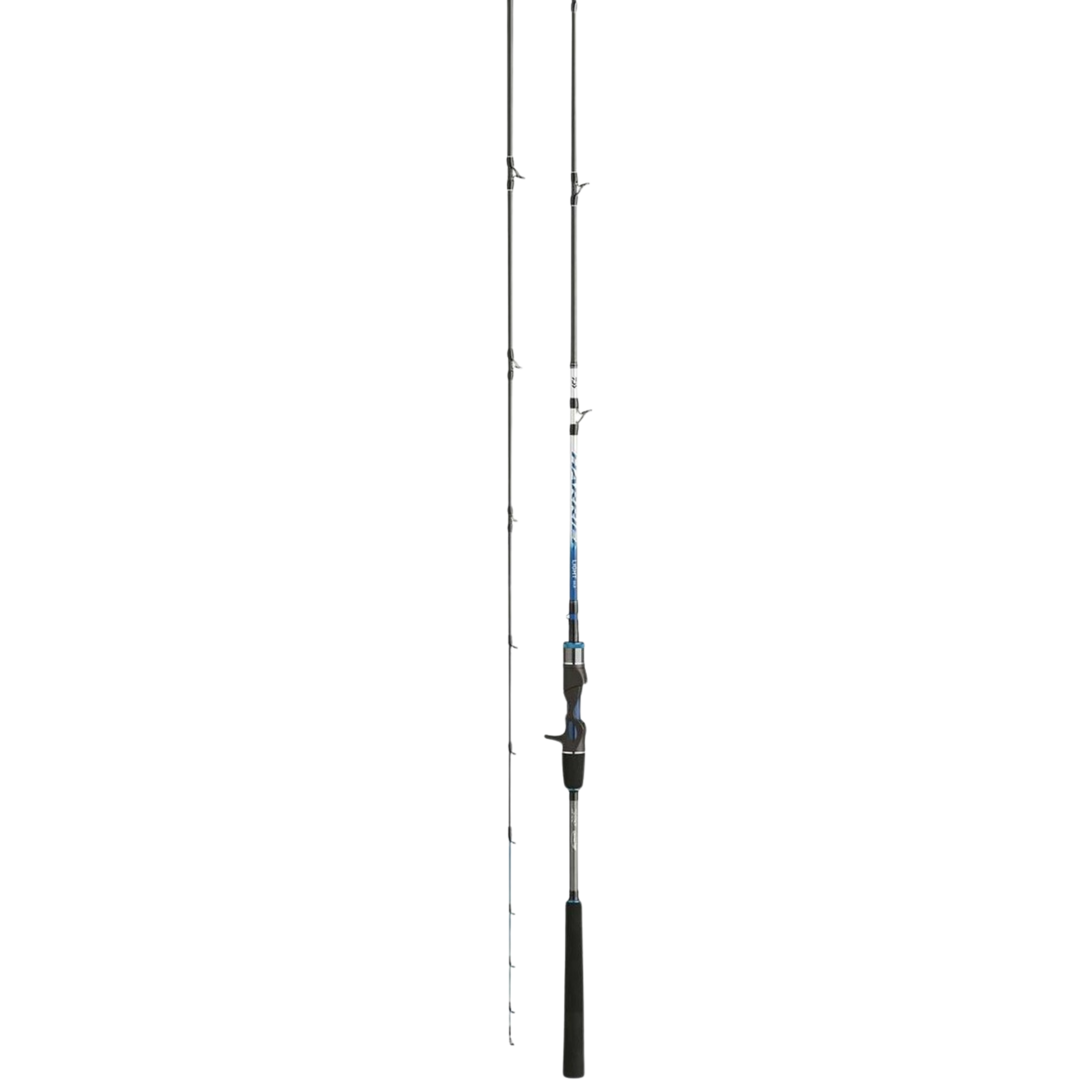
Red Snapper & Gag Grouper Rods
Best Reels for Snapper & Grouper Fishing
Reels for red snapper and gag grouper fishing are built for control, drag strength, and reliability under sustained load in deep-water structure fishing. The key requirement is consistent pressure and smooth drag performance when fish surge toward reefs, wrecks, ledges, and other heavy cover, where maintaining control is critical once a bite occurs.
Key Reel Features
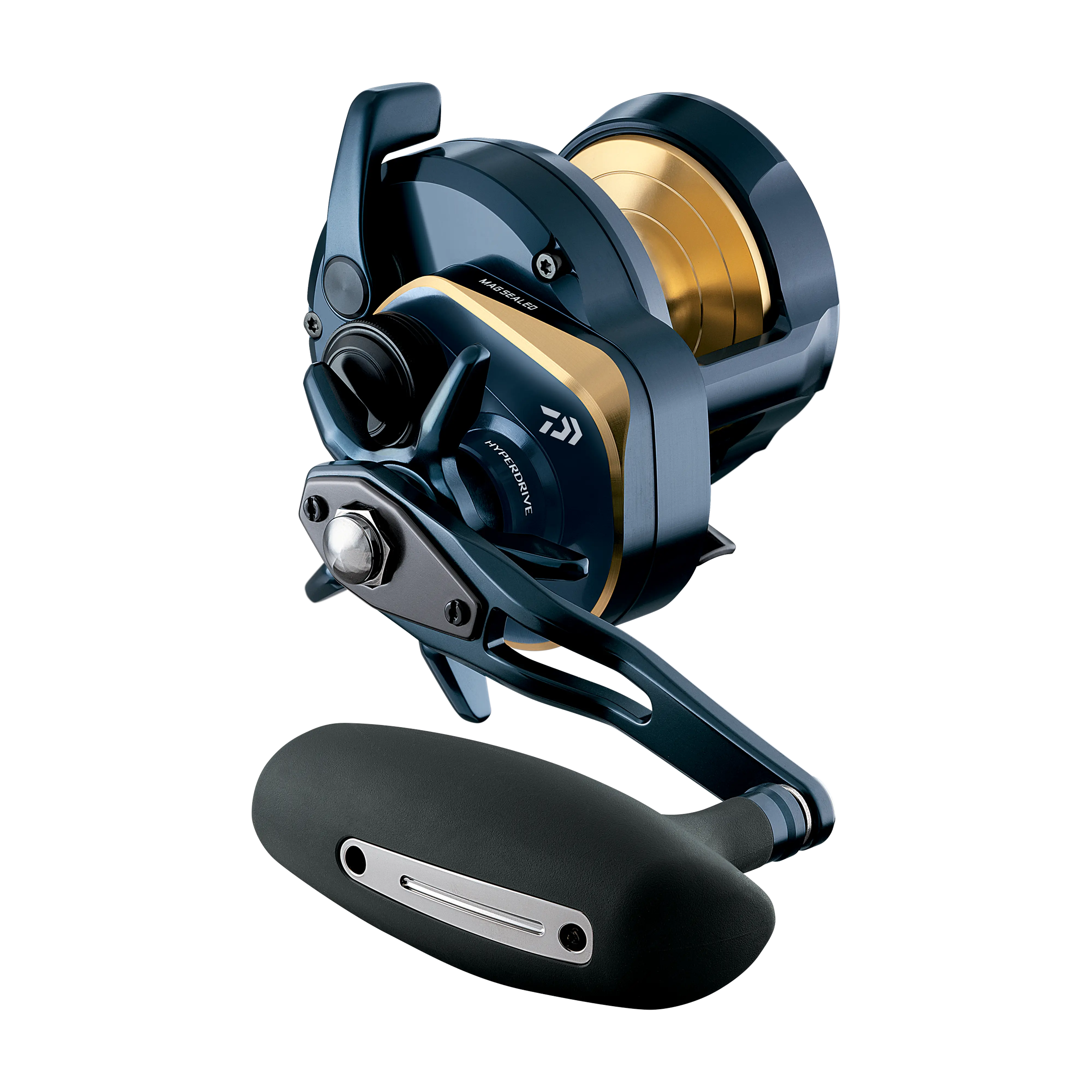
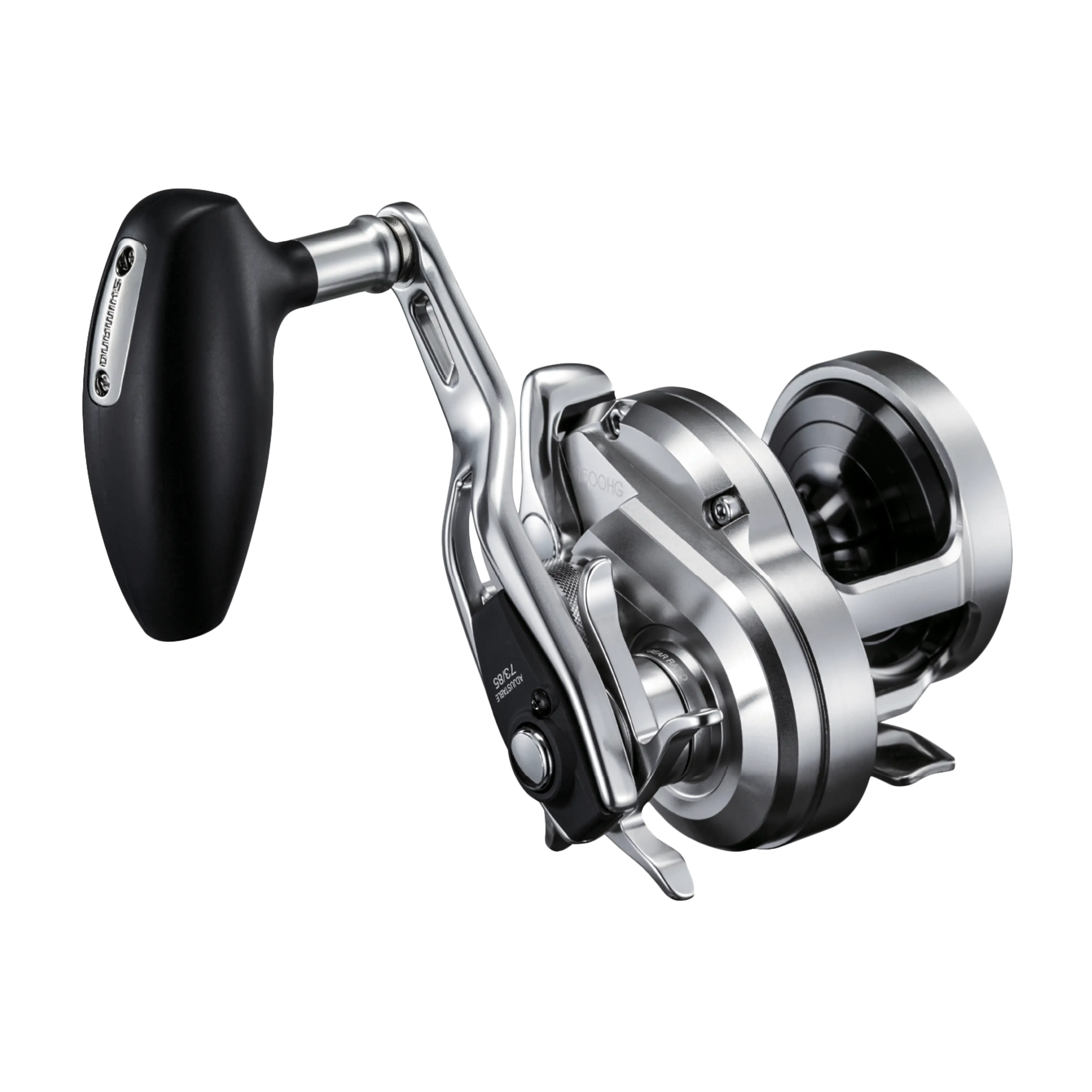
Conventional Reels
Conventional reels are used for bottom fishing and vertical jigging where torque, drag strength, and direct line control are critical for working fish around structure. Instead of a strict “class system,” they are best understood by frame size and intended load range. Compact lever drag reels (roughly 12–20 size range, depending on brand) are commonly used for lighter bottom fishing, jigging, and moderate-depth red snapper applications. Mid-frame reels (roughly 20–30 size range) are the most versatile offshore option, covering deeper water, heavier sinkers, stronger current, and applications where both red snapper and gag grouper are encountered around structure. Large offshore lever drag reels (30+ size class and above) are used for extreme depth, heavy current, and maximum structure pressure where high line capacity and sustained drag are required.
Across these sizes, the goal is consistent: maintain bottom contact and apply controlled lifting pressure in structure-heavy environments for both red snapper and gag grouper, rather than focusing on casting or finesse presentations.
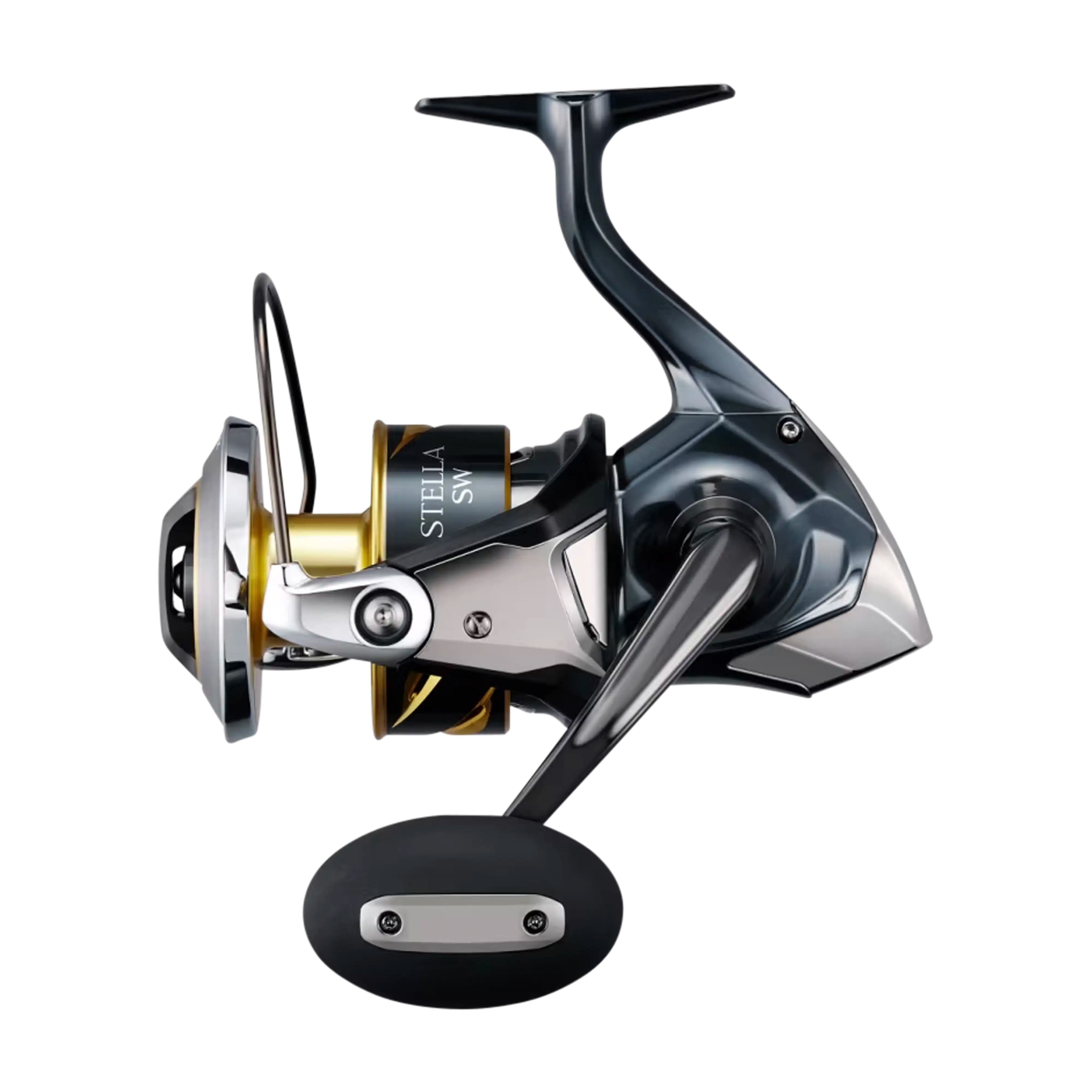
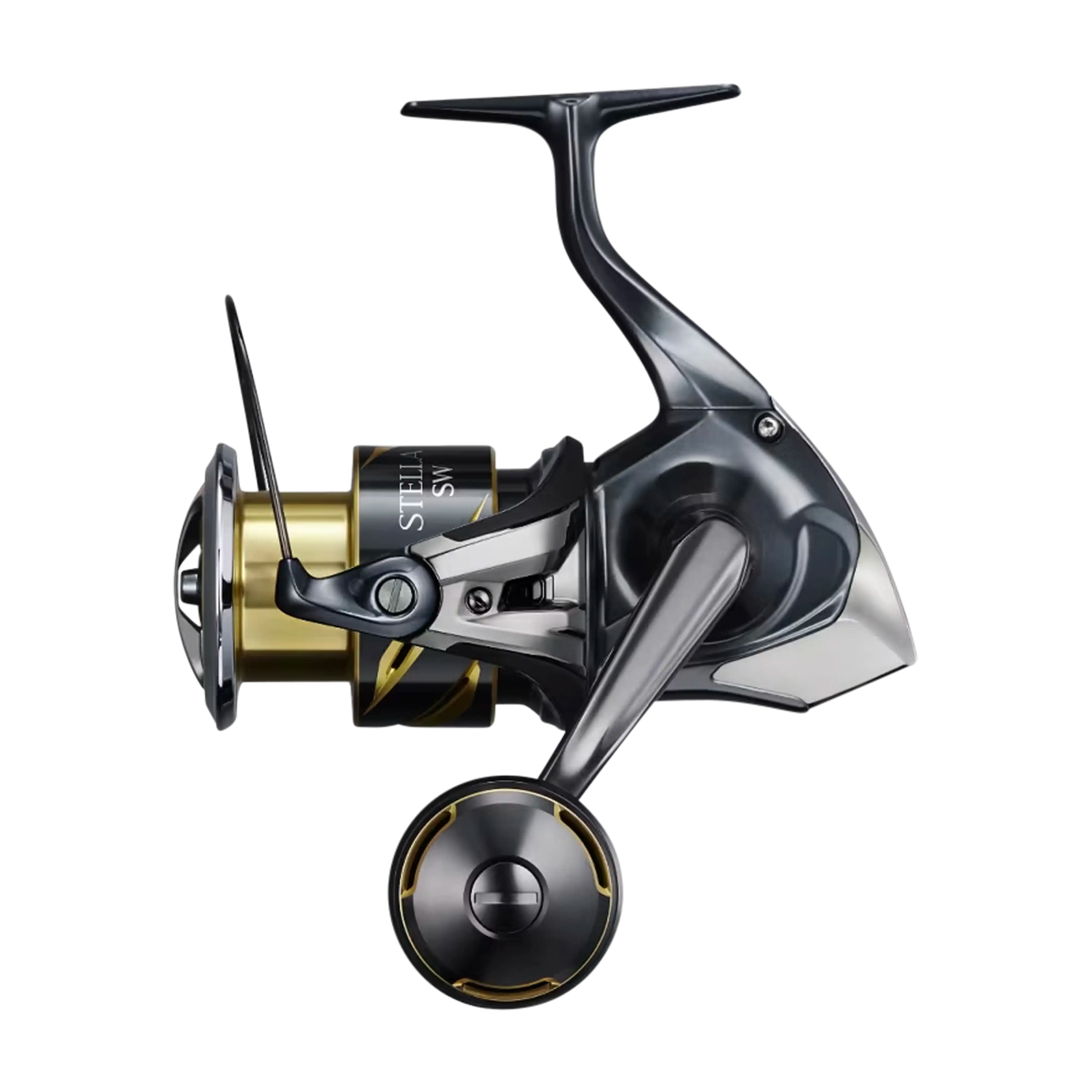
Spinning Reels
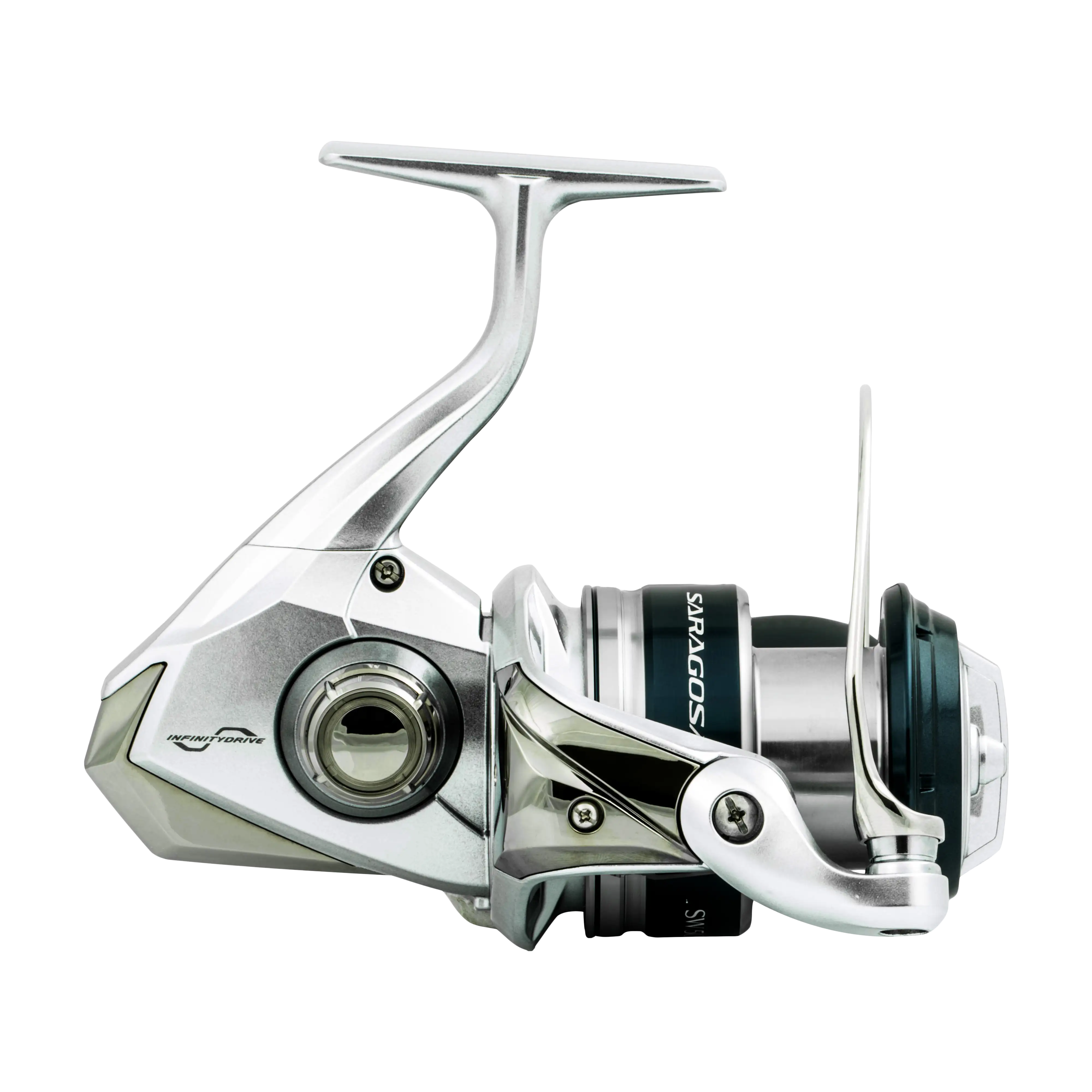
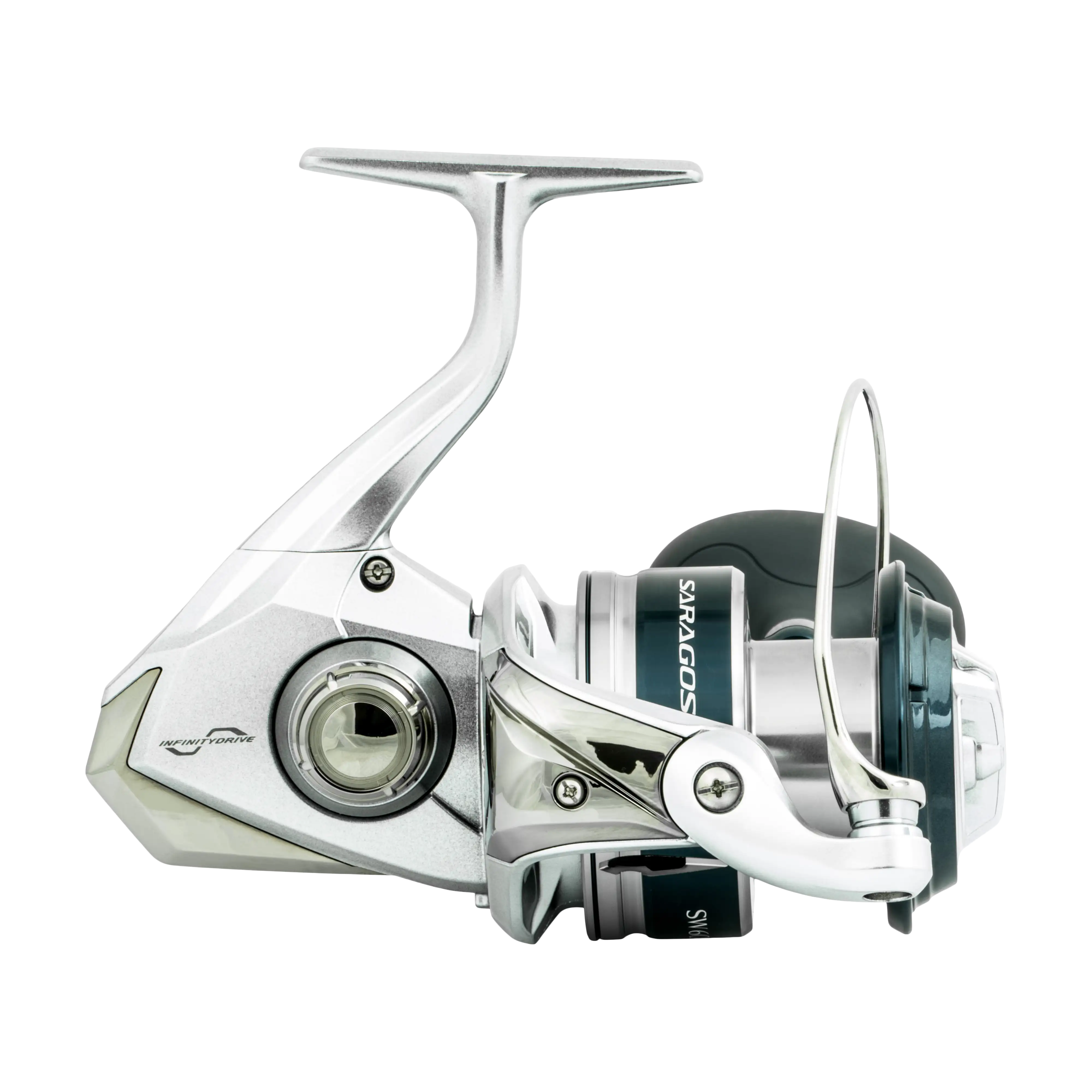
Spinning reels are used for jigheads, soft plastics, and lighter bait presentations where casting, line management, and controlled sink are important. Most red snapper and gag grouper spinning setups use 5000–8000 sizes, with 6000–8000 being most common offshore due to line capacity and control with 30–65 lb braid. Smaller 4000–5000 sizes are used for lighter rigs or shallower structure.
While primarily used for red snapper in suspended or mid-water presentations, spinning reels can also be applied to gag grouper when fish are positioned slightly off structure or along edges where more open presentations are possible.
Gear Ratio
Gear ratio controls how quickly line is recovered and how efficiently slack is managed after the drop or bite. For snapper and grouper applications, conventional reels typically range from 4.8:1 to 6.3:1, prioritizing torque and control for bottom fishing and vertical presentations. Spinning reels generally fall in the 5.2:1 to 6.5:1 range, balancing steady retrieval with enough speed to manage slack and maintain contact when fish move toward structure.
Drag System
A smooth, consistent drag system is essential for absorbing sudden strikes and maintaining steady pressure during deep-water fights, with most snapper and grouper setups requiring roughly 15–20+ lb of usable drag depending on line class and application. Conventional reels manage sustained load well through direct mechanical leverage under pressure, while spinning reels emphasize smooth startup and consistent drag flow during runs and direction changes.
Corrosion Resistance & Durability
Because offshore snapper and grouper fishing involves repeated saltwater exposure, heavy load, and frequent bottom contact, corrosion resistance and internal durability are critical across all reel types. Conventional reels are typically built around rigid frames and gear systems designed for sustained torque under load, while spinning reels rely heavily on sealing, rotor stability, and smooth operation through repeated casting and retrieval cycles.
Reel Specs by Application
Reel selection for red snapper and gag grouper is driven by depth, structure, and presentation style, with every setup focused on maintaining control, drag performance, and efficient fish handling around cover. Differences in technique mainly affect reel size, retrieve speed, and line capacity rather than changing the core requirements of the reel. In deeper water and heavy structure, two-speed conventional reels are often used to balance fast line pickup with added torque under load.
Here are recommended reel specifications based on common red snapper and gag grouper fishing applications.
Natural Baits & Rigs
A strong, high-torque reel with reliable drag and solid line capacity is needed to manage immediate pressure after the bite and control fish in heavy structure during deep bottom presentations. Smooth drag under load is critical for keeping fish pinned without surging back into cover.
Reel Type: Casting (Conventional) primarily, some spinning in lighter applications
Gear Ratio: 4.8:1 – 6.3:1 (conventional) / 5.2:1 – 6.2:1 (spinning)
Drag: 15–30+ lb smooth usable drag
Line: 30–65 lb braid (often paired with 40–80 lb leader)
Vertical Jigging (Speed Jigging)
A fast-recovery reel with strong, consistent drag is important for maintaining contact with the jig, reacting to strikes on the fall, and controlling fish during rapid lifts through the water column.
Reel Type: Casting (Conventional) or spinning, depending on angler preference and jig style
Gear Ratio: 5.2:1 – 6.3:1 (conventional) / 5.4:1 – 6.5:1 (spinning)
Drag: 15–25+ lb smooth drag
Line: 30–50 lb braid
Slow Pitch Jigging
A balanced, compact, smooth-retrieving reel with controlled drag is essential for maintaining cadence, managing slack during the fall, and keeping steady tension through the lift-and-drop rhythm.
Reel Type: Casting (Conventional) primarily, spinning in lighter applications or preference setups
Gear Ratio: 4.8:1 – 5.8:1 (conventional)
Drag: 12–25 lb smooth drag
Line: 20–50 lb braid
Jigheads & Baits
A smooth, responsive reel with balanced drag and efficient line management is needed for working lighter lures through the water column and maintaining natural presentation on suspended or roaming fish.
Reel Type: Spinning primarily (light casting setups also used)
Gear Ratio: 5.2:1 – 6.5:1 (spinning) / 5.3:1 – 6.3:1 (casting)
Drag: 10–20+ lb smooth drag
Line: 20–40 lb braid (often with 20–50 lb fluorocarbon leader)
Key Takeaways
- Conventional reels are often used for bottom control and vertical pressure due to torque and load handling.
- Spinning reels are often used for jigheads, soft plastics, and suspended presentations.
- Smooth, consistent drag performance matters more than peak drag numbers.
- Gear ratios should balance recovery speed with control under load.
Best Reels for Snapper & Grouper Fishing
Reels for red snapper and gag grouper fishing are built for control, drag strength, and reliability under sustained load in deep-water structure fishing. The key requirement is consistent pressure and smooth drag performance when fish surge toward reefs, wrecks, ledges, and other heavy cover, where maintaining control is critical once a bite occurs.
Key Reel Features
Conventional Reels
Conventional reels are used for bottom fishing and vertical jigging where torque, drag strength, and direct line control are critical for working fish around structure. Instead of a strict “class system,” they are best understood by frame size and intended load range. Compact lever drag reels (roughly 12–20 size range, depending on brand) are commonly used for lighter bottom fishing, jigging, and moderate-depth red snapper applications. Mid-frame reels (roughly 20–30 size range) are the most versatile offshore option, covering deeper water, heavier sinkers, stronger current, and applications where both red snapper and gag grouper are encountered around structure. Large offshore lever drag reels (30+ size class and above) are used for extreme depth, heavy current, and maximum structure pressure where high line capacity and sustained drag are required.
Across these sizes, the goal is consistent: maintain bottom contact and apply controlled lifting pressure in structure-heavy environments for both red snapper and gag grouper, rather than focusing on casting or finesse presentations.
Spinning Reels
Spinning reels are used for jigheads, soft plastics, and lighter bait presentations where casting, line management, and controlled sink are important. Most red snapper and gag grouper spinning setups use 5000–8000 sizes, with 6000–8000 being most common offshore due to line capacity and control with 30–65 lb braid. Smaller 4000–5000 sizes are used for lighter rigs or shallower structure.
While primarily used for red snapper in suspended or mid-water presentations, spinning reels can also be applied to gag grouper when fish are positioned slightly off structure or along edges where more open presentations are possible.
Gear Ratio
Gear ratio controls how quickly line is recovered and how efficiently slack is managed after the drop or bite. For snapper and grouper applications, conventional reels typically range from 4.8:1 to 6.3:1, prioritizing torque and control for bottom fishing and vertical presentations. Spinning reels generally fall in the 5.2:1 to 6.5:1 range, balancing steady retrieval with enough speed to manage slack and maintain contact when fish move toward structure.
Drag System
A smooth, consistent drag system is essential for absorbing sudden strikes and maintaining steady pressure during deep-water fights, with most snapper and grouper setups requiring roughly 15–20+ lb of usable drag depending on line class and application. Conventional reels manage sustained load well through direct mechanical leverage under pressure, while spinning reels emphasize smooth startup and consistent drag flow during runs and direction changes.
Corrosion Resistance & Durability
Because offshore snapper and grouper fishing involves repeated saltwater exposure, heavy load, and frequent bottom contact, corrosion resistance and internal durability are critical across all reel types. Conventional reels are typically built around rigid frames and gear systems designed for sustained torque under load, while spinning reels rely heavily on sealing, rotor stability, and smooth operation through repeated casting and retrieval cycles.
Reel Specs by Application
Reel selection for red snapper and gag grouper is driven by depth, structure, and presentation style, with every setup focused on maintaining control, drag performance, and efficient fish handling around cover. Differences in technique mainly affect reel size, retrieve speed, and line capacity rather than changing the core requirements of the reel. In deeper water and heavy structure, two-speed conventional reels are often used to balance fast line pickup with added torque under load.
Here are recommended reel specifications based on common red snapper and gag grouper fishing applications.
Natural Baits & Rigs
A strong, high-torque reel with reliable drag and solid line capacity is needed to manage immediate pressure after the bite and control fish in heavy structure during deep bottom presentations. Smooth drag under load is critical for keeping fish pinned without surging back into cover.
Reel Type: Casting (Conventional) primarily, some spinning in lighter applications
Gear Ratio: 4.8:1 – 6.3:1 (conventional) / 5.2:1 – 6.2:1 (spinning)
Drag: 15–30+ lb smooth usable drag
Line: 30–65 lb braid (often paired with 40–80 lb leader)
Vertical Jigging (Speed Jigging)
A fast-recovery reel with strong, consistent drag is important for maintaining contact with the jig, reacting to strikes on the fall, and controlling fish during rapid lifts through the water column.
Reel Type: Casting (Conventional) or spinning, depending on angler preference and jig style
Gear Ratio: 5.2:1 – 6.3:1 (conventional) / 5.4:1 – 6.5:1 (spinning)
Drag: 15–25+ lb smooth drag
Line: 30–50 lb braid
Slow Pitch Jigging
A balanced, compact, smooth-retrieving reel with controlled drag is essential for maintaining cadence, managing slack during the fall, and keeping steady tension through the lift-and-drop rhythm.
Reel Type: Casting (Conventional) primarily, spinning in lighter applications or preference setups
Gear Ratio: 4.8:1 – 5.8:1 (conventional)
Drag: 12–25 lb smooth drag
Line: 20–50 lb braid
Jigheads & Baits
A smooth, responsive reel with balanced drag and efficient line management is needed for working lighter lures through the water column and maintaining natural presentation on suspended or roaming fish.
Reel Type: Spinning primarily (light casting setups also used)
Gear Ratio: 5.2:1 – 6.5:1 (spinning) / 5.3:1 – 6.3:1 (casting)
Drag: 10–20+ lb smooth drag
Line: 20–40 lb braid (often with 20–50 lb fluorocarbon leader)
Key Takeaways
- Conventional reels are often used for bottom control and vertical pressure due to torque and load handling.
- Spinning reels are often used for jigheads, soft plastics, and suspended presentations.
- Smooth, consistent drag performance matters more than peak drag numbers.
- Gear ratios should balance recovery speed with control under load.
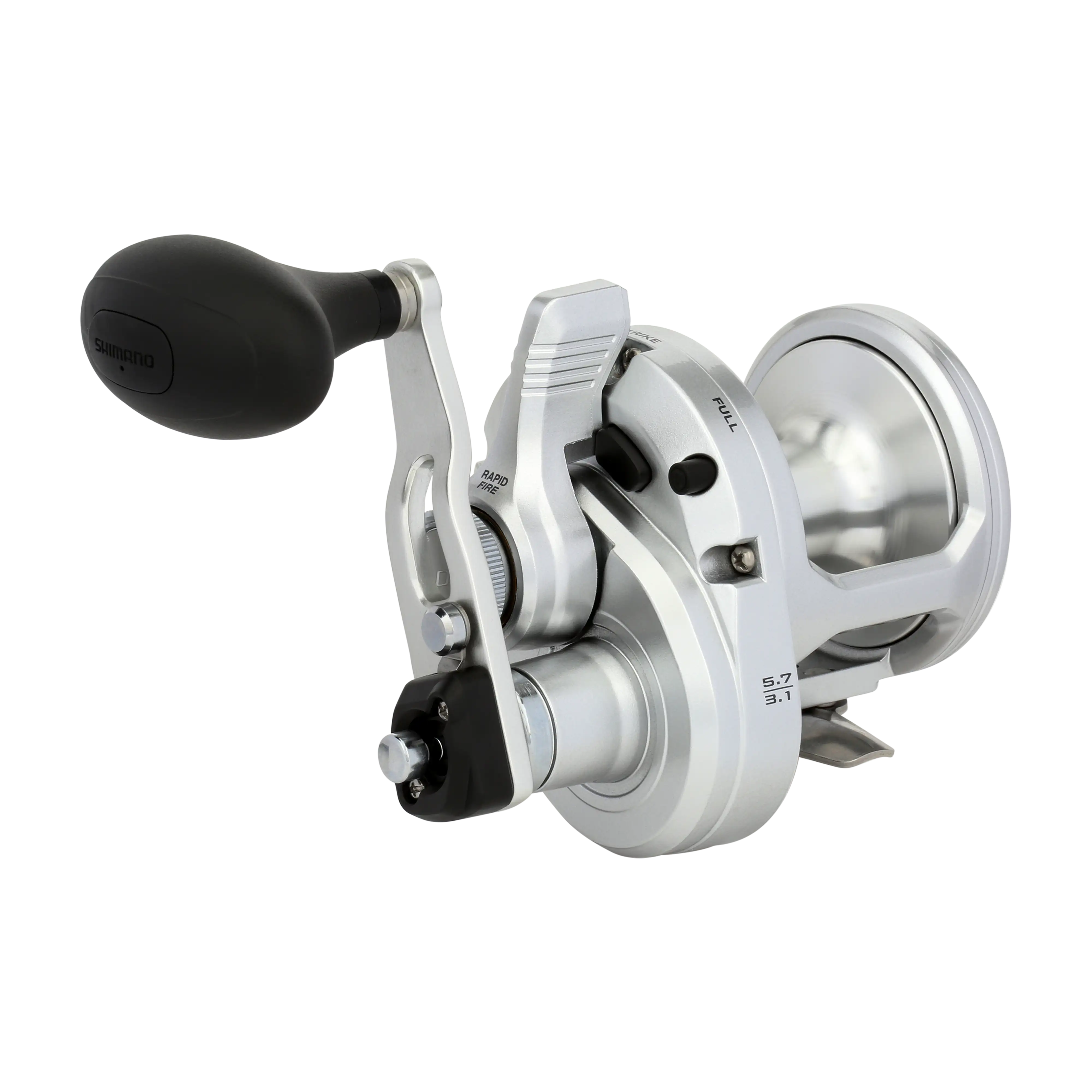
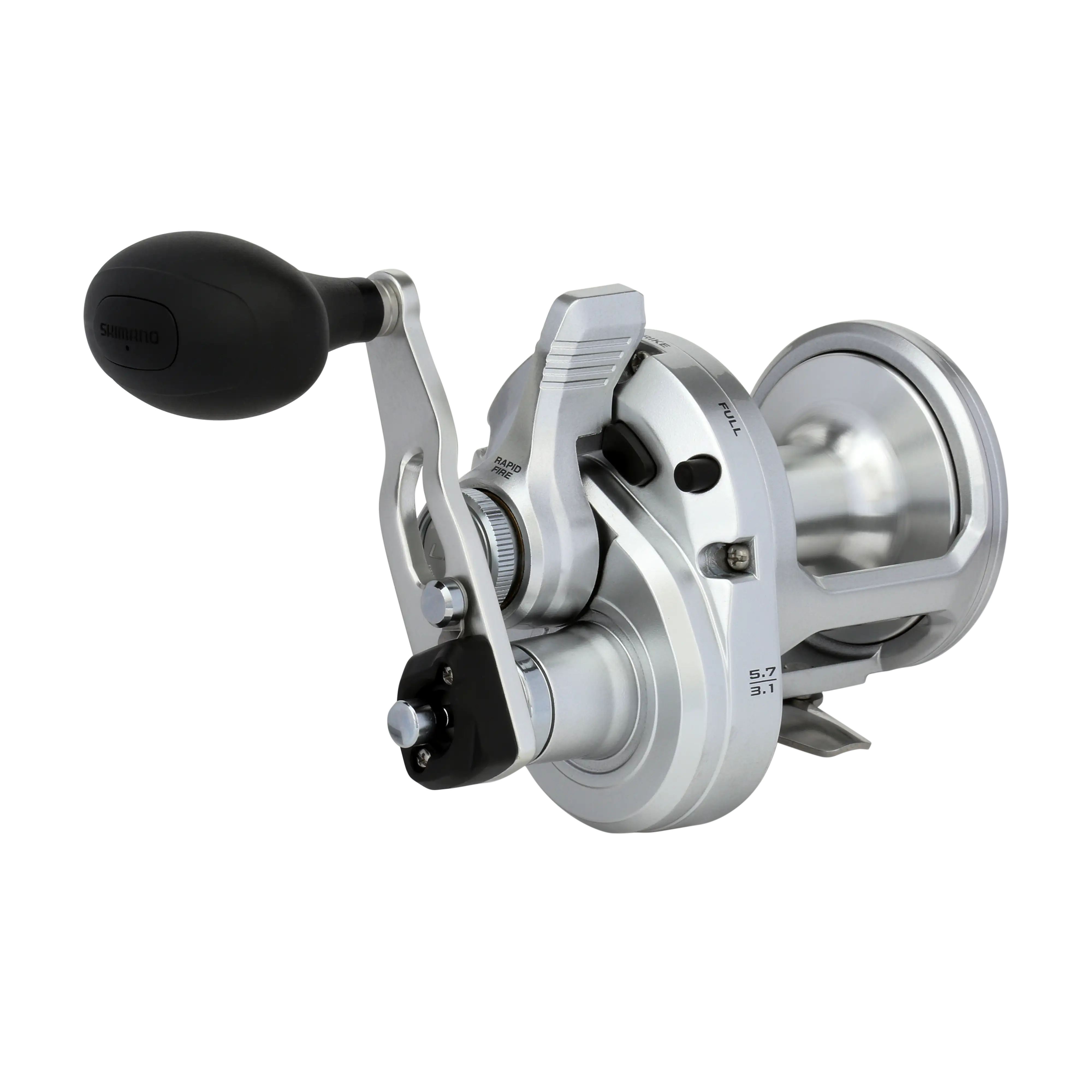
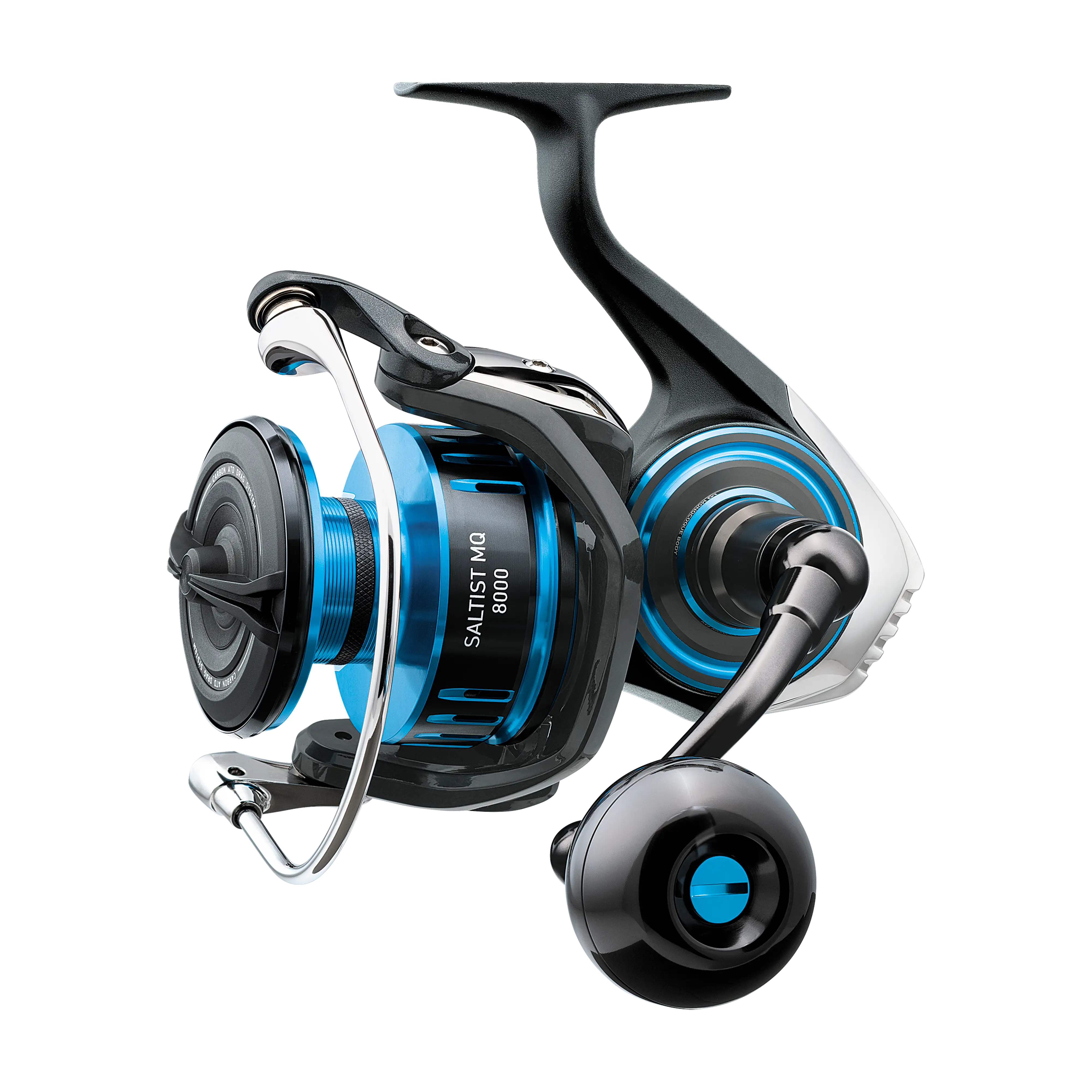
Reels for Red Snapper & Gag Grouper Fishing
Fishing Line & Leaders
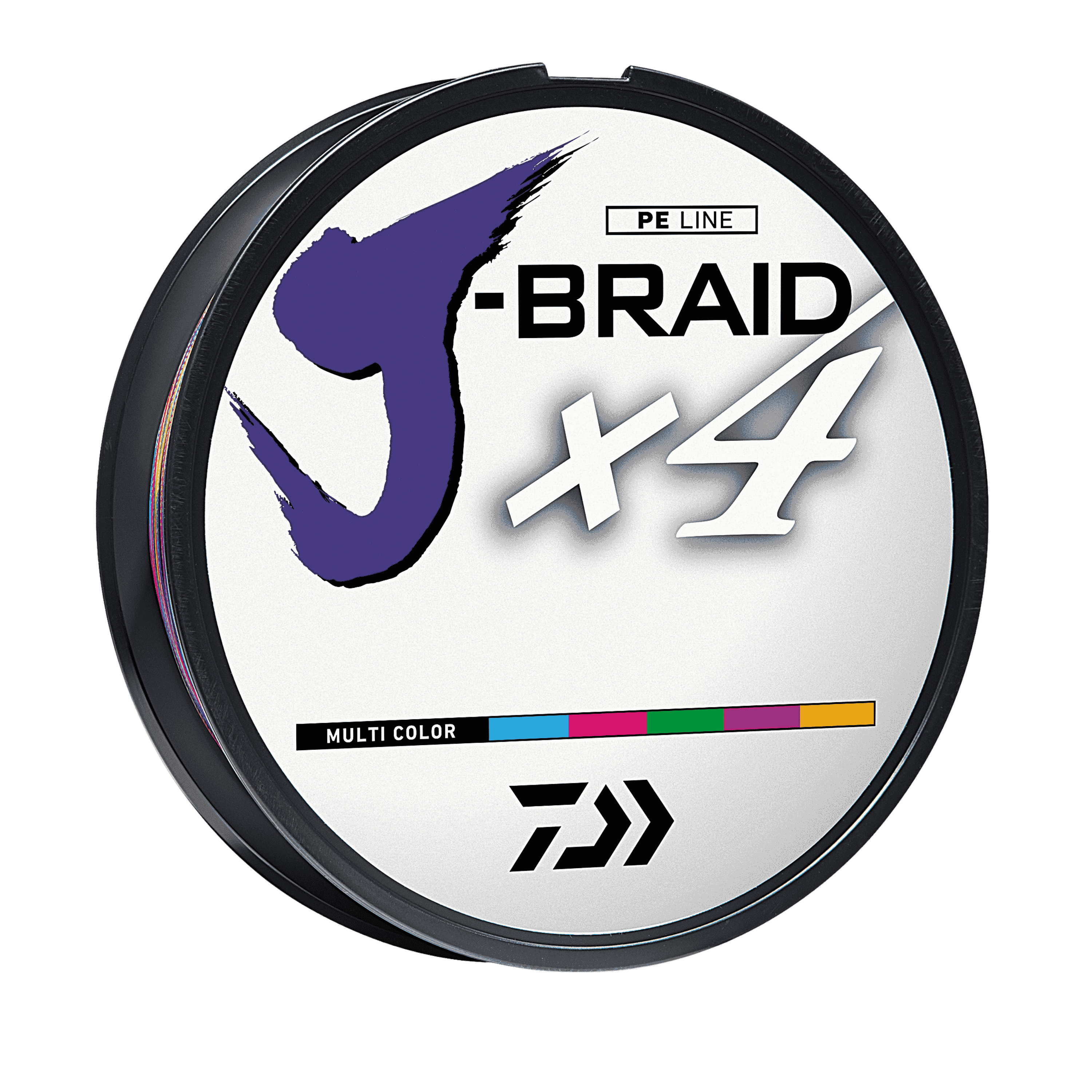
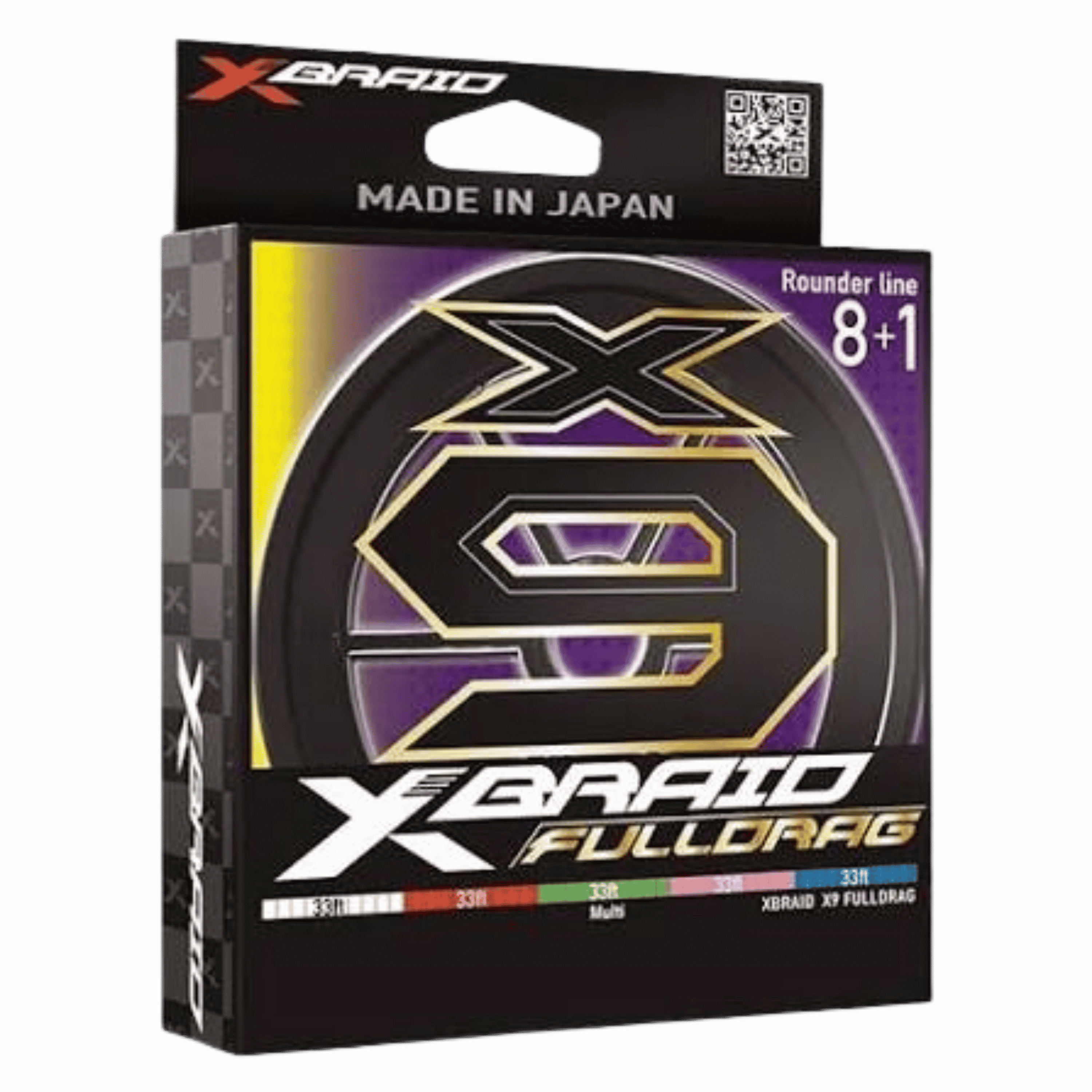
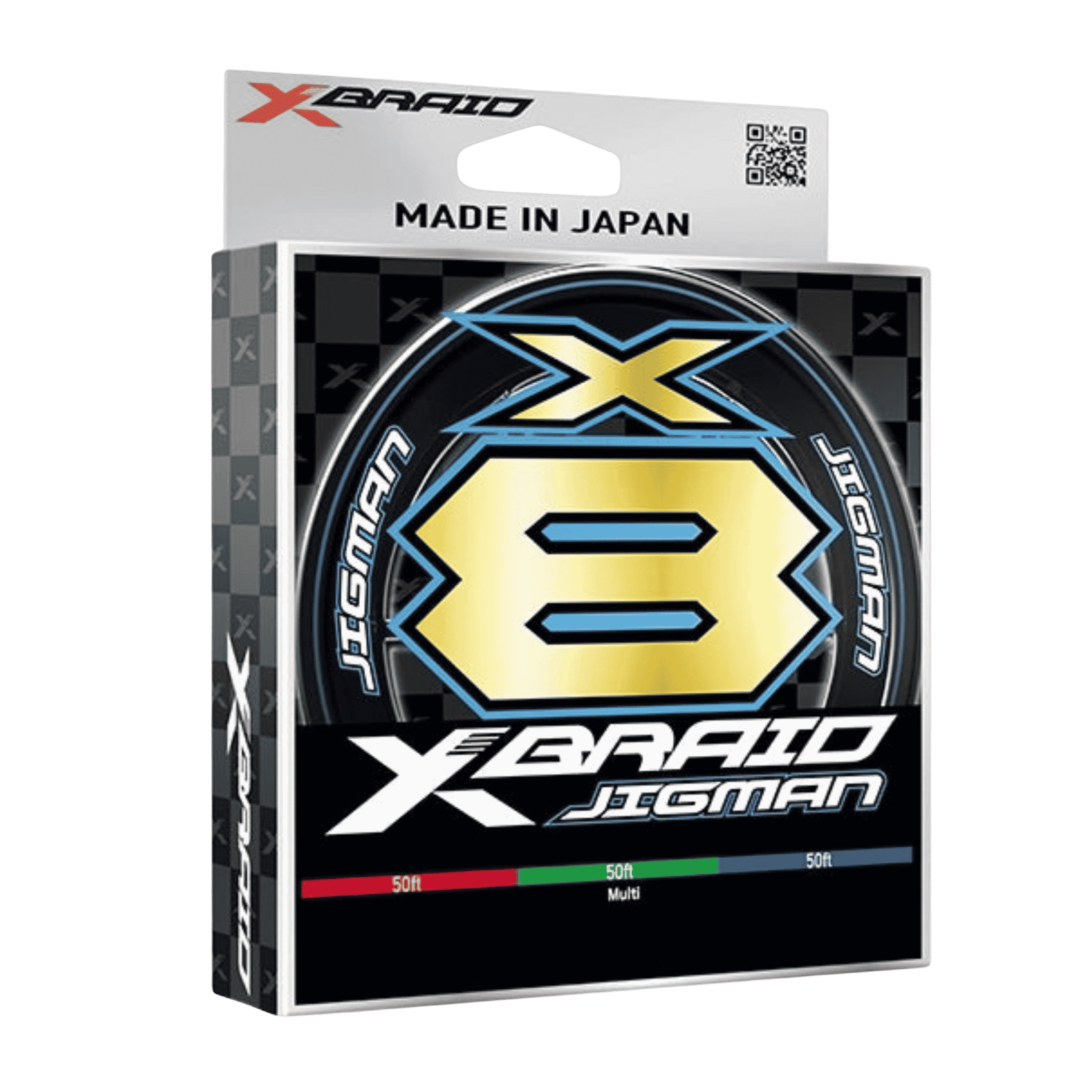
Line and leader choice is critical in red snapper and gag grouper fishing because it directly affects depth control, bite detection, and—most importantly—the ability to control fish around heavy structure once hooked. These offshore applications place constant pressure on the entire system, from maintaining bottom contact in current to lifting fish away from reefs, wrecks, ledges, and other abrasive cover. A properly matched setup helps anglers stay connected to the presentation while still applying enough pressure to keep fish from reaching structure during the fight.
Because both species are commonly targeted in deep water and strong current, line diameter, stretch, and abrasion resistance all play major roles in overall performance. Braided mainline is favored for its sensitivity and thin diameter, allowing better depth control and more direct contact with bait rigs or jigs, while heavy leaders provide the abrasion resistance and shock absorption needed when fish surge near cover. The goal is to build a balanced system that maintains sensitivity without sacrificing durability or lifting control under sustained load.
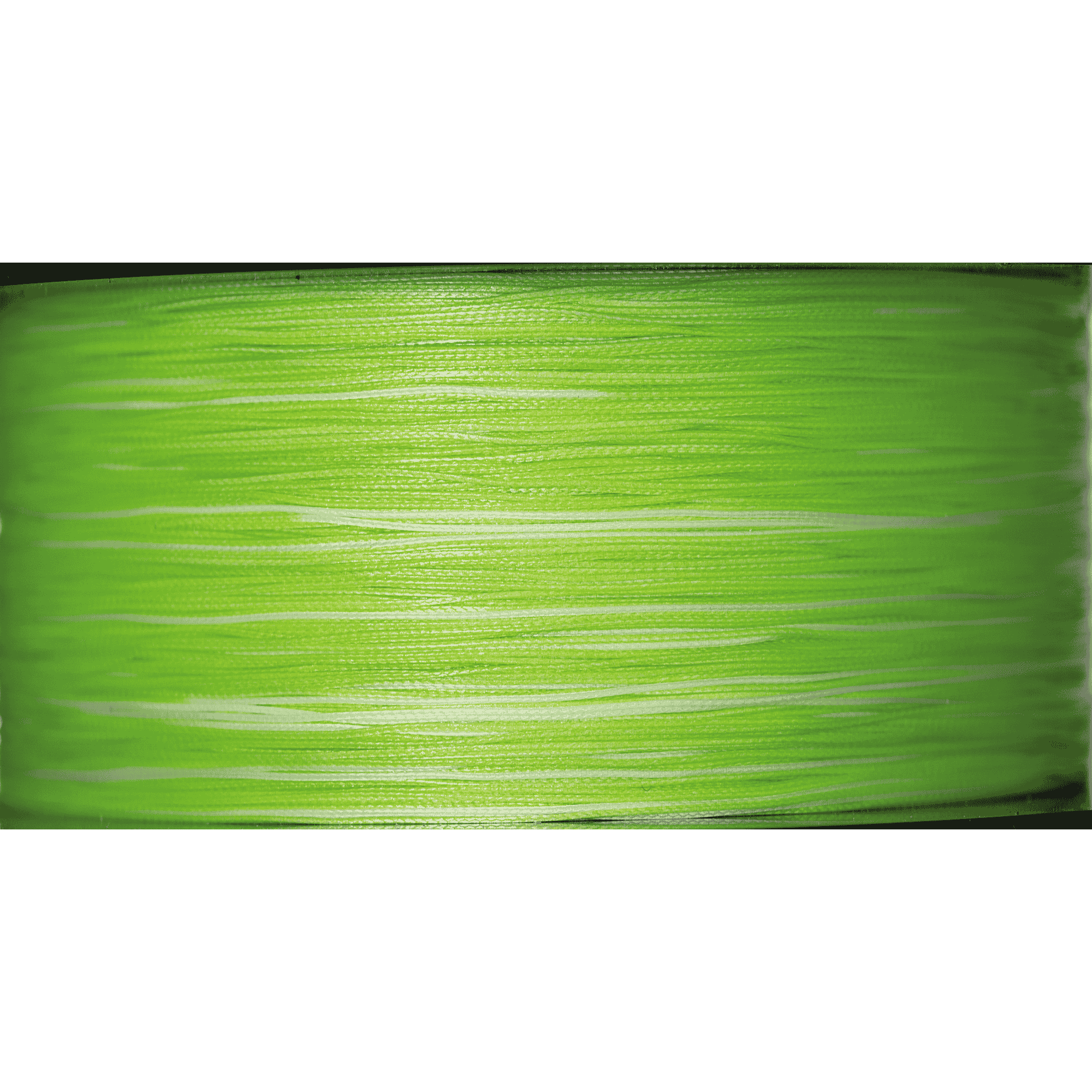
Braided Mainline
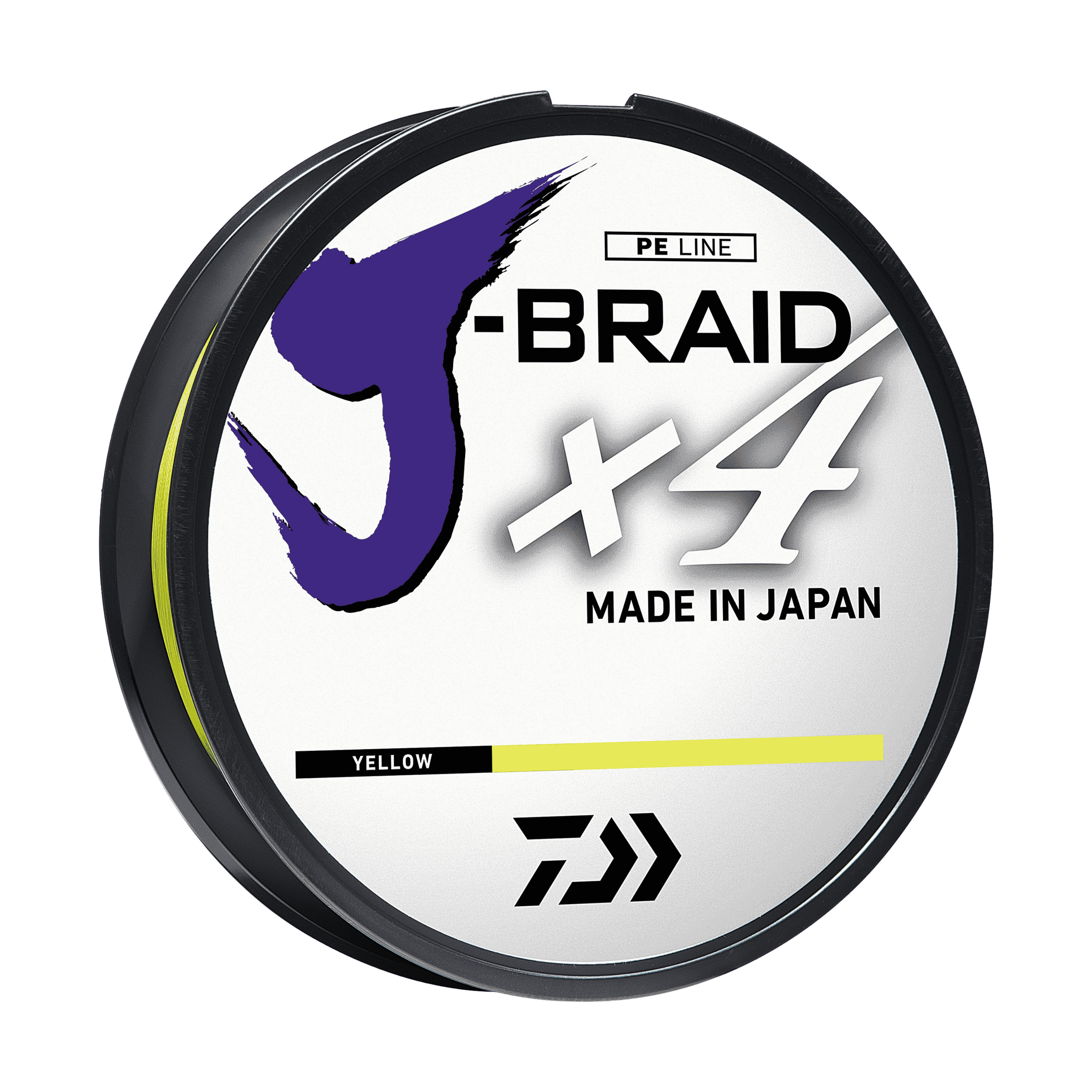
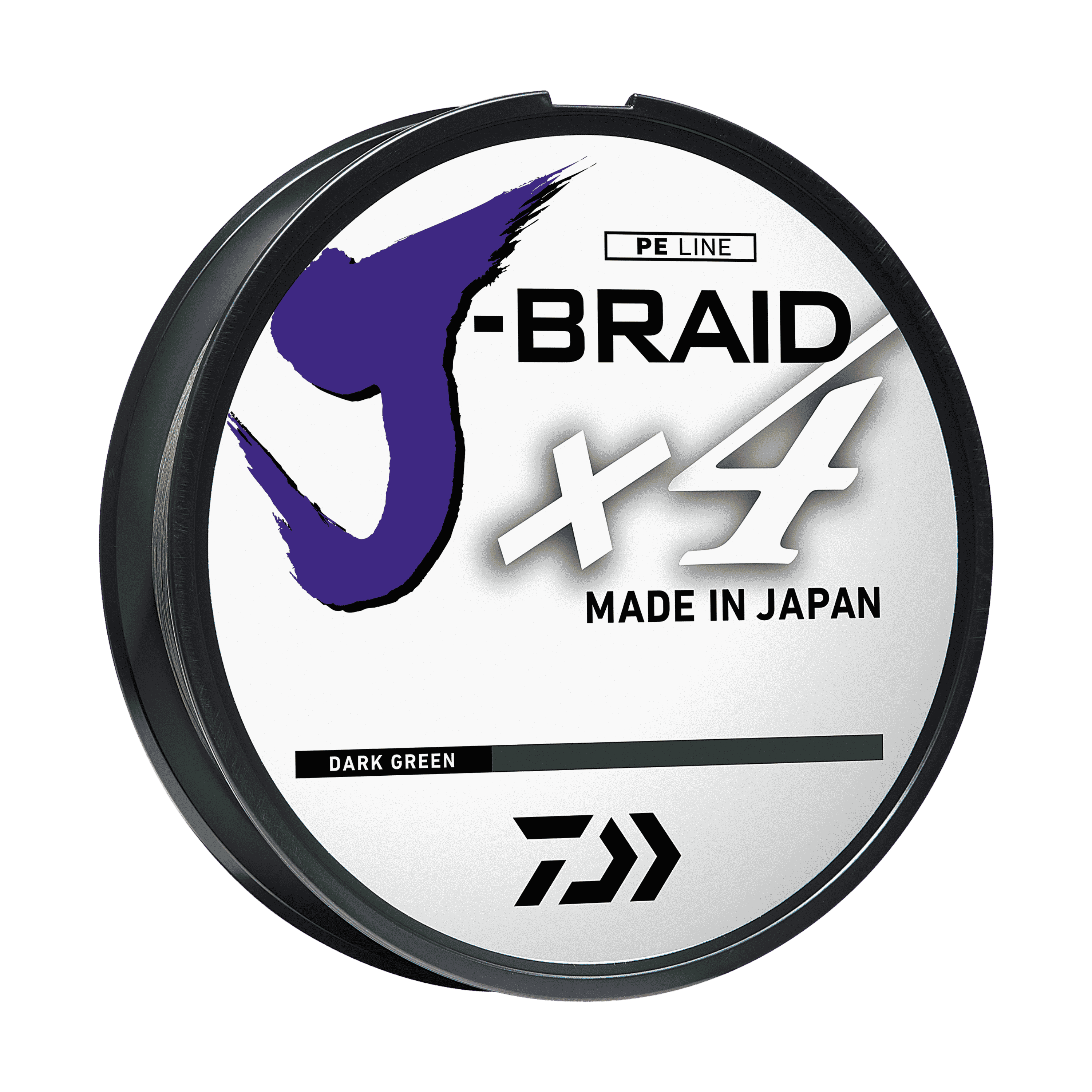
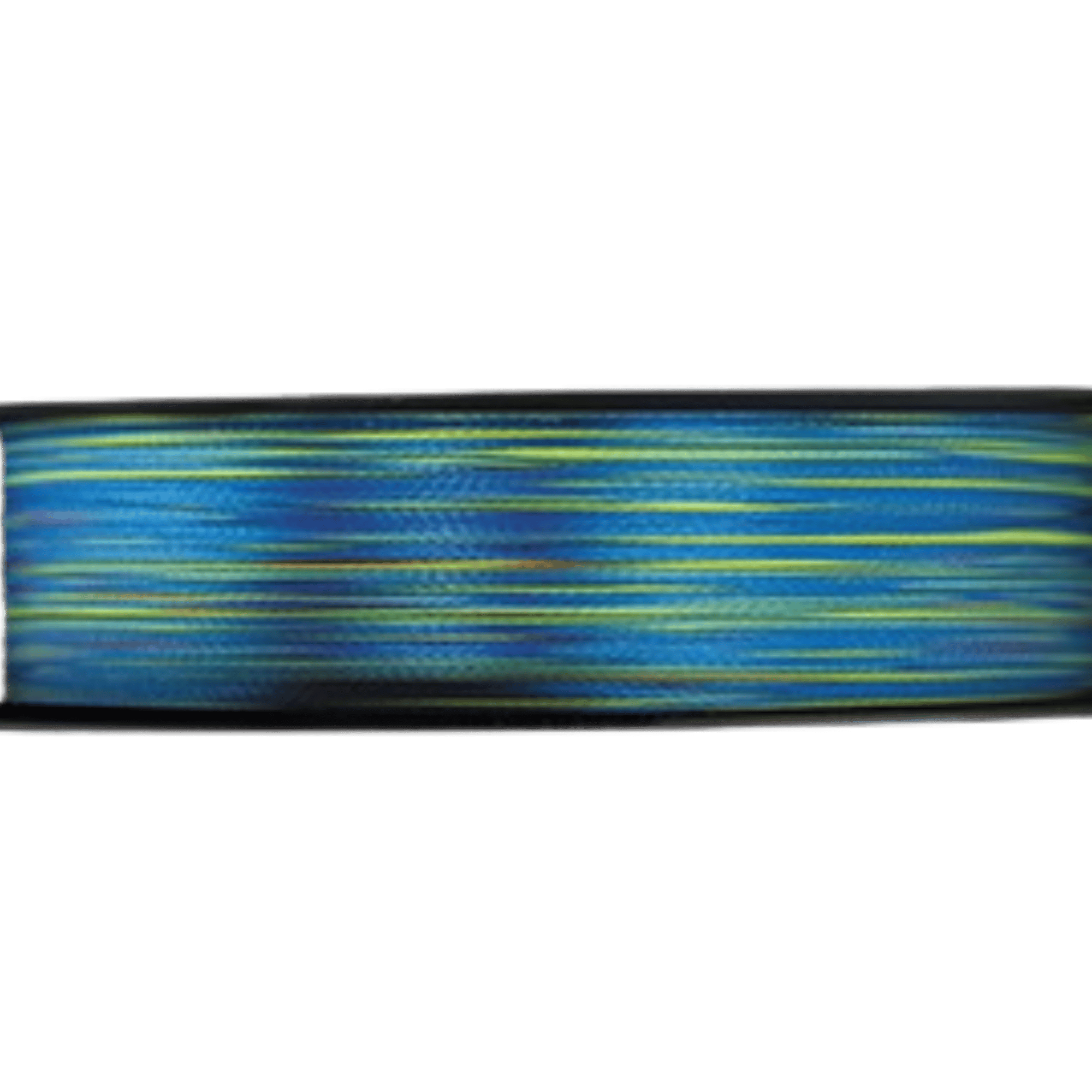
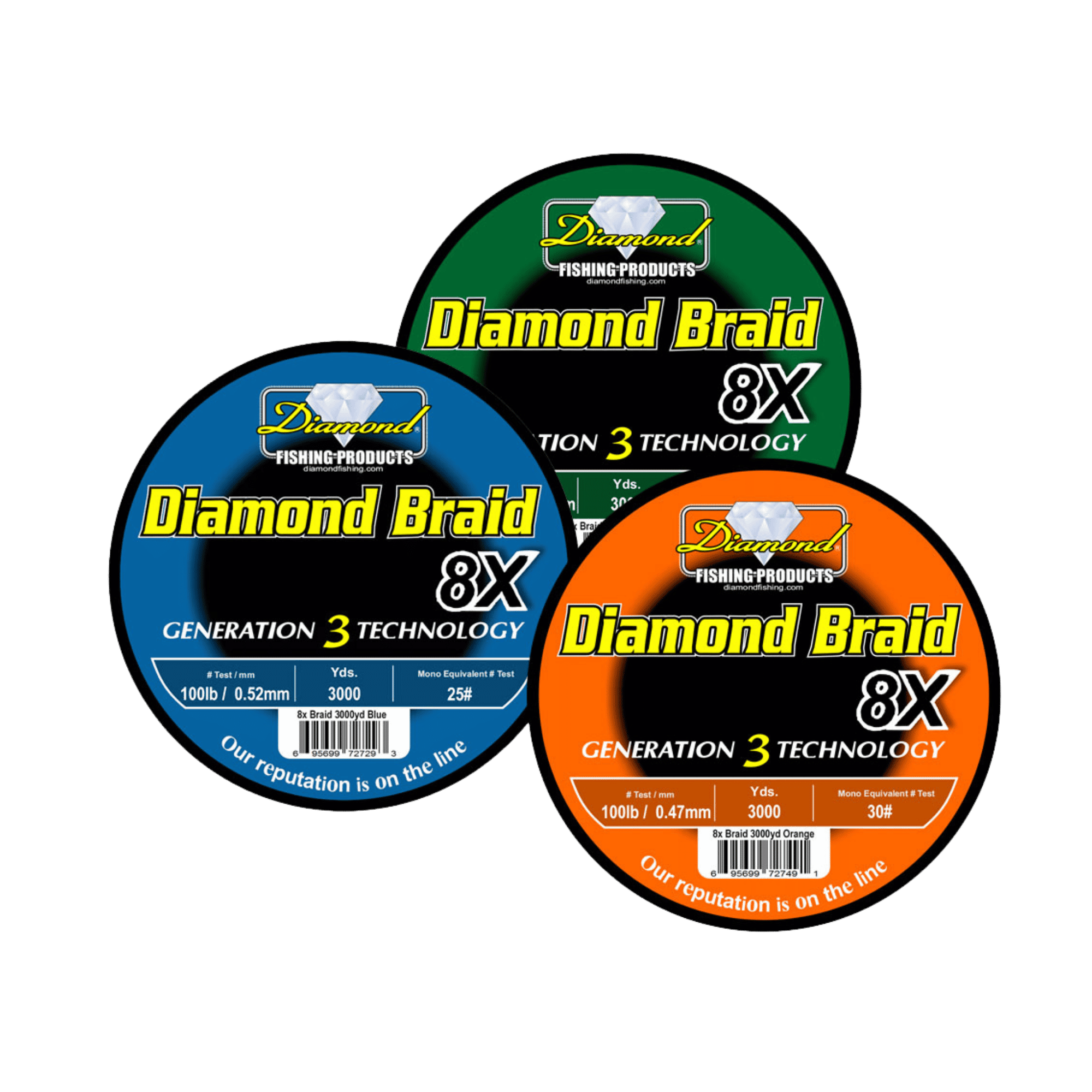
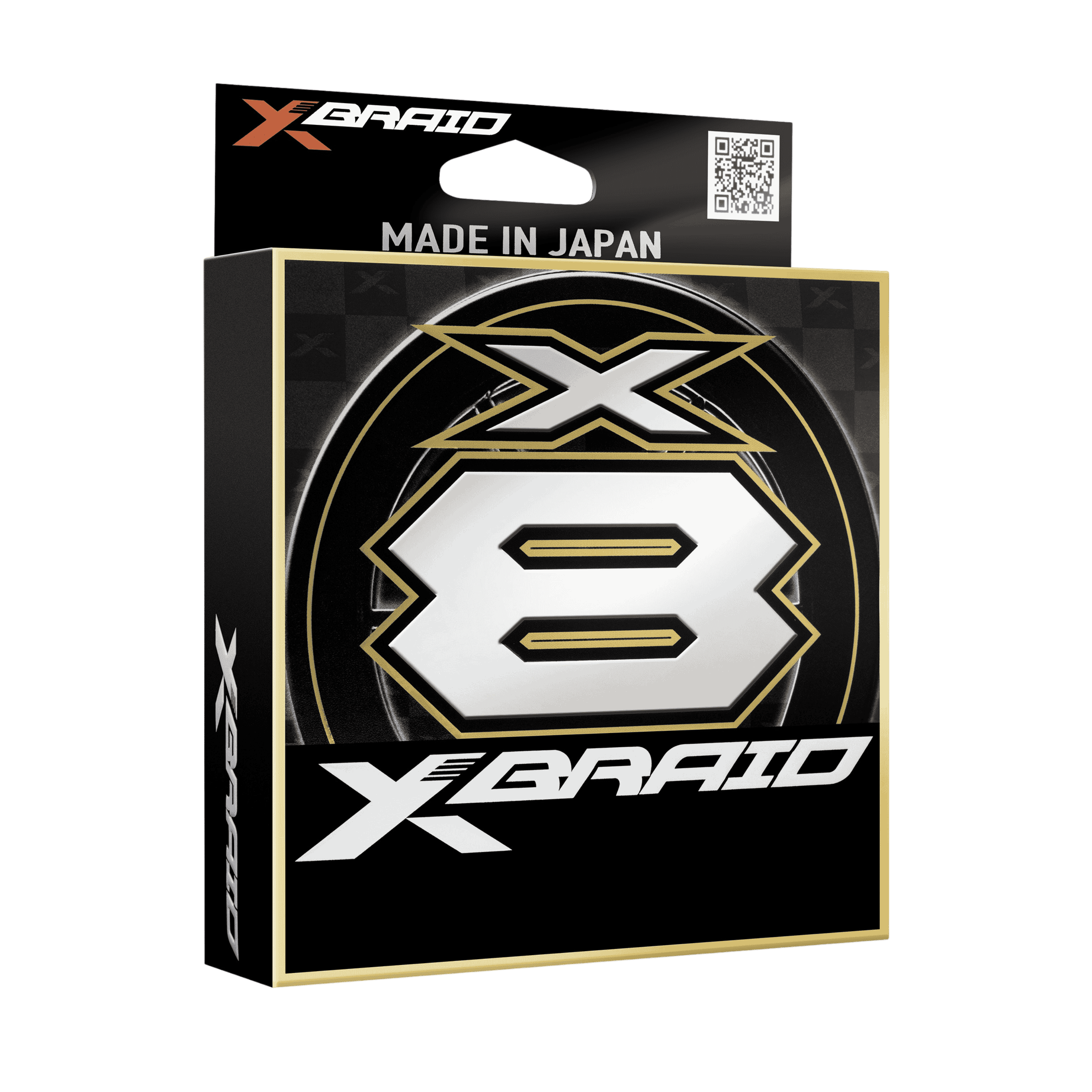
Braided line is the standard mainline choice for most setups because it offers high sensitivity, minimal stretch, and strong breaking strength in a thin diameter. This helps maintain bottom contact in current, detect subtle bites, and control depth when fishing heavy sinkers or jigs. It also allows anglers to fish heavier line strength without excessive drag in the water, which is important in deep or fast-moving conditions.
Recommended range: 30–65 lb braid, with lighter end used for calmer conditions or jigging, and heavier line used around structure or strong current.
Leaders
Leaders are essential in almost all braid-based setups, providing protection against rock, reef, and heavy structure while also adding shock absorption during the fight. Fluorocarbon is widely used for its strength, abrasion resistance, and low visibility—commonly in the 40–80 lb range for general use, with 80–100 lb used in heavier structure. Monofilament is also a common option, especially in the 60–100 lb range, offering more stretch to absorb sudden runs and reduce pulled hooks while remaining a more cost-effective choice. Leader strength and length should increase with structure, depth, and fish size to maintain control when fish surge toward cover.
Recommended range: 40–80 lb fluorocarbon leader as a standard setup, with 80–100 lb fluorocarbon or monofilament used in heavy structure or larger fish scenarios. Leader length typically ranges from 3–10 ft depending on depth and clarity.
Key Takeaways
- Braided mainline (30–65 lb) is the standard for red snapper fishing due to its sensitivity, strength, and ability to handle depth and current
- Fluorocarbon leaders balance strength, abrasion resistance, and low visibility in clear water
- Heavy monofilament leaders (80–100 lb) are commonly used for added stretch and shock absorption in tougher conditions
- Typical leader length ranges from 3–10 ft depending on water clarity, depth, and presentation style
Fishing Line & Leaders
Line and leader choice is critical in red snapper and gag grouper fishing because it directly affects depth control, bite detection, and—most importantly—the ability to control fish around heavy structure once hooked. These offshore applications place constant pressure on the entire system, from maintaining bottom contact in current to lifting fish away from reefs, wrecks, ledges, and other abrasive cover. A properly matched setup helps anglers stay connected to the presentation while still applying enough pressure to keep fish from reaching structure during the fight.
Because both species are commonly targeted in deep water and strong current, line diameter, stretch, and abrasion resistance all play major roles in overall performance. Braided mainline is favored for its sensitivity and thin diameter, allowing better depth control and more direct contact with bait rigs or jigs, while heavy leaders provide the abrasion resistance and shock absorption needed when fish surge near cover. The goal is to build a balanced system that maintains sensitivity without sacrificing durability or lifting control under sustained load.
Braided Mainline
Braided line is the standard mainline choice for most setups because it offers high sensitivity, minimal stretch, and strong breaking strength in a thin diameter. This helps maintain bottom contact in current, detect subtle bites, and control depth when fishing heavy sinkers or jigs. It also allows anglers to fish heavier line strength without excessive drag in the water, which is important in deep or fast-moving conditions.
Recommended range: 30–65 lb braid, with lighter end used for calmer conditions or jigging, and heavier line used around structure or strong current.
Leaders
Leaders are essential in almost all braid-based setups, providing protection against rock, reef, and heavy structure while also adding shock absorption during the fight. Fluorocarbon is widely used for its strength, abrasion resistance, and low visibility—commonly in the 40–80 lb range for general use, with 80–100 lb used in heavier structure. Monofilament is also a common option, especially in the 60–100 lb range, offering more stretch to absorb sudden runs and reduce pulled hooks while remaining a more cost-effective choice. Leader strength and length should increase with structure, depth, and fish size to maintain control when fish surge toward cover.
Recommended range: 40–80 lb fluorocarbon leader as a standard setup, with 80–100 lb fluorocarbon or monofilament used in heavy structure or larger fish scenarios. Leader length typically ranges from 3–10 ft depending on depth and clarity.
Key Takeaways
- Braided mainline (30–65 lb) is the standard for red snapper fishing due to its sensitivity, strength, and ability to handle depth and current
- Fluorocarbon leaders balance strength, abrasion resistance, and low visibility in clear water
- Heavy monofilament leaders (80–100 lb) are commonly used for added stretch and shock absorption in tougher conditions
- Typical leader length ranges from 3–10 ft depending on water clarity, depth, and presentation style
Line & Leader for Red Snapper & Gag Grouper Fishing
Vertical & Slow Pitch Saltwater Jigs
Vertical speed and slow pitch jigs are designed to imitate baitfish through movement, sink rate, and fall behavior, with shape and balance influencing how they perform in the water. A common starting point is the “1 gram per foot of depth” rule of thumb, though current and drift often require heavier weights. Some jigs are built to drop quickly and stay tight in the water column, while others are designed to flutter and extend hang time in the strike zone, helping anglers match presentation to fish position and conditions.
Vertical (Speed) Jigs
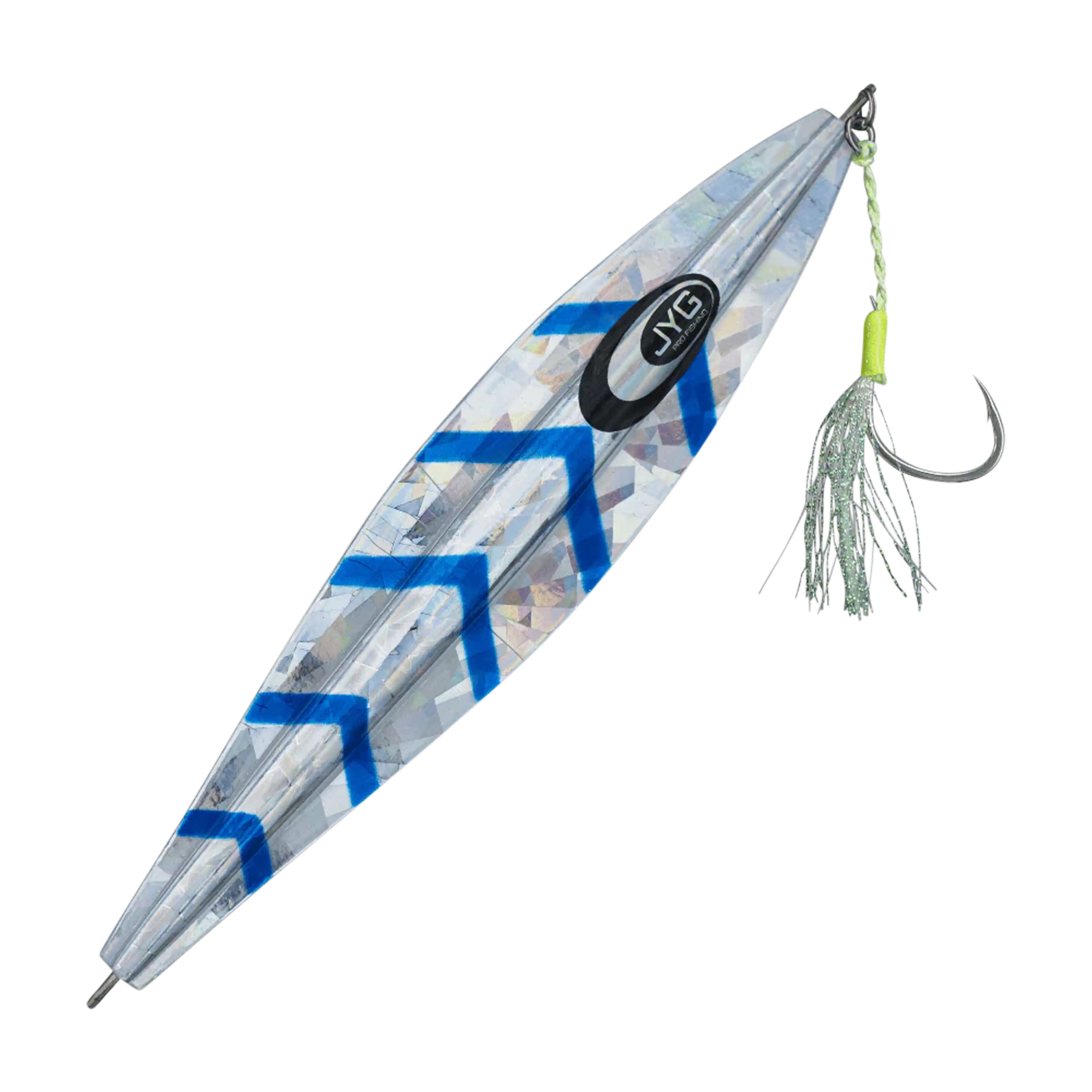
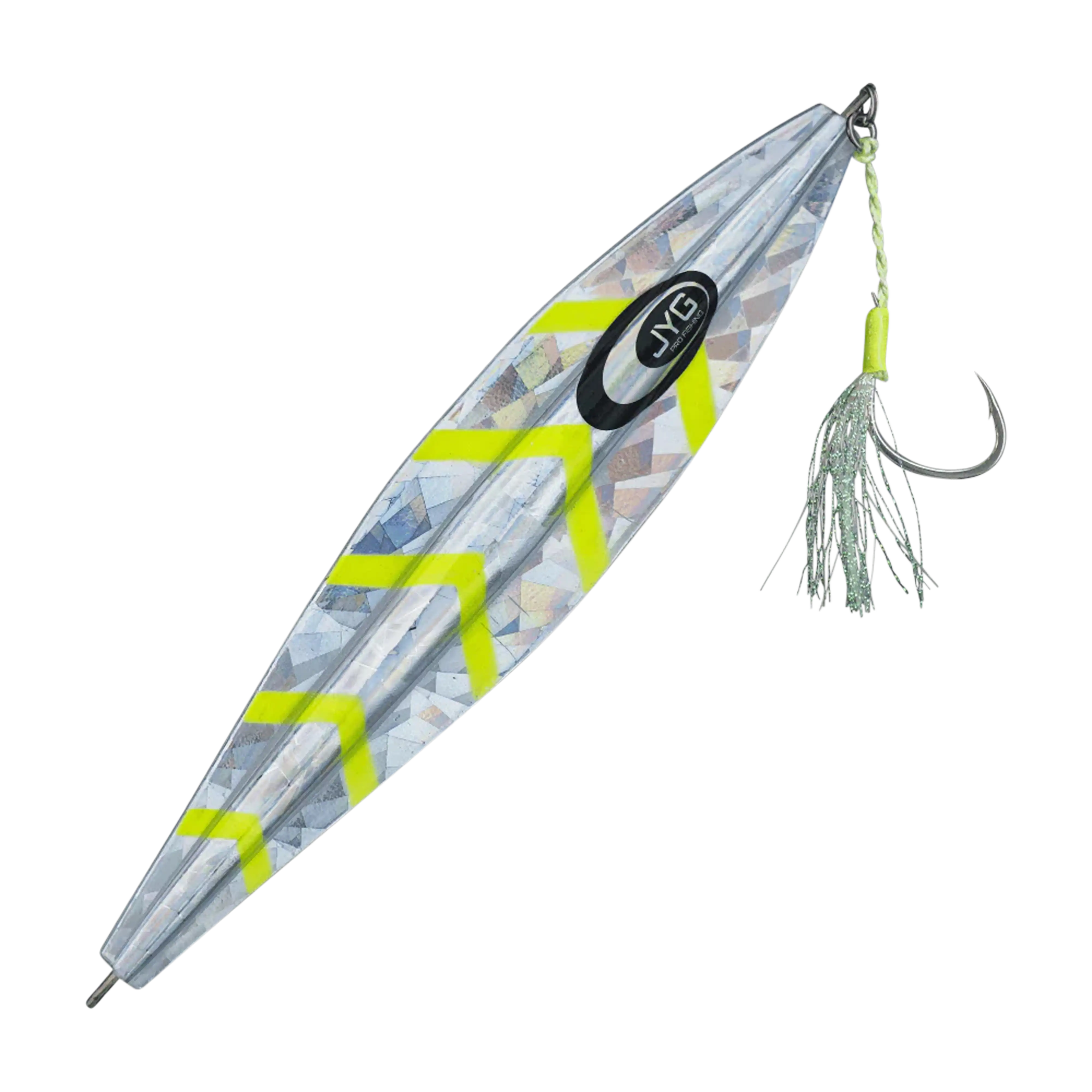
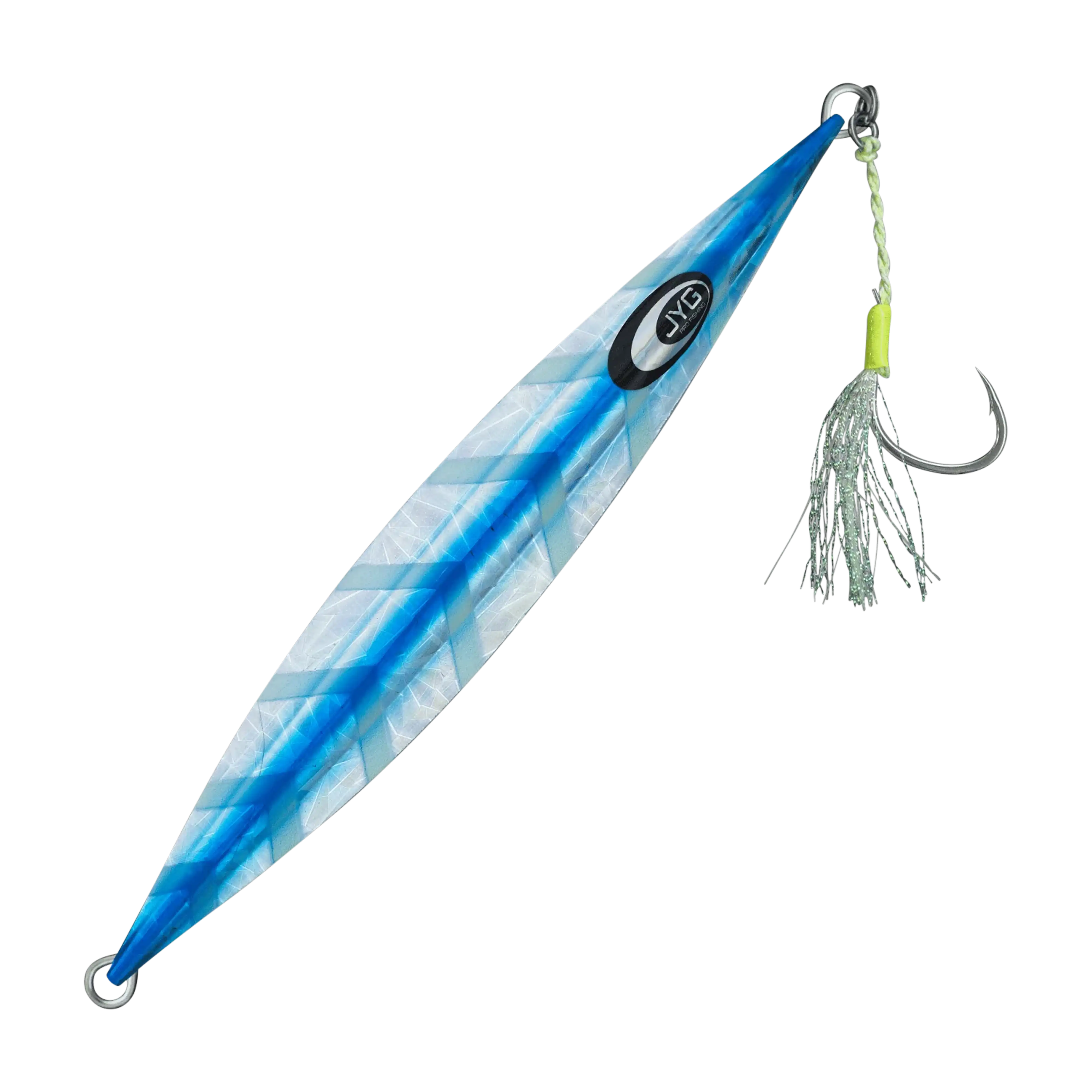
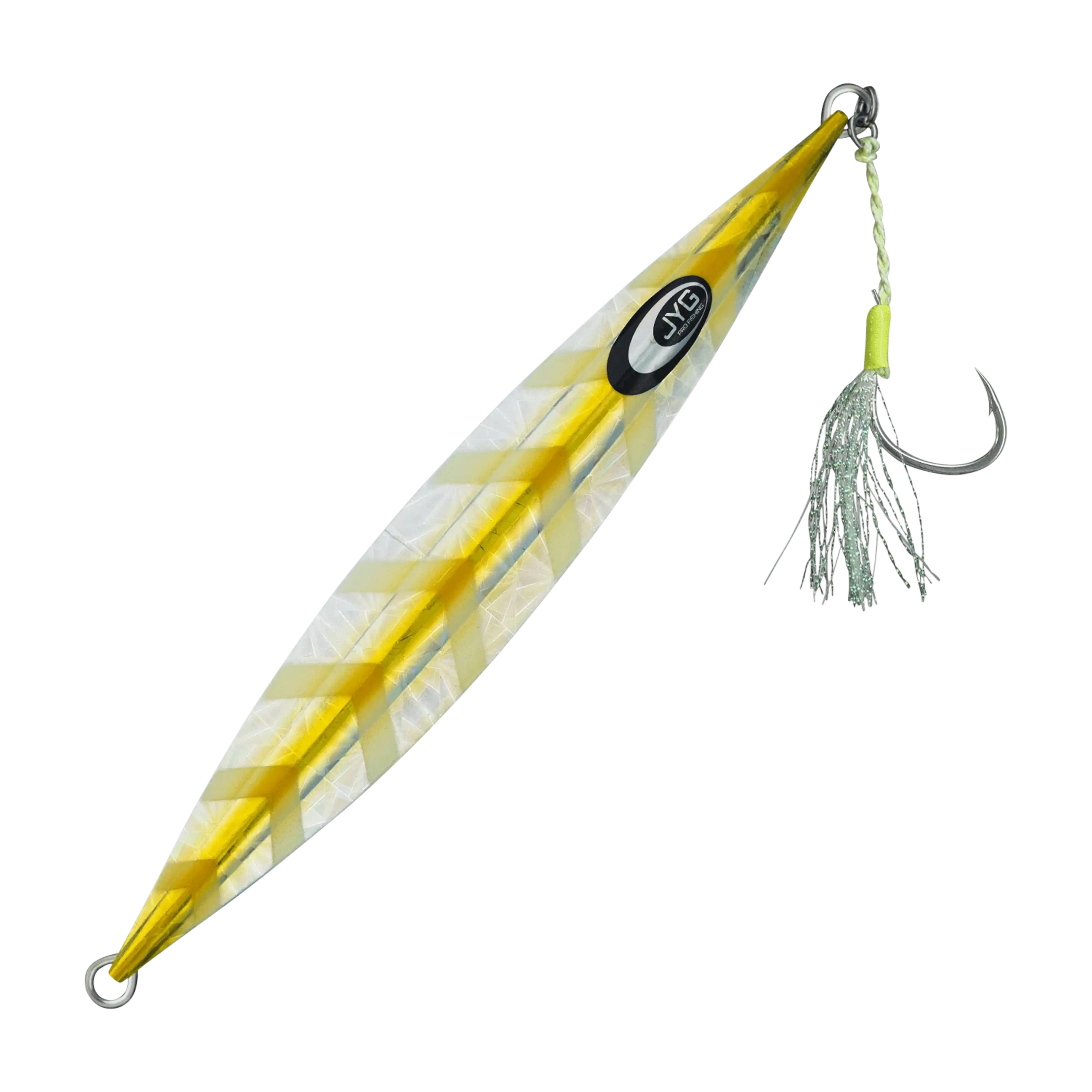
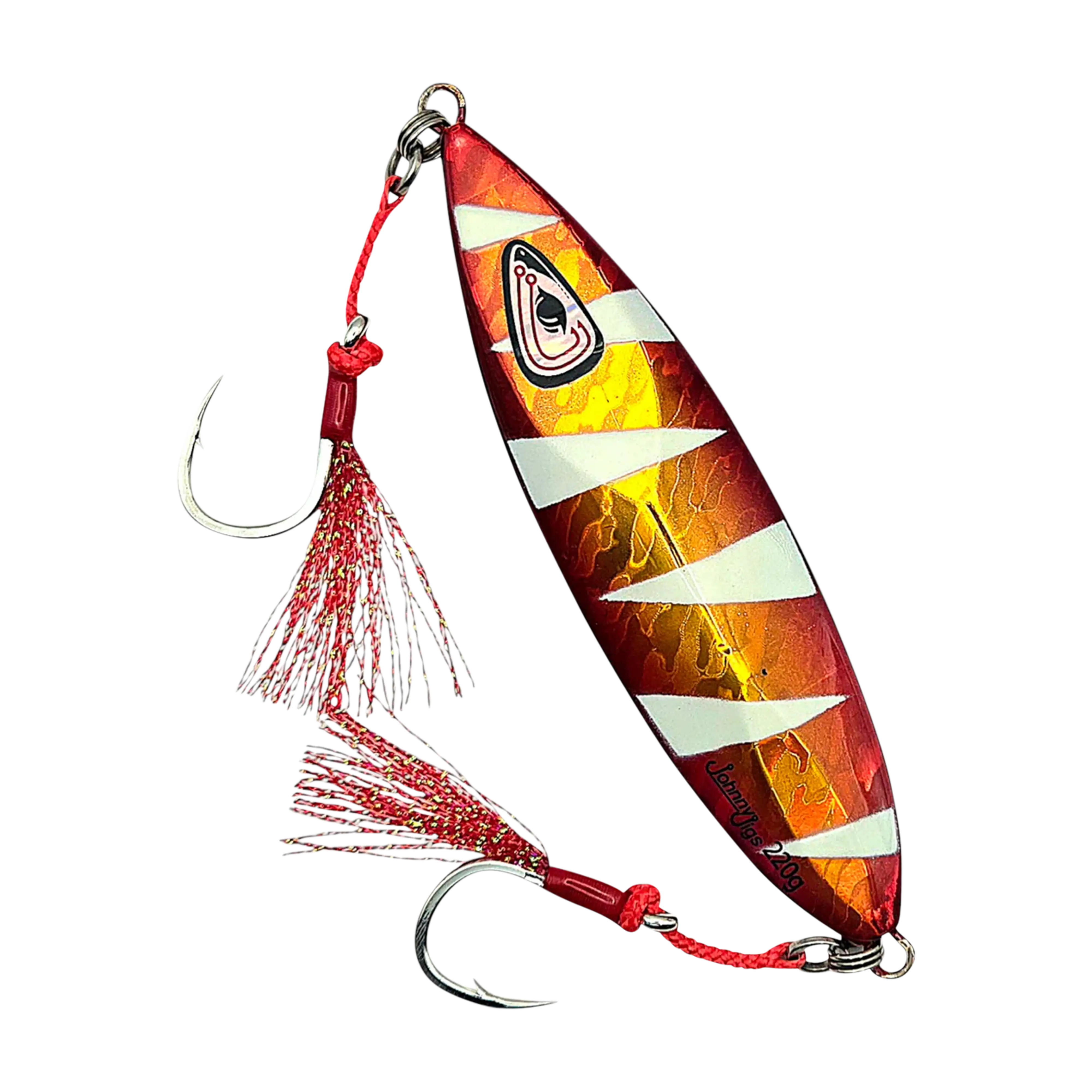
Vertical jigs (also called speed jigs) are long and narrow, designed to move quickly through the water column so anglers can reach depth fast, stay in control in strong current, and work different levels of the water where snapper may be holding. Their slim shape reduces resistance and helps them track straight, making them effective when fish are active, suspended, or holding tight to structure. They are also used around structure edges and ambush points where gag grouper may react to fast-moving presentations, though most strikes occur closer to the bottom. Most are fished in the 120–300 g (4–10 oz) range, with lighter options used in shallow water and heavier options used when depth and current require more control.
Slow Pitch Jigs
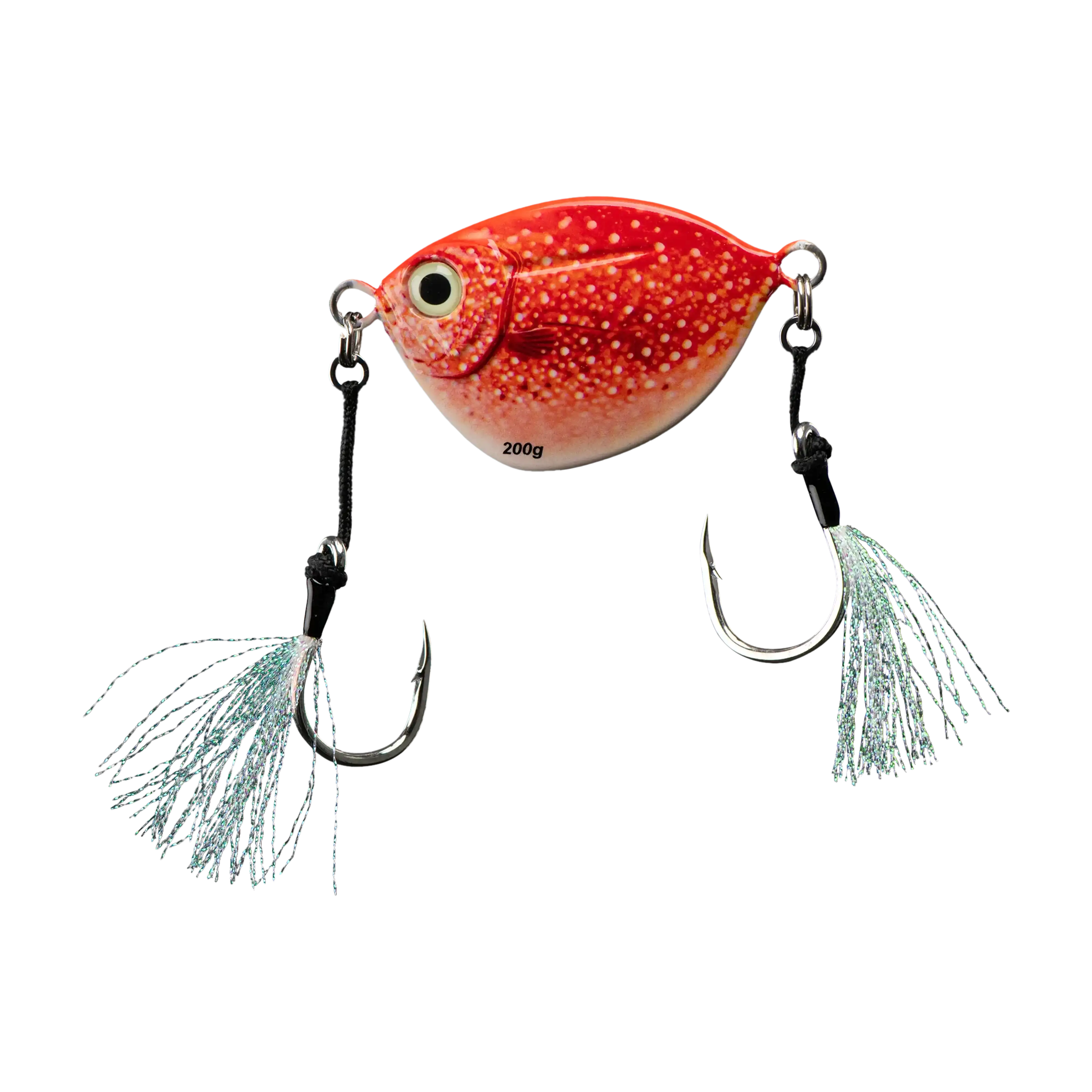
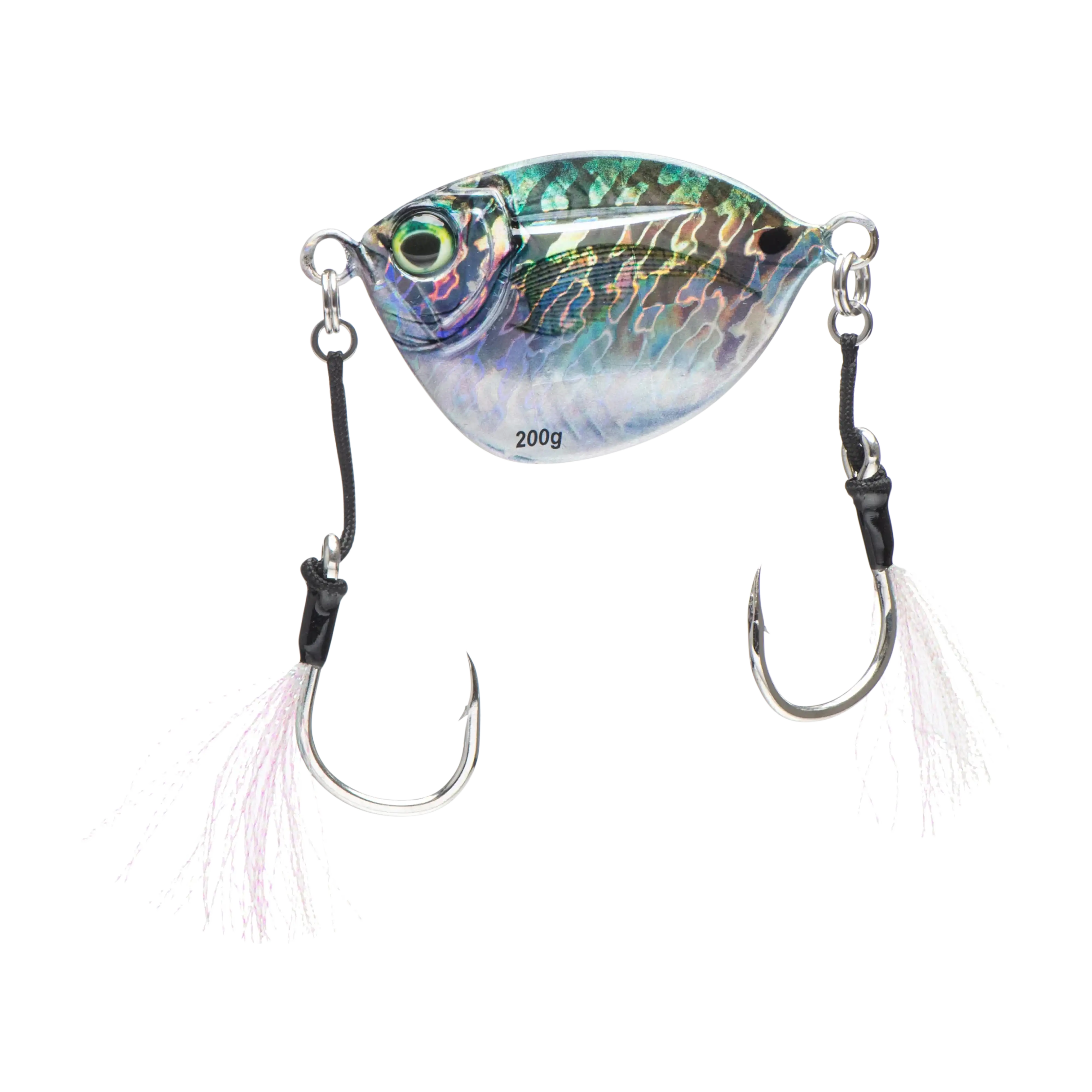
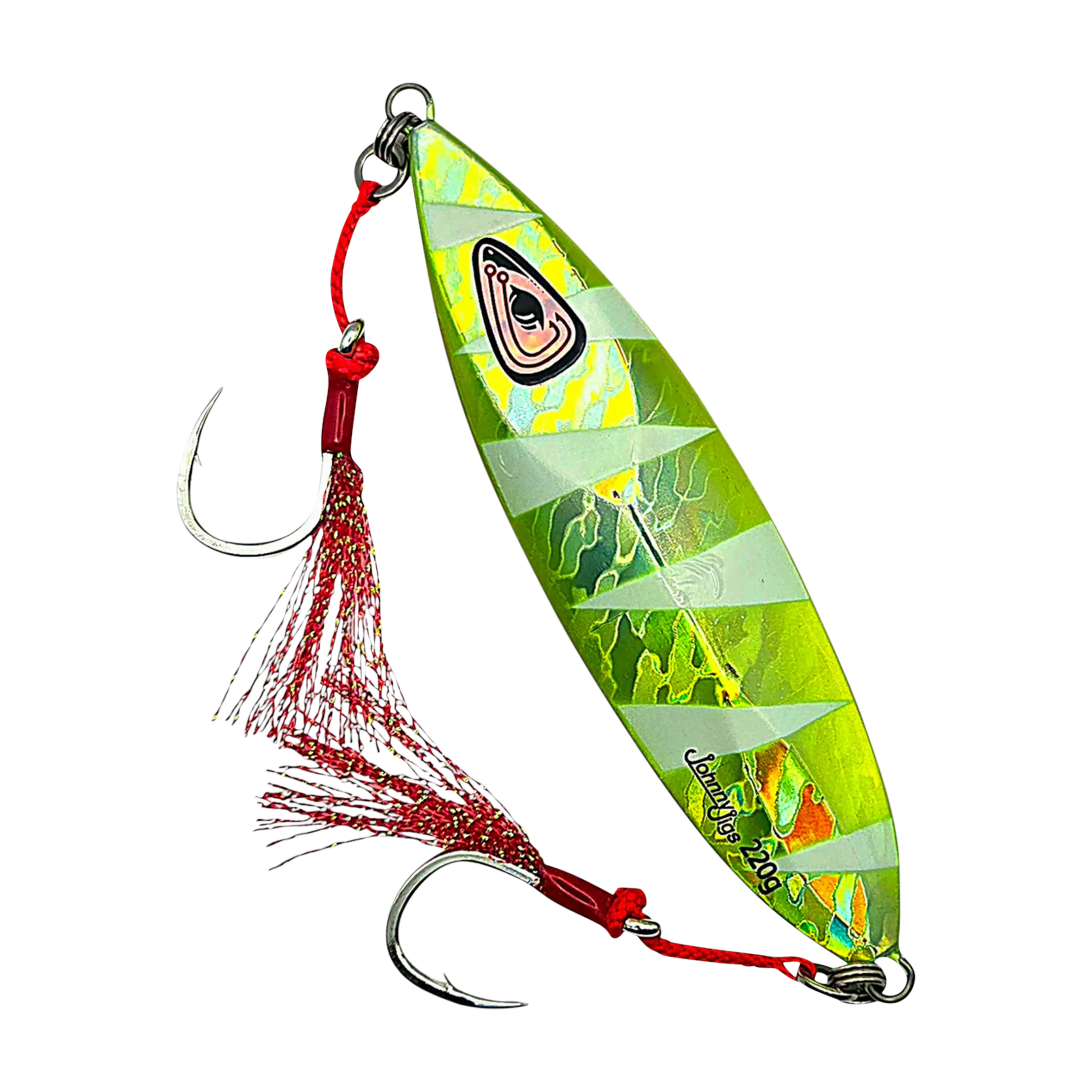
Slow pitch jigs are wider, asymmetrical, and deliberately off-balanced to create a fluttering, sliding fall that mimics a struggling baitfish. Instead of relying on speed, they work through controlled lift-and-fall action, staying in the strike zone longer and triggering bites from less aggressive or more structure-oriented fish. This makes them especially effective for red snapper holding near bottom or suspended, and for gag grouper that remain tight to structure but will react to a slower, controlled presentation within their strike zone. They are typically used in the 100–250 g (3.5–9 oz) range, with adjustments made to match depth and current while maintaining a controlled, natural fall.
Colors — What Works and When
Color plays a supporting role in jig selection, primarily affecting visibility, contrast, and how easily fish can track the lure at depth. As light penetration decreases, colors shift and fade, making brightness and contrast more important than exact color matching.
- Natural / baitfish patterns (silver, blue, chrome): best in clear water and when snapper are actively feeding on bait
- Glow, UV, and high-visibility colors (pink, chartreuse): effective in deeper water, low light, or stained conditions where visibility is reduced
- Gold, orange, and warm tones: stand out well around structure and in off-color water, providing strong contrast against darker backgrounds
- Two-tone and contrast patterns: help define the jig’s profile and improve visibility during movement and on the fall
In most cases, selecting colors that maximize visibility and contrast for the conditions will outperform trying to match a specific forage exactly.
Key Takeaways
- Speed jigging targets aggressive fish with fast, reaction-driven presentations
- Slow pitch jigging is effective when fish are pressured, less active, or holding tight to structure
- Jig weight should match depth and current to maintain vertical control, with “1 gram per foot of depth” serving as a common starting point
- Most snapper jigging falls in the 60–200 g range, increasing as depth, drift, or current demand more weight
- Gag grouper are highly structure-oriented but will still respond to jigs worked tight to bottom or along structure edges
- Visibility and contrast are usually more important than exact color matching in deeper water conditions
Vertical & Slow Pitch Saltwater Jigs
Vertical speed and slow pitch jigs are designed to imitate baitfish through movement, sink rate, and fall behavior, with shape and balance influencing how they perform in the water. A common starting point is the “1 gram per foot of depth” rule of thumb, though current and drift often require heavier weights. Some jigs are built to drop quickly and stay tight in the water column, while others are designed to flutter and extend hang time in the strike zone, helping anglers match presentation to fish position and conditions.
Vertical (Speed) Jigs
Vertical jigs (also called speed jigs) are long and narrow, designed to move quickly through the water column so anglers can reach depth fast, stay in control in strong current, and work different levels of the water where snapper may be holding. Their slim shape reduces resistance and helps them track straight, making them effective when fish are active, suspended, or holding tight to structure. They are also used around structure edges and ambush points where gag grouper may react to fast-moving presentations, though most strikes occur closer to the bottom. Most are fished in the 120–300 g (4–10 oz) range, with lighter options used in shallow water and heavier options used when depth and current require more control.
Slow Pitch Jigs
Slow pitch jigs are wider, asymmetrical, and deliberately off-balanced to create a fluttering, sliding fall that mimics a struggling baitfish. Instead of relying on speed, they work through controlled lift-and-fall action, staying in the strike zone longer and triggering bites from less aggressive or more structure-oriented fish. This makes them especially effective for red snapper holding near bottom or suspended, and for gag grouper that remain tight to structure but will react to a slower, controlled presentation within their strike zone. They are typically used in the 100–250 g (3.5–9 oz) range, with adjustments made to match depth and current while maintaining a controlled, natural fall.
Colors — What Works and When
Color plays a supporting role in jig selection, primarily affecting visibility, contrast, and how easily fish can track the lure at depth. As light penetration decreases, colors shift and fade, making brightness and contrast more important than exact color matching.
- Natural / baitfish patterns (silver, blue, chrome): best in clear water and when snapper are actively feeding on bait
- Glow, UV, and high-visibility colors (pink, chartreuse): effective in deeper water, low light, or stained conditions where visibility is reduced
- Gold, orange, and warm tones: stand out well around structure and in off-color water, providing strong contrast against darker backgrounds
- Two-tone and contrast patterns: help define the jig’s profile and improve visibility during movement and on the fall
In most cases, selecting colors that maximize visibility and contrast for the conditions will outperform trying to match a specific forage exactly.
Key Takeaways
- Speed jigging targets aggressive fish with fast, reaction-driven presentations
- Slow pitch jigging is effective when fish are pressured, less active, or holding tight to structure
- Jig weight should match depth and current to maintain vertical control, with “1 gram per foot of depth” serving as a common starting point
- Most snapper jigging falls in the 60–200 g range, increasing as depth, drift, or current demand more weight
- Gag grouper are highly structure-oriented but will still respond to jigs worked tight to bottom or along structure edges
- Visibility and contrast are usually more important than exact color matching in deeper water conditions
Vertical & Slow Pitch Saltwater Jigs




Terminal Tackle
Terminal tackle plays a critical role in red snapper and gag grouper fishing because it directly connects the angler to the fish and absorbs constant stress from current, depth, structure, and heavy drag pressure. In offshore bottom fishing, every component—from hooks and jigheads to swivels and rigging hardware—must be strong, abrasion resistant, and reliable under load. Choosing the right terminal tackle helps improve presentation, maintain control around structure, and reduce failures when fish surge back toward reefs, wrecks, and hard bottom cover.
Jigheads
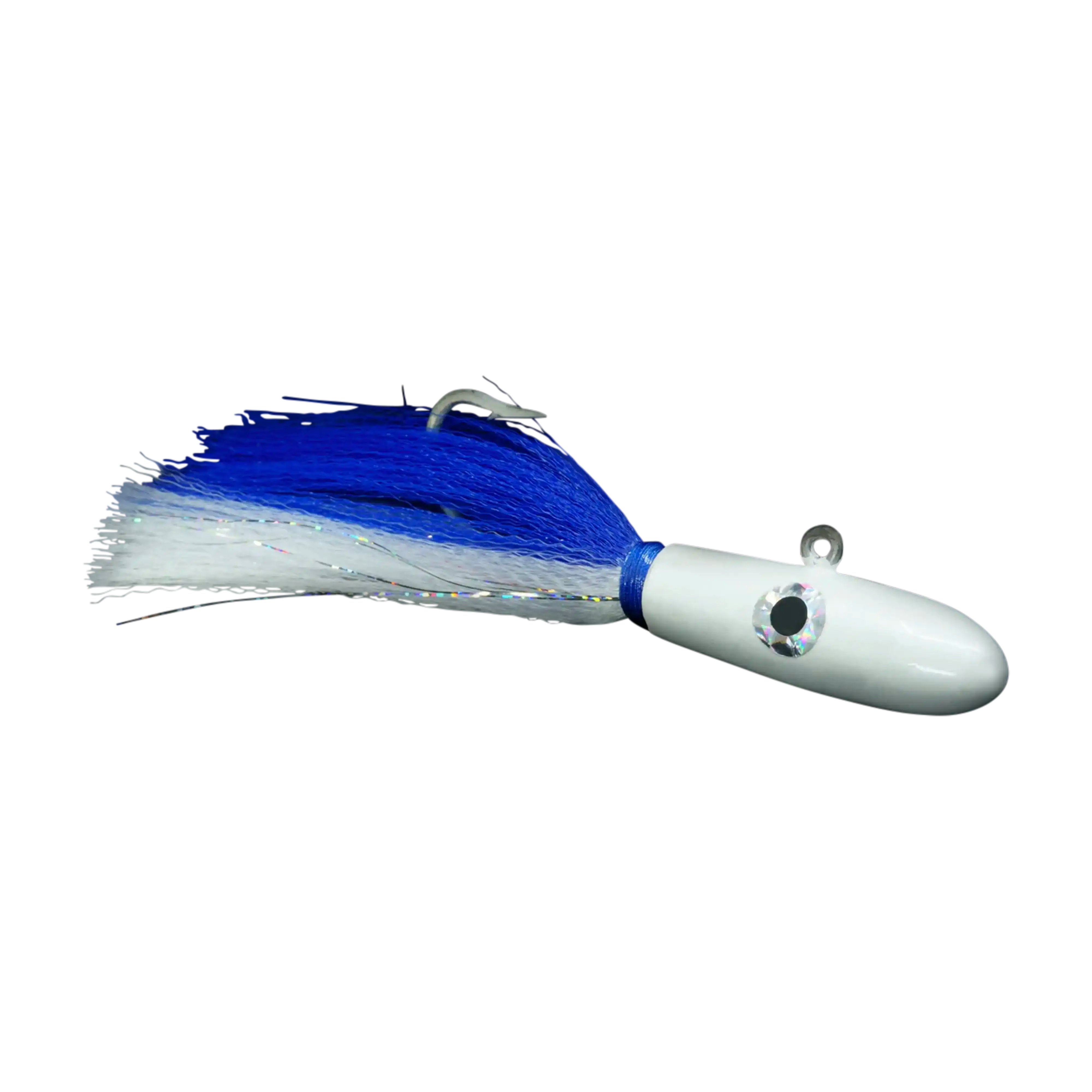
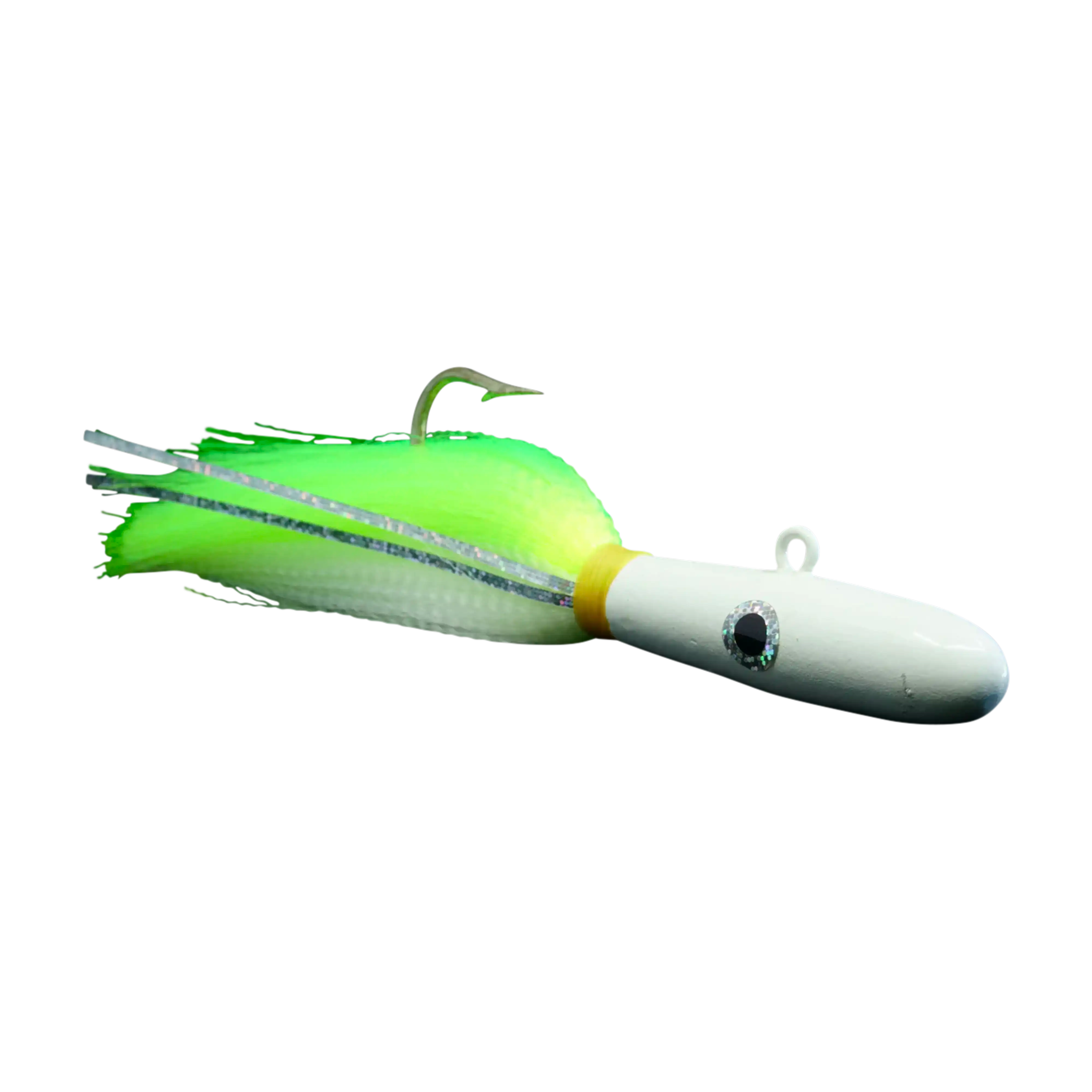
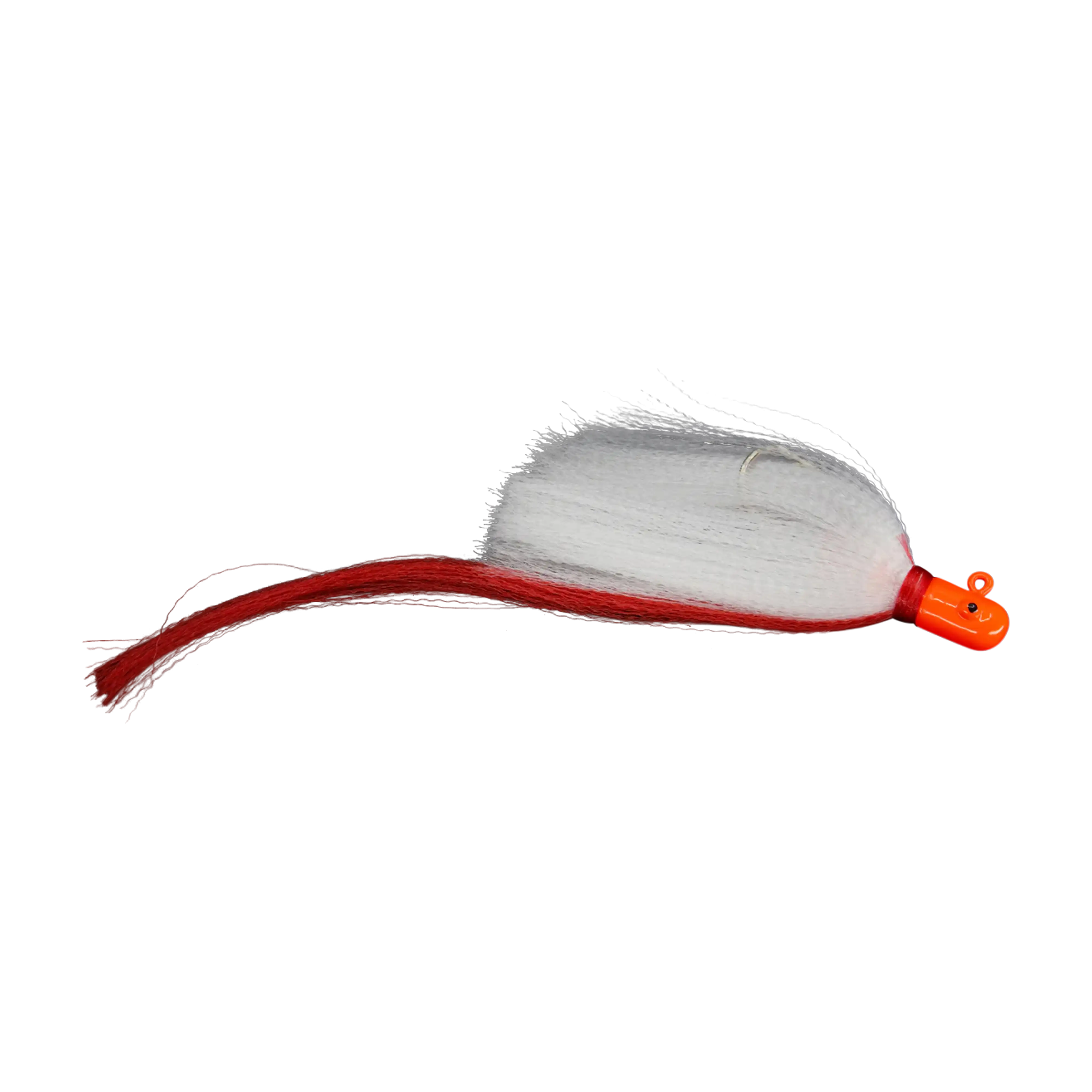
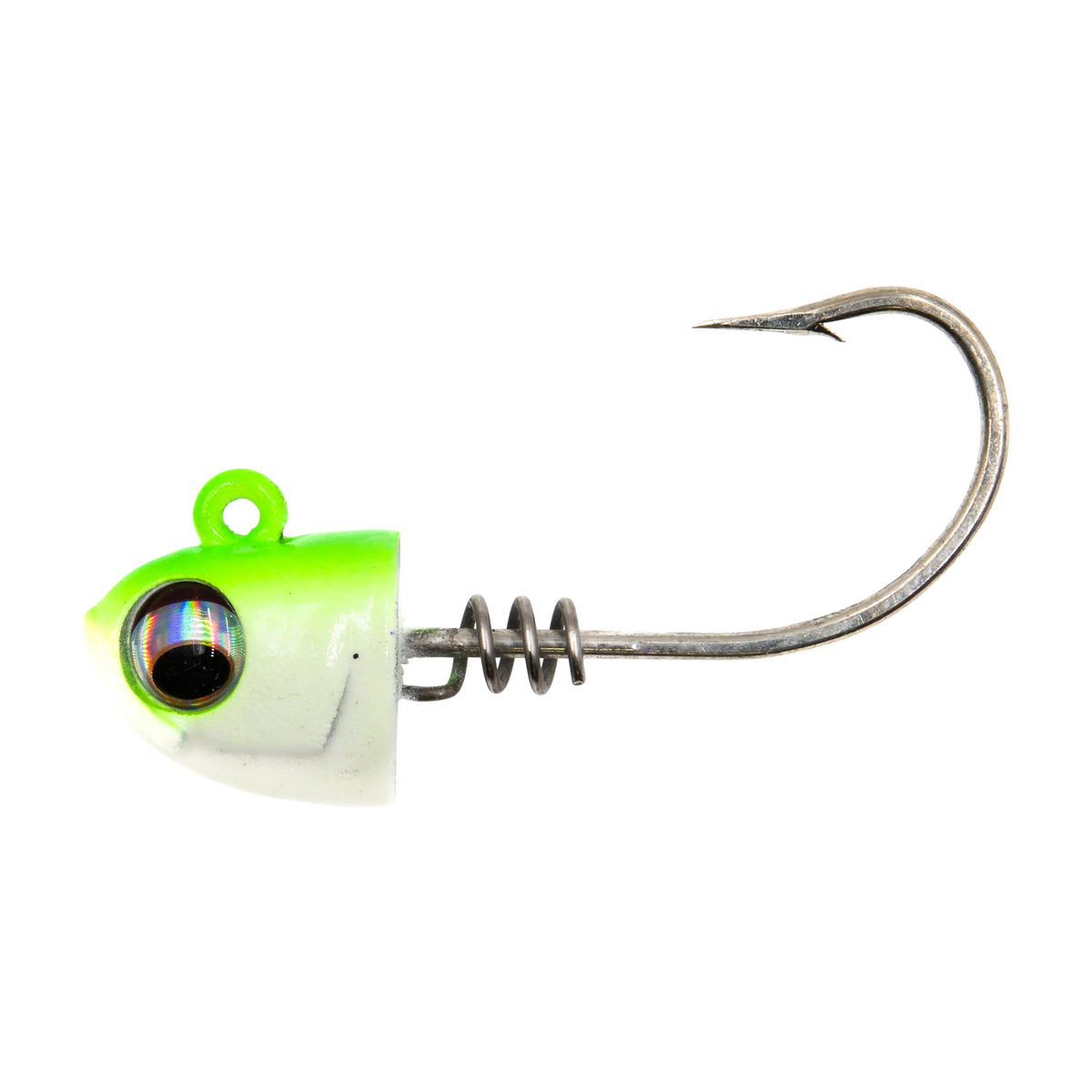
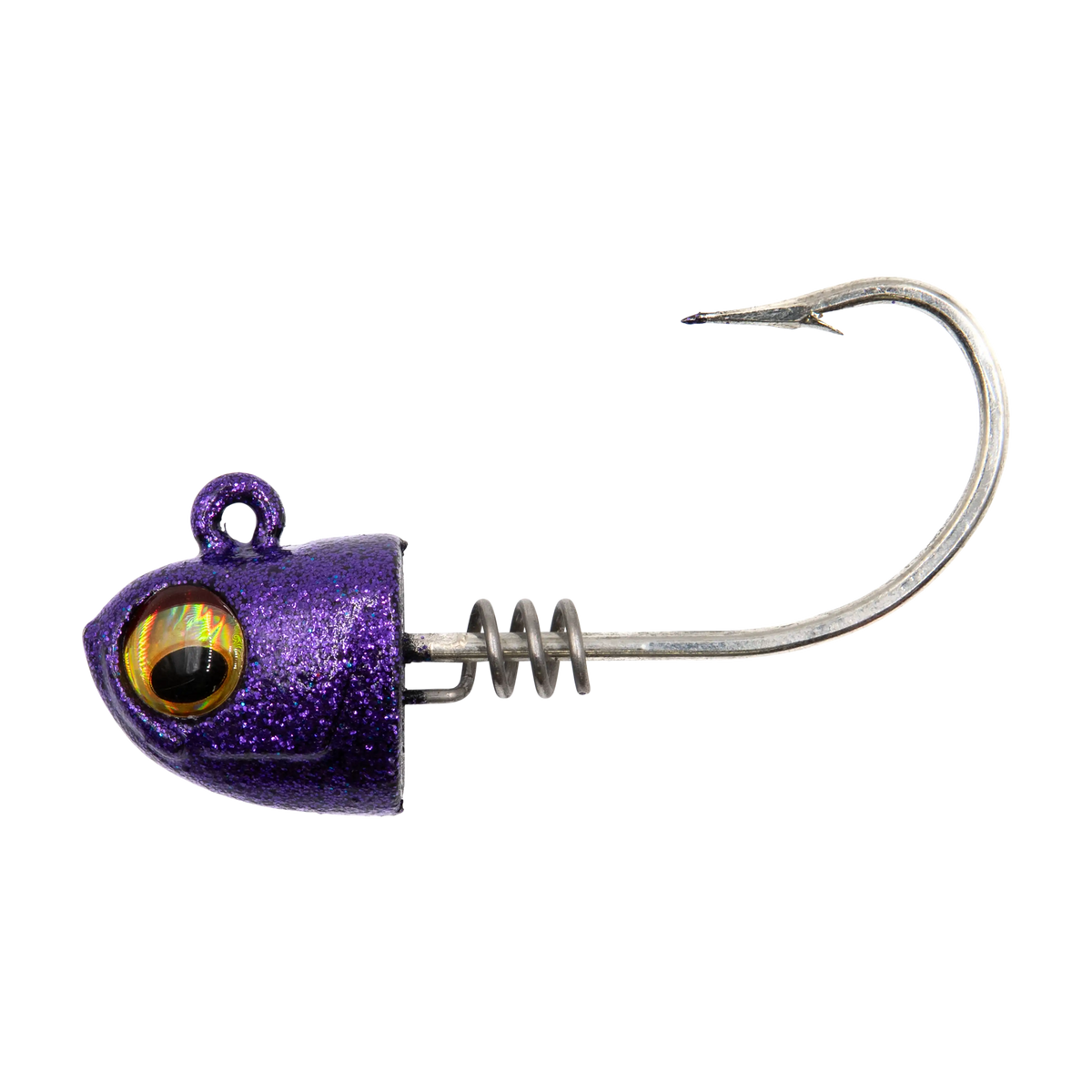
Jigheads are used as a rigging platform for both soft plastics and cut natural bait, allowing anglers to combine natural action or scent with the controlled sink rate and hook positioning of a weighted presentation. They are especially effective for targeting red snapper suspended above structure, feeding through the water column, or responding to more natural moving presentations around reefs and wrecks.
Head shape affects how the bait sinks, tracks, and moves in current. Round heads are the most versatile and provide a balanced presentation for general use. Football-style heads offer added bottom stability and help reduce rolling around structure, while pointed or bullet-style heads cut through current more efficiently and maintain a cleaner sink angle in deeper water.
Hook strength is just as important as head shape, with heavy-wire hooks required to withstand strong runs and sustained pressure around structure. Most offshore jigheads range from 2–6+ oz depending on depth, drift, and current, with heavier weights used when maintaining sink control and vertical presentation becomes more difficult. While jigheads can occasionally produce gag grouper near shallow structure, they are primarily used as a red snapper presentation higher in the water column rather than a dedicated grouper technique.
Hooks
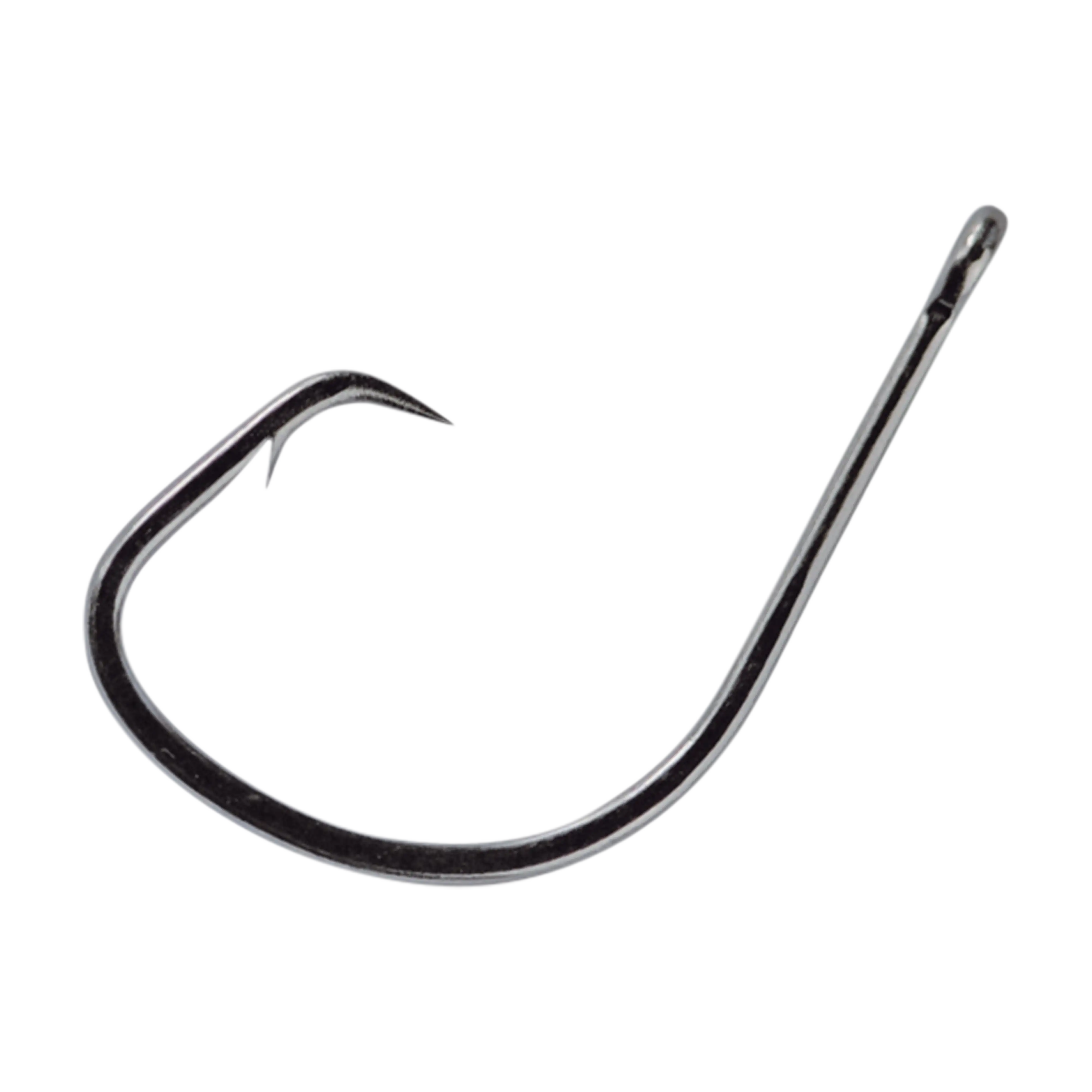
Hooks are one of the most important components in offshore rigging because they directly affect hook-up rate, holding power, and fish control during the fight. Heavy-wire hooks are standard for both red snapper and gag grouper due to their strength and resistance to bending under high drag pressure and deep-water loads.
Circle hooks are commonly used—and often required—for natural bait fishing because they typically hook fish in the corner of the mouth and improve landing consistency. J-hooks are more common with jigheads and active jigging presentations where anglers rely on a more direct hookset. Hook sizes generally range from 2/0–8/0 depending on bait size, target fish, and presentation style, with larger hooks favored for bigger baits and heavier offshore applications.
Swivels
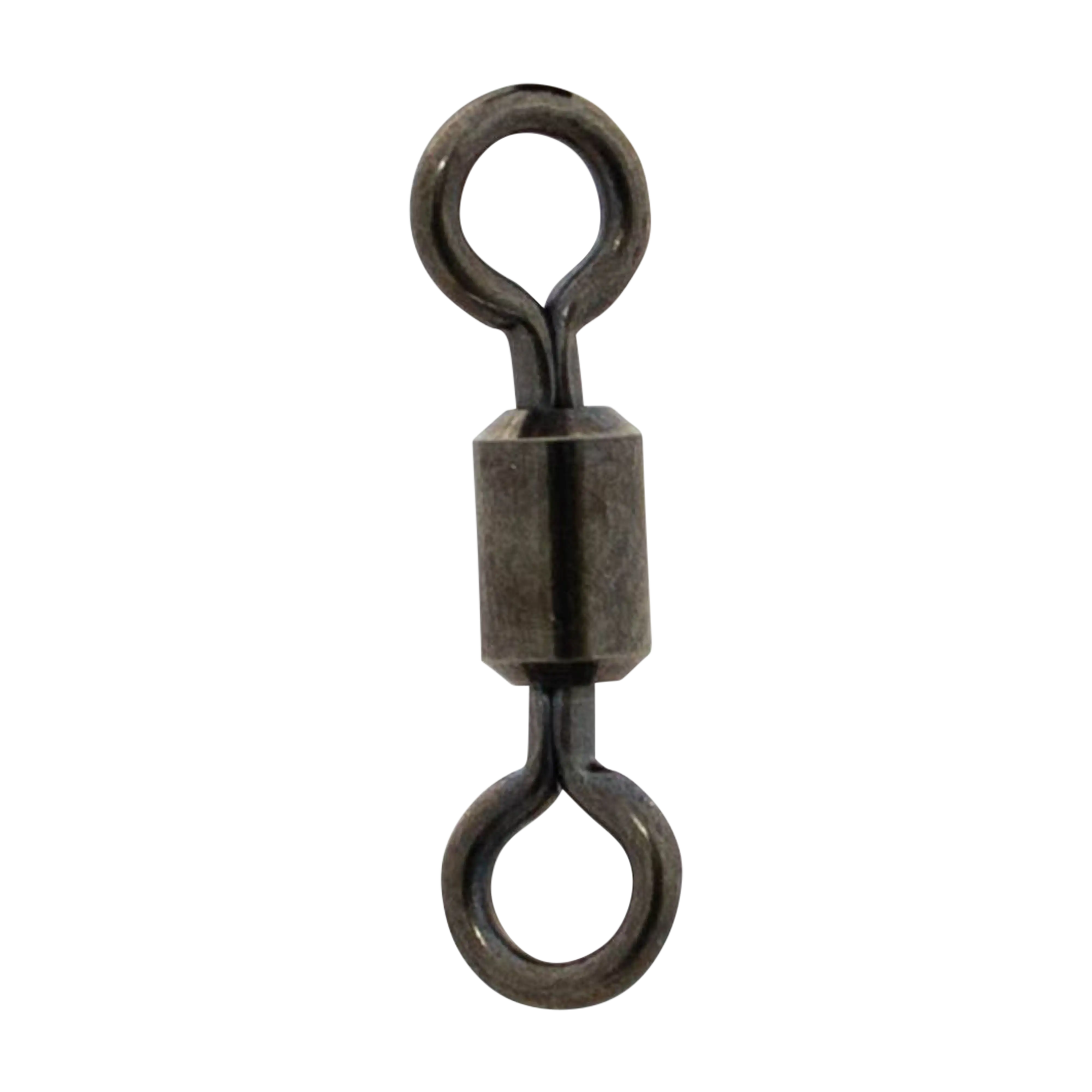
Swivels help prevent line twist and improve rig stability during repeated drops, retrieves, and fish movement in current. They are commonly placed between the mainline and leader to reduce stress on knots while helping rigs track more cleanly through the water column. In deep-water snapper and grouper fishing, quality swivels also help minimize tangles and maintain smoother presentation when using heavy sinkers, bait rigs, or jigs around structure.
Key Takeaways
- Jigheads allow soft plastics or cut bait to be presented with controlled sink rate and movement
- Round heads are versatile, football heads improve bottom stability, and pointed heads cut current more efficiently
- Circle hooks are standard for natural bait fishing, while J-hooks are common for jigging and active presentations
- Swivels reduce line twist, improve rig stability, and help prevent tangles in deep water
Terminal Tackle
Terminal tackle plays a critical role in red snapper and gag grouper fishing because it directly connects the angler to the fish and absorbs constant stress from current, depth, structure, and heavy drag pressure. In offshore bottom fishing, every component—from hooks and jigheads to swivels and rigging hardware—must be strong, abrasion resistant, and reliable under load. Choosing the right terminal tackle helps improve presentation, maintain control around structure, and reduce failures when fish surge back toward reefs, wrecks, and hard bottom cover.
Jigheads
Jigheads are used as a rigging platform for both soft plastics and cut natural bait, allowing anglers to combine natural action or scent with the controlled sink rate and hook positioning of a weighted presentation. They are especially effective for targeting red snapper suspended above structure, feeding through the water column, or responding to more natural moving presentations around reefs and wrecks.
Head shape affects how the bait sinks, tracks, and moves in current. Round heads are the most versatile and provide a balanced presentation for general use. Football-style heads offer added bottom stability and help reduce rolling around structure, while pointed or bullet-style heads cut through current more efficiently and maintain a cleaner sink angle in deeper water.
Hook strength is just as important as head shape, with heavy-wire hooks required to withstand strong runs and sustained pressure around structure. Most offshore jigheads range from 2–6+ oz depending on depth, drift, and current, with heavier weights used when maintaining sink control and vertical presentation becomes more difficult. While jigheads can occasionally produce gag grouper near shallow structure, they are primarily used as a red snapper presentation higher in the water column rather than a dedicated grouper technique.
Hooks
Hooks are one of the most important components in offshore rigging because they directly affect hook-up rate, holding power, and fish control during the fight. Heavy-wire hooks are standard for both red snapper and gag grouper due to their strength and resistance to bending under high drag pressure and deep-water loads.
Circle hooks are commonly used—and often required—for natural bait fishing because they typically hook fish in the corner of the mouth and improve landing consistency. J-hooks are more common with jigheads and active jigging presentations where anglers rely on a more direct hookset. Hook sizes generally range from 2/0–8/0 depending on bait size, target fish, and presentation style, with larger hooks favored for bigger baits and heavier offshore applications.
Swivels
Swivels help prevent line twist and improve rig stability during repeated drops, retrieves, and fish movement in current. They are commonly placed between the mainline and leader to reduce stress on knots while helping rigs track more cleanly through the water column. In deep-water snapper and grouper fishing, quality swivels also help minimize tangles and maintain smoother presentation when using heavy sinkers, bait rigs, or jigs around structure.
Key Takeaways
- Jigheads allow soft plastics or cut bait to be presented with controlled sink rate and movement
- Round heads are versatile, football heads improve bottom stability, and pointed heads cut current more efficiently
- Circle hooks are standard for natural bait fishing, while J-hooks are common for jigging and active presentations
- Swivels reduce line twist, improve rig stability, and help prevent tangles in deep water
Terminal Tackle for Red Snapper & Gag Grouper Fishing



Fishing Accessories
Fishing accessories play a critical role in offshore snapper and grouper fishing because they directly impact safety, efficiency, and how quickly anglers can reset after landing or losing a fish. In deep water and heavy structure environments, fish are strong, hooks are heavy, and handling time matters. The right tools reduce risk, speed up unhooking and rigging, and help maintain control in demanding offshore conditions where every second counts.
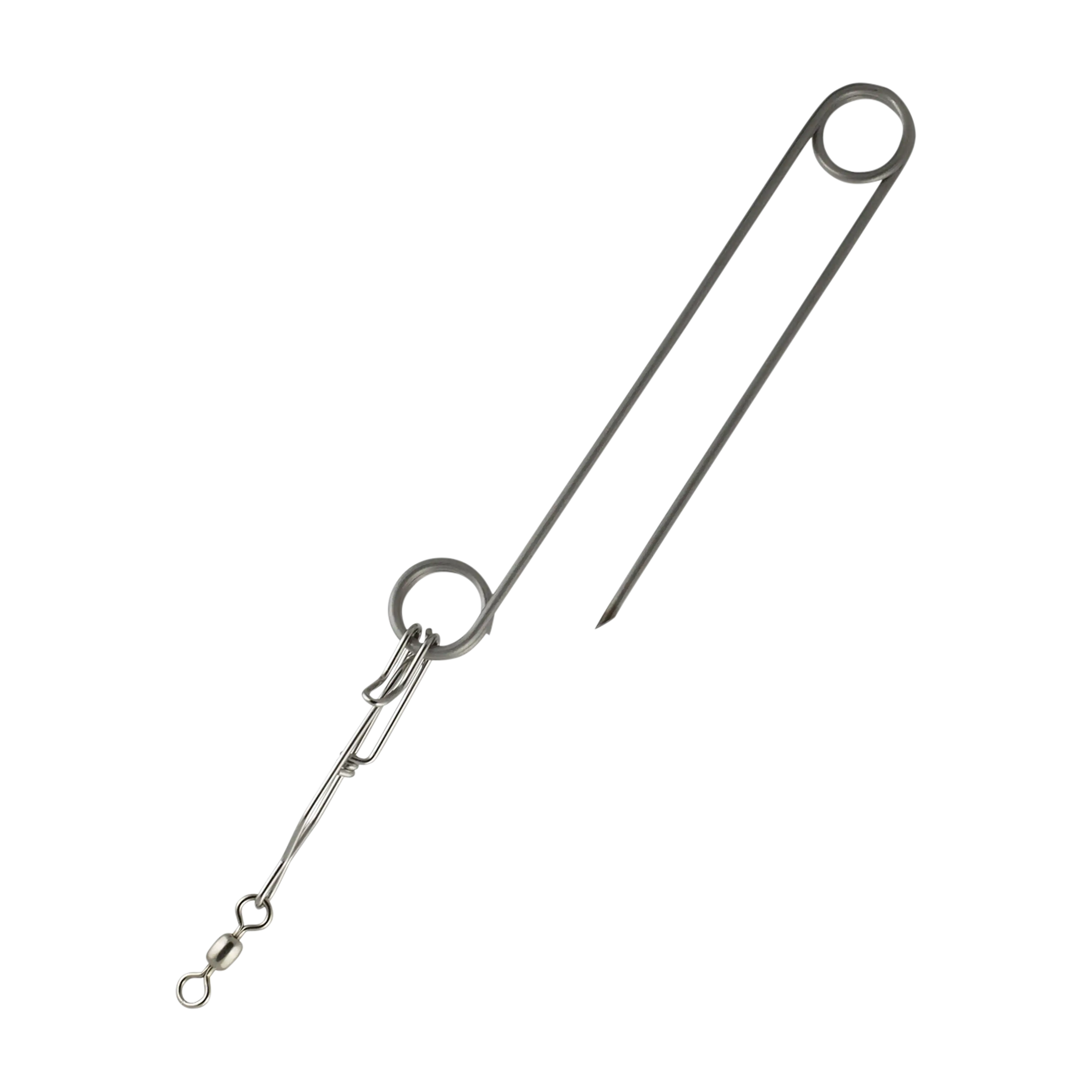
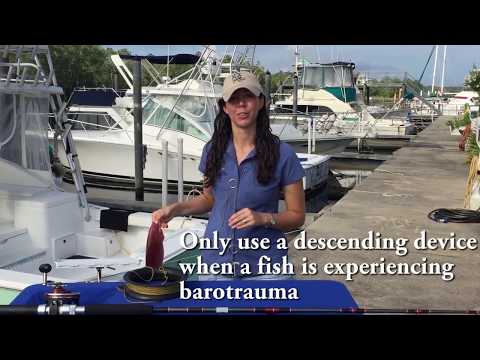
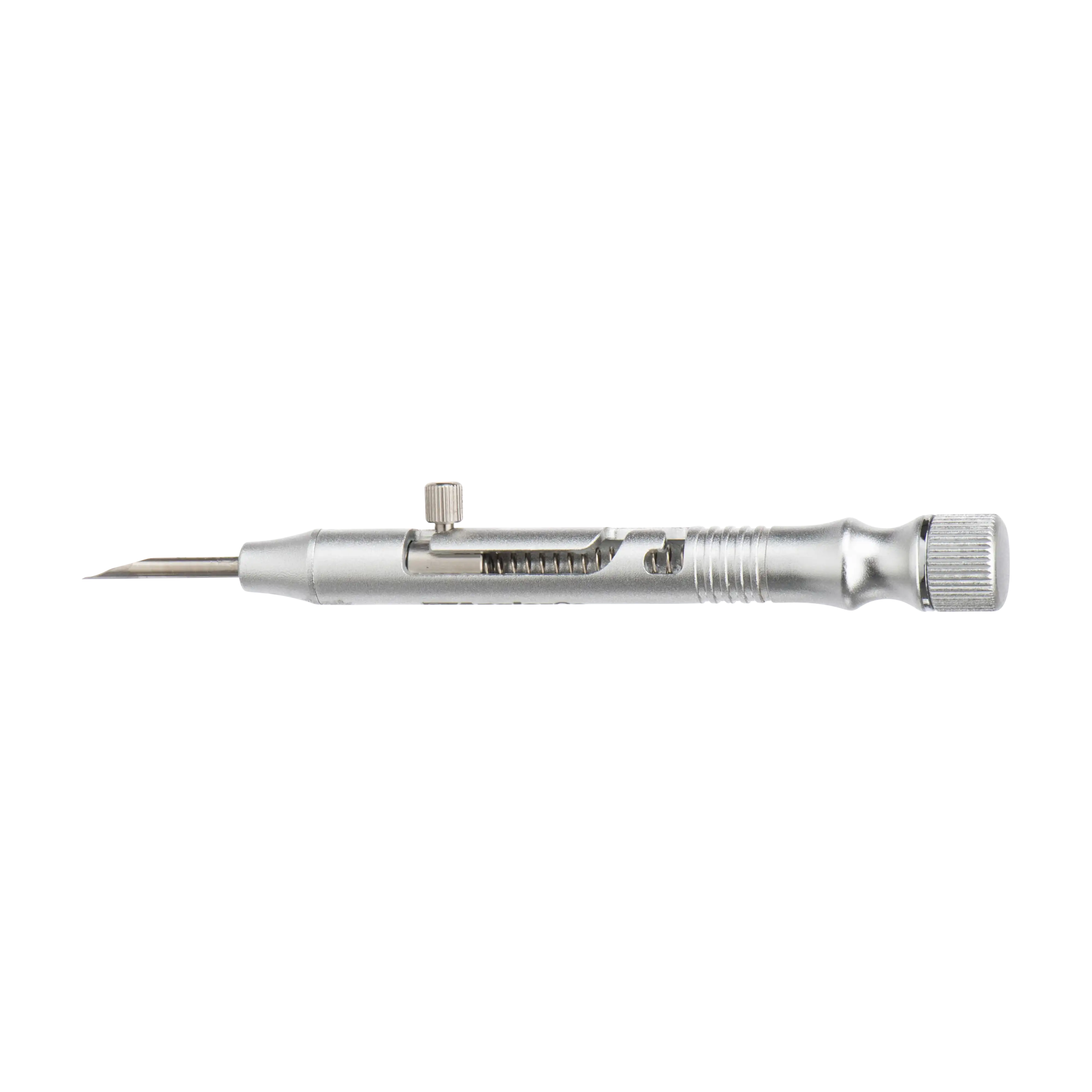
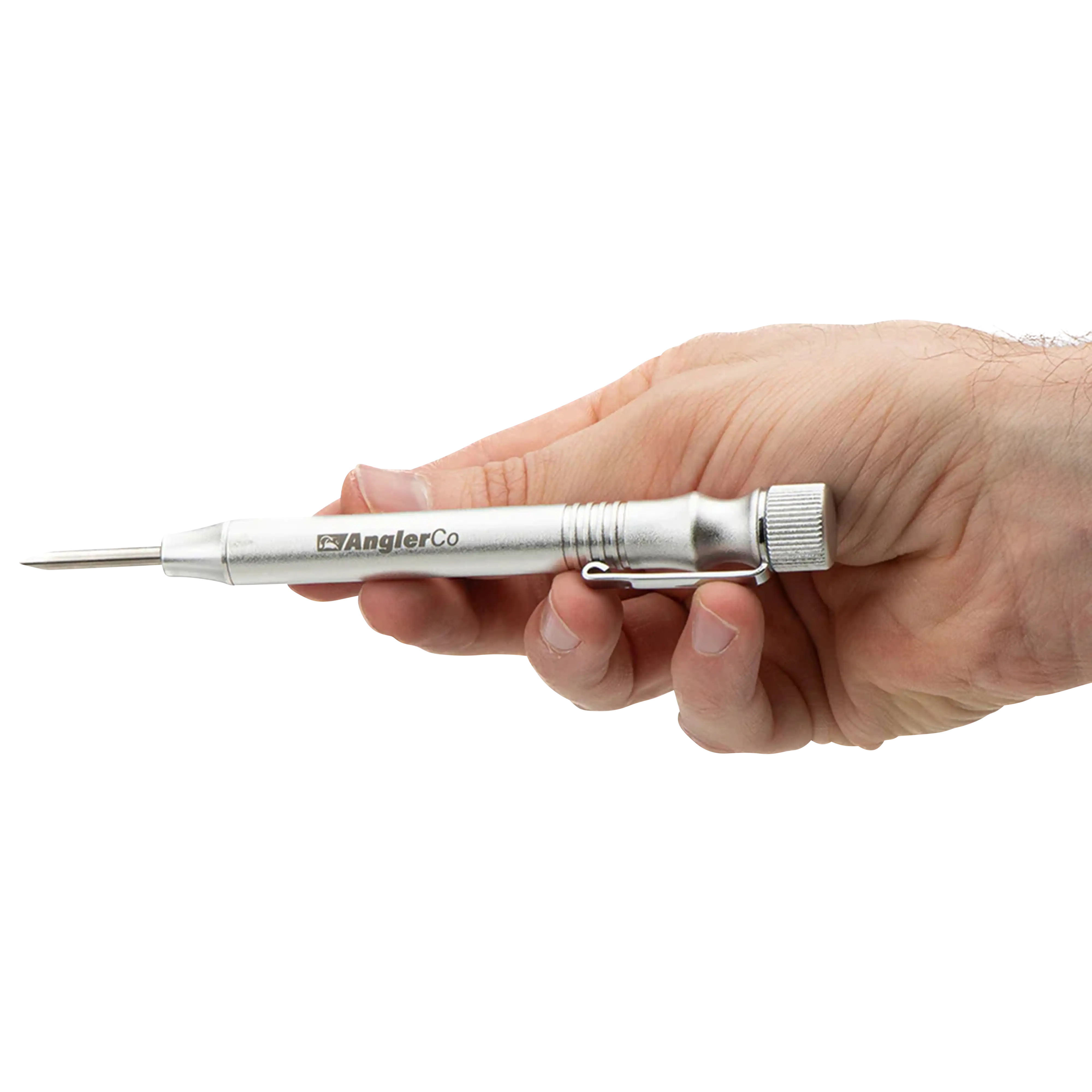
Venting Tools
Venting tools are used to safely release built-up air pressure in fish brought up from deeper water, helping them regain balance and swim back down more effectively. This is especially important when targeting species like red snapper that are frequently pulled from depth, where rapid pressure changes can affect their ability to descend. Proper use of venting tools supports healthier releases and improves post-catch survival in deeper offshore environments.
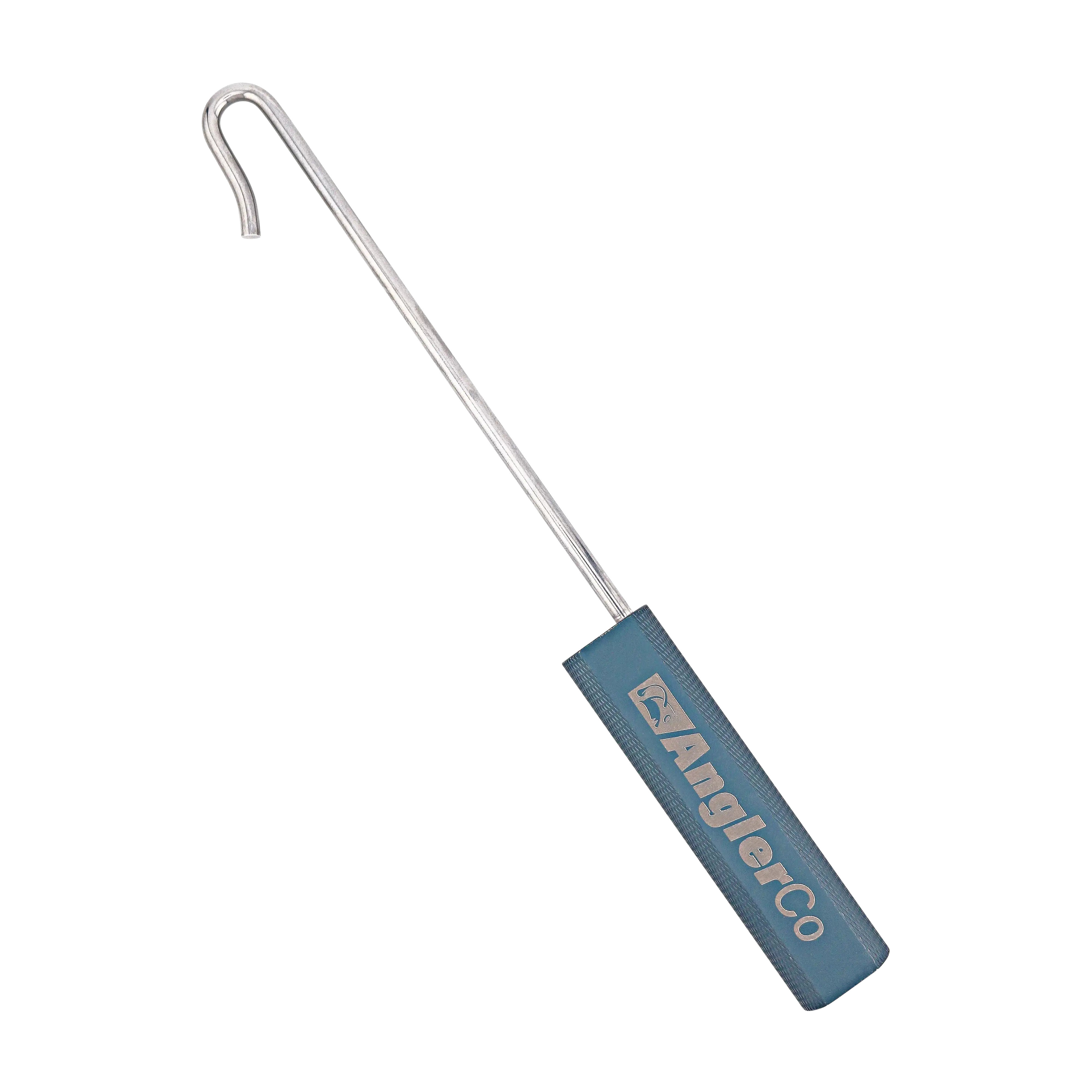
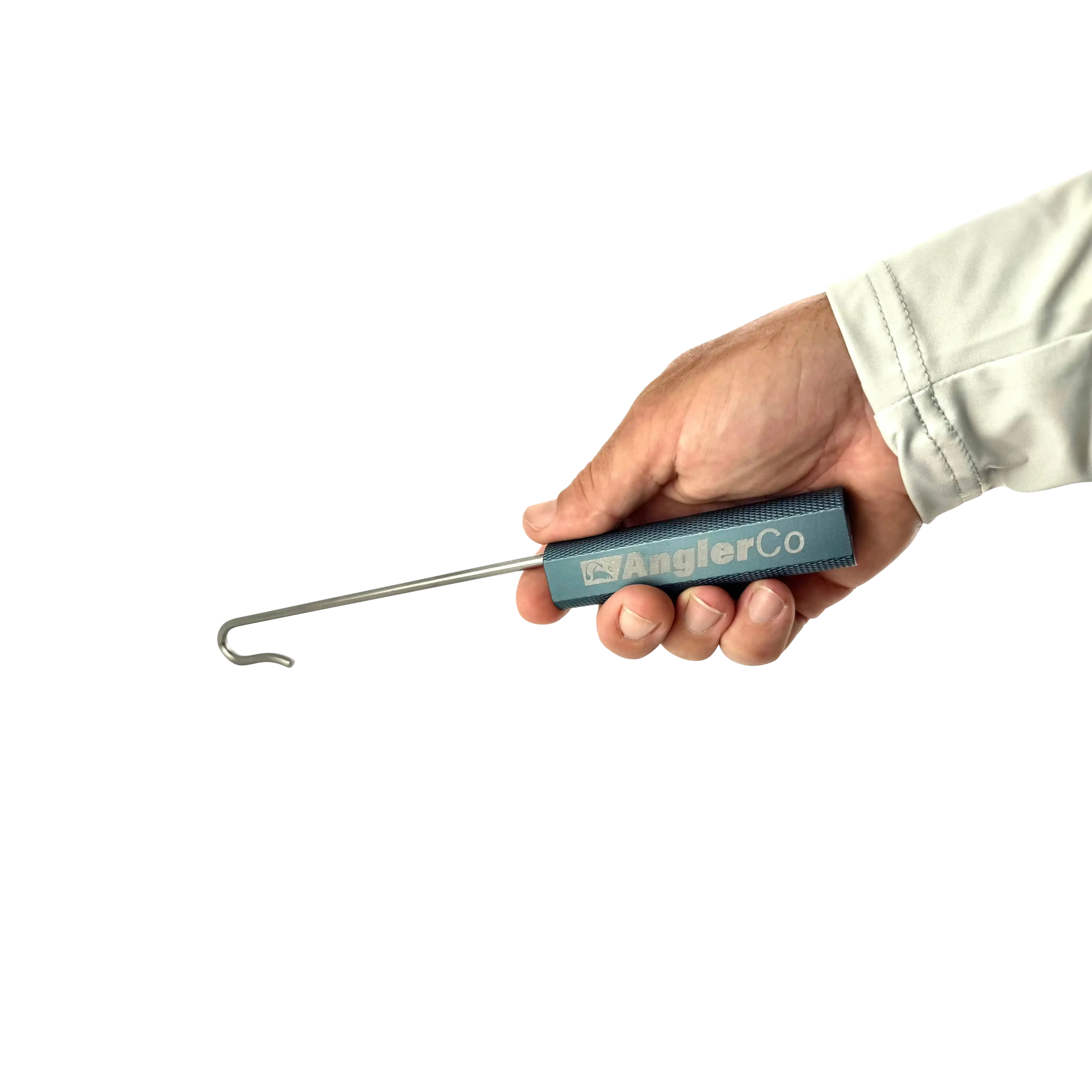
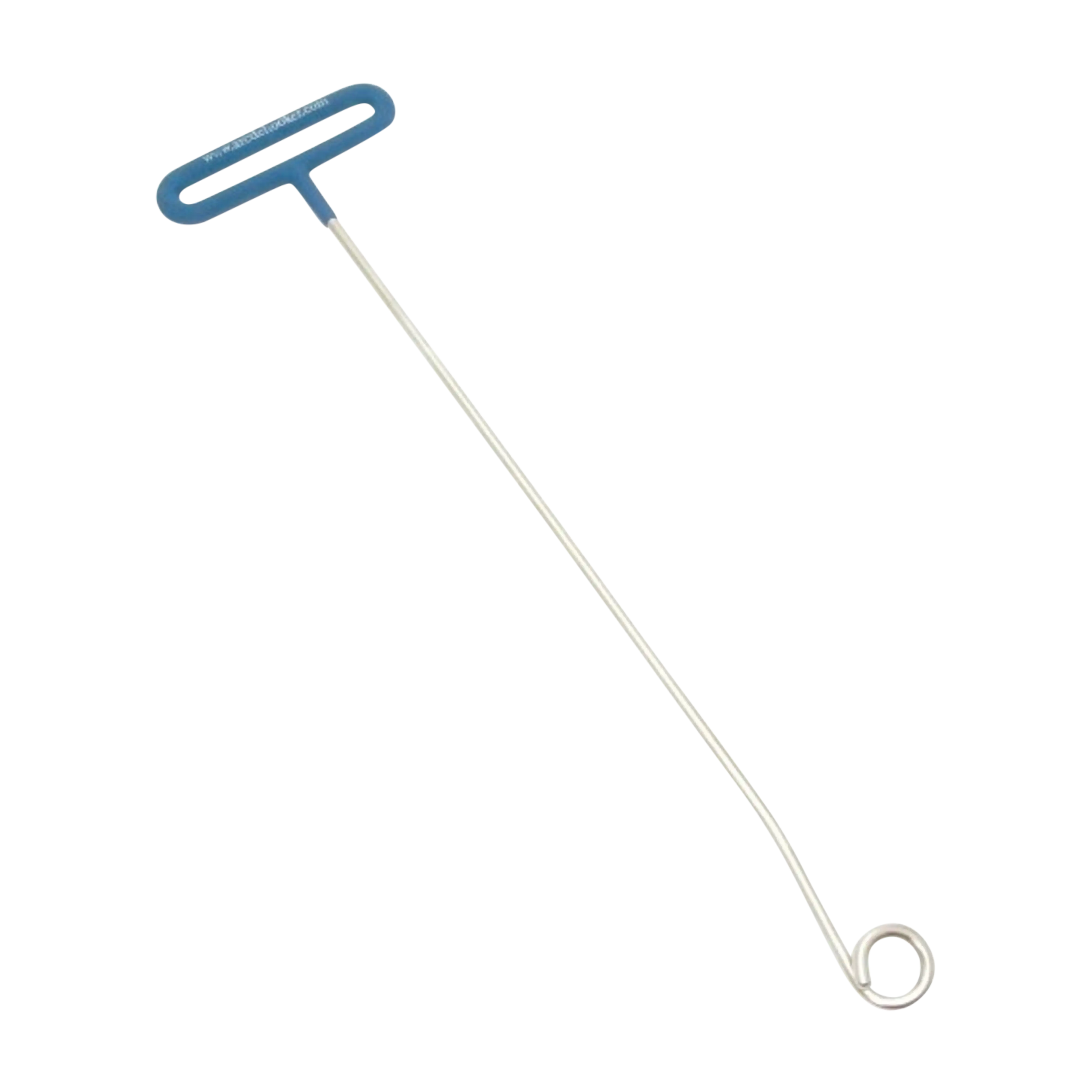
Hook Removers
Hook removers are designed to safely and efficiently extract hooks without placing hands near sharp teeth, gills, or deeply embedded rigs. In offshore fishing, where heavy hooks and strong fish are common, they significantly reduce handling time and improve safety during unhooking. They are especially useful when dealing with deep-hooked fish, toothy species, or when using strong terminal tackle that is difficult to remove by hand.
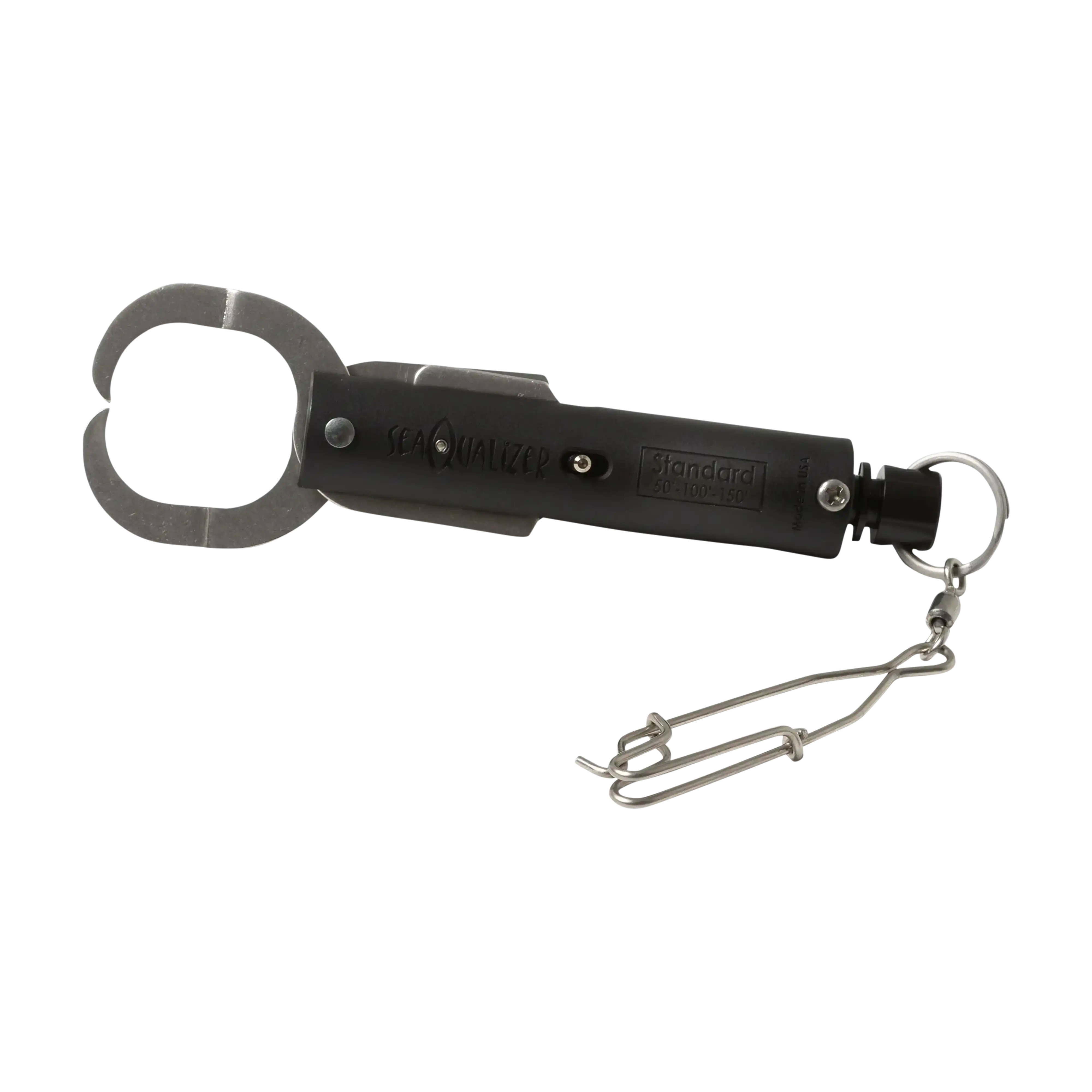
Fish Grippers
Fish grippers provide a secure way to control fish by the jaw during landing, unhooking, or measuring. They help prevent injury from sharp gill plates, fins, or sudden thrashing at the boat, while also giving anglers more control in unstable offshore conditions. For larger snapper and grouper, grippers are an important safety tool that improves handling efficiency and reduces risk during release or retention.
Fishing Gloves
Fishing gloves protect hands from hooks, braided line cuts, leader abrasion, and rough fish handling, all of which are common in offshore snapper and grouper fishing. They also improve grip in wet, slippery conditions when handling fish on deck or managing gear under load. Beyond protection, gloves add confidence when dealing with strong fish, making hook removal, leader control, and landing operations safer and more controlled.
Key Takeaways
- Fishing accessories improve safety, efficiency, and control when handling red snapper and gag grouper offshore
- Venting tools help deep-water fish recover and improve survival after release
- Hook removers reduce handling time and improve safety when dealing with strong hooks and hard-fighting fish
- Fish grippers provide secure jaw control for safer landing, measuring, and release in unstable offshore conditions
- Gloves protect against hooks, line cuts, and abrasion while improving grip and control on wet decks
Fishing Accessories
Fishing accessories play a critical role in offshore snapper and grouper fishing because they directly impact safety, efficiency, and how quickly anglers can reset after landing or losing a fish. In deep water and heavy structure environments, fish are strong, hooks are heavy, and handling time matters. The right tools reduce risk, speed up unhooking and rigging, and help maintain control in demanding offshore conditions where every second counts.
Venting Tools
Venting tools are used to safely release built-up air pressure in fish brought up from deeper water, helping them regain balance and swim back down more effectively. This is especially important when targeting species like red snapper that are frequently pulled from depth, where rapid pressure changes can affect their ability to descend. Proper use of venting tools supports healthier releases and improves post-catch survival in deeper offshore environments.
Hook Removers
Hook removers are designed to safely and efficiently extract hooks without placing hands near sharp teeth, gills, or deeply embedded rigs. In offshore fishing, where heavy hooks and strong fish are common, they significantly reduce handling time and improve safety during unhooking. They are especially useful when dealing with deep-hooked fish, toothy species, or when using strong terminal tackle that is difficult to remove by hand.
Fish Grippers
Fish grippers provide a secure way to control fish by the jaw during landing, unhooking, or measuring. They help prevent injury from sharp gill plates, fins, or sudden thrashing at the boat, while also giving anglers more control in unstable offshore conditions. For larger snapper and grouper, grippers are an important safety tool that improves handling efficiency and reduces risk during release or retention.
Fishing Gloves
Fishing gloves protect hands from hooks, braided line cuts, leader abrasion, and rough fish handling, all of which are common in offshore snapper and grouper fishing. They also improve grip in wet, slippery conditions when handling fish on deck or managing gear under load. Beyond protection, gloves add confidence when dealing with strong fish, making hook removal, leader control, and landing operations safer and more controlled.
Key Takeaways
- Fishing accessories improve safety, efficiency, and control when handling red snapper and gag grouper offshore
- Venting tools help deep-water fish recover and improve survival after release
- Hook removers reduce handling time and improve safety when dealing with strong hooks and hard-fighting fish
- Fish grippers provide secure jaw control for safer landing, measuring, and release in unstable offshore conditions
- Gloves protect against hooks, line cuts, and abrasion while improving grip and control on wet decks
Red Snaper & Gag Grouper Fishing Accessories


Tackle Storage
Red snapper and gag grouper fishing puts constant stress on tackle, and with frequent switching between bait rigs, jigheads, and terminal tackle, keeping gear separated and easy to access helps reduce downtime and keeps you ready during active bite windows.
Waterproof tackle boxes and compartment trays form the core of an offshore storage system. Dividers keep hooks, jigheads, sinkers, swivels, and crimps organized and prevent tangling or damage, while labeled sections make it faster to grab the right rig or weight as conditions change. Many anglers also store pre-rigged leaders and jighead setups to speed up resets when gear is lost or conditions shift.
Good organization also protects corrosion-prone items like hooks and leaders, reducing wasted time re-tying on the water. Having gear ready and easy to access helps maintain focus and keeps fishing time productive when conditions are changing and bites come quickly.
Key Takeaways
- Red snapper and gag grouper fishing puts heavy demands on tackle, making organized storage essential for efficiency and safety
- Waterproof boxes, trays, and leader wallets protect gear from saltwater, corrosion, and physical damage
- Dividers and compartments keep hooks, jigheads, sinkers, swivels, and rigs separated and easy to access
- Pre-rigged leaders and setups speed up changes when conditions or bite windows shift
- Good organization reduces downtime and keeps anglers focused during critical fishing moments around structure
Tackle Storage
Red snapper and gag grouper fishing puts constant stress on tackle, and with frequent switching between bait rigs, jigheads, and terminal tackle, keeping gear separated and easy to access helps reduce downtime and keeps you ready during active bite windows.
Waterproof tackle boxes and compartment trays form the core of an offshore storage system. Dividers keep hooks, jigheads, sinkers, swivels, and crimps organized and prevent tangling or damage, while labeled sections make it faster to grab the right rig or weight as conditions change. Many anglers also store pre-rigged leaders and jighead setups to speed up resets when gear is lost or conditions shift.
Good organization also protects corrosion-prone items like hooks and leaders, reducing wasted time re-tying on the water. Having gear ready and easy to access helps maintain focus and keeps fishing time productive when conditions are changing and bites come quickly.
Key Takeaways
- Red snapper and gag grouper fishing puts heavy demands on tackle, making organized storage essential for efficiency and safety
- Waterproof boxes, trays, and leader wallets protect gear from saltwater, corrosion, and physical damage
- Dividers and compartments keep hooks, jigheads, sinkers, swivels, and rigs separated and easy to access
- Pre-rigged leaders and setups speed up changes when conditions or bite windows shift
- Good organization reduces downtime and keeps anglers focused during critical fishing moments around structure
Tackle Storage for Red Snapper & Gag Grouper Fishing
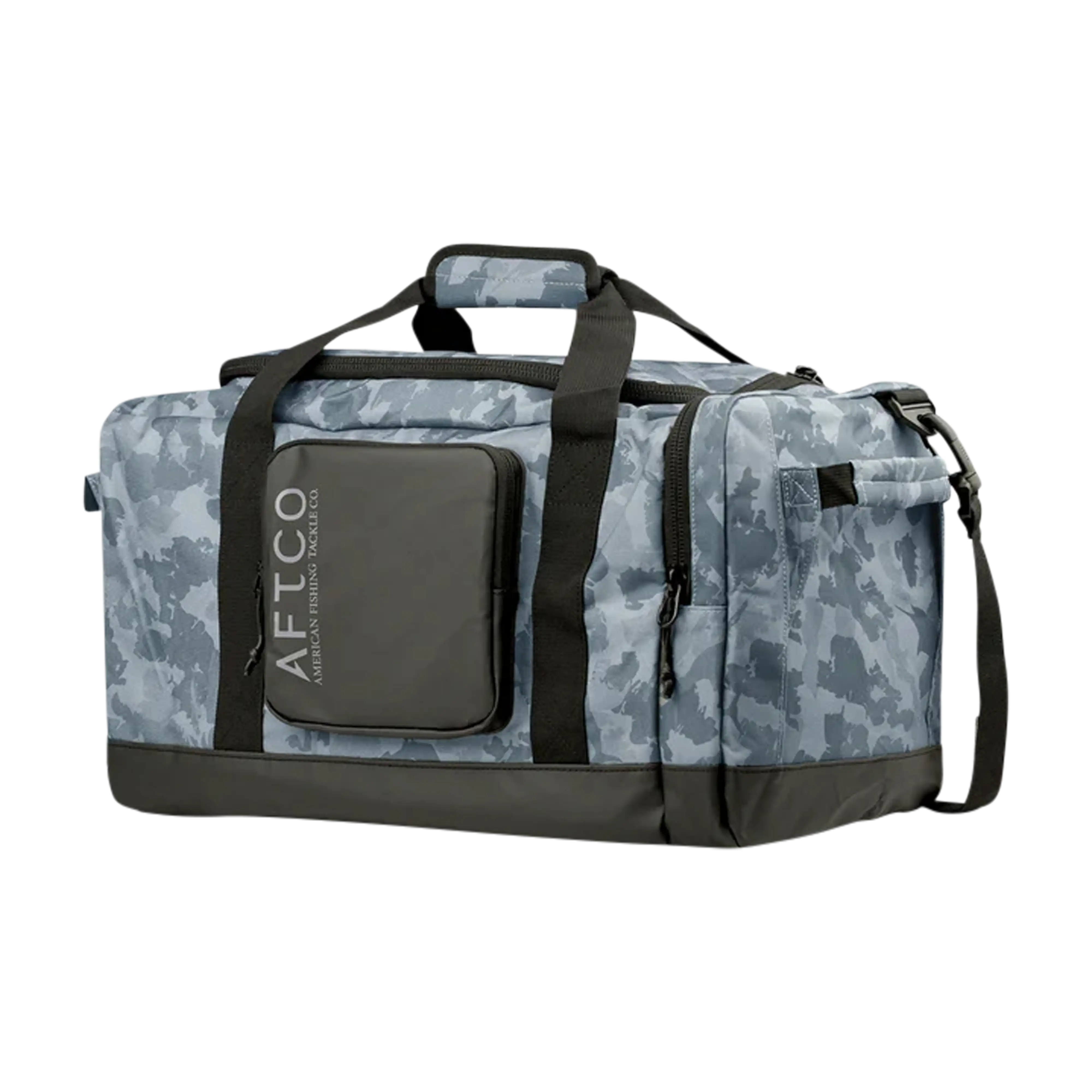
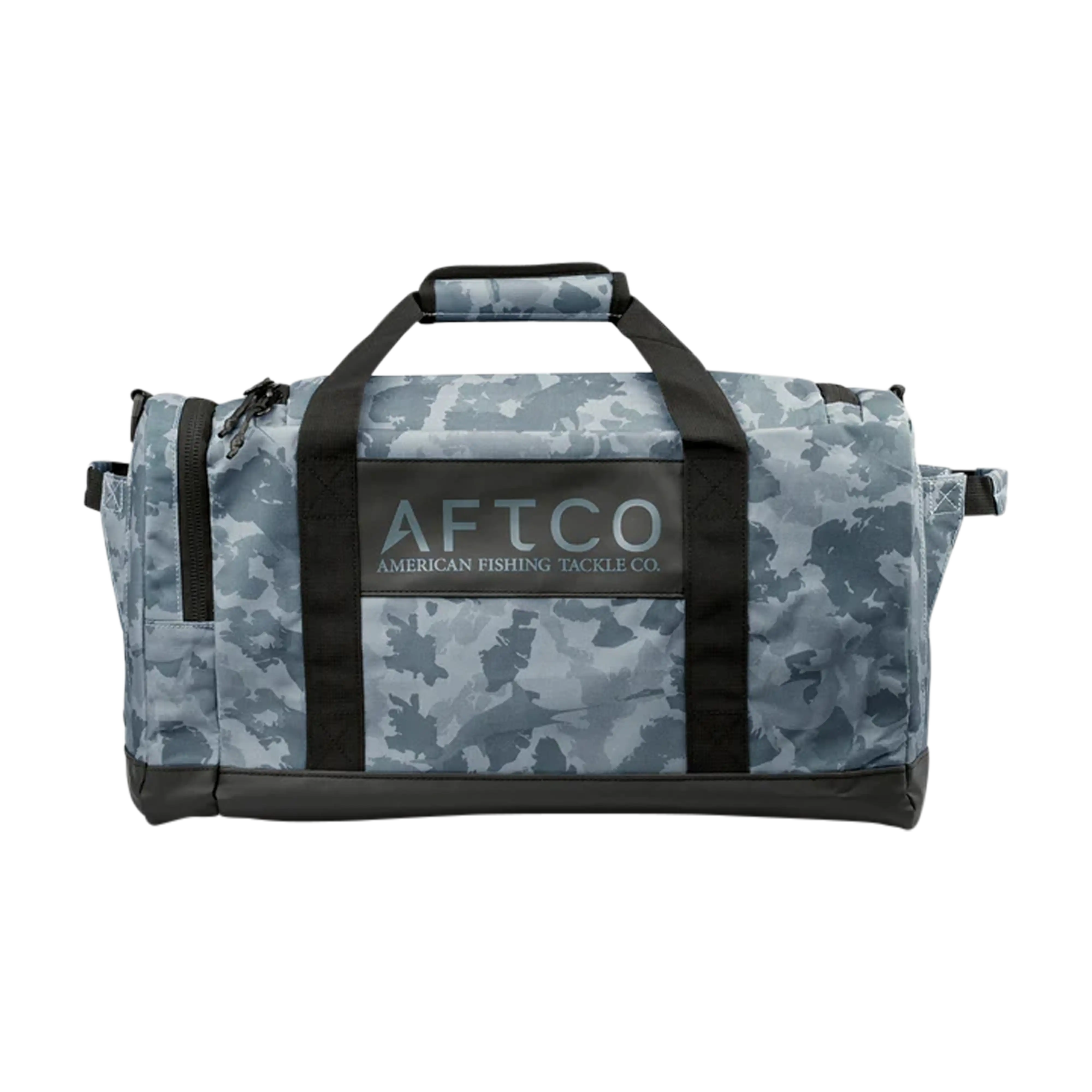
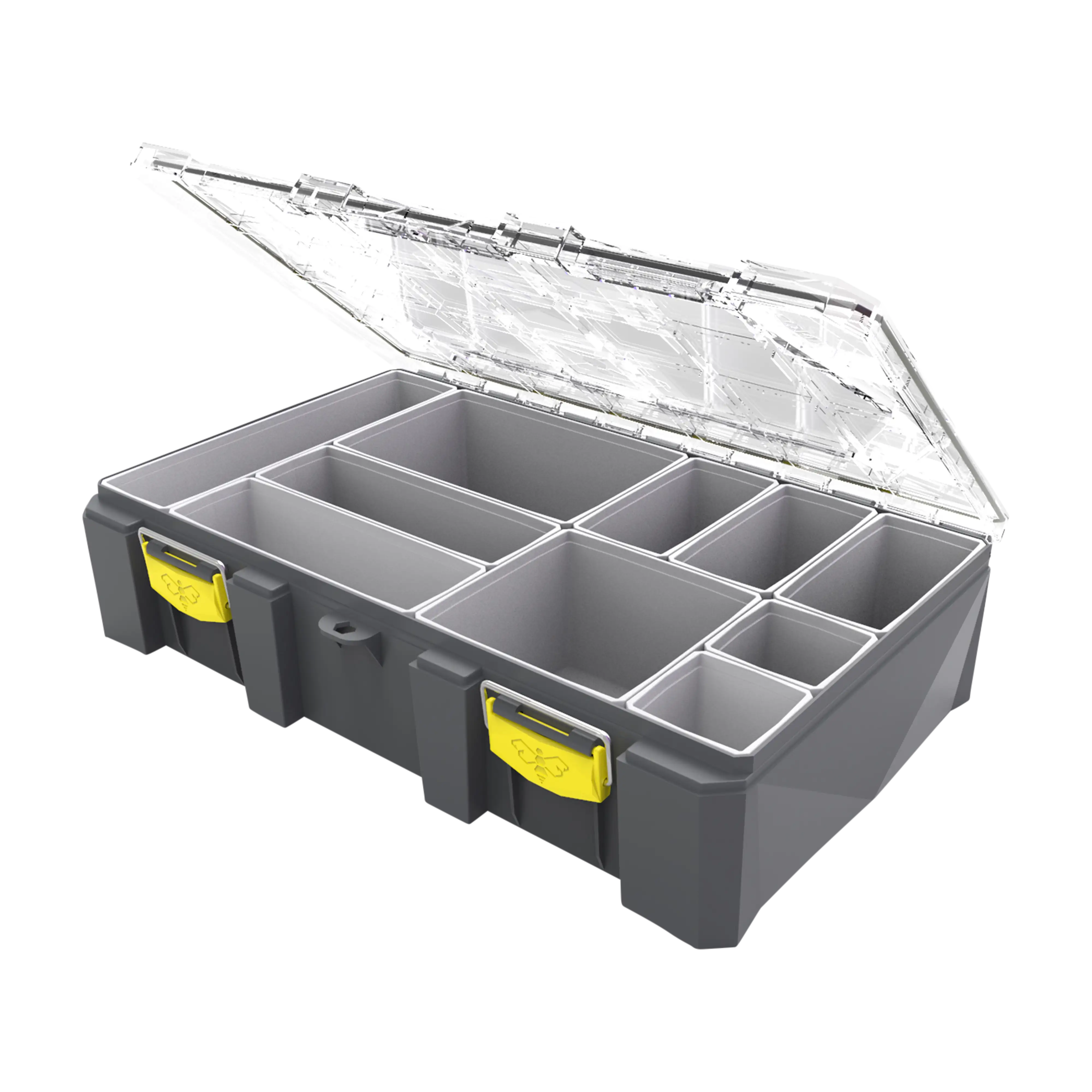
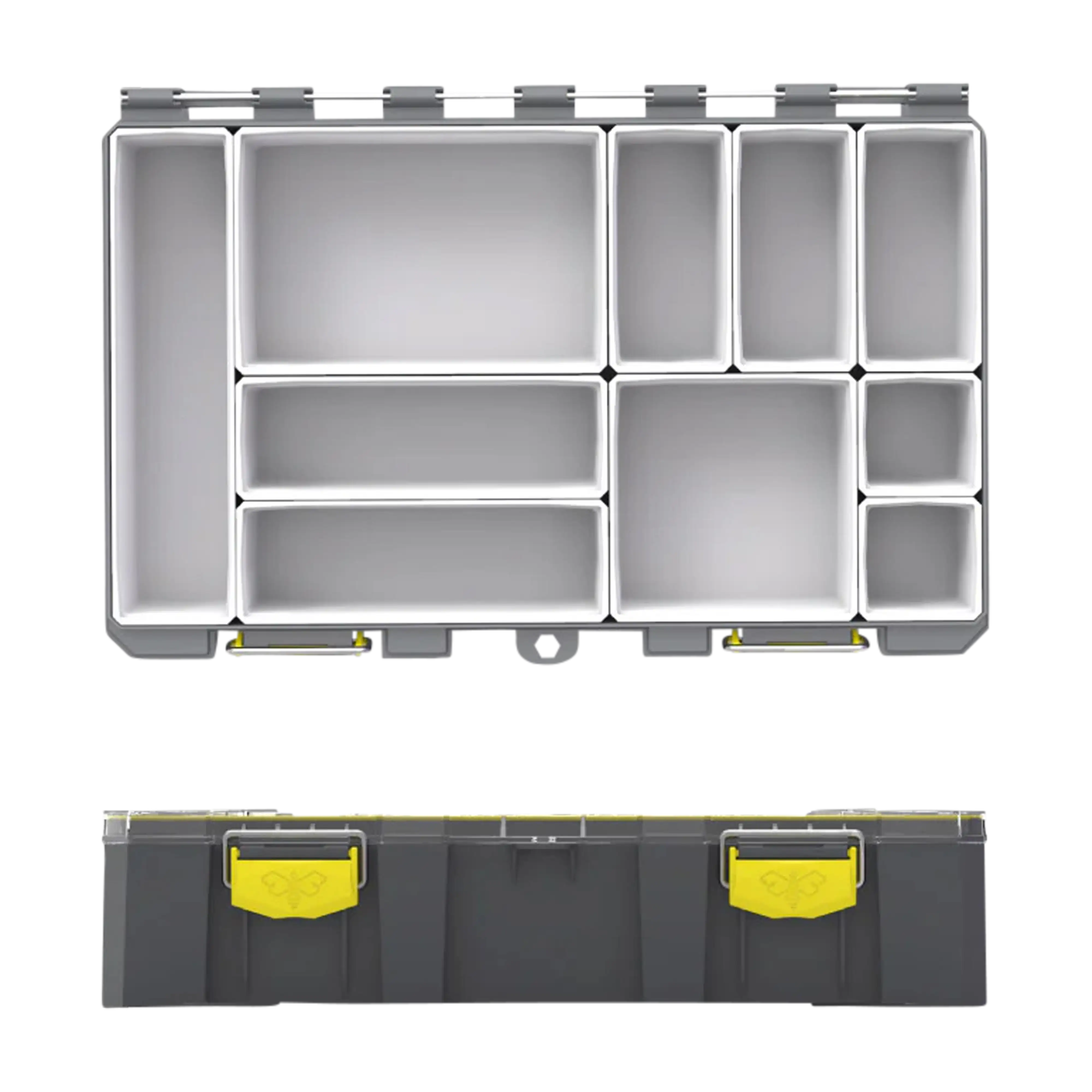
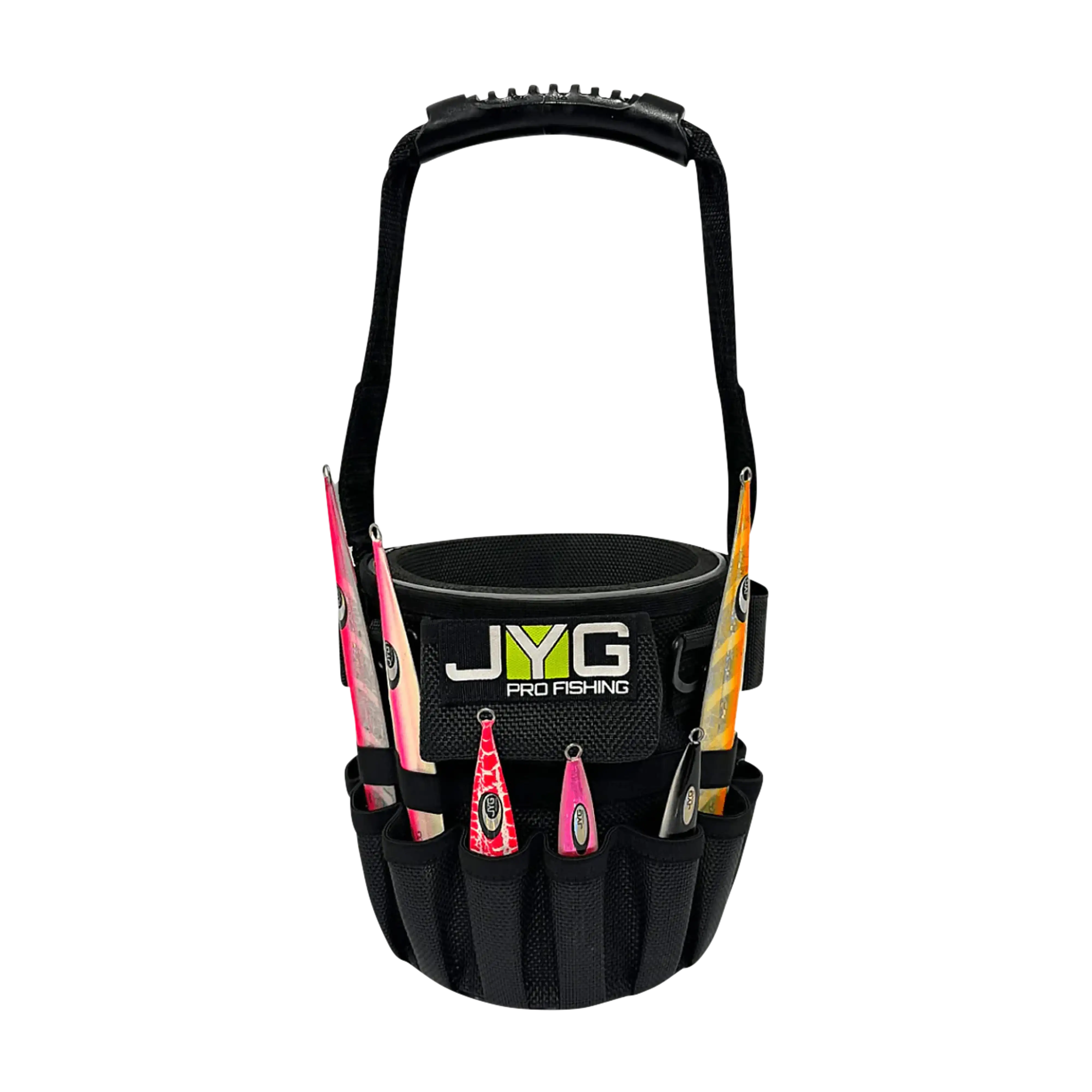
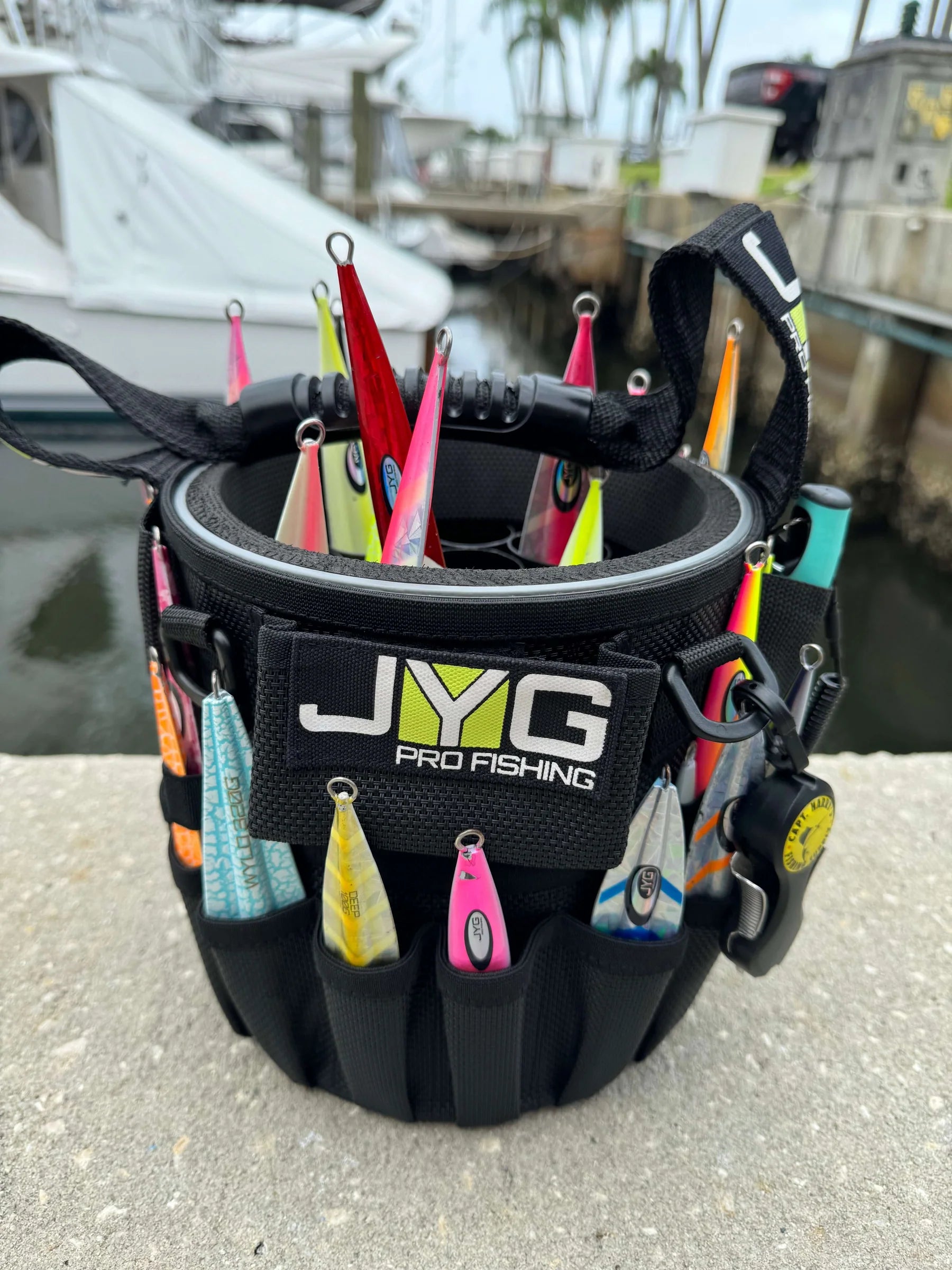
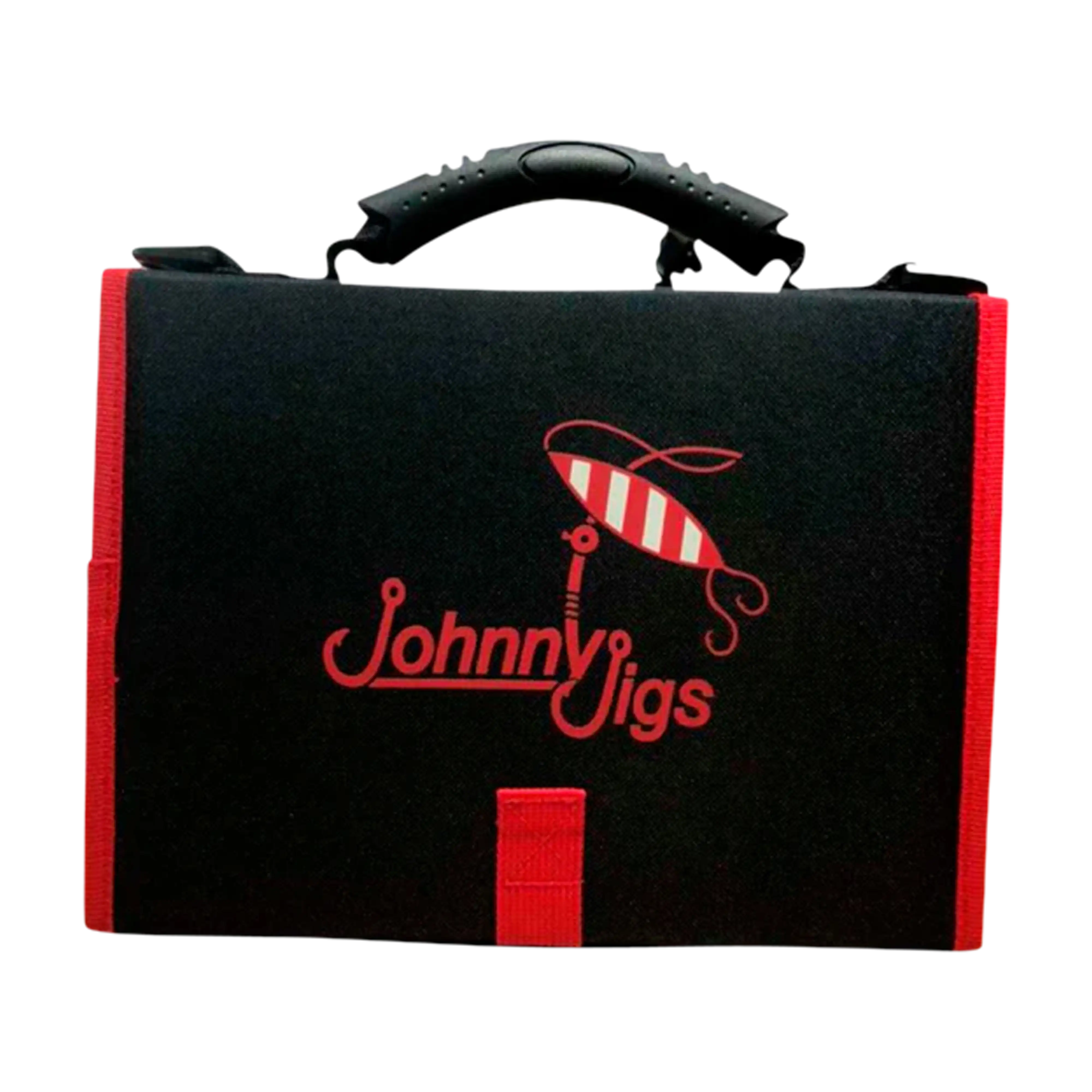
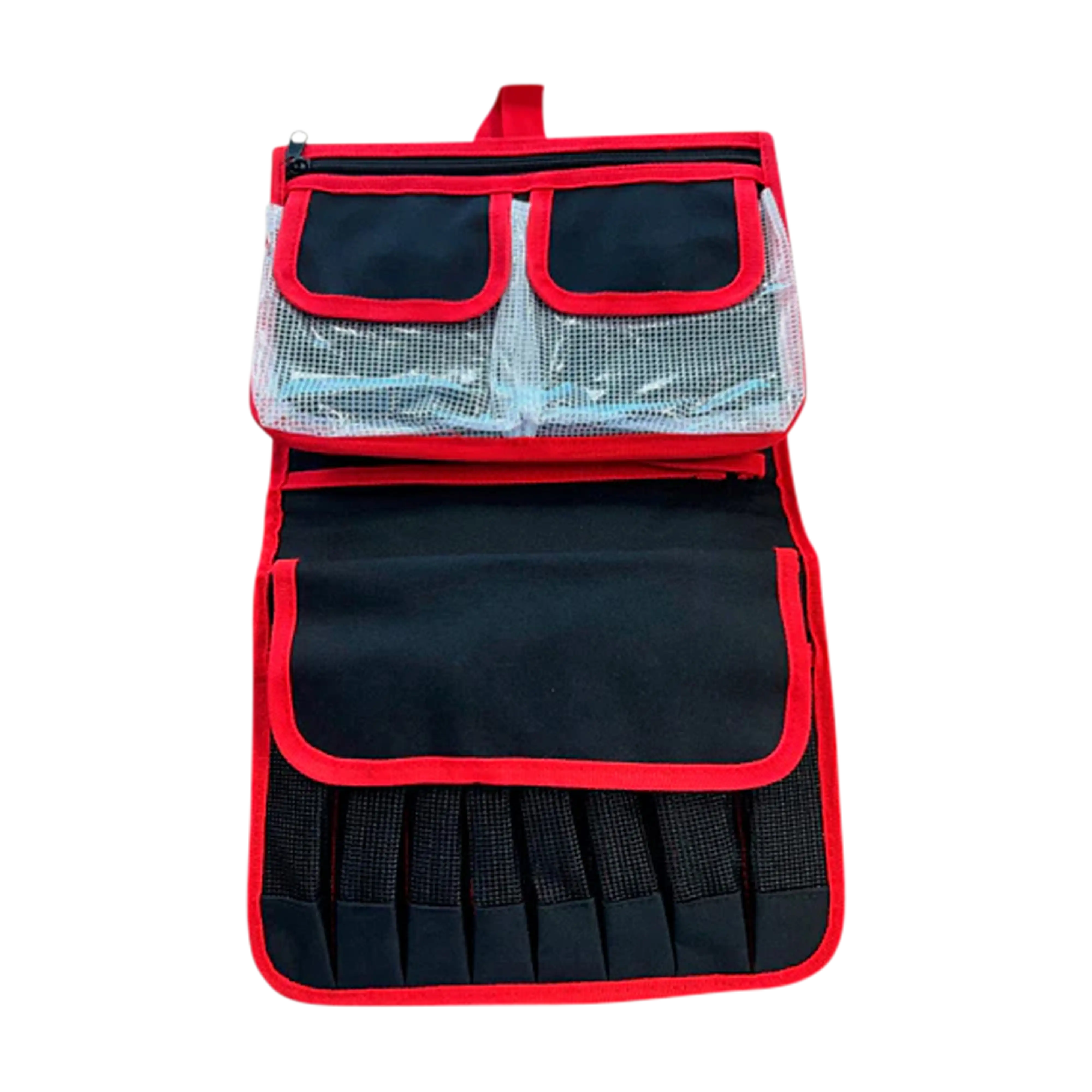
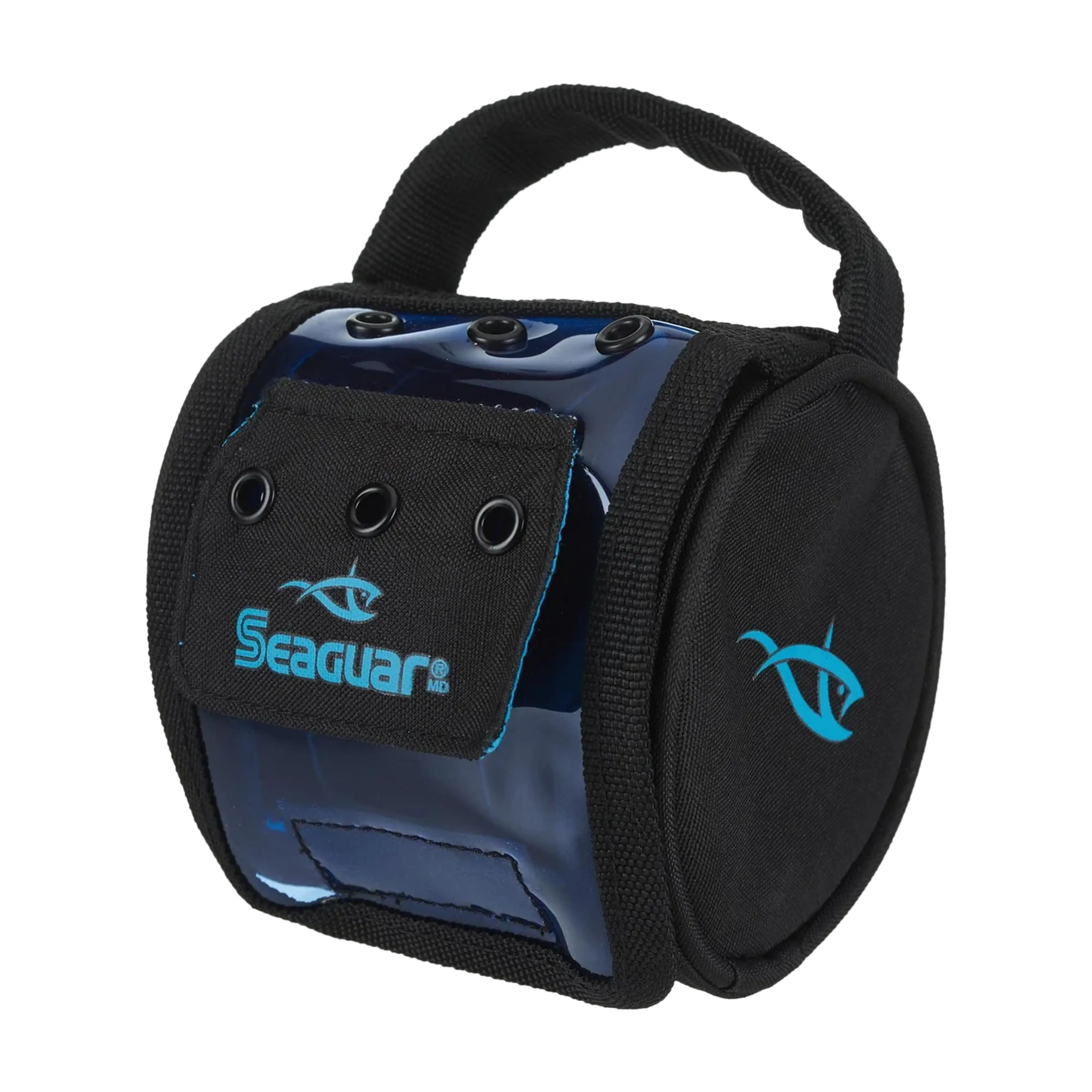
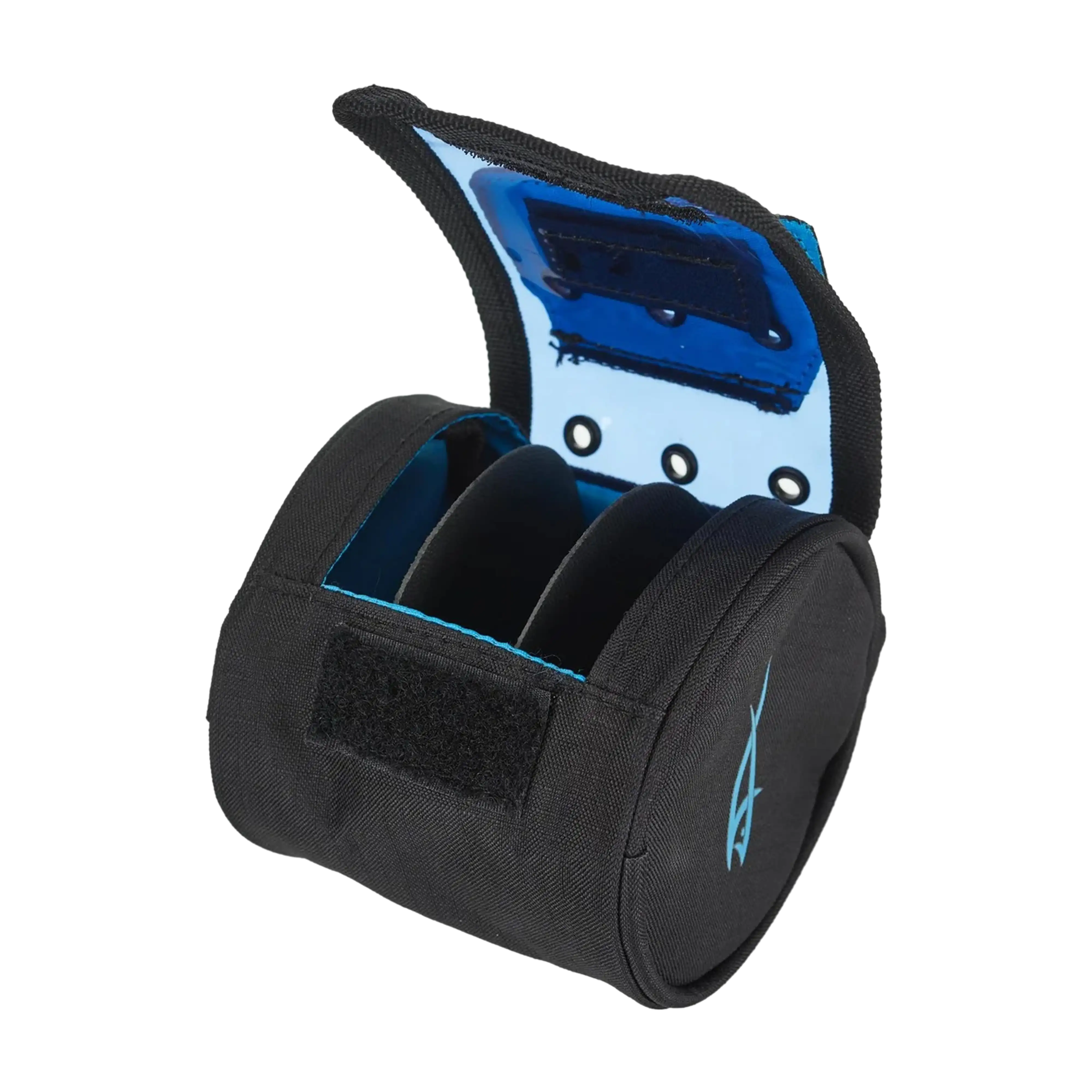
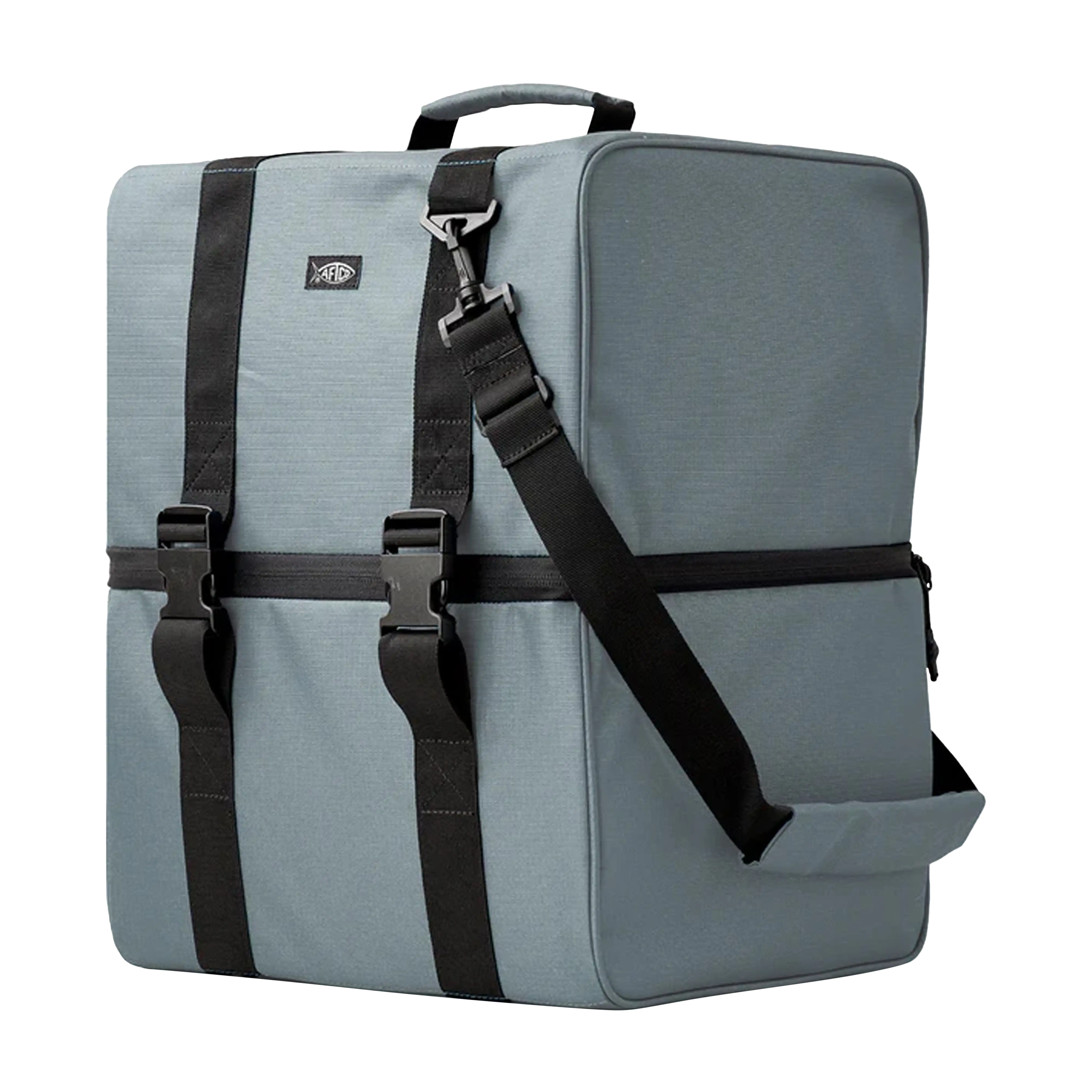
Red Snapper & Gag Grouper Fishing
FAQ - Red Snapper & Gag Grouper Gear
What is the best rod length for red snapper and gag grouper fishing?
Most rods fall in the 6’6” to 7’6” range, providing enough leverage for deep water control while maintaining sensitivity and strength around structure where both red snapper and gag grouper are commonly targeted. On head, party boats, and long range boats, it is common to use 8ft rods to keep the line from touching the boat.
What line is best for red snapper and gag grouper fishing?
Braided line in the 30–65 lb range is most commonly used because it offers high sensitivity, minimal stretch, thinner diameter allowing for less drag of the line, and strong strength for managing deep drops, current, and structure. Heavier braid is often used when targeting gag grouper tight to heavy cover.
What weight sinker or jig should I use for red snapper and gag grouper?
Weights typically range from 2–16+ oz depending on depth and current. Heavier weights are needed to maintain bottom contact in strong current or deeper water, especially when targeting gag grouper in structure-heavy areas.
Are circle hooks or J-hooks better for red snapper and gag grouper?
Circle hooks are commonly used for bait fishing due to consistent corner-of-the-mouth hookups, while J-hooks are often used for jigheads and more active presentations where immediate hooksets are preferred. Circle hooks are better for the fish but require some knowledge on how to effectively use them. Even then some fish still ingest the hook, but the percentage of mortality is lower and higher with J hooks.
What is the best leader strength for red snapper and gag grouper?
What is the best leader strength for red snapper and gag grouper?Leader strength is typically 40–80 lb fluorocarbon, with heavier 80–100 lb leaders used in heavy structure or when targeting larger fish, particularly gag grouper in tight cover. Also be sure to use strong knots and check them often.
What colors work best for red snapper and gag grouper jigs?
Natural colors like white, blue, and silver work well in clear water, while brighter colors like pink, chartreuse, and glow perform better in deeper or low-light conditions. Contrast is often more important than exact color match for both species. However you can take a color you have had success on to another area and not have much attention to it.
Do red snapper and gag grouper feed better on bait or lures?
Both species will take bait and artificial lures. Red snapper are more commonly encountered feeding in the water column or near structure edges, while gag grouper are more structure-oriented and often respond to presentations worked closer to bottom or cover.
What is the best jig type for red snapper and gag grouper fishing?
Speed jigs and slow pitch jigs both work well, with effectiveness depending more on depth, current, and fish behavior than the specific species. Speed jigs are great when fish are active, while slow pitch can help coax bites when they are more reluctant. Also be sure to use strong knots and check them often.
How do you stop red snapper and gag grouper from breaking you off in structure?
Applying steady drag pressure immediately after hookup and using strong leader material helps turn fish away from reefs, wrecks, and heavy structure before they can break off. Also be sure to use strong knots and check them often.
From the Mud Hole Journal
Further Reading
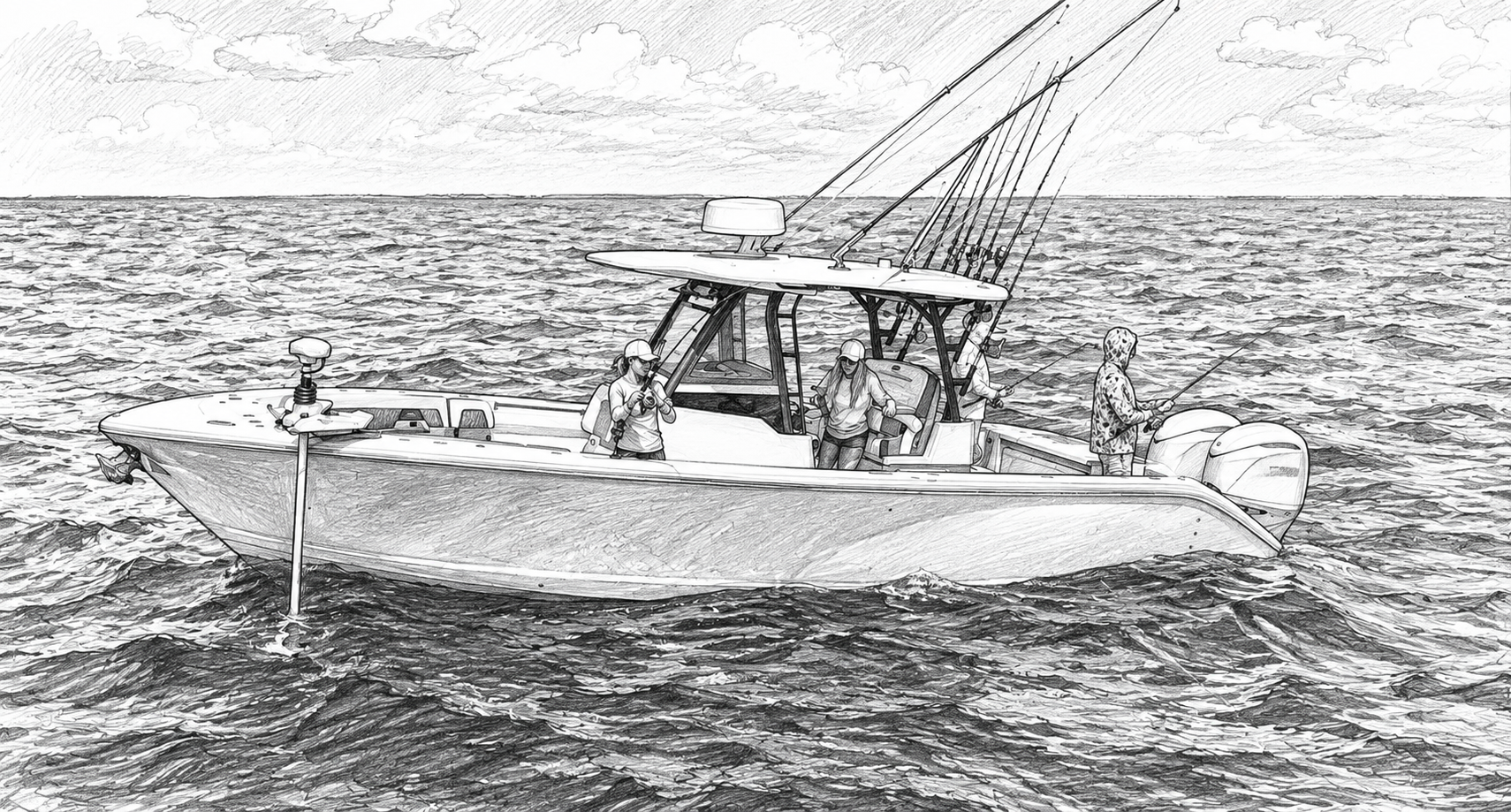
Natural Baits and Rigs: The Foundation of Red Snapper and Gag Grouper Fishing
If you’re looking for more rod recommendations, reel pairings, line setups, and technique-specific advice, head back to the complete Main Gear Guide Page for the full breakdowns on your favorite te...
Further Reading
Can't get enough Red Snapper & Gag Grouper Fishing content? Check out the articles below!