
















Mud Hole Gear Guide:

What is Finesse Swimbait Fishing?
Finesse swimbait fishing is a subtle, presentation-driven approach built around small baitfish imitations and natural movement. Instead of forcing reaction strikes, this technique relies on matching the size and behavior of real forage, allowing the bait to move freely and look convincing in the water. It’s especially effective when fish are pressured, conditioned to artificial lures, or feeding selectively on smaller prey.
Small profile swimbaits excel in clear water, highly pressured fisheries, and situations where larger or more aggressive presentations stop producing. Their subtle action and compact size allow anglers to cover water efficiently while still maintaining a finesse presentation.
This style of fishing is typically done with spinning gear and lighter line to improve casting control, bait tracking, and overall presentation. The goal is to maintain a smooth, balanced retrieve that keeps the bait swimming naturally—whether slow-rolling through open water, counting it down to suspended fish, or working it around grass, docks, and structure.
Introduction
What is Finesse Swimbait Fishing?
What is Finesse Swimbait Fishing?
Finesse swimbait fishing is a subtle, presentation-driven approach built around small baitfish imitations and natural movement. Instead of forcing reaction strikes, this technique relies on matching the size and behavior of real forage, allowing the bait to move freely and look convincing in the water. It’s especially effective when fish are pressured, conditioned to artificial lures, or feeding selectively on smaller prey.
Small profile swimbaits excel in clear water, highly pressured fisheries, and situations where larger or more aggressive presentations stop producing. Their subtle action and compact size allow anglers to cover water efficiently while still maintaining a finesse presentation.
This style of fishing is typically done with spinning gear and lighter line to improve casting control, bait tracking, and overall presentation. The goal is to maintain a smooth, balanced retrieve that keeps the bait swimming naturally—whether slow-rolling through open water, counting it down to suspended fish, or working it around grass, docks, and structure.
Finesse Swimbait Fishing Applications
Finesse swimbait fishing includes a few core presentation styles, each defined by how the bait is rigged, how deep it’s fished, and how much structure or cover it’s used around. While all versions rely on small, natural baitfish imitations, the differences in weight, hook style, and retrieve method create distinct techniques. Understanding these categories helps you match your setup to the conditions and choose the right rod, line, and presentation for consistent results.
Open Water
Targets: Roaming largemouth, smallmouth, and spotted bass, plus walleye, trout, and striped bass in open-water systems
This is the foundation of finesse swimbait fishing, built around small paddle tails rigged on light jigheads or weighted hooks and fished in open water or above structure. The bait is typically retrieved at a steady pace or counted down to a target depth, allowing it to swim naturally through the water column. The focus is on maintaining a smooth, consistent action that closely matches baitfish behavior. This presentation is especially effective for suspended or roaming fish and is one of the most efficient ways to cover water with a finesse approach.
Bottom Contact / Depth-Control
Targets: Largemouth and smallmouth bass (primary), plus walleye and trout on deeper structures
This presentation uses slightly heavier jigheads to keep the swimbait in contact with deeper zones or bottom-oriented structure. The bait is slow-rolled, counted down, or lightly dragged to maintain depth control while still producing a natural swimming motion. The goal is to keep the bait in the strike zone longer, particularly when fish are holding tight to structure or positioned deeper in the water column. This approach prioritizes control and depth precision over open-water coverage.
Weedless / Structure
Targets: Primarily largemouth bass, especially around grass, wood, docks, and shallow cover
Weedless finesse swimbaits are rigged on unweighted or weighted hooks to allow fishing through cover where exposed jigheads would snag. The bait is cast tight to structure and retrieved steadily, with subtle speed changes or pauses used to trigger reaction bites. Because the hook is typically buried or lightly exposed, hooksets require more deliberate force and strong line control. This setup is ideal for presenting a subtle swimbait profile directly in grass, wood, docks, and other cover where fish are holding tight.
Hover / Mid-Strolling
Targets: Smallmouth, spotted, and largemouth bass, plus walleye and striped bass in clear, suspended baitfish systems
This is a highly controlled presentation focused on keeping the swimbait in the strike zone for extended periods rather than covering water. Typically using very light jigheads, the bait is subtly worked to maintain a hovering or gliding motion through the mid-column. The action is minimal and precise, designed to imitate an injured or struggling baitfish. It is especially effective in clear water and when fish are suspended, inactive, or heavily pressured.
Key Takeaways
- Finesse swimbait styles are defined by depth, cover, and presentation control
- Open water and hover techniques focus on suspended fish and natural mid-column movement
- Bottom/depth-control setups prioritize staying in the strike zone with added weight
- Weedless rigs enable fishing in cover but require more deliberate hooksets
- Each category directly influences rod choice, line setup, and retrieve style
Finesse Swimbait Fishing Applications
Finesse swimbait fishing includes a few core presentation styles, each defined by how the bait is rigged, how deep it’s fished, and how much structure or cover it’s used around. While all versions rely on small, natural baitfish imitations, the differences in weight, hook style, and retrieve method create distinct techniques. Understanding these categories helps you match your setup to the conditions and choose the right rod, line, and presentation for consistent results.
Open Water
Targets: Roaming largemouth, smallmouth, and spotted bass, plus walleye, trout, and striped bass in open-water systems
This is the foundation of finesse swimbait fishing, built around small paddle tails rigged on light jigheads or weighted hooks and fished in open water or above structure. The bait is typically retrieved at a steady pace or counted down to a target depth, allowing it to swim naturally through the water column. The focus is on maintaining a smooth, consistent action that closely matches baitfish behavior. This presentation is especially effective for suspended or roaming fish and is one of the most efficient ways to cover water with a finesse approach.
Bottom Contact / Depth-Control
Targets: Largemouth and smallmouth bass (primary), plus walleye and trout on deeper structures
This presentation uses slightly heavier jigheads to keep the swimbait in contact with deeper zones or bottom-oriented structure. The bait is slow-rolled, counted down, or lightly dragged to maintain depth control while still producing a natural swimming motion. The goal is to keep the bait in the strike zone longer, particularly when fish are holding tight to structure or positioned deeper in the water column. This approach prioritizes control and depth precision over open-water coverage.
Weedless / Structure
Targets: Primarily largemouth bass, especially around grass, wood, docks, and shallow cover
Weedless finesse swimbaits are rigged on unweighted or weighted hooks to allow fishing through cover where exposed jigheads would snag. The bait is cast tight to structure and retrieved steadily, with subtle speed changes or pauses used to trigger reaction bites. Because the hook is typically buried or lightly exposed, hooksets require more deliberate force and strong line control. This setup is ideal for presenting a subtle swimbait profile directly in grass, wood, docks, and other cover where fish are holding tight.
Hover / Mid-Strolling
Targets: Smallmouth, spotted, and largemouth bass, plus walleye and striped bass in clear, suspended baitfish systems
This is a highly controlled presentation focused on keeping the swimbait in the strike zone for extended periods rather than covering water. Typically using very light jigheads, the bait is subtly worked to maintain a hovering or gliding motion through the mid-column. The action is minimal and precise, designed to imitate an injured or struggling baitfish. It is especially effective in clear water and when fish are suspended, inactive, or heavily pressured.
Key Takeaways
- Finesse swimbait styles are defined by depth, cover, and presentation control
- Open water and hover techniques focus on suspended fish and natural mid-column movement
- Bottom/depth-control setups prioritize staying in the strike zone with added weight
- Weedless rigs enable fishing in cover but require more deliberate hooksets
- Each category directly influences rod choice, line setup, and retrieve style
How to Choose a Finesse Swimbait Fishing Rod
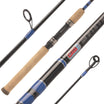
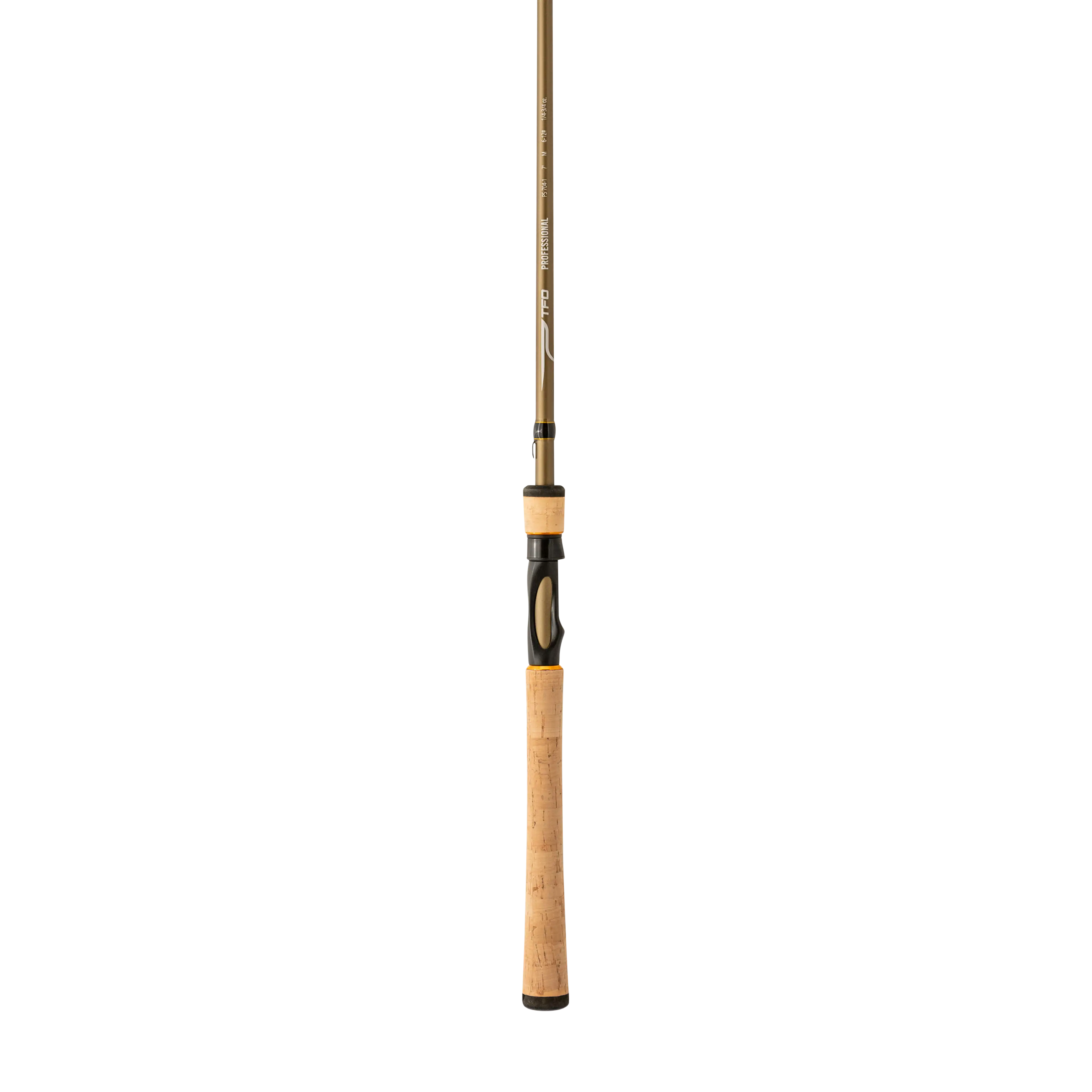
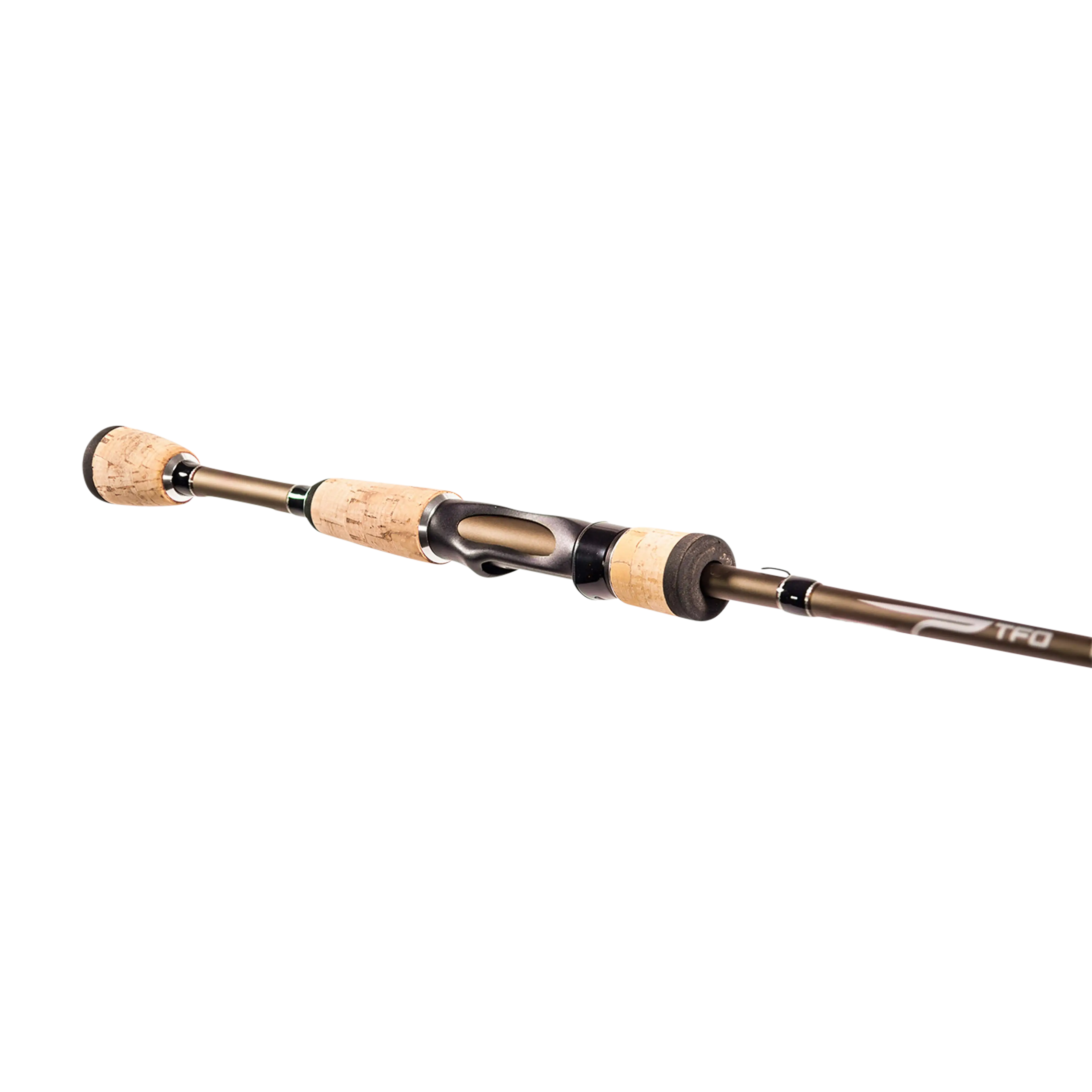
A finesse swimbait rod should prioritize casting efficiency, bait control, and sensitivity for detecting subtle strikes during a moving presentation. Finesse swimbait techniques are about maintaining a natural swimming cadence, feeling how the bait tracks through the water column, and detecting soft bites on the retrieve or pause. Spinning rods are most commonly used because they handle light line, small paddletails, and unweighted or lightly weighted rigs more effectively than baitcasting setups.
While many rods can technically handle finesse swimbaits, the best setups balance a responsive tip with a smooth, controlled load that keeps the bait swimming naturally and helps keep light hooks pinned during rolling or lateral strikes. The right combination of power, action, length, and line setup allows anglers to cast light baits efficiently, maintain depth control, and keep a consistent retrieve without overpowering the bait’s action.
When choosing a rod, consider these key specs:
Power
Rod power refers to how much force is needed to bend the rod. Finesse swimbait rods typically fall in the medium-light to medium range, depending on bait size, hook style, and cover. Medium-light power is ideal for unweighted or lightly weighted swimbaits, maximizing natural swimming action and sensitivity to subtle bites. Medium power provides added control when using slightly heavier swimbaits, fishing around light cover, or dealing with wind and current. The goal is to match power to keep the bait swimming freely while still maintaining enough backbone to control fish at distance.
Action
Action describes where the rod bends under load. For finesse swimbaits with single hooks, moderate-fast to fast actions are most common. This provides a controlled tip for natural bait tracking while still maintaining enough backbone for long casts and solid hook-ups on light-wire hooks. Faster actions offer more direct power and improved hook control at distance, especially in wind, current, or when using slightly heavier swimbaits. However, the rod should still retain enough tip flex to absorb surging fish and prevent pulling hooks during rolling bites or sudden direction changes.
Length
Finesse swimbait rods typically range from 6’10″ to 7’8″, with 7’0″–7’6″ being the core and most versatile range. Rod length plays a major role in casting distance, bait control, and fish-fighting leverage. Shorter rods (6’10″–7’2″) are best for precise casting in tight quarters such as docks, laydowns, and shallow cover. Mid-length rods (7’0″–7’6″) are the standard choice for most applications, offering the best balance of casting distance, bait tracking, and control during steady retrieves. Longer rods (7’6″–7’8″+) are primarily used in open-water situations where maximum casting distance and extended line control are critical for keeping baits in the strike zone longer.
Line Rating
Line choice directly influences bait action, depth control, and overall presentation. Most finesse swimbait anglers run 6–10 lb fluorocarbon, with 8 lb being the most common all-around choice. Fluorocarbon offers a natural sink rate, low visibility, and consistent feedback, helping maintain a realistic swimming action throughout the retrieve. Mome anglers prefer 10–15 lb braid for its direct connection and sensitivity, either as a straight mainline or paired with a fluorocarbon leader depending on structure, water clarity and presentation needs. Fluorocarbon remains a popular choice when a more natural, uninterrupted bait movement is the priority.
Lure / Weight Rating
Finesse swimbaits typically range from 1/16 oz to 3/8 oz, depending on hook style, body size, and target depth. The lighter rigs (1/16–1/8 oz) are ideal for shallow, clear water or slow hovering presentations where a subtle, natural fall is critical. Mid-range weights (1/8–1/4 oz) are the most versatile, offering a balanced sink rate and steady control across flats, points, and open-water structure. Heavier finesse swimbaits (1/4–3/8 oz) improve casting distance, depth control, and stability in wind or current while still maintaining a natural swimming action.
Open Water
This setup is designed for covering water and maintaining a natural swimming cadence on long casts. A moderate-fast tip keeps the bait tracking smoothly while still allowing solid hooksets on rolling or chasing fish. The 7’0″–7’6″ range provides the best balance of casting distance and control in open systems.
Targets: Roaming largemouth, smallmouth, and spotted bass, plus walleye, trout, and striped bass in open-water systems
Rod Length: 7’0″–7’6″
Power: Medium-Light to Medium
Action: Moderate-Fast or Fast
Line: 6–10 lb fluorocarbon (or 10–15 lb braid + leader)
Weights Used: 1/8 – 1/4 oz
Bottom Contact / Depth-Control
This setup focuses on maintaining depth and tracking consistency through deeper water and structure transitions. A longer rod improves casting distance and line control, while moderate-fast action keeps the bait swimming naturally while still delivering reliable hooksets at range.
Targets: Largemouth and smallmouth bass (primary), plus walleye and trout on deeper structures
Rod Length: 7’3″–7’6″
Power: Medium
Action: Moderate-Fast or Fast
Line: 6–10 lb fluorocarbon (or 10–15 lb braid + leader)
Weights Used: 1/4 – 3/8 oz
Weedless / Structure
This setup is built for fishing swimbaits through cover without losing bait stability or control. A faster action helps steer fish out of cover while maintaining enough sensitivity to detect bites on a moving presentation.
Targets: Primarily largemouth bass, especially around grass, wood, docks, and shallow cover
Rod Length: 6’10″–7’3″
Power: Medium
Action: Fast
Line: 6–10 lb fluorocarbon (or 10–15 lb braid + leader)
Weights Used: 1/8 – 3/8 oz
Hover / Mid-Strolling
This is a highly cadence-sensitive presentation that depends on smooth, consistent retrieves and line control to maintain a natural track in the water column. Rod action mainly influences hookset speed and forgiveness, with moderate-fast actions offering a balance of control and tip flex for open-water fighting.
Targets: Smallmouth, spotted, and largemouth bass, plus walleye and striped bass in clear, suspended baitfish systems
Rod Length: 7’0″–7’6″
Power: Medium-Light to Medium
Action: Moderate-Fast
Line: 6–10 lb fluorocarbon (or 10–15 lb braid + leader)
Weights Used: 1/8 – 1/4 oz finesse swimbaits
Key Takeaways
- Spinning rods are the most effective platform for finesse swimbaits due to casting efficiency and line control.
- The core rod range is 7’0″–7’6″, with shorter rods used for precision and longer rods for open-water distance.
- Medium-Light to Medium power covers most applications depending on bait size and cover.
- Moderate-fast to fast actions provide the best balance of natural swimming motion and reliable hooksets.
- Braid and leader is the standard for most finesse swimbait setups.
How to Choose a Finesse Swimbait Fishing Rod
A finesse swimbait rod should prioritize casting efficiency, bait control, and sensitivity for detecting subtle strikes during a moving presentation. Finesse swimbait techniques are about maintaining a natural swimming cadence, feeling how the bait tracks through the water column, and detecting soft bites on the retrieve or pause. Spinning rods are most commonly used because they handle light line, small paddletails, and unweighted or lightly weighted rigs more effectively than baitcasting setups.
While many rods can technically handle finesse swimbaits, the best setups balance a responsive tip with a smooth, controlled load that keeps the bait swimming naturally and helps keep light hooks pinned during rolling or lateral strikes. The right combination of power, action, length, and line setup allows anglers to cast light baits efficiently, maintain depth control, and keep a consistent retrieve without overpowering the bait’s action.
When choosing a rod, consider these key specs:
Power
Rod power refers to how much force is needed to bend the rod. Finesse swimbait rods typically fall in the medium-light to medium range, depending on bait size, hook style, and cover. Medium-light power is ideal for unweighted or lightly weighted swimbaits, maximizing natural swimming action and sensitivity to subtle bites. Medium power provides added control when using slightly heavier swimbaits, fishing around light cover, or dealing with wind and current. The goal is to match power to keep the bait swimming freely while still maintaining enough backbone to control fish at distance.
Action
Action describes where the rod bends under load. For finesse swimbaits with single hooks, moderate-fast to fast actions are most common. This provides a controlled tip for natural bait tracking while still maintaining enough backbone for long casts and solid hook-ups on light-wire hooks. Faster actions offer more direct power and improved hook control at distance, especially in wind, current, or when using slightly heavier swimbaits. However, the rod should still retain enough tip flex to absorb surging fish and prevent pulling hooks during rolling bites or sudden direction changes.
Length
Finesse swimbait rods typically range from 6’10″ to 7’8″, with 7’0″–7’6″ being the core and most versatile range. Rod length plays a major role in casting distance, bait control, and fish-fighting leverage. Shorter rods (6’10″–7’2″) are best for precise casting in tight quarters such as docks, laydowns, and shallow cover. Mid-length rods (7’0″–7’6″) are the standard choice for most applications, offering the best balance of casting distance, bait tracking, and control during steady retrieves. Longer rods (7’6″–7’8″+) are primarily used in open-water situations where maximum casting distance and extended line control are critical for keeping baits in the strike zone longer.
Line Rating
Line choice directly influences bait action, depth control, and overall presentation. Most finesse swimbait anglers run 6–10 lb fluorocarbon, with 8 lb being the most common all-around choice. Fluorocarbon offers a natural sink rate, low visibility, and consistent feedback, helping maintain a realistic swimming action throughout the retrieve. Mome anglers prefer 10–15 lb braid for its direct connection and sensitivity, either as a straight mainline or paired with a fluorocarbon leader depending on structure, water clarity and presentation needs. Fluorocarbon remains a popular choice when a more natural, uninterrupted bait movement is the priority.
Lure / Weight Rating
Finesse swimbaits typically range from 1/16 oz to 3/8 oz, depending on hook style, body size, and target depth. The lighter rigs (1/16–1/8 oz) are ideal for shallow, clear water or slow hovering presentations where a subtle, natural fall is critical. Mid-range weights (1/8–1/4 oz) are the most versatile, offering a balanced sink rate and steady control across flats, points, and open-water structure. Heavier finesse swimbaits (1/4–3/8 oz) improve casting distance, depth control, and stability in wind or current while still maintaining a natural swimming action.
Open Water
This setup is designed for covering water and maintaining a natural swimming cadence on long casts. A moderate-fast tip keeps the bait tracking smoothly while still allowing solid hooksets on rolling or chasing fish. The 7’0″–7’6″ range provides the best balance of casting distance and control in open systems.
Targets: Roaming largemouth, smallmouth, and spotted bass, plus walleye, trout, and striped bass in open-water systems
Rod Length: 7’0″–7’6″
Power: Medium-Light to Medium
Action: Moderate-Fast or Fast
Line: 6–10 lb fluorocarbon (or 10–15 lb braid + leader)
Weights Used: 1/8 – 1/4 oz
Bottom Contact / Depth-Control
This setup focuses on maintaining depth and tracking consistency through deeper water and structure transitions. A longer rod improves casting distance and line control, while moderate-fast action keeps the bait swimming naturally while still delivering reliable hooksets at range.
Targets: Largemouth and smallmouth bass (primary), plus walleye and trout on deeper structures
Rod Length: 7’3″–7’6″
Power: Medium
Action: Moderate-Fast or Fast
Line: 6–10 lb fluorocarbon (or 10–15 lb braid + leader)
Weights Used: 1/4 – 3/8 oz
Weedless / Structure
This setup is built for fishing swimbaits through cover without losing bait stability or control. A faster action helps steer fish out of cover while maintaining enough sensitivity to detect bites on a moving presentation.
Targets: Primarily largemouth bass, especially around grass, wood, docks, and shallow cover
Rod Length: 6’10″–7’3″
Power: Medium
Action: Fast
Line: 6–10 lb fluorocarbon (or 10–15 lb braid + leader)
Weights Used: 1/8 – 3/8 oz
Hover / Mid-Strolling
This is a highly cadence-sensitive presentation that depends on smooth, consistent retrieves and line control to maintain a natural track in the water column. Rod action mainly influences hookset speed and forgiveness, with moderate-fast actions offering a balance of control and tip flex for open-water fighting.
Targets: Smallmouth, spotted, and largemouth bass, plus walleye and striped bass in clear, suspended baitfish systems
Rod Length: 7’0″–7’6″
Power: Medium-Light to Medium
Action: Moderate-Fast
Line: 6–10 lb fluorocarbon (or 10–15 lb braid + leader)
Weights Used: 1/8 – 1/4 oz finesse swimbaits
Key Takeaways
- Spinning rods are the most effective platform for finesse swimbaits due to casting efficiency and line control.
- The core rod range is 7’0″–7’6″, with shorter rods used for precision and longer rods for open-water distance.
- Medium-Light to Medium power covers most applications depending on bait size and cover.
- Moderate-fast to fast actions provide the best balance of natural swimming motion and reliable hooksets.
- Braid and leader is the standard for most finesse swimbait setups.
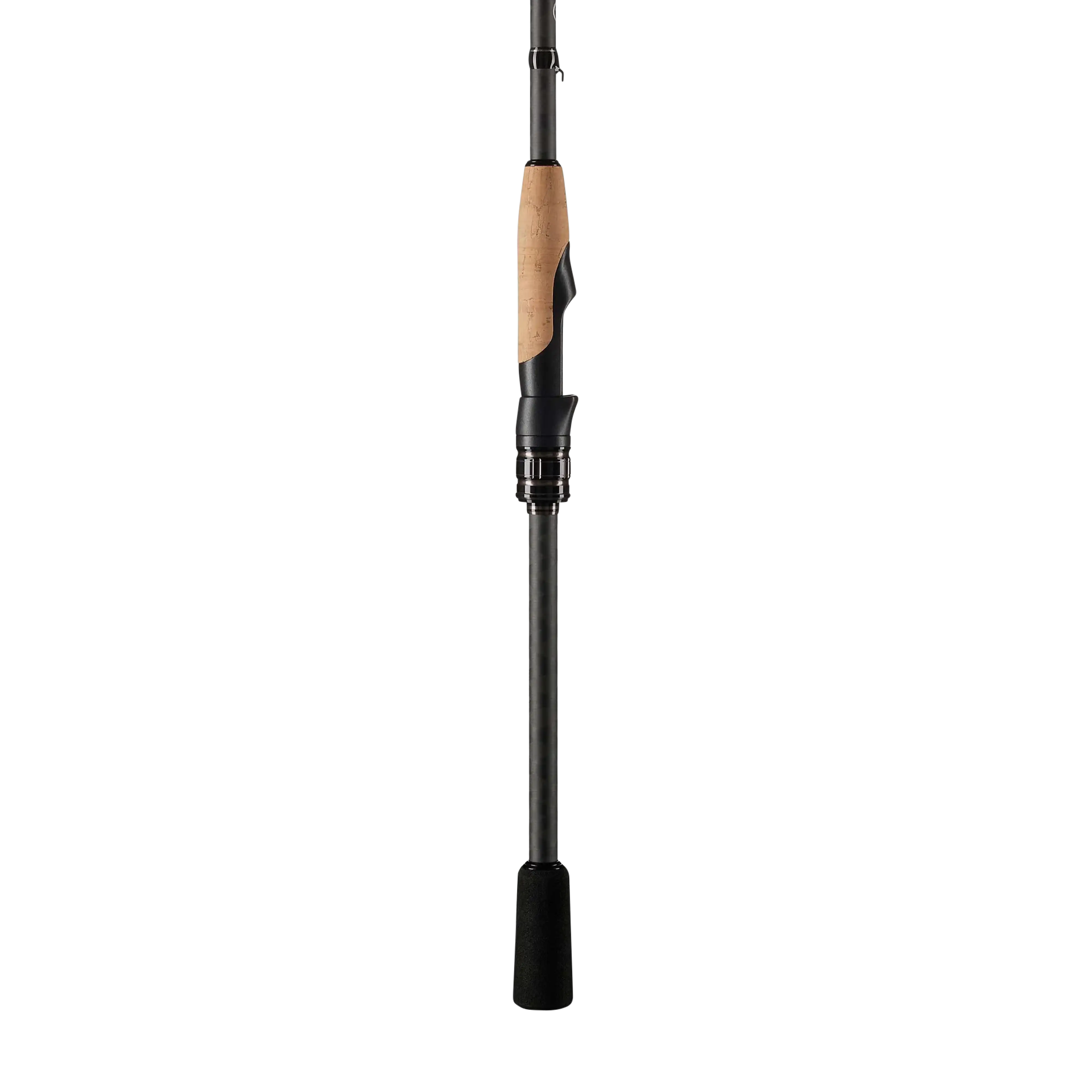
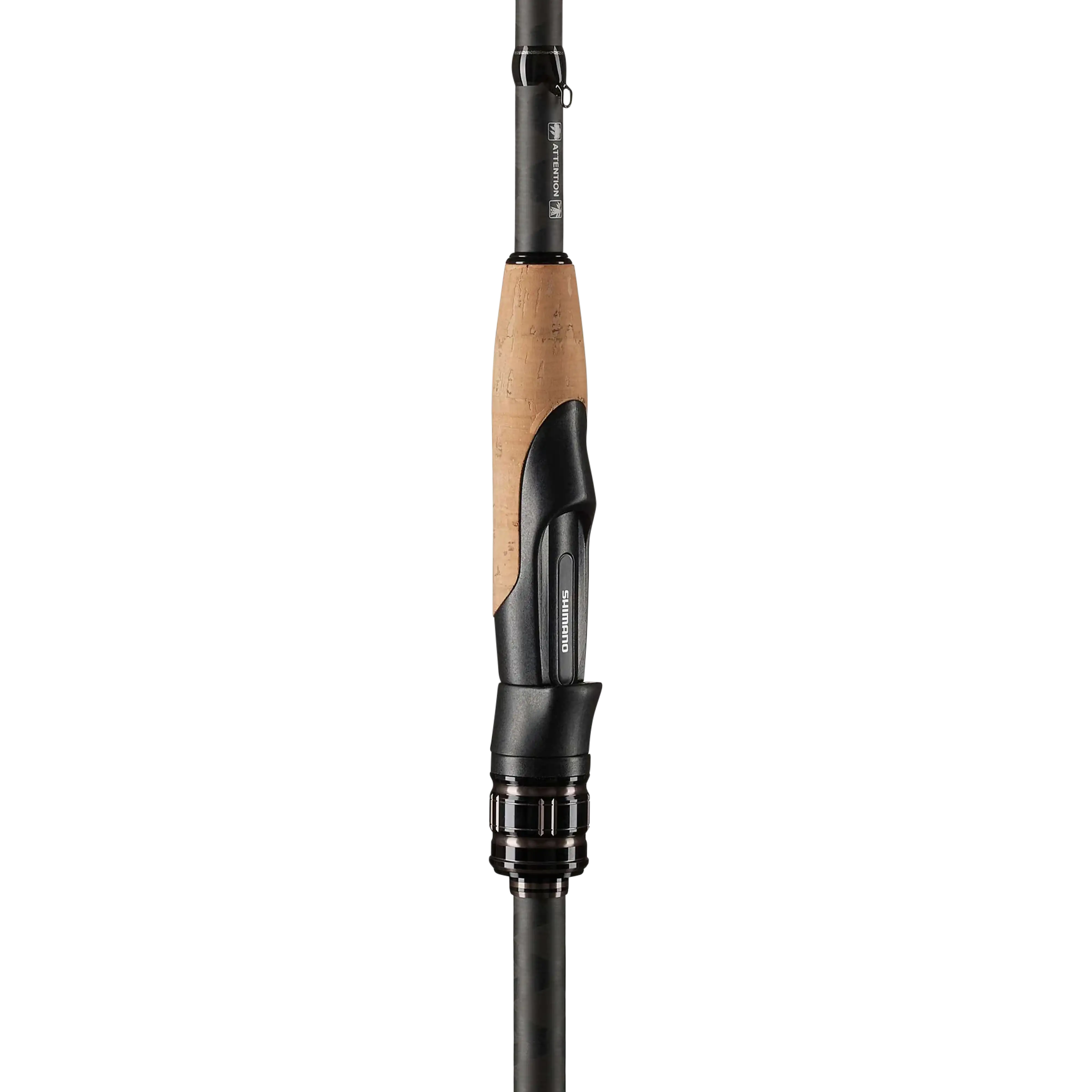
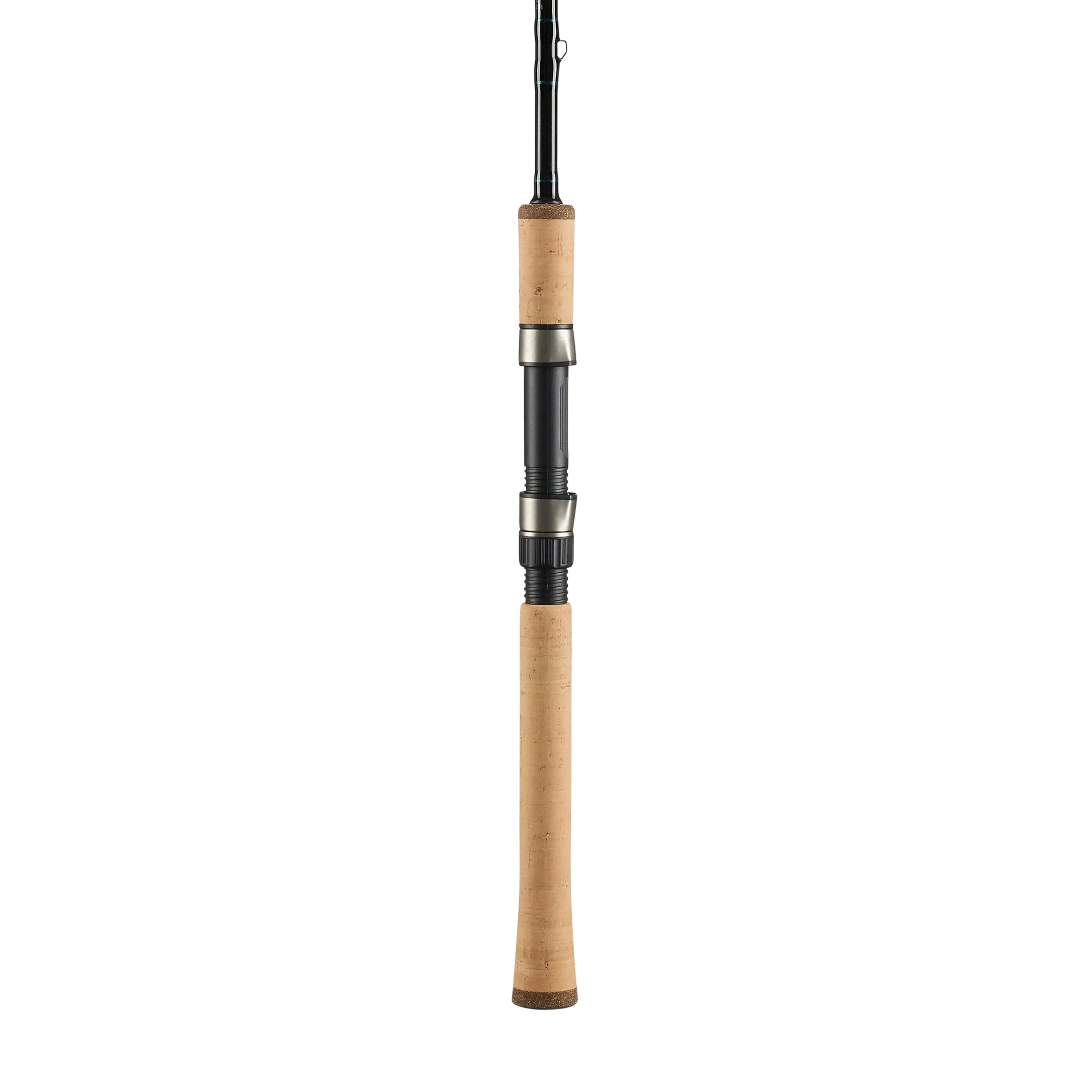
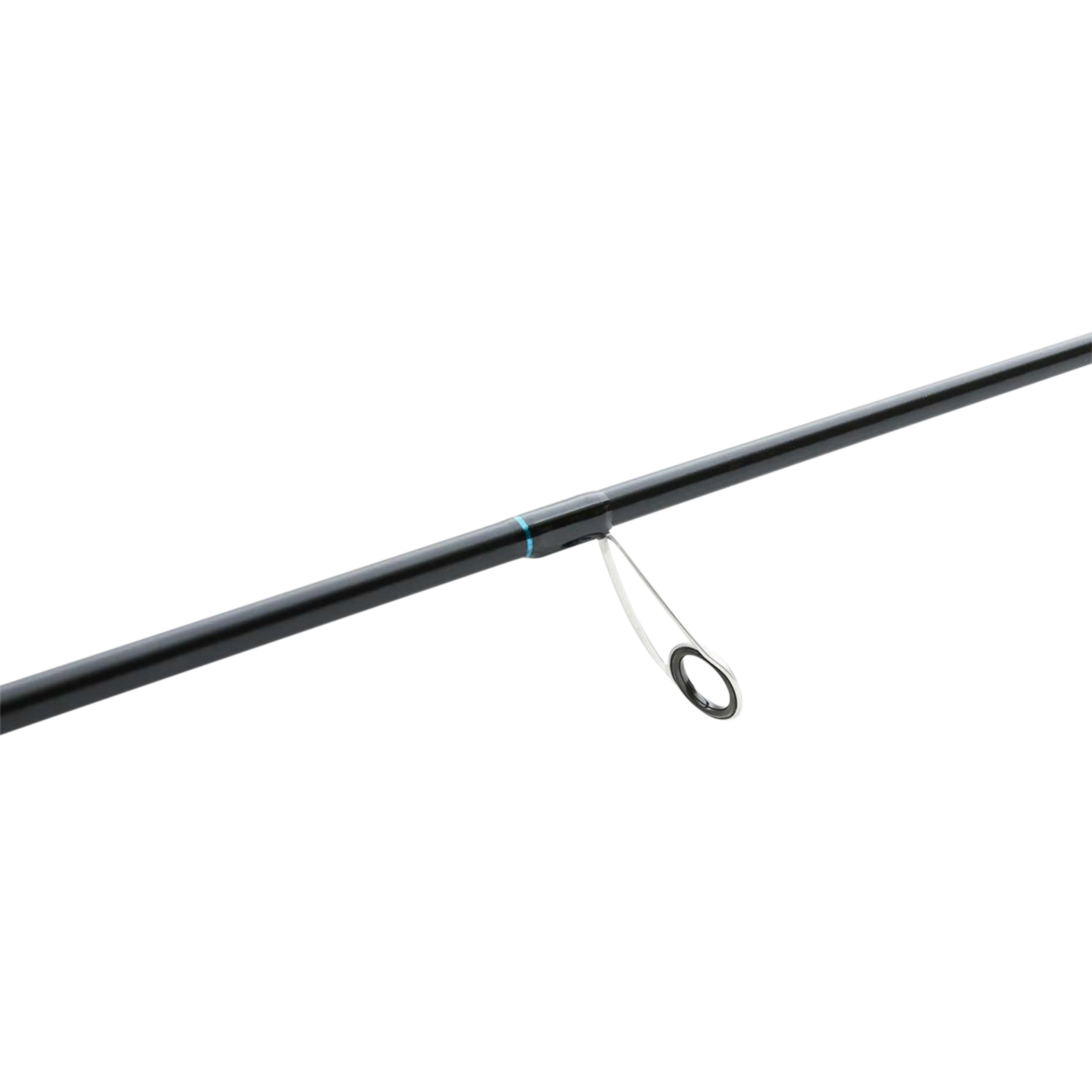
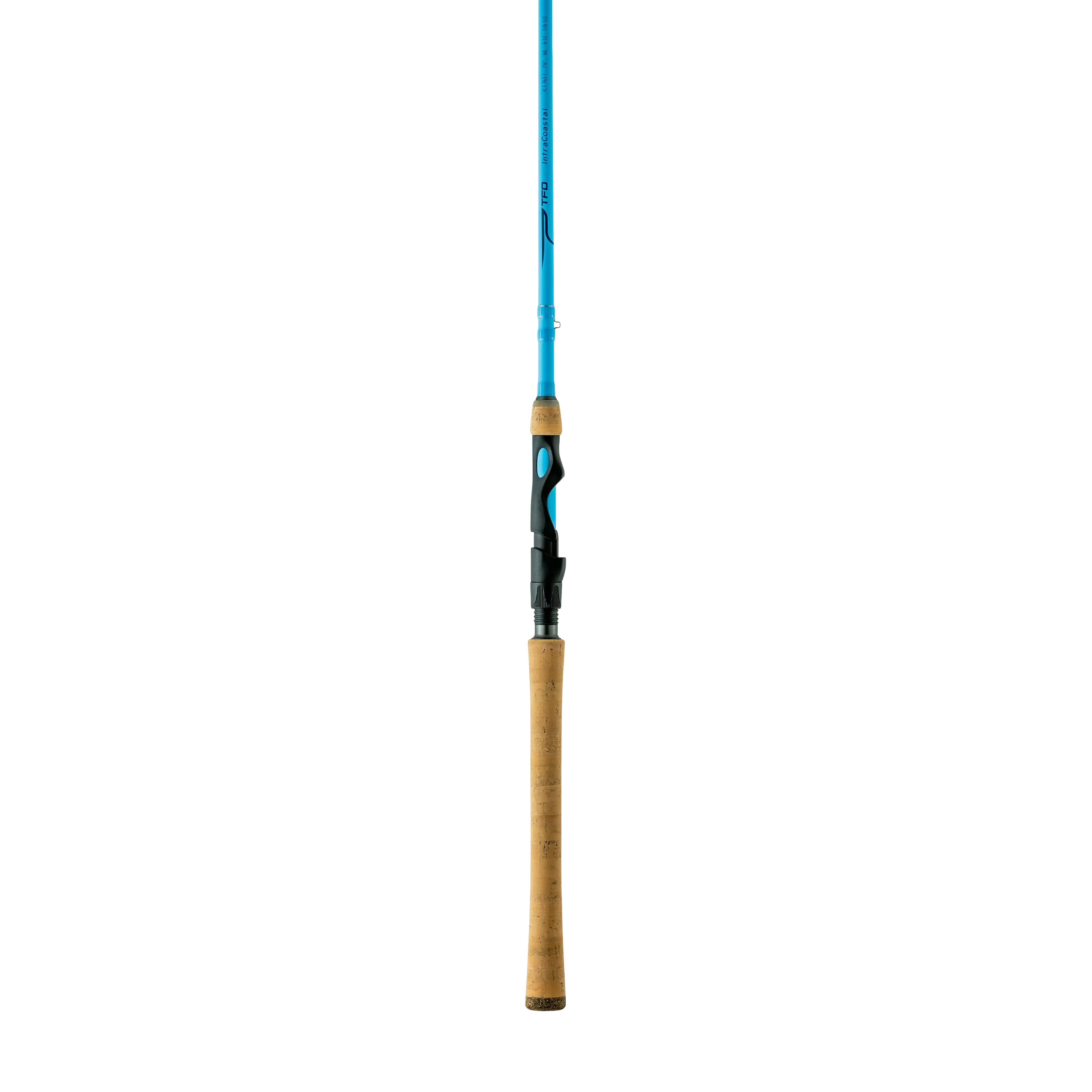
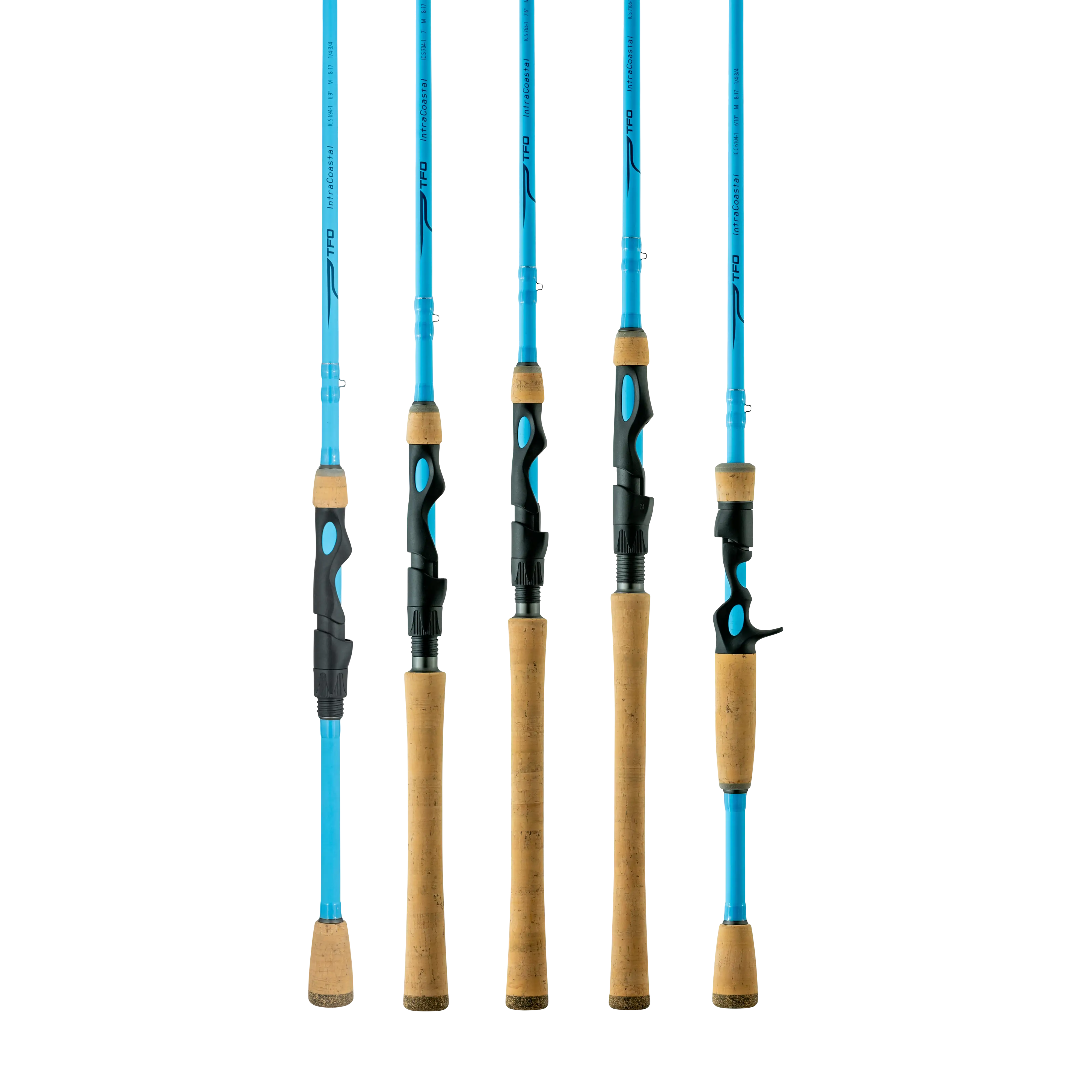
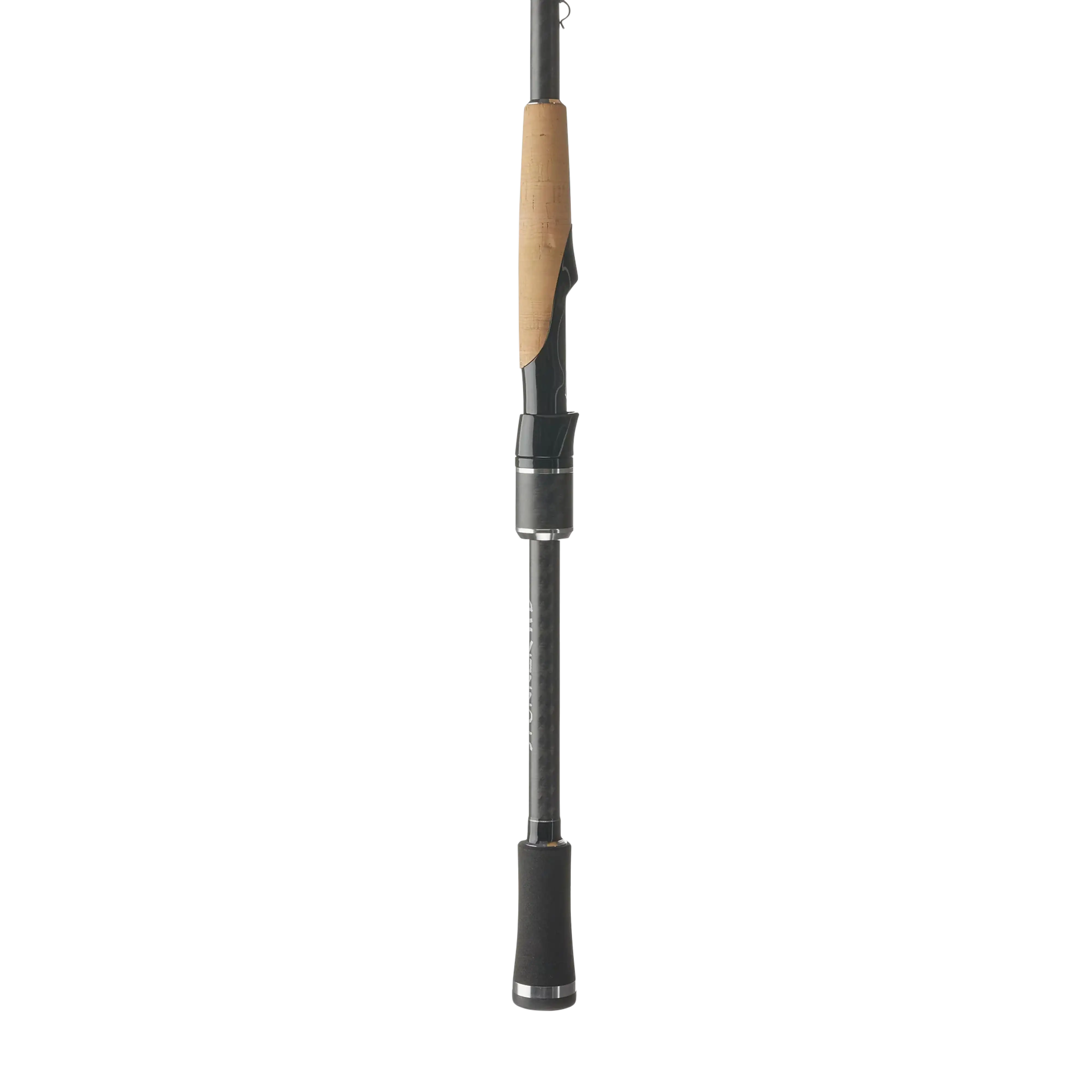
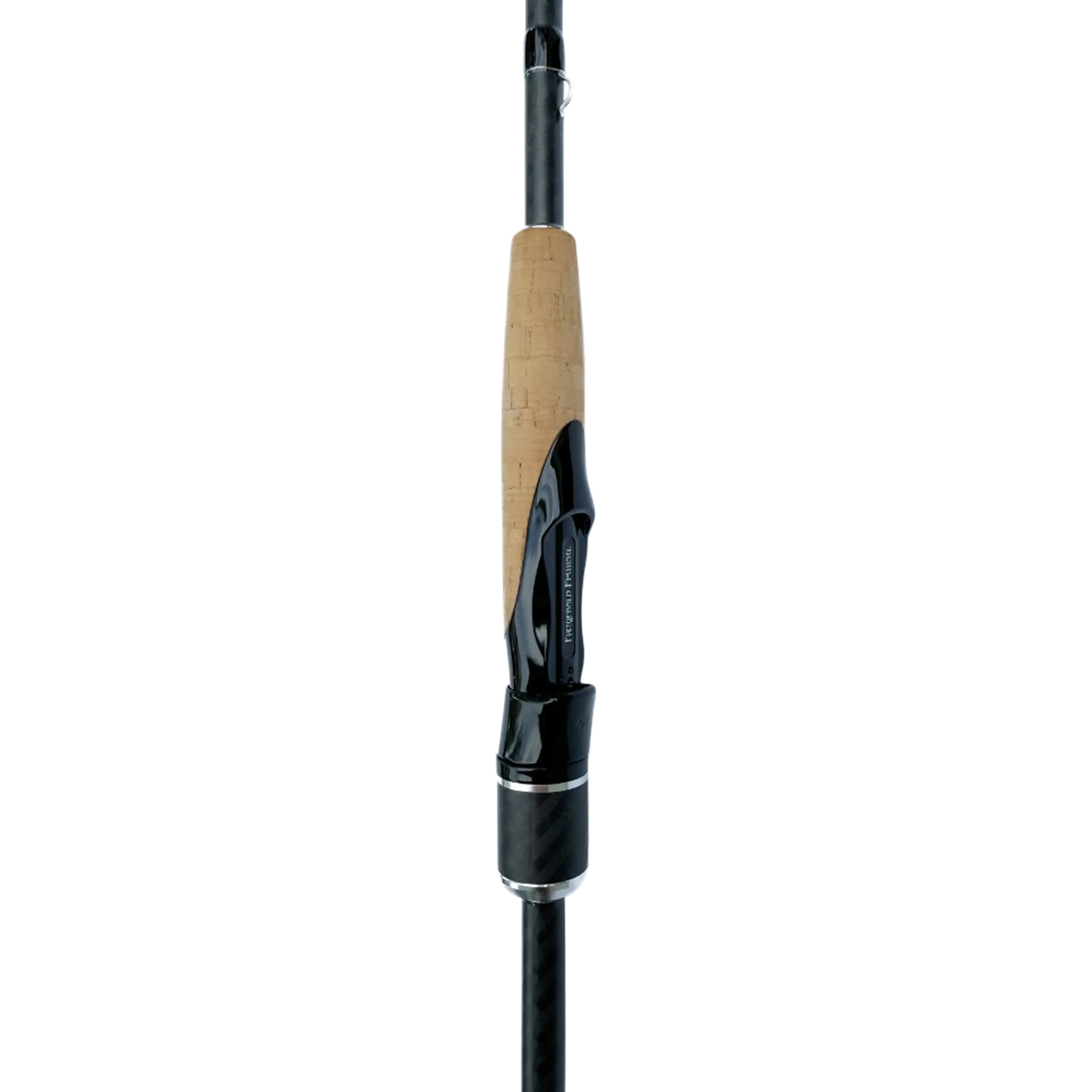
Finesse Swimbait Rods


Best Reels for Finesse Swimbait Fishing
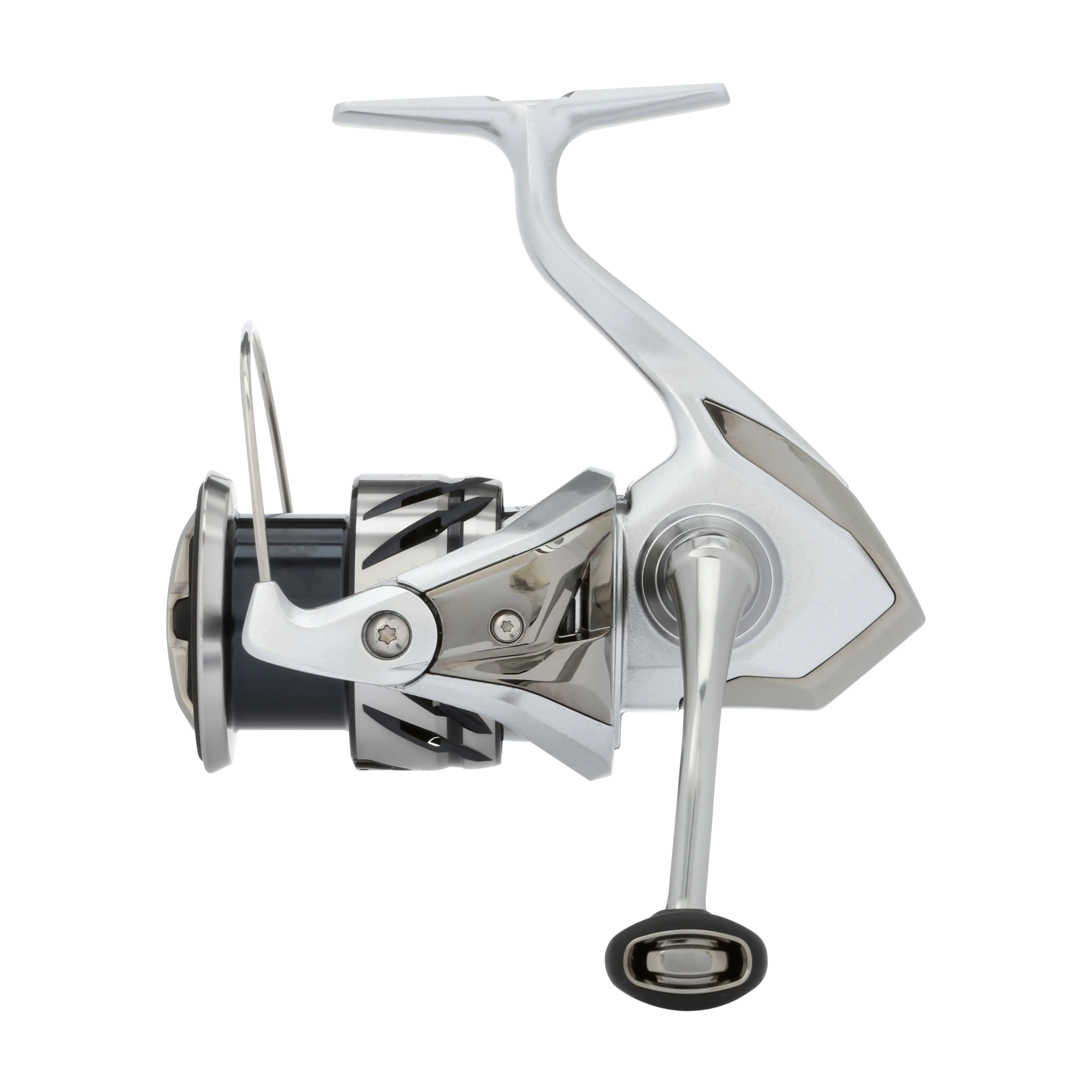
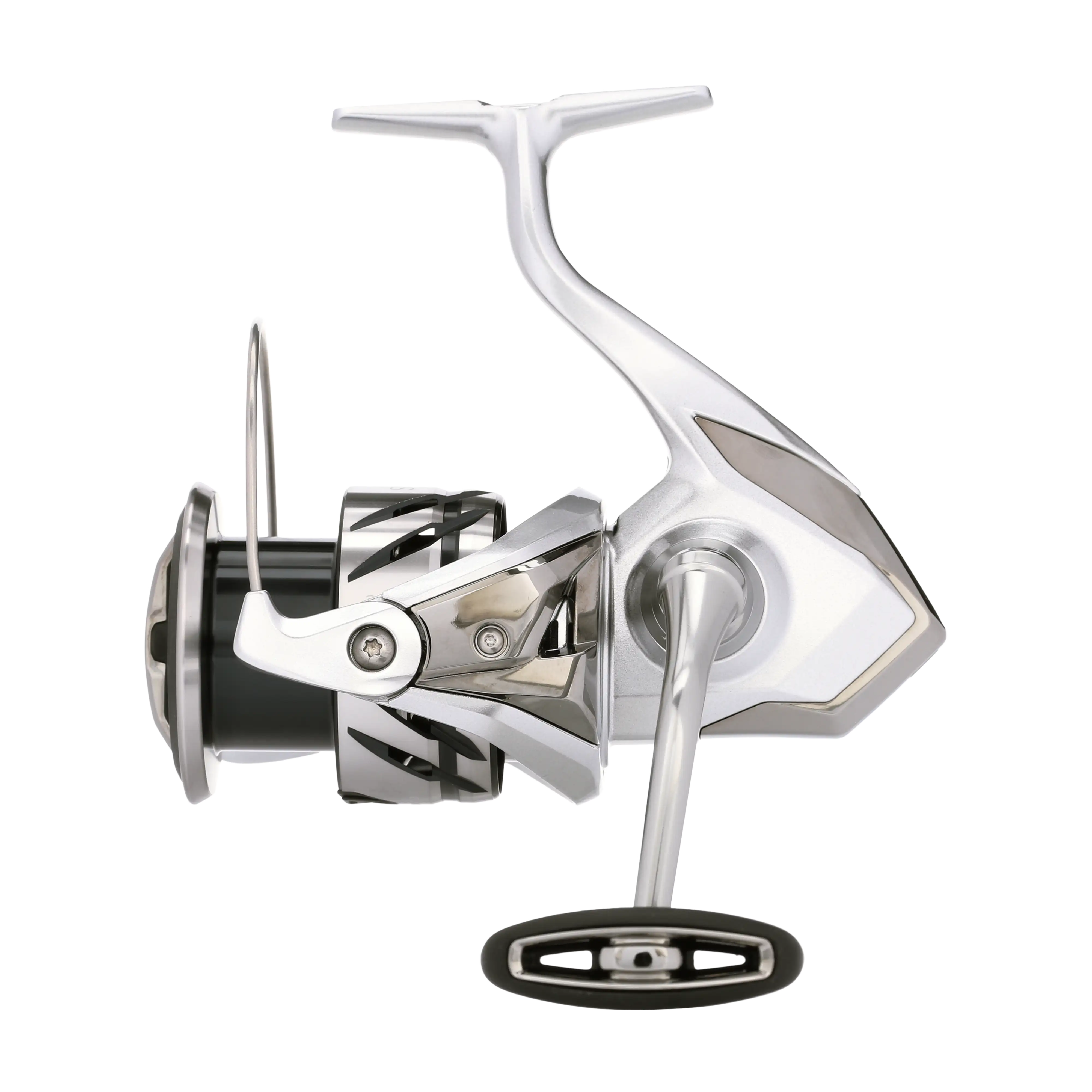
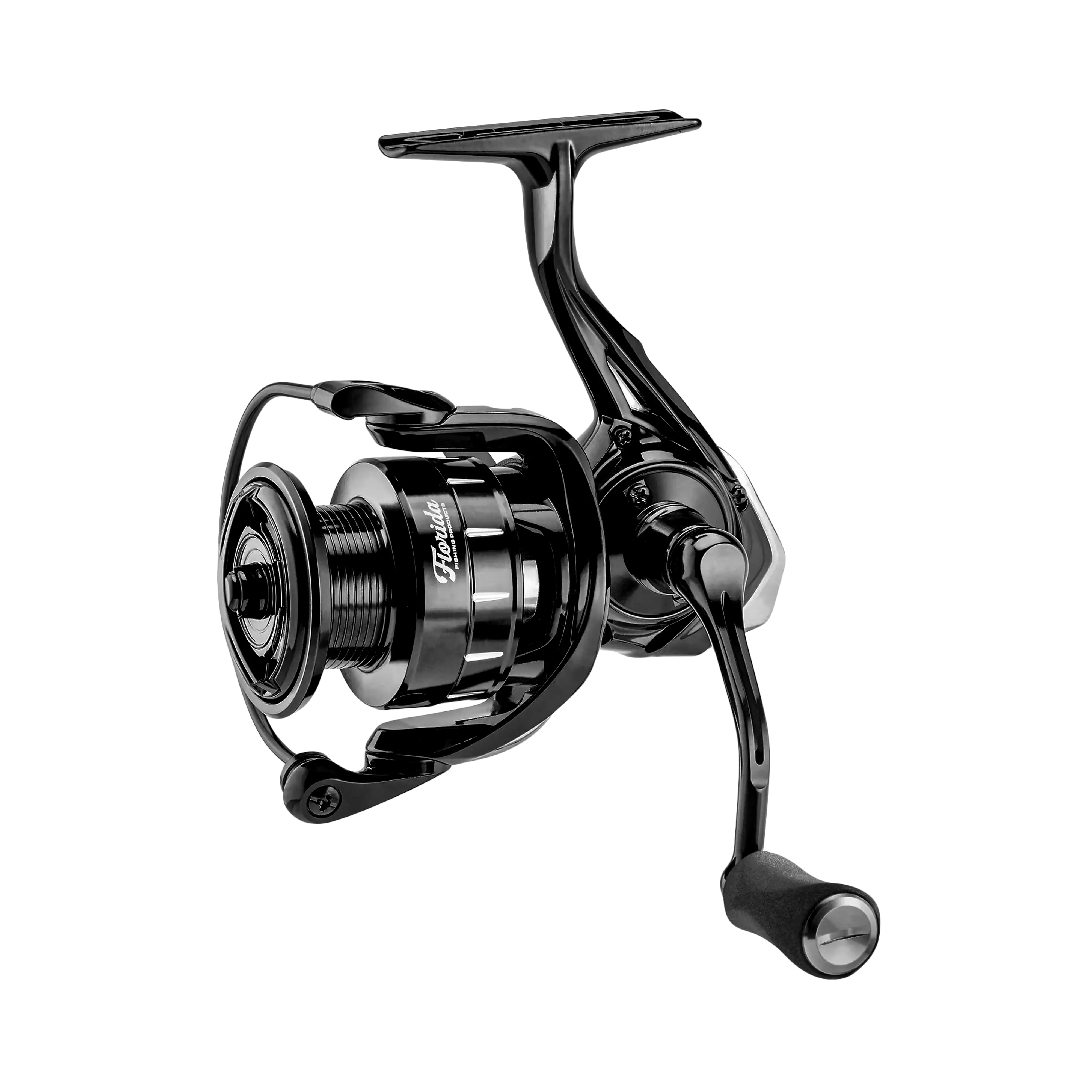
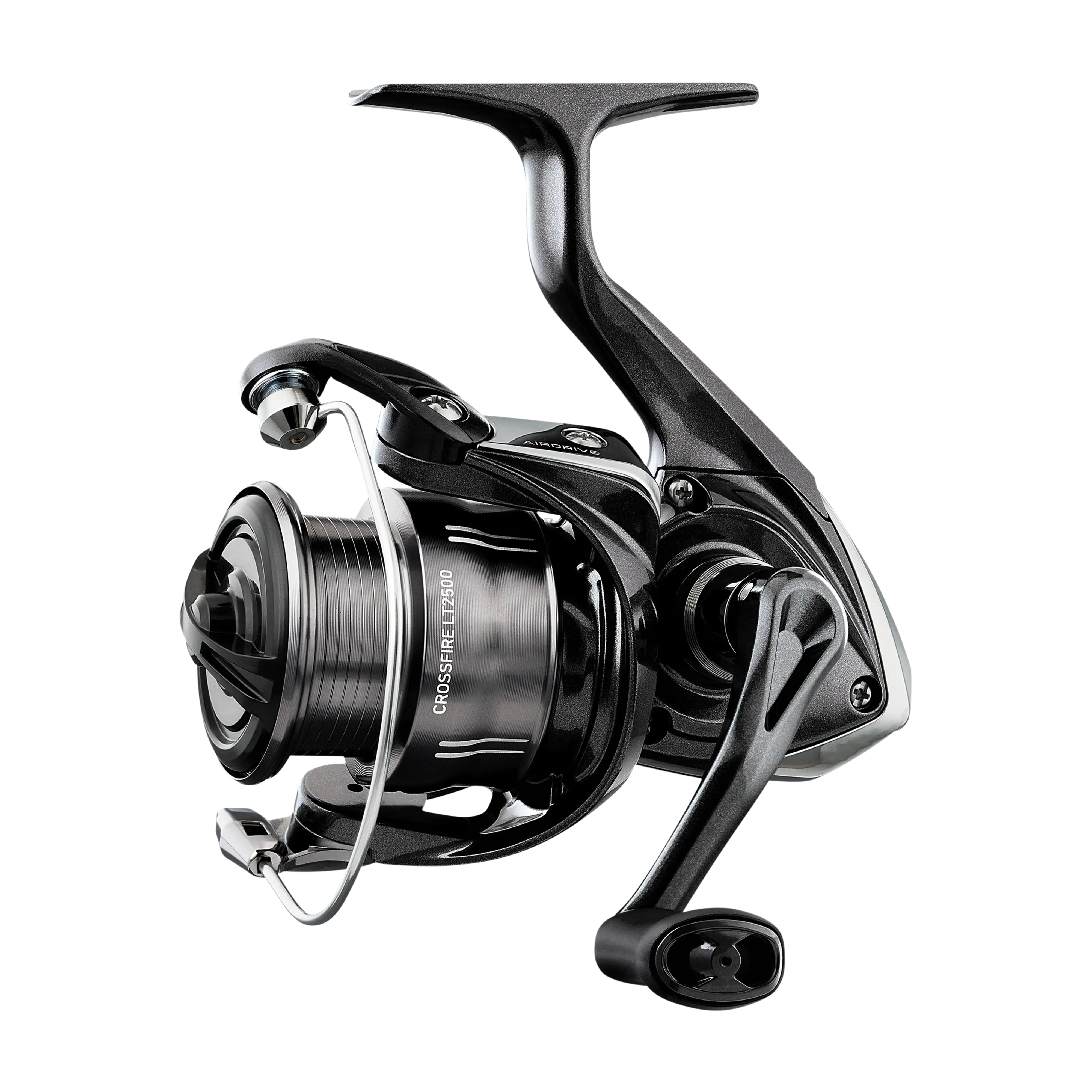
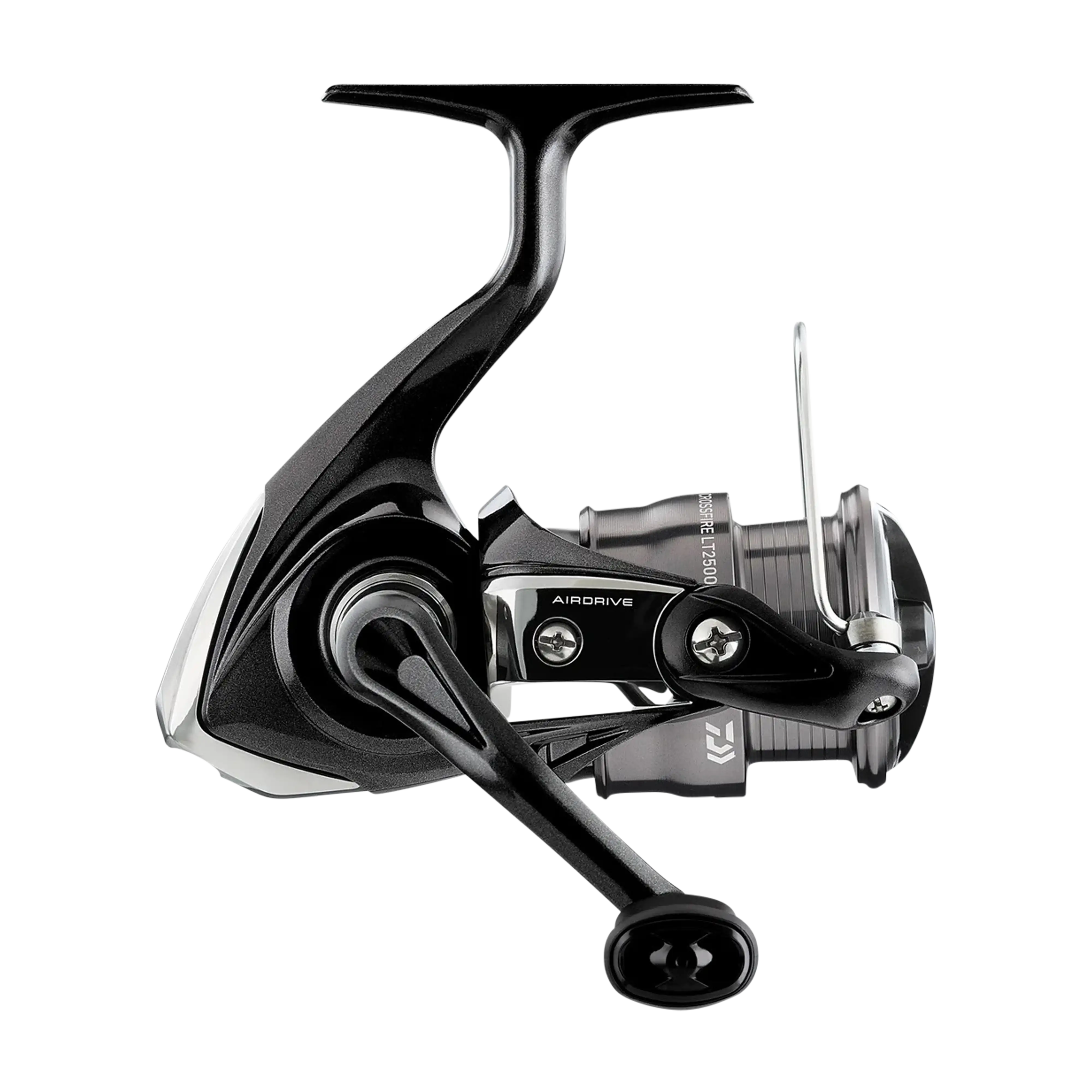
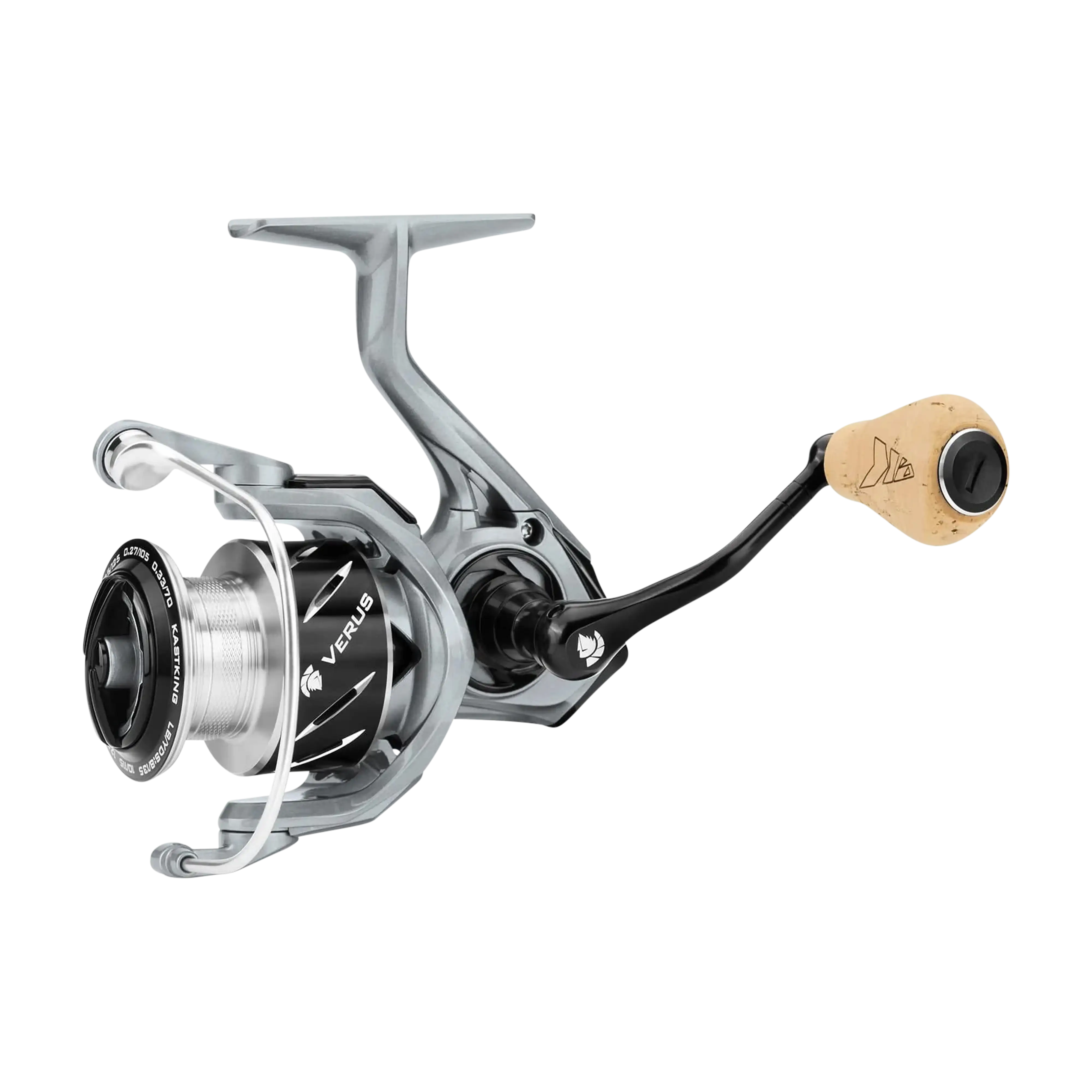
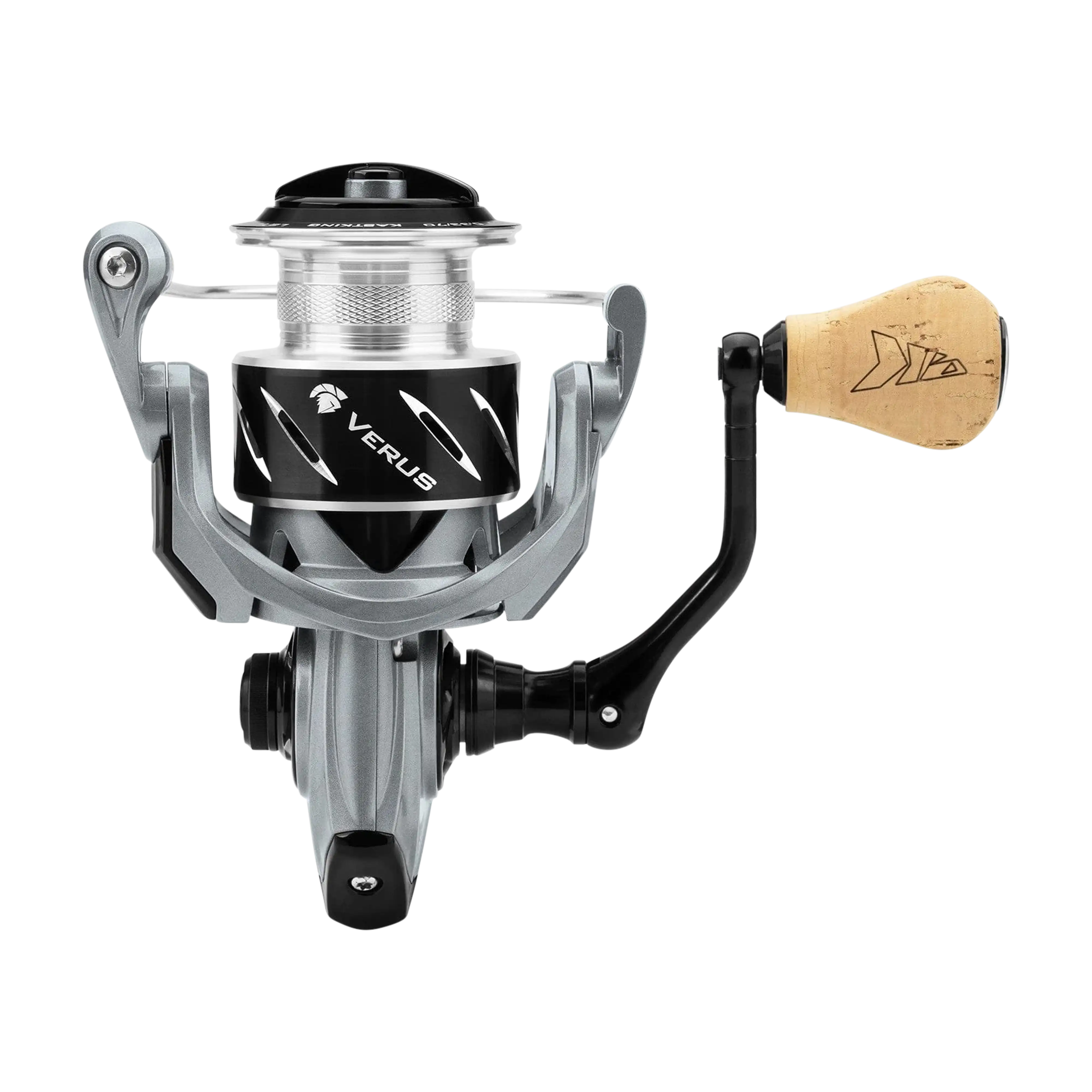
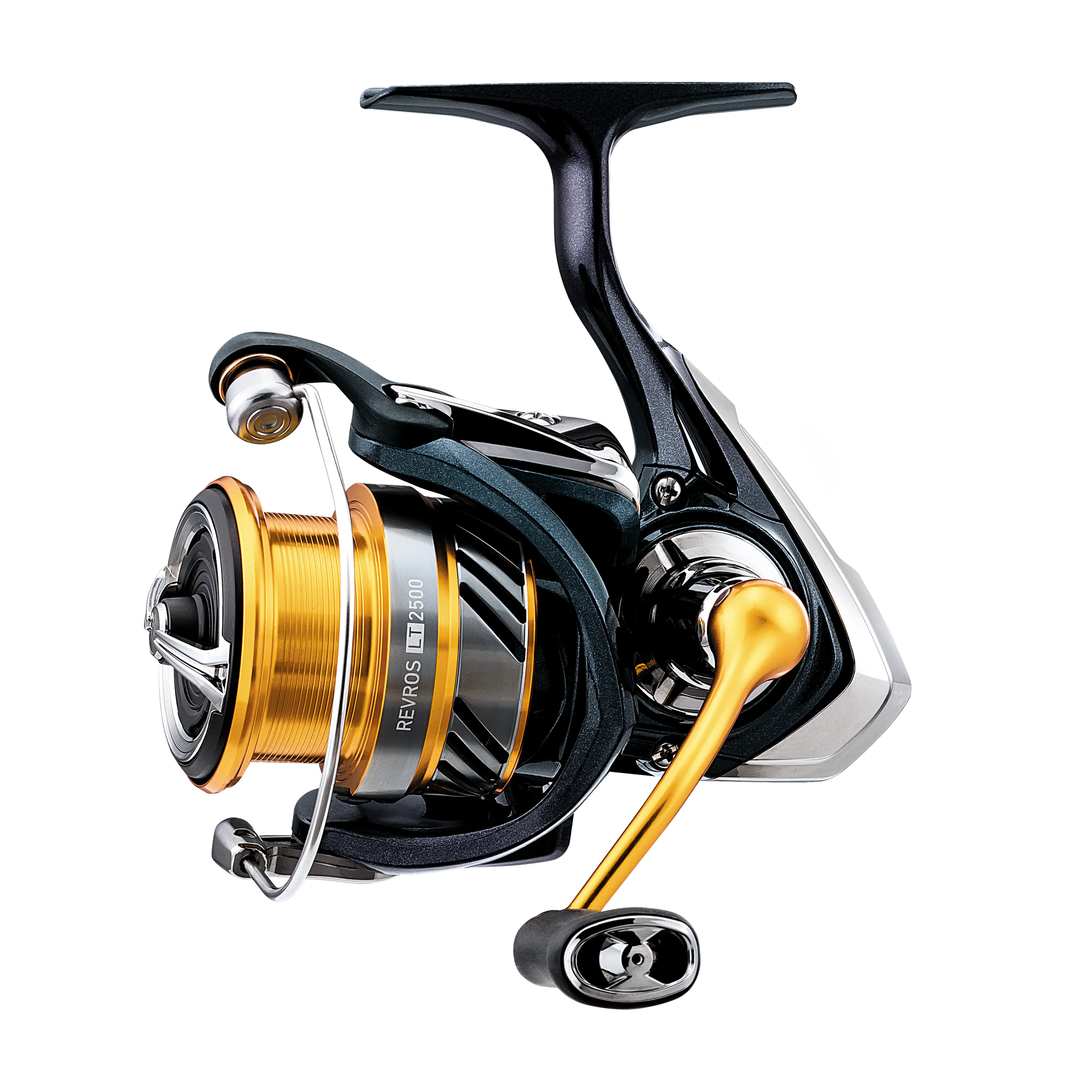
Finesse swimbait reels need to handle smaller lures and lighter line while delivering smooth, precise retrieves and reliable hooksets. Because these techniques rely on subtle presentations and steady cadences rather than aggressive retrieves, the reel plays a major role in maintaining bait control and natural swimming action. Spinning reels are the standard choice for finesse swimbait setups because they offer better line control, lightweight balance, and consistent performance with light line and delicate presentations. A properly matched reel reduces fatigue, improves casting accuracy, and helps maintain confidence when targeting pressured or suspended fish.
When evaluating a reel for finesse swimbait fishing, consider these key features:
Reel Type / Size
Spinning reels are the standard for finesse swimbaits due to their ability to manage light line efficiently and deliver long, controlled casts. The ideal size range is 1500–2500, which provides the best balance of weight, line capacity, and smooth handling for most finesse applications. A 1500–2000 size reel is ideal for true finesse and light swimbait presentations where balance and sensitivity are priorities. A 2500-size reel is better suited for longer casts, slightly heavier swimbaits, or open-water fishing situations where additional line capacity is helpful. Some anglers may step up to a 3000-size reel when fishing from boats, piers, or deeper water environments, but larger reels are generally not needed for these finesse-specific presentations and can reduce overall balance.
Gear Ratio
Moderate gear ratios (5.0:1–6.2:1) are ideal for finesse swimbaits because they provide steady, controlled line pickup without disrupting the natural swimming cadence of the bait. These ratios allow anglers to maintain a consistent retrieve speed over long casts, which is critical for keeping soft swimbaits tracking naturally in the water column. Faster gear ratios are typically unnecessary, as finesse swimbait fishing emphasizes smoothness, cadence control, and bait stability rather than rapid line recovery.
Drag System
The drag system is critical in finesse swimbait fishing because it controls pressure during hooksets and long fights on light line. Smooth, progressive drag systems are essential to prevent sudden tension spikes that can lead to break-offs. A well-tuned drag allows steady pressure on single-hook swimbaits, ensuring solid hook penetration while still protecting light fluorocarbon or braid-to-leader setups when fish surge or change direction.
Line Capacity
Line capacity should match the demands of long casts and open-water presentations without compromising reel balance. While finesse swimbaits do not require extreme capacity, the reel should comfortably hold enough line for extended casts and consistent depth coverage. Smooth line lay and controlled spool release are more important than maximum capacity, as they directly affect casting distance and bait tracking stability.
Durability
Even finesse setups require reels that can withstand repeated casting, long retrieves, and occasional contact with light cover or structure. A rigid frame helps maintain gear alignment under load, while corrosion-resistant components ensure long-term reliability. Smooth internal gearing and stable rotor balance are essential for maintaining consistent retrieve feel and sensitivity over time.
Open Water
This setup works well because a mid-size spinning reel provides smooth, consistent line pickup on long casts while maintaining a steady retrieve that keeps swimbaits tracking naturally in open water.
Reel Type / Size: Spinning reel, 1500–2500
Gear Ratio: 5.0:1–6.2:1
Drag: 6–10 lb, smooth
Line: 6–10 lb fluorocarbon or 10–15 lb braid
Bottom Contact / Depth-Control
This setup works well because a slightly larger reel helps maintain smoother, more consistent line pickup when more line is out in deeper water, making it easier to keep a steady retrieve speed on bottom contact presentations.
Reel Type / Size: Spinning reel, 2000–2500
Gear Ratio: 5.0:1–6.2:1
Drag: 8–12 lb, smooth
Line: 6–10 lb fluorocarbon
Weedless / Structure
This setup works well because the added spool size and drag strength help manage short, hard runs from fish around cover while maintaining enough control to keep fish from burying into structure during the fight.
Reel Type / Size: Spinning reel, 2000–2500
Gear Ratio: 5.0:1–6.2:1
Drag: 8–12 lb, smooth
Line: 8–10 lb fluorocarbon or 10–15 lb braid
Hover / Mid-Strolling
This setup works well because a smaller, lighter reel reduces resistance and helps maintain an ultra-steady retrieve, which is critical for keeping swimbaits suspended and tracking clean at slow speeds.
Reel Type / Size: Spinning reel, 1500–2000
Gear Ratio: 5.0:1–6.2:1
Drag: 6–10 lb, smooth
Line: 6–10 lb fluorocarbon (or 10–15 lb braid + leader)
Key Takeaways
- Spinning reels in the 1500–2500 size range are ideal for finesse swimbaits, with smaller reels preferred for true finesse and larger reels used for added line capacity or open-water applications.
- Moderate gear ratios (5.0:1–6.2:1) provide the most consistent retrieve control and help maintain a natural swimbait cadence.
- Smooth, progressive drag systems are essential for managing light line hooksets and keeping steady pressure on fish.
- Line capacity is secondary to balance, spool performance, and casting efficiency in finesse swimbait setups.
- Overall reel selection should prioritize smoothness, control, and comfort over speed or raw power.
Best Reels for Finesse Swimbait Fishing
Finesse swimbait reels need to handle smaller lures and lighter line while delivering smooth, precise retrieves and reliable hooksets. Because these techniques rely on subtle presentations and steady cadences rather than aggressive retrieves, the reel plays a major role in maintaining bait control and natural swimming action. Spinning reels are the standard choice for finesse swimbait setups because they offer better line control, lightweight balance, and consistent performance with light line and delicate presentations. A properly matched reel reduces fatigue, improves casting accuracy, and helps maintain confidence when targeting pressured or suspended fish.
When evaluating a reel for finesse swimbait fishing, consider these key features:
Reel Type / Size
Spinning reels are the standard for finesse swimbaits due to their ability to manage light line efficiently and deliver long, controlled casts. The ideal size range is 1500–2500, which provides the best balance of weight, line capacity, and smooth handling for most finesse applications. A 1500–2000 size reel is ideal for true finesse and light swimbait presentations where balance and sensitivity are priorities. A 2500-size reel is better suited for longer casts, slightly heavier swimbaits, or open-water fishing situations where additional line capacity is helpful. Some anglers may step up to a 3000-size reel when fishing from boats, piers, or deeper water environments, but larger reels are generally not needed for these finesse-specific presentations and can reduce overall balance.
Gear Ratio
Moderate gear ratios (5.0:1–6.2:1) are ideal for finesse swimbaits because they provide steady, controlled line pickup without disrupting the natural swimming cadence of the bait. These ratios allow anglers to maintain a consistent retrieve speed over long casts, which is critical for keeping soft swimbaits tracking naturally in the water column. Faster gear ratios are typically unnecessary, as finesse swimbait fishing emphasizes smoothness, cadence control, and bait stability rather than rapid line recovery.
Drag System
The drag system is critical in finesse swimbait fishing because it controls pressure during hooksets and long fights on light line. Smooth, progressive drag systems are essential to prevent sudden tension spikes that can lead to break-offs. A well-tuned drag allows steady pressure on single-hook swimbaits, ensuring solid hook penetration while still protecting light fluorocarbon or braid-to-leader setups when fish surge or change direction.
Line Capacity
Line capacity should match the demands of long casts and open-water presentations without compromising reel balance. While finesse swimbaits do not require extreme capacity, the reel should comfortably hold enough line for extended casts and consistent depth coverage. Smooth line lay and controlled spool release are more important than maximum capacity, as they directly affect casting distance and bait tracking stability.
Durability
Even finesse setups require reels that can withstand repeated casting, long retrieves, and occasional contact with light cover or structure. A rigid frame helps maintain gear alignment under load, while corrosion-resistant components ensure long-term reliability. Smooth internal gearing and stable rotor balance are essential for maintaining consistent retrieve feel and sensitivity over time.
Open Water
This setup works well because a mid-size spinning reel provides smooth, consistent line pickup on long casts while maintaining a steady retrieve that keeps swimbaits tracking naturally in open water.
Reel Type / Size: Spinning reel, 1500–2500
Gear Ratio: 5.0:1–6.2:1
Drag: 6–10 lb, smooth
Line: 6–10 lb fluorocarbon or 10–15 lb braid
Bottom Contact / Depth-Control
This setup works well because a slightly larger reel helps maintain smoother, more consistent line pickup when more line is out in deeper water, making it easier to keep a steady retrieve speed on bottom contact presentations.
Reel Type / Size: Spinning reel, 2000–2500
Gear Ratio: 5.0:1–6.2:1
Drag: 8–12 lb, smooth
Line: 6–10 lb fluorocarbon
Weedless / Structure
This setup works well because the added spool size and drag strength help manage short, hard runs from fish around cover while maintaining enough control to keep fish from burying into structure during the fight.
Reel Type / Size: Spinning reel, 2000–2500
Gear Ratio: 5.0:1–6.2:1
Drag: 8–12 lb, smooth
Line: 8–10 lb fluorocarbon or 10–15 lb braid
Hover / Mid-Strolling
This setup works well because a smaller, lighter reel reduces resistance and helps maintain an ultra-steady retrieve, which is critical for keeping swimbaits suspended and tracking clean at slow speeds.
Reel Type / Size: Spinning reel, 1500–2000
Gear Ratio: 5.0:1–6.2:1
Drag: 6–10 lb, smooth
Line: 6–10 lb fluorocarbon (or 10–15 lb braid + leader)
Key Takeaways
- Spinning reels in the 1500–2500 size range are ideal for finesse swimbaits, with smaller reels preferred for true finesse and larger reels used for added line capacity or open-water applications.
- Moderate gear ratios (5.0:1–6.2:1) provide the most consistent retrieve control and help maintain a natural swimbait cadence.
- Smooth, progressive drag systems are essential for managing light line hooksets and keeping steady pressure on fish.
- Line capacity is secondary to balance, spool performance, and casting efficiency in finesse swimbait setups.
- Overall reel selection should prioritize smoothness, control, and comfort over speed or raw power.
Finesse Swimbait Reels



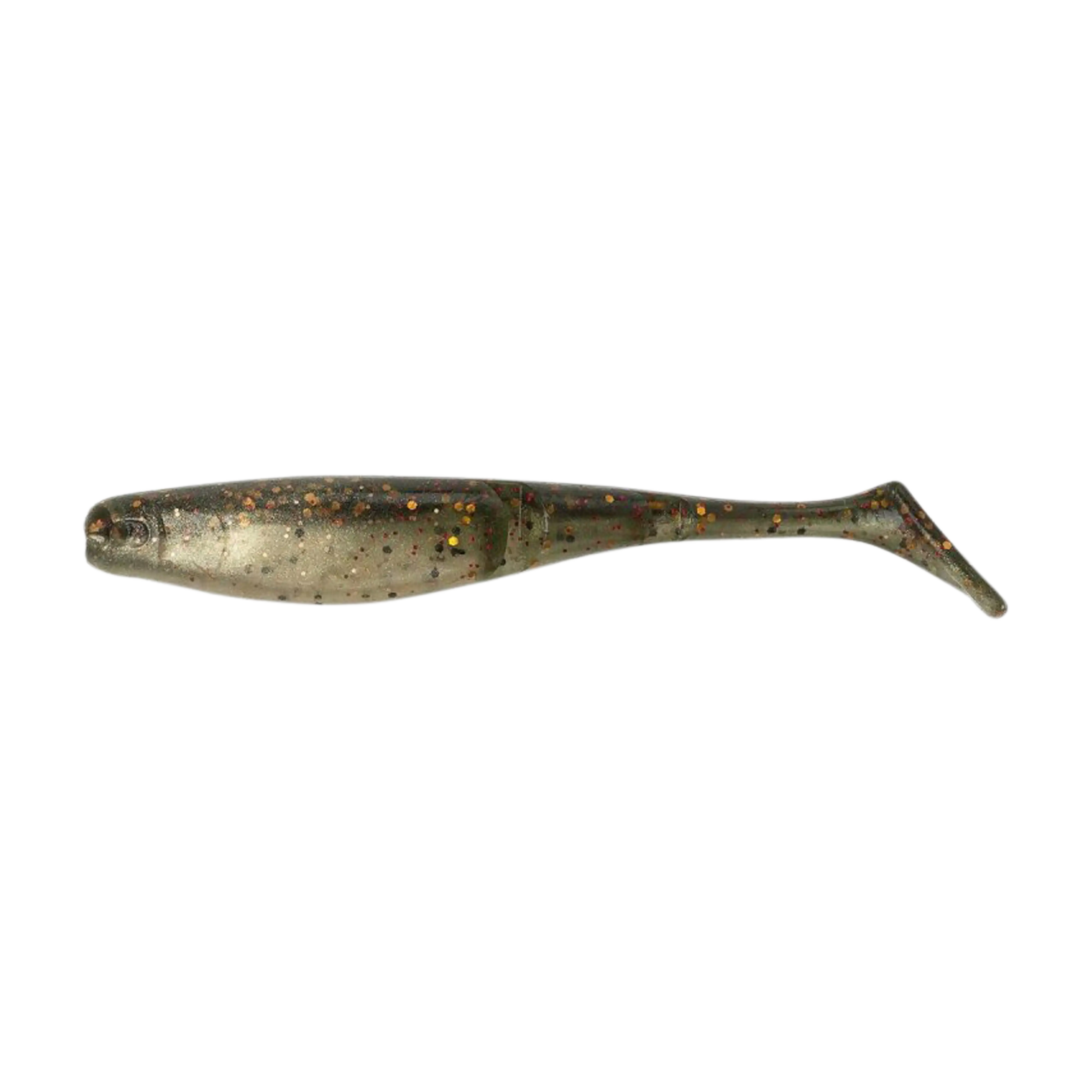
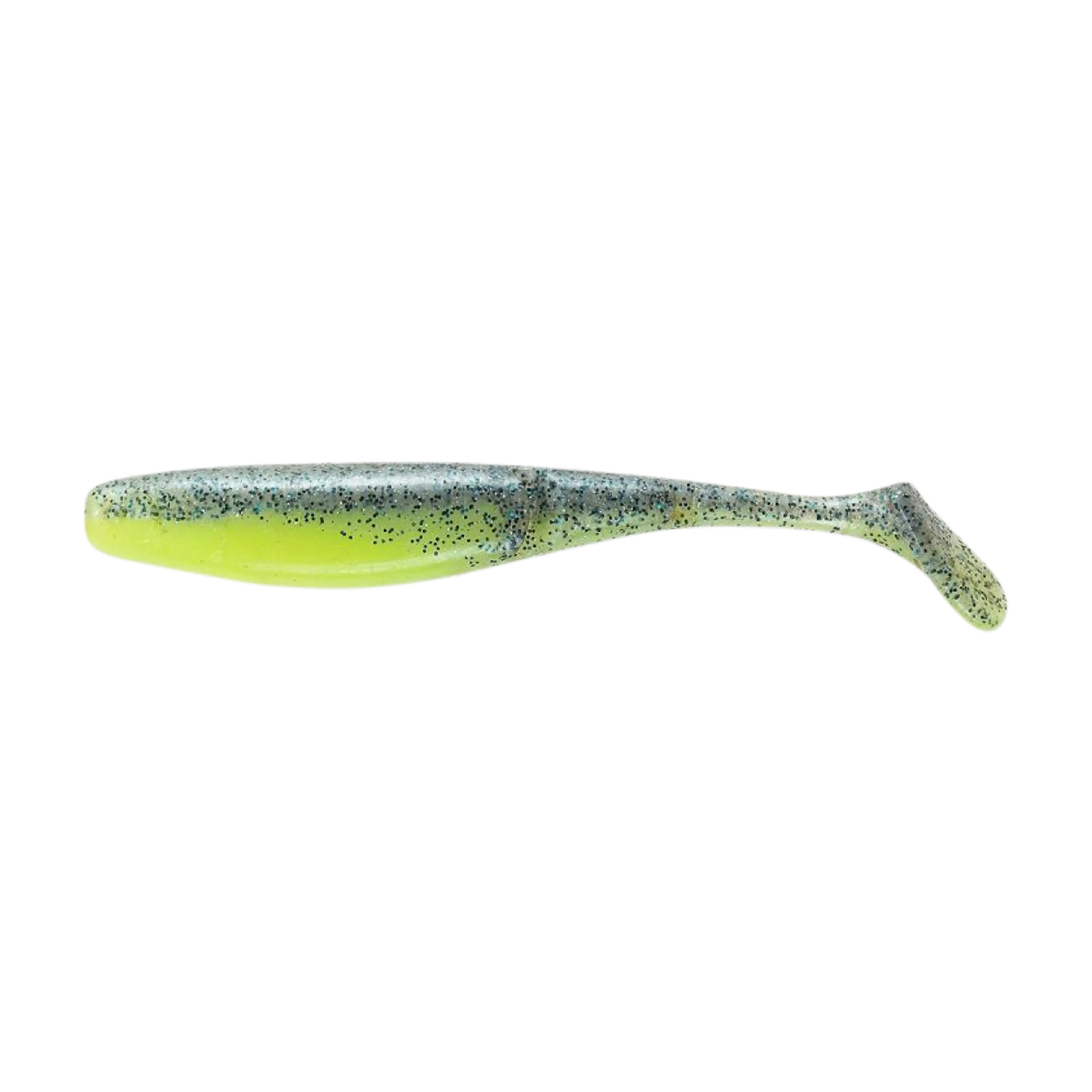
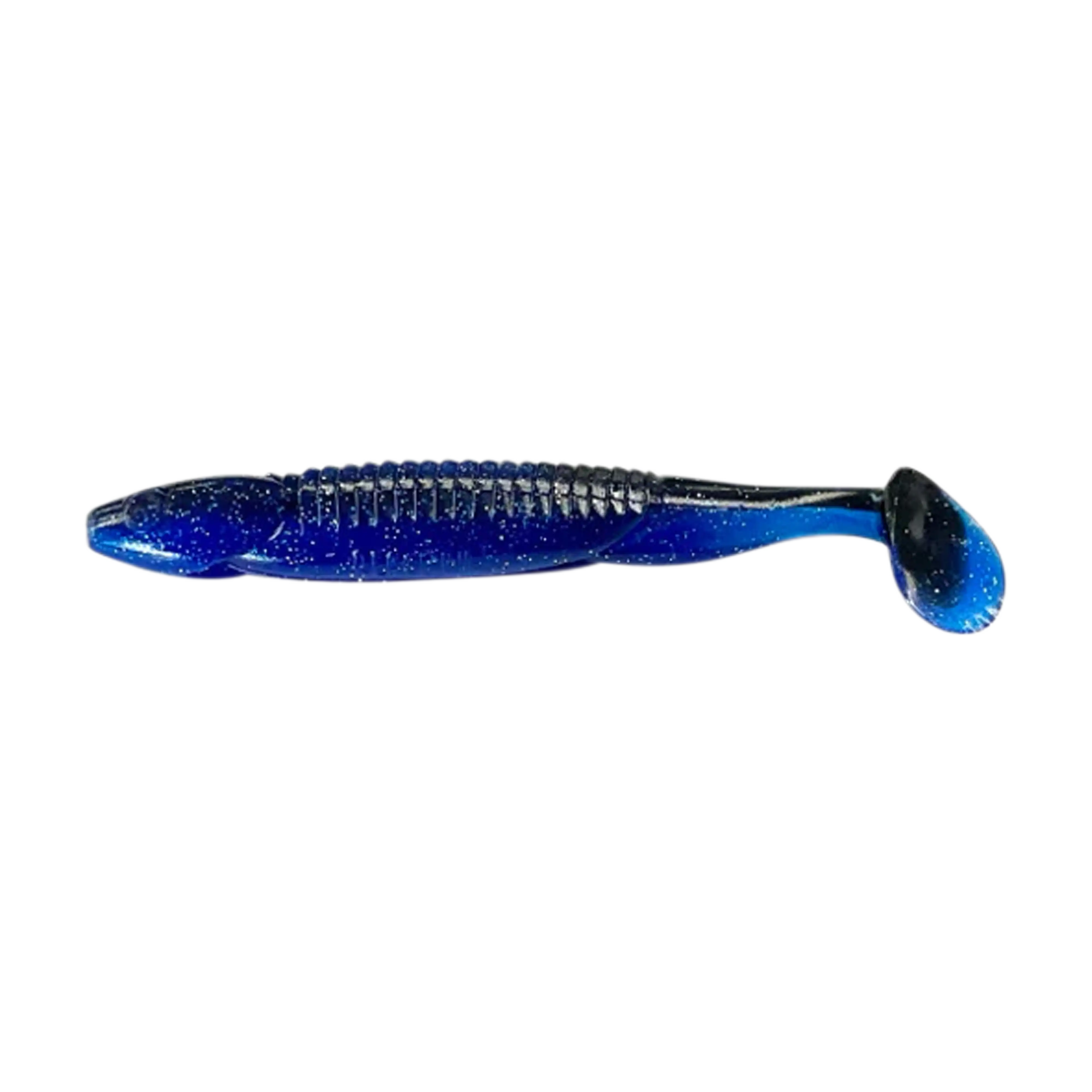
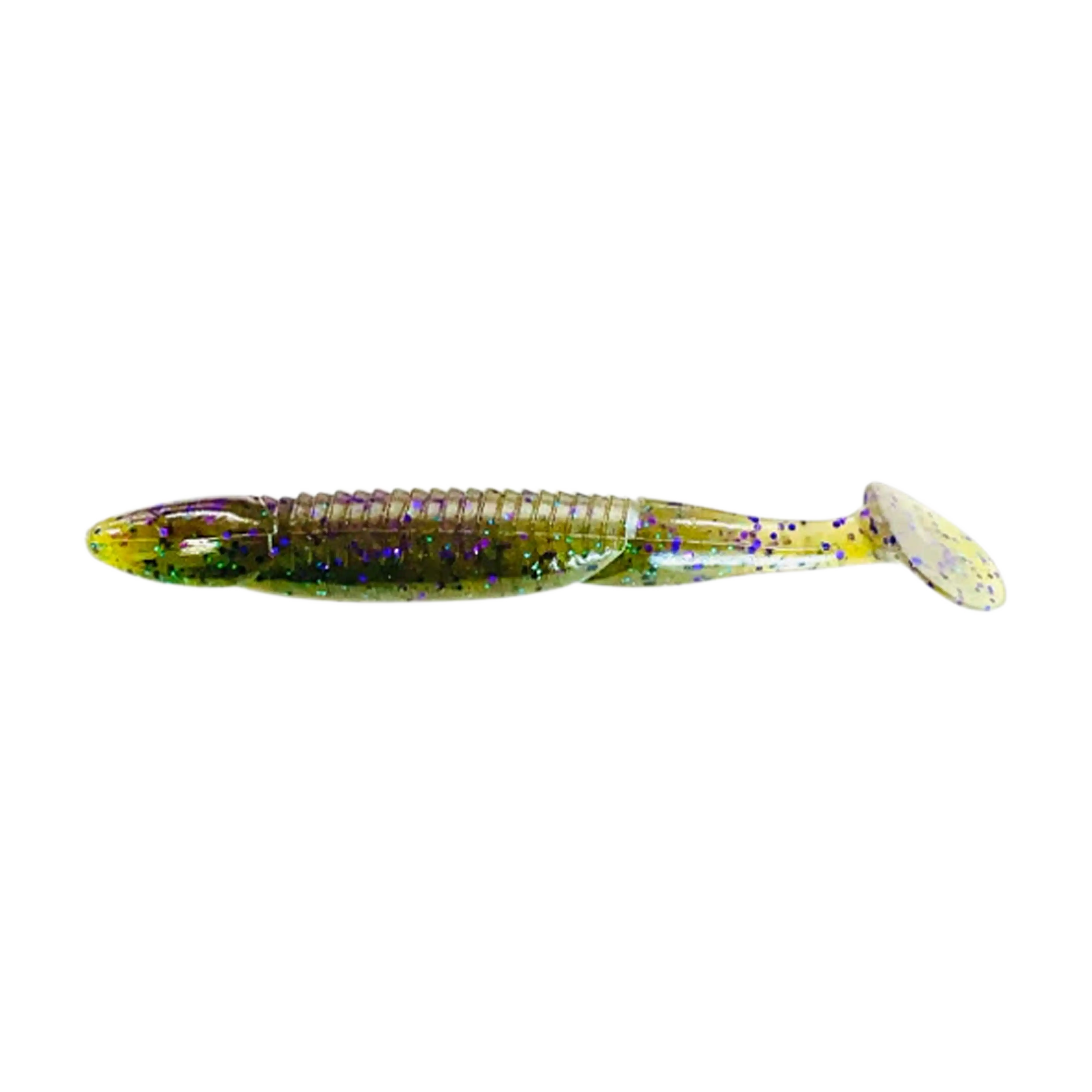
Finesse Soft Body Swimbaits
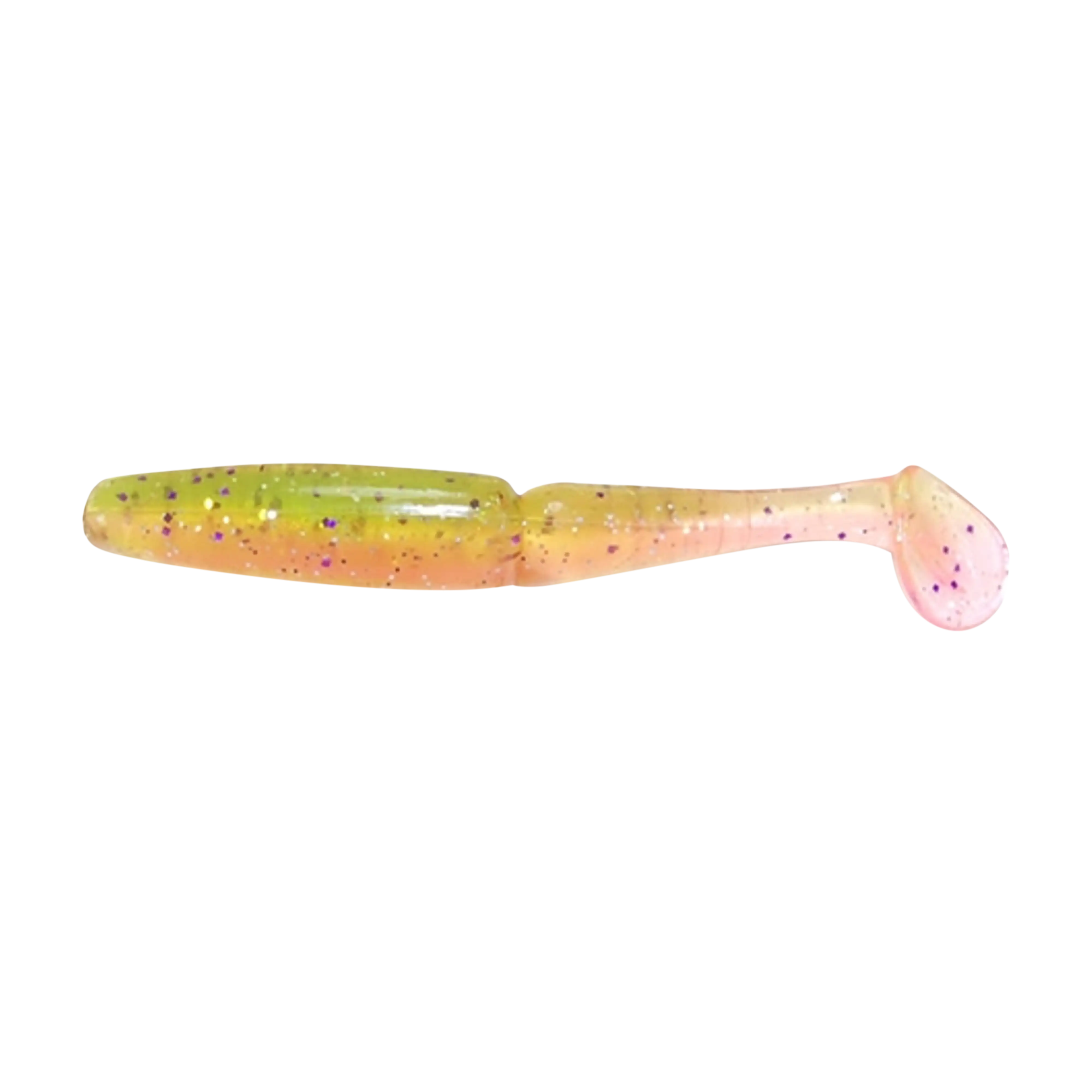
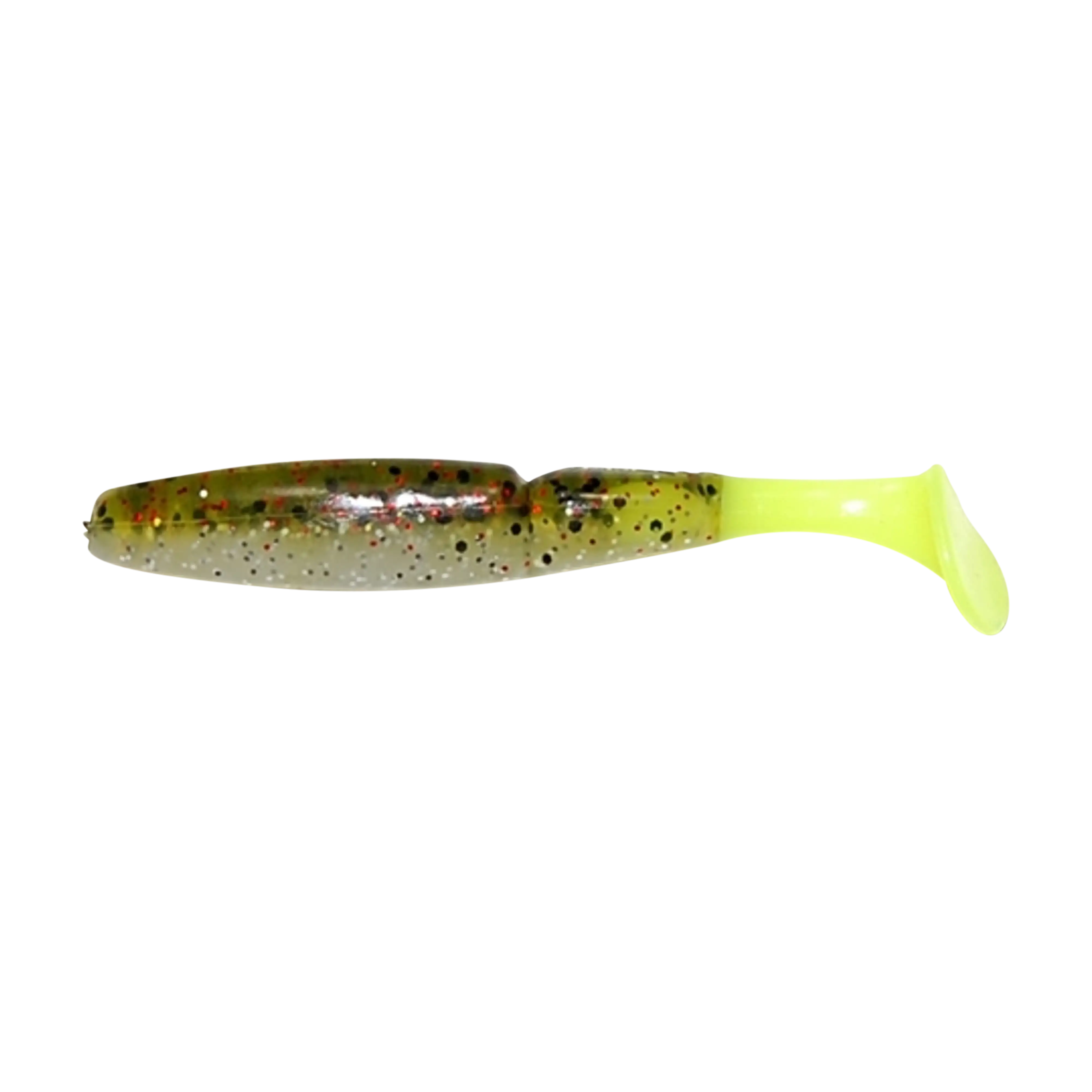
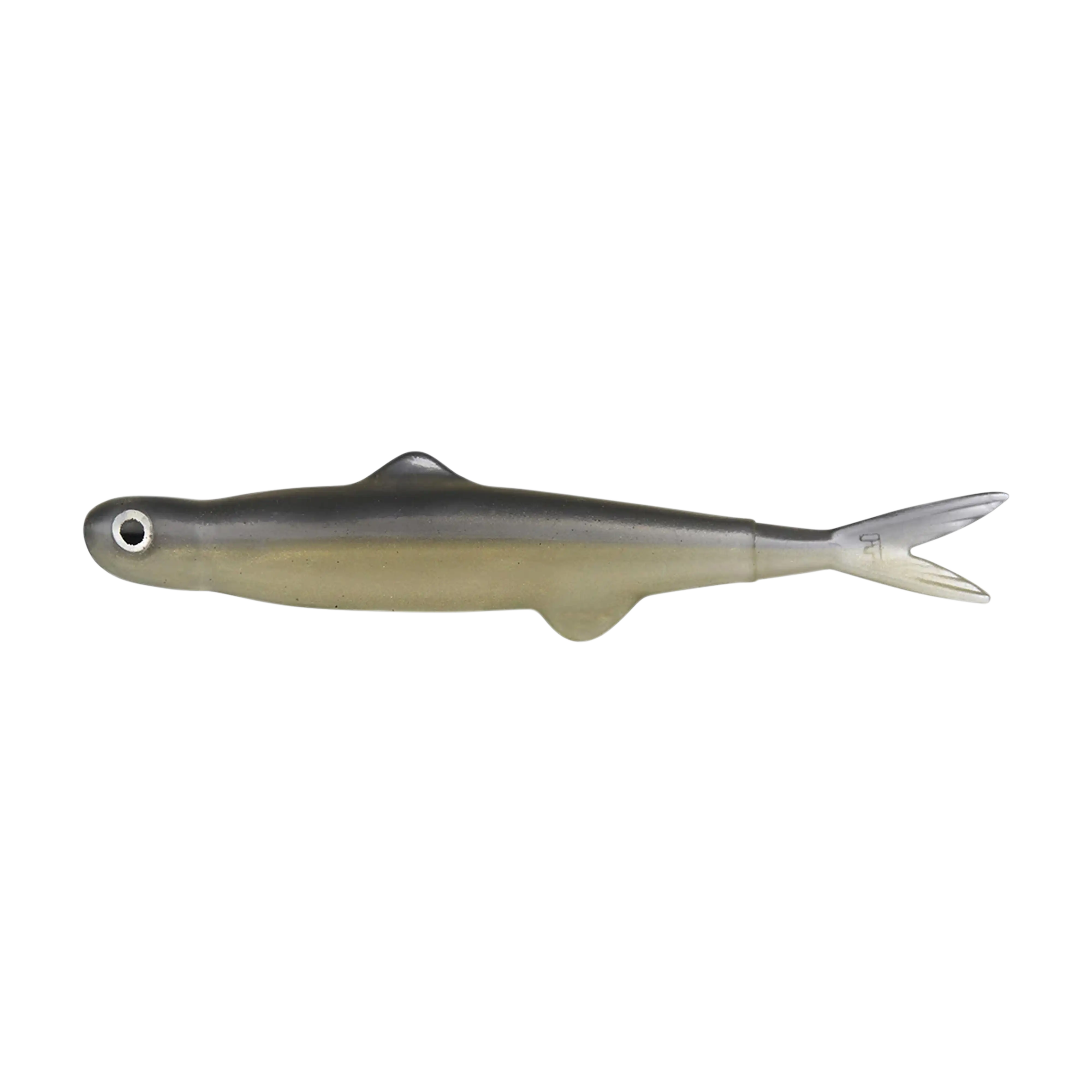
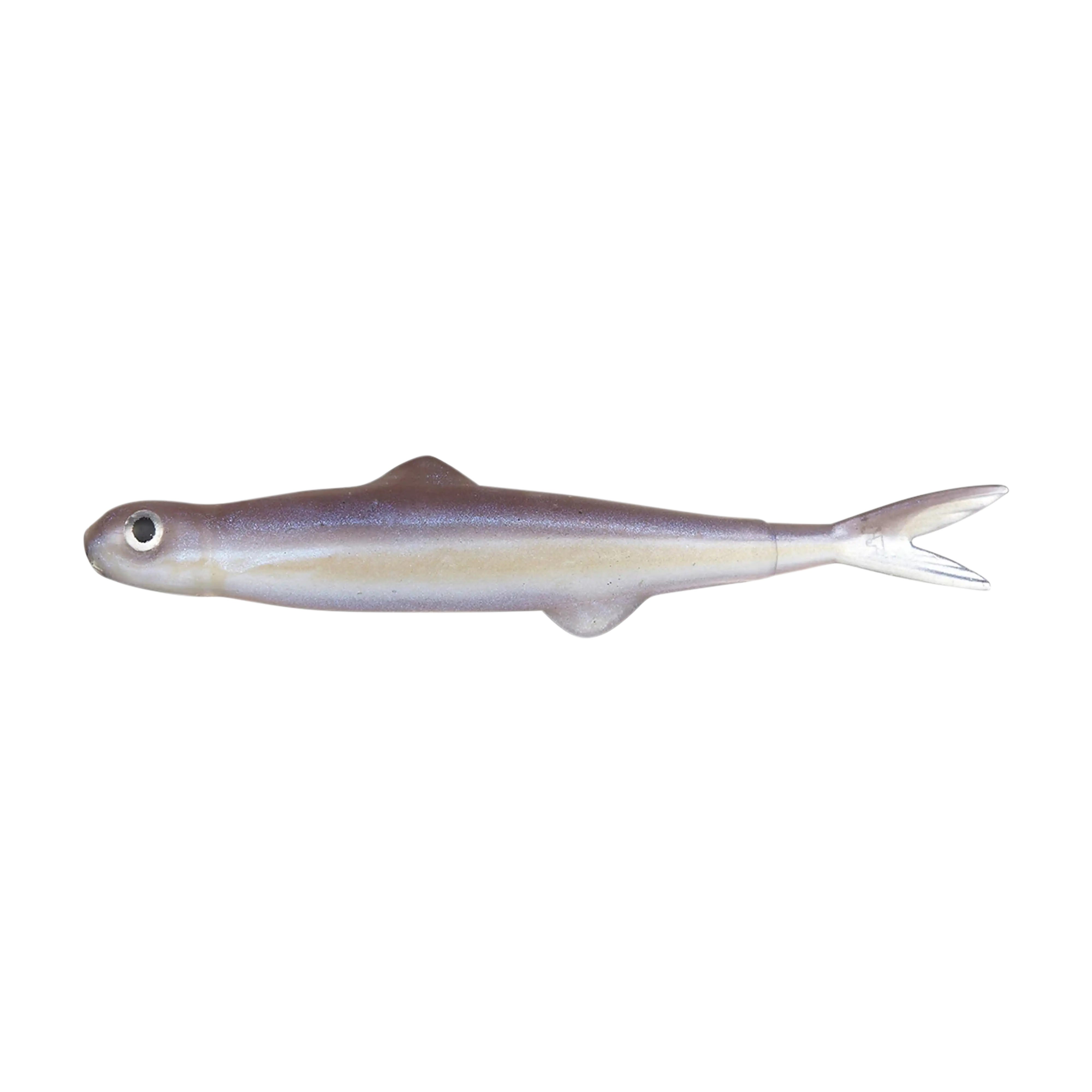
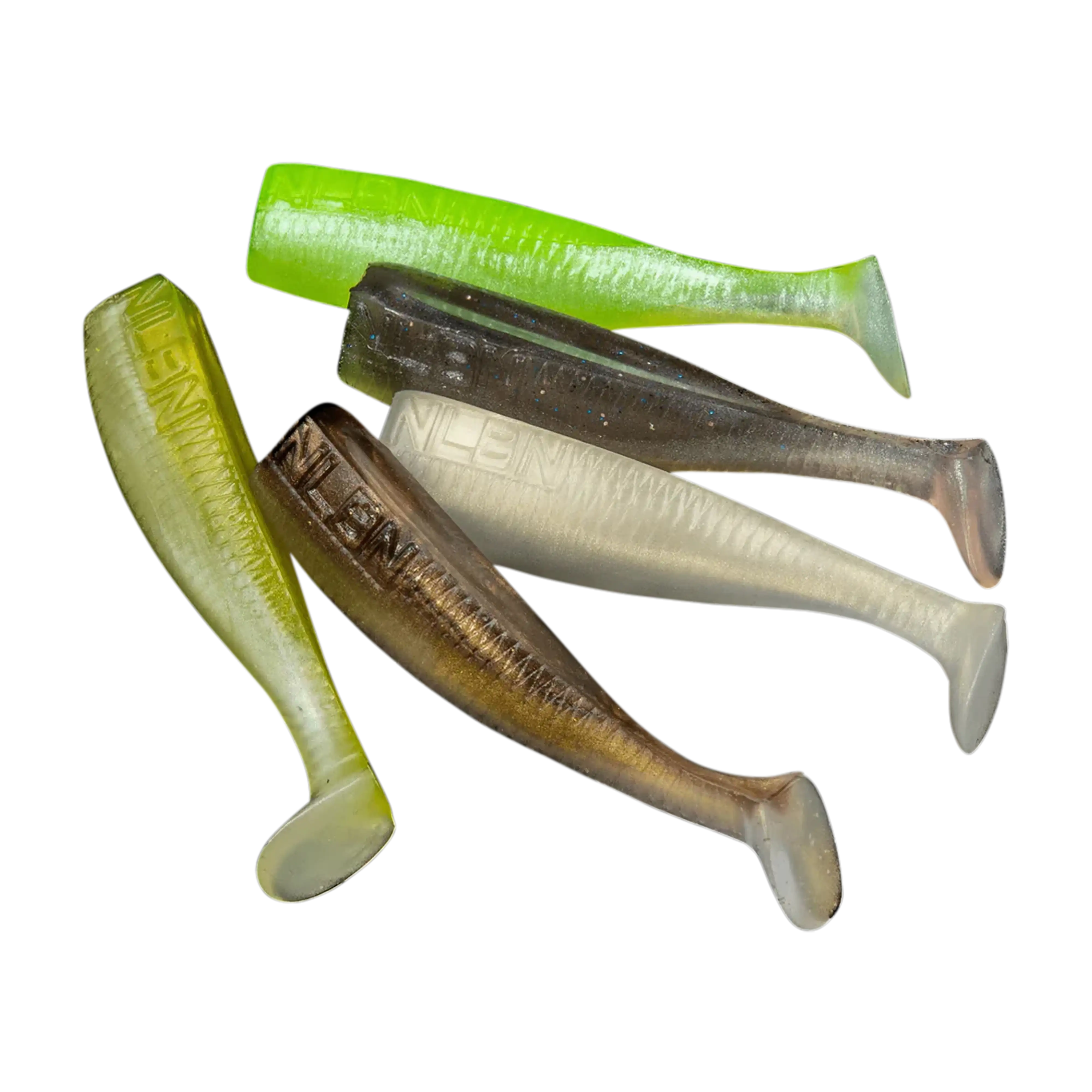
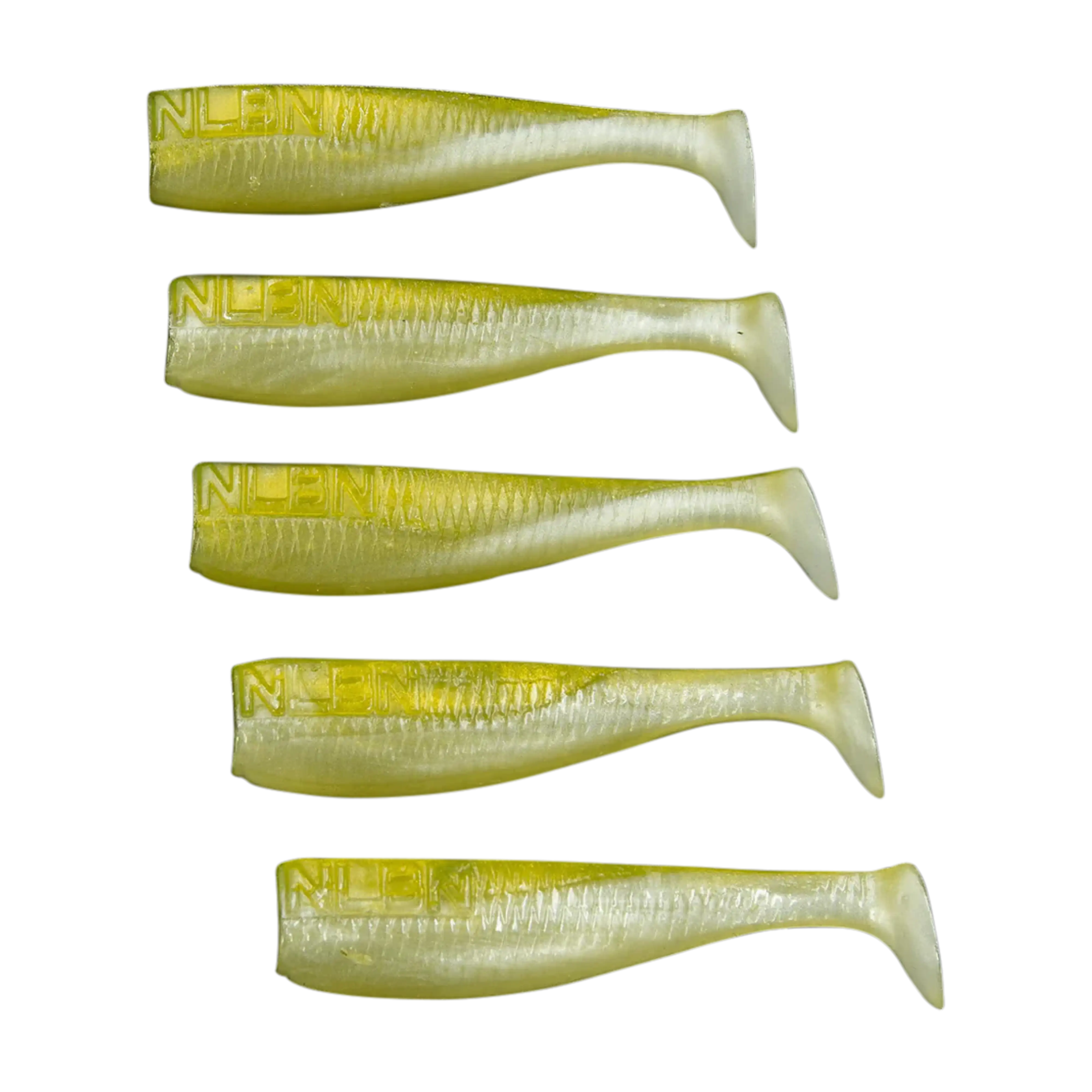
Selecting the right soft swimbait is critical to getting consistent action and natural tracking in finesse presentations. Unlike bulkier swimbaits, finesse swimbaits rely on subtle body roll, tail vibration, and stable balance at slow retrieve speeds. Shape, body taper, and tail design all determine how well the bait holds a natural swimming posture across different retrieve speeds, depths, and line tension. Matching bait size and profile to conditions helps maintain realistic movement and improves consistency in open water, structure, and mid-depth applications.
Size & Length
Finesse swimbaits typically fall in the 2”–4” range, where subtle body roll and light tail kick stay consistent at slow retrieve speeds. Smaller baits in the 2”–3” range are best for ultra-finesse situations, clear water, or heavily pressured fish where minimal displacement is key. Mid-size baits in the 3”–3.75” range are the most versatile, offering a strong balance of natural swimming action, visibility, and casting control across a wide range of conditions. Upper-range finesse baits in the 3.75”–4” range provide slightly more presence and water movement for deeper or lower-visibility situations while still maintaining a controlled, finesse-style action.
Colors & Styles
Finesse swimbait colors should prioritize natural forage and water clarity over flash or detail. In clear water, translucent and natural baitfish tones like pearl, smoke, shad, and light silver work best because they allow light penetration and keep the profile subtle. These colors pair well with smaller 2”–3” baits where stealth matters more than presence.
In stained or low-light conditions, higher-contrast colors like white, pearl/chartruese, or solid baitfish whites become more effective because they improve tracking without needing extra bulk or action. Darker options like black or bluegill tones can also be useful when fishing silhouette-based conditions around cover or low visibility.
Simple body designs with clean tails often outperform heavily textured or overbuilt baits because finesse swimbaits rely on natural tail cadence and straight tracking rather than exaggerated action.
Baits by Application
Here are some recommendations for each finesse swimit application.
Open Water
Small to mid finesse swimbaits in the 2”–3.25” range work best here, especially in translucent or natural baitfish colors like shad, smoke, or pearl. These excel when fish are suspended or roaming and responding to subtle movement rather than strong vibration.
Bottom Contact / Depth-Control
Mid-size swimbaits in the 3”–3.75” range are ideal for slow-rolling or bottom-oriented retrieves. Natural shad tones or slightly darker baitfish colors help maintain visibility while keeping a natural profile as the bait tracks close to structure or contour changes.
Weedless / Structure
Slightly more robust 3”–4” finesse swimbaits perform best in cover like grass, wood, or docks where deflection and visibility both matter. Solid white, pearl, or darker baitfish tones help maintain a clean silhouette while the bait threads through structure without losing balance or tail rhythm.
Hover / Mid-Strolling
Slim-profile swimbaits in the 2.75”–3.75” range are best for maintaining a level, suspended track at slow retrieve speeds. Natural translucent colors like smoke, pearl, or light shad reduce drag and help the bait maintain a consistent horizontal posture during long pauses or slow sweeps.
Key Takeaways
- Finesse swimbaits work best in the 2.5”–4.5” range depending on depth and visibility needs
- Smaller profiles excel in clear water and suspended fish scenarios
- Mid-size baits offer the most versatility across applications
- Larger finesse profiles improve visibility in deeper or stained water
- Simple body designs and natural colors produce the most consistent swimming action
Finesse Soft Body Swimbaits
Selecting the right soft swimbait is critical to getting consistent action and natural tracking in finesse presentations. Unlike bulkier swimbaits, finesse swimbaits rely on subtle body roll, tail vibration, and stable balance at slow retrieve speeds. Shape, body taper, and tail design all determine how well the bait holds a natural swimming posture across different retrieve speeds, depths, and line tension. Matching bait size and profile to conditions helps maintain realistic movement and improves consistency in open water, structure, and mid-depth applications.
Size & Length
Finesse swimbaits typically fall in the 2”–4” range, where subtle body roll and light tail kick stay consistent at slow retrieve speeds. Smaller baits in the 2”–3” range are best for ultra-finesse situations, clear water, or heavily pressured fish where minimal displacement is key. Mid-size baits in the 3”–3.75” range are the most versatile, offering a strong balance of natural swimming action, visibility, and casting control across a wide range of conditions. Upper-range finesse baits in the 3.75”–4” range provide slightly more presence and water movement for deeper or lower-visibility situations while still maintaining a controlled, finesse-style action.
Colors & Styles
Finesse swimbait colors should prioritize natural forage and water clarity over flash or detail. In clear water, translucent and natural baitfish tones like pearl, smoke, shad, and light silver work best because they allow light penetration and keep the profile subtle. These colors pair well with smaller 2”–3” baits where stealth matters more than presence.
In stained or low-light conditions, higher-contrast colors like white, pearl/chartruese, or solid baitfish whites become more effective because they improve tracking without needing extra bulk or action. Darker options like black or bluegill tones can also be useful when fishing silhouette-based conditions around cover or low visibility.
Simple body designs with clean tails often outperform heavily textured or overbuilt baits because finesse swimbaits rely on natural tail cadence and straight tracking rather than exaggerated action.
Baits by Application
Here are some recommendations for each finesse swimit application.
Open Water
Small to mid finesse swimbaits in the 2”–3.25” range work best here, especially in translucent or natural baitfish colors like shad, smoke, or pearl. These excel when fish are suspended or roaming and responding to subtle movement rather than strong vibration.
Bottom Contact / Depth-Control
Mid-size swimbaits in the 3”–3.75” range are ideal for slow-rolling or bottom-oriented retrieves. Natural shad tones or slightly darker baitfish colors help maintain visibility while keeping a natural profile as the bait tracks close to structure or contour changes.
Weedless / Structure
Slightly more robust 3”–4” finesse swimbaits perform best in cover like grass, wood, or docks where deflection and visibility both matter. Solid white, pearl, or darker baitfish tones help maintain a clean silhouette while the bait threads through structure without losing balance or tail rhythm.
Hover / Mid-Strolling
Slim-profile swimbaits in the 2.75”–3.75” range are best for maintaining a level, suspended track at slow retrieve speeds. Natural translucent colors like smoke, pearl, or light shad reduce drag and help the bait maintain a consistent horizontal posture during long pauses or slow sweeps.
Key Takeaways
- Finesse swimbaits work best in the 2.5”–4.5” range depending on depth and visibility needs
- Smaller profiles excel in clear water and suspended fish scenarios
- Mid-size baits offer the most versatility across applications
- Larger finesse profiles improve visibility in deeper or stained water
- Simple body designs and natural colors produce the most consistent swimming action
Soft Body Finesse Swimbaits


Finesse Swimbait Terminal Tackle
Terminal tackle directly controls how a finesse swimbait swims, tracks, and maintains balance through the water column. Small changes in head weight, hook style, or weight placement will affect tail kick, body roll, sink rate, and how naturally the bait holds a straight swimming posture. The goal is always the same: keep the bait tracking true at slow speeds while matching depth and presentation style to the conditions.
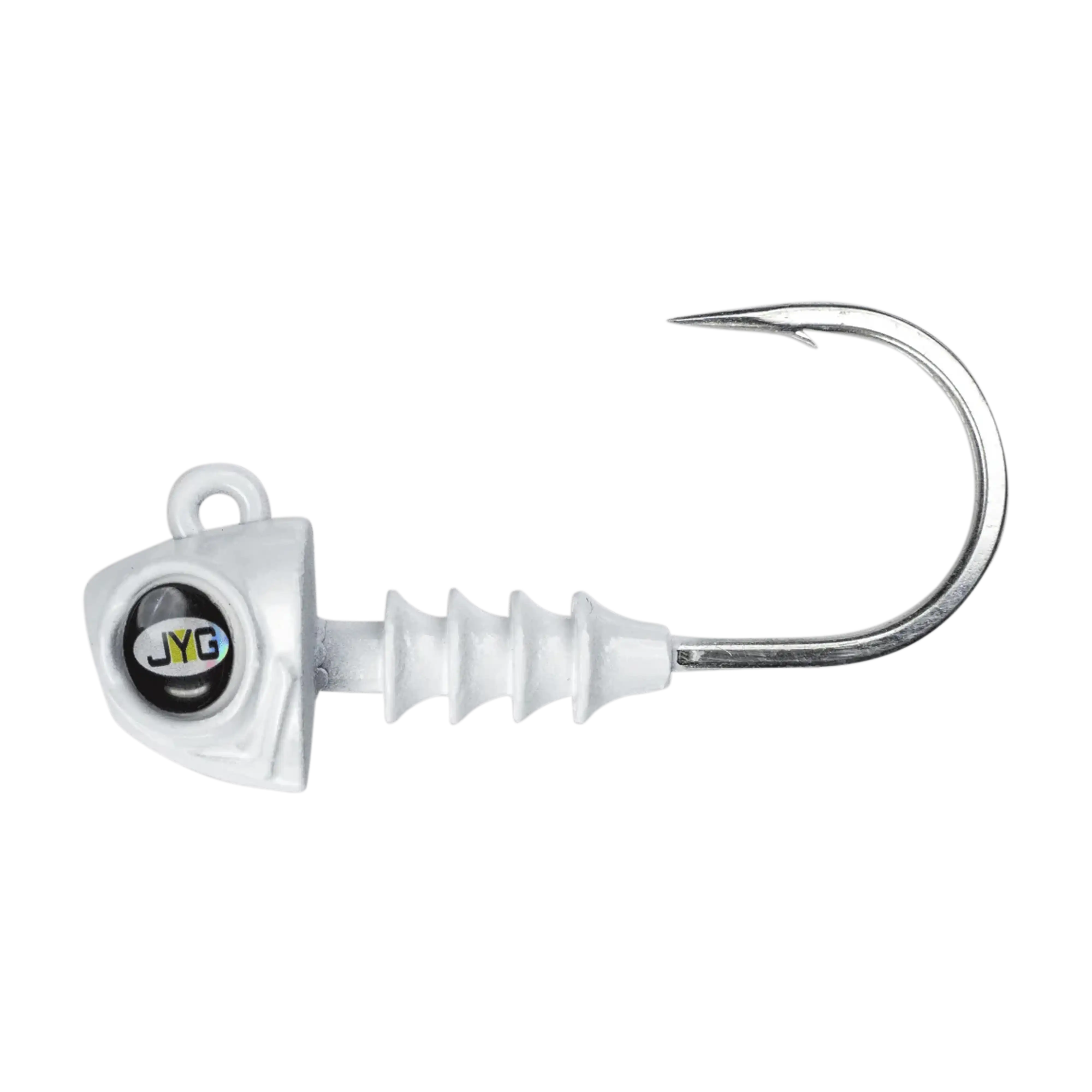
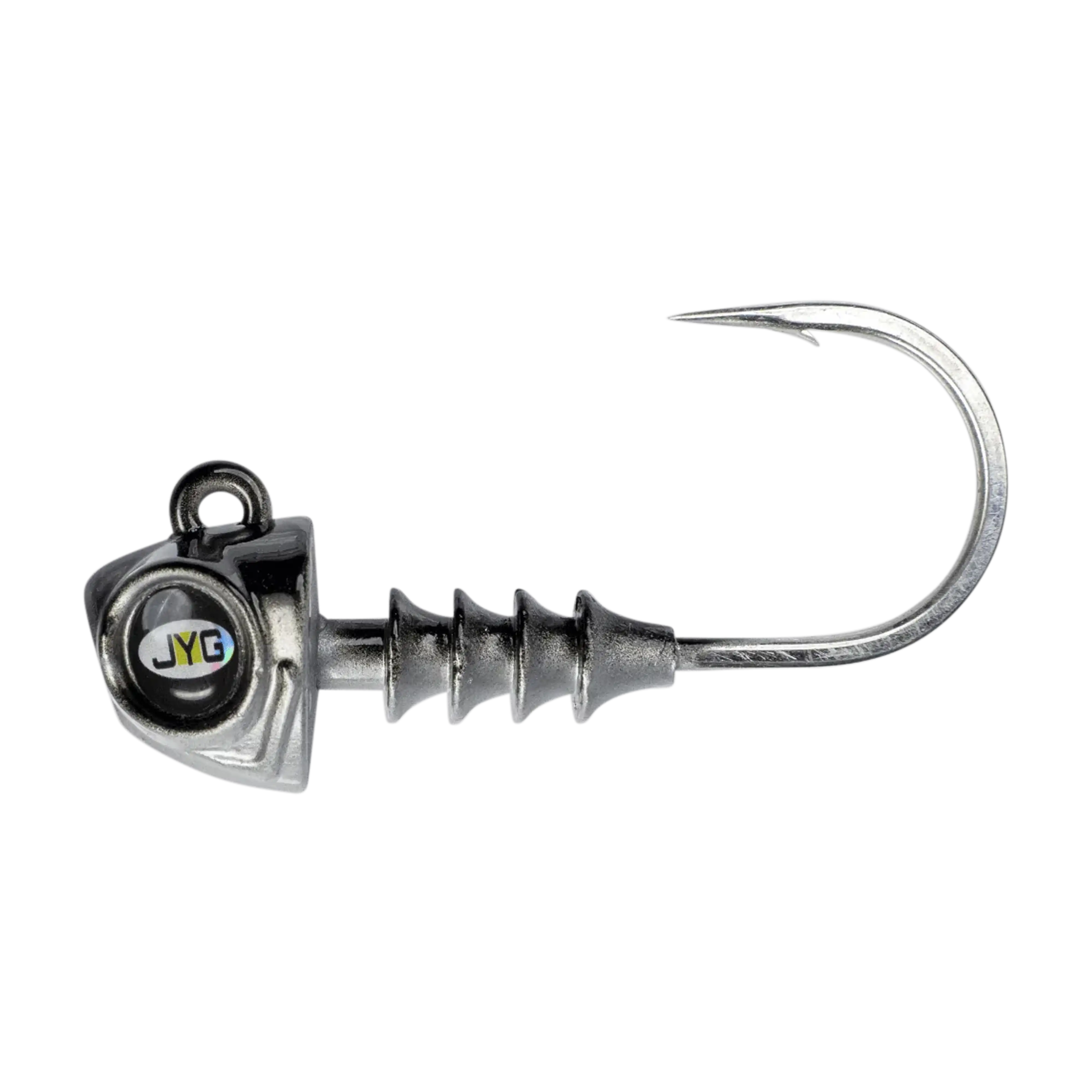
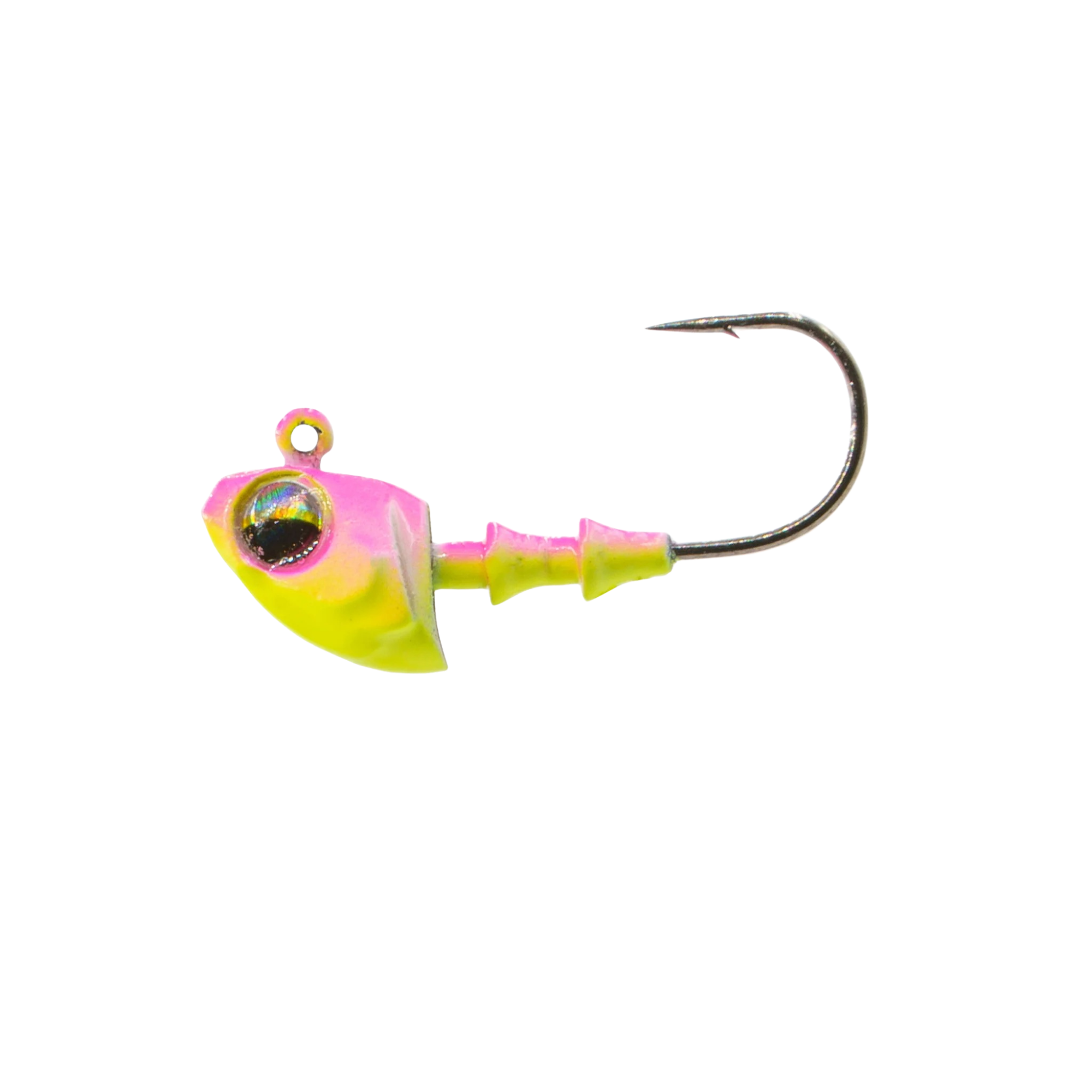
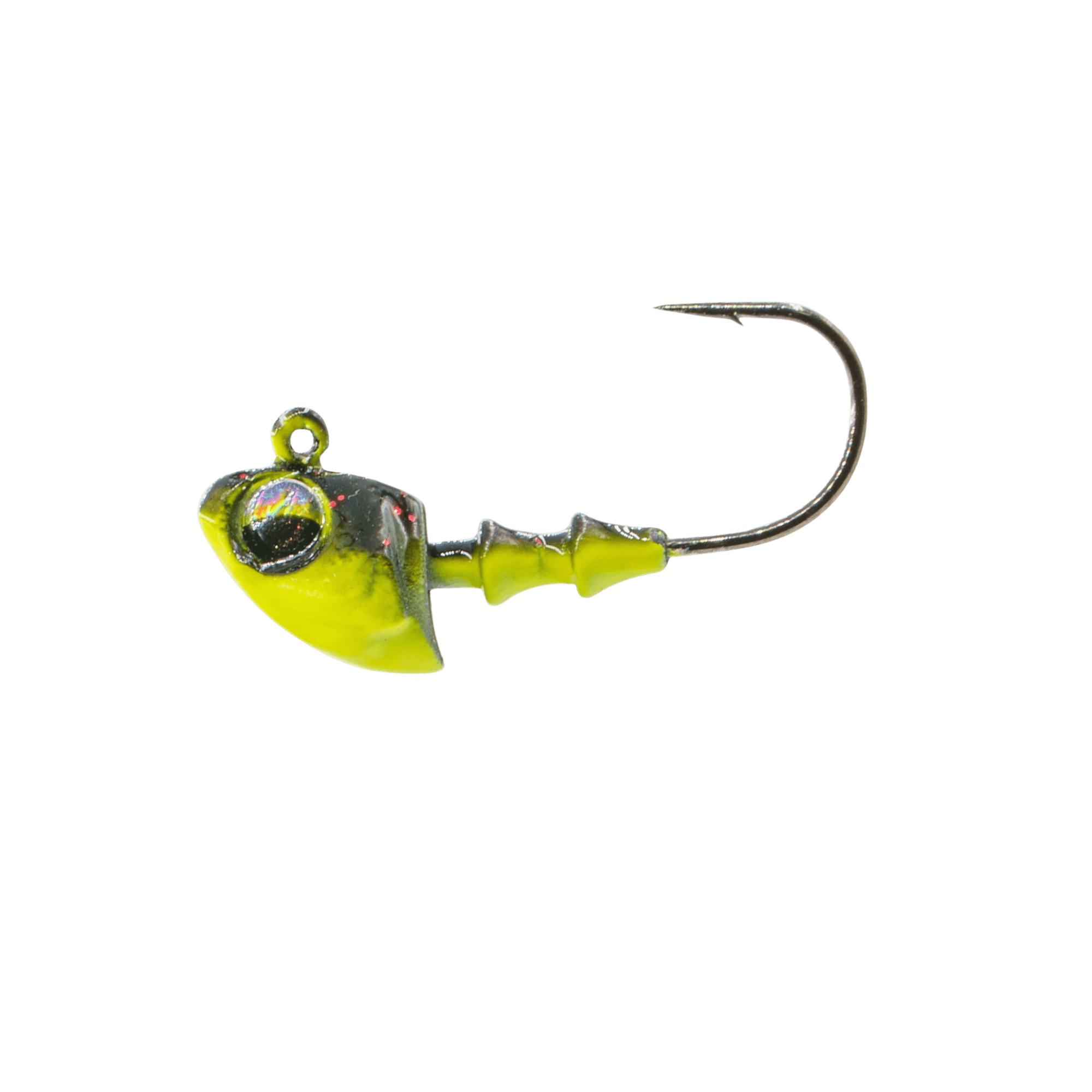
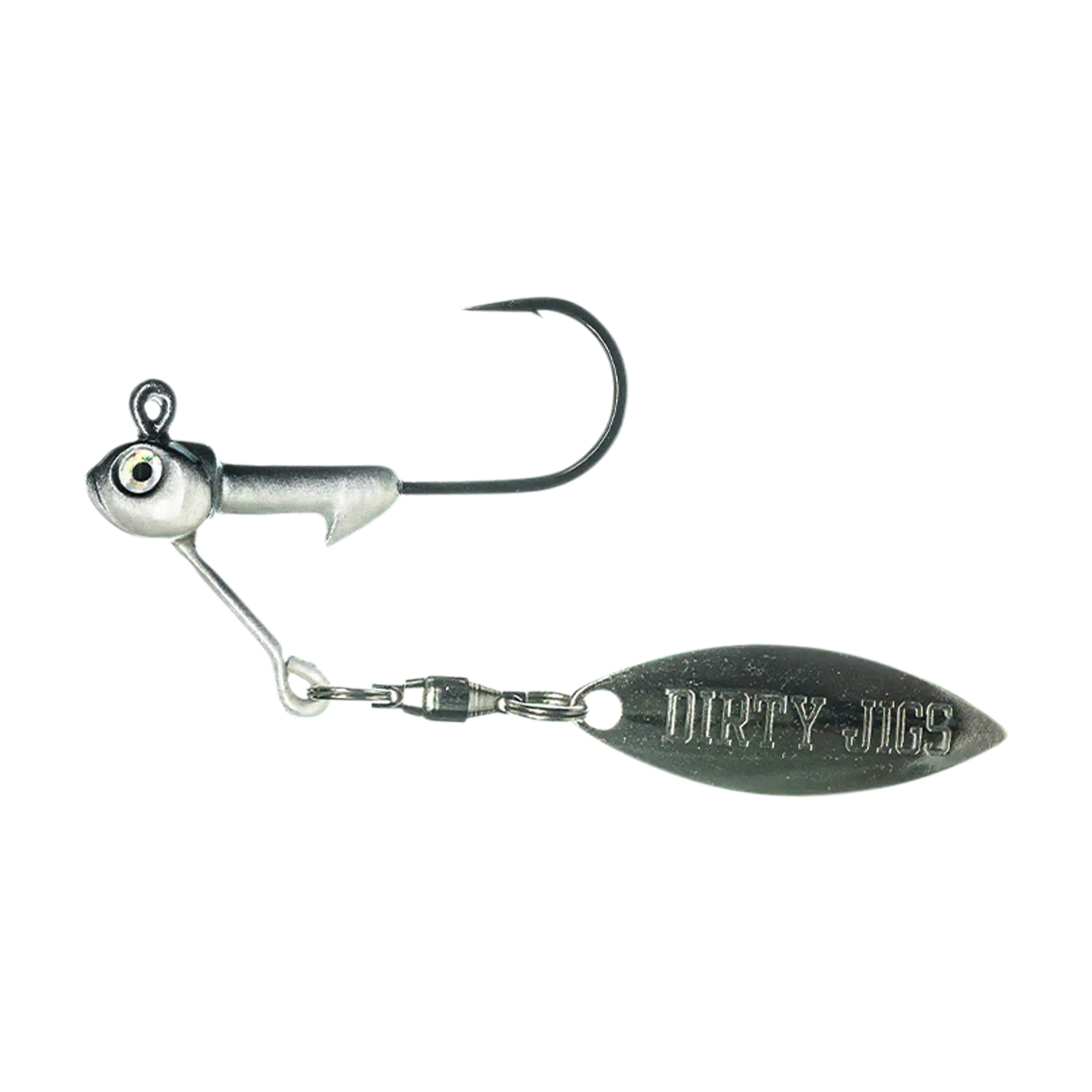
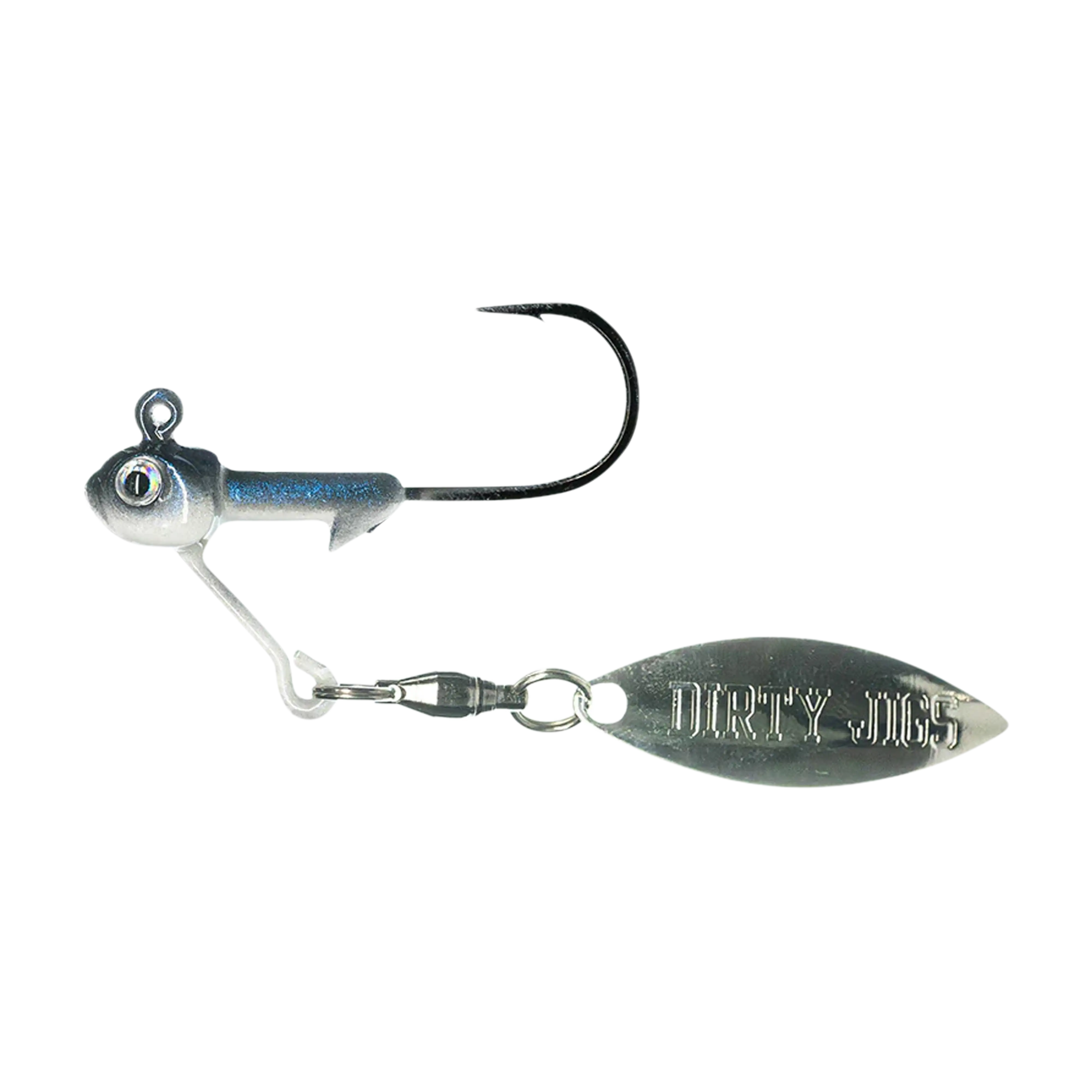
Jig Heads
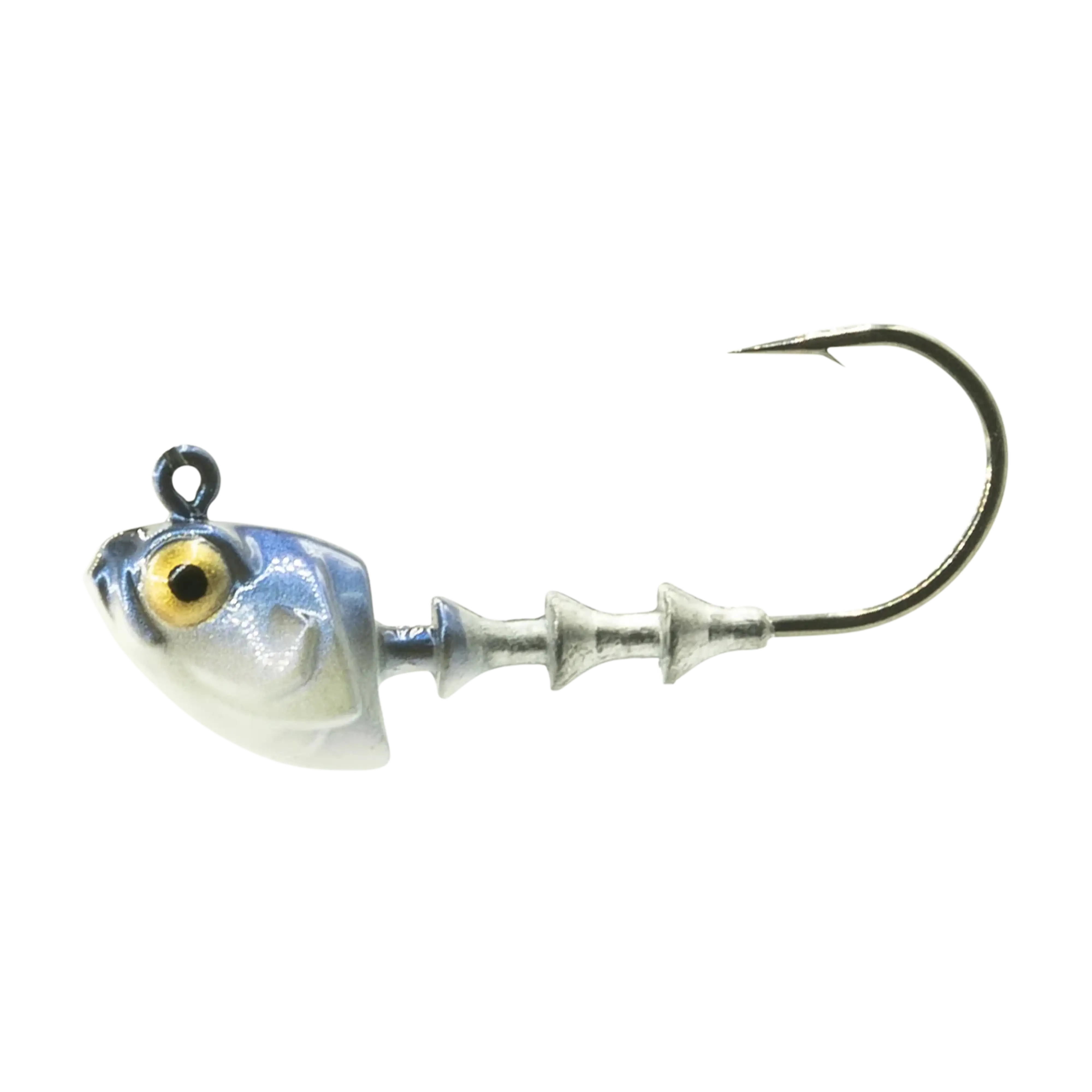
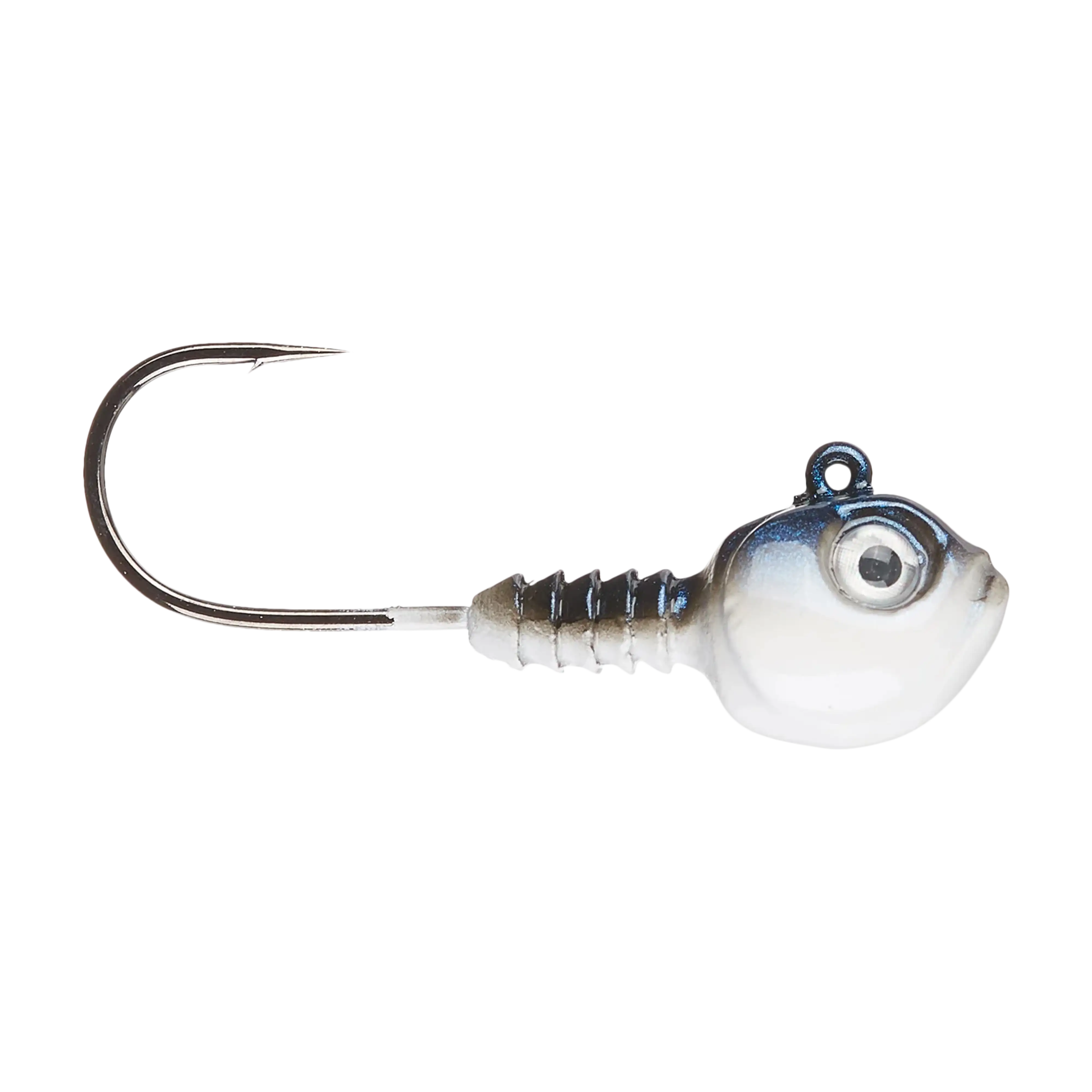
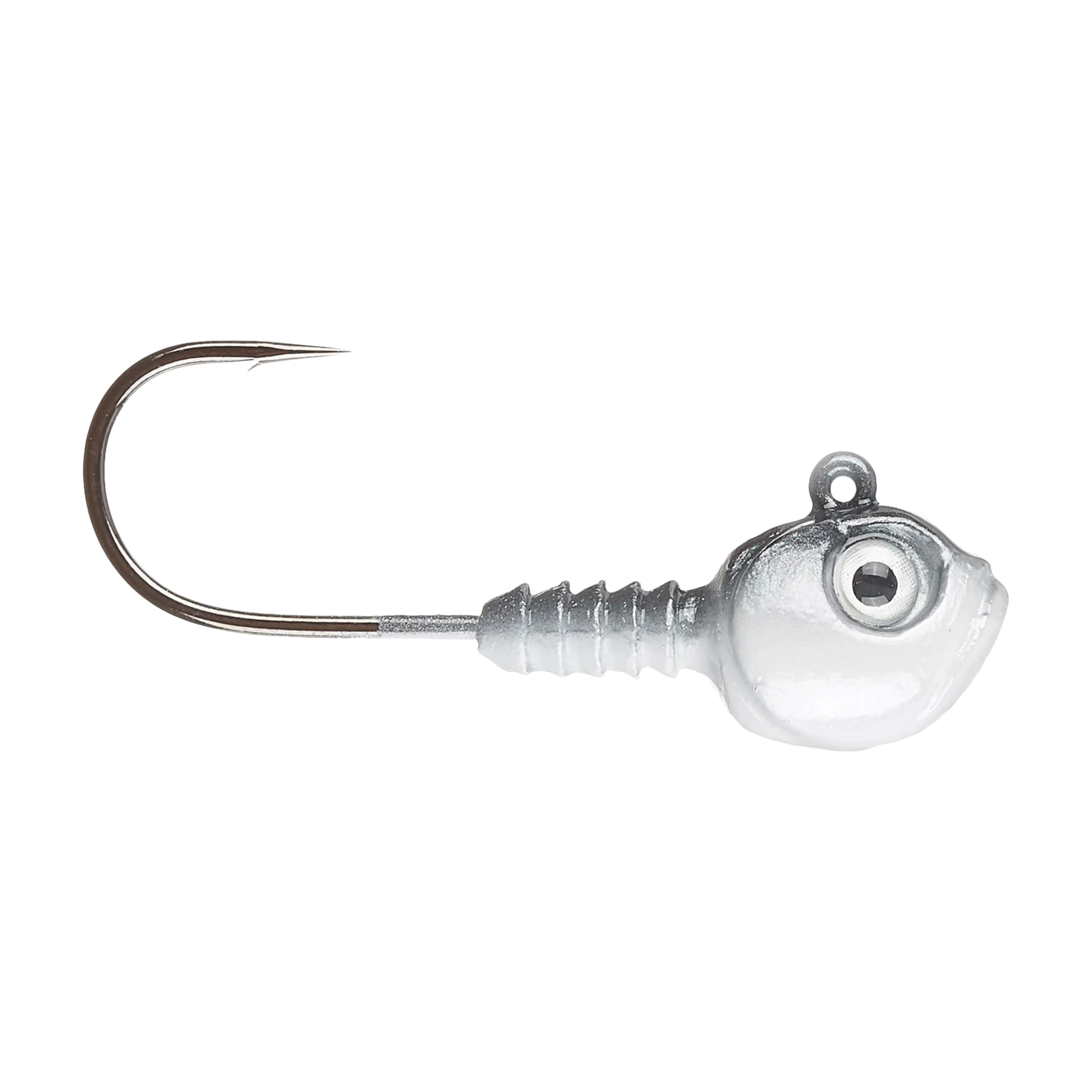
Jig heads are a common and stable way to rig finesse swimbaits because they provide fixed weight placement and consistent swimming balance. Head weight determines how deep the bait runs and how fast it sinks, with lighter heads (or no head weight) keeping the bait higher in the water column and heavier heads increasing sink rate and bottom contact.
Head shape also matters — rounder heads tend to produce a more natural, rolling swim, while keel or pointed designs help the bait track straighter at faster retrieve speeds or in current. Hook size should match bait length so the swimbait stays straight without bunching or distorting the body. Built-in keepers or bait spikes are important for preventing slippage without restricting tail movement.
In clear water, natural or low-profile jig head finishes help reduce visual distraction, while darker or higher-contrast heads can help tracking in stained water or low light.
Hooks & Rigging
Finesse swimbaits can be rigged in three primary ways depending on depth, cover, and action desired:
Unweighted hooks (swimbait hooks or EWG-style hooks) keep the bait at its most natural and buoyant presentation. Typical hook sizes range from #2 to 3/0 depending on swimbait size, with smaller hooks (#2–1) for 2”–3” baits and larger sizes (1/0–3/0) for 3”–4” baits. These are best for shallow water, slow retrieves, and mid-strolling applications where subtle tail movement and horizontal balance are the priority.
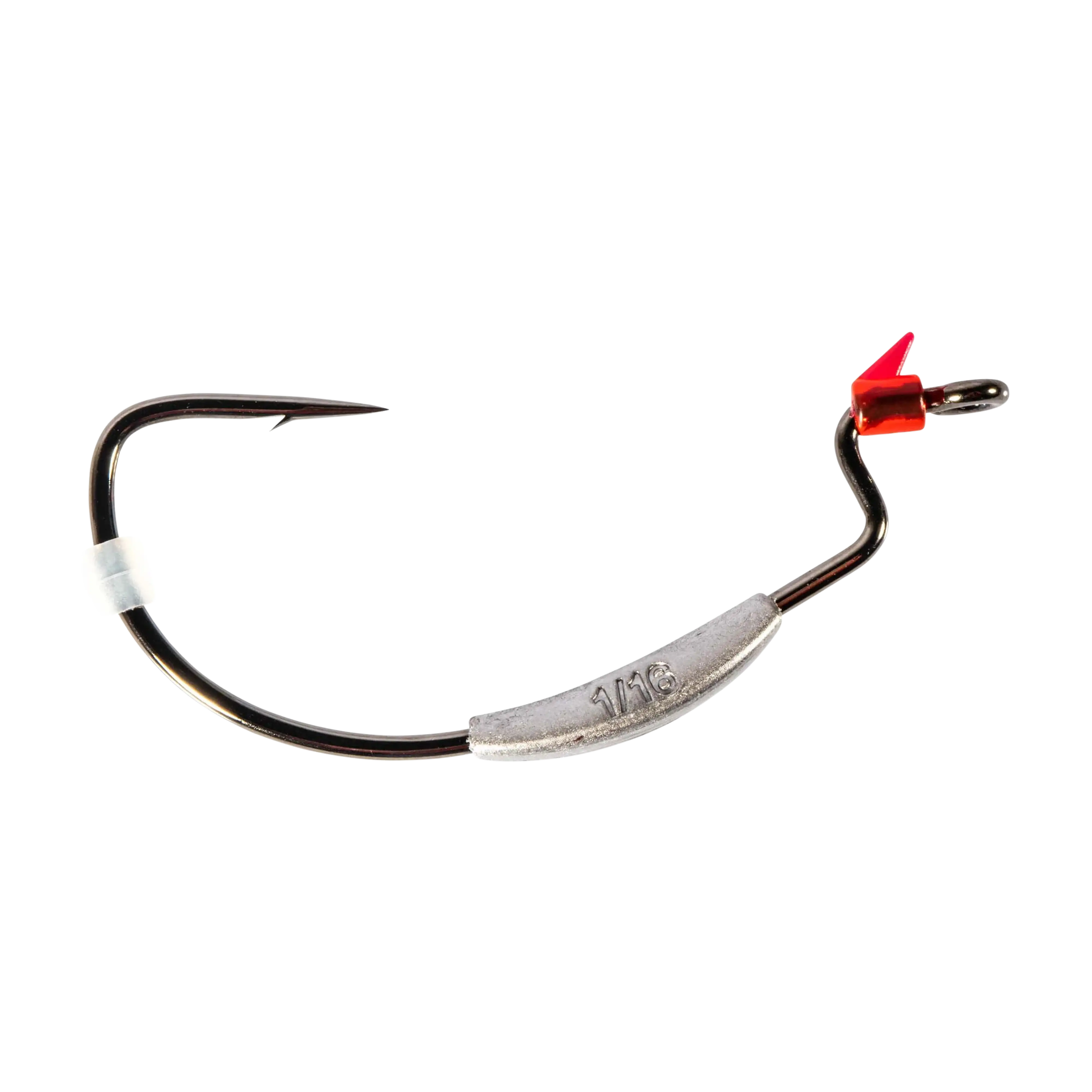
Weighted swimbait hooks add internal ballast near the hook bend or shank, allowing the bait to track straighter and sink at a controlled rate while remaining weedless. Common sizes range from #1 to 4/0 with weights typically from 1/32 oz to 3/16 oz, matched to bait size and desired depth. This setup is used in both open water and around light cover when you want a more natural body profile than a jig head, along with controlled depth, a steady swim posture, and added snag resistance without sacrificing subtle action.
Texas-rigged weights (nose or pegged internal weights) allow the bait to stay weedless while adjusting sink rate and swimming depth independently of hook size. This approach is most effective around cover, grass, or structure where snag resistance matters, but you still want a controlled finesse swim rather than a bulky presentation.
Each system changes how the bait behaves: jig heads create the most consistent swim path, weighted hooks balance versatility and realism, and unweighted rigs maximize natural movement.
Finesse Swimbait Terminal Tackle
Terminal tackle directly controls how a finesse swimbait swims, tracks, and maintains balance through the water column. Small changes in head weight, hook style, or weight placement will affect tail kick, body roll, sink rate, and how naturally the bait holds a straight swimming posture. The goal is always the same: keep the bait tracking true at slow speeds while matching depth and presentation style to the conditions.
Jig Heads
Jig heads are a common and stable way to rig finesse swimbaits because they provide fixed weight placement and consistent swimming balance. Head weight determines how deep the bait runs and how fast it sinks, with lighter heads (or no head weight) keeping the bait higher in the water column and heavier heads increasing sink rate and bottom contact.
Head shape also matters — rounder heads tend to produce a more natural, rolling swim, while keel or pointed designs help the bait track straighter at faster retrieve speeds or in current. Hook size should match bait length so the swimbait stays straight without bunching or distorting the body. Built-in keepers or bait spikes are important for preventing slippage without restricting tail movement.
In clear water, natural or low-profile jig head finishes help reduce visual distraction, while darker or higher-contrast heads can help tracking in stained water or low light.
Hooks & Rigging
Finesse swimbaits can be rigged in three primary ways depending on depth, cover, and action desired:
Unweighted hooks (swimbait hooks or EWG-style hooks) keep the bait at its most natural and buoyant presentation. Typical hook sizes range from #2 to 3/0 depending on swimbait size, with smaller hooks (#2–1) for 2”–3” baits and larger sizes (1/0–3/0) for 3”–4” baits. These are best for shallow water, slow retrieves, and mid-strolling applications where subtle tail movement and horizontal balance are the priority.
Weighted swimbait hooks add internal ballast near the hook bend or shank, allowing the bait to track straighter and sink at a controlled rate while remaining weedless. Common sizes range from #1 to 4/0 with weights typically from 1/32 oz to 3/16 oz, matched to bait size and desired depth. This setup is used in both open water and around light cover when you want a more natural body profile than a jig head, along with controlled depth, a steady swim posture, and added snag resistance without sacrificing subtle action.
Texas-rigged weights (nose or pegged internal weights) allow the bait to stay weedless while adjusting sink rate and swimming depth independently of hook size. This approach is most effective around cover, grass, or structure where snag resistance matters, but you still want a controlled finesse swim rather than a bulky presentation.
Each system changes how the bait behaves: jig heads create the most consistent swim path, weighted hooks balance versatility and realism, and unweighted rigs maximize natural movement.
Finesse Swimbait Terminal Tackle

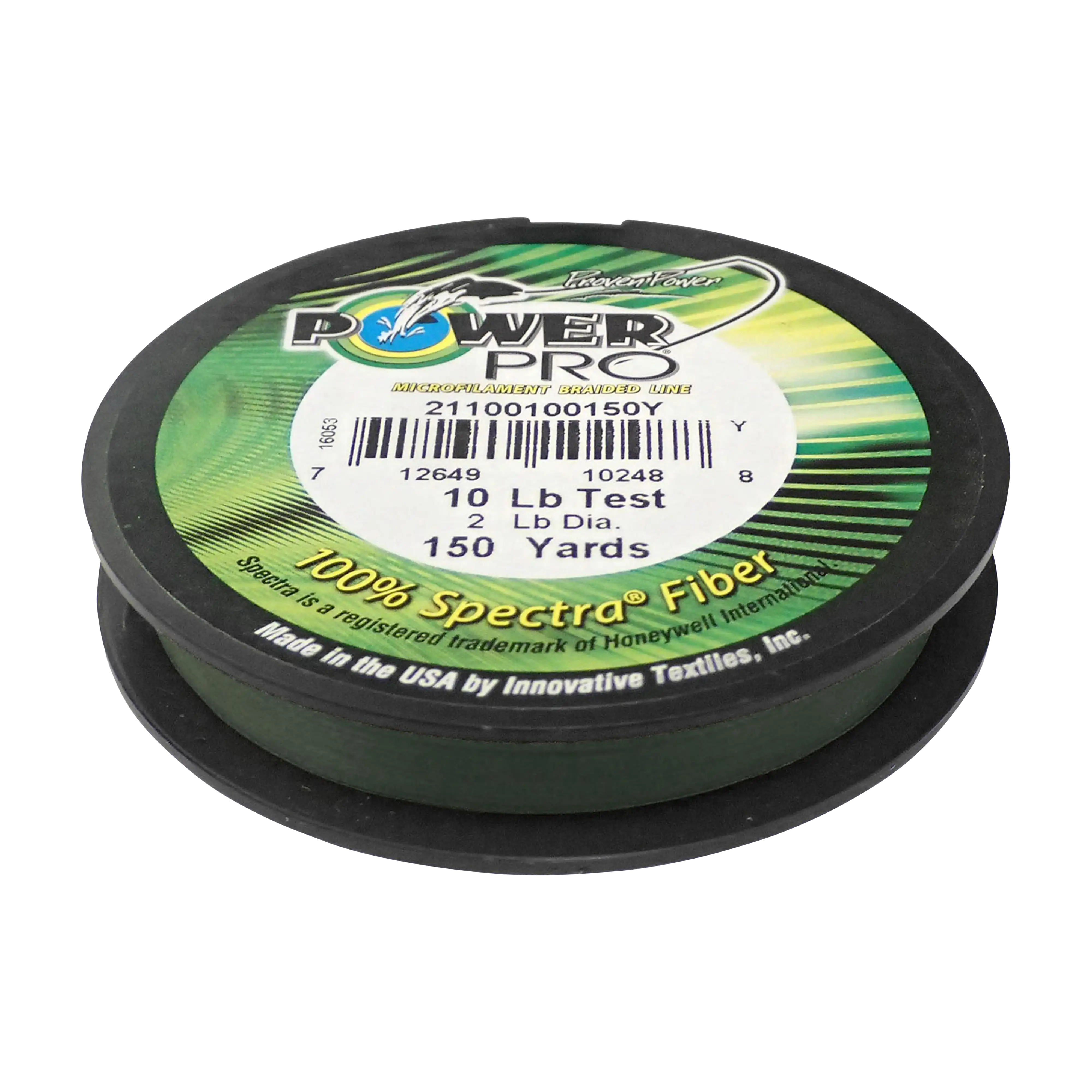
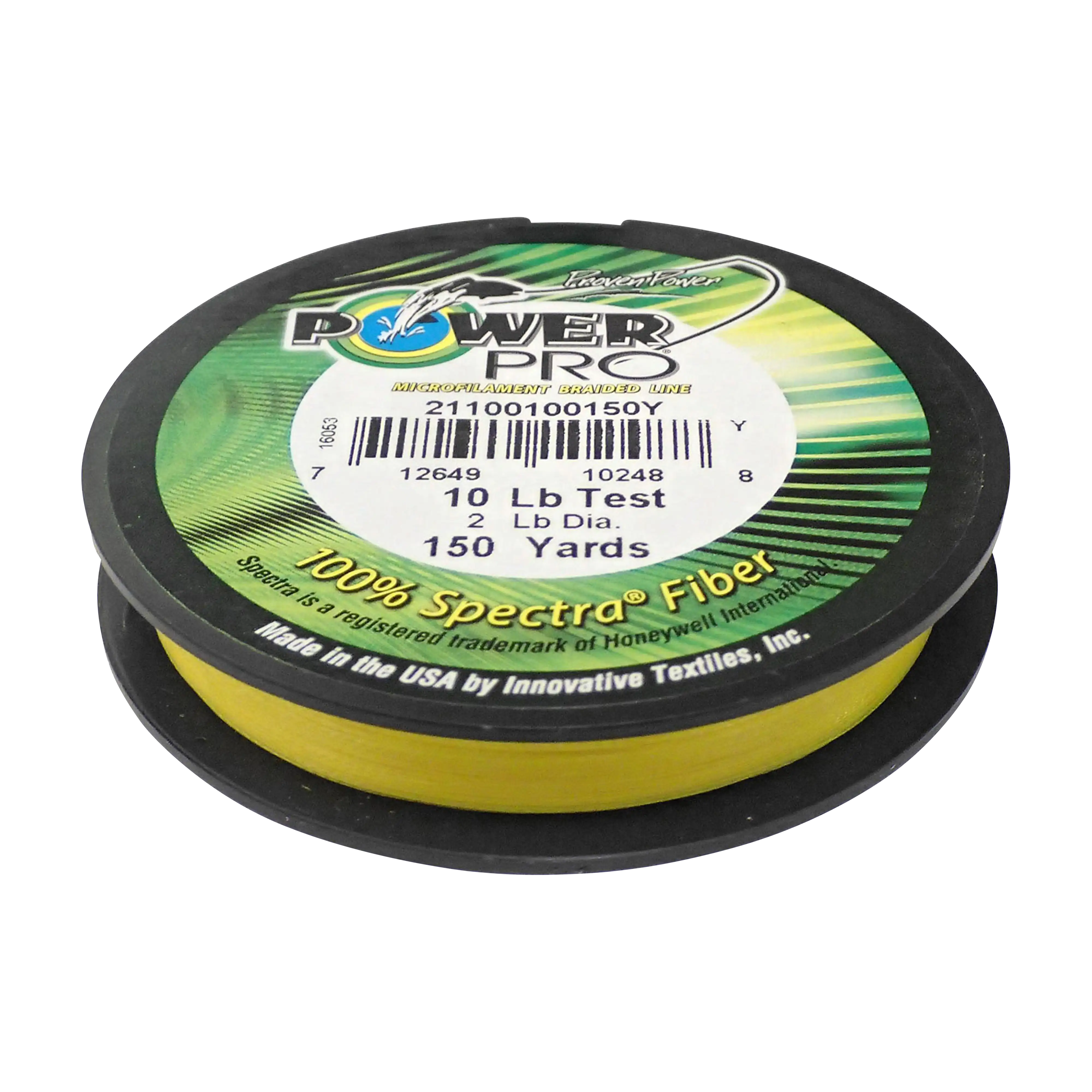
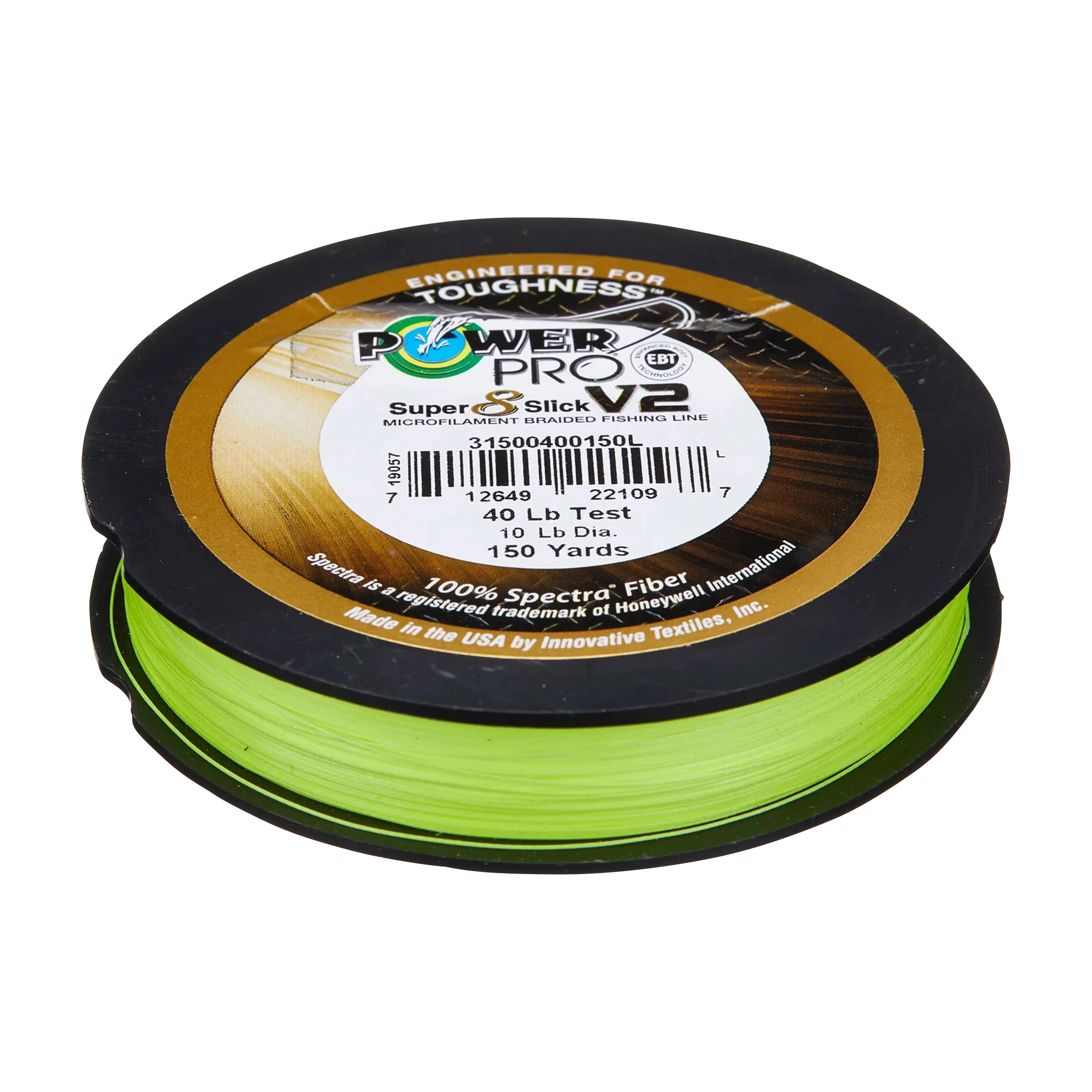
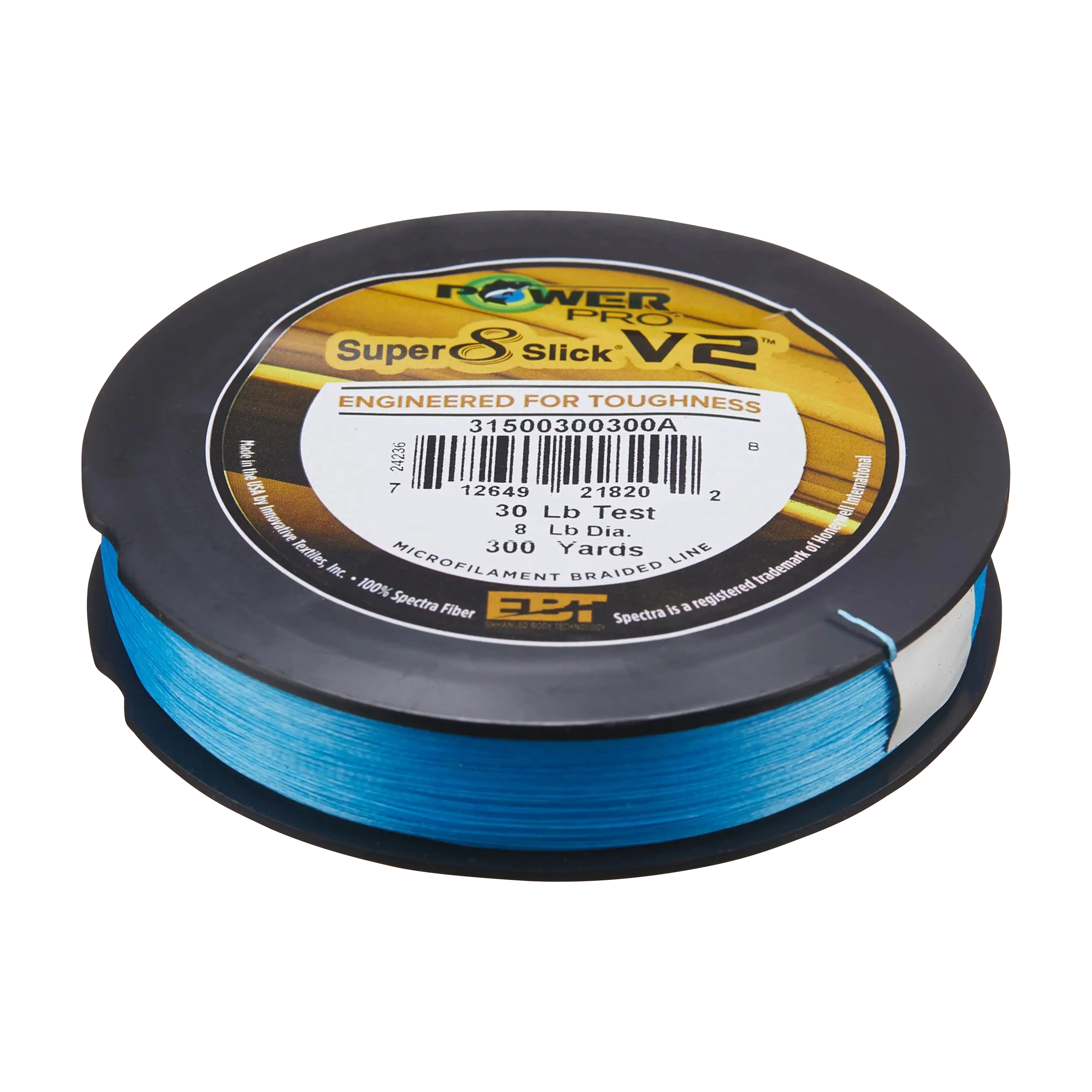
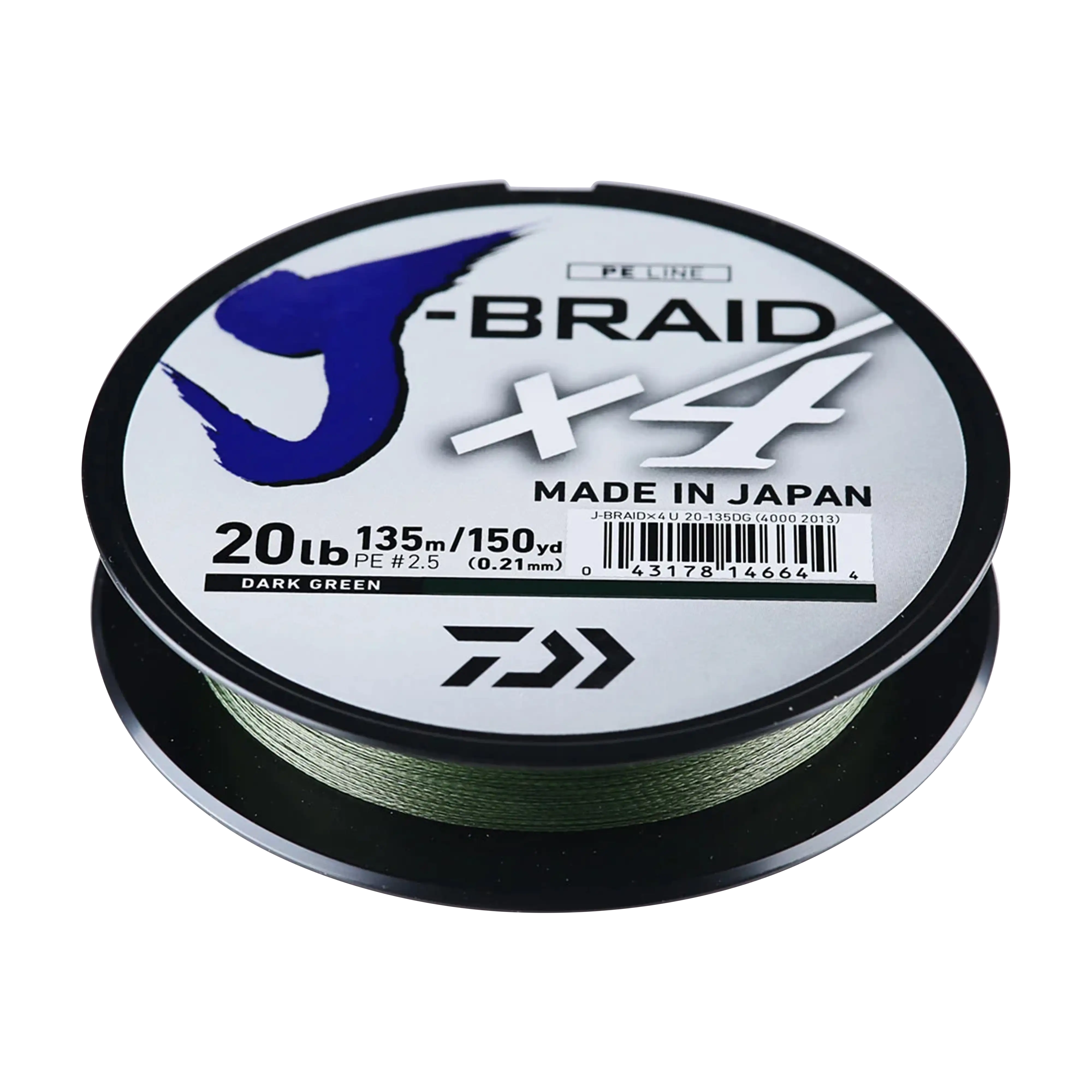
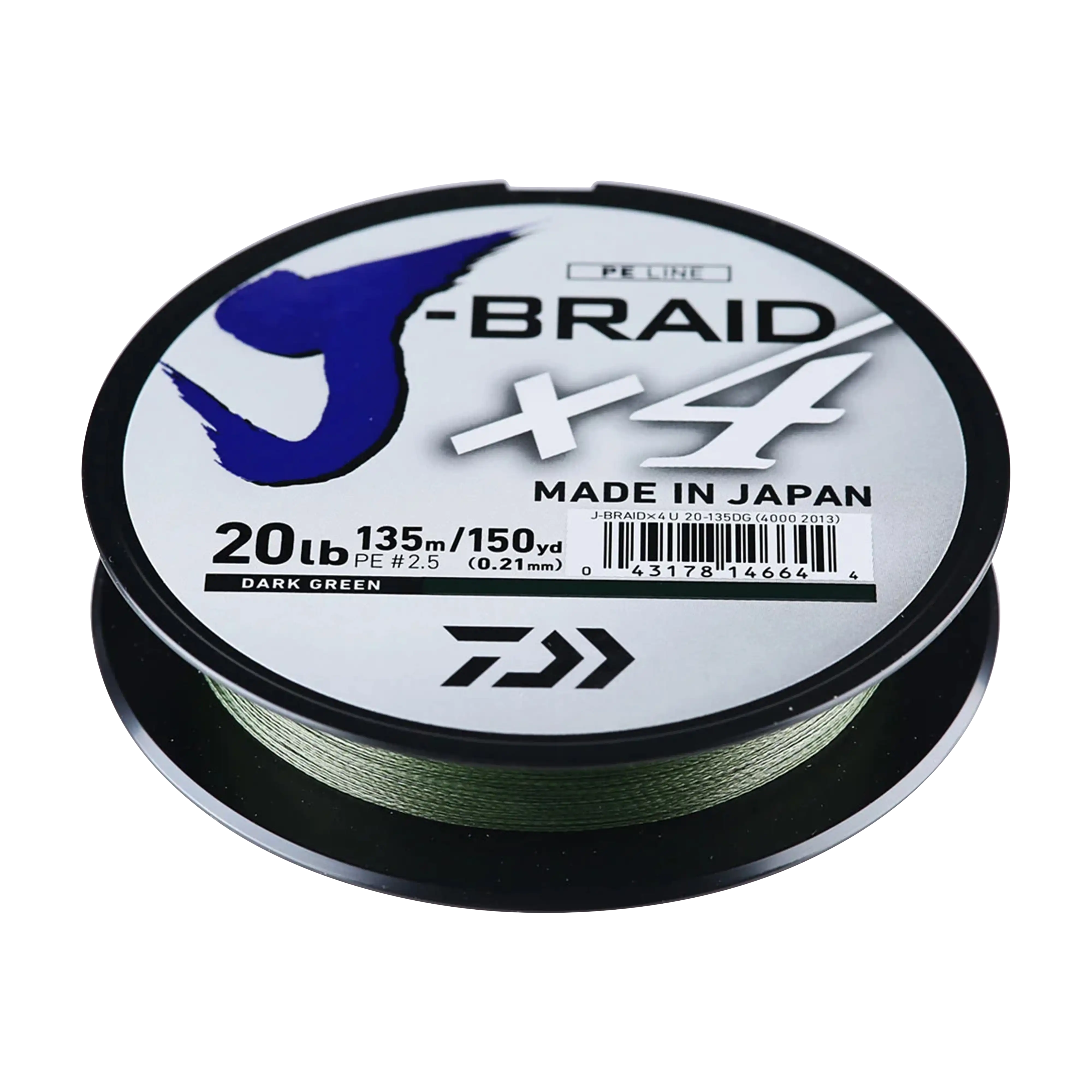
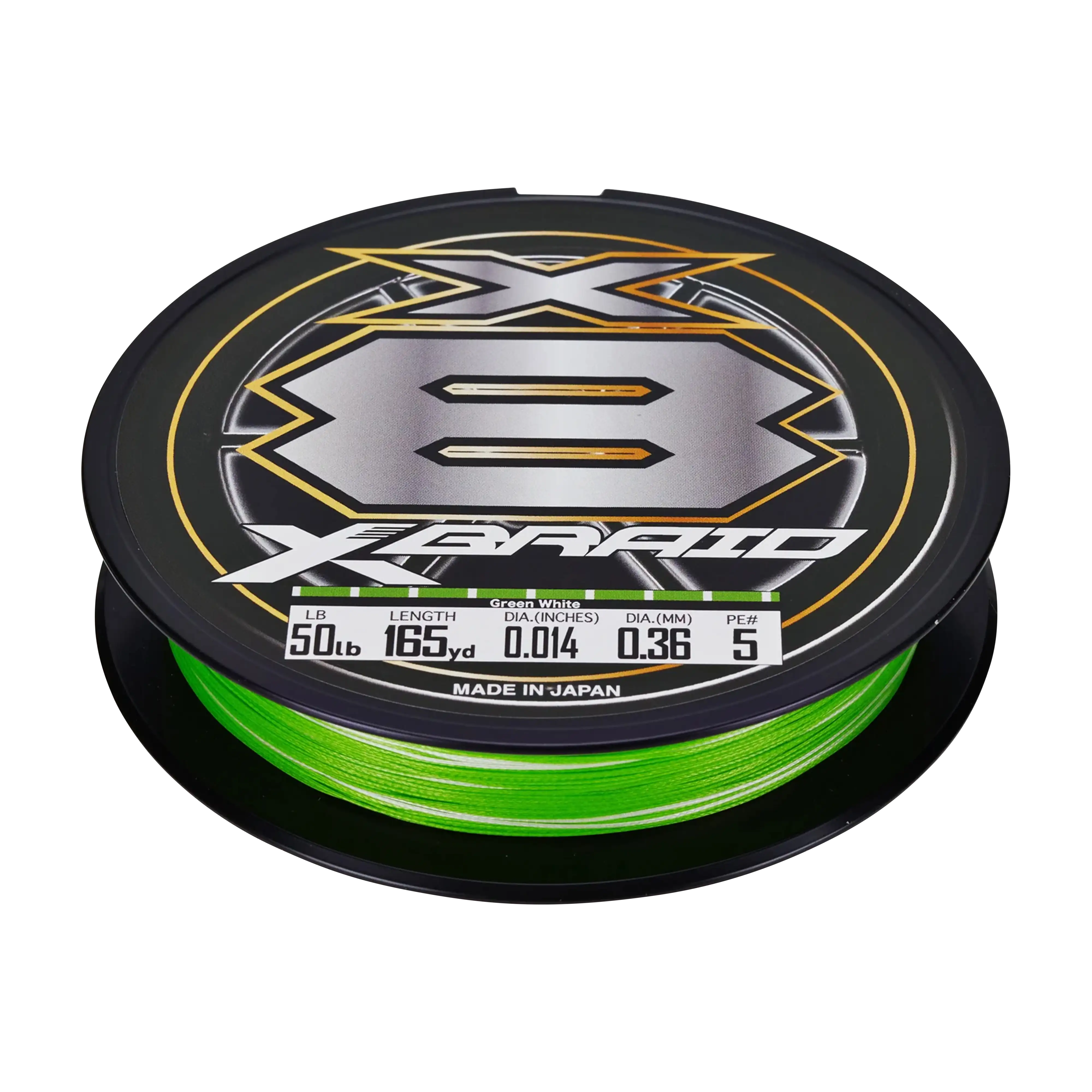
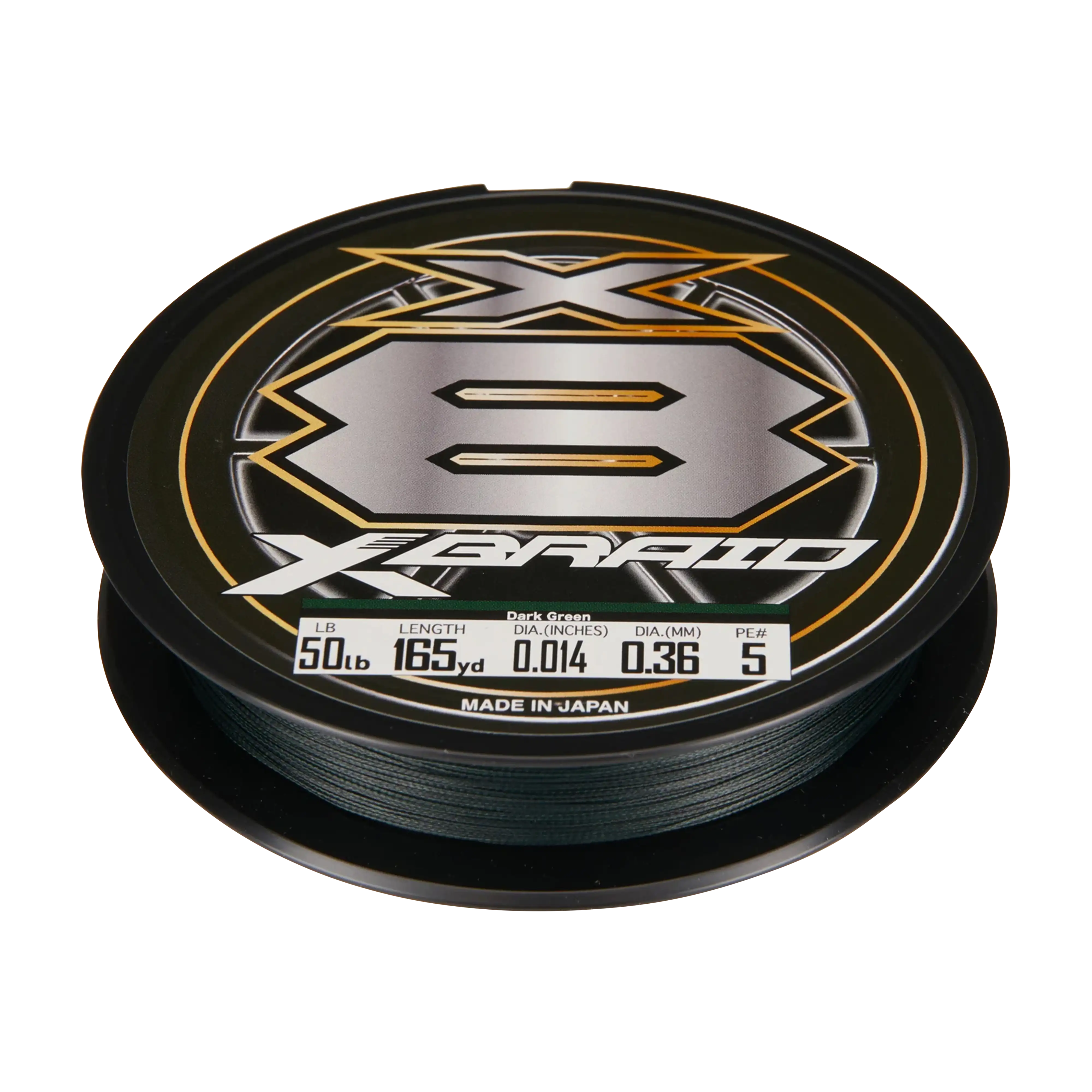
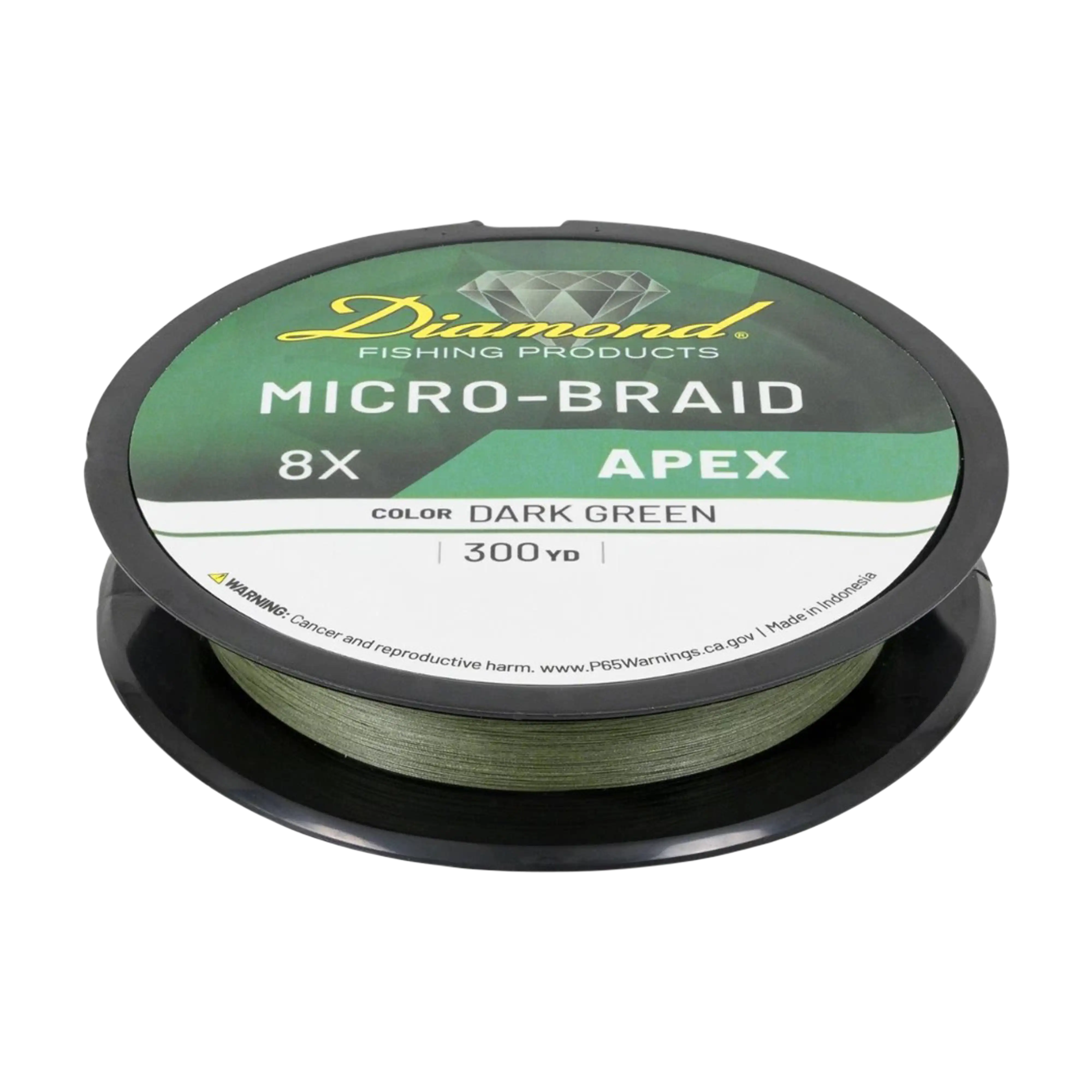
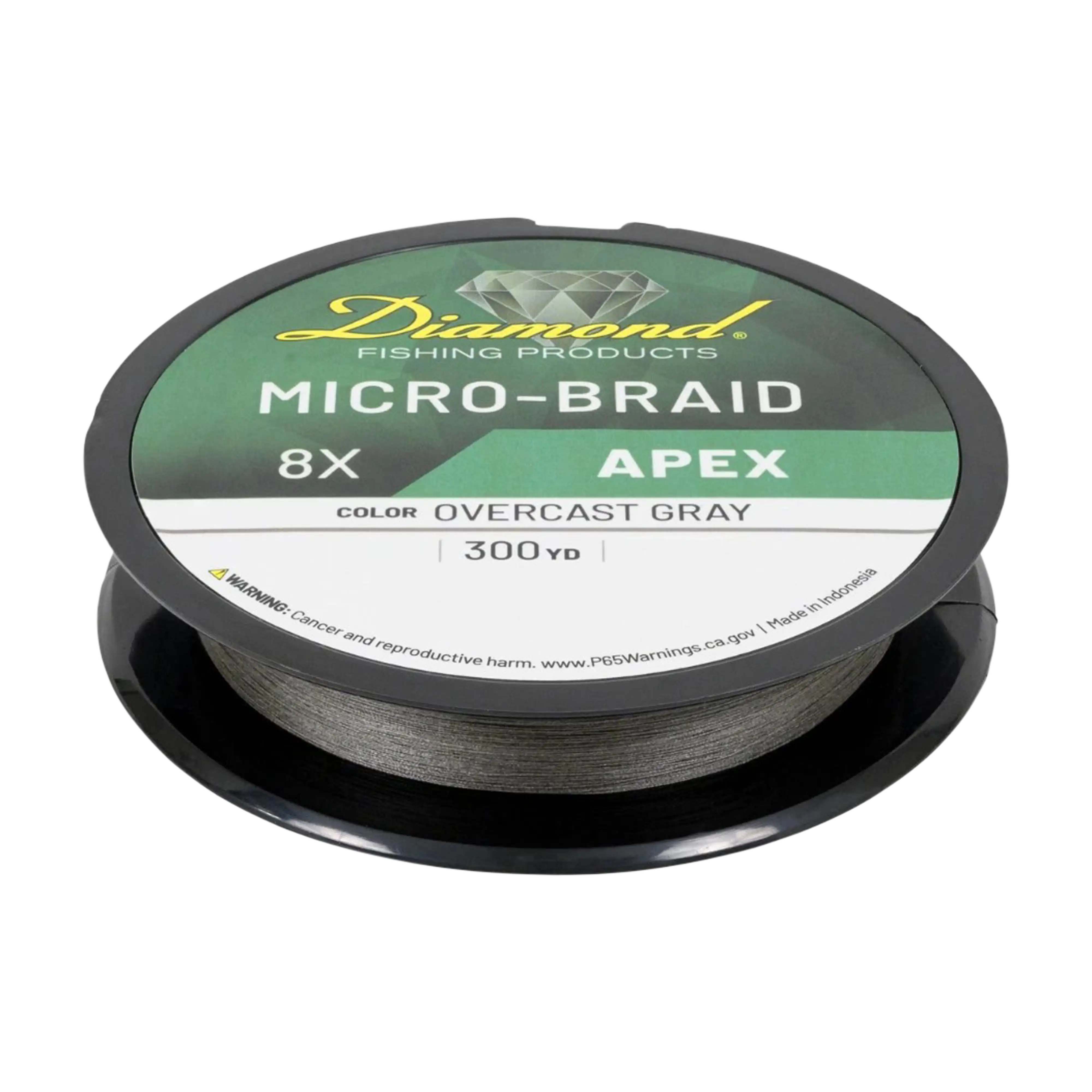
Finesse Swimbait Fishing Line
Line choice plays a major role in how finesse swimbaits track, sink, and maintain natural movement. Because these baits rely on subtle tail action and balanced swim posture, line diameter, stretch, and visibility directly affect depth control, responsiveness, and how cleanly the bait holds its intended action. The right setup balances sensitivity with smooth line flow so the swimbait can be worked naturally at slow to moderate speeds without disrupting its swim.
Fluorocarbon Mainline
Straight fluorocarbon is commonly used for finesse swimbaits because it sinks, reduces visibility, and maintains direct connection to the bait. This helps keep swimbaits tracking at a consistent depth and improves control during slow retrieves or bottom-oriented swims. Lighter diameters help allow for more natural tail kick and less resistance, especially in clear water or pressured conditions.
Recommended: 6–10 lb fluorocarbon
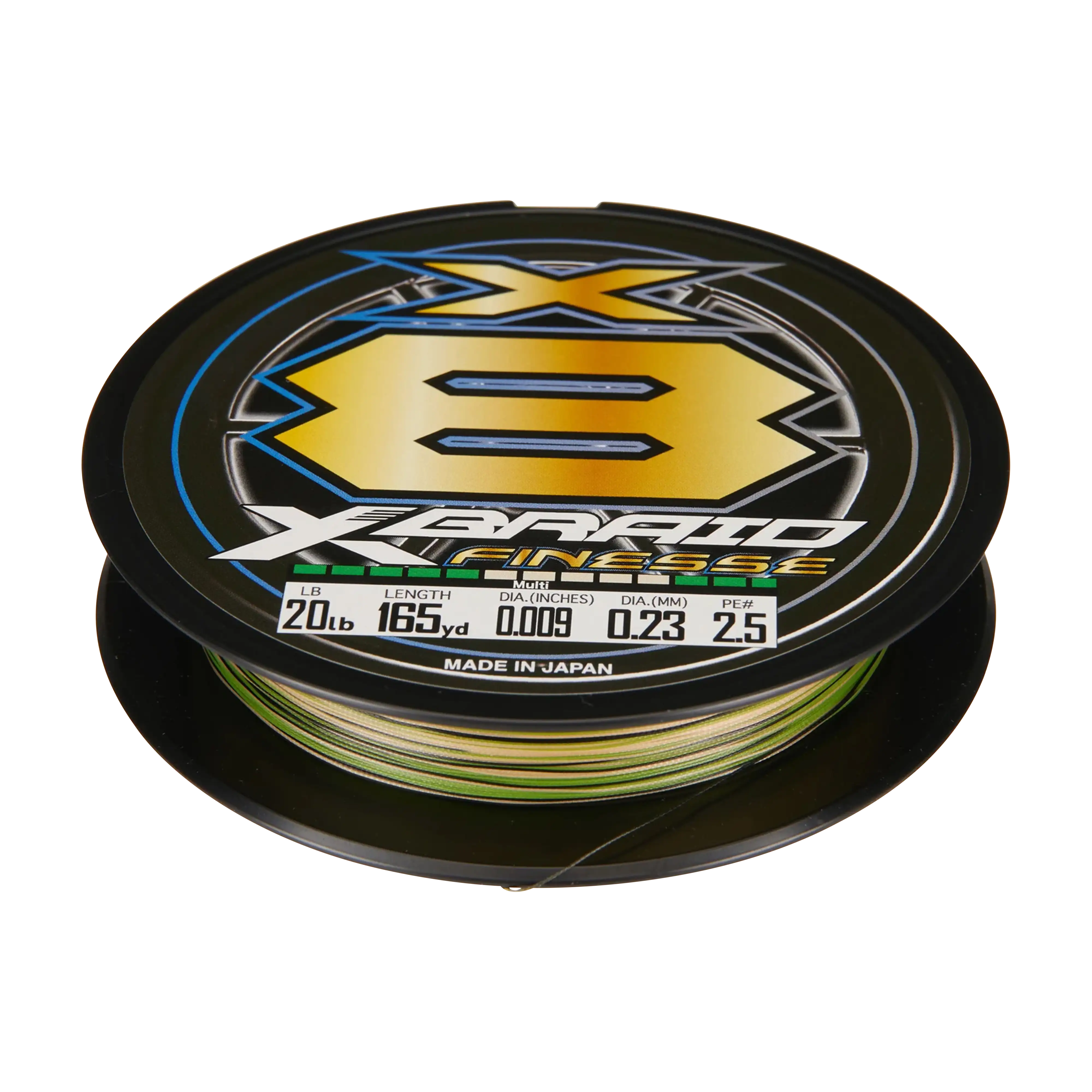
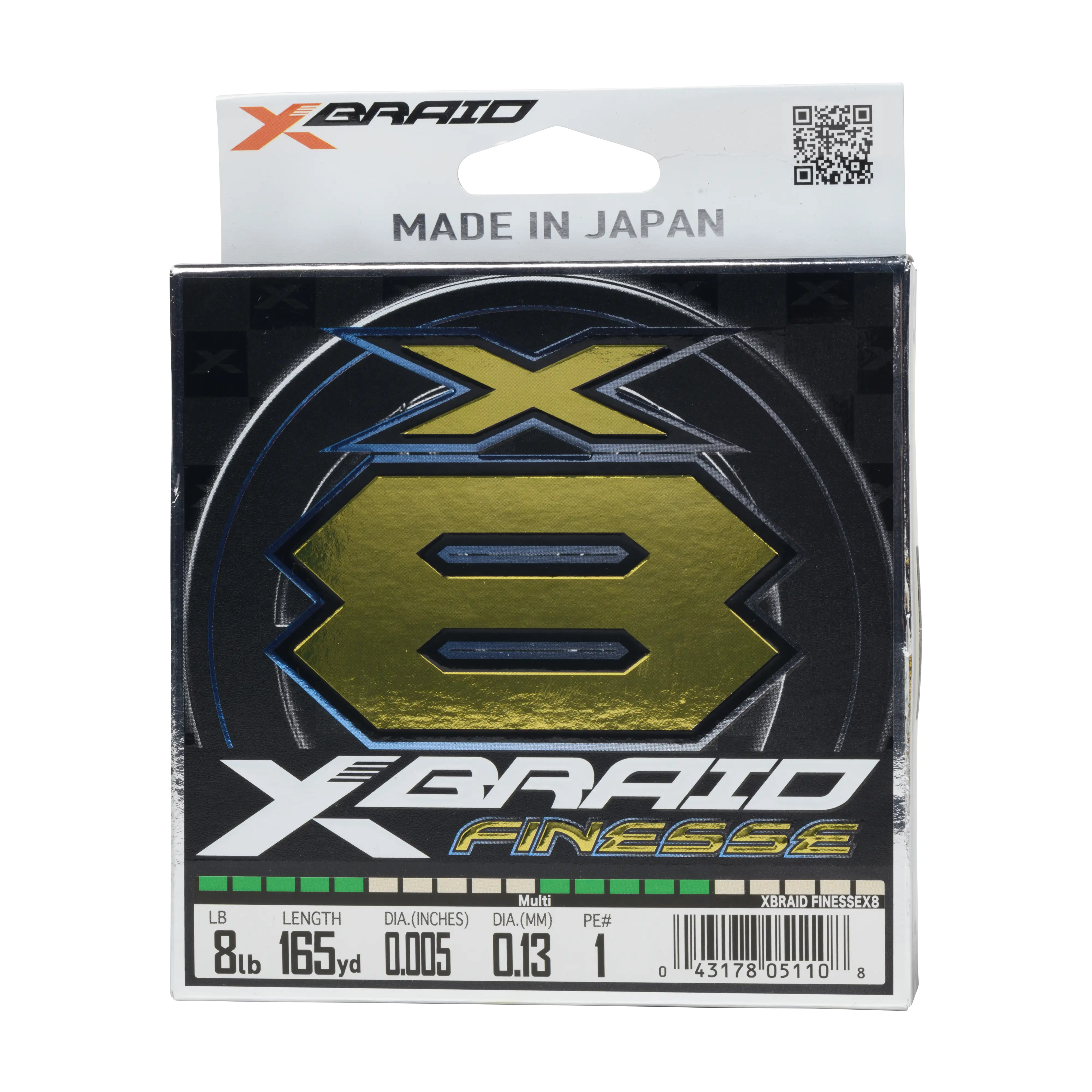
Braided Mainline (with or without leader)
Braided line is used when anglers want maximum sensitivity and direct control over the bait. Because braid has no stretch and floats, it is often paired with a fluorocarbon leader to help the swimbait maintain a more natural subsurface sink and swimming posture. This setup is especially useful for mid-strolling, open water, or suspended fish where maintaining a steady, controlled presentation and clean line management is more important than direct bait feel alone.
Recommended: 10–15 lb braid
Fluorocarbon Leaders
Fluorocarbon leaders are often used with braid to reduce visibility and smooth out bait movement under tension. A shorter leader keeps the swimbait more connected to rod input for precise control, while a longer leader allows a more natural, freer swimming action with less direct influence from the braid. Leader strength is typically matched slightly lighter than braid to maintain balance and reduce visibility.
Recommended: 6–10 lb fluorocarbon leader
Finesse Swimbait Fishing Line
Line choice plays a major role in how finesse swimbaits track, sink, and maintain natural movement. Because these baits rely on subtle tail action and balanced swim posture, line diameter, stretch, and visibility directly affect depth control, responsiveness, and how cleanly the bait holds its intended action. The right setup balances sensitivity with smooth line flow so the swimbait can be worked naturally at slow to moderate speeds without disrupting its swim.
Fluorocarbon Mainline
Straight fluorocarbon is commonly used for finesse swimbaits because it sinks, reduces visibility, and maintains direct connection to the bait. This helps keep swimbaits tracking at a consistent depth and improves control during slow retrieves or bottom-oriented swims. Lighter diameters help allow for more natural tail kick and less resistance, especially in clear water or pressured conditions.
Recommended: 6–10 lb fluorocarbon
Braided Mainline (with or without leader)
Braided line is used when anglers want maximum sensitivity and direct control over the bait. Because braid has no stretch and floats, it is often paired with a fluorocarbon leader to help the swimbait maintain a more natural subsurface sink and swimming posture. This setup is especially useful for mid-strolling, open water, or suspended fish where maintaining a steady, controlled presentation and clean line management is more important than direct bait feel alone.
Recommended: 10–15 lb braid
Fluorocarbon Leaders
Fluorocarbon leaders are often used with braid to reduce visibility and smooth out bait movement under tension. A shorter leader keeps the swimbait more connected to rod input for precise control, while a longer leader allows a more natural, freer swimming action with less direct influence from the braid. Leader strength is typically matched slightly lighter than braid to maintain balance and reduce visibility.
Recommended: 6–10 lb fluorocarbon leader
Finesse Swimbait Fishing Line
Finesse Swimbait Tackle Storage
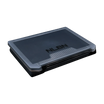
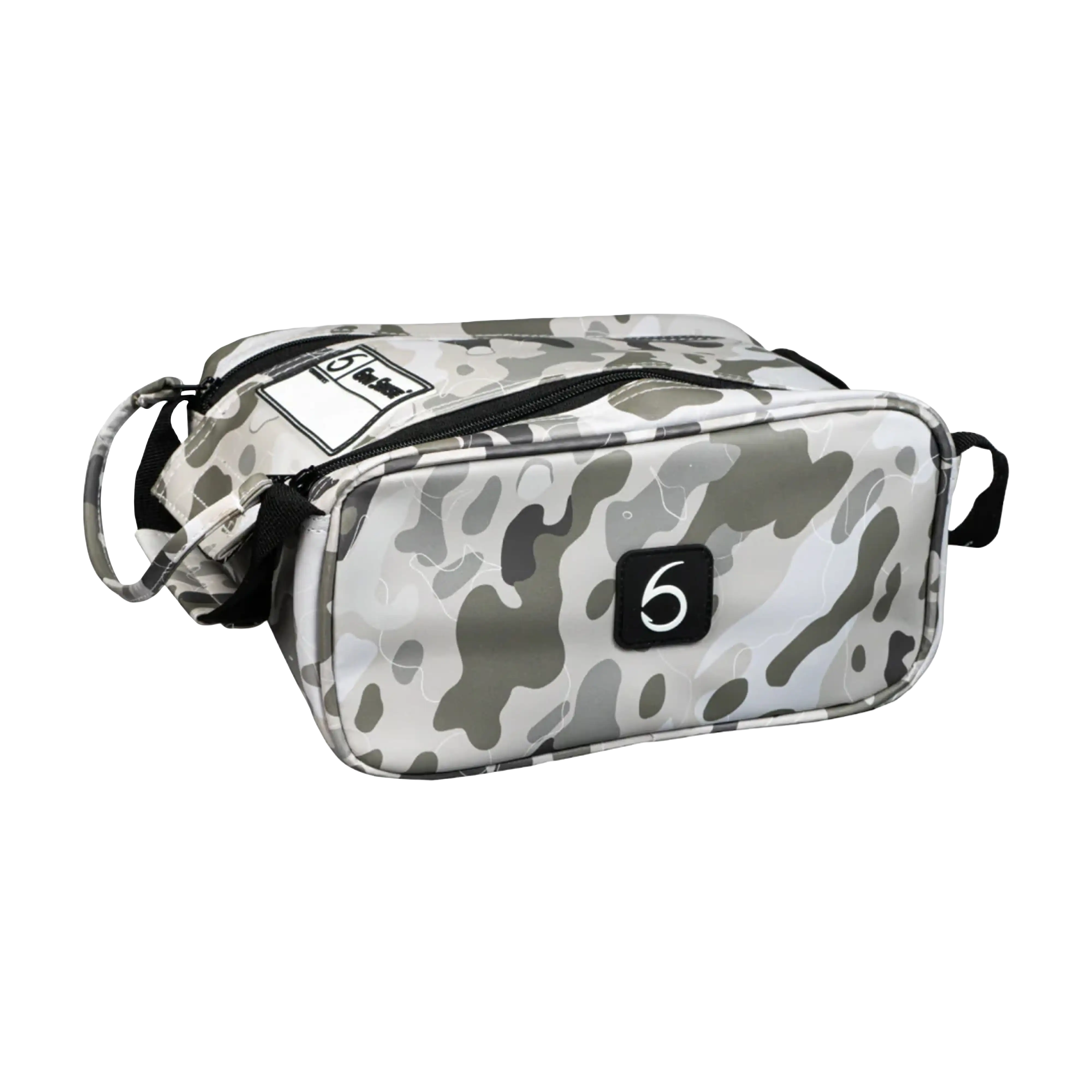
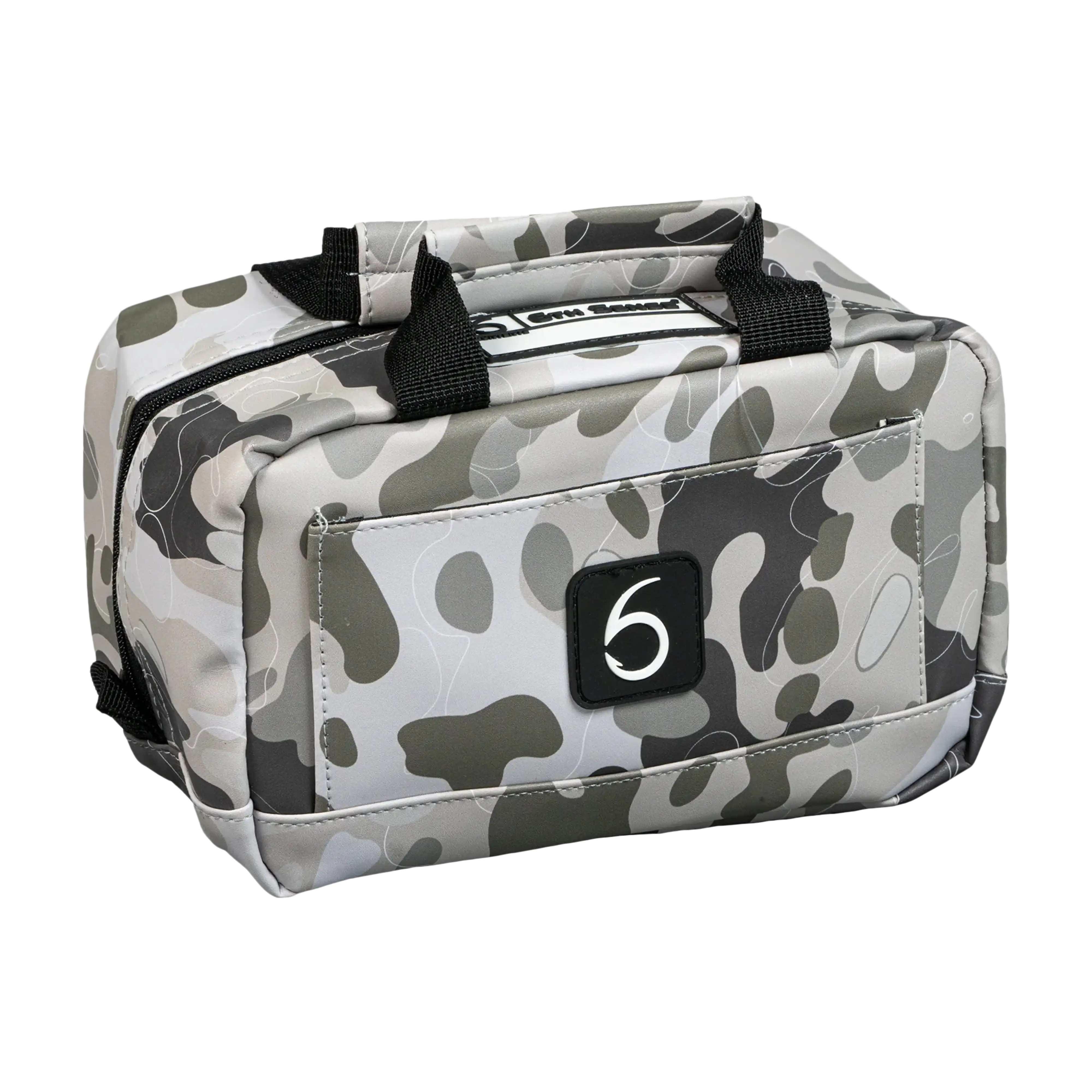
Proper storage is important for finesse swimbaits because soft plastics can easily get damaged, warp, or lose tail shape when packed incorrectly. Organized storage also keeps jig heads, weighted hooks, and small terminal pieces separated so rigs stay consistent and easy to rebuild on the water. The goal is simple: protect bait shape, prevent tangles, and keep everything accessible for quick rigging changes.
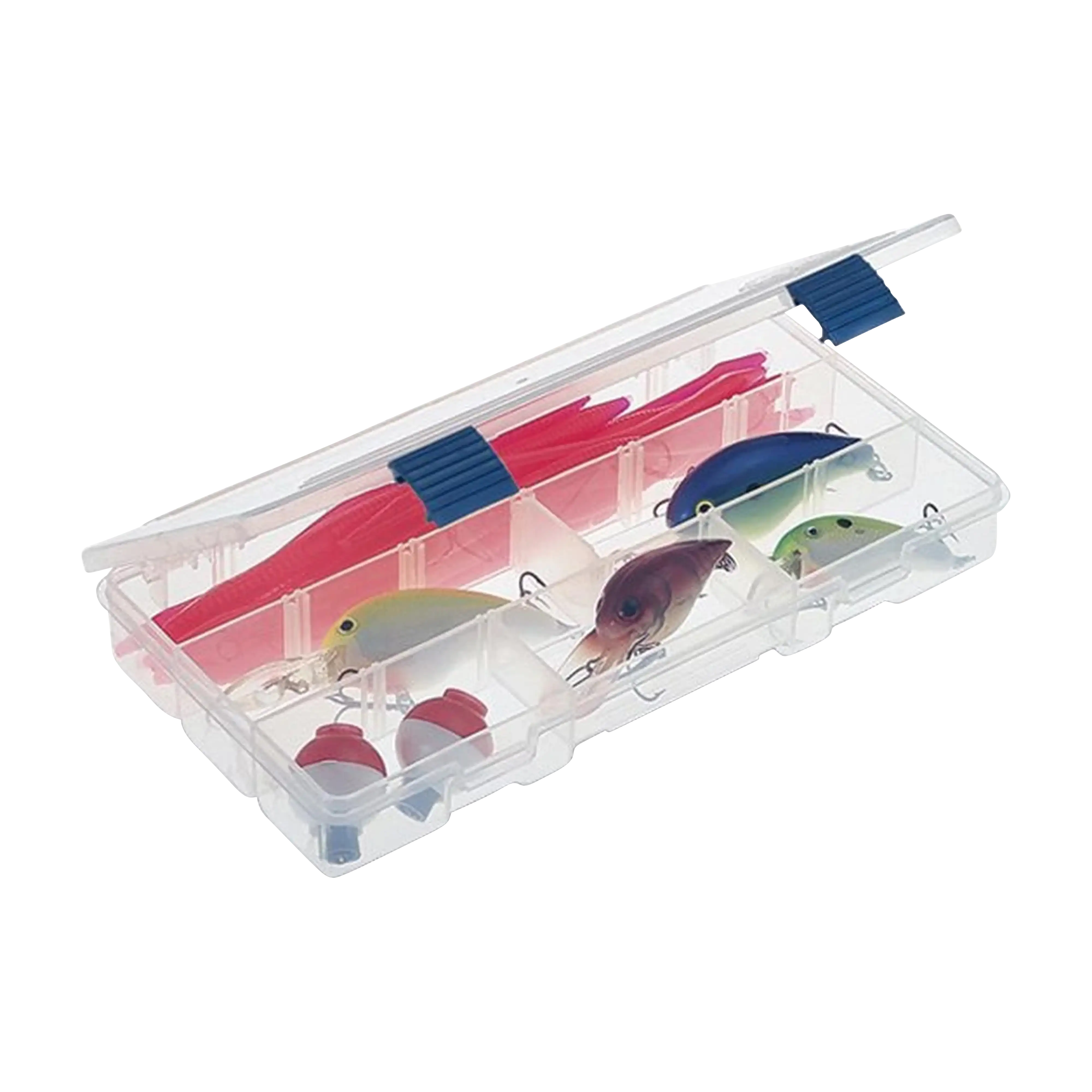
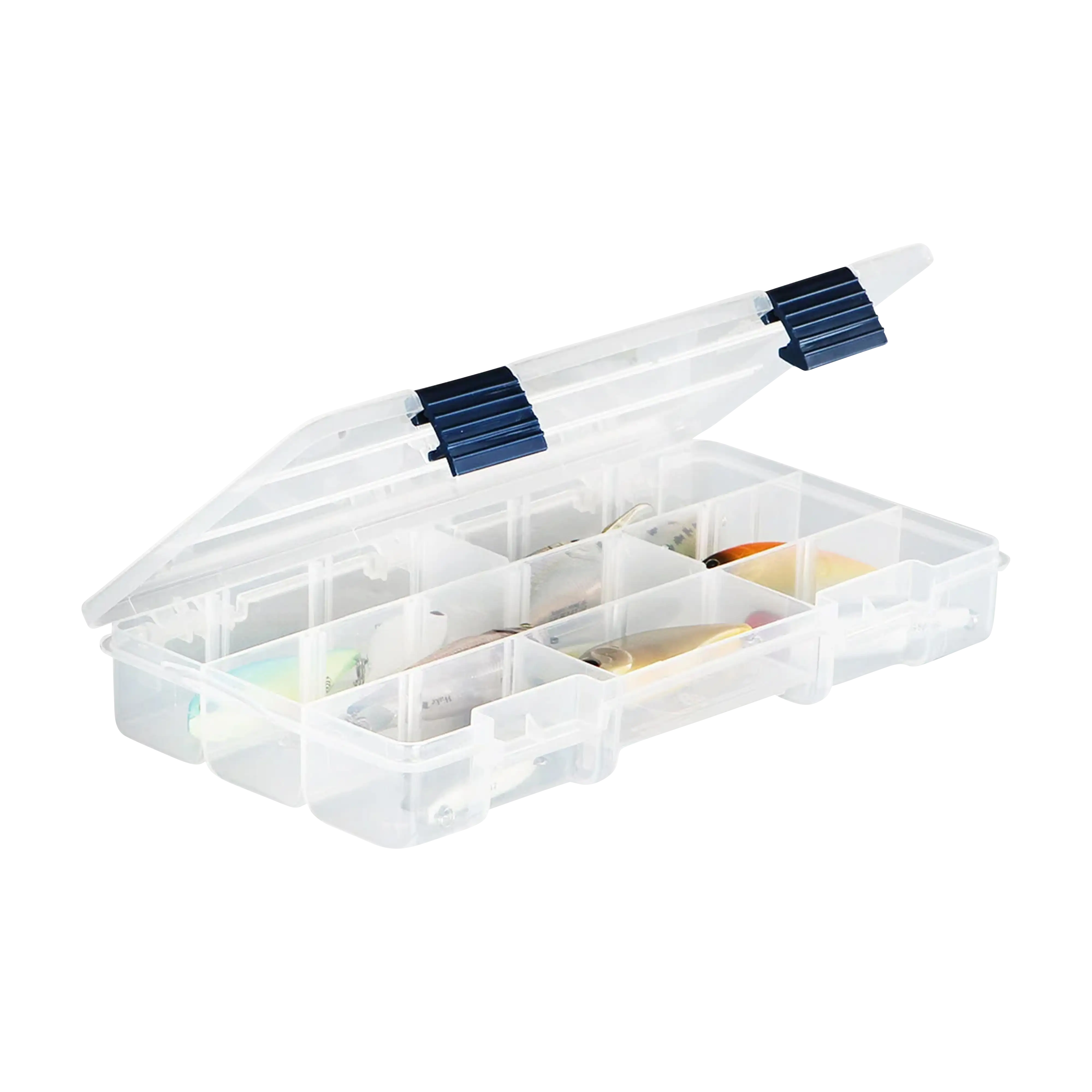
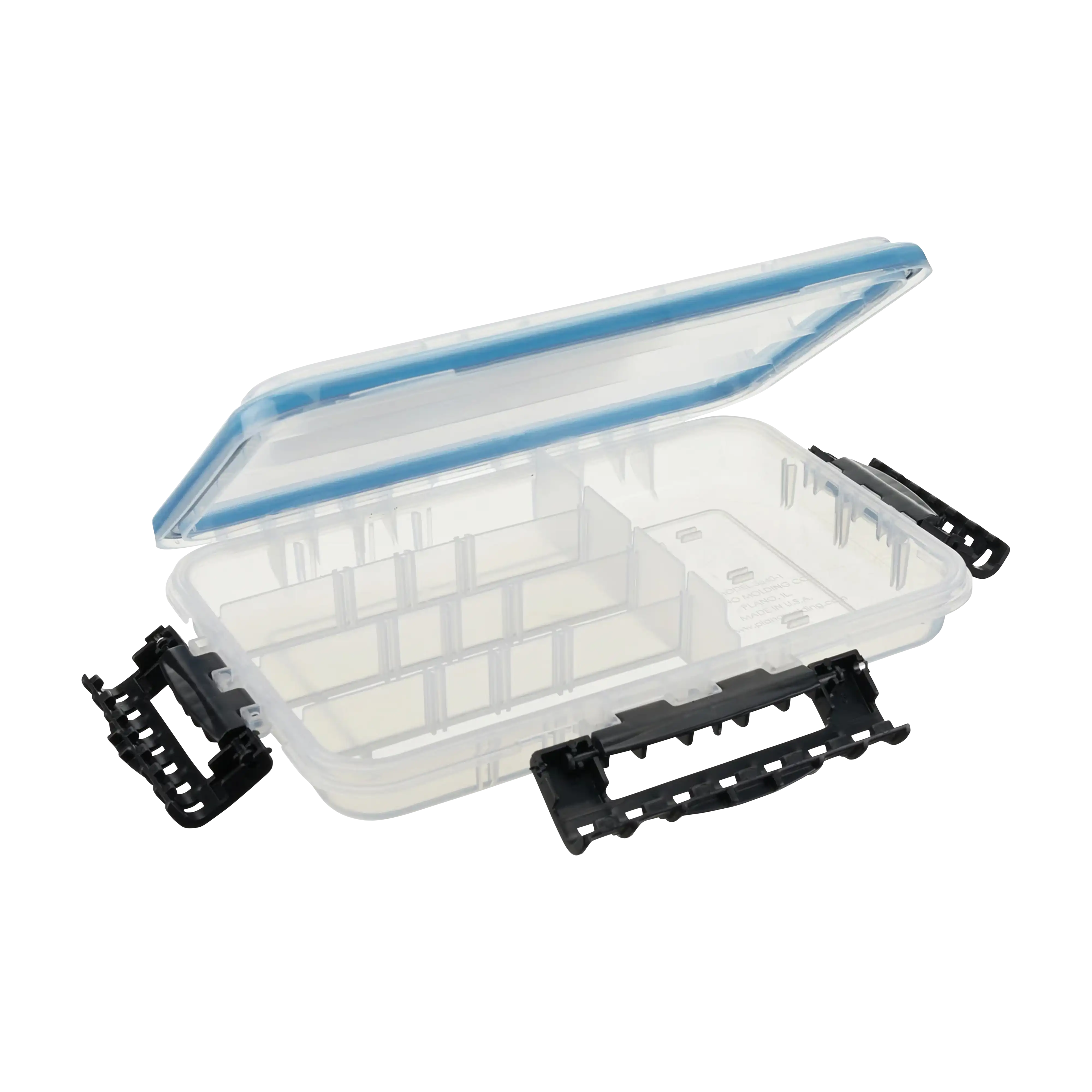
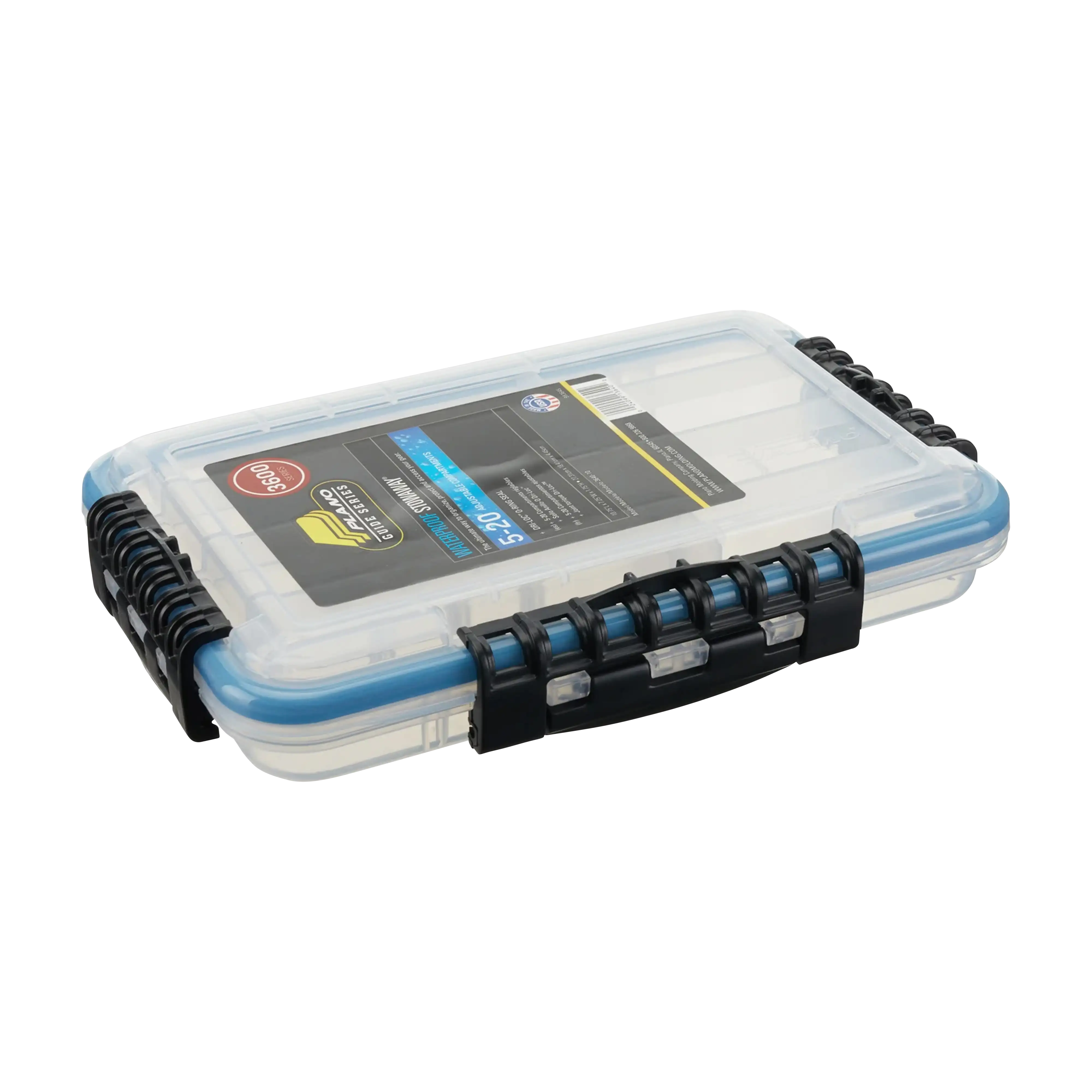
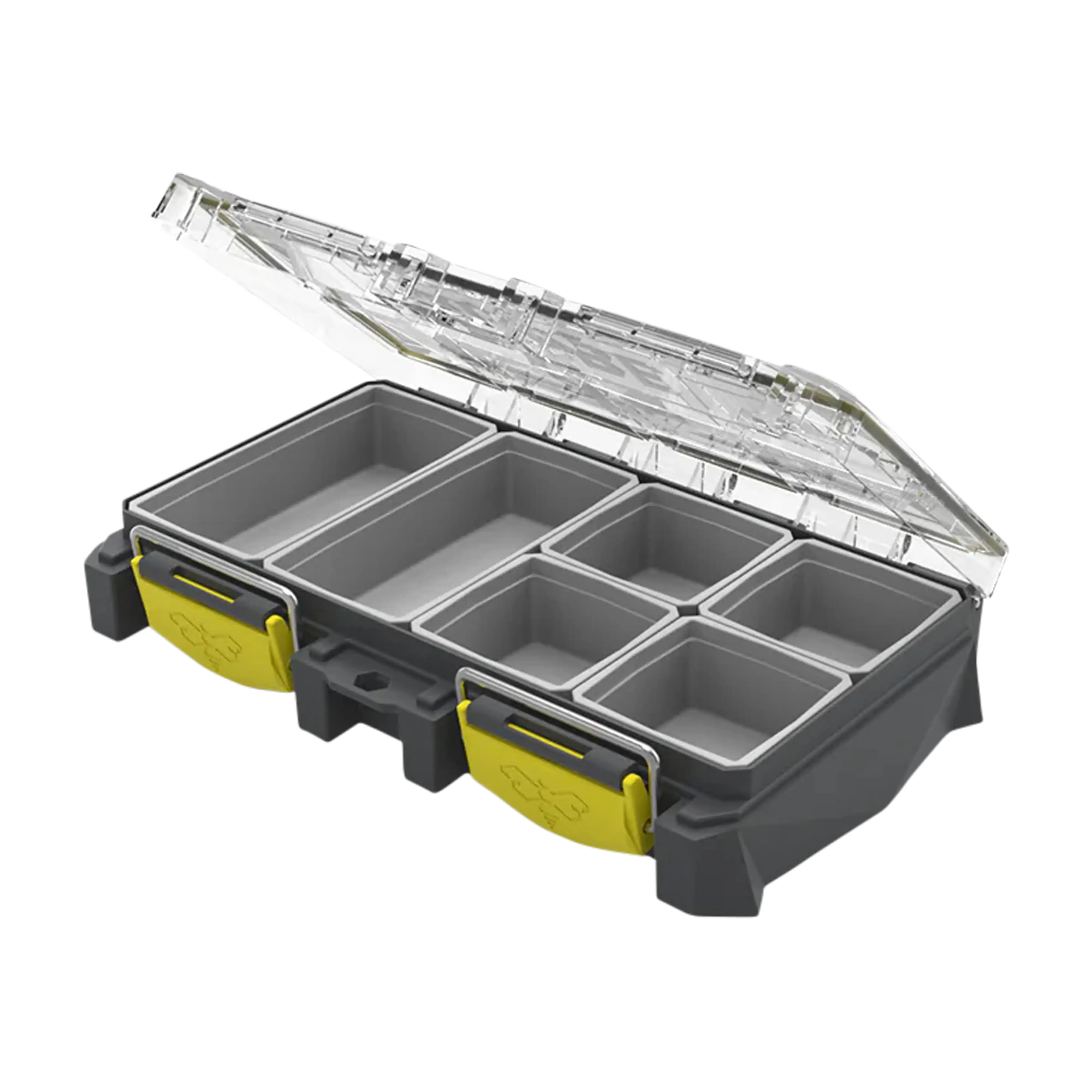
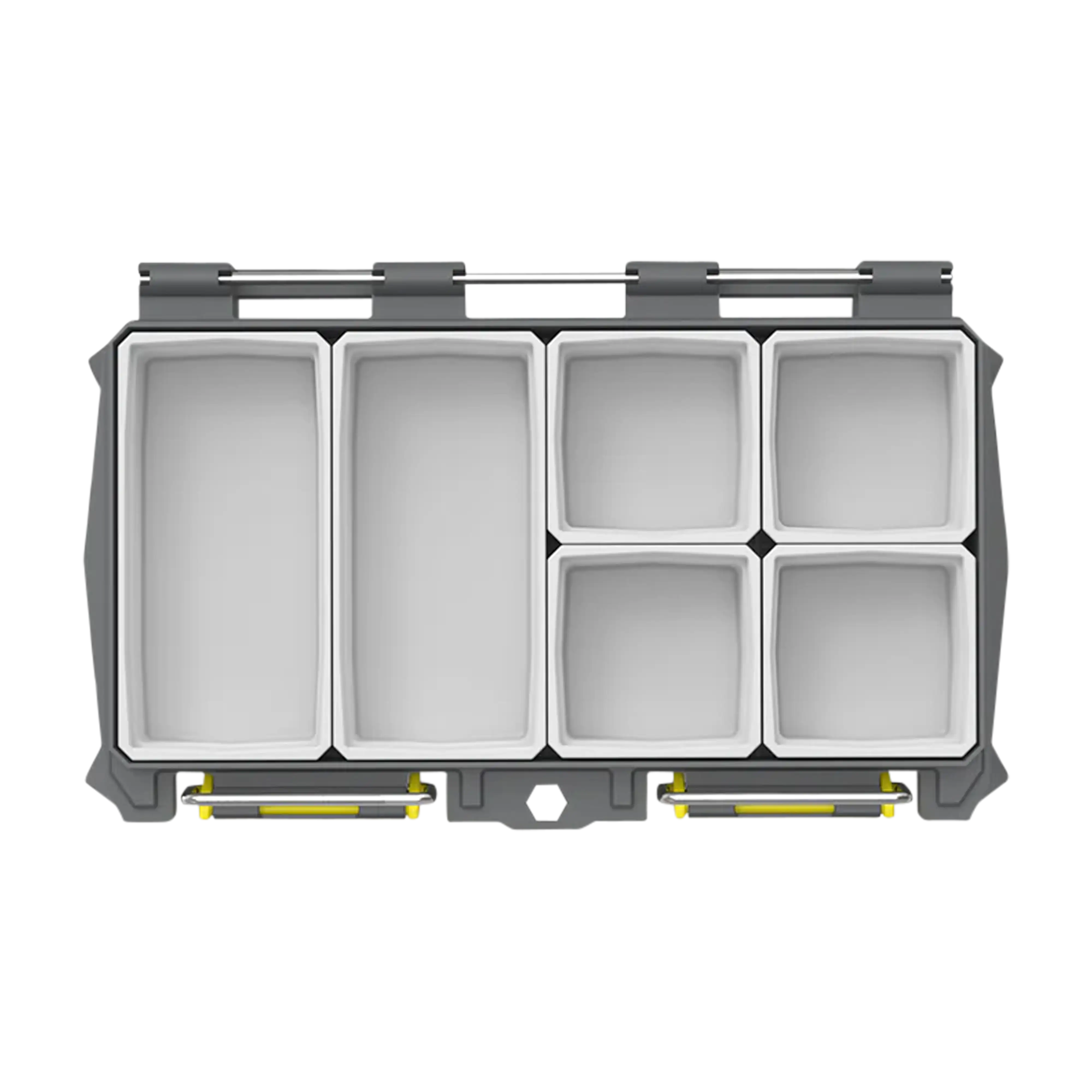
Compact, compartmentalized storage works best for finesse swimbaits, especially boxes with shallow trays or individual slots that keep each bait flat and separated. Soft plastics should be stored so tails aren’t compressed or folded, since deformation can affect swim action.
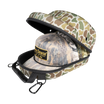
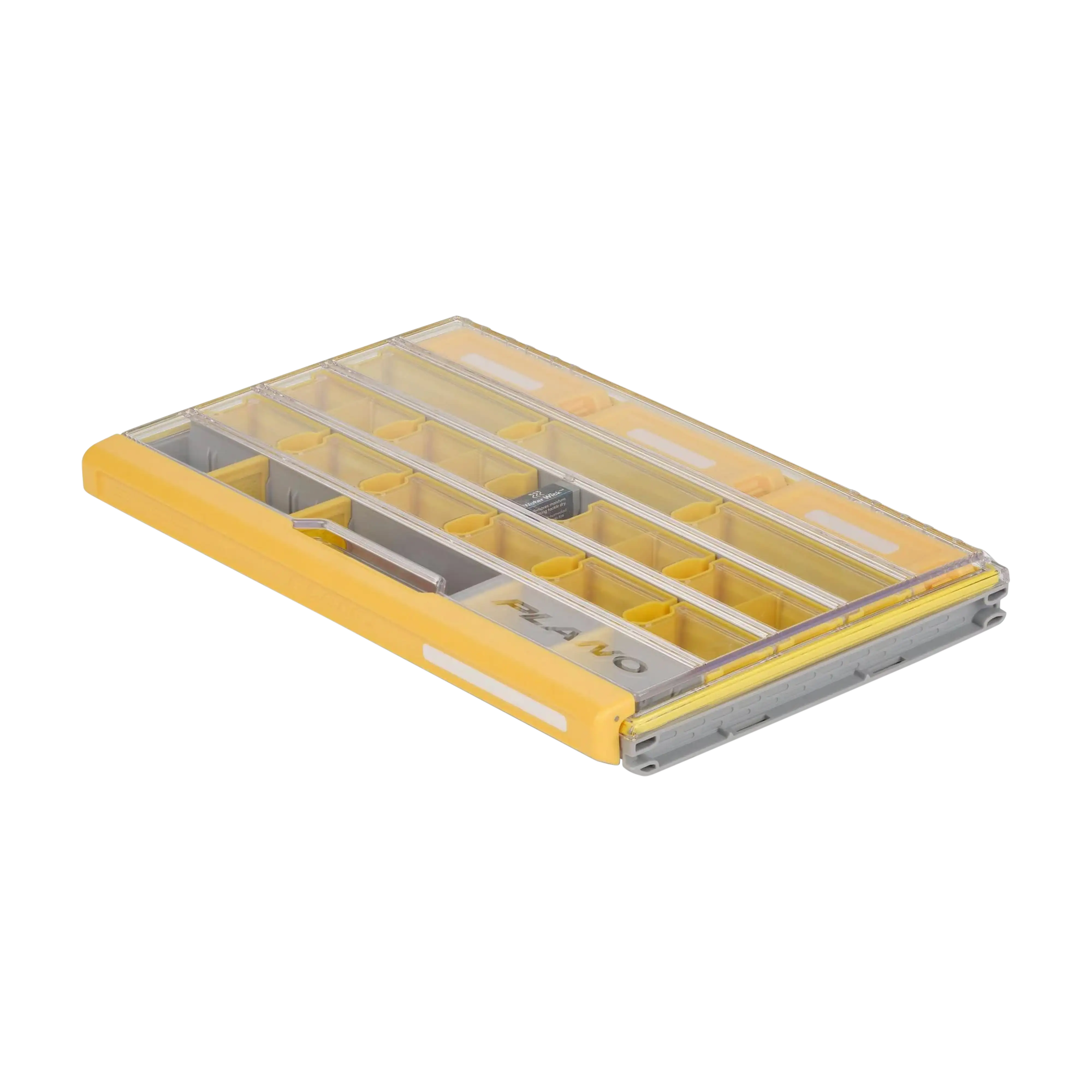
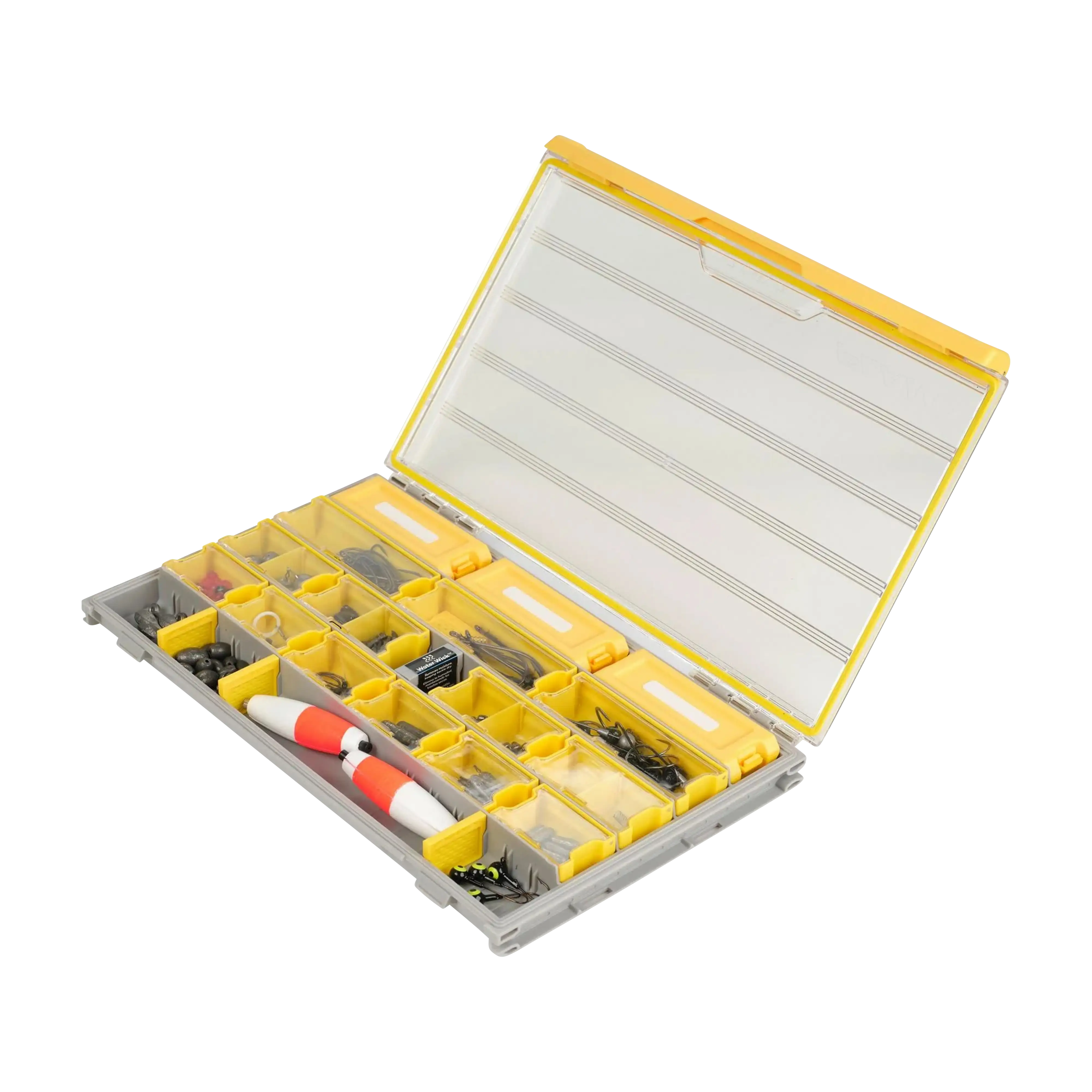
Dedicated sections for jig heads, weighted hooks, and unweighted hooks help prevent tangling and make rigging faster when switching applications. Clear-lid, stackable boxes or modular tray systems are ideal because they allow quick identification of bait size, color, and rig type without digging through mixed compartments. For mobile setups, slim tackle bags with removable trays and sleeves provide protection while keeping everything organized and easy to rotate.
Key Takeaways
- Store finesse swimbaits flat to prevent tail and body deformation
- Separate jig heads, weighted hooks, and plastics for faster rigging
- Use compartmentalized or modular storage to avoid tangling
- Clear, labeled organization improves speed and efficiency on the water
- Proper storage preserves bait action and extends usable life
Finesse Swimbait Tackle Storage
Proper storage is important for finesse swimbaits because soft plastics can easily get damaged, warp, or lose tail shape when packed incorrectly. Organized storage also keeps jig heads, weighted hooks, and small terminal pieces separated so rigs stay consistent and easy to rebuild on the water. The goal is simple: protect bait shape, prevent tangles, and keep everything accessible for quick rigging changes.
Compact, compartmentalized storage works best for finesse swimbaits, especially boxes with shallow trays or individual slots that keep each bait flat and separated. Soft plastics should be stored so tails aren’t compressed or folded, since deformation can affect swim action.
Dedicated sections for jig heads, weighted hooks, and unweighted hooks help prevent tangling and make rigging faster when switching applications. Clear-lid, stackable boxes or modular tray systems are ideal because they allow quick identification of bait size, color, and rig type without digging through mixed compartments. For mobile setups, slim tackle bags with removable trays and sleeves provide protection while keeping everything organized and easy to rotate.
Key Takeaways
- Store finesse swimbaits flat to prevent tail and body deformation
- Separate jig heads, weighted hooks, and plastics for faster rigging
- Use compartmentalized or modular storage to avoid tangling
- Clear, labeled organization improves speed and efficiency on the water
- Proper storage preserves bait action and extends usable life
Finesse Swimbait Tackle Storage


Finesse Swimbait Tips
Now that we’ve covered the gear, rigging, and tackle needed for finesse swimbait fishing, the next step is learning how to get the most out of the presentation on the water.
Finesse swimbait fishing is less about aggressive action and more about control, consistency, and reading how the bait behaves in the water. Subtle changes in retrieve speed, depth control, and rod movement can completely change how the bait tracks and how fish respond.
These tips focus on improving presentation consistency, keeping the bait in the strike zone longer, and helping soft-bodied swimbaits move more naturally in changing conditions.
Tip 1 — Vary Retrieve Speed and Rhythm
Finesse swimbaits perform best with subtle changes in cadence rather than a constant retrieve. Slight speed changes, brief pauses, and soft rod twitches can imitate injured or disoriented baitfish, which is often what triggers reaction bites from pressured fish. The key is not exaggeration, but controlled variation that keeps the bait swimming naturally while adding irregularity.
Key Takeaways
- Small changes in speed and rhythm trigger more strikes
- Subtle twitches and pauses imitate injured baitfish
- Controlled variation is more effective than constant movement
Tip 2 — Control Depth with Jig Weight and Rod Angle
Depth control in finesse swimbait fishing comes from a combination of bait weight and rod angle. Heavier rigs sink faster and stay deeper in the water column, while lighter setups allow a slower fall and more suspended presentation. Rod tip position and line tension affect depth control during the retrieve—tip high towards sky runs the bait shallower, tip low towards water runs it deeper—while also influencing how consistently the swimbait tracks through the water column.
Key Takeaways
- Jig or hook weight determines sink rate and depth range
- Rod angle influences how the bait tracks and falls
- Small adjustments help keep the bait in the strike zone longer
Tip 3 — Use Smooth, Controlled Hooksets
With finesse swimbaits, smooth, controlled hooksets are more effective than aggressive swings. Let the rod load as the fish takes the bait, then apply steady pressure to drive the hook home. This reduces bait tearing and improves hookup consistency, especially with smaller hooks and softer plastics.
Key Takeaways
- Let the rod load before setting the hook
- Smooth pressure improves hookup rates
- Overly aggressive hooksets increase missed fish and bait damage
Finesse Swimbait Tips
Now that we’ve covered the gear, rigging, and tackle needed for finesse swimbait fishing, the next step is learning how to get the most out of the presentation on the water.
Finesse swimbait fishing is less about aggressive action and more about control, consistency, and reading how the bait behaves in the water. Subtle changes in retrieve speed, depth control, and rod movement can completely change how the bait tracks and how fish respond.
These tips focus on improving presentation consistency, keeping the bait in the strike zone longer, and helping soft-bodied swimbaits move more naturally in changing conditions.
Tip 1 — Vary Retrieve Speed and Rhythm
Finesse swimbaits perform best with subtle changes in cadence rather than a constant retrieve. Slight speed changes, brief pauses, and soft rod twitches can imitate injured or disoriented baitfish, which is often what triggers reaction bites from pressured fish. The key is not exaggeration, but controlled variation that keeps the bait swimming naturally while adding irregularity.
Key Takeaways
- Small changes in speed and rhythm trigger more strikes
- Subtle twitches and pauses imitate injured baitfish
- Controlled variation is more effective than constant movement
Tip 2 — Control Depth with Jig Weight and Rod Angle
Depth control in finesse swimbait fishing comes from a combination of bait weight and rod angle. Heavier rigs sink faster and stay deeper in the water column, while lighter setups allow a slower fall and more suspended presentation. Rod tip position and line tension affect depth control during the retrieve—tip high towards sky runs the bait shallower, tip low towards water runs it deeper—while also influencing how consistently the swimbait tracks through the water column.
Key Takeaways
- Jig or hook weight determines sink rate and depth range
- Rod angle influences how the bait tracks and falls
- Small adjustments help keep the bait in the strike zone longer
Tip 3 — Use Smooth, Controlled Hooksets
With finesse swimbaits, smooth, controlled hooksets are more effective than aggressive swings. Let the rod load as the fish takes the bait, then apply steady pressure to drive the hook home. This reduces bait tearing and improves hookup consistency, especially with smaller hooks and softer plastics.
Key Takeaways
- Let the rod load before setting the hook
- Smooth pressure improves hookup rates
- Overly aggressive hooksets increase missed fish and bait damage
Finesse Swimbait Fishing
FAQ - Finesse Swimbait Gear
What is a good all round rod for finesse swimbait fishing?
A medium-light to medium spinning rod in the 7’0”–7’6” range with a moderate-fast to fast action is the best all-around choice for finesse swimbaits. It balances casting control, natural bait movement, and solid hooksets across most situations.
What type of reel works best for finesse swimabit fishing?
High-quality spinning reels in the 2000–2500 size range are perfect for finesse swimbaits. They provide smooth, consistent drag, manageable weight, and enough line capacity for braided and fluorocarbon lines.
What line should I use for finesse swimbaits?
10–15 lb braid or 6–10 lb fluorocarbon are excellent mainline choices for finesse swimbaits, offering strong casting distance, natural lure action, and reliable hook retention. Match line strength to lure size, water conditions, and target species.
What jig head weight is ideal for finesse swimbaits?
There’s no one perfect size. The most popular and versatile jig head weights typically range from 1/16 oz to 1/2 oz depending on swimbait size, depth, and presentation style. Lighter weights keep baits higher in the water column or in shallow water, while heavier heads help reach depth and hold in current. Proper weighting keeps the bait tracking naturally without rolling or twisting.
Can finesse swimbaits be fished in cover?
Yes. Soft-bodied finesse swimbaits rigged on jig heads or weighted hooks can be fished around grass, wood, docks, and other structure. Their single-hook design minimizes snags and allows subtle presentations in tight areas where fish hold.
How do I improve hook-up rates with finesse swimbaits?
Focus on smooth, controlled hooksets. Let the rod load slightly when a fish strikes, then lift or sweep to set the hook gently. Avoid jerky or premature hooksets. Match hook size to the swimbait, maintain proper depth, and use subtle twitches or pauses during your retrieve to trigger bites and ensure consistent penetration.
How do I choose the right finesse swimbait size?
Select a swimbait size that matches forage, fish size, and water clarity. The most popular and versatile finesse swimbaits are typically 2”–3.5”. Smaller sizes work well for pressured or finicky fish, while slightly larger baits can trigger more aggressive strikes. Matching bait size to the situation improves hookup rates and landing success.
How should I vary my retrieve in finesse swimbait fishing?
Gentle twitches, short pauses, and slow or moderate speeds imitate natural baitfish movements. Subtle variations in rhythm often entice reluctant or pressured fish. Watch how fish respond and adjust retrieve style to increase strikes without overpowering the bait.
From the Mud Hole Journal
Further Reading
Article
Write text about your blog post.
Further Reading
Can't get enough Finesse Swimbait Fishing content? Check out the articles below!
Article
Article
Article
Article
Article
Article