













If you’re looking for more rod recommendations, reel pairings, line setups, and technique-specific advice, head back to the complete Main Gear Guide Page for the full breakdowns on your favorite techniques. And if you're looking specifically for Flipping and Pitching ideas and products, head over to the Flipping and Pitching Gear Guide.
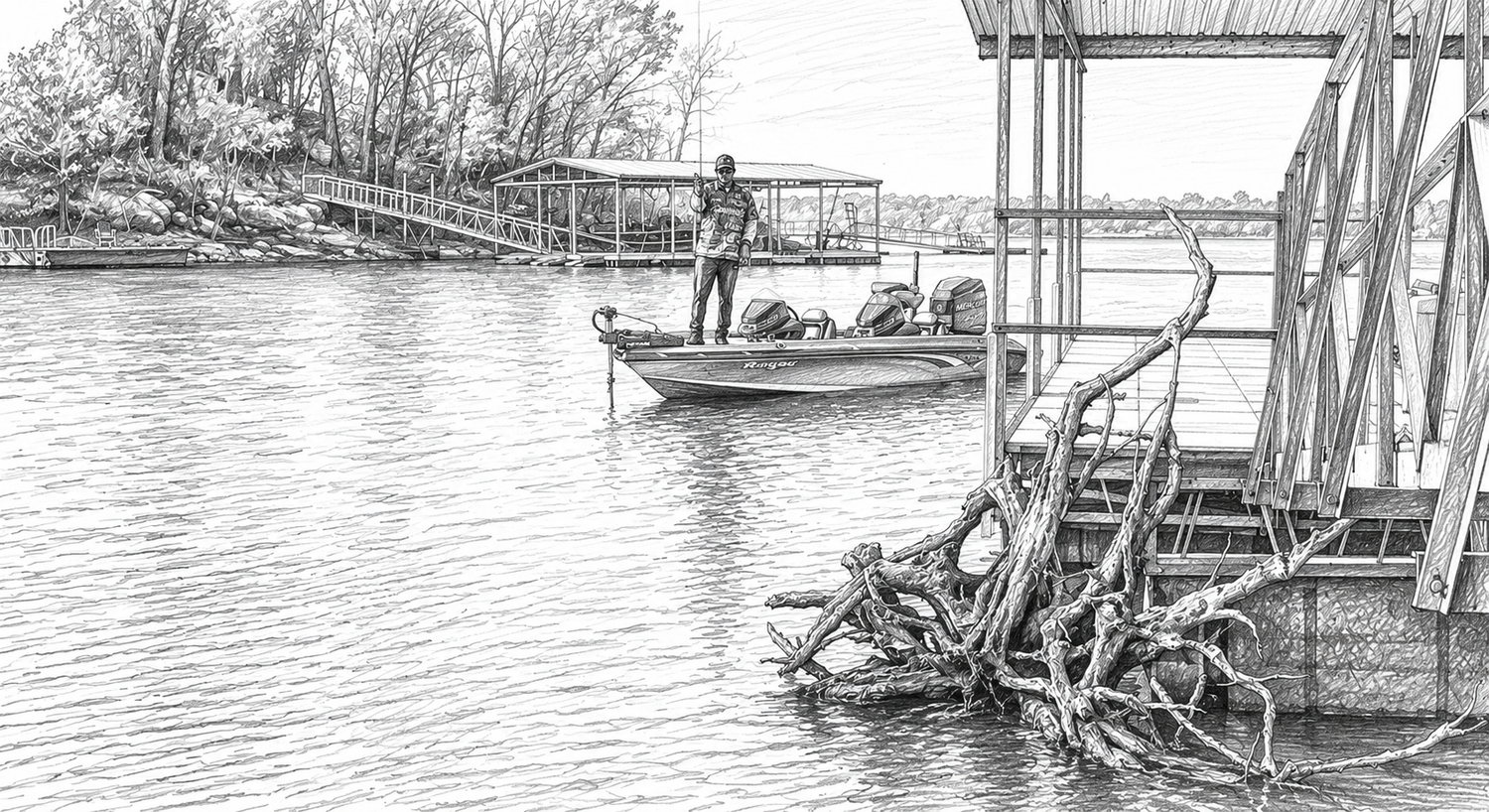
Few techniques in bass fishing are as precise, methodical, and consistently productive as flipping and pitching around docks. It is a style of fishing that rewards accuracy, patience, and an understanding of how bass relate to cover. Docks are not just random structures on the water. They are magnets for bass, offering shade, ambush points, and access to deeper water. When you combine that with the ability to quietly present a bait exactly where fish live, flipping and pitching become one of the most effective ways to target quality bass year-round.
Understanding Flipping vs. Pitching
Flipping and pitching are often grouped together, but they are slightly different techniques built around the same goal: short-range, precise presentations.
Flipping is typically used at very close range. The angler pulls out a fixed length of line and uses a pendulum motion to drop the bait into cover with minimal disturbance. It is controlled, quiet, and extremely efficient when picking apart heavy cover like dock pilings or cross members.
Pitching, on the other hand, allows for a bit more distance. It involves an underhand cast where the bait is swung out and released, still entering the water softly but covering more water. This is especially useful when working multiple docks or targeting specific openings under platforms.
Both techniques are built around stealth. The less noise and splash your bait makes, the more natural it appears, which is critical when targeting bass in shallow or pressured environments.
Why Docks Hold Bass
Docks check every box when it comes to what bass need to survive and feed. They provide shade, structure, and proximity to bait. In many lakes and rivers, they are some of the most consistent pieces of cover you can fish.
Shade is one of the biggest factors. Bass are ambush predators, and docks create large, dark areas where they can hide and wait for prey. The bigger the dock, the more shade it creates, and often the more fish it can hold.
Beyond shade, docks also offer structure. Poles, cables, floats, and cross braces all create complexity beneath the surface. These elements give bass multiple ambush points and make docks far more than just overhead cover.
Food is the final piece of the puzzle. Bluegill, shad, and other baitfish are often found around docks, especially in the summer months. Bass key in on these food sources, positioning themselves where they can feed efficiently.
What to Look for When Targeting Docks
Not all docks are created equal, and learning to identify high-percentage docks is one of the biggest keys to success.
Location is everything. Docks positioned near deep water, main lake points, or channel swings are often more productive than those tucked far back into shallow coves, especially during the summer when bass relate to deeper water.

Lake of the Ozarks
Isolation also plays a role. A single dock sitting by itself can often hold more fish than a long row of identical docks. Isolated cover tends to concentrate bass, making it easier to pattern where fish are positioned.
The type of dock matters as well. Floating docks with lots of cables and framework provide more structure, while docks with vertical pilings offer clear targets for flipping and pitching. Always pay attention to the darkest shade available, as that is often where the biggest fish position themselves.
Seasonal Patterns and Timing
One of the biggest advantages of dock fishing is that it works nearly year-round. However, understanding seasonal movements can dramatically improve your success.
In the spring, docks become staging and spawning areas. Bass move shallow and use docks for protection and cover. This is a prime time to flip soft plastics and jigs into shallow areas.
During the summer, docks shine as a primary pattern. As water temperatures rise, bass seek shade and cooler water. Docks located near deeper water become especially productive, and flipping becomes one of the most consistent ways to catch fish.
In the fall, bass often return to docks as baitfish move shallow. This can create aggressive feeding opportunities, especially around docks near creek mouths or areas with active bait.
Even in winter, docks can hold fish, particularly those connected to deeper water. Slowing down and fishing methodically becomes key during colder months.
Time of day also matters. Early morning and late evening can produce active fish around the edges of docks, while midday often pushes bass deeper into the shade where flipping and pitching excel.
Technique: How to Effectively Fish Docks
Fishing docks is all about precision and efficiency. Every cast should have a purpose.
Start by targeting the outer edges and corners of the dock. These are often the easiest ambush points for bass and can quickly tell you if fish are present. From there, work your way deeper under the dock, focusing on the darkest areas and any visible structure.
Accuracy is critical. The ability to skip or pitch a bait far back into areas that other anglers cannot reach is often what separates average days from great ones. The quieter the entry, the better. A loud splash can spook fish instantly, especially in clear or shallow water.
Once your bait is in the water, let it fall naturally. Many bites occur on the initial drop. If nothing happens, work the bait slowly, keeping it in the strike zone as long as possible before moving on.
Best Lures for Dock Fishing
While there are many effective options, a few staples consistently produce when flipping and pitching docks. We have curated a full list of the best of the best when it comes to Flipping and Pitch Soft Baits.

Dirty Jigs No Jack
Flipping jigs are one of the most reliable choices, especially when paired with a craw-style trailer. They mimic bluegill and crawfish, both of which are common around docks.
Texas-rigged creature baits and beaver-style baits are also highly effective. They slip through cover easily and can be adjusted in weight depending on the depth and thickness of the structure.
Weight selection is important. A 1/2-ounce bait is a great starting point, but heavier weights may be needed to penetrate thicker cover or reach deeper fish. We always recommend your terminal tackle of hooks and weights to be flipping a pitching specific. Here is our list of what should be in your tackle box.
Color selection should match water clarity. Darker colors work well in stained water, while more natural tones excel in clear conditions.
Gear Setup for Flipping and Pitching
Having the right equipment is essential for success around docks. This is not finesse fishing. It is power fishing with precision.

Scenko Stix Expansion Series
Of course we begin with choosing the right Flipping and Pitching Rod for this technique. A medium-heavy to heavy power casting rod, typically between 7’ and 7’6”, provides the backbone needed to pull fish away from cover. Fast action rods help with sensitivity and quick hooksets.
Choosing the right flipping and pitching reel is critical for making quick, accurate presentations and maintaining control in heavy cover. A high-speed reel with a strong drag system helps anglers pick up line fast, drive solid hooksets, and pull big fish away from thick vegetation or structure.

Abu Garcia Revo Rocket
Check out our curated list of recommended flipping and pitching reels to find the best option for your style of fishing and target cover.
Line choice is critical. Braided line is often the go-to for heavy cover due to its strength and lack of stretch, while fluorocarbon can be used in clearer water for a more subtle presentation.

Sunline Shooter
We have our recommended list of proven line for flipping and pitching here.
Drag settings should be tight. When a bass bites around docks, you need to move it quickly before it wraps around structure.
A Must-Fish Destination: Lake of the Ozarks
If there is one place in the United States that perfectly showcases the power of flipping and pitching docks, it is Lake of the Ozarks. Known for its sheer number of docks, this fishery offers endless opportunities to refine your skills.

Lake of the Ozarks
The lake is filled with everything from shallow docks in coves to deep docks on main lake points, making it ideal for year-round dock fishing. Anglers often develop patterns based on dock type, location, and seasonal movement, turning it into a true thinking angler’s fishery.
It is also one of the best places to learn how small details matter. From the angle of sunlight to the positioning of baitfish, every factor can influence where bass set up under a dock.
Final Thoughts
Flipping and pitching around docks is one of the most efficient and rewarding ways to catch bass. It combines technical skill with an understanding of fish behavior, forcing you to think through every cast and every piece of cover.
The beauty of this approach is its consistency. Docks hold fish throughout the year, and once you learn how to break them down, you can apply that knowledge to almost any body of water. Whether you are targeting shallow spring fish or pulling giants out of deep summer shade, the fundamentals remain the same.
Master the technique, pay attention to the details, and approach every dock with purpose. Over time, you will start to see what others miss, and that is where flipping and pitching truly separates itself from every other method in bass fishing.
For more rod recommendations, reel and line combinations, plus in-depth technique advice, check out the full Flipping and Pitching Gear Guide to help you catch more big bass!
About the Author

The team at Mud Hole Custom Tackle are industry leaders in custom rod building, fishing tackle innovation, and technique-specific rod design. With decades of hands-on experience both on the water and at the rod bench, the Mud Hole Staff combines technical expertise with real-world fishing knowledge to help anglers build better rods and catch more fish. From bass and inshore applications to offshore and specialty techniques, their passion for performance-driven gear is at the core of every article, tutorial, and product they develop.