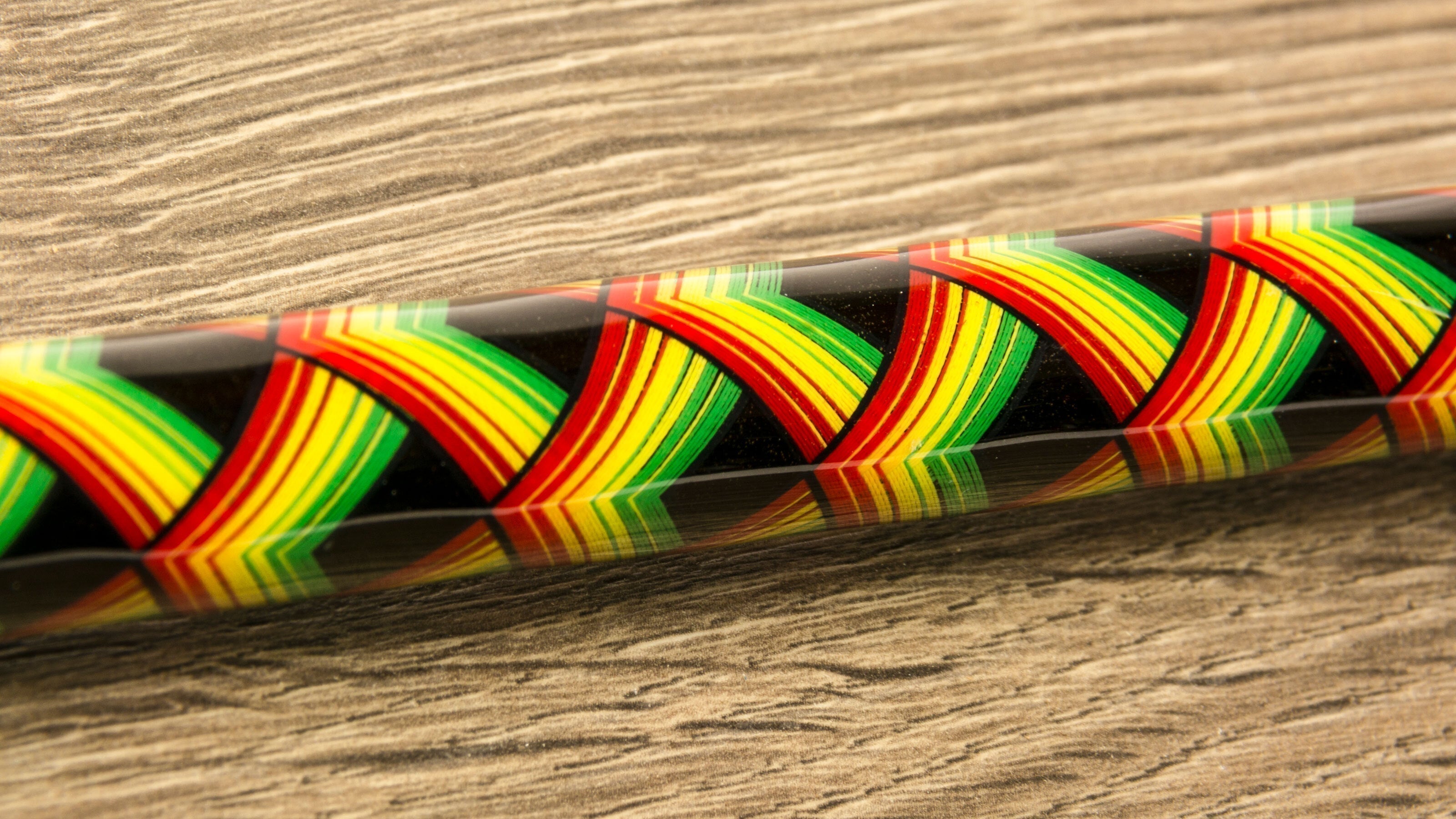
















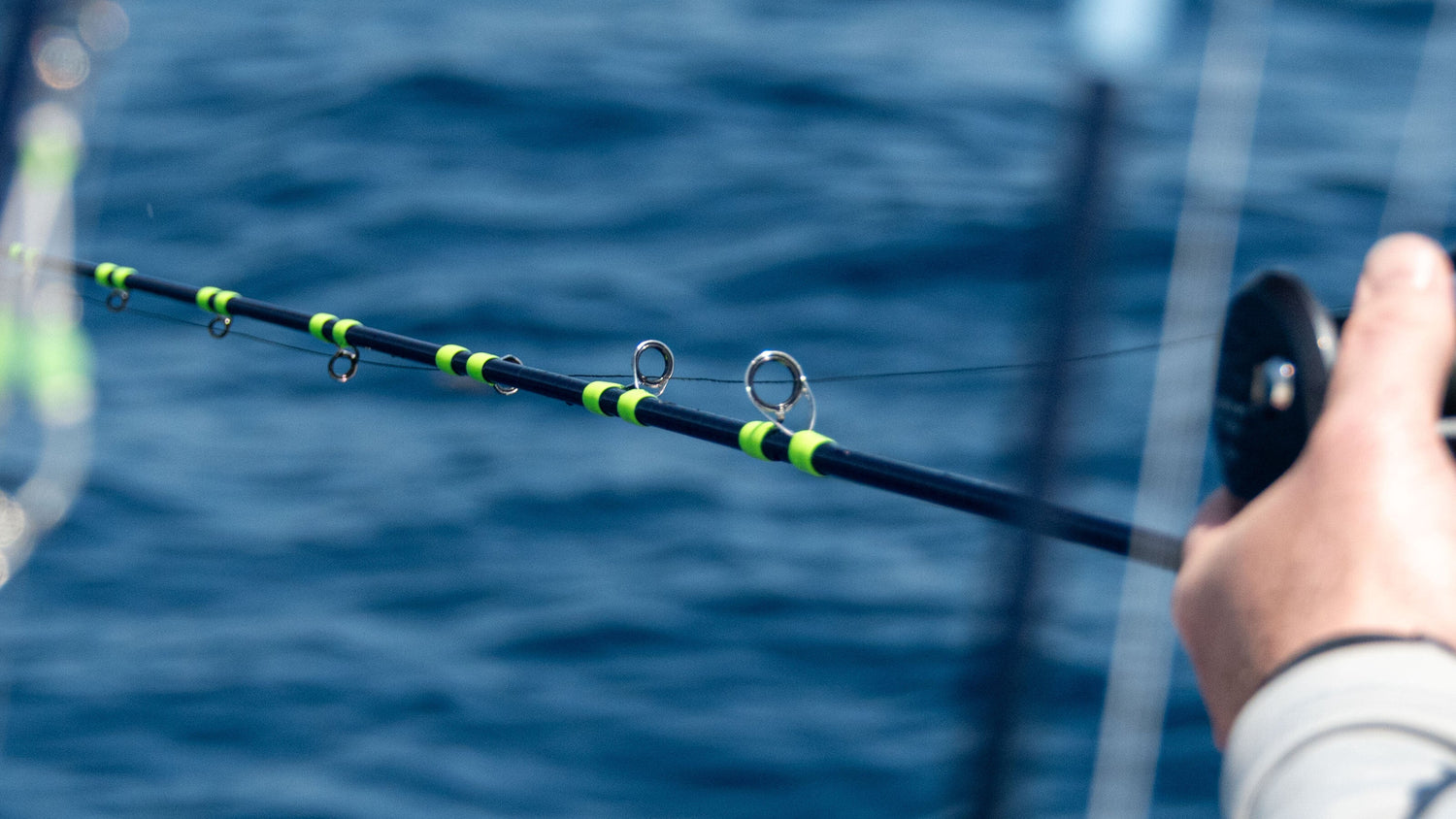
In the world of custom rod building, few techniques generate as much curiosity and debate as the spiral wrap guide train, often referred to as the “acid wrap.” At first glance, it looks unconventional, almost like something is out of place. But once you put one under load and spend time fishing it, the reasoning becomes clear. This is not a design built around looks alone. It is built around performance. The spiral wrap exists to solve a very real issue in casting rods, and when it is executed correctly, it delivers a noticeable improvement in stability, control, and overall efficiency.
What Is a Spiral Wrap and Why Do We Use It?
A spiral wrap guide train transitions the line from the top of the rod blank to the underside through a series of guides. Traditional casting rods keep all guides on top, which works fine until the rod is under load. When pressure is applied, the line naturally wants to pull downward, creating torque that causes the rod to twist. That twisting force works against both the angler and the blank.
By moving the line to the bottom of the rod, the spiral wrap eliminates that torque. The rod no longer fights itself under pressure, and instead tracks naturally with the load. The result is a more stable rod that feels balanced in hand, especially when fighting fish or applying heavy pressure. It is a simple concept, but one that has a significant impact on performance.
Before we go any further let's go way back into the Mud Hole Live archives to 6 years ago and check out Mud Hole Live: Spiral Wraps 101.
Real-World Applications
The spiral wrap is not limited to one specific type of fishing. It has proven itself across a wide range of applications where rods are pushed under load. In bass fishing, especially when flipping and pitching into heavy cover, the added stability helps keep the rod from rolling in your hand. That translates into better control when pulling fish out of thick vegetation or structure.
Inshore anglers targeting species like redfish and snook benefit from reduced fatigue during longer fights, where constant pressure can wear on your wrist and forearm. Offshore fishermen have relied on spiral wraps for years, particularly in stand-up applications where managing heavy loads efficiently is critical. Even in swimbait and musky fishing, where both lure weight and fish power are significant, the ability to eliminate torque becomes a clear advantage.
Across all of these scenarios, the common factor is load. When the rod is working hard, the spiral wrap works harder.
Check out this Rod Recipe from a few years ago where we fished a spiral wrapped rod offshore of Stuart Florida. Spiral Wrap Nearshore Saltwater Fishing Rod Recipe
Pros and Cons of a Spiral Wrap
The biggest advantage of a spiral wrap is the elimination of rod twist under load. That alone changes how the rod feels during a fight. Instead of constantly correcting for torque, the rod remains stable, allowing you to focus entirely on controlling the fish. This leads to more efficient power transfer, as the energy you apply goes directly into lifting and guiding rather than counteracting unwanted movement.
There is also a noticeable reduction in fatigue over time. Without the rod trying to roll in your hand, your grip stays more relaxed, which makes a difference during long days on the water. The line path also becomes more natural under load, following the blank instead of pulling against it.
On the other hand, building a spiral wrap requires more attention to detail. The transition from top to bottom must be smooth, and getting it right can take some trial and error. There is a learning curve, particularly for builders who are used to traditional guide trains. Aesthetics can also be a sticking point. Some anglers simply prefer the clean, uniform look of guides on top of the rod. While performance often wins out, personal preference still plays a role.

Common Spiral Wrap Layouts
There are several ways to execute a spiral wrap, but all of them share the same goal of creating a smooth transition for the line. One of the most common approaches starts with the stripper guide at zero degrees on top of the blank, followed by transition guides positioned around 45 to 110 degrees, before the line settles at 180 degrees on the underside. This gradual progression helps maintain a clean line path without introducing sharp angles.
Some builders prefer a simplified version, using a single transition guide placed around 90 degrees before moving directly to the bottom. This approach can work well in lighter applications, though it requires careful placement to avoid line interference. Another popular method is the bumper system, where the stripper guide remains on top, the running guides are placed on the bottom, and a small guide at 90 degrees simply controls the line path during the transition. Each method has its place, and the best choice often depends on the specific rod and application.

Spiral Wrap Direction
When building a spiral wrapped casting rod, the direction of the transition, whether the guides rotate to the left or to the right side of the blank, often comes down to ergonomics, reel handle orientation, and how the angler naturally fights fish under load.
For right-handed anglers using a standard right-hand retrieve reel, many builders prefer a left-hand spiral because the line transitions away from the crank handle side of the reel, helping keep the line path cleaner while also preventing the angler’s hand or knuckles from interfering with the line during heavy fights. A left-side transition can also make the rod feel more balanced in the hand when tucked under the arm or pinned against the body offshore.

On the other hand, anglers fishing left-hand retrieve reels may prefer a right-side spiral for the exact same reasons, matching the rod’s torque direction and line transition to the side opposite the reel handle.
Some builders also believe the spiral direction should complement the dominant wrist position and the way the rod naturally rolls under pressure. Since a spiral wrap’s primary purpose is to eliminate torque and stabilize the rod under load, both left and right transitions ultimately achieve the same performance benefit, but the subtle differences in comfort, line clearance, fish-fighting posture, and personal preference can make one direction feel more natural than the other. That’s why experienced custom builders often ask how the angler holds the rod, which hand they reel with, what species they target, and even whether the rod will spend more time tucked under an arm or held out front before deciding which way the spiral should rotate.
Guide Sizing and Selection
Guide sizing for a spiral wrap closely mirrors that of a standard casting rod, but the transition area requires a bit more thought. The stripper guide is typically selected based on the reel and line, with sizes anywhere from 6 to 10 being common for bass rods. From there, transition guides are usually stepped down slightly in size and kept low profile to help guide the line smoothly around the blank.
Once the line reaches the underside, the running guides can be sized similarly to any other casting setup. Sizes in the 5 to 6 range are common, depending on the type of line and whether knot clearance is a concern. The focus should always be on maintaining a consistent flow, where the line moves naturally from one guide to the next without abrupt changes or unnecessary height.
Fun fact: I do not believe you need to adjust the guide sizing or number of guides when making a move to a traditional guide train to a spiral wrap train.
Guide Spacing Tips
Proper spacing is critical to the success of a spiral wrap. Static load testing should always be part of the process. By applying pressure to the rod and observing the line path, you can make adjustments that ensure even load distribution and eliminate potential problem areas.
The transition section deserves the most attention. This is where the line is changing direction, and any misalignment can create sharp angles or cause the line to contact the blank. The goal is to create a smooth, controlled path that looks natural both at rest and under load. Taking the time to fine-tune this stage will have a direct impact on how the rod performs.
Reel Selection: What Works Best?
One of the advantages of a spiral wrap is that it does not require specialized equipment. Most modern casting reels work extremely well with this setup. Low-profile baitcasters are the most common choice for freshwater applications, offering a comfortable and familiar feel while aligning well with the stripper guide.

Round reels are often preferred in heavier applications, where strength and line capacity are more important than compact design. Regardless of the reel style, the key is smooth line flow and proper alignment with the guide train. The spiral wrap enhances the rod’s performance without complicating reel selection.
Final Thoughts
The spiral wrap is one of those techniques that challenges tradition but rewards those willing to embrace it. It is not about reinventing rod building, but about refining it. By addressing the issue of torque and improving how the rod behaves under load, it offers a tangible performance advantage that can be felt immediately.
For custom builders, it represents an opportunity to push beyond standard layouts and create something that performs at a higher level. For anglers, it offers a more stable and efficient tool on the water. Like any aspect of rod building, it ultimately comes down to preference, but once you experience the benefits of a properly executed spiral wrap, it is hard to ignore what it brings to the table.