












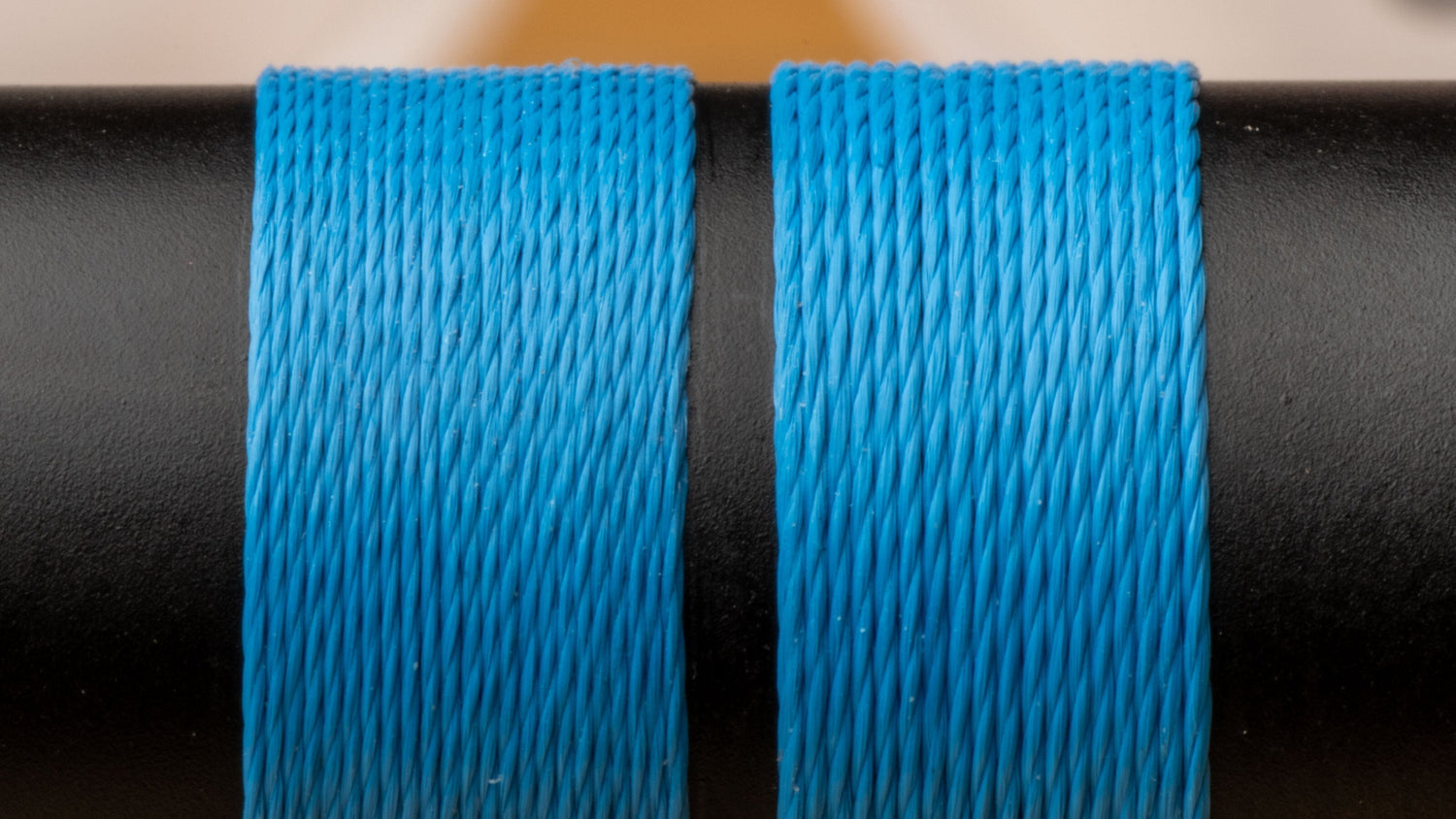
One of the first decisions every rod builder makes is choosing thread size. For many beginners, that decision seems simple enough. If larger thread is stronger, then using the largest practical size must result in a stronger guide wrap.
It's an easy assumption to make.
After all, more material should mean more strength, right?
Not necessarily.
The reality is that thread is only one part of the equation. Once a guide wrap is finished and encapsulated in epoxy, the wrap becomes a composite structure where proper technique, guide preparation, thread tension, and finish all work together to create a durable bond. While larger thread does offer greater tensile strength, that extra strength often isn't the deciding factor in how well a guide wrap performs.
So, does your rod really need the added strength of larger thread, or are you simply adding bulk without gaining meaningful performance?
As with most aspects of custom rod building, the answer depends on the application.
Understanding Thread Sizes
Most rod builders are familiar with the two most common thread sizes: Size A and Size D.
Size A has become the standard for most freshwater, fly, and inshore custom rods. Its smaller diameter allows builders to create clean, compact wraps that highlight the craftsmanship of the finished rod while minimizing unnecessary weight.
Size D, on the other hand, is noticeably thicker. It covers guide feet more quickly, is easier to handle for many beginning builders, and has traditionally been the preferred choice for larger offshore rods, heavy-duty saltwater applications, and oversized guide frames.

Neither thread is inherently better than the other.
They simply serve different purposes.
The mistake many builders make is assuming thread size alone determines the strength of the finished wrap. In reality, the finished guide wrap is much more complex than that.
What Actually Makes a Strong Guide Wrap?
If you asked experienced rod builders what creates a durable guide wrap, thread size probably wouldn't be the first answer.
Proper guide foot preparation is often far more important. A well-tapered, polished guide foot allows the thread to climb smoothly onto the guide while reducing unnecessary stress points. Thread tension also plays a significant role. Wraps that are too loose can shift over time, while excessive tension can create its own problems during construction.
Coverage is equally important.
Every wrap should completely secure the guide foot while maintaining even spacing and consistent tension throughout the wrap. Once epoxy is applied, it penetrates the thread and bonds the entire assembly together, distributing forces across the guide foot and wrap rather than relying solely on the thread itself.
This is why a beautifully executed Size A wrap can often outperform a poorly wrapped Size D guide.

The strength of the finished wrap comes from the entire system working together, not simply from the diameter of the thread.
Experienced builders understand this well. They focus on preparation, consistency, and craftsmanship long before worrying about thread size.
Why So Many Builders Prefer Size A
Walk through any custom rod building expo or browse photos of professionally built freshwater rods, and you'll notice something fairly quickly.
Most are wrapped with Size A thread.
There are several reasons for that.
The most obvious is appearance. Smaller thread creates more refined wraps that complement the proportions of modern fishing rods. The finished wraps appear cleaner and more elegant, allowing decorative trim bands, inlays, and thread work to stand out without looking oversized.
Size A also conforms exceptionally well to guide feet, especially on today's smaller guide frames. The finer thread packs tightly together, producing smooth transitions that require less finish to achieve a professional appearance.
Less thread also means less epoxy.

While the weight difference between individual wraps may seem insignificant, reducing unnecessary material throughout the guide train helps preserve blank performance. Lighter wraps generally contribute to improved balance, faster recovery, and reduced swing weight, particularly on bass, walleye, trout, fly, and inshore rods where performance is often measured in subtle improvements.
Decorative work is another area where Size A excels. Fine trim bands, intricate decorative wraps, and detailed thread art are all easier to accomplish with smaller thread because builders have greater control over spacing and detail.
For these reasons, many experienced builders reach for Size A almost automatically when building freshwater and light saltwater rods.
So Why Does Size D Exist?
With all of those advantages, it would be easy to assume Size D thread has become obsolete.
Far from it.
There are still plenty of situations where larger thread makes perfect sense. Heavy offshore rods often use much larger guide frames than freshwater rods. Roller guides, heavy-duty boat guides, and unlimited-class offshore components simply require more substantial wraps to properly cover larger guide feet.

Size D also builds coverage more quickly. Because the thread is thicker, fewer wraps are required to secure the guide, making it an efficient choice for larger rods where appearance is often secondary to function.
There's another advantage that many experienced builders sometimes overlook.
Size D is simply easier to work with.
Beginning builders often find the larger thread easier to see, easier to control, and more forgiving during the learning process. Minor gaps that might be noticeable with Size A are less obvious, and the larger diameter makes packing and burnishing somewhat easier while developing wrapping skills.
That's one reason many rod building classes introduce new builders using Size D before encouraging them to transition to smaller thread.
It's not because the finished rod is necessarily stronger.
It's because the learning curve is often a little easier.
Is Size D Actually Stronger?
Technically speaking, yes.
A single strand of Size D thread possesses greater tensile strength than a single strand of Size A.
But here's where the discussion gets interesting.
Once the guide wrap is completed and encapsulated in epoxy, individual thread strength becomes far less significant than many builders assume.
The epoxy bonds the threads together, secures them to the blank, and helps distribute loads across the guide foot. Instead of relying on one strand of thread, the finished wrap functions as a reinforced composite structure.
Think about where guide failures actually occur.
It's rarely because the thread itself wasn't strong enough.
More often, failures result from impact damage, poorly prepared guide feet, inadequate thread tension, improper epoxy application, or damage to the blank itself.
Very few guides pull free simply because Size A thread lacked sufficient strength.
For the overwhelming majority of freshwater and inshore applications, a properly executed Size A wrap provides more than enough strength for years of reliable fishing.
The difference between the two thread sizes is often much smaller than the internet would have you believe.
Choosing the Right Thread for the Job
Rather than asking which thread size is strongest, a better question is which thread best fits the rod you're building.
If you're building bass rods, trout rods, fly rods, walleye rods, or inshore spinning rods, Size A is usually an excellent choice. It produces clean, lightweight wraps while providing all the strength most anglers will ever need.

If your focus is decorative rod building, Size A also offers better precision for trim bands, accent wraps, and intricate thread work.
On the other hand, if you're building heavy offshore rods, stand-up rods, trolling rods, or wrapping large roller guides, Size D becomes much more attractive. The larger thread covers oversized guide feet efficiently and is well suited to the heavier components found on these rods.
There's also nothing wrong with using Size D simply because you enjoy wrapping with it or because you're learning the craft.
One of the greatest advantages of custom rod building is having the freedom to make those decisions based on your own preferences and the rod's intended use.
There isn't a universal right answer.
Only the right answer for the build sitting on your wrapper.
Strength Isn't Everything
It's easy to assume that bigger thread automatically creates a stronger guide wrap.
In reality, the strength of a finished wrap depends far more on craftsmanship than on thread diameter.
Proper guide preparation, consistent thread tension, complete coverage, and quality epoxy application all contribute more to long-term durability than simply choosing a larger thread.
A well-executed Size A wrap will outperform a poorly wrapped Size D guide every single time.
That doesn't make Size D unnecessary. It simply means the additional strength isn't always necessary.
As custom rod builders, we have the advantage of selecting components based on the application rather than relying on assumptions. Instead of asking which thread is strongest, ask which thread allows you to build the cleanest, lightest, and most appropriate guide wrap for the rod in front of you.
Because in the end, the best rod builders aren't choosing thread based on myths.
They're choosing it based on purpose.