














About Flipping, Pitching & Punching
This guide covers the essential components needed to build a high-performance flipping and pitching rod. Before selecting blanks, handles, and guide layouts, it’s important to understand how flipping, pitching, and punching are used on the water. Each technique places slightly different demands on a rod — from tip responsiveness and accuracy to raw lifting power in heavy cover — so the way you fish should directly influence your custom build.
Flipping and pitching are short-range bait presentation techniques designed to place lures quietly and accurately into tight cover where bass ambush prey. Instead of long overhead casts, both rely on controlled, low-entry presentations that minimize splash and maximize precision. Because bites often happen immediately, the rod must react quickly and transfer power efficiently.
Flipping is typically done with a fixed length of line for fast, repetitive presentations at close range, while pitching uses the reel and rod load to extend casting distance slightly. Most anglers alternate between the two depending on cover and boat position.
Punching is the heavy-cover version of these techniques. Heavier weights force the bait through thick vegetation, where strikes often occur the moment the bait breaks through the canopy. This requires maximum lifting strength and immediate hook-driving power from the rod.
Introduction
What is Build a Flipping & Pitching Rod?
About Flipping, Pitching & Punching
This guide covers the essential components needed to build a high-performance flipping and pitching rod. Before selecting blanks, handles, and guide layouts, it’s important to understand how flipping, pitching, and punching are used on the water. Each technique places slightly different demands on a rod — from tip responsiveness and accuracy to raw lifting power in heavy cover — so the way you fish should directly influence your custom build.
Flipping and pitching are short-range bait presentation techniques designed to place lures quietly and accurately into tight cover where bass ambush prey. Instead of long overhead casts, both rely on controlled, low-entry presentations that minimize splash and maximize precision. Because bites often happen immediately, the rod must react quickly and transfer power efficiently.
Flipping is typically done with a fixed length of line for fast, repetitive presentations at close range, while pitching uses the reel and rod load to extend casting distance slightly. Most anglers alternate between the two depending on cover and boat position.
Punching is the heavy-cover version of these techniques. Heavier weights force the bait through thick vegetation, where strikes often occur the moment the bait breaks through the canopy. This requires maximum lifting strength and immediate hook-driving power from the rod.
Flipping & Pitching Applications
Dock Flipping / Dock Pitching
Targets: Boat docks, pilings, cross-members
Dropping baits under pilings and along dock edges demands stealth and precision—one splash can spook the fish. Success comes from threading your bait through narrow gaps, reading shadows, and coaxing bites from bass that rarely move more than a few feet.
Laydown / Wood Flipping
Targets: Stumps, logs, submerged laydowns
Fishing stumps, logs, and submerged wood requires exact placement. Baits must drop cleanly without hanging up but still land with enough presence to provoke a reaction strike. Timing, rod feel, and subtle control make all the difference.
Grassline / Edge Pitching
Targets: Grass edges, weed lines
Pitching along grass edges is a balance of finesse and aggression. Baits need to settle naturally while maintaining subtle movement that triggers wary bass. Every cast is about careful placement and making the presentation look natural.
Mat / Punching
Targets: Thick mats and hydrilla
Punching thick mats demands power and patience. The bait must slice through dense vegetation and drop precisely where bass are holding, while the rod absorbs resistance to prevent missed hooksets. Success is measured by clean landings and immediate control once a fish bites.
Shallow / Brush Flipping
Targets: Shallow brush, flooded timber
Fishing shallow brush or flooded timber is a delicate dance. Baits need to fall close enough to cover to trigger strikes but avoid getting hung in the tangle of branches. Proper rod feel, timing, and patience separate bites from hang-ups.
Reaction / Power Flipping
Targets: Bush clumps, isolated grass
This is aggressive, high-energy flipping aimed at provoking reaction strikes. Fast drops, quick hooksets, and decisive pressure are key, and timing matters as much as raw power when targeting fish in isolated clumps or grass pockets.
Finesse Flipping / Stealth Pitching
Targets: Pressured fish, clear water
For pressured or clear-water fish, subtlety is everything. Every splash and every movement counts. Anglers place the bait deliberately, letting bass come to it on their own terms, making slow, precise presentations critical.
Key Takeaways
- Close-range techniques built for precision, control, and quiet presentations
- Used around heavy cover like grass, docks, wood, and thick vegetation
- Flipping and pitching differ mainly in distance and line management
- Punching uses heavier weights to penetrate dense cover vertically
- Gear prioritizes power, control, and fast hooksets over casting distance
Flipping & Pitching Applications
Dock Flipping / Dock Pitching
Targets: Boat docks, pilings, cross-members
Dropping baits under pilings and along dock edges demands stealth and precision—one splash can spook the fish. Success comes from threading your bait through narrow gaps, reading shadows, and coaxing bites from bass that rarely move more than a few feet.
Laydown / Wood Flipping
Targets: Stumps, logs, submerged laydowns
Fishing stumps, logs, and submerged wood requires exact placement. Baits must drop cleanly without hanging up but still land with enough presence to provoke a reaction strike. Timing, rod feel, and subtle control make all the difference.
Grassline / Edge Pitching
Targets: Grass edges, weed lines
Pitching along grass edges is a balance of finesse and aggression. Baits need to settle naturally while maintaining subtle movement that triggers wary bass. Every cast is about careful placement and making the presentation look natural.
Mat / Punching
Targets: Thick mats and hydrilla
Punching thick mats demands power and patience. The bait must slice through dense vegetation and drop precisely where bass are holding, while the rod absorbs resistance to prevent missed hooksets. Success is measured by clean landings and immediate control once a fish bites.
Shallow / Brush Flipping
Targets: Shallow brush, flooded timber
Fishing shallow brush or flooded timber is a delicate dance. Baits need to fall close enough to cover to trigger strikes but avoid getting hung in the tangle of branches. Proper rod feel, timing, and patience separate bites from hang-ups.
Reaction / Power Flipping
Targets: Bush clumps, isolated grass
This is aggressive, high-energy flipping aimed at provoking reaction strikes. Fast drops, quick hooksets, and decisive pressure are key, and timing matters as much as raw power when targeting fish in isolated clumps or grass pockets.
Finesse Flipping / Stealth Pitching
Targets: Pressured fish, clear water
For pressured or clear-water fish, subtlety is everything. Every splash and every movement counts. Anglers place the bait deliberately, letting bass come to it on their own terms, making slow, precise presentations critical.
Key Takeaways
- Close-range techniques built for precision, control, and quiet presentations
- Used around heavy cover like grass, docks, wood, and thick vegetation
- Flipping and pitching differ mainly in distance and line management
- Punching uses heavier weights to penetrate dense cover vertically
- Gear prioritizes power, control, and fast hooksets over casting distance
How to Choose a Flipping & Pitching Rod Blank
The rod is the foundation of any flipping, pitching, or punching setup and directly affects every part of your presentation. It controls bait accuracy, hookset power, pressure under load, and your ability to manage fish in heavy cover. A properly built rod lets you make quiet, precise presentations, react instantly to bites, and apply immediate power to keep fish from burying in grass, timber, or structure.
When selecting a rod, focus on these key performance characteristics:
Power
Rod power determines the overall strength and lifting ability of the blank. Heavy to extra-heavy rods provide the backbone needed to drive hooks through dense soft plastics, punch into heavy vegetation, and control fish in demanding cover situations. This added power is essential when fishing thick grass, wood, or mats where fish need to be turned quickly. Lighter power rods can be used for finesse-style presentations in less demanding cover, but they significantly reduce leverage and control in heavy structure environments.
Action
Action defines where and how the rod bends under load, which directly affects both sensitivity and hookset performance. Fast and moderate-fast actions concentrate flex in the upper portion of the rod, giving anglers better control on the fall while maintaining quick energy transfer during hooksets. This balance is critical in flipping and pitching, where you need to detect subtle bites while still having the responsiveness to drive a hook home instantly in close-range situations.
Length
Rod length plays a major role in leverage, accuracy, and maneuverability. Longer rods provide extended reach and improved line control, making them ideal for docks, laydowns, and grass edges where distance and leverage help control fish more effectively. Shorter rods are easier to manage in tight, confined cover such as mats, brush, and flooded vegetation, where precision placement and reduced snagging are more important than casting distance.
Line Rating
The line rating indicates the recommended strength range the rod is designed to handle safely and effectively. Matching your line to the rod ensures proper load distribution throughout the blank, maintains casting accuracy, and prevents overloading under pressure. It also helps optimize hookset power and ensures consistent performance when fishing heavy cover where fish can surge back into structure.
Weight / Lure Rating
The lure or weight rating defines the optimal range of bait weights the rod is designed to cast and control. Staying within this range ensures the rod loads correctly on the cast and delivers accurate bait placement. In flipping and pitching applications, this becomes especially important, as improper weight selection can reduce accuracy, affect bait action, and compromise hookset efficiency in tight, high-percentage targets.
MHX Flipping & Pitching Rod Blanks
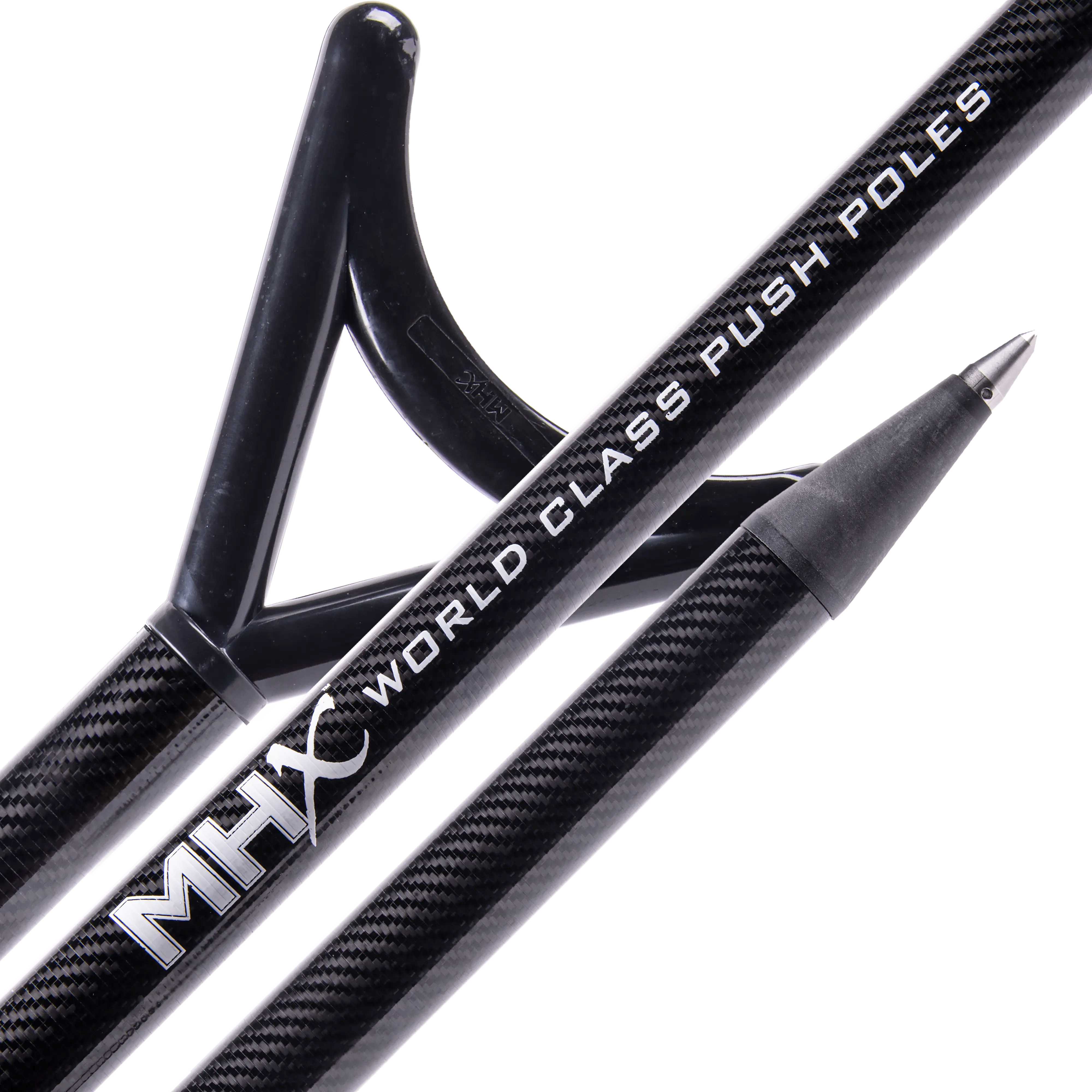
For this build guide, we’re focusing on MHX flipping and pitching blanks — purpose-designed tapers built for close-range power applications.
These blanks feature moderate-fast actions that provide tip control for accurate presentations, transitioning into strong mid and butt sections built for lifting and steering fish immediately after the bite. They are lightweight for their power class, helping reduce fatigue during repetitive short-range presentations, while still delivering the strength required for punching and heavy-cover extraction.
Key Takeaways
- Rod lengths between 7’0” and 7’8” balance leverage, accuracy, and maneuverability for most heavy-cover situations
- Heavy to extra-heavy power provides the strength needed to drive hooks and control fish in dense cover
- Fast or moderate-fast actions give sensitive presentations and immediate hookset power
- Matching line strength and lure weight to the rod ensures proper bend, accurate placement, and controlled bait fall
Blanks by Application
Below are the key flipping, pitching, and punching techniques, along with the recommended rod blank specs and MHX part numbers to simplify your build selection.
Dock Flipping / Dock Pitching
Look for a rod blank with a fast, responsive tip for accurate short-range placement and a strong backbone that engages quickly to control fish around hard structure.
Rod Length: 7’0”–7’6”
Power: Heavy to Extra-Heavy
Action: Mod-Fast
Line: 50–65 lb braid or 17–25 lb fluorocarbon
Weights Used: 1/4 - 1-1/2 oz.
MHX Models: FP885-MHX, FS905-MHX
Laydown / Wood Flipping
Choose a rod blank that balances tip control for precise bait entry with enough lifting power to move fish out of timber and laydowns without hesitation.
Rod Length: 7’0”–7’8”
Power: Heavy to Extra-Heavy
Action: Fast or Moderate-Fast
Line: 50–65 lb braid or 17–25 lb fluorocarbon
Weights Used: 1/4 - 1-1/2 oz.
MHX Models: FP885-MHX, FS905-MHX, FP935-MHX
Grassline / Edge Pitching
Look for a rod blank with a sensitive tip for detecting subtle bites along weed edges, paired with enough backbone to drive hooks through cover when needed.
Rod Length: 7’0”–7’6”
Power: Heavy
Action: Fast or Moderate-Fast
Line: 30–50 lb braid or 17–25 lb fluorocarbon
Weights Used: 1/4 - 1-1/2 oz.
MHX Models: FP885-MHX, FS904-MHX
Mat / Punching
Choose a heavy-duty rod blank with maximum backbone and a fast-loading tip that can drive baits through thick vegetation and immediately control fish underneath.
Rod Length: 7’6”–8’0”
Power: X-Heavy to XX-Heavy
Action: Mod-Fast
Line: 65–80 lb braid
Weights Used: 3/4–2 1/2 oz
MHX Models: FS906-MHX, FP936-MHX, FP937-MHX, FS966-MHX
Shallow / Brush Flipping
Look for a rod blank with a balanced tip for accurate placement and enough power to pull fish cleanly out of brush and shallow timber.
Rod Length: 7’0”–7’6”
Power: Heavy
Action: Fast or Moderate-Fast
Line: 50–65 lb braid or 17–25 lb fluorocarbon
Weights Used: 1/4 - 1-1/2 oz.
MHX Models: FP885-MHX, FS905-MHX
Reaction / Power Flipping
Choose a rod blank that loads quickly for fast hooksets and delivers strong, immediate power to control aggressive fish in isolated cover.
Rod Length: 7’0”–7’6”
Power: Heavy to Extra-Heavy
Action: Mod-Fast
Line: 50–65 lb braid or 17–25 lb fluorocarbon
Weights Used: 1/4 - 1-1/2 oz.
MHX Models: FP885-MHX, FS905-MHX, FS906-MHX, FS936-MHX
Finesse Flipping / Stealth Pitching
Look for a rod blank with a slightly more forgiving tip for subtle presentations, paired with enough backbone to still handle close-range hooksets in pressured water.
Rod Length: 7’0”–7’4”
Power: Heavy
Action: Fast or Mod-Fast
Line: 12–17 lb fluorocarbon or 30–40 lb braid
Weights Used: 1/4-3/4oz
MHX Models: FP885-MHX, FS904-MHX, MB874-MHX
How to Choose a Flipping & Pitching Rod Blank
The rod is the foundation of any flipping, pitching, or punching setup and directly affects every part of your presentation. It controls bait accuracy, hookset power, pressure under load, and your ability to manage fish in heavy cover. A properly built rod lets you make quiet, precise presentations, react instantly to bites, and apply immediate power to keep fish from burying in grass, timber, or structure.
When selecting a rod, focus on these key performance characteristics:
Power
Rod power determines the overall strength and lifting ability of the blank. Heavy to extra-heavy rods provide the backbone needed to drive hooks through dense soft plastics, punch into heavy vegetation, and control fish in demanding cover situations. This added power is essential when fishing thick grass, wood, or mats where fish need to be turned quickly. Lighter power rods can be used for finesse-style presentations in less demanding cover, but they significantly reduce leverage and control in heavy structure environments.
Action
Action defines where and how the rod bends under load, which directly affects both sensitivity and hookset performance. Fast and moderate-fast actions concentrate flex in the upper portion of the rod, giving anglers better control on the fall while maintaining quick energy transfer during hooksets. This balance is critical in flipping and pitching, where you need to detect subtle bites while still having the responsiveness to drive a hook home instantly in close-range situations.
Length
Rod length plays a major role in leverage, accuracy, and maneuverability. Longer rods provide extended reach and improved line control, making them ideal for docks, laydowns, and grass edges where distance and leverage help control fish more effectively. Shorter rods are easier to manage in tight, confined cover such as mats, brush, and flooded vegetation, where precision placement and reduced snagging are more important than casting distance.
Line Rating
The line rating indicates the recommended strength range the rod is designed to handle safely and effectively. Matching your line to the rod ensures proper load distribution throughout the blank, maintains casting accuracy, and prevents overloading under pressure. It also helps optimize hookset power and ensures consistent performance when fishing heavy cover where fish can surge back into structure.
Weight / Lure Rating
The lure or weight rating defines the optimal range of bait weights the rod is designed to cast and control. Staying within this range ensures the rod loads correctly on the cast and delivers accurate bait placement. In flipping and pitching applications, this becomes especially important, as improper weight selection can reduce accuracy, affect bait action, and compromise hookset efficiency in tight, high-percentage targets.
MHX Flipping & Pitching Rod Blanks
For this build guide, we’re focusing on MHX flipping and pitching blanks — purpose-designed tapers built for close-range power applications.
These blanks feature moderate-fast actions that provide tip control for accurate presentations, transitioning into strong mid and butt sections built for lifting and steering fish immediately after the bite. They are lightweight for their power class, helping reduce fatigue during repetitive short-range presentations, while still delivering the strength required for punching and heavy-cover extraction.
Key Takeaways
- Rod lengths between 7’0” and 7’8” balance leverage, accuracy, and maneuverability for most heavy-cover situations
- Heavy to extra-heavy power provides the strength needed to drive hooks and control fish in dense cover
- Fast or moderate-fast actions give sensitive presentations and immediate hookset power
- Matching line strength and lure weight to the rod ensures proper bend, accurate placement, and controlled bait fall
Blanks by Application
Below are the key flipping, pitching, and punching techniques, along with the recommended rod blank specs and MHX part numbers to simplify your build selection.
Dock Flipping / Dock Pitching
Look for a rod blank with a fast, responsive tip for accurate short-range placement and a strong backbone that engages quickly to control fish around hard structure.
Rod Length: 7’0”–7’6”
Power: Heavy to Extra-Heavy
Action: Mod-Fast
Line: 50–65 lb braid or 17–25 lb fluorocarbon
Weights Used: 1/4 - 1-1/2 oz.
MHX Models: FP885-MHX, FS905-MHX
Laydown / Wood Flipping
Choose a rod blank that balances tip control for precise bait entry with enough lifting power to move fish out of timber and laydowns without hesitation.
Rod Length: 7’0”–7’8”
Power: Heavy to Extra-Heavy
Action: Fast or Moderate-Fast
Line: 50–65 lb braid or 17–25 lb fluorocarbon
Weights Used: 1/4 - 1-1/2 oz.
MHX Models: FP885-MHX, FS905-MHX, FP935-MHX
Grassline / Edge Pitching
Look for a rod blank with a sensitive tip for detecting subtle bites along weed edges, paired with enough backbone to drive hooks through cover when needed.
Rod Length: 7’0”–7’6”
Power: Heavy
Action: Fast or Moderate-Fast
Line: 30–50 lb braid or 17–25 lb fluorocarbon
Weights Used: 1/4 - 1-1/2 oz.
MHX Models: FP885-MHX, FS904-MHX
Mat / Punching
Choose a heavy-duty rod blank with maximum backbone and a fast-loading tip that can drive baits through thick vegetation and immediately control fish underneath.
Rod Length: 7’6”–8’0”
Power: X-Heavy to XX-Heavy
Action: Mod-Fast
Line: 65–80 lb braid
Weights Used: 3/4–2 1/2 oz
MHX Models: FS906-MHX, FP936-MHX, FP937-MHX, FS966-MHX
Shallow / Brush Flipping
Look for a rod blank with a balanced tip for accurate placement and enough power to pull fish cleanly out of brush and shallow timber.
Rod Length: 7’0”–7’6”
Power: Heavy
Action: Fast or Moderate-Fast
Line: 50–65 lb braid or 17–25 lb fluorocarbon
Weights Used: 1/4 - 1-1/2 oz.
MHX Models: FP885-MHX, FS905-MHX
Reaction / Power Flipping
Choose a rod blank that loads quickly for fast hooksets and delivers strong, immediate power to control aggressive fish in isolated cover.
Rod Length: 7’0”–7’6”
Power: Heavy to Extra-Heavy
Action: Mod-Fast
Line: 50–65 lb braid or 17–25 lb fluorocarbon
Weights Used: 1/4 - 1-1/2 oz.
MHX Models: FP885-MHX, FS905-MHX, FS906-MHX, FS936-MHX
Finesse Flipping / Stealth Pitching
Look for a rod blank with a slightly more forgiving tip for subtle presentations, paired with enough backbone to still handle close-range hooksets in pressured water.
Rod Length: 7’0”–7’4”
Power: Heavy
Action: Fast or Mod-Fast
Line: 12–17 lb fluorocarbon or 30–40 lb braid
Weights Used: 1/4-3/4oz
MHX Models: FP885-MHX, FS904-MHX, MB874-MHX
Flipping & Pitching Rod Blanks
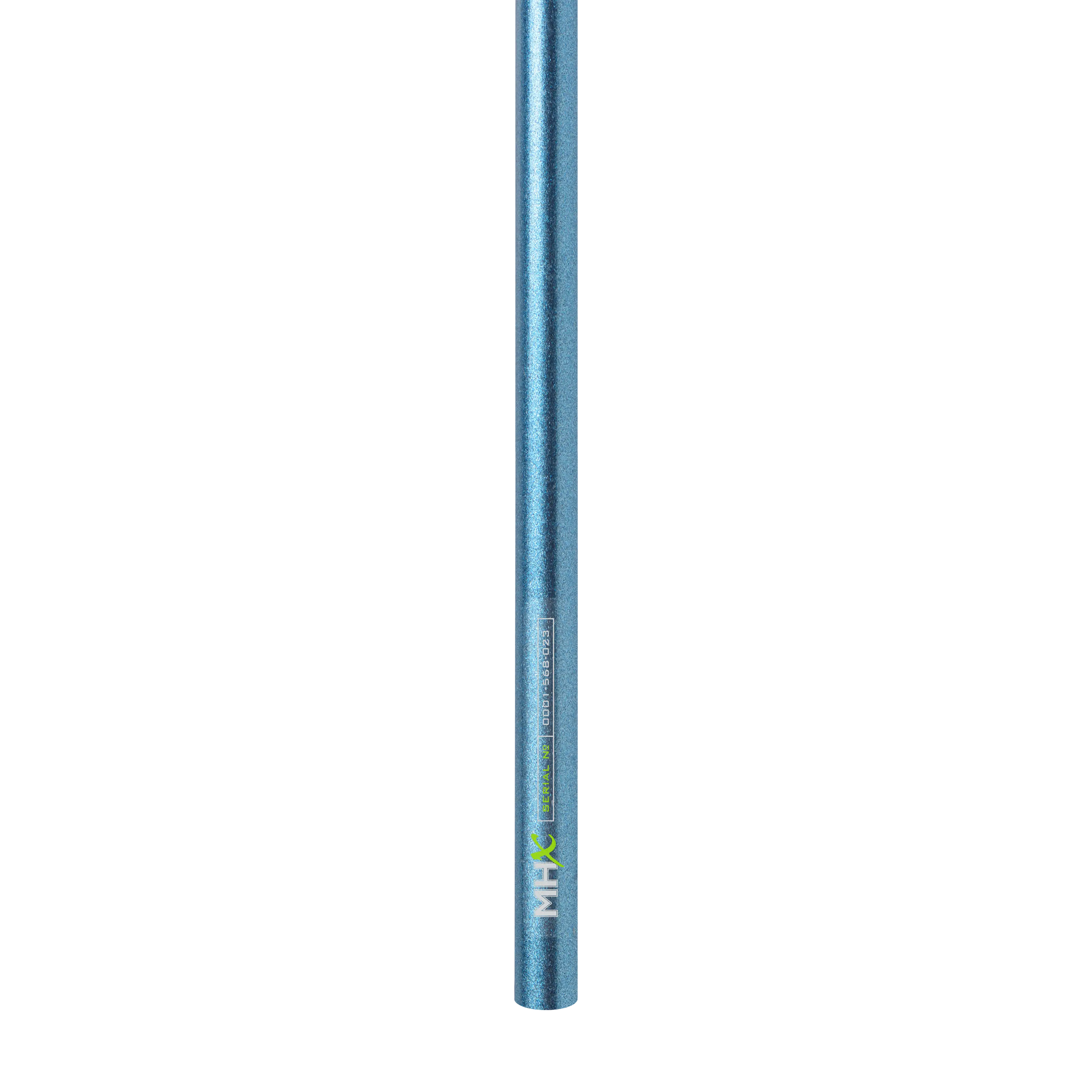
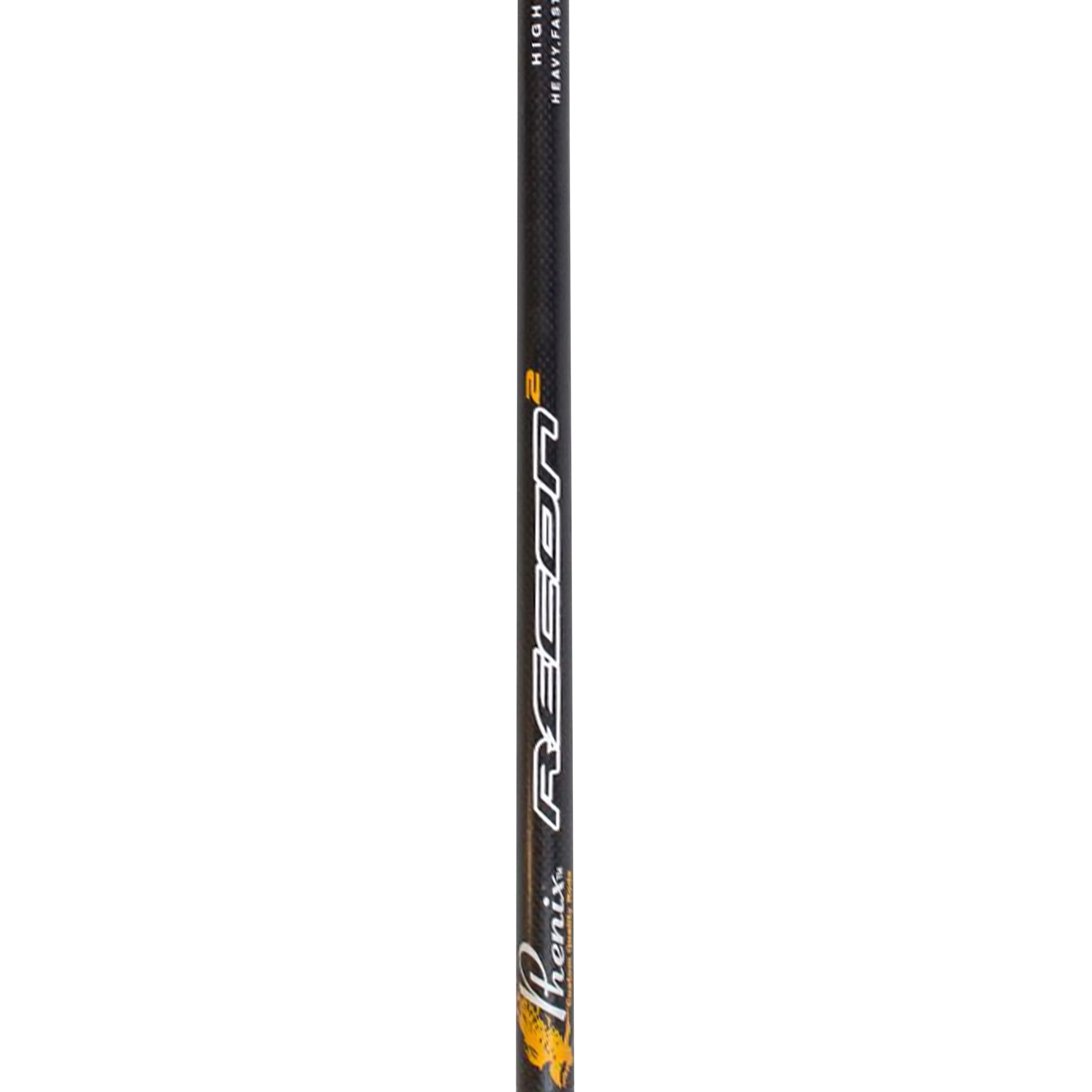
10 models available
12 models available

Flipping & Pitching Rod Guide Kits
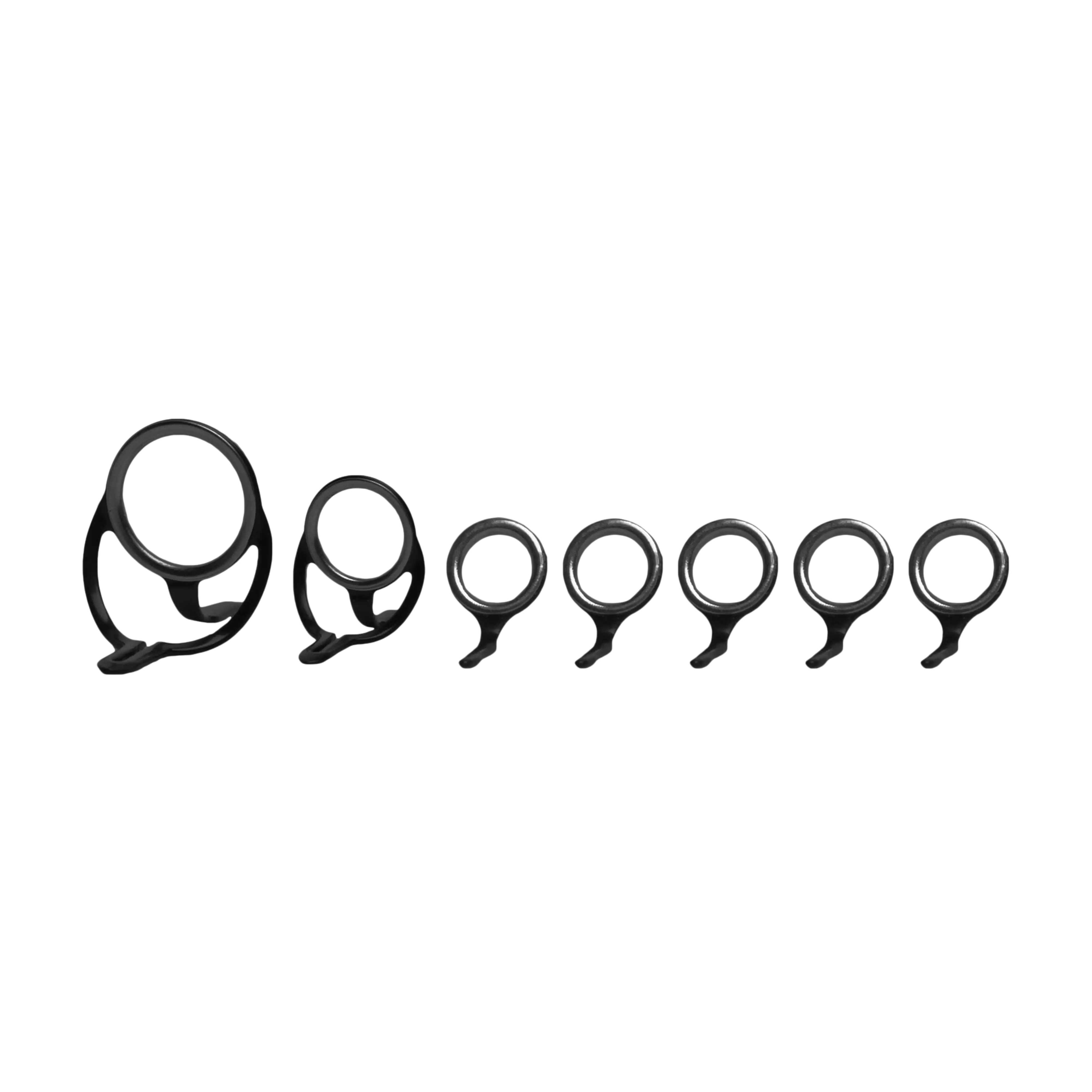
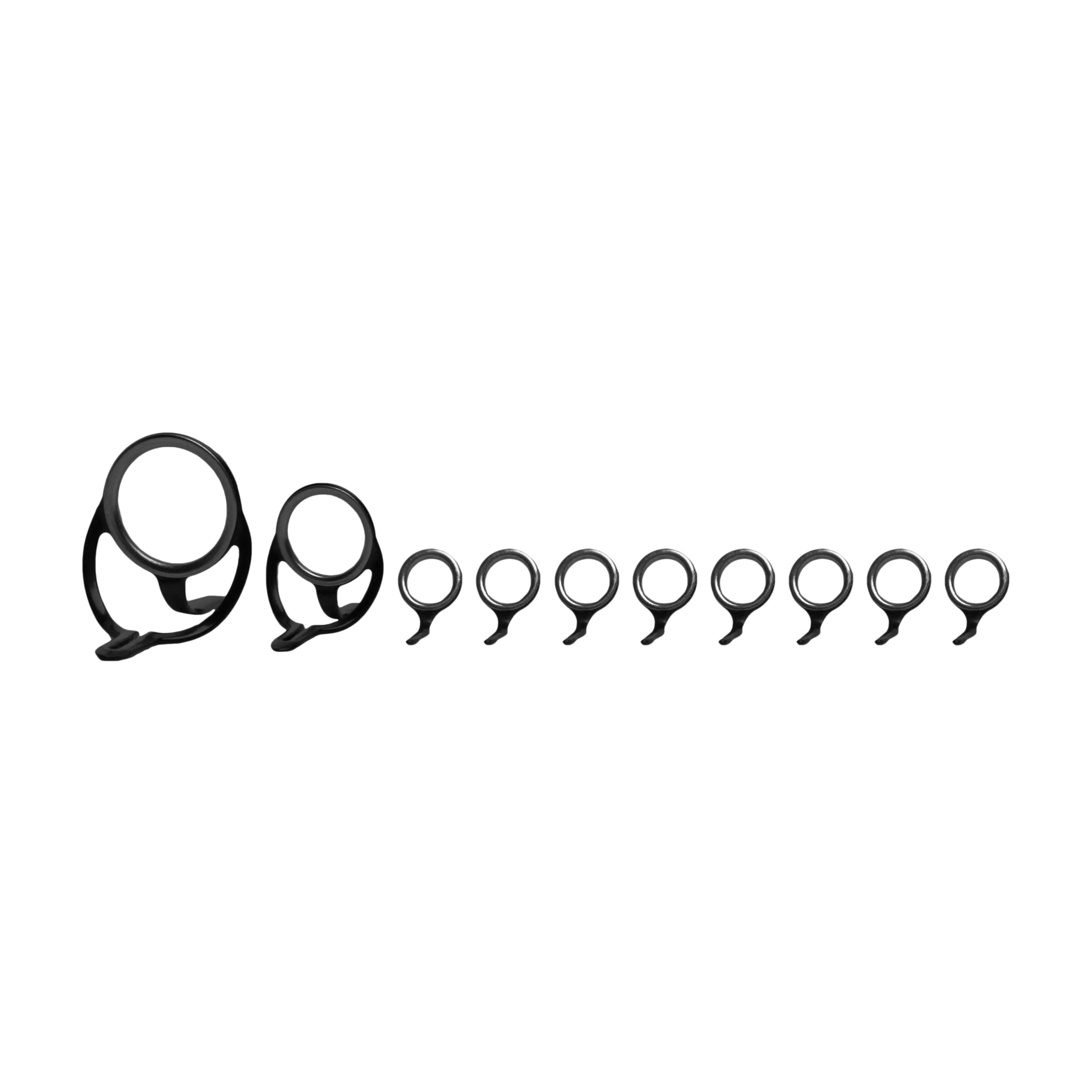
When building a flipping or pitching rod, choosing the right guide kit is one of the most important decisions you can make. A properly matched guide train affects casting accuracy, line control, rod balance, sensitivity, and how efficiently the blank transfers power during hooksets. Guide kits simplify the process by providing properly matched guide sizes and recommended spacing layouts for your rod blank, removing much of the guesswork while helping ensure the rod performs as intended.
Guide placement is especially important on flipping and pitching rods because these techniques rely on short, precise presentations and immediate power transfer. Poor spacing or oversized guides can negatively affect rod recovery speed, increase unnecessary weight, and reduce sensitivity. A properly designed guide train helps the blank flex naturally, keeps line flowing smoothly under load, and maintains consistent performance when pulling fish from heavy cover. Proper guide placement also spreads line pressure evenly across the blank, maintains smooth bait presentations, and helps maximize hookset power.
Stripper Guides
Most flipping and pitching rods are casting rods, so the guide train is designed around low-profile baitcasting reels and heavy braided or fluorocarbon lines. The stripper guide is the first guide nearest the reel seat and plays a major role in controlling line flow as it leaves the reel. On flipping and pitching rods, stripper guides are almost always double-footed for added strength and durability during aggressive hooksets and heavy fish fights.
Most rods use a single double-foot stripper guide, while some builders prefer adding a second double-foot stripper guide on X-heavy or XX-heavy punching rods for additional support and line control. Taller stripper frames can also help manage heavier braid and create a smoother transition into the running guides, especially on longer flipping and punching builds.
Running Guides
Running guides continue from the stripper guide to the tip-top and are typically single-foot designs that help reduce overall weight while maintaining sensitivity and responsiveness. These guides help keep the line tracking smoothly along the blank during casts, hooksets, and fights under heavy load.
Keeping unnecessary weight out of the upper section of the rod is extremely important on flipping and pitching builds. Lighter running guides help the rod recover faster, improve overall balance, and prevent the rod from feeling tip-heavy during repetitive presentations throughout the day.
Frame Size
Frame size refers to the height and structure of the guide frame itself. The frame controls how the line travels from the reel through the guide train and helps determine how efficiently the rod manages line flow under load. Taller frames can improve line control and help heavier braid transition smoothly into the running guides, while smaller, lower-profile frames help reduce overall weight and maintain rod balance.
For flipping and pitching rods, the goal is usually to use the smallest, lightest frame that still maintains smooth line flow and reliable performance. Keeping frame size under control reduces excess weight on the blank, which improves responsiveness and helps the rod recover more quickly after hooksets and presentations.
Ring Size
Ring size refers to the inner diameter where the line passes through the guide. Ring size directly affects line flow, overall guide weight, knot clearance, and rod responsiveness. Smaller rings reduce weight and help maximize sensitivity and recovery speed, while larger rings provide additional clearance for heavier lines and leader knots.
Most flipping and pitching builds commonly use size 5 running guides, although some builders prefer size 4 guides to further reduce weight and improve balance. The best choice depends on line size, knot size, and overall rod application. The goal is to use the smallest ring size that still allows clean line flow, smooth casting, and dependable performance under heavy pressure.
Choosing the right combination of frame size and ring size is important because it directly affects how the rod handles braid and fluorocarbon line. A properly matched setup helps the blank load correctly, keeps line tracking smoothly, and ensures all the components work together efficiently. This is one of the biggest advantages of using a guide kit — much of the sizing and spacing work has already been done for you.
Key Takeaways
- Guide kits simplify rod building by providing matched guide sizes and spacing layouts
- Proper guide placement improves sensitivity, casting control, rod loading, and hookset power
- Double-foot stripper guides provide strength and line control near the reel seat
- Single-foot running guides reduce weight and preserve blank responsiveness
- Frame size affects line path, weight, and rod balance
- Ring size can affect line flow, knot clearance, and recovery speed
Flipping & Pitching Rod Guide Kits
When building a flipping or pitching rod, choosing the right guide kit is one of the most important decisions you can make. A properly matched guide train affects casting accuracy, line control, rod balance, sensitivity, and how efficiently the blank transfers power during hooksets. Guide kits simplify the process by providing properly matched guide sizes and recommended spacing layouts for your rod blank, removing much of the guesswork while helping ensure the rod performs as intended.
Guide placement is especially important on flipping and pitching rods because these techniques rely on short, precise presentations and immediate power transfer. Poor spacing or oversized guides can negatively affect rod recovery speed, increase unnecessary weight, and reduce sensitivity. A properly designed guide train helps the blank flex naturally, keeps line flowing smoothly under load, and maintains consistent performance when pulling fish from heavy cover. Proper guide placement also spreads line pressure evenly across the blank, maintains smooth bait presentations, and helps maximize hookset power.
Stripper Guides
Most flipping and pitching rods are casting rods, so the guide train is designed around low-profile baitcasting reels and heavy braided or fluorocarbon lines. The stripper guide is the first guide nearest the reel seat and plays a major role in controlling line flow as it leaves the reel. On flipping and pitching rods, stripper guides are almost always double-footed for added strength and durability during aggressive hooksets and heavy fish fights.
Most rods use a single double-foot stripper guide, while some builders prefer adding a second double-foot stripper guide on X-heavy or XX-heavy punching rods for additional support and line control. Taller stripper frames can also help manage heavier braid and create a smoother transition into the running guides, especially on longer flipping and punching builds.
Running Guides
Running guides continue from the stripper guide to the tip-top and are typically single-foot designs that help reduce overall weight while maintaining sensitivity and responsiveness. These guides help keep the line tracking smoothly along the blank during casts, hooksets, and fights under heavy load.
Keeping unnecessary weight out of the upper section of the rod is extremely important on flipping and pitching builds. Lighter running guides help the rod recover faster, improve overall balance, and prevent the rod from feeling tip-heavy during repetitive presentations throughout the day.
Frame Size
Frame size refers to the height and structure of the guide frame itself. The frame controls how the line travels from the reel through the guide train and helps determine how efficiently the rod manages line flow under load. Taller frames can improve line control and help heavier braid transition smoothly into the running guides, while smaller, lower-profile frames help reduce overall weight and maintain rod balance.
For flipping and pitching rods, the goal is usually to use the smallest, lightest frame that still maintains smooth line flow and reliable performance. Keeping frame size under control reduces excess weight on the blank, which improves responsiveness and helps the rod recover more quickly after hooksets and presentations.
Ring Size
Ring size refers to the inner diameter where the line passes through the guide. Ring size directly affects line flow, overall guide weight, knot clearance, and rod responsiveness. Smaller rings reduce weight and help maximize sensitivity and recovery speed, while larger rings provide additional clearance for heavier lines and leader knots.
Most flipping and pitching builds commonly use size 5 running guides, although some builders prefer size 4 guides to further reduce weight and improve balance. The best choice depends on line size, knot size, and overall rod application. The goal is to use the smallest ring size that still allows clean line flow, smooth casting, and dependable performance under heavy pressure.
Choosing the right combination of frame size and ring size is important because it directly affects how the rod handles braid and fluorocarbon line. A properly matched setup helps the blank load correctly, keeps line tracking smoothly, and ensures all the components work together efficiently. This is one of the biggest advantages of using a guide kit — much of the sizing and spacing work has already been done for you.
Key Takeaways
- Guide kits simplify rod building by providing matched guide sizes and spacing layouts
- Proper guide placement improves sensitivity, casting control, rod loading, and hookset power
- Double-foot stripper guides provide strength and line control near the reel seat
- Single-foot running guides reduce weight and preserve blank responsiveness
- Frame size affects line path, weight, and rod balance
- Ring size can affect line flow, knot clearance, and recovery speed
Flipping & Pitching Guide Kits


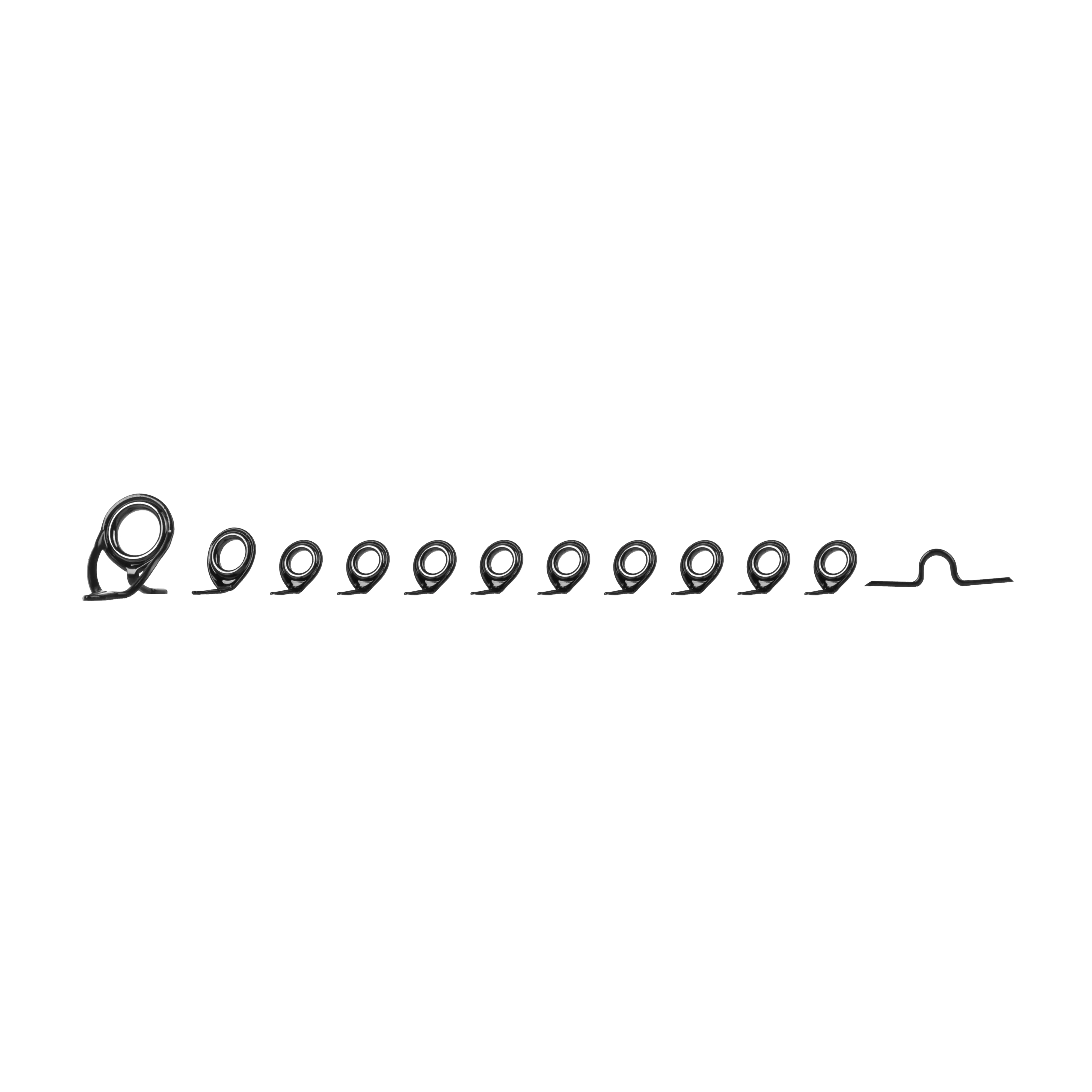
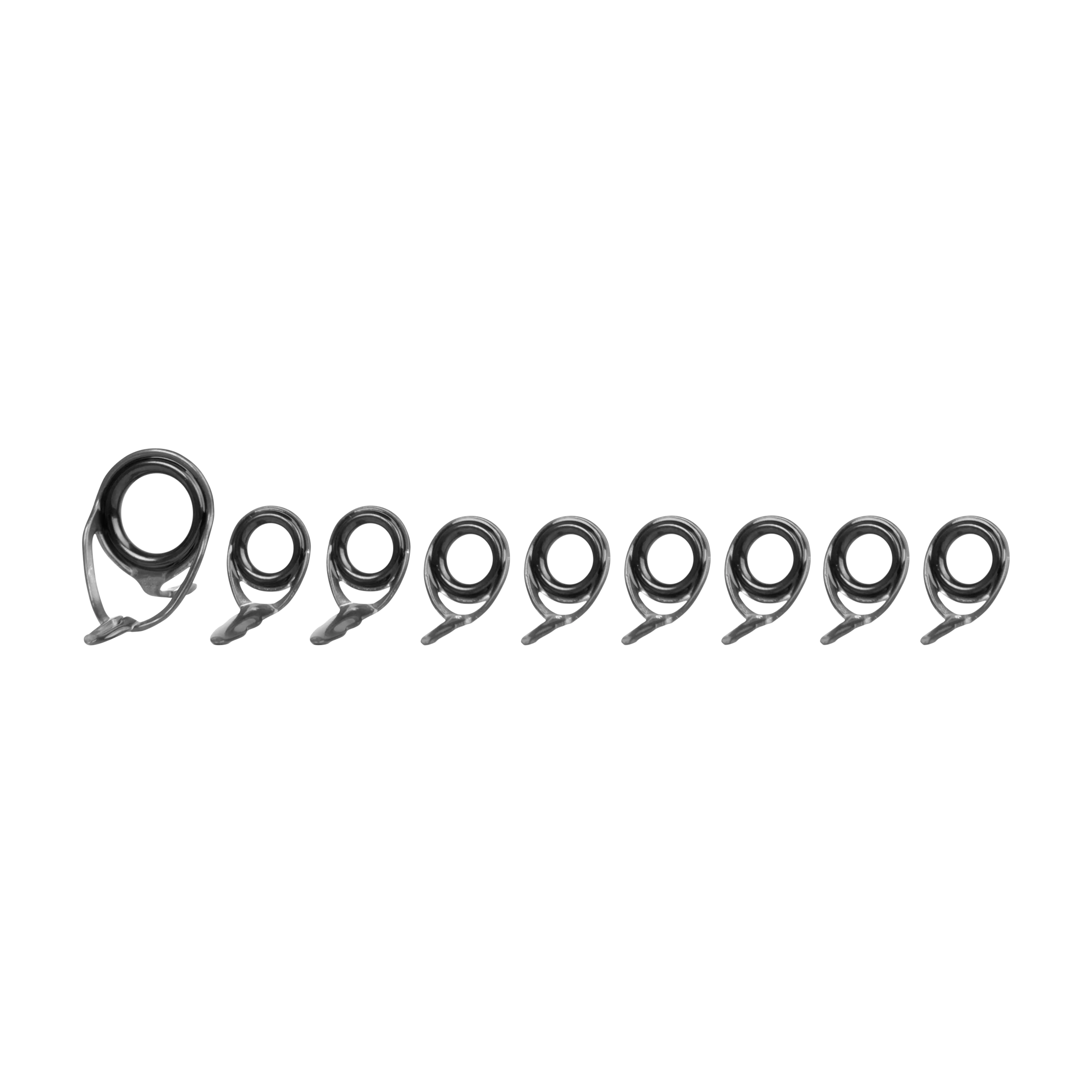
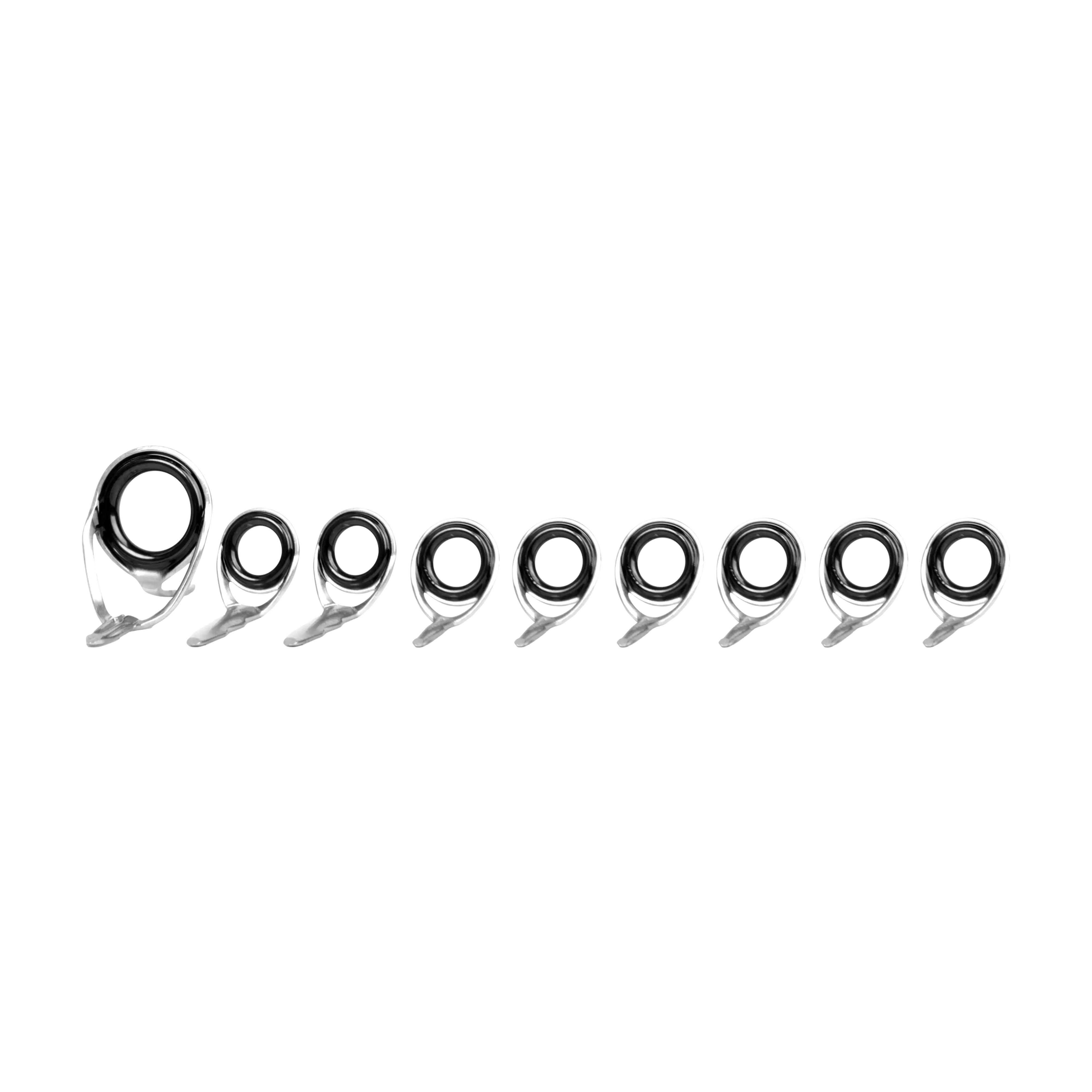
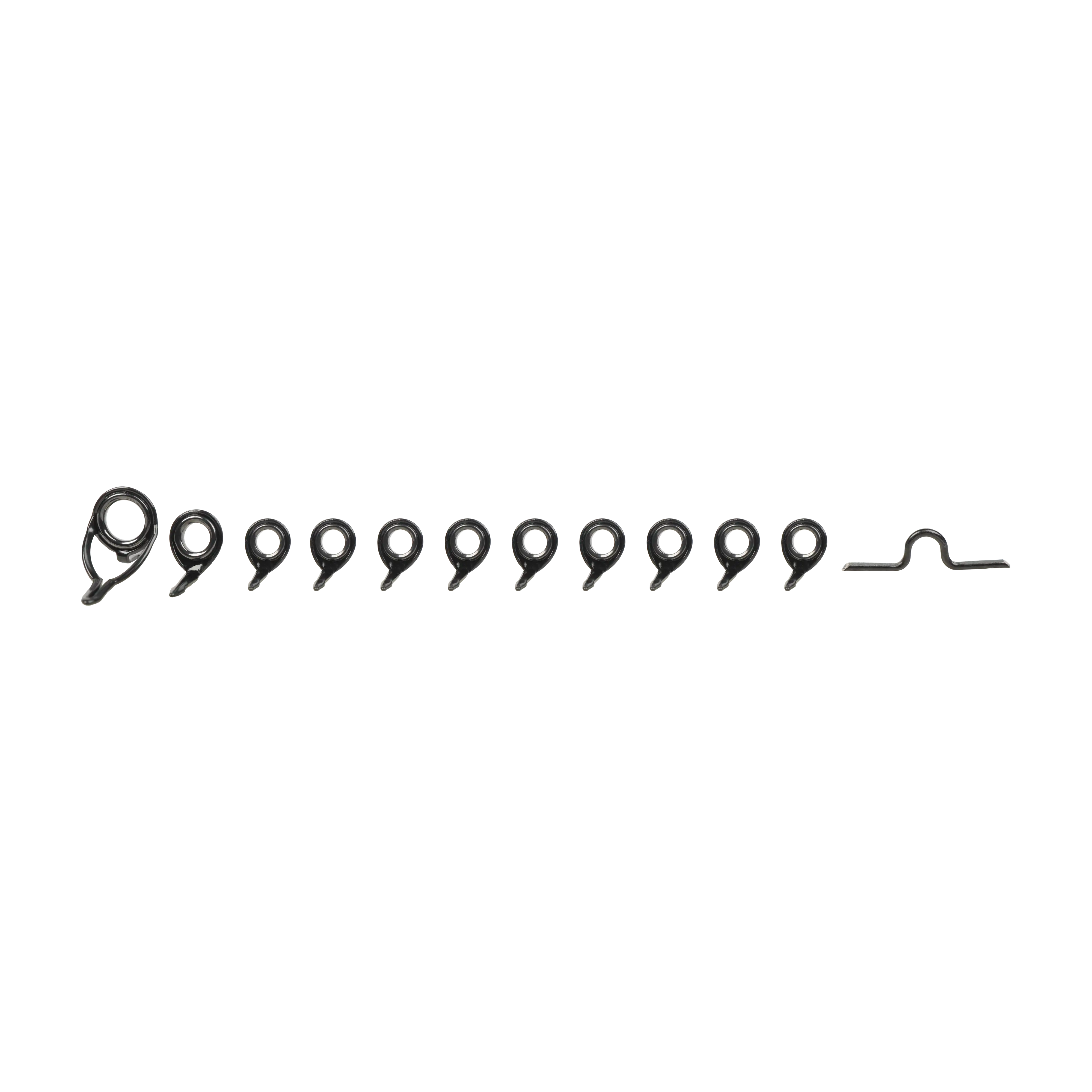
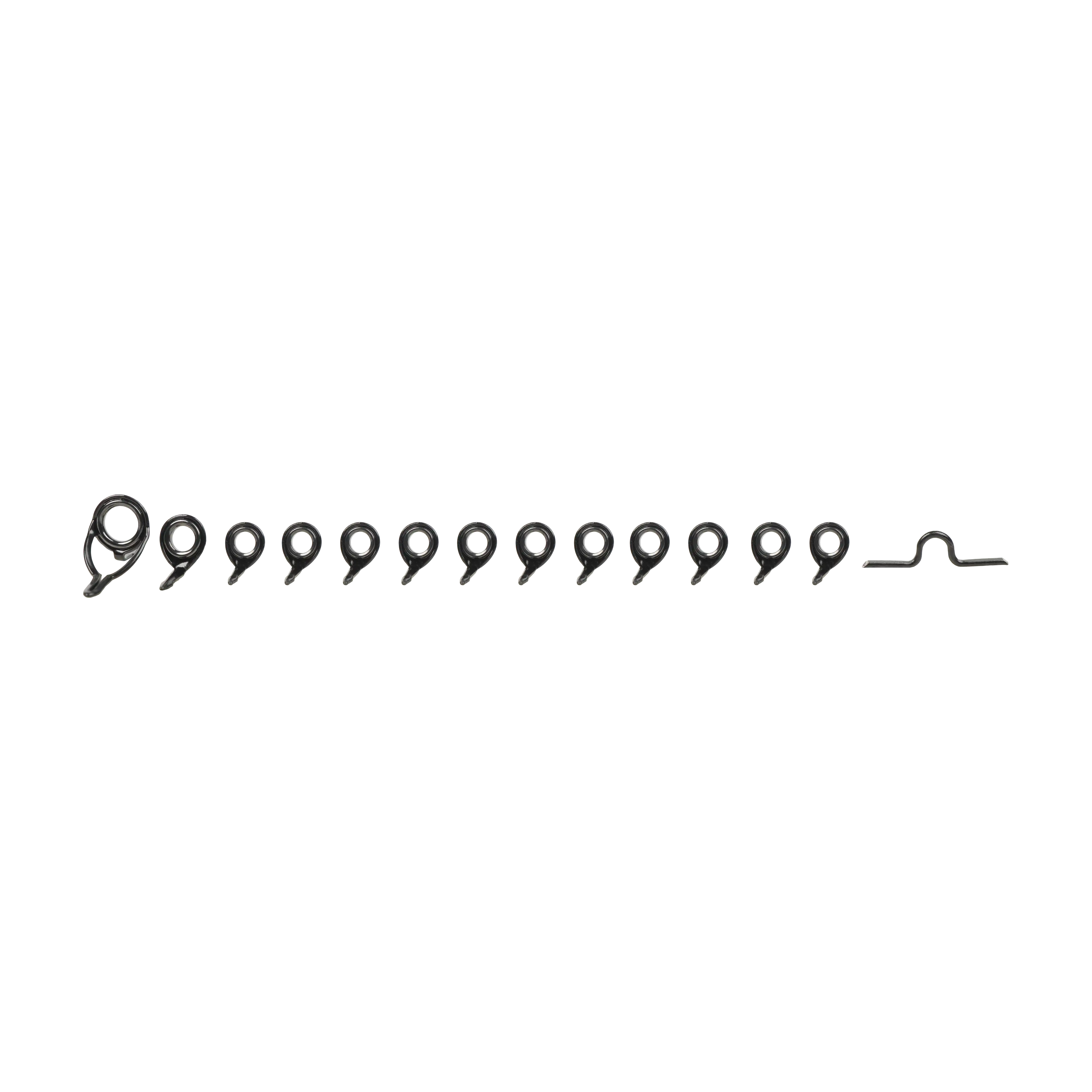
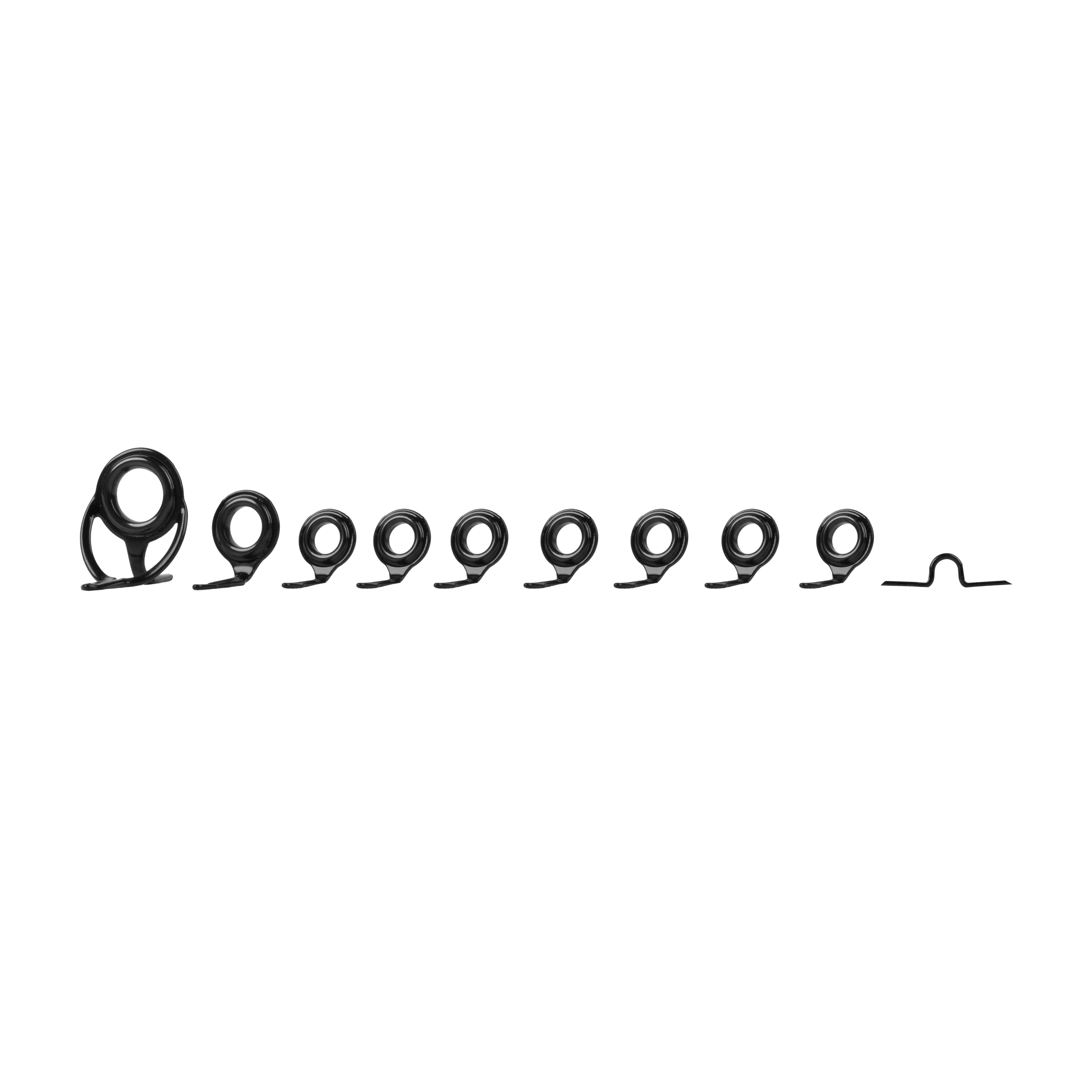
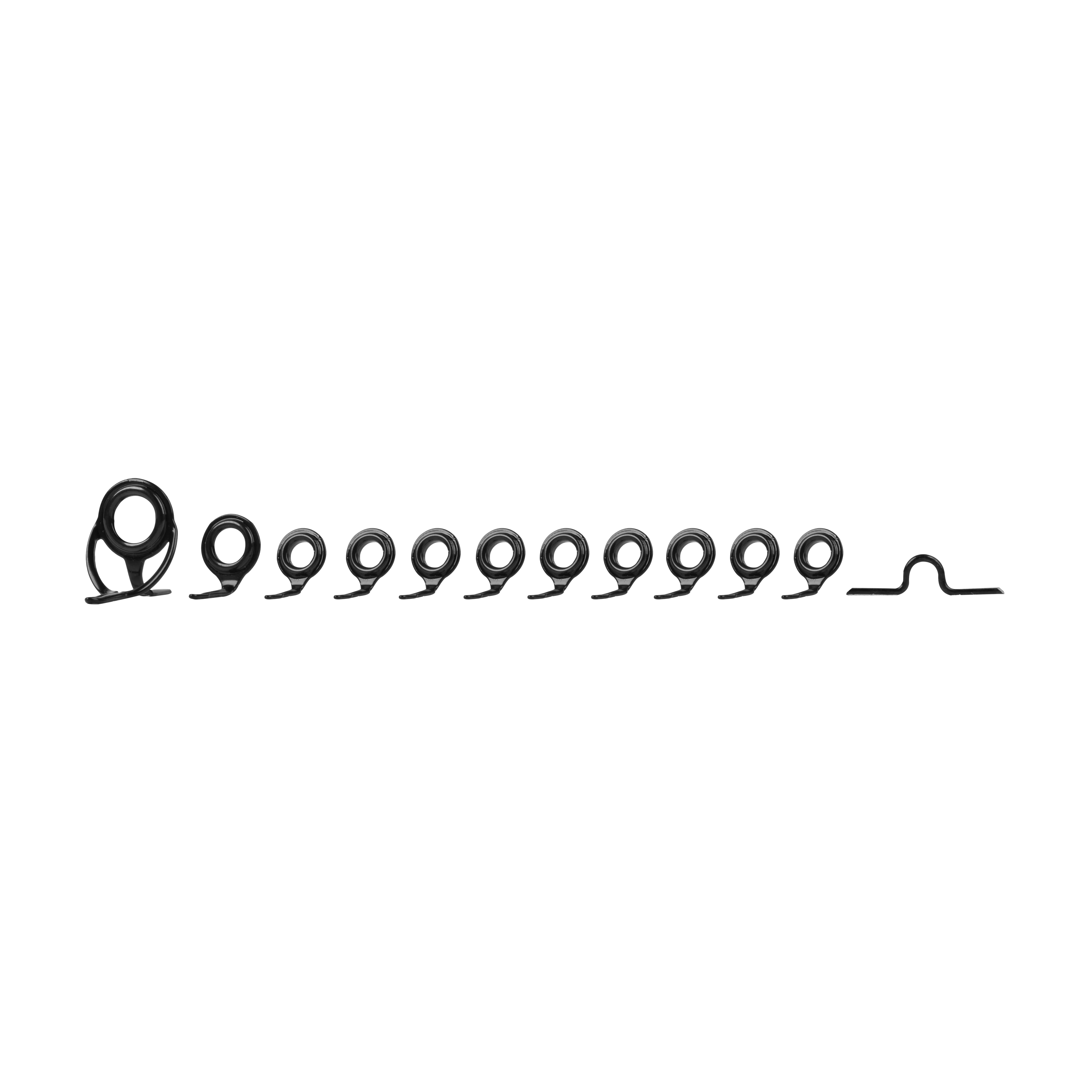
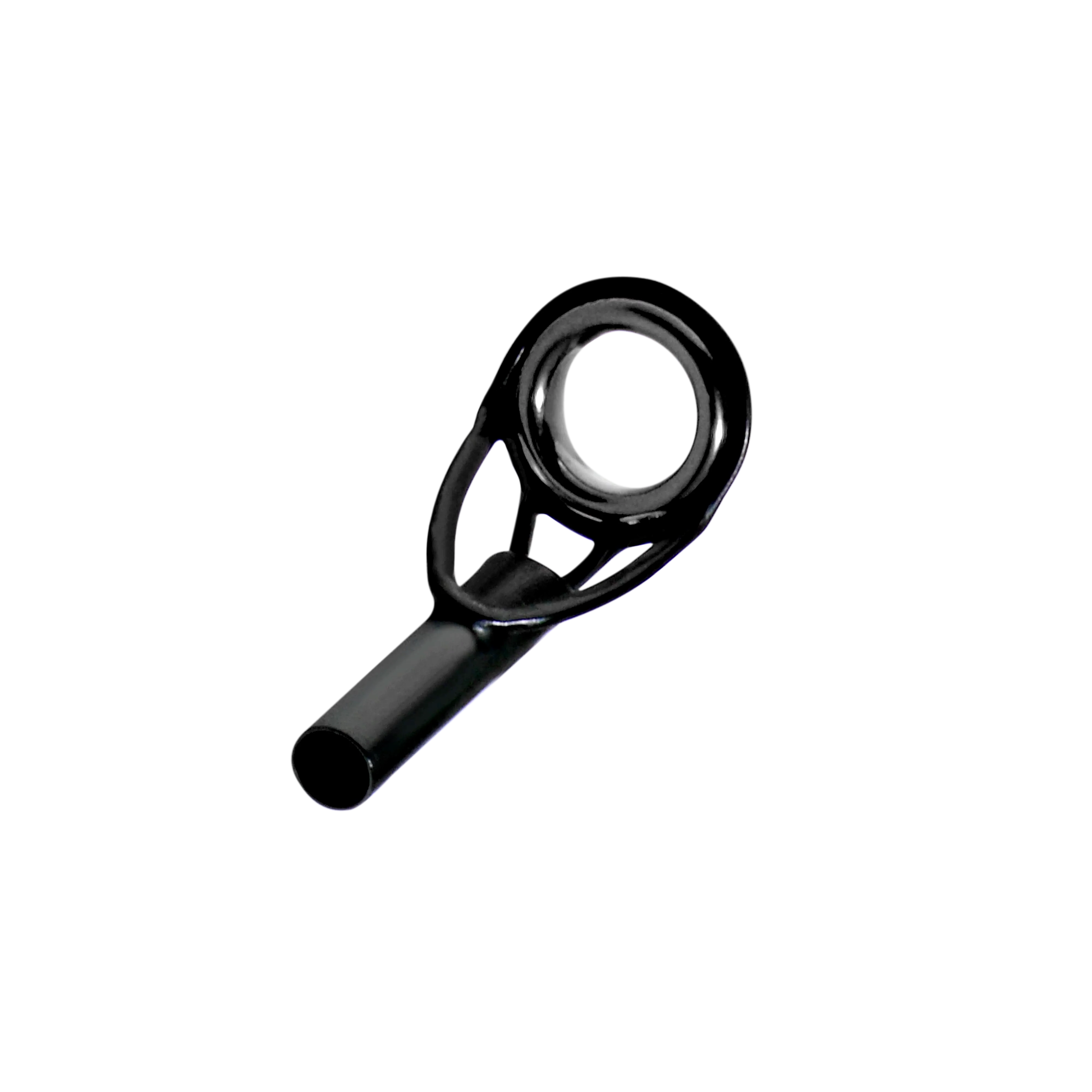
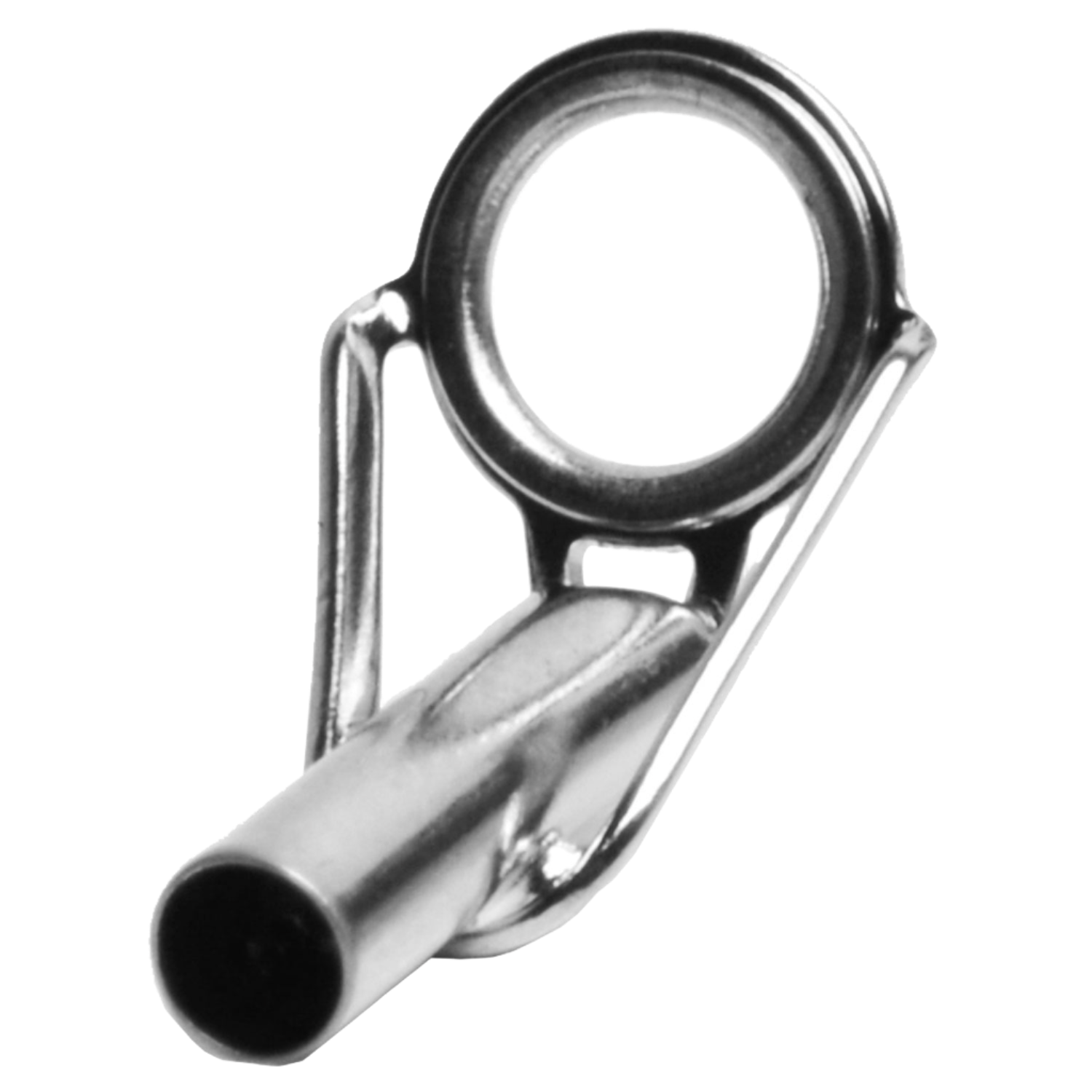
Flipping & Pitching Tip Top Guides
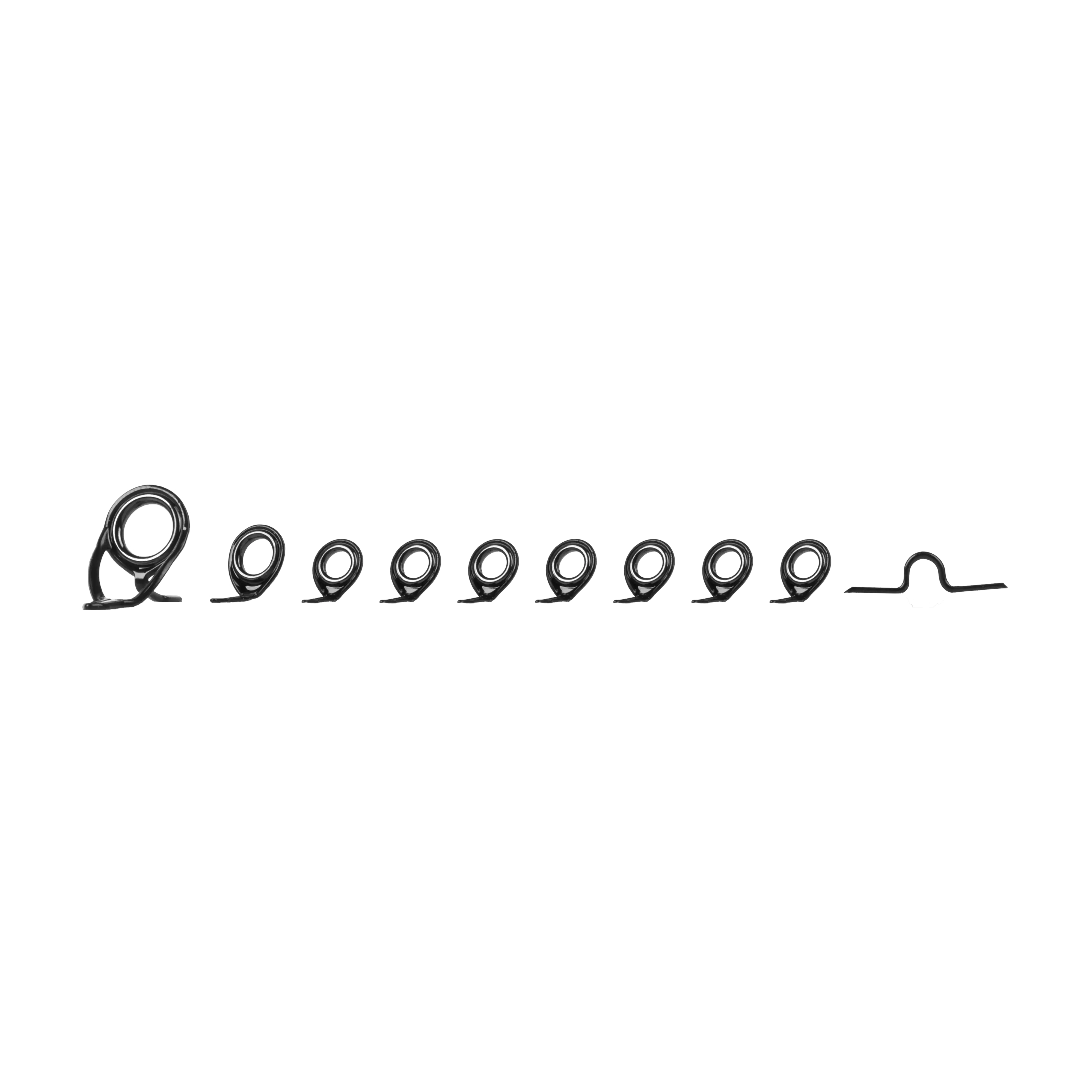
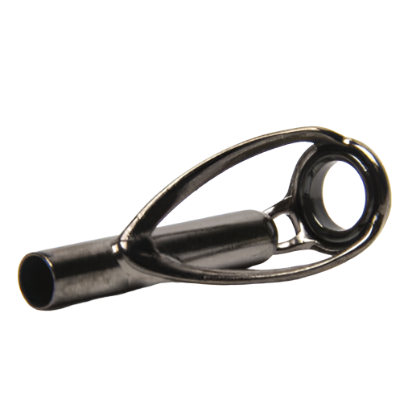
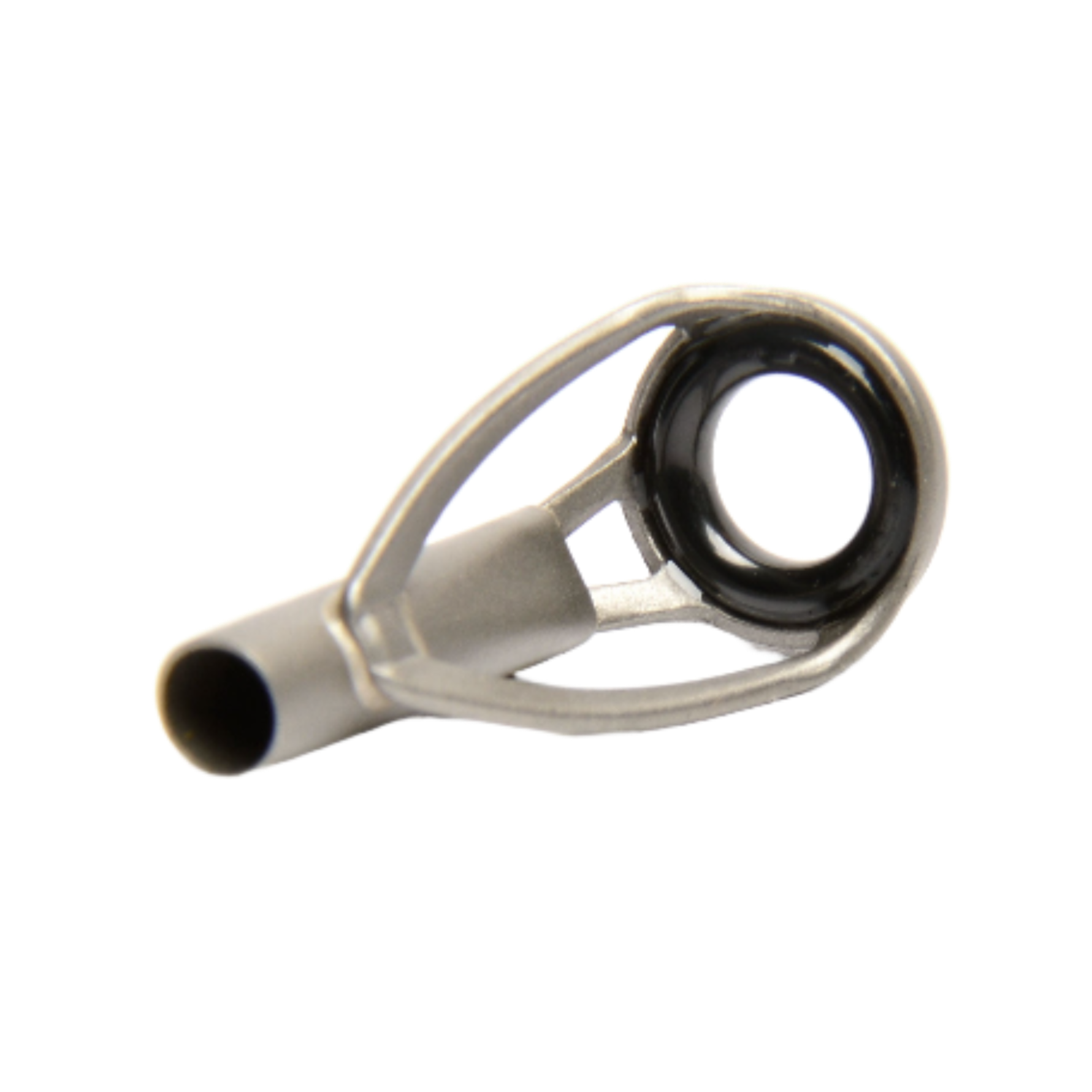
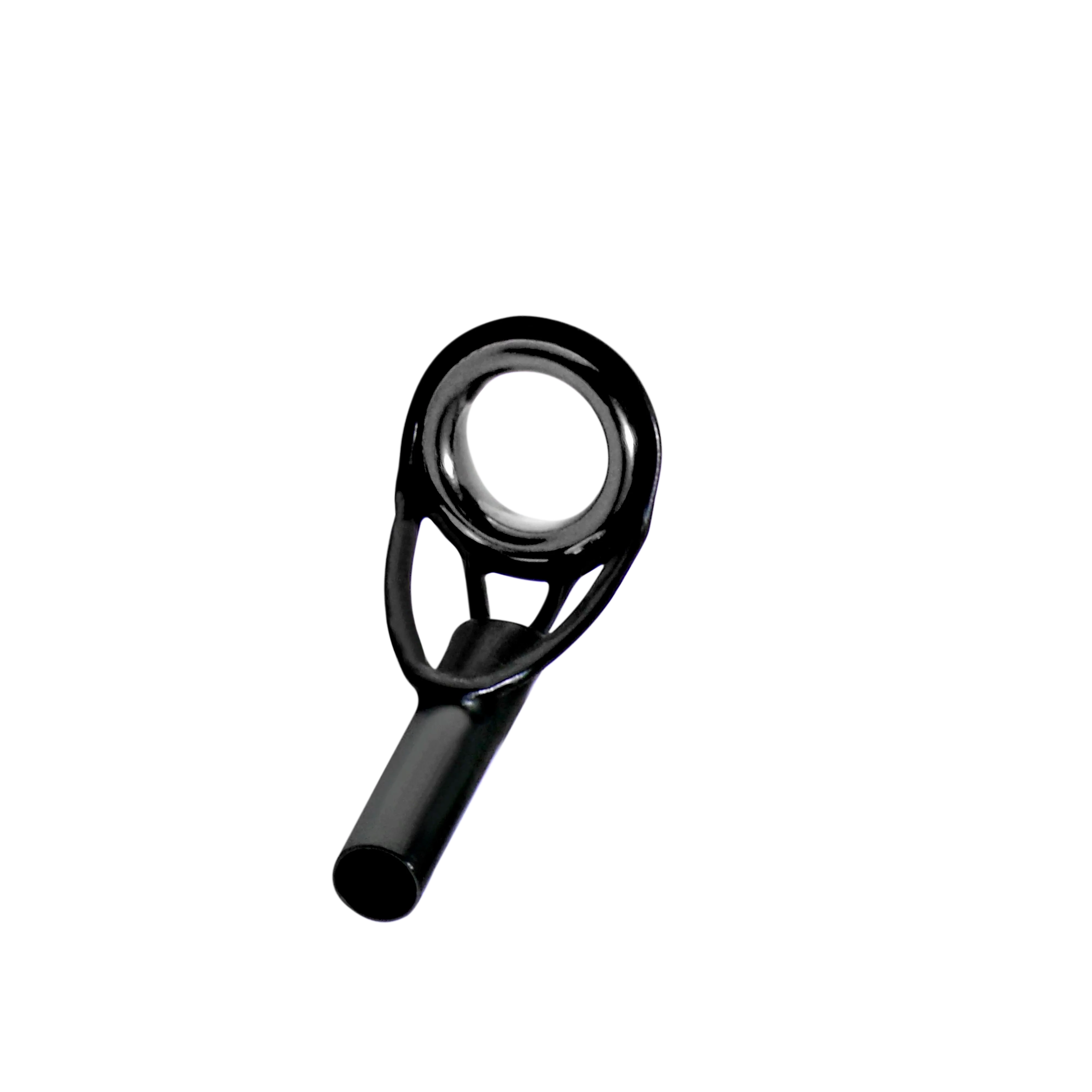
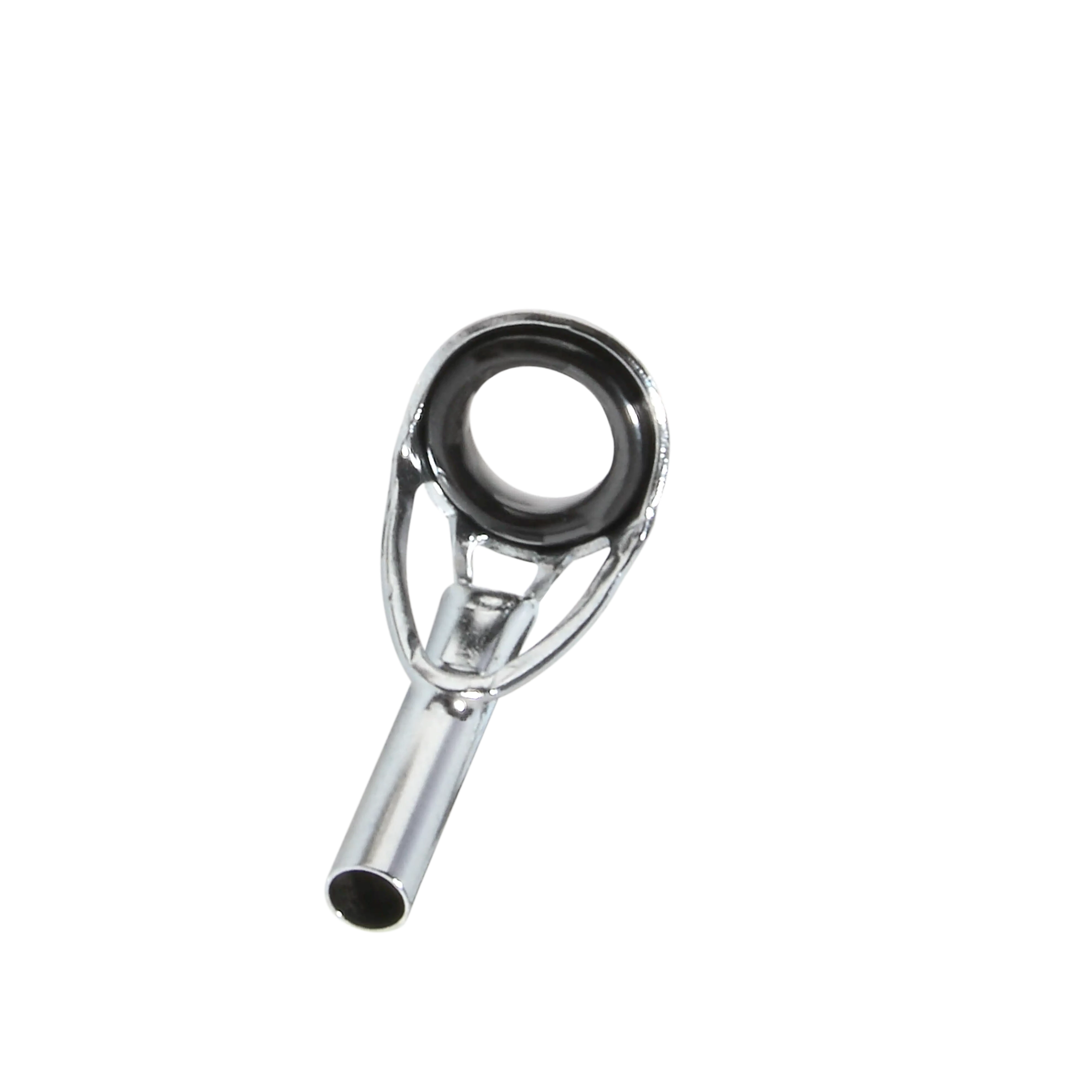
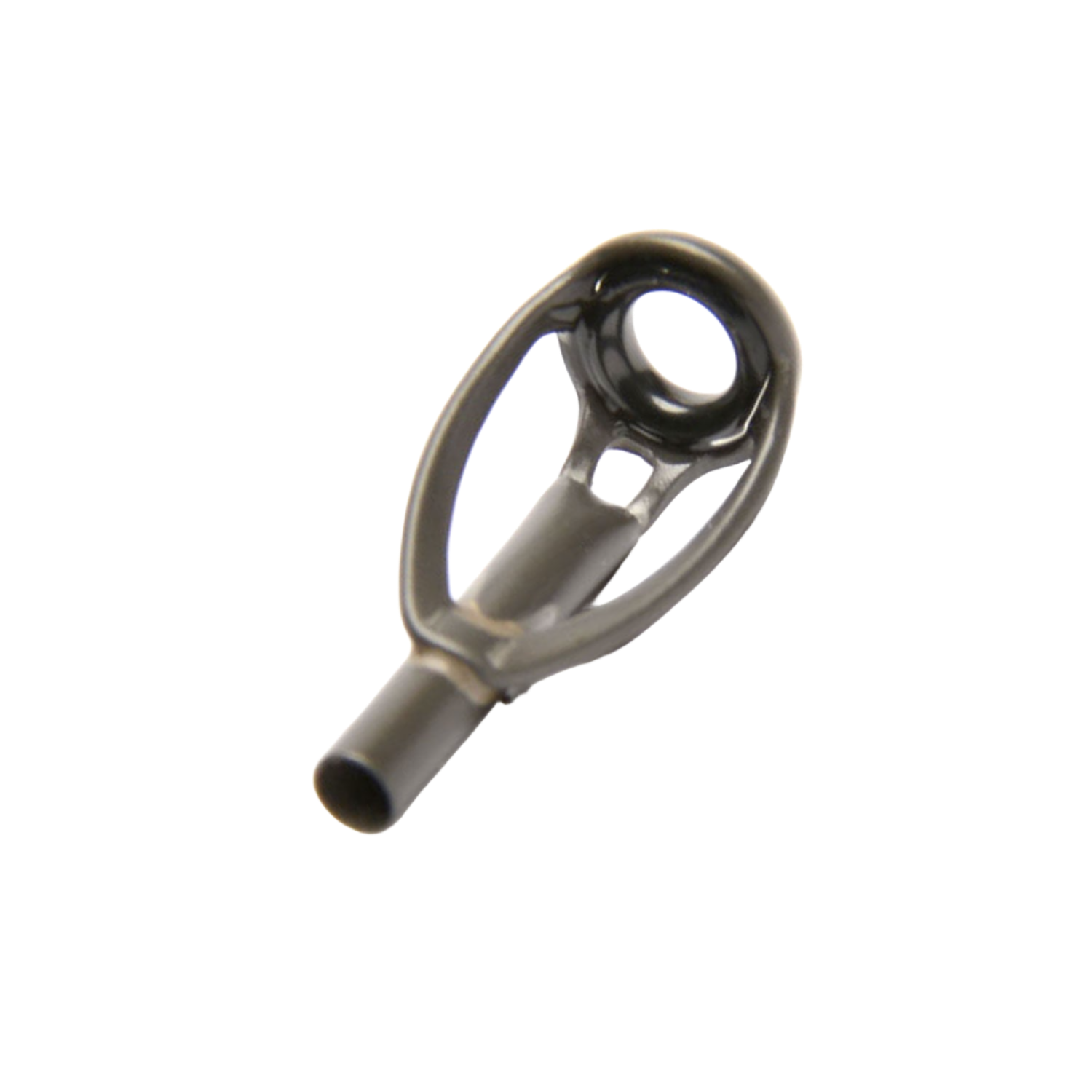
The tip-top plays a crucial role in the overall performance and durability of a flipping or pitching rod. As the final point of contact before the line leaves the rod, the tip-top helps direct line flow during presentations, maintains consistent tension during hooksets, and protects the blank tip from wear caused by friction, braid, and leader knots. Because the tip section of the rod is constantly under load during pitches, hooksets, and fish fights, selecting the correct tip-top is more important than many builders realize.
When selecting a tip-top, two key factors matter:
Ring Size
Ring size affects how the line flows through the tip during casting, pitching, and hooksets. Most builders match the tip-top ring size to the final running guide to maintain smooth, consistent line tracking throughout the guide train. This creates a clean transition from guide to guide and helps preserve the rod’s overall balance and responsiveness.
Some anglers prefer stepping up one ring size larger on the tip-top to better accommodate leader knots, heavier braid, or fluorocarbon connections, especially on heavy-cover setups. A slightly larger ring can also help reduce friction during aggressive hooksets and repeated pitching presentations where knots frequently pass through the tip. The goal is to choose a ring size that maintains smooth line flow without adding unnecessary weight to the upper section of the rod.
Tube Size
Tube size refers to the inside diameter of the tip-top tube that fits over the rod blank tip. The fit must be precise so the tip-top mounts securely without excessive adhesive or looseness. A properly matched tube size helps preserve the rod’s natural action and sensitivity while preventing alignment or durability issues over time.
A properly selected tip-top helps complete the guide train by maintaining smooth line flow, protecting the rod tip, and preserving the balance and responsiveness of the blank. Even though it’s a small component, the wrong tip-top can negatively affect line control, knot clearance, and long-term durability.
Matching Your Tip Top
While matching isn’t required for performance, many rod builders prefer using a tip-top that visually matches the rest of the guide train for a cleaner, more professional appearance. This is typically done by selecting the same brand, frame style, finish, and ring style as the running guides. Matching components helps give the finished rod a more unified and polished custom-built look.
Key Takeaways
- Tip-tops protect the rod tip and maintain smooth line flow during casting and hooksets
- Tube size must match the rod blank tip for proper fit and durability
- Matching the tip-top to the guide train creates a cleaner, more professional appearance
- A properly selected tip-top improves durability, balance, and overall rod performance
Flipping & Pitching Tip Top Guides
The tip-top plays a crucial role in the overall performance and durability of a flipping or pitching rod. As the final point of contact before the line leaves the rod, the tip-top helps direct line flow during presentations, maintains consistent tension during hooksets, and protects the blank tip from wear caused by friction, braid, and leader knots. Because the tip section of the rod is constantly under load during pitches, hooksets, and fish fights, selecting the correct tip-top is more important than many builders realize.
When selecting a tip-top, two key factors matter:
Ring Size
Ring size affects how the line flows through the tip during casting, pitching, and hooksets. Most builders match the tip-top ring size to the final running guide to maintain smooth, consistent line tracking throughout the guide train. This creates a clean transition from guide to guide and helps preserve the rod’s overall balance and responsiveness.
Some anglers prefer stepping up one ring size larger on the tip-top to better accommodate leader knots, heavier braid, or fluorocarbon connections, especially on heavy-cover setups. A slightly larger ring can also help reduce friction during aggressive hooksets and repeated pitching presentations where knots frequently pass through the tip. The goal is to choose a ring size that maintains smooth line flow without adding unnecessary weight to the upper section of the rod.
Tube Size
Tube size refers to the inside diameter of the tip-top tube that fits over the rod blank tip. The fit must be precise so the tip-top mounts securely without excessive adhesive or looseness. A properly matched tube size helps preserve the rod’s natural action and sensitivity while preventing alignment or durability issues over time.
A properly selected tip-top helps complete the guide train by maintaining smooth line flow, protecting the rod tip, and preserving the balance and responsiveness of the blank. Even though it’s a small component, the wrong tip-top can negatively affect line control, knot clearance, and long-term durability.
Matching Your Tip Top
While matching isn’t required for performance, many rod builders prefer using a tip-top that visually matches the rest of the guide train for a cleaner, more professional appearance. This is typically done by selecting the same brand, frame style, finish, and ring style as the running guides. Matching components helps give the finished rod a more unified and polished custom-built look.
Key Takeaways
- Tip-tops protect the rod tip and maintain smooth line flow during casting and hooksets
- Tube size must match the rod blank tip for proper fit and durability
- Matching the tip-top to the guide train creates a cleaner, more professional appearance
- A properly selected tip-top improves durability, balance, and overall rod performance
Flipping & Pitching Tip Tops




Flipping & Pitching Handle Kits
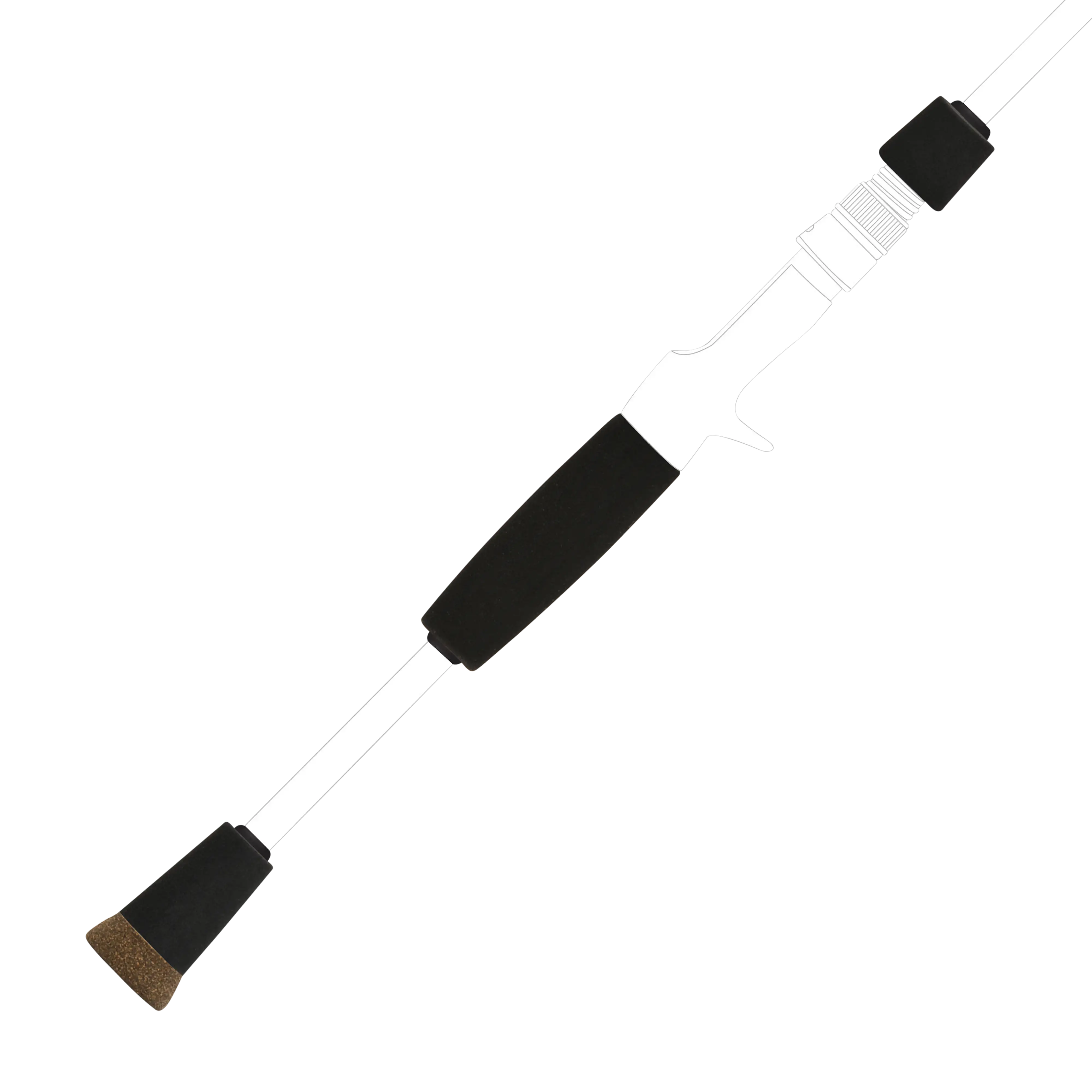
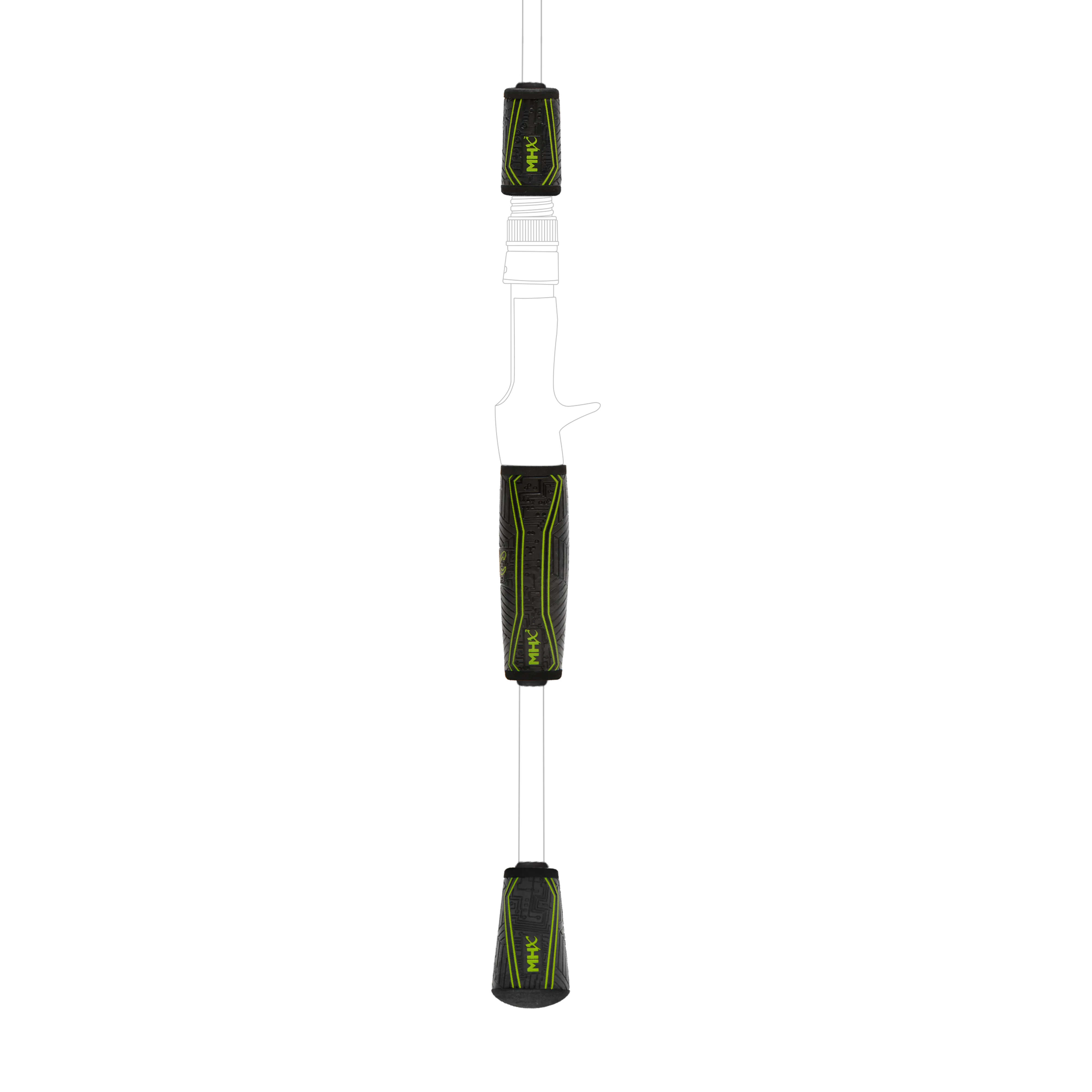
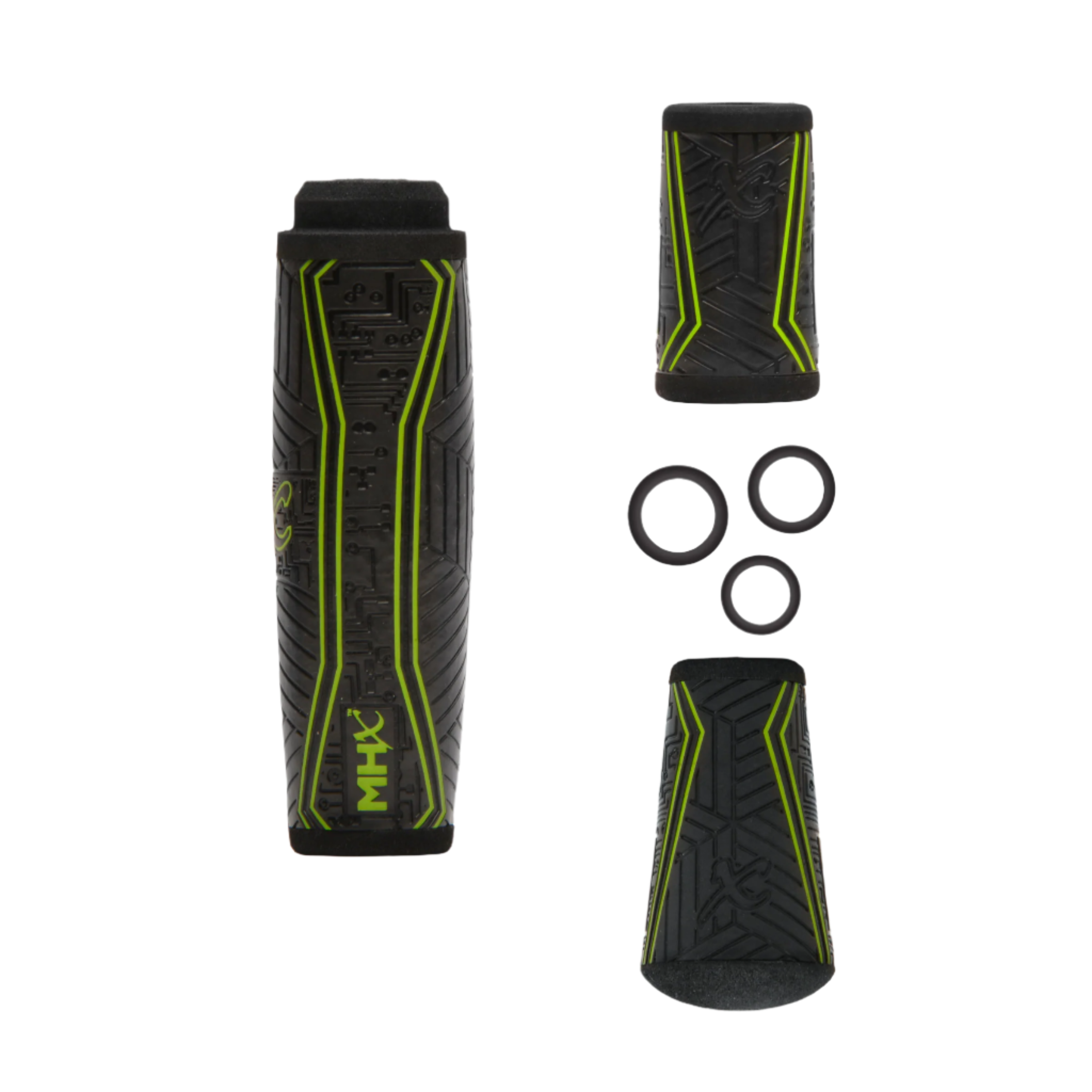
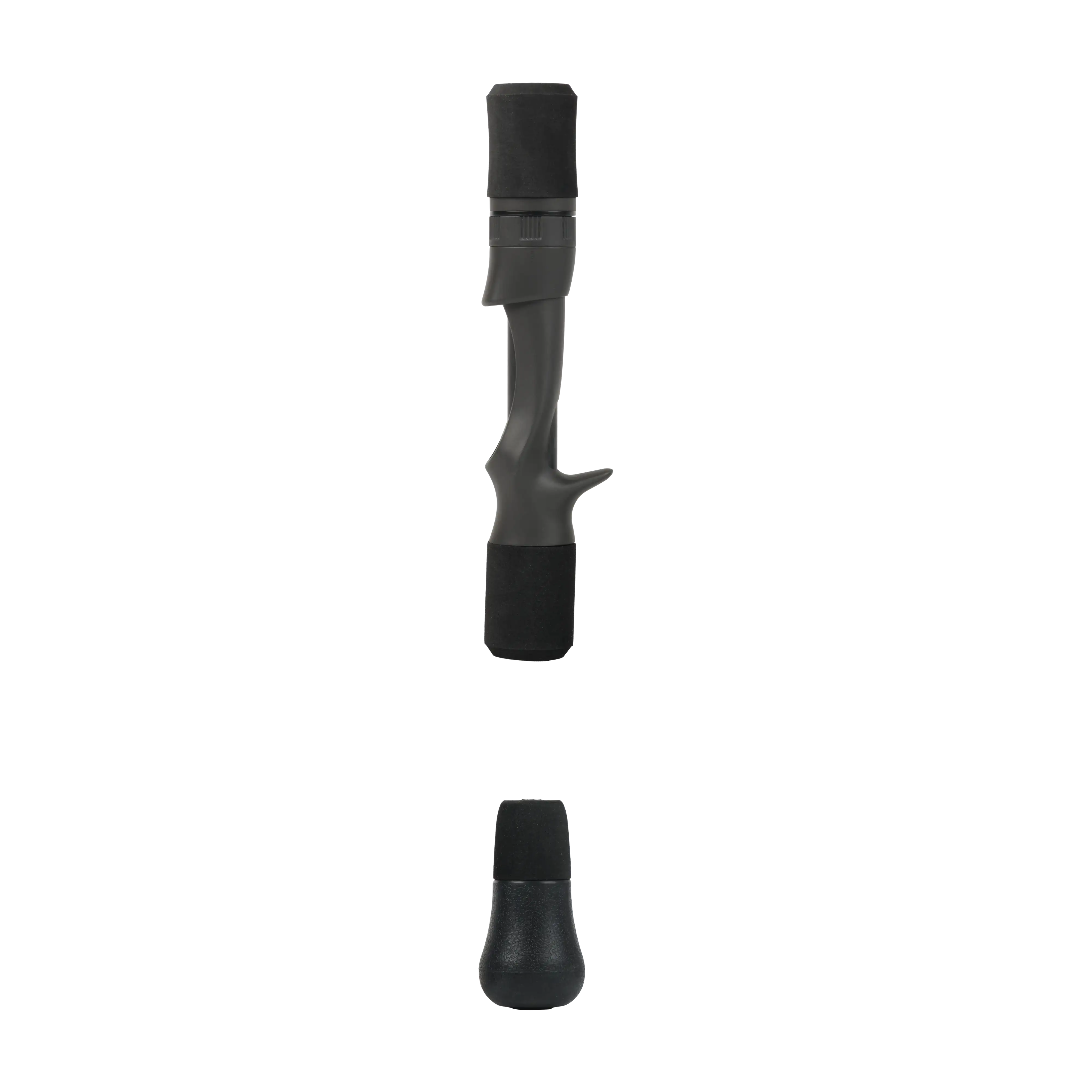
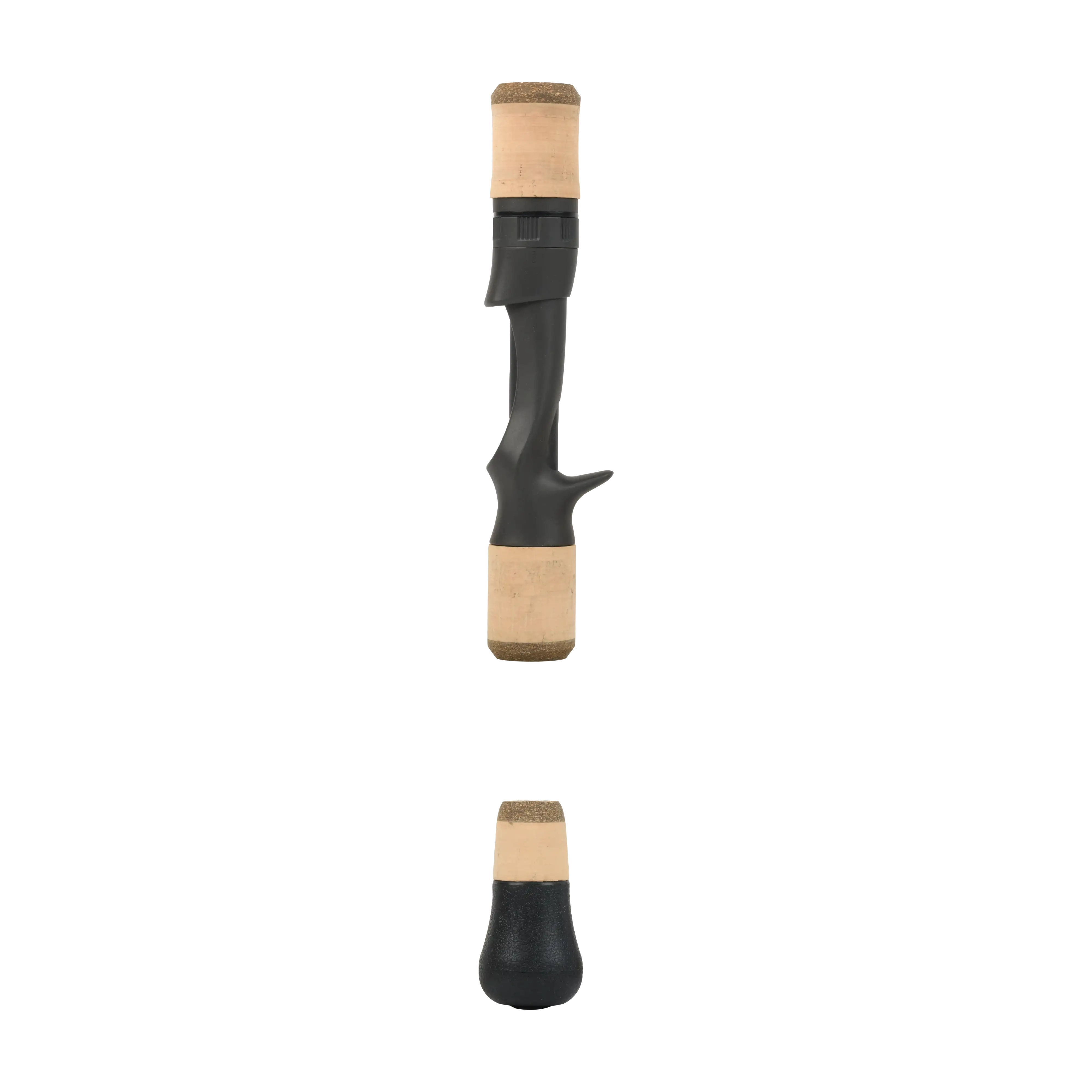
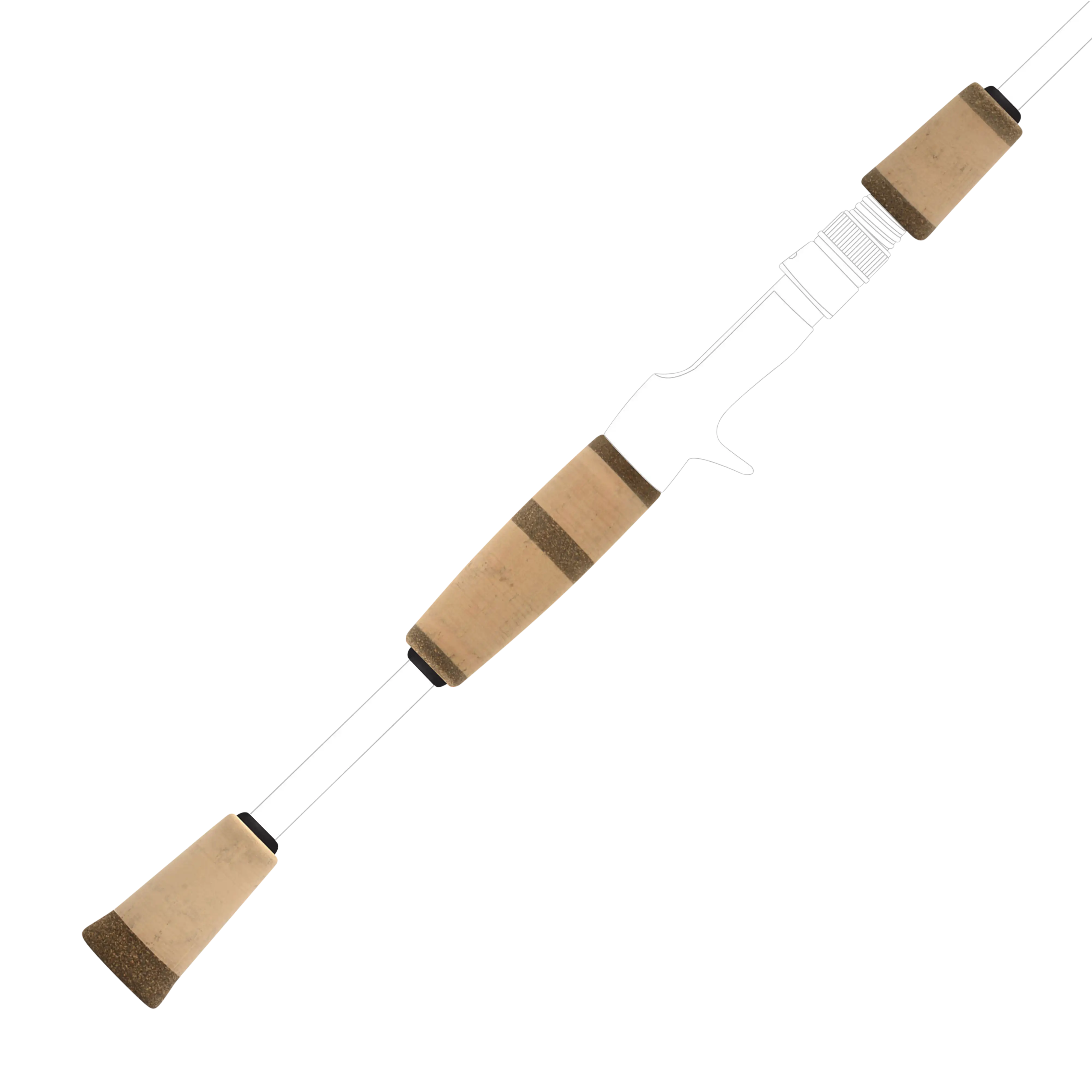
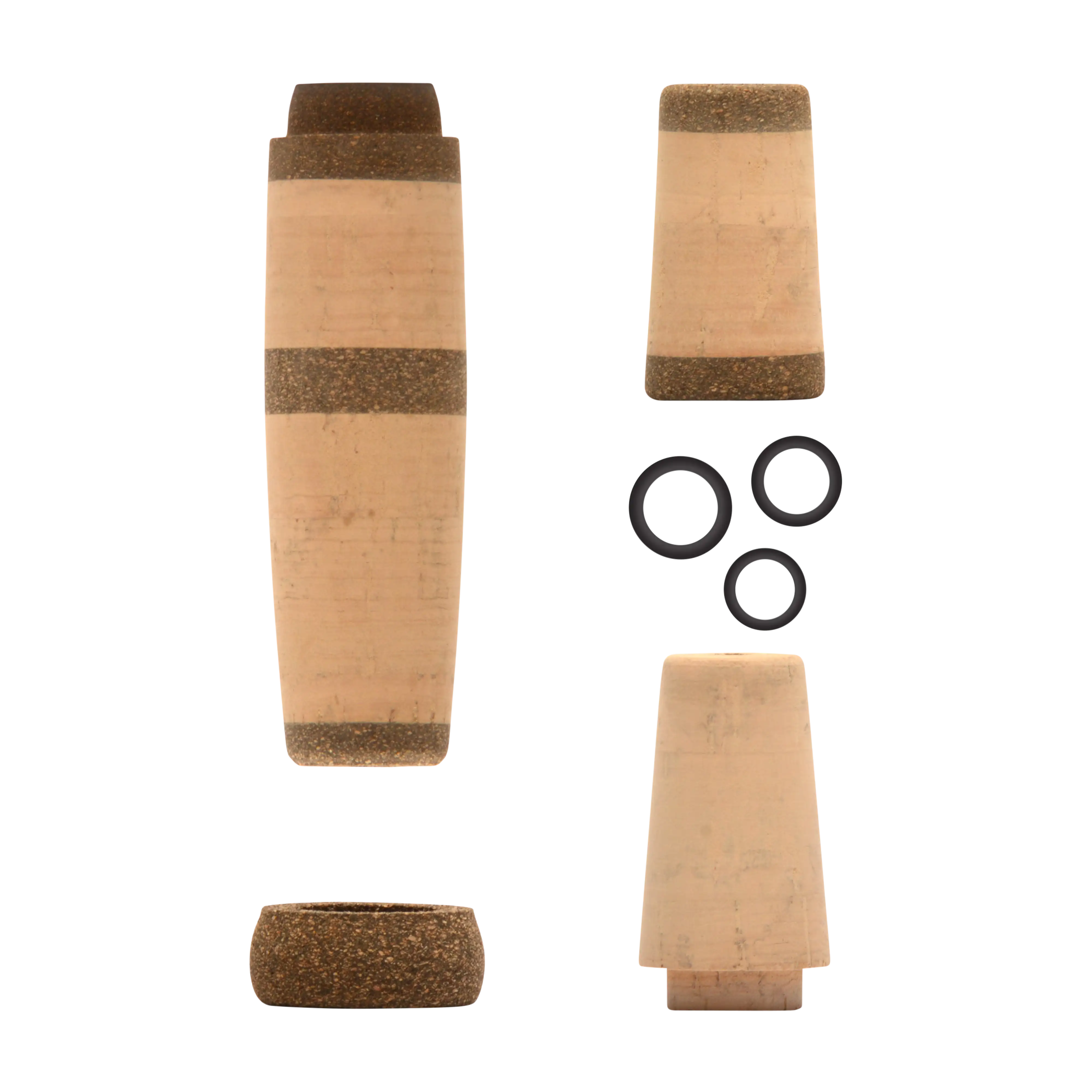
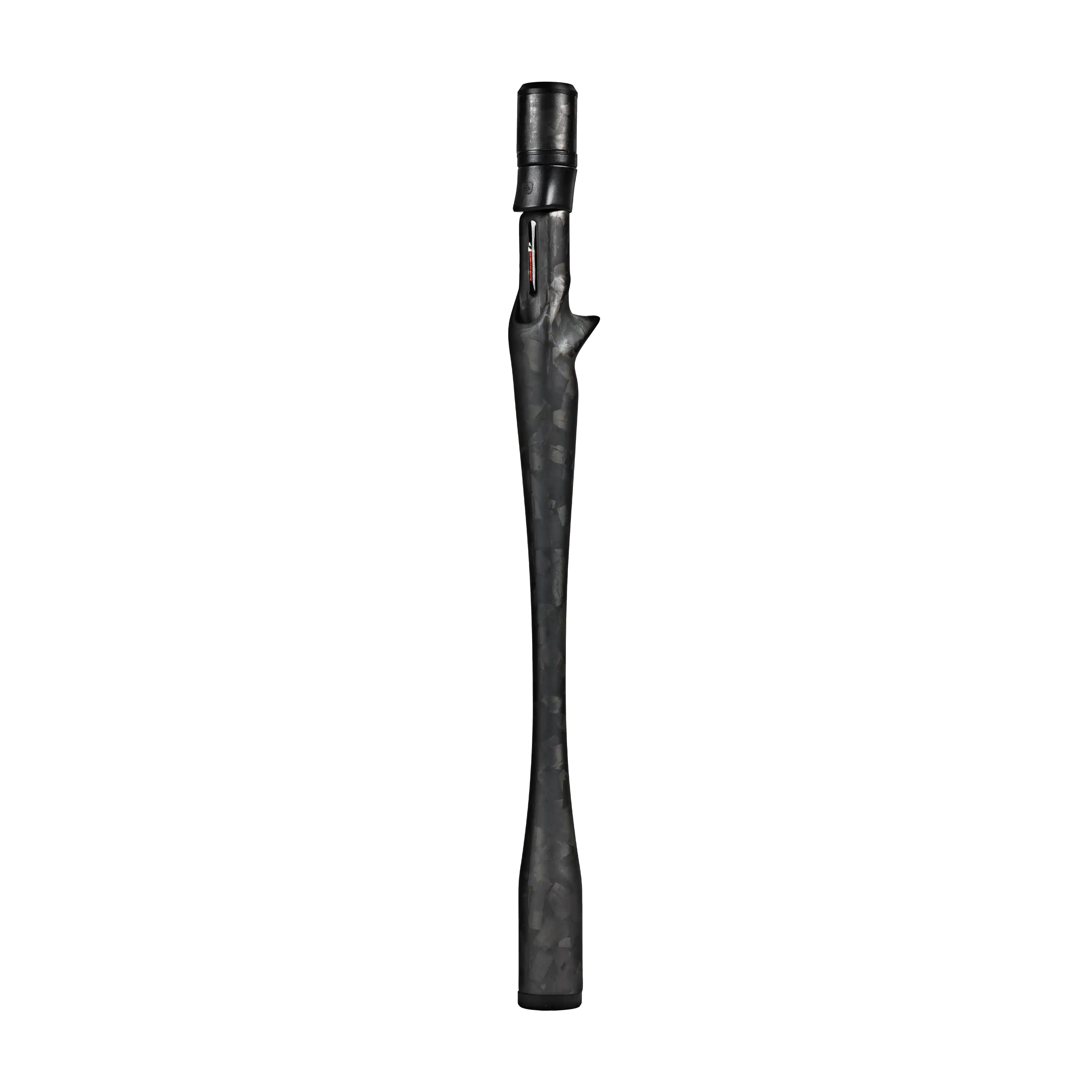
Handles aren’t just about comfort — they influence how your rod feels, balances, and performs during long flipping and pitching sessions. A well-chosen handle can make precise bait placement easier, reduce fatigue during repeated casts, and help you feel subtle bites through the blank.
Split vs Full-Grip Handles
Choosing between a split grip and a full-length rear grip comes down to how much adjustability and weight reduction you want. This decision affects rod balance, comfort, and how your hand interacts with the blank during different flipping and pitching techniques.
Split Grips
Split grips allow for maximum customization and are a popular choice on modern flipping and pitching builds. Because the rear grip sections are separated, builders have more flexibility when positioning the reel seat and rear grip along the blank to match their preferred hand placement and casting style. This makes it easier to fine-tune overall rod balance, leverage, and comfort for specific techniques, whether you’re pitching compact jigs into docks or repeatedly flipping heavy cover all day long.
Split grips also help reduce unnecessary overall weight, particularly in the rear section of the rod, which can improve responsiveness and reduce fatigue during repetitive presentations. Many anglers also prefer the cleaner, more performance-oriented look that split-grip setups provide.
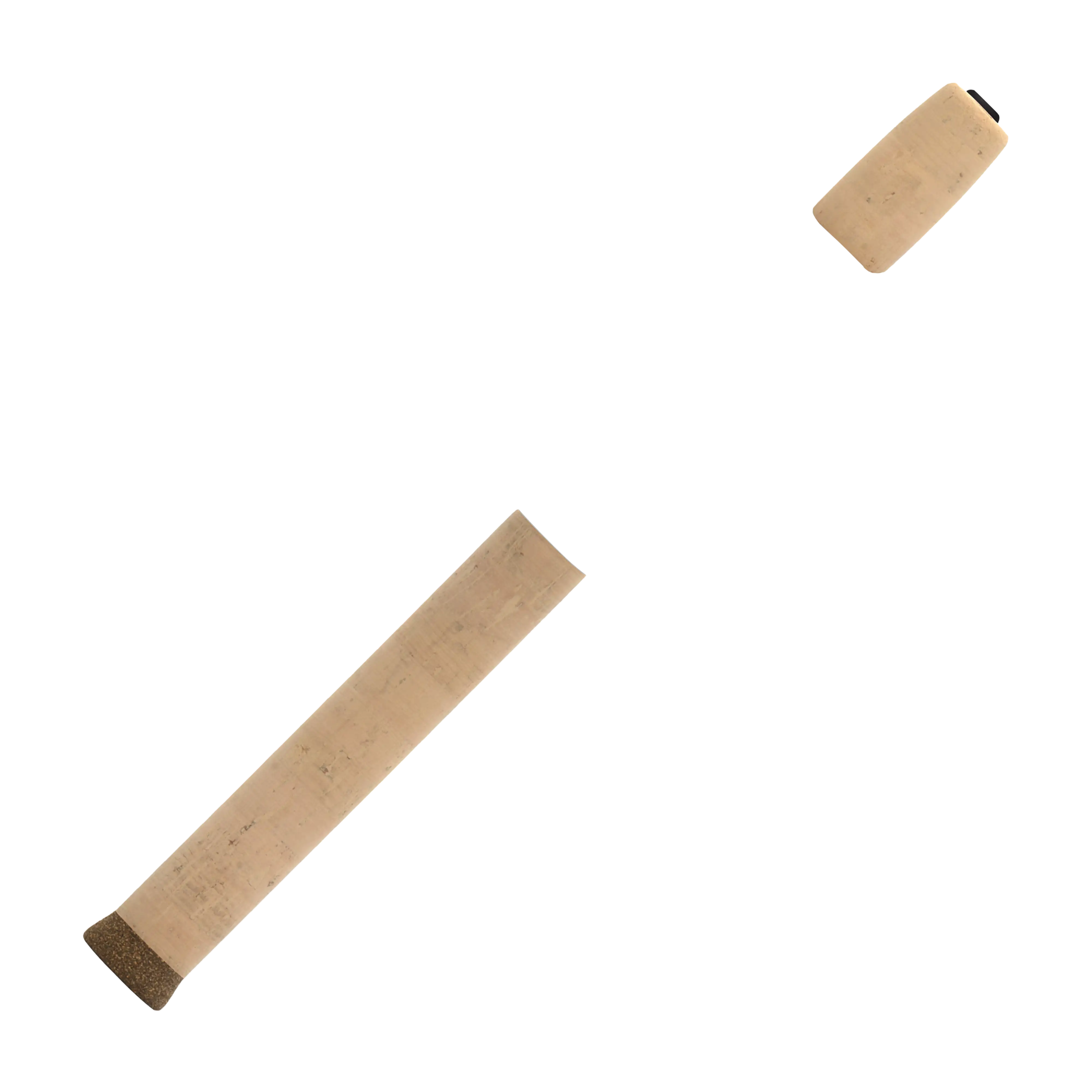
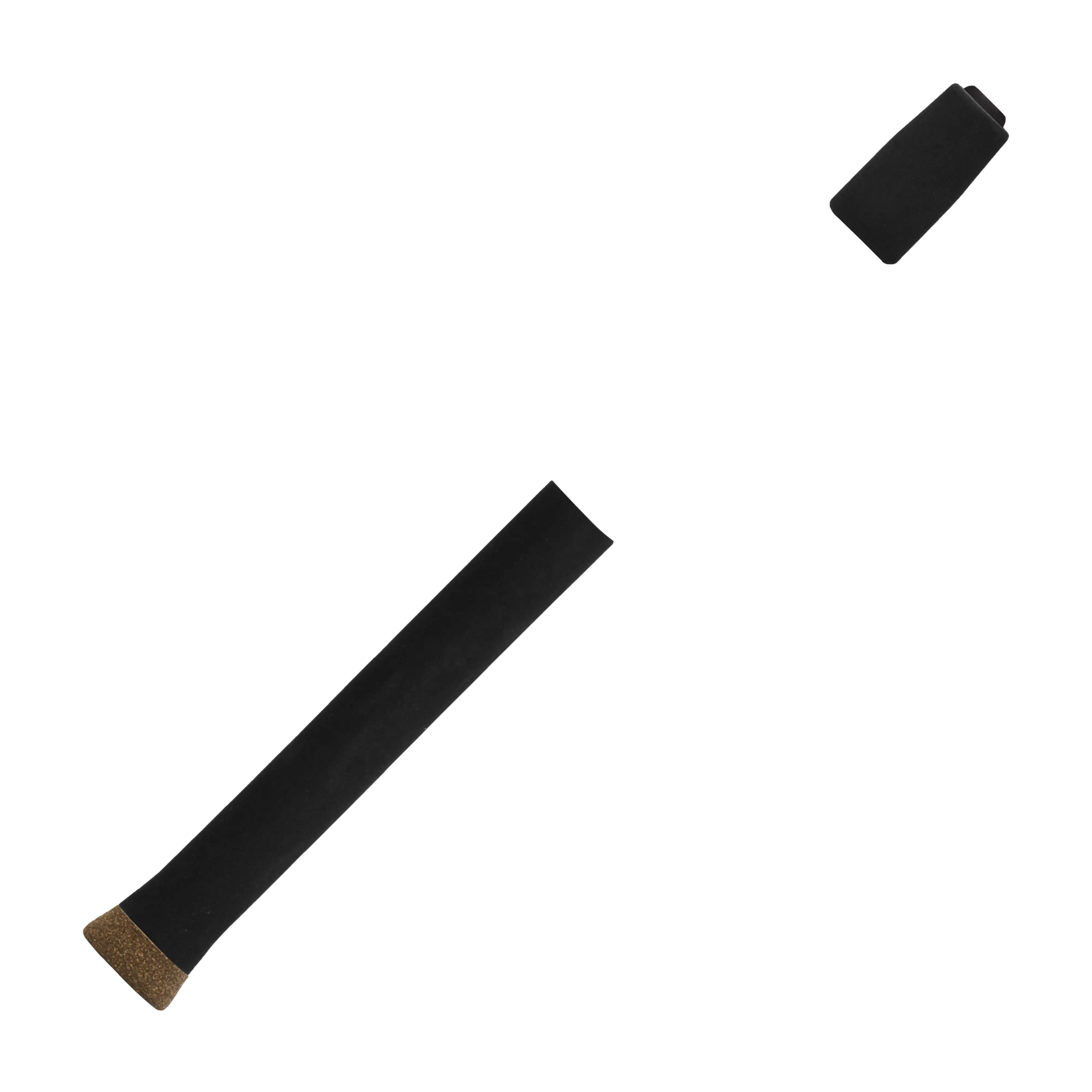
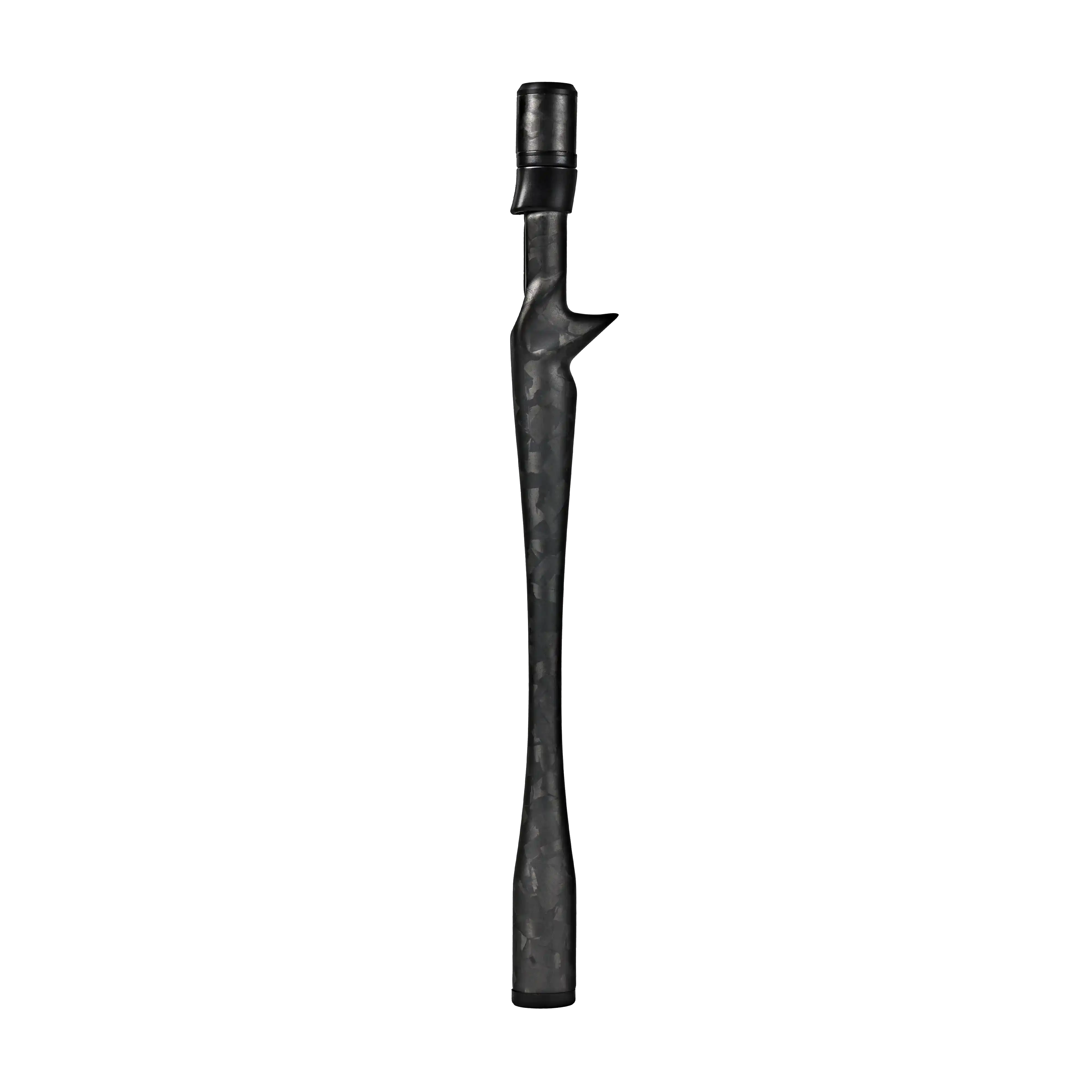
Full-Length Grips
Full-length grips use a continuous rear grip section that provides a solid, uninterrupted surface for handling the rod. Because the grip and reel seat placement are more fixed, there is less customization flexibility compared to split-grip setups. However, many anglers prefer the consistent hand placement and traditional feel that full grips provide, especially during powerful hooksets and heavy fish fights.
Full grips can slightly increase overall rod weight, but they also offer excellent comfort and support when fishing around dense cover for extended periods. They remain a popular choice for builders who prioritize a more classic look and a stable, continuous grip surface throughout the rod handle.
Handle Materials
The material of the handle impacts comfort, sensitivity, and durability. Each material has trade-offs, so choosing the right one depends on your fishing style and personal preference.
Cork
Lightweight, natural feel, and excellent sensitivity. Provides a comfortable grip for long sessions, though it can dent or wear over time. It also tends to warm slightly in hand, which many anglers prefer in cooler conditions.
EVA Foam
EVA foam is highly durable and resistant to water and abrasion while providing a softer feel in hand. It offers excellent longevity, performs well in wet conditions, and maintains consistent comfort during long fishing sessions, making it a popular choice for anglers who prioritize durability and easy maintenance.
Carbon / Composite
Extremely lightweight and stiff, offering precise feedback and excellent durability. May feel harder in hand during extended use. It also enhances sensitivity by transmitting more vibration directly through the handle into the angler’s hand.
Choosing the right handle kit comes down to matching your technique, blank, and personal preference. Consider whether you want the flexibility of a split grip for adjusting balance and reel seat position or the stability of a full grip, and choose a material that complements your style of fishing — from light finesse flipping to punching dense mats.
Key Takeaways
- Handle choice can affect balance, comfort, and sensitivity.
- Split grips allow adjustable reel seat position and customizable balance; full grips are fixed.
- Proper reel seat placement reduces fatigue and improves control.
- Cork, EVA, and carbon handles each offer different trade-offs in feel, weight, and durability.
Flipping & Pitching Handle Kits
Handles aren’t just about comfort — they influence how your rod feels, balances, and performs during long flipping and pitching sessions. A well-chosen handle can make precise bait placement easier, reduce fatigue during repeated casts, and help you feel subtle bites through the blank.
Split vs Full-Grip Handles
Choosing between a split grip and a full-length rear grip comes down to how much adjustability and weight reduction you want. This decision affects rod balance, comfort, and how your hand interacts with the blank during different flipping and pitching techniques.
Split Grips
Split grips allow for maximum customization and are a popular choice on modern flipping and pitching builds. Because the rear grip sections are separated, builders have more flexibility when positioning the reel seat and rear grip along the blank to match their preferred hand placement and casting style. This makes it easier to fine-tune overall rod balance, leverage, and comfort for specific techniques, whether you’re pitching compact jigs into docks or repeatedly flipping heavy cover all day long.
Split grips also help reduce unnecessary overall weight, particularly in the rear section of the rod, which can improve responsiveness and reduce fatigue during repetitive presentations. Many anglers also prefer the cleaner, more performance-oriented look that split-grip setups provide.
Full-Length Grips
Full-length grips use a continuous rear grip section that provides a solid, uninterrupted surface for handling the rod. Because the grip and reel seat placement are more fixed, there is less customization flexibility compared to split-grip setups. However, many anglers prefer the consistent hand placement and traditional feel that full grips provide, especially during powerful hooksets and heavy fish fights.
Full grips can slightly increase overall rod weight, but they also offer excellent comfort and support when fishing around dense cover for extended periods. They remain a popular choice for builders who prioritize a more classic look and a stable, continuous grip surface throughout the rod handle.
Handle Materials
The material of the handle impacts comfort, sensitivity, and durability. Each material has trade-offs, so choosing the right one depends on your fishing style and personal preference.
Cork
Lightweight, natural feel, and excellent sensitivity. Provides a comfortable grip for long sessions, though it can dent or wear over time. It also tends to warm slightly in hand, which many anglers prefer in cooler conditions.
EVA Foam
EVA foam is highly durable and resistant to water and abrasion while providing a softer feel in hand. It offers excellent longevity, performs well in wet conditions, and maintains consistent comfort during long fishing sessions, making it a popular choice for anglers who prioritize durability and easy maintenance.
Carbon / Composite
Extremely lightweight and stiff, offering precise feedback and excellent durability. May feel harder in hand during extended use. It also enhances sensitivity by transmitting more vibration directly through the handle into the angler’s hand.
Choosing the right handle kit comes down to matching your technique, blank, and personal preference. Consider whether you want the flexibility of a split grip for adjusting balance and reel seat position or the stability of a full grip, and choose a material that complements your style of fishing — from light finesse flipping to punching dense mats.
Key Takeaways
- Handle choice can affect balance, comfort, and sensitivity.
- Split grips allow adjustable reel seat position and customizable balance; full grips are fixed.
- Proper reel seat placement reduces fatigue and improves control.
- Cork, EVA, and carbon handles each offer different trade-offs in feel, weight, and durability.
Flipping & Pitching Handle Kits

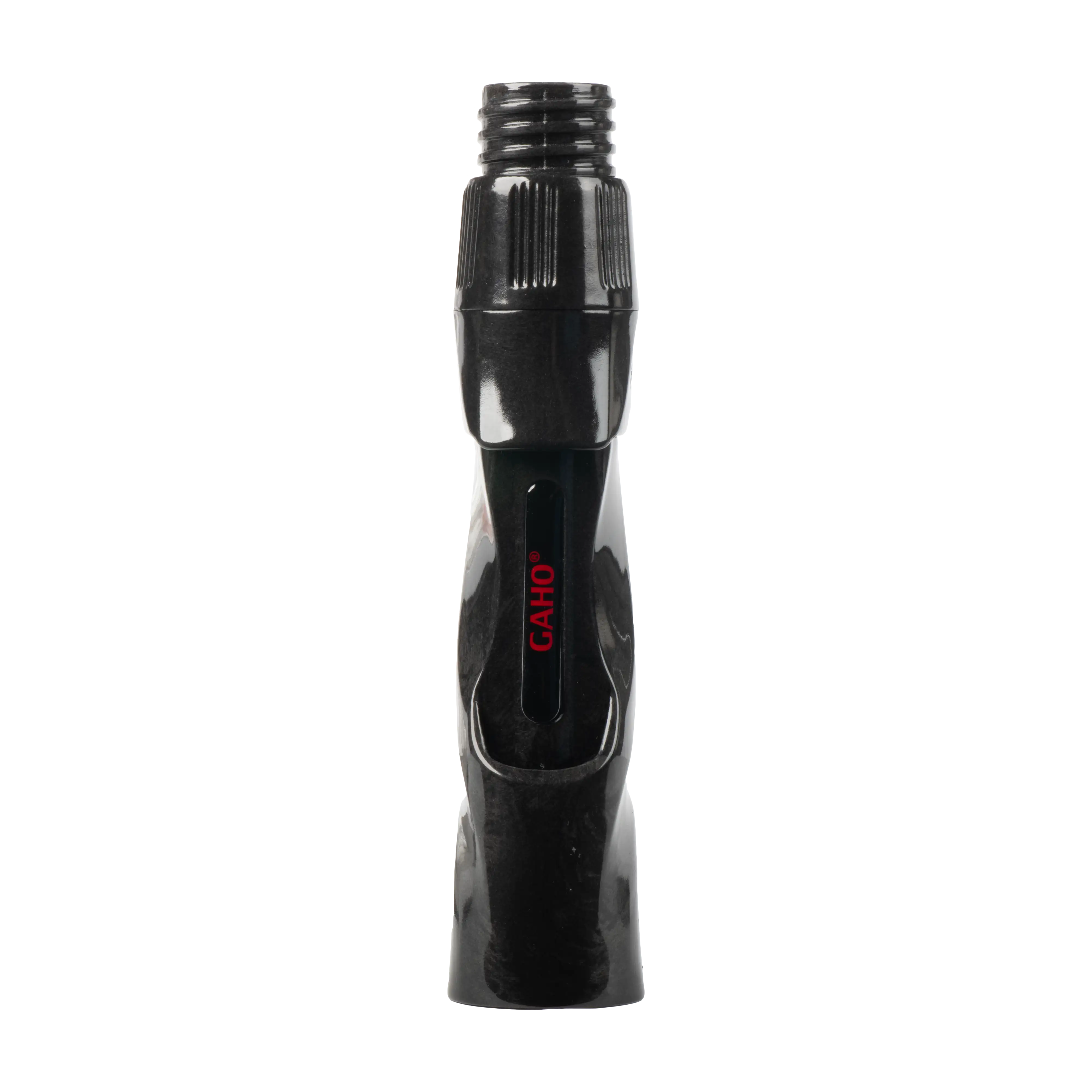
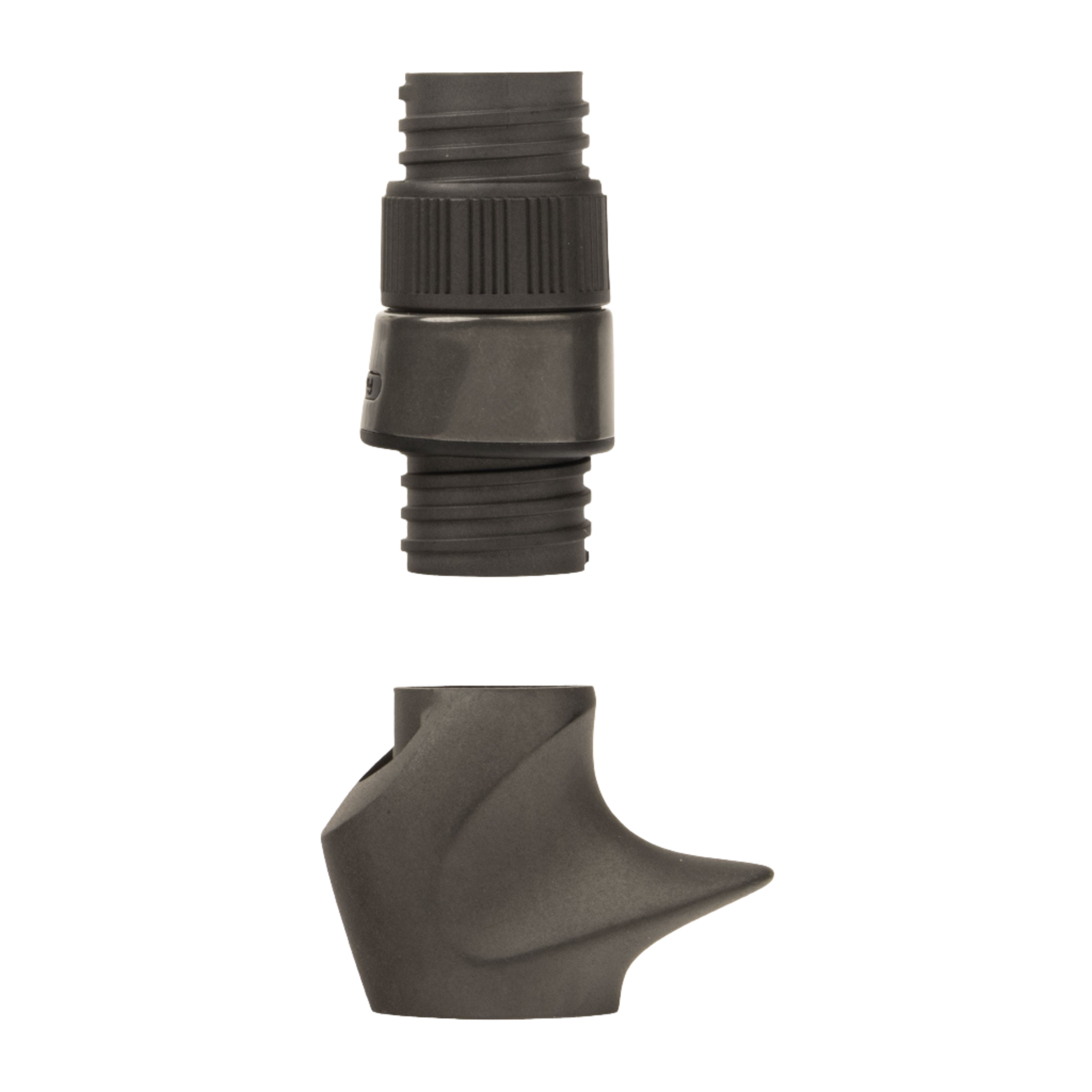
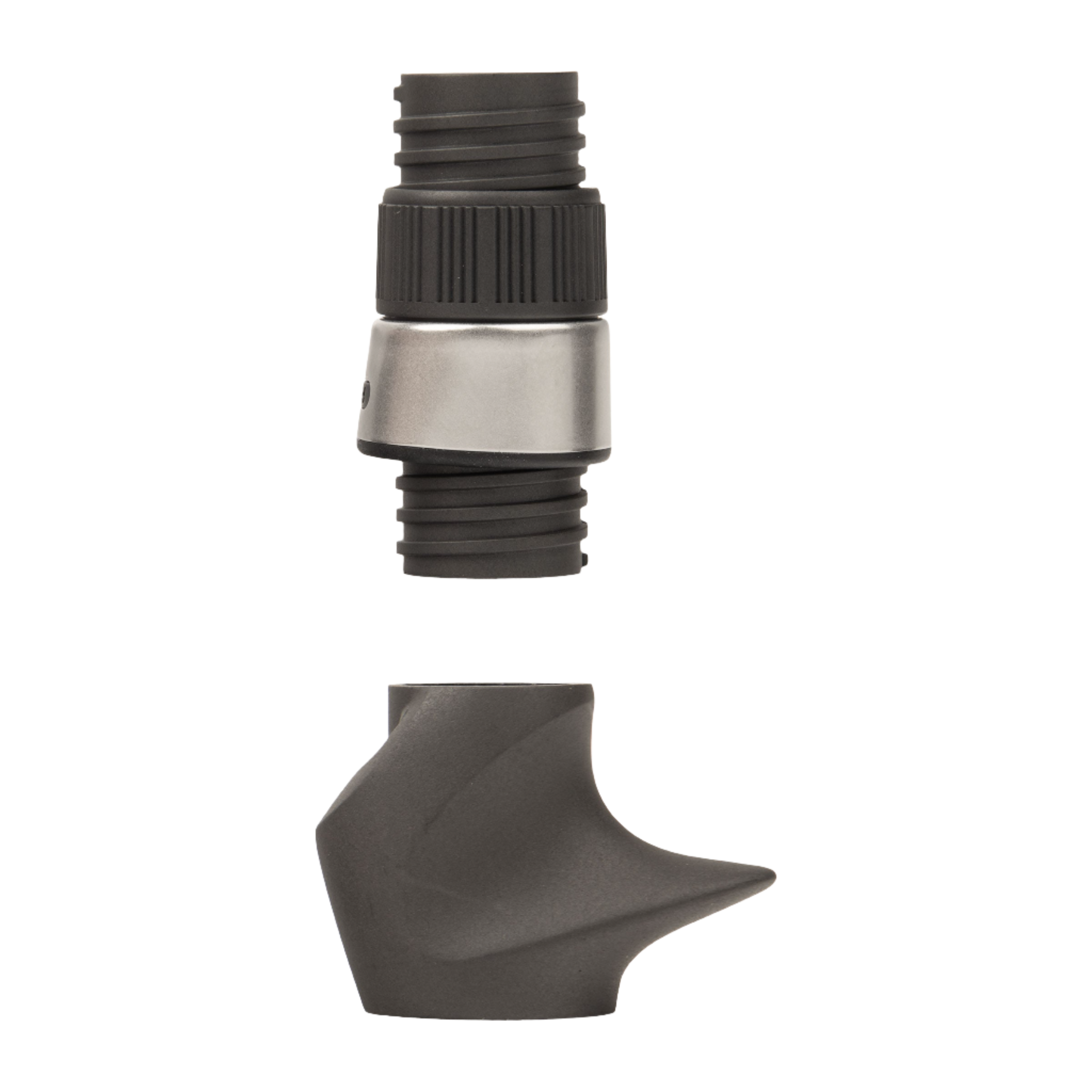
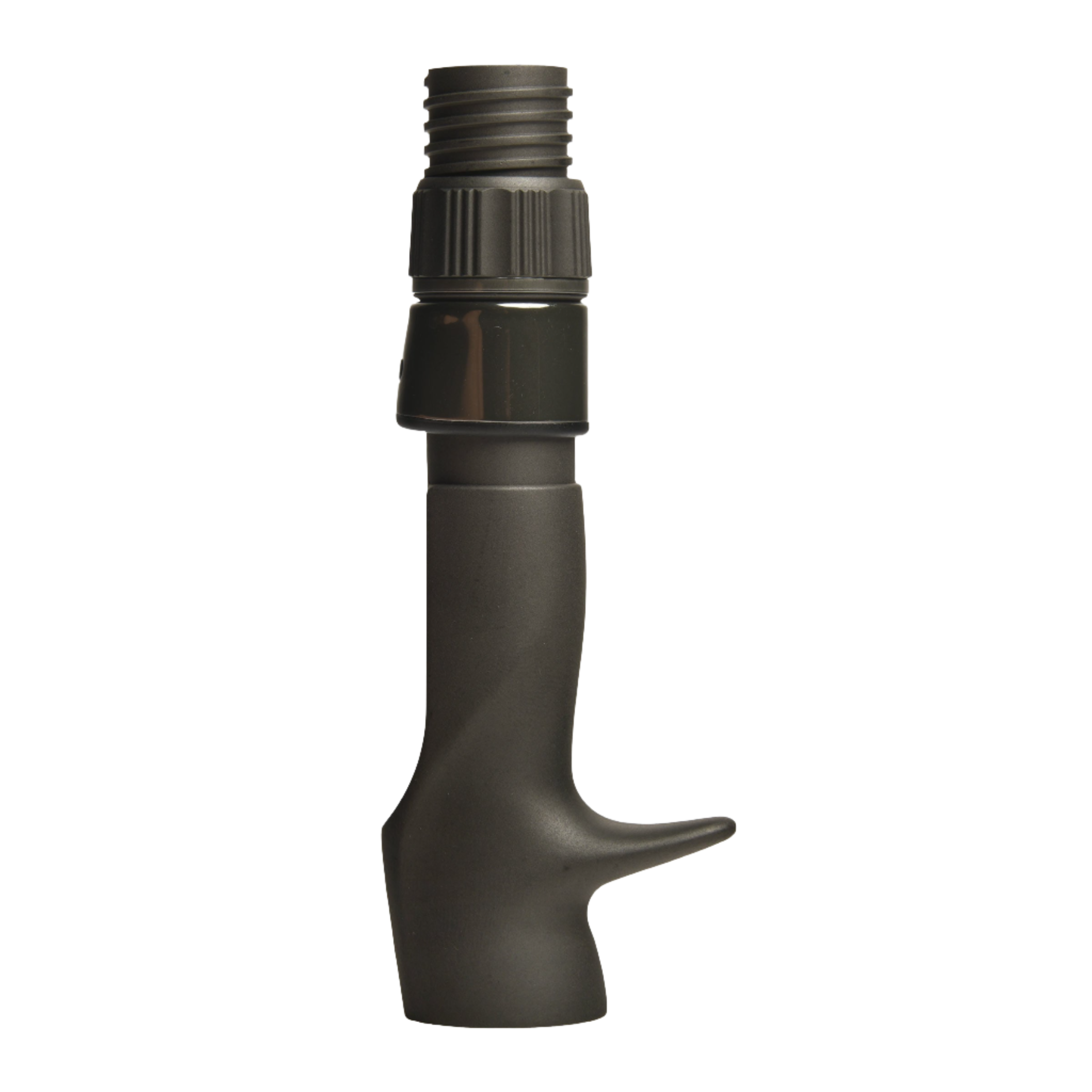
Flipping & Pitching Reel Seats
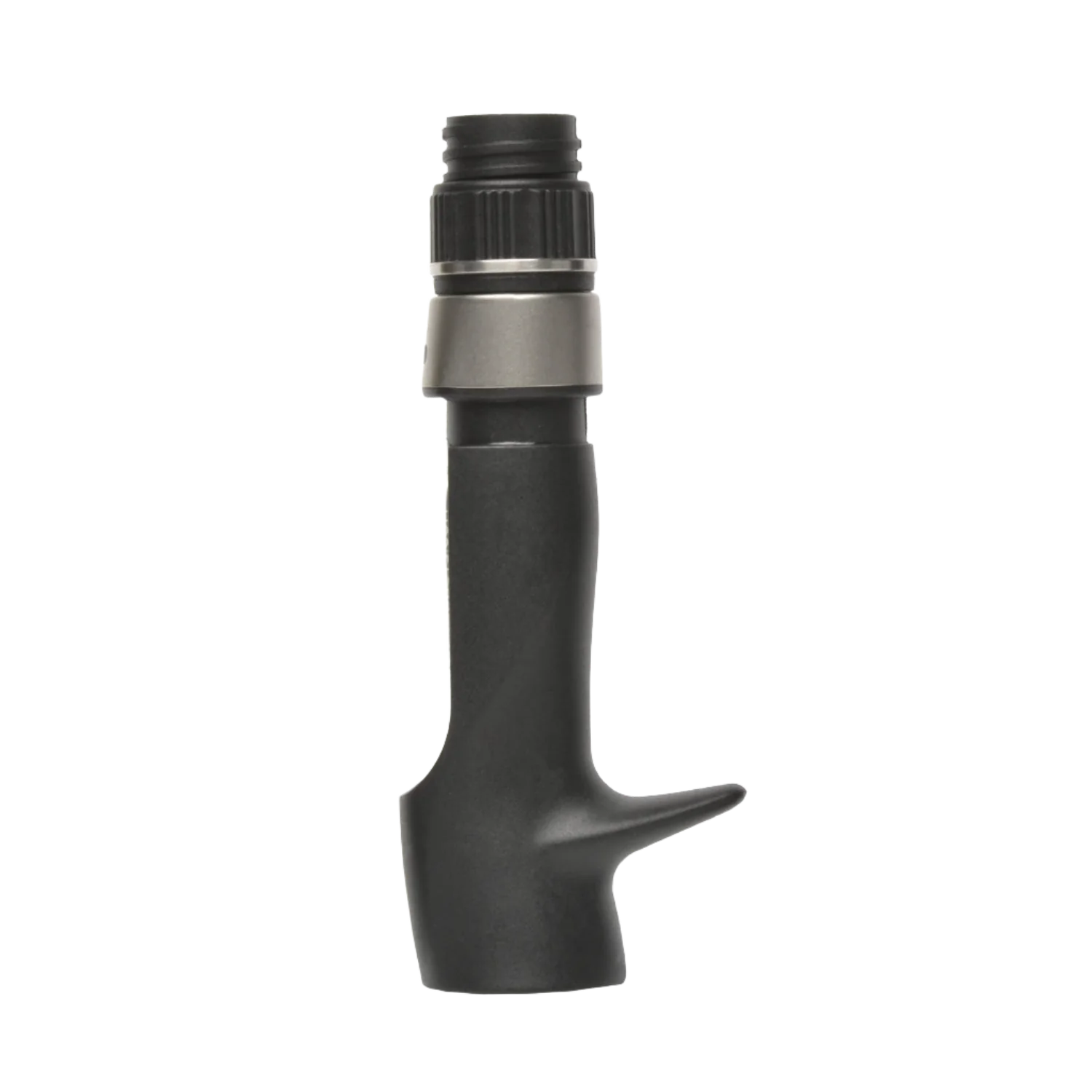
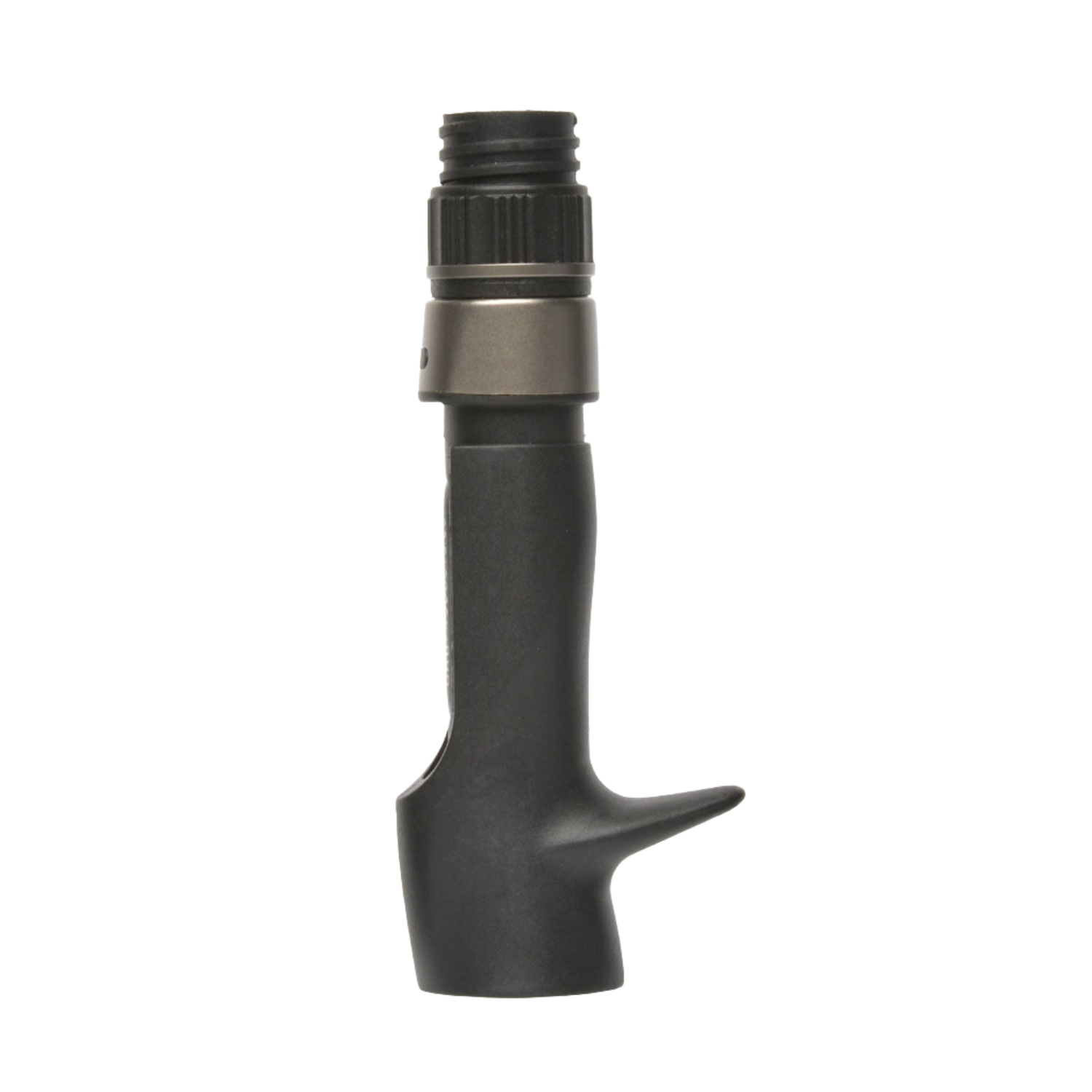
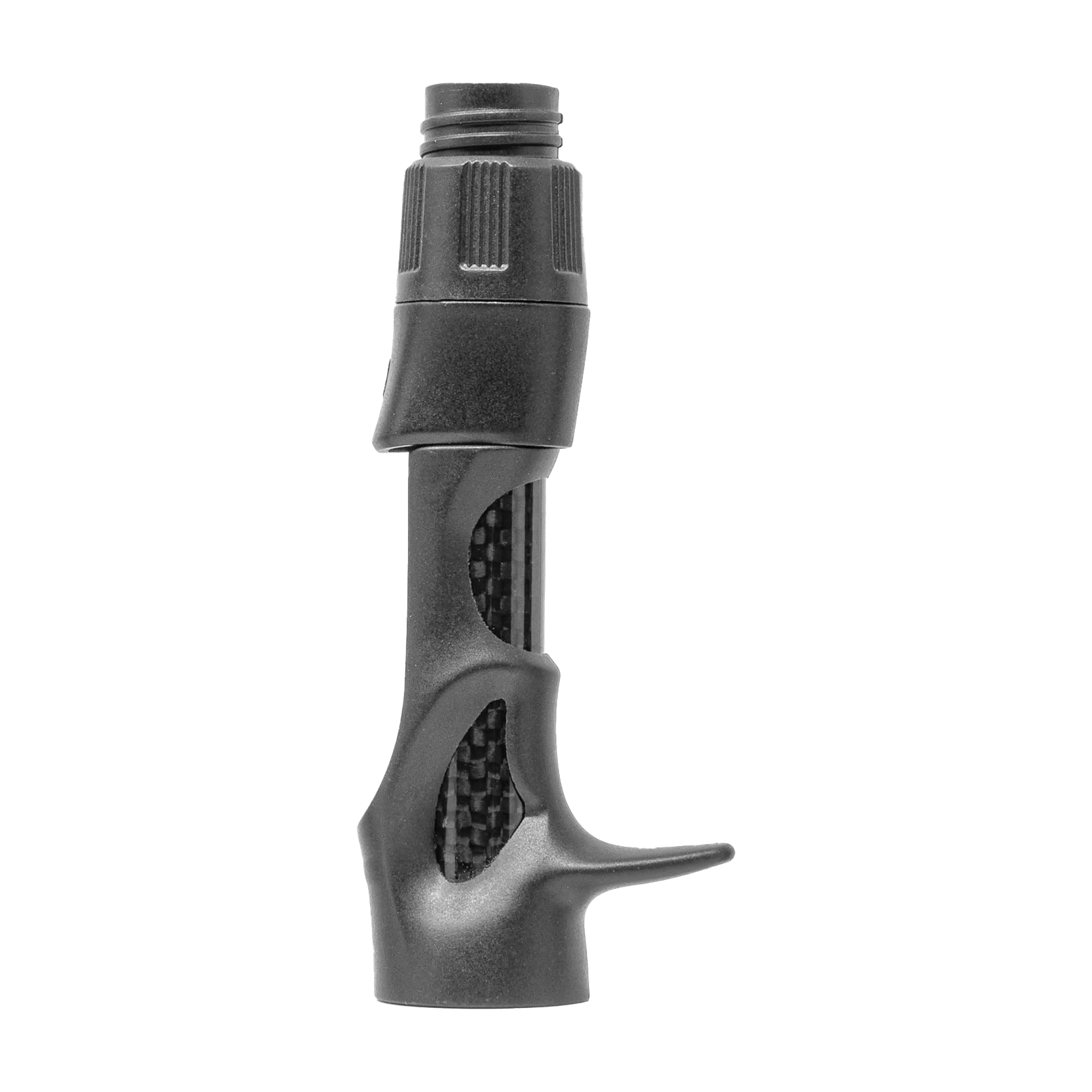
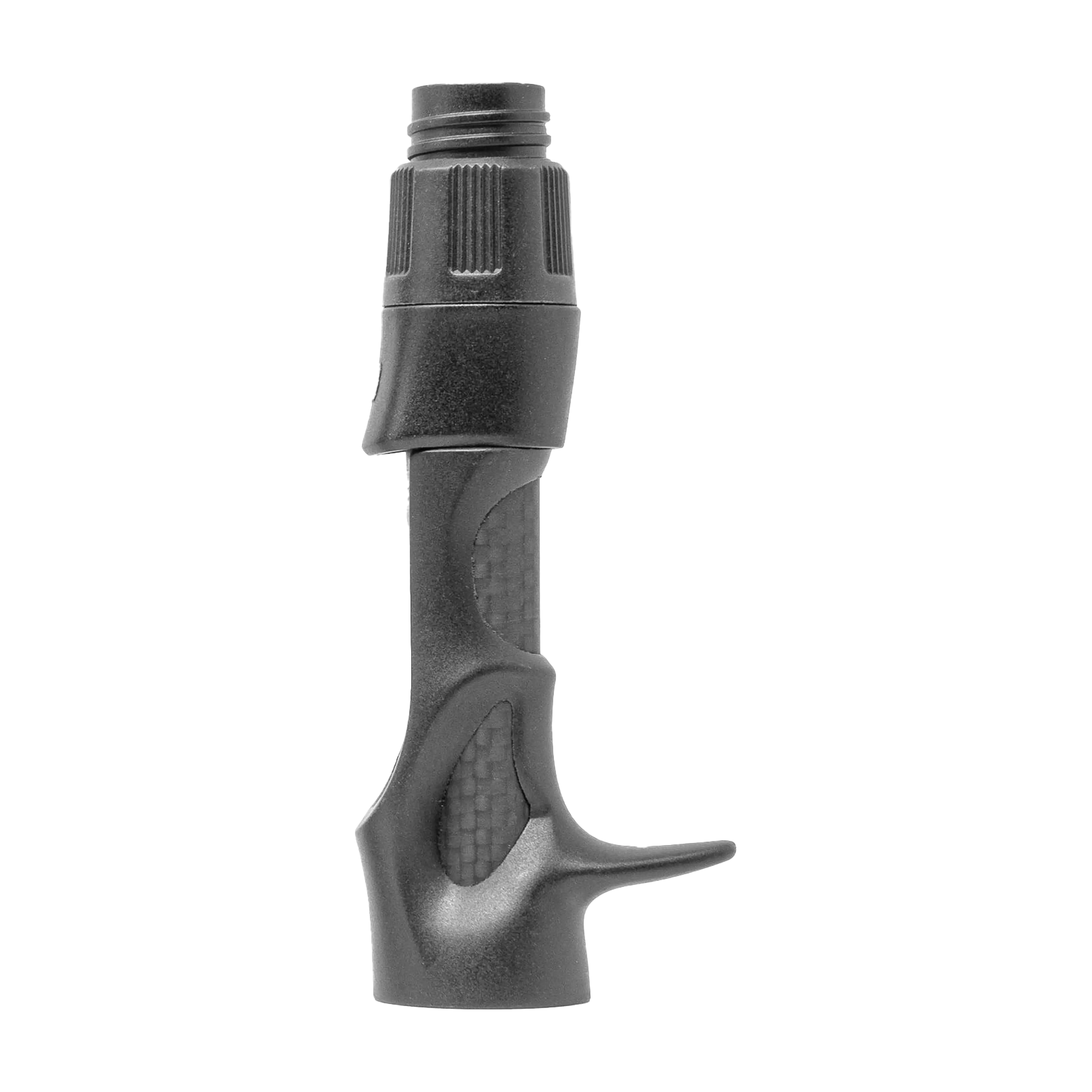
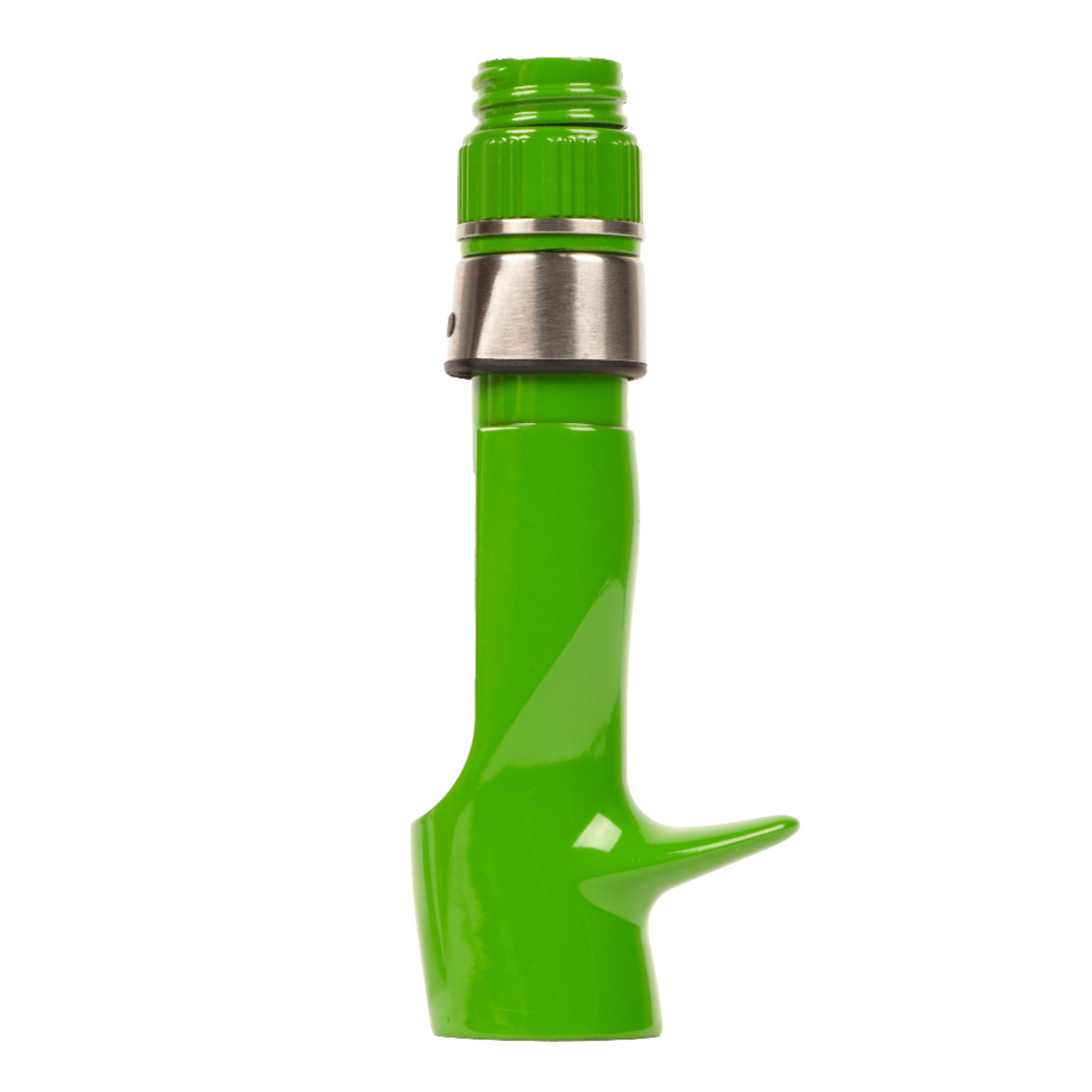
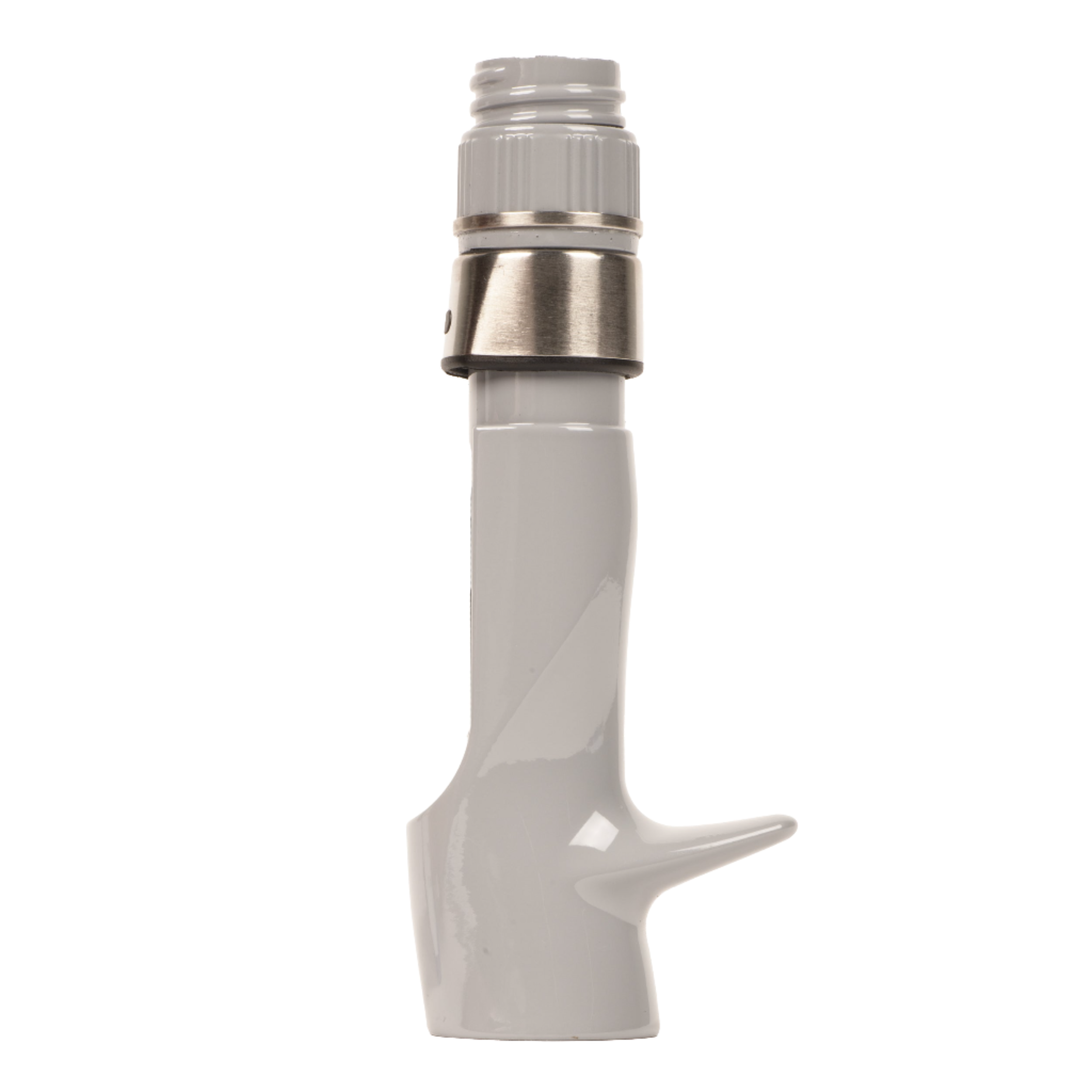
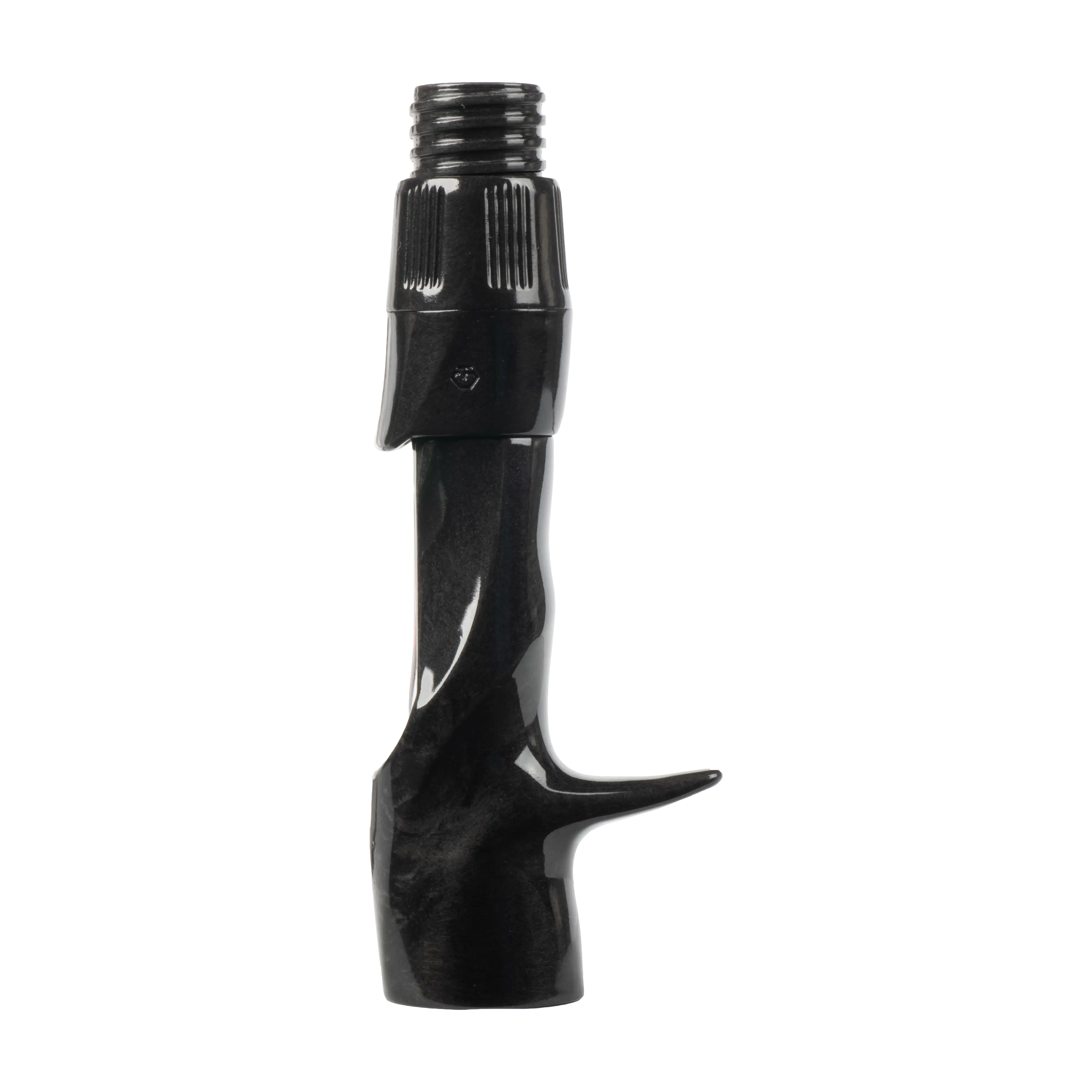
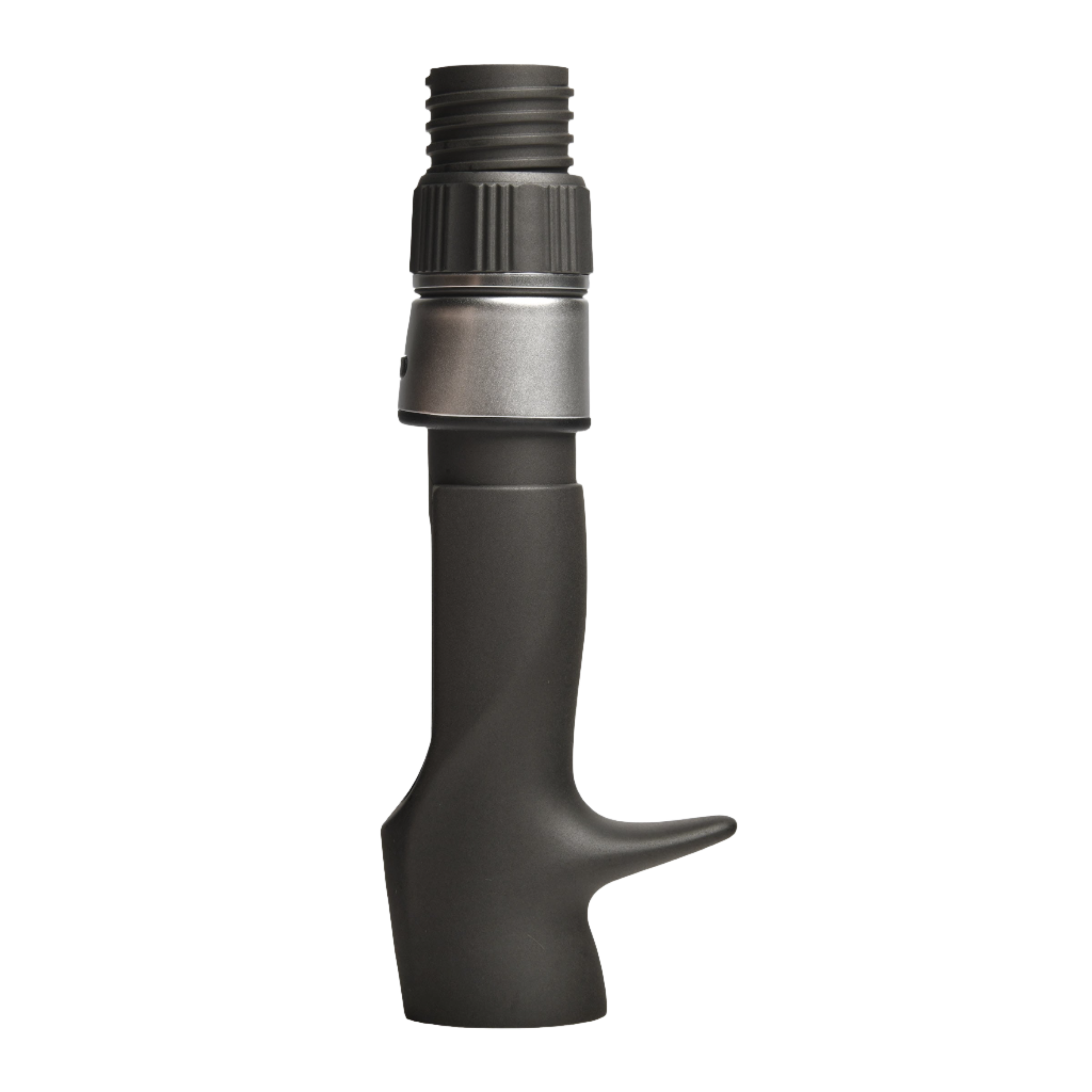
Some handle kits come with a reel seat, while others do not. If your kit doesn’t include one—or if you want to upgrade—the reel seat is a key component in building a flipping or pitching rod. It secures your low-profile baitcasting reel, but it also influences the rod’s overall balance, comfort, and sensitivity. The right reel seat ensures solid reel contact, correct alignment along the blank, and consistent leverage during heavy-cover fishing. When evaluating reel seats, consider fit, material, positioning, and trigger or split-seat options.
Reel Compatibility & Seat Types
Most flipping and pitching rods are built around low-profile baitcasting reels, so the reel seat must properly match the reel foot dimensions while maintaining a clean, stable connection to the handle. A poor fit here can affect alignment, comfort, and long-term durability under load.
There are a few key design choices that influence performance and feel.
Split vs. Full Reel Seats
Split reel seats are a two-piece design that reduces overall weight and allows for a cleaner, more modern build style. Because material is reduced between sections, they often provide slight weight savings without sacrificing reel security. They can be used with both full and split grip handle setups, and many versions also include insert options for improved fit and aesthetic customization.
Full-length reel seats use a single-piece design that prioritizes strength and a solid, continuous mounting surface for the reel. They tend to feel more traditional in hand and offer excellent durability, but they add a bit more weight compared to split designs.
Materials
Material choice affects weight, sensitivity, and overall feel in the hand, especially during long days on the water where fatigue and feedback both matter.
Graphite reel seats are the most common choice for flipping and pitching rods due to their lightweight construction, strength, and corrosion resistance. They offer a good balance of durability and sensitivity, allowing solid bite detection without adding unnecessary weight to the handle section.
Composite and carbon fiber seats are more performance-focused, offering increased stiffness, reduced weight, and improved vibration transfer. These materials are typically used in higher-end builds where sensitivity and responsiveness are prioritized, especially when fishing subtle bites in heavy cover or deep structure.
A properly selected reel seat ensures your reel stays secure during aggressive hooksets, maintains consistent alignment under load, and contributes to the overall balance and comfort of the finished rod.
Trigger Options
Many baitcasting reel seats include a casting trigger for added control and leverage during flips, pitches, and heavy-cover hooksets. Triggers range from short and subtle for a more natural palm grip to longer styles that provide extra leverage and control during aggressive presentations. The best choice comes down to hand fit, palming style, and how much leverage you prefer while fishing.
Key Takeaways
- Some handle kits include a reel seat; others require a separate purchase
- Split reel seats reduce weight and offer a more modern build style
- Full-length reel seats prioritize strength and a traditional, solid feel
- Trigger style affects grip comfort and leverage during fishing
- Graphite is the most common all-around material for weight and strength
Flipping & Pitching Reel Seats
Some handle kits come with a reel seat, while others do not. If your kit doesn’t include one—or if you want to upgrade—the reel seat is a key component in building a flipping or pitching rod. It secures your low-profile baitcasting reel, but it also influences the rod’s overall balance, comfort, and sensitivity. The right reel seat ensures solid reel contact, correct alignment along the blank, and consistent leverage during heavy-cover fishing. When evaluating reel seats, consider fit, material, positioning, and trigger or split-seat options.
Reel Compatibility & Seat Types
Most flipping and pitching rods are built around low-profile baitcasting reels, so the reel seat must properly match the reel foot dimensions while maintaining a clean, stable connection to the handle. A poor fit here can affect alignment, comfort, and long-term durability under load.
There are a few key design choices that influence performance and feel.
Split vs. Full Reel Seats
Split reel seats are a two-piece design that reduces overall weight and allows for a cleaner, more modern build style. Because material is reduced between sections, they often provide slight weight savings without sacrificing reel security. They can be used with both full and split grip handle setups, and many versions also include insert options for improved fit and aesthetic customization.
Full-length reel seats use a single-piece design that prioritizes strength and a solid, continuous mounting surface for the reel. They tend to feel more traditional in hand and offer excellent durability, but they add a bit more weight compared to split designs.
Materials
Material choice affects weight, sensitivity, and overall feel in the hand, especially during long days on the water where fatigue and feedback both matter.
Graphite reel seats are the most common choice for flipping and pitching rods due to their lightweight construction, strength, and corrosion resistance. They offer a good balance of durability and sensitivity, allowing solid bite detection without adding unnecessary weight to the handle section.
Composite and carbon fiber seats are more performance-focused, offering increased stiffness, reduced weight, and improved vibration transfer. These materials are typically used in higher-end builds where sensitivity and responsiveness are prioritized, especially when fishing subtle bites in heavy cover or deep structure.
A properly selected reel seat ensures your reel stays secure during aggressive hooksets, maintains consistent alignment under load, and contributes to the overall balance and comfort of the finished rod.
Trigger Options
Many baitcasting reel seats include a casting trigger for added control and leverage during flips, pitches, and heavy-cover hooksets. Triggers range from short and subtle for a more natural palm grip to longer styles that provide extra leverage and control during aggressive presentations. The best choice comes down to hand fit, palming style, and how much leverage you prefer while fishing.
Key Takeaways
- Some handle kits include a reel seat; others require a separate purchase
- Split reel seats reduce weight and offer a more modern build style
- Full-length reel seats prioritize strength and a traditional, solid feel
- Trigger style affects grip comfort and leverage during fishing
- Graphite is the most common all-around material for weight and strength
Reel Seats for Flipping & Pitching
Choose Your Supply Kits
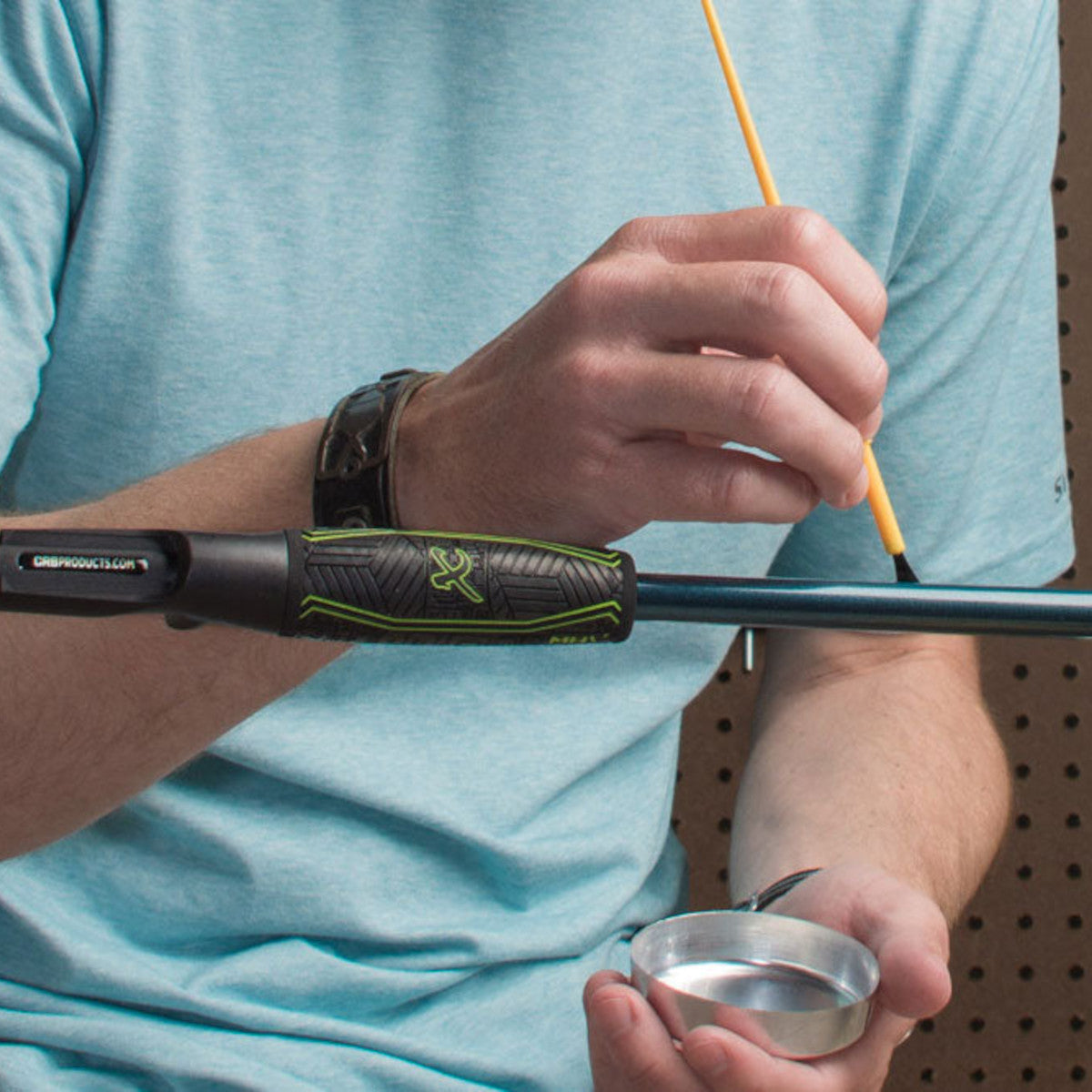
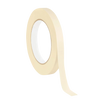
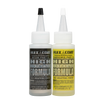
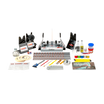
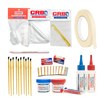
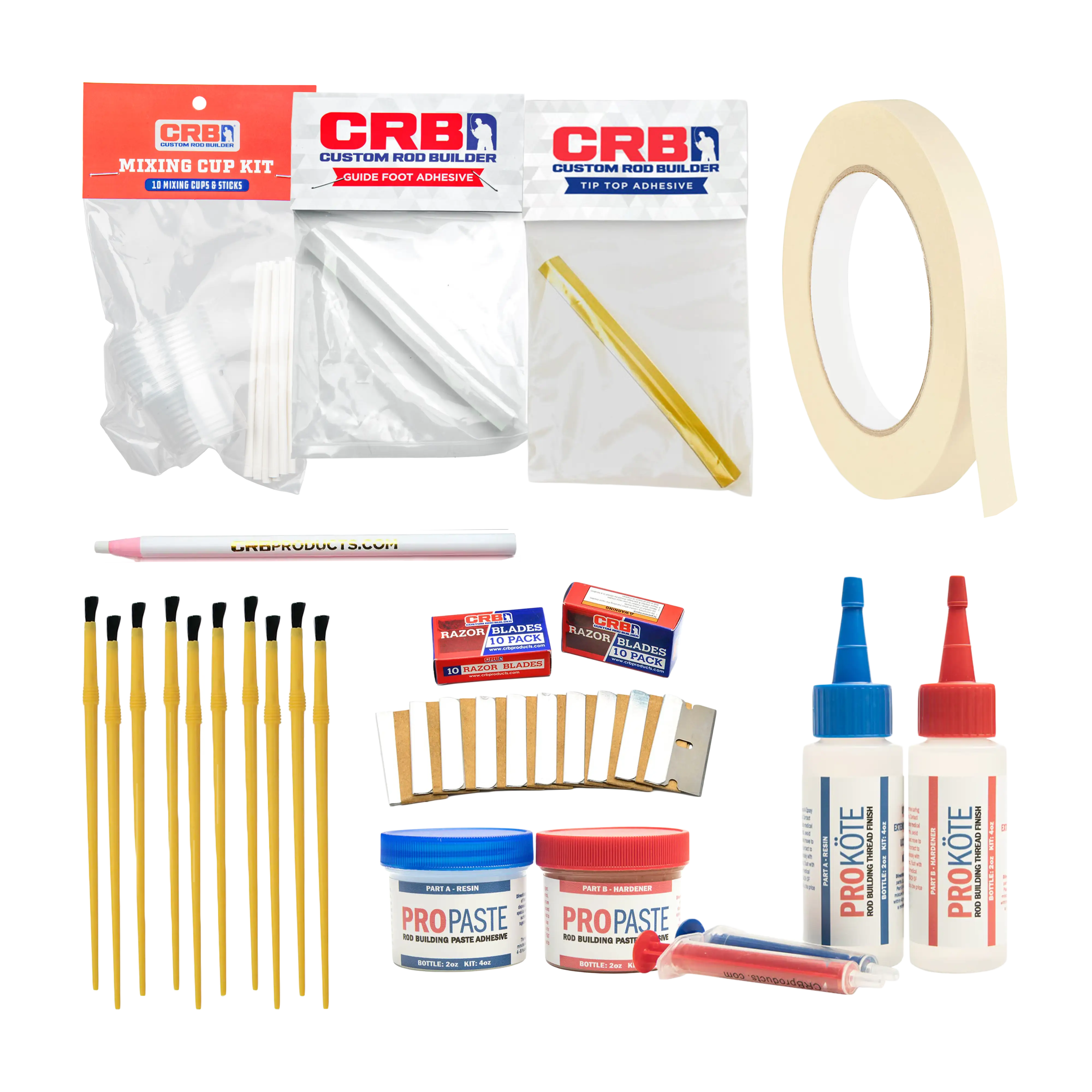
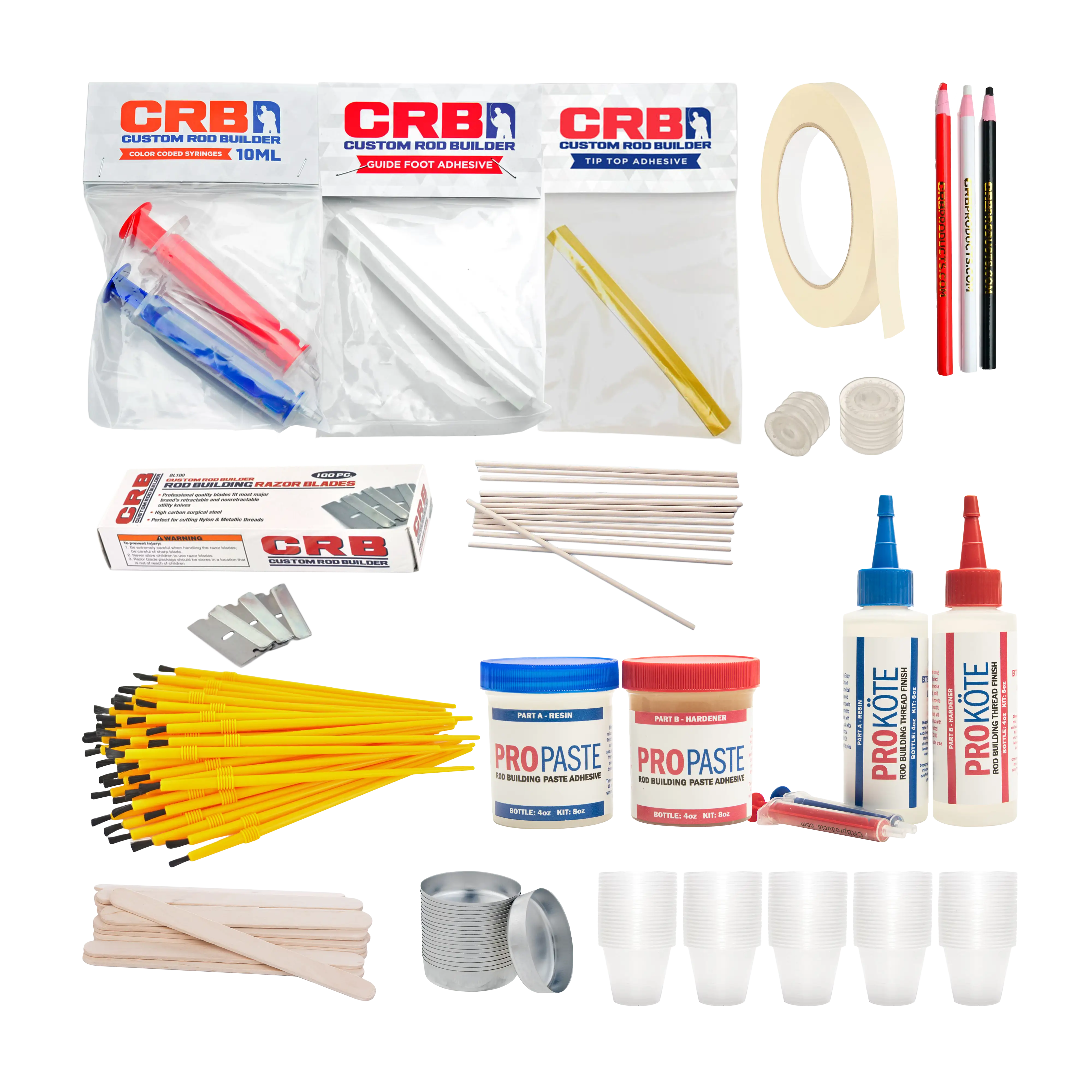
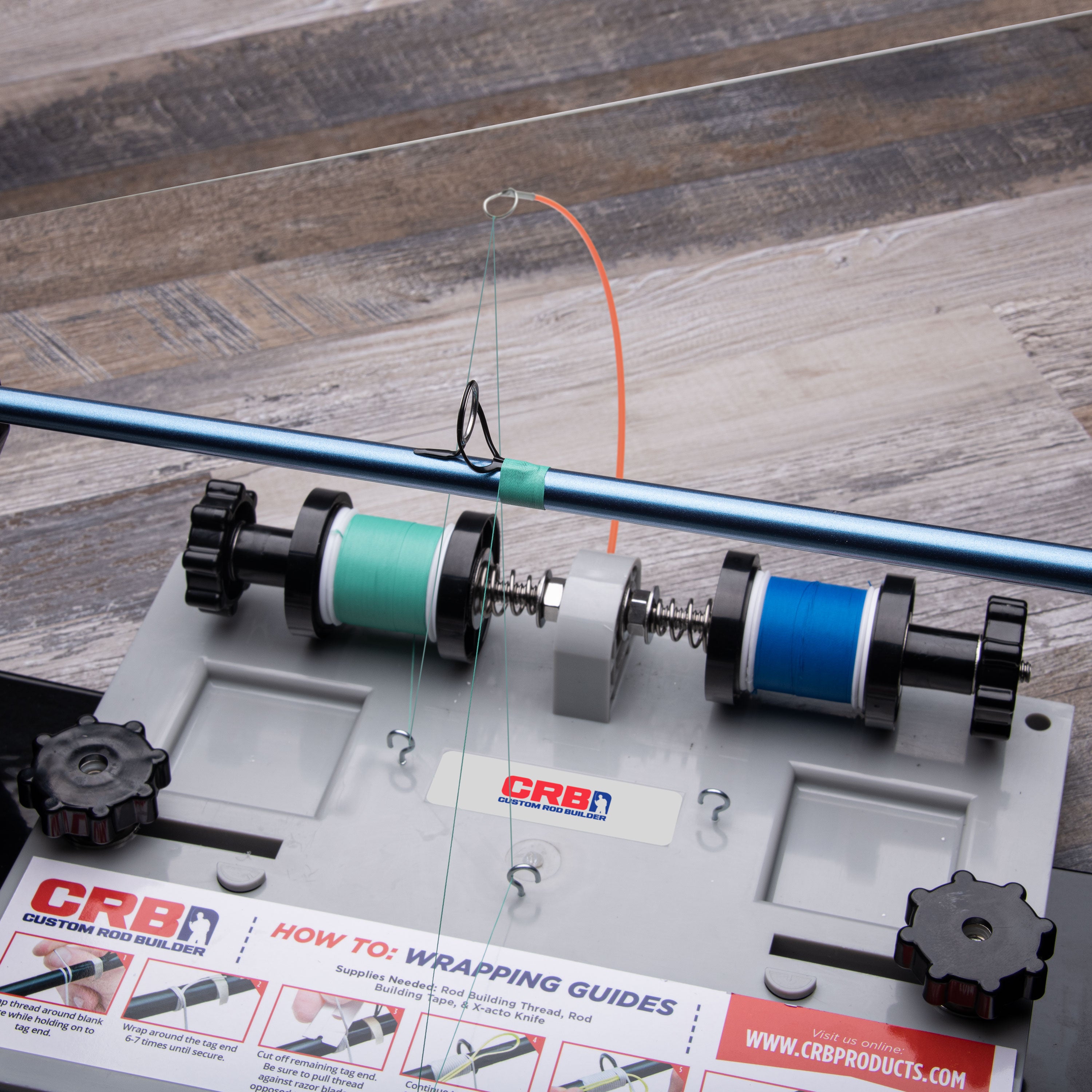
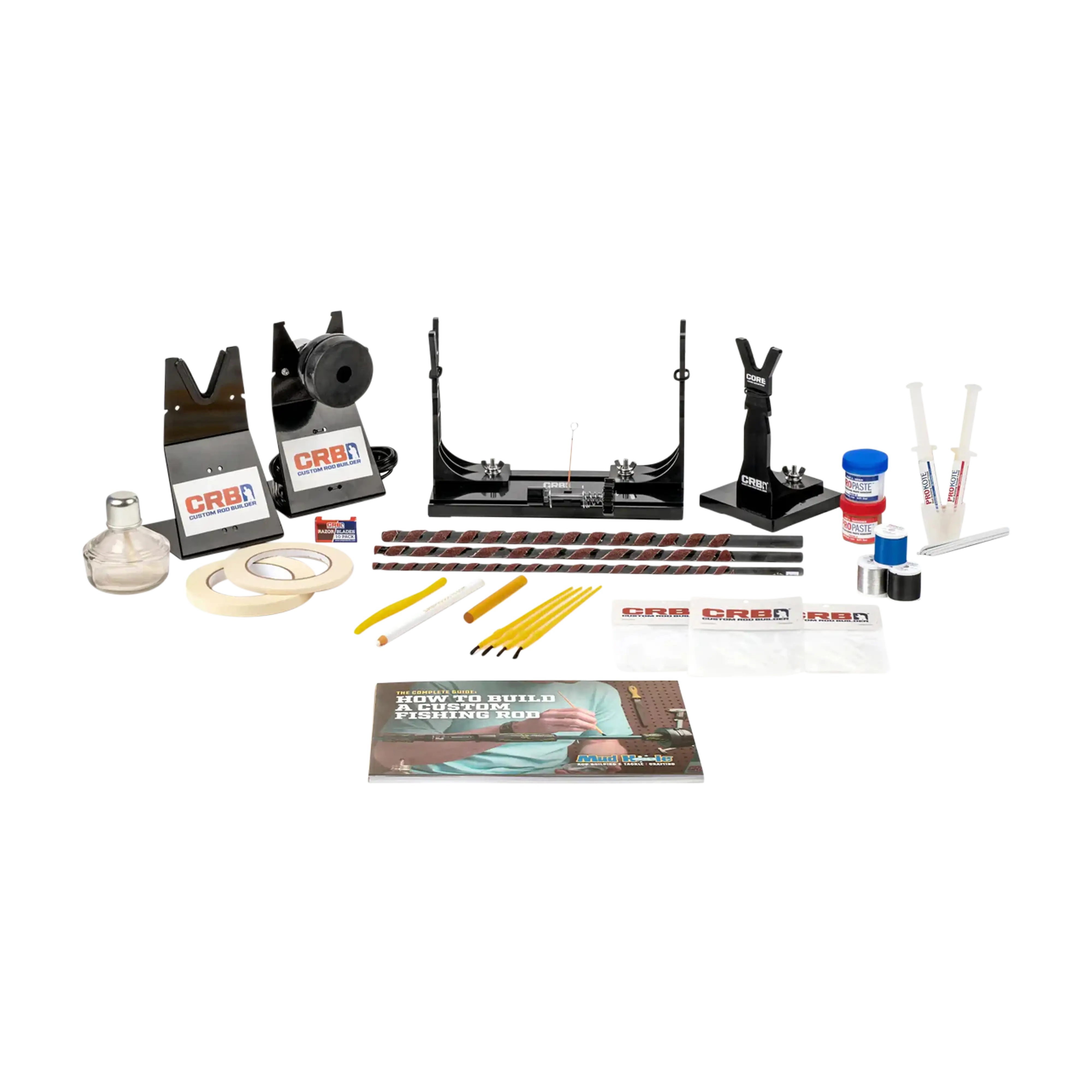
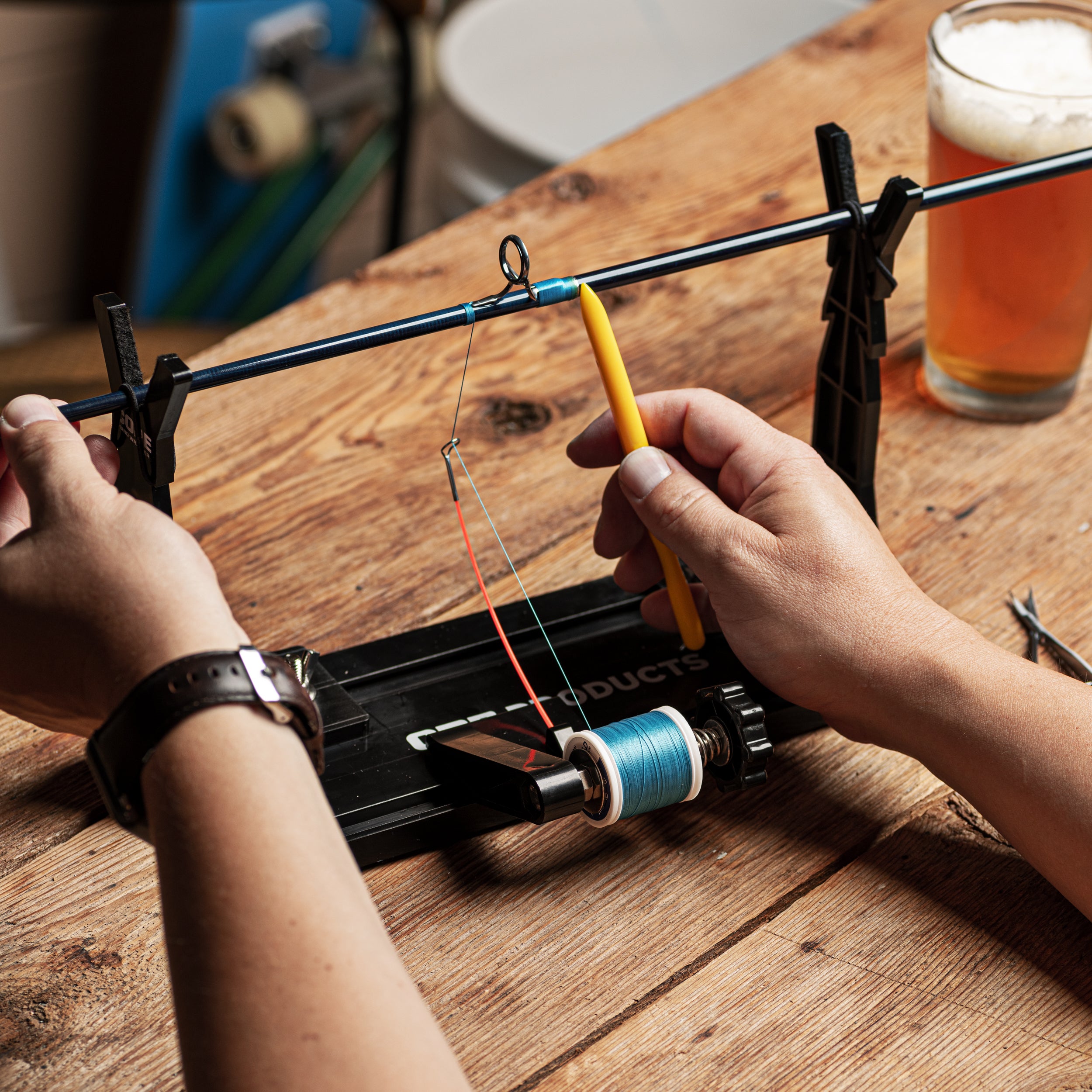
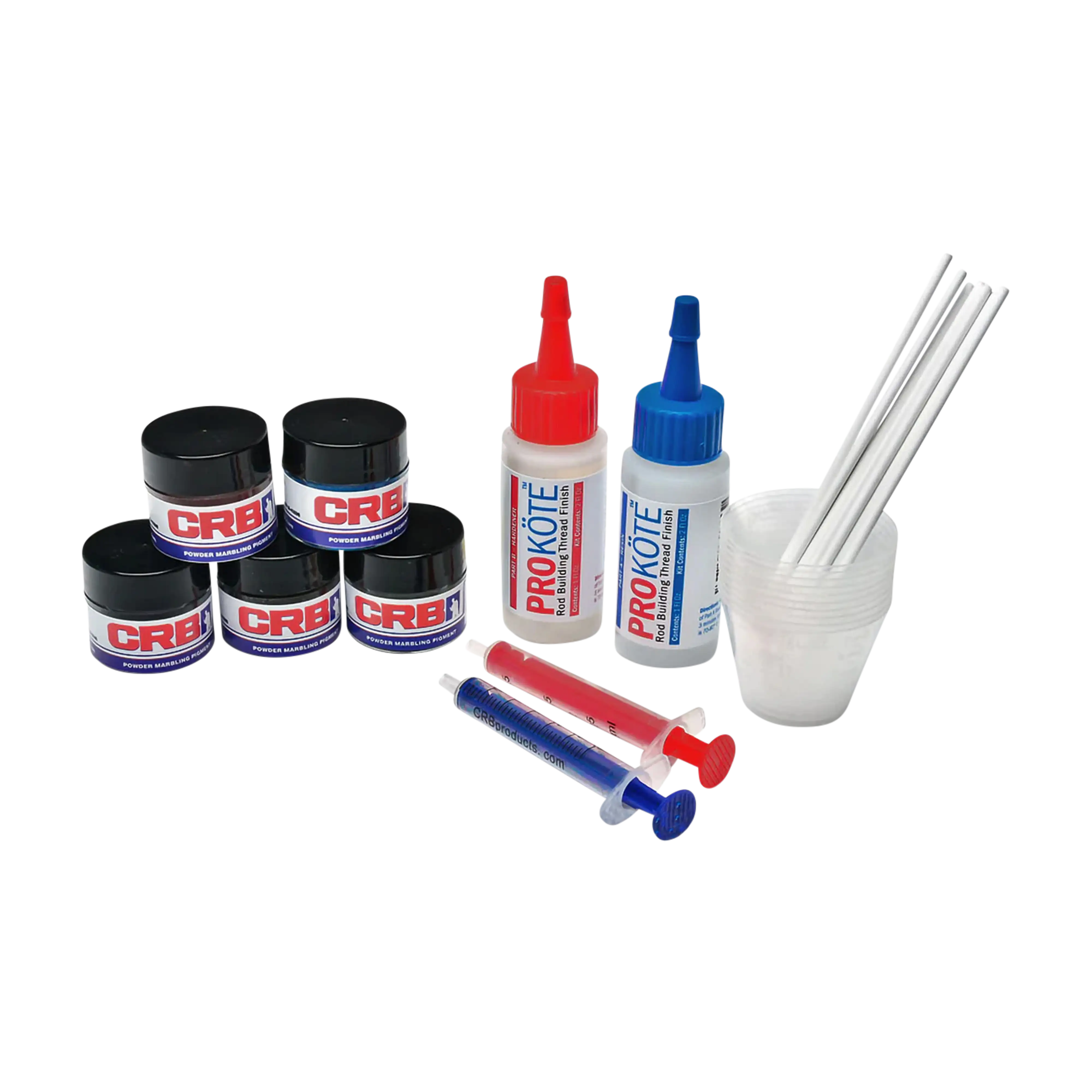
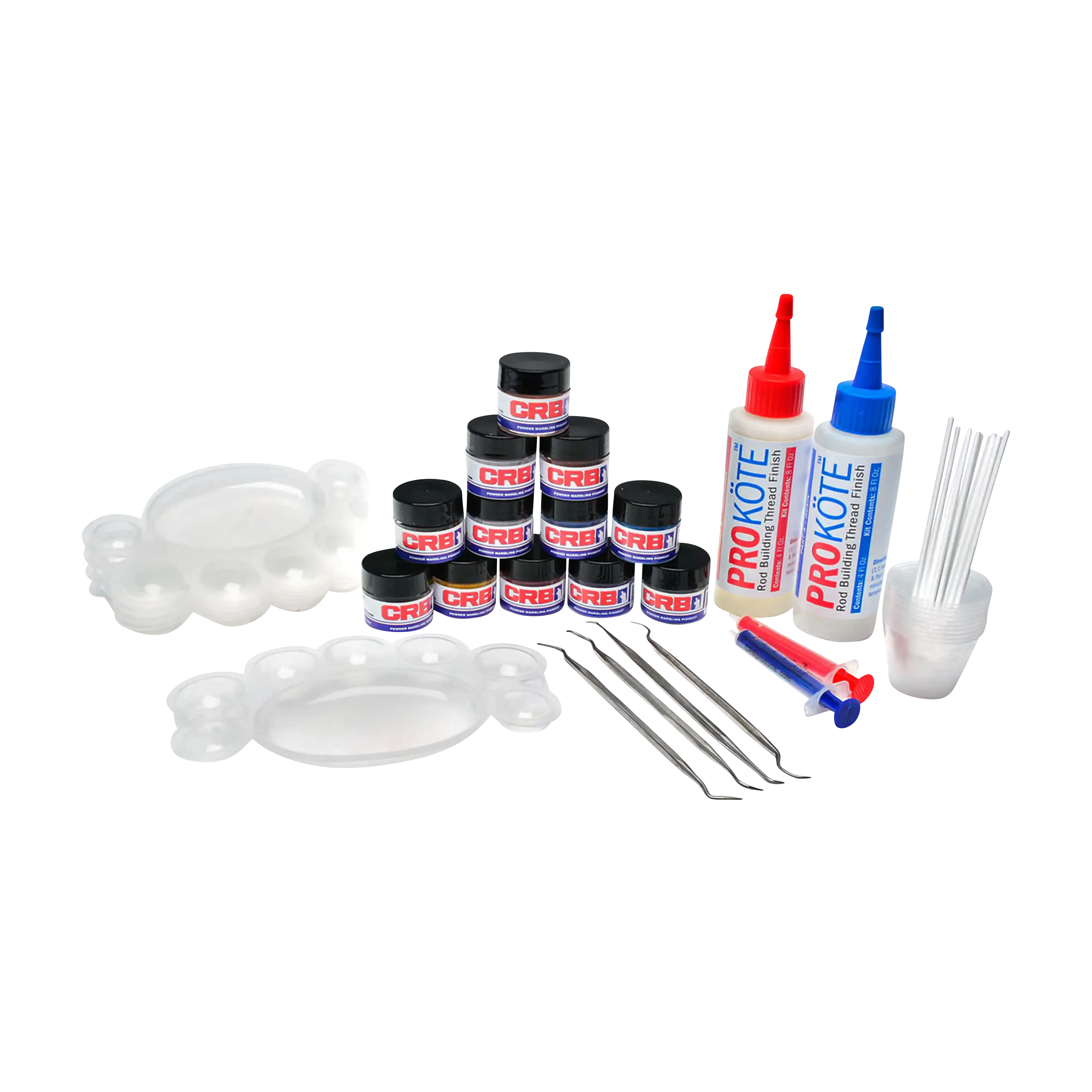
Everything you need to build a high-performance flipping and pitching rod is right at your fingertips with a rod building supply kit. These kits come stocked with the essential tools—rod dryers, thread, hand wrappers, epoxy, brushes, and reamers—so you can focus on the build, not hunting down parts. Using a kit makes the process faster, smoother, and more precise, helping you create a custom rod that handles heavy cover, aggressive hooksets, and tight presentations with confidence. Perfect for beginners getting started or experienced builders looking to streamline their setup.
For Beginners
All-in-one kits provide everything needed to start building without sourcing tools individually. This allows you to focus on learning proper techniques for wrapping guides, attaching the tip top, and assembling the handle.
For Experienced Builders
Kits are handy for restocking consumables like epoxy, brushes, and thread. Even with most tools already on hand, having a ready-made kit saves time and ensures you have the right supplies for accurate, consistent builds.
Key Takeaways
- Supply kits include the tools and materials needed for efficient flipping and pitching rod builds.
- Beginners benefit from all-in-one kits that simplify setup and help learn proper assembly techniques.
- Experienced builders can use kits to restock consumables and maintain workflow.
- Using the right tools ensures smoother assembly and consistent results.
Choose Your Supply Kits
Everything you need to build a high-performance flipping and pitching rod is right at your fingertips with a rod building supply kit. These kits come stocked with the essential tools—rod dryers, thread, hand wrappers, epoxy, brushes, and reamers—so you can focus on the build, not hunting down parts. Using a kit makes the process faster, smoother, and more precise, helping you create a custom rod that handles heavy cover, aggressive hooksets, and tight presentations with confidence. Perfect for beginners getting started or experienced builders looking to streamline their setup.
For Beginners
All-in-one kits provide everything needed to start building without sourcing tools individually. This allows you to focus on learning proper techniques for wrapping guides, attaching the tip top, and assembling the handle.
For Experienced Builders
Kits are handy for restocking consumables like epoxy, brushes, and thread. Even with most tools already on hand, having a ready-made kit saves time and ensures you have the right supplies for accurate, consistent builds.
Key Takeaways
- Supply kits include the tools and materials needed for efficient flipping and pitching rod builds.
- Beginners benefit from all-in-one kits that simplify setup and help learn proper assembly techniques.
- Experienced builders can use kits to restock consumables and maintain workflow.
- Using the right tools ensures smoother assembly and consistent results.
Supply Kits

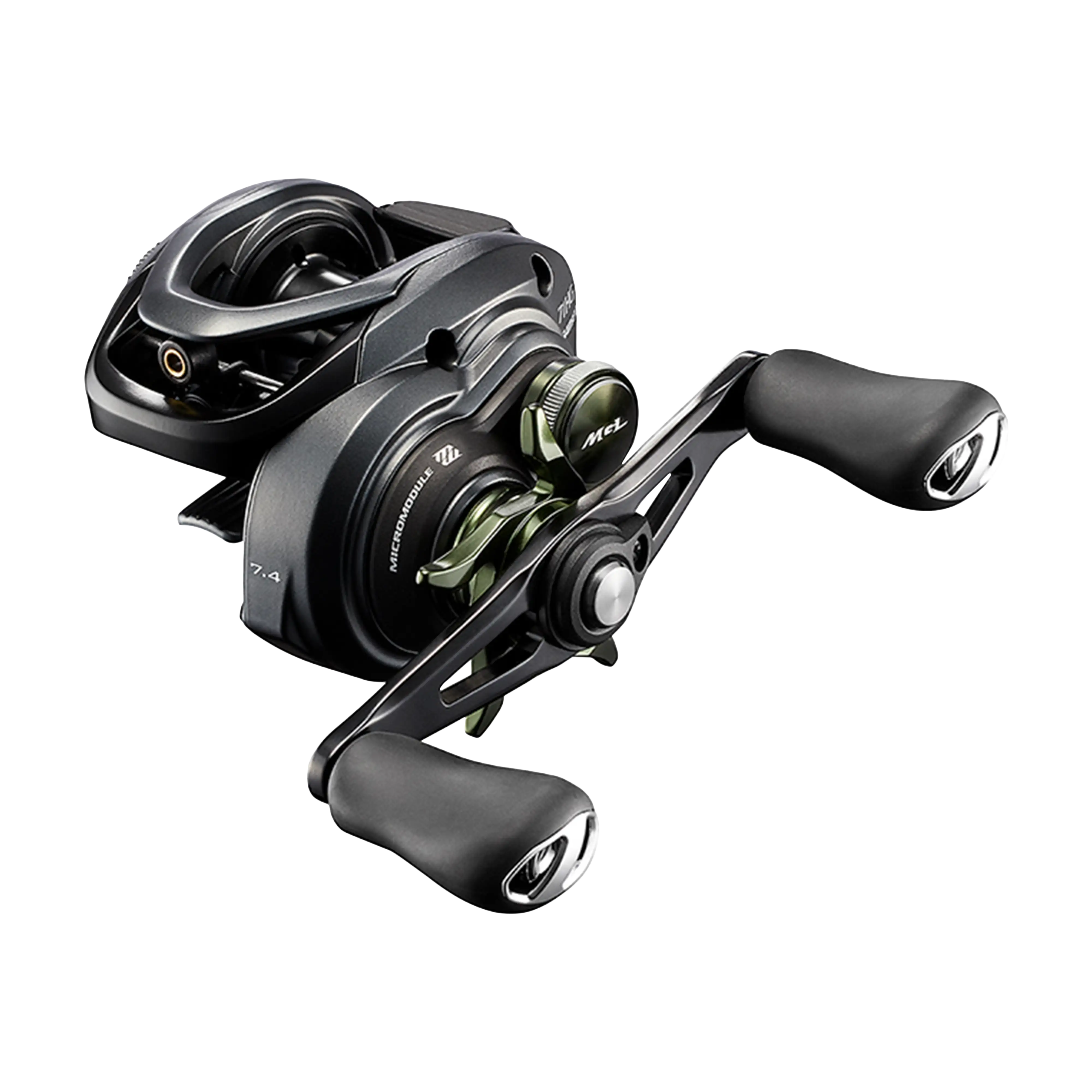
Best Reels for Flipping & Pitching
Now let’s find a reel for your custom rod.
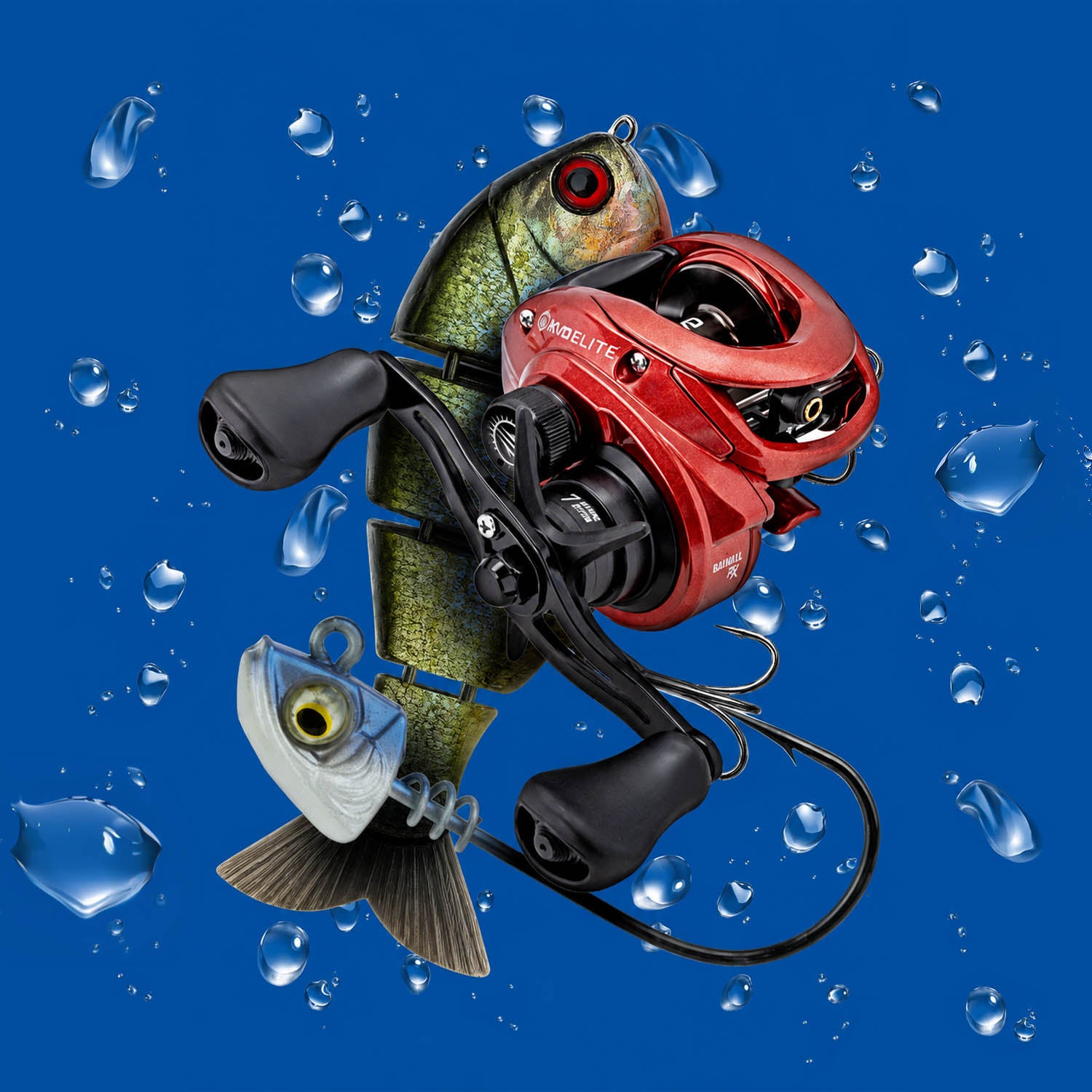
Flipping, pitching, and punching demand reels that respond instantly. Most strikes happen on the initial fall, so your reel must engage quickly, take up slack efficiently, and maintain control during short, powerful fights. Unlike open-water techniques, these presentations happen in tight cover, requiring strength, consistency, and reliability with every drop.
When evaluating reels, focus on these key features:
Reel Type
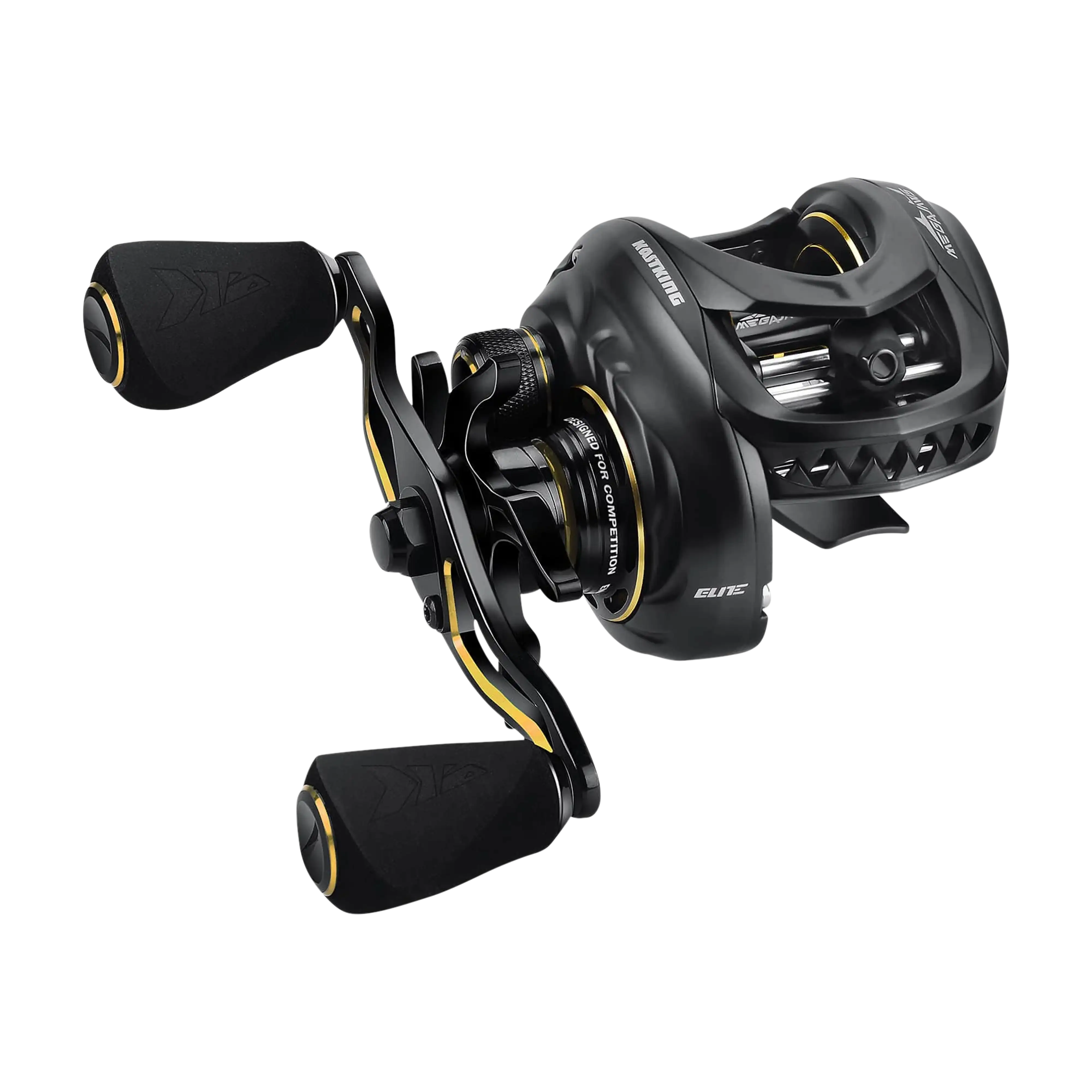
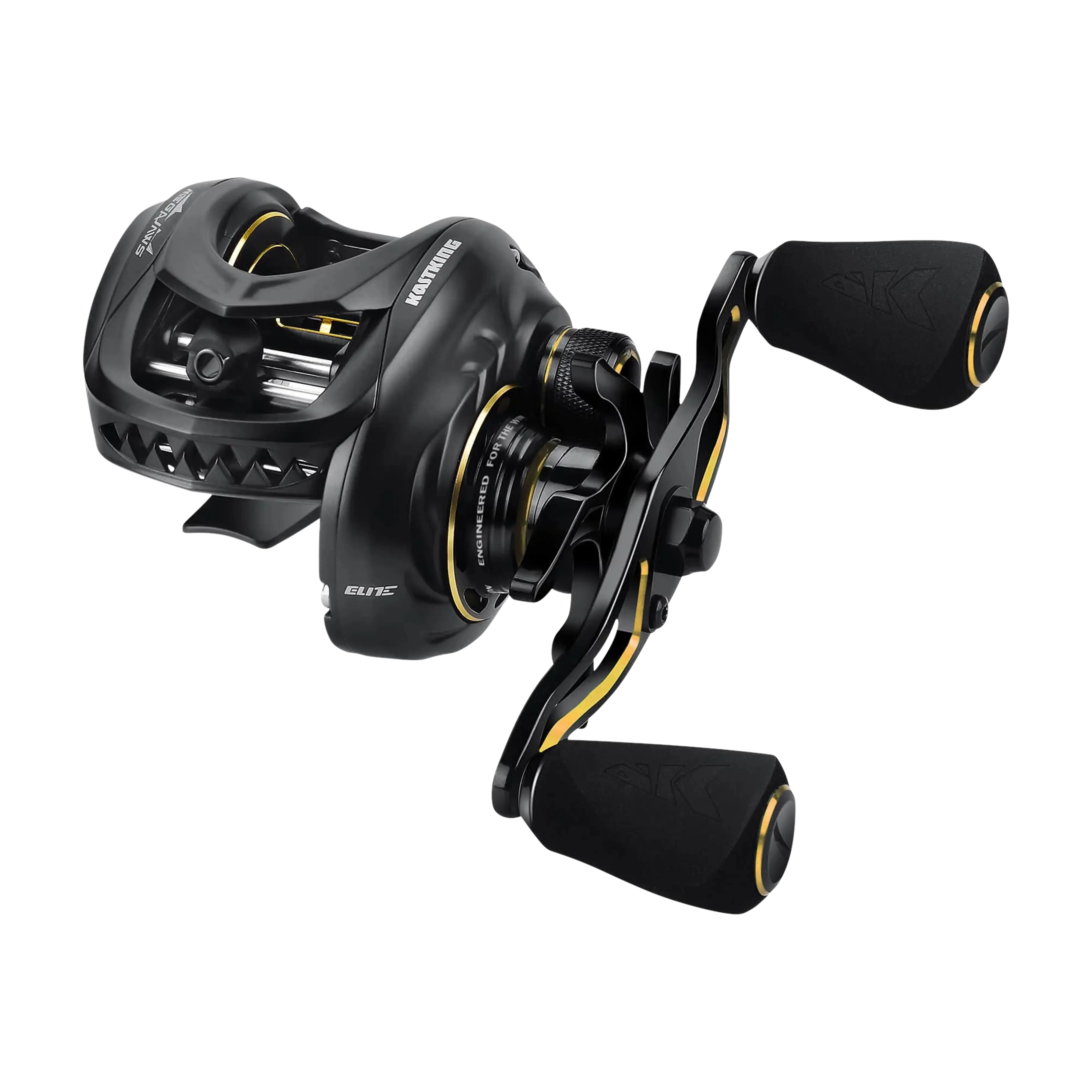
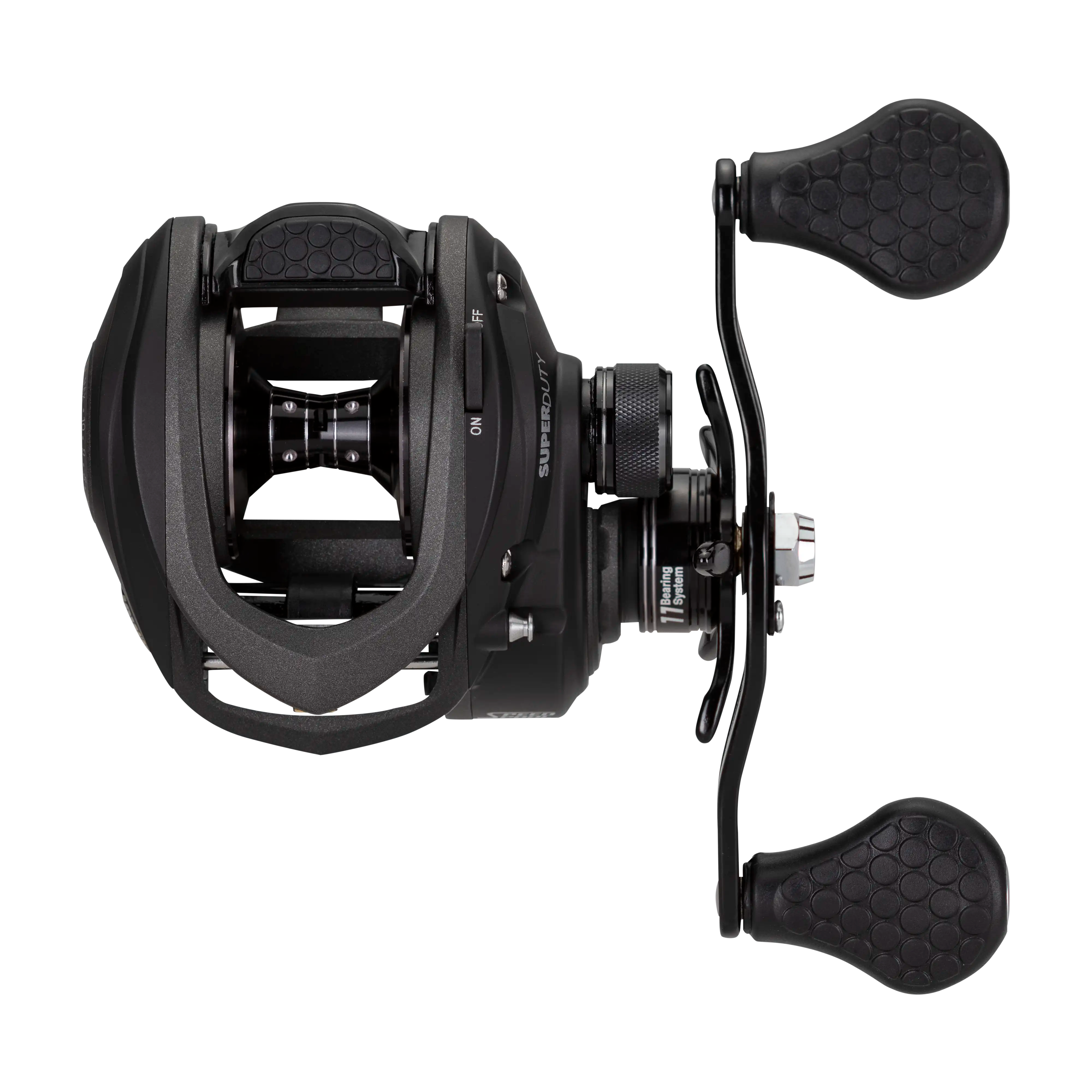
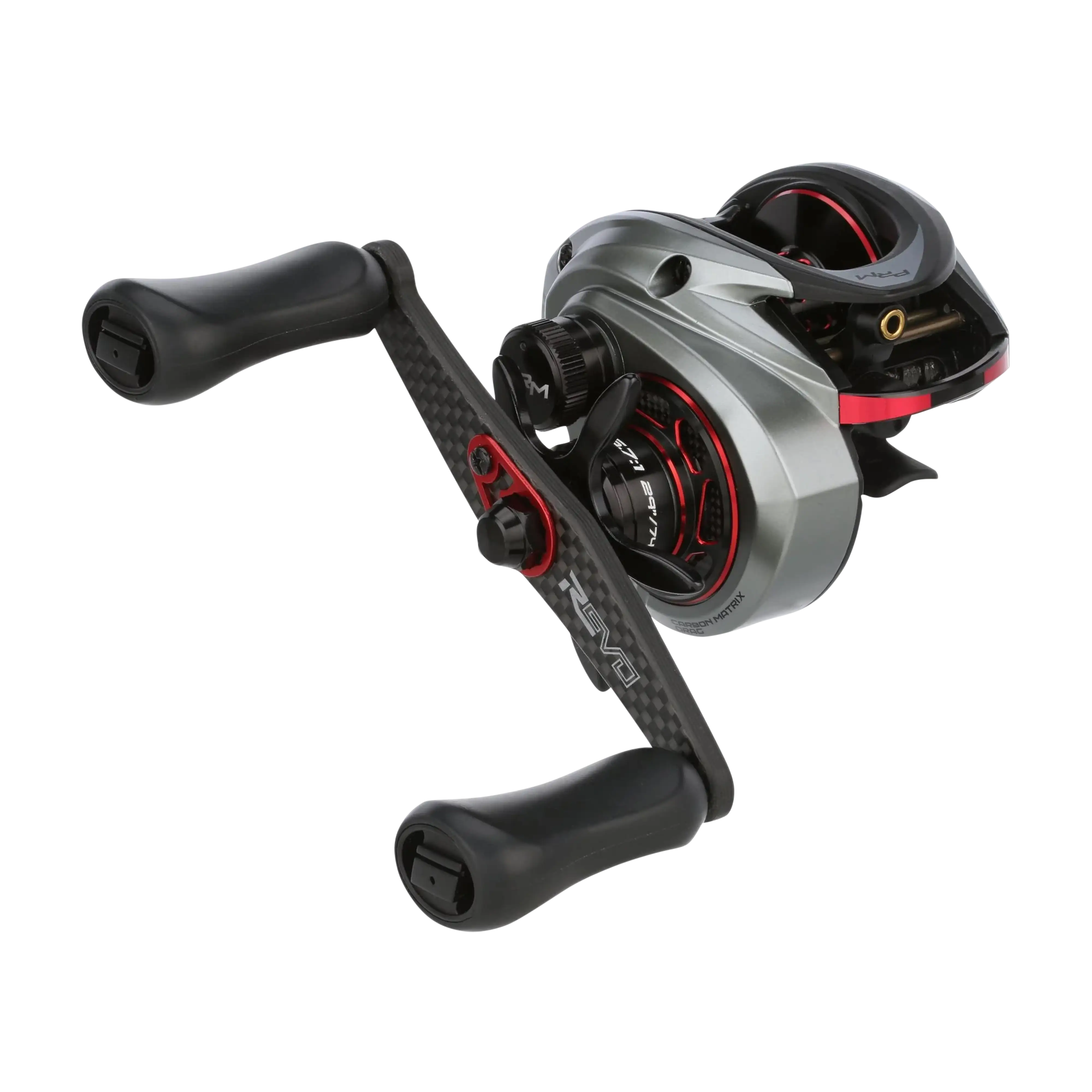
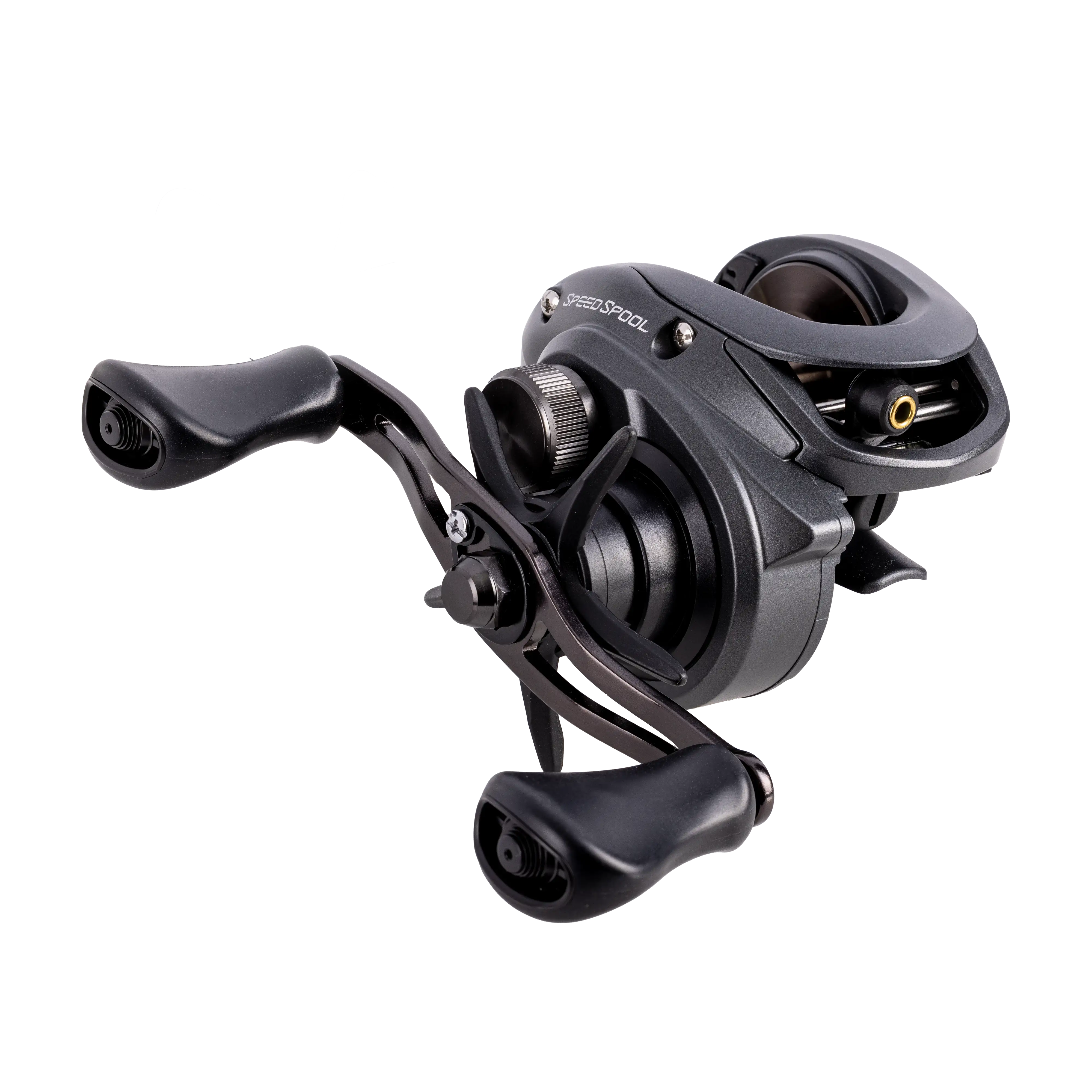
Low-profile baitcasting reels are the standard for flipping and pitching because they offer a compact, palmable design that supports repeated underhand pitches with minimal fatigue. Their ergonomics improve accuracy in tight quarters and allow for better thumb control during controlled drops into cover. A solid frame that resists flex is critical when fishing heavy line and driving hooks in dense structure.
Gear Ratio
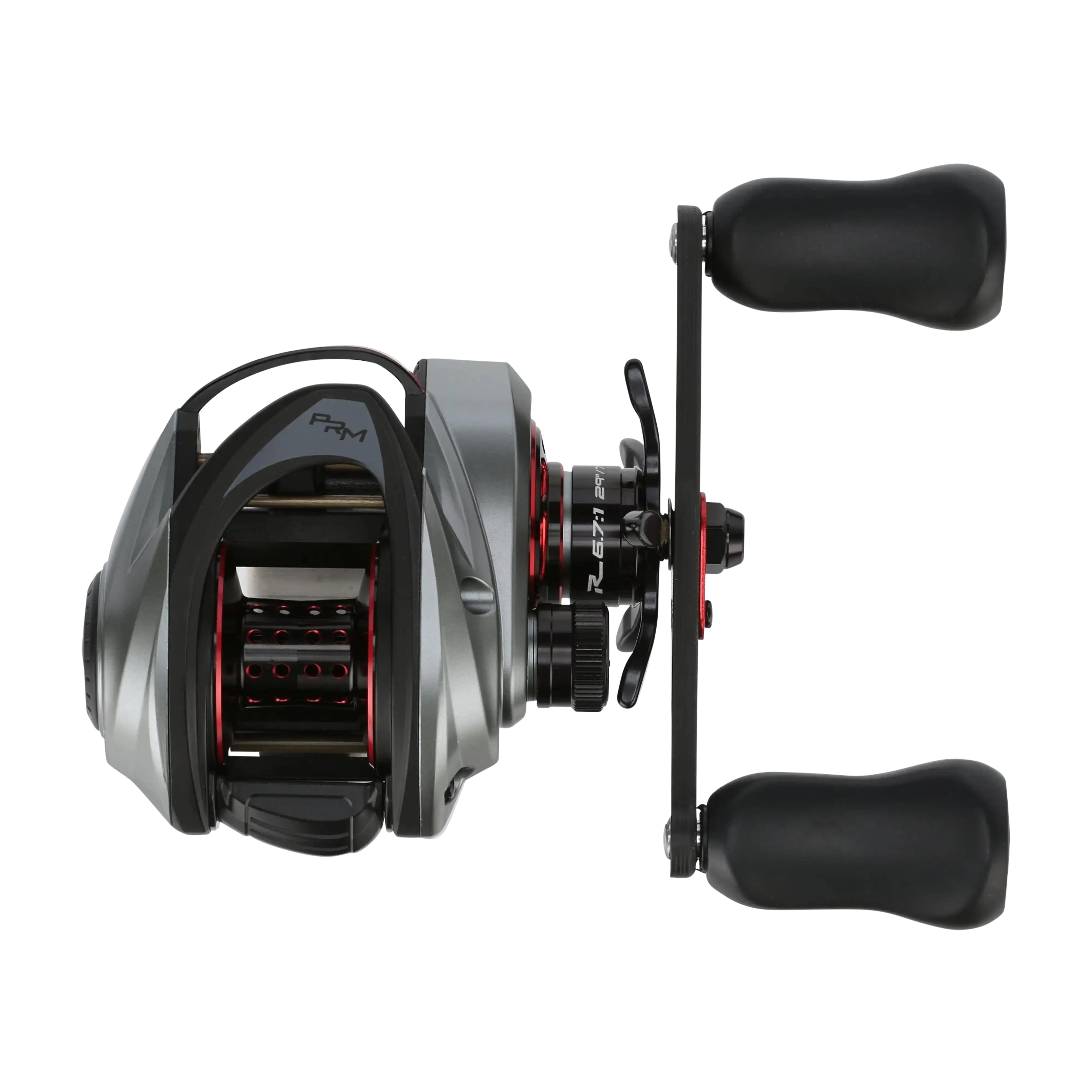
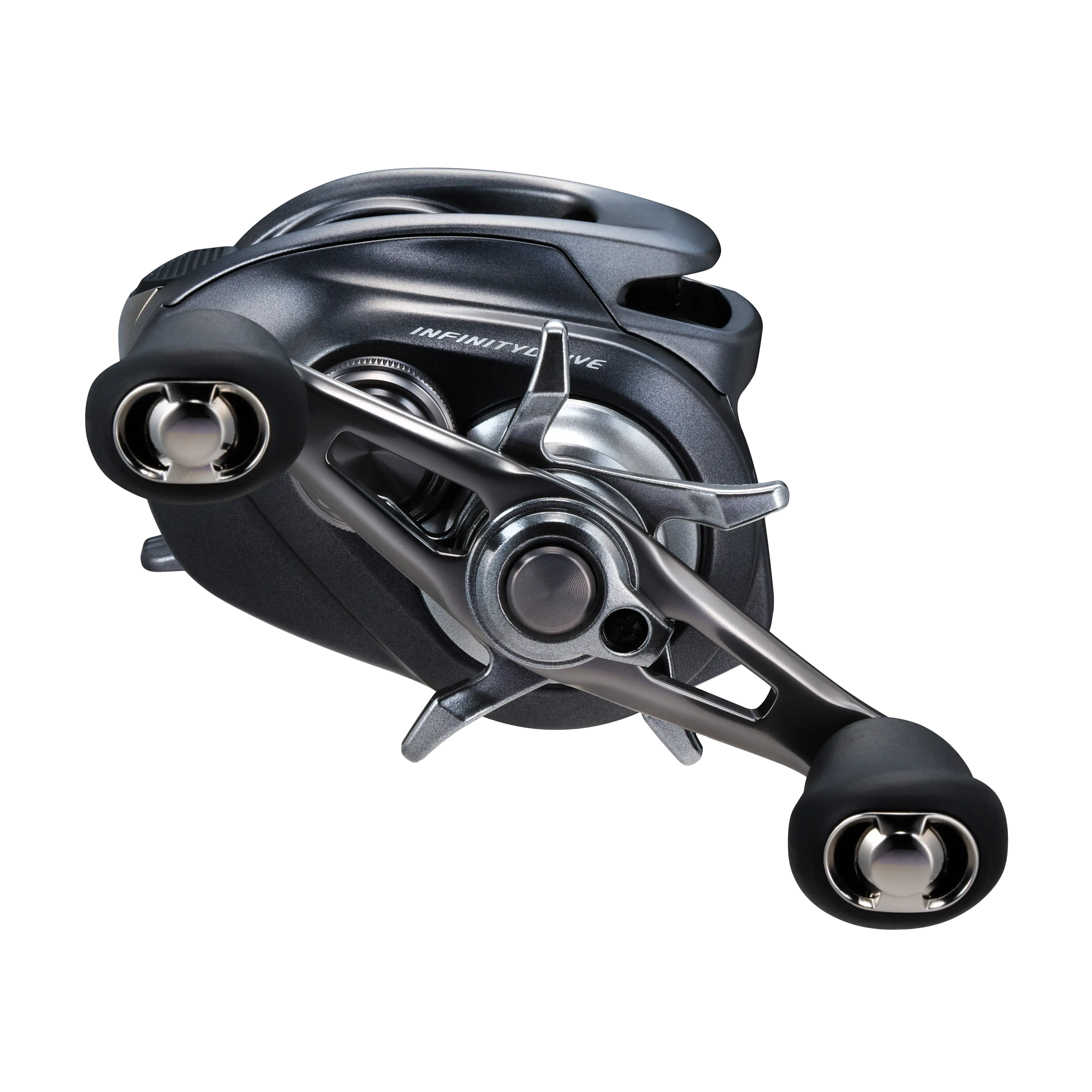
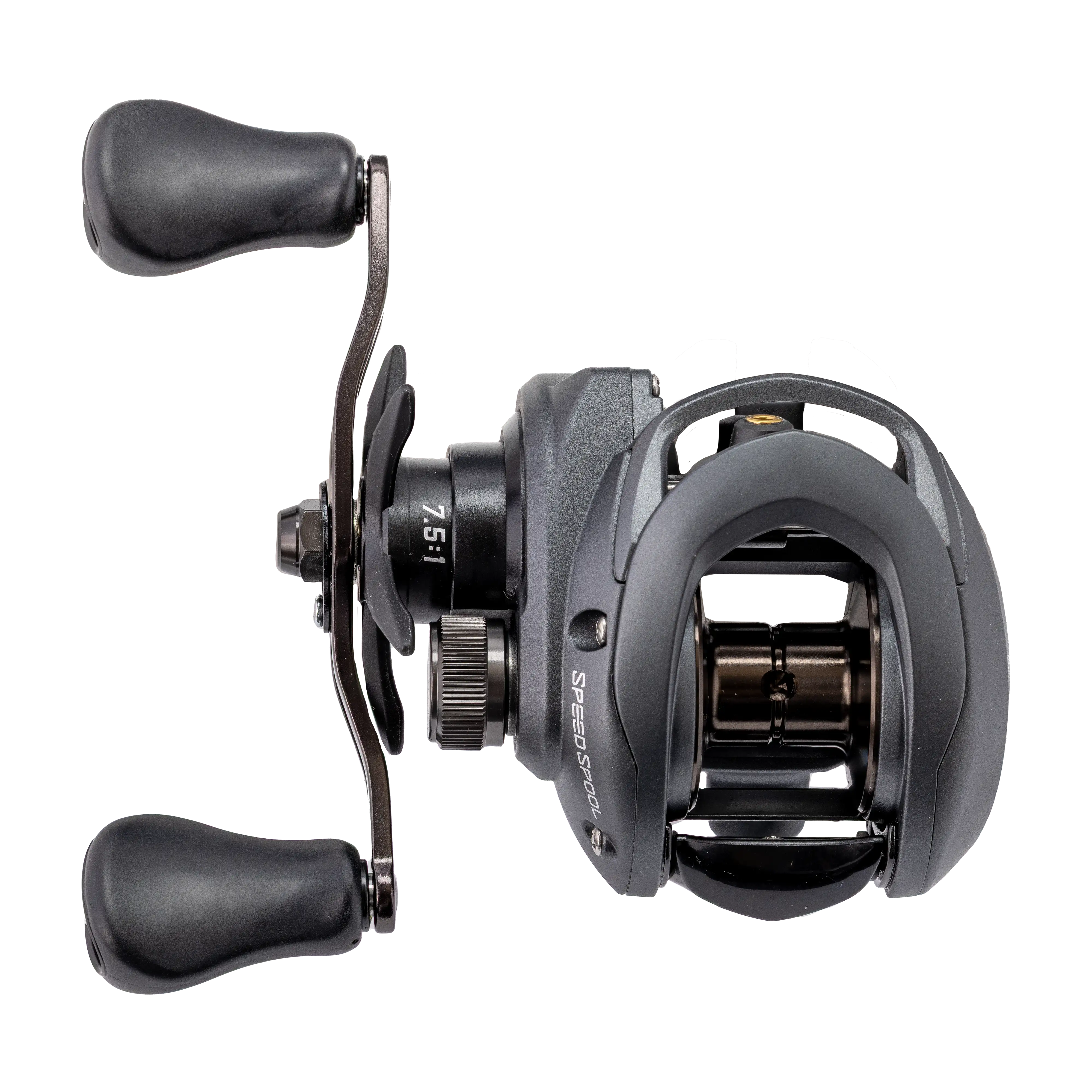
Faster gear ratios (generally 7.1:1 to 8.5:1) are preferred because they allow quick slack pickup the moment a fish bites and help maintain constant pressure in heavy cover. This is especially important when fish eat on the fall or immediately after contact with structure. High-speed reels also improve efficiency by allowing anglers to quickly reset and make repeated pitches to high-percentage targets. While some anglers choose slightly lower ratios for a more deliberate retrieve feel, most modern flipping and pitching setups favor higher speeds for responsiveness and control.
Drag System
A strong, smooth drag system is important, but in flipping and pitching it’s typically set fairly tight rather than used actively during the fight. Most control comes from rod pressure and leverage, while the drag mainly helps cushion sudden surges and prevent break-offs at close range. The key is a smooth, consistent startup under load so pressure stays steady when a fish makes its first run into cover.
Line Capacity
Line capacity matters less for distance casting and more for durability under heavy load. The reel should comfortably hold heavy braid or fluorocarbon without crowding the spool, ensuring smooth line flow and consistent drag performance. Adequate capacity also provides a safety buffer when fishing deep docks, heavy vegetation, or situations where fish make unexpected runs before being controlled.
Durability
Flipping and pitching reels take constant abuse—repeated short casts, heavy hooksets, and high drag pressure in dense cover. A rigid frame (typically aluminum or reinforced graphite), solid gearing, and a reliable braking system are essential for long-term performance. The reel must stay smooth and consistent even when paired with heavy rods, thick line, and aggressive fishing styles over long days on the water.
Key Takeaways
- Low-profile baitcasting reels provide comfort, control, and durability for repeated short casts
- Faster gear ratios allow quick line pickup after bites, especially on the fall
- Strong, smooth drags maintain control in tight cover while protecting line and hooksets
- Line capacity should match rod and cover to avoid surprises during fights
Dock Flipping / Dock Pitching
Dock flipping reels are all about instant engagement and fast slack pickup. Higher gear ratios let you react the moment a fish eats on the fall and quickly take up slack, keeping pressure on before it can wrap around pilings or cross-members.
Reel Type: Low-profile baitcasting
Gear Ratio: 7.0–8.1:1
Drag: 15–20 lb
Line: 50–65 lb braid or 17–25 lb fluorocarbon
Laydown / Wood Flipping
Around wood, reels need smooth control on the drop and the torque to win short, violent fights. Fast pickup helps manage slack during the fall, while solid drag keeps fish from turning and burying into limbs.
Reel Type: Low-profile baitcasting
Gear Ratio: 7.0–8.1:1
Drag: 15–20 lb
Line: 50–65 lb braid or 17–25 lb fluorocarbon
Grassline / Edge Pitching
Grass edge pitching relies on controlled drops and quick adjustments as the bait slides down cover. Slightly slower gear ratios offer better feel and control while still providing enough speed to stay tight to a fish after the bite.
Reel Type: Low-profile baitcasting
Gear Ratio: 6.4–7.0:1
Drag: 12–15 lb
Line: 30–50 lb braid or 17–25 lb fluorocarbon
Mat / Punching
Punching reels are built for pure power and durability. Strong drag pressure and heavy braid capacity keep the spool locked down once the bait breaks through, allowing you to winch fish straight up without hesitation.
Reel Type: Low-profile baitcasting
Gear Ratio: 6.4–7.0:1
Drag: 20–25 lb
Line: 65–80 lb braid
Shallow / Brush Flipping
Brush flipping demands reels that engage cleanly and stay smooth under constant start-and-stop pressure. Fast gear ratios help eliminate slack instantly when a fish bites and tries to turn back into cover.
Reel Type: Low-profile baitcasting
Gear Ratio: 7.0–8.1:1
Drag: 15–20 lb
Line: 50–65 lb braid or 17–25 lb fluorocarbon
Reaction / Power Flipping
Reaction flipping is about speed and efficiency. High-speed reels keep presentations fast, recover line instantly after aggressive hooksets, and let you hit multiple targets quickly without losing control.
Reel Type: Low-profile baitcasting
Gear Ratio: 7.0–8.1:1
Drag: 15–20 lb
Line: 50–65 lb braid or 17–25 lb fluorocarbon
Finesse Flipping / Stealth Pitching
Finesse flipping reels prioritize smoothness and precision over brute force. Controlled spool startup and moderate drag settings help manage lighter line and subtle falls without overpowering pressured fish.
Reel Type: Low-profile baitcasting
Gear Ratio: 6.4–7.0:1
Drag: 10–12 lb
Line: 12–17 lb fluorocarbon or 30–40 lb braid
Best Reels for Flipping & Pitching
Now let’s find a reel for your custom rod.
Flipping, pitching, and punching demand reels that respond instantly. Most strikes happen on the initial fall, so your reel must engage quickly, take up slack efficiently, and maintain control during short, powerful fights. Unlike open-water techniques, these presentations happen in tight cover, requiring strength, consistency, and reliability with every drop.
When evaluating reels, focus on these key features:
Reel Type
Low-profile baitcasting reels are the standard for flipping and pitching because they offer a compact, palmable design that supports repeated underhand pitches with minimal fatigue. Their ergonomics improve accuracy in tight quarters and allow for better thumb control during controlled drops into cover. A solid frame that resists flex is critical when fishing heavy line and driving hooks in dense structure.
Gear Ratio
Faster gear ratios (generally 7.1:1 to 8.5:1) are preferred because they allow quick slack pickup the moment a fish bites and help maintain constant pressure in heavy cover. This is especially important when fish eat on the fall or immediately after contact with structure. High-speed reels also improve efficiency by allowing anglers to quickly reset and make repeated pitches to high-percentage targets. While some anglers choose slightly lower ratios for a more deliberate retrieve feel, most modern flipping and pitching setups favor higher speeds for responsiveness and control.
Drag System
A strong, smooth drag system is important, but in flipping and pitching it’s typically set fairly tight rather than used actively during the fight. Most control comes from rod pressure and leverage, while the drag mainly helps cushion sudden surges and prevent break-offs at close range. The key is a smooth, consistent startup under load so pressure stays steady when a fish makes its first run into cover.
Line Capacity
Line capacity matters less for distance casting and more for durability under heavy load. The reel should comfortably hold heavy braid or fluorocarbon without crowding the spool, ensuring smooth line flow and consistent drag performance. Adequate capacity also provides a safety buffer when fishing deep docks, heavy vegetation, or situations where fish make unexpected runs before being controlled.
Durability
Flipping and pitching reels take constant abuse—repeated short casts, heavy hooksets, and high drag pressure in dense cover. A rigid frame (typically aluminum or reinforced graphite), solid gearing, and a reliable braking system are essential for long-term performance. The reel must stay smooth and consistent even when paired with heavy rods, thick line, and aggressive fishing styles over long days on the water.
Key Takeaways
- Low-profile baitcasting reels provide comfort, control, and durability for repeated short casts
- Faster gear ratios allow quick line pickup after bites, especially on the fall
- Strong, smooth drags maintain control in tight cover while protecting line and hooksets
- Line capacity should match rod and cover to avoid surprises during fights
Dock Flipping / Dock Pitching
Dock flipping reels are all about instant engagement and fast slack pickup. Higher gear ratios let you react the moment a fish eats on the fall and quickly take up slack, keeping pressure on before it can wrap around pilings or cross-members.
Reel Type: Low-profile baitcasting
Gear Ratio: 7.0–8.1:1
Drag: 15–20 lb
Line: 50–65 lb braid or 17–25 lb fluorocarbon
Laydown / Wood Flipping
Around wood, reels need smooth control on the drop and the torque to win short, violent fights. Fast pickup helps manage slack during the fall, while solid drag keeps fish from turning and burying into limbs.
Reel Type: Low-profile baitcasting
Gear Ratio: 7.0–8.1:1
Drag: 15–20 lb
Line: 50–65 lb braid or 17–25 lb fluorocarbon
Grassline / Edge Pitching
Grass edge pitching relies on controlled drops and quick adjustments as the bait slides down cover. Slightly slower gear ratios offer better feel and control while still providing enough speed to stay tight to a fish after the bite.
Reel Type: Low-profile baitcasting
Gear Ratio: 6.4–7.0:1
Drag: 12–15 lb
Line: 30–50 lb braid or 17–25 lb fluorocarbon
Mat / Punching
Punching reels are built for pure power and durability. Strong drag pressure and heavy braid capacity keep the spool locked down once the bait breaks through, allowing you to winch fish straight up without hesitation.
Reel Type: Low-profile baitcasting
Gear Ratio: 6.4–7.0:1
Drag: 20–25 lb
Line: 65–80 lb braid
Shallow / Brush Flipping
Brush flipping demands reels that engage cleanly and stay smooth under constant start-and-stop pressure. Fast gear ratios help eliminate slack instantly when a fish bites and tries to turn back into cover.
Reel Type: Low-profile baitcasting
Gear Ratio: 7.0–8.1:1
Drag: 15–20 lb
Line: 50–65 lb braid or 17–25 lb fluorocarbon
Reaction / Power Flipping
Reaction flipping is about speed and efficiency. High-speed reels keep presentations fast, recover line instantly after aggressive hooksets, and let you hit multiple targets quickly without losing control.
Reel Type: Low-profile baitcasting
Gear Ratio: 7.0–8.1:1
Drag: 15–20 lb
Line: 50–65 lb braid or 17–25 lb fluorocarbon
Finesse Flipping / Stealth Pitching
Finesse flipping reels prioritize smoothness and precision over brute force. Controlled spool startup and moderate drag settings help manage lighter line and subtle falls without overpowering pressured fish.
Reel Type: Low-profile baitcasting
Gear Ratio: 6.4–7.0:1
Drag: 10–12 lb
Line: 12–17 lb fluorocarbon or 30–40 lb braid
Flipping & Pitching Reels



Build a Flipping & Pitching Rod
FAQ - Custom Flipping & Pitching Rods
What rod power should I choose for flipping and pitching?
Most anglers select heavy to extra-heavy power. Heavy is versatile for general flipping/pitching, while extra-heavy or XX-heavy is ideal for punching dense mats or handling bigger fish in heavy cover.
How long should my flipping or pitching rod be?
Lengths between 7’4” and 7’9” strike the right balance between reach, leverage, and maneuverability. Shorter rods are easier to work in thick mats or brush, while longer rods provide more control and hookset power over docks or laydowns.
What action works best for flipping and pitching rods?
Moderate-fast tip actions are ideal. They provide sensitive tip feel for accurate bait placement while allowing the mid and butt sections to deliver strong hooksets immediately.
Can I use the same blank for multiple techniques like flipping, pitching, and punching?
Yes — many builders choose a versatile blank (like the MHX FP885 or FS905) for both flipping and pitching. Punching usually requires an extra-heavy blank to handle heavier weights and thicker cover.
What handle style is best for a flipping rod?
Flipping rods typically use split grips or full grips, and the choice mostly comes down to personal preference. Both styles are lightweight and balanced; split grips are slightly lighter, while full grips give more hand placement options. It’s really about how you like to hold and work the rod when flipping or pitching.
Should I use a metal or graphite reel seat?
Graphite seats are usually preferred for flipping and pitching because they reduce weight and allow the blank to flex freely.
How important is blank taper in a custom flipping rod?
Very important. A progressive taper (like MHX rod blanks) ensures sensitive tip feel for accurate placements while building into strong mid and butt sections for immediate control and power when a fish bites.
From the Mud Hole Journal
Further Reading
Article
Write text about your blog post.