
























Spend any time around rod builders or serious anglers and you will hear strong opinions about micro guides. Some swear by them, claiming increased casting distance, better sensitivity, and improved overall performance. Others see them as unnecessary, arguing that standard guides already do everything needed without the added complications.
Like most things in rod building, the truth sits somewhere in the middle. Micro guides are not a magic upgrade, but they are also far from a gimmick. The real question is not whether they work, but when and why they make sense.
What Are Micro Guides?
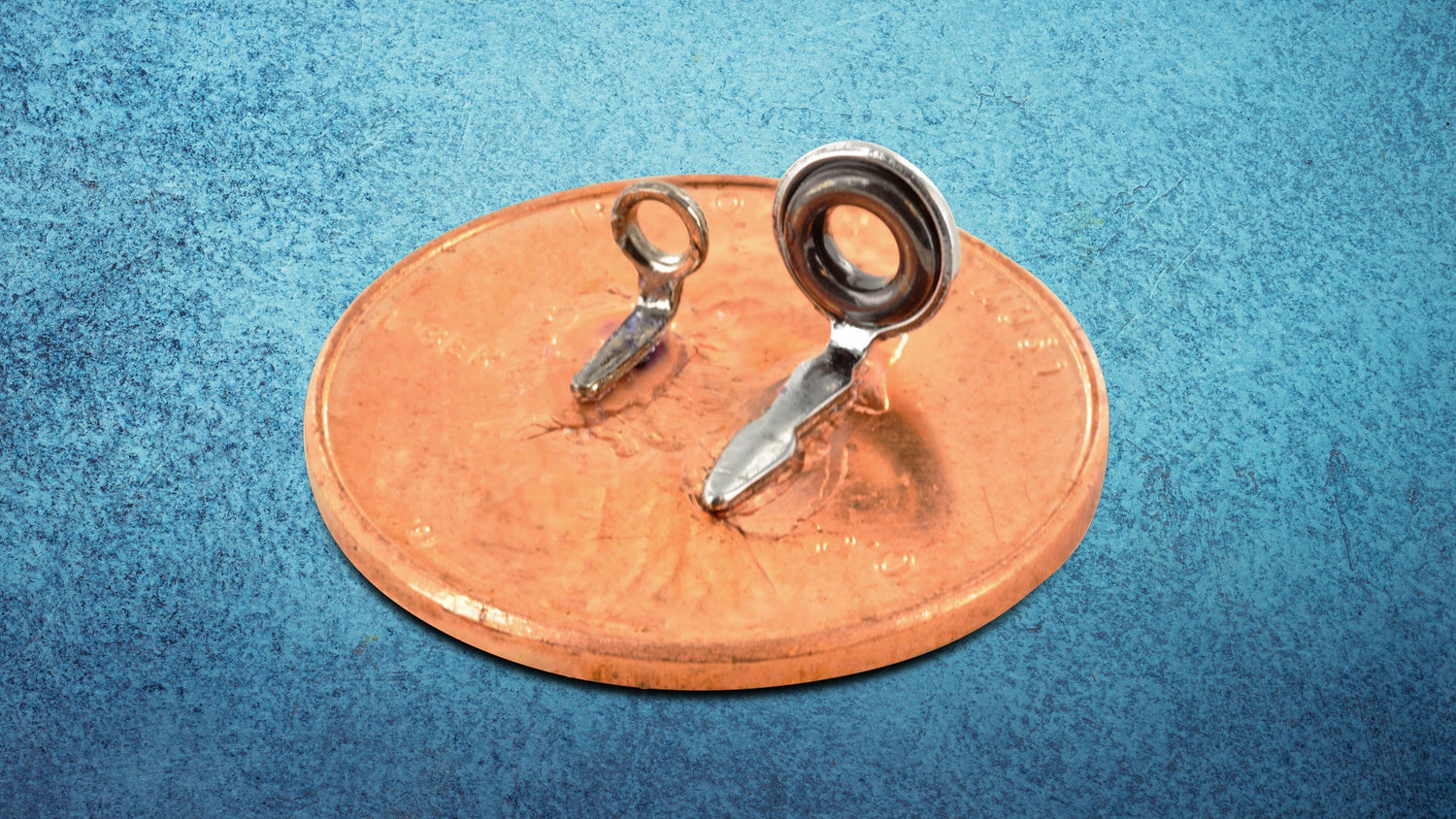
Before getting into performance, it helps to define what we are actually talking about. Micro guides are simply smaller diameter guides compared to traditional or standard guides. There is no strict cutoff, but in most cases, micro guides refer to running guides in the size 4 range or smaller. In today's world of rod building you have more than a dozen options of micro guides. From American Tackle, to Fuji and even REC Recoil, there is a great selection of size 3 and size 4 guides.
The concept behind them is straightforward. By reducing the size and weight of the guides, you reduce the overall weight on the blank, particularly toward the tip section. That reduction in weight can influence how the rod performs in several key ways.
The Performance Argument for Micro Guides
The biggest selling point for micro guides is weight reduction. Guides may seem insignificant on their own, but when you add up an entire guide train, especially toward the upper half of the rod, the weight becomes noticeable. Also, let's not forget most of the weight of a guide is held in the ring, so making the ring smaller and the weight reduces much faster than by trying to use a different frame material.
Less weight on the tip allows the rod to recover faster during a cast. This can translate into improved casting efficiency, tighter fly line loops, and potentially increased distance. The rod simply feels more responsive. Yes, I snuck a fly rod reference in there.
Sensitivity is another area where micro guides are often credited with an advantage. A lighter tip section means less dampening of vibrations, allowing more feedback to travel through the blank into your hand. For techniques where detecting subtle bites is critical, this can be a real benefit.
Line control is also frequently mentioned. Smaller guides keep the line closer to the blank, which can help reduce line slap and improve tracking during a cast. In theory, this creates a smoother, more controlled path for the line to follow. Remember when we always thought the larger guide opening reduces frictions? We have now known for quite sometime, that was one of the biggest myths in fishing.
When everything is dialed in correctly, micro guide setups can feel crisp, efficient, and highly responsive.
Where Micro Guides Actually Shine
Micro guides tend to perform best in specific applications rather than across the board.
For freshwater bass techniques like finesse fishing, drop shotting, or light jig work, the benefits are more noticeable. These techniques rely heavily on sensitivity and precision, where small improvements can make a difference.
They also excel with lighter lines and smaller knots. Braided line with a leader, when tied with a clean, compact knot, typically passes through micro guides without issue. In these situations, the reduced guide size can help maintain control and efficiency.
Casting rods, in particular, often see the most benefit from micro guides. Because the line is already controlled by the reel, the transition through smaller guides can be more predictable and consistent. Not that I am using micro guides on a regular basis but this goes back to my comments about the line coming out of the casting reel through a size 4 or 5 line guide, so there is really no reason for your first guide to be something as large as a size 8 ring.
The Trade-Offs of Going Smaller
This is where the conversation becomes more balanced.
One of the biggest drawbacks of micro guides is knot clearance. Larger leader knots, especially with heavier line, can struggle to pass smoothly through very small guides.
Before we go any farther I wanted to drop in a pro-tip that our very only Uncle Bob McKamey taught me years ago. He said, "Son, don't worry about them micros but I love to bridge the gap with a guide size no one talks about, the 4.5. Its perfect every time." Granted, we were talking about bass casting rod builds, but he isn't wrong. Back when he shared this wisdom you could only get a 4.5mm in the Fuji guide line-up, but thankfully the American Tackle Ti-Forged series has a 4.5mm as well. Just a little nugget from Bob I received 15 years ago!
This can reduce casting efficiency and, in some cases, create frustration on the water.
Durability is another concern. While modern guide materials are incredibly strong, smaller guides have less material overall. They can be more susceptible to damage from impact, especially in situations where rods are handled roughly or stored improperly.
Debris buildup is also worth considering. In certain environments, particularly inshore or saltwater fishing, micro guides can collect salt, sand, or vegetation more easily. In colder climates, they are also more prone to icing.
Then there is the issue of versatility. A rod built with micro guides is often more specialized. It may perform exceptionally well within a narrow range of applications, but less so outside of it.
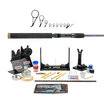
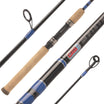
Before we move on, here are some of my favorite guide trains featuring micro runners. Here is the American Tackle Ti-Forged Micro Casting and American Tackle Micro High-Frame Spinning.

The Case for Standard Guides
Standard guides have stood the test of time for a reason. They offer a balance of performance, durability, and versatility that works across a wide range of fishing scenarios.
Larger guide rings allow for easier knot passage, making them more forgiving when using heavier lines or bulkier connections. This is especially important in saltwater and inshore applications, where leader sizes can vary significantly. They are also more durable in real-world use. Bigger guides can handle more abuse, whether that comes from travel, storage, or everyday wear and tear.
From a design standpoint, standard guides provide more flexibility. They allow builders to create rods that can handle a wider variety of techniques without being overly specialized. And while they may be slightly heavier, modern materials have minimized that difference to the point where it is often negligible for most anglers.
Do Micro Guides Really Increase Casting Distance?
This is one of the most debated claims.
In controlled conditions, a properly set up micro guide system can improve casting efficiency. Reduced weight and better line control can contribute to longer, smoother casts.
However, in real-world fishing, the difference is often minimal. Factors like lure weight, rod action, line choice, and angler technique play a much larger role in casting distance than guide size alone. In other words, micro guides can help, but they are not going to suddenly add twenty feet to your cast whereas a properly setup guide train probably can.
Sensitivity: Noticeable or Overstated?
Sensitivity is another area where micro guides are often praised.
There is some truth to the claim. Reducing weight on the blank, particularly near the tip, can improve how vibrations are transmitted. But again, the difference is subtle and in my personal opinion, it doesn't. Just like I do not believe EVA grips make a rod less sensitive than cork grips, but thats for another time.
Blank selection, line choice, and overall rod design have a far greater impact on sensitivity than guide size alone. A high-quality blank with standard guides will almost always outperform a lower-quality blank with micro guides.
I understand that many experienced anglers who are highly tuned into their gear, claim difference may be noticeable. For others, it may not stand out as much as expected.
The Role of Proper Guide Train Design
One of the most overlooked aspects of this debate is execution.
This is where I tend to hand my hat and often times I sigh when I hear someone who will go through all the steps to buy the best guides, blank, line and reel, just to neglect dialing in the ideal guide spacing. A well-designed guide train, whether micro or standard, will always outperform a poorly designed one. Guide placement, spacing, and alignment all play a critical role in how a rod performs.Simply switching to smaller guides without adjusting the layout does not guarantee better performance. In some cases, it can actually make things worse.
The same applies in reverse. A properly tuned standard guide setup can deliver excellent performance that rivals or exceeds a poorly executed micro guide build. This is where custom rod building truly shines. It allows builders to optimize every aspect of the guide train for the intended application.
Technique-Specific Decisions
This is where the decision becomes clear.
If you are building a rod specifically for finesse bass fishing with light line and small knots, micro guides can offer real advantages. The reduced weight and improved responsiveness can enhance the overall feel of the rod.
On the other hand, if you are building an inshore rod that needs to handle a variety of line sizes, leader connections, and conditions, standard guides are often the better choice. The added durability and versatility outweigh the marginal performance gains of going smaller.
It is not about which guide is better in general. It is about which guide is better for the job. Just as I mentioned earlier that I would run size 4.5 runners on a bass rod, while I run 4mm runners on a flippin' stick, I run size 6mm runners on my light inshore rod kits due to leader knots.
So, Performance Gain or Trendy Myth?
The answer is both, depending on how you look at it.
Micro guides do offer legitimate performance benefits, particularly in weight reduction and responsiveness. In the right applications, those benefits can be meaningful, but they are not a universal upgrade. The gains are often subtle and highly dependent on how the rod is used. In many cases, the difference is not enough to outweigh the trade-offs.
Calling them a myth would be inaccurate. Calling them a game changer in every situation would be just as misleading.
Finding the Right Approach
At the end of the day, rod building is about making intentional decisions.
If your goal is to squeeze every bit of performance out of a technique-specific setup, micro guides are worth considering. Just be prepared to account for their limitations.
If you value versatility, durability, and ease of use across a range of conditions, standard guides remain a reliable and proven option.
The best builders understand that there is no one-size-fits-all answer. They evaluate the application, consider the trade-offs, and build accordingly.Because in the end, it is not about following trends or chasing marginal gains. It is about building a rod that performs exactly how you need it to when it matters most.