
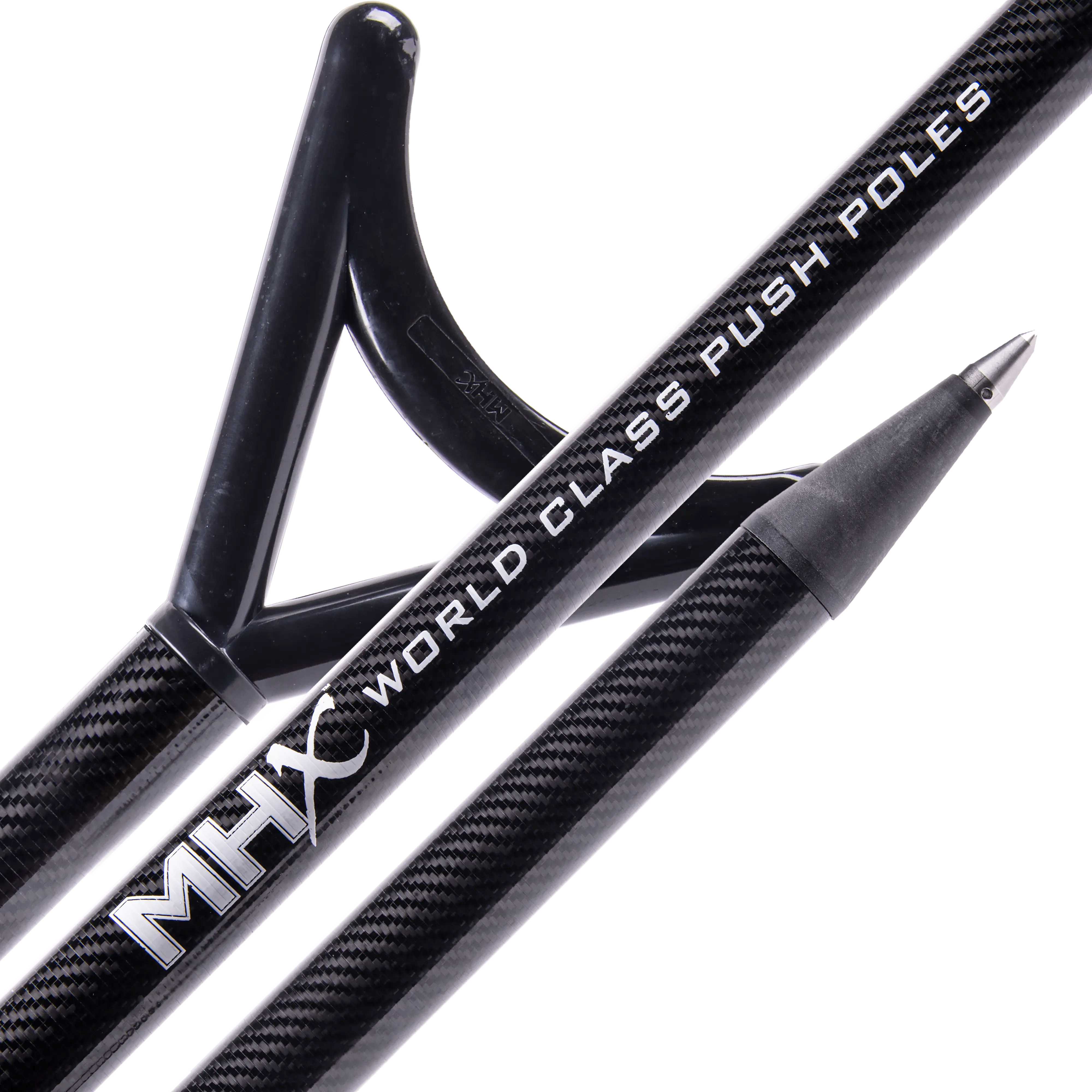




















If you have ever shopped for a rod blank, you have probably noticed that manufacturers often separate their blanks into freshwater and saltwater categories. That naturally raises a question for custom rod builders: What actually makes a blank a freshwater blank or a saltwater blank?
Is there a special material used for saltwater rods? Are saltwater blanks stronger? Can you use a freshwater blank in saltwater? And if a blank is rated for saltwater, does that automatically make it a better choice for freshwater fishing?
The short answer is yes, there can be a difference, but it is not always the difference you might think.
There is no universal material that makes a rod blank "saltwater" or "freshwater." In many cases, the biggest differences come down to how the blank is engineered for the application, including its power, action, wall construction, diameter, lifting capability, length, and the type of fish and techniques it is designed to handle. Just as importantly, the components you put on the blank can have a major impact on how well the finished rod survives in a saltwater environment.
For custom builders, understanding those differences can help you choose the right blank instead of simply choosing one because it happens to be labeled "saltwater."
What Actually Makes a Saltwater Blank Different?
Let's start with one of the biggest misconceptions. Saltwater does not automatically require a different type of carbon fiber.
Rod manufacturers use a variety of graphite (carbon fiber), fiberglass, and composite constructions for both freshwater and saltwater rods. The material itself isn't necessarily what determines the application. Instead, manufacturers engineer the blank around what the rod is expected to do.

Think about the difference between throwing a 1/8-ounce bass lure and fighting a 50-pound fish around a boat. Those are completely different mechanical demands. The blank has to store and release energy differently, handle different loads, and provide a completely different level of lifting power.
That is where the real distinction starts.
Saltwater blanks are often designed around heavier loads, larger baits, stronger fish, and more demanding fighting conditions. They may have more material, larger diameters, stronger butt sections, or construction designed to withstand higher loads.
A freshwater bass blank, on the other hand, may be designed to be extremely lightweight and responsive. Sensitivity, lure control, casting accuracy, and reduced fatigue can be more important than maximum lifting power.
Neither design is inherently better. They are simply optimized for different jobs.
Power Is Usually More Important Than the Label
When choosing between freshwater and saltwater blanks, don't get too hung up on the category printed in the catalog.
Instead, look at the power rating, lure rating, line rating, action, length, and intended application.
A medium-power freshwater blank may be perfect for throwing smaller soft plastics or crankbaits for bass. That same blank may be completely inappropriate for targeting large snook around heavy cover, even though both are technically "inshore" fishing. Conversely, a light saltwater blank designed for smaller inshore species may make an excellent freshwater rod.
This is one of the advantages of building custom rods. You aren't limited to the way a manufacturer markets a finished rod. You can evaluate the blank based on what it actually does.
A blank designed for redfish, speckled trout, or smaller snook may have characteristics that make it an outstanding choice for freshwater species. Likewise, some freshwater blanks have more than enough power for certain inshore applications.
The fish doesn't care what category the blank was marketed under. What matters is whether the blank has the power and action to properly execute the technique and handle the fish you're targeting.
Saltwater Often Means More Power
One of the most obvious differences you'll see when comparing saltwater and freshwater blanks is the amount of power available.
Many saltwater applications require the angler to control fish that are stronger, faster, and capable of making longer runs than typical freshwater species. Add structure, current, boats, docks, rocks, jetties, or heavy vegetation to the equation and the rod can be subjected to enormous loads.
That is why many saltwater blanks are built with substantial butt power.
The butt section of the rod is where you generate leverage during the fight. When a large fish is pulling away from the boat, you need a blank that can progressively load while still providing enough backbone to turn the fish. That doesn't mean every saltwater rod needs to be a broomstick.
In fact, one of the biggest advancements in modern blank design is the ability to produce lighter blanks with tremendous power. Better materials and manufacturing techniques allow manufacturers to put strength where it is needed without simply making the entire blank heavier.

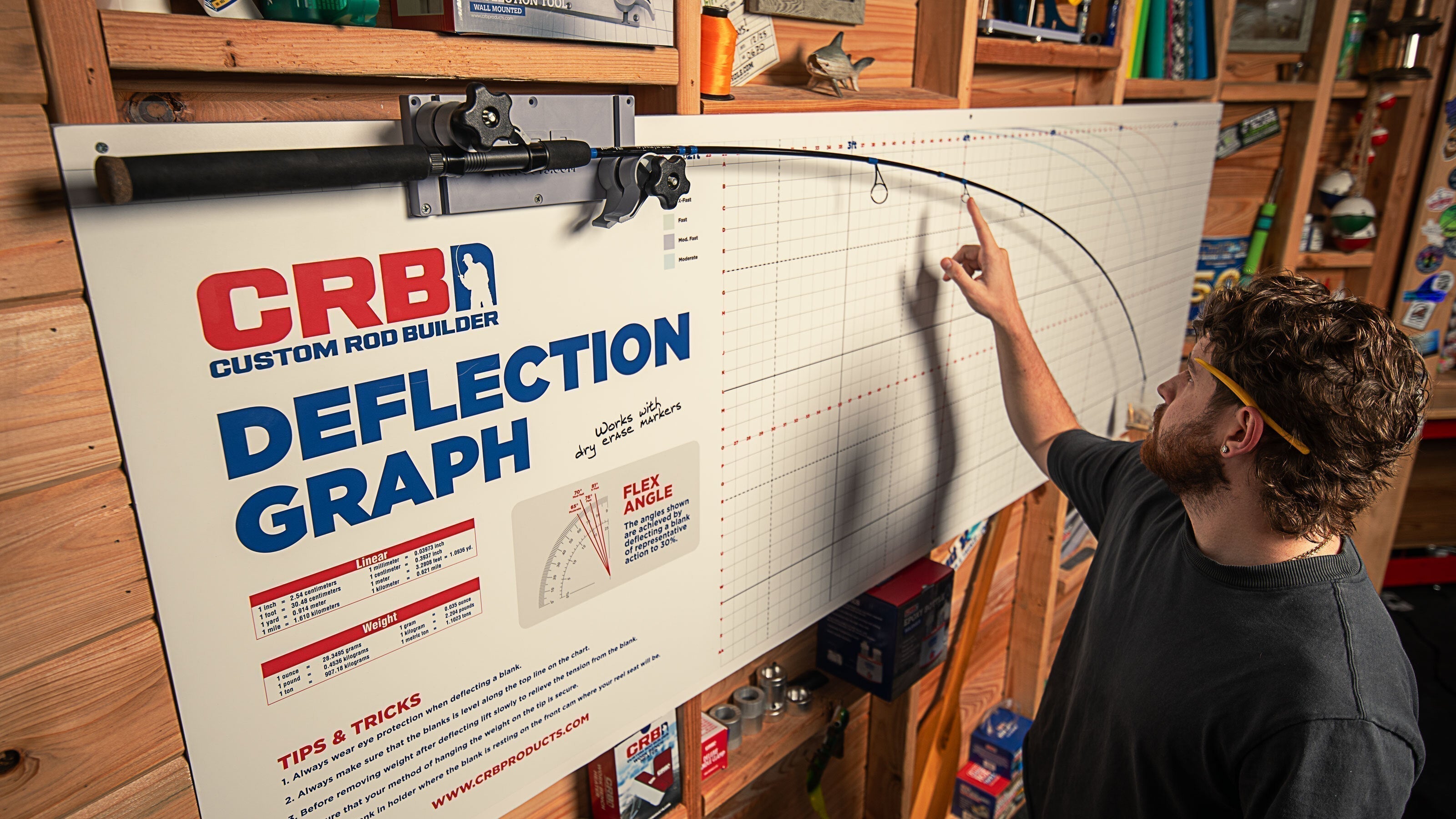
One of the most eye-opening comparisons for custom rod builders is putting a freshwater medium-power blank next to a saltwater medium-power blank. On paper, they carry the same power designation, but put them in your hands and the difference can be dramatic. Power is essentially the blank's resistance to bending, but power ratings are not perfectly standardized across manufacturers or applications.
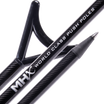
A medium-power freshwater blank might be designed around relatively light lures, lighter line, and techniques where a lighter, more responsive blank is an advantage. A popular example is the SJ843 from MHX. It is a medium-power, fast-action blank rated for 8-15 lb. line and 3/16-5/8 oz. lure weight.
A medium-power saltwater blank, on the other hand, may be engineered with substantially more backbone to handle stronger fish, heavier loads, and the demands of inshore or nearshore fishing. As an example, a 7-foot MHX medium saltwater blank, the SW70M, has a 15-40 lb. line rating, a moderate-fast action, and the blank weighs over twice as much as the "freshwater" medium-power rod.
That is why the line and lure ratings can tell you much more than the word "medium" by itself. Two blanks can both say medium while having very different intended workloads. In other words, the power designation gives you a general idea of how the blank behaves, but the line and lure ratings reveal what the manufacturer actually designed that particular blank to handle. When you're comparing freshwater and saltwater blanks, don't just look at the letter or word describing power. Pick up the blanks, flex them, compare the butt diameter and construction, and then look at the actual line and lure ratings.
That's where you'll see just how different two "medium" blanks can really be.
Action Matters Too
Power gets most of the attention, but action can be just as important.

Freshwater anglers often select actions based on the technique. A fast or extra-fast blank may be preferred for techniques where quick hooksets, precise lure control, or bottom contact are important.
Saltwater anglers make similar decisions, but the reasons can be different.
A fast-action inshore blank can provide the quick response needed to work topwaters, twitchbaits, jigs, and soft plastics. A slower or more moderate action may be preferred for certain live-bait applications where the angler wants the fish to load the rod before applying pressure.
Offshore blanks can be engineered around completely different loading characteristics again.
This is why saying "saltwater blanks are slower" or "freshwater blanks are faster" would be an oversimplification. There is no universal freshwater action or saltwater action.
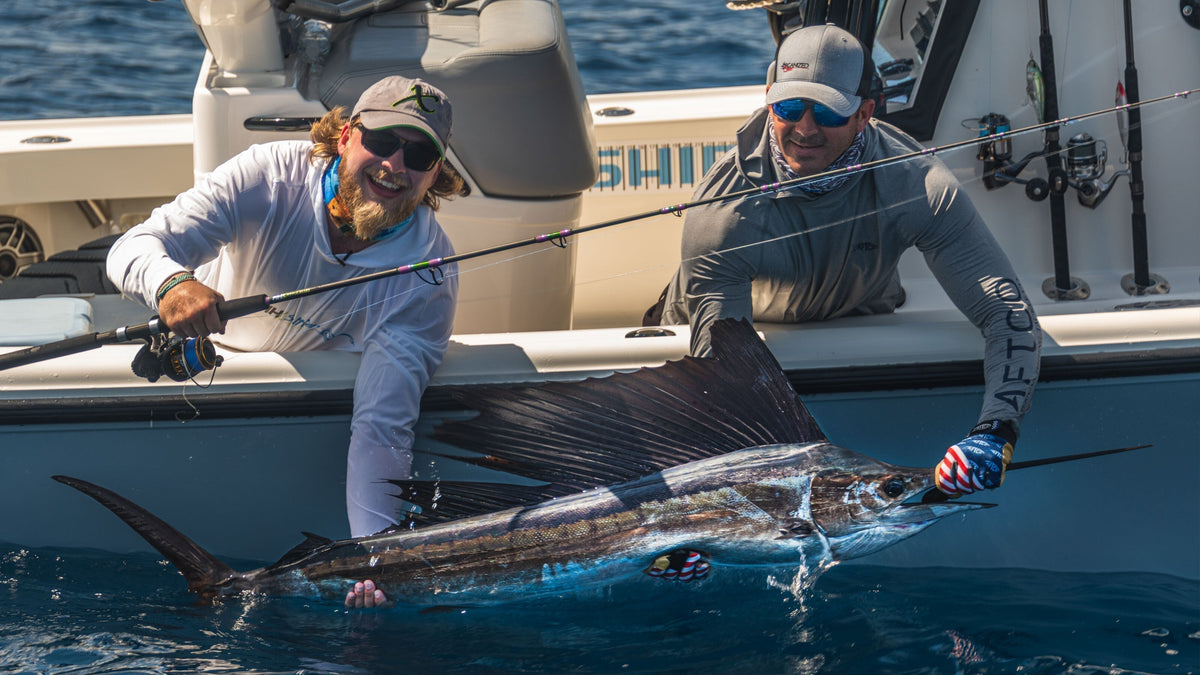
The technique determines the action, and this is often why we see crankbait or flipping models that are designed for freshwater but are perfect for many lighter saltwater applications. In particular, the FP936 and FP937 from MHX have not only landed some of my biggest bass but also served me well catching over-slot snook, big tarpon, and even sailfish!
What About Blank Diameter?
Blank diameter is another area where you may notice differences.
Whether the blank is a light-duty or heavy-duty saltwater blank, they frequently have larger butt diameters because they need to handle substantial loads. Not only do you see a larger diameter, but at times you also see a blank with more wall thickness. These can allow manufacturers to create a stronger structure without simply making the blank excessively thick throughout its entire length.
That larger diameter also affects how the finished rod feels in your hand.
This is particularly important when selecting components. Reel seats, grips, winding checks, butt caps, guides, and other components need to match the blank's dimensions. A blank with a large butt diameter can require components specifically designed for that larger diameter.
Some manufacturers combat this by increasing the wall thickness of the blank. Yes, it makes the blank heavier, but it also adds power and strength without having to move to a considerably larger grip or reel seat.
Freshwater blanks tend to be smaller and more refined, particularly in lighter applications. That makes them easier to build into lightweight, highly responsive rods.
Again, the blank really does not know it has a label.
Can You Use a Freshwater Blank in Saltwater?
Absolutely. But there is an important distinction.
You can use a freshwater blank for saltwater fishing if its power, action, lure rating, line rating, and physical characteristics are appropriate for the species and technique. For example, a lightweight freshwater blank could make an excellent rod for inshore saltwater fishing if you're targeting smaller species with appropriately sized tackle. Our flats fishing is a perfect example of this. We fish rod blanks like the NEPS86LMF for a flats jig or the MB843 to throw a MirrorLure topwater for redfish and trout. The line between the two doesn't really become clear until the power, lure, and line ratings really start to increase.

The bigger concern is whether the blank is capable of handling the fish and technique you're putting it through.
If you're targeting big snook around docks, casting heavy lures for tarpon, or fishing offshore for powerful pelagic species, you need a blank designed to handle those loads. Calling it a "freshwater blank" doesn't automatically disqualify it, but you need to evaluate its specifications carefully.
And regardless of the blank, build it with components appropriate for saltwater.
Can You Use a Saltwater Blank in Freshwater?
Of course. In fact, there are situations where a saltwater blank can make an excellent freshwater rod.
Let's say you want a powerful rod for flipping heavy vegetation, punching thick mats, or working large swimbaits. A heavier saltwater blank may provide exactly the lifting power you're looking for. There was a time, not too many years ago, when some of the top flipping and swimbait blanks were actually saltwater or musky blanks. If the stickers were removed, people could hardly tell the difference.
The tradeoff is usually weight and feel.
A blank designed for heavy saltwater applications may have more power than you actually need for freshwater fishing. That additional strength can come with additional material, diameter, or overall weight.
If you're building a rod for all-day finesse fishing, that probably isn't what you want. If you're building a heavy-duty rod designed to control big fish around heavy cover, it might be perfect.
The Technique Should Choose the Blank
This is probably the most important takeaway for custom builders:
Don't choose your blank based solely on whether the catalog says freshwater or saltwater. Choose the blank based on the job.
Start with the technique.
What lure are you throwing, how much does it weigh, and what presentation and line test are you using?
What species are you fishing for and in what type of scenery or cover?
Those questions will tell you far more about the blank you need than the words "freshwater" or "saltwater."
For example, a finesse spinning rod for freshwater bass requires a completely different blank than a heavy swimbait rod. A light inshore rod for speckled trout may have more in common with a medium freshwater spinning blank than it does with a heavy offshore rod.
On the other end of the spectrum, a heavy freshwater swimbait blank and a light saltwater blank can sometimes overlap considerably in their capabilities.
That overlap is where custom rod building gets interesting.
Freshwater vs. Saltwater: The Bottom Line
So, is there a difference between freshwater and saltwater blanks? Yes, but there isn't a hard line separating the two.
Saltwater blanks are often engineered with more power, lifting strength, larger diameters, and construction suited to bigger fish and heavier applications. Freshwater blanks often prioritize lightweight performance, sensitivity, technique-specific actions, and precise lure control.
But there is plenty of crossover.
The best custom rod builders know that a blank's application label is only the starting point. The real decision comes from understanding the blank's specifications and matching them to the way the rod will actually be used.
And when you move into saltwater, remember that the blank is only one part of the equation. Guide material, reel seat, tip top, thread, finish, and every other component should be selected with the environment in mind.
Ultimately, the goal isn't to build a "freshwater rod" or a "saltwater rod."
The goal is to build the right rod for the fishing you're actually going to do.
That's one of the biggest advantages of custom rod building. You aren't forced to accept a manufacturer's definition of what a rod should be. You can select the blank based on power and action, build the handle exactly how you want it, choose components suited to your environment, and fine-tune the finished rod around your technique.
Freshwater or saltwater is the category. The technique, target species, and conditions are what should make the final decision.