
















If you’re looking for more rod recommendations, reel pairings, line setups, and technique-specific advice, head back to the complete Main Gear Guide Page for the full breakdowns on your favorite techniques.
When bass become pressured, suspend around bait schools, or key in on small forage, many traditional power-fishing presentations begin to lose effectiveness. Fish that readily attack larger lures one day can suddenly become selective, following baits without committing or ignoring them altogether.
That's where open water finesse swimbaits shine.
Built around small paddle-tail swimbaits, light jigheads, and subtle presentations, finesse swimbait fishing focuses on realism rather than reaction. Instead of forcing fish to strike through speed, vibration, or aggression, the technique relies on matching the size and behavior of natural forage as closely as possible.
Whether targeting suspended smallmouth, roaming spotted bass, open-water largemouth, or even species such as walleye and trout, finesse swimbaits offer one of the most versatile and productive ways to catch fish when conditions become challenging.
What Is Open Water Finesse Swimbait Fishing?
Open water finesse swimbait fishing is a presentation-focused technique built around small, realistic baitfish imitations.
Most setups consist of a soft paddle-tail swimbait rigged on a light jighead or weighted hook and fished with spinning gear and light line. The goal is to create a natural swimming action that closely resembles the forage fish are actively feeding on.
Unlike larger swimbaits that often target trophy fish or reaction bites, finesse swimbaits focus on subtle movement and natural appearance.
The bait is typically retrieved at a steady pace through the water column or counted down to a specific depth before the retrieve begins. The emphasis is on maintaining a smooth, realistic swimming action that remains convincing throughout the presentation.
Because the technique excels at imitating small baitfish, it is particularly effective when fish are feeding selectively or targeting young-of-the-year forage.
Why Open Water Finesse Swimbaits Work
Bass spend much of their lives feeding on baitfish.
In many fisheries, shad, herring, smelt, alewives, perch, and other forage species make up a significant portion of a bass's diet.
The reason finesse swimbaits work so well is their realism.
Rather than creating excessive flash or vibration, these small swimbaits simply look and behave like natural prey. Their subtle tail movement and lifelike profile create a presentation that fish encounter every day.
This becomes especially important in clear water and heavily pressured fisheries where bass have ample opportunity to inspect a lure before committing.
Another advantage is versatility.
Open-water finesse swimbaits can be fished at virtually any depth, allowing anglers to target suspended fish, roaming schools, and bait-oriented bass throughout the water column.
When fish become conditioned to more aggressive presentations, finesse swimbaits often provide exactly what they're looking for.
Where Open Water Finesse Swimbaits Excel
This technique performs best anywhere fish are feeding on small baitfish in open water.
Suspended bass are one of the primary targets. Fish holding over deep water, around bait schools, or above offshore structure frequently respond exceptionally well to finesse swimbaits.
Points, humps, channel swings, and offshore structure all create productive opportunities because they concentrate both forage and predator fish.

Lake Champlain
The technique also excels in clear-water lakes where fish rely heavily on sight and often become highly selective.
Smallmouth fisheries are particularly well suited for finesse swimbaits, although largemouth and spotted bass respond equally well under the right conditions.
Whenever fish are keyed in on small forage and traditional presentations stop producing, an open-water finesse swimbait deserves serious consideration.
Reading Conditions and Fish Behavior
Success with finesse swimbaits often starts with understanding forage activity.
Electronics are invaluable because they help identify bait schools, suspended fish, and productive depth zones.
Pay attention to how bass position themselves relative to forage.
Fish directly beneath bait schools often require deeper presentations, while actively feeding fish may rise several feet to intercept a lure.
Water clarity also plays a major role.
Clear water generally favors smaller profiles, natural colors, and more subtle presentations. These conditions allow fish to inspect a lure carefully, making realism even more important.
Seasonal patterns influence effectiveness as well.
Summer often concentrates fish around offshore bait schools, while fall frequently creates opportunities as bass actively feed on migrating forage. Winter can also be highly productive when fish suspend over deep water and focus heavily on baitfish.
The more accurately you identify forage behavior and fish depth, the more productive finesse swimbaits become.
Technique: Maintain a Natural Retrieve
The biggest mistake anglers make with finesse swimbaits is overworking the bait.
The beauty of the presentation lies in its simplicity.
After making a cast, allow the swimbait to sink to the desired depth before beginning a steady retrieve. The goal is to maintain a natural swimming cadence without excessive rod movement.
Most of the action comes from the bait itself.
Occasional pauses, slight speed changes, or subtle rod twitches can be effective, but the presentation should remain smooth and controlled.
Depth control is critical.
A small change in retrieve speed, jighead weight, or rod angle can significantly alter where the bait travels in the water column.
The objective is to keep the swimbait swimming naturally where fish are already feeding.
Consistency often produces more bites than aggressive manipulation.
Best Baits for Open Water Finesse Swimbait Fishing
Small paddle-tail swimbaits dominate open-water finesse presentations.
Most anglers favor baits in the 2.5" to 4" range because they closely match the size of common forage species while maintaining excellent swimming action.
Slim profiles with subtle tail kick tend to perform best because they create realistic movement at slow retrieve speeds.
Natural colors remain the standard. Pearl, smoke, shad, silver, and translucent baitfish patterns consistently produce in clear-water environments.
The key is matching local forage as closely as possible.

Evergreen Last Ace 75 Swimbait in Ice Fish
Simple, clean bait designs often outperform heavily textured or oversized swimbaits because they maintain a more realistic appearance.
For a complete selection of proven finesse swimbaits, explore our curated collection of soft-body finesse swimbaits designed specifically for open-water applications.
Gear Setup for Maximum Control
Open-water finesse swimbait fishing is built around spinning tackle.

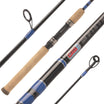
Shimano Sellus B Spinning Rods 7'0" Med-Light
A medium-light to medium-power spinning rod between 7'0" and 7'6" provides the ideal balance of casting distance, bait control, and fish-fighting performance. Moderate-fast to fast actions help maintain natural lure movement while still delivering reliable hooksets. Start by picking out your rod.
Choosing the right finesse swimbait rod is critical because many bites occur at long distances and require excellent sensitivity to detect.

Daiwa Fuego LT Spinning Reels 2500
A quality 2000-2500 size spinning reel offers smooth drag performance and excellent line management. Check out our reel recommendations.
Most anglers prefer 10-15 lb braid paired with a 6-10 lb fluorocarbon leader. This setup maximizes casting distance, sensitivity, and overall presentation control. These are the line and leader combinations we pick.

6th Sense Finesse Swimbait Jigheads 1/8oz
Light jigheads between 1/8 and 1/4 ounce cover most open-water situations and provide an ideal combination of sink rate and natural swimming action. Here are the hooks and jigheads you will need.
A balanced system helps anglers maintain confidence and consistency throughout the retrieve.
A Must-Fish Destination: Lake Champlain
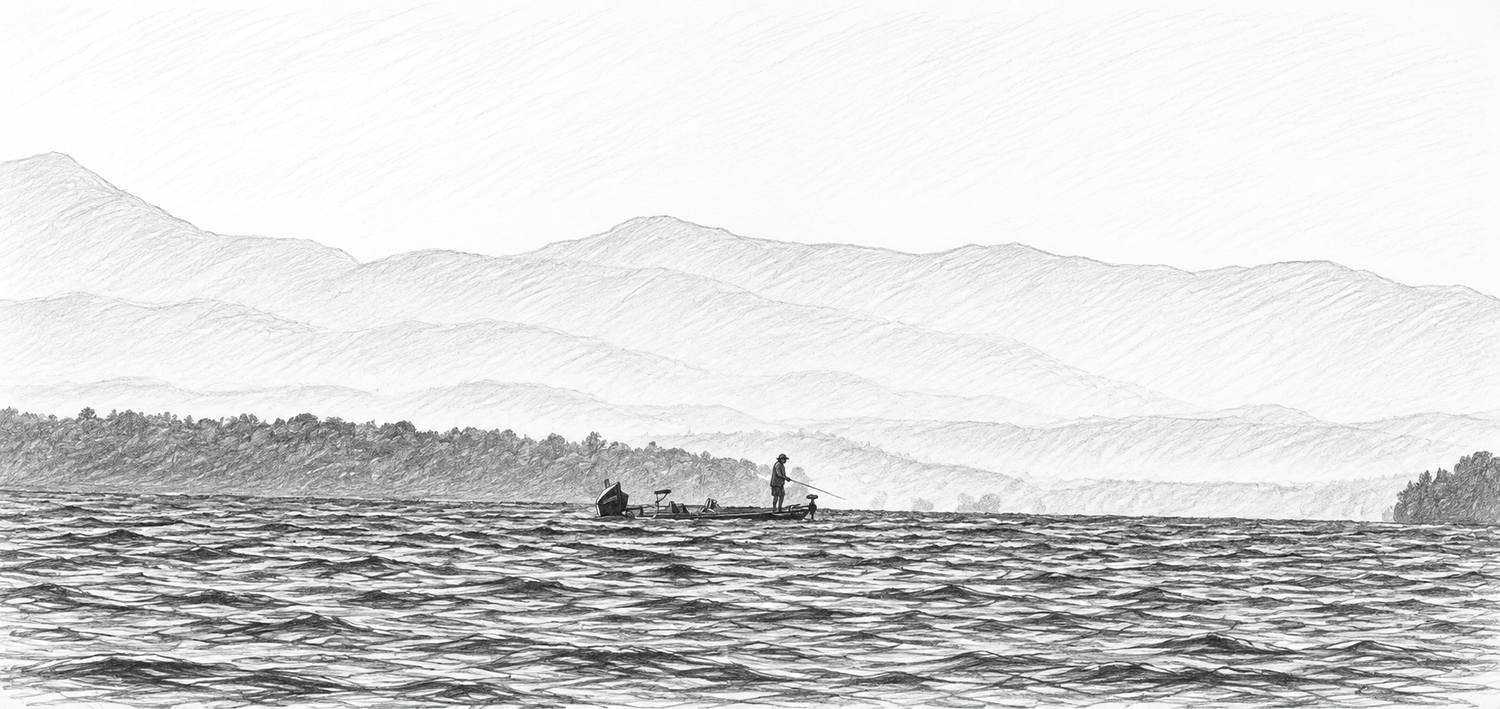
A perfect example of where open-water finesse swimbaits excel is Lake Champlain.

Lake Champlain
Stretching across New York and Vermont, Champlain is widely recognized as one of the premier smallmouth bass fisheries in North America.
The lake's abundant forage, clear water, and expansive offshore habitat create ideal conditions for finesse swimbait fishing.
Smallmouth frequently suspend around bait schools, roam offshore structure, and feed heavily on open-water forage throughout much of the year.
These conditions make finesse swimbaits a natural fit.
Anglers who focus on matching local forage and maintaining precise depth control often discover that finesse swimbaits consistently produce quality fish when other presentations struggle.
Few fisheries showcase the effectiveness of open-water finesse swimbait fishing better than Lake Champlain.
Final Thoughts
Open-water finesse swimbaits represent one of the most effective and versatile baitfish presentations available to modern anglers.
Their ability to imitate natural forage, target suspended fish, and generate bites in pressured conditions makes them a valuable tool in virtually any bass fishery.
Whether targeting roaming smallmouth, suspended spotted bass, or largemouth feeding offshore, finesse swimbaits provide a realistic presentation that consistently appeals to selective fish.
The key is maintaining a natural retrieve, matching local forage, and keeping the bait within the strike zone.
For anglers looking to improve their open-water fishing success, few techniques offer the combination of simplicity, versatility, and effectiveness found in finesse swimbait fishing.
For more rod recommendations, reel pairings, line setups, and finesse swimbait-specific advice, check out the complete Finesse Swimbait Gear Guide and build a system designed to maximize every opportunity on the water.
About the Author

The team at Mud Hole Custom Tackle are industry leaders in custom rod building, fishing tackle innovation, and technique-specific rod design. With decades of hands-on experience both on the water and at the rod bench, the Mud Hole Staff combines technical expertise with real-world fishing knowledge to help anglers build better rods and catch more fish. From bass and inshore applications to offshore and specialty techniques, their passion for performance-driven gear is at the core of every article, tutorial, and product they develop.