


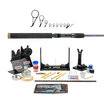
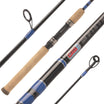















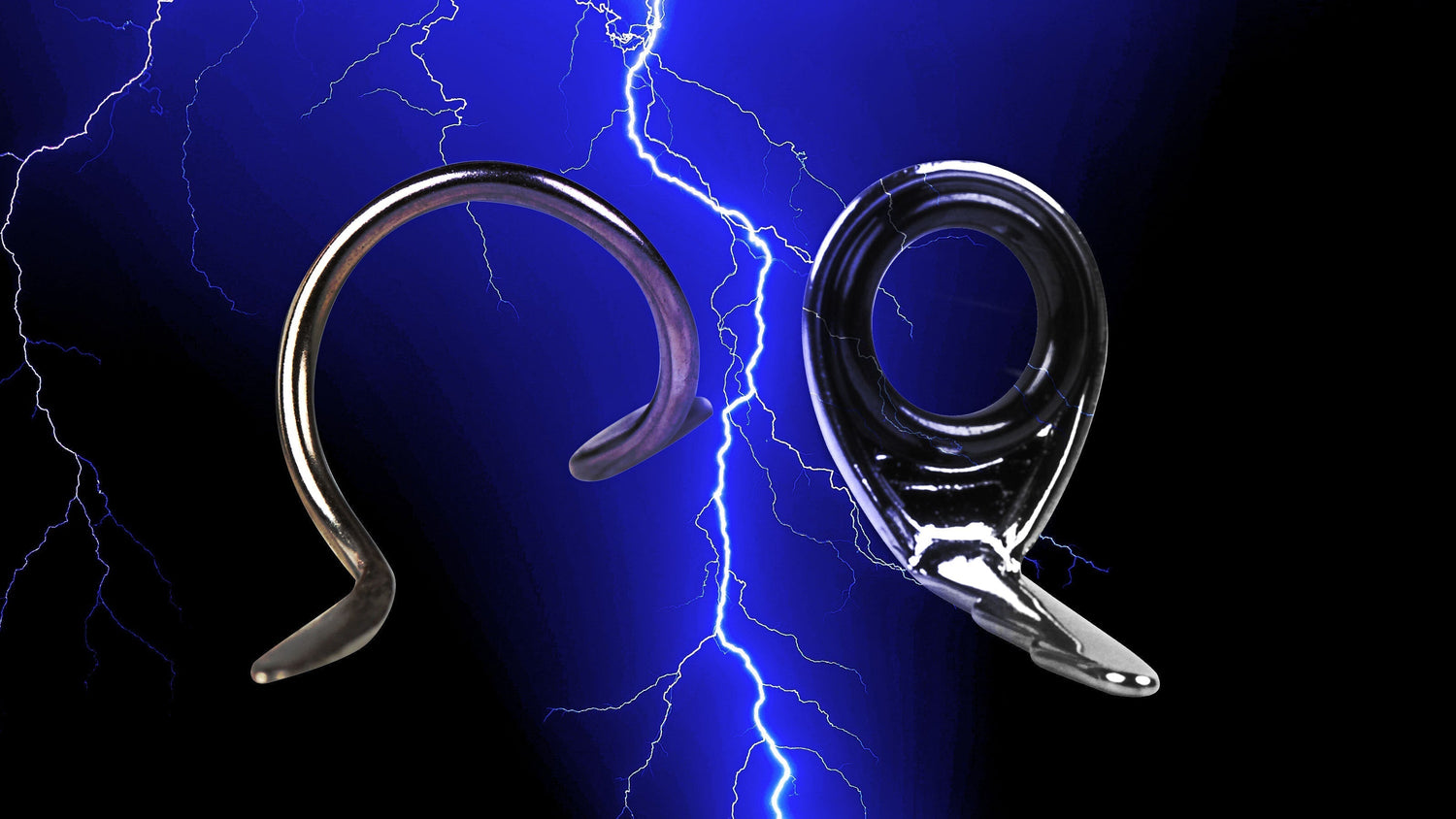
Few components on a fly rod spark more debate among builders than guide selection. Spend enough time around fly anglers and rod builders, and you'll quickly discover that everyone seems to have an opinion about what belongs on a fly rod. For decades, traditional snake guides have been the unquestioned standard. Walk into almost any fly shop today and you'll still find the majority of premium fly rods outfitted with polished snake guides stretching from the stripping guides to the tip top. Yet over the last several years, more builders have started experimenting with single-foot wire guides and even ceramic running guides in search of improved performance.
That naturally raises an interesting question. Do fly-specific guides actually matter, or can modern running guides perform just as well?
Like most things in rod building, the answer isn't black and white.

Both traditional fly guides and ceramic running guides offer distinct advantages and disadvantages. The right choice depends on the type of rod you're building, the environment you'll be fishing, and which characteristics matter most to you as an angler. Personally, I still find myself gravitating toward traditional fly guides on the majority of my builds. Part of that preference is rooted in performance, but another part is simply tradition. Fly rods have a certain appearance and personality, and snake guides are a big part of that identity. They're lightweight, durable, simple, and proven through generations of use.
That said, there are absolutely situations where other guide styles deserve serious consideration.
The Case for Traditional Snake Guides
Snake guides have earned their place in fly fishing history. They've been used on fly rods for generations because they work, and sometimes that's reason enough to stick with them. Their simple wire construction creates a lightweight guide that flexes naturally with the blank and keeps overall guide mass to a minimum. While that may sound insignificant on paper, experienced builders understand that small changes in weight, particularly toward the tip section of the rod, can dramatically influence how a fly rod feels and performs.

One of the biggest advantages of snake guides is their minimal weight. Because they consist of little more than formed wire, they add very little mass compared to a traditional frame-and-ring guide assembly. This becomes increasingly important as you move farther toward the tip of the blank. Even small increases in weight in this area can affect rod recovery speed, responsiveness, and overall feel.
The lighter the guide train, the less work the blank has to do during the casting stroke.
The rod recovers more efficiently and often feels crisper in hand, especially on lighter line weights where subtle differences become easier to detect. On delicate 3-weight and 4-weight trout rods, maintaining that lively feel is often more valuable than chasing every possible gain in line efficiency.
Of course, performance isn't the only reason many builders continue choosing snake guides.
Let's be honest. A lot of fly anglers simply prefer the look, myself included.
Snake guides have become part of fly fishing's visual identity. A beautifully wrapped fly rod featuring polished snake guides just looks right. While performance should always be considered first, aesthetics are one of the reasons many of us build custom rods in the first place. We enjoy creating something that performs exactly as we want it to while also reflecting our own tastes and traditions.
There's also something to be said for their simplicity. Snake guides don't contain inserts that can crack, chip, or break. If one becomes bent during travel or while bushwhacking through tight cover, it can often be straightened in the field without much trouble. For anglers who travel extensively or fish remote destinations where repairs aren't easily made, that durability and simplicity provide real peace of mind.
Where Snake Guides Fall Short
Of course, no guide system is perfect.
The most common criticism surrounding snake guides centers around friction. Because fly line contacts the wire surface directly, snake guides generally create more resistance than a polished ceramic insert.
The obvious question is whether that friction actually matters.
In most freshwater applications and average fishing distances, probably not. Most anglers would struggle to measure a meaningful difference in casting performance between snake guides and ceramics when fishing twenty to fifty feet. However, as distances increase and efficiency becomes more important, friction does become part of the equation.
Another consideration is long-term fly line wear. Modern fly lines are expensive investments, and premium specialty lines can easily cost well over one hundred dollars. While snake guides certainly aren't line destroyers, dirty fly lines passing repeatedly over wire surfaces may contribute slightly more wear over many years of use compared to high-quality ceramic inserts.
The differences are often small, but they're worth acknowledging.
The Rise of Ceramic Running Guides
Ceramic guides revolutionized spinning and casting rods decades ago. Eventually, builders began asking an obvious question: if ceramics improve line flow on conventional tackle, why wouldn't they offer similar benefits on fly rods?

As a result, ceramic running guides have become increasingly common, particularly on saltwater and distance-oriented fly rods.
The primary argument in favor of ceramics is straightforward. A polished ceramic insert provides an exceptionally smooth surface for fly line to pass through. Reduced friction can improve line flow and potentially increase casting efficiency.
Some anglers report noticeable gains in distance. Others claim they can't tell the difference.
The truth probably lies somewhere in the middle.
The smoother surface undeniably reduces resistance. However, the actual benefit an angler experiences depends heavily on casting skill, fishing application, and the distances involved. For an angler making fifty-foot casts to trout all day, the advantage may be negligible. For someone trying to maximize every foot of a long cast to cruising tarpon, even incremental gains become worthwhile.
Ceramic guides also excel at protecting expensive fly lines. The polished insert minimizes abrasion and creates an extremely forgiving contact surface. Anglers who fish frequently or invest heavily in premium fly lines often appreciate this added layer of protection.
Saltwater applications, however, may be where ceramic guides make their strongest case.
Large fly lines, aggressive shooting heads, longer casts, and abrasive environments all place greater demands on equipment. Ceramic guides handle these conditions exceptionally well, and many saltwater builders have embraced them for precisely this reason.
The Tradeoffs of Ceramic Guides
For all their advantages, ceramic guides do come with compromises.
The most obvious drawback is weight.
Even today's lightweight ceramic guides generally weigh more than comparable wire guides. As that additional mass moves farther up the blank, its influence becomes increasingly noticeable.
Extra weight can affect rod recovery speed, responsiveness, swing weight, and overall feel. Whether those changes matter depends largely on the rod itself.
On a powerful 12-weight built for tarpon or giant trevally, the difference may be barely noticeable. On a delicate 3-weight trout rod designed for precise presentations and subtle feel, it may be much more apparent.
Then there's the question of appearance.
This is purely subjective, but it matters to many fly fishermen.
Some anglers appreciate the modern aesthetic that ceramic guides bring to a fly rod. Others feel they make the rod resemble a spinning rod more than a traditional fly rod. Neither opinion is wrong, but if you're building a custom rod, aesthetics are part of the equation.
What About Single-Foot Fly Guides?
For lighter-weight rods, single-foot wire guides have become increasingly popular, and in many situations they've become my preferred choice.

For 3-weight, 4-weight, and 5-weight freshwater rods, single-foot fly guides offer an excellent middle ground. They retain the lightweight benefits of traditional wire construction while reducing overall guide mass even further.
Because they require fewer thread wraps and less finish, they help minimize unnecessary weight while creating a clean, streamlined appearance. The reduced mass can contribute to quicker recovery and improved responsiveness, all while simplifying the wrapping process.
On small trout rods and light freshwater applications, they perform exceptionally well.
Where I generally move away from them is in saltwater environments. Larger fly rods face heavier lines, stronger fish, harsher conditions, and a greater likelihood of abuse. In those situations, traditional snake guides or ceramic running guides typically inspire more confidence.
Choosing the Right Guide Size
Guide style is only part of the equation. Proper sizing plays an equally important role.
Many builders mistakenly assume that larger guides automatically improve performance. In reality, oversized guides often add unnecessary weight that can negatively affect rod behavior.
The goal is to use guides large enough to allow fly lines, leader connections, and loop-to-loop systems to pass freely while keeping overall guide mass as low as practical.
Undersized guides can restrict line flow and create issues with heavier leader systems. Oversized guides can rob a rod of efficiency by adding unnecessary weight.
Factors such as fly line size, leader connections, rod power, fishing environment, and casting distance should all influence guide selection. A guide train designed for a 3-weight trout rod will naturally look very different from one intended for a 10-weight saltwater setup.
The key is balancing clearance and efficiency without adding weight that doesn't need to be there.
Matching the Guides to the Application
This is ultimately where guide selection becomes much simpler.
Rather than asking which guide style is universally best, ask which guide is best suited for the intended use.
For lightweight trout rods, traditional snake guides and single-foot wire guides remain outstanding choices. Weight savings and preserving the rod's lively feel are often more valuable than any potential friction advantage.
General freshwater rods in the 4-weight through 7-weight range can perform exceptionally well with either system. At that point, personal preference often becomes the deciding factor, and many builders continue choosing snake guides because they offer an ideal balance of performance, appearance, and simplicity.
Saltwater rods deserve additional consideration. Larger lines, demanding environments, and increased emphasis on casting efficiency can make ceramic running guides especially attractive.
Likewise, if maximum casting distance is the primary objective, ceramic guides deserve a serious look. While the gains may not be dramatic for every angler, reduced friction and improved line flow can offer measurable advantages in specialized situations.
So Which One Should You Choose?
Here's the answer that probably won't satisfy the internet debate.
Both work.
Both catch fish.
Both can produce outstanding fly rods.
Personally, I still lean toward traditional snake guides for most of my builds. They're lightweight, durable, and preserve the classic appearance I associate with fly rods. On lighter 3-weight through 5-weight rods, I often favor single-foot wire guides because they reduce weight even further while maintaining the characteristics I want in a fly rod.
That doesn't mean ceramic running guides are wrong.
Far from it.
In saltwater applications, distance-oriented builds, and certain specialty situations, ceramic guides can offer genuine advantages that make them worthy of consideration.
The most important thing is understanding the tradeoffs. Every guide choice involves balancing weight, friction, durability, appearance, and intended use.
The best fly rod builders aren't loyal to a particular guide style.
They're loyal to building the best rod for the job.
Sometimes that means snake guides. Sometimes it means ceramic running guides.
The key is understanding why you're making the choice and building with purpose rather than simply following tradition or trends.